EP0717283A2 - Gerät und Testsatz zum Nachweis von AIDS - Google Patents
Gerät und Testsatz zum Nachweis von AIDS Download PDFInfo
- Publication number
- EP0717283A2 EP0717283A2 EP95309024A EP95309024A EP0717283A2 EP 0717283 A2 EP0717283 A2 EP 0717283A2 EP 95309024 A EP95309024 A EP 95309024A EP 95309024 A EP95309024 A EP 95309024A EP 0717283 A2 EP0717283 A2 EP 0717283A2
- Authority
- EP
- European Patent Office
- Prior art keywords
- whole blood
- specimen
- hiv
- individual
- blood specimen
- Prior art date
- Legal status (The legal status is an assumption and is not a legal conclusion. Google has not performed a legal analysis and makes no representation as to the accuracy of the status listed.)
- Withdrawn
Links
Images


Classifications
-
- A—HUMAN NECESSITIES
- A61—MEDICAL OR VETERINARY SCIENCE; HYGIENE
- A61B—DIAGNOSIS; SURGERY; IDENTIFICATION
- A61B5/00—Measuring for diagnostic purposes; Identification of persons
- A61B5/145—Measuring characteristics of blood in vivo, e.g. gas concentration or pH-value ; Measuring characteristics of body fluids or tissues, e.g. interstitial fluid or cerebral tissue
-
- B—PERFORMING OPERATIONS; TRANSPORTING
- B01—PHYSICAL OR CHEMICAL PROCESSES OR APPARATUS IN GENERAL
- B01L—CHEMICAL OR PHYSICAL LABORATORY APPARATUS FOR GENERAL USE
- B01L3/00—Containers or dishes for laboratory use, e.g. laboratory glassware; Droppers
- B01L3/54—Labware with identification means
- B01L3/545—Labware with identification means for laboratory containers
-
- B—PERFORMING OPERATIONS; TRANSPORTING
- B01—PHYSICAL OR CHEMICAL PROCESSES OR APPARATUS IN GENERAL
- B01L—CHEMICAL OR PHYSICAL LABORATORY APPARATUS FOR GENERAL USE
- B01L1/00—Enclosures; Chambers
- B01L1/52—Transportable laboratories; Field kits
-
- G—PHYSICS
- G01—MEASURING; TESTING
- G01N—INVESTIGATING OR ANALYSING MATERIALS BY DETERMINING THEIR CHEMICAL OR PHYSICAL PROPERTIES
- G01N33/00—Investigating or analysing materials by specific methods not covered by groups G01N1/00 - G01N31/00
- G01N33/48—Biological material, e.g. blood, urine; Haemocytometers
- G01N33/50—Chemical analysis of biological material, e.g. blood, urine; Testing involving biospecific ligand binding methods; Immunological testing
- G01N33/53—Immunoassay; Biospecific binding assay; Materials therefor
- G01N33/569—Immunoassay; Biospecific binding assay; Materials therefor for microorganisms, e.g. protozoa, bacteria, viruses
- G01N33/56983—Viruses
- G01N33/56988—HIV or HTLV
-
- B—PERFORMING OPERATIONS; TRANSPORTING
- B01—PHYSICAL OR CHEMICAL PROCESSES OR APPARATUS IN GENERAL
- B01L—CHEMICAL OR PHYSICAL LABORATORY APPARATUS FOR GENERAL USE
- B01L3/00—Containers or dishes for laboratory use, e.g. laboratory glassware; Droppers
- B01L3/50—Containers for the purpose of retaining a material to be analysed, e.g. test tubes
- B01L3/505—Flexible containers without fluid transport within
-
- G—PHYSICS
- G01—MEASURING; TESTING
- G01N—INVESTIGATING OR ANALYSING MATERIALS BY DETERMINING THEIR CHEMICAL OR PHYSICAL PROPERTIES
- G01N2800/00—Detection or diagnosis of diseases
- G01N2800/24—Immunology or allergic disorders
-
- Y—GENERAL TAGGING OF NEW TECHNOLOGICAL DEVELOPMENTS; GENERAL TAGGING OF CROSS-SECTIONAL TECHNOLOGIES SPANNING OVER SEVERAL SECTIONS OF THE IPC; TECHNICAL SUBJECTS COVERED BY FORMER USPC CROSS-REFERENCE ART COLLECTIONS [XRACs] AND DIGESTS
- Y10—TECHNICAL SUBJECTS COVERED BY FORMER USPC
- Y10S—TECHNICAL SUBJECTS COVERED BY FORMER USPC CROSS-REFERENCE ART COLLECTIONS [XRACs] AND DIGESTS
- Y10S435/00—Chemistry: molecular biology and microbiology
- Y10S435/975—Kit
Definitions
- the present invention relates generally to a diagnostic instrument for use in detecting a foreign element in a blood sample. More particularly, the present invention relates to a diagnostic instrument designed for use with an in-home specimen collection kit to be used by a consumer to test for the presence of the HIV virus (human immunodeficiency virus) which is known to cause AIDS (Acquired Immune Deficiency Syndrome).
- HIV virus human immunodeficiency virus
- AIDS Acquired Immune Deficiency Syndrome
- What is lacking in the art is a device by which an individual may conveniently collect a blood sample that can be submitted for diagnostic evaluation.
- the device should allow the individual to collect an accurate amount of blood to be tested and should be suitable for transporting through routine channels.
- the present invention solves these problems.
- the present invention provides a collection device utilized by a lay individual for that individual to collect his or her own whole blood specimen and submit the specimen to a laboratory for subsequent analysis, wherein the specimen is absorbed into the device and wherein the device comprises a front and back planar surface, the surfaces being parallel to each other; a cut-out portion associated with the surfaces; and a test strip forming a laminate on the device.
- the present invention also provides a kit utilized by a lay individual for that individual to collect his or her own whole blood specimen and submit the specimen to a laboratory for subsequent analysis comprising (a) instructional booklets; (b) antiseptic wipes; (c) rupturing means for rupturing the dermis layer of the skin of the individual; (d) means for collecting and disposing of the rupturing means; (e) means for bandaging the individual's ruptured dermis layer; (f) a whole blood collection device comprising a front and back planar surface, the surfaces being parallel to each other; a cut-out portion associated with the surfaces; and a test strip forming a laminate on the device; and (g) means for transporting the collected whole blood specimen to a laboratory for subsequent analysis.
- a kit utilized by a lay individual for that individual to collect his or her own whole blood specimen and submit the specimen to a laboratory for subsequent analysis comprising (a) instructional booklets; (b) antiseptic wipes; (c) rupturing means for rupturing the dermis layer
- the device is simply inserted into a mailer and is forwarded to a diagnostic center through routine postal services.
- a CONFIDETM card which is part of the CONFIDETM HIV testing service, that allows individuals to collect their own whole blood specimen which may contain specific analytes for HIV, then submit such samples to laboratory testing services for HIV analysis, obtain test results of the samples and receive medical counseling, with complete privacy assured.
- analytes are HIV antigen, antibodies specific for HIV, and nucleic acid sequences specific for HIV.
- the CONFIDETM card enables individuals to easily and privately self-collect a blood specimen. User anonymity is safeguarded by the 14-digit code number found on each CONFIDETM card which individuals use to identify themselves when they phone for testing results, customer service or counseling.
- the CONFIDETM card consists of a test strip comprising filter paper, which is laminated between two layers of coated paperboard, with a window or cut-out area exposing the front and back of the test strip. Three circles measuring about 5/16 inch diameter are printed on the front of the test strip window. Three circles measuring about 1/4 inch diameter are printed on the back, concentric within each front circle.
- the CONFIDETM card is printed with illustrations and instructions directing the user to completely fill each circle with blood until the blood soaks through to the other side of the card. Smaller concentric circles are provided on the back of the card as quality control indicators to allow the user to determine if he or she has properly obtained an adequate blood sample for testing purposes.
- the CONFIDETM card also has a lower tear-off portion.
- a unique Personal Identification Number (PIN) is printed on both the top and bottom portions of the card. Users mail the upper portion of the card with their dried whole blood specimen and retain the lower portion of the card containing their PIN.
- the bottom portion of the CONFIDETM card also contains a telephone number to be utilized by an individual to obtain his or her test results.
- the filter paper of the test strip conforms to the specifications set by the National Committee for Clinical Laboratory Standards entitled Blood Collection on Filter Paper for Neonatal Screening Programs, NCCLS Document LA4-A2, ISBN 1-56238-157-1, ISSN 0273-3099, Volume 12 Number 13, July 1992.
- the specifications are as follows:
- the assigned PIN must be provided by a user upon calling to obtain his or her test results.
- the PIN is in machine readable form which is bar coded on the top portion of the card so that it can be scanned at the testing laboratory.
- the laboratory will verify the PIN on the card is valid by cross-referencing the number against a master list of valid PINs provided to the testing laboratory.
- Card 10 is intended to be used as a simple means for a user to apply his or her blood sample to one portion of the card, detach the identification portion and return the test portion to a testing laboratory for evaluation of the blood sample. The method of use will be described in greater detail hereinafter.
- Card 10 is generally rectangular in shape and is comprised of paper layer 20 and paper layer 30 laminated to a centrally disposed absorbent layer 40. Additionally, card 10 contains a perforation 12 which allows card 10 to be separated into test portion 10a and user identification portion 10b.
- Paper layer 20 and paper layer 30 may be affixed to absorbent layer 40 by using conventional means such as heat sealing, adhesives and the like. Located in layers 20 and 30 are cut out regions 22 and 32 respectively, which are in alignment with each other. Cut out regions 22 and 32 define an exposed region of absorbent layer 40 to create sample window 50.
- zones 50a, 50b and 50c Located within blood sample window 50 are three zones, 50a, 50b and 50c, which are printed on both sides of absorbent layer 40.
- the purpose of having zones 50a, 50b and 50c printed on both sides of absorbent layer 40 is to allow the user to ensure that the blood sample is thorough and complete since it must soak or migrate through the entire thickness of layer 40 to an area which exceeds the area defined by zones 50a, 50b and 50c. This can best be seen in FIG. 3 which shows zones 50a, 50b and 50c with blood samples B migrating through the entire thickness of absorbent layer 40.
- Paper layers 20 and 30 can be made from a variety of different materials including conventional bond paper, coated paper stock and plastic film.
- Absorbent layer 40 can be made from a variety of conventional materials which would be known by a skilled artisan.
- Paper layer 20 has printed indicia on its outer surface comprising written text 24 and pictorial representation 26 which may be used for instructional purposes.
- Paper layer 30 has printed indicia on its outer surface comprising written text 34, bar code 36 and identification numbers 38a and 38b.
- Identification numbers 38a and 38b are identical. This allows the test result center to use identification number 38a together with bar code 36 to positively identify the test samples thus ensuring test results are accurately dispensed.
- Identification number 38b allows a user to access his or her test results when contacting the test result center.
- FIG. 4 a CONFIDETM HIV kit 100 is shown in an open position, ready for use with the card 10 of the present invention.
- Kit 100 is a four part folder comprised of sections 102, 104, 106 and 108. Contained in folder 102 is instructional booklet 120. Located in folder portion 104 is antiseptic 122, lancet 124 and bandage 126. Positioned in folder portion 106 is card 10. A portion 107 of folder 106 is disposed adjacent to the test region 50 of the card 10 to protect it from contamination until the test is conducted. Located in folder portion 108 is mailer 128 and lancet disposal container 130. Kit 100 is designed so that the user can sequentially perform the tasks necessary to complete the blood test.
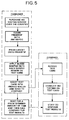
- the sequence of steps used to complete the blood test is shown in FIG. 5.
- a user After purchasing the kit and reviewing the instructions, a user would wipe a finger with antiseptic 122 to clean the surface of his or her fingertip and then press lancet 124 into the fingertip thereby causing a small laceration from which droplets of blood can then be applied to each of the zones in the test region 50 of the card 10.
- the user After the blood has dried, the user simply places the upper detached portion 10a into mailer 128 and deposits the mailer in the mail. After approximately seven days from the date of mailing, the user can telephone the test result center and obtain the test results by furnishing his or her identification number to the representative of the center.
Landscapes
- Health & Medical Sciences (AREA)
- Life Sciences & Earth Sciences (AREA)
- Chemical & Material Sciences (AREA)
- Engineering & Computer Science (AREA)
- Molecular Biology (AREA)
- Immunology (AREA)
- Physics & Mathematics (AREA)
- Biomedical Technology (AREA)
- Chemical Kinetics & Catalysis (AREA)
- Pathology (AREA)
- Hematology (AREA)
- Urology & Nephrology (AREA)
- Clinical Laboratory Science (AREA)
- Virology (AREA)
- Analytical Chemistry (AREA)
- General Health & Medical Sciences (AREA)
- Animal Behavior & Ethology (AREA)
- Cell Biology (AREA)
- Public Health (AREA)
- Veterinary Medicine (AREA)
- AIDS & HIV (AREA)
- Medical Informatics (AREA)
- Tropical Medicine & Parasitology (AREA)
- Heart & Thoracic Surgery (AREA)
- Biotechnology (AREA)
- Surgery (AREA)
- Biophysics (AREA)
- Microbiology (AREA)
- Optics & Photonics (AREA)
- Food Science & Technology (AREA)
- Medicinal Chemistry (AREA)
- Biochemistry (AREA)
- General Physics & Mathematics (AREA)
- Investigating Or Analysing Biological Materials (AREA)
- Measuring Or Testing Involving Enzymes Or Micro-Organisms (AREA)
Applications Claiming Priority (2)
| Application Number | Priority Date | Filing Date | Title |
|---|---|---|---|
| US3204294 | 1994-12-13 | ||
| US32042 | 1994-12-13 |
Publications (2)
| Publication Number | Publication Date |
|---|---|
| EP0717283A2 true EP0717283A2 (de) | 1996-06-19 |
| EP0717283A3 EP0717283A3 (de) | 1997-05-28 |
Family
ID=21862792
Family Applications (1)
| Application Number | Title | Priority Date | Filing Date |
|---|---|---|---|
| EP95309024A Withdrawn EP0717283A3 (de) | 1994-12-13 | 1995-12-12 | Gerät und Testsatz zum Nachweis von AIDS |
Country Status (7)
| Country | Link |
|---|---|
| EP (1) | EP0717283A3 (de) |
| KR (1) | KR960020942A (de) |
| AU (1) | AU4036495A (de) |
| BR (1) | BR9505756A (de) |
| CA (1) | CA2164911A1 (de) |
| CZ (1) | CZ327595A3 (de) |
| IL (1) | IL116339A0 (de) |
Cited By (8)
| Publication number | Priority date | Publication date | Assignee | Title |
|---|---|---|---|---|
| US5641682A (en) * | 1995-08-14 | 1997-06-24 | Ortho Pharmaceutical Corporation | Apparatus and method for automatically processing dried blood spots in HIV-1 testing |
| WO2004091794A1 (en) * | 2003-04-10 | 2004-10-28 | Epler Gary R | System and method for pharmacogenomic testing |
| WO2007035984A1 (en) * | 2005-09-29 | 2007-04-05 | Oryx Holdings Pty Ltd | Method and device for collection and transport of a biological sample |
| EP2287612A1 (de) * | 2002-04-23 | 2011-02-23 | Home Access Health Corporation | Quantitative Analyse einer biologischen Probe mit unbekannter Menge |
| EP2111209A4 (de) * | 2007-01-22 | 2012-10-31 | Orasure Technologies Inc | Behälter und verfahren zur unterstützung zuhause erfolgender tests und diagnosen von infektionskrankheiten |
| US8383058B2 (en) | 2002-04-23 | 2013-02-26 | Home Access Health Corporation | Quantitative analysis of a biological sample of unknown quantity |
| EP2737951A1 (de) * | 2012-12-03 | 2014-06-04 | Minigrip Nederland B.V. | Kit für den Transport von biologischen Proben per Post |
| US20160220992A1 (en) * | 2015-01-29 | 2016-08-04 | OpAns, LLC | Accurate volume fluid collection card system |
Family Cites Families (6)
| Publication number | Priority date | Publication date | Assignee | Title |
|---|---|---|---|---|
| DD231255A3 (de) * | 1983-08-16 | 1985-12-24 | Akad Wissenschaften Ddr | Analytisches element zur bestimmung von harnsaeure in koerperfluessigkeiten |
| US4645743A (en) * | 1986-03-11 | 1987-02-24 | Smithkline Diagnostics, Inc. | Method and device for collecting and testing for fecal occult blood |
| WO1988010272A1 (en) * | 1987-06-26 | 1988-12-29 | Garth Alexander Nicholson | Method of preserving a body fluid sample, prior to assay for hiv (aids) infection |
| US5340539A (en) * | 1989-03-16 | 1994-08-23 | Chemtrak, Inc. | Non-instrumented cholesterol assay |
| DE4041905A1 (de) * | 1990-12-27 | 1992-07-02 | Boehringer Mannheim Gmbh | Testtraeger-analysesystem |
| US6319665B1 (en) * | 1994-06-07 | 2001-11-20 | Inverness Medical Technology, Inc. | Home test kit and method with telephone verification of results |
-
1995
- 1995-12-11 CA CA002164911A patent/CA2164911A1/en not_active Abandoned
- 1995-12-11 AU AU40364/95A patent/AU4036495A/en not_active Abandoned
- 1995-12-12 EP EP95309024A patent/EP0717283A3/de not_active Withdrawn
- 1995-12-12 KR KR1019950048879A patent/KR960020942A/ko not_active Withdrawn
- 1995-12-12 CZ CZ953275A patent/CZ327595A3/cs unknown
- 1995-12-12 IL IL11633995A patent/IL116339A0/xx unknown
- 1995-12-12 BR BR9505756A patent/BR9505756A/pt active Search and Examination
Cited By (11)
| Publication number | Priority date | Publication date | Assignee | Title |
|---|---|---|---|---|
| US5641682A (en) * | 1995-08-14 | 1997-06-24 | Ortho Pharmaceutical Corporation | Apparatus and method for automatically processing dried blood spots in HIV-1 testing |
| EP2287612A1 (de) * | 2002-04-23 | 2011-02-23 | Home Access Health Corporation | Quantitative Analyse einer biologischen Probe mit unbekannter Menge |
| US8080425B2 (en) | 2002-04-23 | 2011-12-20 | Home Access Health Corporation | Quantitative analysis of a biological sample of unknown quantity |
| US8211703B2 (en) | 2002-04-23 | 2012-07-03 | Home Access Health Corporation | Quantitative analysis of a biological sample of unknown quantity |
| US8383058B2 (en) | 2002-04-23 | 2013-02-26 | Home Access Health Corporation | Quantitative analysis of a biological sample of unknown quantity |
| WO2004091794A1 (en) * | 2003-04-10 | 2004-10-28 | Epler Gary R | System and method for pharmacogenomic testing |
| WO2007035984A1 (en) * | 2005-09-29 | 2007-04-05 | Oryx Holdings Pty Ltd | Method and device for collection and transport of a biological sample |
| EP2111209A4 (de) * | 2007-01-22 | 2012-10-31 | Orasure Technologies Inc | Behälter und verfahren zur unterstützung zuhause erfolgender tests und diagnosen von infektionskrankheiten |
| EP2737951A1 (de) * | 2012-12-03 | 2014-06-04 | Minigrip Nederland B.V. | Kit für den Transport von biologischen Proben per Post |
| US20160220992A1 (en) * | 2015-01-29 | 2016-08-04 | OpAns, LLC | Accurate volume fluid collection card system |
| US10124339B2 (en) * | 2015-01-29 | 2018-11-13 | Opans Llc | Accurate volume fluid collection card system |
Also Published As
| Publication number | Publication date |
|---|---|
| BR9505756A (pt) | 1998-01-06 |
| CZ327595A3 (en) | 1996-07-17 |
| KR960020942A (ko) | 1996-07-18 |
| EP0717283A3 (de) | 1997-05-28 |
| IL116339A0 (en) | 1996-03-31 |
| CA2164911A1 (en) | 1996-06-14 |
| AU4036495A (en) | 1996-06-20 |
Similar Documents
| Publication | Publication Date | Title |
|---|---|---|
| US5895704A (en) | Article for collecting and transporting a sample to be analyzed | |
| US4420353A (en) | Method of making a stool sampling device | |
| US6014438A (en) | Method and system for anonymously testing for a human malady | |
| US4559949A (en) | Stool sampling device | |
| AU773191B2 (en) | Urine collection cup | |
| EP0269362B1 (de) | Verfahren und Gerät zur Probeentnahme und zum Nachweis von fäkalem okkultem Blut | |
| US4777964A (en) | System for obtaining blood samples and submitting for testing of aids | |
| US5520041A (en) | Humidity-indicating medical sample system and method | |
| JP4233686B2 (ja) | イムノクロマトグラフィー装置のハウジング | |
| US20030195435A1 (en) | Method and apparatus for collecting and transporting capillary blood samples for diagnostic and research evaluation | |
| JPH11506213A (ja) | 体液サンプルの回収、試験及び輸送用の装置 | |
| JPH0799371B2 (ja) | 有機物質の存在を決定する試験キット及びその利用方法 | |
| WO2003052376A2 (en) | Method and apparatus for dna collection | |
| WO2000054029A1 (en) | Device and method for screening fecal occult blood specimens | |
| DK162466B (da) | Detektionsudstyr til brug ved biologiske og kemiske analyser | |
| EP0717283A2 (de) | Gerät und Testsatz zum Nachweis von AIDS | |
| US20240150808A1 (en) | Tissue tester | |
| JPH10104226A (ja) | 血液検体採集カード | |
| US20030232451A1 (en) | Device for the testing of fluid samples and process for making the device | |
| JPH09178741A (ja) | Aidsの検出用デバイスおよび試験キツト | |
| Ishiyama et al. | The determination of isoantigenic activity from latent fingerprints: mixed cell agglutination reaction in forensic serology | |
| JP2002514306A (ja) | インビトロアレルギー診断のためのストリップテスト | |
| WO1995015493A1 (en) | Method and system for anonymously testing for a human malady | |
| MXPA95005200A (en) | Device and test equipment for the detection of the adquir immunodeficiency syndrome | |
| GB2383130A (en) | Drug testing apparatus |
Legal Events
| Date | Code | Title | Description |
|---|---|---|---|
| PUAI | Public reference made under article 153(3) epc to a published international application that has entered the european phase |
Free format text: ORIGINAL CODE: 0009012 |
|
| AK | Designated contracting states |
Kind code of ref document: A2 Designated state(s): AT BE CH DE DK ES FR GB GR IE IT LI LU NL PT SE |
|
| PUAL | Search report despatched |
Free format text: ORIGINAL CODE: 0009013 |
|
| AK | Designated contracting states |
Kind code of ref document: A3 Designated state(s): AT BE CH DE DK ES FR GB GR IE IT LI LU NL PT SE |
|
| 17P | Request for examination filed |
Effective date: 19971104 |
|
| STAA | Information on the status of an ep patent application or granted ep patent |
Free format text: STATUS: THE APPLICATION HAS BEEN WITHDRAWN |
|
| 18W | Application withdrawn |
Withdrawal date: 19980618 |