EP0718766B1 - Méthode d'opération d'un réseau de disques de stockage de données - Google Patents
Méthode d'opération d'un réseau de disques de stockage de données Download PDFInfo
- Publication number
- EP0718766B1 EP0718766B1 EP95309250A EP95309250A EP0718766B1 EP 0718766 B1 EP0718766 B1 EP 0718766B1 EP 95309250 A EP95309250 A EP 95309250A EP 95309250 A EP95309250 A EP 95309250A EP 0718766 B1 EP0718766 B1 EP 0718766B1
- Authority
- EP
- European Patent Office
- Prior art keywords
- parity
- data
- operations
- write
- unfinished
- Prior art date
- Legal status (The legal status is an assumption and is not a legal conclusion. Google has not performed a legal analysis and makes no representation as to the accuracy of the status listed.)
- Expired - Lifetime
Links
Images





Classifications
-
- G—PHYSICS
- G06—COMPUTING OR CALCULATING; COUNTING
- G06F—ELECTRIC DIGITAL DATA PROCESSING
- G06F11/00—Error detection; Error correction; Monitoring
- G06F11/07—Responding to the occurrence of a fault, e.g. fault tolerance
- G06F11/16—Error detection or correction of the data by redundancy in hardware
-
- G—PHYSICS
- G06—COMPUTING OR CALCULATING; COUNTING
- G06F—ELECTRIC DIGITAL DATA PROCESSING
- G06F11/00—Error detection; Error correction; Monitoring
- G06F11/07—Responding to the occurrence of a fault, e.g. fault tolerance
- G06F11/08—Error detection or correction by redundancy in data representation, e.g. by using checking codes
- G06F11/10—Adding special bits or symbols to the coded information, e.g. parity check, casting out 9's or 11's
- G06F11/1076—Parity data used in redundant arrays of independent storages, e.g. in RAID systems
- G06F11/1084—Degraded mode, e.g. caused by single or multiple storage removals or disk failures
-
- G—PHYSICS
- G06—COMPUTING OR CALCULATING; COUNTING
- G06F—ELECTRIC DIGITAL DATA PROCESSING
- G06F11/00—Error detection; Error correction; Monitoring
- G06F11/07—Responding to the occurrence of a fault, e.g. fault tolerance
- G06F11/08—Error detection or correction by redundancy in data representation, e.g. by using checking codes
- G06F11/10—Adding special bits or symbols to the coded information, e.g. parity check, casting out 9's or 11's
- G06F11/1076—Parity data used in redundant arrays of independent storages, e.g. in RAID systems
- G06F11/1088—Reconstruction on already foreseen single or plurality of spare disks
-
- G—PHYSICS
- G06—COMPUTING OR CALCULATING; COUNTING
- G06F—ELECTRIC DIGITAL DATA PROCESSING
- G06F11/00—Error detection; Error correction; Monitoring
- G06F11/07—Responding to the occurrence of a fault, e.g. fault tolerance
- G06F11/14—Error detection or correction of the data by redundancy in operations
- G06F11/1402—Saving, restoring, recovering or retrying
- G06F11/1415—Saving, restoring, recovering or retrying at system level
- G06F11/1435—Saving, restoring, recovering or retrying at system level using file system or storage system metadata
-
- G—PHYSICS
- G11—INFORMATION STORAGE
- G11B—INFORMATION STORAGE BASED ON RELATIVE MOVEMENT BETWEEN RECORD CARRIER AND TRANSDUCER
- G11B20/00—Signal processing not specific to the method of recording or reproducing; Circuits therefor
- G11B20/10—Digital recording or reproducing
- G11B20/18—Error detection or correction; Testing, e.g. of drop-outs
- G11B20/1833—Error detection or correction; Testing, e.g. of drop-outs by adding special lists or symbols to the coded information
Definitions
- the present invention relates to a method of operating a disk drive array.
- the invention relates to a method of safeguarding disk array write operations.
- Disk arrays comprising a plurality of small inexpensive disk drives, such as the 5 1 ⁇ 4 or 3 1 ⁇ 2 inch disk drives currently used in personal computers and workstations, and connected in parallel have emerged as a low cost alternative to the use of single large disks for non-volatile storage of information within a computer system.
- the disk array appears as a single large fast disk to the host system but offers improvements in performance, reliability, power consumption and scalability over a single large magnetic disk.
- redundancy information is stored within the array so that if any single disk within the array should fail, the disk array continues to function without the loss of data.
- RAID Redundant Arrays of Inexpensive Disks
- the article discusses disk arrays and the improvements in performance, reliability, power consumption and scalability that disk arrays provide in comparison to single large magnetic disks.
- Five disk array arrangements referred to as RAID levels, are described.
- the simplest array, a RAID level 1 system comprises one or more disks for storing data and an equal number of additional "mirror" disks for storing copies of the information written to the data disks.
- the remaining RAID levels identified as RAID level 2, 3, 4 and 5 systems, segment the data into portions for storage across several data disks. One or more additional disks are utilized to store error check or parity information.
- RAID level 2 and 3 disk arrays are known as parallel access arrays.
- Parallel access arrays require that all member disks (data and parity disks) be accessed, and in particular, written, concurrently to execute an I/O request.
- RAID level 4 and 5 disk arrays are known as independent access arrays. Independent access arrays do not require that all member disks be accessed concurrently in the execution of a single I/O request. Operations on member disks are carefully ordered and placed into queues for the member drives.
- the present invention is directed to improvements in the operation of RAID level 4 and 5 systems.
- a RAID level 4 disk array is comprised of N+1 disks wherein N disks are used to store data, and the additional disk is utilized to store parity information.
- Data to be saved is divided into portions consisting of one or many blocks of data for storage among the disks.
- the corresponding parity information which can be calculated by performing a bit-wise exclusive-OR of corresponding portions of the data stored across the N data drives, is written to the dedicated parity disk. These corresponding portions of data together with the parity associated therewith are referred to as redundancy groups.
- the parity disk is used to reconstruct information in the event of a disk failure.
- writes typically require access to two disks, i.e., one of the N data disks and the parity disk, as will be discussed in greater detail below. Read operations typically need only access a single one of the N data disks, unless the data to be read exceeds the block length stored on each disk.
- RAID level 5 disk arrays are similar to RAID level 4 systems except that parity information, in addition to the data, is distributed across the N+1 disks in each group. Each one of the N+1 disks within the array includes some blocks for storing data and some blocks for storing parity information. The location at which parity information is stored is controlled by an algorithm implemented by the user. As in RAID level 4 systems, RAID level 5 writes typically require access to two disks; however, no longer does every write to the array require access to the same dedicated parity disk, as in RAID level 4 systems. This feature provides the opportunity to perform concurrent write operations.
- the read-modify-write method is advantageous in that only the data and parity drives which will be updated need to be accessed during the write operation. Otherwise, all the drives in the array will have to be read or accessed to perform a bit-wise exclusive-OR of corresponding portions of the data stored across the data drives in order to update parity information.
- a disadvantage of the read-modify-write operation is that a typical RAID level 4 or 5 write operation will require a minimum of two disk reads followed by two disk writes.
- Drive utilization efficiency may be improved by modifying the read-modify-write process, separating the execution of data read and write operations from the execution of parity read, generation and write operations.
- This modified read-modify-write operation identifies the disk drives containing the data and parity to be updated and places the proper read and write requests into the I/O queues for the identified data and parity drives, scheduling some or all parity operations; i.e. reading old parity information from the parity drive, generating new parity information and writing the new parity information to the parity drive; for execution when best accommodated in the I/O queue for the parity drive, following the read of old data from the data drive.
- Document WO-A-93/23803 discloses a read-modify-write method of operating a disk array in the form of a RAID which includes the logging of information identifying incomplete write operations and associated redundancy groups in between non-volatile memory for further processing.
- the document EP-A-0569313 also discloses a method and apparatus for operating a RAID level 5 system and including an assist unit comprising a temporary storage area for receiving write data for assisting with the recovery of data from a failed unit.
- a method and structure for safeguarding disk array write operations is required to prevent the data loss resulting from the occurrence of a power failure or array failure prior to completion of all write procedures.
- the present invention seeks to provide a disk array operation method having advantages over known methods.
- a method of operating an independent disk drive array having parity redundancy groups said method characterized by the steps of examining current drive activity to identify unfinished write I/O operations in response to the receipt of a reset signal from a host system which interrupts the execution of one or more disk write I/O operations, logging information for identifying said unfinished write I/O operations and the redundancy groups associated with said unfinished write I/O operations into a non-volatile memory, checking for log entries in the non-volatile memory during a disk array initialization following the system reset, performing for each one of said unfinished write I/O operations a bit-wise exclusive-OR of corresponding portions of the data stored across the data storage areas within the redundancy group associated with said one of said unfinished write I/O operations to calculate parity consistent therewith, writing the calculated parity to said parity storage areas within said redundancy group associated with said one of said unfinished write I/O operations, and including the step of repeating all incomplete write operations subsequent to the recalc
- the method characterized by the steps of examining current drive activity to identify unfinished write I/O operations in response to the receipt of a battery low signal from an uninterruptable power supply, following a low power condition which interrupts the execution of one or more disk write I/O operations, logging information necessary to identify said unfinished write I/O operations and the redundancy groups associated with said unfinished write I/O operations into a non-volatile memory at the expiration of a predetermined time interval initiated upon receipt of said low power signal, checking for log entries in the non-volatile memory during a disk array initialization following a recovery from said low power condition, performing, for each one of said unfinished write I/O operations, bit-wise exclusive-OR of corresponding portions of the data stored across the data storage areas within the redundancy group associated with said one of said unfinished write I/O operations to calculate parity consistent therewith, writing the calculated parity to said parity storage areas within said redund
- the present invention can provide a method for restoring consistency between parity and data within an independent access disk array, such as a RAID level 4 or 5 disk array, employing a read-modify-write process for updating data and parity.
- an independent access disk array such as a RAID level 4 or 5 disk array
- the present invention can provide for a new and useful method for restoring consistency between parity and data within a disk array operating in a degraded mode wherein one of the drives within the array has failed.
- a method for restoring consistency between data and parity stored within redundancy groups in an independent access disk array system following a system reset or a power failure condition which interrupts the execution of one or more disk write I/O operations is provided, in accordance with a particular embodiment of the present invention, a method for restoring consistency between data and parity stored within redundancy groups in an independent access disk array system following a system reset or a power failure condition which interrupts the execution of one or more disk write I/O operations.
- the method includes the steps of: examining current drive activities to identify unfinished write I/O operations in response to the receipt of a reset signal from a host system or a low power warning signal from an uninterruptable power supply (UPS); logging information necessary to identify the unfinished write I/O operations and the redundancy groups associated with the unfinished write I/O operations into a non-volatile memory; checking for log entries in the non-volatile memory during a disk array subsystem initialization following the system reset or the restoration of power following a power failure; for each one of the unfinished write I/O operations identified in the log, performing a bit-wise exclusive-OR of corresponding portions of the data stored within the redundancy group associated with the unfinished write I/O operations to calculate parity consistent therewith; and writing the calculated parity to the parity storage areas within the redundancy group associated with the unfinished write I/O operation.
- UPS uninterruptable power supply
- the method also logs information necessary to identify the data and parity data storage areas to which the unfinished write I/O operations map new data and parity, and some form of the old data and parity information saved at those data and parity data storage areas.
- consistent parity is determined for each redundancy group associated with an unfinished write I/O operation by combining the old data and parity saved to the non-volatile memory with the data currently stored within the data storage area to which the unfinished write I/O operation maps new data.
- the invention can also provide for an independent access disk array subsystem employing a read-modify-write process to update data and parity information saved to redundancy groups within said array in response to a write I/O request received from a host system and in which consistency between data and parity information saved to data and parity storage areas within said redundancy groups following a system reset which interrupts the execution of one or more disk write I/O operations, said method comprising the steps of examining current drive activities to identify unfinished write I/O operations in response to the receipt of a reset signal from a host system,logging into a non-volatile memory information necessary to identify redundancy groups associated with said unfinished write I/O operations information necessary to identify the data and parity data storage areas to which said unfinished write I/O operations map new data and parity, and some form of the old data and parity information saved to the data and parity data storage areas to which said unfinished write I/O operations map new data and parity, and checking for log entries in the non-volatile memory during a disk array subsystem initial
- the invention can further provide, in an independent access disk array subsystem employing a read-modify-write process to update data and parity information saved to redundancy groups within said array in response to a write I/O request received from a host system, a method of restoring consistency between data and parity information saved to data and parity storage areas within said redundancy groups following a low power condition which interrupts the execution of one or more disk write I/O operations, said method comprising the steps of examining current drive activities to identify unfinished write I/O operations in response to the receipt of a battery low signal from an uninterruptable power supply, at the expiration of a predetermined time interval initiated upon receipt of said low power signal, logging into a non-volatile memory information necessary to identify redundancy groups associated with said unfinished write I/O operations information necessary to identify the data and parity data storage areas to which said unfinished write I/O operations map new data and parity, and some form of the old data and parity information saved to the data and parity data storage areas to which said unfinished write I
- the invention can comprise a method for assuring consistency between data and parity in a independent access disk array system following a system reset or a power failure condition which interrupts the execution of one or more disk write I/O operations.
- the method includes the steps of: examining current drive activities to identify unfinished write I/O operations in response to the receipt of a reset signal from a host system or a low power warning signal from a uninterruptable power supply, logging information necessary to identify the unfinished write I/O operations and the array redundancy groups associated with the unfinished write I/O operations into a non-volatile memory; and checking for log entries in the non-volatile memory during a disk array subsystem initialization following the system reset, or the restoration of power following a power failure.
- the method further includes the steps of: performing a bit-wise exclusive-OR of corresponding portions of the data stored within the redundancy group associated with the unfinished write I/O operations to calculate parity consistent therewith; and writing the calculated parity to the parity storage areas within the redundancy group associated the unfinished write I/O operation.
- the method For an array operating in a degraded mode, i.e., operating with a failed disk drive member, the method also logs information necessary to identify the data and parity data storage areas to which the unfinished write I/O operations map new data and parity, and some form of the old data and parity information saved to the data and parity data storage areas to which the unfinished write I/O operations map new data and parity.
- consistent parity is determined for each redundancy group associated with an unfinished write I/O operation by combining the old data and parity saved to the non-volatile memory with the data currently stored within the data storage area to which the unfinished write I/O operation maps new data.
- An array controller 100 coordinates the transfer of data between the host system 200 and the array disk drives. The controller also calculates and checks parity information. Blocks 101 through 105 illustrate the manner in which data and parity is stored on the five array drives. Data blocks are identified as BLOCK 0 through BLOCK 15. Parity blocks are identified as PARITY 0 through PARITY 3. The relationship between the parity and data blocks is as follows:
- parity data can be calculated by performing a bit-wise exclusive-OR of corresponding portions of the data stored across the N data drives.
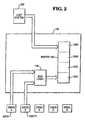
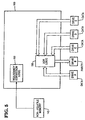
- Figs. 2 and 3 illustrate a RAID level 5 write involving DRIVE A and DRIVE B, wherein new data is to be written to DRIVE A and parity information is to be updated on DRIVE B.
- Structures included within the controller 100 to facilitate the read-modify-write operation include transfer buffer 120 and exclusive-OR (XOR) logic 130.
- the present invention relates to a method for assuring parity consistency within a disk array following a system reset or power supply disruption. Details concerning the construction of the controller are not necessary for an understanding of the present invention.
- old data and parity information are first read from the two drives as shown in Fig. 2.
- the old data and parity are read from the target areas within drives DRIVE A and DRIVE B, respectively, and routed to exclusive-OR logic 130.
- the logic 130 combines the received data and parity to generate the exclusive-OR product: old data XOR old parity, referred to herein as intermediate parity.
- the intermediate parity is stored in a first area 120D within buffer 120.
- New data received from host system 200 is concurrently saved to a second area 120A within buffer 120.
- New data and parity information is then written to DRIVE A and DRIVE B as shown in Fig. 3.
- the new data is written directly from area 120A in storage buffer 120 to DRIVE A.
- the new data and intermediate parity are provided to exclusive-OR logic 130 to generate the new parity information.
- This new parity, old data XOR old parity XOR new data is written to DRIVE B.
- the disk array system further includes anon-volatile memory 140, and additional logic 150 within controller 100, as shown in Fig. 4.
- Logic 150 is responsive to the receipt of a reset signal from the host system 200 or a battery low signal from an uninterruptable power supply (UPS) 300 to examine current drive activities to identify unfinished write I/O operations.
- the controller in accordance with logic 150, then logs pertinent information concerning the unfinished write operations into non-volatile memory 140.
- the information logged into memory 140 for each unfinished write operation, which is necessary to locate potentially affected redundancy groups within the array may include identification of disk drives, block addresses, and RAID level.
- Fig. 5 illustrates the data redundancy correction, or reconciliation, process following a host system restart.
- the array controller checks for log entries in the non-volatile memory. If entries exist in the log, an array correction process must be performed before allowing any unfinished write operations to be retried or any new write operations to begin.
- the reconciliation operation for a redundancy group with no failed drives comprises performing a bit-wise exclusive-OR of corresponding portions of the data stored across the data drives within the redundancy group to calculate parity consistent therewith and saving the result to the parity drive, DRIVE B in the array depicted in Fig. 5.
- the data saved to drives DRIVE A, DRIVE C, DRIVE D and DRIVE E is read, combined by XOR logic 130, and saved to DRIVE B.
- the redundancy correction procedure assures that the parity information is consistent with the data within the redundancy group, the data may not be accurate depending upon status of write operations at the time of the host reset or power failure. Repeating all incomplete write operations following the recalculation of parity information, which is an operation performed by the host system 200, will correct the data saved to the array drives.
- the array controller could first locate and then correct any inconsistencies in the redundant data, but for performance reasons it is usually more expedient to execute the correction operation as described above.
- the reconciliation process described above must be altered if a disk drive in the array redundancy group is unavailable and the array is said to be operating in a reduced or degraded mode.
- a degraded mode of operation if a read operation requests data residing on a surviving disk drive, the data is delivered as if the array were intact and operating in a normal mode. If data is requested from the failed drive, array management software must regenerate the data by reading corresponding blocks from the surviving drive members and computing the exclusive-OR product of their contents.
- the parity blocks requiring updating reside on the failed drive member, new parity is not computed or written. New data received from the host is written to the surviving data drive.
- the new parity is determined by calculating the exclusive-OR product of the new data received from the host and the corresponding data blocks (parity blocks are excluded) from the surviving array drives. The new parity is then written over the old parity. The new data received from the host is not written to the array drives.
- Fig. 6 illustrates the process of logging pending write I/O operations and intermediate parity for RAID 4 or 5 degraded mode operation in accordance with the present invention.
- the intermediate parity can be read from volatile memory buffer 120. An explanation of intermediate parity is provided by reference to Fig.2 and the related description provided above. Parity consistent with the data saved to the redundancy group can be determined by combining the intermediate parity with the current data stored on the media of the interrupted write data drive, as shown in Fig. 7.
- the array controller logic for maintaining parity consistency must perform the following operations:
- Array controller performance can be maintained if entries for unfinished write operations are only made into the log at the point of interruption, thus reducing normal processing overhead.
- the array controller receives a reset signal from the host it scans the array data structures to identify current array activity. The controller then makes the required entries concerning unfinished write operations into non-volatile memory before executing reset initialization.
- a similar process is executed following the receipt of a low power warning from the UPS.
- the array controller logic executes a routine which prohibits any new read or write requests from being issued to the array drives, scans the array data structures to identify current array activity, and then makes the required entries concerning unfinished write operations into non-volatile memory. Some of the unfinished write operations may successfully complete before actual power failure. As write operations are completed, the log entries associated with those write operations will be removed as they are no longer considered unfinished. Alternatively, to provide protection across a power failure within a system which does not have a low power warning from the UPS, the system maintains entries for all unfinished write operations in non-volatile memory. Again, as write operations are completed, the log entries associated with those write operations will be removed from non-volatile memory.
- non-volatile memory 140 can be a PROM, EPROM or EEPROM device, a PCMCIA flash card device, or a magnetic disk drive.
Landscapes
- Engineering & Computer Science (AREA)
- Theoretical Computer Science (AREA)
- Quality & Reliability (AREA)
- Physics & Mathematics (AREA)
- General Engineering & Computer Science (AREA)
- General Physics & Mathematics (AREA)
- Library & Information Science (AREA)
- Signal Processing (AREA)
- Techniques For Improving Reliability Of Storages (AREA)
- Power Sources (AREA)
- Detection And Correction Of Errors (AREA)
Claims (7)
- Méthode de fonctionnement d'une grappe d'unités d'entraínement de disques indépendants ayant des groupes de redondance de parité, ladite méthode caractérisée par les étapes consistant à examiner l'activité d'entraínement courante pour identifier des opérations E/S d'écriture non terminées en réponse à la réception d'un signal de remise à zéro d'un système hôte (200) qui interrompt l'exécution d'une ou de plusieurs opérations E/S d'écriture sur disque, enregistrer des informations pour identifier lesdites opérations E/S d'écriture non terminées et les groupes de redondance associés auxdites opérations E/S d'écriture non terminées, dans une mémoire rémanente (140), vérifier s'il y a des entrées d'enregistrement dans la mémoire rémanente (140) pendant une initialisation de grappe de disques suite à la remise à zéro du système, exécuter, pour chacune desdites opérations E/S d'écriture non terminées, une opération OU exclusif au niveau du bit de parties correspondantes de données stockées dans les zones de stockage de données à l'intérieur du groupe de redondance associé à ladite une desdites opérations E/S d'écriture non terminées, afin de calculer une parité compatible avec celle-ci, écrire la parité calculée auxdites zones de stockage de parité à l'intérieur dudit groupe de redondance associé à ladite une desdites opérations E/S d'écriture non terminées, et comprenant l'étape consistant à répéter toutes les opérations d'écriture incomplètes après le recalcul des informations de parité de manière à corriger les données sauvegardées dans les unités d'entraínement de la grappe.
- Méthode de fonctionnement d'une grappe d'unités d'entraínement de disques indépendants ayant des groupes de redondance de parité, ladite méthode caractérisée par les étapes consistant à examiner l'activité d'entraínement courante pour identifier des opérations E/S d'écriture non terminées en réponse à la réception d'un signal de pile faible provenant d'une alimentation permanente (AP) suite à une condition de faible puissance qui interrompt l'exécution d'une ou de plusieurs opérations E/S d'écriture sur disque, enregistrer des informations nécessaires pour identifier lesdites opérations E/S d'écriture non terminées et les groupes de redondance associés auxdites opérations E/S d'écriture non terminées, dans une mémoire rémanente (140) à l'expiration d'un intervalle de temps prédéterminé déclenché à la réception dudit signal de faible puissance, vérifier s'il y a des entrées d'enregistrement dans la mémoire rémanente pendant une initialisation de grappe de disques après un rétablissement de ladite condition de faible puissance, exécuter, pour chacune desdites opérations E/S d'écriture non terminées, une opération OU exclusif au niveau du bit de parties correspondantes des données stockées dans les zones de stockage de données à l'intérieur du groupe de redondance associé à ladite une desdites opérations E/S d'écriture non terminées, afin de calculer une parité compatible avec celle-ci, écrire la parité calculée auxdites zones de stockage de parité à l'intérieur dudit groupe de redondance associé à ladite une desdites opérations E/S d'écriture non terminées, et comprenant l'étape consistant à répéter toutes les opérations d'écriture incomplètes après le recalcul des informations de parité de manière à corriger les données sauvegardées dans les unités d'entraínement de la grappe.
- Méthode telle que revendiquée dans la Revendication 1 ou 2, dans laquelle lesdites informations nécessaires pour identifier les groupes de redondance associés auxdites opérations E/S d'écriture non terminées, comprennent des adresses de blocs auxquelles lesdites opérations E/S non terminées mappent des données et des informations de parité.
- Méthode telle que revendiquée dans la Revendication 1 ou 2, dans laquelle ladite grappe d'unités d'entraínement de disques indépendants comprend un sous-système utilisant un processus de lecture-modification-écriture pour actualiser les données et les informations de parité sauvegardées dans les groupes de redondance à l'intérieur de ladite grappe en réponse à une requête E/S d'écriture reçue d'un système hôte et dans laquelle la compatibilité est rétablie entre les données et les informations de parité sauvegardées dans des zones de stockage de données et de parité à l'intérieur desdits groupes de redondance, suite à une remise à zéro du système qui interrompt l'exécution d'une ou de plusieurs opérations E/S d'écriture sur disque, où les informations nécessaires pour identifier les groupes de redondance associés auxdites opérations E/S d'écriture non terminées, sont enregistrées dans une mémoire rémanente avec les informations nécessaires pour identifier les zones de stockage de données et de parité auxquelles lesdites opérations E/S d'écriture non terminées mappent de nouvelles données et parité, et une certaine forme des anciennes données et informations de parité sauvegardées dans les zones de stockage de données et de parité auxquelles lesdites opérations E/S d'écriture non terminées mappent de nouvelles données et parité, et pour chacune desdites opérations E/S d'écriture non terminées, combiner les anciennes données et parité associées à celles-ci et sauvegardées dans ladite mémoire rémanente, avec les données stockées actuellement dans la zone de stockage de données à laquelle ladite une desdites opérations E/S d'écriture non terminées mappe de nouvelles données pour calculer une parité compatible avec les données stockées à l'intérieur dudit groupe de redondance.
- Méthode telle que revendiquée dans la Revendication 2, dans laquelle ladite grappe d'unités d'entraínement de disques indépendants comprend un sous-système de grappe de disques utilisant un processus de lecture-modification-écriture pour actualiser les données et les informations de parité sauvegardées dans les groupes de redondance à l'intérieur de ladite grappe en réponse à une requête E/S d'écriture reçue d'un système hôte et dans laquelle la compatibilité est rétablie entre les données et les informations de parité sauvegardées dans des zones de stockage de données et de parité à l'intérieur desdits groupes de redondance, suite à une condition de puissance faible qui interrompt l'exécution d'une ou de plusieurs opérations E/S d'écriture sur disque, où à ladite expiration d'un intervalle de temps prédéterminé déclenché à réception dudit signal de puissance faible, les informations nécessaires pour identifier les groupes de redondance associés auxdites opérations E/S d'écriture non terminées, sont enregistrées dans une mémoire rémanente avec les informations nécessaires pour identifier les zones de stockage de données et de parité auxquelles lesdites opérations E/S d'écriture non terminées mappent de nouvelles données et parité, et une certaine forme des anciennes données et informations de parité sauvegardées dans les zones de stockage de données et de parité auxquelles lesdites opérations E/S d'écriture non terminées mappent de nouvelles données et parité, et pour chacune desdites opérations E/S d'écriture non terminées, combiner les anciennes données et parité associées à celles-ci et sauvegardées dans ladite mémoire rémanente, avec les données stockées actuellement dans la zone de stockage de données à laquelle ladite une desdites opérations E/S d'écriture non terminées mappe de nouvelles données pour calculer une parité compatible avec les données stockées à l'intérieur dudit groupe de redondance.
- Méthode telle que revendiquée dans la revendication 4 ou 5, dans laquelle ladite grappe de disques d'accès indépendant fonctionne en mode dégradé, l'une des unités d'entraínement de disques dans ladite grappe étant inactive, et lesdites opérations E/S d'écriture non terminées mappent de nouvelles données et informations de parité aux zones de stockage de données et de parité résidant sur des unités d'entraínement de disques actives dans ledit sous-système de grappe.
- Méthode telle que revendiquée dans la revendication 4, 5 ou 6, dans laquelle les anciennes données et informations de parité sauvegardées dans la mémoire rémanente, comprennent le produit OU exclusif desdites anciennes données et de ladite ancienne parité, et ladite étape de calcul d'une parité compatible avec les données stockées dans un groupe de redondance comprend, pour chacune desdites opérations E/S d'écriture non terminées, l'étape consistant à déterminer le produit OU exclusif du (1) produit OU exclusif desdites anciennes données et ancienne parité associées à ladite une desdites opérations E/S d'écriture non terminées et sauvegardées dans ladite mémoire rémanente avec (2) les données stockées actuellement dans la zone de stockage de données à laquelle ladite une desdites opérations E/S d'écriture non terminées mappe de nouvelles données.
Applications Claiming Priority (2)
| Application Number | Priority Date | Filing Date | Title |
|---|---|---|---|
| US360198 | 1994-12-21 | ||
| US08/360,198 US5533190A (en) | 1994-12-21 | 1994-12-21 | Method for maintaining parity-data consistency in a disk array |
Publications (3)
| Publication Number | Publication Date |
|---|---|
| EP0718766A2 EP0718766A2 (fr) | 1996-06-26 |
| EP0718766A3 EP0718766A3 (fr) | 1999-03-17 |
| EP0718766B1 true EP0718766B1 (fr) | 2002-10-02 |
Family
ID=23416985
Family Applications (1)
| Application Number | Title | Priority Date | Filing Date |
|---|---|---|---|
| EP95309250A Expired - Lifetime EP0718766B1 (fr) | 1994-12-21 | 1995-12-19 | Méthode d'opération d'un réseau de disques de stockage de données |
Country Status (5)
| Country | Link |
|---|---|
| US (1) | US5533190A (fr) |
| EP (1) | EP0718766B1 (fr) |
| JP (1) | JP3164499B2 (fr) |
| KR (1) | KR100396197B1 (fr) |
| DE (1) | DE69528443T2 (fr) |
Families Citing this family (121)
| Publication number | Priority date | Publication date | Assignee | Title |
|---|---|---|---|---|
| JP3661205B2 (ja) * | 1994-09-09 | 2005-06-15 | 株式会社日立製作所 | ディスクアレイシステムおよびディスクアレイシステムのパリティデータの生成方法 |
| JP3253473B2 (ja) * | 1995-01-27 | 2002-02-04 | 富士通株式会社 | 二重化された共用メモリの等価性回復処理方法および装置 |
| US5774641A (en) * | 1995-09-14 | 1998-06-30 | International Business Machines Corporation | Computer storage drive array with command initiation at respective drives |
| US5774643A (en) * | 1995-10-13 | 1998-06-30 | Digital Equipment Corporation | Enhanced raid write hole protection and recovery |
| US5812753A (en) * | 1995-10-13 | 1998-09-22 | Eccs, Inc. | Method for initializing or reconstructing data consistency within an array of storage elements |
| US6067635A (en) * | 1995-10-27 | 2000-05-23 | Lsi Logic Corporation | Preservation of data integrity in a raid storage device |
| US5829013A (en) | 1995-12-26 | 1998-10-27 | Intel Corporation | Memory manager to allow non-volatile memory to be used to supplement main memory |
| US5790773A (en) * | 1995-12-29 | 1998-08-04 | Symbios, Inc. | Method and apparatus for generating snapshot copies for data backup in a raid subsystem |
| US5917998A (en) * | 1996-07-26 | 1999-06-29 | International Business Machines Corporation | Method and apparatus for establishing and maintaining the status of membership sets used in mirrored read and write input/output without logging |
| JP3593814B2 (ja) * | 1996-09-18 | 2004-11-24 | ソニー株式会社 | 記録再生装置 |
| KR100275900B1 (ko) * | 1996-09-21 | 2000-12-15 | 윤종용 | 알에이아이디 서브시스템에 있어서 분할패러티 예비 디스크 구현방법 |
| US5896493A (en) * | 1997-01-17 | 1999-04-20 | Dell Usa, L.P. | Raid algorithm using a multimedia functional unit |
| US5889933A (en) * | 1997-01-30 | 1999-03-30 | Aiwa Co., Ltd. | Adaptive power failure recovery |
| US6182188B1 (en) | 1997-04-06 | 2001-01-30 | Intel Corporation | Method of performing reliable updates in a symmetrically blocked nonvolatile memory having a bifurcated storage architecture |
| US6311290B1 (en) | 1997-02-14 | 2001-10-30 | Intel Corporation | Methods of reliably allocating, de-allocating, re-allocating, and reclaiming objects in a symmetrically blocked nonvolatile memory having a bifurcated storage architecture |
| US5822245A (en) * | 1997-03-26 | 1998-10-13 | Atmel Corporation | Dual buffer flash memory architecture with multiple operating modes |
| US6088759A (en) * | 1997-04-06 | 2000-07-11 | Intel Corporation | Method of performing reliable updates in a symmetrically blocked nonvolatile memory having a bifurcated storage architecture |
| US6148368A (en) * | 1997-07-31 | 2000-11-14 | Lsi Logic Corporation | Method for accelerating disk array write operations using segmented cache memory and data logging |
| JP3618529B2 (ja) * | 1997-11-04 | 2005-02-09 | 富士通株式会社 | ディスクアレイ装置 |
| US6516440B1 (en) * | 1998-05-14 | 2003-02-04 | Seiko Epson Corporation | Printer and a control method for saving data from volatile to nonvolatile memory in the printer |
| US6502174B1 (en) * | 1999-03-03 | 2002-12-31 | International Business Machines Corporation | Method and system for managing meta data |
| US6438661B1 (en) * | 1999-03-03 | 2002-08-20 | International Business Machines Corporation | Method, system, and program for managing meta data in a storage system and rebuilding lost meta data in cache |
| US6513097B1 (en) | 1999-03-03 | 2003-01-28 | International Business Machines Corporation | Method and system for maintaining information about modified data in cache in a storage system for use during a system failure |
| JP2001344076A (ja) * | 2000-06-05 | 2001-12-14 | Fujitsu Ltd | ディスクアレイ装置 |
| US7240235B2 (en) * | 2002-03-13 | 2007-07-03 | Intel Corporation | Journaling technique for write transactions to mass storage |
| US7886298B2 (en) * | 2002-03-26 | 2011-02-08 | Hewlett-Packard Development Company, L.P. | Data transfer protocol for data replication between multiple pairs of storage controllers on a san fabric |
| US6928513B2 (en) * | 2002-03-26 | 2005-08-09 | Hewlett-Packard Development Company, L.P. | System and method for managing data logging memory in a storage area network |
| US6996672B2 (en) * | 2002-03-26 | 2006-02-07 | Hewlett-Packard Development, L.P. | System and method for active-active data replication |
| US6947981B2 (en) * | 2002-03-26 | 2005-09-20 | Hewlett-Packard Development Company, L.P. | Flexible data replication mechanism |
| US7542986B2 (en) * | 2002-03-26 | 2009-06-02 | Hewlett-Packard Development Company, L.P. | System and method for maintaining order for a replicated multi-unit I/O stream |
| US6880052B2 (en) * | 2002-03-26 | 2005-04-12 | Hewlett-Packard Development Company, Lp | Storage area network, data replication and storage controller, and method for replicating data using virtualized volumes |
| US6934826B2 (en) * | 2002-03-26 | 2005-08-23 | Hewlett-Packard Development Company, L.P. | System and method for dynamically allocating memory and managing memory allocated to logging in a storage area network |
| US7032131B2 (en) * | 2002-03-26 | 2006-04-18 | Hewlett-Packard Development Company, L.P. | System and method for ensuring merge completion in a storage area network |
| US7149769B2 (en) * | 2002-03-26 | 2006-12-12 | Hewlett-Packard Development Company, L.P. | System and method for multi-destination merge in a storage area network |
| US7007042B2 (en) * | 2002-03-28 | 2006-02-28 | Hewlett-Packard Development Company, L.P. | System and method for automatic site failover in a storage area network |
| US6859890B2 (en) * | 2002-04-30 | 2005-02-22 | Lsi Logic Corporation | Method for reducing data/parity inconsistencies due to a storage controller failure |
| KR100740225B1 (ko) * | 2002-04-30 | 2007-07-18 | 삼성전자주식회사 | 전원의 재공급에 따른 동작상태를 복구할 수 있는 콤보시스템 및 방법 |
| US7383381B1 (en) | 2003-02-28 | 2008-06-03 | Sun Microsystems, Inc. | Systems and methods for configuring a storage virtualization environment |
| US7290168B1 (en) | 2003-02-28 | 2007-10-30 | Sun Microsystems, Inc. | Systems and methods for providing a multi-path network switch system |
| US7447939B1 (en) | 2003-02-28 | 2008-11-04 | Sun Microsystems, Inc. | Systems and methods for performing quiescence in a storage virtualization environment |
| US7236987B1 (en) | 2003-02-28 | 2007-06-26 | Sun Microsystems Inc. | Systems and methods for providing a storage virtualization environment |
| GB2402803B (en) * | 2003-06-11 | 2006-06-28 | Ibm | Arrangement and method for detection of write errors in a storage system |
| US7380198B2 (en) | 2003-06-11 | 2008-05-27 | International Business Machines Corporation | System and method for detecting write errors in a storage device |
| US7308397B2 (en) * | 2003-06-30 | 2007-12-11 | Lsi Corporation | Method for controlling and emulating functional and logical behaviors of an array of storage devices for different protocols |
| CN100350371C (zh) * | 2003-10-07 | 2007-11-21 | 普安科技股份有限公司 | 磁盘阵列一致性初始化方法 |
| KR20050049199A (ko) * | 2003-11-21 | 2005-05-25 | 삼성전자주식회사 | 콤보시어터 시스템 및 그의 동작 제어방법 |
| US7194640B2 (en) * | 2003-12-08 | 2007-03-20 | Lsi Logic Corporation | Alternate non-volatile memory for robust I/O |
| CN100370429C (zh) * | 2003-12-11 | 2008-02-20 | 鸿富锦精密工业(深圳)有限公司 | 确认数据完整性系统及方法 |
| CN100340989C (zh) * | 2004-04-14 | 2007-10-03 | 华为技术有限公司 | 随机存储器的数据保存方法 |
| US7730257B2 (en) * | 2004-12-16 | 2010-06-01 | Broadcom Corporation | Method and computer program product to increase I/O write performance in a redundant array |
| US7779294B2 (en) * | 2005-04-15 | 2010-08-17 | Intel Corporation | Power-safe disk storage apparatus, systems, and methods |
| WO2007132456A2 (fr) | 2006-05-12 | 2007-11-22 | Anobit Technologies Ltd. | Dispositif de mémoire présentant une capacité adaptative |
| KR101375955B1 (ko) | 2006-05-12 | 2014-03-18 | 애플 인크. | 메모리 디바이스 내의 왜곡 추정 및 상쇄 |
| US8595573B2 (en) | 2006-12-03 | 2013-11-26 | Apple Inc. | Automatic defect management in memory devices |
| US7730347B1 (en) * | 2007-01-03 | 2010-06-01 | Board Of Governors For Higher Education, State Of Rhode Island And Providence Plantations | Data recovery system and method including a disk array architecture that provides recovery of data to any point of time |
| WO2008111058A2 (fr) | 2007-03-12 | 2008-09-18 | Anobit Technologies Ltd. | Estimation adaptative de seuils de lecture de cellules mémoires |
| US20080276124A1 (en) * | 2007-05-04 | 2008-11-06 | Hetzler Steven R | Incomplete write protection for disk array |
| WO2008139441A2 (fr) * | 2007-05-12 | 2008-11-20 | Anobit Technologies Ltd. | Dispositif de mémoire à unité de traitement de signal interne |
| US8234545B2 (en) | 2007-05-12 | 2012-07-31 | Apple Inc. | Data storage with incremental redundancy |
| US8259497B2 (en) * | 2007-08-06 | 2012-09-04 | Apple Inc. | Programming schemes for multi-level analog memory cells |
| US8300478B2 (en) | 2007-09-19 | 2012-10-30 | Apple Inc. | Reducing distortion using joint storage |
| US8174905B2 (en) | 2007-09-19 | 2012-05-08 | Anobit Technologies Ltd. | Programming orders for reducing distortion in arrays of multi-level analog memory cells |
| US8527819B2 (en) | 2007-10-19 | 2013-09-03 | Apple Inc. | Data storage in analog memory cell arrays having erase failures |
| US7827441B1 (en) * | 2007-10-30 | 2010-11-02 | Network Appliance, Inc. | Disk-less quorum device for a clustered storage system |
| KR101509836B1 (ko) | 2007-11-13 | 2015-04-06 | 애플 인크. | 멀티 유닛 메모리 디바이스에서의 메모리 유닛의 최적화된 선택 |
| US8225181B2 (en) * | 2007-11-30 | 2012-07-17 | Apple Inc. | Efficient re-read operations from memory devices |
| US8209588B2 (en) | 2007-12-12 | 2012-06-26 | Anobit Technologies Ltd. | Efficient interference cancellation in analog memory cell arrays |
| US8456905B2 (en) * | 2007-12-16 | 2013-06-04 | Apple Inc. | Efficient data storage in multi-plane memory devices |
| US7849356B2 (en) * | 2008-01-17 | 2010-12-07 | International Business Machines Corporation | Parity data management system apparatus and method |
| US8230300B2 (en) | 2008-03-07 | 2012-07-24 | Apple Inc. | Efficient readout from analog memory cells using data compression |
| US8400858B2 (en) | 2008-03-18 | 2013-03-19 | Apple Inc. | Memory device with reduced sense time readout |
| US8493783B2 (en) | 2008-03-18 | 2013-07-23 | Apple Inc. | Memory device readout using multiple sense times |
| US8498151B1 (en) | 2008-08-05 | 2013-07-30 | Apple Inc. | Data storage in analog memory cells using modified pass voltages |
| US8949684B1 (en) | 2008-09-02 | 2015-02-03 | Apple Inc. | Segmented data storage |
| US8482978B1 (en) | 2008-09-14 | 2013-07-09 | Apple Inc. | Estimation of memory cell read thresholds by sampling inside programming level distribution intervals |
| US8239734B1 (en) | 2008-10-15 | 2012-08-07 | Apple Inc. | Efficient data storage in storage device arrays |
| US8713330B1 (en) | 2008-10-30 | 2014-04-29 | Apple Inc. | Data scrambling in memory devices |
| US8208304B2 (en) | 2008-11-16 | 2012-06-26 | Anobit Technologies Ltd. | Storage at M bits/cell density in N bits/cell analog memory cell devices, M>N |
| JP4819116B2 (ja) * | 2008-12-19 | 2011-11-24 | 富士通株式会社 | 制御装置、ストレージ装置および制御方法 |
| US8248831B2 (en) | 2008-12-31 | 2012-08-21 | Apple Inc. | Rejuvenation of analog memory cells |
| US8174857B1 (en) | 2008-12-31 | 2012-05-08 | Anobit Technologies Ltd. | Efficient readout schemes for analog memory cell devices using multiple read threshold sets |
| US8924661B1 (en) | 2009-01-18 | 2014-12-30 | Apple Inc. | Memory system including a controller and processors associated with memory devices |
| KR101512493B1 (ko) | 2009-02-06 | 2015-04-15 | 삼성전자주식회사 | 저전력 시스템온칩 |
| US8228701B2 (en) * | 2009-03-01 | 2012-07-24 | Apple Inc. | Selective activation of programming schemes in analog memory cell arrays |
| US8832354B2 (en) | 2009-03-25 | 2014-09-09 | Apple Inc. | Use of host system resources by memory controller |
| US8259506B1 (en) | 2009-03-25 | 2012-09-04 | Apple Inc. | Database of memory read thresholds |
| US8238157B1 (en) | 2009-04-12 | 2012-08-07 | Apple Inc. | Selective re-programming of analog memory cells |
| US8479080B1 (en) | 2009-07-12 | 2013-07-02 | Apple Inc. | Adaptive over-provisioning in memory systems |
| US8495465B1 (en) | 2009-10-15 | 2013-07-23 | Apple Inc. | Error correction coding over multiple memory pages |
| US8677054B1 (en) | 2009-12-16 | 2014-03-18 | Apple Inc. | Memory management schemes for non-volatile memory devices |
| US8694814B1 (en) | 2010-01-10 | 2014-04-08 | Apple Inc. | Reuse of host hibernation storage space by memory controller |
| US8677203B1 (en) | 2010-01-11 | 2014-03-18 | Apple Inc. | Redundant data storage schemes for multi-die memory systems |
| US8694853B1 (en) | 2010-05-04 | 2014-04-08 | Apple Inc. | Read commands for reading interfering memory cells |
| US8572423B1 (en) | 2010-06-22 | 2013-10-29 | Apple Inc. | Reducing peak current in memory systems |
| US8595591B1 (en) | 2010-07-11 | 2013-11-26 | Apple Inc. | Interference-aware assignment of programming levels in analog memory cells |
| US9104580B1 (en) | 2010-07-27 | 2015-08-11 | Apple Inc. | Cache memory for hybrid disk drives |
| US8767459B1 (en) | 2010-07-31 | 2014-07-01 | Apple Inc. | Data storage in analog memory cells across word lines using a non-integer number of bits per cell |
| US8856475B1 (en) | 2010-08-01 | 2014-10-07 | Apple Inc. | Efficient selection of memory blocks for compaction |
| US8493781B1 (en) | 2010-08-12 | 2013-07-23 | Apple Inc. | Interference mitigation using individual word line erasure operations |
| US8694854B1 (en) | 2010-08-17 | 2014-04-08 | Apple Inc. | Read threshold setting based on soft readout statistics |
| US9021181B1 (en) | 2010-09-27 | 2015-04-28 | Apple Inc. | Memory management for unifying memory cell conditions by using maximum time intervals |
| JP5534024B2 (ja) | 2010-10-21 | 2014-06-25 | 富士通株式会社 | ストレージ制御装置およびストレージ制御方法 |
| JP2013061799A (ja) | 2011-09-13 | 2013-04-04 | Toshiba Corp | 記憶装置、記憶装置の制御方法およびコントローラ |
| US9053809B2 (en) | 2011-11-09 | 2015-06-09 | Apple Inc. | Data protection from write failures in nonvolatile memory |
| CN103049220B (zh) * | 2012-12-19 | 2016-05-25 | 华为技术有限公司 | 存储控制方法、存储控制装置和固态存储系统 |
| US9563509B2 (en) * | 2014-07-15 | 2017-02-07 | Nimble Storage, Inc. | Methods and systems for storing data in a redundant manner on a plurality of storage units of a storage system |
| US10684927B2 (en) | 2014-07-29 | 2020-06-16 | Hewlett Packard Enterprise Development Lp | Methods and systems for storing information that facilitates the reconstruction of at least some of the contents of a storage unit on a storage system |
| WO2016076850A1 (fr) * | 2014-11-12 | 2016-05-19 | Hewlett Packard Enterprise Development Lp | Réécriture de données |
| US9946607B2 (en) * | 2015-03-04 | 2018-04-17 | Sandisk Technologies Llc | Systems and methods for storage error management |
| CN109313593B (zh) * | 2016-09-16 | 2022-03-01 | 株式会社日立制作所 | 存储系统 |
| US10467074B2 (en) | 2016-12-30 | 2019-11-05 | Western Digital Technologies, Inc. | Conditional journal for storage class memory devices |
| US10459798B2 (en) | 2017-09-15 | 2019-10-29 | Seagate Technology Llc | Data storage system with multiple parity redundancy |
| CN109725824A (zh) * | 2017-10-27 | 2019-05-07 | 伊姆西Ip控股有限责任公司 | 用于向存储系统中的盘阵列写入数据的方法和设备 |
| CN110058791B (zh) * | 2018-01-18 | 2022-05-10 | 伊姆西Ip控股有限责任公司 | 存储系统以及相应的方法和计算机可读介质 |
| US10754726B2 (en) * | 2018-08-21 | 2020-08-25 | Micron Technology, Inc. | Tracking error-correction parity calculations |
| JP6777330B2 (ja) * | 2018-12-18 | 2020-10-28 | Necプラットフォームズ株式会社 | ディスクアレイ制御装置、ディスクアレイ装置、ディスクアレイ装置の制御方法及びプログラム |
| US11556416B2 (en) | 2021-05-05 | 2023-01-17 | Apple Inc. | Controlling memory readout reliability and throughput by adjusting distance between read thresholds |
| US11847342B2 (en) | 2021-07-28 | 2023-12-19 | Apple Inc. | Efficient transfer of hard data and confidence levels in reading a nonvolatile memory |
| CN114079616B (zh) * | 2021-11-02 | 2023-11-03 | 中国船舶重工集团公司第七0三研究所 | 一种非热备磁盘阵列服务器数据库冗余方法 |
| CN114610244B (zh) * | 2022-03-25 | 2025-07-11 | 山东云海国创云计算装备产业创新中心有限公司 | 一种独立冗余磁盘阵列降级方法、系统及设备 |
| CN119782031A (zh) * | 2025-03-13 | 2025-04-08 | 山东云海国创云计算装备产业创新中心有限公司 | 磁盘异常处理方法、装置、设备及存储介质 |
Family Cites Families (8)
| Publication number | Priority date | Publication date | Assignee | Title |
|---|---|---|---|---|
| US5375128A (en) * | 1990-10-18 | 1994-12-20 | Ibm Corporation (International Business Machines Corporation) | Fast updating of DASD arrays using selective shadow writing of parity and data blocks, tracks, or cylinders |
| US5235601A (en) * | 1990-12-21 | 1993-08-10 | Array Technology Corporation | On-line restoration of redundancy information in a redundant array system |
| US5379417A (en) * | 1991-11-25 | 1995-01-03 | Tandem Computers Incorporated | System and method for ensuring write data integrity in a redundant array data storage system |
| US5418921A (en) * | 1992-05-05 | 1995-05-23 | International Business Machines Corporation | Method and means for fast writing data to LRU cached based DASD arrays under diverse fault tolerant modes |
| US5708668A (en) * | 1992-05-06 | 1998-01-13 | International Business Machines Corporation | Method and apparatus for operating an array of storage devices |
| WO1993023803A1 (fr) * | 1992-05-21 | 1993-11-25 | Fujitsu Limited | Appareil de commande pour pile de disques |
| US5388108A (en) * | 1992-10-23 | 1995-02-07 | Ncr Corporation | Delayed initiation of read-modify-write parity operations in a raid level 5 disk array |
| WO1994029795A1 (fr) * | 1993-06-04 | 1994-12-22 | Network Appliance Corporation | Procede permettant d'assurer la parite dans un sous-systeme raid au moyen d'une memoire remanente |
-
1994
- 1994-12-21 US US08/360,198 patent/US5533190A/en not_active Expired - Lifetime
-
1995
- 1995-12-19 JP JP33028795A patent/JP3164499B2/ja not_active Expired - Lifetime
- 1995-12-19 EP EP95309250A patent/EP0718766B1/fr not_active Expired - Lifetime
- 1995-12-19 DE DE69528443T patent/DE69528443T2/de not_active Expired - Fee Related
- 1995-12-20 KR KR1019950072249A patent/KR100396197B1/ko not_active Expired - Fee Related
Also Published As
| Publication number | Publication date |
|---|---|
| US5533190A (en) | 1996-07-02 |
| EP0718766A3 (fr) | 1999-03-17 |
| DE69528443D1 (de) | 2002-11-07 |
| DE69528443T2 (de) | 2003-11-27 |
| EP0718766A2 (fr) | 1996-06-26 |
| JP3164499B2 (ja) | 2001-05-08 |
| KR960024954A (ko) | 1996-07-20 |
| JPH08263227A (ja) | 1996-10-11 |
| KR100396197B1 (ko) | 2003-11-01 |
Similar Documents
| Publication | Publication Date | Title |
|---|---|---|
| EP0718766B1 (fr) | Méthode d'opération d'un réseau de disques de stockage de données | |
| US5379417A (en) | System and method for ensuring write data integrity in a redundant array data storage system | |
| US5596708A (en) | Method and apparatus for the protection of write data in a disk array | |
| US6766491B2 (en) | Parity mirroring between controllers in an active-active controller pair | |
| US6523087B2 (en) | Utilizing parity caching and parity logging while closing the RAID5 write hole | |
| US6467023B1 (en) | Method for logical unit creation with immediate availability in a raid storage environment | |
| US6330642B1 (en) | Three interconnected raid disk controller data processing system architecture | |
| US5790773A (en) | Method and apparatus for generating snapshot copies for data backup in a raid subsystem | |
| JP3129732B2 (ja) | コピーバックキャッシュを有する記憶装置アレイ | |
| US5566316A (en) | Method and apparatus for hierarchical management of data storage elements in an array storage device | |
| KR100211788B1 (ko) | 디스크 어레이의 고장 예측을 위한 데이타 처리방법및시스템 | |
| US6067635A (en) | Preservation of data integrity in a raid storage device | |
| US5758054A (en) | Non-volatile memory storage of write operation identifier in data storage device | |
| US8943358B2 (en) | Storage system, apparatus, and method for failure recovery during unsuccessful rebuild process | |
| US5822782A (en) | Methods and structure to maintain raid configuration information on disks of the array | |
| US7185222B2 (en) | Apparatus, system, and method for maintaining data in a storage array | |
| US7975168B2 (en) | Storage system executing parallel correction write | |
| US6332177B1 (en) | N-way raid 1 on M drives block mapping | |
| US5581690A (en) | Method and apparatus for preventing the use of corrupt data in a multiple disk raid organized storage system | |
| US6886075B2 (en) | Memory device system and method for copying data in memory device system | |
| EP0569313A2 (fr) | Procédé et dispositif pour l'opération d'un réseau d'unités mémoires | |
| US20090198888A1 (en) | Disk Array System | |
| JP2004118837A (ja) | 耐故障性の記憶サブシステムにデータを格納するための方法、記憶サブシステムおよびそのシステムのためのデータ編成管理プログラム | |
| US20050193273A1 (en) | Method, apparatus and program storage device that provide virtual space to handle storage device failures in a storage system | |
| JPH09269871A (ja) | ディスクアレイ装置におけるデータ再冗長化方式 |
Legal Events
| Date | Code | Title | Description |
|---|---|---|---|
| PUAI | Public reference made under article 153(3) epc to a published international application that has entered the european phase |
Free format text: ORIGINAL CODE: 0009012 |
|
| AK | Designated contracting states |
Kind code of ref document: A2 Designated state(s): DE FR GB |
|
| RAP1 | Party data changed (applicant data changed or rights of an application transferred) |
Owner name: SYMBIOS, INC. |
|
| PUAL | Search report despatched |
Free format text: ORIGINAL CODE: 0009013 |
|
| RAP1 | Party data changed (applicant data changed or rights of an application transferred) |
Owner name: HYUNDAI ELECTRONICS AMERICA |
|
| AK | Designated contracting states |
Kind code of ref document: A3 Designated state(s): DE FR GB |
|
| 17P | Request for examination filed |
Effective date: 19990514 |
|
| 17Q | First examination report despatched |
Effective date: 20010327 |
|
| GRAG | Despatch of communication of intention to grant |
Free format text: ORIGINAL CODE: EPIDOS AGRA |
|
| GRAG | Despatch of communication of intention to grant |
Free format text: ORIGINAL CODE: EPIDOS AGRA |
|
| GRAH | Despatch of communication of intention to grant a patent |
Free format text: ORIGINAL CODE: EPIDOS IGRA |
|
| GRAH | Despatch of communication of intention to grant a patent |
Free format text: ORIGINAL CODE: EPIDOS IGRA |
|
| GRAA | (expected) grant |
Free format text: ORIGINAL CODE: 0009210 |
|
| AK | Designated contracting states |
Kind code of ref document: B1 Designated state(s): DE FR GB |
|
| REG | Reference to a national code |
Ref country code: GB Ref legal event code: FG4D |
|
| REF | Corresponds to: |
Ref document number: 69528443 Country of ref document: DE Date of ref document: 20021107 |
|
| ET | Fr: translation filed | ||
| PLBE | No opposition filed within time limit |
Free format text: ORIGINAL CODE: 0009261 |
|
| STAA | Information on the status of an ep patent application or granted ep patent |
Free format text: STATUS: NO OPPOSITION FILED WITHIN TIME LIMIT |
|
| 26N | No opposition filed |
Effective date: 20030703 |
|
| REG | Reference to a national code |
Ref country code: GB Ref legal event code: 732E |
|
| PGFP | Annual fee paid to national office [announced via postgrant information from national office to epo] |
Ref country code: FR Payment date: 20051208 Year of fee payment: 11 |
|
| PGFP | Annual fee paid to national office [announced via postgrant information from national office to epo] |
Ref country code: GB Payment date: 20051214 Year of fee payment: 11 |
|
| PGFP | Annual fee paid to national office [announced via postgrant information from national office to epo] |
Ref country code: DE Payment date: 20051215 Year of fee payment: 11 |
|
| REG | Reference to a national code |
Ref country code: FR Ref legal event code: TP |
|
| PG25 | Lapsed in a contracting state [announced via postgrant information from national office to epo] |
Ref country code: DE Free format text: LAPSE BECAUSE OF NON-PAYMENT OF DUE FEES Effective date: 20070703 |
|
| GBPC | Gb: european patent ceased through non-payment of renewal fee |
Effective date: 20061219 |
|
| REG | Reference to a national code |
Ref country code: FR Ref legal event code: ST Effective date: 20070831 |
|
| PG25 | Lapsed in a contracting state [announced via postgrant information from national office to epo] |
Ref country code: GB Free format text: LAPSE BECAUSE OF NON-PAYMENT OF DUE FEES Effective date: 20061219 |
|
| PG25 | Lapsed in a contracting state [announced via postgrant information from national office to epo] |
Ref country code: FR Free format text: LAPSE BECAUSE OF NON-PAYMENT OF DUE FEES Effective date: 20070102 |