EP0722775A2 - Nouveau sorbant pour SOx/NOx et procédé d'utilisation - Google Patents
Nouveau sorbant pour SOx/NOx et procédé d'utilisation Download PDFInfo
- Publication number
- EP0722775A2 EP0722775A2 EP96250047A EP96250047A EP0722775A2 EP 0722775 A2 EP0722775 A2 EP 0722775A2 EP 96250047 A EP96250047 A EP 96250047A EP 96250047 A EP96250047 A EP 96250047A EP 0722775 A2 EP0722775 A2 EP 0722775A2
- Authority
- EP
- European Patent Office
- Prior art keywords
- sorbent
- alumina
- surface area
- use according
- silica
- Prior art date
- Legal status (The legal status is an assumption and is not a legal conclusion. Google has not performed a legal analysis and makes no representation as to the accuracy of the status listed.)
- Ceased
Links
Images


Classifications
-
- B—PERFORMING OPERATIONS; TRANSPORTING
- B01—PHYSICAL OR CHEMICAL PROCESSES OR APPARATUS IN GENERAL
- B01J—CHEMICAL OR PHYSICAL PROCESSES, e.g. CATALYSIS OR COLLOID CHEMISTRY; THEIR RELEVANT APPARATUS
- B01J20/00—Solid sorbent compositions or filter aid compositions; Sorbents for chromatography; Processes for preparing, regenerating or reactivating thereof
- B01J20/02—Solid sorbent compositions or filter aid compositions; Sorbents for chromatography; Processes for preparing, regenerating or reactivating thereof comprising inorganic material
- B01J20/06—Solid sorbent compositions or filter aid compositions; Sorbents for chromatography; Processes for preparing, regenerating or reactivating thereof comprising inorganic material comprising oxides or hydroxides of metals not provided for in group B01J20/04
- B01J20/08—Solid sorbent compositions or filter aid compositions; Sorbents for chromatography; Processes for preparing, regenerating or reactivating thereof comprising inorganic material comprising oxides or hydroxides of metals not provided for in group B01J20/04 comprising aluminium oxide or hydroxide; comprising bauxite
-
- B—PERFORMING OPERATIONS; TRANSPORTING
- B01—PHYSICAL OR CHEMICAL PROCESSES OR APPARATUS IN GENERAL
- B01J—CHEMICAL OR PHYSICAL PROCESSES, e.g. CATALYSIS OR COLLOID CHEMISTRY; THEIR RELEVANT APPARATUS
- B01J21/00—Catalysts comprising the elements, oxides, or hydroxides of magnesium, boron, aluminium, carbon, silicon, titanium, zirconium, or hafnium
- B01J21/02—Boron or aluminium; Oxides or hydroxides thereof
- B01J21/04—Alumina
-
- B—PERFORMING OPERATIONS; TRANSPORTING
- B01—PHYSICAL OR CHEMICAL PROCESSES OR APPARATUS IN GENERAL
- B01D—SEPARATION
- B01D53/00—Separation of gases or vapours; Recovering vapours of volatile solvents from gases; Chemical or biological purification of waste gases, e.g. engine exhaust gases, smoke, fumes, flue gases, aerosols
- B01D53/02—Separation of gases or vapours; Recovering vapours of volatile solvents from gases; Chemical or biological purification of waste gases, e.g. engine exhaust gases, smoke, fumes, flue gases, aerosols by adsorption, e.g. preparative gas chromatography
-
- B—PERFORMING OPERATIONS; TRANSPORTING
- B01—PHYSICAL OR CHEMICAL PROCESSES OR APPARATUS IN GENERAL
- B01D—SEPARATION
- B01D2257/00—Components to be removed
- B01D2257/30—Sulfur compounds
-
- Y—GENERAL TAGGING OF NEW TECHNOLOGICAL DEVELOPMENTS; GENERAL TAGGING OF CROSS-SECTIONAL TECHNOLOGIES SPANNING OVER SEVERAL SECTIONS OF THE IPC; TECHNICAL SUBJECTS COVERED BY FORMER USPC CROSS-REFERENCE ART COLLECTIONS [XRACs] AND DIGESTS
- Y02—TECHNOLOGIES OR APPLICATIONS FOR MITIGATION OR ADAPTATION AGAINST CLIMATE CHANGE
- Y02A—TECHNOLOGIES FOR ADAPTATION TO CLIMATE CHANGE
- Y02A50/00—TECHNOLOGIES FOR ADAPTATION TO CLIMATE CHANGE in human health protection, e.g. against extreme weather
- Y02A50/20—Air quality improvement or preservation, e.g. vehicle emission control or emission reduction by using catalytic converters
Definitions
- This invention relates to an improved sorbent for removing NOx and SOx from exhaust gases and the improved removal process using that sorbent.
- the NOXSO process uses a porous alumina sorbent containing sodium to adsorb NOx and SOx from flue gases. After the adsorption the nitrogen- and sulfur-laden sorbent is regenerated by heating the sorbent in a reducing atmosphere.
- methane gas is also disclosed.
- the regenerator operates at a higher temperature of about 650°C which tends to further reduce the surface area of the alumina beads.
- NOXSO sorbent cycles back and forth from adsorption to regeneration, it undergoes transformations which reduce its surface area.
- the alumina sorbent In the fresh condition the alumina sorbent has a surface area on the order of about 200 m 2 /g. After about 100 cycles the surface area of the sorbent is reduced to below 50 m 2 /g. When the surface area becomes that low, the performance becomes unacceptable.
- a sorbent for NOx and SOx has been developed which retains a relatively high surface area after continuous use in a cycled adsorption/regeneration process.
- the sorbent can also adsorb other impurities such as chlorides, HCl, and heavy metals such as arsenic, lead, etc.
- the sorbent is made by adding a stabilizer to an alumina forming slurry.
- a preferred alumina stabilizer is silica which can be added in the form of sodium silicate.
- the slurry conventionally contains, for example, aluminum sulfate and sodium aluminate which react to form alumina.
- an alumina stabilizer such as silica is further added to this slurry.
- the three ingredients coprecipitate.
- This silica alumina coprecipitate is preferably filtered, washed and dried to a powder. The powder is then easily transported to where the beads are to be formed. There the powder is slurried in a water/nitric acid/acetic acid mixture and dripped in a drip column containing a NH 3 -liquid hydrocarbon phase on top of an aqueous ammonia phase.
- the silica stabilized alumina beads are dried and calcined and then impregnated with up to 1-20 wt % with an active ingredient of either an alkali metal or alkaline earth metal and preferably with sodium at about 4-6 wt %, by the incipient wetness technique.
- Figure 1 is a schematic diagram of the process of making the stabilized alumina containing sorbent.
- Figure 2 illustrates the stability of the sorbents to steam.
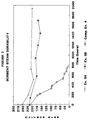
- Figure 3 illustrates the improved retention of surface area over time for the sorbent according to the present invention in a cycled adsorption/regeneration process.
- the alumina stabilizer used can be our preferred silica as well as other alumina stabilizers.
- lanthana, other rare earths, titania, zirconia, clay and alkaline earths such as calcium and barium either alone or in mixtures can be used to make a stabilized sorbent for our intended purpose.
- the amount is preferably from an effective amount up to about 30 mole %.
- our preferred first embodiment for production is by co-precipitating to make the sorbent such as by co-gel formation. This technique is described by Nozemack et al in U.S. Patent No. 4,780,446, the entire contents of which is incorporated herein by reference.
- silica stabilized alumina is prepared as a co-gel by a precipitation process under specific and controlled reactant concentrations and reaction temperature, time, and pH.
- a source of an acid aluminum salt, preferably an aluminum sulfate solution, a source of alkali metal aluminate, preferably sodium aluminate solution and a source of alkaline metal silicate, preferably sodium silicate solution are combined to obtain a silica-alumina co-gel reaction mixture.
- the cogellation reaction is conducted in two stages:
- the desired reaction pH is maintained by controlling the flow rate of the aluminum sulfate, sodium aluminate and sodium silicate reactants. Furthermore, sufficient sodium silicate is added to impart a total silica (SiO 2 ) content of the finished precipitated co-gel of from an effective stabilizing amount up to about 30 mole % and more preferably from about 5.5 to 8.5 percent by weight SiO 2 .
- the alumina stabilizers that can be added by this co-precipitation process include silica, lanthana, other rare earths, titania, zirconia, or alkaline earths such as calcium or barium.
- the stabilized alumina powder is then used to make substantially uniform spheroidal alumina particles.
- a preferred procedure for making the spheres is described in U.S. Patent No. 4,279,779, the entire contents of which is incorporated herein by reference.
- a slurry of the stabilized alumina is prepared in an acidic aqueous medium and droplets of the slurry are passed through air into a column containing an upper body of a water immiscible liquid such as a liquid hydrocarbon and ammonia and a lower body of aqueous alkaline coagulating agent.
- the resulting spheroidal particles are aged in aqueous ammonia to the desired hardness.
- the aged particles are dried and calcined.
- a slurry is prepared using a mixture of stabilized alumina powder, water, and acids such as acetic acid and nitric acid.
- the slurry is then preferably reduced in size such as by the preferred method of milling to reduce the average particle size from greater than 10 microns to 2-5 microns.
- the sorbent can be made without the preferred milling step, the resulting beads tend to have a low compacted bulk density, a high attrition rate and a low crush strength.
- the particle size reduction by milling is the preferred procedure.
- the slurry is fed to a large, commercial scale Netzsch Mill at a rate of 4 gallons/minute.
- the mill itself contains from 40-55 gallons of 1.5 mm Quackenbush beads which are continuously moved around internally by disks attached to a rotating axis. Slurry particles are then grounded down to the desired particle size by the action of the glass beads. Control of particle size is established by withdrawal or addition of specific amounts of glass beads.
- the slurry is dripped in a dripping column which preferably consists of ammoniated kerosene on top of an ammoniated water solution.
- the organic phase is needed to form spheres while the aqueous phase further hardens the beads.
- the beads are transferred to a de-watering system and then passed through a dryer with a flow of air through the beads.
- the sorbent is calcined in an indirect fired rotary kiln. Over and undersized particles are removed in a vibratory separator.
- impregnation with the active ingredient which is an alkali metal or an alkaline earth metal and preferably sodium as Na 2 CO 3 is performed. This can be done in a horizontal rotary drum impregnator.
- the sorbent is dried and calcined to yield the final product.
- the second method of adding the alumina stabilizer is to mix it with the alumina powder prior to dripping to form the particles. All of the stabilizers including clay can be added in this procedure.
- the third method of adding the alumina stabilizer is to form the alumina particle by the dripping method and to then impregnate the particle with the alumina stabilizer.
- the stabilizer can be added either before or after the sodium is added or to reduce production costs it can be added along with the sodium. Again, all of stabilizers can be added this way except for clay since it is not soluble.
- Additional bead forming procedures can be used to make the beads in addition to these dripping methods discussed above.
- the ingredients can be mixed together and the mixture can be extruded to form extrudates with preferably an approximate 1:1 ratio of length to diameter.
- the mixture can be placed in an agglomerator to agglomerate the beads.
- Other mechanical forming methods can be used such as pilling.
- the NO and SO 2 adsorption performance of the sorbent was measured in an adsorption/regeneration cycling unit.
- the unit is a batch-operated fluidized bed with flue gas containing 3000 ppm SO 2 , 500 ppm NO, 4% O 2 and 10% H 2 O.
- the cycle begins with these gases flowing through the fluidized sorbent bed at a temperature of about 140°C.
- the average conditions over the first 10 minutes of this batch-operated fluidized bed run are approximately equivalent to the conditions the sorbent will experience in intended industrial use with a design sorbent loading of 1.5 wt% sulfur.
- the run continues for an additional 10 minutes where a sulfur loading of about 2.5% is obtained.
- the NO adsorption performance over this time period is measured continuously with a Thermo Electron Instruments chemiluminescent NO analyzer.
- the SO 2 adsorption performance is measured by sulfur analysis of sorbent samples pulled at 2-5 minute intervals from the fluidized bed.
- the adsorption phase is stopped and the beads are then regenerated in methane for 20 minutes at 650°C followed by a steam treatment for 20 minutes at 650°C.
- the regenerated beads are allowed to cool down to the adsorption temperature in the range of 120-160°C with the preferred target temperature being 140°C .
- the beads are removed from the batch adsorption/regeneration apparatus and they are evaluated for surface area.
- the NO desorption is analyzed by temperature programmed desorption.
- the beads are also placed in a regenerator connected to a gas chromatograph and the desorption of SO 2 is measured for a 20 minute interval while methane is passed over it at 650°C. This produces a product distribution of S, SO 2 and H 2 S. Then steam is passed over the sorbent at 650°C for 20 minutes to remove any residual H 2 S.
- Crush strength is determined by placing the spheroidal particle between two parallel plates of a testing machine such as Ametek force gauge model ML4434-4 manufactured by AMETEK Co., 8600 Somerset Drive, Largo, Florida, which is mounted on a motorized test platform. The bottom plate is the anvil and the upper is the platen. By pressing the start button the plates are slowly brought together and the force gauge moves down the motorized platform at .0491 inch/second. The amount of force required to crush the particle is registered on a digital readout which has been calibrated in pounds force. A sufficient number (for example, 25) of riffled particles are each individually crushed to obtain a statistically significant representation of the total population. The average of the individual results is then calculated.
- a testing machine such as Ametek force gauge model ML4434-4 manufactured by AMETEK Co., 8600 Somerset Drive, Largo, Florida, which is mounted on a motorized test platform. The bottom plate is the anvil and the upper is the platen. By pressing the start button the plates are slowly brought
- beads are placed in a porcelain evaporating dish and heated by an electric bunsen burner at a temperature of at least 400°C. A bead is then removed from the dish and its crush strength is determined while it is still hot.
- the beads When the beads are to be used in a fluidized bed environment it is preferred to have an average crush strength of at least 4 pounds. The significance of having this high crush strength value is that the beads will not break apart during the severe physical treatment they receive in the fluidized bed and the other mechanical devices present in a commercial plant.
- the attrition is measured by the Air Jet Attrition procedure which involves placing a set volume (60 cc.) of material to be tested in an inverted Erlenmeyer flask of special construction which is connected to a metal orifice inlet. A large (one inch) outlet covered with 20-mesh screening is located on the flat side (bottom) of the flask. High velocity dry nitrogen gas is passed through the inlet orifice causing the particles to: (1) circulate over one another thus causing attrition, and (2) impact themselves in the top section of the flask thus breaking down as a function of strength. The material is tested for five minutes and the remaining particles are weighed. The loss in weight after testing expressed as percent of the initial charge is designated the attrition loss.
- the nitrogen flow will be in the range of about 3.1 to 4.0 cubic feet per minute, depending upon the density of the material.
- the flow rate must be sufficient for the particles to strike the top section of the flask.
- the fines produced by attrition are carried out of the flask by the nitrogen flow thus causing a loss in weight of the original material charged.
- the significance of a low attrition value is that the particles are not easily being attrited away as they are fluidized in the adsorber, the regenerator and the fluidized transport between these two units.
- an economical sorbent should have less than 1.2% attrition loss per day.
- adsorption/regeneration cycling test is used to measure the adsorption/regeneration cycling (ARC) attrition of the sorbent.
- Sorbent that has a size range between 10 and 20 screen mesh is adsorbed at 140°C in a batch-operated fluidized bed with flue gas containing 3000 ppm SO 2 , 500 ppm NO, 4% O 2 and 10% H 2 O until it contains 1.5-2% sulfur.
- the sorbent is then regenerated with methane for 20 minutes at 650°C followed by stream treatment for 20 minutes at 650°C. This adsorption/regeneration process is repeated a second time.
- the sorbent is then screened and weighted. All sorbent smaller than 35 mesh in size is considered attrited material.
- the % attrition per day is based on the percent of the total material that is smaller than 35 mesh and is then normalized to reflect 8 adsorption/regeneration cycles per day.
- a chemical attrition value of less than 10% per day is clearly needed, preferably less than 5% per day and more preferably less than 1.2% per day on this test for a commercial sorbent which will be subjected to a fluidized bed operation.
- the surface areas referred to throughout this specification and claims are the nitrogen BET surface areas determined by the method described in the article by S. Brunauer, P. Emmett, and E. Teller, J. Am. Chem. Soc., Vol. 60, p. 309(1938). This method depends on the condensation of nitrogen into the pores, and is effective for measuring pores with pore diameters in the range of 10 to 600 ⁇ .
- the volume of nitrogen adsorbed is related to the surface area per unit weight of the support.
- a given weight of freshly calcined spheroids is placed in a graduated cylinder sufficient to contain the material within its graduated volume.
- the cylinder is then vibrated until all settling ceases and a constant volume is obtained.
- the weight of sample occupying a unit volume is then calculated.
- the pore size distribution within the activated spheroidal particle and total porosity is determined by mercury porosimetry.
- the mercury intrusion technique is based on the principle that the smaller a given pore the greater will be the mercury pressure required to force mercury into that pore.
- the pore size distribution can be determined.
- the mercury porosimetry measures the total mercury pore volume in cm 3 /g.
- the particle density is also measured in terms of g/cm 3 .
- the total porosity is determined in units of cm 3 /cm 3 .
- the BET surface area stability of the sorbent under hydrothermal conditions is measured by subjecting the sorbent beads to a 100 volume % steam atmosphere at 650°C and the surface area is measured at regular intervals. Using this test the sorbent should retain at least 100 m 2 /g of surface area after 1500 hours in the steam and preferably greater than 140 m 2 /g.
- silica stabilized alumina powder was produced.
- the powder contained 6.5% silica.
- This powder is commercially available from Davison Chemical Division of W. R. Grace & Co.-Conn. as silica alumina.
- the powder contains 28% moisture when heated to 1750°F.
- the average particle size of the powder is 15-20 microns when measured by the Malvern Particle Analyzer.
- silica stabilized alumina made in Example 1 was slurried in a mixture of 30 gallons water, 2404 grams 70% nitric acid and 3,237 grams of glacial acetic acid and mixed in a high shear mixer for 25 minutes. The slurry was then milled in a 20 liter Netzsch Mill. The average particle size was reduced to less than 5 microns. The slurry was afterwards dripped in a column containing an NH 3 kerosene phase on top of an aqueous NH 3 phase. The wet spheres were then dried and air calcined. The silica stabilized alumina spherical particles were impregnated at two levels of sodium.
- the particles impregnated at 4% sodium had a surface area of 254 m 2 /g, a compacted bulk density of 39 lbs/ft 3 , an average crush of 10.2 pounds, a total porosity measured by mercury of 0.712 cm 3 /cm 3 and a GM attrition loss of 0.2%.
- the particles impregnated at 6% sodium had a surface area of 210 m 2 /g, a compacted bulk density of 40 lbs/ft 3 , an average crush of 8 pounds, a total porosity measured by mercury of 0.714 cm 3 /cm 3 , a GM attrition loss of 0.1% and an ARC attrition loss of 0.3%.
- Example 2 An alumina dripping slurry was prepared in the same manner as given in Example 3, except that the alumina powder from Example 2 was used which does not contain any silica. When it was initially slurried 20 gallons of water were used instead of 30 gallons to obtain the desired viscosity. It was dripped and impregnated to the same level of sodium and afterwards dried and calcined as given in Example 3A. Exposure to 100 vol% steam at 650°C then showed a steep decline of surface area as shown in Figure 2.
- the particles had a surface area of 211 m 2 /g, a compacted bulk density of 35.9 lbs/ft 3 , an average crush of 6.9 pounds, a total porosity measured by mercury of 0.676 cm 3 /cm 3 , a GM attrition loss of 0.7%, and an ARC attrition loss of 0.2%.
- silica containing sorbent of Example 3B and the nonsilica containing sorbent of Comparison Example 4 were evaluated by the Sorbent Cycle Stability procedure. These two samples have different sodium levels. However, it is believed that a comparison between the two is fair with regard to surface area properties.
- the sorbent with the higher sodium level would have the lower surface area because the additional sodium would be covering (i.e. taking up) the additional surface area. See Example 3 where the 3A sorbent with 4% Na has a surface area of 254 m 2 /g while the 3B sorbent with the higher Na level of 6% has a lower surface area of 210 m 2 /g.
- there should be less surface area than the sorbent with the smaller amount of sodium and thus the comparison is believed to be fair because one would expect that the comparison sorbent of Comparison Example 4 would have the greater starting surface area than the sorbent of Example 3B with its higher sodium loading.
- Example 3B (with the higher amount of sodium) actually has about the same surface area.
- the added silica which acts as the stabilizer also provides additional surface area to make up for the surface area lost by the additional sodium.
- the drop off in performance can be further seen from the data taken from Figure 3 and presented in Table 1 below by comparing the surface area of the sorbent after 20 cycles with that after 100 cycles and also comparing the rate of surface area decay between the 20th and 100th cycle.
- Table 1 Surface Area, m 2 /g 20 cycles 100 cycles
- Drop Example 3B 150 100 50 Comp.
- Example 4 125 60 65 Without the stabilizer the surface area drops off 65 m 2 /g over the 80 cycles to a low level of 60 m 2 /g whereas for the sorbent with the stabilizer present according to the present invention the surface area only drops off 50 m 2 /g during the 80 cycles and the surface area remains at a higher, superior level of 100 m 2 /g.
- the sorbent according to the present invention with the silica stabilizer has a higher surface area. Although this is very favorable, the even more significant advantage is that the rate of decrease in surface area for the silica stabilized sorbent is slower than the rate of decrease in surface area for the unstabilized sorbent.
Landscapes
- Chemical & Material Sciences (AREA)
- Chemical Kinetics & Catalysis (AREA)
- Analytical Chemistry (AREA)
- Engineering & Computer Science (AREA)
- Organic Chemistry (AREA)
- General Chemical & Material Sciences (AREA)
- Oil, Petroleum & Natural Gas (AREA)
- Inorganic Chemistry (AREA)
- Materials Engineering (AREA)
- Solid-Sorbent Or Filter-Aiding Compositions (AREA)
- Treating Waste Gases (AREA)
Applications Claiming Priority (3)
| Application Number | Priority Date | Filing Date | Title |
|---|---|---|---|
| US690466 | 1991-04-24 | ||
| US07/690,466 US5180703A (en) | 1991-04-24 | 1991-04-24 | Sox/nox sorbent and process of use |
| EP92106410A EP0511544B1 (fr) | 1991-04-24 | 1992-04-14 | Nouvel adsorbant SOx/NOx |
Related Parent Applications (2)
| Application Number | Title | Priority Date | Filing Date |
|---|---|---|---|
| EP92106410A Division EP0511544B1 (fr) | 1991-04-24 | 1992-04-14 | Nouvel adsorbant SOx/NOx |
| EP92106410.1 Division | 1992-04-14 |
Publications (2)
| Publication Number | Publication Date |
|---|---|
| EP0722775A2 true EP0722775A2 (fr) | 1996-07-24 |
| EP0722775A3 EP0722775A3 (fr) | 1996-08-14 |
Family
ID=24772571
Family Applications (2)
| Application Number | Title | Priority Date | Filing Date |
|---|---|---|---|
| EP96250047A Ceased EP0722775A3 (fr) | 1991-04-24 | 1992-04-14 | Nouveau sorbant pour SOx/NOx et procédé d'utilisation |
| EP92106410A Expired - Lifetime EP0511544B1 (fr) | 1991-04-24 | 1992-04-14 | Nouvel adsorbant SOx/NOx |
Family Applications After (1)
| Application Number | Title | Priority Date | Filing Date |
|---|---|---|---|
| EP92106410A Expired - Lifetime EP0511544B1 (fr) | 1991-04-24 | 1992-04-14 | Nouvel adsorbant SOx/NOx |
Country Status (16)
| Country | Link |
|---|---|
| US (2) | US5180703A (fr) |
| EP (2) | EP0722775A3 (fr) |
| JP (2) | JP3237777B2 (fr) |
| KR (1) | KR920019412A (fr) |
| CN (1) | CN1039973C (fr) |
| AT (1) | ATE167409T1 (fr) |
| CA (1) | CA2060797C (fr) |
| CS (1) | CS124292A3 (fr) |
| DE (1) | DE69225923T2 (fr) |
| DK (1) | DK0511544T3 (fr) |
| ES (1) | ES2117018T3 (fr) |
| HU (1) | HU212906B (fr) |
| MX (1) | MX9201777A (fr) |
| PL (1) | PL169995B1 (fr) |
| RU (1) | RU2087186C1 (fr) |
| TW (1) | TW200408B (fr) |
Families Citing this family (23)
| Publication number | Priority date | Publication date | Assignee | Title |
|---|---|---|---|---|
| US5427995A (en) * | 1993-02-24 | 1995-06-27 | W. R. Grace & Co.-Conn. | SOx/NOx sorbent and process of use |
| US5922090A (en) * | 1994-03-10 | 1999-07-13 | Ebara Corporation | Method and apparatus for treating wastes by gasification |
| TW412438B (en) * | 1995-01-20 | 2000-11-21 | Hitachi Shipbuilding Eng Co | Nox adsorbent |
| US6161378A (en) † | 1996-06-10 | 2000-12-19 | Hitachi, Ltd. | Exhaust gas purification apparatus of internal combustion engine and catalyst for purifying exhaust gas internal combustion engine |
| GB2324052A (en) * | 1997-04-11 | 1998-10-14 | Ford Motor Co | Heating of a storage trap |
| FR2774606B1 (fr) * | 1998-02-11 | 2000-03-17 | Rhodia Chimie Sa | Procede d'elimination de composes halogenes contenus dans un gaz ou un liquide |
| RU2171710C1 (ru) * | 2000-05-10 | 2001-08-10 | Рабинович Георгий Лазаревич | Адсорбент для очистки газов от сероводорода и способ его приготовления |
| RU2176931C1 (ru) * | 2000-06-16 | 2001-12-20 | Кутищев Владимир Григорьевич | Способ получения гранулированного носителя для катализаторов на основе модифицированной окиси алюминия |
| RU2205059C1 (ru) * | 2001-10-15 | 2003-05-27 | Общество с ограниченной ответственностью "Акела-Н" | Способ отделения газовых примесей от газовых смесей |
| RU2211085C1 (ru) * | 2002-04-17 | 2003-08-27 | Общество с ограниченной ответственностью "Еврохим-СПб-Трейдинг" | Способ приготовления адсорбента для очистки газов и жидкостей от галогеносодержащих соединений |
| KR100827634B1 (ko) | 2003-03-29 | 2008-05-07 | 카운슬 오브 사이언티픽 앤드 인더스트리얼 리서치 | 공기의 크기/형태 선택적 분리를 위한 분자 체 흡착제의제조방법 |
| RU2440179C2 (ru) * | 2005-03-17 | 2012-01-20 | НОКС II ИНТЕНЭШНЛ, эЛТиДи. | Способ уменьшения содержания серы и/или ртути в дымовых газах (варианты), композиция сорбента, способ сжигания угля с уменьшенным количеством выброса в окружающую среду вредных элементов (варианты), угольная зола, полученная вышеуказанными способами, и цемент, пуццолан, бетонная смесь и ее раствор, бетонная конструкция, способ получения цементирующей смеси, полученные на основе упомянутой золы или посредством нее |
| US7501379B2 (en) * | 2005-09-23 | 2009-03-10 | Eastman Chemicalcompany | Catalyst for the production of methyl isopropyl ketone |
| US20080016768A1 (en) | 2006-07-18 | 2008-01-24 | Togna Keith A | Chemically-modified mixed fuels, methods of production and used thereof |
| AU2009316229A1 (en) | 2008-11-11 | 2010-05-20 | The University Of Queensland | A method for producing sorbents for CO2 capture under high temperatures |
| EP2451571A4 (fr) * | 2009-07-06 | 2016-11-16 | Mar Systems Inc | Milieux pour l'élimination de contaminants à partir de courants de fluides et procédé de fabrication et d'utilisation de ceux-ci |
| CN101786024B (zh) * | 2010-02-06 | 2012-05-23 | 山西大学 | 一种高水热稳定性氧化铝载体及其制备方法 |
| CN103394247B (zh) * | 2013-07-24 | 2016-01-06 | 东莞市宇洁新材料有限公司 | 一种控制室内aqi数值的复合空气净化过滤器及其性能测试方法 |
| WO2015136390A1 (fr) * | 2014-03-14 | 2015-09-17 | Reliance Industries Limited | Supports d'oxydes inorganiques stabilisés et adsorbants dérivés de ceux-ci pour la capture du dioxyde de carbone |
| KR102268573B1 (ko) * | 2014-12-19 | 2021-06-24 | 에스케이이노베이션 주식회사 | 안정제를 함유하는 무수당 알코올의 저장용기 |
| JP7120650B2 (ja) | 2016-10-14 | 2022-08-17 | 黄 立維 | 浄化剤の製造方法、浄化剤による浄化方法、及び浄化剤の再生方法 |
| CN107551810A (zh) * | 2017-08-28 | 2018-01-09 | 苏州天佑蓝环保科技有限公司 | 低温光催化自氧化还原的烟气脱硫脱硝方法 |
| CN108176349B (zh) * | 2018-01-05 | 2020-01-21 | 北京科技大学 | 一种Al2O3@TiO2核壳结构同时脱硫脱硝吸附剂的制备方法 |
Family Cites Families (15)
| Publication number | Priority date | Publication date | Assignee | Title |
|---|---|---|---|---|
| US2887472A (en) * | 1954-09-30 | 1959-05-19 | Standard Oil Co | Production of solid polyethylene by a catalyst consisting essentially of an alkali metal and an adsorbent alumina-containing material |
| DE1267668B (de) * | 1957-08-28 | 1968-05-09 | Reinluft G M B H | Verfahren zur adsorptiven Abtrennung und Gewinnung von Schwefeldioxid und/oder Stickoxid aus industriellen Gasen, insbesondere Rauchgasen |
| US3551093A (en) * | 1968-10-21 | 1970-12-29 | Us Interior | Alkalized alumina absorbent and method of making same |
| NL7307675A (fr) * | 1972-06-16 | 1973-12-18 | ||
| GB1430199A (en) * | 1973-03-19 | 1976-03-31 | Shell Int Research | Process for the preparation of acceptors |
| US4061594A (en) * | 1974-01-10 | 1977-12-06 | Rhone-Poulenc Industries | Alumina-based bodies obtained by agglomeration which are resistant to elevated temperatures |
| US3974256A (en) * | 1974-05-07 | 1976-08-10 | Exxon Research And Engineering Company | Sulfide removal process |
| FR2324361A1 (fr) * | 1975-09-22 | 1977-04-15 | Norton Co | Systeme a base d'alumine pour catalyseur et agent sorbant |
| US4243556A (en) * | 1978-12-04 | 1981-01-06 | Chevron Research Company | Sulfur oxides control in cracking catalyst |
| FR2527197B1 (fr) * | 1982-05-19 | 1985-06-21 | Rhone Poulenc Spec Chim | Procede de fabrication de billes d'alumine mises en forme par coagulation en gouttes |
| US4780446A (en) * | 1982-09-30 | 1988-10-25 | W. R. Grace & Co. | Alumina-silica cogel |
| US4459371A (en) * | 1983-01-24 | 1984-07-10 | Uop Inc. | FCC Sulfur oxide acceptor |
| US4609537A (en) * | 1984-08-13 | 1986-09-02 | Standard Oil Company (Indiana) | Process for simultaneously removing nitrogen oxides, sulfur oxides, and particulates |
| US4798711A (en) * | 1984-10-12 | 1989-01-17 | Noxso Corporation | Processes for removing nitrogen oxides, sulfur oxides and hydrogen sulfide from gas streams |
| US4780447A (en) * | 1987-07-10 | 1988-10-25 | W. R. Grace & Co.-Conn. | Catalysts for controlling auto exhaust emissions including hydrocarbon, carbon monoxide, nitrogen oxides and hydrogen sulfide and method of making the catalysts |
-
1991
- 1991-04-24 US US07/690,466 patent/US5180703A/en not_active Expired - Lifetime
-
1992
- 1992-02-06 CA CA002060797A patent/CA2060797C/fr not_active Expired - Lifetime
- 1992-03-27 TW TW081102374A patent/TW200408B/zh active
- 1992-03-28 KR KR1019920005167A patent/KR920019412A/ko not_active Withdrawn
- 1992-04-14 DE DE69225923T patent/DE69225923T2/de not_active Expired - Lifetime
- 1992-04-14 AT AT92106410T patent/ATE167409T1/de not_active IP Right Cessation
- 1992-04-14 DK DK92106410T patent/DK0511544T3/da active
- 1992-04-14 EP EP96250047A patent/EP0722775A3/fr not_active Ceased
- 1992-04-14 EP EP92106410A patent/EP0511544B1/fr not_active Expired - Lifetime
- 1992-04-14 ES ES92106410T patent/ES2117018T3/es not_active Expired - Lifetime
- 1992-04-15 MX MX9201777A patent/MX9201777A/es unknown
- 1992-04-16 PL PL92294249A patent/PL169995B1/pl unknown
- 1992-04-21 CN CN92102895A patent/CN1039973C/zh not_active Expired - Fee Related
- 1992-04-22 JP JP12794392A patent/JP3237777B2/ja not_active Expired - Fee Related
- 1992-04-23 RU SU925011485A patent/RU2087186C1/ru active
- 1992-04-23 CS CS921242A patent/CS124292A3/cs unknown
- 1992-04-23 HU HU9201359A patent/HU212906B/hu not_active IP Right Cessation
- 1992-11-06 US US07/955,771 patent/US5413771A/en not_active Expired - Fee Related
-
1999
- 1999-04-15 JP JP10784499A patent/JP3266578B2/ja not_active Expired - Fee Related
Also Published As
| Publication number | Publication date |
|---|---|
| PL169995B1 (pl) | 1996-09-30 |
| CS124292A3 (en) | 1992-11-18 |
| CN1039973C (zh) | 1998-09-30 |
| RU2087186C1 (ru) | 1997-08-20 |
| DK0511544T3 (da) | 1998-10-19 |
| US5180703A (en) | 1993-01-19 |
| ATE167409T1 (de) | 1998-07-15 |
| DE69225923D1 (de) | 1998-07-23 |
| HU9201359D0 (en) | 1992-07-28 |
| DE69225923T2 (de) | 1998-11-12 |
| ES2117018T3 (es) | 1998-08-01 |
| PL294249A1 (en) | 1993-01-25 |
| KR920019412A (ko) | 1992-11-19 |
| MX9201777A (es) | 1992-10-01 |
| HUT62495A (en) | 1993-05-28 |
| JPH11319550A (ja) | 1999-11-24 |
| JP3237777B2 (ja) | 2001-12-10 |
| US5413771A (en) | 1995-05-09 |
| CA2060797C (fr) | 1997-03-11 |
| JP3266578B2 (ja) | 2002-03-18 |
| HU212906B (en) | 1996-12-30 |
| JPH05146675A (ja) | 1993-06-15 |
| CA2060797A1 (fr) | 1992-10-25 |
| EP0722775A3 (fr) | 1996-08-14 |
| EP0511544A1 (fr) | 1992-11-04 |
| TW200408B (fr) | 1993-02-21 |
| CN1077660A (zh) | 1993-10-27 |
| EP0511544B1 (fr) | 1998-06-17 |
Similar Documents
| Publication | Publication Date | Title |
|---|---|---|
| US5413771A (en) | SOX/NOX sorbent and process of use | |
| EP0618004B1 (fr) | Nouveau sorbant pour SOx/NOx et procédé de production | |
| US3226191A (en) | Method of producing active alumina and the resulting product | |
| EP0343697B1 (fr) | Adsorbant composite | |
| EP0940174B1 (fr) | Adsorbant pour la séparation de gaz | |
| US3795631A (en) | Glass-fiber-reinforced zeolite granulates | |
| US3161489A (en) | Adsorption process for treating natural gas | |
| CA1080205A (fr) | Catalyseur actif et durable de la synthese d'acide sulfurique | |
| JP2681547B2 (ja) | 活性アルミナ凝集体 | |
| JP2004529842A (ja) | アルミナ集塊、特に触媒支持体、触媒、吸収剤としての使用、並びにそれらの調製方法 | |
| Ziebarth et al. | SOX/NOX sorbent and process of use | |
| US3011980A (en) | Activated bauxite and catalyst containing same | |
| US3676366A (en) | Process for the production of highly porous bead-form silica catalyst supports | |
| US3411888A (en) | Agglomeration of naturally occurring zeolites | |
| US5008233A (en) | Novel crystalline silicon enhanced aluminas | |
| US3421837A (en) | Solid oxidant and method for deodorizing air therewith | |
| LT3709B (en) | Sorbent from stabilized aluminium oxide including active ingredient for absorbtion of nitric and sulphur oxides and method for processing them | |
| EP0272904B1 (fr) | Procédé pour le contrôle de la porosité et la rehydroxylation de corps de silice | |
| Satterfield et al. | Sorption and diffusivity characteristics of acid‐leached mordenites | |
| EP0125644A2 (fr) | Matières sorbantes en oxyde inorganique | |
| CA3256437A1 (fr) | Procédé de préparation d'alumine particulaire | |
| MXPA96004146A (en) | Absorben granules |
Legal Events
| Date | Code | Title | Description |
|---|---|---|---|
| PUAI | Public reference made under article 153(3) epc to a published international application that has entered the european phase |
Free format text: ORIGINAL CODE: 0009012 |
|
| PUAL | Search report despatched |
Free format text: ORIGINAL CODE: 0009013 |
|
| 17P | Request for examination filed |
Effective date: 19960226 |
|
| AC | Divisional application: reference to earlier application |
Ref document number: 511544 Country of ref document: EP |
|
| AK | Designated contracting states |
Kind code of ref document: A2 Designated state(s): AT BE CH DE DK ES FR GB GR IT LI LU NL PT SE |
|
| AK | Designated contracting states |
Kind code of ref document: A3 Designated state(s): AT BE CH DE DK ES FR GB GR IT LI LU NL PT SE |
|
| RIN1 | Information on inventor provided before grant (corrected) |
Inventor name: PLECHA, STANISLAW Inventor name: HAGER, JOHN MICHAEL Inventor name: BEECKMAN, JEAN WILLEM Inventor name: ZIEBARTH, MICHAEL S. |
|
| 17Q | First examination report despatched |
Effective date: 19980929 |
|
| RAP1 | Party data changed (applicant data changed or rights of an application transferred) |
Owner name: NOXSO CORPORATION |
|
| GRAG | Despatch of communication of intention to grant |
Free format text: ORIGINAL CODE: EPIDOS AGRA |
|
| GRAG | Despatch of communication of intention to grant |
Free format text: ORIGINAL CODE: EPIDOS AGRA |
|
| STAA | Information on the status of an ep patent application or granted ep patent |
Free format text: STATUS: THE APPLICATION HAS BEEN REFUSED |
|
| 18R | Application refused |
Effective date: 20010622 |