EP0723014A2 - ADNc du gène DOCK180 et la protéine DOCK180 - Google Patents
ADNc du gène DOCK180 et la protéine DOCK180 Download PDFInfo
- Publication number
- EP0723014A2 EP0723014A2 EP96300379A EP96300379A EP0723014A2 EP 0723014 A2 EP0723014 A2 EP 0723014A2 EP 96300379 A EP96300379 A EP 96300379A EP 96300379 A EP96300379 A EP 96300379A EP 0723014 A2 EP0723014 A2 EP 0723014A2
- Authority
- EP
- European Patent Office
- Prior art keywords
- dock180
- protein
- cdna
- gene
- seq
- Prior art date
- Legal status (The legal status is an assumption and is not a legal conclusion. Google has not performed a legal analysis and makes no representation as to the accuracy of the status listed.)
- Granted
Links
Images
Classifications
-
- C—CHEMISTRY; METALLURGY
- C07—ORGANIC CHEMISTRY
- C07K—PEPTIDES
- C07K14/00—Peptides having more than 20 amino acids; Gastrins; Somatostatins; Melanotropins; Derivatives thereof
- C07K14/435—Peptides having more than 20 amino acids; Gastrins; Somatostatins; Melanotropins; Derivatives thereof from animals; from humans
- C07K14/46—Peptides having more than 20 amino acids; Gastrins; Somatostatins; Melanotropins; Derivatives thereof from animals; from humans from vertebrates
- C07K14/47—Peptides having more than 20 amino acids; Gastrins; Somatostatins; Melanotropins; Derivatives thereof from animals; from humans from vertebrates from mammals
-
- C—CHEMISTRY; METALLURGY
- C07—ORGANIC CHEMISTRY
- C07K—PEPTIDES
- C07K2319/00—Fusion polypeptide
Definitions
- the present invention relates to a cDNA of DOCK 180 protein, which binds to the proto-oncogene product CRK, a recombinant vector containing this cDNA, a DOCK 180 protein expressed from the cDNA, and an antibody to the DOCK 180 protein.
- the cDNA of the present invention, the DOCK 180 protein, and the antibody are very useful for diagnosis of tumor cells and development of a cancerocidal method for suppressing tumor cells.
- CRK protein which is expressed from a protooncogene CRK, is one of the major proteins controlling proliferation of higher eukaryote, and is known to regulate proliferation of tumor cells in many malignant tumors.
- DOCK 180 is therefore attracting general attention as a diagnostic indicator of tumor cells and as a target for missile therapy using various antitumor agents.
- DOCK180 protein because no information has been available about a gene encoding the DOCK180 protein, it has conventionally been impossible to effectively utilize this protein widely for diagnosis of cancerous diseases, clarification of carcinogenesis mechanism, or development of a new cancer therapy.
- the present invention has an object to provide a cDNA of DOCK180 gene, and a genetic engineering material permitting easy manipulation of this cDNA and expression of the protein in a large scale.
- the present invention has another object to provide a DOCK 180 protein which is expressed from the above-mentioned cDNA, and an antibodies against this protein.
- the present invention provides a cDNA of the DOCK 180 gene, which has the nucleotide sequence defined in Sequence Listing by SEQ ID No: 1.
- the present invention provides a recombinant vector containing the cDNA of DOCK180 gene. More concretely, the present invention provides the plasmid pDOCK180 held by E. coli DOCK180 (FERM BP-5362).
- the present invention further provides a DOCK180 protein having the amino acid sequence defined in Sequence Listing by SEQ ID NO: 2, and antibodies to DOCK180 protein prepared by using the DOCK180 protein as an antigen.
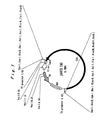
- Fig. 1 is a constitutional diagram of pDOCK180, which is a cloning vector of the present invention.
- the cDNA of the present invention can be isolated and purified from higher eukaryotes such as cells derived from human, mouse, and chicken by the application of, for example, the method of Sambrook et al.(Molecular Cloning, second edition, Cold Spring Harbor Laboratory, New York, 1989). More specifically, the cDNA can be obtained by purifying mRNA of DOCK180 protein gene from animal cell, and then synthesizing a cDNA chain from the mRNA by the use of reverse transcriptase. From among the thus synthesizable cDNAs of DOCK180 protein, the nucleotide sequence of cDNA derived from human cells and the amino acid sequence of the translation domain thereof are defined in Sequence Listing by SEQ ID NOs: 1 and 2.
- the recombinant vector of the present invention can be prepared by inserting a fragment of the resultant cDNA into known cloning vectors. Ligation of the cDNA fragment and the vectors may be accomplished by, for example, the above mentioned method of Sambrook et al.
- Preferable vectors include a plasmid and a ⁇ - phage for Escherichia coli as the host, and an applicable plasmid is, for example, one derived from pBR322.
- a preferable ⁇ -phage is ⁇ gt11.
- Transfer of the thus prepared recombinant vectors into the host may be conducted through infection by ⁇ phage as presented in the above-mentioned paper by Sambrook et al.
- a transformed cells with the recombinant vector containing the above-mentioned cDNA are available by inoculating the recombinant ⁇ gt11 into Escherichia coli Y1090 at 37°C.
- Selection of a transformed cell may be accomplished by appropriately using a known method, depending upon the kind of the cloning vector.
- selection of a transformed cell with ⁇ gt11 can be performed as follows.
- the above-mentioned recombinant ⁇ gt11 containing the cDNA can be inoculated into Escherichia coli Y1090 under a temperature condition of 37°C, and the E. coli cells are cultured on an ager plate containing trypton, yeast extract, NaCl and ampicillin (hereinafter abbreviated as an "agar medium").
- a nitrocellulose membrane containing isopropyl thio-D-galactoside (hereinafter abbreviated as "1PTG") is placed on the plate for another several hours to induce transcription from the integrated cDNA.
- an enzyme-labelled CRK protein to the membrane (Matsuda et al., Mol. Cell. Bio]., 12: 3482-3489, 1992)
- an lamda phage plaques having the recombinant vector can be selected by putting a substrate for the enzyme in it.
- a preferable labelling enzyme is alkaline phosphatase or peroxidase.
- CRK protein may be manufactured as a fusion protein with glutathione-S-transferese (hereinafter abbreviated as "GST”), and selection may be accomplished by using an antibody against this GST.
- GST glutathione-S-transferese
- the cDNA fragment inserted into ⁇ phage can be cleaved out and re-inserted into a plasmid vector, if necessary.
- An example of recombinant plasmid vector of the invention is pDOCK180 which is prepared by inserting the cDNA of SEQ ID NO: 1 into vector plasmid pBlue ScriptIIKS(+), for which details are presented in Example 2 later.
- the pDOCK180 was transfected into the XL1-Blue strain derived from Eischerichia coli K12 strain, and the transformant E. coli DOCK180 having the pDOCK180 was deposited to National Institute of Biocience and human Technology, a international depository, under Budapest Treaty as a deposit No. FERM BP-5362.
- the DOCK180 protein of the present invention can be exressed from the cDNA of SEQ ID NO: 1.
- an expression vector is prepared by inserting the cDNA fragment into a known expression vector.
- the cDNA fragment can be isolated from the above-mentioned cloning vector, pDOCK180. While there is no particular limitation as to the expression vector, a preferable one is pGGEX1, pGEX2T or pGEX3X using E. coli as the host.
- the expression vector containing the cDNA fragment can be introduced into an Escherichia coli (for example, DH5 strain derived from Escherichia coli K12 strain) by a known method.
- the DOCK180 protein of the present invention is easily produced in a large scale by culturing the transformed cells. More specifically, a concrete example comprises the steps of culturing the transformed Escherichia coli at 37°C for 3 to 24 hours on L-broth containing ampicillin, bacteriolyzing through ultrasonic blending, and adsorbing this sample to a carrier such as glutathione sephalose (made by Pharmacia P-L biochemicals Company), thereby isolating and purifying the target DOCK180 protein.
- a carrier such as glutathione sephalose (made by Pharmacia P-L biochemicals Company)
- An antibody against DOCK180 protein is available by inoculating the thus purified DOCK180 protein to an animal by a conventional method.
- Applicable animals include rabbit, mouse, goat, sheep, horse and hamster, and among others, rabbit or mouse is preferable.
- the thus obtained anti-DOCK180 protein antibody can be used, for example, for quantitative determination or separation of DOCK180 protein in a sample, and further, serves as a useful material for missile therapy using an antitumor agent with DOCK180 as a target.
- the cDNA, the protein and the antibody of the present invention provide various genetic manipulation materials useful for development of a new cancer therapy. These materials include an antisense RNA of DOCK180 gene, a variant protein of DOCK180, and a virus vector which expresses these RNA, variant protein, and anti-DOCK180 protein antibody in tumor cells.
- a cDNA fragment to human DOCK180 protein gene was isolated and cloned as follows.
- mRNA of DOCK180 gene was isolated from human spleen and a cDNA fragment was synthesized from the mRNA.
- the cDNA fragment was then integrated into ⁇ gt11, and a recombinant vector thereof was infected to Escherichia coli Y1090, which was plated onto LA agar culture medium. After six hours, a nitrocellulose membrane containing 1mM IPTG was placed on this medium, and after three hours of culture, this nitrocellulose membrane was incubated for an hour with a phosphate buffer solution (pH: 7.5) containing 2% skim milk and 0.05% Tween 20.
- a phosphate buffer solution pH: 7.5
- the phage having an ability to bind to CRK protein was identified by means of AP PURPLE (made by Bio lol Company), a substrate for alkaline phosphatase. This phage was purified through three runs of plaque formation, and then DNA thereof was isolated by the phenol extraction method, and cleaved with a restriction enzyme EcoRI. Next, part of cDNA of DOCK180 gene was prepared through electrophoresis.
- This cDNA fragment was isotope-labelled with random oligo primer (made by Behlinger Company) and 32P deoxycytidine triphosphate.
- random oligo primer made by Behlinger Company
- 32P deoxycytidine triphosphate 32P deoxycytidine triphosphate.
- DNAs of these phages were cleaced with restriction enzyme ECoRI to isolate cDNA of DOCK180 gene and subcloned into phagemid vector pUC119.
- a single stranded DNA was purified from the thus obtained recombinant vector, and the nucleotide sequence thereof was determined by the use of an automatic nucleotide sequence reader (made by AB[ Company). The identified nucleotide sequence thereof is shown in Sequence Listing by SEQ ID NO: 1, and the amino acid sequence of the anticipated translation product, by SEQ ID NO: 2.
- DOCK180 protein shares homology with Fyn and Yes of tyrosine kinase by more than 20%.
- This domain has a structure known as SH3, and is present in various protein groups involved in signal transduction of cell proliferation in addition to that of tyrosine kinase.
- DOCK180 protein was found to be different from any known proteins and to be a new signal transduction factor.
- this cloning vector pDOCK180 was introduced into an XL1-Blue strain derived from Escherichia coli K12 to obtain a transformant E. coli DOCK180 (FERM BP-5362).
- the cloning vector pDOCK180 obtained in Example 2 was cleaved with a restriction enzyme to prepare a cDNA domain of DOCK180 protein.
- the resultant cDNA fragment was then inserted into plasmid pGEX1, thereby preparing expression vectors.
- Transformant cells were prepared by introducing the expression vectors into Escherichia coli DH5. After culturing this transformant cells in 1l L-broth containing ampicillin up to an absorbance of 0.6, IPTG was added to 0.5mM, and culturing was continued for another three hours. After collection, the bacteria were ultrasonic-treated to remove crushed pieces of bacteria, and the supernatant was mixed with glutathione sephalose (made by Pharmacia P-L Biochemicals Company).
- DOCK180 protein was eluted with the use of a phosphate buffer solution containing 5mM glutathione. This protein was dialyzed with a phosphate buffer solution, and then a portion thereof was analyzed with SDS-polyacrylamide gel: a GST fused-DOCK180 protein having a purity of over 90% was synthesized.
- DOCK180 protein purified in Example 3 was subcutaneously inoculated three times to a rabbit, together with complete Freund's adjuvant, and then, serum was sampled.
Landscapes
- Chemical & Material Sciences (AREA)
- Health & Medical Sciences (AREA)
- Life Sciences & Earth Sciences (AREA)
- Organic Chemistry (AREA)
- General Health & Medical Sciences (AREA)
- Gastroenterology & Hepatology (AREA)
- Biochemistry (AREA)
- Biophysics (AREA)
- Zoology (AREA)
- Genetics & Genomics (AREA)
- Medicinal Chemistry (AREA)
- Molecular Biology (AREA)
- Proteomics, Peptides & Aminoacids (AREA)
- Toxicology (AREA)
- Peptides Or Proteins (AREA)
- Micro-Organisms Or Cultivation Processes Thereof (AREA)
- Preparation Of Compounds By Using Micro-Organisms (AREA)
Applications Claiming Priority (4)
| Application Number | Priority Date | Filing Date | Title |
|---|---|---|---|
| JP07006775A JP3053539B2 (ja) | 1995-01-19 | 1995-01-19 | DOCK180蛋白遺伝子のcDNA |
| JP6775/95 | 1995-01-19 | ||
| JP677595 | 1995-01-19 | ||
| US08/588,985 US5777094A (en) | 1995-01-19 | 1996-01-19 | cDNA of DOCK180 gene and DOCK180 protein |
Publications (3)
| Publication Number | Publication Date |
|---|---|
| EP0723014A2 true EP0723014A2 (fr) | 1996-07-24 |
| EP0723014A3 EP0723014A3 (fr) | 1998-03-04 |
| EP0723014B1 EP0723014B1 (fr) | 2005-11-30 |
Family
ID=26340982
Family Applications (1)
| Application Number | Title | Priority Date | Filing Date |
|---|---|---|---|
| EP96300379A Expired - Lifetime EP0723014B1 (fr) | 1995-01-19 | 1996-01-19 | ADNc du gène DOCK180 et la protéine DOCK180 |
Country Status (4)
| Country | Link |
|---|---|
| US (2) | US5777094A (fr) |
| EP (1) | EP0723014B1 (fr) |
| JP (1) | JP3053539B2 (fr) |
| CA (1) | CA2167630C (fr) |
Cited By (1)
| Publication number | Priority date | Publication date | Assignee | Title |
|---|---|---|---|---|
| EP2241892A4 (fr) * | 2007-12-28 | 2010-12-22 | Univ Hokkaido Nat Univ Corp | Procédé de détection d'une cellule leucémique |
Families Citing this family (3)
| Publication number | Priority date | Publication date | Assignee | Title |
|---|---|---|---|---|
| CA2437942C (fr) * | 2000-11-09 | 2013-06-11 | Cold Spring Harbor Laboratory | Molecules chimeres servant a moduler l'expression d'un gene |
| US20030077740A1 (en) * | 2001-03-05 | 2003-04-24 | Schubert David R. | Presenilin/Crk binding polypeptides (PCBP) and methods of use thereof |
| US20060041111A1 (en) * | 2001-06-11 | 2006-02-23 | Vijay Yajnik | Dock 3 tumor suppressor gene |
-
1995
- 1995-01-19 JP JP07006775A patent/JP3053539B2/ja not_active Expired - Fee Related
-
1996
- 1996-01-19 US US08/588,985 patent/US5777094A/en not_active Expired - Lifetime
- 1996-01-19 EP EP96300379A patent/EP0723014B1/fr not_active Expired - Lifetime
- 1996-01-19 CA CA002167630A patent/CA2167630C/fr not_active Expired - Fee Related
-
1997
- 1997-11-17 US US08/971,988 patent/US5786453A/en not_active Expired - Lifetime
Non-Patent Citations (5)
| Title |
|---|
| DATABASE : SEQUENCES EMBL accession number H15335, 3 July 1995 WASHINGTON U.: "EST Project" XP002048749 * |
| FELLER S. ET AL: "c-Abl kinase regulates the protein binding activity of c-Crk" EMBO J., vol. 13, no. 10, - 1994 pages 2341-2351, XP002050109 * |
| KNUDSEN B S ET AL: "FOUR PROLINE-RICH SEQUENCES OF THE GUANINE-NUCLEOTIDE EXCHANGE FACTOR C3G BIND WITH UNIQUE SPECIFICITY TO THE FIRST SRC HOMOLOGY 3 DOMAIN OF CRK" JOURNAL OF BIOLOGICAL CHEMISTRY, vol. 269, no. 52, 30 December 1994, pages 32781-32787, XP000578310 * |
| REN R ET AL: "ABL PROTEIN-TYROSINE KINASE SELECTS THE CRK ADAPTER AS A SUBSTRATE USING SH3-BINDING SITES" GENES AND DEVELOPMENT, vol. 8, no. 7, 1 April 1994, pages 783-795, XP000579044 * |
| TANAKA S ET AL: "C3G, A GUANINE NUCLEOTIDE-RELEASING PROTEIN EXPRESSED UBIQUITOUSLY, BINDS TO THE SRC HOMOLOGY 3 DOMAINS OF CRK AND GRB2/ASH PROTEINS" PROCEEDINGS OF THE NATIONAL ACADEMY OF SCIENCES OF USA, vol. 91, 1 April 1994, pages 3443-3447, XP000578244 * |
Cited By (1)
| Publication number | Priority date | Publication date | Assignee | Title |
|---|---|---|---|---|
| EP2241892A4 (fr) * | 2007-12-28 | 2010-12-22 | Univ Hokkaido Nat Univ Corp | Procédé de détection d'une cellule leucémique |
Also Published As
| Publication number | Publication date |
|---|---|
| CA2167630C (fr) | 2000-05-23 |
| EP0723014B1 (fr) | 2005-11-30 |
| JPH08196277A (ja) | 1996-08-06 |
| CA2167630A1 (fr) | 1996-07-20 |
| EP0723014A3 (fr) | 1998-03-04 |
| US5777094A (en) | 1998-07-07 |
| JP3053539B2 (ja) | 2000-06-19 |
| US5786453A (en) | 1998-07-28 |
Similar Documents
| Publication | Publication Date | Title |
|---|---|---|
| Grabmaier et al. | Molecular cloning and immunogenicity of renal cell carcinoma‐associated antigen G250 | |
| KR19990022122A (ko) | 디엔에이 서열과 암호화된 유방-특이성 유방암단백질 | |
| EP0578909B1 (fr) | Prohibitine humaine et DNA codant pour la même | |
| US20030211096A1 (en) | Compositions and methods for the treatment of tumor | |
| WO2003016489A2 (fr) | Proteine, oligonucleotide anti-sens et anticorps de leptine porcine | |
| Carramolino et al. | SA-1, a nuclear protein encoded by one member of a novel gene family: molecular cloning and detection in hemopoietic organs | |
| CN101184772A (zh) | 人类原癌基因及其编码的蛋白质 | |
| JP2002538074A (ja) | Ny−eso−1のアミノ酸配列に対応し、かつmhcクラスi分子及びmhcクラスii分子に結合する単離ペプチドおよびその利用方法 | |
| Racevskis et al. | Cloning of a novel nucleolar guanosine 5'-triphosphate binding protein autoantigen from a breast tumor | |
| KR102453605B1 (ko) | 신규 펩타이드 태그, 이에 결합하는 항체 및 이들의 용도 | |
| US5777094A (en) | cDNA of DOCK180 gene and DOCK180 protein | |
| WO2004009836A2 (fr) | Domaine pr/set contenant des acides nucleiques, des polypeptides, des anticorps et procedes d'utilisation correspondant | |
| CA2169459A1 (fr) | Nouvelles proteines qui se lient a la proteine du retinoblastome; leurs sequences d'adn pour le codage | |
| US5871916A (en) | ECDN protein and DNA encoding the same | |
| US5846822A (en) | Nucleic acid molecules encoding PP32: a newly identified CD45-associated protein | |
| KR20010112861A (ko) | 만성 류마티스성 관절염질환 유전자와 만성 류마티스성관절염의 진단방법 | |
| EP1148125B1 (fr) | Nucleoproteine humaine possedant un domaine ww et polynucleotide codant cette nucleoproteine | |
| JP2937757B2 (ja) | C3G蛋白遺伝子のcDNA | |
| JP4614473B2 (ja) | 新規なifn受容体1結合タンパク質、それらをコードするdna、およびインターフェロンに対する細胞応答の調節方法 | |
| US20030049623A1 (en) | PR/SET-domain containing nucleic acids, polypeptides, antibodies and methods of use | |
| JP3832973B2 (ja) | ヒト転写関連蛋白質とこの蛋白質をコードするcDNA | |
| US6300473B1 (en) | SLM-1: a novel Sam68-like mammalian protein | |
| CA2193315A1 (fr) | Mucine humaine (muc8) | |
| JP3803978B2 (ja) | グルカゴン分解酵素及びそれをコードする遺伝子並びに該グルカゴン分解酵素に対する抗体 | |
| AU3653599A (en) | Gene encoding syntaxin interacting protein |
Legal Events
| Date | Code | Title | Description |
|---|---|---|---|
| PUAI | Public reference made under article 153(3) epc to a published international application that has entered the european phase |
Free format text: ORIGINAL CODE: 0009012 |
|
| AK | Designated contracting states |
Kind code of ref document: A2 Designated state(s): DE FR GB |
|
| 17P | Request for examination filed |
Effective date: 19970910 |
|
| PUAL | Search report despatched |
Free format text: ORIGINAL CODE: 0009013 |
|
| AK | Designated contracting states |
Kind code of ref document: A3 Designated state(s): DE FR GB |
|
| 17Q | First examination report despatched |
Effective date: 20010522 |
|
| RAP1 | Party data changed (applicant data changed or rights of an application transferred) |
Owner name: JAPAN SCIENCE AND TECHNOLOGY AGENCY |
|
| GRAP | Despatch of communication of intention to grant a patent |
Free format text: ORIGINAL CODE: EPIDOSNIGR1 |
|
| GRAS | Grant fee paid |
Free format text: ORIGINAL CODE: EPIDOSNIGR3 |
|
| GRAA | (expected) grant |
Free format text: ORIGINAL CODE: 0009210 |
|
| AK | Designated contracting states |
Kind code of ref document: B1 Designated state(s): DE FR GB |
|
| REG | Reference to a national code |
Ref country code: GB Ref legal event code: FG4D |
|
| REF | Corresponds to: |
Ref document number: 69635501 Country of ref document: DE Date of ref document: 20060105 Kind code of ref document: P |
|
| ET | Fr: translation filed | ||
| PLBE | No opposition filed within time limit |
Free format text: ORIGINAL CODE: 0009261 |
|
| STAA | Information on the status of an ep patent application or granted ep patent |
Free format text: STATUS: NO OPPOSITION FILED WITHIN TIME LIMIT |
|
| 26N | No opposition filed |
Effective date: 20060831 |
|
| PGFP | Annual fee paid to national office [announced via postgrant information from national office to epo] |
Ref country code: FR Payment date: 20100223 Year of fee payment: 15 |
|
| PGFP | Annual fee paid to national office [announced via postgrant information from national office to epo] |
Ref country code: GB Payment date: 20100121 Year of fee payment: 15 Ref country code: DE Payment date: 20100121 Year of fee payment: 15 |
|
| GBPC | Gb: european patent ceased through non-payment of renewal fee |
Effective date: 20110119 |
|
| REG | Reference to a national code |
Ref country code: FR Ref legal event code: ST Effective date: 20110930 |
|
| PG25 | Lapsed in a contracting state [announced via postgrant information from national office to epo] |
Ref country code: FR Free format text: LAPSE BECAUSE OF NON-PAYMENT OF DUE FEES Effective date: 20110131 |
|
| PG25 | Lapsed in a contracting state [announced via postgrant information from national office to epo] |
Ref country code: GB Free format text: LAPSE BECAUSE OF NON-PAYMENT OF DUE FEES Effective date: 20110119 |
|
| REG | Reference to a national code |
Ref country code: DE Ref legal event code: R119 Ref document number: 69635501 Country of ref document: DE Effective date: 20110802 |
|
| PG25 | Lapsed in a contracting state [announced via postgrant information from national office to epo] |
Ref country code: DE Free format text: LAPSE BECAUSE OF NON-PAYMENT OF DUE FEES Effective date: 20110802 |