EP0726663B1 - Informationsverarbeitungssystem und Kommunikationsverfahren - Google Patents
Informationsverarbeitungssystem und Kommunikationsverfahren Download PDFInfo
- Publication number
- EP0726663B1 EP0726663B1 EP96101537A EP96101537A EP0726663B1 EP 0726663 B1 EP0726663 B1 EP 0726663B1 EP 96101537 A EP96101537 A EP 96101537A EP 96101537 A EP96101537 A EP 96101537A EP 0726663 B1 EP0726663 B1 EP 0726663B1
- Authority
- EP
- European Patent Office
- Prior art keywords
- information
- processing execution
- processing
- execution section
- information processing
- Prior art date
- Legal status (The legal status is an assumption and is not a legal conclusion. Google has not performed a legal analysis and makes no representation as to the accuracy of the status listed.)
- Expired - Lifetime
Links
- 230000010365 information processing Effects 0.000 title claims description 267
- 238000004891 communication Methods 0.000 title claims description 84
- 238000000034 method Methods 0.000 title claims description 41
- 238000012545 processing Methods 0.000 claims description 387
- 238000004590 computer program Methods 0.000 claims description 25
- 230000008859 change Effects 0.000 claims description 21
- 230000005540 biological transmission Effects 0.000 description 71
- 238000012546 transfer Methods 0.000 description 24
- 238000005266 casting Methods 0.000 description 14
- 238000010586 diagram Methods 0.000 description 10
- 230000006870 function Effects 0.000 description 10
- 230000004044 response Effects 0.000 description 8
- 238000012217 deletion Methods 0.000 description 2
- 230000037430 deletion Effects 0.000 description 2
- 238000012986 modification Methods 0.000 description 2
- 230000004048 modification Effects 0.000 description 2
- 238000005516 engineering process Methods 0.000 description 1
- 230000002708 enhancing effect Effects 0.000 description 1
- 230000000116 mitigating effect Effects 0.000 description 1
- 230000008569 process Effects 0.000 description 1
Images






Classifications
-
- H—ELECTRICITY
- H04—ELECTRIC COMMUNICATION TECHNIQUE
- H04L—TRANSMISSION OF DIGITAL INFORMATION, e.g. TELEGRAPHIC COMMUNICATION
- H04L12/00—Data switching networks
- H04L12/02—Details
- H04L12/16—Arrangements for providing special services to substations
- H04L12/18—Arrangements for providing special services to substations for broadcast or conference, e.g. multicast
- H04L12/185—Arrangements for providing special services to substations for broadcast or conference, e.g. multicast with management of multicast group membership
-
- H—ELECTRICITY
- H04—ELECTRIC COMMUNICATION TECHNIQUE
- H04L—TRANSMISSION OF DIGITAL INFORMATION, e.g. TELEGRAPHIC COMMUNICATION
- H04L12/00—Data switching networks
- H04L12/02—Details
- H04L12/16—Arrangements for providing special services to substations
- H04L12/18—Arrangements for providing special services to substations for broadcast or conference, e.g. multicast
- H04L12/1854—Arrangements for providing special services to substations for broadcast or conference, e.g. multicast with non-centralised forwarding system, e.g. chaincast
Definitions
- the present invention relates to an information processing system having a plurality of information processing apparatuses such as computers interconnected via a network. More particularly, the present invention relates to a method and an apparatus for sending and receiving information involved in information multi-casting performed via a network between information processing apparatuses.
- a conventional information processing system in which information is transmitted via a network uses two types of methods of multi-casting data between information processing apparatuses; namely, repeating uni-casting a plurality of times and broadcasting.
- an information processing apparatus transmits data to each a plurality of information processing apparatuses by addressing each of the information processing apparatuses to cause each information processing apparatus to receive the transmitted data.
- the information processing apparatus performs data transmission on a one to one basis. This operation is performed on all necessary receiving apparatuses, eventually resulting in multi-casting. If uni-casting is used for communication with other information processing apparatuses on a network, the communication may be made by setting a communication path between the communicating information processing apparatuses.
- the communication path as referred to herein denotes not only physical connections between information processing apparatuses but also apparatus for reception acknowledgment and response between the information processing apparatuses performing transmit-receive operations and message retransmission necessary when a reception error has been encountered.
- a receiving information processing apparatus returns the response for acknowledging message reception to a sending information processing apparatus, thereby enhancing the certainty of data transmission.
- each sending information processing apparatus needs to manage addresses of all receiving information processing apparatuses, so that, if a configuration of the group of receiving information apparatuses has been changed, the change information needs to be instantaneously passed to all sending information processing apparatuses.
- Broadcasting also has a security problem in addition to lower data transmission certainty.
- US-5079767 discloses a multicast message distribution method in line with the pre-characterising portion of appended claim 1.
- An object of the present invention is to provide a technique for performing efficient and flexible data transmission in an information processing system.
- the present invention can be embodied as a computer program which is stored on a computer readable medium such as CD ROM, floppy disk, in logic circuit or the like.
- the computer program when executed by a computer operated as a receiver performs the steps of the computer program most efficiently when the computer is a workstation having a Unix operating system or a PC having a OS2 or Windows95 operating system.
- the computer program can be executed by a PC having a MS-DOS operating system but with some difficulty. Most particularly, the PC should, through its operating system, have a multi-tasking function.
- the computer program when executed by a computer operated as a sender, performs the steps of the computer program most efficiently when the computer is a workstation having a Unix operating system or a PC having a MS-DOS, OS2 or Windows95 operating system.
- the computer when operated as a sender does not require a multi-tasking function.
- a sending information processing apparatus sends data to one information processing apparatus of receiving information processing apparatuses of a group.
- the information processing apparatus that has received the data acts for all receiving information processing apparatuses in the group and multi-casts the received data to all receiving information processing apparatuses in the group.
- the present invention permits mitigation in the transmission load of the sending information processing apparatus, thereby realizing effective multi-casting even when the throughput of the sending information processing apparatus is low or the memory thereof is small in capacity.
- the above-described structure makes relatively small the total number of communication paths to be set if the number of information processing apparatuses that send data to a group is larger than the number of information processing apparatuses that belong to the group and each of the communication paths is set between two of the information processing apparatuses.
- the sending information processing apparatus may multi-cast data to a group of information processing apparatuses always in the same transmission processing regardless of the group constitution of the destination.
- the address control of a group is performed by a receiving information processing apparatus and the change in the configuration of a group is also performed by the receiving information processing apparatus.
- the change may be processed only by changing the address information on the group controlled by each receiving information processing apparatus. Therefore, the sending information processing apparatus may multi-cast data to the group always in the same transmission processing.
- the representative information processing apparatus selects one of a plurality of response information processing apparatus to make a response to the requesting information processing apparatus, so that, it is not necessary for the requesting information processing apparatus to receive the response information from all receiving information processing apparatuses.
- FIG. 1 there is shown a block diagram illustrating a general constitution of an information processing apparatus practiced as a first embodiment of the present invention and a flow of a multi-cast message realized by the embodiment.
- reference numeral 1 indicates a communication medium
- reference numerals 2 through 6 indicates information processing apparatuses
- reference numeral 7 indicates an address manager.
- Each of the information processing apparatuses 2 through 6 is connected to the communication medium 1 to make communication with each other.
- communication apparatus such as Local Area Network (LAN), Wide Area Network (WAN), and wireless network are available.
- the address manager 7 stores the addresses of the information processing apparatuses 2 through 6, the addresses of processing execution sections 30-38, and information indicating to which processing execution section group a processing execution section belongs.
- a server such as a name server or a directory server may be used.
- the information processing apparatus 2 includes a communication processor 10, a communication manager 20, and a processing execution section 30.
- the information processing apparatuses 2 through 6 are the same in constitution.
- Communication processors 10 through 14 are the same in function.
- Communication managers 20 through 24 are the same in function.
- Processing execution sections 30 through 38 are the same in function.
- one information processing apparatus includes only one of the communication processors 10 through 14 and only one of the communication managers 20 through 24.
- one information processing apparatus may include a plurality of communication processor and/or communication managers.
- one information processing apparatus may include a plurality of processing execution sections.
- the processing execution sections belong to processing execution sections groups. Each group consists of one representative processing execution section and one or more non-representative processing execution sections. One processing execution section may belong to a plurality of groups. A plurality of processing execution sections in a group may be arranged in separate information processing apparatuses rather than a single information processing apparatus. Any processing execution section may be the representative processing execution section.
- the representative processing execution section is not required to perform special processing and need not be aware that the representative processing execution section is to be representative.
- Which processing execution section is to be representative is determined in several ways.
- a processing execution section arbitrarily selected by the processing execution section 30 that sends a message to the group becomes the representative processing execution section.
- a plurality of processing execution sections that send a message to a group may select respective representative processing execution sections. Further, one processing execution section may select a different representative processing execution section every time the former makes a transmission. Alternatively, several sending processing execution sections may determine a common representative processing execution section in advance and send messages to that common representative processing execution section.
- FIG. 2 there is shown a flowchart describing the steps of a computer program for a procedure for the processing of an information processing apparatus that executes the multi-cast processing in the above-mentioned first embodiment.
- the procedure is graphically illustrated by the arrows shown in Fig. 1.
- the steps of the computer program illustrated in Fig. 2 and the steps of each of the computer programs described below correspond to sections of code written in a computer language such as C language.
- the computer program illustrated in Fig. 2 and each of the computer programs described below can be stored on a computer readable medium such as CD ROM, floppy disk, logic circuit or the like.
- the steps of the computer program illustrated in Fig. 2 and the steps of each of the computer programs described below, when executed by an information processing apparatus operated as a receiver, is performed most efficiently when the information processing apparatus is a workstation having a Unix operating system or a PC having an OS2 or Windows95 operating systems. Particularly, the information processing apparatus operated as a receiver should provide a multi-tasking function through its operating system.
- the steps of the computer program illustrated in Fig. 2 and the steps of each of the computer programs described below, when executed by a PC operated as a receiver is performed with some difficulty when the PC has a MS-DOS operating system since a multi-tasking function is not provided in MS-DOS.
- the steps of the computer program illustrated in Fig. 2 and the steps of the computer programs described below, when executed by an information processing apparatus being operated as a sender, is performed most efficiently when the information processing apparatus ia workstation having a Unix operating system or a PC having a MS-DOS, OS2 or Windows95 operating system.
- the information processing apparatus when operated as a sender does not require a multi-tasking. function.
- the processing execution section 30 that sends the message may or may not be a member of the destination group.
- the information processing apparatus in which the processing execution section 30 is arranged may include a member of the group to which the processing execution section 30 sends the message.
- the information processing apparatus 2 that has received the message being hereinafter referred to as the representative information processing apparatus transfers the received message to its own processing execution section 34 that belongs to the message destination group (step 202). Further, the representative information processing apparatus 2 transfers the received message to all other information processing apparatuses of the message destination group (step 203).
- Each information processing apparatus that has received the message from the representative information processing apparatus transfers the received message to its own processing execution section that belongs to the message destination group (step 204).
- the message is multi-cast to the processing execution sections in the group.
- the information processing apparatuses 4 through 6 include the information processing execution sections 34, 35, 37 and 30 that belong to the same group to which the message is multi-cast from the execution processing section 30.
- the information processing apparatus 2 arbitrarily selects one of the processing execution sections of the destination group as a representative processing execution section. In this case the processing execution section 34 is selected for example.
- the information processing apparatus 2 sends the message to the information processing apparatus 4 having the representative processing execution section 34 (arrow 100).
- the communication manager 22 included in the information processing apparatus 4 receives the message and transfers it to the representative processing execution section 34 of the information processing apparatus 4 (arrow 101) and, at the same time, sends the message to the information processing apparatuses 5 and 6 having non-representative processing execution sections 35, 36, 37 and 38 (arrows 102a and 102b).
- the communication managers 23 and 24 of the information processing apparatuses 5 and 6 that have received the message transfer it to the processing execution sections 35, and 37 and 38 respectively (arrows 103a, 103b, 103c).
- the processing execution section 30 may or may not belong to the group constituted by the processing execution sections 34, 35, 37, and 38. Multi-casting to the group constituted by the processing execution sections 34, 35, 37, and 38 may also be performed from the processing execution section 31 or 32 in the same manner as the multi-casting from the processing execution section 30 described above.
- FIG. 3 there is shown a block diagram illustrating the constitution of the information processing apparatus 2 of Fig. 1.
- the constitution of the information processing apparatus will be described by using the information processing apparatus 2 for example.
- the other information processing apparatuses have the same constitution.
- the information processing apparatus 2 includes the communication processor 10, the communication manager 20, and the processing execution section 30.
- the communication processor 10 includes a receiver 90 for receiving a message coming from another information processing apparatus, a sender 100 for performing message transmission, and communication controller 80 for controlling message sending to the communication medium 1 and message receiving therefrom.
- the communication processor 10 also has a buffer 81 provided for the receiver 90.
- the buffer 81 may be provided in plural for one receiver 90. However, one buffer 81 corresponds to one receiver 90.
- Each buffer 81 is assigned with a buffer identifier by which the communication controller 80 identifies the buffer.
- the functions and elements of the communication processor 10 may be embodied as one of the functions of the operating system being executed by the information processing apparatus.
- the communication manager 20 contains an information receiver 40, an information sender 50, a registration changing section 60, and a data transmission manager 70.
- the communication manager 20 may be provided in plural for the communication processor 10.
- One communication manager 20 may corresponding to a plurality of receivers 90; however, one receiver 90 corresponds to one communication manager 20.
- the communication manager 20 can be described as "middleware".
- the processing execution section 30 belongs to a processing execution section group.
- the processing execution section 30 may take the form of plural processing execution sections.
- the single processing execution section 30 or the plural processing execution section 30 each may be constituted by an application program.
- a message 400 has control information such as a destination group identifier part 401 for identifying a group of a destination processing execution section, a destination address part 402 holding an address of a destination information processing apparatus, a buffer identifier 403 for specifying a destination buffer, a processing execution section identifier part 404 for specifying the destination processing execution section, a transfer mode part 405 for indicating whether a destination communication manager further transfers this message to another information processing apparatus, a registration change flag_406 for indicating that this message is for adding or deleting an information processing apparatus, and a data part 407 holding data to be transmitted between the processing execution sections 30 of information processing apparatuses via the communication medium 1.
- the message 400 includes information for detecting a communication error, which is not shown because it is not directly associated with the present invention.
- the message coming over the communication medium 1 is received by the communication controller 80.
- the communication controller 80 references the destination address part 402 of the message 400 coming via the communication medium 1 and receives the message.
- the received message 400 is stored in the buffer 81 according to the buffer identifier 403 in the message 400.
- the receiver 90 reads the message from the buffer 81 and passes the read message to the information receiver 40.
- the information receiver 40 determines to which of the processing execution sections the message is be passed and whether to pass the message to the information sender.
- the received message is passed to the processing execution section 30 that actually uses the message to execute processing. From the information receiver 40 to the processing execution section 30, only the information stored in the data part 407 of the received message is passed.
- the processing execution section 30 uses the data received from the information receiver 40 to perform specified processing.
- the processing execution section 30 of the first embodiment includes a user program and an application program created or used by user.
- the processing execution section 30 also sends a result of the execution or a request for referencing information necessary for the processing to another information processing apparatus as required. In this case, the processing execution section 30 sends the information to be transmitted to the information sender 50 along with a group identifier of the destination.
- processing execution sections 30 may perform processing without using the data held in the message coming via the communication medium 1 or may not send the information such as the execution result via the communication medium 1.
- the information sender 50 references the information held by the data transmission manager 70 and, based on the destination group identifier added to the information received from the processing execution section 30 or the information receiver 40, determines the destination of the received information and requests the sender 100 in the communication processor 10 for transmission processing.
- the information sender 50 when requesting the sender 100 for transmission, arranges the information to be sent according to the format of Fig. 4 before passing the information to the sender 100. Based on the transmission information sent from the information sender 50, the sender 100 transmits the message.
- the registration changing section 60 updates the information held in the data transmission manager 70 when a change has taken place in the constitution of the processing execution section group such as addition of a new processing execution section to the group.
- a constitution of a receive information table 500 held in the data transmission manager 70 is shown.
- the receive information table 500 lists the relationships between destination group identifiers (column 501) attached to messages to be captured by the information processing apparatus 2 and processing execution section identifiers (column 502) using the messages attached with the destination group identifiers.
- the receive information table 500 is referenced when the information receiver 40 passes the data held in messages received from the communication processor 10 to the processing execution section 30.
- each message attached with "group-1" as the destination group identifier is sent to processing execution section "AP-1" and each message attached with “group-2” is sent to processing execution sections "AP-2" and "AP-3.”
- a constitution of a transmission information table 510 held by the data transmission manager 70 along with the receive information table 500 there is shown a constitution of a transmission information table 510 held by the data transmission manager 70 along with the receive information table 500.
- the transmission information table 510 of Fig. 6 lists information for indicating where to send messages received by the information sender 50 from the processing execution section 30 or the information receiver 40.
- the transmission information table 510 is composed of a destination group identifier column 511 containing destination group identifiers for indicating groups of destination processing execution sections, a destination address column 512 containing addresses of destination information processing apparatuses, a buffer identifier column 513 containing destination buffer identifiers, and a processing execution section identifier column containing destination processing execution section identifiers.
- the transmission information table 510 of Fig. 6 indicates that each of the messages attached with destination group identifier "group-1" are transmitted with the destination address being "4235D,” the buffer identifier being “21” and the processing execution section identifier being “AP-1,” or the destination address being "147C6,” the buffer identifier being “17” and the processing execution section identifier being “AP-2,” or the destination address being "3221F,” the buffer identifier being "60” and the processing execution section identifier being "AP-3".
- step 201 of Fig. 2 namely the processing procedure for sending messages to a group will be described.
- the processing execution section 30 If there is data that is a processing result to be notified to another information processing apparatus or an inquiry to the processing execution section of another information processing apparatus, the processing execution section 30 outputs the data as transmission information along with the specification of the group identifier of the destination processing execution section group.
- the transmission information outputted by the processing execution section 30 is passed to the information sender 50.
- Fig. 7 there is shown a flowchart of a computer program indicating the processing procedure of the information sender 50 when it sends a message to a group.
- the information sender 50 processes not only the messages received from the processing execution section 30 but also the messages received from the information receiver 40.
- Fig. 7 also shows the processing procedure for messages received from the information receiver 40, which will be described later in the send/receive processing of the information processing apparatus having the representative processing execution section.
- the information sender 50 receives send data containing the specification of a destination group identifier from the processing execution section 30 or the information receiver 40 (step 601).
- the subsequent processing branches step 602).
- the processing goes to step 603.
- the transmission information table 510 in the data transmission manager 70 is referenced to determine the destination information processing apparatus and the destination processing execution section (step 603).
- the transmission information table 510 is searched for a set of identifiers; the destination address entered in the destination address column 512, the buffer identifier entered in the buffer identifier column 513, and the processing execution section identifier entered in the processing execution section column 514 in the line that contains destination group column 511 in which the specified destination group identifier is entered. If such a set is found in plural, the information sender 50 selects any one of the sets as the representative processing execution section and makes it the destination (step 604).
- the information sender 50 passes a message along with the above-mentioned destination information, data 407 to be transmitted, and the transfer mode 405 specified in the "transmission to the representative processing execution section" to the sender 100 (step 605).
- Information in the transmission information table 510 controlled by the information processing apparatus having a processing execution section that belongs to a group is entered when the group is created.
- the sender 100 that has received the message coming from the information sender 50 creates, based on the received information, a message having the format of Fig. 4 to be transmitted over the communication medium 1 and stores the created message in a buffer 82.
- the message stored in the buffer 82 is fetched by the communication controller 80 to be transmitted over the communication medium 1.
- step 202 of Fig. 2 namely the processing to be performed by the representative information processing apparatus having the representative processing execution section at the time of message reception.
- Fig. 8 there is shown a flowchart of a computer program indicating a processing procedure of the communication processor 10 when a message has been received from the communication medium 1.
- the communication controller 80 checks the destination address set to the destination address part 402 of the message to be transmitted over the communication medium 1.
- the communication controller 80 receives the message if the destination address is the address assigned to itself (step 701).
- the communication controller 80 Upon reception of the message, the communication controller 80 references the buffer identifier part 403 to check the buffer held in the communication controller 80 for a buffer assigned with a buffer identifier that matches the buffer identifier set to the buffer identifier part 403 (step 702). If no buffer assigned with the matching identifier is found, that message is discarded as unnecessary in the information processing apparatus concerned (step 703).
- the message that has received the buffer identifier is stored (step 704).
- the communication controller 80 stores the message by excluding the buffer identifier 405 from the format of Fig. 4.
- the resultant message stored in the buffer by the communication controller is transferred by the receiver 90 to the information receiver 40 (step 705).
- FIG. 9 there is shown a flowchart of a computer program indicating a processing procedure of the information receiver 40 when the message has been received.
- the information receiver 40 Upon reception of the message from the communication processor 10 (step 801), the information receiver 40 references the transfer mode part 405 in the message to determine whether the transfer processing of the receive message is to be performed by itself (step 802). If the transfer mode part 405 is set to "transmission to representative processing execution section," the information receiver 40 duplicates the receive message and sends one of them to the information sender 50 (step 803). The processing to be performed in the information sender 50 will be described later. Next, the information receiver 40 references the destination group identifier part 401 in the message to recognize the destination group identifier attached to the message (step 804).
- the information receiver 40 references the receive information table 500 in the data transmission manager 70 to determine to which processing execution section 30 the receive message is to be sent. In this determination, the information receiver 40 first searches the destination group identifier column 501 of the receive information table 500 for a destination group identifier that matches the recognized destination group identifier (step 805). If no matching destination group identifier is found, the information receiver 40 discards that message and ends the processing (step 806).
- the information receiver 40 determines the processing execution section entered in the processing execution section column 502 corresponding to the destination group identifier 501 to be the processing execution section to which the receive message is to be transferred (step 807). Then, the information receiver 40 transfers the message to the processing execution section 30 determined in step 807 and ends the processing (step 808).
- step 203 namely the transfer of a message, by the information processing apparatus having the representative processing execution section, to all other information processing apparatuses at the time of message transmission.
- the information sender 50 first receives send data having the specification of a destination group identifier from the information receiver 40 (step 601). Based on the specified destination group identifier, the information sender 50 references the transmission information table 510 in the data transmission manager 70 to determine a destination information processing apparatus and a destination processing execution section (step 611).
- the information sender 50 searches the transmission information table 510 for a set of a destination address entered in the destination address column 512, a buffer identifier entered in the buffer identifier column 513, and a processing execution section identifier entered in the processing execution section column 514 of the line that includes the destination group column 511 in which the specified destination group identifier is entered. If such a set is found in plural, the information sender 50 selects each of the sets as a destination processing execution section (step 612). However, if the address of the information processing apparatus itself is registered as an destination address, the information processing apparatus itself is excluded from the destination group.
- the information sender 50 passes the message to the sender 100 along with the information of the selected destination processing execution section, data 407 to be transmitted, and the transfer mode 405 specified in "transmission from representative processing execution section" (step 613).
- the sender 100 Upon receiving the message from the information sender 50, the sender 100 creates, from the received information, a message having the format of Fig. 4 to be transmitted over the communication medium 1 and stores the created message in the buffer 82.
- the message stored in the buffer 82 is fetched by the communication controller 80 to be transmitted over the communication medium 1.
- step 204 the processing to be performed by the information processing apparatus having a non-representative processing execution section at the time of message reception.
- step 204 is generally the same as the processing for message reception by the information processing apparatus having the representative processing execution section of Fig. 9. Therefore, in what follows, only differences will be described.
- the information receiver upon reception of the message from the communication processor 10 (step 801), references the transfer mode part 405 in the message to determine the received message transfer processing to be performed by the information receiver 40 (step 802). If the transfer mode part 405 is set to "transmission to representative processing execution section," the information receiver 40 transfers the received message to the information sender 50 (step 803).
- the transfer mode part 405 is set to "transmission from representative processing execution section" in the message sent to the non-representative processing execution section, the processing is performed with the received message not transferred to the information sender 50. Finally, the received message is transferred to the non-representative processing execution section of its own.
- the processing execution section 30 that has sent transmission information sends the message to the group to which the processing execution section 30 belongs, the message is also transferred to the source processing execution section 30 but the message is discarded in the source processing execution section 30.
- the processing execution section identifier 514 may not provided.
- the representative information processing apparatus uses the information in the transmission information table 510 to obtain the address of the destination information transmission apparatus from the destination group identifier of the received message and sends the received message. In that case, nothing is specified to the processing execution section identifier 404 in the message.
- the information processing apparatus that has received the message from the representative processing execution section searches the receive information table 500 of its own to determine to which processing execution section of its own the message is to be transferred. At this moment, if a plurality of processing execution section identifiers are entered for one group in the receive information table 500, the message is duplicated to be transferred to corresponding processing execution sections.
- An information processing apparatus that sends a message to a group may not specify the processing execution section identifier 404 in the message format when sending the message to the group.
- the representative processing execution section searches the transmission information table 510 in the own information processing apparatus to determine a destination information processing apparatus.
- the information processing apparatus may specify the destination processing execution based on the transmission information table 510 in itself or leave empty (null) the processing execution section identifier 404 of the send message without specifying the destination processing execution section.
- the following describes the processing to be performed when a processing execution section is newly added to a group.
- the additional processing is performed in one of the following two methods: using the address manager 7 that manages the addresses of information processing apparatuses and processing execution sections and not using the address manager 7.
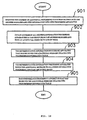
- FIG. 10 there is shown a flowchart describing a computer program for the processing procedure executed by each information processing apparatus when the address manager 7 that manages the addresses of information processing apparatuses and processing execution sections is used and when a processing execution section has been newly added to a group.
- the new processing execution section registers its own information into the receive information table 510 controlled by the data transmission manager of the information processing apparatus having the new processing execution section.
- the new processing execution section also registers its own address in the address manager 7 (step 901). Then, the information processing apparatus having the new processing execution section gets, from the address manager 7, the addresses of all processing execution sections belonging to the group to which the information processing apparatus belongs.
- the new processing execution section arbitrarily selects one of the obtained processing execution section addresses, makes the information processing apparatus having the processing execution section having the selected address be the representative information processing apparatus, and sends an additional message to the representative information processing apparatus (step 902).
- the representative information processing apparatus that has received the additional message gets, from the address manager 7, the address of the processing execution section to be newly added and adds the address to the transmission information table managed by the data transmission manager 70 of the representative information processing apparatus (step 903). Then, the representative information processing apparatus that has received the additional message to all information processing apparatuses having the processing execution sections registered in the transmission information table managed by its own data transmission manager 70 (step 904).
- each information processing apparatus that has received the additional message gets, from the address manager 7, the address of the processing execution section to be newly added and adds the obtained address to the transmission information table managed by its own data transmission manager (step 905).
- the new processing execution section is added to the group. Deletion of a processing execution section from a group is also performed in generally the same procedure as the above-mentioned procedure.
- the following describes a processing procedure to be executed by each information processing apparatus in which the address manager 7 that manages the addresses of information processing apparatuses and processing execution sections is not used when a processing execution section has been newly added to a group.
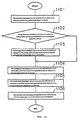
- FIG. 11 there_is shown a flowchart of a computer program indicating the processing procedure by each information processing apparatus when the address manager 7 that manages the addresses of information processing apparatuses and processing execution sections is not used when a processing execution section has been newly added to a group.
- the new processing execution section registers its own information in the receive information table 500 of its information processing apparatus (step 911).
- the new processing execution section sends an additional message containing its own address information to the information processing apparatus (representative information processing apparatus) 1 having the processing execution section belonging to the group to which the new processing execution section belongs (step 912).
- the representative processing execution section that has received the additional message registers the address of the new processing execution section contained in the additional message into own transmission information table (step 913).
- the representative information processing apparatus sends the additional message to all information processing apparatuses having the processing execution sections registered in the own transmission information table as group members (step 914).
- Each information processing apparatus that has received the additional information from the representative information processing apparatus registers the address of the new processing execution section contained in the additional message into its own transmission information table (step 915).
- the representative processing execution section sends group address information registered in the transmission information table 510 managed by itself to the information processing apparatus having the new processing execution section (step 916).
- the information processing apparatus having the new processing execution section registers the received group address information of the processing execution section into the transmission information table 510 of the information processing apparatus having the new processing execution section (step 917).
- the processing of adding a new processing execution section to a group is performed without using the address manager 7.
- the processing execution section to be newly added to a group registers itself in the receive information table 500 to end the adding processing if a processing execution section belonging to the group to which the new processing execution section is to belong has already been registered in the receive information table 500 of the information processing apparatus of the new processing execution section. Deletion of a processing execution section from a group is also performed in generally the same procedure as the above-described procedure regard addition of a processing execution section.
- a processing execution section arbitrarily selected by the processing execution section 30 that sends a message to a group becomes the representative processing execution section and a plurality of processing execution sections that send messages to the group may select different representative processing execution sections.
- the representative processing execution section of a group is predetermined and the plurality of processing execution sections that send messages to the group send the messages always to the same representative processing execution section.
- the constitutions of the units making up the second embodiment are generally the same as those of the first embodiment. In what follows, only the differences between the first and second embodiments will be described.
- the destination processing execution section when processing execution sections send messages to the group is not one that has been selected arbitrarily.
- the destination processing execution section is the representative processing execution section predetermined in the group. All information processing apparatuses having the processing execution sections that send messages to the group, send messages to the information processing apparatus that has the representative processing execution section of the group.
- each information processing apparatus having the processing execution section that sends a message to the group needs to know the address of the information processing apparatus having the representative processing execution section of the group.
- the information processing apparatus having the representative processing execution section needs to know the addresses of all other non-representative processing execution sections but each information processing apparatus having non-representative processing execution sections needs to know only the address of the representative processing execution section.
- a new processing execution section is added in generally the same manner as the first embodiment.
- a difference from the first embodiment is that the new processing execution section always needs to send its additional message to the representative processing execution section in the group.
- the grouping may be made on an information processing apparatus basis like the first embodiment.
- the representative processing execution section is predetermined in a group and a plurality of processing execution sections that send messages to the group must always send them to the same representative processing execution section.
- the representative processing execution section is predetermined in a group but the representative execution section may be selected by the processing execution section 30 that sends a message to the group to be the arbitrarily selected processing execution section and the plurality of processing execution sections that send messages to the group may select different processing execution sections as destinations. It should be noted that whether the representative processing execution section in the group is provided in its own information processing apparatus or not is programmed in the communication processing in advance.
- the third embodiment is advantageous in that the processing execution sections that send messages to the group need not know the address of the representative processing execution section.
- the configurations of the units making up the third embodiment are generally the same as those of the first embodiment and therefore only differences between the first and second embodiments will be described below.
- FIG. 12 there is shown a block diagram illustrating how a message to a group flows when the message is sent to an information processing apparatus having no representative processing execution section.
- the information processing apparatuses 4 through 6 have processing execution sections 34, 35, 37 and 38 that belong to the same group.
- Fig. 12 shows the flow of messages during multi-cast from the processing execution section 30 to the processing executions sections 34, 35, 37 and 38 constituting the same group.
- the information processing apparatus 2 arbitrarily selects one of the processing execution sections of the destination group; for example, the processing execution section 35.
- the information processing apparatus 2 sends a message to the information processing apparatus 5 having the representative processing execution section 35 (arrow 110).
- the communication manager 23 of the information processing apparatus 5 receives the message and transfers it to the information processing apparatus having the representative processing execution section 34 (arrow 111).
- the information processing apparatus 4 transfers the message to its processing execution section 34 (arrow 112) and, at the same time, sends the message to the information processing apparatuses 5 and 6 having non-representative processing execution sections 35, 37 and 38 (arrows 113a and 113b).
- the communication managers 23 and 24 of the information processing apparatuses 5 and 6 transfer the message to the processing execution sections 35, 37 and 38 (arrows 114a, 114b and 114c).
- the processing execution section 30, to send a message to the group arbitrarily selects one of the processing execution sections 30 that are members in the group and sends the message to the selected processing execution section 30 (step 1101). If the information processing apparatus that has received the message has the representative processing execution section, the processing goes to step 1104 (step 1102); otherwise, the message is transferred to the information processing apparatus having the representative processing execution section (step 1103).
- the information processing apparatus having the representative processing execution section receives the message and transfers the received message to its own processing execution section belonging to the message destination group (step 1104). At the same time, the information processing apparatus having the representative processing execution section sends the received message to processing execution sections of the other information processing apparatuses that belong to the message destination group (step 1305).
- the information processing apparatus that has received the message from the representative processing execution section transfers the received message to its own processing execution section belonging to the message destination group (step 1306).
- the message is multi-cast to the processing execution sections in the group.
- grouping may be made on an information processing apparatus basis as with the first embodiment.
- the multi-cast processing on a one-to-many basis has been described.
- a fourth embodiment providing one-to-many request reply processing based on multi-cast processing will be described.
- the one-to-many request reply processing according to the fourth embodiment may be realized by using any of the foregoing embodiments. In what follows, the case in which the first embodiment is used will be described.
- FIG. 15 there is shown a flowchart of a computer program indicating a processing procedure of an information processing apparatus that executes the request reply processing in the fourth embodiment.
- the information processing apparatuses 4 through 6 have the processing execution sections 34, 35, and 37 respectively.
- Fig. 14 shows a flow of a message in the request reply processing from the processing execution section 30 to the processing execution sections 34, 35 and 37 that constitute a group. It should be noted that the processing execution sections 34, 35 and 37 may not be ones that send a reply message, a result of the processing for a received request message.
- the information processing apparatus 2 sends a request message to the processing execution sections 34, 35 and 37 by means of the multi-cast processing of the first embodiment (step 1301, arrows 120, 121, 122a, 122b, 123a and 123b).
- the processing execution sections 34, 35 and 37 that have received the request message perform the processing respectively (step 1302).
- the processing execution section or sections that send a processing result send it as reply messages to the information processing apparatus having the representative processing execution section 34 (step 1303, arrows 124a, 124b, 124c, 125a and 125b).
- the communication manager 22 in the information processing apparatus 4 that has received the messages selects one of them and sends the selected message to the processing execution section 30, the source of the request message (step 1304, arrow 126).
- the processing execution section 30, the source of the request message receives the replay message (step 1305).
- the information processing apparatus 4 that has received the plurality of reply messages may send all of them to the processing execution section 30, the source of the request message.
- the processing execution section that sends the reply message may send it to the processing execution section 30, the source of the request message, rather than the information processing apparatus 4 having the representative processing execution section 34.
- the communication manager 20 in the information processing apparatus 2 having the processing execution section 30, the source of the request message receives the plurality of reply messages. One of all of the reply messages are transferred to the source processing execution section 30.
- the transmission load of the sending information processing apparatus is mitigated in the data transmission of an information processing system, realizing effective multi-casting even when the throughput of the sending information processing apparatus is low or the memory thereof is small in capacity.
- the total number of communication paths to be set is made relatively small if the number of information processing apparatuses that send data to a group is larger than the number of information processing apparatuses that belong to the group and each of the communication paths is set between two of the information processing apparatuses.
- the sending information processing apparatus may multi-cast data to a group of information processing apparatuses always in the same transmission processing regardless in the group constitution of the destination.
- the processing for the change may be effected only by changing the address information in the group managed by each receiving information processing apparatus. Therefore, the sending information processing apparatus may perform multi-casting on the group always in the same transmission processing and cope with the change on-line.
- the representative information processing apparatus selects one of a plurality of response information pieces to make a response to the requesting information processing apparatus, so that, it is not necessary for the requesting information processing apparatus to receive the response information from all receiving information processing apparatuses, which is conventionally practiced.
Landscapes
- Engineering & Computer Science (AREA)
- Computer Networks & Wireless Communication (AREA)
- Signal Processing (AREA)
- Computer And Data Communications (AREA)
- Multi Processors (AREA)
- Small-Scale Networks (AREA)
- Communication Control (AREA)
Claims (7)
- Kommunikationsverfahren, das in einem Informationsverarbeitungssystem durchgeführt wird, das mehrere Informationsverarbeitungsgeräte (2 bis 6) mit jeweils wenigstens einem Verarbeitungsausführungsabschnitt (30 bis 38) zum Durchführen spezifizierter Verarbeitungsvorgänge aufweist, wobei die Informationsverarbeitungsgeräte in mehrere Gruppen unterteilt sind und die Verarbeitungsausführungsabschnitte in mehrere Gruppen unterteilt sind, die jeweils einen repräsentativen Verarbeitungsausführungsabschnitt aufweisen, sowie eine Übertragungsleitung (1) zum Verbinden der Informationsverarbeitungsgeräte untereinander, wobei das Verfahren dadurch gekennzeichnet ist, daß:wenn Informationen von einem Verarbeitungsausführungsabschnitt eines der Informationsverarbeitungsgeräte zu mehreren Verarbeitungsausführungsabschnitten anderer der mehreren Informationsverarbeitungsgeräte in einer Gruppe gesendet werden, diese Informationen von dem einen Informationsverarbeitungsgerät zu einem Informationsverarbeitungsgerät gesendet (1101) werden, das einen Verarbeitungsausführungsabschnitt aufweist, der beliebig aus mehreren Verarbeitungsausführungsabschnitten der Gruppe ausgewählt ist;die Informationen in einem Informationsverarbeitungsgerät mit dem ausgewählten Verarbeitungsausführungsabschnitt empfangen werden;falls das Informationsverarbeitungsgerät mit dem ausgewählten Verarbeitungsausführungsabschnitt nicht den repräsentativen Verarbeitungsausführungsabschnitt der Gruppe aufweist, die Informationen von dem Informationsverarbeitungsgerät mit dem ausgewählten Verarbeitungsausführungsabschnitt an ein Informationsverarbeitungsgerät mit dem repräsentativen Verarbeitungsausführungsabschnitt übertragen (1103) werden; undwenn die Informationen von dem Informationsverarbeitungsgerät mit dem repräsentativen Verarbeitungsausführungsabschnitt empfangen wurden, die Informationen von dem Informationsverarbeitungsgerät mit dem repräsentativen Verarbeitungsausführungsabschnitt an alle anderen Informationsverarbeitungsgeräte mit den Verarbeitungsausführungsabschnitten der Gruppe gesendet (1105) werden, zu der der repräsentative Verarbeitungsausführungsabschnitt gehört.
- Verfahren nach Anspruch 1, wobei
jedes Informationsverarbeitungsgerät (2 bis 6) einen Informationsspeicherungsabschnitt (70) zum Speichern von Informationen über ein Zielinformations-Verarbeitungsgerät speichert, an das die Informationen zu übertragen sind,
das Informationsverarbeitungsgerät mit dem repräsentativen Verarbeitungsausführungsabschnitt (30 bis 38) Änderungsinformationen einer Gruppe von Verarbeitungsausführungsabschnitten empfängt, die eine Änderung von in dem Informationsspeicherungsabschnitt (70) gespeicherten Informationen anzeigt, und resultierende Änderungsinformationen an die Informationsverarbeitungsgeräte mit den Verarbeitungsausführungsabschnitten der Gruppe sendet, zu der der repräsentative Verarbeitungsausführungsabschnitt gehört, und
jedes Informationsverarbeitungsgerät, das den repräsentativen Verarbeitungsausführungsabschnitt nicht aufweist, die resultierenden Änderungsinformationen empfängt und in dem Informationsspeicherungsabschnitt (70) gespeicherte Informationen ändert. - Verfahren nach Anspruch 1, wobei
ein Verarbeitungsausführungsabschnitt (30 bis 38) eines der Informationsverarbeitungsgeräte (2 bis 6) Anforderungsinformationen sendet, um von den Verarbeitungsausführungsabschnitten einer Gruppe Antwortinformationen anzufordern,
die Informationsverarbeitungsgeräte mit den Verarbeitungsausführungsabschnitten der Gruppe, die die Anforderungsinformationen empfangen haben, Antwortinformationen an das Informationsverarbeitungsgerät mit dem repräsentativen Verarbeitungsausführungsabschnitt zurückgeben, und
das Informationsverarbeitungsgerät mit dem repräsentativen Verarbeitungsausführungsabschnitt die Antwortinformationen sammelt und einen oder alle Teile der Antwortinformationen zu dem Informationsverarbeitungsgerät mit dem Verarbeitungsausführungsabschnitt zurückgibt, das die Anforderungsinformationen gesendet hat. - Informationsverarbeitungssystem mit:mehreren Informationsverarbeitungsgeräten (2 bis 6), die jeweils wenigstens einen Verarbeitungsausführungsabschnitt (30 bis 38) zum Durchführen spezifizierter Verarbeitungsvorgänge aufweisen, wobei die Informationsverarbeitungsgeräte in mehrere Gruppen unterteilt sind, und die Verarbeitungsausführungsabschnitte in mehrere Gruppen mit jeweils einem repräsentativen Verarbeitungsausführungsabschnitt unterteilt sind; undeiner Übertragungsleitung (1), um die mehreren Informationsverarbeitungsgeräte untereinander zu verbinden,dadurch gekennzeichnet, daß
jedes Informationsverarbeitungsgerät (2 bis 6) aufweist:eine Einrichtung (50) zum beliebigen Auswählen eines von mehreren Verarbeitungsausführungsabschnitten in einer Gruppe und zum Senden von Informationen von einem Verarbeitungsausführungsabschnitt des Informationsverarbeitungsgeräts zu dem Informationsverarbeitungsgerät mit dem ausgewählten Verarbeitungsausführungsabschnitt zusammen mit einer Kennung (401) zum Anzeigen einer Zielgruppe,einer Einrichtung (40) zum Empfangen der Informationen, und wobeijedes der Informationsverarbeitungsgeräte ohne den repräsentativen Verarbeitungsausführungsabschnitt aufweist:eine Einrichtung zum Übertragen der Informationen zu dem Informationsverarbeitungsgerät mit dem repräsentativen Verarbeitungsausführungsabschnitt der Zielgruppe gemäß der Kennung (401), unddas Informationsverarbeitungsgerät mit den repräsentativen Verarbeitungsausführungsabschnitt aufweist:eine Einrichtung zum Übertragen der Informationen an alle anderen Informationsverarbeitungsgeräte mit den Verarbeitungsausführungsabschnitten der Zielgruppe gemäß der Kennung (401). - System nach Anspruch 4, wobei
jedes Informationsverarbeitungsgerät einen Informationsspeicherungsabschnitt (70) zum Speichern von Informationen über ein Zielinformations-Verarbeitungsgerät aufweist, an das die Informationen zu übertragen sind,
das Informationsverarbeitungsgerät mit dem repräsentativen Verarbeitungsausführungsabschnitt aufweist:eine Einrichtung (60) zum Empfangen von Änderungsinformationen einer Gruppe von Verarbeitungsausführungsabschnitten und zum Ändern der in dem Informationsspeicherungsabschnitt (70) gespeicherten Informationen; undeine Einrichtung zum Senden der Änderungsinformationen an die Informationsverarbeitungsgeräte mit den Verarbeitungsausführungsabschnitten der Gruppe, undjedes Informationsverarbeitungsgerät, das den repräsentativen Verarbeitungsausführungsabschnitt nicht aufweist, eine Einrichtung zum Empfangen der Änderungsinformationen und zum Ändern der in dem Informationsspeicherungsabschnitt (70) gespeicherten Informationen aufweist. - System nach Anspruch 4, wobei
jedes Informationsverarbeitungsgerät (2 bis 6) eine Einrichtung zum Senden von Anforderungsinformationen aufweist, um Antwortinformationen von Verarbeitungsausführungsabschnitten (30 bis 38) in einer Gruppe anzufordern,
jedes Informationsverarbeitungsgerät mit einem Verarbeitungsausführungsabschnitt, der die Anforderungsinformationen empfangen hat, eine Einrichtung zum Zurückgeben der Antwortinformationen an das Informationsverarbeitungsgerät mit dem repräsentativen Verarbeitungsausführungsabschnitt aufweist, und
das Informationsverarbeitungsgerät mit dem repräsentativen Verarbeitungsausführungsabschnitt eine Einrichtung zum Sammeln der Antwortinformationen und zum Zurückgeben eines oder aller Anteile der Antwortinformationen an das Informationsverarbeitungsgerät mit dem Verarbeitungsausführungsabschnitt aufweist, das die Anforderungsinformationen gesendet hat. - Computerprogramm zum Ausführen des Verfahrens nach einem der Ansprüche 1 bis 3, wenn es in ein Computersystem geladen und darin ausgeführt wird.
Applications Claiming Priority (3)
| Application Number | Priority Date | Filing Date | Title |
|---|---|---|---|
| JP07019291A JP3121221B2 (ja) | 1995-02-07 | 1995-02-07 | 情報処理システムの通信方法および情報処理システム |
| JP1929195 | 1995-02-07 | ||
| JP19291/95 | 1995-02-07 |
Publications (3)
| Publication Number | Publication Date |
|---|---|
| EP0726663A2 EP0726663A2 (de) | 1996-08-14 |
| EP0726663A3 EP0726663A3 (de) | 2004-04-14 |
| EP0726663B1 true EP0726663B1 (de) | 2007-03-28 |
Family
ID=11995341
Family Applications (1)
| Application Number | Title | Priority Date | Filing Date |
|---|---|---|---|
| EP96101537A Expired - Lifetime EP0726663B1 (de) | 1995-02-07 | 1996-02-02 | Informationsverarbeitungssystem und Kommunikationsverfahren |
Country Status (4)
| Country | Link |
|---|---|
| US (1) | US5740170A (de) |
| EP (1) | EP0726663B1 (de) |
| JP (1) | JP3121221B2 (de) |
| DE (1) | DE69636993T2 (de) |
Cited By (1)
| Publication number | Priority date | Publication date | Assignee | Title |
|---|---|---|---|---|
| CN103106174A (zh) * | 2011-11-09 | 2013-05-15 | 深圳市德赛微电子技术有限公司 | 一种复杂soc的片上通信方法 |
Families Citing this family (16)
| Publication number | Priority date | Publication date | Assignee | Title |
|---|---|---|---|---|
| JP3698761B2 (ja) * | 1995-07-19 | 2005-09-21 | 富士通株式会社 | 情報転送方法及び情報転送装置 |
| US5822523A (en) | 1996-02-01 | 1998-10-13 | Mpath Interactive, Inc. | Server-group messaging system for interactive applications |
| US5910179A (en) * | 1996-10-25 | 1999-06-08 | Pitney Bowes Inc. | Method and system for transmitting data within a tree structure and receiving a confirmation or status therefor |
| US5903562A (en) * | 1996-12-13 | 1999-05-11 | Hewlett-Packard Company | Multicasting employing publication title to create numeric destination address for computer network system frame |
| EP0913965A1 (de) | 1997-11-03 | 1999-05-06 | Canon Kabushiki Kaisha | Verminderung des Nachrichtenverkehrs in einem verteilten Netzwerk |
| EP0935368A1 (de) * | 1997-11-03 | 1999-08-11 | Canon Kabushiki Kaisha | Wegdetektierung in einem verteilten Netz |
| JP3571616B2 (ja) * | 2000-05-23 | 2004-09-29 | エヌ・ティ・ティ・コムウェア株式会社 | データの共有方法、端末装置および記録媒体 |
| WO2002027521A1 (en) * | 2000-09-28 | 2002-04-04 | Ntt Comware Corporation | Computer system, computer system controlling method, terminal device and recording medium |
| US7162538B1 (en) | 2000-10-04 | 2007-01-09 | Intel Corporation | Peer to peer software distribution system |
| JP2002175274A (ja) * | 2000-12-06 | 2002-06-21 | Sony Corp | 情報処理装置及び情報処理方法、ネットワーク・システム、記憶媒体、並びにコンピュータ・プログラム |
| US8495167B2 (en) * | 2001-08-02 | 2013-07-23 | Lauri Valjakka | Data communications networks, systems, methods and apparatus |
| US7499410B2 (en) * | 2001-12-26 | 2009-03-03 | Cisco Technology, Inc. | Fibre channel switch that enables end devices in different fabrics to communicate with one another while retaining their unique fibre channel domain—IDs |
| US20030204602A1 (en) * | 2002-04-26 | 2003-10-30 | Hudson Michael D. | Mediated multi-source peer content delivery network architecture |
| US6876636B2 (en) * | 2002-07-09 | 2005-04-05 | Qualcomm Inc. | Method and system for a multicast service initiation in a communication system |
| JP4725525B2 (ja) * | 2007-01-25 | 2011-07-13 | パナソニック電工株式会社 | 分散情報システム及び通信方法 |
| WO2010116399A1 (ja) * | 2009-03-30 | 2010-10-14 | 富士通株式会社 | データ転送制御装置、システムおよび方法 |
Family Cites Families (8)
| Publication number | Priority date | Publication date | Assignee | Title |
|---|---|---|---|---|
| US5079767A (en) * | 1988-09-27 | 1992-01-07 | Digital Equipment Corporation | Method of multicast message distribution |
| US4864559A (en) * | 1988-09-27 | 1989-09-05 | Digital Equipment Corporation | Method of multicast message distribution |
| US5103444A (en) * | 1990-04-12 | 1992-04-07 | At&T Bell Laboratories | Conference connection method in a multicast packet switching network |
| US5557745A (en) * | 1990-09-04 | 1996-09-17 | Digital Equipment Corporation | Method for supporting foreign protocols across backbone network by combining and transmitting list of destinations that support second protocol in first and second areas to the third area |
| CA2094410C (en) * | 1992-06-18 | 1998-05-05 | Joshua Seth Auerbach | Distributed management communications network |
| US5289460A (en) * | 1992-07-31 | 1994-02-22 | International Business Machines Corp. | Maintenance of message distribution trees in a communications network |
| ES2129038T3 (es) * | 1992-11-27 | 1999-06-01 | Ibm | Encaminamiento a destinos multiples entre dominios. |
| US5566181A (en) * | 1995-11-29 | 1996-10-15 | Motorola, Inc. | Method and system for establishing a communication using geographically distributed packet duplicators |
-
1995
- 1995-02-07 JP JP07019291A patent/JP3121221B2/ja not_active Expired - Fee Related
-
1996
- 1996-02-02 DE DE69636993T patent/DE69636993T2/de not_active Expired - Fee Related
- 1996-02-02 EP EP96101537A patent/EP0726663B1/de not_active Expired - Lifetime
- 1996-02-07 US US08/597,966 patent/US5740170A/en not_active Expired - Fee Related
Cited By (1)
| Publication number | Priority date | Publication date | Assignee | Title |
|---|---|---|---|---|
| CN103106174A (zh) * | 2011-11-09 | 2013-05-15 | 深圳市德赛微电子技术有限公司 | 一种复杂soc的片上通信方法 |
Also Published As
| Publication number | Publication date |
|---|---|
| EP0726663A2 (de) | 1996-08-14 |
| DE69636993D1 (de) | 2007-05-10 |
| US5740170A (en) | 1998-04-14 |
| JPH08214015A (ja) | 1996-08-20 |
| DE69636993T2 (de) | 2007-12-20 |
| JP3121221B2 (ja) | 2000-12-25 |
| EP0726663A3 (de) | 2004-04-14 |
Similar Documents
| Publication | Publication Date | Title |
|---|---|---|
| EP0726663B1 (de) | Informationsverarbeitungssystem und Kommunikationsverfahren | |
| US6144955A (en) | Work flow management system | |
| US7054276B2 (en) | System and method for a multicast network messaging service | |
| US9626235B2 (en) | Managing queues in an asynchronous messaging system | |
| US6496503B1 (en) | Device initialization and operation using directed routing | |
| CN100547976C (zh) | 用于标识反向路径转发信息的方法和装置 | |
| JPH09130401A (ja) | 順方向及び逆方向仮想接続ラベルに基づくatmネットワークを走査するシステム及び方法 | |
| JPH0548647A (ja) | 電子メール文書分配方法及び装置 | |
| EP0775402A2 (de) | Verfahren und geraet zur uebertragungsverwaltung und -erleichterung in einem verteilten heterogenen netzwerk | |
| JPH0720162B2 (ja) | 層通信アーキテクチャにおける層エンティティの論理グループ化 | |
| US5960178A (en) | Queue system and method for point-to-point message passing having a separate table for storing message state and identifier of processor assigned to process the message | |
| US6192412B1 (en) | Computer file transmission system and method | |
| US6977924B1 (en) | Control and distribution protocol for a portable router framework | |
| US6119159A (en) | Distributed service subsystem protocol for distributed network management | |
| JP2001526436A (ja) | 通信システムおよび通信システムにおけるメッセージ送信方法 | |
| US20050091358A1 (en) | Application programming interface for a virtual switch | |
| JPH0662029A (ja) | 通信ネットワーク・システム | |
| CN100574268C (zh) | 模块型分组通信节点设备 | |
| WO1999034557A1 (en) | Method and system for software version management in a network management system | |
| US6532478B1 (en) | File loader in information processing system of multiprocessor configuration | |
| US8473592B2 (en) | Storage system and management method in storage system | |
| JPH07123108A (ja) | プロセス間通信方法 | |
| JP2746089B2 (ja) | ネットワークインタフェース選択システム | |
| JPH07327048A (ja) | 蓄積交換システム | |
| JP3679935B2 (ja) | 通信方法および通信装置および記録媒体 |
Legal Events
| Date | Code | Title | Description |
|---|---|---|---|
| PUAI | Public reference made under article 153(3) epc to a published international application that has entered the european phase |
Free format text: ORIGINAL CODE: 0009012 |
|
| AK | Designated contracting states |
Kind code of ref document: A2 Designated state(s): DE GB |
|
| PUAL | Search report despatched |
Free format text: ORIGINAL CODE: 0009013 |
|
| AK | Designated contracting states |
Kind code of ref document: A3 Designated state(s): DE GB |
|
| 17P | Request for examination filed |
Effective date: 20041005 |
|
| 17Q | First examination report despatched |
Effective date: 20041111 |
|
| GRAP | Despatch of communication of intention to grant a patent |
Free format text: ORIGINAL CODE: EPIDOSNIGR1 |
|
| GRAS | Grant fee paid |
Free format text: ORIGINAL CODE: EPIDOSNIGR3 |
|
| GRAA | (expected) grant |
Free format text: ORIGINAL CODE: 0009210 |
|
| AK | Designated contracting states |
Kind code of ref document: B1 Designated state(s): DE GB |
|
| REG | Reference to a national code |
Ref country code: GB Ref legal event code: FG4D |
|
| RIN2 | Information on inventor provided after grant (corrected) |
Inventor name: FUJISE, HIROSHI Inventor name: HASHIMOTO, HISASHI Inventor name: HINO, YUSUKE Inventor name: HIRASAWA, SHIGEKI Inventor name: ORIMO, MASAYUKI Inventor name: ANDOU,NOBUYOSHI |
|
| REF | Corresponds to: |
Ref document number: 69636993 Country of ref document: DE Date of ref document: 20070510 Kind code of ref document: P |
|
| PLBE | No opposition filed within time limit |
Free format text: ORIGINAL CODE: 0009261 |
|
| STAA | Information on the status of an ep patent application or granted ep patent |
Free format text: STATUS: NO OPPOSITION FILED WITHIN TIME LIMIT |
|
| 26N | No opposition filed |
Effective date: 20080102 |
|
| PGFP | Annual fee paid to national office [announced via postgrant information from national office to epo] |
Ref country code: GB Payment date: 20080220 Year of fee payment: 13 |
|
| PGFP | Annual fee paid to national office [announced via postgrant information from national office to epo] |
Ref country code: DE Payment date: 20080422 Year of fee payment: 13 |
|
| GBPC | Gb: european patent ceased through non-payment of renewal fee |
Effective date: 20090202 |
|
| PG25 | Lapsed in a contracting state [announced via postgrant information from national office to epo] |
Ref country code: DE Free format text: LAPSE BECAUSE OF NON-PAYMENT OF DUE FEES Effective date: 20090901 |
|
| PG25 | Lapsed in a contracting state [announced via postgrant information from national office to epo] |
Ref country code: GB Free format text: LAPSE BECAUSE OF NON-PAYMENT OF DUE FEES Effective date: 20090202 |