EP0731007A1 - Procédé de sécurité pour prévenir une utilisation non-autorisée d'un véhicule, en particulier en cas de prêt ou de location de véhicules - Google Patents
Procédé de sécurité pour prévenir une utilisation non-autorisée d'un véhicule, en particulier en cas de prêt ou de location de véhicules Download PDFInfo
- Publication number
- EP0731007A1 EP0731007A1 EP96102804A EP96102804A EP0731007A1 EP 0731007 A1 EP0731007 A1 EP 0731007A1 EP 96102804 A EP96102804 A EP 96102804A EP 96102804 A EP96102804 A EP 96102804A EP 0731007 A1 EP0731007 A1 EP 0731007A1
- Authority
- EP
- European Patent Office
- Prior art keywords
- vehicle
- usage
- control center
- exceeding
- signal
- Prior art date
- Legal status (The legal status is an assumption and is not a legal conclusion. Google has not performed a legal analysis and makes no representation as to the accuracy of the status listed.)
- Granted
Links
Images


Classifications
-
- B—PERFORMING OPERATIONS; TRANSPORTING
- B60—VEHICLES IN GENERAL
- B60R—VEHICLES, VEHICLE FITTINGS, OR VEHICLE PARTS, NOT OTHERWISE PROVIDED FOR
- B60R25/00—Fittings or systems for preventing or indicating unauthorised use or theft of vehicles
- B60R25/10—Fittings or systems for preventing or indicating unauthorised use or theft of vehicles actuating a signalling device
- B60R25/102—Fittings or systems for preventing or indicating unauthorised use or theft of vehicles actuating a signalling device a signal being sent to a remote location, e.g. a radio signal being transmitted to a police station, a security company or the owner
-
- B—PERFORMING OPERATIONS; TRANSPORTING
- B60—VEHICLES IN GENERAL
- B60R—VEHICLES, VEHICLE FITTINGS, OR VEHICLE PARTS, NOT OTHERWISE PROVIDED FOR
- B60R25/00—Fittings or systems for preventing or indicating unauthorised use or theft of vehicles
-
- G—PHYSICS
- G07—CHECKING-DEVICES
- G07C—TIME OR ATTENDANCE REGISTERS; REGISTERING OR INDICATING THE WORKING OF MACHINES; GENERATING RANDOM NUMBERS; VOTING OR LOTTERY APPARATUS; ARRANGEMENTS, SYSTEMS OR APPARATUS FOR CHECKING NOT PROVIDED FOR ELSEWHERE
- G07C5/00—Registering or indicating the working of vehicles
- G07C5/008—Registering or indicating the working of vehicles communicating information to a remotely located station
-
- G—PHYSICS
- G01—MEASURING; TESTING
- G01S—RADIO DIRECTION-FINDING; RADIO NAVIGATION; DETERMINING DISTANCE OR VELOCITY BY USE OF RADIO WAVES; LOCATING OR PRESENCE-DETECTING BY USE OF THE REFLECTION OR RERADIATION OF RADIO WAVES; ANALOGOUS ARRANGEMENTS USING OTHER WAVES
- G01S19/00—Satellite radio beacon positioning systems; Determining position, velocity or attitude using signals transmitted by such systems
- G01S19/01—Satellite radio beacon positioning systems transmitting time-stamped messages, e.g. GPS [Global Positioning System], GLONASS [Global Orbiting Navigation Satellite System] or GALILEO
- G01S19/13—Receivers
- G01S19/14—Receivers specially adapted for specific applications
- G01S19/16—Anti-theft; Abduction
Definitions
- the invention relates to a method for securing vehicles, in particular leasing or rental vehicles, against unauthorized use, according to the preamble of claim 1, as is known, for example, from the earlier patent application DE-P. 44 40 975.3-51 emerges as known.
- an anti-theft control device and a receiving device of a mobile communication system are arranged in the vehicle.
- a communication structure on the part of the vehicle enables on the one hand the exchange of data between an anti-theft control device and the receiving device and on the other hand the exchange of data between the anti-theft control device and at least one control device of the vehicle that is necessary for operation.
- signals are transmitted from the control center to the vehicle at regular time intervals via the mobile communication system, which signals are received by the receiving device. The reception of the signals is forwarded by the receiving device to the anti-theft control device via the communication structure.
- the signals are recognized and if they are recognized as being directed at the vehicle, vehicle operation is released for a predetermined period of time that is greater than the time interval between two successive signals. If no signal is received before the end of the period for which vehicle operation is released, the release of vehicle operation is not extended, the anti-theft control device then controls via the communication structure to the at least one operationally necessary control device and prevents further operation of this control device at least during the next attempt to put the vehicle into operation.
- This measure prevents a vehicle from being used without authorization for a longer period of time. Also, the operation is not dependent on signals sent by the vehicle that can be disturbed, but only on the reception of the signals sent by the control center, so that disrupting or destroying the communication system does not allow prolonged use of the vehicle.
- a disadvantage of this method is that it is not possible to locate the vehicle. Therefore, for example, after stealing the vehicle, it is still possible to safely move the vehicle to a different location on a transporter. Furthermore, a longer period of time may elapse between the start of the unauthorized use of the vehicle and the forwarding of the information about the unauthorized use to the control center, so that the signals can only be sent out a considerable time after the start of the unauthorized use.
- This device has the disadvantage that it does not allow the vehicle to be prevented from operating.
- the control center can also prevent the vehicle from being tracked, for example, by destroying the vehicle-side transmission device or the location system.
- a large capacity must be provided at the transmission devices and transmission frequencies if a large number of vehicles are to be tracked continuously. If, for example, a digital radio telephone is used as a mobile communication system, high communication fees are incurred in order to continuously forward the results of the location of the vehicle to the head office.
- DE 42 24 536 A1 describes a system for the geographically defined limitation of the movement space of vehicles. Signals are received from satellites by means of a receiver, which are converted into position coordinates in the vehicle and compared with defined specifications. If a vehicle leaves a previously defined geographical area, a motronic system controlling the drive system is blocked via an evaluation unit and the current location of the vehicle is simultaneously transmitted to a control center via a transmission unit.
- the risk of unauthorized use is particularly high for rental or leasing vehicles, as well as for other vehicles that are not used by the owner himself, but also for taxis or trucks.
- the object of the invention is to reliably prevent the unauthorized use of a vehicle, in particular a rental or leasing vehicle.
- the vehicle can only be used if bidirectional communication between the vehicle and the control center takes place before the vehicle is handed over (in the case of taxis, trucks before starting a journey) and can also take place at a later time. As a result, it is not only possible to transmit only a position report of the vehicle to the control center or to transmit the release signals to the vehicle exclusively from the control center, but it is also possible to design the communication as required.
- the restriction of use of the vehicle must be defined before the vehicle is released. The vehicle can only be operated if this is defined.
- a transmitting device and a receiving device for transferring data between the vehicle and a control center can be combined to form a mobile communication system.
- the transmitting device and the receiving device can be combined to form a mobile communication system.
- it can be a mobile phone that transmits digital data, such as D-network phones.
- the on-board telephone system must be able to automatically establish a connection with the control center. In order to maintain the ability of the phone to talk during this time, the established connection (any form of data exchange) should be able to be carried out in the background of any calls possibly made by vehicle occupants.
- the data transmission or the transmission of signals between the vehicle and the control center and vice versa always takes place in coded (encrypted, etc.) form in order to prevent third parties from sending out corresponding signals coming from the control center as coming from a vehicle, or from the vehicle as coming from the control center.
- the signals emitted by the vehicle and the control center must always have a vehicle-specific identifier in order to prevent confusion between vehicles and not to incorrectly redefine a usage restriction for an incorrect vehicle.
- a communication structure is required in the vehicle which enables communication of the transmitting device and the receiving device with the usage protection control device and at least one control device necessary for operation.
- Data buses such as e.g. CAN, VAN or D2B are used.
- the data can also be transmitted in coded form via the communication structure.
- a location system such as GPS (Global Positioning System) is required in the vehicle for the location. This is also connected to the usage protection control unit via the communication structure of the vehicle.
- GPS Global Positioning System
- the usage protection control unit or the entirety of the control units connected to the communication structure can carry out continuous checks of the system integrity and, in the event of an attack on the system integrity, the decommissioning of Initiate at least one control unit necessary for operation and the transmission of location signals.
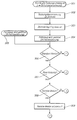
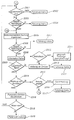
- the figure shows the flow diagram of a method according to the invention, which is particularly suitable for use in fleet vehicles, such as taxis, rental vehicles or leasing vehicles and hereinafter referred to as rental vehicles.
- the rental period or operating period can be exceeded.
- Exceeding a specified maximum driving distance can also be unauthorized use.
- Territorial restrictions or the exclusion of bringing the vehicle into certain areas can also constitute unauthorized use contrary to the contract.
- the possibilities of unauthorized use are therefore more diverse than with private vehicles.
- the landlord must be able to react flexibly to the wishes of his customer and be able to easily continue to use the vehicle afterwards.
- step 301 In the case of the rental vehicle, an agreement is made between the landlord and the lessee regarding the use of the vehicle before each individual rental in accordance with step 301.
- the landlord notifies the central office of the agreed use of the vehicle.
- step 303 the data about the agreed usage restriction of the vehicle are stored in the central file in the file assigned to this vehicle and compliance with the usage restrictions is monitored.
- the usage restriction can thus be monitored both on the vehicle side and from the control center.
- the invention is described on the basis of monitoring the usage restriction in the vehicle itself, communication between the control center and the vehicle being necessary only if either the usage restriction has been exceeded or if the usage restriction stored in the vehicle has been changed.
- a change can be both a restriction and an extension of the usage restriction.
- the usage restriction it is also possible for the usage restriction to be monitored at the headquarters. Then the vehicle would have to depend on certain criteria (For example, once every 2 hours of operation, each time the vehicle is started up, every 200 km or at least 3 times a day), a message signal, which includes all of the variables measured or determined in the vehicle that are subject to a usage restriction, is sent to the control center. The control center then replies to the message signal with an enable signal if the usage authorization has not been exceeded. If the vehicle does not receive the release signal, it initially falls into the remaining use; when the further use of the vehicle tolerated during the remaining use has expired, the vehicle is decommissioned by decommissioning at least one control unit necessary for operation.
- certain criteria For example, once every 2 hours of operation, each time the vehicle is started up, every 200 km or at least 3 times a day), a message signal, which includes all of the variables measured or determined in the vehicle that are subject to a usage restriction, is sent to the control center. The control center then replies to the message signal with an enable signal if the usage authorization
- step 306 When the vehicle is opened with the key after step 304 or 305, a query is made in step 306 as to whether there is a standard use of the vehicle. The standard usage exists if usage outside of the usage agreement has not yet been determined. If there is a standard use, the process jumps to step 1301. Otherwise, a query is made in step 307 as to whether there is any remaining use of the vehicle. A residual use of the vehicle is given if usage beyond the usage agreement has been determined, but the renter of the vehicle should be given time and opportunity before the decommissioning of the vehicle to conclude an agreement with the rental company regarding an extension of usage. If there is a remaining usage, the process jumps to step 2301. Otherwise, it is checked in step 308 whether the service mode is activated.
- the service mode is intended to enable operation of the vehicle for the necessary vehicle movements, for example for maneuvering, preparing, parking and maintaining the vehicle. It cannot be activated as long as use of the vehicle is registered with the control center. Furthermore, it only allows very restricted operation, for example within a narrowly defined geographical area or only over a distance of a few kilometers. If the service mode is already activated, the process jumps to step 3301. Otherwise it will Service mode activated first and then jumped to step 3301.
- Steps 1301 to 1316 comprise the check as it is carried out in standard mode.
- a system check is carried out in accordance with step 1301. For example, it checks whether the integrity of the system has been violated. If this is the case, the process jumps to step 1302. Commissioning of the vehicle is prevented by decommissioning at least one control unit necessary for operation. A location signal can be transmitted.
- step 1303 If it was determined in step 1301 that the vehicle system is working properly, then step 1303 allows the vehicle to be started up or used further. In step 1304, it is checked whether the usage limit has been exceeded. If the vehicle determines that the usage limit has been exceeded, the remaining use of the vehicle is activated. To do this, jump to step 2305. Since steps 1305 to 1309, 2309 to 2313 and 3307 to 3311 correspond to each other, they are described only once using steps 1305-1309.
- step 1305 is used to check whether there is a vehicle-based alarm.
- a vehicle-based alarm is present if, for example, an arbitrary actuation of a switching device provided for this purpose is detected by an occupant of the vehicle or an exceeding of the geographical usage limit. If there is no vehicle-based alarm, the process jumps to step 1310.
- step 1309 the vehicle sends a corresponding message to the central office.
- the emission of this message cannot be determined for the occupants of the vehicle.
- a location signal can be transmitted from the vehicle to the control center.
- This procedure enables the driver to request help in a simple manner in the event of a breakdown or accident. Possibly a call connection between the driver and the control center can also be established automatically.
- the actuation of the switching device (“emergency switch”) can also result in a jump to step 1308 if, after the message has been sent to the control center, it is desired to take the vehicle out of operation. Otherwise, it is checked in step 1307 whether there is a departure from a specific geographic area or entry into a specific geographic area that is excluded from use.
- step 1308 the commissioning of the vehicle after the next decommissioning of the vehicle is prevented by at least then decommissioning at least one control unit necessary for operation.
- the vehicle operation can be ended progressively, for example by progressively lowering the driving performance of the vehicle via the engine control and / or possibly the transmission control until the vehicle slowly reaches a standstill.
- at least one control unit engine control, transmission control
- necessary for operation can then be taken out of operation.
- the vehicle is stopped. This prevents the vehicle from being moved for a longer period of time after determining that further operation of the vehicle is no longer desired.
- a current location signal can also be sent periodically in a defined time sequence.
- the timed sequence consists of two location signals sent in quick succession, for example within less than a minute or even less than 30 seconds, and a subsequent waiting time without transmitting a location signal.
- the fact that the location signal is sent twice in quick succession is intended to allow the control center to determine not only the current location of the vehicle but also its direction of travel.
- the minimum time interval is determined downwards by the resolution of the location system.
- the subsequent waiting time should be chosen to be so short that, on the one hand, sensible tracking of the vehicle is made possible from the control center and, on the other hand, an overload the control center is avoided by too large a data input. In this example, exceeding a geographic use restriction is not treated as leniently as exceeding other use restrictions. It results in immediate decommissioning according to one of the methods in step 1308. There is no remaining use during which an arrangement can be made between driver and head office.
- steps 1310 to 1313, 2314 to 2317 and 3312 to 3315 correspond to each other, they are described only once using steps 1305-1309.
- step 1310 it is checked whether a signal sent by the control center has been received by the vehicle. If this is the case, it is checked in accordance with step 1311 whether the received signal corresponds to a usage extension signal. If this is the case, the process jumps to step 1314. Otherwise, it is determined in step 1312 that the vehicle should not be used further. According to step 1313, the vehicle is then taken out of operation analogously to step 1308.
- step 1314 the current values of the usage restriction parameters and the values of sizes subject to a usage restriction are updated.
- step 1315 it is checked whether the vehicle has been taken out of operation by the driver. If this is the case, then according to step 1316, the current values of the usage restriction parameters and the values of sizes subject to a usage restriction are stored. Otherwise, the process jumps back to step 1301.
- the method according to steps 2301 to 2320 largely corresponds to the procedure according to steps 1301 to 1316.
- the vehicle is still in use. During this remaining use, the usage limit has been exceeded, but further use of the vehicle is temporarily tolerated. The vehicle is only decommissioned if the usage authorization is not expanded during this remaining use.
- Steps 2301 and 2302 correspond to steps 1301 and 1302.
- step 2303 it is checked whether further use of the vehicle is still tolerated. If this is not the case, commissioning of the vehicle is prevented in accordance with step 2304.
- Step 2306 checks whether further use of the vehicle is still tolerated. If this is not the case, then according to step 2307, the vehicle becomes analogous to one of those in step 1308 from B1. 2 procedures out of order. Otherwise, according to step 2308, the driver is prompted by optical or acoustic means to contact the head office. The remaining usage can be communicated to the driver before the vehicle is taken out of service. At the same time, a location signal can be sent out. Steps 2309 to 2313 are carried out analogously to the procedure in steps 1305 to 1309.
- the procedure in steps 2314 to 2317 corresponds to the procedure in steps 1310 to 1313, wherein, in contrast to step 1311, if the reception of a usage extension signal is determined in step 2315, a jump is made not to step 2318 but to step 1303.
- the receipt of a usage extension signal means that the vehicle has been released from the control center for further use. This happens when the driver has contacted the control center and an agreement has been reached regarding the further use of the vehicle.
- step 2318 the current values of the usage restriction parameters and the values of sizes subject to usage restriction are updated.
- step 2319 it is checked whether the vehicle has been taken out of operation by the driver. If this is the case, then according to step 2320, the current values of the usage restriction parameters and the values of sizes subject to a usage restriction are stored. Otherwise, the process jumps back to step 2301.
- Steps 3301 to 3318 represent the service mode.
- the service mode is a fallback operating mode which is carried out when use of the vehicle is not registered at the control center. It enables the vehicle to be operated for the purposes of the lessor.
- a system check is carried out in accordance with step 3301. For example, it checks whether the integrity of the system has been violated. If this is the case, the process jumps to step 3302. Commissioning of the vehicle is prevented by decommissioning at least one control unit necessary for operation. A location signal can be transmitted.
- step 3304 it is then checked whether the further operation of the vehicle is tolerated. If this is not the case, the vehicle is decommissioned in step 3305 in accordance with one of the procedures described in step 1308.
- a location signal is emitted from the vehicle.
- Information about the remaining possible use of the vehicle can be displayed to the driver.
- Steps 3307 to 3311 correspond to steps 1305 to 1309.
- Steps 3312 to 3315 correspond to steps 1310 to 1313.
- step 3313 a query is made as to whether a usage restriction has been registered in the control center, that is to say whether a possible one Use of the vehicle has been registered and registered in the headquarters by the landlord. If this is the case, the process jumps to step 1303.
- step 3316 a request to send a usage restriction to the head office is sent, which is only answered if corresponding data has been received by the landlord at the head office.
- step 3317 it is checked whether the vehicle has been decommissioned by the driver. If this is the case, then according to step 3318, the current values of the usage restriction parameters and the values of a usage restriction underlying sizes saved. Otherwise, the process jumps back to step 3304.
- the vehicle can be put back into operation, for example, by continuing to operate the receiving device and upon receipt of an operating release signal sent by the control center can be forwarded to the usage protection control unit.
- the usage protection control unit checks the signal and, if it is recognized as valid, it releases the blockages of the control units necessary for operation. The vehicle is ready to drive again.
- the central office sends the operating release signal, for example, when the central office receives a corresponding message from an authority or the owner of the vehicle.
- the recommissioning only takes place if a code which is recognized as valid is entered via a data input interface connected to the usage protection control device. It is advantageous if the number of devices generating a corresponding code is small and they are subject to control by the control center.
Landscapes
- Engineering & Computer Science (AREA)
- Mechanical Engineering (AREA)
- Physics & Mathematics (AREA)
- General Physics & Mathematics (AREA)
- Mobile Radio Communication Systems (AREA)
- Traffic Control Systems (AREA)
Applications Claiming Priority (2)
| Application Number | Priority Date | Filing Date | Title |
|---|---|---|---|
| DE19508370 | 1995-03-10 | ||
| DE19508370A DE19508370C2 (de) | 1995-03-10 | 1995-03-10 | Verfahren zur Sicherung von Fahrzeugen, insbesondere Leasing- oder Mietfahrzeugen, vor unbefugter Nutzung |
Publications (2)
| Publication Number | Publication Date |
|---|---|
| EP0731007A1 true EP0731007A1 (fr) | 1996-09-11 |
| EP0731007B1 EP0731007B1 (fr) | 1998-02-04 |
Family
ID=7756134
Family Applications (1)
| Application Number | Title | Priority Date | Filing Date |
|---|---|---|---|
| EP96102804A Expired - Lifetime EP0731007B1 (fr) | 1995-03-10 | 1996-02-24 | Procédé de sécurité pour prévenir une utilisation non-autorisée d'un véhicule, en particulier en cas de prêt ou de location de véhicules |
Country Status (5)
| Country | Link |
|---|---|
| US (1) | US6552648B1 (fr) |
| EP (1) | EP0731007B1 (fr) |
| JP (1) | JP2935174B2 (fr) |
| DE (1) | DE19508370C2 (fr) |
| ZA (1) | ZA961654B (fr) |
Cited By (2)
| Publication number | Priority date | Publication date | Assignee | Title |
|---|---|---|---|---|
| FR2759959A1 (fr) * | 1997-02-21 | 1998-08-28 | Siemens Ag | Systeme de protection contre le vol pour un vehicule automobile |
| GB2336873A (en) * | 1998-03-19 | 1999-11-03 | Siemens Ag | Protecting a motor vehicle against unauthorized use |
Families Citing this family (38)
| Publication number | Priority date | Publication date | Assignee | Title |
|---|---|---|---|---|
| JP3214810B2 (ja) * | 1995-12-01 | 2001-10-02 | 三菱電機株式会社 | 車両用盗難防止システム及びその盗難判定装置 |
| DE19621556C1 (de) * | 1996-05-29 | 1997-08-07 | Siemens Ag | Diebstahlschutzsystem für ein Kraftfahrzeug |
| WO1999023614A1 (fr) | 1997-10-31 | 1999-05-14 | Siemens Aktiengesellschaft | Dispositif de securite empechant une utilisation non autorisee, en particulier l'utilisation d'un vehicule automobile |
| DE19852016C1 (de) * | 1998-11-11 | 2000-04-20 | Siemens Ag | Vorrichtung zur Sicherung eines Kraftfahrzeugs vor unbefugter Benutzung |
| JP2000293795A (ja) | 1999-04-05 | 2000-10-20 | Honda Motor Co Ltd | 共用車両の入出庫管理装置 |
| JP2000320210A (ja) * | 1999-05-07 | 2000-11-21 | Honda Motor Co Ltd | 車両及び車両の返却回収制御装置 |
| US6850898B1 (en) | 1999-07-07 | 2005-02-01 | The Regents Of The University Of California | Vehicle sharing system and method for allocating vehicles based on state of charge |
| US6975997B1 (en) | 1999-07-07 | 2005-12-13 | Honda Giken Kogyo Kabushiki Kaisha | Method for efficient vehicle allocation in vehicle sharing system |
| US6947881B1 (en) | 1999-07-07 | 2005-09-20 | Honda Giken Kogyo Kabushiki Kaisha | Shared vehicle system and method with vehicle relocation |
| US7181409B1 (en) | 1999-07-07 | 2007-02-20 | The Regents Of The University Of California | Shared vehicle system and method involving reserving vehicles with highest states of charge |
| US6850153B1 (en) | 1999-07-07 | 2005-02-01 | The Regents Of The University Of California | Vehicle sharing system and method for controlling or securing vehicle access and/or enablement |
| AUPQ973900A0 (en) * | 2000-08-28 | 2000-09-21 | Dynamco Pty Ltd | Self contained control unit incorporating authorisation |
| JP3879970B2 (ja) * | 2000-12-05 | 2007-02-14 | 本田技研工業株式会社 | 位置検知装置付車両 |
| US6998956B2 (en) * | 2000-12-28 | 2006-02-14 | Cnh America Llc | Access control system for a work vehicle |
| US6952156B2 (en) * | 2000-12-28 | 2005-10-04 | Cnh America Llc | Transponder communication and control system for a vehicle |
| US20020099503A1 (en) * | 2001-01-19 | 2002-07-25 | Animesh Mishra | Theft prevention using location determination |
| US6809636B2 (en) * | 2002-09-16 | 2004-10-26 | Dynamco Pty Ltd | Vehicle immobiliser/alarm |
| DE10319114B4 (de) * | 2003-04-28 | 2006-06-08 | Giesecke & Devrient Gmbh | Überwachung des Standorts eines geparkten Fahrzeugs |
| EP2363836A1 (fr) | 2003-06-20 | 2011-09-07 | Europcar Autovermietung GmbH | Méthode et système pour la location de véhicules |
| US20040263316A1 (en) * | 2003-06-24 | 2004-12-30 | Case, Llc | Reprogrammable vehicle access control system |
| US7042333B2 (en) * | 2003-11-12 | 2006-05-09 | Cnh America Llc | Central access control system |
| JP4228930B2 (ja) * | 2004-02-18 | 2009-02-25 | 株式会社デンソー | 車両用セキュリティシステム |
| US7791061B2 (en) * | 2004-05-18 | 2010-09-07 | Cree, Inc. | External extraction light emitting diode based upon crystallographic faceted surfaces |
| US7444946B2 (en) * | 2004-09-14 | 2008-11-04 | Halliburton Energy Services, Inc. | Material management apparatus, systems, and methods |
| DE102005031376B3 (de) * | 2005-07-05 | 2007-03-29 | Siemens Ag | Steuermodul und Verfahren zum Betreiben eines Kraftfahrzeugs |
| DE102006003971A1 (de) * | 2006-01-26 | 2007-08-09 | Daimlerchrysler Ag | Steuerung von Funktionen für Fahrzeug-Mietparkverwaltung |
| EP1841255A1 (fr) * | 2006-03-28 | 2007-10-03 | Carlos Alberto Pérez Lafuente | Procédé et système de surveillance de la présence d'une station mobile dans une zone spéciale |
| JP4775083B2 (ja) * | 2006-04-05 | 2011-09-21 | 株式会社デンソー | 車両用セキュリティー装置及び車両用セキュリティーシステム |
| US20080059339A1 (en) * | 2006-08-31 | 2008-03-06 | Gualandri J Joseph | Systems and methods for identifying attachments |
| US7711522B2 (en) | 2006-08-31 | 2010-05-04 | Caterpillar Inc. | Systems and methods for monitoring a machine |
| US8060304B2 (en) * | 2007-04-04 | 2011-11-15 | Certusview Technologies, Llc | Marking system and method |
| DE102011011697B4 (de) * | 2011-02-18 | 2021-01-21 | Daimler Ag | Schließsystem und Verfahren zum Steuern einer Zugangsberechtigung oder Fahrberechtigung für ein Fahrzeug |
| DE102011111263B4 (de) * | 2011-08-22 | 2017-02-02 | Günter Fendt | Automatische Notrufeinrichtung mit Synergie-Funktion, sowie Verfahren zur Überprüfung der Funktionalität einer automatischen Notrufeinrichtung |
| DE102013208348B4 (de) * | 2013-05-07 | 2026-02-26 | Bayerische Motoren Werke Aktiengesellschaft | Georeferenzierte Energiedegradation bei Fahrzeugdiebstahl |
| US9168893B1 (en) | 2014-04-22 | 2015-10-27 | Ituran Usa | System, method, and appartus for remotely disabling or enabling a vehicle |
| DE102015225793B4 (de) * | 2015-12-17 | 2017-07-06 | Volkswagen Aktiengesellschaft | Verfahren zur Verhinderung der Deaktivierung von Online-Diensten in einem Fahrzeug |
| DE102017202834B4 (de) | 2017-02-22 | 2019-05-16 | Audi Ag | Verfahren zum Betreiben eines Kraftfahrzeugs in einem aktivierten zumindest teilautonomen Fahrmodus |
| DE102020104972B4 (de) | 2019-02-27 | 2023-05-04 | Occ Technologies, Llc | Motorfahrzeugmotorstartsteuerung unter verwendung von geofencing (virtuelle geografische umgrenzung) |
Citations (6)
| Publication number | Priority date | Publication date | Assignee | Title |
|---|---|---|---|---|
| EP0377816A2 (fr) * | 1988-12-01 | 1990-07-18 | Werner Hauer | Dispositif de sécurité pour véhicules à moteur comprenant des éléments de commutation intégrés à un accessoire du moteur |
| EP0451482A1 (fr) * | 1990-02-27 | 1991-10-16 | Israel Hirshberg | Système de location de voitures |
| JPH05159143A (ja) * | 1991-12-04 | 1993-06-25 | Omron Corp | カーレンタルシステム |
| GB2271000A (en) * | 1992-09-24 | 1994-03-30 | Michael Francis Isaacs | Status monitoring device. |
| NL9202255A (nl) * | 1992-12-24 | 1994-07-18 | Vr Opto B V | Localisering van voertuigen. |
| EP0712768A1 (fr) * | 1994-11-17 | 1996-05-22 | Mercedes-Benz Ag | Dispositif de protection contre l'utilisation non-autorisée d'un véhicule |
Family Cites Families (10)
| Publication number | Priority date | Publication date | Assignee | Title |
|---|---|---|---|---|
| JPS61150853A (ja) * | 1984-12-25 | 1986-07-09 | Nissan Motor Co Ltd | 車両盗難検出装置 |
| JPS6447998A (en) | 1987-08-18 | 1989-02-22 | Hitachi Chemical Co Ltd | Manufacturing method of solidification of radioactive waste |
| JPH01147998A (ja) * | 1987-12-03 | 1989-06-09 | Matsushima Kogyo Co Ltd | リモコン送信・受信装置群 |
| DE4224536C2 (de) * | 1992-07-26 | 1996-12-19 | Thomas Matouschek | Anlage zur geographisch definierten Begrenzung des Bewegungsraumes von Fahrzeugen |
| US5223844B1 (en) * | 1992-04-17 | 2000-01-25 | Auto Trac Inc | Vehicle tracking and security system |
| US5381128A (en) * | 1992-09-10 | 1995-01-10 | Kaplan; Neil B. | Vehicle security system with emergency override |
| DE4320174C2 (de) * | 1993-06-18 | 1998-12-17 | Bayerische Motoren Werke Ag | Sicherungsverfahren für den Betrieb eines Kraftfahrzeugs |
| DE4415052C3 (de) | 1994-04-29 | 2002-08-29 | T Mobile Deutschland Gmbh | System zur Sicherung eines Fahrzeugs gegen unberechtigte Benutzung |
| US5459448A (en) * | 1994-06-27 | 1995-10-17 | Dortenzio; Christopher J. | Automotive continuous protection anti-theft system |
| US5550551A (en) * | 1994-07-25 | 1996-08-27 | At&T Corp. | Position monitoring system and method |
-
1995
- 1995-03-10 DE DE19508370A patent/DE19508370C2/de not_active Expired - Fee Related
-
1996
- 1996-02-24 EP EP96102804A patent/EP0731007B1/fr not_active Expired - Lifetime
- 1996-02-29 ZA ZA961654A patent/ZA961654B/xx unknown
- 1996-03-08 JP JP8983996A patent/JP2935174B2/ja not_active Expired - Fee Related
- 1996-03-11 US US08/614,930 patent/US6552648B1/en not_active Expired - Fee Related
Patent Citations (7)
| Publication number | Priority date | Publication date | Assignee | Title |
|---|---|---|---|---|
| EP0377816A2 (fr) * | 1988-12-01 | 1990-07-18 | Werner Hauer | Dispositif de sécurité pour véhicules à moteur comprenant des éléments de commutation intégrés à un accessoire du moteur |
| EP0451482A1 (fr) * | 1990-02-27 | 1991-10-16 | Israel Hirshberg | Système de location de voitures |
| JPH05159143A (ja) * | 1991-12-04 | 1993-06-25 | Omron Corp | カーレンタルシステム |
| GB2271000A (en) * | 1992-09-24 | 1994-03-30 | Michael Francis Isaacs | Status monitoring device. |
| NL9202255A (nl) * | 1992-12-24 | 1994-07-18 | Vr Opto B V | Localisering van voertuigen. |
| EP0712768A1 (fr) * | 1994-11-17 | 1996-05-22 | Mercedes-Benz Ag | Dispositif de protection contre l'utilisation non-autorisée d'un véhicule |
| DE4440975A1 (de) * | 1994-11-17 | 1996-05-23 | Daimler Benz Ag | Fremdnutzungsschutzeinrichtung für ein Kraftfahrzeug |
Non-Patent Citations (1)
| Title |
|---|
| PATENT ABSTRACTS OF JAPAN vol. 017, no. 560 (P - 1627) 8 October 1993 (1993-10-08) * |
Cited By (4)
| Publication number | Priority date | Publication date | Assignee | Title |
|---|---|---|---|---|
| FR2759959A1 (fr) * | 1997-02-21 | 1998-08-28 | Siemens Ag | Systeme de protection contre le vol pour un vehicule automobile |
| GB2336873A (en) * | 1998-03-19 | 1999-11-03 | Siemens Ag | Protecting a motor vehicle against unauthorized use |
| GB2336873B (en) * | 1998-03-19 | 2002-01-16 | Siemens Ag | Device and method for protecting a motor vehicle against unauthorised use |
| US6538557B1 (en) | 1998-03-19 | 2003-03-25 | Siemens Aktiengesellschaft | Device and method for securing a motor vehicle against unauthorized use |
Also Published As
| Publication number | Publication date |
|---|---|
| ZA961654B (en) | 1996-09-05 |
| US6552648B1 (en) | 2003-04-22 |
| DE19508370C2 (de) | 1998-10-22 |
| JP2935174B2 (ja) | 1999-08-16 |
| DE19508370A1 (de) | 1996-09-12 |
| EP0731007B1 (fr) | 1998-02-04 |
| JPH08258670A (ja) | 1996-10-08 |
Similar Documents
| Publication | Publication Date | Title |
|---|---|---|
| DE19508370C2 (de) | Verfahren zur Sicherung von Fahrzeugen, insbesondere Leasing- oder Mietfahrzeugen, vor unbefugter Nutzung | |
| DE19508369C2 (de) | Verfahren zur Sicherung von Fahrzeugen vor unbefugter Nutzung | |
| DE60127624T2 (de) | System zur Fahrzeugüberwachung | |
| DE602005003732T2 (de) | Diebstahlsicherung in einem Fahrzeug und zentrale Identifizierungsvorrichtung | |
| EP0680859B2 (fr) | Système pour la protection d'un véhicule contre l'utilisation non-autorisée | |
| DE19753686B4 (de) | Notrufsystem | |
| DE19643759C2 (de) | Elektronischer Fahrzeugschlüssel | |
| DE10320910B4 (de) | Fahrzeug-Fern-Immobilisierung | |
| EP2851885B1 (fr) | Système d'identification d'utilisateurs dans des véhicules | |
| EP0712768B1 (fr) | Dispositif de protection contre l'utilisation non-autorisée d'un véhicule | |
| EP2426007A2 (fr) | Agencement de chargement d'un véhicule électrique et son procédé de fonctionnement | |
| DE4227969A1 (de) | Verfahren zur Nutzung eines Personenkraftfahrzeuges | |
| EP3821627B1 (fr) | Procédé pour contrôler un échange de données entre un dispositif de commande d'un véhicule automobile et un dispositif externe, dispositif de commande pour un véhicule automobile ainsi que véhicule automobile doté d'un tel dispositif de commande | |
| WO2001093555A1 (fr) | Dispositif de commande d'une fonction dans un vehicule a moteur | |
| DE19939064A1 (de) | Verfahren zur schlüssellosen Betätigung bspw. der Türschließeinrichtung bei Kraftfahrzeugen | |
| DE102007013073A1 (de) | Fahrzeug-Sicherheitsgerät und -system | |
| WO2018197135A1 (fr) | Procédé servant à re-stationner un véhicule | |
| EP0718164B1 (fr) | Protection d'objets dans un système de radiocommunications | |
| DE19744602A1 (de) | Telematikmodul für Kraftfahrzeuge | |
| DE19932737A1 (de) | Verfahren zur Positionsüberwachung eines Mobilfunk-Teilnehmers sowie IN-Server (Intelligent Network) und WEB-Server zur Durchführung des Verfahrens | |
| DE102018200497A1 (de) | Verfahren zum Durchführen mindestens einer vorbestimmten Maßnahme bei einem detektierten Diebstahl eines Kraftfahrzeugs und Kraftfahrzeug | |
| DE102017011698B3 (de) | Assistenzverfahren, Kommunikationsgerät und Assistenzsystem | |
| DE102024105232A1 (de) | Verfahren und System zur autonomen Durchführung einer Aktion an einem abgestellten Kraftfahrzeug | |
| DE10031384A1 (de) | Fahrzeugtelephon, das selbstständig Diebstahlsicherungsmaßnahmen ergreifen kann | |
| DE102023103522A1 (de) | Verfahren zum Freigeben eines Ladesystems |
Legal Events
| Date | Code | Title | Description |
|---|---|---|---|
| PUAI | Public reference made under article 153(3) epc to a published international application that has entered the european phase |
Free format text: ORIGINAL CODE: 0009012 |
|
| AK | Designated contracting states |
Kind code of ref document: A1 Designated state(s): FR GB IT SE |
|
| 17P | Request for examination filed |
Effective date: 19960826 |
|
| 17Q | First examination report despatched |
Effective date: 19961017 |
|
| GRAG | Despatch of communication of intention to grant |
Free format text: ORIGINAL CODE: EPIDOS AGRA |
|
| GRAG | Despatch of communication of intention to grant |
Free format text: ORIGINAL CODE: EPIDOS AGRA |
|
| GRAG | Despatch of communication of intention to grant |
Free format text: ORIGINAL CODE: EPIDOS AGRA |
|
| GRAH | Despatch of communication of intention to grant a patent |
Free format text: ORIGINAL CODE: EPIDOS IGRA |
|
| GRAH | Despatch of communication of intention to grant a patent |
Free format text: ORIGINAL CODE: EPIDOS IGRA |
|
| RAP1 | Party data changed (applicant data changed or rights of an application transferred) |
Owner name: DAIMLER-BENZ AKTIENGESELLSCHAFT |
|
| GRAA | (expected) grant |
Free format text: ORIGINAL CODE: 0009210 |
|
| ITF | It: translation for a ep patent filed | ||
| AK | Designated contracting states |
Kind code of ref document: B1 Designated state(s): FR GB IT SE |
|
| GBT | Gb: translation of ep patent filed (gb section 77(6)(a)/1977) |
Effective date: 19980211 |
|
| ET | Fr: translation filed | ||
| PLBE | No opposition filed within time limit |
Free format text: ORIGINAL CODE: 0009261 |
|
| STAA | Information on the status of an ep patent application or granted ep patent |
Free format text: STATUS: NO OPPOSITION FILED WITHIN TIME LIMIT |
|
| 26N | No opposition filed | ||
| REG | Reference to a national code |
Ref country code: GB Ref legal event code: IF02 |
|
| PGFP | Annual fee paid to national office [announced via postgrant information from national office to epo] |
Ref country code: SE Payment date: 20050210 Year of fee payment: 10 Ref country code: FR Payment date: 20050210 Year of fee payment: 10 |
|
| PGFP | Annual fee paid to national office [announced via postgrant information from national office to epo] |
Ref country code: GB Payment date: 20050214 Year of fee payment: 10 |
|
| PG25 | Lapsed in a contracting state [announced via postgrant information from national office to epo] |
Ref country code: GB Free format text: LAPSE BECAUSE OF NON-PAYMENT OF DUE FEES Effective date: 20060224 |
|
| PG25 | Lapsed in a contracting state [announced via postgrant information from national office to epo] |
Ref country code: SE Free format text: LAPSE BECAUSE OF NON-PAYMENT OF DUE FEES Effective date: 20060225 |
|
| PGFP | Annual fee paid to national office [announced via postgrant information from national office to epo] |
Ref country code: IT Payment date: 20060228 Year of fee payment: 11 |
|
| EUG | Se: european patent has lapsed | ||
| GBPC | Gb: european patent ceased through non-payment of renewal fee |
Effective date: 20060224 |
|
| REG | Reference to a national code |
Ref country code: FR Ref legal event code: ST Effective date: 20061031 |
|
| PG25 | Lapsed in a contracting state [announced via postgrant information from national office to epo] |
Ref country code: FR Free format text: LAPSE BECAUSE OF NON-PAYMENT OF DUE FEES Effective date: 20060228 |
|
| PG25 | Lapsed in a contracting state [announced via postgrant information from national office to epo] |
Ref country code: IT Free format text: LAPSE BECAUSE OF NON-PAYMENT OF DUE FEES Effective date: 20070224 |