EP0736770A2 - Immunoreaktives Konjugat, Verfahren zu seiner Herstellung, gegen dieses gerichtete Antikörper und sie enthaltende pharmazeutische Zusammensetzung und diagnostische Vorrichtung - Google Patents
Immunoreaktives Konjugat, Verfahren zu seiner Herstellung, gegen dieses gerichtete Antikörper und sie enthaltende pharmazeutische Zusammensetzung und diagnostische Vorrichtung Download PDFInfo
- Publication number
- EP0736770A2 EP0736770A2 EP96870042A EP96870042A EP0736770A2 EP 0736770 A2 EP0736770 A2 EP 0736770A2 EP 96870042 A EP96870042 A EP 96870042A EP 96870042 A EP96870042 A EP 96870042A EP 0736770 A2 EP0736770 A2 EP 0736770A2
- Authority
- EP
- European Patent Office
- Prior art keywords
- acetyl
- cysteine
- antibodies
- group
- hapten
- Prior art date
- Legal status (The legal status is an assumption and is not a legal conclusion. Google has not performed a legal analysis and makes no representation as to the accuracy of the status listed.)
- Withdrawn
Links
Images
Classifications
-
- C—CHEMISTRY; METALLURGY
- C07—ORGANIC CHEMISTRY
- C07K—PEPTIDES
- C07K16/00—Immunoglobulins [IG], e.g. monoclonal or polyclonal antibodies
- C07K16/18—Immunoglobulins [IG], e.g. monoclonal or polyclonal antibodies against material from animals or humans
-
- A—HUMAN NECESSITIES
- A61—MEDICAL OR VETERINARY SCIENCE; HYGIENE
- A61K—PREPARATIONS FOR MEDICAL, DENTAL OR TOILETRY PURPOSES
- A61K39/00—Medicinal preparations containing antigens or antibodies
-
- A—HUMAN NECESSITIES
- A61—MEDICAL OR VETERINARY SCIENCE; HYGIENE
- A61K—PREPARATIONS FOR MEDICAL, DENTAL OR TOILETRY PURPOSES
- A61K39/00—Medicinal preparations containing antigens or antibodies
- A61K39/0005—Vertebrate antigens
- A61K39/0008—Antigens related to auto-immune diseases; Preparations to induce self-tolerance
-
- A—HUMAN NECESSITIES
- A61—MEDICAL OR VETERINARY SCIENCE; HYGIENE
- A61K—PREPARATIONS FOR MEDICAL, DENTAL OR TOILETRY PURPOSES
- A61K39/00—Medicinal preparations containing antigens or antibodies
- A61K39/385—Haptens or antigens, bound to carriers
-
- G—PHYSICS
- G01—MEASURING; TESTING
- G01N—INVESTIGATING OR ANALYSING MATERIALS BY DETERMINING THEIR CHEMICAL OR PHYSICAL PROPERTIES
- G01N33/00—Investigating or analysing materials by specific methods not covered by groups G01N1/00 - G01N31/00
- G01N33/48—Biological material, e.g. blood, urine; Haemocytometers
- G01N33/50—Chemical analysis of biological material, e.g. blood, urine; Testing involving biospecific ligand binding methods; Immunological testing
- G01N33/53—Immunoassay; Biospecific binding assay; Materials therefor
- G01N33/543—Immunoassay; Biospecific binding assay; Materials therefor with an insoluble carrier for immobilising immunochemicals
- G01N33/54313—Immunoassay; Biospecific binding assay; Materials therefor with an insoluble carrier for immobilising immunochemicals the carrier being characterised by its particulate form
-
- G—PHYSICS
- G01—MEASURING; TESTING
- G01N—INVESTIGATING OR ANALYSING MATERIALS BY DETERMINING THEIR CHEMICAL OR PHYSICAL PROPERTIES
- G01N33/00—Investigating or analysing materials by specific methods not covered by groups G01N1/00 - G01N31/00
- G01N33/48—Biological material, e.g. blood, urine; Haemocytometers
- G01N33/50—Chemical analysis of biological material, e.g. blood, urine; Testing involving biospecific ligand binding methods; Immunological testing
- G01N33/53—Immunoassay; Biospecific binding assay; Materials therefor
- G01N33/543—Immunoassay; Biospecific binding assay; Materials therefor with an insoluble carrier for immobilising immunochemicals
- G01N33/54353—Immunoassay; Biospecific binding assay; Materials therefor with an insoluble carrier for immobilising immunochemicals with ligand attached to the carrier via a chemical coupling agent
-
- G—PHYSICS
- G01—MEASURING; TESTING
- G01N—INVESTIGATING OR ANALYSING MATERIALS BY DETERMINING THEIR CHEMICAL OR PHYSICAL PROPERTIES
- G01N33/00—Investigating or analysing materials by specific methods not covered by groups G01N1/00 - G01N31/00
- G01N33/48—Biological material, e.g. blood, urine; Haemocytometers
- G01N33/50—Chemical analysis of biological material, e.g. blood, urine; Testing involving biospecific ligand binding methods; Immunological testing
- G01N33/53—Immunoassay; Biospecific binding assay; Materials therefor
- G01N33/543—Immunoassay; Biospecific binding assay; Materials therefor with an insoluble carrier for immobilising immunochemicals
- G01N33/554—Immunoassay; Biospecific binding assay; Materials therefor with an insoluble carrier for immobilising immunochemicals the carrier being a biological cell or cell fragment, e.g. bacteria, yeast cells
- G01N33/555—Red blood cell
-
- A—HUMAN NECESSITIES
- A61—MEDICAL OR VETERINARY SCIENCE; HYGIENE
- A61K—PREPARATIONS FOR MEDICAL, DENTAL OR TOILETRY PURPOSES
- A61K39/00—Medicinal preparations containing antigens or antibodies
- A61K2039/60—Medicinal preparations containing antigens or antibodies characteristics by the carrier linked to the antigen
- A61K2039/6031—Proteins
- A61K2039/6081—Albumin; Keyhole limpet haemocyanin [KLH]
-
- A—HUMAN NECESSITIES
- A61—MEDICAL OR VETERINARY SCIENCE; HYGIENE
- A61K—PREPARATIONS FOR MEDICAL, DENTAL OR TOILETRY PURPOSES
- A61K38/00—Medicinal preparations containing peptides
Definitions
- the present invention relates to an immunoreactive conjugate, the process for obtaining it, the antibodies directed against said immunoreactive conjugate as well as the antibodies directed against said antibodies.
- the present invention also relates to the diagnostic device as well as the pharmaceutical composition comprising said conjugate and / or said antibodies, as well as their use.
- rheumatoid arthritis or AIDS may have an infectious component (of viral or bacterial origin) and / or an immunological component, but the relationship between these two pathological manifestations has not yet been elucidated.
- migraine could possibly be characterized by a similar immunological component.
- Rheumatoid arthritis is experimentally caused in animals (rats) by the injection of mycobacterial concentrates without anyone knowing what role these mycobacterial products can play in the development of this experimental arthritis.
- An autoimmune component is suspected in human rheumatoid arthritis because gestation reduces or suppresses the course of the disease for the duration of the pregnancy.
- the methods necessary to undertake such research on patient autoimmunity are not available and, moreover, one can only seek.
- Tuberculosis is chronic in many patients, without it being known what is the reason for this mycobacterial persistence, nor the cause of the awakening of the disease. Tuberculosis is accompanied by immunosuppression in patients who present themselves for a specific treatment, but the potentially debilitating autoantibodies which could accompany the phenomenon of immunosuppression are neither suspected nor, a fortiori, sought.
- tuberculosis infection is accompanied by the production of anti-glycolipid antibodies such as the anti-lipoarabinomannan antibody, and that mannose produced by virulent mycobacterial strains makes it possible to escape the immune reaction of the 'host.
- anti-glycolipid antibodies such as the anti-lipoarabinomannan antibody
- mannose produced by virulent mycobacterial strains makes it possible to escape the immune reaction of the 'host.
- the precise mechanism that causes these reactions is unknown.
- Migraine is of unknown etiology, but the pain of migraine is of vascular origin. No model of migraine pathogenesis is based on an autoimmune theory.
- the demonstration that the indolamines (tryptamine, serotonin, methoxytryptamine, etc.) present in the brain can be immunogenic after their coupling with carrier molecules, that the antibodies which are artificially induced by vaccination can be detected (Antisera against the Indolealkylamines: tryptophan, 5-hydroxytryptophan, 5-hydroxytryptamine, 5-methoxytryptophan and 5-methoxytryptamine tested by an ELISA method, M. Geffard et al., J. Neurochemistry, 44, 1221-1228 (1985)) and that serotonin is implicated as a mediator of migraine makes the hypothesis that auto - anti-indole antibodies may be involved in the migraine of all or at least some of the patients suffering from headaches.
- haptens In order to obtain antibodies artificially directed against such haptens, it is necessary to prepare a conjugate consisting of said haptens coupled to a carrier protein (such as bovine serum albumin) or a solid support (polymers, red blood cells, etc.). .).
- a carrier protein such as bovine serum albumin
- a solid support polymers, red blood cells, etc.
- an immunoreactive conjugate that is to say a conjugate against which it is possible to obtain a significant synthesis of antibodies
- the present invention aims to obtain a new conjugate comprising one or more haptens coupled to a carrier protein, said conjugate being immunoreactive.
- the present invention also aims to obtain the antibodies directed against said immunoreactive conjugate.
- Another object of the present invention relates to obtaining a method for detecting and / or quantifying antibodies present in a body fluid of a patient, comprising the use of the conjugate and / or of antibodies according to the invention. 'invention.
- An additional aim of the present invention relates to obtaining a diagnostic device and / or a pharmaceutical composition comprising said conjugate and / or said antibodies according to the present invention.
- the present invention relates to an immunoreactive conjugate comprising one or more haptens comprising a sulfhydryl group and chosen from the group consisting of amino acids, amino acid derivatives, carbohydrates, carbohydrate derivatives, amino carbohydrates, derivatives of amino carbohydrates, phosphatidylinositol, sphingosine, sphingosine derivatives, N-acetyl-D-sphingosine and / or derivatives of N-acetyl-D-sphingosine; said hapten being coupled to a water-soluble carrier protein with a molecular weight greater than 8000 KD and / or to a solid support, by an agent coupling capable of binding to the sulfhydryl group of said hapten.
- amino acid and amino acid derivative comprising a sulfhydryl group means an amino acid such as cysteine or a derivative of such an amino acid such as N-acetyl-L-cysteine, cysteine -NO, N-acetyl-L-cysteine-NO, L- ⁇ -glutamyl-L-cysteine, homocysteine, mercapto-ethanol, methionine, thiolhistidine, acetylmethionine, S-adenosylhomocysteine, N-acetyl-cysteine-glycine or glutathione, natively comprising said sulfhydryl group.
- Amino acid derivatives comprising a sulfhydryl group can also be amino acids (in particular the twenty natural amino acids, ornithine, citrulline, etc.) modified by reaction products which substitute a sulfhydryl group (-SH) to the amine group (-NH 2 ) and / or to the hydroxyl group (-OH) present on these haptens, according to methods well known to those skilled in the art.
- amino acids in particular the twenty natural amino acids, ornithine, citrulline, etc.
- This substitution can for example be obtained by means of the Traut reagent (2-iminothiolane-HCl) or N-succinimidyl S-acetylthioacetate.
- the coupling agent used in the process according to the invention is therefore capable of binding to the sulfhydryl (-SH) group of said hapten.
- amino acid and carbohydrate derivatives according to the invention are preferably chosen from the group consisting of glutamine, N-acetyl-L-glutamine and acylated glutamine, N-acetyl-glutamic acid and the acid acylated glutamic acid, diethylnitrosamine, acetylmethionine, N-acetyl-arginine and acylated arginine, N-acetyl-ornithine and acylated ornithine, carnitine, N-ethyl-N-nitrosourea, N-acetyl-L-homoserine and acylated homoserine, N ( ⁇ ) -nitro-L-arginine-methyl-ester, taurine, nicotine, N ⁇ -acetyl-lysine, N ⁇ - (carboxymethyl ) lysine, N ⁇ - (carboxymethyl) hydroxylysine, N ⁇ -acetyl
- acetylated and acylated derivatives of these substances which have been recognized to significantly increase the immunogenicity of these molecules are also included in this group, as well as the molecules which can be immunologically more reactive when they are nitrosylated (for example derivatives of mercapto-ethanol, taurine, methionine, acetylmethionine, nicotine and thiolhistidine).
- Di- and tri-amino acids such as cysteine-glycine, N-acetyl-cysteine-glycine, cysteine-glycine acylated, glutathione, N-acetyl-aspargyl-glutamate, L- ⁇ -glutamyl-L -cysteine are also immunogenic.
- acetylated and acylated derivatives of these substances which increase the immunoreactivity are also included in this group, as well as the molecules which can be immunologically more reactive when they are nitrosylated (for example the derivatives of glutathione, L- ⁇ - glutamyl-L-cysteine, and N-acetyl-cysteine-glycine).
- Indolamines are metabolites found in mammalian tissues resulting from the metabolism of serotonin and are the result of the actions of enzymes such as monoamine oxidase and N-acetyltransferase.
- the hapten can also be a sphingosine derivative, in particular D-sphingosine, sphingosyl-galactopyranoside, sphingosyl-phosphoryl-choline and N-acetyl-D-sphingosine, modified by the substitution of a sulfhydryl group as mentioned above.
- a final example of a hapten modified by the addition of a sulfhydryl group are phosphatidylinositol, carbohydrates, carbohydrate derivatives, amino carbohydrates and amino carbohydrate derivatives, in particular glucose, mannose, galactose, l arabinose and muramic acid, as well as their amino derivatives, glucosamine, galactosamine, mannosamine and their acetylated derivatives, in particular N-acetyl-neuraminic acid, N-acetyl-O-neuraminic acid, N-acetyl-glucosamine, N-acetyl-mannosamine, N-acetyl-galactosamine, N-acetyl-muramic acid, N, N-diacetyl-galactosamine, N, N-diacetyl-glucosamine and disaccharide derivatives such as N-N'-diacetyl-chitobiose, 2,3-ace
- the substitution of the hydroxyl groups by a thiol group can be obtained by the Traut reagent by proceeding with a pH equal to or greater than 10.
- the carbohydrates and their derivatives can be made reducing by the addition of NaIO 4 , this oxidizing agent releasing the aldehydes from -oses and these aldehydes can then react with the amino residues of the carrier protein.
- the carrier protein is chosen from the group consisting of gelatin, histone, albumin, preferably delipidated bovine albumin, polyserine or thyroglobulin.
- the solid supports are red blood cells, polymer derivatives (polystyrene, etc. or latex) which can be coupled by coupling agents to the haptens or to the conjugate (comprising the carrier protein) according to the invention.
- the solid support consists of polystyrene sensitized by the maleimide which will be coupled to the haptens and biomolecules by their sulfhydryl group present in the native state or artificially created (for example by the reagent of Traut).
- Such solid supports sensitized by the maleimide fixing the sulfhydryl groups are distributed commercially (for example the microtitration plates "SULFHYDRYL BINDING ®" from COSTAR).
- carrier proteins or solid supports well known to those skilled in the art and capable of being coupled to the hapten to form the immunoreactive conjugate, or to the conjugate, according to the present invention can also be used.
- the coupling agent is chosen from the group consisting of parabenzoquinone, p-toluquinone, dichloroquinone, chinhydrone or 2,6-dichlorobenzoquinone.
- Such coupling agents can in particular be N, N'-O-phenylenedimaleimide or N-succinimidyl-3- (2-pyridyldithio) propionate, succinimidyl-4- (N-maleimido-methyl) cyclohexane-1-carboxylate or its sulfo-derivative.
- the present invention also relates to a process for preparing the immunoreactive conjugate according to the present invention in which one or more haptens comprising a sulfhydryl group are coupled to a water-soluble carrier protein with a molecular weight greater than 8000 KD and / or to a solid support by a coupling agent (as described above) capable of binding to the sulfhydryl group of said hapten.
- a coupling agent as described above
- the amine groups and / or hydroxyl groups of the hapten have been previously substituted by sulfhydryl groups as described above.
- Another aspect of the present invention relates to the antibody (monoclonal or polyclonal) and / or to fragments (in particular the Fab ', Fab, F (ab') 2 , ... portions thereof) directed (s) against the immunoreactive conjugate according to the present invention.
- an immunoreactive conjugate comprising said hapten, i.e. a conjugate which is characterized by antigenic and / or immunogenic (humoral and / or cellular) specificity, and that it is possible to obtain a cross-reaction between said conjugate and an antibody directed against said conjugate (this cross-reaction or binding being capable of being detected in vitro by methods well known to those skilled in the art).
- the present invention also relates to the antibody (monoclonal or polyclonal) and / or fragments (in particular the Fab ', Fab, F (ab') 2 , ... portions thereof) directed against said antibody .
- Another aspect of the present invention relates to the diagnostic and quantification device, such as a diagnostic kit or a chromatography column comprising the conjugate and / or the antibodies (or a fragment thereof) according to the invention.
- the conjugate according to the invention or the hapten can be directly coupled to a solid support as described above.
- a body fluid is taken from the patient, preferably serum, the antibodies present in the body fluid are reacted with the conjugate according to the invention optionally fixed on a solid support and the cross-reaction is detected and / or quantified between said conjugate and said antibodies directed against said conjugate.
- quantification of antibodies in particular means the determination (by methods known to those skilled in the art) of the percentage of immunoglobulins (of classes IgM, IgA, IgG, etc.) present in the body fluid.
- the present invention also relates to the pharmaceutical composition such as a vaccine comprising the conjugate and / or the antibodies (or fragments thereof) according to the invention and a suitable pharmaceutical vehicle.
- Pharmaceutical vehicles according to the invention are those known for such administration, for example in the form of tablets, coated or uncoated, pills, capsules, solutions or syrups.
- the suitable pharmaceutical vehicles and adjuvants are common vehicles and adjuvants, well known to those skilled in the art, which make it possible to induce or suppress the cellular and / or humoral response of the immune system.
- compositions are prepared according to methods generally used by pharmacists and can comprise pharmaceutically suitable vehicles, solid or liquid, and non-toxic.
- the percentage of active product (conjugate or antibody) / pharmaceutical vehicle can vary according to very wide ranges, only limited by the tolerance and the level of acceptance of the product by the patient. The limits are in particular determined by the frequency of administration.
- a final aspect of the present invention relates to the use of the pharmaceutical composition according to the invention for the preparation of a medicament intended for the prevention and / or treatment of pathologies comprising an autoimmune response.
- autoimmune, autoimmune diseases and / or diseases characterized by an infection causing a disturbance of the immune system.
- said pathologies comprising an autoimmune response are chosen from the group consisting of multiple sclerosis, amyotrophic lateral sclerosis, hyperthyroidism, arthritis, cirrhosis, lupus, antiphosphatid syndromes (thrombotic accidents, dermatitis bullous, ...), nephrotic syndromes, strokes, myasthenia gravis, cancer, tuberculosis and / or acquired immunodeficiency syndrome (AIDS).
- the invention is based on the observation, known for a long time, that the infectious agents inducing immune disorders or diseases such as the acquired immunodeficiency syndrome or tuberculosis, infect the macrophages of the infected persons and can reside there for a long time, even if the main mission of these macrophages is the elimination of these infectious agents.
- oxidizing free radicals among others nitric oxide (NO), synthesized in macrophages in the first response to an infection, are very harmful for the cells themselves and that these radicals are rapidly sequestered by a particular amino acid (cysteine).
- NO nitric oxide
- Cysteine is the natural receptor for nitric oxide and forms cysteine-NO.
- the Applicant has discovered that it is possible to form immunoconjugates (or immunoreactive conjugates) of cysteine and cysteine-NO by coupling them to a carrier protein such as gelatin, a histone, albumin or any other carrier protein. It is possible that a patient may suffer from various conditions due to the fact that antibodies react against immunoconjugates comprising cysteine-NO or the natural amino acid cysteine. This was observed in an ELISA test where the wells were sensitized by the conjugate according to the invention.
- immunoreactive conjugates comprising one or more haptens comprising a sulfhydryl group, said hapten being coupled to a carrier protein by a coupling agent capable of binding to the sulfhydryl (-SH) group of said hapten.
- haptens are particularly effective, that is to say it is possible on a single carrier protein to couple a large number of haptens when using as a coupling agent parabenzoquinone (PBQ).
- PBQ parabenzoquinone
- Parabenzoquinone is a molecule that was proposed as a coupling agent for synthesis immunoconjugates consisting of an enzyme coupled to an antibody.
- the coupling action of PBQ relates to a variety of radicals present in proteins and polysaccharides (amino groups, sulfhydryl, -0H and -H) but its use was quickly abandoned due to the inactivation of enzymatic and immunological activity of the conjugates obtained (Coupling of enzymes to antibodies and antigens, Avrameas S. et al., Scand. J. Immunol. Vol 8, Suppl.7. 7-23 (1978)).
- the result of this coupling method is the intermolecular formation of an S-S bridge coupling the two activated molecules.
- the heterobifunctional coupling agent preferentially used for this type of coupling is SPDP (N-Succinimidyl 3- (2-pyridyldithio) propionate. If one of the molecules intended for conjugation already has a sulfhydryl (-SH) function, the process of activation and coupling by SPDP is simplified by half.
- the merit of a coupling via parabenzoquinone lies first of all in the very large number of reaction sites grafted onto the carrier protein, not limited to the epsilon-amine function of lysine or to carboxylic groups. Then, the simplicity of the method allows that the sulfhydryl group (-SH) is naturally present in certain proteins and amino acids and amino derivatives, or is introduced artificially in the molecules intended for coupling, is not a reactional group among others but indeed a preferential reaction group of the PBQ.
- -SH sulfhydryl group
- the SPDP already described can be used to replace a group -NH 2 of hapten by a group -SH but simpler molecules and of simpler use, such as the reagent of Traut (2-Iminothiolane-HCl) or even -succinimidyl S-acetylthioacetate, can also be used, with great simplicity in the substitution method.
- benzoquinone it is possible to envisage using p-toluquinone, dichloroquinone, chinhydrone, 2,6-dichlorobenzoquinone and other benzoquinone derivatives to fulfill the role of coupling agent. filled with benzoquinone.
- Different immunoreactive conjugates according to the present invention have been prepared by activating different carrier proteins, such as delipidated bovine albumin, but also hemocyanin, histones, polylysine or polyserine, etc. with benzoquinone and by coupling them to the haptens of the invention.
- carrier proteins such as delipidated bovine albumin, but also hemocyanin, histones, polylysine or polyserine, etc. with benzoquinone
- Amino acids have, by definition, an amino group which can be used for their grafting to carrier polymers but whose modification into a sulfhydryl group is commonly practiced by those skilled in the art.
- the most commonly used reagents are Traut's reagent (2-Iminothiolane-HCl) or N-succinimidyl S-acetylthloacetate (SATA).
- SATA N-succinimidyl S-acetylthloacetate
- the substitution of the primary amines of a hapten by a sulfhydryl group is systematically practiced.
- the two approaches described, the activation of hapten (natural amino acid or derivative of natural amino acid) and the activation of the carrier protein have also proved to be valid.
- the carrier protein will be activated, which allows, by its high molecular weight, simple and rapid elimination of excess PBQ, by filtration, chromatography or dialysis.
- the carrier protein such as serum albumin, human or bovine
- the carrier protein is solubilized at a concentration of 10 mg / ml of solution in an aqueous solution buffered at an acid pH, preferably around pH 6.
- the PBQ solubilized at a rate of 5 to 10 mg / ml in an organic liquid (alcohol, acetone or other solvent miscible with water) is introduced into the protein solution, in variable proportion according to the needs of the synthesis.
- An amount, by weight, of PBQ equal to 1/50 th to 1/200 th of the weight of protein is preferred when the protein is albumin.
- the reaction takes place at a temperature which can vary from 0 to 37 o C or even more, in the dark, for a minimum of 1 hour but which can be prolonged as long as desired. Normally the reaction is continued for 2 hours at room temperature.
- the pH of the solution is made basic, either by filtration, or by dialysis or by exclusion chromatography, which also removes unreacted PBQ, either by adding a base.
- the pH is brought to around 8 to 11.5, depending on the dissociation constant of the reaction groups of the hapten intended for coupling, in order to then couple the haptens, either by their -NH 2 function (coupling pH preferably comprised between 9.5 and 12) or by the -SH function of sulfhydrylated haptens (coupling pH preferably between 8 and 10.5).
- Sulfhydrylated haptens are preferred.
- the sulfhydrylated haptens are introduced into the activated polymer solution in a variable proportion according to the desired coupling, according to the molecular weight of the sulfhydrylated hapten or its derivative, relative to the number of PBQ molecules introduced onto the protein.
- An excess of hapten molecules is desirable in relation to the number of molecules of coupling agent, preferably PBQ, introduced. Normally, the weight of the hapten exceeds 4 to 5 times the weight of PBQ introduced.
- the coupling reaction is practically instantaneous.
- Excess haptenic molecules are removed by dialysis, chromatography or filtration and the conjugate is stored at -20 o C until it is used to develop diagnostic kits, to develop a system for isolating specific antibodies by chromatography. affinity or to develop vaccines.
- Cysteine and N-acetyl-L-cysteine (NAC), coupled or not with the carrier protein, are associated with -NO in the following way: the products are acidified, normally with 0.5 N or 1 N HC1 (for cysteine), but a solution of KH 2 P0 4 or a solution of succinic acid or any other acid, may also be suitable for NAC, which is not precipitated by these acids.
- the sodium nitrite (NaN0 2 ) is weighed and dissolved in the solution containing the molecules having a sulfhydryl group.
- an excess of factor 3 to 4 of nitrite molecules is added to the molecules of cysteine or of cysteine derivatives carrying a sulfhydryl group, present in the solution.
- the acid solution is placed at 37 o C for at least 30 minutes, preferably 60 minutes, so that the bond with NO can take place.
- the pH of the solution is then brought back to neutrality by the addition of a pH 7.0 Tris or concentrated phosphate buffer.
- the other haptens of the invention are nitrosylated according to a method identical to that described for cysteine. Very reactive molecules, such as glutathione and hemoglobin, do not require bringing the pH to a pronounced acidity to obtain a reaction: the nitrosylation reaction takes place at neutral pH.
- the wells of microtitration plates are covered by a solution (100 ⁇ l / well) of 0.9% NaCl buffered at pH 7.2 containing between 2 and 40 ⁇ g of conjugated protein, preferably of albumin conjugated for 24 hours at 4 o C, at room temperature or at 37 o C.
- a pH 9.6 buffer is also suitable, or any other sensitization medium which promotes the adsorption of the conjugated protein on the plastic of the wells.
- the wells are washed with a 0.9% NaCl solution or other washing solution, and then stored at 4 ° C before use in an ELISA test detection of anti-hapten antibodies.
- a solid phase consisting of polystyrene (microtitration plates) activated by a maleimide is used.
- Each well of the microtitration plate activated by maleimide is incubated with 0.1 to 2 ⁇ g of a sulfhydrylated hapten according to the invention, contained in 100 to 200 ⁇ l of an aqueous mineral solution buffered at slightly acidic pH (pH 6 at pH 6.8). After one hour of incubation at room temperature, the wells are washed. The remaining maleimide functions are inactivated by incubating the wells with a 0.2% solution of skim milk powder for one hour at room temperature.
- Sepharose activated by CNBr or by any other coupling agent is commercially available (Pharmacia, Uppsala, Sweden).
- the process for coupling carrier proteins such as albumin to this suspension of activated sepharose gel is known to those skilled in the art: the gel is washed with an acid solution on a ceramic or sintered glass filter, the pH of the gel suspension solution is basified, generally brought to pH 7.2 or 8.
- the hapten-bearing protein intended for coupling is mixed with the gel and the coupling reaction takes place for 24 hours at room temperature.
- the gel is then washed and used for the adsorption of anti-hapten antibodies or antigens covalently attached to the gel via the carrier protein.
- the immunological reaction of antibody adsorption on haptens linked to the gel is done either in batch either on a column, at neutral pH in a medium normally 0.9% NaCl.
- the elution of the specific antibodies is carried out either by chaotropes, or by acid solutions (glycine-HCl pH 2) or by distilled water basified by NH 4 0H at pH 12. These methods are all well known in the art. 'Man of Art.
- Birds and mammals are vaccinated with a solution of albumin from the same species, to which a hapten has been coupled.
- the vaccine solution can be supplemented with adjuvants which will enhance the immunological reaction to antibody production induced by the vaccine.
- a second immunoconjugate preparation also consisting of 4 ml containing 40 mg of protein, was supplemented with 12.5 mg of sodium nitrite and 13 mg of succinic acid. After dissolution of the added ingredients, the immunoconjugate solution was placed at 37 o C for 1 hour. The solution was then brought back to neutrality by the addition of 110 mg of KH 2 P0 4. 3H20. An albumin solution treated identically but with glutamine instead of acetyl cysteine was also prepared. A hapten-free albumin solution treated in the same way as immunoconjugates was also prepared.
- the immunoconjugates were used to make microtiter plates for determining the presence of antibodies in a sample: 20 ⁇ g of immunoconjugate per ml of sensitization solution were prepared in a sensitization medium consisting of 0.9% NaCl, brought to pH 7.2 by a 0.05 M phosphate buffer. After 18 hours of incubation in wells of Maxisorb microtiter plates from Nunc, the wells were washed with 0.9% NaCl and then incubated for 60 minutes at 37 o C per 100 ⁇ l of various human sera diluted to a hundredth in a 0.9% NaCl solution pH 7.2 containing 0.2% of tween 20.
- Serum can be seen that incubation in the presence of hapten 4 for 30 minutes at 37 ° C before ELISA assay, significantly reduced the absorbance obtained, and so proportional to the concentration of the immunoconjugate in solution, indicating specific inhibition of the immunological reaction by NAC in solution.
- gamma globulins can be degraded by cysteine at basic pH. It is also known that not only reducing agents such as cysteine but also oxidants degrade gamma globulin. It remains to exclude the possibility that cysteine and NO interfere with the immunological reaction.
- An analysis was carried out on an IgG serum and an IgM serum found positive in an ELISA test for NAC-NO coupled to albumin as well as on an IgG serum positive for a tuberculous antigen. Analysis of an anti-tuberculosis antibody allows independent verification of possible interference due to the use of reducing agents (cysteine and NAC) and oxidizing agents (NO).
- the internal control of the specificity of the immunological reaction was carried out by testing the immunological reaction in the presence of cystine (reduced form of cysteine) and NaNO 2 activated at acidic pH in the same way as cysteine and (NAC), but in the absence of these receptors.
- a second experiment was then carried out to confirm and complete the interesting observations acquired during the first analysis.
- the two analyzes were carried out as in Examples 2 and 3, that is to say that free haptens present in a solution at decreasing concentrations were brought into contact with sera found positive (in IgG or in IgM) in an ELISA serological test for the hapten NAC or for a tuberculous antigen.
- the competitive haptens brought into contact with the anti-N-acetyl-cysteine and anti-tuberculosis IgG and IgM antibodies were cystine, NaNO 2 acidified and then brought back to neutral pH, cysteine, cysteine-NO, acetyl-cysteine, acetyl-cysteine-NO, and acetyl-cysteine-NO coupled with albumin. After 30 minutes of incubation at 37 o C, the solutions containing the free haptens and the antibodies were analyzed for the residual presence of anti-NAC or anti-tuberculosis antibodies. The results of these two analyzes are given in Table 4.
- NAC coupled to albumin is an effective inhibitor, given its reduced concentration, compared to the NAC molecule used free.
- the IgG antibody is more susceptible to inhibition than the IgM antibody.
- the inhibition caused by the free NAC molecule is more effective than that caused by the free cysteine molecule. NO reduces the inhibition due to cysteine but does not reach that due to NAC. On the contrary, it seems to be increasing.
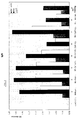
- FIG. 2 An analysis of the specific IgGs of acetylcysteine from persons seropositive for the HIV I virus is given in FIG. 2. It can be seen that several subjects are strongly positive for acetylcysteine.
- Glutathione was nitrosylated in the same way as cysteine and acetylcysteine, as described above. Seven sera rich in anti-acetyl-cysteine antibodies were adsorbed for 30 minutes at 37 o C with 500 nanomoles of free acetyl-cysteine, free glutathione or free nitrosylated glutathione. The sera adsorbed were then analyzed for the presence of antibodies of class IgG specific for acetyl-cysteine. The percentage of residual activity is given in Table 5. It can be seen that the nitrosylation of glutathione amplifies its power of competition with the antibodies.
- Serum 7 is similarly inhibited by free acetylcysteine (9% residual serological activity) and by free nitrosylated glutathione (5% residual serological activity).
- Immunoconjugates produced from mercaptoethanol, amino acid derivatives and carbohydrates were prepared by activation of a carrier protein by means of PBQ and substitution of the amino residue of haptens by the Traut reagent, at moderately basic pH of 9 , 0. Non-amino carbohydrates were substituted at pH 11.
- the number of conjugates capable of being synthesized by the present method and the number of molecules capable of being analyzed is extremely high.
- the inventors have essentially chosen molecules of low molecular weight (derived from amino acids and carbohydrates), without trying to demonstrate that molecules of higher molecular weight, that is, ie dipeptides and dissaccharides as well as polypeptides and oligosaccharides, are also imunogenic: a demonstrated antigenicity for a monopeptide and / or derivative of amino acid and for a monosaccharide and / or derivative of monosaccharide will extend the most often also the same molecule included in a higher molecular weight formation as has been shown with cysteine and glutathione.
- N-acetyl-cysteine N-acetyl-cysteine-NO, N-acetyl-L-tryptophan, N-acetyl-L-tryptophan-NO, tryptamine, serotonin, serotonin-NO, 5-methoxytryptamine, glycine, L-glutamine, L-arginine, L-arginine- ⁇ -naphthylamide, N-acetyl-arginine, N-acetyl-arginine-NO , N-acetyl-serotonin, tryptophan, L-valine- ⁇ -naphthylamide, L-valine, N-valine, L-tryptophan- ⁇ -naphthylamide, L-alanine- ⁇ -naphthylamide, acetyl-phenylalanine- ⁇ -naphthylamide
- Sphingosine and acetylsphingosine are insoluble in an aqueous medium and have been replaced in the following manner: 1 mg of sphingosine and 1.5 mg of acetyl-sphingosine were dissolved in 0.1 ml and 0.2 ml of dry methanol . 420 ⁇ g of Traut's reagent solubilized in 28 ⁇ l of anhydrous methanol were added to the acetyl sphingosine solution. The substitution reaction was held for 45 minutes at 37 o C.
- AIDS acquired immunodeficiency syndrome
- N-acetyl-ornithine is frequently elevated in patients with AIDS and multiple sclerosis, while high titers of antibodies to acetyl-sphingosine are absent in AIDS patients but are found in patients with multiple sclerosis. plaques and migraine.
- Table 6 compares the IgG data obtained using N-acetyl-mannosamine and sphingosine coupled with albumin to identify the possible presence of antibodies in migraine and tuberculosis patients.
- Table 6 Serum number Migraine Tuberculosis NA-mann.NH 2 Sphingosine NA-mann.NH 2 Sphingosine 1 0.11 0.71 0.41 0.15 2 0.00 0.77 0.47 0.10 3 0.00 0.62 0.17 0.08 4 0.00 0.38 0.19 0.18 5 0.00 0.20 0.22 0.12 6 0.00 0.00 0.24 0.31 7 0.00 0.00 0.28 0.22 8 0.20 0.00 0.31 0.08 9 0.10 0.00 0.32 0.18 10 0.46 0.32 0.28 0.08
- migraine sufferers do not have anti-N-acetyl-mannosamine antibodies, but that some of them have anti-sphingosine antibodies and the reverse is observed in tuberculosis patients.
- NUNC Maxisorb microtiter plates were sensitized with a conjugate composed of N-acetyl-cysteine coupled to bovine albumin, as already described above. The same hapten was used to sensitize the wells of COSTAR microtiter plates - "sulhydryl binding surface ®" (cat. 2509-K0419143). 100 ⁇ l of a 20 ⁇ g / ml solution of N-acetyl-cysteine dissolved in 50 mM phosphate buffer at pH 6.5 were introduced into the wells activated by maleimide and incubated for 60 min. at room temperature.
Landscapes
- Health & Medical Sciences (AREA)
- Life Sciences & Earth Sciences (AREA)
- Immunology (AREA)
- Chemical & Material Sciences (AREA)
- Engineering & Computer Science (AREA)
- Molecular Biology (AREA)
- Microbiology (AREA)
- General Health & Medical Sciences (AREA)
- Medicinal Chemistry (AREA)
- Hematology (AREA)
- Biomedical Technology (AREA)
- Urology & Nephrology (AREA)
- Mycology (AREA)
- Cell Biology (AREA)
- Epidemiology (AREA)
- Biochemistry (AREA)
- Public Health (AREA)
- Animal Behavior & Ethology (AREA)
- Veterinary Medicine (AREA)
- Pharmacology & Pharmacy (AREA)
- Food Science & Technology (AREA)
- Physics & Mathematics (AREA)
- Analytical Chemistry (AREA)
- Biotechnology (AREA)
- General Physics & Mathematics (AREA)
- Pathology (AREA)
- Organic Chemistry (AREA)
- Genetics & Genomics (AREA)
- Proteomics, Peptides & Aminoacids (AREA)
- Biophysics (AREA)
- Rheumatology (AREA)
- Medicines Containing Antibodies Or Antigens For Use As Internal Diagnostic Agents (AREA)
- Peptides Or Proteins (AREA)
Applications Claiming Priority (4)
| Application Number | Priority Date | Filing Date | Title |
|---|---|---|---|
| BE9500316A BE1009230A6 (fr) | 1995-04-05 | 1995-04-05 | Conjugue immunoactif. |
| BE9500316 | 1995-04-05 | ||
| BE9600113A BE1009917A6 (fr) | 1996-02-08 | 1996-02-08 | Conjugue immunoreactif, procede d'obtention de ce conjugue, anticorps diriges contre ledit conjugue et dispositif de diagnostic les comprenant. |
| BE9600113 | 1996-02-08 |
Publications (2)
| Publication Number | Publication Date |
|---|---|
| EP0736770A2 true EP0736770A2 (de) | 1996-10-09 |
| EP0736770A3 EP0736770A3 (de) | 1997-05-02 |
Family
ID=25662976
Family Applications (1)
| Application Number | Title | Priority Date | Filing Date |
|---|---|---|---|
| EP96870042A Withdrawn EP0736770A3 (de) | 1995-04-05 | 1996-04-01 | Immunoreaktives Konjugat, Verfahren zu seiner Herstellung, gegen dieses gerichtete Antikörper und sie enthaltende pharmazeutische Zusammensetzung und diagnostische Vorrichtung |
Country Status (1)
| Country | Link |
|---|---|
| EP (1) | EP0736770A3 (de) |
Cited By (11)
| Publication number | Priority date | Publication date | Assignee | Title |
|---|---|---|---|---|
| WO1998029452A1 (fr) * | 1996-12-30 | 1998-07-09 | Centre National De La Recherche Scientifique (Cnrs) | Anticorps reconnaissant specifiquement une proteine nitrosylee, leur procede de preparation, leur utilisation therapeutique et diagnostic |
| WO1999056764A1 (en) * | 1998-04-30 | 1999-11-11 | Teijin Limited | Method for preventing or treating a human immunodeficiency virus infection |
| US6608178B1 (en) * | 1996-12-05 | 2003-08-19 | Alco Dia A.B. | 5-hydroxytryptophol (5-HTOL) derivatives, antibodies, immunoassays and detection of recent alcohol consumption |
| WO2003056062A3 (de) * | 2001-12-27 | 2004-01-15 | Basf Ag | Derivate von polymeren für die metallbehandlung |
| WO2002096360A3 (en) * | 2001-05-25 | 2005-02-03 | Ceremedix Inc | Single amino acid based compounds for counteracting effects of reactive oxygen species and free radicals |
| WO2007140433A2 (en) | 2006-05-31 | 2007-12-06 | Lpath, Inc. | Methods and reagents for detecting bioactive lipids |
| EP2035362A4 (de) * | 2006-05-31 | 2009-08-26 | Lpath Inc | Neue bioaktive lipidderivate, dagegen reaktive immunderivierte reste sowie verfahren zu ihrer herstellung und verwendung |
| EP1758617A4 (de) * | 2004-06-25 | 2010-03-10 | Facet Biotech Corp | Stabile flüssigkeit und lyophilisierte proteinformulierungen |
| US9217749B2 (en) | 2006-05-31 | 2015-12-22 | Lpath, Inc. | Immune-derived moieties reactive against lysophosphatidic acid |
| US9274130B2 (en) | 2006-05-31 | 2016-03-01 | Lpath, Inc. | Prevention and treatment of pain using antibodies to lysophosphatidic acid |
| CN111499724A (zh) * | 2020-04-15 | 2020-08-07 | 上海领潮生物新材料有限公司 | 一种s-腺苷同型半胱氨酸-鸡卵白蛋白偶联物的制备方法 |
Family Cites Families (4)
| Publication number | Priority date | Publication date | Assignee | Title |
|---|---|---|---|---|
| US5157123A (en) * | 1989-03-13 | 1992-10-20 | Georgetown University | S-(2-thiopyridyl)-l-cysteine, a heterobifunctional crosslinking reagent |
| DE3922608A1 (de) * | 1989-07-10 | 1991-01-17 | Behringwerke Ag | Verbindungen aus biopolymeren und effektorsubstanzen, die ueber optisch aktive aminosaeurederivate verknuepft sind, verfahren zu ihrer herstellung und ihre verwendung |
| GB8927230D0 (en) * | 1989-12-01 | 1990-01-31 | Unilever Plc | Reagents |
| JPH08506897A (ja) * | 1993-02-12 | 1996-07-23 | シーライト・サイエンシーズ・インコーポレーテツド | 発光蛋白質複合体の調製法およびその使用法 |
-
1996
- 1996-04-01 EP EP96870042A patent/EP0736770A3/de not_active Withdrawn
Cited By (16)
| Publication number | Priority date | Publication date | Assignee | Title |
|---|---|---|---|---|
| US6608178B1 (en) * | 1996-12-05 | 2003-08-19 | Alco Dia A.B. | 5-hydroxytryptophol (5-HTOL) derivatives, antibodies, immunoassays and detection of recent alcohol consumption |
| WO1998029452A1 (fr) * | 1996-12-30 | 1998-07-09 | Centre National De La Recherche Scientifique (Cnrs) | Anticorps reconnaissant specifiquement une proteine nitrosylee, leur procede de preparation, leur utilisation therapeutique et diagnostic |
| WO1999056764A1 (en) * | 1998-04-30 | 1999-11-11 | Teijin Limited | Method for preventing or treating a human immunodeficiency virus infection |
| WO2002096360A3 (en) * | 2001-05-25 | 2005-02-03 | Ceremedix Inc | Single amino acid based compounds for counteracting effects of reactive oxygen species and free radicals |
| WO2003056062A3 (de) * | 2001-12-27 | 2004-01-15 | Basf Ag | Derivate von polymeren für die metallbehandlung |
| EP1758617A4 (de) * | 2004-06-25 | 2010-03-10 | Facet Biotech Corp | Stabile flüssigkeit und lyophilisierte proteinformulierungen |
| EP2035362A4 (de) * | 2006-05-31 | 2009-08-26 | Lpath Inc | Neue bioaktive lipidderivate, dagegen reaktive immunderivierte reste sowie verfahren zu ihrer herstellung und verwendung |
| EP2027142A4 (de) * | 2006-05-31 | 2009-08-19 | Lpath Inc | Verfahren und reagentien zum nachweis biologisch aktiver lipide |
| WO2007140433A3 (en) * | 2006-05-31 | 2008-11-06 | Lpath Inc | Methods and reagents for detecting bioactive lipids |
| JP2009539118A (ja) * | 2006-05-31 | 2009-11-12 | エルパス・インコーポレイテッド | 生物活性脂質を検出する方法および試薬 |
| WO2007140433A2 (en) | 2006-05-31 | 2007-12-06 | Lpath, Inc. | Methods and reagents for detecting bioactive lipids |
| US8796429B2 (en) * | 2006-05-31 | 2014-08-05 | Lpath, Inc. | Bioactive lipid derivatives, and methods of making and using same |
| US9217749B2 (en) | 2006-05-31 | 2015-12-22 | Lpath, Inc. | Immune-derived moieties reactive against lysophosphatidic acid |
| US9274129B2 (en) * | 2006-05-31 | 2016-03-01 | Lpath, Inc. | Methods and reagents for detecting bioactive lipids |
| US9274130B2 (en) | 2006-05-31 | 2016-03-01 | Lpath, Inc. | Prevention and treatment of pain using antibodies to lysophosphatidic acid |
| CN111499724A (zh) * | 2020-04-15 | 2020-08-07 | 上海领潮生物新材料有限公司 | 一种s-腺苷同型半胱氨酸-鸡卵白蛋白偶联物的制备方法 |
Also Published As
| Publication number | Publication date |
|---|---|
| EP0736770A3 (de) | 1997-05-02 |
Similar Documents
| Publication | Publication Date | Title |
|---|---|---|
| CA2390891C (fr) | Procede de diagnostic d'une esst provoquee par une souche d'atnc dans un echantillon biologique | |
| CA1138438A (en) | Immunochemical conjugates: method and composition | |
| WO1980002460A1 (fr) | Procede et dispositif pour le dosage des lipoproteines seriques | |
| EP0149405A2 (de) | Antikörper, die zum Erkennen von haptenischen Gruppen geeignet sind, ihre Herstellung und ihre Verwendung, und Antigene, die die Herstellung dieser Antikörper möglich machen | |
| EP0564477B1 (de) | Peptidfragmente des env-proteins vom immunschwäche-virus der katze und ihre verwendung in der diagnostik | |
| EP1590373B1 (de) | Durch reduktive aminierung von serotyp-5-pneumococcus-kapselpolysacchariderhaltene konjugate | |
| EP1354599B1 (de) | Pharmazeutische oder Nährungsmittelzusammensetzung für die Behandlung von Pathologien die assoziert sind mit einem Transplantatabstoss | |
| EP0001197B1 (de) | Kupplungsverbindungen von Cytidin-Diphosphocholin und Aminoverbindungen, Verfahren zu ihrer Herstellung und ihre pharmazeutische und analytische Verwendung | |
| FR2464995A1 (fr) | Procede de preparation d'une sous-population virale ayant une sensibilite accrue envers des cellules-hotes du virus et applications de cette sous-population | |
| JP5380074B2 (ja) | 複合体の生成 | |
| CH646524A5 (fr) | Procede pour preparer un reactif qui s'agglutine lorsqu'on le met en contact avec des liquides de l'organisme contenant des antigenes. | |
| EP0934339B1 (de) | Detoxifizierung durch intramuskulär verabreichte F(ab')2 Fragmente | |
| EP0063064B1 (de) | Reagens zur radio-oder enzymimmunologischen Bestimmung der IgE | |
| BE1009917A6 (fr) | Conjugue immunoreactif, procede d'obtention de ce conjugue, anticorps diriges contre ledit conjugue et dispositif de diagnostic les comprenant. | |
| EP0667897B1 (de) | Spezifisches immunotestsystem für menschliche plasma glutathionperoxidase | |
| FR2508486A1 (fr) | Methode de dosage immuno-enzymatique et trousse pour sa mise en oeuvre | |
| EP0172045A1 (de) | Antitumorglycoproteine welche an ihren Kohlenhydratteilen modifiziert sind und Verfahren zu deren Herstellung | |
| BE1009230A6 (fr) | Conjugue immunoactif. | |
| FR2931481A1 (fr) | Anticorps specifique de la lysine propionylee/butyrylee, son procede d'obtention et ses applications | |
| FR2601021A2 (fr) | Fraction immunogene active a l'egard des bilharzioses, sa preparation, compositions immunisantes la contenant | |
| JPH07503239A (ja) | ヒスタミン誘導体を免疫調節剤として免疫療法で用いる方法 | |
| US9074017B2 (en) | Pure albumin and its method of preparation and detection | |
| EP0316212B1 (de) | Verwendung von Nitrophenylen oder Antinitrophenylen -Antikörpern zur Veränderung der Wechselwirkung zwischen empfindlichen Wirtszellen und einem Erreger | |
| WO1996036880A1 (fr) | Procede de detection et/ou de quantification de ligands specifiques d'une pathologie liee a une reaction allergique ou auto-immune ou du cancer du poumon | |
| WO1994027151A1 (fr) | Utilisation de molecules reconnues par des autoanticorps de serums humains pour le diagnostic ou le traitement du sida |
Legal Events
| Date | Code | Title | Description |
|---|---|---|---|
| PUAI | Public reference made under article 153(3) epc to a published international application that has entered the european phase |
Free format text: ORIGINAL CODE: 0009012 |
|
| 17P | Request for examination filed |
Effective date: 19960405 |
|
| AK | Designated contracting states |
Kind code of ref document: A2 Designated state(s): BE DE FR GB IT |
|
| PUAL | Search report despatched |
Free format text: ORIGINAL CODE: 0009013 |
|
| AK | Designated contracting states |
Kind code of ref document: A3 Designated state(s): BE DE FR GB IT |
|
| STAA | Information on the status of an ep patent application or granted ep patent |
Free format text: STATUS: THE APPLICATION HAS BEEN WITHDRAWN |
|
| 18W | Application withdrawn |
Withdrawal date: 19991229 |