EP0738962A2 - Verarbeitungseinheit mit aggressiver spekulativer Vorausladung von Befehlen und Daten - Google Patents
Verarbeitungseinheit mit aggressiver spekulativer Vorausladung von Befehlen und Daten Download PDFInfo
- Publication number
- EP0738962A2 EP0738962A2 EP96104125A EP96104125A EP0738962A2 EP 0738962 A2 EP0738962 A2 EP 0738962A2 EP 96104125 A EP96104125 A EP 96104125A EP 96104125 A EP96104125 A EP 96104125A EP 0738962 A2 EP0738962 A2 EP 0738962A2
- Authority
- EP
- European Patent Office
- Prior art keywords
- instruction
- stouch
- speculations
- line
- resolved
- Prior art date
- Legal status (The legal status is an assumption and is not a legal conclusion. Google has not performed a legal analysis and makes no representation as to the accuracy of the status listed.)
- Granted
Links
Images



Classifications
-
- G—PHYSICS
- G06—COMPUTING OR CALCULATING; COUNTING
- G06F—ELECTRIC DIGITAL DATA PROCESSING
- G06F9/00—Arrangements for program control, e.g. control units
- G06F9/06—Arrangements for program control, e.g. control units using stored programs, i.e. using an internal store of processing equipment to receive or retain programs
- G06F9/30—Arrangements for executing machine instructions, e.g. instruction decode
- G06F9/38—Concurrent instruction execution, e.g. pipeline or look ahead
- G06F9/3824—Operand accessing
- G06F9/383—Operand prefetching
-
- G—PHYSICS
- G06—COMPUTING OR CALCULATING; COUNTING
- G06F—ELECTRIC DIGITAL DATA PROCESSING
- G06F9/00—Arrangements for program control, e.g. control units
- G06F9/06—Arrangements for program control, e.g. control units using stored programs, i.e. using an internal store of processing equipment to receive or retain programs
- G06F9/30—Arrangements for executing machine instructions, e.g. instruction decode
- G06F9/30003—Arrangements for executing specific machine instructions
- G06F9/3004—Arrangements for executing specific machine instructions to perform operations on memory
- G06F9/30047—Prefetch instructions; cache control instructions
-
- G—PHYSICS
- G06—COMPUTING OR CALCULATING; COUNTING
- G06F—ELECTRIC DIGITAL DATA PROCESSING
- G06F12/00—Accessing, addressing or allocating within memory systems or architectures
- G06F12/02—Addressing or allocation; Relocation
- G06F12/08—Addressing or allocation; Relocation in hierarchically structured memory systems, e.g. virtual memory systems
- G06F12/12—Replacement control
- G06F12/121—Replacement control using replacement algorithms
- G06F12/126—Replacement control using replacement algorithms with special data handling, e.g. priority of data or instructions, handling errors or pinning
- G06F12/127—Replacement control using replacement algorithms with special data handling, e.g. priority of data or instructions, handling errors or pinning using additional replacement algorithms
Definitions
- the invention relates to computer processing units and, more particularly, to the prefetching of instructions and data into cache memory of the computer processing unit.
- a computer processing unit may attempt to dynamically learn the access pattern used for effective prefetching. Such dynamic (run-time) prefetching techniques may require significant hardware and may not be very effective at learning complicated access patterns for instructions and/or data.
- prefetch support may be in the form of compiler-directed run-time prefetching of cache lines.
- the computer processing unit may offer support for prefetching of a cache block.
- Current microprocessors, such as the PowerPC 601 include new instructions, typically known as a "touch" instruction (e.g., dcbt and dcbst instructions in the PowerPC 601), to provide a hint to the machine at run time that performance would be improved if the specified block is fetched into the cache.
- Such a prefetch say, in the case of data, is typically simply treated as a load operation, except that the system error handler is not invoked for a translation or protection violation.
- the prefetch may occur too early. In this case, the specified block of instructions and/or data may be flushed from the cache before it is actually needed. More importantly, aggressive prefetch is likely to run into uncertainties of program control flow. In other words, when the computer processing unit encounters an unresolved conditional branch instruction, two options exist:
- Cache pollution implies that the cache is forced to contain useless blocks, which in turn further increases the probability that instructions and/or data will be flushed from the cache before they are actually needed, thus offsetting the performance gain due to prefetching.
- more aggressive prefetch under these conditions implies more cache pollution, and hence the performance potential of prefetching is restricted.
- the computer processing unit of the present invention includes a main memory for storing sequences of instructions that are loaded into lines of an instruction cache, and transferred from the instruction cache to a processing unit for execution.
- a line replacement algorithm is utilized to overwrite the lines of the instruction cache.
- STOUCH instructions are inserted into the sequence of instructions, for example, at compile-time.
- the STOUCH instruction is a hint that performance will probably be improved if one or more instructions identified by the STOUCH instruction is fetched into the instruction cache, and the speculations specified by the STOUCH instruction hold true.
- one of said instructions transferred from said instruction cache to said processing unit is an STOUCH instruction
- one or more instructions identified by the STOUCH instruction are fetched from the main memory into one or more lines of the instruction cache, and the speculations associated with the STOUCH instruction are resolved.
- the line replacement algorithm is biased such that the one or more lines of the instruction cache containing the one or more instructions identified by the STOUCH instruction are retained for a greater number of machine cycles than during normal operation of the line replacement algorithm.
- the line replacement algorithm is biased such that the one or more lines of the instruction cache containing the one or more instructions identified by the STOUCH instruction are retained for a shorter number of machine cycles than during normal operation of the line replacement algorithm.
- the present invention discloses a similar scheme to prefetch data into a data cache.
- compiler time is used to refer to the timing of any prior-to-run-time processing. Note however that although such a processing is very likely to be carried out by a compiler, other means, such as, assembly level programming, could also be employed instead.
- the present invention proposes a prefetching scheme which associates explicit control flow speculations with each speculative prefetch.
- the prefetching scheme is based on compile-time analysis to determine specific locations within a program where instruction or data cache misses are likely to be encountered at run-time. Non-sequential branch targets or irregular data accesses are typical examples of cache accesses which are likely to cause a cache-miss.
- the compiler identifies a set of points where it can provide an early hint to the run-time hardware to initiate a prefetch to hide the potential miss penalty associated with the cache accesses identified before.
- prefetch points static program locations are referred to as "prefetch points”. This may also involve compile-time code restructuring to enable earlier availability of the address of such accesses.
- Each node of the graph refers to a group or block of non-branch instructions, optionally ending with a branch instruction.
- Any block of code-sequence that ends with a conditional branch has one edge labelled F to the block to which the control is transferred if the branch is not taken or falls through, and another edge labelled T to the block to which the control is transferred if the branch is taken.
- the remaining blocks either end with a non-branch instruction or with an unconditional branch to a unique target block.
- An unlabelled edge is shown from the block from where the control flows to the block to which the control flows.
- Block B10 there is a store instruction in block B10 which is identified at compile-time as one which is likely to cause a cache-miss at run time.
- the compiler may identify a prefetch point in Block B1, for example.
- the present invention proposes a new prefetch instruction, referred to as an STOUCH instruction, which provides the compiler with the ability to encode compile-time speculations associated with the conditional branches between the time the prefetch request is initiated and the time the prefetched data is actually needed.
- STOUCH instruction provides the compiler with the ability to encode compile-time speculations associated with the conditional branches between the time the prefetch request is initiated and the time the prefetched data is actually needed.
- the STOUCH instruction of the present invention is a hint that performance will probably be improved if the block containing the byte addressed by the effective address implied by this instruction is fetched into the cache, and the specified speculations associated with the branch sequence that dynamically follows this instruction hold, in which case the program will soon access the identified block. Executing the STOUCH instruction will not cause the system error handler to be invoked.
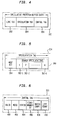
- the STOUCH instruction 11 preferably includes an STOUCH op-code field 12, an address field 13, and a condition field 15.
- the address field 13 unambiguously identifies the address of an instruction or data cache block.
- the condition field 15 specifies a set of compile-time speculations ⁇ cond_1>, ⁇ cond_2> ... ⁇ cond_N> (labeled 15-1 ... 15-N).
- N refers to the maximum number of permitted speculations and is a function of the number of available op-code bits for the STOUCH instruction encoding in a given architecture.
- the STOUCH instruction 11 may also include a mode bit 14 that is used to interpret the set of conditions ⁇ cond_1> through ⁇ cond_n> in one of two ways. For example, if the mode bit 14 is set to valid (V), the associated prefetch may be considered recommended provided all of the compile-time specified conditions ( ⁇ cond_1> through ⁇ cond_N>) associated with the STOUCH instruction evaluate to true at run time. However, if the mode bit 14 is set to invalid (I), the associated prefetch may not be considered recommended if all of the compile-time specified conditions ( ⁇ cond_1> through ⁇ cond_N>) associated with the STOUCH instruction evaluate to true at run time.
- V valid
- I the associated prefetch may not be considered recommended if all of the compile-time specified conditions ( ⁇ cond_1> through ⁇ cond_N>) associated with the STOUCH instruction evaluate to true at run time.
- the "dependence region" of an STOUCH instruction is defined as the sequence of instructions in the STO that starts with the first instruction after the STOUCH instruction and is terminated on encountering the first instruction immediately after which the instruction and or data prefetched by the STOUCH instruction is actually needed.
- condition field 15 of the STOUCH instruction 11 encodes compile-time speculation on the outcome of a sequence of one or more branches as ⁇ cond_1>, ⁇ cond_2> ... ⁇ cond_N>.
- the first condition in the sequence, cond_1 (labeled 15-1), is associated with the first dynamically encountered unique conditional branch in the dependence region of the STOUCH instruction.
- the second condition in the sequence, cond_2 (labeled 15-2), is associated with the second dynamically encountered unique conditional branch in the dependence region of the STOUCH instruction, and so on. Only the branches residing at different instruction locations are considered unique.
- the conditions which encode the compile-time speculation of a specific branch outcome are preferably one of the following three conditions: taken (T), fall through (F) (i.e., not-taken) and don't care (X).
- the speculation associated with the conditions may be restricted to be either taken (T) or fall-through (F).
- the set of conditions ⁇ cond_1> through ⁇ cond_N> encode compile-time speculation regarding the control path to be followed in the associated dependence region.
- a compiler would use the valid mode setting for encoding a good path through the control flow region from the prefetch point to the regular access point, whereas, the compiler would use the invalid mode setting for encoding a bad path through the control flow region from the prefetch point to the regular access point.
- the dynamic sequence of branches encountered after the STOUCH instruction would be all unique.
- the first unique conditional branch would simply be the first dynamically encountered conditional branch
- the second unique conditional branch would simply be the second dynamically encountered conditional branch, and so on.
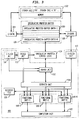
- FIG. 3 is a functional block diagram illustrating a computer processing system capable of executing the STOUCH instruction of the present invention.
- the computer processing system includes a processor unit 100 and an associated memory unit 102.
- the memory unit 102 holds program data and instructions to be executed on the processor unit 100.
- the memory unit 102 is interfaced with an instruction cache unit 104 and a data cache unit 106 such that frequently used instruction and data portions of the memory unit 102 are kept in an instruction cache unit 104 and data cache unit 106, respectively.
- the instruction and data cache units 104,106 may be merged into a single unified cache. Access time for the cache units 104, 106 are typically much smaller than that of the memory unit 102.
- the instruction cache and/or data cache units 104,106 may also be comprised of multiple caches or multilevel caches as is also well known.
- the instructions/data stored in the instruction cache 104 and data cache 106 are divided into lines or blocks.
- An instruction fetch unit 108 fetches one or more blocks of instructions stored in the instruction cache 104 into a decode unit 110.
- the decode unit 110 forwards the branch and condition register update instructions to a branch unit 112 for execution and forwards sequential (non-branch instructions) to a dispatch unit 114.
- the dispatch unit 114 analyzes dependencies among pending instructions, and schedules execution of instructions on one or more functional units 116.
- a D-Fetch unit 118 handles fetching of blocks of data from the data cache 106 into the functional units 116 as needed.
- the data cache unit 106 holds data values used as source operands by the instructions and some of the data values generated by executed instructions. Since multiple memory-resident data values may be simultaneously required by the functional units 116 and multiple memory-bound results may be simultaneously generated, the data cache unit 106 is typically multi-ported.
- the processing unit 100 also includes a register file 120 containing a set of registers.
- the register file 120 provides operands to the functional units 116 for executing instructions and also receives results of execution. This set is further broken down into architecturally visible set of registers and architecturally invisible registers.
- Architecturally visible, or architected registers refer to the fixed set of registers that are accessible to the assembly level programmer (or the compiler) of the machine. Such a register file 120 is well known in prior art.
- Each functional unit 116 may be capable of executing some or all types of instructions.
- the functional units 116 receive input source operands from and write the output results to the register file 120 and/or the data cache unit 106.
- all the functional unit 116 are identical and hence capable of executing any instruction.
- the functional units 116 may be asymmetric, where a specific unit is capable of executing only certain subset of instructions. In this case, the dispatch unit 114 must be aware of this asymmetry and schedule the instructions appropriately.
- the processor unit 100 also includes a completion unit 122 responsible for completing instruction execution in an order considered a valid order by the architecture. Even though the functional units 116 may execute instructions out-of-order, the processor unit 100 may or may not be allowed to complete the instructions in the same order, depending on the architectural constraints.
- the branch unit 112 predicts unresolved branches, and determines the validity of each prediction on branch resolution.
- the branch unit 112 also includes a condition register, which is used for evaluating the outcome of conditional branches, and logic that updates the condition register according to the results of operations performed by the functional units 116.
- the instructions stored in the instruction cache unit 104 include one or more STOUCH instructions as described above.
- the decode unit 110 identifies STOUCH instructions and forwards the STOUCH instructions to a speculative prefetch control unit 124.
- the speculative prefetch control unit 124 controls the speculative prefetch of instructions according to the STOUCH instructions and adds entries to a speculative prefetch buffer 126 corresponding to the STOUCH instructions.
- the branch unit 112 forwards each branch outcome to the speculative prefetch control unit 124.
- the branch outcome information may be in sequential trace order, for the sake of simplicity, even if branches resolve out-of-order within the branch unit 112.
- the branch unit 112 could pass out-of-order branch outcome information onto the speculative prefetch control unit 124, yet this requires appending the associated branch ID with each outcome.
- the branch outcome information is used by the speculative prefetch control unit 124 for evaluating the speculation tag associated with the entries of the speculative prefetch buffer 126 and controlling the overwriting of the instruction and/or data cache units 104, 106 based upon this evaluation.
- the condition register could be made part of the register file 120 and updated similar to that of any other architected register as part of the semantics of a different arithmetic instruction.
- each entry 200 of the speculative prefetch buffer 126 includes a line tag 202, a speculation tag 204 and a control tag 206.
- the line tag 202 uniquely associates the entry 200 with a specific line in the instruction cache unit 104 or data cache unit 106.
- a cache organization instruction or data
- the line tag associated with each entry can be easily derived from the directory contents associated with the cache line being speculatively prefetched.
- a separate prefetch buffer may be used for holding prefetched lines (speculative or not).
- the line tag 202 of the entry 200 may simply refer to the appropriate index in the prefetch buffer for the line under consideration.
- the speculation tag 204 of the entry is derived from the compile-time speculations encoded in the STOUCH instruction.
- the speculation tag 204 is described below in more detail.
- the control tag 206 of the entry is used for evaluating the compile-time speculations in the speculation tag 204.
- the sub-fields associated with the control tag 206 are described below.
- the algorithms used for initializing and updating the control tag 206 are also described below.
- the speculation tag 204 of each entry 200 preferably includes a speculation field 300 consisting of a plurality of sub-fields 302-1 through 302-N.
- N refers to the maximum number of permitted speculations and is a function of the number of available op-code bits for the STOUCH instruction encoding in a given architecture.
- the sub-fields 302-1 through 302-N each contain data that encodes the compile-time speculation associated with the first unique dynamic branch encountered after the STOUCH instruction through the Nth dynamically encountered unique branch after the STOUCH, respectively.
- each speculation tag 204 may also include a mode bit 304 used for interpreting the sub-fields 302-1 through 302-N of the speculation field 300 in one of two ways.
- the associated entry may be considered recommended provided all of the compile-time conditions encoded in sub-fields 302-1 through 302-N evaluate to true at run time. Yet, if the mode bit 304 is set to invalid (I), the associated entry 200 may not be considered recommended if all of the compile-time conditions encoded in sub-fields 302-1 through 302-N evaluate to true at run time.
- the control tag 206 of each entry may include one or more of a valid bit 400, a miss bit 402, a status field 404, a first Branch ID field 406, a match count field 408, and a life count field 410.
- the valid bit 400 when set, indicates the associated entry 200 is valid. However, the valid bit 400 when cleared indicates the entry 200 is invalid.
- the miss bit 402 when set indicates that the cache line associated with the entry 200 was found missing in the cache and was fetched from higher levels of memory hierarchy in response to the STOUCH prefetch request. Yet, the miss bit 402 when cleared indicates the line recommended for prefetch by the STOUCH instruction corresponding to the entry was found present in the cache.
- the status field 404 records the status of the speculatively prefetched line. It is initialized to an unresolved status and is evaluated later to either resolved valid or resolved invalid, as described below in the control-tag update algorithm with respect to FIG. 13.
- the First Branch ID field 406 is initialized to the run-time ID of the first conditional branch that is encountered dynamically after the STOUCH instruction, in STO. This information is used to establish the range of conditional branches a specific STOUCH instruction can be potentially dependent on. This range starts with the branch with the first branch ID and ends after N successive unique conditional branches in STO. Branches outside this range do not play any role in evaluating the validity of the speculations associated with the corresponding cache line.
- the match count field 408 represents a count of the number of compile-time speculations that have matched with run-time outcomes. It is used for evaluating the validity of compile-time speculations, as discussed below in the control-tag update algorithm with respect to FIG. 13.
- the life count field 410 represents a count of the number of times the associates cache line was not replaced, after being identified as a replacement candidate by the default cache replacement algorithm.
- the information in this field is used for biasing the default line replacement algorithm used for the instruction and data caches.
- the biased line replacement algorithm is described below in greater detail with respect to FIG. 12.
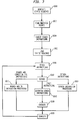
- Figure 7 is a flow chart illustrating the steps in executing the STOUCH instruction described above. Initially, at compile time, the compiler in step 1000 generates a static sequence of instructions, without any regard to STOUCH instructions as described above.
- step, 1002 the compiler analyzes the static sequence to identify specific locations within the sequence wherein instruction or data cache misses are likely to be encountered at run-time, and, according to the identified locations within the static sequence, the compiler identifies a set of points, called prefetch points, where it can provide an early hint to the run-time hardware to initiate a prefetch to hide the potential miss penalty associated with the cache accesses at the identified locations.
- the identification of prefetch points may further involve data and control dependence analysis based on, for example, some or all of the corresponding program dependence graph (combination of control dependence graph and data dependence graph).
- step 1004 the compiler inserts one or more STOUCH instructions as described above at the prefetch points identified in the step 1002.
- step 1006 at run time, the computer processing system loads the compiled static sequence of instructions, including the STOUCH instructions inserted into the static sequence in step 1004, into the memory 102 of Figure 3.
- the memory system 102 is interfaced to the instruction cache 104 of the computer processing system.
- sub-sequences of the static sequence stored in the memory 102 are periodically transferred to the instruction cache 104 for execution.
- step 1008 the I-fetch unit 108 fetches the next instruction sequence from the instruction cache 104 by addressing the instruction cache unit 104. If the next instruction sequence is missing from the instruction cache unit 104, it is fetched from the memory 102 into the instruction cache unit 104.
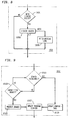
- Figure 8 describes step 1008 in more detail.
- the I-Fetch unit 108 determines if the decode unit 110 is ready to accept more instructions, which further implies that an instruction cache access is required for fetching more instructions. If the I-fetch unit 108 determines the decode unit 110 is ready to accept more instructions, in step 10083 the I-Fetch unit 108 accesses the instruction cache unit 104 by sending the instruction fetch address to the instruction cache unit 104. In step 10083, if the instructions identified by the instruction fetch address are present in the instruction cache unit 104, a cache hit occurs and corresponding instructions are transferred from the instruction cache unit 104 to the decode unit 110 and flow continues to step 1010.
- step 1085 fetch the missing line of instructions.
- step 1010 A more detailed description of the steps in fetching the missing line of instructions into the instruction cache unit 104 is described below with reference to FIG. 12. After the missing line of instruction has been fetched into the instruction cache unit 104 in step 10085, operation continues to step 1010.
- step 1010 of FIG. 7 the decode unit 110 decodes one or more instructions simultaneously. Instructions decoded as branch instructions, or those involving condition register updates, are forwarded by the decode unit 110 to the branch unit 112. Instructions decoded as STOUCH instructions are forwarded by the decode unit 110 to the speculative prefetch control logic 124. Finally, instructions requiring the use of one or more of the functional units 116 are forwarded by the decode unit 110 to the dispatch unit 114 for dependence analysis and dispatch to the functional units 116.
- step 1012 the branch unit 112 processes instructions decoded as branch instructions or as instructions which manipulate the condition register.
- step 1012 the branch unit 112 processes instructions decoded as branch instructions or as instructions which manipulate the condition register.
- step 1021 the branch unit 112 determines if the decoded branch instruction is resolvable. A conditional branch is considered resolvable only after the condition register bit upon which it depends has been updated.
- step 10123 the branch unit 112 checks to determine if the current dynamic instance of an unresolved branch has not been predicted before. If, in step 10123, the unresolved branch instruction has been predicted previously, the operation of the branch unit 112 returns to step 10121 to wait for the branch instruction to become resolvable.
- step 10125 the branch unit 112 predicts the outcome of the unresolved branch instruction.
- the prediction typically involves predicting whether the branch outcome would be taken or fall-through.
- Dynamic branch prediction techniques are well known in the art and include, for example, branch history tables and/or decode history tables.
- step 10127 the instruction fetch address stored by the I-fetch unit 108 is updated according to the prediction.
- step 10127 if the unresolved branch instruction was predicted to be taken in step 10125, the I-fetch unit 108 is updated with the non-sequential target address of the branch instruction. Otherwise, in step 10127, the I-fetch unit 108 is updated with the next sequential address in the instruction sequence.
- step 10121 If, in step 10121, the branch unit 112 determines the decoded branch instruction is resolvable, flow continues to step 10129 to update the control tags of the entries of the speculative prefetch buffer 126.
- step 10129 After updating the control tags of the entries of the speculative prefetch buffer 126 in step 10129, operation continues to step 10127 wherein the instruction fetch address stored by the I-fetch unit 108 is updated according to the resolved branch instruction.
- step 10127 if the resolved branch instruction was predicted to be taken and was resolved to be taken, normal operation of the computer processing system continues. Similarly, if the resolved branch instruction was predicted to be not-taken and was resolved to be not-taken, normal operation continues.
- the instruction fetch unit 108 is updated to fetch along the sequential (not-taken) path and instructions speculatively executed from the target (taken) path are discarded.
- the instruction fetch unit 108 is updated to fetch along the target (taken) path and instructions speculatively executed from the sequential (not-taken) path are discarded.
- step 1014 the speculative prefetch control logic 124 processes the instructions decoded as STOUCH instructions by the decode unit 110.
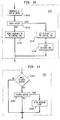
- a more detailed description of the step 1014 is shown in FIG. 10. More specifically, in step 10141, the speculative prefetch control logic 124 utilizes the information encoded in the STOUCH instruction to create an entry for the specified cache line and loads the entry into the speculative prefetch buffer 126. A more detailed description of the step 10141 is described below with respect to FIG. 14.
- the speculative prefetch control logic 126 in step 10143 accesses the appropriate one of the instruction cache unit 104 and data cache unit 106 using the line address of the STOUCH instruction.
- step 10145 if the cache access of step 10143 results in a cache hit (i.e., the line is found in the cache), the miss-bit of the control tag of the associated entry in the speculative prefetch buffer is reset (i.e., set to 0) and the STOUCH instruction processing step 1014 is complete.
- step 10147 the miss-bit of the control tag of the associated entry in speculative prefetch buffer is set (i.e., set to 1) and flow continues to step 10149 to fetch the missing line of instructions.
- step 10149 A more detailed description of the steps in fetching the missing line of instructions into the appropriate cache unit is described below with reference to FIG. 12.
- the dispatch unit 114 processes other decoded instructions for dispatch to the functional units 116. This processing may include analyzing inter-instruction dependencies to detect an independent subset for simultaneous dispatch, if, for example, the functional units 116 are capable of simultaneously executing more than one instruction.
- the functional units 116 execute the instructions dispatched by the dispatch unit 114.
- the execution may involve one or more source operands as inputs, and may create one or more result operands as outputs.
- the operands are either read from and written into the register file 120 or loaded from and stored into the data cache unit 106.
- Figure 11 illustrates the operation in accessing the data cache unit 106. More specifically, in step 10181, the functional unit 116 determines an instruction requires data a cache access (i.e., an input operand is to be retrieved from the data cache unit 106 or an output operand is to be written to the data cache unit 106).
- step 10181 a data cache access is required
- the functional unit 116 in step 10183 presents to the D-fetch unit 118 the block address identifying the location in the data cache unit 106 where the operand is to be retrieved/stored, and the D-fetch unit 118 accesses the data cache unit 106 using the supplied block address. If the cache access of step 10143 results in a cache hit (i.e., the block address is found in the data cache unit 106), the data cache access step 1018 is complete. However, if the cache access of step 10183 results in a cache miss (i.e., the block address is not found in the data cache unit 106), flow continues to step 10185 to fetch the missing line of data from the memory 102.
- step 10185 A more detailed description of the steps in fetching the missing line of data into the data cache unit 106 is described below with reference to FIG. 12. After the missing line of data has been fetched into the data cache unit 106 in step 10185, the data cache access step 1018 is complete.
- step 1020 the completion unit 122 completes instruction execution in an order considered a valid order by the architecture as described above, and processing continues to step 1008 to fetch the next instruction sequence from the instruction cache 104.
- the operation of the computer processing system of the present invention as described above includes the steps of fetching a missing line from either the instruction cache unit 104 or the data cache unit 106. Fetching a line missing in the instruction cache unit 104 or data cache unit 106 invariably involves replacing an existing line in the cache unit. According to the present invention, the line replacement algorithm utilized to replace existing lines of the cache is biased to more quickly discard cache lines prefetched with invalid speculations, yet to retain longer the cache lines prefetched with valid speculations.
- the I-fetch unit 108 determines if the congruence class or set of the instruction cache unit 104 that corresponds to the line being fetched from memory 102 includes an invalid line (i.e. an existing valid line in the set does not need be replaced to make room for the incoming line). If in step 2000 the I-fetch unit 108 determines that an invalid line exists in the set, the I-fetch unit 108 in step 2006 replaces the invalid line with the fetched missing line and the operation is complete.
- the speculative prefetch control logic 124 in step 2004 determines if the set corresponding to the line being fetched from memory 102 contains a speculatively prefetched line which is now considered unnecessary. Such a line is identified by examining the control tag of one or more entries of the speculative prefetch buffer 126. Moreover, the speculative prefetch buffer 126 may be sat associative. In this case, the line may be identified by examining the control tag of the entries of the speculative prefetch buffer 126 that belong to the same congruence class or set as that of the line being fetched from memory 102.
- the speculative prefetch control logic 124 analyzes the entries of the speculative prefetch buffer 126 to identify an entry having a control tag that satisfies the following three conditions: the valid bit 400 is set indicating the entry is valid, the miss-bit 402 is set indicating the cache line corresponding to the entry was found missing in the cache prior to its prefetch, and the status field 404 of the entry is set to resolved invalid indicating the cache line corresponding to the entry has been evaluated as an unnecessary prefetch.
- step 2004 If in step 2004 an entry of the speculative prefetch buffer 126 is identified that satisfies the three conditions, in step 2006 the I-fetch unit 108 replaces the line in the instruction cache unit 104 that corresponds to the entry identified in step 2004 with the fetched missing line and the fetch missing line operation is complete.
- the default line replacement algorithm is applied to identify a replacement candidate.
- the default line replacement algorithm may be a least recently used (LRU) algorithm as is common in the art, or may be other known techniques.
- step 2010 subsequent to or in parallel with step 2008, the speculative prefetch control logic 124 determines if a valid entry exists in the speculative prefetch buffer 126 that corresponds to the replacement candidate identified in step 2008. If there is no such entry, flow continues to step 2006 as described above to replace the replacement candidate line with the fetched missing line. However, in step 2010, if a valid entry exists in the speculative prefetch buffer 126 that corresponds to the replacement candidate, flow continues to step 2012 wherein the speculative prefetch control logic 124 determines if the status field 404 of the control tag 206 of the valid entry is resolved_valid or unresolved. Note that the status of the entry cannot be resolved invalid due to the preceding step 2004.
- step 2012 If in step 2012 the status field 404 is resolved valid, in step 2014 the life count field 410 of the control tag 206 of the entry is incremented, and then in step 2016 the updated life count field 410 is compared with a first threshold value: the resolved valid threshold (RV_Threshold). If in step 2016, the life count field 410 exceeds the first threshold value, flow continues to step 2006 as described above to replace the cache line corresponding to the entry with the fetched missing line. However, if in step 2016 the life count field 410 does not exceed the first threshold value, flow continues to step 2018 to attempt to retain the cache line corresponding to the entry by choosing a different line for replacement, thus providing a bias to the default replacement algorithm.
- RV_Threshold the resolved valid threshold
- step 2018 to attempt to retain the cache line corresponding to the entry, the I-fetch unit determines if there are more lines in the set not yet identified as a replacement candidate in step 2008. If there are more such lines remaining in the set, flow continues to step 2008 to test another replacement candidate in the set. However, if in step 2018, there are no other replacement candidates remaining in the set, flow continues to step 2006 to replace the candidate replacement line with the fetched missing line.
- step 2020 the life count field 410 of the control tag 206 of the entry is incremented, and then in step 2020 the updated life count field 410 is compared with a second threshold value: the unresolved threshold (U_Threshold). If in step 2022, the life count field 410 exceeds the second threshold value, flow continues to step 2006 as described above to replace the cache line corresponding to the entry with the fetched missing line. However, if in step 2022 the life count field 410 does not exceed the second threshold value, flow continues to step 2018 to attempt to retain the cache line corresponding to the entry by choosing a different line for replacement as described above.
- the first and second threshold values are specific design-time constants. Higher threshold values imply stronger biasing.
- the operation of the D-fetch unit 118 in fetching a missing line into the data cache unit 106 is similarly performed.
- the operation of the computer processing system in processing the STOUCH instruction as described above also includes the step 10121 for updating the control tags 206 of entries 200 of the speculative prefetch buffer 126 according to the resolution of branch instructions by the branch unit 112.
- Figure 13 describes this step in more detail. More specifically, in step 3000, the speculative prefetch control logic 124 identifies entries 200 of the speculative prefetch buffer 126 which have a control tag 206 with a valid bit 400 that is set and a status field 404 of unresolved. If there are no such entries, the update control tag step 10121 is complete.
- these entries are further screened in step 3000 to determine if the branch identifier of the resolved branch instruction is within a range of interest of each entry.
- the range of interest of a particular entry is defined as beginning at the first branch ID field 406 of the entry and ending after N consecutive branch instructions following the first branch ID field 406.
- N is a design and architecture parameter. It is a function of maximum number of branch speculations that can be encoded in the instruction set architecture at compile-time.
- the branch ID field 406 of the particular entry refers to the ID assigned at run-time to uniquely identify different branch instructions and their different dynamic instances that are simultaneously active at any point during the execution.
- step 3004 for each entry determined to be within the range of interest in step 3000, the speculative prefetch control logic 124 determines if the condition field of the speculation tag 204 of the entry that corresponds to the resolved branch instruction contains a don't care (X) encoding. Since the branch outcomes are assumed to be communicated to the speculative prefetch control unit 124 by the branch unit 112 in STO, the correspondence between successive branch outcomes and the condition fields 302-1 .. 302-N can be established. If in step 3004 the corresponding condition field contains the don't care encoding, the update control tag step 10121 is complete. However, if the corresponding condition field does not contain a don't care encoding, flow continues to step 3006. Because evaluation of the speculation tag 204 of the entries is dependent on the setting of the mode-bit 304, in step 3006 the speculative prefetch control logic determines whether the mode bit 304 of the speculation tag 204 of the entry is set to valid or invalid.
- X don't care
- step 3008 the speculative prefetch control logic 124 compares the branch outcome with the corresponding condition field of the speculation tag 204 of the entry to determine whether there is a match or a mismatch. If there is a mismatch, in step 3010 the speculative prefetch control logic 124 updates the status field 404 of the control tag 206 of the entry to resolved invalid. If in step 3008 there is a match, in step 3012 the speculative prefetch control logic 124 increments the match count field 408 of the control tag 206 of the entry and in step 3014 determines if the updated match count field 408 has reached the value N, thus indicating that the speculation tag evaluation is complete.
- step 3014 If in step 3014 the match count field 408 has not reached the value N, the update control tag step 10121 is complete. However, if in step 3014 the match count field 408 has reached the value N, flow continues to step 3016 wherein the speculative prefetch control logic 124 updates the status field 404 of the control tag 206 of the entry to resolved valid and initializes the life count field 410 of the entry, for example, by setting it to zero.
- step 3018 the speculative prefetch control logic 124 compares the branch outcome with the corresponding condition field of the speculation tag 204 of the entry to determine whether there is a match or a mismatch. If there is a mismatch, in step 3020 the speculative prefetch control logic 124 updates the status field 404 of the control tag 206 of the entry to resolved valid and initializes the life count field 410 of the entry, for example, by setting it to zero.
- step 3022 the speculative prefetch control logic 124 increments the match count field 408 of the control tag 206 of the entry and in step 3024 determines if the updated match count field 408 has reached the value N, thus indicating that the speculation tag evaluation is complete. If in step 3024 the match count field 408 has not reached the value N, the update control tag step 10121 is complete. However, if in step 3014 the match count field 408 has reached the value N, flow continues to step 3026 wherein the speculative prefetch control logic 124 updates the status field 404 of the control tag 206 of the entry to resolved invalid.
- the operation of the computer processing system in processing the STOUCH instruction as described above also includes the step 10141 for creating an entry in the speculative prefetch buffer 126 according to the information encoded in the STOUCH instruction.
- FIG. 14 describes this step in more detail. More specifically, in step 4000, the speculative prefetch control unit 124 initializes the line-tag field 202 of the entry using the prefetch address of the line, preferably establishing a one-to-one correspondence with an entry in the instruction or data cache unit 104,106. In step 4002, the speculative prefetch control logic 124 initializes the speculation tag field 204 of the entry 200 using the information contained in the STOUCH instruction.
- the mode-bit 304 is initialized to the same value as that in the mode-bit associated with the STOUCH instruction.
- the sub-fields ⁇ cond_1> .. ⁇ cond_N> of the STOUCH instruction are used to initialize the branch speculation fields 302-1 .. 302-N of the speculation tag 204 of the entry.
- the speculative prefetch control logic 124 initializes the control tag as illustrated in FIG. 15.
- the speculative prefetch control logic 124 sets the valid bit 400 of the control tag 206.
- the speculative prefetch control logic 124 initializes the status field 404 of the control tag 206 to unresolved.
- the speculative prefetch control logic 124 sets the first branch ID field 406 of the control tag 206 to the identifier of the first branch instruction in the STO after the associated STOUCH instruction. Since the branch identifiers are typically assigned in sequence, the identifier of the latest dynamic branch instance encountered prior to STOUCH can be used to generate the First Branch ID field 406.
- step 40047 the speculative prefetch control logic 124 initializes the match count field 408 of the control tag 206 to the number of don't cares encoded in the speculation tag 204.
- step 40049 the speculative prefetch control logic 124 initializes the life count field 410 of the control tag 206, for example, by setting it to 0.
- compile-time speculations ⁇ cond_1> through ⁇ cond_N> of the STOUCH instruction as described above are associated directly with different condition register bits. Consequently, the control-flow speculation now speculates on the true or false settings of a set of condition register bits, preferably, a consecutive sequence of condition register bits. At run time, the speculated settings of condition register bits are compared against the actual settings of the corresponding condition register bits at the end of the dependence region of the STOUCH instruction, to determine the validity of the compile-time speculation. This is similar to taken or not-taken assumption for the corresponding branches associated with the condition bit comparisons.
- the dynamic order of the speculated branches becomes irrelevant, and the specified condition register bits can be set in any order at run time. Also note that it should now be possible to restrict the compile-time condition encoding to true and false. Therefore, a single condition register bit would be good enough for encoding a speculation. There is no need now to encode the don't care branch outcomes. The branches whose outcomes are immaterial for the prefetched cache line, can be made to use the condition register bits other than those used by ⁇ cond_1> through ⁇ cond_N>of the STOUCH instruction.
- the compile-time speculations refer to a set of N consecutive condition register bits.
- the location of the first speculated condition register bit could either be fixed or specified as part of the condition field encoding.
- the number of bits being speculated could either be fixed to N or specified as part of the condition field encoding of the STOUCH instruction.
- the unused bits can be set at compile-time such that they do not impact the speculation.
- the compile-time inserted instructions which set the unused condition register bits are in the dependence region of the STOUCH instruction, so that their updates are properly recorded in evaluating the speculation tag at run time.
- the discussion below assumes that the compile-time speculations are encoded using a fixed number (N) of the CR bits starting at a location specified in the STOUCH instruction.
- the computing apparatus of FIG. 3 and the execution methodology illustrated in FIGS. 7 through 15 may be modified as described below.
- branch speculations referred to in the preceding discussion now refer to speculation on condition register bits.
- branch unit 112 of FIG. 3 may be modified to transfer information on condition register updates to the speculative prefetch control unit 124 instead of branch outcomes.
- every condition register update is communicated to the speculative prefetch control unit 124 in terms of which bit/bits is/are being updated and with what new content.
- the first branch ID field 406 of the control tag 206 of the entries stored in the speculative prefetch buffer 126 is renamed as the first CR bit ID field and contains the location of the first condition register bit being speculated in the associated STOUCH instruction.
- step 5000 the branch unit 112 determines if a condition register bit is being updated and transmits any such update to the speculative prefetch control logic 204.
- step 5002 in response to updates of one or more condition register bits, the speculative prefetch control logic carries out potential updates of one or more control tags 206 of the entries of the speculative prefetch buffer 126.
- Step 5002 is same as the steps described in FIG. 13, except for the following changes. Step 3000 of FIG.
- step 3008 and 3018 of FIG. 13 are modified to compare CR bit outcome with the corresponding speculation tag instead of comparing the branch outcome to the corresponding speculation tag.
- the line address and speculation tags of the entries of the speculative prefetch buffer 200 are derived from compile-time information.
- machines capable of hardware prefetch and speculative execution may generate these entries from run-time information.
Landscapes
- Engineering & Computer Science (AREA)
- Software Systems (AREA)
- Theoretical Computer Science (AREA)
- Physics & Mathematics (AREA)
- General Engineering & Computer Science (AREA)
- General Physics & Mathematics (AREA)
- Advance Control (AREA)
- Devices For Executing Special Programs (AREA)
Applications Claiming Priority (2)
| Application Number | Priority Date | Filing Date | Title |
|---|---|---|---|
| US08/426,502 US5774685A (en) | 1995-04-21 | 1995-04-21 | Method and apparatus for biasing cache LRU for prefetched instructions/data based upon evaluation of speculative conditions |
| US426502 | 1995-04-21 |
Publications (3)
| Publication Number | Publication Date |
|---|---|
| EP0738962A2 true EP0738962A2 (de) | 1996-10-23 |
| EP0738962A3 EP0738962A3 (de) | 2000-06-07 |
| EP0738962B1 EP0738962B1 (de) | 2005-08-10 |
Family
ID=23691055
Family Applications (1)
| Application Number | Title | Priority Date | Filing Date |
|---|---|---|---|
| EP96104125A Expired - Lifetime EP0738962B1 (de) | 1995-04-21 | 1996-03-15 | Verarbeitungseinheit mit aggressiver spekulativer Vorausladung von Befehlen und Daten |
Country Status (4)
| Country | Link |
|---|---|
| US (1) | US5774685A (de) |
| EP (1) | EP0738962B1 (de) |
| JP (1) | JPH08305565A (de) |
| DE (1) | DE69635037D1 (de) |
Cited By (1)
| Publication number | Priority date | Publication date | Assignee | Title |
|---|---|---|---|---|
| US6233645B1 (en) | 1998-11-02 | 2001-05-15 | Compaq Computer Corporation | Dynamically disabling speculative prefetch when high priority demand fetch opportunity use is high |
Families Citing this family (67)
| Publication number | Priority date | Publication date | Assignee | Title |
|---|---|---|---|---|
| US6055621A (en) * | 1996-02-12 | 2000-04-25 | International Business Machines Corporation | Touch history table |
| US5943687A (en) * | 1997-03-14 | 1999-08-24 | Telefonakiebolaget Lm Ericsson | Penalty-based cache storage and replacement techniques |
| US6138213A (en) | 1997-06-27 | 2000-10-24 | Advanced Micro Devices, Inc. | Cache including a prefetch way for storing prefetch cache lines and configured to move a prefetched cache line to a non-prefetch way upon access to the prefetched cache line |
| US5987598A (en) * | 1997-07-07 | 1999-11-16 | International Business Machines Corporation | Method and system for tracking instruction progress within a data processing system |
| US5983325A (en) * | 1997-12-09 | 1999-11-09 | Advanced Micro Devices, Inc. | Dataless touch to open a memory page |
| US6157398A (en) * | 1997-12-30 | 2000-12-05 | Micron Technology, Inc. | Method of implementing an accelerated graphics port for a multiple memory controller computer system |
| US7071946B2 (en) * | 1997-12-30 | 2006-07-04 | Micron Technology, Inc. | Accelerated graphics port for a multiple memory controller computer system |
| US6542966B1 (en) * | 1998-07-16 | 2003-04-01 | Intel Corporation | Method and apparatus for managing temporal and non-temporal data in a single cache structure |
| US6490654B2 (en) * | 1998-07-31 | 2002-12-03 | Hewlett-Packard Company | Method and apparatus for replacing cache lines in a cache memory |
| US6260190B1 (en) * | 1998-08-11 | 2001-07-10 | Hewlett-Packard Company | Unified compiler framework for control and data speculation with recovery code |
| US6611910B2 (en) * | 1998-10-12 | 2003-08-26 | Idea Corporation | Method for processing branch operations |
| US6393527B1 (en) | 1998-12-18 | 2002-05-21 | Ati International Srl | Prefetch buffer with continue detect |
| US6725333B1 (en) * | 1999-04-22 | 2004-04-20 | International Business Machines Corporation | System and method for managing cachable entities |
| US6421763B1 (en) | 1999-06-30 | 2002-07-16 | International Business Machines Corporation | Method for instruction extensions for a tightly coupled speculative request unit |
| US6510494B1 (en) * | 1999-06-30 | 2003-01-21 | International Business Machines Corporation | Time based mechanism for cached speculative data deallocation |
| US6421762B1 (en) | 1999-06-30 | 2002-07-16 | International Business Machines Corporation | Cache allocation policy based on speculative request history |
| US6496921B1 (en) | 1999-06-30 | 2002-12-17 | International Business Machines Corporation | Layered speculative request unit with instruction optimized and storage hierarchy optimized partitions |
| US6532521B1 (en) | 1999-06-30 | 2003-03-11 | International Business Machines Corporation | Mechanism for high performance transfer of speculative request data between levels of cache hierarchy |
| US6360299B1 (en) | 1999-06-30 | 2002-03-19 | International Business Machines Corporation | Extended cache state with prefetched stream ID information |
| US6393528B1 (en) * | 1999-06-30 | 2002-05-21 | International Business Machines Corporation | Optimized cache allocation algorithm for multiple speculative requests |
| US6230242B1 (en) * | 1999-08-05 | 2001-05-08 | International Business Machines Corporation | Store instruction having vertical memory hierarchy control bits |
| US6253286B1 (en) * | 1999-08-05 | 2001-06-26 | International Business Machines Corporation | Apparatus for adjusting a store instruction having memory hierarchy control bits |
| US6249911B1 (en) * | 1999-08-05 | 2001-06-19 | International Business Machines Corporation | Optimizing compiler for generating store instructions having memory hierarchy control bits |
| US6249843B1 (en) * | 1999-08-05 | 2001-06-19 | International Business Machines Corporation | Store instruction having horizontal memory hierarchy control bits |
| US6560693B1 (en) | 1999-12-10 | 2003-05-06 | International Business Machines Corporation | Branch history guided instruction/data prefetching |
| US6591361B1 (en) | 1999-12-28 | 2003-07-08 | International Business Machines Corporation | Method and apparatus for converting data into different ordinal types |
| US6859862B1 (en) | 2000-04-07 | 2005-02-22 | Nintendo Co., Ltd. | Method and apparatus for software management of on-chip cache |
| JP2002014868A (ja) * | 2000-06-28 | 2002-01-18 | Hitachi Ltd | メモリ参照動作検出機構を有するマイクロプロセッサおよびコンパイル方法 |
| US6523093B1 (en) * | 2000-09-29 | 2003-02-18 | Intel Corporation | Prefetch buffer allocation and filtering system |
| US6480939B2 (en) * | 2000-12-29 | 2002-11-12 | Intel Corporation | Method and apparatus for filtering prefetches to provide high prefetch accuracy using less hardware |
| US6571318B1 (en) | 2001-03-02 | 2003-05-27 | Advanced Micro Devices, Inc. | Stride based prefetcher with confidence counter and dynamic prefetch-ahead mechanism |
| CA2346762A1 (en) * | 2001-05-07 | 2002-11-07 | Ibm Canada Limited-Ibm Canada Limitee | Compiler generation of instruction sequences for unresolved storage devices |
| US20030154349A1 (en) * | 2002-01-24 | 2003-08-14 | Berg Stefan G. | Program-directed cache prefetching for media processors |
| US7234040B2 (en) * | 2002-01-24 | 2007-06-19 | University Of Washington | Program-directed cache prefetching for media processors |
| US20030200386A1 (en) * | 2002-04-19 | 2003-10-23 | Seagate Technology Llc | Data retention prioritization for a data storage device |
| US7278136B2 (en) * | 2002-07-09 | 2007-10-02 | University Of Massachusetts | Reducing processor energy consumption using compile-time information |
| US6934865B2 (en) * | 2002-07-09 | 2005-08-23 | University Of Massachusetts | Controlling a processor resource based on a compile-time prediction of number of instructions-per-cycle that will be executed across plural cycles by the processor |
| US7493607B2 (en) * | 2002-07-09 | 2009-02-17 | Bluerisc Inc. | Statically speculative compilation and execution |
| US7058936B2 (en) * | 2002-11-25 | 2006-06-06 | Microsoft Corporation | Dynamic prefetching of hot data streams |
| US7140008B2 (en) * | 2002-11-25 | 2006-11-21 | Microsoft Corporation | Dynamic temporal optimization framework |
| US6976147B1 (en) | 2003-01-21 | 2005-12-13 | Advanced Micro Devices, Inc. | Stride-based prefetch mechanism using a prediction confidence value |
| US7343598B2 (en) * | 2003-04-25 | 2008-03-11 | Microsoft Corporation | Cache-conscious coallocation of hot data streams |
| US7587709B2 (en) * | 2003-10-24 | 2009-09-08 | Microsoft Corporation | Adaptive instrumentation runtime monitoring and analysis |
| US20050114850A1 (en) | 2003-10-29 | 2005-05-26 | Saurabh Chheda | Energy-focused re-compilation of executables and hardware mechanisms based on compiler-architecture interaction and compiler-inserted control |
| US7996671B2 (en) | 2003-11-17 | 2011-08-09 | Bluerisc Inc. | Security of program executables and microprocessors based on compiler-architecture interaction |
| US8607209B2 (en) | 2004-02-04 | 2013-12-10 | Bluerisc Inc. | Energy-focused compiler-assisted branch prediction |
| US7607119B2 (en) * | 2005-04-26 | 2009-10-20 | Microsoft Corporation | Variational path profiling |
| US7457926B2 (en) * | 2005-05-18 | 2008-11-25 | International Business Machines Corporation | Cache line replacement monitoring and profiling |
| US7912877B2 (en) * | 2005-05-20 | 2011-03-22 | Microsoft Corporation | Leveraging garbage collection to dynamically infer heap invariants |
| US7770153B2 (en) * | 2005-05-20 | 2010-08-03 | Microsoft Corporation | Heap-based bug identification using anomaly detection |
| KR100851298B1 (ko) * | 2005-12-28 | 2008-08-08 | 엠텍비젼 주식회사 | 캐시 메모리 컨트롤러 및 이를 이용한 캐시 메모리 관리방법 |
| US7962901B2 (en) | 2006-04-17 | 2011-06-14 | Microsoft Corporation | Using dynamic analysis to improve model checking |
| US7926043B2 (en) * | 2006-06-20 | 2011-04-12 | Microsoft Corporation | Data structure path profiling |
| US20080126766A1 (en) | 2006-11-03 | 2008-05-29 | Saurabh Chheda | Securing microprocessors against information leakage and physical tampering |
| JP5163220B2 (ja) * | 2008-03-26 | 2013-03-13 | 富士通株式会社 | キャッシュ制御装置、情報処理装置 |
| US9058272B1 (en) | 2008-04-25 | 2015-06-16 | Marvell International Ltd. | Method and apparatus having a snoop filter decoupled from an associated cache and a buffer for replacement line addresses |
| US8131982B2 (en) * | 2008-06-13 | 2012-03-06 | International Business Machines Corporation | Branch prediction instructions having mask values involving unloading and loading branch history data |
| US10338923B2 (en) * | 2009-05-05 | 2019-07-02 | International Business Machines Corporation | Branch prediction path wrong guess instruction |
| US8521999B2 (en) * | 2010-03-11 | 2013-08-27 | International Business Machines Corporation | Executing touchBHT instruction to pre-fetch information to prediction mechanism for branch with taken history |
| US9465631B2 (en) | 2011-09-30 | 2016-10-11 | Microsoft Technology Licensing, Llc | Automatic caching of partial results while editing software |
| US9405706B2 (en) * | 2014-09-25 | 2016-08-02 | Intel Corporation | Instruction and logic for adaptive dataset priorities in processor caches |
| US10108467B2 (en) | 2015-04-24 | 2018-10-23 | Nxp Usa, Inc. | Data processing system with speculative fetching |
| US10719321B2 (en) * | 2015-09-19 | 2020-07-21 | Microsoft Technology Licensing, Llc | Prefetching instruction blocks |
| US10296463B2 (en) * | 2016-01-07 | 2019-05-21 | Samsung Electronics Co., Ltd. | Instruction prefetcher dynamically controlled by readily available prefetcher accuracy |
| US10417135B2 (en) * | 2017-09-28 | 2019-09-17 | Intel Corporation | Near memory miss prediction to reduce memory access latency |
| US11243952B2 (en) | 2018-05-22 | 2022-02-08 | Bank Of America Corporation | Data cache using database trigger and programmatically resetting sequence |
| US10467141B1 (en) * | 2018-06-18 | 2019-11-05 | International Business Machines Corporation | Process data caching through iterative feedback |
Family Cites Families (11)
| Publication number | Priority date | Publication date | Assignee | Title |
|---|---|---|---|---|
| WO1984002799A1 (en) * | 1982-12-30 | 1984-07-19 | Ibm | A hierarchical memory system including separate cache memories for storing data and instructions |
| US5226130A (en) * | 1990-02-26 | 1993-07-06 | Nexgen Microsystems | Method and apparatus for store-into-instruction-stream detection and maintaining branch prediction cache consistency |
| US5287467A (en) * | 1991-04-18 | 1994-02-15 | International Business Machines Corporation | Pipeline for removing and concurrently executing two or more branch instructions in synchronization with other instructions executing in the execution unit |
| US5375216A (en) * | 1992-02-28 | 1994-12-20 | Motorola, Inc. | Apparatus and method for optimizing performance of a cache memory in a data processing system |
| US5500950A (en) * | 1993-01-29 | 1996-03-19 | Motorola, Inc. | Data processor with speculative data transfer and address-free retry |
| TW226050B (en) * | 1993-05-11 | 1994-07-01 | Nat Science Committee | A method for elevating multilevel instructions of a compiler |
| US5537573A (en) * | 1993-05-28 | 1996-07-16 | Rambus, Inc. | Cache system and method for prefetching of data |
| IE940855A1 (en) * | 1993-12-20 | 1995-06-28 | Motorola Inc | Data processor with speculative instruction fetching and¹method of operation |
| US5526510A (en) * | 1994-02-28 | 1996-06-11 | Intel Corporation | Method and apparatus for implementing a single clock cycle line replacement in a data cache unit |
| US5551001A (en) * | 1994-06-29 | 1996-08-27 | Exponential Technology, Inc. | Master-slave cache system for instruction and data cache memories |
| US5611071A (en) * | 1995-04-19 | 1997-03-11 | Cyrix Corporation | Split replacement cycles for sectored cache lines in a 64-bit microprocessor interfaced to a 32-bit bus architecture |
-
1995
- 1995-04-21 US US08/426,502 patent/US5774685A/en not_active Expired - Fee Related
-
1996
- 1996-03-15 DE DE69635037T patent/DE69635037D1/de not_active Expired - Lifetime
- 1996-03-15 EP EP96104125A patent/EP0738962B1/de not_active Expired - Lifetime
- 1996-04-03 JP JP8081784A patent/JPH08305565A/ja active Pending
Cited By (2)
| Publication number | Priority date | Publication date | Assignee | Title |
|---|---|---|---|---|
| US6233645B1 (en) | 1998-11-02 | 2001-05-15 | Compaq Computer Corporation | Dynamically disabling speculative prefetch when high priority demand fetch opportunity use is high |
| US6324616B2 (en) | 1998-11-02 | 2001-11-27 | Compaq Computer Corporation | Dynamically inhibiting competing resource requesters in favor of above threshold usage requester to reduce response delay |
Also Published As
| Publication number | Publication date |
|---|---|
| EP0738962B1 (de) | 2005-08-10 |
| EP0738962A3 (de) | 2000-06-07 |
| DE69635037D1 (de) | 2005-09-15 |
| JPH08305565A (ja) | 1996-11-22 |
| US5774685A (en) | 1998-06-30 |
Similar Documents
| Publication | Publication Date | Title |
|---|---|---|
| US5774685A (en) | Method and apparatus for biasing cache LRU for prefetched instructions/data based upon evaluation of speculative conditions | |
| US5761515A (en) | Branch on cache hit/miss for compiler-assisted miss delay tolerance | |
| US7441110B1 (en) | Prefetching using future branch path information derived from branch prediction | |
| JP3048910B2 (ja) | 命令スレッドを処理するための方法 | |
| US6907520B2 (en) | Threshold-based load address prediction and new thread identification in a multithreaded microprocessor | |
| JP3093626B2 (ja) | 中央演算処理装置および命令を実行する方法 | |
| JP5198879B2 (ja) | ループ末尾に置かれた分岐により分岐履歴レジスタの更新を抑制すること | |
| US6263427B1 (en) | Branch prediction mechanism | |
| US6944718B2 (en) | Apparatus and method for speculative prefetching after data cache misses | |
| US6697932B1 (en) | System and method for early resolution of low confidence branches and safe data cache accesses | |
| US5740415A (en) | Instruction supplying apparatus with a branch target buffer having the contents so updated as to enhance branch prediction accuracy | |
| US7392369B2 (en) | Decomposing architectural operation into speculative and architectural micro-operations for speculative execution of others and for violation check | |
| US5761723A (en) | Data processor with branch prediction and method of operation | |
| US20110320787A1 (en) | Indirect Branch Hint | |
| CA2297402A1 (en) | Method and apparatus for reducing latency in set-associative caches using set prediction | |
| US20060010309A1 (en) | Selective execution of deferred instructions in a processor that supports speculative execution | |
| JP2008532142A5 (de) | ||
| US6772317B2 (en) | Method and apparatus for optimizing load memory accesses | |
| JP4220473B2 (ja) | 制御スペキュレーションの性能を向上するメカニズム | |
| US7051193B2 (en) | Register rotation prediction and precomputation | |
| US6289444B1 (en) | Method and apparatus for subroutine call-return prediction | |
| US20040193849A1 (en) | Predicated load miss handling | |
| US7243350B2 (en) | Speculative execution for java hardware accelerator | |
| US20040117606A1 (en) | Method and apparatus for dynamically conditioning statically produced load speculation and prefetches using runtime information | |
| US7117319B2 (en) | Managing processor architected state upon an interrupt |
Legal Events
| Date | Code | Title | Description |
|---|---|---|---|
| PUAI | Public reference made under article 153(3) epc to a published international application that has entered the european phase |
Free format text: ORIGINAL CODE: 0009012 |
|
| AK | Designated contracting states |
Kind code of ref document: A2 Designated state(s): DE FR GB |
|
| 17P | Request for examination filed |
Effective date: 19970213 |
|
| PUAL | Search report despatched |
Free format text: ORIGINAL CODE: 0009013 |
|
| AK | Designated contracting states |
Kind code of ref document: A3 Designated state(s): DE FR GB |
|
| 17Q | First examination report despatched |
Effective date: 20001023 |
|
| GRAP | Despatch of communication of intention to grant a patent |
Free format text: ORIGINAL CODE: EPIDOSNIGR1 |
|
| GRAS | Grant fee paid |
Free format text: ORIGINAL CODE: EPIDOSNIGR3 |
|
| GRAA | (expected) grant |
Free format text: ORIGINAL CODE: 0009210 |
|
| AK | Designated contracting states |
Kind code of ref document: B1 Designated state(s): DE FR GB |
|
| REG | Reference to a national code |
Ref country code: GB Ref legal event code: FG4D |
|
| REF | Corresponds to: |
Ref document number: 69635037 Country of ref document: DE Date of ref document: 20050915 Kind code of ref document: P |
|
| PG25 | Lapsed in a contracting state [announced via postgrant information from national office to epo] |
Ref country code: DE Free format text: LAPSE BECAUSE OF FAILURE TO SUBMIT A TRANSLATION OF THE DESCRIPTION OR TO PAY THE FEE WITHIN THE PRESCRIBED TIME-LIMIT Effective date: 20051111 |
|
| PLBE | No opposition filed within time limit |
Free format text: ORIGINAL CODE: 0009261 |
|
| STAA | Information on the status of an ep patent application or granted ep patent |
Free format text: STATUS: NO OPPOSITION FILED WITHIN TIME LIMIT |
|
| 26N | No opposition filed |
Effective date: 20060511 |
|
| PG25 | Lapsed in a contracting state [announced via postgrant information from national office to epo] |
Ref country code: FR Free format text: LAPSE BECAUSE OF FAILURE TO SUBMIT A TRANSLATION OF THE DESCRIPTION OR TO PAY THE FEE WITHIN THE PRESCRIBED TIME-LIMIT Effective date: 20060811 |
|
| EN | Fr: translation not filed | ||
| REG | Reference to a national code |
Ref country code: GB Ref legal event code: 746 Effective date: 20080228 |
|
| PG25 | Lapsed in a contracting state [announced via postgrant information from national office to epo] |
Ref country code: FR Free format text: LAPSE BECAUSE OF FAILURE TO SUBMIT A TRANSLATION OF THE DESCRIPTION OR TO PAY THE FEE WITHIN THE PRESCRIBED TIME-LIMIT Effective date: 20050810 |
|
| PGFP | Annual fee paid to national office [announced via postgrant information from national office to epo] |
Ref country code: GB Payment date: 20150328 Year of fee payment: 20 |
|
| REG | Reference to a national code |
Ref country code: GB Ref legal event code: PE20 Expiry date: 20160314 |
|
| PG25 | Lapsed in a contracting state [announced via postgrant information from national office to epo] |
Ref country code: GB Free format text: LAPSE BECAUSE OF EXPIRATION OF PROTECTION Effective date: 20160314 |