EP0742546A2 - Spracherkenner - Google Patents
Spracherkenner Download PDFInfo
- Publication number
- EP0742546A2 EP0742546A2 EP96107350A EP96107350A EP0742546A2 EP 0742546 A2 EP0742546 A2 EP 0742546A2 EP 96107350 A EP96107350 A EP 96107350A EP 96107350 A EP96107350 A EP 96107350A EP 0742546 A2 EP0742546 A2 EP 0742546A2
- Authority
- EP
- European Patent Office
- Prior art keywords
- speech
- speech data
- recognition
- train
- memory
- Prior art date
- Legal status (The legal status is an assumption and is not a legal conclusion. Google has not performed a legal analysis and makes no representation as to the accuracy of the status listed.)
- Granted
Links
Images
Classifications
-
- G—PHYSICS
- G10—MUSICAL INSTRUMENTS; ACOUSTICS
- G10L—SPEECH ANALYSIS TECHNIQUES OR SPEECH SYNTHESIS; SPEECH RECOGNITION; SPEECH OR VOICE PROCESSING TECHNIQUES; SPEECH OR AUDIO CODING OR DECODING
- G10L15/00—Speech recognition
- G10L15/08—Speech classification or search
- G10L15/18—Speech classification or search using natural language modelling
- G10L15/183—Speech classification or search using natural language modelling using context dependencies, e.g. language models
- G10L15/187—Phonemic context, e.g. pronunciation rules, phonotactical constraints or phoneme n-grams
-
- G—PHYSICS
- G10—MUSICAL INSTRUMENTS; ACOUSTICS
- G10L—SPEECH ANALYSIS TECHNIQUES OR SPEECH SYNTHESIS; SPEECH RECOGNITION; SPEECH OR VOICE PROCESSING TECHNIQUES; SPEECH OR AUDIO CODING OR DECODING
- G10L15/00—Speech recognition
- G10L15/06—Creation of reference templates; Training of speech recognition systems, e.g. adaptation to the characteristics of the speaker's voice
-
- G—PHYSICS
- G10—MUSICAL INSTRUMENTS; ACOUSTICS
- G10L—SPEECH ANALYSIS TECHNIQUES OR SPEECH SYNTHESIS; SPEECH RECOGNITION; SPEECH OR VOICE PROCESSING TECHNIQUES; SPEECH OR AUDIO CODING OR DECODING
- G10L15/00—Speech recognition
- G10L15/08—Speech classification or search
- G10L15/10—Speech classification or search using distance or distortion measures between unknown speech and reference templates
-
- G—PHYSICS
- G10—MUSICAL INSTRUMENTS; ACOUSTICS
- G10L—SPEECH ANALYSIS TECHNIQUES OR SPEECH SYNTHESIS; SPEECH RECOGNITION; SPEECH OR VOICE PROCESSING TECHNIQUES; SPEECH OR AUDIO CODING OR DECODING
- G10L15/00—Speech recognition
- G10L15/08—Speech classification or search
- G10L15/14—Speech classification or search using statistical models, e.g. Hidden Markov Models [HMMs]
- G10L15/142—Hidden Markov Models [HMMs]
-
- G—PHYSICS
- G10—MUSICAL INSTRUMENTS; ACOUSTICS
- G10L—SPEECH ANALYSIS TECHNIQUES OR SPEECH SYNTHESIS; SPEECH RECOGNITION; SPEECH OR VOICE PROCESSING TECHNIQUES; SPEECH OR AUDIO CODING OR DECODING
- G10L15/00—Speech recognition
- G10L15/08—Speech classification or search
- G10L15/18—Speech classification or search using natural language modelling
- G10L15/1815—Semantic context, e.g. disambiguation of the recognition hypotheses based on word meaning
Definitions
- the present invention relates to improvements in speech recognizer reference patterns.
- a method which uses context-dependent phone reference patterns has been extensively utilized.
- a reference pattern of a given word presented for recognition can be produced by connecting context-dependent phone reference patterns of corresponding phone expressions.
- a context-dependent phone reference pattern of each phone (which is designated as a set of three elements, i.e., a preceding phone, the subject phone and a succeeding phone), is produced by making segmentation of a number of pieces of speech data collected for training in phone units, and averaging selectedly collected phones that are in accord inclusive of the preceding and succeeding phones.
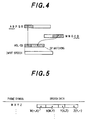
- Fig. 5 shows a case when producing a context-dependent phone reference pattern from speech data corresponding to a phone train "WXYZ" in the speech data base.
- "X (W, Y)” represents a context-dependent phone reference pattern of the phone X with the preceding phone W and the succeeding phone Y.
- X (W, Y) represents a context-dependent phone reference pattern of the phone X with the preceding phone W and the succeeding phone Y.
- a phone reference pattern is produced by taking the contexts of the preceding and succeeding one phone into considerations by the prior art method, including the case shown in Fig. 5, even if there exist speech data in the speech data base that contain the same context as the phone in a word presented for recognition inclusive of the preceding and succeeding two phones, are not utilized at all for recognition.
- a reference pattern is produced on the basis of phone contexts which are fixed when the training is made.
- the phone contexts to be considered are often of one preceding phone and one succeeding phone in order to avoid explosive increase of the number of combinations of phones. For this reason, the collected speech data bases are not effectively utilized, and it has been impossible to improve the accuracy of recognition.
- An object of the present invention is therefore to provide a speech recognizer capable of improving speech recognition performance through improvement in the speech reference pattern accuracy.
- a speech recognizer comprising: a speech data memory in which speech data and symbol trains thereof are stored; and a reference pattern memory in which are stored sets each of a given partial symbol train of a word presented for recognition and an index of speech data with the expression thereof containing the partial symbol train in the speech data memory.
- the speech recognizer further comprises a distance calculating unit for calculating a distance between the partial symbol train stored in the reference pattern memory and a given input speech section, and a pattern matching unit for selecting, among possible partial symbol trains as divisions of the symbol train of a word presented for recognition, a partial symbol train which minimizes the sum of distances of input speech sections over the entire input speech interval, and outputting the distance sum data at this time as data representing the distance between the input speech and the word presented for recognition.
- the distance to be calculated in the distance calculating unit is the distance between a given section corresponding to the partial train of symbol train expression of speech data stored in the speech data memory and the given input speech section.
- a speech recognizer comprising: a feature extracting unit for analyzing an input speech to extract a feature vector of the input speech; a speech data memory in which speech data and symbol trains thereof are stored; a reference pattern memory in which are stored sets each of a given partial symbol train of a word presented for recognition and an index of speech data with the expression thereof containing the partial symbol train in the speech data memory; a distance calculating unit for reading out speech data corresponding to a partial train stored in the reference pattern memory from the speech data memory and calculating a distance between the corresponding section and a given section of the input speech; a pattern matching unit for deriving, with resect to each word presented for recognition, a division of the subject word interval which minimizes the sum of distances of the input speech sections over the entire word interval; and a recognition result calculating unit for outputting as a recognition result a word presented for recognition, which gives the minimum one of the distances between the input speech data output of the pattern matching unit and all the words presented
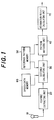
- Fig. 1 is a block diagram showing the basic construction of this embodiment of the speech recognizer.
- a feature extracting unit 20 analyzes an input speech inputted from a microphone 10, extracts a feature vector and supplies the extracted feature vector train to a distance calculating unit 30.
- the distance calculating unit 30 reads out speech data corresponding to a partial train stored in a reference pattern memory 50 from a speech data memory 60 and calculates the distance between the corresponding section and a given section of the input speech.
- a pattern matching unit 40 derives, with respect to each word presented for recognition, a division of the subject word interval which minimizes the sum of distances of the input speech sections over the entire word interval.
- a recognition result calculating unit 70 outputs as the recognition result a word presented for recognition, which gives the minimum one of the distances between the input speech data output of the pattern matching unit 40 and all the words presented for recognition.
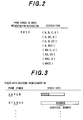
- a number of pieces of speech data and speech context phone expressions thereof are prepared and stored in the speech data memory 60.
- a reference pattern of a word to be recognized is produced as follows:
- a combination of possible partial symbol trains as divisions of a word presented for recognition and corresponding speech data portions is stored as a reference pattern of the word presented for recognition in the reference pattern memory 50.
- the distance between the input speech data in the pattern matching unit 40 and each word presented for recognition is defined as follows.
- the recognition result calculating unit 70 provides as the speech recognition result a word presented for recognition giving the minimum distance from the input speech in the step (d) among a plurality of words presented for recognition.
- the speech recognizer is operated. It is possible of course to use the recognition results obtainable with the speech recognizer according to the present invention as the input signal to a unit (not shown) connected to the output side such as a data processing unit, a communication unit, a control unit, etc.
- a set of three phones i.e., one preceding phone, the subject phone and one succeeding element
- speech data portions of words presented for recognition with identical phone symbol train and context (unlike the fixed preceding and succeeding phones in the prior art method) that are obtained through retrieval of the speech data in the speech data base when speech recognition is made.
- what is most identical with the input speech is automatically determined at the time of the recognition. It is thus possible to improve the accuracy of reference patterns, thus providing improved recognition performance.
Landscapes
- Engineering & Computer Science (AREA)
- Computational Linguistics (AREA)
- Health & Medical Sciences (AREA)
- Audiology, Speech & Language Pathology (AREA)
- Human Computer Interaction (AREA)
- Physics & Mathematics (AREA)
- Acoustics & Sound (AREA)
- Multimedia (AREA)
- Artificial Intelligence (AREA)
- Telephonic Communication Services (AREA)
- Electric Propulsion And Braking For Vehicles (AREA)
- Machine Translation (AREA)
Applications Claiming Priority (3)
| Application Number | Priority Date | Filing Date | Title |
|---|---|---|---|
| JP114628/95 | 1995-05-12 | ||
| JP11462895 | 1995-05-12 | ||
| JP7114628A JP2738403B2 (ja) | 1995-05-12 | 1995-05-12 | 音声認識装置 |
Publications (3)
| Publication Number | Publication Date |
|---|---|
| EP0742546A2 true EP0742546A2 (de) | 1996-11-13 |
| EP0742546A3 EP0742546A3 (de) | 1998-03-25 |
| EP0742546B1 EP0742546B1 (de) | 2004-11-03 |
Family
ID=14642613
Family Applications (1)
| Application Number | Title | Priority Date | Filing Date |
|---|---|---|---|
| EP96107350A Expired - Lifetime EP0742546B1 (de) | 1995-05-12 | 1996-05-09 | Spracherkenner |
Country Status (5)
| Country | Link |
|---|---|
| US (1) | US5956677A (de) |
| EP (1) | EP0742546B1 (de) |
| JP (1) | JP2738403B2 (de) |
| CA (1) | CA2176103C (de) |
| DE (1) | DE69633757T2 (de) |
Families Citing this family (2)
| Publication number | Priority date | Publication date | Assignee | Title |
|---|---|---|---|---|
| US6785419B1 (en) * | 2000-12-22 | 2004-08-31 | Microsoft Corporation | System and method to facilitate pattern recognition by deformable matching |
| US7366352B2 (en) * | 2003-03-20 | 2008-04-29 | International Business Machines Corporation | Method and apparatus for performing fast closest match in pattern recognition |
Family Cites Families (19)
| Publication number | Priority date | Publication date | Assignee | Title |
|---|---|---|---|---|
| JPS61204699A (ja) * | 1985-03-07 | 1986-09-10 | 株式会社リコー | 標準パタ−ン登録方式 |
| US5220609A (en) * | 1987-03-13 | 1993-06-15 | Matsushita Electric Industrial Co., Ltd. | Method of speech recognition |
| JP2894447B2 (ja) * | 1987-08-12 | 1999-05-24 | 株式会社 エイ・ティ・アール自動翻訳電話研究所 | 複合音声単位を用いた音声合成装置 |
| JPH01279299A (ja) * | 1988-05-02 | 1989-11-09 | Fujitsu Ltd | 音声入出力装置 |
| US5315689A (en) * | 1988-05-27 | 1994-05-24 | Kabushiki Kaisha Toshiba | Speech recognition system having word-based and phoneme-based recognition means |
| JPH0225898A (ja) * | 1988-07-15 | 1990-01-29 | Toshiba Corp | 音声認識装置 |
| JPH02105200A (ja) * | 1988-10-14 | 1990-04-17 | Asahi Chem Ind Co Ltd | 音声認識装置 |
| JPH0636156B2 (ja) * | 1989-03-13 | 1994-05-11 | インターナショナル・ビジネス・マシーンズ・コーポレーション | 音声認識装置 |
| JPH067348B2 (ja) * | 1989-04-13 | 1994-01-26 | 株式会社東芝 | パタン認識装置 |
| US5222147A (en) * | 1989-04-13 | 1993-06-22 | Kabushiki Kaisha Toshiba | Speech recognition LSI system including recording/reproduction device |
| JP2795719B2 (ja) * | 1990-03-07 | 1998-09-10 | 富士通株式会社 | 認識距離の差に基づく最良優先探索処理方法 |
| JPH04182700A (ja) * | 1990-11-19 | 1992-06-30 | Nec Corp | 音声認識装置 |
| US5345536A (en) * | 1990-12-21 | 1994-09-06 | Matsushita Electric Industrial Co., Ltd. | Method of speech recognition |
| JP2808906B2 (ja) * | 1991-02-07 | 1998-10-08 | 日本電気株式会社 | 音声認識装置 |
| JP2870224B2 (ja) * | 1991-06-19 | 1999-03-17 | 松下電器産業株式会社 | 音声認識方法 |
| JP2980420B2 (ja) * | 1991-07-26 | 1999-11-22 | 富士通株式会社 | 動的計画法照合装置 |
| JPH05249990A (ja) * | 1992-03-04 | 1993-09-28 | Sony Corp | パターンマッチング方法およびパターン認識装置 |
| EP0590173A1 (de) * | 1992-09-28 | 1994-04-06 | International Business Machines Corporation | Computersystem zur Spracherkennung |
| JP2692581B2 (ja) * | 1994-06-07 | 1997-12-17 | 日本電気株式会社 | 音響カテゴリ平均値計算装置及び適応化装置 |
-
1995
- 1995-05-12 JP JP7114628A patent/JP2738403B2/ja not_active Expired - Fee Related
-
1996
- 1996-05-08 CA CA002176103A patent/CA2176103C/en not_active Expired - Fee Related
- 1996-05-09 EP EP96107350A patent/EP0742546B1/de not_active Expired - Lifetime
- 1996-05-09 DE DE69633757T patent/DE69633757T2/de not_active Expired - Fee Related
- 1996-05-10 US US08/644,273 patent/US5956677A/en not_active Expired - Fee Related
Also Published As
| Publication number | Publication date |
|---|---|
| JP2738403B2 (ja) | 1998-04-08 |
| US5956677A (en) | 1999-09-21 |
| DE69633757T2 (de) | 2005-11-03 |
| EP0742546B1 (de) | 2004-11-03 |
| DE69633757D1 (de) | 2004-12-09 |
| EP0742546A3 (de) | 1998-03-25 |
| CA2176103A1 (en) | 1996-11-13 |
| CA2176103C (en) | 2002-07-16 |
| JPH08305389A (ja) | 1996-11-22 |
Similar Documents
| Publication | Publication Date | Title |
|---|---|---|
| US5195167A (en) | Apparatus and method of grouping utterances of a phoneme into context-dependent categories based on sound-similarity for automatic speech recognition | |
| EP0387602B1 (de) | Verfahren und Einrichtung zur automatischen Bestimmung von phonologischen Regeln für ein System zur Erkennung kontinuierlicher Sprache | |
| Soong et al. | A Tree. Trellis based fast search for finding the n best sentence hypotheses in continuous speech recognition | |
| US4348553A (en) | Parallel pattern verifier with dynamic time warping | |
| EP0086589B1 (de) | Spracherkennungssystem | |
| CN112233698B (zh) | 人物情绪识别方法、装置、终端设备及存储介质 | |
| EP0701245B1 (de) | Spracherkenner | |
| EP0109190A1 (de) | Einsilbenerkennungseinrichtung | |
| EP0241768A2 (de) | Erzeugung von Wortgrundstrukturen zur Spracherkennung | |
| EP0755046A2 (de) | Ein hierarchisch strukturiertes Wörterbuch verwendender Spracherkenner | |
| EP0779609A2 (de) | Sprachadaptionssystem und Spracherkenner | |
| EP0049283A1 (de) | Anordnung zur erkennung kontinuierlicher sprachsignale. | |
| CN112530407A (zh) | 一种语种识别方法及系统 | |
| EP1096475B1 (de) | Verziehung der Frequenzen für Spracherkennung | |
| EP0074769A1 (de) | Erkennung von Sprache oder sprachähnlichen Lauten unter Anwendung eines assoziativen Speichers | |
| EP0810583A3 (de) | Spracherkennungssystem | |
| EP0742546A2 (de) | Spracherkenner | |
| JP2964881B2 (ja) | 音声認識装置 | |
| JP3091537B2 (ja) | 音声パターン作成方法 | |
| JPH06266386A (ja) | ワードスポッティング方法 | |
| CN112002343B (zh) | 语音纯度的识别方法、装置、存储介质及电子装置 | |
| JP2763704B2 (ja) | パターン表現モデル学習装置 | |
| JP3075226B2 (ja) | パターン認識装置 | |
| JPH07325598A (ja) | 音声認識装置 | |
| JPH0436400B2 (de) |
Legal Events
| Date | Code | Title | Description |
|---|---|---|---|
| PUAI | Public reference made under article 153(3) epc to a published international application that has entered the european phase |
Free format text: ORIGINAL CODE: 0009012 |
|
| AK | Designated contracting states |
Kind code of ref document: A2 Designated state(s): DE FR GB |
|
| PUAL | Search report despatched |
Free format text: ORIGINAL CODE: 0009013 |
|
| AK | Designated contracting states |
Kind code of ref document: A3 Designated state(s): DE FR GB |
|
| 17P | Request for examination filed |
Effective date: 19980703 |
|
| 17Q | First examination report despatched |
Effective date: 20021002 |
|
| GRAP | Despatch of communication of intention to grant a patent |
Free format text: ORIGINAL CODE: EPIDOSNIGR1 |
|
| RIC1 | Information provided on ipc code assigned before grant |
Ipc: 7G 10L 15/18 B Ipc: 7G 10L 15/10 B Ipc: 7G 10L 15/06 A |
|
| GRAS | Grant fee paid |
Free format text: ORIGINAL CODE: EPIDOSNIGR3 |
|
| GRAA | (expected) grant |
Free format text: ORIGINAL CODE: 0009210 |
|
| AK | Designated contracting states |
Kind code of ref document: B1 Designated state(s): DE FR GB |
|
| REG | Reference to a national code |
Ref country code: GB Ref legal event code: FG4D |
|
| REF | Corresponds to: |
Ref document number: 69633757 Country of ref document: DE Date of ref document: 20041209 Kind code of ref document: P |
|
| ET | Fr: translation filed | ||
| PLBE | No opposition filed within time limit |
Free format text: ORIGINAL CODE: 0009261 |
|
| STAA | Information on the status of an ep patent application or granted ep patent |
Free format text: STATUS: NO OPPOSITION FILED WITHIN TIME LIMIT |
|
| 26N | No opposition filed |
Effective date: 20050804 |
|
| PGFP | Annual fee paid to national office [announced via postgrant information from national office to epo] |
Ref country code: FR Payment date: 20090515 Year of fee payment: 14 Ref country code: DE Payment date: 20090511 Year of fee payment: 14 |
|
| PGFP | Annual fee paid to national office [announced via postgrant information from national office to epo] |
Ref country code: GB Payment date: 20100329 Year of fee payment: 15 |
|
| REG | Reference to a national code |
Ref country code: FR Ref legal event code: ST Effective date: 20110131 |
|
| PG25 | Lapsed in a contracting state [announced via postgrant information from national office to epo] |
Ref country code: DE Free format text: LAPSE BECAUSE OF NON-PAYMENT OF DUE FEES Effective date: 20101201 |
|
| PG25 | Lapsed in a contracting state [announced via postgrant information from national office to epo] |
Ref country code: FR Free format text: LAPSE BECAUSE OF NON-PAYMENT OF DUE FEES Effective date: 20100531 |
|
| GBPC | Gb: european patent ceased through non-payment of renewal fee |
Effective date: 20110509 |
|
| PG25 | Lapsed in a contracting state [announced via postgrant information from national office to epo] |
Ref country code: GB Free format text: LAPSE BECAUSE OF NON-PAYMENT OF DUE FEES Effective date: 20110509 |