EP0743328A2 - Procédé pour la préparation des particules de polyméthacrylate - Google Patents
Procédé pour la préparation des particules de polyméthacrylate Download PDFInfo
- Publication number
- EP0743328A2 EP0743328A2 EP95119538A EP95119538A EP0743328A2 EP 0743328 A2 EP0743328 A2 EP 0743328A2 EP 95119538 A EP95119538 A EP 95119538A EP 95119538 A EP95119538 A EP 95119538A EP 0743328 A2 EP0743328 A2 EP 0743328A2
- Authority
- EP
- European Patent Office
- Prior art keywords
- particles
- polymerization
- monomers
- weight
- carbon atoms
- Prior art date
- Legal status (The legal status is an assumption and is not a legal conclusion. Google has not performed a legal analysis and makes no representation as to the accuracy of the status listed.)
- Withdrawn
Links
Images

Classifications
-
- C—CHEMISTRY; METALLURGY
- C08—ORGANIC MACROMOLECULAR COMPOUNDS; THEIR PREPARATION OR CHEMICAL WORKING-UP; COMPOSITIONS BASED THEREON
- C08F—MACROMOLECULAR COMPOUNDS OBTAINED BY REACTIONS ONLY INVOLVING CARBON-TO-CARBON UNSATURATED BONDS
- C08F20/00—Homopolymers and copolymers of compounds having one or more unsaturated aliphatic radicals, each having only one carbon-to-carbon double bond, and only one being terminated by only one carboxyl radical or a salt, anhydride, ester, amide, imide or nitrile thereof
- C08F20/02—Monocarboxylic acids having less than ten carbon atoms, Derivatives thereof
- C08F20/10—Esters
- C08F20/12—Esters of monohydric alcohols or phenols
-
- C—CHEMISTRY; METALLURGY
- C08—ORGANIC MACROMOLECULAR COMPOUNDS; THEIR PREPARATION OR CHEMICAL WORKING-UP; COMPOSITIONS BASED THEREON
- C08F—MACROMOLECULAR COMPOUNDS OBTAINED BY REACTIONS ONLY INVOLVING CARBON-TO-CARBON UNSATURATED BONDS
- C08F2/00—Processes of polymerisation
- C08F2/04—Polymerisation in solution
- C08F2/06—Organic solvent
Definitions
- the invention relates to a method for producing polymethacrylate particles with a diameter of 1 to 50 microns.
- Block copolymers in particular are used as emulsifiers for dispersion polymerization.
- An overview of common polymerization conditions is given in Winnik et al., Loc.cit., Table 1, p. 485.
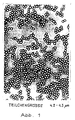
- the particle size can be controlled via the concentration of the emulsifier (FIG. 1), the initiator concentration (FIG. 5) as well as via the solids content (FIG. 3) and the solvent quality (FIG. 4).
- FIG. 1 concentration of the emulsifier
- the initiator concentration FIG. 5
- the solids content FIG. 3
- the solvent quality FIG. 4
- the invention thus relates to a process for the preparation of poly (meth) acrylate particles by the precipitation polymerization process, the monomers M containing at least 60% by weight of monomers of the formula I in which R is hydrogen or methyl and R 1 is an alkyl radical having 1 to 8 carbon atoms, an optionally substituted aryl radical having up to 14 carbon atoms, in particular phenyl or an aralkyl radical, in particular a benzyl radical, in a compound of the formula II or R 4 - O - H (II ') wherein R 2 is a straight-chain or branched saturated alkyl radical having 7 to 23 carbon atoms, R 3 is hydrogen or a straight-chain or branched alkyl radical having 1 to 24 carbon atoms and R 4 is a straight-chain or branched, saturated alkyl radical having 10 - 22 carbon atoms, as Continuous phase in the polymerization and in the presence of an emulsifier, preferably a block copolymer with
- the monomers of the formula I are primarily methyl methacrylate, preferably in proportions of at least 20, preferably 40 and up to 100% by weight, based on the monomers M, if appropriate. together with other monomers, in particular with methyl acrylate, ethyl (meth) acrylate, butyl (meth) acrylate, 2-ethylhexyl (meth) acrylate in amounts of up to 60 parts by weight.
- aryl or aralkyl (meth) acrylates having 6 to 14 carbon atoms in the ester part are preferred, in particular phenyl, tolyl, naphthyl, benzyl, phenylpropyl, phenethyl (meth) acrylates in proportions of 1- 80 wt .-% used.
- the percentage of vinyl aromatics such as styrene and its homologues will It should be expedient to limit it to ⁇ 20% by weight based on M, since these monomers considerably disrupt the course of the polymerization.
- hydrophilic monomers By using hydrophilic monomers, the particle size can be controlled in the direction of particle reduction.
- hydrophilic monomers are, for example, methacrylic acid hydroxy esters with C 2 -C 12 -alkyl radicals and corresponding amides.
- Hydrophobic comonomers such as the above-mentioned isobutyl methacrylates, phenyl methacrylates, butyl methacrylates, which can be used in amounts of 0 to about 70% by weight, based on the monomers M, control the particle size in the direction of particle enlargement.
- particles can be crosslinked by using graft crosslinking agents, ie monomers with two radically polymerizable groups of different reactivity, such as allyl (meth) acrylate, in proportions of 0.1 to 20 parts by weight, based on the monomers.
- graft crosslinking agents ie monomers with two radically polymerizable groups of different reactivity, such as allyl (meth) acrylate
- crosslinking monomers with similar polymerizable units for example the (meth) acrylic acid ester of polyhydric alcohols, if used, is to be restricted to ⁇ 1 part by weight, based on the monomers.
- the particles according to the invention made of polymers of the composition methyl methacrylate / benzyl (meth) acrylate may have particular interest in technology.
- the polymers that form the particles produced according to the invention, if not crosslinked, generally have a molecular weight M w in the range 10 4 to 10 7 (determination by means of light scattering, cf. HF Mark et.al. Encyclopedia of Polymer Science & Technology, Vol. 10 , pg. 1-19, J. Wiley 1987).
- the block copolymers BCP acting as emulsifiers are generally block copolymers with polystyrene contents.
- the proportion of the polystyrene block to the other block copolymer fraction in BCP is usually 20 to 80% by weight.
- the compounds of formula II from the group of fatty acids and fatty acid esters are solids with a low melting point or oils at room temperature.
- synthetically obtained acids for example 2-ethylhexanoic acid
- C 8 to C 14 fatty acids for example lauric acid, myristic acid, 2-ethylhexanoic acid, and mixtures of hydrogenated, natural fatty acid mixtures may be mentioned in particular.
- palmitic acid or stearic acid can also be used.
- the compounds of the formula II ' are primarily fatty alcohols, in particular cetyl alcohol or tallow fatty alcohol should be mentioned here.
- both the compounds of the formula II or the formula II ' can be used as media for the preparation of the particles.
- the question of which medium is to be preferred depends both on the desired particle size and on the type of workup (for workup see below).
- the monomers M used according to the invention are usually 20-60 parts by weight, the compounds of the formula II serving as continuous phase are usually 80-40 parts by weight and the emulsifiers, preferably the block copolymers with polystyrene fractions BCP 0.05-5 parts by weight.
- the formulation may also contain 0-45% by weight, preferably 1-35% by weight and particularly preferably 2-20% by weight of an organic, halogen-free solvent.
- Preferred solvents are, for example, short-chain esters such as butyl acetate or alkyl aromatics such as toluene.
- the addition of small amounts of solvent offers technical advantages.
- the emulsifier or the initiator can advantageously be dissolved in these solvents. As can be seen from the examples, these solvents can also be used to slow down the polymerization and to increase the particle size.
- Suitable initiators IN which are used for free-radical polymerization are suitable initiators (cf. H. Rauch-Puntigam, Th. Völker, Acryl- und Methacryl für Informen, Springer Verlag 1967) such as t-butyl perpivalate or in particular percarbonic acid esters.
- suitable initiators cf. H. Rauch-Puntigam, Th. Völker, Acryl- und Methacryl für Informen, Springer Verlag 1967
- t-butyl perpivalate or in particular percarbonic acid esters.
- the bis (4-tert-butylcyclohexyl) peroxydicarbonate in addition the dicyclohexyl peroxydicarbonate (available under the trademark INTEROX BCHPC or INTEROX CHPC 1652 from Peroxidchemie) or the diisopropyl peroxydicarbonate, if appropriate dissolved in a suitable solvent such as butyl acetate, are suitable .
- block copolymers BCP are styrene block copolymers, they preferably contain from 30 to 80% by weight polystyrene blocks in addition to polyisoprene or polybutadiene blocks or the propylene or butylene units resulting from the hydrogenation of polyisoprene or polybutadiene .
- examples include styrene-isoprene block copolymers of the SHELLVIS 50 type from Shell or K-resin types from Philips petroleum.
- the polymerization can be carried out in a reactor suitable for precipitation polymerization, with a heating device, in the case of smaller batches, for example, a 500 ml three-necked flask equipped with a cooler, protective gas introduction device, thermometer and stirrer. It is advisable to work under a protective gas such as argon.
- a heating device in the case of smaller batches, for example, a 500 ml three-necked flask equipped with a cooler, protective gas introduction device, thermometer and stirrer. It is advisable to work under a protective gas such as argon.
- the liquid mixture is heated - approximately 70 degrees C may be mentioned - and started by adding the initiator IN, for example bis (4-tert-butylcyclohexyl) peroxydicarbonate in butyl acetate.
- the initiator IN for example bis (4-tert-butylcyclohexyl) peroxydicarbonate in butyl acetate.
- the particles form after only a few minutes, recognizable by the clouding of the polymerisation batch. In general, the polymerization proceeds fairly quickly. It can be almost complete after half an hour. If the particles are cross-linked, a short post-reaction can follow to complete the cross-linking. It is then expediently cooled to about 60 degrees C. and the particles formed are separated off, for example by filtration at this temperature at which the compounds of the formulas II or II 'are still liquid.
- the particle size is determined using a light microscope.
- the product Shellvis ® 50 (SAP 150) used is a styrene-isoprene copolymer. Softening temperature: 110 degrees C, relative particle density (20 degrees C): 0.83 g / cm 3 ; Bulk weight: 593 kg / m 3 .
- a 250 ml reactor with stirrer, cooler, nitrogen inlet and thermometer is flushed with nitrogen and heated to 70 degrees C. Then 126 g of palmitic acid are poured in and melted. Then 43.34 g of methyl methacrylate, 28.9 g of benzyl methacrylate and 0.9 g of Shellvis® 50 (SAP 150) are added. After the internal temperature had reached 70 degrees C, the polymerization was started by adding a solution of 0.72 g of bis (4-tert-butylcyclohexyl) peroxodicarbonate in 6.58 g of butyl acetate. The contents of the reactor become cloudy after only 1 minute and the contents of the reactor are white after 3 minutes.
- Example 2 The procedure is as in Example 1, except that lauric acid is used. The polymerization is much slower. The temperature maximum in the reaction vessel is only reached after 17 minutes. The temperature only rises to 85 degrees C. A coagulate-free dispersion (approx. 35% polymer in lauric acid / butyl acetate) is obtained. The particles have a diameter of 5-7 ⁇ m. The particles are round and have a smooth surface. More than 90% of all particles are in the specified size range. There were no significant proportions of particularly fine or significantly larger particles. To isolate the particles, the dispersion is precipitated in methanol, filtered and washed with cyclohexane.
- Example 2 The procedure is as in Example 2 (medium: 128.4 g of lauric acid), but the following monomer composition is selected: 40.35 g of methyl methacrylate, 28 g of benzyl methacrylate, 1.75 g of allyl methacrylate and initiates the polymerization by adding 0.7 g of bis- (4-tert-butylcyclohexyl) peroxodicarbonate in 6.3 g of butyl acetate at 65 degrees C. The temperature in the reaction vessel rises to 82 degrees C within 18 minutes (outside temperature constant at 65 degrees C). The mixture is then reheated at 75 degrees C for 30 minutes. A coagulate-free dispersion is obtained. The particles have a diameter of approx. 3.0 ⁇ m.
- the polymerization was started by adding 0.72 g of bis (4-tert-butylcyclohexyl) peroxodicarbonate in 6.5 g of methyl methacrylate.
- the contents of the reactor are white after only 2 minutes.
- the mixture is then stirred at 80 degrees C for 30 minutes (final polymerization).
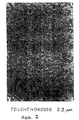
- the temperature control is shown in Fig. 3. A coagulate-free, finely divided dispersion is obtained. Particle diameter approx. 2.3 ⁇ m (see Fig. 2).
Landscapes
- Chemical & Material Sciences (AREA)
- Health & Medical Sciences (AREA)
- Chemical Kinetics & Catalysis (AREA)
- Medicinal Chemistry (AREA)
- Polymers & Plastics (AREA)
- Organic Chemistry (AREA)
- Polymerisation Methods In General (AREA)
- Addition Polymer Or Copolymer, Post-Treatments, Or Chemical Modifications (AREA)
Applications Claiming Priority (2)
| Application Number | Priority Date | Filing Date | Title |
|---|---|---|---|
| DE4446366A DE4446366A1 (de) | 1994-12-23 | 1994-12-23 | Verfahren zur Herstellung von Polymethacrylat-Teilchen |
| DE4446366 | 1994-12-23 |
Publications (2)
| Publication Number | Publication Date |
|---|---|
| EP0743328A2 true EP0743328A2 (fr) | 1996-11-20 |
| EP0743328A3 EP0743328A3 (fr) | 1999-01-07 |
Family
ID=6536961
Family Applications (1)
| Application Number | Title | Priority Date | Filing Date |
|---|---|---|---|
| EP95119538A Withdrawn EP0743328A3 (fr) | 1994-12-23 | 1995-12-12 | Procédé pour la préparation des particules de polyméthacrylate |
Country Status (2)
| Country | Link |
|---|---|
| EP (1) | EP0743328A3 (fr) |
| DE (1) | DE4446366A1 (fr) |
Cited By (3)
| Publication number | Priority date | Publication date | Assignee | Title |
|---|---|---|---|---|
| WO1998031714A1 (fr) * | 1997-01-20 | 1998-07-23 | Norsk Hydro Asa | Particules polymeres auto-activees a granulometrie resserree et procede de production |
| US5792514A (en) * | 1994-12-23 | 1998-08-11 | Roehm Gmbh Chemische Fabrik | Method for the production of coatings |
| EP2294428A4 (fr) * | 2008-06-17 | 2012-11-21 | Z H T Engineering Equipment And Technologies Ltd | Polymère capable de libérer des agents bioactifs in vivo, composition pharmaceutique et procédé pour le préparer |
Family Cites Families (3)
| Publication number | Priority date | Publication date | Assignee | Title |
|---|---|---|---|---|
| GB2064561B (en) * | 1979-12-06 | 1983-05-11 | Ici Ltd | Sterically stabilised non-aqueous dispersions and their production via aqueous polymerization |
| JPH0617373B2 (ja) * | 1984-07-06 | 1994-03-09 | 株式会社リコー | 粒子径分布の狭い重合体粒子の製造法 |
| US4942209A (en) * | 1987-12-18 | 1990-07-17 | Mobil Oil Corporation | Anionic polymerization in high viscosity dispersing medium to form microparticles with narrow size distribution |
-
1994
- 1994-12-23 DE DE4446366A patent/DE4446366A1/de not_active Withdrawn
-
1995
- 1995-12-12 EP EP95119538A patent/EP0743328A3/fr not_active Withdrawn
Cited By (4)
| Publication number | Priority date | Publication date | Assignee | Title |
|---|---|---|---|---|
| US5792514A (en) * | 1994-12-23 | 1998-08-11 | Roehm Gmbh Chemische Fabrik | Method for the production of coatings |
| WO1998031714A1 (fr) * | 1997-01-20 | 1998-07-23 | Norsk Hydro Asa | Particules polymeres auto-activees a granulometrie resserree et procede de production |
| US6346592B1 (en) | 1997-01-20 | 2002-02-12 | Norsk Hydro Asa | Self-activated polymer particles with a narrow size distribution and procedure for production thereof |
| EP2294428A4 (fr) * | 2008-06-17 | 2012-11-21 | Z H T Engineering Equipment And Technologies Ltd | Polymère capable de libérer des agents bioactifs in vivo, composition pharmaceutique et procédé pour le préparer |
Also Published As
| Publication number | Publication date |
|---|---|
| DE4446366A1 (de) | 1996-06-27 |
| EP0743328A3 (fr) | 1999-01-07 |
Similar Documents
| Publication | Publication Date | Title |
|---|---|---|
| EP0639590B1 (fr) | Procédé de préparation de particules monodispersées de poly(meth)acrylate | |
| DE3613247C2 (de) | Konzentrierte Emulsionen aus Ethylen-Vinylacetat-Copolymeren, Verfahren zu deren Herstellung und deren Verwendung als Stockpunktverbesserer | |
| EP0245647B2 (fr) | Masse de moulage de polyméthacrylate à haute résistance à la chaleur et haute stabilité thermique | |
| DE2009218B2 (de) | Verfahren zur Perlpolymerisation von äthylenisch ungesättigten Monomeren | |
| DE3329765C2 (de) | Verfahren zur Herstellung schlagzäher Formmassen auf Acrylatbasis durch zweistufige Polymerisation | |
| DE2264224B2 (de) | Herstellung eines vernetzten Polystyrol-Emulsionspolymerisats und seine Verwendung zum Trüben von Kunststoffen auf Methacrylstbasis | |
| WO2009074358A1 (fr) | Corps moulés à surface mate et structurée | |
| EP0590471A2 (fr) | Composition de moulage de polystyrène diffusant la lumière et articles moulés de celle-ci | |
| DE3723274A1 (de) | Sequenz-erzeugte polymerteilchen, waessrige dispersionen von sequenz-erzeugten polymerteilchen, verfahren zur herstellung von sequenz-erzeugten polymerteilchen und verwendung von sequenz-erzeugten polymerteilchen | |
| EP0995763A2 (fr) | Copolymères pour prototypage rapide | |
| EP0728780B1 (fr) | Polymères greffés à propriétés émulsifiantes | |
| EP2493936A1 (fr) | Homopolymères et copolymères des (méth)acrylates (d'ester) d'acide hydroxyisobutyrique | |
| DE60021793T2 (de) | Monodisperse Teilchen, Verfahren zu ihrer Herstellung und ihre Verwendung | |
| EP0736547A2 (fr) | Dispersions aqueuses de polymères | |
| EP0264645A2 (fr) | Compositions de polymères compatibles | |
| EP0718320B1 (fr) | Procédé pour la préparation des particules plastiques | |
| EP0332000B1 (fr) | Utilisation de types de copolymères sélectionnés d'esters d'acides acryliques et/ou méthacryliques, comme agents modifiant l'écoulement dans des pétroles et fractions (I) de pétroles riches en paraffine | |
| DE4446366A1 (de) | Verfahren zur Herstellung von Polymethacrylat-Teilchen | |
| DE3448010A1 (de) | Teilchenfoermiges polymer und verfahren zu dessen herstellung | |
| EP0736546A2 (fr) | Dispersions aqueuses de polymères | |
| EP0718326B1 (fr) | Particules en matière plastique à thermostabilité améliorée | |
| EP0752427A2 (fr) | Procédé de préparation de polymères ramifiés | |
| DE3900945C2 (fr) | ||
| DE2123384A1 (en) | Non-tacky vinyl chloride (co) polymer for moulded sheet - film,articles prodn | |
| DE19847050A1 (de) | Verfahren zur Herstellung mikroverkapselter kugelförmiger Polymerisate |
Legal Events
| Date | Code | Title | Description |
|---|---|---|---|
| PUAI | Public reference made under article 153(3) epc to a published international application that has entered the european phase |
Free format text: ORIGINAL CODE: 0009012 |
|
| AK | Designated contracting states |
Kind code of ref document: A2 Designated state(s): AT BE CH DE DK ES FR GB IT LI NL SE |
|
| PUAL | Search report despatched |
Free format text: ORIGINAL CODE: 0009013 |
|
| AK | Designated contracting states |
Kind code of ref document: A3 Designated state(s): AT BE CH DE DK ES FR GB IT LI NL SE |
|
| STAA | Information on the status of an ep patent application or granted ep patent |
Free format text: STATUS: THE APPLICATION IS DEEMED TO BE WITHDRAWN |
|
| 18D | Application deemed to be withdrawn |
Effective date: 19990708 |