EP0744845A2 - Transfersystem für Kontrollsignale in einem Ringnetzwerk - Google Patents
Transfersystem für Kontrollsignale in einem Ringnetzwerk Download PDFInfo
- Publication number
- EP0744845A2 EP0744845A2 EP96107407A EP96107407A EP0744845A2 EP 0744845 A2 EP0744845 A2 EP 0744845A2 EP 96107407 A EP96107407 A EP 96107407A EP 96107407 A EP96107407 A EP 96107407A EP 0744845 A2 EP0744845 A2 EP 0744845A2
- Authority
- EP
- European Patent Office
- Prior art keywords
- control signal
- node
- network system
- adjacent
- aps
- Prior art date
- Legal status (The legal status is an assumption and is not a legal conclusion. Google has not performed a legal analysis and makes no representation as to the accuracy of the status listed.)
- Withdrawn
Links
Images


Classifications
-
- H—ELECTRICITY
- H04—ELECTRIC COMMUNICATION TECHNIQUE
- H04J—MULTIPLEX COMMUNICATION
- H04J3/00—Time-division multiplex systems
- H04J3/02—Details
- H04J3/08—Intermediate station arrangements, e.g. for branching, for tapping-off
- H04J3/085—Intermediate station arrangements, e.g. for branching, for tapping-off for ring networks, e.g. SDH/SONET rings, self-healing rings, meashed SDH/SONET networks
-
- H—ELECTRICITY
- H04—ELECTRIC COMMUNICATION TECHNIQUE
- H04J—MULTIPLEX COMMUNICATION
- H04J3/00—Time-division multiplex systems
- H04J3/02—Details
- H04J3/14—Monitoring arrangements
-
- H—ELECTRICITY
- H04—ELECTRIC COMMUNICATION TECHNIQUE
- H04J—MULTIPLEX COMMUNICATION
- H04J2203/00—Aspects of optical multiplex systems other than those covered by H04J14/05 and H04J14/07
- H04J2203/0001—Provisions for broadband connections in integrated services digital network using frames of the Optical Transport Network [OTN] or using synchronous transfer mode [STM], e.g. SONET, SDH
- H04J2203/0057—Operations, administration and maintenance [OAM]
- H04J2203/006—Fault tolerance and recovery
Definitions
- the present invention relates to a network system including a plurality of nodes which are connected through physical or logical connections, and in particular to the arrangement of each node in the network system wherein a control signal is transferred from a sender node to a receiver node through at least one intermediate node.
- nodes N1-N4 are connected in a ring configuration through working lines BL 1 -BL 4 and protection lines BL 11 -BL 14 .
- the node N1 When detecting failures affecting the working line BL 4 and the protection line BL 14 , the node N1 generates a switch request using the APS bytes and transmits it to the destination node N4 which is connected to the node N1 through the working line BL 4 and the protection line BL 14 .
- the APS bytes for switch request is transferred to the node N4 through the working lines BL 1 -BL 3 while passing through the nodes N2 and N3 which are not its final destination.
- the node N4 When the APS bytes reaches its final destination node N4, the node N4 performs the appropriate switch action according to the APS bytes received from the source node N1 and a confirmation is sent back to the source node N1. In this manner, the BLSR protection switching is completed after the source node N1 receives the confirmation from the destination node N4.
- the APS bytes consist of K1 byte and K2 byte which are used to coordinate switching activity.
- the last four bits of the K1 byte are used for the node ID of the destination and the first four bits of the K2 byte are used for the node ID of the source.
- the first four bits of the K1 byte and the last four bits of the K2 byte are used for control data.
- the more detailed description is provided in the above document (6-13 to 6-17, GR-1230-CORE Issue 1, Dec. 1993).
- each node is comprised of a receiver 11, a processing unit including an APS-byte analysis processor 12, and a transmitter 13.
- the APS-byte analysis processor 12 analyzes the APS bytes received from one adjacent node and performs an appropriate activity such as the protection switching or enters the pass-through state according to the received APS bytes. More specifically, when the destination ID of the received APS bytes is not identical to the node ID of its own, the APS-byte analysis processor 12 transfers the received APS bytes as it is to the other adjacent node.
- This pass-through state is referred to as a full pass-through state and the node in this state is referred to as an intermediate node.
- the APS-byte analysis processor 12 performs the appropriate switching and transmits a new APS bytes indicating the acknowledgment of the switch request back to the source node.
- the nodes N2 and N3 are an intermediate node and the nodes N1 and N4 complete the protection switching when the source node N1 receives the new APS bytes from the destination node N4.
- the APS-byte analysis processor 12 of each node located between the source and destination nodes included performs the ASP-byte analysis and processing each the APS bytes are received.
- the rapid protection switching cannot be achieved without providing each node with the very high-speed processing unit.
- the elapsed time from failure detection to protection switching completion can be obtained as the sum of the time required for switching at both source and destination nodes and the transmission delay time. Since the transmission delay time is a function of the number of nodes, the larger the number of nodes in the ring system, the longer the elapsed time until protection switching completion. Therefore, according to the conventional system, the high-speed protection switching cannot be achieved in the ring system, especially, including a large number of nodes.
- the entire APS processor is separately formed with hardware so as to increase in processing speed.
- such a system results in the complicated circuit of the processing unit and the increased amount of its hardware.
- each node in a network system comprising a plurality of nodes each connecting a first adjacent node and a second adjacent node, each node has a pass-through controller which passes the control signal through the node when the control signal is not destined for the node.
- the node receiving the control signal from the first adjacent node, determines whether the destination node of the control signal is the node. When the destination node of the control signal is not the node, the node transmits the control signal toward the second adjacent without analyzing the control signal, that is, passes it therethrough.
- the control signal is analyzed by an analysis means which performs an activity according to the control signal.
- the pass-through controller is comprised of a selector for selecting a single output signal from the control signal and an output signal of the analysis means such that the control signal is selected when the destination node of the control signal is not the node.
- the single output signal is transmitted toward the second adjacent node.
- a network system is comprised of a plurality of nodes each connecting a first adjacent node and a second adjacent node.
- Each node of the nodes is comprised of a receiving means for receiving a control signal from the first adjacent node, the control signal being destined for a destination node in the network system; a first means for analyzing the control signal to perform an activity according to the control signal; a second means provided separately from the first means, for storing the control signal so as to pass the control signal through the node when a predetermined condition is satisfied; a selecting means for selecting a single output signal from a first output signal of the first means and a second output signal of the second means such that the second output signal of the second means is selected when the predetermined condition is satisfied; and a transmitting means for transmitting the single output signal toward the second adjacent.
- the second means is comprised of a first storage means for storing the control signal; a first determining means for determining whether the destination node of the control signal is the node; a second storage means for storing a previous control signal which has been received by the receiving means; and a second determining means for determining whether the control signal is identical to the previous control signal.
- the selecting means selects the second output signal of the second means when the first determining means determines that the destination node of the control signal is not the node and the second determining means determines that the control signal is not identical to the previous control signal.
- the first means and the second means are concurrently initiated when the control signal is received by the receiving means.
- the pass-through time of the intermediate node determination means is almost negligible compared with the processing time in the control signal analysis means which performs an activity according the control signal. Therefore, by using the intermediate node determination means in parallel with the control signal analysis means, the dramatically reduced time required for control signal pass-through can be achieved with simple structure and the reduced amount of hardware. Since the protection control signal rapidly passes through each of the intermediate nodes, a high-speed self-healing is achieved in a ring network system such as the BLSR system.
- each node in the BLSR system as shown in Fig. 1 is comprised of a receiver 101, a processing unit including an APS processor 102 which is implemented by means of program control, and a transmitter 103.
- the APS processor 102 implements an APS-byte analysis processor 104, an intermediate node determination processor 105, and a selector 106 which selects APS bytes from the outputs of the APS-byte analysis processor 104 and the intermediate node determination processor 105.
- the receiver 101 receives a signal from one adjacent node and outputs a current APS bytes APS i to both the APS-byte analysis processor 104 and the intermediate node determination processor 105.
- the APS-byte analysis processor 104 analyzes the current APS bytes APS i and performs appropriate activities such as the protection switching and confirmation replying according to the received control data when the current APS bytes APS i is destined for its own node.
- the APS-byte analysis processor 104 may implement the appropriate activities required in the case where the current APS bytes APS i is destined for its own node. Needless to say, the APS-byte analysis processor 104 may use the same processor as the APS-byte analysis processor 12 as shown in Fig. 3.
- the intermediate node determination processor 105 determines whether the current APS bytes APS i is destined for its own node. When the current APS bytes APS i is destined for another node, the intermediate node determination processor 105 outputs the current APS bytes APS i to the selector 106 as it is and, at the same time, outputs a selection signal S sel of the logical value 1 to the selector 106 so that the selector 106 selects the output of the intermediate node determination processor 105.
- the intermediate node determination processor 105 outputs a selection signal S sel of the logical value 0 to the selector 106 so that the selector 106 selects the output of the APS-byte analysis processor 104.
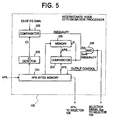
- the intermediate node determination processor 105 is provided with an APS bytes memory 201 for storing the received APS bytes APS i .
- An ID detector 202 reads the destination ID i of the APS bytes APS i from the APS bytes memory 201 and outputs it to a comparator (or a coincidence circuit) 203 which compares its own ID o to the destination ID i of the APS bytes APS i .
- the comparator 203 When the destination ID i of the APS bytes APS i is identical to its own ID o , in other words, the APS bytes APS i is at its final destination, the comparator 203 generates an inequality signal S ID of the logical value 0.
- the comparator 203 when the destination ID i of the APS bytes APS i is not identical to its own ID o , in other words, the APS bytes APS i is destined for another node, the comparator 203 generates an inequality signal S ID of the logical value 1.
- a comparator (or a coincidence circuit) 204 compares the current APS bytes APS i read from the APS bytes memory 204 and the previous APS bytes APS i-1 read from a memory 205. When the current APS bytes APS i is not identical to the previous APS bytes APS i-1 , the comparator 204 produces an inequality signal S APS of the logical value 1.
- the memory 205 receiving the inequality signal S APS of the logical value 1, stores the current APS bytes APS i read from the APS bytes memory 201. If the inequality signal S APS is of the logical value 0, the memory 205 continues to storing the previous APS bytes APS i-1 . In other words, the memory 205 is updated when the current APS bytes are different from the previous APS bytes.
- the inequality signal S ID and the inequality signal S APS are provided to an AND gate 206 which outputs the result as a selection signal S sel to the selector 106 and as an output control signal to the APS bytes memory 201.
- the selection signal S sel of the logical value 1 is produced when both the inequality signal S ID and the inequality signal S APS are of the logical value 1, causing the current APS bytes APS i to be transferred from the APS bytes memory 201 to the selector 106 which selects the current APS bytes APS i .
- the APS processor 102 enters the full pass-through state when the APS bytes APS i is destined for another node and is not identical to the previous one.
- the pass-through time T THR elapsed from receiving to transmitting the APS bytes is of the order of several ten nanoseconds.
- the intermediate node determination processor 105 achieves the dramatically reduced time required for APS pass-through.
- the APS bytes memory 201 may be shared between the APS-byte analysis processor 104 and the intermediate node determination processor 105. Further, since the intermediate node determination processor 105 can be arranged with a small number of circuit elements, it may be formed with hardware.
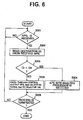
- the control including APS pass-through and APS analysis and processing is performed by the APS processor 102, which will be described hereinafter.
- the APS processor 102 when receiving the APS bytes APS i from the receiver 101 (YES in step S301), the APS processor 102 initiates concurrently both the APS-byte analysis processor 104 and the intermediate node determination processor 105 after storing the APS bytes APS i into the APS bytes memory 201.
- the intermediate node determination processor 105 reads the destination ID i of the APS bytes APS i from the APS bytes memory 201 (step S302), and then determines whether its own ID o is identical to the destination ID i of the APS bytes APS i (step S303).
- the APS processor 102 stops the intermediate node determination processor 105 with the selector 106 selecting the APS-byte analysis processor 104 (step S304). Therefore, confirmation APS bytes produced by the APS-byte analysis processor 104 are selected and transferred to the transmitter 103 by the selector 106.
- the APS processor 102 performs the pass-through control (step S305). More specifically, as described before, the intermediate node determination processor 105 outputs the selection signal S sel of the logical value 1 to the selector 106 so that the selector 106 selects the output of the intermediate node determination processor 105. Therefore, the current APS bytes APS i read from the APS bytes memory 201 are transferred to the transmitter 103 through the selector 106.
- the APS processor 102 repeats the steps S301-S305 until the process is terminated (step S306).
- the pass-through time T THR elapsed from receiving to transmitting the APS bytes is of the order of several ten nanoseconds.
Landscapes
- Engineering & Computer Science (AREA)
- Computer Networks & Wireless Communication (AREA)
- Signal Processing (AREA)
- Small-Scale Networks (AREA)
Applications Claiming Priority (2)
| Application Number | Priority Date | Filing Date | Title |
|---|---|---|---|
| JP111002/95 | 1995-05-10 | ||
| JP7111002A JP2677244B2 (ja) | 1995-05-10 | 1995-05-10 | プロテクション制御信号伝達システム |
Publications (2)
| Publication Number | Publication Date |
|---|---|
| EP0744845A2 true EP0744845A2 (de) | 1996-11-27 |
| EP0744845A3 EP0744845A3 (de) | 1998-11-18 |
Family
ID=14549918
Family Applications (1)
| Application Number | Title | Priority Date | Filing Date |
|---|---|---|---|
| EP96107407A Withdrawn EP0744845A3 (de) | 1995-05-10 | 1996-05-09 | Transfersystem für Kontrollsignale in einem Ringnetzwerk |
Country Status (3)
| Country | Link |
|---|---|
| US (1) | US5901137A (de) |
| EP (1) | EP0744845A3 (de) |
| JP (1) | JP2677244B2 (de) |
Cited By (5)
| Publication number | Priority date | Publication date | Assignee | Title |
|---|---|---|---|---|
| WO1999057850A3 (en) * | 1998-05-06 | 2000-06-02 | Ciena Corp | Sonet jo byte message monitoring system |
| WO2001078276A1 (en) * | 2000-04-10 | 2001-10-18 | Appian Communications, Inc. | Data protection in a ring network |
| EP0905934A3 (de) * | 1997-09-26 | 2003-12-03 | Siemens Aktiengesellschaft | Verfahren und Anordnung zum Betreiben von an ein Ringnetz angeschlossenen Netzeinrichtungen in einem Zubringernetz eines Kommunikationsnetzes |
| EP0964543A3 (de) * | 1998-06-09 | 2003-12-17 | Marconi UK Intellectual Property Ltd | Nachrichttenübertragungssystem mit überwachung einer Tandemverbindung |
| CN101877665A (zh) * | 2009-04-29 | 2010-11-03 | 华为技术有限公司 | 环网保护方法、网络节点及环网络 |
Families Citing this family (13)
| Publication number | Priority date | Publication date | Assignee | Title |
|---|---|---|---|---|
| JP2853651B2 (ja) * | 1996-04-19 | 1999-02-03 | 日本電気株式会社 | リング構成の1:n双方向通信装置 |
| US6246667B1 (en) * | 1998-09-02 | 2001-06-12 | Lucent Technologies Inc. | Backwards-compatible failure restoration in bidirectional multiplex section-switched ring transmission systems |
| US6349092B1 (en) * | 1998-11-16 | 2002-02-19 | Cisco Systems, Inc. | BLSR node extension |
| EP1096712A3 (de) * | 1999-10-29 | 2005-09-07 | Nippon Telegraph and Telephone Corporation | Pfadnetzwerk und Verfahren zur Benutzung des Pfadnetzwerks, das die Konvertierung des Schutzpfades in einen aktiven Pfad verwendet |
| AUPQ635700A0 (en) * | 2000-03-17 | 2000-04-15 | Transcorp Systems Pty Ltd | Broadband access control for protection bearers |
| US7103044B1 (en) * | 2001-04-17 | 2006-09-05 | Keller Richard B | Utilizing available SONET overhead bytes for additional signaling channels |
| US6901047B1 (en) * | 2001-05-29 | 2005-05-31 | Marconi Intellectual Property (Ringfence), Inc. | Internally coupled input path redundancy |
| US6975588B1 (en) * | 2001-06-01 | 2005-12-13 | Cisco Technology, Inc. | Method and apparatus for computing a path through a bidirectional line switched |
| US7031253B1 (en) | 2001-06-01 | 2006-04-18 | Cisco Technology, Inc. | Method and apparatus for computing a path through specified elements in a network |
| JP3825674B2 (ja) * | 2001-10-24 | 2006-09-27 | 富士通株式会社 | 伝送装置,sonet/sdh伝送装置および伝送システム |
| CN100388707C (zh) * | 2004-12-28 | 2008-05-14 | 华为技术有限公司 | 一种实现复用段环网元k字节穿通建立的方法 |
| EP3051759A4 (de) * | 2013-09-26 | 2017-06-07 | Nec Corporation | Optische empfangsvorrichtung, optische übertragungsvorrichtung, optisches kommunikationssystem, optisches kommunikationsverfahren und speichermedium mit einem darauf gespeicherten programm |
| CN114244440B (zh) * | 2021-12-09 | 2024-01-16 | 南京丰道电力科技有限公司 | 自愈系统中各站所信息交互的方法、装置及存储介质 |
Family Cites Families (5)
| Publication number | Priority date | Publication date | Assignee | Title |
|---|---|---|---|---|
| JPH03259640A (ja) * | 1990-03-09 | 1991-11-19 | Fujitsu Ltd | デジタルネットワーク通信システムにおけるデータ転送方式 |
| US5341364A (en) * | 1992-06-02 | 1994-08-23 | At&T Bell Laboratories | Distributed switching in bidirectional multiplex section-switched ringtransmission systems |
| JPH0795225A (ja) * | 1993-09-20 | 1995-04-07 | Fujitsu Ltd | 双方向リングネットワーク制御方式 |
| JPH07264231A (ja) * | 1994-03-16 | 1995-10-13 | Fujitsu Ltd | 回線切替え方式 |
| JPH07264228A (ja) * | 1994-03-17 | 1995-10-13 | Fujitsu Ltd | パスais発生機能を備えるblsrネットワーク |
-
1995
- 1995-05-10 JP JP7111002A patent/JP2677244B2/ja not_active Expired - Fee Related
-
1996
- 1996-05-09 EP EP96107407A patent/EP0744845A3/de not_active Withdrawn
- 1996-05-10 US US08/644,168 patent/US5901137A/en not_active Expired - Fee Related
Cited By (13)
| Publication number | Priority date | Publication date | Assignee | Title |
|---|---|---|---|---|
| EP0905934A3 (de) * | 1997-09-26 | 2003-12-03 | Siemens Aktiengesellschaft | Verfahren und Anordnung zum Betreiben von an ein Ringnetz angeschlossenen Netzeinrichtungen in einem Zubringernetz eines Kommunikationsnetzes |
| US6278535B1 (en) | 1998-05-06 | 2001-08-21 | Ciena Corporation | SONET Jo byte message monitoring system |
| EP1641159A1 (de) * | 1998-05-06 | 2006-03-29 | Ciena Corporation | Überwachungssystem einer SONET J0 Byte Nachricht |
| WO1999057850A3 (en) * | 1998-05-06 | 2000-06-02 | Ciena Corp | Sonet jo byte message monitoring system |
| EP0964543A3 (de) * | 1998-06-09 | 2003-12-17 | Marconi UK Intellectual Property Ltd | Nachrichttenübertragungssystem mit überwachung einer Tandemverbindung |
| US6622258B1 (en) | 2000-04-10 | 2003-09-16 | Appian Communications, Inc. | Data protection in a ring network |
| WO2001078276A1 (en) * | 2000-04-10 | 2001-10-18 | Appian Communications, Inc. | Data protection in a ring network |
| CN101877665A (zh) * | 2009-04-29 | 2010-11-03 | 华为技术有限公司 | 环网保护方法、网络节点及环网络 |
| EP2418804A4 (de) * | 2009-04-29 | 2012-02-15 | Huawei Tech Co Ltd | Ringnetzwerk-schutzverfahren, netzwerkknoten dafür und ringnetzwerk |
| CN101877665B (zh) * | 2009-04-29 | 2013-12-18 | 华为技术有限公司 | 环网保护方法、网络节点及环网络 |
| US8830824B2 (en) | 2009-04-29 | 2014-09-09 | Huawei Technologies Co., Ltd | Ring network protection method, network node and ring network |
| US9065758B2 (en) | 2009-04-29 | 2015-06-23 | Huawei Technologies Co., Ltd. | Ring network protection method, network node and ring network |
| US9137147B2 (en) | 2009-04-29 | 2015-09-15 | Huawei Technologies Co., Ltd. | Ring network protection method, network node and ring network |
Also Published As
| Publication number | Publication date |
|---|---|
| JP2677244B2 (ja) | 1997-11-17 |
| US5901137A (en) | 1999-05-04 |
| EP0744845A3 (de) | 1998-11-18 |
| JPH08307439A (ja) | 1996-11-22 |
Similar Documents
| Publication | Publication Date | Title |
|---|---|---|
| EP0744845A2 (de) | Transfersystem für Kontrollsignale in einem Ringnetzwerk | |
| EP0320882B1 (de) | Demultiplexeranordnung | |
| US6205562B1 (en) | Path switching method, path switching apparatus and nodes of UPSR | |
| US5235599A (en) | Self-healing network with distributed failure restoration capabilities | |
| US5367395A (en) | Apparatus for detection and location of faults in two-way communication through single optical path | |
| GB2287596A (en) | Optical network traffic protection system | |
| US7346081B2 (en) | Traffic handling in a protected synchronous communication network | |
| US5561766A (en) | Cross-connecting system for making line connections between high-speed lines and low-speed lines and between high-speed lines and capable of detecting a line-connection error | |
| US5136589A (en) | Apparatus for using duplex transmission line in network | |
| CA2003846C (en) | Synchronous multiplex transmission apparatus | |
| US4561088A (en) | Communication system bypass architecture | |
| US5825821A (en) | Hitless switch device and method of switching between different paths | |
| WO1995024801A3 (en) | Hierarchical synchronization method | |
| RU2371857C2 (ru) | Быстродействующий способ защиты оптической сети передачи данных | |
| US7013059B2 (en) | Methods for protecting data signals which are being transmitted via optical conductors | |
| US5130980A (en) | Data communication system with protection of error propagation | |
| EP0698322B1 (de) | Verfahren zur steuerung bedingter verbindungen in einem fernmeldesystem | |
| JP2867865B2 (ja) | 予備回線切替制御方式 | |
| JPH1093536A (ja) | 伝送装置のユニット間インタフェース方式 | |
| GB2188216A (en) | Ring bus communications systems | |
| KR100289689B1 (ko) | 신호링크 기능을 이용한 넘버세븐 신호 메시지핸들링 프로세서 | |
| JPH05336139A (ja) | リング型光伝送システム | |
| JP2744524B2 (ja) | 回線試験信号挿入方法およびデジタル回線試験装置 | |
| JP3111925B2 (ja) | 距離測定システム | |
| JPH07154409A (ja) | 自己救済リング・ネットワーク及びその各ノードにおけるドロップパスへのais挿入及び解除方式 |
Legal Events
| Date | Code | Title | Description |
|---|---|---|---|
| PUAI | Public reference made under article 153(3) epc to a published international application that has entered the european phase |
Free format text: ORIGINAL CODE: 0009012 |
|
| AK | Designated contracting states |
Kind code of ref document: A2 Designated state(s): DE FR GB PT |
|
| PUAL | Search report despatched |
Free format text: ORIGINAL CODE: 0009013 |
|
| AK | Designated contracting states |
Kind code of ref document: A3 Designated state(s): DE FR GB PT |
|
| 17P | Request for examination filed |
Effective date: 19981013 |
|
| STAA | Information on the status of an ep patent application or granted ep patent |
Free format text: STATUS: THE APPLICATION HAS BEEN WITHDRAWN |
|
| 18W | Application withdrawn |
Withdrawal date: 20020828 |