EP0745939A2 - Procédé de regroupement des positions inutilisées pour un système de fichier résidant dans une mémoire flash - Google Patents
Procédé de regroupement des positions inutilisées pour un système de fichier résidant dans une mémoire flash Download PDFInfo
- Publication number
- EP0745939A2 EP0745939A2 EP19960303935 EP96303935A EP0745939A2 EP 0745939 A2 EP0745939 A2 EP 0745939A2 EP 19960303935 EP19960303935 EP 19960303935 EP 96303935 A EP96303935 A EP 96303935A EP 0745939 A2 EP0745939 A2 EP 0745939A2
- Authority
- EP
- European Patent Office
- Prior art keywords
- storage
- storage area
- event
- files
- memory
- Prior art date
- Legal status (The legal status is an assumption and is not a legal conclusion. Google has not performed a legal analysis and makes no representation as to the accuracy of the status listed.)
- Withdrawn
Links
Images

Classifications
-
- G—PHYSICS
- G06—COMPUTING OR CALCULATING; COUNTING
- G06F—ELECTRIC DIGITAL DATA PROCESSING
- G06F12/00—Accessing, addressing or allocating within memory systems or architectures
- G06F12/02—Addressing or allocation; Relocation
- G06F12/0223—User address space allocation, e.g. contiguous or non contiguous base addressing
- G06F12/023—Free address space management
- G06F12/0238—Memory management in non-volatile memory, e.g. resistive RAM or ferroelectric memory
- G06F12/0246—Memory management in non-volatile memory, e.g. resistive RAM or ferroelectric memory in block erasable memory, e.g. flash memory
-
- G—PHYSICS
- G06—COMPUTING OR CALCULATING; COUNTING
- G06F—ELECTRIC DIGITAL DATA PROCESSING
- G06F11/00—Error detection; Error correction; Monitoring
- G06F11/07—Responding to the occurrence of a fault, e.g. fault tolerance
- G06F11/14—Error detection or correction of the data by redundancy in operations
- G06F11/1402—Saving, restoring, recovering or retrying
- G06F11/1415—Saving, restoring, recovering or retrying at system level
- G06F11/1435—Saving, restoring, recovering or retrying at system level using file system or storage system metadata
Definitions
- This invention relates to file systems for data storage devices including among others semiconductor memories, disc drives and tape drives, and more particularly, to such file systems which implement garbage collection processes for recovering usable storage space.
- a microprocessor or central processing unit is coupled to a redundant memory storage system comprising a main memory and a secondary memory.
- Main memory is used for the temporary storage of information that can be quickly retrieved by the microprocessor for use in program execution.
- Secondary memory is typically used as an adjunct to the main memory for the long-term storage of information needed for other, non-active program applications. Accordingly, main memory storage devices typically comprise fast devices such as semiconductor memories, while secondary memory storage devices comprise slower, electro-mechanical disk storage devices.
- such memories may include read only memory (ROM) devices which are non-volatile memories that cannot be written to or erased, random access memory (RAM) devices which are volatile, read-write memory storage devices that are electrically erasable at the byte level, and read-mostly memory devices which are non-volatile memories that can be written to, read from and are erasable at either the chip level, sector level or byte level.
- the class of read-mostly memory devices includes erasable programmable read-only memory (EPROM) devices, electrically erasable programmable read-only memory (EEPROM) devices and FLASH memory devices.
- EPROM erasable programmable read-only memory
- EEPROM electrically erasable programmable read-only memory
- FLASH memory devices FLASH memory devices.
- a read-mostly memory device has been designed to allow for the storage of data files and application programs on the purely solid-state medium of the device. Accordingly, through the use of system resident filing systems, a read-mostly memory device can be utilized as a secondary memory for a computer system or the like to thereby reduce the relatively slow prior art upload of information from secondary to primary memory.
- usable address space is recovered through what is commonly known as a garbage collection process.
- a garbage collection process there are a number of classical garbage collection schemes in existence, one particular scheme known as the "mark and sweep" scheme recovers the usable address space by removing older files not currently in use in a multi-phase process.
- storage is allocated from a free list of storage spaces until some minimum threshold of available memory storage is reached.
- the program application is stopped and garbage collection commences. All files in memory are then traversed, and those files that are determined to be currently in use are marked in a first phase of the process.
- a sweep phase is begun in which memory storage is recovered by removing all the unmarked files.
- the benefit of the mark and sweep scheme is that no unwanted, older files survive the garbage collection process, and the entire memory storage allocated can be used for storage.
- a negative aspect of this scheme is that memory fragmentation can become a serious problem unless compaction or an elaborate multi-space allocation is performed.
- file compaction is used, the memory system is left in a dangerous, inconsistent state during the garbage collection process. This is because the occurrence of a power failure or other type of system failure during the garbage collection process may cause the microprocessor managing the memory system to stall upon reboot and file system initialization since the data files are at that time dispersed throughout memory.
- the present invention provides a method and apparatus for recovering usable file system storage space in a data storage device of a data storage system under control of a microprocessor which removes unwanted files and compacts the remaining files while preventing the file system from being left in an inconsistent state.
- This is accomplished through use of a dual phase, re-entrant garbage collection process comprising a first, analysis phase and a second, execution phase.
- a dual phase, re-entrant garbage collection process comprising a first, analysis phase and a second, execution phase.
- any files not currently in use or otherwise unwanted are marked for subsequent removal from the file system.
- the garbage collection process is commenced.
- a sequence of events comprising atomic or basic memory operations and associated data is generated and written in order to an event storage area of the memory device for each unmarked, currently in-use file.
- These events are selected so as to be re-executable in the data storage device in that they can be re-executed upon interruption of their execution and before execution of another event without modifying results of a previous execution of the respective event.
- the sequences of events written to the event storage area are executed to cause the unmarked files to be copied from a first storage area to a second storage area of the data storage device where they are compacted together in the second storage area
- the execution of the sequences of events further causes the first storage area of the memory device to be erased so as to free additional storage locations for the subsequent writing of new files to the file system.
- the process is re-started generally at the point where it was interrupted so as not to leave the file system in a partially compacted, and hence, inconsistent state. Due to the separation and tracking of the analysis and execution phases and the in-order execution of the sequences of re-executable events, the present invention maintains the integrity of the file system after a failure so as to prevent the occurrence of a microprocessor stall.
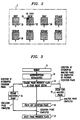
- the present invention provides a file system 4 for a data storage device 2 of a data storage system 1 having an re-entrant garbage collection process for preventing a microprocessor stall upon the occurrence of a power failure or other system failure.
- the file system 4 is designed as a flat file system 4 managed by a hierarchy of program objects which create and execute specific, atomic memory operations.
- the object hierarchy is divided into three levels of program architecture: a high level application interface, a virtual device level and a device driver level.
- the high level application interface presents a view of the files system as a set of files that can be read, written and removed. It further provides a means to query information about the files system, such as the amount of free space remaining.
- the virtual device level maps blocks of bytes into files and free space, while maintaining a linked list of files referenced by sets of contiguous and monitonically increasing block and sector numbers which form the logical addresses of the files.
- the device driver level acts as the interface between the virtual device level and the memory devices themselves and performs the translation between the logical addresses generated by the virtual device and the physical addresses of the memory devices.
- the file system 4 of the present invention can span more than one memory device or chip (as long as all the devices are of the same memory type) by tracking the number of devices and their physical addresses.
- the file system 4 of the present invention is implemented in the secondary memory 2 of a memory system 1 comprising at least a primary, volatile memory 6 and a secondary, non-volatile read-mostly memory 2 under the control of a microprocessor 8, central processing unit or the like.
- the primary memory 6 comprises DRAM memory devices and the secondary memory 2 comprises AM29200 FLASH PROM devices, while the microprocessor 8 comprises a AM29200 RISC microprocessor.
- the file system 4 may also be implemented in a memory system 1 comprising EEPROM memory devices as the secondary read-mostly memory.
- each AM29200 FLASH PROM is physically divided into eight sectors. If needed, one or more of the first sequential sectors of at least the first device are allocated as the boot sector(s) 20 for the microprocessor 8. The next two sequential sectors are designated as an event queue sector 22 and a swap sector 26, respectively. Any remaining sectors of the first and/or subsequent devices then form regular sectors 28 for the storage of file system data
- the boot sectors 20 are used by the microprocessor operating system to store boot code and data necessary to start the operating system, the file system 4 and any applications that must be started at boot time.
- the event queue sector 22 is the first sector following the boot sector 20 and is used in the garbage collection process to track and execute the sequences of atomic memory operations causing the removal of older, unused files and partial files.
- the swap sector 26 is the next sector after the event queue sector 22 and is used during garbage collection to reconstruct the regular sectors 28. During reconstruction, those files not marked or tagged for garbage collection are sequentially written in a contiguous manner to the swap sector 26.
- the swap sector 26 is then copied as an entire sector to one of the regular sectors 28 as the destination sector. This is performed for each populated, regular sector 28 in the memory device so as to produce a compacted file system of contiguous files.
- the files are written to and read from the regular sectors 28 in data block chunks of 64 bytes such that each regular sector holds an integral number of data blocks (i.e. 1024 blocks for the device type given above).
- data blocks i.e. 1024 blocks for the device type given above.
- a memory device i.e. EEPROM
- the data chunk sizes would be selected in accordance with application functions and device requirements.
- each file comprising a hyperblock 7 and one or more file blocks 9 of 64 bytes each.
- a hyperblock 7 is a data structure which denotes the beginning of a file and is used to store information about the file and its location in the file system virtual device.
- a file block 9 is a data structure which represents a block of data belonging to the file. The information stored in each file hyperblock 7 includes:
- a file system list head hyperblock 5 is created as the first block in the file system 4.
- this list head hyperblock 5 is a true hyperblock, it does not denote a file nor contain file data since its purpose is to maintain pertinent information about the creation of the file system 4. Accordingly, it is identified in the file system 4 as that hyperblock 7 having the hok flag set, the fok flag unset and a null string in the file name field, and at any given time, it can be used to determine the number of free bytes and free blocks in the file system 4 in addition to the creation time for the entire file system 4.
- the set of all hyperblocks 7 in the file system 4 forms a virtual linked list of all current files.
- the list is virtual in that a preceding hyperblock 7 does not contain a pointer to the next hyperblock, but rather, contains sufficient information about the current file to enable calculation of the linear address of the hyperblock 7 of the next file.
- this information comprises the linear address of the hyperblock 7 of the current file being examined (i.e. the sector and block number of that sector) in addition to the total number of its appended file blocks 9. Nonetheless, the file system 4 of the present invention may just as well be implemented through the use of pointers.
- a File object is created upon an application call to the file system virtual device.
- the File object retrieves an in-memory copy of the last hyperblock 7 created in the file system 4 and determines from the information contained in that hyperblock 7 whether there is sufficient free space in the file system media to write the entire, current application file, in addition to the starting address in the file system 4 where the current file will be written. If sufficient space exists for the current file, the File object appends the file to the end of the linked list of files by creating a hyperblock 7 for the current file and writing to that hyperblock 7 the file system specific information set forth above. Once this is done, the File object sets the hok flag in the hyperblock 7, appends the file data blocks of the current file to the hyperblock 7 and then sets the fok flag in that hyperblock 7.
- the File object After the current file has been written to the file system 4, the File object subsequently searches the hyperblocks 7 of each of the previously written (i.e. older) files to determine if the file name of the current file matches the file names of any of the older files. During the search, the File object ignores those files for which the garbage collection flag has been set. If there is a match between file names, the garbage collection flag in the hyperblock 7 of each of the older, matching files is set.
- the garbage collection process is used at any time when it is desired to remove unwanted files comprising duplicative files and partial files from the file system 4.
- the most common situation in which the process is invoked is when an attempt to write a new file to the file system 4 fails due to an insufficient amount of space remaining in the file system 4 (i.e. the regular data sectors of the memory device).
- the file object invokes the garbage collection process to remove any and all files that have been previously tagged as unwanted, garbage files.
- a second attempt is then made to write the new file to the file system 4, and if this attempt fails, an error code is returned to the program application to indicate either that the file system 4 has no more free space or that a device failure has occurred.
- the garbage collection process is also invoked as part of the file system initialization routine executed upon reboot of the microprocessor 8 after the occurrence of a power failure, microprocessor failure, memory system failure or the like.
- the purpose of this use is to remove any partially written files that may have been left in file system 4 upon an interrupted write operation or garbage collection process in order to prevent a microprocessor stall from occurring due to the retrieval of an incomplete file.
- the microprocessor 8 loads into its primary DRAM memory 6 boot code comprising the file system initialization routine stored in the boot sectors 20 of the FLASH memory device 2.
- an attempt is made to read the file system list head hyperblock 5 from the first regular sector 28 of the secondary memory 2.
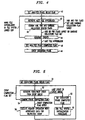
- the process of the present invention is designed to be re-entrant so as to maintain the integrity of the file system 4 and ensure that the occurrence of a power failure or the like during a garbage collection session does not stall the microprocessor 8. This is accomplished by first dividing the garbage collection process into separate analysis and execution phases and recording the results of the analysis phase independent of both the analysis and execution mechanisms in order that the analysis phase need not be re-entered upon an interrupted execution phase. Secondly, the results of the analysis phase are formulated in terms of individual, atomic events or memory operations which are re-executable in that they can be reexecuted upon interruption of their execution and before execution of another (subsequent) event without modifying results a previous execution of the same events. In this manner, an event for which a previous execution was interrupted by a power failure may be re-executed from beginning to end without adversely affecting the current state of the FLASH memory device 2 (i.e. the bit pattern previously written to a particular storage location).
- phase progress flags are used to denote at any given time which garbage collection phase or phases have been commenced and which phase or phases have been completed.
- the progress flags are stored separately from the regular file data in the first block of the event queue sector 22 and comprise an analysis phase begun flag, an analysis phase completed flag, an execution phase begun flag and an execution phase completed flag.
- garbage collection is invoked as part of the file system initialization routine, the first block of the GC event queue sector 22 is read and the flags stored therein are examined by the microprocessor 8 to determine if a previous garbage collection session was interrupted by the power failure, and if so, during what phase.
- the analysis phase is initiated through creation of a garbage collection event analysis object.
- the event analysis object retrieves first sets the analysis phase begun flag and then retrieves the hyperblock 7 of each file in order of file system storage.
- the analysis object examines the hok, fok and garbage collection status flags contained in the hyperblocks 7 to determine the nature of the file and the action to be taken, if any. If either of the hok and fok flags are unset, this indicates that the file is a partially written file since the writing of either its hyperblock 7 or its file blocks 9 was not successfully completed.
- the garbage collection flag may be set in response to detecting other file and/or file system characteristics. For example, the garbage collection flag could be set when the data sectors of the memory device are full and the file is determined to be the oldest file remaining in the file system 4. Finally, if the hok and fok flags are set and the garbage collection flag is unset, this then indicates that the file is a valid, new file to be maintained in the file system 4.
- a sequence of executable events or memory operations is generated by the event analysis object and written to an event queue 24 provided in the event queue sector 22 of the FLASH memory device 2 only if the file is determined not to be a partially written file or a file selected for garbage collection. Consequently, for each valid, new file retrieved by the event analysis object, a sequence of events is written to the event queue 24 the execution of which will cause the associated file to be written from its original, source sector to the swap sector 26 in a contiguous manner with respect to other valid files previously copied to the swap sector 26.
- the sequence of events generated for a valid, new file will further include events that cause a selected destination sector to be erased, the swap sector 26 to be copied as an entire compacted sector to the destination sector and the swap sector 26 to be erased for further copying.
- the events generated comprise individual memory operations selected on the basis of being sufficiently atomic (or fundamental) to ensure that they are re-executable in that a subsequent execution of the same operation (before execution of another operation) with the same associated data will not adversely change the state of the file system 4.
- Table II A listing of sample events are set forth in Table II below:
- each event comprises an event ID or name and analysis data for use by an execution unit of the microprocessor 8 in the execution of the event.
- the analysis data associated with the memory operation for copying a the file blocks 9 of a file from an initial, source location to a final, destination location is generated by the analysis object based upon the file address and size information stored in its associated hyperblock 7 in addition to the next contiguous address to be written to in the swap sector 26 as is well known in the art. Wrap-around conditions need to be satisfied when a particular file spans more than one source sector and when all the file blocks 9 of a file will not fit within the remaining space of the swap sector 26 as is also well known in the art.
- Each event written to the event queue 24 also comprises an execution completion flag indicating whether the event has been executed. The flag is initially unset when the event is generated and later set when the execution unit has completed the memory operation corresponding to the event.
- the event analysis completion flag in the event queue sector 22 is set and an event execution object is created to initiate execution of the events sequentially stored in the event queue 24.
- the event execution object retrieves each event in FIFO order and examines its completion flag to determine whether the particular event has already been executed. If the flag is set, the event execution object retrieves the next event and examines its completion flag. When an event is found with its completion flag unset, the event execution object passes the event ID and associated data to the microprocessor 8 and a microprocessor execution unit executes the event in accordance with the defined memory operation. The event's completion flag is then set, however, the event and its data is still retained in the event queue 24 until all the events in the queue have been successfully executed.
- the event execution object When all events in the event queue 24 have been executed, the event execution object sets the event execution completion flag in the event queue sector 22 and subsequently clears the queue of all events and their associated data. It is noted, however, that instead of setting a completion flag for each event and clearing the entire queue after execution of all queued events, it is foreseeable that in some data storage devices 2, the event execution object could simply clear each event from the queue on an individual basis once it has been successfully executed.
- the execution of the file system initialization routine causes the microprocessor 8 to examine the phase progress flags where it is determined that the execution phase was interrupted. In such a case, a new event execution object is created and the object sequentially examines the completion flag for each event starting with the oldest event in the event queue 24. Event execution will then commence with that event for which execution was interrupted since it is the first event in the sequence of events in the event queue 24 not having its completion flag set.
- the above-described file system 4 and garbage collection process are implemented in the secondary memory 2 of a memory system 1 of a software file storage mechanism for one of a telephone answering machine/system and a computer system.
- Software files downloaded from a telephone network or a computer network, respectively, are stored in sequential order within the memory system 1 for subsequent uploading to the main memory 6 of the memory system 1 for use in either user-oriented or system-oriented activities.
- updated or new version software files are downloaded to the file storage mechanism, they are stored in the secondary memory 2 under the same name as that of the older software files.
- the older files are then marked for garbage collection, and the file storage mechanism retrieves only those software files of a particular name that have not been marked for collection.
- the above-described file system 4 and garbage collection process are implemented in the secondary memory 2 of a memory system 1 of a message storage mechanism for one of a telephone answering machine/system and a computer system.
- Messages received over a telephone network or a computer network respectively are stored in sequential order within the memory system 1 as message files for subsequent output in the form of audio play or visual display on a television or computer monitor.
- This advantageously provides in the message storage mechanism an efficient means for recording audio, e-mail or facsimile messages, while minimizing the size of the required memory, and hence the cost of the product.
- the garbage collection process is invoked to remove the oldest of the message files instead of those files having the same name or identifier as previously described.
Landscapes
- Engineering & Computer Science (AREA)
- Theoretical Computer Science (AREA)
- Physics & Mathematics (AREA)
- General Engineering & Computer Science (AREA)
- General Physics & Mathematics (AREA)
- Library & Information Science (AREA)
- Quality & Reliability (AREA)
- Information Retrieval, Db Structures And Fs Structures Therefor (AREA)
- Memory System (AREA)
Applications Claiming Priority (2)
| Application Number | Priority Date | Filing Date | Title |
|---|---|---|---|
| US45537395A | 1995-05-31 | 1995-05-31 | |
| US455373 | 1995-05-31 |
Publications (1)
| Publication Number | Publication Date |
|---|---|
| EP0745939A2 true EP0745939A2 (fr) | 1996-12-04 |
Family
ID=23808530
Family Applications (1)
| Application Number | Title | Priority Date | Filing Date |
|---|---|---|---|
| EP19960303935 Withdrawn EP0745939A2 (fr) | 1995-05-31 | 1996-05-31 | Procédé de regroupement des positions inutilisées pour un système de fichier résidant dans une mémoire flash |
Country Status (2)
| Country | Link |
|---|---|
| EP (1) | EP0745939A2 (fr) |
| JP (1) | JPH09152983A (fr) |
Cited By (7)
| Publication number | Priority date | Publication date | Assignee | Title |
|---|---|---|---|---|
| WO2000058838A1 (fr) * | 1999-03-30 | 2000-10-05 | International Business Machines Corporation | Recuperation de la memoire d'applications supprimees |
| EP1046996A1 (fr) * | 1999-03-23 | 2000-10-25 | International Business Machines Corporation | Défragmentation de mémoire d'une carte à puce |
| US6247024B1 (en) | 1998-09-25 | 2001-06-12 | International Business Machines Corporation | Method and system for performing deferred file removal in a file system |
| EP0887735A3 (fr) * | 1997-06-25 | 2001-12-05 | Sony Corporation | Procédé de gestion de mémoire pour une mémoire flash |
| SG97145A1 (en) * | 1999-03-23 | 2003-07-18 | Ibm | Memory defragmentation in chipcards |
| US7590976B2 (en) | 2003-01-06 | 2009-09-15 | Panasonic Corporation | Compiler program, a computer-readable storage medium storing a compiler program, a compiling method and a compiling unit |
| US8880775B2 (en) | 2008-06-20 | 2014-11-04 | Seagate Technology Llc | System and method of garbage collection in a memory device |
-
1996
- 1996-05-31 EP EP19960303935 patent/EP0745939A2/fr not_active Withdrawn
- 1996-05-31 JP JP8138161A patent/JPH09152983A/ja active Pending
Cited By (8)
| Publication number | Priority date | Publication date | Assignee | Title |
|---|---|---|---|---|
| EP0887735A3 (fr) * | 1997-06-25 | 2001-12-05 | Sony Corporation | Procédé de gestion de mémoire pour une mémoire flash |
| US6247024B1 (en) | 1998-09-25 | 2001-06-12 | International Business Machines Corporation | Method and system for performing deferred file removal in a file system |
| EP1046996A1 (fr) * | 1999-03-23 | 2000-10-25 | International Business Machines Corporation | Défragmentation de mémoire d'une carte à puce |
| SG97145A1 (en) * | 1999-03-23 | 2003-07-18 | Ibm | Memory defragmentation in chipcards |
| WO2000058838A1 (fr) * | 1999-03-30 | 2000-10-05 | International Business Machines Corporation | Recuperation de la memoire d'applications supprimees |
| US6581133B1 (en) | 1999-03-30 | 2003-06-17 | International Business Machines Corporation | Reclaiming memory from deleted applications |
| US7590976B2 (en) | 2003-01-06 | 2009-09-15 | Panasonic Corporation | Compiler program, a computer-readable storage medium storing a compiler program, a compiling method and a compiling unit |
| US8880775B2 (en) | 2008-06-20 | 2014-11-04 | Seagate Technology Llc | System and method of garbage collection in a memory device |
Also Published As
| Publication number | Publication date |
|---|---|
| JPH09152983A (ja) | 1997-06-10 |
Similar Documents
| Publication | Publication Date | Title |
|---|---|---|
| US5559957A (en) | File system for a data storage device having a power fail recovery mechanism for write/replace operations | |
| US7072916B1 (en) | Instant snapshot | |
| US5742818A (en) | Method and system of converting data from a source file system to a target file system | |
| KR100644602B1 (ko) | 플래시메모리를 위한 재사상 제어방법 및 그에 따른플래시 메모리의 구조 | |
| US6038636A (en) | Method and apparatus for reclaiming and defragmenting a flash memory device | |
| AU700681B2 (en) | A method of operating a computer system | |
| US5086502A (en) | Method of operating a data processing system | |
| JP3797649B2 (ja) | 不揮発性半導体記憶装置 | |
| US6865658B2 (en) | Nonvolatile data management system using data segments and link information | |
| EP0466389B1 (fr) | Système de fichier comportant une mémoire lecture/écriture et une mémoire à écriture unique et lecture multiple | |
| KR100324028B1 (ko) | 비휘발성 메모리에서 파일의 연속 중복기재를 수행하는 방법 | |
| EP1686482B1 (fr) | Dispositif d'enregistrement de fichiers | |
| US6636941B1 (en) | Enhanced stable disk storage | |
| US6629203B1 (en) | Alternating shadow directories in pairs of storage spaces for data storage | |
| KR100703680B1 (ko) | 플래시 파일 시스템 | |
| US7849257B1 (en) | Method and apparatus for storing and retrieving data | |
| EP0745939A2 (fr) | Procédé de regroupement des positions inutilisées pour un système de fichier résidant dans une mémoire flash | |
| CN100538657C (zh) | 用于时间敏感复制的装置、系统和方法 | |
| US20050149493A1 (en) | Data recording apparatus and data recording method | |
| JP2004157958A (ja) | 計算機システムおよびファイル管理方法 | |
| JP3957464B2 (ja) | データ更新装置 | |
| US6865584B2 (en) | Method for recovering a database provided with disk back-up | |
| CN114880277B (zh) | 块设备快照方法、系统和存储介质 | |
| Wiseman | The SMITE object oriented backing store | |
| JP2008134777A (ja) | ファイル割当テーブルのキャッシュ方法 |
Legal Events
| Date | Code | Title | Description |
|---|---|---|---|
| PUAI | Public reference made under article 153(3) epc to a published international application that has entered the european phase |
Free format text: ORIGINAL CODE: 0009012 |
|
| AK | Designated contracting states |
Kind code of ref document: A2 Designated state(s): DE GB |
|
| STAA | Information on the status of an ep patent application or granted ep patent |
Free format text: STATUS: THE APPLICATION HAS BEEN WITHDRAWN |
|
| 18W | Application withdrawn |
Withdrawal date: 19970926 |