EP1046996A1 - Défragmentation de mémoire d'une carte à puce - Google Patents
Défragmentation de mémoire d'une carte à puce Download PDFInfo
- Publication number
- EP1046996A1 EP1046996A1 EP20000104109 EP00104109A EP1046996A1 EP 1046996 A1 EP1046996 A1 EP 1046996A1 EP 20000104109 EP20000104109 EP 20000104109 EP 00104109 A EP00104109 A EP 00104109A EP 1046996 A1 EP1046996 A1 EP 1046996A1
- Authority
- EP
- European Patent Office
- Prior art keywords
- memory
- copy
- descriptors
- defragmentation
- block
- Prior art date
- Legal status (The legal status is an assumption and is not a legal conclusion. Google has not performed a legal analysis and makes no representation as to the accuracy of the status listed.)
- Granted
Links
Images


Classifications
-
- G—PHYSICS
- G06—COMPUTING OR CALCULATING; COUNTING
- G06F—ELECTRIC DIGITAL DATA PROCESSING
- G06F12/00—Accessing, addressing or allocating within memory systems or architectures
- G06F12/02—Addressing or allocation; Relocation
- G06F12/0223—User address space allocation, e.g. contiguous or non contiguous base addressing
- G06F12/023—Free address space management
-
- G—PHYSICS
- G06—COMPUTING OR CALCULATING; COUNTING
- G06F—ELECTRIC DIGITAL DATA PROCESSING
- G06F11/00—Error detection; Error correction; Monitoring
- G06F11/07—Responding to the occurrence of a fault, e.g. fault tolerance
- G06F11/14—Error detection or correction of the data by redundancy in operations
- G06F11/1402—Saving, restoring, recovering or retrying
- G06F11/1415—Saving, restoring, recovering or retrying at system level
- G06F11/1435—Saving, restoring, recovering or retrying at system level using file system or storage system metadata
-
- G—PHYSICS
- G06—COMPUTING OR CALCULATING; COUNTING
- G06F—ELECTRIC DIGITAL DATA PROCESSING
- G06F12/00—Accessing, addressing or allocating within memory systems or architectures
- G06F12/02—Addressing or allocation; Relocation
- G06F12/0223—User address space allocation, e.g. contiguous or non contiguous base addressing
- G06F12/023—Free address space management
- G06F12/0238—Memory management in non-volatile memory, e.g. resistive RAM or ferroelectric memory
- G06F12/0246—Memory management in non-volatile memory, e.g. resistive RAM or ferroelectric memory in block erasable memory, e.g. flash memory
Definitions
- the invention relates generally to system software of computer systems, and deals more particularly with a method and system for improving memory defragmentation, particularly enabling chipcards to be defragmented.
- Memory is a limited resource on chipcards. Thus, an optimum efficient usage of memory has to be envisaged generally.
- 'Valid' stands in contrast to 'hole', indicating that in hole positions are no valid data, i.e., the unused gaps between the valid data blocks the use of the total size of them is the aim of the defragmentation procedure.
- a copy operation of an entire data block can comprise a plurality of copy chunks, e.g., when the chunks are relatively small compared to the data block. In reverse, a whole data block can be contained in a single copy chunk, too.
- the memory is often an EEPROM and is divided into EEPROM pages as sub-unit having a size of e.g., 64 byte.
- the EEPROM memory is a non-volatile memory which keeps personalized data of the chipcard holder.
- the typical applications today store a file system into the card which is more or less described in the ISO 7816/4 standard.
- the chipcard might contain an essential amount of unused memory holes which cannot be allocated as each of them is smaller than a requested block size. In this situation the chipcard would have to be fragmented in order to allocate additional memory space thereafter.
- the memory may be organized in segments and each requested block is split up in sub-blocks of one segments size. This however leaves a hole of up to one segments size -one hole on each allocated block. Therefore this method is less effective for using the memory exhaustively.
- the chipcard manufacturer ODS uses this system.
- Another approach to reduce the impact of fragmentation is, to seek for that hole existing in the chipcard whose size does have the least difference from the requested block size, assumed, that the block size is yet smaller than the selected hole.
- This method is called the 'Best-Fit-Algorithm' and is the best known method to keep the impact of fragmentation small.
- Defragmentation per se is well known for hard disk drives, but not for chipcards. Available programs for hard disk defragmentation have been sold by different manufactures. Generally, the process of defragmentation copies the used memory blocks such, that the holes between two adjacent blocks are filled. After defragmentation all blocks are in continuos order, and no holes exist anymore between the blocks.
- the defragmentation problem in chipcards appears in two flavors.
- the first problem comes from the organization of memory.
- the memory is organized such, that the physical addresses of memory locations are stored within the memory itself.
- a so-called 'descriptor' is intended to be general expression to mean any means for describing the location of a particular location in memory, and in particular pointers are thus understood by that.
- the descriptors mentioned during the course of description and in the claims are to be understood in that sense.
- a pointer is such a location which stores an address of another memory location.
- most memory architectures are designed as 'linked lists' which is one of the most effective memory architectures those addresses are distributed all over the memory.
- the basic idea comprised of the present invention is to provide two sets of descriptors having each at least three descriptors and each set is used in an alternating manner for defining the location of source and target of the copy operations which are to be performed during the defragmentation procedure.
- the defragmentation procedure is performed as sequence of copy operations on copy chunks, i.e., a certain number of sequentially arranged bytes to be copied being part of a valid data block to be copied. In each of said copy operations in said sequence the values which are assigned to said descriptors change.
- one of the two sets of descriptors holds information which is usable for restoring the contents of a copy chunk in case of a power break during a copy operation on said copy chunk.
- defragmenting is a safe procedure, and data integrity is assured.
- the provided solution is not limited to the use in chipcards as it can be applied in conventional computer systems, too.
- the advantageous area of application are all devices having a reduced potential of hardware and software resources, compared, e.g. to state-of-the-art personal computer of the year 1999, as e.g. Pentium III. So, it is suited to be applied in many future 'mini'- computer devices, too, as they are developed in course of the next years
- a new solution to the defragmentation problem is provided which works with a high performance and which solves the defragmentation problem and all of its further concerns perfectly and to the whole extent.
- any reference to the EEPROM memory needs to be relative.
- the only fixed physical addresses may be those beyond, i.e., before or after that part of EEPROM which is subjected to the procedure of defragmentation.
- any memory block needs an identification code being represented by one or more bytes. This identification code replaces the usage of physical addresses. If memory addressing is required, e.g. due to the selection of a file or a memory block the whole EEPROM needs to be searched from the beginning until the appropriate identification code is being found.
- No other part of the ROM code may refer to any physical address in the defragmentation portion of the EEPROM.
- a power failure buffer which has advantageously the size of one sub-unit of the EEPROM, i.e. a page, e.g., of 32 or 64 bytes length, must be implemented such that on a power break the content of this backtrace buffer is written back to the physical address being assigned for the stored data.
- said buffer can be used as backtrace or, as a write forward buffer as well.
- chipcards can be defragmented which increases the usage value of them.
- the defragmentation method in chipcards can be realized such that any power interruption at any time within the defragmentation process does not affect the data integrity of the chipcard.
- a two-stage memory allocation is provided advantageously with a defragmentation process between a first -unsuccessful attempt of memory allocation and second later attempt of memory allocation. Therewith, a defragmentation on-demand is realized.
- Such a defragmentation method can be advantageously automatically started on demand, i.e., when a trial to allocate memory was not successful, or, it can be driven by a host program's control command, or, by a user command, or any other event having a potential influence on memory availability.
- Said memory block comprises a conventional header field 10 in order to fulfill conventional tasks within general memory management.
- Said header might be two bytes long and one of the bits may indicate, if the block is allocated or not.
- a field 12 for the object ID comprising 1 byte in the present example is provided according to the present invention in order to identify the present memory block.
- This identification is a must as its function principally consists in locating any particular memory block by searching the memory sequentially.
- said object ID replaces the functionality of a physical address in the memory.
- said ID is generated when the memory block is allocated.
- a field 13 of 1 byte is provided for holding the parent identification of the object in the hierarchically structured name space.
- a field 14 is provided which holds information about the object type. This field is a conventional field and specifies if the memory block describes a file, or a directory or any other type of logical or physical devices in the computing unit.
- the file identification comprises two bytes which form the name of the file, directory, etc. .
- the portion 34 of the memory to be defragmented according to the method of the present invention is structured in pages 35.
- the defragmentation process is controlled by a descriptor control unit 32.
- Said unit is connected to an intermediate buffer 36 which has the function of a conventional write forward buffer, or a backtrace buffer. Principally, both ways can be taken.
- the operations described later with reference to fig. 3 is realized using the connections between the memory and the control unit, and the control unit and the back trace buffer, respectively.
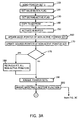
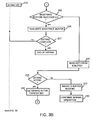
- a schematic representation of the essential steps during the inventional defragmentation process is given including the essential features of the corresponding control flow.
- the example refers to defragmentation of a defragmentable portion of a chipcard's EEPROM memory 34.
- defragmentation of the memory 34 always takes large portions of time it is important to avoid any unnecessary defragmentation. Unnecessary defragmentation is a defragmentation which is not necessary as there is still enough space to allocate a block. Consequently, defragmentation according to a preferred aspect of the present invention is recommended only when a memory allocation fails due to the fact that no more memory is available in the EEPROM.
- each set of descriptors contains the following structure:
- the first descriptor contains the physical address of the memory location to which the rest of the EEPPROM needs to be copied to i.e. the address of the first available hole. It is thus called DestinationPointer or TargetPointer for the purposes of description.
- the second descriptor contains the physical address of the memory location from which the rest of the EEPROM should be copied i.e. the address of the memory allocation block after the first available hole. It is thus called SourcePointer.
- the third descriptor contains the address of the second, i.e., next available hole. It is thus called NextPointer for the purposes of description.
- the length of bytes to be copied may be calculated by the difference from the third descriptor and the second descriptor.
- 'active block flag' this is one bit of another byte in EEPROM which automatically determines the validity of block set 1 and block set 2. As this bit can only be recognized as either '1' or '0' by definition of this system there is always one block being the active block. Thus, the flag is called a 'Valid Block Flag'.
- Another flag being possibly represented through another byte in the EEPROM indicates, whether defragmentation is active. Thus, it is called 'DefragActive Flag'.
- the defragmentation is performed as is described in conjunction with the enumerated steps below:
- Step 120 Set the ValidBlockFlag to indicate the descriptor set 1 to be the active block.
- Step 130 Set the DefragActive Flag to the status "Defragmentation Active”.
- Step 140 Copy a number of bytes up to the size of an EEPROM page to the Backtrace buffer.
- the start address of the bytes to be copied to the Backtrace Buffer is the address contained in the active Source Pointer.
- the length of bytes to be copied is determined by the address of the destination descriptor up to the address of the next EEPROM page boundary in order to copy the next block in chunks of the page size which will increase the speed of the defragmentation.
- the length of bytes is determined by the difference between the content of the NextPointer minus the content of the SourcePointer.
- Step 150 activate the Backtrace buffer in order to allow storing the data into the destination address after a possible power break.
- any power failure will invoke the automatic restore function of the backtrace buffer such, that after a new power-on the data in the backtrace buffer will be copied automatically into the destination address of the backtrace record.
- This function is called the backtrace restore function.
- Step 160 set the DestinationPointer of the non-active descriptor set to the value of the DestinationPointer plus the number of bytes in the Backtrace buffer. Now, the DestinationPointer points to the next location where to store the next data.
- Step 170 Set the Source Pointer of the non-active descriptor set to the value of the SourcePointer of the active descriptor set plus the size of an EEPROM page.
- Step 180 If the SourcePointer of the non-active descriptor set is larger than the NextPointer of the active descriptor set, then recalculate all non-active descriptors according to step 110.
- Step 190 Toggle the active descriptor set in order to make the non-active descriptor set being the active descriptor set and consequently the active descriptor set becomes the non-active descriptor set.
- Step 200 Invoke the backtrace restore function as being performed after power on. This function copies the bytes of the backtrace record into the destination address which equals the content of the active DestinationPointer.
- the backtrace restore function was performed successfully, i.e., without any power break - decision 202- the backtrace record is made invalid -step 205 and the backtrace buffer is then automatically deleted.
- Step 210 Continue the process at step 140 until the defragmentation is completed - decision 207.
- the whole process is continued according to the information stored in and read from - step 220-the BacktraceBuffer, as are at least the DefragmentationActiveFlag, ValidBlockFlag and the appropriate active block step.
- Step 225 to 230 Check whether the DefragActive Flag is set-decision 225 , if no, invoke the backtrace restore function -step 227- and continue with normal operation -step 230.
- Step 240 Otherwise determine the active descriptor set according to the ValidBlockFlag. Decision 245, Step 250: If the DefragActive Flag was found active, and the BackTraceBuffer contains valid data to be copied -decision 245- compare the address of the active Destination Pointer with the Destination address of the Backtrace Record -step 250. If the addresses match, delete the Backtrace Buffer and go to step 140 of the above scenarios.
- step 110 to step 240 describe a full function solution to the Defragmentation problem working at high performance. Minor alterations of the scenarios are possible, e.g. the number of bytes to be copied to the backtrace buffer may be always the length of an EEPROM page where the source is being fetched always from valid blocks.
- the descriptors need not necessarily contain the address information in form of pure addresses. Instead, they can contain relative distances between two physical addresses in order to be enabled to calculate a second physical address with the help of a first physical address and said distance bit length.
- the descriptor layout many modifications to the special descriptor layout are able to be appreciated by a person skilled in the art. All of them are deemed to be included in the scope of the claims as appended below.
- a combination of the Best-Fit-Allocation mechanism can advantageously combined with the 'automatic' defragmentation method, , i.e., the on-demand feature of the present invention.
- the defragmentation method can be provided such that it automatically resumes defragmentation after a power break.
- the defragmentation method can be provided where multiple sets of descriptors are used in order to resume defragmentation after a power break.
- the defragmentation method can be advantageously used in chipcards or other computer devices having a reduced potential of hardware or software resources, and any power backtrace/write forward buffer provided thereon can be used to store information relevant for the resume of the defragmentation.
- the inventional method of defragmenting memory can be implemented completely in hardware. Thus, a safe write operation can be assured.
Landscapes
- Engineering & Computer Science (AREA)
- Theoretical Computer Science (AREA)
- Physics & Mathematics (AREA)
- General Engineering & Computer Science (AREA)
- General Physics & Mathematics (AREA)
- Library & Information Science (AREA)
- Quality & Reliability (AREA)
- Information Retrieval, Db Structures And Fs Structures Therefor (AREA)
- Techniques For Improving Reliability Of Storages (AREA)
Priority Applications (1)
| Application Number | Priority Date | Filing Date | Title |
|---|---|---|---|
| EP20000104109 EP1046996B1 (fr) | 1999-03-23 | 2000-02-29 | Défragmentation de mémoire d'une carte à puce |
Applications Claiming Priority (3)
| Application Number | Priority Date | Filing Date | Title |
|---|---|---|---|
| EP99105816 | 1999-03-23 | ||
| EP99105816 | 1999-03-23 | ||
| EP20000104109 EP1046996B1 (fr) | 1999-03-23 | 2000-02-29 | Défragmentation de mémoire d'une carte à puce |
Publications (2)
| Publication Number | Publication Date |
|---|---|
| EP1046996A1 true EP1046996A1 (fr) | 2000-10-25 |
| EP1046996B1 EP1046996B1 (fr) | 2005-04-13 |
Family
ID=26070607
Family Applications (1)
| Application Number | Title | Priority Date | Filing Date |
|---|---|---|---|
| EP20000104109 Expired - Lifetime EP1046996B1 (fr) | 1999-03-23 | 2000-02-29 | Défragmentation de mémoire d'une carte à puce |
Country Status (1)
| Country | Link |
|---|---|
| EP (1) | EP1046996B1 (fr) |
Cited By (9)
| Publication number | Priority date | Publication date | Assignee | Title |
|---|---|---|---|---|
| WO2004066153A1 (fr) * | 2003-01-20 | 2004-08-05 | Giesecke & Devrient Gmbh | Defragmentation de memoire concernant en particulier un support de donnees portable |
| WO2007141684A1 (fr) | 2006-06-08 | 2007-12-13 | Nxp B.V. | Dispositif de défragmentation à distance de dispositif embarqué |
| US7374487B2 (en) | 2000-10-17 | 2008-05-20 | Igt | Non-volatile memory storing critical data in a gaming machine |
| US7401174B2 (en) | 2003-12-16 | 2008-07-15 | Matsushita Electric Industrial Co., Ltd. | File system defragmentation and data processing method and apparatus for an information recording medium |
| US7412559B2 (en) | 2000-10-17 | 2008-08-12 | Igt | High performance battery backed ram interface |
| US7951008B2 (en) | 2006-03-03 | 2011-05-31 | Igt | Non-volatile memory management technique implemented in a gaming machine |
| EP2386958A1 (fr) * | 2010-05-13 | 2011-11-16 | Assa Abloy AB | Procédé de recuperation incrementielle de l'éspace mémoire résistante au déchirement |
| US8550922B2 (en) | 2006-03-03 | 2013-10-08 | Igt | Game removal with game history |
| IT201800002644A1 (it) * | 2018-02-13 | 2019-08-13 | St Microelectronics Srl | Procedimento per gestire carte a circuito integrato, corrispondente carta e apparecchiatura |
Citations (3)
| Publication number | Priority date | Publication date | Assignee | Title |
|---|---|---|---|---|
| GB2291991A (en) * | 1995-09-27 | 1996-02-07 | Memory Corp Plc | Disk drive emulation with a block-erasable memory |
| EP0745939A2 (fr) * | 1995-05-31 | 1996-12-04 | Lucent Technologies Inc. | Procédé de regroupement des positions inutilisées pour un système de fichier résidant dans une mémoire flash |
| WO1997037296A1 (fr) * | 1996-04-02 | 1997-10-09 | Memory Corporation Plc | Dispositifs de memoire |
-
2000
- 2000-02-29 EP EP20000104109 patent/EP1046996B1/fr not_active Expired - Lifetime
Patent Citations (3)
| Publication number | Priority date | Publication date | Assignee | Title |
|---|---|---|---|---|
| EP0745939A2 (fr) * | 1995-05-31 | 1996-12-04 | Lucent Technologies Inc. | Procédé de regroupement des positions inutilisées pour un système de fichier résidant dans une mémoire flash |
| GB2291991A (en) * | 1995-09-27 | 1996-02-07 | Memory Corp Plc | Disk drive emulation with a block-erasable memory |
| WO1997037296A1 (fr) * | 1996-04-02 | 1997-10-09 | Memory Corporation Plc | Dispositifs de memoire |
Cited By (17)
| Publication number | Priority date | Publication date | Assignee | Title |
|---|---|---|---|---|
| US7374487B2 (en) | 2000-10-17 | 2008-05-20 | Igt | Non-volatile memory storing critical data in a gaming machine |
| US7390262B2 (en) | 2000-10-17 | 2008-06-24 | Igt | Non-volatile memory storing critical data in a gaming machine |
| US7412559B2 (en) | 2000-10-17 | 2008-08-12 | Igt | High performance battery backed ram interface |
| US7904687B2 (en) | 2000-10-17 | 2011-03-08 | Igt | Non-volatile memory storing critical data in a gaming machine |
| US8961322B2 (en) | 2000-12-07 | 2015-02-24 | Igt | Game removal with game history |
| WO2004066153A1 (fr) * | 2003-01-20 | 2004-08-05 | Giesecke & Devrient Gmbh | Defragmentation de memoire concernant en particulier un support de donnees portable |
| US7401174B2 (en) | 2003-12-16 | 2008-07-15 | Matsushita Electric Industrial Co., Ltd. | File system defragmentation and data processing method and apparatus for an information recording medium |
| US8550922B2 (en) | 2006-03-03 | 2013-10-08 | Igt | Game removal with game history |
| US7951008B2 (en) | 2006-03-03 | 2011-05-31 | Igt | Non-volatile memory management technique implemented in a gaming machine |
| US9229649B2 (en) | 2006-06-08 | 2016-01-05 | Nxp B.V. | Device for remote defragmentation of an embedded device |
| WO2007141684A1 (fr) | 2006-06-08 | 2007-12-13 | Nxp B.V. | Dispositif de défragmentation à distance de dispositif embarqué |
| US8321481B2 (en) | 2010-05-13 | 2012-11-27 | Assa Abloy Ab | Method for incremental anti-tear garbage collection |
| EP2386958A1 (fr) * | 2010-05-13 | 2011-11-16 | Assa Abloy AB | Procédé de recuperation incrementielle de l'éspace mémoire résistante au déchirement |
| IT201800002644A1 (it) * | 2018-02-13 | 2019-08-13 | St Microelectronics Srl | Procedimento per gestire carte a circuito integrato, corrispondente carta e apparecchiatura |
| EP3525500A1 (fr) * | 2018-02-13 | 2019-08-14 | STMicroelectronics Srl | Procédé de réduction de fragmentation de mémoire non volatile dans des cartes à circuit intégré, carte correspondante et appareil |
| US11481133B2 (en) | 2018-02-13 | 2022-10-25 | Stmicroelectronics S.R.L. | Method of managing integrated circuits cards by widening the biggest empty region, corresponding card and apparatus |
| US11995333B2 (en) | 2018-02-13 | 2024-05-28 | Stmicroelectronics S.R.L. | Method for reducing non-volatile memory fragmentation in integrated circuit cards, corresponding card and apparatus |
Also Published As
| Publication number | Publication date |
|---|---|
| EP1046996B1 (fr) | 2005-04-13 |
Similar Documents
| Publication | Publication Date | Title |
|---|---|---|
| US8180956B2 (en) | Method for controlling memory card and method for controlling nonvolatile semiconductor memory | |
| US10126959B2 (en) | Systems and methods for a mass data storage system having a file-based interface to a host and a non-file-based interface to secondary storage | |
| US7610434B2 (en) | File recording apparatus | |
| US8024507B2 (en) | Transaction-safe FAT file system improvements | |
| US6612490B1 (en) | Extended card file system | |
| US7610437B2 (en) | Data consolidation and garbage collection in direct data file storage memories | |
| US7395384B2 (en) | Method and apparatus for maintaining data on non-volatile memory systems | |
| EP2006774A1 (fr) | Système de mémoire sur carte à puce, et son procédé de gestion de fichier | |
| US6615318B2 (en) | Cache management system with multiple cache lists employing roving removal and priority-based addition of cache entries | |
| US5956745A (en) | System and method for automatically resizing a disk drive volume | |
| US8307172B2 (en) | Memory system including memory controller and separately formatted nonvolatile memory to avoid “copy-involving write” during updating file data in the memory | |
| US8145829B2 (en) | Flash memory device capable of preventing read disturbance | |
| US7849253B2 (en) | Method for fast access to flash-memory media | |
| US6636941B1 (en) | Enhanced stable disk storage | |
| US7167964B1 (en) | Memory defragmentation in chipcards | |
| KR100703680B1 (ko) | 플래시 파일 시스템 | |
| EP1046996A1 (fr) | Défragmentation de mémoire d'une carte à puce | |
| KR100907477B1 (ko) | 플래시 메모리에 저장된 데이터의 인덱스 정보 관리 장치및 방법 | |
| US20060004969A1 (en) | High-speed accessible memory featuring reduced data movement | |
| JP2000030375A (ja) | データ処理システム、アクセス装置及び記録媒体 | |
| EP3948550B1 (fr) | Appareil, procédé et programme informatique de gestion de mises à jour de pages de mémoire dans une mémoire non volatile | |
| CN116010113B (zh) | 用于管理智能卡内存的方法及智能卡 | |
| EP1237085A1 (fr) | Méthode de gestion de mémoire pour configurer une mémoire d'ordinateur avec une unité de disque virtuelle |
Legal Events
| Date | Code | Title | Description |
|---|---|---|---|
| PUAI | Public reference made under article 153(3) epc to a published international application that has entered the european phase |
Free format text: ORIGINAL CODE: 0009012 |
|
| AK | Designated contracting states |
Kind code of ref document: A1 Designated state(s): AT BE CH CY DE DK ES FI FR GB GR IE IT LI LU MC NL PT SE |
|
| AX | Request for extension of the european patent |
Free format text: AL;LT;LV;MK;RO;SI |
|
| AKX | Designation fees paid | ||
| 17P | Request for examination filed |
Effective date: 20010608 |
|
| RBV | Designated contracting states (corrected) |
Designated state(s): AT BE CH CY DE DK ES FI FR GB GR IE IT LI LU MC NL PT SE |
|
| D17P | Request for examination filed (deleted) | ||
| DBV | Designated contracting states (deleted) | ||
| R17P | Request for examination filed (corrected) |
Effective date: 20010227 |
|
| RBV | Designated contracting states (corrected) |
Designated state(s): AT BE CH CY DE DK ES FI FR GB GR IE IT LI LU MC NL PT SE |
|
| REG | Reference to a national code |
Ref country code: DE Ref legal event code: 8566 |
|
| 17Q | First examination report despatched |
Effective date: 20020926 |
|
| GRAP | Despatch of communication of intention to grant a patent |
Free format text: ORIGINAL CODE: EPIDOSNIGR1 |
|
| GRAS | Grant fee paid |
Free format text: ORIGINAL CODE: EPIDOSNIGR3 |
|
| GRAA | (expected) grant |
Free format text: ORIGINAL CODE: 0009210 |
|
| AK | Designated contracting states |
Kind code of ref document: B1 Designated state(s): AT BE CH CY DE DK ES FI FR GB GR IE IT LI LU MC NL PT SE |
|
| PG25 | Lapsed in a contracting state [announced via postgrant information from national office to epo] |
Ref country code: NL Free format text: LAPSE BECAUSE OF FAILURE TO SUBMIT A TRANSLATION OF THE DESCRIPTION OR TO PAY THE FEE WITHIN THE PRESCRIBED TIME-LIMIT Effective date: 20050413 Ref country code: BE Free format text: LAPSE BECAUSE OF FAILURE TO SUBMIT A TRANSLATION OF THE DESCRIPTION OR TO PAY THE FEE WITHIN THE PRESCRIBED TIME-LIMIT Effective date: 20050413 Ref country code: IT Free format text: LAPSE BECAUSE OF FAILURE TO SUBMIT A TRANSLATION OF THE DESCRIPTION OR TO PAY THE FEE WITHIN THE PRESCRIBED TIME-LIMIT;WARNING: LAPSES OF ITALIAN PATENTS WITH EFFECTIVE DATE BEFORE 2007 MAY HAVE OCCURRED AT ANY TIME BEFORE 2007. THE CORRECT EFFECTIVE DATE MAY BE DIFFERENT FROM THE ONE RECORDED. Effective date: 20050413 Ref country code: LI Free format text: LAPSE BECAUSE OF FAILURE TO SUBMIT A TRANSLATION OF THE DESCRIPTION OR TO PAY THE FEE WITHIN THE PRESCRIBED TIME-LIMIT Effective date: 20050413 Ref country code: CH Free format text: LAPSE BECAUSE OF FAILURE TO SUBMIT A TRANSLATION OF THE DESCRIPTION OR TO PAY THE FEE WITHIN THE PRESCRIBED TIME-LIMIT Effective date: 20050413 Ref country code: FI Free format text: LAPSE BECAUSE OF FAILURE TO SUBMIT A TRANSLATION OF THE DESCRIPTION OR TO PAY THE FEE WITHIN THE PRESCRIBED TIME-LIMIT Effective date: 20050413 Ref country code: AT Free format text: LAPSE BECAUSE OF FAILURE TO SUBMIT A TRANSLATION OF THE DESCRIPTION OR TO PAY THE FEE WITHIN THE PRESCRIBED TIME-LIMIT Effective date: 20050413 |
|
| REG | Reference to a national code |
Ref country code: GB Ref legal event code: FG4D |
|
| REG | Reference to a national code |
Ref country code: CH Ref legal event code: EP Ref country code: CH Ref legal event code: NV Representative=s name: INTERNATIONAL BUSINESS MACHINES CORPORATION |
|
| REG | Reference to a national code |
Ref country code: IE Ref legal event code: FG4D |
|
| REF | Corresponds to: |
Ref document number: 60019364 Country of ref document: DE Date of ref document: 20050519 Kind code of ref document: P |
|
| PG25 | Lapsed in a contracting state [announced via postgrant information from national office to epo] |
Ref country code: GR Free format text: LAPSE BECAUSE OF FAILURE TO SUBMIT A TRANSLATION OF THE DESCRIPTION OR TO PAY THE FEE WITHIN THE PRESCRIBED TIME-LIMIT Effective date: 20050713 Ref country code: SE Free format text: LAPSE BECAUSE OF FAILURE TO SUBMIT A TRANSLATION OF THE DESCRIPTION OR TO PAY THE FEE WITHIN THE PRESCRIBED TIME-LIMIT Effective date: 20050713 Ref country code: DK Free format text: LAPSE BECAUSE OF FAILURE TO SUBMIT A TRANSLATION OF THE DESCRIPTION OR TO PAY THE FEE WITHIN THE PRESCRIBED TIME-LIMIT Effective date: 20050713 |
|
| PG25 | Lapsed in a contracting state [announced via postgrant information from national office to epo] |
Ref country code: PT Free format text: LAPSE BECAUSE OF FAILURE TO SUBMIT A TRANSLATION OF THE DESCRIPTION OR TO PAY THE FEE WITHIN THE PRESCRIBED TIME-LIMIT Effective date: 20050913 |
|
| NLV1 | Nl: lapsed or annulled due to failure to fulfill the requirements of art. 29p and 29m of the patents act | ||
| REG | Reference to a national code |
Ref country code: CH Ref legal event code: PL |
|
| PLBE | No opposition filed within time limit |
Free format text: ORIGINAL CODE: 0009261 |
|
| STAA | Information on the status of an ep patent application or granted ep patent |
Free format text: STATUS: NO OPPOSITION FILED WITHIN TIME LIMIT |
|
| PG25 | Lapsed in a contracting state [announced via postgrant information from national office to epo] |
Ref country code: IE Free format text: LAPSE BECAUSE OF NON-PAYMENT OF DUE FEES Effective date: 20060228 Ref country code: LU Free format text: LAPSE BECAUSE OF NON-PAYMENT OF DUE FEES Effective date: 20060228 |
|
| ET | Fr: translation filed | ||
| PG25 | Lapsed in a contracting state [announced via postgrant information from national office to epo] |
Ref country code: MC Free format text: LAPSE BECAUSE OF NON-PAYMENT OF DUE FEES Effective date: 20060331 |
|
| 26N | No opposition filed |
Effective date: 20060116 |
|
| REG | Reference to a national code |
Ref country code: IE Ref legal event code: MM4A |
|
| REG | Reference to a national code |
Ref country code: GB Ref legal event code: 746 Effective date: 20080117 |
|
| PG25 | Lapsed in a contracting state [announced via postgrant information from national office to epo] |
Ref country code: CY Free format text: LAPSE BECAUSE OF FAILURE TO SUBMIT A TRANSLATION OF THE DESCRIPTION OR TO PAY THE FEE WITHIN THE PRESCRIBED TIME-LIMIT Effective date: 20050413 |
|
| PG25 | Lapsed in a contracting state [announced via postgrant information from national office to epo] |
Ref country code: ES Free format text: LAPSE BECAUSE OF NON-PAYMENT OF DUE FEES Effective date: 20060228 |
|
| PGFP | Annual fee paid to national office [announced via postgrant information from national office to epo] |
Ref country code: FR Payment date: 20120306 Year of fee payment: 13 |
|
| REG | Reference to a national code |
Ref country code: FR Ref legal event code: ST Effective date: 20131031 |
|
| PG25 | Lapsed in a contracting state [announced via postgrant information from national office to epo] |
Ref country code: FR Free format text: LAPSE BECAUSE OF NON-PAYMENT OF DUE FEES Effective date: 20130228 |
|
| PGFP | Annual fee paid to national office [announced via postgrant information from national office to epo] |
Ref country code: GB Payment date: 20170130 Year of fee payment: 18 |
|
| GBPC | Gb: european patent ceased through non-payment of renewal fee |
Effective date: 20180228 |
|
| PG25 | Lapsed in a contracting state [announced via postgrant information from national office to epo] |
Ref country code: GB Free format text: LAPSE BECAUSE OF NON-PAYMENT OF DUE FEES Effective date: 20180228 |
|
| PGFP | Annual fee paid to national office [announced via postgrant information from national office to epo] |
Ref country code: DE Payment date: 20190214 Year of fee payment: 20 |
|
| PGFP | Annual fee paid to national office [announced via postgrant information from national office to epo] |
Ref country code: DE Payment date: 20190214 Year of fee payment: 20 |
|
| REG | Reference to a national code |
Ref country code: DE Ref legal event code: R071 Ref document number: 60019364 Country of ref document: DE |