EP0748294B1 - Procede d'elimination du fer dans les liqueurs d'aluminate de sodium issues de l'attaque alcaline de bauxite a monohydrate d'alumine (metahydroxide d'aluminium) - Google Patents
Procede d'elimination du fer dans les liqueurs d'aluminate de sodium issues de l'attaque alcaline de bauxite a monohydrate d'alumine (metahydroxide d'aluminium) Download PDFInfo
- Publication number
- EP0748294B1 EP0748294B1 EP95943250A EP95943250A EP0748294B1 EP 0748294 B1 EP0748294 B1 EP 0748294B1 EP 95943250 A EP95943250 A EP 95943250A EP 95943250 A EP95943250 A EP 95943250A EP 0748294 B1 EP0748294 B1 EP 0748294B1
- Authority
- EP
- European Patent Office
- Prior art keywords
- fact
- process according
- bauxite
- liquor
- lime
- Prior art date
- Legal status (The legal status is an assumption and is not a legal conclusion. Google has not performed a legal analysis and makes no representation as to the accuracy of the status listed.)
- Expired - Lifetime
Links
Images
Classifications
-
- C—CHEMISTRY; METALLURGY
- C01—INORGANIC CHEMISTRY
- C01F—COMPOUNDS OF THE METALS BERYLLIUM, MAGNESIUM, ALUMINIUM, CALCIUM, STRONTIUM, BARIUM, RADIUM, THORIUM, OR OF THE RARE-EARTH METALS
- C01F7/00—Compounds of aluminium
- C01F7/02—Aluminium oxide; Aluminium hydroxide; Aluminates
- C01F7/04—Preparation of alkali metal aluminates; Aluminium oxide or hydroxide therefrom
- C01F7/06—Preparation of alkali metal aluminates; Aluminium oxide or hydroxide therefrom by treating aluminous minerals or waste-like raw materials with alkali hydroxide, e.g. leaching of bauxite according to the Bayer process
- C01F7/062—Digestion
- C01F7/0633—Digestion characterised by the use of additives
-
- C—CHEMISTRY; METALLURGY
- C01—INORGANIC CHEMISTRY
- C01F—COMPOUNDS OF THE METALS BERYLLIUM, MAGNESIUM, ALUMINIUM, CALCIUM, STRONTIUM, BARIUM, RADIUM, THORIUM, OR OF THE RARE-EARTH METALS
- C01F7/00—Compounds of aluminium
- C01F7/02—Aluminium oxide; Aluminium hydroxide; Aluminates
- C01F7/04—Preparation of alkali metal aluminates; Aluminium oxide or hydroxide therefrom
- C01F7/06—Preparation of alkali metal aluminates; Aluminium oxide or hydroxide therefrom by treating aluminous minerals or waste-like raw materials with alkali hydroxide, e.g. leaching of bauxite according to the Bayer process
- C01F7/062—Digestion
-
- C—CHEMISTRY; METALLURGY
- C01—INORGANIC CHEMISTRY
- C01F—COMPOUNDS OF THE METALS BERYLLIUM, MAGNESIUM, ALUMINIUM, CALCIUM, STRONTIUM, BARIUM, RADIUM, THORIUM, OR OF THE RARE-EARTH METALS
- C01F7/00—Compounds of aluminium
- C01F7/02—Aluminium oxide; Aluminium hydroxide; Aluminates
- C01F7/46—Purification of aluminium oxide, aluminium hydroxide or aluminates
- C01F7/47—Purification of aluminium oxide, aluminium hydroxide or aluminates of aluminates, e.g. removal of compounds of Si, Fe, Ga or of organic compounds from Bayer process liquors
Definitions
- the invention relates to a method for removing iron from liquor. of supersaturated sodium aluminate resulting from the alkaline attack according to the Bayer process of bauxite containing alumina monohydrate.
- the Bayer process widely described in the specialist literature is the essential alumina production technique for be transformed into aluminum by igneous electrolysis or to be used at hydrate, transition alumina, calcined alumina, alumina sintered or melted, in numerous applications in the field technical aluminas.
- the bauxite ore is heat treated by means of an aqueous solution of sodium hydroxide at an appropriate concentration, or attack liquor, thus causing the solubilization of the alumina and obtaining a supersaturated solution of sodium aluminate.
- the supersaturated solution of sodium aluminate is seeded with alumina trihydrate particles for the purpose to cause precipitation of alumina in the form of trihydrate alumina.
- Sodium aluminate liquor depleted in alumina, called decomposed liquor, is recycled at the attack stage after being possibly concentrated and recharged with sodium hydroxide to constitute the attack liqueur.
- bauxites containing alumina in the state of monohydrate are treated at temperatures above 200 ° C, and generally between 220 and 300 ° C with extraction yields of solubilizable alumina which may exceed 95%.
- attack liquor with a high concentration of sodium hydroxide, or caustic soda generally between 130 and 180 g Na 2 O / liter allows rapid dissolution of the soluble alumina in a small volume of liquor.
- This productivity is usually measured by the product of the concentration C of caustic soda expressed in g. Na 2 O / liter by the variation ⁇ Rp of the Rp ratio of soluble Al 2 O 3 concentrations in g / liter / Na 2 O caust g / liter between the start of decomposition (preferably 1 ⁇ Rp ⁇ 1.25) and the end of decomposition (preferably with 0.5 ⁇ Rp ⁇ 0.7).
- a first category of process calls upon techniques of filtration of the supersaturated liquor before more selective decomposition but these processes are almost impossible to implement industrially like sand bed or bauxite filtration according to US 3792542 and US 3728432 or on special paper filter according to US 4,446,177.
- Simpler to carry out industrially are the methods using additives intended to facilitate the agglomeration of particles colloids of iron hydroxide and silica and consequently decantation and filtration of red mud.
- additives such as synthetic flocculating agents such as anionic polyelectrolytes with high molecular weight generally based on polyacrylates introduced preferably at the start of the decanting stage (US 3390959, US 3681012 or US 3,975,496).
- mineral additives such as lime. This is often used as an additive before alkaline attack on bauxite to help dissolve small amounts of sodium and alumina originally combined in bauxite as salts or insoluble complex oxides with impurities such as silica, iron, titanium or vanadium oxides.
- Lime can also be introduced before decanting the suspension, from the high temperature alkaline attack on bauxite and cooled to around 100 ° C by successive expansion until the atmospheric pressure. This in order to accelerate the settling of red mud and facilitate the separation of certain impurities such as the iron.
- This is what US 3796789 recommends to lower it to less than 10 mg per liter the iron content of sodium aluminate liquors in particular those resulting from the leaching of the sintered mixture of carbonate sodium and insoluble residue from a first alkaline attack bauxite (sinter process).
- this document does not specify the "shoe removal" performance that can be achieved in the case of a liquor resulting directly from the alkaline attack of bauxite which remains the major problem to be solved.
- the invention is based on the observation that an injection of lime carried out in end of high temperature bauxite attack, very precisely at beginning of the cooling of the suspension which takes place by expansion pressure reactors, is much more efficient for lower the iron content in the supersaturated liquor than all the others type of additions and in particular additions of lime before attack or after attack in the cooled suspension after expansion until the atmospheric pressure.
- the invention relates to a method for removing iron in solutions of supersaturated sodium aluminate resulting from the attack alkaline according to the Bayer process of bauxite monohydrate comprising successively the stages of grinding and possibly of desiccation in the presence of an aliquot of decomposed liquor, then attack temperature above 200 ° C, generally included between 240 and 270 ° C, of said ground bauxite and possibly desilicated by the remaining fraction of the decomposed liquor, to dissolve the alumina hydrate and form at the end of the attack a suspension of the insoluble residue or red mud in liquor oversaturated with sodium aluminate which, after cooling and dilution, is decanted to separate the sludge or insoluble residue from the liquor supersaturated intended after filtration to be decomposed in the presence initiation characterized in that at the end of the attack, during the suspension cooling by progressive lowering of the pressure in the reactors, is injected into said suspension at a temperature above 140 ° C
- the temperature of the suspension during the injection of the compound containing calcium should preferably be between 170 ° C and 220 ° C.
- calcium-containing compound By calcium-containing compound, it is necessary to understand, in addition to lime, calcium salts, such as calcium carbonate or calcium sulphate, but also the products formed by quenching lime in an alkaline aluminate liquor, such as for example l tricalcium aluminate hexahydrate Al 2 O 3 , 3CaO, 6H 2 O.
- the small quantities of calcium-based compound, expressed by weight of CaO relative to the weight of dry bauxite attacked, are between 0.5 and 3% and preferably between 1 and 2%.
- This small fraction of the settled sludge measured by the weight ratio of dry sludge to dry bauxite is at least 5% and preferably between 10 and 18%.
- Weight contributions of 3 to 6% of CaO relative to the weight of dry bauxite are thus usually practiced, but they are primarily a function of the nature and the mineralogical structure of the impurities present in the bauxite monohydrate. It should also be noted that an excess of lime, on the other hand, causes a drop in yield by reaction with sodium aluminate and precipitation of insoluble tricalcium aluminate.
- the trigger is temperature preferably between 170 ° C and 220 ° C, to maintain in contact for a sufficient time the lime or the compound containing calcium with the suspension at this temperature, i.e. at least 15 minutes and preferably 20 to 40 minutes.
- the priming effect produced by the sludge associated with the supply of lime when triggered activates the precipitation of iron and reduces the residence time at 10 minutes or even 3 minutes for recycling rates sludge varying from 5 to 20%.
- the kinetics of precipitation of iron is no longer improved and the loss of bauxite treatment capacity begins to become sensitive in industrial exploitation.
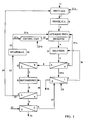
- the bauxite with monohydrate (boehmite, or diaspore) is brought into contact with an aliquot 14 of decomposed liquor 11 of sodium aluminate whose Rp is between 0.57 and 0.65 and the concentration of soda caustic between 150 and 160 g Na 2 O / liter at a rate of 1600 to 1800 kg of dry ore to be treated per m3 of liquor.
- the suspension 3 resulting from desilication is brought into contact with an aliquot 13 a of attack liquor 13 whose Rp is between 0.57 and 0.65 and the concentration of caustic soda between 195 and 215 g Na 2 O / liter as well as with a fraction 19a of the decanted sludge preferably comprised in the dry state between 10 and 18% of the weight of dry bauxite.
- the mixture thus obtained is heated in the reactor between 240 and 270 ° C for at least 30 minutes and preferably 1 to 2 hours before the start of cooling by progressive reduction of the pressure in the reactors.
- lime milk 22 with Ca O concentration preferably between 80 and 120 g / liter is injected into the regulators using, for example, a high-pressure volumetric pump. and at a rate of 1 to 2% by weight of CaO relative to the initial weight of dry bauxite.
- this lime milk is obtained by suspending a compound containing calcium 23b, preferably quicklime or calcium carbonate, in an aliquot 13b of attack liquor 13 and after sufficient stirring time (2 to 20 hours) to obtain a efficient grinding by attrition of suspended particles, that is to say less than 30% by weight of particles> 20 ⁇ m.
- the milk of lime 22 injected into the pressure reducers is mixed with the suspension maintained for approximately 6 minutes in the temperature range 170-220 ° C., the resulting suspension 4 is then cooled to approximately 105 ° C. and returned to atmospheric pressure.
- dilution D of the suspension 4 is carried out in order to lower in particular its concentration of caustic soda within a more suitable range to the successful completion of the subsequent settling operations E and decomposition H.
- suspension 5 resulting from the dilution stage D the temperature of which is between 90 ° C and 105 ° C with an Rp ratio of between 1.135 and 1.25 and a concentration of caustic soda between 150 and 160 g Na 2 O / liter is placed in decantation E to separate in a known manner the red mud, a minor fraction 19a of which is recycled to the attack station C and the remaining fraction in discharge 21 after backwashing successively with washing water 17 alumina trihydrate production 16, then pure water 18.
- the liquor 6 from decantation, the Rp of which must remain between 1.13 and 1.23 is subjected to safety filtration G in order to remove the fine particles of mud still in suspension.
- the clarified filtrate 7 of supersaturated sodium aluminate liquor is broken down H in the presence of trihydrate primer 10 recycled according to the prior art.
- the alumina trihydrate in suspension 8 in the decomposed liquor is separated by filtration J to be mainly (90% by weight approximately) recycled as primer 10 and in minor part 9 (approximately 10%) extracted for production 16 after washing K with water 15.
- the remainder 12 of the filtrate 11 of liquor decomposed from sodium aluminate, of Rp between 0.57 and 0.65 and a caustic soda concentration of between 150 and 160 g Na 2 O / liter, is concentrated by evaporation M to provide the attack liquor 13 of the ground and desilicated bauxite, the characteristics of which have already been specified.
- a supersaturated sodium aluminate liquor 7 is obtained, the iron content of which is systematically less than 10 mg / liter and generally between 7 and 9 mg / liter and this whatever the origin of the bauxite with monohydrate treated.
- the corresponding iron contents of the production alumina trihydrate 16, precipitated by decomposition H in the presence of primer 10 from this liquor 7, are included, after washing K, between 30 and 80 ppm Fe / Al 2 O 3 , therefore systematically below the maximum limit of 0.01%.
- the productivity of the liquor is greater than 80 kg Al 2 O 3 / m 3 .
Landscapes
- Chemical & Material Sciences (AREA)
- Organic Chemistry (AREA)
- Life Sciences & Earth Sciences (AREA)
- Health & Medical Sciences (AREA)
- General Health & Medical Sciences (AREA)
- Geology (AREA)
- Inorganic Chemistry (AREA)
- Nutrition Science (AREA)
- General Life Sciences & Earth Sciences (AREA)
- Geochemistry & Mineralogy (AREA)
- Compounds Of Alkaline-Earth Elements, Aluminum Or Rare-Earth Metals (AREA)
Description
| Série essais n° | CaO/bauxite % masse avant attaque | CaO/bauxite % masse fin attaque | CaO/bauxite % masse avant décantation | Fer mg/l liqueur sursaturée | Rendement % Al2O3 soluble |
| 1 | 0 | 0 | 0 | 15 à 25 | 91 à 93 |
| 2 | 3 | 0 | 0 | 15 à 25 | 95 à 96 |
| 3 | 5 | 0 | 0 | 15 à 20 | 96 à 97 |
| 4 | 8 | 0 | 0 | 15 à 20 | 94 à 95 |
| 5 | 2 | 1 | 0 | 8 à 10 | 96 à 97 |
| 6 | 1 | 2 | 0 | 7 à 9 | 95 à 96 |
| 7 | 0 | 3 | 0 | 8 à 10 | 92 à 94 |
| 8 | 0 | 0 | 3 | 13 à 18 | 91 à 93 |
| 9 | 1 | 0 | 2 | 15 à 20 | 92 à 94 |
| 10 | 2 | 0 | 1 | 15 à 20 | 95 à 96 |
| * - Température injection : 180°C Temps de contact à 180°C : 30 mn |
- 3 sources possibles de chaux ont été étudiées :
- chaux vive brute tamisée < 2 mm
- chaux vive broyée et tamisée < 200 µm
- carbonate de calcium < 2 mm (poids calculé en équivalent CaO)
- 4 liquides porteurs leur ont été combinés
- liqueur d'attaque chaude (température 60 à 70°C)
- liqueur d'attaque à température ambiante
- Eaux de lavage à contre-courant des boues réchauffées à 60°C
- Eaux de lavage à contre-courant des boues à température ambiante.
| Série essais n° | CaO bauxite % masse fin attaque détente | Temps séjour CaO minutes | % boues recyclées /bauxite % masse | Fe liq.sursat. |
| 11 | 0 | 10 | 13 à 18 | |
| 12 | 0 | 15 | 12 à 15 | |
| 13 | 0 | 20 | 12 à 15 | |
| 14 | 1 | 30 | 0 | 8 à 10 |
| 15 | 1 | 4 | 0 | 12 à 15 |
| 16 | 1 | 10 | 5 | 9 à 11 |
| 17 | 1 | 6 | 10 | 8 à 10 |
| 18 | 1 | 6 | 15 | 7 à 9 |
| 19 | 1 | 3 | 20 | 7 à 9 |
| * injection CaO à 180°C |
| n°séries essais | CaO/Bauxite % masse Avant attaque | CaO/Bauxite % masse fin attaque détente | % boues recyclées /bauxite % masse | Fe mg/litre liq. sursat | Rendement Al203% |
| 20 | 2 | 0 | 0 | 15 à 25 | 96 à 97 |
| 21 | 2 | 1 | 0 | 12 à 15 | 96 à 97 |
| 22 | 2 | 1 | 5 | 10 à 12 | 96 à 97 |
| 23 | 1 | 1 | 10 | 8 à 10 | 95 à 96 |
| 24 | 2 | 1,5 | 10 | 7 à 9 | 96 à 97 |
| 25 | 1,5 | 1,5 | 12 | 7 à 9 | 96 à 97 |
| 26 | 1 | 1 | 18 | 7 à 9 | 95 à 96 |
| 27 | 2 | 0,5 | 20 | 9 à 11 | 96 à 97 |
| * Température d'injection de la chaux à la détente : 200°C Temps de séjour : 6 minutes |
Claims (17)
- Procédé d'élimination du fer dans les solutions d'aluminate de sodium sursaturée issues de l'attaque alcaline selon le procédé Bayer de bauxite à monhydrate d'alumine, comportant successivement les étapes de broyage, éventuellement de dessilicatation en présence d'une aliquote de liqueur décomposée, puis d'attaque à une température supérieure à 200°C, comprise généralement entre 240 et 270°C de ladite bauxite broyée et éventuellement dessilicatée par la fraction restante de la liqueur décomposée, pour solubiliser l'hydrate d'alumine et former en fin d'attaque une suspension du résidu insoluble ou boues rouges dans de la liqueur sursaturée d'aluminate de sodium qui, après refroidissement et dilution, est décantée pour séparer les boues ou résidu insoluble de la liqueur sursaturée destinée après filtration à être décomposée en présence d'amorce caractérisé en ce qu'en fin d'attaque, au cours du refroidissement de la suspension par abaissement progressif de la pression dans les réacteurs, on injecte dans ladite suspension à une température supérieure à 140°C une petite quantité d'un composé contenant du calcium.
- Procédé selon revendication 1 caractérisé en ce que la température d'injection du composé contenant du calcium est comprise entre 170°C et 220°C.
- Procédé selon la revendication 1 ou 2 caractérisé en ce que le composé contenant du calcium est de la chaux.
- Procédé selon la revendication 1 ou 2 caractérisé en ce que le composé contenant du calcium est un sel de calcium tel que carbonate de calcium ou sulfate de calcium.
- Procédé selon la revendication 1 ou 2 caraéctérisé en ce que le composé contenant du calcium est formé par extinction de chaux dans une liqueur d'aluminate alcalin tel que l'aluminate tricalcique hexahydraté.
- Procédé selon l'une quelconque des revendications 1 à 5 caractérisé en ce que les petites quantités du composé contenant du calcium injectées dans la suspension sont comprises entre 0,5 et 3%, et de préférence entre 1 et 2% en poids de CaO rapporté au poids de bauxite sèche.
- Procédé selon la revendication 1, caractérisé en ce que l'attaque de la bauxite est effectuée en présence d'une petite fraction des boues décantées recyclées en tête de procédé.
- Procédé selon la revendication 7, caractérisé en ce que la petite fraction des boues décantées recyclées en tête de procédé mesurée par le rapport pondéral des boues sèches à la bauxite sèche est d'au moins 5% et de préférence compris entre 10 et 18%.
- Procédé selon la revendication 1 caractérisé en ce qu'on introduit dans la bauxite avant attaque et de préférence à l'étape de broyage une petite quantité de chaux.
- Procédé selon la revendication 9 caractérisé en ce que la petite quantité de chaux introduite dans la bauxite avant attaque est comprise entre 1 et 2% en poids de CaO rapporté au poids de bauxite sèche.
- Procédé selon l'une quelconque des revendications 1 à 5, caractérisé en ce que le temps de séjour du composé contenant du calcium injecté dans la suspension entre 170° et 220°C est d'au moins 15 minutes et de préférence 20 à 40 minutes.
- Procédé selon l'une quelconque des revendications 1 à 6 caractérisé en ce que le composé à base de chaux est injecté sous forme de lait de chaux contenant de 80 à 120 g CaO/litre et dont moins de 30% en poids de particules en suspension ont une taille supérieure à 20 µm.
- Procédé selon la revendication 12 caractérisé en ce que le lait de chaux est obtenu par extinction de chaux brute tamisée à 2 mm dans de la liqueur d'attaque entre 60 et 70°C.
- Procédé selon l'une des revendications 7 ou 8 caractérisé en ce que le temps de séjour du composé contenant du calcium injecté dans la suspension n'excède pas 10 minutes et est généralement compris entre 3 et 6 minutes.
- Procédé selon la revendication 1 caractérisé en ce que la liqueur décomposée d'aluminante de sodium a un Rp compris entre 0,57 et 0,65 et une concentration en soude caustique comprise entre 150 et 160g Na2O/litre.
- Procédé selon la revendication 1 caractérisé en ce que la liqueur d'attaque après concentration par évaporation de la liqueur d'aluminate de sodium décomposée, a un Rp compris entre 0,57 et 0,65 et une concentration en soude caustique comprise entre 195 et 215g Na2O/ litre.
- Procédé selon la revendication 1 caractérisé en ce que la liqueur d'aluminate de sodium sursaturée après filtration et avant décomposition a un Rp compris entre 1,13 et 1,23 et une concentration en soude caustique comprise entre 150 et 160 g Na2O/litre.
Applications Claiming Priority (3)
| Application Number | Priority Date | Filing Date | Title |
|---|---|---|---|
| FR9415727A FR2728556B1 (fr) | 1994-12-22 | 1994-12-22 | Procede d'elimination du fer dans les liqueurs d'aluminate de sodium issues de l'attaque alcaline de bauxite a monohydrate d'alumine |
| FR9415727 | 1994-12-22 | ||
| PCT/FR1995/001703 WO1996019410A1 (fr) | 1994-12-22 | 1995-12-20 | Procede d'elimination du fer dans les liqueurs d'aluminate de sodium issues de l'attaque alcaline de bauxite a monohydrate d'alumine |
Publications (2)
| Publication Number | Publication Date |
|---|---|
| EP0748294A1 EP0748294A1 (fr) | 1996-12-18 |
| EP0748294B1 true EP0748294B1 (fr) | 1999-08-18 |
Family
ID=9470296
Family Applications (1)
| Application Number | Title | Priority Date | Filing Date |
|---|---|---|---|
| EP95943250A Expired - Lifetime EP0748294B1 (fr) | 1994-12-22 | 1995-12-20 | Procede d'elimination du fer dans les liqueurs d'aluminate de sodium issues de l'attaque alcaline de bauxite a monohydrate d'alumine (metahydroxide d'aluminium) |
Country Status (10)
| Country | Link |
|---|---|
| US (1) | US5628972A (fr) |
| EP (1) | EP0748294B1 (fr) |
| CN (1) | CN1085621C (fr) |
| AU (1) | AU691716B2 (fr) |
| DE (1) | DE69511528T2 (fr) |
| ES (1) | ES2137564T3 (fr) |
| FR (1) | FR2728556B1 (fr) |
| GR (1) | GR3031748T3 (fr) |
| HU (1) | HU225042B1 (fr) |
| WO (1) | WO1996019410A1 (fr) |
Families Citing this family (14)
| Publication number | Priority date | Publication date | Assignee | Title |
|---|---|---|---|---|
| AUPN808296A0 (en) * | 1996-02-15 | 1996-03-07 | Queensland Alumina Limited | Bauxite treatment |
| US6203848B1 (en) | 1996-12-20 | 2001-03-20 | Pohang Iron & Steel Co., Ltd. | Method for increasing the charring ratio of coal |
| FR2758544B1 (fr) * | 1997-01-22 | 1999-02-26 | Pechiney Aluminium | Procede ameliore de traitement de bauxites riches en monohydrate d'alumine |
| CN1865146B (zh) * | 2005-05-18 | 2010-07-28 | 贵阳铝镁设计研究院 | 氧化铝生产中含泥原矿除砂与排粗的方法 |
| CN1865141B (zh) * | 2005-05-18 | 2010-10-27 | 贵阳铝镁设计研究院 | 提高氧化铝生产中溶出液Rp的方法 |
| FR2934852B1 (fr) | 2008-08-06 | 2011-06-24 | Alcan Int Ltd | Perfectionnement au procede bayer de production de trihydrate d'alumine, ledit procede comprenant une etape dans laquelle la liqueur sursaturee est filtree a haute temperature avant decomposition |
| ES2539680T3 (es) * | 2012-06-20 | 2015-07-03 | Pleason Ventures Ltd | Procedimiento para el procesamiento complejo de bauxita |
| CN102976374B (zh) * | 2012-12-01 | 2014-11-12 | 中南大学 | 一种氧化铝生产过程中铁矿物的转化方法 |
| AU2014280959B2 (en) * | 2014-12-24 | 2020-10-22 | Pleason Ventures Ltd | Process For The Complex Processing Of Bauxite |
| US9441283B2 (en) | 2014-12-24 | 2016-09-13 | Pleason Ventures Ltd. | Process for complex processing of bauxite |
| CN108031142A (zh) * | 2017-12-13 | 2018-05-15 | 上海合全药物研发有限公司 | 一种简化的利用湿磨来制备大量微晶种的装置及方法 |
| CN109179461B (zh) * | 2018-09-19 | 2021-03-23 | 孝义市泰兴铝镁有限公司 | 一种低钠拟薄水铝石及其制备方法、装置 |
| CN111410219B (zh) * | 2020-03-26 | 2022-11-11 | 重庆市九龙万博新材料科技有限公司 | 一种铝土矿的溶出工艺 |
| CN113441519A (zh) * | 2021-06-28 | 2021-09-28 | 广西田东锦鑫化工有限公司 | 一种拜耳法赤泥脱碱及碱回收工艺 |
Family Cites Families (9)
| Publication number | Priority date | Publication date | Assignee | Title |
|---|---|---|---|---|
| US3796789A (en) * | 1972-04-07 | 1974-03-12 | Aluminum Co Of America | Removal of iron from sodium aluminate liquor |
| SU510974A1 (ru) * | 1974-01-04 | 1988-08-23 | Всесоюзный Научно-Исследовательский И Проектный Институт Алюминиевой,Магниевой И Электродной Промышленности | Способ получени глинозема |
| IE41148B1 (en) * | 1974-05-23 | 1979-10-24 | Alcan Res & Dev | Improvement in the extraction of alumina from bauxite |
| US3966874A (en) * | 1975-05-14 | 1976-06-29 | Reynolds Metals Company | Extraction of alumina from bauxite ores |
| US4483830A (en) * | 1981-09-10 | 1984-11-20 | Comalco Limited | Production of alumina |
| FR2546872B1 (fr) * | 1983-06-03 | 1986-01-03 | Inst Aljuminievoi | Procede de transformation d'aluminosilicates bruts en alumine, produits sodiques et ciment |
| US4518571A (en) * | 1984-02-27 | 1985-05-21 | Vsesojuzny Nauchno-Issledovatelsky I Proektny Institut Aljuminievo Magnievoi I Elektrodnoi Promyshlennosti | Process for desilication of aluminate liquors in the production of alumina |
| EP0188268A3 (fr) * | 1985-01-17 | 1990-01-31 | Alcoa Chemie GmbH | Procédé de préparation d'hydroxyde d'aluminium à faible teneur en impuretés, notamment en fer, et à haut degré de blanc |
| DE3501350A1 (de) * | 1985-01-17 | 1986-07-17 | Alcoa Chemie GmbH, 6700 Ludwigshafen | Verfahren zur herstellung von aluminiumhydroxid mit niedrigem gehalt an verunreinigungen, insbesondere an eisen, und hohem weissgrad |
-
1994
- 1994-12-22 FR FR9415727A patent/FR2728556B1/fr not_active Expired - Fee Related
-
1995
- 1995-12-13 US US08/571,470 patent/US5628972A/en not_active Expired - Lifetime
- 1995-12-20 HU HU9602275A patent/HU225042B1/hu not_active IP Right Cessation
- 1995-12-20 AU AU44509/96A patent/AU691716B2/en not_active Ceased
- 1995-12-20 ES ES95943250T patent/ES2137564T3/es not_active Expired - Lifetime
- 1995-12-20 DE DE69511528T patent/DE69511528T2/de not_active Expired - Lifetime
- 1995-12-20 EP EP95943250A patent/EP0748294B1/fr not_active Expired - Lifetime
- 1995-12-20 WO PCT/FR1995/001703 patent/WO1996019410A1/fr not_active Ceased
- 1995-12-20 CN CN95191724A patent/CN1085621C/zh not_active Expired - Fee Related
-
1999
- 1999-11-03 GR GR990402847T patent/GR3031748T3/el unknown
Also Published As
| Publication number | Publication date |
|---|---|
| DE69511528T2 (de) | 2000-03-09 |
| FR2728556A1 (fr) | 1996-06-28 |
| US5628972A (en) | 1997-05-13 |
| HU225042B1 (en) | 2006-05-29 |
| HUT76868A (en) | 1997-12-29 |
| FR2728556B1 (fr) | 1997-01-31 |
| EP0748294A1 (fr) | 1996-12-18 |
| GR3031748T3 (en) | 2000-02-29 |
| WO1996019410A1 (fr) | 1996-06-27 |
| AU691716B2 (en) | 1998-05-21 |
| DE69511528D1 (de) | 1999-09-23 |
| CN1141620A (zh) | 1997-01-29 |
| HU9602275D0 (en) | 1996-10-28 |
| ES2137564T3 (es) | 1999-12-16 |
| CN1085621C (zh) | 2002-05-29 |
| AU4450996A (en) | 1996-07-10 |
Similar Documents
| Publication | Publication Date | Title |
|---|---|---|
| EP0555163B1 (fr) | Procédé d'élimination de l'oxalate de sodium des solutions d'aluminate de sodium du cycle bayer | |
| EP0748294A1 (fr) | Procede d'elimination du fer dans les liqueurs d'aluminate de sodium issues de l'attaque alcaline de bauxite a monohydrate d'alumine | |
| FR2870535A1 (fr) | Perfectionnement au procede bayer de production de trihydrate d'alumine par attaque alcaline de bauxite, ledit procede comportant une etape de predessilicatation | |
| EP0203873B1 (fr) | Production d'alumine à partir de bauxite à gibbsite à basse teneur en silice réactive | |
| EP0782544B1 (fr) | Procede d'epuration des solutions d'aluminate de sodium contenant de l'oxalate de sodium | |
| CN1242756A (zh) | 从铝土矿中除去二氧化硅 | |
| EP0231715B1 (fr) | Procédé d'obtention, avec une forte productivité de trihydroxyde d'aluminium, de haute pureté et de diamètre médian inférieur à 4 micromètres, réglé à la demande | |
| EP0765290B1 (fr) | Procede de traitement de bauxite a trihydrate d'alumine a basse teneur en silice reactive | |
| EP4474351A1 (fr) | Procede de traitement de bauxite | |
| EP0652181B1 (fr) | Procédé de traitement de bauxites contenant un mélange de trihydrate d'alumine et de monohydrate d'alumine | |
| EP0960069B1 (fr) | Procede ameliore de traitement de bauxites riches en monohydrate d'alumine | |
| US4443416A (en) | Purification of bayer process liquors | |
| CA2182744C (fr) | Procede d'elimination du fer dans les liqueurs d'aluminate de sodium issues de l'attaque alcaline de bauxite a monohydrate d'alumine | |
| EP0739309B1 (fr) | Procede de traitement de bauxite a trihydrate d'alumine | |
| EP1135332A1 (fr) | Procede d'epuration des liqueurs d'aluminate de sodium contenant de l'oxalate de sodium | |
| EP1198415A1 (fr) | Procede d'epuration des liqueurs d'aluminate de sodium contenant de l'oxalate de sodium permettant de valoriser les residus | |
| AU2005266853B2 (en) | Method of catalytic wet oxidation of organic contaminants of alkaline solutions | |
| OA10337A (fr) | Procédé de traitement de bauxite à trihydrate d'alumine comportant une double dessilicatation | |
| BE426262A (fr) |
Legal Events
| Date | Code | Title | Description |
|---|---|---|---|
| PUAI | Public reference made under article 153(3) epc to a published international application that has entered the european phase |
Free format text: ORIGINAL CODE: 0009012 |
|
| 17P | Request for examination filed |
Effective date: 19960911 |
|
| AK | Designated contracting states |
Kind code of ref document: A1 Designated state(s): DE ES FR GB GR IE IT |
|
| GRAG | Despatch of communication of intention to grant |
Free format text: ORIGINAL CODE: EPIDOS AGRA |
|
| 17Q | First examination report despatched |
Effective date: 19981016 |
|
| GRAG | Despatch of communication of intention to grant |
Free format text: ORIGINAL CODE: EPIDOS AGRA |
|
| GRAH | Despatch of communication of intention to grant a patent |
Free format text: ORIGINAL CODE: EPIDOS IGRA |
|
| GRAH | Despatch of communication of intention to grant a patent |
Free format text: ORIGINAL CODE: EPIDOS IGRA |
|
| GRAA | (expected) grant |
Free format text: ORIGINAL CODE: 0009210 |
|
| AK | Designated contracting states |
Kind code of ref document: B1 Designated state(s): DE ES FR GB GR IE IT |
|
| REF | Corresponds to: |
Ref document number: 69511528 Country of ref document: DE Date of ref document: 19990923 |
|
| ITF | It: translation for a ep patent filed | ||
| REG | Reference to a national code |
Ref country code: IE Ref legal event code: FG4D Free format text: FRENCH |
|
| GBT | Gb: translation of ep patent filed (gb section 77(6)(a)/1977) |
Effective date: 19991118 |
|
| REG | Reference to a national code |
Ref country code: ES Ref legal event code: FG2A Ref document number: 2137564 Country of ref document: ES Kind code of ref document: T3 |
|
| RAP2 | Party data changed (patent owner data changed or rights of a patent transferred) |
Owner name: ALUMINIUM PECHINEY |
|
| PLBE | No opposition filed within time limit |
Free format text: ORIGINAL CODE: 0009261 |
|
| STAA | Information on the status of an ep patent application or granted ep patent |
Free format text: STATUS: NO OPPOSITION FILED WITHIN TIME LIMIT |
|
| 26N | No opposition filed | ||
| REG | Reference to a national code |
Ref country code: GB Ref legal event code: IF02 |
|
| PG25 | Lapsed in a contracting state [announced via postgrant information from national office to epo] |
Ref country code: IT Free format text: LAPSE BECAUSE OF NON-PAYMENT OF DUE FEES;WARNING: LAPSES OF ITALIAN PATENTS WITH EFFECTIVE DATE BEFORE 2007 MAY HAVE OCCURRED AT ANY TIME BEFORE 2007. THE CORRECT EFFECTIVE DATE MAY BE DIFFERENT FROM THE ONE RECORDED. Effective date: 20051220 |
|
| PGRI | Patent reinstated in contracting state [announced from national office to epo] |
Ref country code: IT Effective date: 20091201 |
|
| PGFP | Annual fee paid to national office [announced via postgrant information from national office to epo] |
Ref country code: IT Payment date: 20101228 Year of fee payment: 16 Ref country code: GR Payment date: 20101228 Year of fee payment: 16 Ref country code: GB Payment date: 20101229 Year of fee payment: 16 |
|
| PGFP | Annual fee paid to national office [announced via postgrant information from national office to epo] |
Ref country code: FR Payment date: 20120104 Year of fee payment: 17 Ref country code: IE Payment date: 20111227 Year of fee payment: 17 Ref country code: ES Payment date: 20111226 Year of fee payment: 17 |
|
| PGFP | Annual fee paid to national office [announced via postgrant information from national office to epo] |
Ref country code: DE Payment date: 20111229 Year of fee payment: 17 |
|
| GBPC | Gb: european patent ceased through non-payment of renewal fee |
Effective date: 20111220 |
|
| PG25 | Lapsed in a contracting state [announced via postgrant information from national office to epo] |
Ref country code: GB Free format text: LAPSE BECAUSE OF NON-PAYMENT OF DUE FEES Effective date: 20111220 |
|
| REG | Reference to a national code |
Ref country code: GR Ref legal event code: ML Ref document number: 990402847 Country of ref document: GR Effective date: 20130703 |
|
| REG | Reference to a national code |
Ref country code: IE Ref legal event code: MM4A |
|
| REG | Reference to a national code |
Ref country code: FR Ref legal event code: ST Effective date: 20130830 |
|
| REG | Reference to a national code |
Ref country code: DE Ref legal event code: R119 Ref document number: 69511528 Country of ref document: DE Effective date: 20130702 |
|
| PG25 | Lapsed in a contracting state [announced via postgrant information from national office to epo] |
Ref country code: IE Free format text: LAPSE BECAUSE OF NON-PAYMENT OF DUE FEES Effective date: 20121220 Ref country code: DE Free format text: LAPSE BECAUSE OF NON-PAYMENT OF DUE FEES Effective date: 20130702 Ref country code: GR Free format text: LAPSE BECAUSE OF NON-PAYMENT OF DUE FEES Effective date: 20130703 |
|
| PG25 | Lapsed in a contracting state [announced via postgrant information from national office to epo] |
Ref country code: FR Free format text: LAPSE BECAUSE OF NON-PAYMENT OF DUE FEES Effective date: 20130102 |
|
| PG25 | Lapsed in a contracting state [announced via postgrant information from national office to epo] |
Ref country code: IT Free format text: LAPSE BECAUSE OF NON-PAYMENT OF DUE FEES Effective date: 20121220 |
|
| REG | Reference to a national code |
Ref country code: ES Ref legal event code: FD2A Effective date: 20140306 |
|
| PG25 | Lapsed in a contracting state [announced via postgrant information from national office to epo] |
Ref country code: ES Free format text: LAPSE BECAUSE OF NON-PAYMENT OF DUE FEES Effective date: 20121221 |