EP0750041A2 - HIV-2 Nukleotidsequenzen - Google Patents
HIV-2 Nukleotidsequenzen Download PDFInfo
- Publication number
- EP0750041A2 EP0750041A2 EP96108720A EP96108720A EP0750041A2 EP 0750041 A2 EP0750041 A2 EP 0750041A2 EP 96108720 A EP96108720 A EP 96108720A EP 96108720 A EP96108720 A EP 96108720A EP 0750041 A2 EP0750041 A2 EP 0750041A2
- Authority
- EP
- European Patent Office
- Prior art keywords
- hiv
- nucleotides
- est
- nucleotide sequence
- sequence
- Prior art date
- Legal status (The legal status is an assumption and is not a legal conclusion. Google has not performed a legal analysis and makes no representation as to the accuracy of the status listed.)
- Granted
Links
Images













Classifications
-
- C—CHEMISTRY; METALLURGY
- C07—ORGANIC CHEMISTRY
- C07K—PEPTIDES
- C07K7/00—Peptides having 5 to 20 amino acids in a fully defined sequence; Derivatives thereof
- C07K7/04—Linear peptides containing only normal peptide links
- C07K7/06—Linear peptides containing only normal peptide links having 5 to 11 amino acids
-
- C—CHEMISTRY; METALLURGY
- C07—ORGANIC CHEMISTRY
- C07K—PEPTIDES
- C07K14/00—Peptides having more than 20 amino acids; Gastrins; Somatostatins; Melanotropins; Derivatives thereof
-
- A—HUMAN NECESSITIES
- A61—MEDICAL OR VETERINARY SCIENCE; HYGIENE
- A61K—PREPARATIONS FOR MEDICAL, DENTAL OR TOILETRY PURPOSES
- A61K39/00—Medicinal preparations containing antigens or antibodies
- A61K39/12—Viral antigens
- A61K39/21—Retroviridae, e.g. equine infectious anemia virus
-
- A—HUMAN NECESSITIES
- A61—MEDICAL OR VETERINARY SCIENCE; HYGIENE
- A61P—SPECIFIC THERAPEUTIC ACTIVITY OF CHEMICAL COMPOUNDS OR MEDICINAL PREPARATIONS
- A61P31/00—Antiinfectives, i.e. antibiotics, antiseptics, chemotherapeutics
- A61P31/12—Antivirals
-
- A—HUMAN NECESSITIES
- A61—MEDICAL OR VETERINARY SCIENCE; HYGIENE
- A61P—SPECIFIC THERAPEUTIC ACTIVITY OF CHEMICAL COMPOUNDS OR MEDICINAL PREPARATIONS
- A61P31/00—Antiinfectives, i.e. antibiotics, antiseptics, chemotherapeutics
- A61P31/12—Antivirals
- A61P31/14—Antivirals for RNA viruses
- A61P31/18—Antivirals for RNA viruses for HIV
-
- C—CHEMISTRY; METALLURGY
- C07—ORGANIC CHEMISTRY
- C07K—PEPTIDES
- C07K14/00—Peptides having more than 20 amino acids; Gastrins; Somatostatins; Melanotropins; Derivatives thereof
- C07K14/005—Peptides having more than 20 amino acids; Gastrins; Somatostatins; Melanotropins; Derivatives thereof from viruses
-
- C—CHEMISTRY; METALLURGY
- C12—BIOCHEMISTRY; BEER; SPIRITS; WINE; VINEGAR; MICROBIOLOGY; ENZYMOLOGY; MUTATION OR GENETIC ENGINEERING
- C12N—MICROORGANISMS OR ENZYMES; COMPOSITIONS THEREOF; PROPAGATING, PRESERVING, OR MAINTAINING MICROORGANISMS; MUTATION OR GENETIC ENGINEERING; CULTURE MEDIA
- C12N15/00—Mutation or genetic engineering; DNA or RNA concerning genetic engineering, vectors, e.g. plasmids, or their isolation, preparation or purification; Use of hosts therefor
-
- C—CHEMISTRY; METALLURGY
- C12—BIOCHEMISTRY; BEER; SPIRITS; WINE; VINEGAR; MICROBIOLOGY; ENZYMOLOGY; MUTATION OR GENETIC ENGINEERING
- C12N—MICROORGANISMS OR ENZYMES; COMPOSITIONS THEREOF; PROPAGATING, PRESERVING, OR MAINTAINING MICROORGANISMS; MUTATION OR GENETIC ENGINEERING; CULTURE MEDIA
- C12N7/00—Viruses; Bacteriophages; Compositions thereof; Preparation or purification thereof
-
- C—CHEMISTRY; METALLURGY
- C12—BIOCHEMISTRY; BEER; SPIRITS; WINE; VINEGAR; MICROBIOLOGY; ENZYMOLOGY; MUTATION OR GENETIC ENGINEERING
- C12Q—MEASURING OR TESTING PROCESSES INVOLVING ENZYMES, NUCLEIC ACIDS OR MICROORGANISMS; COMPOSITIONS OR TEST PAPERS THEREFOR; PROCESSES OF PREPARING SUCH COMPOSITIONS; CONDITION-RESPONSIVE CONTROL IN MICROBIOLOGICAL OR ENZYMOLOGICAL PROCESSES
- C12Q1/00—Measuring or testing processes involving enzymes, nucleic acids or microorganisms; Compositions therefor; Processes of preparing such compositions
- C12Q1/70—Measuring or testing processes involving enzymes, nucleic acids or microorganisms; Compositions therefor; Processes of preparing such compositions involving virus or bacteriophage
- C12Q1/701—Specific hybridization probes
- C12Q1/702—Specific hybridization probes for retroviruses
- C12Q1/703—Viruses associated with AIDS
-
- G—PHYSICS
- G01—MEASURING; TESTING
- G01N—INVESTIGATING OR ANALYSING MATERIALS BY DETERMINING THEIR CHEMICAL OR PHYSICAL PROPERTIES
- G01N33/00—Investigating or analysing materials by specific methods not covered by groups G01N1/00 - G01N31/00
- G01N33/48—Biological material, e.g. blood, urine; Haemocytometers
- G01N33/50—Chemical analysis of biological material, e.g. blood, urine; Testing involving biospecific ligand binding methods; Immunological testing
- G01N33/53—Immunoassay; Biospecific binding assay; Materials therefor
- G01N33/569—Immunoassay; Biospecific binding assay; Materials therefor for microorganisms, e.g. protozoa, bacteria, viruses
-
- G—PHYSICS
- G01—MEASURING; TESTING
- G01N—INVESTIGATING OR ANALYSING MATERIALS BY DETERMINING THEIR CHEMICAL OR PHYSICAL PROPERTIES
- G01N33/00—Investigating or analysing materials by specific methods not covered by groups G01N1/00 - G01N31/00
- G01N33/48—Biological material, e.g. blood, urine; Haemocytometers
- G01N33/50—Chemical analysis of biological material, e.g. blood, urine; Testing involving biospecific ligand binding methods; Immunological testing
- G01N33/53—Immunoassay; Biospecific binding assay; Materials therefor
- G01N33/569—Immunoassay; Biospecific binding assay; Materials therefor for microorganisms, e.g. protozoa, bacteria, viruses
- G01N33/56983—Viruses
- G01N33/56988—HIV or HTLV
-
- A—HUMAN NECESSITIES
- A61—MEDICAL OR VETERINARY SCIENCE; HYGIENE
- A61K—PREPARATIONS FOR MEDICAL, DENTAL OR TOILETRY PURPOSES
- A61K39/00—Medicinal preparations containing antigens or antibodies
-
- C—CHEMISTRY; METALLURGY
- C12—BIOCHEMISTRY; BEER; SPIRITS; WINE; VINEGAR; MICROBIOLOGY; ENZYMOLOGY; MUTATION OR GENETIC ENGINEERING
- C12N—MICROORGANISMS OR ENZYMES; COMPOSITIONS THEREOF; PROPAGATING, PRESERVING, OR MAINTAINING MICROORGANISMS; MUTATION OR GENETIC ENGINEERING; CULTURE MEDIA
- C12N2740/00—Reverse transcribing RNA viruses
- C12N2740/00011—Details
- C12N2740/10011—Retroviridae
- C12N2740/15011—Lentivirus, not HIV, e.g. FIV, SIV
- C12N2740/15022—New viral proteins or individual genes, new structural or functional aspects of known viral proteins or genes
-
- C—CHEMISTRY; METALLURGY
- C12—BIOCHEMISTRY; BEER; SPIRITS; WINE; VINEGAR; MICROBIOLOGY; ENZYMOLOGY; MUTATION OR GENETIC ENGINEERING
- C12N—MICROORGANISMS OR ENZYMES; COMPOSITIONS THEREOF; PROPAGATING, PRESERVING, OR MAINTAINING MICROORGANISMS; MUTATION OR GENETIC ENGINEERING; CULTURE MEDIA
- C12N2740/00—Reverse transcribing RNA viruses
- C12N2740/00011—Details
- C12N2740/10011—Retroviridae
- C12N2740/16011—Human Immunodeficiency Virus, HIV
- C12N2740/16021—Viruses as such, e.g. new isolates, mutants or their genomic sequences
-
- C—CHEMISTRY; METALLURGY
- C12—BIOCHEMISTRY; BEER; SPIRITS; WINE; VINEGAR; MICROBIOLOGY; ENZYMOLOGY; MUTATION OR GENETIC ENGINEERING
- C12N—MICROORGANISMS OR ENZYMES; COMPOSITIONS THEREOF; PROPAGATING, PRESERVING, OR MAINTAINING MICROORGANISMS; MUTATION OR GENETIC ENGINEERING; CULTURE MEDIA
- C12N2740/00—Reverse transcribing RNA viruses
- C12N2740/00011—Details
- C12N2740/10011—Retroviridae
- C12N2740/16011—Human Immunodeficiency Virus, HIV
- C12N2740/16111—Human Immunodeficiency Virus, HIV concerning HIV env
- C12N2740/16122—New viral proteins or individual genes, new structural or functional aspects of known viral proteins or genes
-
- C—CHEMISTRY; METALLURGY
- C12—BIOCHEMISTRY; BEER; SPIRITS; WINE; VINEGAR; MICROBIOLOGY; ENZYMOLOGY; MUTATION OR GENETIC ENGINEERING
- C12N—MICROORGANISMS OR ENZYMES; COMPOSITIONS THEREOF; PROPAGATING, PRESERVING, OR MAINTAINING MICROORGANISMS; MUTATION OR GENETIC ENGINEERING; CULTURE MEDIA
- C12N2740/00—Reverse transcribing RNA viruses
- C12N2740/00011—Details
- C12N2740/10011—Retroviridae
- C12N2740/16011—Human Immunodeficiency Virus, HIV
- C12N2740/16211—Human Immunodeficiency Virus, HIV concerning HIV gagpol
- C12N2740/16222—New viral proteins or individual genes, new structural or functional aspects of known viral proteins or genes
-
- G—PHYSICS
- G01—MEASURING; TESTING
- G01N—INVESTIGATING OR ANALYSING MATERIALS BY DETERMINING THEIR CHEMICAL OR PHYSICAL PROPERTIES
- G01N2333/00—Assays involving biological materials from specific organisms or of a specific nature
- G01N2333/005—Assays involving biological materials from specific organisms or of a specific nature from viruses
- G01N2333/08—RNA viruses
- G01N2333/15—Retroviridae, e.g. bovine leukaemia virus, feline leukaemia virus, feline leukaemia virus, human T-cell leukaemia-lymphoma virus
- G01N2333/155—Lentiviridae, e.g. visna-maedi virus, equine infectious virus, FIV, SIV
- G01N2333/16—HIV-1, HIV-2
- G01N2333/162—HIV-1, HIV-2 env, e.g. gp160, gp110/120, gp41, V3, peptid T, DC4-Binding site
-
- G—PHYSICS
- G01—MEASURING; TESTING
- G01N—INVESTIGATING OR ANALYSING MATERIALS BY DETERMINING THEIR CHEMICAL OR PHYSICAL PROPERTIES
- G01N2469/00—Immunoassays for the detection of microorganisms
- G01N2469/20—Detection of antibodies in sample from host which are directed against antigens from microorganisms
Definitions
- the present invention relates to peptides having immunological properties, possibly immunogenic, in common with antigens capable of being obtained in a purified form, from viruses capable of causing lymphadenopathies capable of being then relayed by the Acquired immunodeficiency (AIDS) symptom in humans.
- AIDS Acquired immunodeficiency
- the invention relates in particular to antigenic peptides capable of being recognized by antibodies induced in humans by viruses designated by the abbreviation HIV, according to the nomenclature defined in NATURE. It also relates to peptides having immunogenic properties or capable of being made immunogenic in vivo , this immunogenicity being capable of being manifested by the induction in vivo of antibodies recognizing antigens characteristic of the HIV-2 viruses and even, at least in as regards some of these peptides, antigens derived from HIV-1.
- the invention further relates to applications of these peptides to the manufacture of compositions for the in vitro diagnosis in humans of the potential of certain forms of AIDS and, with respect to some of them, to the production of immunogenic compositions and vaccine compositions against HIV retroviruses.
- the invention relates to the applications for the same purposes of the antibodies capable of being induced. in vivo by immunogenic peptides or immunogenic and, for some of these antibodies, their applications to the production of active principles of drugs against these human AIDS.
- the invention also relates to the use of some of these peptides in methods for the in vitro diagnosis in humans of certain forms of AIDS, as well as their application to the constitution of diagnostic kits or "kits”.
- LAV-1 A first retrovirus called LAV-1 or HIV-1 has been isolated and described in patent application GB.83 / 24.800 and application EP.84 / 401.834 of 09/14/84. This virus has also been described by F. Barre Sinoussi et al. in Science, 220 n ° 45-99, 20 pages 868-871.
- retroviruses belonging to a distinct class and having only a reduced immunological relationship with the preceding ones have been described in European patent application No. 87 / 400,151.4. These retroviruses, which have been grouped under the designation HIV-2, have been isolated from several African patients with symptoms of lymphadenopathy or AIDS.
- HIV-2 type retroviruses like HIV-1 type retroviruses, are characterized by a tropism for human T4 lymphocytes and by a cytopathogenic effect with respect to these lymphocytes, when they multiply therein, thus causing either generalized and persistent polyadenopathies, or AIDS.
- SIV-1 Another retrovirus called SIV-1, this name replacing the previously known name STLV III, was isolated from the rhesus macaque monkey. (MDDaniel et al. Science 228, 1201 (1985) NLLetwin et al, Science 230, 71 (1985) under the name "STLV-IIImac”).
- STLV-III AGM Another retrovirus, designated "STLV-III AGM”
- SIV AGM SIV AGM
- SIV-1mac retrovirus A strain of the SIV-1mac retrovirus was deposited at the CNCM on February 7, 1986 under the number I-521. Studies have shown that the SIV-1 retrovirus contains certain proteins having a certain immunological relationship with structural proteins or glycoproteins capable of being obtained under analogous conditions, from HIV-2. This SIV-1 retrovirus, which was found to be infectious in monkeys, had been designated by STLVIII by the researchers who isolated it (cited Bibliographical references).
- viruses will no longer be designated in what follows only by the expression SIV (the expression SIV is the English abbreviation for "Simian Immunodeficiency Virus") possibly followed by 'an abbreviation designating the species of monkey from which they come, for example, MAC (or mac) for the macaque or AGM for the green African monkey (abbreviation of "African Green Monkey”).
- HIV-2 ROD complementary DNA sequences
- HUT 78 cells infected with the SIV virus isolated STLV-III mac 142-83 described by Daniel et al. (1985) Science, 228 , p.1201-1204, partially digested with the restriction enzyme Sau3A a was cloned at the BamHI site of the bacteriophage vector Lambda ELBL3 to constitute a genomic library.
- the 2 million recombinant phages of the genomic library thus constituted were screened in situ under P3 security conditions, using sequences of the HIV2 virus originating from clones lambda-ROD4, lambda-ROD35 and E2 (Clavel et al. (1986-Nature, 324 , p.691.) and nick-translated.
- Hybridization was carried out in 5xSSC at 50 ° C and washes in 2xSSC at 5 ° C. A single clone containing all the viral sequences were obtained. This clone is designated by lambda-SIV-1.
- the lambda-SIV-1 phage insert measures 16.5 kb in total and includes an integrated provirus lacking only the first 250 bases of the left LTR, while the right LTR is complete.
- the integrated provirus was sequenced by the dideoxynucleotide method after subcloning of random fragments in the phage M13mp8. 300 subclones were analyzed.
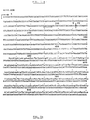
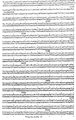
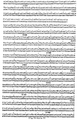
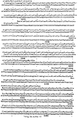
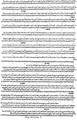
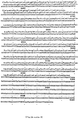
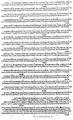
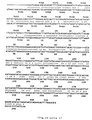
- FIG. 1B represents the nucleotide sequence of the viral genome of SIV and the sequences deduced therefrom for the viral proteins corresponding to the products of the gag, pol, env, Q, X, R, tat, art, F genes.
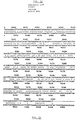
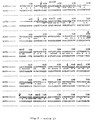
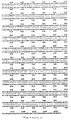
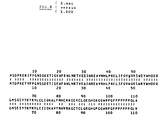
- FIGS. 3 to 11 and FIG. 1C represent the comparisons of the theoretical products of the viral genes and of the LTRs between HIV2 and SIVmac. ( ⁇ SIV-1).
- the invention further relates to the cDNA fragments deduced from the cDNA originating from the whole genome of SIV-1, these fragments containing one or more sequences originating from the complete cDNA sequence and which code for peptides of interest invention. These sequences are indicated in FIG. 1B and, in FIG. 1C as regards the LTR sequence of the virus,
- the nucleic sequences of the SIV cDNA were placed in correspondence with the nucleic sequences of the HIV-2 ROD virus as regards the LTR sequence (FIG. 1C). This presentation which we find for the whole genome by comparing Figure 1B Figures 3 to 11 can identify or deduce the nucleic acids having essential structural elements common to the two viruses.
- the invention naturally also relates to the use of cDNAs derived from SIV or of their fragments (or of recombinants containing them) as probes, for the diagnosis of the presence or not of HIV-2 virus in samples of sera or of other biological fluids or tissues obtained from patients suspected of carrying the HIV-2 virus.
- These probes are preferably also labeled (radioactive, enzymatic, fluorescent markers, etc.).
- Probes which are particularly advantageous for implementing the method for diagnosing the HIV-2 virus or an HIV-2 variant can be characterized in that they comprise all or a fraction of the cDNA complementary to the genome of the virus SIV or even in particular the recombinant fragments contained in various clones.
- the probes used in this method of diagnosing the HIV-2 virus and in the diagnostic kits are in no way reduced to the probes described above. On the contrary, they include all the nucleotide sequences originating from the genome of the SIV virus, of a variant of SIV or of a virus close by its structure, since they allow the detection in biological fluids of persons liable to develop AIDS. , antibodies to HIV-2, or a virus close to it.
- the detection can be carried out in any manner known per se. It can include bringing these probes into contact with either the nucleic acids obtained from the cells contained in these sera or other biological media, for example cerebrospinal fluids, saliva, etc. It can also include contacting these probes with these media themselves once their nucleic acids have been made accessible for hybridization with these probes, and this under conditions allowing hybridization between these probes and these nucleic acids.
- the final step of the in vitro diagnosis then includes the detection of the hybridization possibly produced.
- the above diagnosis involving hybridization reactions can also be carried out using mixtures of probes respectively originating from an HIV-2 and from an SIV-1 or from an HIV-1, from an HIV -2 and an SIV, since it is not necessary to differentiate between the type of virus sought.
- the aforementioned hybridization is carried out under non-stringent conditions and the washing of the membrane is carried out under conditions suitable for those of the hybridization.
- the invention relates to nucleic acids corresponding to sequences placed into analogous regions of variants of SIV as well as all the nucleic acids whose modifications would result from taking advantage of the degeneration of the genetic code.
- gag proteins core proteins
- env proteins envelope proteins
- the major envelope glycoprotein of HIV-2 has been shown to be closer immunologically to the major envelope glycoprotein of SIV than to the major envelope glycoprotein of HIV-1.
- the major core protein of HIV-2 appears to have an average molecular weight (around 26,000) intermediate between that of p25 of HIV-1 and p27 of SIV.
- the present invention also relates to diagnostic methods and compositions for the in vitro detection of antibodies directed against an HIV-2 virus or of its variants, more particularly in biological samples, in particular sera from patients having undergone a infection with the HIV-2 virus, some of these peptides allowing a particularly strong discrimination between the infections due to HIV-2 viruses and to HIV-1 viruses.
- an amino acid When an amino acid can, by virtue of its position within the amino acid chain characteristic of a given peptide, take on several meanings, it can either be designated by a dash "-", if its meaning can be any, or by a lowercase letter when this amino acid may have a limited number of preferred meanings, this number being however always greater than 1. In the latter case, the possible meanings of this lowercase letter will always be specified in relation to the peptide to which it belongs.
- these peptides will be designated by an abbreviation env or gag followed by a numerical index, by reference to amino acid sequences contained, as the case may be, either in the env proteins or in the gag proteins of certain HIV -1, HIV-2 or SIV. Reference will be made to this in the following.
- peptides according to the invention which have in common immunological properties with antigens of HIV-2 and, for some of them also with antigens of HIV-1 or of its variants, are characterized in that they have also a peptide structure in common with SIV antigens.
- these peptides normally comprise at most 40 amino acid residues.
- Preferred peptides are:
- the invention relates to the following peptides:
- gag 1 The structure of the antigenic peptide encoded by the gag gene and designated by gag 1 is also shown below: in which the letter a denotes M or T.
- amino acids having a unique meaning (therefore represented by a capital letter corresponding to the international nomenclature) which are involved in the preceding definitions of peptides according to the invention, happen to be the correspondence with identical amino acid placed in the same order in the corresponding env or gag sequences of the env or gag protein of at least one of HIV, or SIV-1.
- the solid lines which appear in certain locations of these sequences are intended to underline that certain amino acids contained in these sequences have been deliberately deleted in terms of presentation, in order to allow alignment of respectively identical amino acids (then marked with an asterisk ) or two vertical points on the same vertical line in the sequences of the corresponding proteins of HIV-1 and HIV-2 on the one hand, of SIV and HIV-2 on the other hand.
- the invention also relates to peptides modified by insertion and / or deletion and / or substitution of one or more amino acids, provided that the antigenic or immunogenic properties of said peptides are not modified, or that the properties of recognition of the antigen or of the antibody with said peptides are not substantially modified.
- the invention relates to peptides having immunological properties in common with the peptide backbone of the envelope glycoprotein of HIV-2 class viruses, these peptides containing a number of acid residues amines not exceeding 40.
- the peptides according to the invention can also advantageously be prepared by conventional techniques, in the field of peptide synthesis. This synthesis can be carried out in homogeneous solution or in solid phase.
- This synthesis method consists in successively condensing two by two successive aminoacyles in the required order, or in condensing aminoacyles and fragments previously formed and already containing several aminoacyles in the appropriate order, or several fragments previously thus prepared. , it being understood that care will have been taken beforehand to protect all the reactive functions carried by these aminoacyles or fragments, with the exception of the amine functions of the one and carboxyls of the other or vice versa, which must normally intervene in the formation of peptide bonds, in particular after activation of the carboxyl function, according to methods well known in the synthesis of peptides.
- the synthesis preferably begins with the condensation of the C-terminal amino acid with the amino acid which corresponds to the neighboring aminoacyl in the desired sequence and so on, step by step, up to the N-terminal amino acid.
- RD MERRIFIELD in the article entitled “Solid phase peptide synthesis” (J. Am. Soc., 45 , 2149-2154).
- a peptide chain according to the MERRIFIELD method, use is made of a very porous polymer resin, on which the first C-terminal amino acid of the chain is fixed. This amino acid is attached to the resin via its carboxylic group and its amine function is protected, for example by the t-butyloxycarbonyl group.
- the protective group of the amine function is removed by washing the resin with an acid.
- the protecting group for the amine function is the t-butyloxycarbonyl group, it can be removed by treatment of the resin with trifluoroacetic acid.
- the second amino acid which provides the second amino-acyl of the desired sequence is then coupled, from the C-terminal amino-acyl residue to the deprotected amine function of the first C-terminal amino acid attached to the chain.
- the carboxyl function of this second amino acid is activated, for example by dicyclohexylcarbodiimide, and the amine function is protected, for example by t-butyloxycarbonyl.
- the first part of the sought-after peptide chain is thus obtained, which comprises two amino acids, and the terminal amine function of which is protected.
- the amine function is deprotected and the third aminoacyl can then be fixed, under conditions analogous to those of the addition of the second C-terminal amino acid.
- the protective groups of the various amino acids constituting the peptide chain are removed and the peptide is detached from the resin, for example using fluororydric acid.
- the invention also relates to the water-soluble oligomers of the above-mentioned monomeric peptides. Oligomerization can cause an increase in the immunogenicity of the monomeric peptides according to the invention. Without such a quantitative indication being able to be considered as limiting, it will nevertheless be mentioned that these oligomers can, for example, contain from 2 to 10 monomer units.
- the monomer units entering this oligomer are either all constituted by the polypeptide of sequence 1 or by the polypeptide of sequence 2, or by both of these polypeptides.
- Any polymerization technique commonly used in the field of peptides can be used to carry out the oligomerization, this polymerization being carried out until an oligomer or polymer is obtained containing the number of monomer units required for the oligomerization. acquisition of the desired immunogenicity.
- a method of oligomerization or polymerization of the monomer consists in the reaction of the latter with a crosslinking agent such as glutaraldehyde.
- the invention also relates to nucleic acids containing one or more sequences derived from the cDNA sequence of the HIV-2 ROD virus. These sequences identified by the numbering appearing on the previously described sequence, code for certain peptides of interest of the invention.
- the invention relates to the corresponding nucleic acids of the SIV virus, containing one or more sequences derived from the cDNA of the SIV-1 virus. These sequences coding for the peptides env1 to env11 and gag1 can be identified in FIG. 3 by comparison with the corresponding sequences described for HIV-2.
- the invention relates to nucleic acids corresponding to sequences placed in analogous regions of cDNAs derived from variants of HIV-2 ROD or SIV, as well as all the nucleic acids from which modifications with respect to the preceding would result taking advantage of the degeneration of the genetic code.
- the invention also relates to the conjugates obtained by covalent coupling of the peptides according to the invention (or of the above-mentioned oligomers) to carrier molecules (natural or synthetic), physiologically acceptable and non-toxic, by means of complementary reactive groups carried respectively by the carrier molecule and the peptide.
- suitable groupings are illustrated in the following:
- carrier molecules or macromolecular supports entering into the constitution of the conjugates according to the invention, mention will be made of natural proteins, such as tetanus toxoid, ovalbulmine, serum albumin, hemocyamines, etc.
- polylysines or poly (D-L-alanine) -poly (L-lysine).
- the following compounds will advantageously be used as coupling agent: glutaric aldehyde, ethyl chloroformate, water-soluble carbodiimides [N-ethyl-N '(3-dimethylamino-propyl) carbodiimide, HCl], diisocyanates, bis-diazobenzidine, di- and trichloro-s-triazines, cyanogen bromides, as well as the coupling agents mentioned in Scand. J. Immunol., (1978), vol. 8, p. 7-23 (AVRAMEAS, TERNYNCK, GUESDON).
- Any coupling process can be used which involves, on the one hand, one or more reactive functions of the peptide and, on the other hand, one or more reactive functions of support molecules.
- these are the carboxyl and amine functions, which can give rise to a coupling reaction in the presence of a coupling agent of the kind used in the synthesis of proteins, for example, 1-ethyl-3- (3-dimethylaminopropyl) carbodiimide, N-hydroxybenzotriazole, etc.
- a coupling agent of the kind used in the synthesis of proteins
- glutaraldehyde it is a question of linking together amino groups respectively carried by the peptide and the support molecule.
- the peptides according to the invention have antigenic properties. They can therefore be used in diagnostic methods for the detection of infection with the HIV-2 virus.
- a first group (I) comprises the gag 1 peptides. These peptides recognize anti-HIV-2 antibodies and are therefore capable of detecting HIV-2 infection. They also recognize anti-HIV-1 antibodies to some extent.
- a second group (II) comprises peptides which correspond more particularly to those which are located in the transmembrane part and in the end of the external part of the envelope protein. These peptides are those previously designated by env1 , env2 and env3 . They allow specific recognition of the presence of antibodies against HIV-2 and therefore make it possible to discriminate in a person the past or present infections due to an HIV, more particularly between those which were caused by an HIV-2 and those which 'were by HIV-1.
- the invention also relates to a composition containing at least one of the above-mentioned peptides or at least one oligomer of this peptide, characterized in that it has the capacity to be recognized by sera of human origin containing antibodies against HIV-2 virus.
- the invention relates to a method for in vitro diagnosis of one or more peptides according to the invention for the detection of antibodies against HIV-2 in biological fluids, in particular in human sera.
- the detection of the antigen-antibody complex is carried out using immunoenzymatic tests (of the type ELISA), immunofluorescent (IFA type), radioimmunological (RIA type) or radioimmunoprecipitation tests (RIPA type).
- immunoenzymatic tests of the type ELISA
- RIA type radioimmunological
- RIPA type radioimmunoprecipitation tests
- the invention also relates to any peptide according to the invention labeled with the aid of an adequate marker of the enzymatic, fluorescent, radioactive type, etc.
- the invention relates to the antibodies themselves formed against the peptides of the invention.
- the invention also relates to immunogenic compositions for the production of vaccines, the active principle of which consists of at least one peptide according to the invention, or an oligomer of this peptide, or a peptide in form conjugated with a carrier molecule, characterized in that that they induce the production of antibodies against the abovementioned peptides in a sufficient amount to also inhibit the proteins of the HIV-2 retrovirus, or even the HIV-2 retrovirus coming into association with a pharmaceutically acceptable vehicle.
- the immunogenic compositions for the production of vaccines advantageously comprise more particularly at least one of the peptides previously designated by env4 , env5 , env6 , env7 , env8 , env9 , env10 , env11 see mixtures of these.
- peptides capable of constituting active principles of vaccines some are particularly preferred because they have a basic structure of amino acids corresponding to regions of the envelope glycoproteins which exhibit a high degree of conservation, not only in HIV-2, and in SIV, but also in HIV-1.
- peptides designated by env4 certain peptides env5, env6 and env10 .
- the immunogenic peptides (or fragments of these peptides) capable of constituting active principles of vaccines are chosen from those whose formulas correspond to sequences which, in the envelope glycoproteins of HIV- 2, SIV and HIV-1 having an amino acid homology greater than 50%, which belong to the external part of the envelope of the virus, which have almost no deletions, and which contain cysteine residues favorable to stabilization connections and the creation of anchor loops.
- compositions consist of solutions, suspensions or injectable liposomes containing an effective dose of at least one product according to the invention.
- these solutions, suspensions or liposomes are produced in an isotonic sterile aqueous phase, preferably saline or glucose.
- the invention relates more particularly to such suspensions, solutions or liposome form which are capable of being administered by intradermal, intramuscular or subcutaneous injections, or even by scarification.
- compositions which can be administered by other routes, in particular by the oral route.
- compositions according to the invention which can be used as vaccines to be effective in the production of antibodies against the HIV-2 virus, can, for example, be administered in doses between 10 and 500 ⁇ g / kg, peptides according to the invention, preferably from 50 to 100 ⁇ g / kg.
- peptides according to the invention can also be defined by the following formulas (in which X, Z and the dashes "-" have the meanings indicated above):
- the invention also relates, in addition to the SIV peptides already described, the proteins encoded by the cDNA of the SIV virus. It also relates to the proteins of any virus immunologically closely related to SIV-1mac, in particular any virus whose proteins and envelope glycoproteins cross immunologically and whose cDNAs have a homology percentage of at least 95% and preferably at least 98%.
- amino acids of the abovementioned proteins of SIV have been shown in alignment with the amino acid sequences of the corresponding proteins of the HIV-2 virus.
- the vertical points appearing between the two sequences correspond to the amino acids common between the proteins of the two viruses.
- the cDNA sequences encoding the above proteins appear in Figure 1B.
- the invention relates, in addition to the abovementioned nucleic acid sequences, to any modified nucleic acid sequence which also codes for the proteins of the retrovirus SIV or of a variant.
- the invention therefore naturally relates to the proteins described above, when they are obtained from the SIV virus or when they are prepared by a method of synthesis, in particular by one of the methods already mentioned in connection with the synthesis of the peptides of smaller size.
- the invention also relates to the use of the preceding proteins for the diagnosis of the possible presence of antibodies directed against the proteins of HIV-2, or even against HIV-2 in whole, or for some of them the use for the purposes for diagnosing an infection due to one of the HIV viruses.
- the GAG peptide encoded by the corresponding gene can be used to identify the possible presence of anti-HIV-1 or anti-HIV-2 antibodies.
- the ENV proteins are preferably used for the specific diagnosis of an infection due to HIV-2 or one of its variants, sometimes for the diagnosis of an infection by HIV-2 or HIV-1.
- the invention therefore also relates to an in vitro diagnostic method for detecting antibodies against HIV-2 and optionally against HIV-1 in biological fluids and in particular in human sera.
- Such methods applicable for the use of the preceding proteins of SIV as diagnostic proteins, have already been described in the present invention.
- the invention also relates to boxes or "kits" for the in vitro diagnosis of the presence of antibodies to the HIV-2 virus and in certain cases against HIV-1 in a biological medium.
- kits for the in vitro diagnosis of the presence of antibodies to the HIV-2 virus and in certain cases against HIV-1 in a biological medium.
- kits using the preceding peptides have also been described in the present invention.
- the invention also relates to immunogenic compositions for the production of vaccines, the active principle of which advantageously consists of at least the portion of the ENV protein of the SIV virus, this protein possibly being in conjugated form with a carrier molecule.
- immunogenic compositions induce the production of antibodies against the abovementioned peptide in an amount sufficient to inhibit the proteins of the HIV-2 retrovirus, or even the HIV-2 retrovirus itself.
- SIV proteins are in no way limited to that of only ENV or GAG proteins.
- Other proteins among those described can be envisaged to prepare diagnostic or even vaccine compositions.
Landscapes
- Health & Medical Sciences (AREA)
- Life Sciences & Earth Sciences (AREA)
- Chemical & Material Sciences (AREA)
- Organic Chemistry (AREA)
- Engineering & Computer Science (AREA)
- Virology (AREA)
- General Health & Medical Sciences (AREA)
- Molecular Biology (AREA)
- Immunology (AREA)
- Genetics & Genomics (AREA)
- Medicinal Chemistry (AREA)
- Biochemistry (AREA)
- Biomedical Technology (AREA)
- Microbiology (AREA)
- Wood Science & Technology (AREA)
- Biotechnology (AREA)
- Zoology (AREA)
- Biophysics (AREA)
- Proteomics, Peptides & Aminoacids (AREA)
- Hematology (AREA)
- Bioinformatics & Cheminformatics (AREA)
- General Engineering & Computer Science (AREA)
- Urology & Nephrology (AREA)
- Physics & Mathematics (AREA)
- Veterinary Medicine (AREA)
- AIDS & HIV (AREA)
- Public Health (AREA)
- Animal Behavior & Ethology (AREA)
- Tropical Medicine & Parasitology (AREA)
- Analytical Chemistry (AREA)
- Pharmacology & Pharmacy (AREA)
- Communicable Diseases (AREA)
- Oncology (AREA)
- Nuclear Medicine, Radiotherapy & Molecular Imaging (AREA)
- General Chemical & Material Sciences (AREA)
- Chemical Kinetics & Catalysis (AREA)
- Pathology (AREA)
- General Physics & Mathematics (AREA)
- Food Science & Technology (AREA)
- Cell Biology (AREA)
Applications Claiming Priority (7)
| Application Number | Priority Date | Filing Date | Title |
|---|---|---|---|
| US07/003,764 US5051496A (en) | 1986-01-22 | 1987-01-16 | Peptides related to human immunodeficiency virus II (HIV-2) |
| US3764 | 1987-01-16 | ||
| FR8701739A FR2610632B1 (fr) | 1987-02-11 | 1987-02-11 | Peptides caracteristiques des retrovirus d'immunodeficience humaine (virus hiv) leurs applications au diagnostic des infections dues a certains de ces virus et, le cas echeant, a la vaccination contre le sida |
| FR8701739 | 1987-02-11 | ||
| FR8705398 | 1987-04-15 | ||
| FR8705398A FR2614025B1 (fr) | 1987-04-15 | 1987-04-15 | Peptides susceptibles d'etre reconnus par des anticorps induits contre des retrovirus d'immunodeficience humaine (virus hiv) leurs applications au diagnostic des infections dues a certains de ces virus et, le cas echeant, a la vaccination contre le sida |
| EP88400084A EP0283327B1 (de) | 1987-01-16 | 1988-01-15 | Peptide mit den immunologischen Eigenschaften von HIV-2 |
Related Parent Applications (2)
| Application Number | Title | Priority Date | Filing Date |
|---|---|---|---|
| EP88400084A Division EP0283327B1 (de) | 1987-01-16 | 1988-01-15 | Peptide mit den immunologischen Eigenschaften von HIV-2 |
| EP88400084.5 Division | 1988-01-15 |
Publications (3)
| Publication Number | Publication Date |
|---|---|
| EP0750041A2 true EP0750041A2 (de) | 1996-12-27 |
| EP0750041A3 EP0750041A3 (de) | 1997-01-22 |
| EP0750041B1 EP0750041B1 (de) | 2008-12-10 |
Family
ID=26225771
Family Applications (1)
| Application Number | Title | Priority Date | Filing Date |
|---|---|---|---|
| EP96108720A Expired - Lifetime EP0750041B1 (de) | 1987-01-16 | 1988-01-15 | HIV-2 und SIV-1 Nukleotidsequenzen |
Country Status (9)
| Country | Link |
|---|---|
| EP (1) | EP0750041B1 (de) |
| KR (1) | KR0135885B1 (de) |
| AT (1) | ATE417108T1 (de) |
| CA (2) | CA1341520C (de) |
| DE (1) | DE3856595D1 (de) |
| IE (1) | IE990955A1 (de) |
| MX (1) | MX169441B (de) |
| NZ (1) | NZ223494A (de) |
| OA (1) | OA08716A (de) |
Cited By (1)
| Publication number | Priority date | Publication date | Assignee | Title |
|---|---|---|---|---|
| US6870045B2 (en) | 2000-10-23 | 2005-03-22 | Gen-Probe Incorporated | Kits for detecting HIV-2 |
Family Cites Families (2)
| Publication number | Priority date | Publication date | Assignee | Title |
|---|---|---|---|---|
| EP0239425B1 (de) * | 1986-01-22 | 1989-11-02 | Institut Pasteur | Zum Hervorrufen von AIDS geeigneter Retrovirus vom Typ HIV-2, sowie seine Antigen- und Nukleinsäure-Bestandteile |
| EP0269520A3 (de) * | 1986-11-21 | 1988-08-24 | Institut Pasteur | Zum Hervorrufen von AIDS geeignetes Retrovirus vom HIV-2-Typ sowie seine Antigen- und Nukleinsäurebestandteile |
-
1988
- 1988-01-15 AT AT96108720T patent/ATE417108T1/de not_active IP Right Cessation
- 1988-01-15 EP EP96108720A patent/EP0750041B1/de not_active Expired - Lifetime
- 1988-01-15 DE DE3856595T patent/DE3856595D1/de not_active Expired - Lifetime
- 1988-01-22 CA CA000557174A patent/CA1341520C/fr not_active Expired - Lifetime
- 1988-01-22 CA CA617168A patent/CA1341634C/en active Active
- 1988-01-25 KR KR1019880701183A patent/KR0135885B1/ko not_active Expired - Lifetime
- 1988-02-10 OA OA59284A patent/OA08716A/xx unknown
- 1988-02-11 MX MX010385A patent/MX169441B/es unknown
- 1988-02-11 NZ NZ223494A patent/NZ223494A/en unknown
- 1988-02-11 IE IE19990955A patent/IE990955A1/en not_active IP Right Cessation
Cited By (1)
| Publication number | Priority date | Publication date | Assignee | Title |
|---|---|---|---|---|
| US6870045B2 (en) | 2000-10-23 | 2005-03-22 | Gen-Probe Incorporated | Kits for detecting HIV-2 |
Also Published As
| Publication number | Publication date |
|---|---|
| KR0135885B1 (ko) | 1998-04-25 |
| OA08716A (fr) | 1989-03-31 |
| CA1341520C (fr) | 2007-01-30 |
| EP0750041B1 (de) | 2008-12-10 |
| IE990955A1 (en) | 2000-12-13 |
| ATE417108T1 (de) | 2008-12-15 |
| NZ223494A (en) | 1991-06-25 |
| DE3856595D1 (de) | 2009-01-22 |
| CA1341634C (en) | 2013-03-19 |
| KR890700603A (ko) | 1989-04-26 |
| EP0750041A3 (de) | 1997-01-22 |
| MX169441B (es) | 1993-07-05 |
Similar Documents
| Publication | Publication Date | Title |
|---|---|---|
| EP0283327B1 (de) | Peptide mit den immunologischen Eigenschaften von HIV-2 | |
| JP2752329B2 (ja) | リンパ節症及び後天性免疫不全症候群のウイルスのエンベロープ抗原の製造方法 | |
| EP0320495B1 (de) | Prozess zur rekombinanten Herstellung von HIV-2 - Proteinen sowie Zellen, die HIV-2 - Proteine exprimiert | |
| EP0787191B1 (de) | Nukleotiden-sequenzen aus retroviren-antigenen hiv-i gruppe (oder untergruppe) o | |
| US6426073B1 (en) | Variant of LAV viruses | |
| US7029679B2 (en) | Variant of LAV viruses | |
| US6730304B2 (en) | Variant of LAV viruses | |
| FR2614025A1 (fr) | Peptides susceptibles d'etre reconnus par des anticorps induits contre des retrovirus d'immunodeficience humaine (virus hiv) leurs applications au diagnostic des infections dues a certains de ces virus et, le cas echeant, a la vaccination contre le sida | |
| EP0750041A2 (de) | HIV-2 Nukleotidsequenzen | |
| FR2610632A1 (fr) | Peptides caracteristiques des retrovirus d'immunodeficience humaine (virus hiv) leurs applications au diagnostic des infections dues a certains de ces virus et, le cas echeant, a la vaccination contre le sida | |
| DK176372B1 (da) | Antigeniske gag1-peptider, antigenisk middel, fremgangsmåde til in vitro diagnosticering, samt kit til in vitro diagnosticering |
Legal Events
| Date | Code | Title | Description |
|---|---|---|---|
| PUAI | Public reference made under article 153(3) epc to a published international application that has entered the european phase |
Free format text: ORIGINAL CODE: 0009012 |
|
| PUAL | Search report despatched |
Free format text: ORIGINAL CODE: 0009013 |
|
| AC | Divisional application: reference to earlier application |
Ref document number: 283327 Country of ref document: EP |
|
| AK | Designated contracting states |
Kind code of ref document: A2 Designated state(s): AT BE CH DE ES FR GB GR IT LI LU NL SE |
|
| RHK1 | Main classification (correction) |
Ipc: C12N 15/48 |
|
| AK | Designated contracting states |
Kind code of ref document: A3 Designated state(s): AT BE CH DE ES FR GB GR IT LI LU NL SE |
|
| 17P | Request for examination filed |
Effective date: 19970422 |
|
| 17Q | First examination report despatched |
Effective date: 20031126 |
|
| 17Q | First examination report despatched |
Effective date: 20031126 |
|
| GRAP | Despatch of communication of intention to grant a patent |
Free format text: ORIGINAL CODE: EPIDOSNIGR1 |
|
| RIC1 | Information provided on ipc code assigned before grant |
Ipc: C12Q 1/68 20060101ALI20080526BHEP Ipc: C07K 14/16 20060101ALI20080526BHEP Ipc: C12N 15/48 20060101AFI20080526BHEP |
|
| RTI1 | Title (correction) |
Free format text: HIV-2 AND SIV-1 NUCLEOTIDE SEQUENCES |
|
| RAP1 | Party data changed (applicant data changed or rights of an application transferred) |
Owner name: CENTRE NATIONAL DE LA RECHERCHE SCIENTIFIQUE Owner name: INSTITUT PASTEUR |
|
| GRAS | Grant fee paid |
Free format text: ORIGINAL CODE: EPIDOSNIGR3 |
|
| GRAS | Grant fee paid |
Free format text: ORIGINAL CODE: EPIDOSNIGR3 |
|
| GRAA | (expected) grant |
Free format text: ORIGINAL CODE: 0009210 |
|
| REG | Reference to a national code |
Ref country code: CH Ref legal event code: PL |
|
| AC | Divisional application: reference to earlier application |
Ref document number: 0283327 Country of ref document: EP Kind code of ref document: P |
|
| AK | Designated contracting states |
Kind code of ref document: B1 Designated state(s): AT BE CH DE ES FR GB GR IT LI LU NL SE |
|
| REG | Reference to a national code |
Ref country code: GB Ref legal event code: FG4D Free format text: NOT ENGLISH |
|
| REG | Reference to a national code |
Ref country code: CH Ref legal event code: EP |
|
| REF | Corresponds to: |
Ref document number: 3856595 Country of ref document: DE Date of ref document: 20090122 Kind code of ref document: P |
|
| REG | Reference to a national code |
Ref country code: GB Ref legal event code: PE20 Expiry date: 20080114 |
|
| PG25 | Lapsed in a contracting state [announced via postgrant information from national office to epo] |
Ref country code: NL Free format text: LAPSE BECAUSE OF EXPIRATION OF PROTECTION Effective date: 20081211 |
|
| REG | Reference to a national code |
Ref country code: CH Ref legal event code: PK Free format text: DELIVRANCE DU BREVET EUROPEEN LE 10.12.2008, APRES RADIATION APRES LA DUREE MAXIMALE DE PROTECTION DU 14.01.2008. Ref country code: CH Ref legal event code: PK Free format text: RECTIFICATIONS |
|
| PG25 | Lapsed in a contracting state [announced via postgrant information from national office to epo] |
Ref country code: ES Free format text: LAPSE BECAUSE OF FAILURE TO SUBMIT A TRANSLATION OF THE DESCRIPTION OR TO PAY THE FEE WITHIN THE PRESCRIBED TIME-LIMIT Effective date: 20090321 |
|
| PG25 | Lapsed in a contracting state [announced via postgrant information from national office to epo] |
Ref country code: SE Free format text: LAPSE BECAUSE OF FAILURE TO SUBMIT A TRANSLATION OF THE DESCRIPTION OR TO PAY THE FEE WITHIN THE PRESCRIBED TIME-LIMIT Effective date: 20090310 Ref country code: AT Free format text: LAPSE BECAUSE OF FAILURE TO SUBMIT A TRANSLATION OF THE DESCRIPTION OR TO PAY THE FEE WITHIN THE PRESCRIBED TIME-LIMIT Effective date: 20081210 |
|
| PLBE | No opposition filed within time limit |
Free format text: ORIGINAL CODE: 0009261 |
|
| STAA | Information on the status of an ep patent application or granted ep patent |
Free format text: STATUS: NO OPPOSITION FILED WITHIN TIME LIMIT |
|
| 26N | No opposition filed |
Effective date: 20090911 |
|
| PG25 | Lapsed in a contracting state [announced via postgrant information from national office to epo] |
Ref country code: GR Free format text: LAPSE BECAUSE OF FAILURE TO SUBMIT A TRANSLATION OF THE DESCRIPTION OR TO PAY THE FEE WITHIN THE PRESCRIBED TIME-LIMIT Effective date: 20090311 |
|
| PG25 | Lapsed in a contracting state [announced via postgrant information from national office to epo] |
Ref country code: IT Free format text: LAPSE BECAUSE OF FAILURE TO SUBMIT A TRANSLATION OF THE DESCRIPTION OR TO PAY THE FEE WITHIN THE PRESCRIBED TIME-LIMIT Effective date: 20081210 |