EP0750512B1 - Utilisation a des fins medicales d'inhibiteurs de metalloproteases matricielles dans le traitement de la contraction tissulaire - Google Patents
Utilisation a des fins medicales d'inhibiteurs de metalloproteases matricielles dans le traitement de la contraction tissulaire Download PDFInfo
- Publication number
- EP0750512B1 EP0750512B1 EP95911409A EP95911409A EP0750512B1 EP 0750512 B1 EP0750512 B1 EP 0750512B1 EP 95911409 A EP95911409 A EP 95911409A EP 95911409 A EP95911409 A EP 95911409A EP 0750512 B1 EP0750512 B1 EP 0750512B1
- Authority
- EP
- European Patent Office
- Prior art keywords
- inhibitor
- contraction
- tissue
- collagen
- collagenase
- Prior art date
- Legal status (The legal status is an assumption and is not a legal conclusion. Google has not performed a legal analysis and makes no representation as to the accuracy of the status listed.)
- Expired - Lifetime
Links
Images





Classifications
-
- C—CHEMISTRY; METALLURGY
- C07—ORGANIC CHEMISTRY
- C07K—PEPTIDES
- C07K16/00—Immunoglobulins [IG], e.g. monoclonal or polyclonal antibodies
- C07K16/40—Immunoglobulins [IG], e.g. monoclonal or polyclonal antibodies against enzymes
-
- A—HUMAN NECESSITIES
- A61—MEDICAL OR VETERINARY SCIENCE; HYGIENE
- A61K—PREPARATIONS FOR MEDICAL, DENTAL OR TOILETRY PURPOSES
- A61K31/00—Medicinal preparations containing organic active ingredients
- A61K31/33—Heterocyclic compounds
- A61K31/395—Heterocyclic compounds having nitrogen as a ring hetero atom, e.g. guanethidine or rifamycins
- A61K31/40—Heterocyclic compounds having nitrogen as a ring hetero atom, e.g. guanethidine or rifamycins having five-membered rings with one nitrogen as the only ring hetero atom, e.g. sulpiride, succinimide, tolmetin, buflomedil
- A61K31/403—Heterocyclic compounds having nitrogen as a ring hetero atom, e.g. guanethidine or rifamycins having five-membered rings with one nitrogen as the only ring hetero atom, e.g. sulpiride, succinimide, tolmetin, buflomedil condensed with carbocyclic rings, e.g. carbazole
- A61K31/404—Indoles, e.g. pindolol
- A61K31/4045—Indole-alkylamines; Amides thereof, e.g. serotonin, melatonin
-
- A—HUMAN NECESSITIES
- A61—MEDICAL OR VETERINARY SCIENCE; HYGIENE
- A61K—PREPARATIONS FOR MEDICAL, DENTAL OR TOILETRY PURPOSES
- A61K31/00—Medicinal preparations containing organic active ingredients
- A61K31/33—Heterocyclic compounds
- A61K31/395—Heterocyclic compounds having nitrogen as a ring hetero atom, e.g. guanethidine or rifamycins
- A61K31/40—Heterocyclic compounds having nitrogen as a ring hetero atom, e.g. guanethidine or rifamycins having five-membered rings with one nitrogen as the only ring hetero atom, e.g. sulpiride, succinimide, tolmetin, buflomedil
- A61K31/403—Heterocyclic compounds having nitrogen as a ring hetero atom, e.g. guanethidine or rifamycins having five-membered rings with one nitrogen as the only ring hetero atom, e.g. sulpiride, succinimide, tolmetin, buflomedil condensed with carbocyclic rings, e.g. carbazole
- A61K31/404—Indoles, e.g. pindolol
- A61K31/405—Indole-alkanecarboxylic acids; Derivatives thereof, e.g. tryptophan, indomethacin
-
- A—HUMAN NECESSITIES
- A61—MEDICAL OR VETERINARY SCIENCE; HYGIENE
- A61K—PREPARATIONS FOR MEDICAL, DENTAL OR TOILETRY PURPOSES
- A61K38/00—Medicinal preparations containing peptides
- A61K38/16—Peptides having more than 20 amino acids; Gastrins; Somatostatins; Melanotropins; Derivatives thereof
- A61K38/55—Protease inhibitors
-
- A—HUMAN NECESSITIES
- A61—MEDICAL OR VETERINARY SCIENCE; HYGIENE
- A61K—PREPARATIONS FOR MEDICAL, DENTAL OR TOILETRY PURPOSES
- A61K45/00—Medicinal preparations containing active ingredients not provided for in groups A61K31/00 - A61K41/00
- A61K45/06—Mixtures of active ingredients without chemical characterisation, e.g. antiphlogistics and cardiaca
-
- A—HUMAN NECESSITIES
- A61—MEDICAL OR VETERINARY SCIENCE; HYGIENE
- A61K—PREPARATIONS FOR MEDICAL, DENTAL OR TOILETRY PURPOSES
- A61K8/00—Cosmetics or similar toiletry preparations
- A61K8/18—Cosmetics or similar toiletry preparations characterised by the composition
- A61K8/30—Cosmetics or similar toiletry preparations characterised by the composition containing organic compounds
- A61K8/40—Cosmetics or similar toiletry preparations characterised by the composition containing organic compounds containing nitrogen
- A61K8/44—Aminocarboxylic acids or derivatives thereof, e.g. aminocarboxylic acids containing sulfur; Salts; Esters or N-acylated derivatives thereof
-
- A—HUMAN NECESSITIES
- A61—MEDICAL OR VETERINARY SCIENCE; HYGIENE
- A61K—PREPARATIONS FOR MEDICAL, DENTAL OR TOILETRY PURPOSES
- A61K8/00—Cosmetics or similar toiletry preparations
- A61K8/18—Cosmetics or similar toiletry preparations characterised by the composition
- A61K8/30—Cosmetics or similar toiletry preparations characterised by the composition containing organic compounds
- A61K8/49—Cosmetics or similar toiletry preparations characterised by the composition containing organic compounds containing heterocyclic compounds
- A61K8/4906—Cosmetics or similar toiletry preparations characterised by the composition containing organic compounds containing heterocyclic compounds with one nitrogen as the only hetero atom
- A61K8/4913—Cosmetics or similar toiletry preparations characterised by the composition containing organic compounds containing heterocyclic compounds with one nitrogen as the only hetero atom having five membered rings, e.g. pyrrolidone carboxylic acid
- A61K8/492—Cosmetics or similar toiletry preparations characterised by the composition containing organic compounds containing heterocyclic compounds with one nitrogen as the only hetero atom having five membered rings, e.g. pyrrolidone carboxylic acid having condensed rings, e.g. indol
-
- A—HUMAN NECESSITIES
- A61—MEDICAL OR VETERINARY SCIENCE; HYGIENE
- A61K—PREPARATIONS FOR MEDICAL, DENTAL OR TOILETRY PURPOSES
- A61K8/00—Cosmetics or similar toiletry preparations
- A61K8/18—Cosmetics or similar toiletry preparations characterised by the composition
- A61K8/30—Cosmetics or similar toiletry preparations characterised by the composition containing organic compounds
- A61K8/64—Proteins; Peptides; Derivatives or degradation products thereof
-
- A—HUMAN NECESSITIES
- A61—MEDICAL OR VETERINARY SCIENCE; HYGIENE
- A61P—SPECIFIC THERAPEUTIC ACTIVITY OF CHEMICAL COMPOUNDS OR MEDICINAL PREPARATIONS
- A61P17/00—Drugs for dermatological disorders
-
- A—HUMAN NECESSITIES
- A61—MEDICAL OR VETERINARY SCIENCE; HYGIENE
- A61Q—SPECIFIC USE OF COSMETICS OR SIMILAR TOILETRY PREPARATIONS
- A61Q19/00—Preparations for care of the skin
- A61Q19/08—Anti-ageing preparations
-
- A—HUMAN NECESSITIES
- A61—MEDICAL OR VETERINARY SCIENCE; HYGIENE
- A61K—PREPARATIONS FOR MEDICAL, DENTAL OR TOILETRY PURPOSES
- A61K2800/00—Properties of cosmetic compositions or active ingredients thereof or formulation aids used therein and process related aspects
- A61K2800/74—Biological properties of particular ingredients
- A61K2800/78—Enzyme modulators, e.g. Enzyme agonists
- A61K2800/782—Enzyme inhibitors; Enzyme antagonists
Definitions
- the present invention relates to matrix metalloproteinase (MMP) inhibitors, especially collagenase inhibitors, and to their use in the manufacture of medicaments.
- MMP matrix metalloproteinase
- MMPs matrix metalloproteinases
- Collagenases for example, are matrix metalloproteinases that degrade or denature collagen.
- Collagenases are generally specific for collagens which, in their full triple helix structure, are extremely resistant to other enzymes.
- MMPs are involved in the degradation and denaturing of other extracellular matrix components, for example, elastin, gelatin and proteoglycan.
- Some MMPs are able to degrade or denature several different types of collagen and also other extracellular matrix components.
- stromelysin degrades type IV collagen, which is found in basement membrane, and also has an effect on other extracellular matrix components such as elastin, fibronectin and cartilage proteoglycans.
- MMP1 is a collagenase that is sometimes called “collagenase”
- MMP2 is a 72kD gelatinase
- MMP3 is stromelysin
- MMP9 is a 92kD gelatinase. The official designations are used herein.
- Collagenases have been implicated in a number of diseases, for example, rheumatoid arthritis [Mullins, D.E. et al 1983], periodontal disease and epidermolysis bullosa, and it has been proposed to use MMP inhibitors in the treatment of such conditions.
- collagenase inhibitors based on hydroxamic acid are disclosed in WO 90/05716, WO 90/05719 and WO 92/13831. Such collagenase inhibitors are disclosed as being used in the management of disease involving tissue degradation, particularly disease involving collagen breakdown, and/or the promotion of wound healing.
- BB-94 also known as Batimastat (British Bio-technology Ltd.).
- Batimastat British Bio-technology Ltd.
- Potential uses of BB-94 for the control of cancer metatasis are described in EP-A-276436. It has been proposed to use an oral formulation of BB-94 in the treatment of bone cancer.
- the present invention is concerned with the contraction of tissues, for example, scars. Contraction of tissues comprising extracellular matrix components, especially of collagen-comprising tissues, may occur in connection with many different pathological conditions and with surgical or cosmetic procedures. Contracture, for example, of scars, may cause physical problems, which may lead to the need for medical treatment, or it may cause problems of a purely cosmetic nature.
- the present invention is based on the surprising observation that, during experiments on in vitro models of scar contraction, collagen (the main component of scar tissue) appears to be invaded and permanently remodelled by fibroblasts and that such invasion and remodelling is inhibited by collagenase inhibitors.
- the remodelling generally appears as contraction of the collagen, which contraction is inhibited by inhibition of collagenase.
- inhibition of other MMPs also results in inhibition of contraction.
- contraction of the tissue involves MMPs is particularly surprising since previous investigations have shown that MMPs are not produced during contraction while other investigations have indicated that MMPs are produced but are not involved in the contractile process (see above).
- the present invention provides the use of an MMP inhibitor for the manufacture of a medicament for restricting, hindering or preventing contraction of a natural or artificial tissue comprising extracellular matrix components, especially contraction resulting from a pathological condition or from surgical or cosmetic treatment.
- the present invention also provides a method for reducing, hindering or preventing the contraction in vitro or a natural or artificial tissue comprising extracellular matrix components, which comprises administering an MMP inhibitor to the tissue during and/or after its formation.
- a therapeutically effective amount of the MMP inhibitor should be administered.
- the present invention especially relates to the use of a collagenase inhibitor for the manufacture of a medicament for the treatment or prophyaxis of tissue comprising collagen to inhibit contraction of the tissue resulting from contraction of the collagen.
- the present invention further especially relates to inhibition of contraction of tissue comprising collagen, resulting from contraction of the collagen, by administering a therapeutically effective amount of a collagenase inhibitor to the tissue.
- a therapeutically effective amount of the MMP inhibitor should be administered.
- Thé present invention may be used in relation to medical or cosmetic treatment.
- the invention relates to inhibition, for cosmetic reasons, of disfigurement caused by contraction of tissue comprising extracellular matrix components, which method comprises admistering a matrix metalloproteinase inhibitor to the tissue.
- Cosmetic treatments such as chemical or physical dermal abrasion, used as anti-ageing treatments, cause trauma to the skin.
- Use of MMP inhibitors during the healing process which occurs after the initial abrasion is a cosmetic use of MMP inhibitors.
- the present invention also relates to the use of an MMP inhibitor to inhibit, i.e. restrict, hinder or prevent, invasion by cells, especially fibroblasts, into tissue comprising an extracellular matrix and/or migration by cells, especially fibroblasts, in or through tissue comprising an extracellular matrix.
- MMP inhibitor is used herein to denote any substance that is capable of inhibiting, i.e. restricting, hindering or preventing, the action of an MMP.
- collagenase inhibitor is used herein to denote any substance that is capable of inhibiting, i.e. restricting, hindering or preventing, the action of a collagenase.
- a collagenase inhibitor may be specific for one particular collagenase or may inhibit several different collagenases.
- a collagenase inhibitor may also inhibit other MMPs, in which case it may also be defined as an MMP inhibitor.
- inhibitor includes agents that act indirectly by inhibiting the production of the relevant enzyme, for example an antisense molecule, as well as agents that act directly by inhibiting the enzyme activity of the relevant enzyme, such as, for example, a conventional inhibitor.
- An MMP, e.g. collagenase, inhibitor may be naturally-occurring or synthetic.
- An MMP, e.g. collagenase, inhibitor may be an anti-MMP, e.g. anti-collagenase, antibody, either polyclonal or monoclonal.
- the inhibitory activity of a putative MMP inhibitor may be assessed by any method suitable for determining inhibitory activity of a compound with respect to an enzyme. Such methods are described in standard textbooks of biochemistry. A more detailed description of MMP, e.g. collagenase, inhibitors is given below.
- Collagen is the major component of scar and other contracted tissue and as such is the most important structural component to consider. Nevertheless, scar and other contracted tissue also comprises other structural components, especially other extracellular matrix components, for example, elastin, which may also contribute to contraction of the tissue. MMPs are involved in the synthesis and degradation of such components.
- a collagenase inhibitor is used as the MMP inhibitor in accordance with the present invention but, it may be appropriate to use instead an inhibitor of an MMP other than a collagenase. It may be particularly advantageous to use a combination of a collagenase inhibitor and one or more inhibitors of other MMPs or to use an inhibitor which inhibits both a collagenase and at least one or more other MMPs.
- Fibroblasts involved in the contraction of collagen produce greater amounts of matrix metalloproteinase mRNAs and proteins than do control fibroblasts. This is associated with cellular invasion of the collagen. Invasion of the collagen and contraction are inhibited by the use of inhibitors specific to those MMPs coded for by the mRNAs which are present at higher levels in cells involved in contraction than in control cells:
- Quantitative competitive reverse transcriptase polymerase chain reaction (QCRT-PCR) technique was used to study the levels of MMP mRNA produced by human ocular fibroblasts in collagen Type I lattices undergoing contraction in comparison with human ocular fibroblasts in monolayer cultures. It was found that in the collagen lattices the fibroblasts produced more mRNA for collagenase (MMP1), 72kD gelatinase (MMP2) and stromelysin (MMP3) but not for 92kD gelatinase (MMP9) than did the control cells in the monolayer culture.
- MMP1 collagenase
- MMP2 72kD gelatinase
- MMP3 stromelysin
- Antibodies against MMPs 1, 2, 3 and 9 were tested as contraction inhibitors. It was found that the antibodies against MMPs 1, 2 and 3 gave significant inhibition of the contraction of collagen gels by human ocular fibroblasts but that the antibody against MMP9 did not result in inhibition of contraction.
- contraction of collagen includes not only shrinkage of collagen but also any remodelling of collagen that leads to contraction of the tissue comprising that collagen. It also includes contributions made by other components of the tissue, especially other extracellular matrix components, for example, elastin.
- contraction of tissues comprising extracellular matrix components may occur in connection with many different pathological conditions and with surgical or cosmetic procedures. Contracture may cause physical problems, which may lead to the need for medical treatment, or it may cause problems of a purely cosmetic nature. It is therefore very valuable to have medicaments capable of inhibiting, i.e. restricting, hindering or preventing, such contraction. Important uses of such medicaments are described below. It should be understood, however, that the uses according to the present invention are not restricted to the manufacture of medicaments, medical or cosmetic, suitable for the conditions described below. The present invention also includes use in the manufacture of medicaments suitable for use in any case where contraction of tissue comprising extracellular matrix components resulting substantially from extracellular matrix component contraction is occurring or may occur.
- broad spectrum MMP inhibitors and/or inhibitors of MMPs other than collagenases may be used in inhibiting contraction of tissue comprising extracellular matrix components and the present invention is to be understood as including the use of such MMP inhibitors as an alternative to the use of collagenase-specific inhibitors in the treatment of tissue comprising extracellular matrix components.
- the present invention also includes the use of broad spectrum MMP inhibitors and/or inhibitors of MMPs other than collagenases in addition to the use of collagenase inhibitors, for example, in the treatment of tissue comprising extracellular components especially collagen comprising-tissue.
- the burns may be chemical, thermal or radiation burns and may be of the eye, the surface of the skin or the skin and the underlying tissues. It may also be the case that there are burns on internal tissues, for example, caused by radiation treatment. Contraction of burnt tissues is often a problem and may lead to physical and/or cosmetic problems, for example, loss of movement and/or disfigurement.
- the present invention therefore includes the use of MMP inhibitors, for example, collagenase inhibitors, for example, in the form of a medicament, to inhibit contraction of the burnt tissue as it heals.
- a further aspect of the present invention is the inhibition of the contraction of skin grafts.
- Skin grafts may be applied for a variety of reasons and may often undergo contraction after application. As with the healing of burnt tissues the contraction may lead to both physical and cosmetic problems. It is a particularly serious problem where many skin grafts are needed as, for example, in a serious burns case.
- An associated area in which the medicaments and methods of the present invention are of great use is in the production of artificial skin.
- keratinocytes epithelial cells
- a dermis made of collagen populated with fibroblasts It is important to have both types of cells because they signal and stimulate each other using growth factors.
- MMP inhibitors for example, collagenase inhibitors, may be used to inhibit the contraction to such an extent that the artificial skin can be maintained at a practical size.
- MMP e.g. collagenase
- inhibitors to prevent or reduce contracture of scar tissue resulting from eye surgery.
- Glaucoma surgery to create new drainage channels often fails due to scarring and contraction of tissues.
- a method of preventing contraction of scar tissue formed in the eye such as the application of a suitable agent, is therefore invaluable.
- Such an agent may also be used in the control of the contraction of scar tissue formed after corneal trauma or corneal surgery, for example laser or surgical treatment for myopia or refractive error in which contraction of tissues may lead to inaccurate results.
- scar tissue is formed on/in the vitreous humor or the retina, for example, that which eventually causes blindness in some diabetics and that which is formed after detachment surgery, called proliferative vitreoretinopathy.
- Other uses include where scar tissue is formed in the orbit or on eye and eyelid muscles after squint, orbital or eyelid surgery, or thyroid eye disease and where scarring of the conjunctiva occurs as may happen after glaucoma surgery or in cicatricial disease, inflammatory disease, for example, pemphigoid, or infective disease, for example, trachoma.
- a further eye problem associated with the contraction of collagen-comprising tissues for which the methods and medicaments of the present invention may be used is the opacification and contracture of the lens capsule after cataract extraction.
- Cicatricial contraction contraction due to shrinkage of the fibrous tissue of a scar
- the scar may become a vicious cicatrix, a scar in which the contraction causes serious deformity.
- a patient's stomach may be effectively separated into two separate chambers in an hour-glass contracture by the contraction of scar tissue formed when a stomach ulcer heals.
- Obstruction of passages and ducts, cicatricial stenosis may occur due to the contraction of scar tissue.
- Contraction of blood vessels may be due to primary obstruction or surgical trauma, for example, after surgery or angioplasty. Stenosis of other hollow visci, for examples, ureters, may also occur. Problems may occur where any form of scarring takes place, whether resulting from accidental wounds or from surgery.
- Medicaments comprising MMP inhibitors, e.g. collagenase inhibitors, may be used wherever scar tissue is likely to be formed, is being formed or has been formed.
- Conditions of the skin and tendons which involve contraction of collagen-comprising tissues include post-trauma conditions resulting from surgery or accidents, for example, hand or foot tendon injuries, post-graft conditions and pathological conditions, such as scleroderma, Dupuytren's contracture and epidermolysis bullosa. Scarring and contraction of tissues in the eye may occur in various conditions, for example, the sequelae of retinal detachment or diabetic eye disease (as mentioned above). Contraction of the sockets found in the skull for the eyeballs and associated structures, including extra ocular muscles and eyelids, may occur if there is trauma or inflammatory damage. The tissues contract within the sockets causing a variety of problems including double vision and an unsightly appearance.
- the present invention therefore also relates analogously to medicaments and methods for use in veterinary practice for the treatment and care of animals and especialy for use in the treatment and care of mammals.
- the present invention relates to treating a human or other mammal to inhibit contraction of tissue comprising an extracellular matrix component, especially contraction associated with a chemical burn, a thermal burn or a radiation burn, a skin graft, a post-trauma condition resulting from surgery or an accident, glaucoma surgery, diabetes associated eye disease, scleroderma, Dupytren's contracture, epidermolysis bullosa or a hand or foot tendon injury, by administering to the human or other mammal a therapeutically effective amount of an MMP inhibitor.
- MMP inhibitors e.g. collagenase inhibitors
- tissue which is being affected should generally be treated at the time when the contraction is occurring.
- treatment should take place as early as possible, advantageously as soon as, and most advantageously before, the first signs of contraction are observed.
- MMP inhibitors e.g. collagenase inhibitors
- the present invention involves the use of MMP inhibitors, especially collagenase inhibitors.
- MMP inhibitors include ⁇ 2 -macroglobulin, which is the major collagenase inhibitor found in human blood [Eisen et al 1970]. Naturally occurring MMP inhibitors are also found in tissues. The presence of tissue inhibitors of MMPs has been observed in a variety of explants and in monolayer cultures of mammalian connective tissue cells [Vater et el 1979 and Stricklin and Wegus 1983]. Not only collagenase inhibitors but also inhibitors for other MMPs, for example, gelatinase and proteoglycanase are found.
- Tissue MMP inhibitors are generally unable to bind the inactive (zymogen) forms of the respective enzymes but complex readily with active forms [Murphy et al 1981].
- Tissue MMP inhibitors are found, for example, in dermal fibroblasts, human lung, gingival, tendon and corneal fibroblasts, human osteoblasts, uterine smooth muscle cells, alveolar macrophages, amniotic fluid, plasma, serum and the ⁇ -granule of human platelets [Stricklin and Wegus 1983; Welgus et al 1985; Welgus and Stricklin 1983; Bar-Sharvit et al 1985; Wooley et al; 1976; and Cooper et al 1985].
- Synthetic collagenase inhibitors and inhibitors for other MMPs have been and are being developed. Compounds such as EDTA, cysteine, tetracycline and ascorbate are all inhibitors of collagenases but are relatively nonspecific. As indicated above, synthetic inhibitors that have defined specificity for MMPs, including collagenase inhibitors, are described in the literature. For example, US Patent Specifications Nos. 5,183,900, 5,189,178 and 5,114,953 describe the synthesis of N-[2(R)-2-(hydroxamidocarbonylmethyl)-4-methylpentanoyl]-L-tryptophan methylamide, also known as GM6001 or Galardin (trade name), and other MMP inhibitors.
- collagenase inhibitors based on hydroxamic acid are disclosed in WO 90/05716, WO 90/05719 and WO 92/13831.
- Further synthetic MMP inhibitors and in particular collagenase inhibitors that have been developed include those described in EP-A-126,974 and EP-A-159,396 and in US Patent Specifications Nos. 4,599,361 and 4,743,587.
- Yet another inhibitor is BB-94, also known as Batimastat (British Bio-technology Ltd.), see for example, EP-A-276436.
- WO90/05719 Disclosed in WO90/05719 as having particularly strong collagenase inhibiting properties are [4-(N-hydroxyamino)-2R-isobutyl-3S-(thio-phenylthiomethyl)succinyl]-L-phenylalanine-N-methylamide (especially good) and [4-(N-hydroxyamino)-2R-isobutyl-3S-(thiomethyl)succinyl]-L-phenylalanine-N-methylamide and in WO90/05716 [4-(N-hydroxyamino)-2R-isobutylsuccinyl]-L-phenylalanine-N-(3-aminomethylpyridine) amide and [4-N-hydroxyamino)-2R-isobutyl-3S-methylsuccinyl]-L-phenylalanine-N-[4-(2-aminoethyl)-morpholino] amide.
- the properties of natural and synthetic collagen inhibitors may vary. Individual inhibitors often have different specificities and potencies. Some inhibitors are reversible, others are irreversible. In general the more potent an inhibitor's inhibitory effects on a collagenase the better. For some uses an inhibitor specific to one particular collagenase may be required but generally a broad spectrum MMP inhibitor, for example, GM6001 (Galardin (trade name)), is preferred.
- GM6001 (Galardin (trade name)) is a very potent MMP inhibitor that is effective against collagenase. It has the structure:
- Preferred MMP inhibitors for use according to the present invention include GM6001 (Galardin) and those synthetic inhibitors described and referred to above.
- Preferred inhibitors include peptide hydroxamic acids or pharmaceutically acceptable derivatives thereof. Especially preferred are those compounds that are described and claimed in US Patent Specifications No. 5,189,178; No. 5,183,900 or No. 5,114,953 and that are collagenase inhibitors. Those with low Ki values, i.e. high pKi values are generally preferred.
- GM6001 (Galardin (trade name)) is an MMP inhibitor that is especially preferred because it is one of the most potent collagenase inhibitors known at present. However, for certain applications it may be preferable to use a less potent (weaker) inhibitor.
- the preferred broad spectrum MMP inhibitor for use in accordance with the present invention is GM6001 (Galardin (trade name)). It is able to inhibit the action not only of collagenases but of other MMPs as well.
- inhibitors that are capable of inhibiting MMPs 1, 2 and 3 (collagenase, 72kD gelatinase and stromelysin, respectively). These may be used individually or in combination.
- an anti-MMP polyclonal or monoclonal antibody may be used as an inhibitor.
- An MMP antigen may be used in immunisation protocols to obtain polyclonal antisera immunospecific for that enzyme.
- the antigen may be a hapten derived from an MMP, especially from an active site region, or may be a full-length MMP or a fragment thereof.
- polyclonal antibodies may be obtained. Those may then be used as inhibitors.
- Monoclonal antibodies may be produced according to standard procedures, for example, using an appropriate MMP antigen, for example, a collagenase antigen.
- Antibodies which are specific for a particular MMP may be made and the use of such specific inhibitors may be preferred under certain circumstances.
- an antibody to MMP1, MMP2 or MMP3 (collagenase, 72kD gelatinase or stromelysin respectively) or a mixture of two or more thereof may be used.
- An alternative method of inhibiting the action of an MMP is to reduce the amount of the MMP by preventing its production.
- One method of preventing protein production is by the use of antisense nucleic acid molecules.
- An antisense molecule need not be large; 20 base pairs is often sufficient. If the molecule is small it should be able to enter the cells unaided but liposomes can be used to assist entry if required.
- An antisense molecule will usually be designed to attach to the MMP mRNA but may be designed to attach to the appropriate DNA during replication and transcription.
- antibodies usually bind to proteins it is possible to produce antibodies which bind to nucleic acids. Accordingly, there may be used as an inhibitor according to the present invention an antibody that binds to the mRNA or the DNA of the selected MMP and hence hinders production of the MMP.
- Inhibition by reducing production of an MMP has the advantage that it should be possible to use a smaller amount of inhibitor than is required for direct inhibitors of MMP enzyme activity because each MMP mRNA molecule and the MMP DNA is responsible for the production of many MMP enzyme molecules.
- Inhibitors for use according to the present invention must be able to be used in high enough concentrations and large enough doses to give adequate inhibition without being toxic to cells with which they come into contact.
- a medicament containing a collagenase inhibitor and at least one other enzyme inhibitor may also have collagenase inhibitory properties and/or it may have inhibitory properties for a different enzyme, for example, for a different MMP. If two or more inhibitors are used then the second and any additional inhibitor preferably has inhibitory properties for an enzyme other than a collagenase. Additional inhibitors may be, for example, inhibitors of other MMPs such as a gelatinase or a stromelysin, or inhibitors of other enzymes that break down tissue such as serine proteases, for example, a serine protease inhibitor such as aprotinin may be used.
- Cytokines for example, interleukin-1
- in the environment of collagen-comprising tissue may stimulate collagenase production and so it may also be preferable to include an inhibitor of cytokines in the manufacture of medicaments or in methods of treatment according to the present invention.
- Medicaments according to the present invention are generally provided in a pharmaceutical preparation form suitable for topical administration, for example, an emulsion, suspension, cream, lotion, ointment, drops, foam or gel.
- a pharmaceutical preparation form suitable for topical administration for example, an emulsion, suspension, cream, lotion, ointment, drops, foam or gel.
- Such preparations are generally conventional formulations, for example, as described in standard text books of pharmaceutics such as the British Pharmacopoeia.
- Other suitable pharmaceutical forms for topical administration include dry powders, aerosols and sprays, which may be especially suitable for application to burns.
- Further suitable pharmaceutical preparation forms include those for administration by injection or infusion, for example, sterile parenteral solutions or suspensions, especially for administration directly into, or into the area of, the extracellular matrix component, e.g. collagen,comprising tissue, for example, by subconjunctival, subcutaneous, interpleural or intra-peritoneal injection, and also slow release delivery systems,
- the invention relates to a pharmaceutical preparation, other than a preparation suitable for use in the eye, suitable for application to a wound (including an ulcer, a burn or skin graft comprising a matrix metalloproteinase inhibitor, advantageously the preparation is in the form of a solution, suspension, cream, ointment, or gel, in which the MMP inhibitor is in a concentration of from 0.4 ⁇ g/ml to 400 ⁇ g/ml.
- the MMP inhibitor is preferably a collagenase inhibitor.
- Oral formulations may also be used. These may be in the form of tablets, capsules, powders, granules, lozenges or liquid or gel peparations. Tablets may be coated by methods well known in normal pharmaceutical practice. Liquid formulations include syrups. Oral formulations may be used to treat directly conditions such as stomach ulcers and may also be used to treat conditions systemically.
- the inhibitor(s) may be dissolved or dispersed in a diluent or carrier.
- a diluent or carrier The choice of carrier depends on the nature of the inhibitor, its solubility and other physical properties, and on the method and site of application. For example, only certain carriers are suitable for preparations for use in the eye.
- Carriers include ethylene glycol, silver sulphadiazine cream and hypromellose. These may be used in creams and drops. An acetate buffer system may also be used. Further pharmaceutically suitable materials that may be incorporated in pharmaceutical preparations include absorption enhancers, pH regulators and buffers, osmolarity adjusters, emollients, dispersing agents, wetting agents, surfactants, thickeners, opacifiers, preservatives, stabilizers and antioxidants, foaming agents and flocculants, lubricants, colourants and fragrances (generally only in primarily cosmetic preparations).
- Gels and liposomes may be the preferred delivery method when the inhibitor is an antisense molecule.
- a medicament according to the present invention is applied directly to an open wound or is injected directly into the site of tissue contraction.
- Suitable medicaments may, however, be applied to the skin surface where the tissue to be treated is below that surface, the active ingredient then being absorbed by and passing through the skin.
- Penetration enhancers are preferably incorporated in such medicaments.
- Medicaments according to the present invention comprising MMP inhibitors, for example, collagenase inhibitors, for use in the inhibition of the contraction of tissues comprising extracellular matrix components, for example, collagen-comprising tissues, may contain further pharmaceutically active ingredients, for example antibiotics, antifungals, steroids, and further enzyme inhibitors, for example, serine protease inhibitors (as described above).
- Further components for certain indications include growth or healing promoters such as epidermal growth factor (EGF), fibronectin and aprotinin.
- EGF epidermal growth factor
- fibronectin fibronectin
- aprotinin aprotinin
- the inhibitors may be used in liquid and other non-solid formulations having concentrations of around 0.4 to 400 ⁇ g/ml. In some cases, however, higher concentrations may be required.
- the total amount used and the dose administered will depend on the severity and area of the contraction, the condition causing it and the physical characteristics of the patient and the site and method of administration.
- the following non-limiting Examples illustrate the invention.
- the Examples relate to experiments carried out in vitro ; the teachings are directly applicable in vivo , for example, to the treatment of humans and mammals, for example, as described in the specification.
- the Examples illustrate the use of MMP inhibitors in in vitro models of scar contraction and of artificial skin. They also include experiments which illustrate the lack of toxicity to cells of MMP inhibitors and their effect on cell morphology. Further experiments investigate the levels of some MMP mRNA and of some MMPs present in cells during contraction.
- Type 1 collagen Solutions of type 1 collagen were prepared by dissolving 100mg of collagen in 20ml of 0.1% (v/v) glacial acetic acid in distilled water.
- the collagen was sigma type 1 collagen and was prepared by the method of Bornstein MB Lab Invest 7134 1958.
- a concentrated tissue culture medium was prepared by mixing the following: 35ml distilled water 15ml 10x MEM (Eagle's minimal essential medium) 1.5ml glutamine 1.5ml fungizone (amphotericin B 250 ⁇ g/ml of water) 1.5ml 10,000 units penicillin/10mg streptomycin per ml solution (solvent is water) 4 ml 7.5% (w/v) sodium bicarbonate solution
- the 400 ⁇ g/ml solution was serially diluted with serum-free HEPES-DMEM to give solutions containing the collagenase inhibitor at concentrations of 40 and 4 ⁇ g/ml.
- the buffer solution (control 1) was prepared by adding 50 ⁇ l of glacial acetic acid to a 24.875 ml aliquot of serum-free HEPES buffered DMEM of pH 8 (pH adjusted with sterile 1M sodium hydroxide solution as above), then readjusting the pH to pH 7.4 with 1M sterile sodium hydroxide solution and finally supplementing with 10% (v/v) of newborn calf serum (NCS).
- control 2 The normal growth medium solution (control 2) was prepared by supplementing an aliquot of serum-free HEPES buffered DMEM with 10% (v/v) newborn calf serum.
- Each collagen gel had a final volume of 1.1 ml made up of 0.6 ml of a solution of type 1 collagen obtained according to (a) above, 0.35 ml of concentrated culture medium prepared according to (b) above, and 0.15 ml of cell suspension containing 100,000 cells prepared as described in (d) above.
- Triplicate gels were made by adding 1.05ml of the concentrated medium to 1.8ml of the type 1 collagen solution, mixing rapidly and then adding 0.45ml of a cell suspension containing 300,000 cells and mixing rapidly.
- Test Solution pH Osmolarity 1 Collagenase inhibitor at 400 ⁇ g/ml 7.8 421 2) Collagenase inhibitor at 40 ⁇ g/ml 7.8 339 3) Collagenase inhibitor at 4 ⁇ g/ml 7.9 329 4) Buffer (control 1) 7.8 404 5) Normal growth medium (control 2) 7.8 331
- test and control solutions were replaced by 3ml of the appropriate fresh solution after 24 hours. Photographs of the gel areas were taken on days 1 and 2 and were then digitised. The resulting data were processed by a computer and the gel areas were calculated. Phase-contrast photographs were taken of the top and middle of each gel after 1 and 2 days.
- MMPs are involved in fibroblast mediated contraction of collagen and that the use of an inhibitor can restrict contraction without killing the cells. Furthermore, the amount of inhibition is dose dependent.
- GM6001 Gibardin (trade name)
- GM1489 a second collagenase inhibitor GM1489
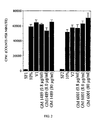
- the toxicity of the inhibitors was tested by measuring DNA synthesis by tritiated thymidine incorporation.
- the assay was adapted from a procedure previously described, Woost, P.G. et al 1992.
- Human ocular fibroblasts (Tendon's capsule fibroblasts) were cultured in Trimix (DMEM/F-10/M-199) cell culture medium (available from GIBCO/BRL) supplemented with 10% bovine calf serum and grown to confluency in T-75 tissue culture flasks. (That is flasks having a surface area of 75 cm 2 .)
- the cells were split and seeded into 24 well plates at a density of 1x10 4 /well in 1.0ml of medium with 10% bovine calf serum. The cells were incubated for 24-36 hours or until they reached 60-70% confluency. The medium was then changed to serum-free Trimix and the cells were incubated for an additional 24 hours.
- the cells were then incubated in quadruplicate wells for 24 hours with 1.0 ⁇ Ci/well 3 H-thymidine in the following conditions: serum-free medium (Trimix), medium plus 10% serum, medium plus 10% serum and vehicle, alone or with the inhibitors.
- the vehicle was a buffered acetate solution.
- the solutions comprising medium with 10% serum and vehicle, alone or with inhibitors, were prepared by the method described in Example 1, section (c), above, using Trimix instead of the HEPES buffered DMEM.
- the inhibitors, GM6001 and GM1489 were each tested at concentrations of 80.0, 8.0, and 0.8 ⁇ g/ml.
- Figure 2 shows the thymidine incorporation of the ocular fibroblasts at different concentrations of each collagenase inhibitor.
- Example 1 In the following Examples methods and materials substantially as described in Example 1 are used except where it is indicated to the contrary.
- This experiment was designed to investigate the effect of the following MMP inhibitors: Galardin, BB-94 and antibodies to MMPs, 1, 2 3 and 9, on ocular fibroblast mediated collagen contraction.
- Example 2 The preparation of materials was as described in Example 1 above except where indicated. Test solutions were used in approximately 3 ml doses. For all contraction experiments cell morphology was monitored by phase contrast microscopy and the growth medium was changed every 3 to 4 days.
- Collagen gels were seeded with either 100,000 or 500,000 cells. They were exposed to inhibitor and control solutions comprising 40 ⁇ g/ml and 4 ⁇ g/ml of Galardin or equimolar hydroxamic acid (control) at an equivalent to 40 ⁇ g/ml of Galardin (100 ⁇ M) (made up as described in Example 1(c) above). The gels were monitored for 7 days.
- Figure 3A shows the results for the collagen lattices (gels) populated with 500,000 cells per lattice.
- the mean lattice area is plotted against time (in days) for gels treated with each of the three solutions.
- Figure 3B shows the results for the collagen lattices populated with 100,000 cells per lattice. Again the mean lattice area is plotted against time for each of the three regimes. As may be seen, the contraction of the gels exposed to inhibitor solutions is much less than that of gels exposed to control solutions. Comparing Figures 3A and 3B shows that the contraction of lattices populated with 500,000 cells per lattices is greater than that of lattices populated with 100,000 cells under the same conditions.
- Collagen gels were prepared and seeded with fibroblasts (1 x 10 5 cells/lattice (gel)) as described in Example 1 above. They were exposed to inhibitor and control solutions in the following ways:
- test solutions were made up in accordance with Example 1 (c) and the growth medium in the cultures was changed every 3 to 4 days.
- Figure 3C is a plot of mean lattice area against time showing the results for experiments (i), (ii) and (iii).
- the mean area of lattices treated with control solution decreases from day 0; contraction occurs for the whole period.
- the reduction in mean area is low even after 40 to 50 days.
- the lattices exposed to inhibitor solution until day 14 shown as * in Figure 3C
- control solution experiment (iii)
- Figure 3D is a plot of mean lattice area against time for each of experiments (iv), (v) and (vi). As may be seen, in the first 5 days of the experiments when lattices were not exposed to test solutions the lattices underwent substantial contraction. After day 5 (marked as * in Figure 3D) the lattices were exposed to the test solutions. The contraction continued (there was no reversal) but at a reduced rate. Both the 4 ⁇ g/ml and 40 ⁇ g/ml solutions of Galardin inhibited contraction in comparison with the control solution. The 40 ⁇ g/ml solution of Galardin gave a stronger inhibitory effect than the 4 ⁇ g/ml solution.
- This experiment was carried out substantially according to the method of Example 2, except that cells were seeded at 2x10 4 cells per well, cultured without radioactive material and were exposed to control medium (DMEM/10% NCS) or Galardin at 40 ⁇ g/ml and 4 ⁇ g/ml concentration. Approximately 1ml of test solution was added in each case. Wells were harvested and cells counted on a haemocytometer, see Figure 3E for the results, and the percentage of viable cells in each well was measured using the trypan blue dye exclusion test, see Figure 3F for the results. As can be seen the Galardin did not adversely affect cell viability and number compared to controls.
- MMP inhibitors may be used in quantities and concentrations high enough to restrict contraction without significant toxicity.
- test solutions used were 1:50 (vol/vol) of antibodies in growth medium.
- the antibodies used were antibodies to MMPs 1, 2, 3 and 9, obtained from Biogenesis Ltd., (Poole, U.K.).
- a control solution of 0.1% sodium azide and 0.14% rabbit serum in PBS diluted to 1:50 in growth medium was also used. See Figure 3H for the results.
- Figure 3H is a plot of mean lattice area against time for lattices exposed to each of the test solutions. As may be seen, the lattices exposed to control solution and to the solution of antibody to MMP9 showed significant contraction. The lattices exposed to one of the antibodies to MMP1, MMP2 or MMP3 showed no significant contraction.
- Fibroblast cells were both grown in monolayer culture and were seeded in collagen lattices.
- Total RNA was isolated from samples containing 3x10 6 cells using the method described in Chomczynski & Sacchi 1987. Samples were taken from cells in monolayer culture on day 0 of the experiment and samples were also taken from cells, which were contracting collagen lattices after 9 hours, 1 day and 7 days.
- samples of the RNA were treated with known copy numbers of a synthetic RNA template (0.1 to 100,000 copies) containing complementary sequences to the primers for sequences to MMPs 1, 2, 3 and 9.
- the mixtures underwent reverse transcriptase reactions prior to amplification by PCR using specific primers for MMPs 1, 2, 3 and 9.
- both the sample RNA and the synthetic template RNA compete equally for primer binding.
- Band intensities were image analysed and the ratio of amplified synthetic template to amplified sample intensities calculated. These values were plotted versus initial template copy number. When the ratio of amplified synthetic template to sample is one, then the initial copy numbers of synthetic template and sample are equal. This allowed calculation of message copy number per cell in all samples.
- RNA extracted from cells which were contracting collagen contained raised levels of mRNA for MMPs 1, 2 and 3 but not 9, in comparison with that taken from cells in monolayer cultures. They also showed that levels of MMP mRNA decreased over the 7 day culture period.
- Figure 6 is a reproduction of a photograph of the results of the PCR reaction. It shows the sample and template bands at day 0, 9 hours, 1 day and 7 days for mRNA encoding each of MMPs1, 2, 3 and 9.
- the gelatin zymography showed that actively contracting cells when compared to cells from monolayer cultures produced four proteolytically active species (Mr approximately 100,000; 90,200; 72,000 and 57,000), two of which appear (ones with Mrs of 72,000 and 57,000) to increase over the 7 day period. See Figure 7 for results. One was activated upon incubation with aminophenyl mecuric acetate (Mr 100,000 reduced to 57,000).
- Collagen lattices (gels) were prepared as previously described in Example 1 and were seeded with 1x10 5 cells per lattice of:
- the lattices were then exposed to growth medium containing Galardin at 40 ⁇ g/ml or hydroxamic acid at 100 ⁇ M (control).
- the test solutions were made up as described in Example 3 above and approximately 3ml dose of the appropriate test solutions were used.
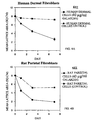
- the area of each lattice was measured over 7 days and the results are shown in Figures 4A, 4B and 4C.
- Figures 4A, 4B and 4C are plots of mean lattice area over time for lattices populated with fibroblasts under exposure to either control solution or inhibitor solution.
- Figure 4A for human dermal fibroblasts
- 4B for rat parietal sheath fibroblast
- 4C for rat endotendon fibroblast.
- the contraction of lattices populated with any of the three types of fibroblasts was greatly reduced when exposed to the inhibitor solutions in comparison with the lattices populated with the same type of fibroblasts and exposed to the control solution.
- a collagen lattice (gel) was prepared as in Example 1 and was seeded with both human keratinocytes and human dermal fibroblasts to mimic skin. This lattice was then exposed to growth medium containing Galardin at 40 ⁇ g/ml or hydroxamic acid at 100 ⁇ M (control). The solutions were made up as described in Example 3(a) above and approximately 3ml portions of the appropriate solutions were used. The lattice area was measured over 7 days and the results are shown in Figure 5.
- Figure 5 is a plot of the mean lattice area over time (in days) for lattices exposed to the control solution and for lattices exposed to the inhibitor solution. As may be seen, the lattices exposed to the inhibitor solution suffered less contraction than those exposed to the control solution.
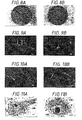
- Collagen lattices seeded with ocular fibroblasts were prepared and exposed to MMP inhibitors, both synthetic chemicals and antibodies, as described in Example 3 above. Cellular morphology was monitored by phase contrast microscopy.
- the inhibitor did not appear to affect the actin cytoskeleton compared to controls in monolayer culture.
- Lattices for transmission electron microscopy were harvested 3 days post seeding, washed with PBS (3x3ml), and fixed overnight at 4°C in 2.5% (vol/vol) glutaraldehyde with 0.5% (wt/vol) tannic acid in 0.07M sodium cacodylate buffer (pH 7.0). Following a rinse in 0.01M cacodylate-HCl buffer (pH 7.3), postfixation for 2 hours in 1% (wt/vol) aqueous osmium tetroxide at 4°C, lattices were dehydrated through ascending alcohols and cleared in propylene dioxide.
Landscapes
- Health & Medical Sciences (AREA)
- Life Sciences & Earth Sciences (AREA)
- General Health & Medical Sciences (AREA)
- Animal Behavior & Ethology (AREA)
- Public Health (AREA)
- Veterinary Medicine (AREA)
- Chemical & Material Sciences (AREA)
- Epidemiology (AREA)
- Medicinal Chemistry (AREA)
- Pharmacology & Pharmacy (AREA)
- Birds (AREA)
- Organic Chemistry (AREA)
- Immunology (AREA)
- Proteomics, Peptides & Aminoacids (AREA)
- Dermatology (AREA)
- Bioinformatics & Cheminformatics (AREA)
- Engineering & Computer Science (AREA)
- Genetics & Genomics (AREA)
- Gastroenterology & Hepatology (AREA)
- Biochemistry (AREA)
- Biophysics (AREA)
- Gerontology & Geriatric Medicine (AREA)
- Molecular Biology (AREA)
- Chemical Kinetics & Catalysis (AREA)
- General Chemical & Material Sciences (AREA)
- Nuclear Medicine, Radiotherapy & Molecular Imaging (AREA)
- Medicines That Contain Protein Lipid Enzymes And Other Medicines (AREA)
- Pharmaceuticals Containing Other Organic And Inorganic Compounds (AREA)
Abstract
Claims (32)
- Utilisation d'un inhibiteur de métalloprotéinase de la matrice pour la fabrication d'un médicament destiné à restreindre, empêcher ou prévenir la contraction d'un tissu naturel ou artificiel comprenant des composants de la matrice extracellulaire.
- Utilisation telle revendiquée dans la revendication 1, où le tissu comprend du collagène.
- Utilisation telle revendiquée dans la revendication 1 ou 2, où la contraction se produit en relation avec un état pathologique ou avec un procédé chirurgical ou cosmétique.
- Utilisation telle que revendiquée dans l'une quelconque des revendications 1 à 3, où le tissu est un tissu cicatrisé.
- Utilisation telle que revendiquée dans l'une quelconque des revendications 1 à 4, où le médicament est destiné à restreindre, empêcher ou prévenir la contraction d'un tissu associée à une brûlure thermique ou à une brûlure par irradiation, une greffe de peau, une maladie de l'oeil liée à la thyroïde, une sclérodermie, ou une contraction de Dupytren.
- Utilisation telle que revendiquée dans l'une quelconque des revendications 1 à 4, où le médicament est destiné à restreindre, empêcher ou prévenir la contraction d'un tissu associée à un état post-traumatique résultant d'une chirurgie ou d'un accident.
- Utilisation telle que revendiquée dans l'une quelconque des revendications 1 à 4, où le médicament est destiné à restreindre, empêcher ou prévenir la contraction d'un tissu associée à un état post-traumatique résultant d'une chirurgie de l'oeil ou d'un traumatisme de l'oeil ou de la cavité oculaire. (manquait un morceau)
- Utilisation telle que revendiquée dans la revendication 7, où la chirurgie de l'oeil est une chirurgie du glaucome, une chirurgie du strabisme, de l'orbite ou de la paupière, une chirurgie de la cornée, une chirurgie d'un détachement de rétine, ou une chirurgie de la cataracte, et où le traumatisme de l'oeil est un traumatisme de la cornée.
- Utilisation telle que revendiquée dans la revendication 8, où la chirurgie de la cornée est un traitement au laser ou chirurgical de la myopie ou d'erreur de la réfraction.
- Utilisation telle que revendiquée dans la revendication 3 ou la revendication 4, où le traitement cosmétique est une chirurgie cosmétique.
- Utilisation telle que revendiquée dans la revendication 10, où la chirurgie cosmétique est une abrasion dermique.
- Utilisation telle que revendiquée dans la revendication 5, où la brûlure thermique ou par irradiation concerne l'oeil, la surface de la peau, la peau et les tissus sous-jacents, ou les tissus internes.
- Utilisation telle que revendiquée dans l'une quelconque des revendications 1 à 4, où le médicament est destiné à restreindre, empêcher ou prévenir la contraction d'un tissu associée à un traitement chirurgical d'un ulcère de l'estomac, ou un traitement chirurgical impliquant un conduit, canal ou vaisseau sanguin.
- Utilisation telle que revendiquée dans l'une quelconque des revendications 1 à 4, où le médicament est destiné à restreindre, empêcher ou prévenir la contraction d'un tissu associée à un état post-traumatique résultant d'une blessure du tendon de la main ou du pied.
- Utilisation telle que revendiquée dans l'une quelconque des revendications 1 à 14, où le médicament est destiné à l'administration prophylactique au tissu avant que tout signe de contraction n'apparaisse.
- Utilisation telle que revendiquée dans l'une quelconque des revendications 1 à 15, où le médicament est destiné à l'administration au tissu au moment où la contraction apparaít et éventuellement aussi pour une période durant laquelle la contraction peut apparaítre après cicatrisation apparente.
- Méthode pour restreindre, empêcher ou prévenir la contraction in vitro d'un tissu naturel ou artificiel comprenant des composants de la matrice extracellulaire, qui comprend l'administration d'un inhibiteur de métalloprotéinase de la matrice au tissu durant et/ou après sa formation.
- Méthode telle que revendiquée dans la revendication 17, où le tissu est une peau naturelle ou une peau artificielle.
- Méthode pour la production d'une peau artificielle qui comprend l'ensemencement d'un gel de collagène avec des kératinocytes humains et des fibroblastes dermiques humains et l'exposition du gel à un milieu de croissance comprenant un inhibiteur de métalloprotéinase de la matrice.
- Utilisation telle que revendiquée dans l'une quelconque des revendications 1 à 16 dans laquelle l'inhibiteur est un inhibiteur de métalloprotéinase de la matrice à large spectre.
- Utilisation telle que revendiquée dans l'une quelconque des revendications 1 à 16 dans laquelle l'inhibiteur est capable d'inhiber une ou plusieurs des métalloprotéinases de la matrice 1, 2 et 3.
- Utilisation telle que revendiquée dans l'une quelconque des revendications 1 à 16 dans laquelle l'inhibiteur de métalloprotéinase de la matrice est un inhibiteur de collagénase.
- Utilisation telle que revendiquée dans l'une quelconque des revendications 1 à 16, dans laquelle l'inhibiteur est le N-[2(R)-2-(hydroxamido-carbonyl-méthyle)-4-méthylpentanoyl]-L-tryptophane méthylamide.
- Utilisation telle que revendiquée dans l'une quelconque des revendications 1 à 16 où l'inhibiteur est un acide hydroxamique peptidique ou un dérivé pharmaceutiquement acceptable de celui-ci
- Utilisation telle que revendiquée dans l'une quelconque des revendications 1 à 16 où l'inhibiteur est un agent qui inhibe la production des métalloprotéinases de la matrice.
- Utilisation telle que revendiquée dans la revendication 25, où l'inhibiteur est une molécule antisens.
- Utilisation telle que revendiquée dans l'une quelconque des revendications 1 à 16 où l'inhibiteur est un anticorps monoclonal ou polyclonal anti-métalloprotéinase de la matrice.
- Utilisation telle que revendiquée dans l'une quelconque des revendications 1 à 16 et 20 à 27, où le médicament comprend plus d'un inhibiteur, un inhibiteur étant un inhibiteur de métalloprotéinase de la matrice et au moins un autre inhibiteur présentant des propriétés inhibitrices pour une enzyme autre qu'une métalloprotéinase de la matrice.
- Utilisation telle que revendiquée dans l'une quelconque des revendications 1 à 16 et 20 à 27, où le médicament comprend plus d'un inhibiteur, un inhibiteur étant un inhibiteur de collagénase et au moins un autre inhibiteur présentant des propriétés inhibitrices pour une enzyme métalloprotéinase de la matrice autre qu'une collagénase.
- Utilisation telle que revendiquée dans l'une quelconque des revendications 1 à 16 et 20 à 27, où le médicament comprend aussi un inhibiteur de cytokine.
- Utilisation telle que revendiquée dans l'une quelconque des revendications 1 à 16 et 20 à 30, où le médicament comprend aussi un ingrédient pharmaceutiquement actif supplémentaire choisi parmi le groupe des antiobitiques, antifongiques, stéroïdes, inhibiteurs d'enzymes, promoteurs de croissance et promoteurs de cicatrisation.
- Méthode telle que revendiquée dans l'une quelconque des revendications 17 à 19, où l'inhibiteur de métalloprotéinase de 1a matrice et chaque substance supplémentaire sont définies dans l'une quelconque des revendications 20 à 31.
Applications Claiming Priority (3)
| Application Number | Priority Date | Filing Date | Title |
|---|---|---|---|
| GB9405076A GB9405076D0 (en) | 1994-03-16 | 1994-03-16 | A medical use of matrix metalloproteinase inhibitors |
| GB9405076 | 1994-03-16 | ||
| PCT/GB1995/000576 WO1995024921A1 (fr) | 1994-03-16 | 1995-03-16 | Utilisation a des fins medicales d'inhibiteurs de metalloproteases matricielles dans le traitement de la contraction tissulaire |
Publications (2)
| Publication Number | Publication Date |
|---|---|
| EP0750512A1 EP0750512A1 (fr) | 1997-01-02 |
| EP0750512B1 true EP0750512B1 (fr) | 2005-07-13 |
Family
ID=10751916
Family Applications (1)
| Application Number | Title | Priority Date | Filing Date |
|---|---|---|---|
| EP95911409A Expired - Lifetime EP0750512B1 (fr) | 1994-03-16 | 1995-03-16 | Utilisation a des fins medicales d'inhibiteurs de metalloproteases matricielles dans le traitement de la contraction tissulaire |
Country Status (6)
| Country | Link |
|---|---|
| US (3) | US6093398A (fr) |
| EP (1) | EP0750512B1 (fr) |
| AU (1) | AU1898595A (fr) |
| DE (1) | DE69534309T2 (fr) |
| GB (1) | GB9405076D0 (fr) |
| WO (1) | WO1995024921A1 (fr) |
Families Citing this family (59)
| Publication number | Priority date | Publication date | Assignee | Title |
|---|---|---|---|---|
| US6528483B2 (en) | 1995-06-07 | 2003-03-04 | André Beaulieu | Method of producing concentrated non-buffered solutions of fibronectin |
| US7112320B1 (en) | 1995-06-07 | 2006-09-26 | Andre Beaulieu | Solid wound healing formulations containing fibronectin |
| DE69732784T2 (de) * | 1996-12-06 | 2006-04-06 | Fonden Til Fremme Af Eksperimental Cancerforskning | Inhibierung von invasiver remodulierung |
| ZA9711121B (en) * | 1996-12-13 | 1998-06-23 | Handelman Joseph H | Reduction of hair growth. |
| AU737376B2 (en) * | 1997-02-25 | 2001-08-16 | Regents Of The University Of Michigan, The | Methods and compositions for preventing and treating chronological aging in human skin |
| GB9714936D0 (en) * | 1997-07-17 | 1997-09-17 | Smith & Nephew | Cell culture products |
| NL1008531C2 (nl) * | 1998-03-09 | 1999-09-10 | Stichting Tech Wetenschapp | Huidsubstituut en een topische samenstelling voor huidwonden. |
| US6329418B1 (en) | 1998-04-14 | 2001-12-11 | The Procter & Gamble Company | Substituted pyrrolidine hydroxamate metalloprotease inhibitors |
| US20030105044A1 (en) * | 2001-10-17 | 2003-06-05 | Isis Pharmaceuticals Inc. | Antisense modulation of matrix metalloproteinase 1 expression |
| GB9903598D0 (en) * | 1999-02-18 | 1999-04-07 | Univ Manchester | Connective tissue healing |
| US20040235950A1 (en) * | 1999-05-20 | 2004-11-25 | Voorhees John J. | Compositions and methods for use against acne-induced inflammation and dermal matrix-degrading enzymes |
| US6696456B1 (en) | 1999-10-14 | 2004-02-24 | The Procter & Gamble Company | Beta disubstituted metalloprotease inhibitors |
| GB9930768D0 (en) * | 1999-12-29 | 2000-02-16 | Pfizer Ltd | Composition |
| US6627785B1 (en) | 2000-02-29 | 2003-09-30 | Virginia Commwealth University | Wound dressings with protease-lowering activity |
| CZ20023179A3 (cs) * | 2000-03-21 | 2003-02-12 | The Procter And Gamble Company | Metalloproteázové inhibitory zahrnující vedlejší karbocyklický řetězec |
| CA2401728A1 (fr) * | 2000-03-21 | 2001-09-27 | The Procter & Gamble Company | Inhibiteurs de metalloproteases d'acide difluorobutyrique |
| RU2245876C2 (ru) | 2000-03-21 | 2005-02-10 | Дзе Проктер Энд Гэмбл Компани | Производные сульфонамидов и фармацевтическая композиция на их основе |
| JP4074043B2 (ja) * | 2000-03-27 | 2008-04-09 | 株式会社資生堂 | 皮膚基底膜形成促進剤、人工皮膚形成促進剤及び人工皮膚の製造方法 |
| JP2003528850A (ja) * | 2000-03-27 | 2003-09-30 | ザ・スクリプス・リサーチ・インステイチユート | 血管形成および腫瘍成長の阻害 |
| WO2001074320A2 (fr) * | 2000-03-31 | 2001-10-11 | Henkel Kommanditgesellschaft Auf Aktien | Utilisation d'inhibiteurs de protease dans les cosmetiques et produits pharmaceutiques |
| US20020073441A1 (en) | 2000-12-13 | 2002-06-13 | Ross Brian D. | Compositions and methods for detecting proteolytic activity |
| US7041787B2 (en) * | 2000-12-29 | 2006-05-09 | Kimberly-Clark Worldwide, Inc. | Design and use of advanced zinc chelating peptides to regulate matrix metalloproteinases |
| US6600057B2 (en) | 2000-12-29 | 2003-07-29 | Kimberly-Clark Worldwide, Inc. | Matrix metalloproteinase inhibitors |
| WO2003094954A1 (fr) * | 2001-09-25 | 2003-11-20 | Quick Med Technologies, Inc. | Composition et procede servant a minimiser ou a eviter les effets nefastes de vesicants |
| WO2003053447A1 (fr) * | 2001-12-20 | 2003-07-03 | Hanauske-Abel Hartmut M | Traitement permettant de prevenir ou de retarder un accouchement premature |
| US20030119073A1 (en) * | 2001-12-21 | 2003-06-26 | Stephen Quirk | Sensors and methods of detection for proteinase enzymes |
| JP2004075661A (ja) * | 2002-06-18 | 2004-03-11 | Shiseido Co Ltd | 表皮基底膜ケアを特徴とする皮膚外用剤、皮膚基底膜構造形成促進剤および人工皮膚の製造方法 |
| WO2004014867A2 (fr) * | 2002-08-13 | 2004-02-19 | Warner-Lambert Company Llc | Inhibiteurs de metalloproteinases matricielles et procedes d'identification de tetes de serie |
| DE10238298A1 (de) * | 2002-08-21 | 2004-03-04 | Beiersdorf Ag | Verwendung von Antisense-Oligonucleotiden zur Behandlung von degenerativen Hauterscheinungen |
| US20080139512A1 (en) * | 2002-09-25 | 2008-06-12 | Quick-Med Technologies, Inc. | Method for minimizing or avoiding adverse effects of vesicants |
| FR2847345B1 (fr) * | 2002-11-18 | 2005-02-18 | Oreal | Procede de criblage et/ou d'evaluation de l'activite anti-ride de produits |
| US20040225077A1 (en) | 2002-12-30 | 2004-11-11 | Angiotech International Ag | Drug delivery from rapid gelling polymer composition |
| US7104605B2 (en) * | 2003-01-22 | 2006-09-12 | Integrated Stadium Seating | Stadium cushion |
| US20070269537A1 (en) * | 2003-02-10 | 2007-11-22 | Bioderm Research | Skin Condition Improvement Including Acne, Rosacea, and Topical Wounds by Artemisia Annua Extract via Iron Siderophore Trojan Horse Delivery System |
| US20050186261A1 (en) * | 2004-01-30 | 2005-08-25 | Angiotech International Ag | Compositions and methods for treating contracture |
| EP1781714A1 (fr) * | 2004-07-02 | 2007-05-09 | Rimon Therapeutics Ltd. | Materiaux contenant un hydroxyamate permettant d'inhiber des metalloproteinases matricielles |
| GB2415903A (en) * | 2004-07-07 | 2006-01-11 | Ethicon Inc | Pharmaceutical preparation which promotes wound healing |
| US20060112494A1 (en) * | 2004-12-01 | 2006-06-01 | David Oppong | Method of protecting an animal skin product from metalloproteinase activity |
| US20070259030A1 (en) * | 2006-05-05 | 2007-11-08 | Drapeau Susan J | Methods, systems and reagents for tendon and ligament therapy |
| US20120046724A1 (en) * | 2006-07-13 | 2012-02-23 | Anna Norlin Weissenrieder | implantable cardiac stimulation drug releasing electrode |
| US8323642B2 (en) * | 2006-12-13 | 2012-12-04 | Depuy Mitek, Inc. | Tissue fusion method using collagenase for repair of soft tissue |
| GB0710522D0 (en) * | 2007-06-01 | 2007-07-11 | Royal Veterinary College The | Drug delivery system comprising matrix metalloproteinase inhibitors |
| US20100178259A1 (en) * | 2009-01-12 | 2010-07-15 | The Regents Of The University Of Michigan | Reducing fibrosis using matrix metalloproteinase inhibitors |
| CA2676946A1 (fr) | 2009-08-28 | 2011-02-28 | Lucie Peduto | Inhibiteurs de l'enzyme adam12 et leur utilisation contre la fibrose induite par l'inflammation |
| ES2715204T3 (es) * | 2010-10-30 | 2019-06-03 | Univ Oxford Innovation Ltd | Tratamiento de la enfermedad de Dupuytren |
| WO2014201406A1 (fr) * | 2013-06-13 | 2014-12-18 | Modern Meadow, Inc. | Cuir de synthèse et procédés de fabrication |
| US20150237837A1 (en) * | 2012-06-18 | 2015-08-27 | Duke University | Non-Human Model for Wound Healing |
| CN114558032B (zh) | 2012-12-21 | 2025-07-29 | 安斯泰来再生医药协会 | 由多能干细胞制备血小板的方法及其组合物 |
| WO2014116812A2 (fr) * | 2013-01-24 | 2014-07-31 | Northwestern University | Revêtements phénoliques et leurs procédés de fabrication et d'utilisation |
| WO2015038988A1 (fr) | 2013-09-13 | 2015-03-19 | Modern Meadow, Inc. | Microsupports comestibles et exempts de produits d'origine animale pour viande transformée |
| EP3102043A4 (fr) | 2014-02-05 | 2017-08-09 | Modern Meadow, Inc. | Produits alimentaires séchés fabriqués à partir de cellules musculaires cultivées |
| ES2842501T5 (es) | 2015-09-21 | 2023-04-13 | Modern Meadow Inc | Materiales compuestos de tejido reforzados con fibras |
| WO2017134265A1 (fr) | 2016-02-05 | 2017-08-10 | Institut Pasteur | Utilisation d'inhibiteurs d'adam12 comme adjuvants dans les traitement antitumoraux |
| US11525042B2 (en) | 2016-02-15 | 2022-12-13 | Modern Meadow, Inc. | Composite biofabricated material |
| US20190117746A1 (en) * | 2016-04-18 | 2019-04-25 | University Of Florida Research Foundation, Inc. | Compositions, systems, and methods for scar tissue modification |
| AU2018253595A1 (en) | 2017-11-13 | 2019-05-30 | Modern Meadow, Inc. | Biofabricated leather articles having zonal properties |
| EP3704202A4 (fr) | 2019-01-17 | 2020-12-16 | Modern Meadow, Inc. | Matériaux de collagène en couches et leurs procédés de fabrication |
| EP4143258A4 (fr) | 2020-05-01 | 2024-05-22 | Modern Meadow, Inc. | Alliages de protéine-polyuréthane et matériaux en couches comprenant ceux-ci |
| WO2022128057A1 (fr) | 2020-12-14 | 2022-06-23 | Symrise Ag | Médicament pour la prévention et le traitement de la dégradation du collagène dans un tissu conjonctif humain |
Family Cites Families (12)
| Publication number | Priority date | Publication date | Assignee | Title |
|---|---|---|---|---|
| ZW23187A1 (en) * | 1986-12-15 | 1988-06-29 | Hoffmann La Roche | Phosphinic acid derivatives |
| GB8827305D0 (en) * | 1988-11-23 | 1988-12-29 | British Bio Technology | Compounds |
| GB8827308D0 (en) * | 1988-11-23 | 1988-12-29 | British Bio Technology | Compounds |
| US5183900A (en) * | 1990-11-21 | 1993-02-02 | Galardy Richard E | Matrix metalloprotease inhibitors |
| US5189178A (en) * | 1990-11-21 | 1993-02-23 | Galardy Richard E | Matrix metalloprotease inhibitors |
| US5484726A (en) * | 1990-11-21 | 1996-01-16 | Bristol-Myers Squibb Company | Antibodies specific for human stromelysin-3 and a method for detection of stromelysin-3 |
| US5114953A (en) * | 1990-11-21 | 1992-05-19 | University Of Florida | Treatment for tissue ulceration |
| GB9102635D0 (en) * | 1991-02-07 | 1991-03-27 | British Bio Technology | Compounds |
| JP3348725B2 (ja) * | 1992-04-07 | 2002-11-20 | ブリティッシュ バイオテック ファーマシューティカルズ リミテッド | ヒドロキサム酸ベースのコラゲナーゼとサイトカイン阻害剤 |
| AU4267293A (en) * | 1992-05-01 | 1993-11-29 | British Biotech Pharmaceuticals Limited | Use of MMP inhibitors |
| US5602156A (en) * | 1993-09-17 | 1997-02-11 | The United States Of America As Represented By The Department Of Health And Human Services | Method for inhibiting metalloproteinase expression |
| US5514716A (en) * | 1994-02-25 | 1996-05-07 | Sterling Winthrop, Inc. | Hydroxamic acid and carboxylic acid derivatives, process for their preparation and use thereof |
-
1994
- 1994-03-16 GB GB9405076A patent/GB9405076D0/en active Pending
-
1995
- 1995-03-16 AU AU18985/95A patent/AU1898595A/en not_active Abandoned
- 1995-03-16 DE DE69534309T patent/DE69534309T2/de not_active Expired - Lifetime
- 1995-03-16 US US08/716,155 patent/US6093398A/en not_active Expired - Lifetime
- 1995-03-16 EP EP95911409A patent/EP0750512B1/fr not_active Expired - Lifetime
- 1995-03-16 WO PCT/GB1995/000576 patent/WO1995024921A1/fr not_active Ceased
-
1999
- 1999-08-03 US US09/368,307 patent/US6379667B1/en not_active Expired - Lifetime
-
2002
- 2002-04-29 US US10/135,934 patent/US6759432B2/en not_active Expired - Lifetime
Also Published As
| Publication number | Publication date |
|---|---|
| US6379667B1 (en) | 2002-04-30 |
| US6093398A (en) | 2000-07-25 |
| US20020164319A1 (en) | 2002-11-07 |
| GB9405076D0 (en) | 1994-04-27 |
| US6759432B2 (en) | 2004-07-06 |
| DE69534309D1 (de) | 2005-08-18 |
| WO1995024921A1 (fr) | 1995-09-21 |
| AU1898595A (en) | 1995-10-03 |
| DE69534309T2 (de) | 2006-05-24 |
| EP0750512A1 (fr) | 1997-01-02 |
Similar Documents
| Publication | Publication Date | Title |
|---|---|---|
| US6093398A (en) | Medical use of matrix metalloproteinase inhibitors for inhibiting tissue contraction | |
| Weinreb et al. | Prostaglandin production by human trabecular cells: in vitro inhibition by dexamethasone. | |
| JP3843943B2 (ja) | N−アシルアミノ−アミドファミリーの新規な化合物、それを含有する組成物及び用途 | |
| JP3705820B2 (ja) | 皮膚の光老化を抑制する方法 | |
| Ågren | Matrix metalloproteinases (MMPs) are required for re-epithelialization of cutaneous wounds | |
| Matsubara et al. | Mechanism of basement membrane dissolution preceding corneal ulceration. | |
| Reiss et al. | Matrix metalloproteinase-9 delays wound healing in a murine wound model | |
| Bradley et al. | Effect of matrix metalloproteinases activity on outflow in perfused human organ culture. | |
| US5552162A (en) | Method for improvement of scar size and appearance | |
| US20110236325A1 (en) | Methods to treat or prevent a skin condition using a nell1 peptide | |
| JP4086867B2 (ja) | N−アシルアミノアミドファミリー化合物と少なくとも1種のマトリックスメタロプロテイナーゼ阻害剤の組み合わせを含む化粧品用又は皮膚用組成物 | |
| JP4117774B2 (ja) | N−アシルアミノアミドファミリーのエラスターゼ阻害剤化合物と少なくとも1種の抗炎症剤化合物の組み合わせを含む化粧品用又は皮膚用組成物 | |
| JPH10273438A (ja) | 慢性創傷の治療用組成物 | |
| CN101384246A (zh) | 含二氢黄酮衍生物的皮肤外用制剂 | |
| JP2025529453A (ja) | 皺皮および皺の外観を軽減するために低分子の化学化合物を使用する方法 | |
| US20020198176A1 (en) | Treatment of psoriasis with matrix metalloproteinase inhibitors | |
| US20060127343A1 (en) | Administration of urea compounds for combating signs of cutaneous aging | |
| EP1269990B1 (fr) | Composition cosmétique ou dermatologique comprenant des dérivés d'acylaminoamide | |
| Ramamurthy et al. | Topically applied CMT-2 enhances wound healing in streptozotocin diabetic rat skin | |
| CN112791003B (zh) | 维甲酸受体激动剂化合物在化妆品组合物中的应用 | |
| JP2005508873A (ja) | N−アシルアミノアミド誘導体を含有する化粧品用又は皮膚用組成物 | |
| KR20040094402A (ko) | 랑게르한스 세포 이동을 억제하기 위한 적어도 1개의알칸올아미드를 포함하는 조성물, 및 이의 용도 | |
| EP0967968B1 (fr) | Composition pharmaceutique ou cosmetique contenant au moins un retinoide et melibiose | |
| WO1991010427A2 (fr) | Effet de l'inhibition de la transglutaminase sur le developpement des microfilaires et sur la viabilite des macrofilaires | |
| Klein et al. | The effects of a broad-spectrum matrix metalloproteinase inhibitor on characteristics of wound healing |
Legal Events
| Date | Code | Title | Description |
|---|---|---|---|
| PUAI | Public reference made under article 153(3) epc to a published international application that has entered the european phase |
Free format text: ORIGINAL CODE: 0009012 |
|
| 17P | Request for examination filed |
Effective date: 19961014 |
|
| AK | Designated contracting states |
Kind code of ref document: A1 Designated state(s): CH DE FR GB IT LI NL |
|
| RBV | Designated contracting states (corrected) |
Designated state(s): CH DE FR GB IT LI NL |
|
| 17Q | First examination report despatched |
Effective date: 20010116 |
|
| GRAP | Despatch of communication of intention to grant a patent |
Free format text: ORIGINAL CODE: EPIDOSNIGR1 |
|
| RIC1 | Information provided on ipc code assigned before grant |
Ipc: 7A 61P 17/00 B Ipc: 7C 07K 16/40 B Ipc: 7A 61K 31/405 B Ipc: 7A 61K 38/55 A |
|
| GRAS | Grant fee paid |
Free format text: ORIGINAL CODE: EPIDOSNIGR3 |
|
| GRAA | (expected) grant |
Free format text: ORIGINAL CODE: 0009210 |
|
| AK | Designated contracting states |
Kind code of ref document: B1 Designated state(s): CH DE FR GB IT LI NL |
|
| REG | Reference to a national code |
Ref country code: GB Ref legal event code: FG4D |
|
| REG | Reference to a national code |
Ref country code: CH Ref legal event code: EP |
|
| REF | Corresponds to: |
Ref document number: 69534309 Country of ref document: DE Date of ref document: 20050818 Kind code of ref document: P |
|
| REG | Reference to a national code |
Ref country code: CH Ref legal event code: NV Representative=s name: ISLER & PEDRAZZINI AG |
|
| ET | Fr: translation filed | ||
| PLBE | No opposition filed within time limit |
Free format text: ORIGINAL CODE: 0009261 |
|
| STAA | Information on the status of an ep patent application or granted ep patent |
Free format text: STATUS: NO OPPOSITION FILED WITHIN TIME LIMIT |
|
| 26N | No opposition filed |
Effective date: 20060418 |
|
| REG | Reference to a national code |
Ref country code: GB Ref legal event code: 732E |
|
| NLS | Nl: assignments of ep-patents |
Owner name: MOORFIELDS EYE HOSPITAL NHS FOUNDATION TRUST Effective date: 20070212 Owner name: INSTITUTE OF OPHTHALMOLOGY Effective date: 20070212 |
|
| REG | Reference to a national code |
Ref country code: CH Ref legal event code: PCAR Free format text: ISLER & PEDRAZZINI AG;POSTFACH 1772;8027 ZUERICH (CH) |
|
| RAP2 | Party data changed (patent owner data changed or rights of a patent transferred) |
Owner name: MOORFIELDS EYE HOSPITAL NHS FOUNDATION TRUST Owner name: INSTITUTE OF OPHTHALMOLOGY |
|
| NLT2 | Nl: modifications (of names), taken from the european patent patent bulletin |
Owner name: INSTITUTE OF OPHTHALMOLOGY EN MOORFIELDS EYE HOSPI Effective date: 20080116 |
|
| REG | Reference to a national code |
Ref country code: DE Ref legal event code: R082 Ref document number: 69534309 Country of ref document: DE Representative=s name: MAI DOERR BESIER PATENTANWAELTE, DE |
|
| PGFP | Annual fee paid to national office [announced via postgrant information from national office to epo] |
Ref country code: NL Payment date: 20140314 Year of fee payment: 20 Ref country code: DE Payment date: 20140328 Year of fee payment: 20 Ref country code: CH Payment date: 20140318 Year of fee payment: 20 |
|
| PGFP | Annual fee paid to national office [announced via postgrant information from national office to epo] |
Ref country code: GB Payment date: 20140318 Year of fee payment: 20 |
|
| PGFP | Annual fee paid to national office [announced via postgrant information from national office to epo] |
Ref country code: FR Payment date: 20140331 Year of fee payment: 20 Ref country code: IT Payment date: 20140328 Year of fee payment: 20 |
|
| REG | Reference to a national code |
Ref country code: DE Ref legal event code: R071 Ref document number: 69534309 Country of ref document: DE |
|
| REG | Reference to a national code |
Ref country code: DE Ref legal event code: R071 Ref document number: 69534309 Country of ref document: DE |
|
| REG | Reference to a national code |
Ref country code: NL Ref legal event code: V4 Effective date: 20150316 |
|
| REG | Reference to a national code |
Ref country code: CH Ref legal event code: PL |
|
| REG | Reference to a national code |
Ref country code: GB Ref legal event code: PE20 Expiry date: 20150315 |
|
| PG25 | Lapsed in a contracting state [announced via postgrant information from national office to epo] |
Ref country code: GB Free format text: LAPSE BECAUSE OF EXPIRATION OF PROTECTION Effective date: 20150315 |