EP0759993B1 - Sequences d'adn codant des enzymes susceptibles de faciliter la synthese d'alpha-1,4 glycanes lineaires chez les vegetaux, les champignons et les micro-organismes - Google Patents
Sequences d'adn codant des enzymes susceptibles de faciliter la synthese d'alpha-1,4 glycanes lineaires chez les vegetaux, les champignons et les micro-organismes Download PDFInfo
- Publication number
- EP0759993B1 EP0759993B1 EP95920833A EP95920833A EP0759993B1 EP 0759993 B1 EP0759993 B1 EP 0759993B1 EP 95920833 A EP95920833 A EP 95920833A EP 95920833 A EP95920833 A EP 95920833A EP 0759993 B1 EP0759993 B1 EP 0759993B1
- Authority
- EP
- European Patent Office
- Prior art keywords
- glucans
- amylosucrase
- dna
- linear
- dna sequence
- Prior art date
- Legal status (The legal status is an assumption and is not a legal conclusion. Google has not performed a legal analysis and makes no representation as to the accuracy of the status listed.)
- Expired - Lifetime
Links
Images

Classifications
-
- C—CHEMISTRY; METALLURGY
- C12—BIOCHEMISTRY; BEER; SPIRITS; WINE; VINEGAR; MICROBIOLOGY; ENZYMOLOGY; MUTATION OR GENETIC ENGINEERING
- C12N—MICROORGANISMS OR ENZYMES; COMPOSITIONS THEREOF; PROPAGATING, PRESERVING, OR MAINTAINING MICROORGANISMS; MUTATION OR GENETIC ENGINEERING; CULTURE MEDIA
- C12N9/00—Enzymes; Proenzymes; Compositions thereof; Processes for preparing, activating, inhibiting, separating or purifying enzymes
- C12N9/10—Transferases (2.)
- C12N9/1048—Glycosyltransferases (2.4)
- C12N9/1051—Hexosyltransferases (2.4.1)
-
- C—CHEMISTRY; METALLURGY
- C12—BIOCHEMISTRY; BEER; SPIRITS; WINE; VINEGAR; MICROBIOLOGY; ENZYMOLOGY; MUTATION OR GENETIC ENGINEERING
- C12N—MICROORGANISMS OR ENZYMES; COMPOSITIONS THEREOF; PROPAGATING, PRESERVING, OR MAINTAINING MICROORGANISMS; MUTATION OR GENETIC ENGINEERING; CULTURE MEDIA
- C12N15/00—Mutation or genetic engineering; DNA or RNA concerning genetic engineering, vectors, e.g. plasmids, or their isolation, preparation or purification; Use of hosts therefor
- C12N15/09—Recombinant DNA-technology
- C12N15/11—DNA or RNA fragments; Modified forms thereof; Non-coding nucleic acids having a biological activity
- C12N15/52—Genes encoding for enzymes or proenzymes
-
- A—HUMAN NECESSITIES
- A01—AGRICULTURE; FORESTRY; ANIMAL HUSBANDRY; HUNTING; TRAPPING; FISHING
- A01H—NEW PLANTS OR NON-TRANSGENIC PROCESSES FOR OBTAINING THEM; PLANT REPRODUCTION BY TISSUE CULTURE TECHNIQUES
- A01H5/00—Angiosperms, i.e. flowering plants, characterised by their plant parts; Angiosperms characterised otherwise than by their botanic taxonomy
-
- C—CHEMISTRY; METALLURGY
- C07—ORGANIC CHEMISTRY
- C07H—SUGARS; DERIVATIVES THEREOF; NUCLEOSIDES; NUCLEOTIDES; NUCLEIC ACIDS
- C07H21/00—Compounds containing two or more mononucleotide units having separate phosphate or polyphosphate groups linked by saccharide radicals of nucleoside groups, e.g. nucleic acids
- C07H21/04—Compounds containing two or more mononucleotide units having separate phosphate or polyphosphate groups linked by saccharide radicals of nucleoside groups, e.g. nucleic acids with deoxyribosyl as saccharide radical
-
- C—CHEMISTRY; METALLURGY
- C12—BIOCHEMISTRY; BEER; SPIRITS; WINE; VINEGAR; MICROBIOLOGY; ENZYMOLOGY; MUTATION OR GENETIC ENGINEERING
- C12N—MICROORGANISMS OR ENZYMES; COMPOSITIONS THEREOF; PROPAGATING, PRESERVING, OR MAINTAINING MICROORGANISMS; MUTATION OR GENETIC ENGINEERING; CULTURE MEDIA
- C12N1/00—Microorganisms; Compositions thereof; Processes of propagating, maintaining or preserving microorganisms or compositions thereof; Processes of preparing or isolating a composition containing a microorganism; Culture media therefor
- C12N1/20—Bacteria; Culture media therefor
-
- C—CHEMISTRY; METALLURGY
- C12—BIOCHEMISTRY; BEER; SPIRITS; WINE; VINEGAR; MICROBIOLOGY; ENZYMOLOGY; MUTATION OR GENETIC ENGINEERING
- C12N—MICROORGANISMS OR ENZYMES; COMPOSITIONS THEREOF; PROPAGATING, PRESERVING, OR MAINTAINING MICROORGANISMS; MUTATION OR GENETIC ENGINEERING; CULTURE MEDIA
- C12N15/00—Mutation or genetic engineering; DNA or RNA concerning genetic engineering, vectors, e.g. plasmids, or their isolation, preparation or purification; Use of hosts therefor
- C12N15/09—Recombinant DNA-technology
- C12N15/63—Introduction of foreign genetic material using vectors; Vectors; Use of hosts therefor; Regulation of expression
- C12N15/79—Vectors or expression systems specially adapted for eukaryotic hosts
- C12N15/82—Vectors or expression systems specially adapted for eukaryotic hosts for plant cells, e.g. plant artificial chromosomes (PACs)
- C12N15/8241—Phenotypically and genetically modified plants via recombinant DNA technology
- C12N15/8242—Phenotypically and genetically modified plants via recombinant DNA technology with non-agronomic quality (output) traits, e.g. for industrial processing; Value added, non-agronomic traits
- C12N15/8243—Phenotypically and genetically modified plants via recombinant DNA technology with non-agronomic quality (output) traits, e.g. for industrial processing; Value added, non-agronomic traits involving biosynthetic or metabolic pathways, i.e. metabolic engineering, e.g. nicotine, caffeine
- C12N15/8245—Phenotypically and genetically modified plants via recombinant DNA technology with non-agronomic quality (output) traits, e.g. for industrial processing; Value added, non-agronomic traits involving biosynthetic or metabolic pathways, i.e. metabolic engineering, e.g. nicotine, caffeine involving modified carbohydrate or sugar alcohol metabolism, e.g. starch biosynthesis
- C12N15/8246—Non-starch polysaccharides, e.g. cellulose, fructans, levans
-
- C—CHEMISTRY; METALLURGY
- C12—BIOCHEMISTRY; BEER; SPIRITS; WINE; VINEGAR; MICROBIOLOGY; ENZYMOLOGY; MUTATION OR GENETIC ENGINEERING
- C12N—MICROORGANISMS OR ENZYMES; COMPOSITIONS THEREOF; PROPAGATING, PRESERVING, OR MAINTAINING MICROORGANISMS; MUTATION OR GENETIC ENGINEERING; CULTURE MEDIA
- C12N5/00—Undifferentiated human, animal or plant cells, e.g. cell lines; Tissues; Cultivation or maintenance thereof; Culture media therefor
- C12N5/10—Cells modified by introduction of foreign genetic material
Definitions
- the present invention relates to recombinant DNA techniques for producing plants and microorganisms capable of intra- or extracellularly expressing a protein exhibiting amylosucrase activity and catalyzing the synthesis of linear ⁇ -1,4 glucans from sucrose.
- the present invention further relates to new DNA sequences and plasmids containing said DNA sequences which, after integration into a plant genome or after transformation in microorganisms, particularly bacteria or fungi, result in the expression of an enzyme catalyzing the synthesis of linear ⁇ -1,4 glucans from sucrose, as well as to transgenic organisms (i.e., plants, fungi and microorganisms) containing the above-mentioned DNA sequences.
- Linear ⁇ -1,4 glucans are polysaccharides consisting of glucose monomers, the latter being exclusively linked to each other by ⁇ -1,4 glycosidic bonds.
- the most frequently occurring natural ⁇ -1,4 glucan is the amylose, a component of plant starch. Recently, more and more importance has been attached to the commercial use of linear ⁇ -1,4 glucans. Due to its physico-chemical properties amylose can be used to produce films that are colorless, odorless and flavorless, non-toxic and biologically degradable.
- amylose Due to its physico-chemical properties amylose can be used to produce films that are colorless, odorless and flavorless, non-toxic and biologically degradable.
- there are various possibilities of application e.g., in the food industry, the textile industry, the glass fiber industry and in the production of paper.
- amylose whose properties are similar to those of natural cellulose fibers and which allow to partially or even completely replace them in the production of paper.
- amylose is particularly used as binder for the production of tablets, as thickener of puddings and creams, as gelatin substitute, as binder in the production of sound-insulating wall panels and to improve the flow properties of waxy oils.
- Another property of the ⁇ -1,4 glucans, which recently has gained increasing attention, is the capability of these molecules to form inclusion compounds with organic complexers due to their helical structure. This property allows to use the ⁇ -1,4 glucans for a wide variety of applications.
- Amylose also serves as starting material for the production of so-called cyclodextrins (also referred to as cycloamyloses, cyclomaltoses) which in turn are widely used in the pharmaceutical industry, food processing technology, cosmetic industry and analytic separation technology.
- cyclodextrins are cyclic maltooligosaccharides from 6-8 monosaccharide units, which are freely soluble in water but have a hydrophobic cavity which can be utilized to form inclusion compounds.
- ⁇ -1,4 glucans are obtained in the form of amylose from starch.
- Starch itself consists of two components. One component forms the amylose as an unbranched chain of ⁇ -1,4 linked glucose units. The other component forms the amylopectin, a highly branched polymer from glucose units in which in addition to the ⁇ -1, 4 links the glucose chains can also be branched via ⁇ -1,6 links. Due to their different structure and the resulting physico-chemical properties, the two components are also used for different fields of application. In order to be able to directly utilize the properties of the individual components, it is necessary to obtain them in pure form. Both components can be obtained from starch, the process, however, requiring several purification steps and involving considerable time and money.
- amylose extender and dull varieties e.g., the amylose extender and dull varieties ( Wolf et al., 1955, J. Am. Chem. Soc. 77:1654-1659 ; Boyer et al., 1976, Dieopathy: 28:405-410 ).
- Other plant species were used to obtain varieties that synthesize uniform starches in form of amylopectin, e.g., rice ( Sano, 1984, Theor. Appl. Genet.
- WO 92/14827 discloses the production of potato plants which due to the anti-sense inhibition of the expression of the branching enzyme produce a starch having an increased amylose/amylopectin proportion. However, the plants described in WO 92/14827 do not produce a highly amylose-containing starch.
- the invention therefore relates to a DNA sequence coding for a protein having the enzymatic activity of an amylosucrase which catalyzes the synthesis of linear ⁇ -1,4 glucans from sucrose, selected from the group consisting of
- the present invention furthermore relates to DNA sequences hybridizing to the above-mentioned sequences of the invention and coding for a protein having the enzymatic activity of an amylosucrase, as well as to DNA sequences which, due to the genetic code, are degenerate in comparison to the above-mentioned DNA sequences of the invention.
- hybridization in this context means hybridization under conventional hybridization conditions, preferably under stringent conditions such as described by, e.g., Sambrook et al. (1989, Molecular Cloning, A Laboratory Manual, 2nd Edition, Cold Spring Harbor Laboratory Press, Cold Spring Harbor, NY ).
- DNA sequences according to the invention coding for a protein having the enzymatic activity of an amylosucrase are obtainable by a process comprising the following steps:
- a suitable host as mentioned in step (b) is, e.g., E . coli.
- the invention relates to DNA sequences coding for an amylosucrase from microorganisms, particularly gram negative microorganisms, preferably from bacteria of the species Neisseria and particularly preferred from Neisseria polysaccharea.
- DNA sequences of the invention by mutation or by a sequence alteration by insertion, deletion, substitution or recombination in order to alter certain properties of the protein to be expressed.
- One of these modifications is, inter alia, the deletion of the signal sequence ensuring secretion of the enzyme, and the inserts of other signal sequences or DNA sequences coding for transit peptides and thereby influencing the localization of the expressed protein.
- the DNA sequences of the invention in particular the DNA sequence of the invention indicated in Seq ID No. 1 or parts thereof, can be used to determine whether homologous DNA sequences are present in or are expressed by certain organisms.
- DNA or mRNA samples of the individual organism are hybridized to a DNA sequence of the invention under appropriate hybridization conditions according to conventional methods.
- homologous sequences which likewise encode amylosucrases or enzymes having similar properties by using a DNA sequence of the invention.
- homology means a sequence identity of at least 40% to 60%, preferably of more than 60%, particularly more than 80%, still more preferably a sequence identity of more than 95%.
- Homology furthermore means that the respective DNA sequences or encoded amino acid sequences are functionally and/or structurally equivalent.
- the sequences that are homologous to the sequences of the invention and that deviate from the DNA sequence or encoded amino acid sequence of the invention in one or more positions are regularly variations of said sequence which represent modifications having the same function. They may be naturally occurring variations, such a sequences of other organisms, or mutations. These mutations may occur naturally or may be achieved by specific mutagenesis. Furthermore, these variations may be synthetically produced sequences. All these DNA sequences are likewise comprised by the invention.
- proteins encoded by the various variants of the DNA sequence of the invention share specific common characteristics, such as enzymatic activity, immunological reactivity, conformation etc., as well as physical properties such as electrophoretic mobility, chromatographic behavior, sedimentation coefficient, solubility, spectroscopic properties, stability etc.
- gene libraries of the organism to be examined must be obtained which are representative of the content of the genes of the organism or of the expression of genes in the organism or of a certain tissue of the organism.
- the first-mentioned type are genomic libraries, the latter cDNA libraries. Identification and isolation of homologous DNA sequences from such libraries is achieved by hybridization according to standard techniques (see, e.g., Sambrook et al., 1989, Molecular Cloning, A Laboratory Manual, 2nd Edition, Cold Spring Harbor Laboratory Press, Cold Spring Harbor, NY ).
- hybridization probe DNA molecules can be used that exhibit exactly or substantially the DNA sequence indicated under Seq ID No. 1 or part of said sequence.
- the DNA fragments used as hybridization probes can also be synthetic DNA fragments which were prepared according to conventional DNA synthesis methods and are substantially identical to a sequence of the invention. Once the genes hybridizing to a DNA sequence of the invention have been identified and isolated, it is necessary to determine the sequence and to analyze the properties of the proteins encoded by said sequence.
- amylosucrase also referred to as sucrose:1,4- ⁇ glucan 4- ⁇ -glucosyltransferase, E.C. 2.4.1.4.
- sucrose:1,4- ⁇ glucan 4- ⁇ -glucosyltransferase E.C. 2.4.1.4.
- This reaction is a transglucosylation.
- the products of this reaction are linear ⁇ -1,4 glucans and fructose. Cofactors are not required.
- Amylosucrase activity so far has been found only in few bacteria species, among them particularly the species Neisseria ( MacKenzie et al., 1978, Can. J. Microbiol. 24:357-362 ) and the enzyme has been examined only for its enzymatic activity.
- the partially purified enzyme from Neisseria perflava upon addition of sucrose results in the synthesis of glycogen-like polysaccharides which are branched to a small extent ( Okada et al., 1974, J. Biol. Chem.
- the enzyme that is expressed in a constitutive manner in Neisseria is extremely stable, binds very strongly to the polymerization products and is competitively inhibited by the product fructose ( MacKenzie et al., 1977, Can. J. Microbiol. 23:1303-1307 ).
- the Neisseria species Neisseria polysaccharea secretes the amylosucrase ( Riou et al., 1986, Can. J. Microbiol. 32:909-911 ) while in the other Neisseria species it remains in the cell.
- Enzymes having amylosucrase activity could only be detected in microorganisms. Plants are not known to have amylosucrases. According to the invention it could be shown that the product of the reaction catalyzed by amylosucrase are linear ⁇ -1,4 glucans that are not branched as has been assumed so far (see above).
- the detection of the enzymatic activity of the amylosucrase can be achieved by detecting the synthesized glucans, as is described in Example 3, below. Detection is usually carried out by using a iodine stain. It is possible to identify bacterial colonies expressing amylosucrase by, e.g., treatment with iodine vapor. Colonies synthesizing the linear ⁇ -1,4 glucans are stained blue. The enzyme activity of the purified enzyme can be detected on, e.g., sucrose-containing agarose plates.
- the protein is applied to such a plate and incubated for about 1 h or more at 37°C, it diffuses into the agarose and catalyzes the synthesis of linear glucans.
- the latter can be detected by treatment with iodine vapor.
- the protein can be detected in native polyacrylamide gels. After a native polyacrylamide gel electrophoresis the gel is equilibrated in sodium citrate buffer (50 mM, pH 6.5) and incubated over night in a sucrose solution (5% in sodium citrate buffer). If the gel is subsequently stained with Lugol's solution, areas in which proteins having amylosucrase activity are localized are stained blue due to the synthesis of linear ⁇ -1,4 glucans.
- DNA sequences of the invention it is possible to produce plants that are capable of producing pure amylose starch, i.e., linear ⁇ -1,4 glucans, and to modify starch-producing plants in such a way that they have higher starch yields and a simultaneously increased amylose/amylopectin proportion.
- the DNA sequences of the invention can be used to produce microorganisms and fungi, particularly yeasts, that are capable of producing an enzyme catalyzing the synthesis of linear ⁇ -1,4 glucans from sucrose. It is furthermore possible to produce at low production costs pure fructose syrup with the help of the DNA sequences of the invention or of the proteins encoded by them.
- the invention relates to recombinant DNA molecules, such as vectors, particularly plasmids, containing the DNA sequences of the invention or parts thereof, e.g., plasmid pNB2 which was deposited under DSM No. 9196.
- the invention particularly relates to recombinant DNA molecules in which a DNA sequence of the invention is linked to sequences ensuring expression of a protein having amylosucrase activity which catalyzes the synthesis of linear ⁇ -1,4 glucans from sucrose in microorganisms, fungi or plants, e.g., plasmids containing the following DNA sequences:
- a further object of the invention are microorganisms, fungi and plants containing the recombinant DNA molecules of the invention.
- a still further object of the invention are proteins having the enzymatic activity of an amylosucrase which catalyze the synthesis of linear ⁇ -1,4 glucans from sucrose and which are encoded by one of the DNA sequences of the invention, particularly those derived from microorganisms, preferably from gram negative microorganisms, specifically from microorganisms of the genus Neisseria and particularly preferred from Neisseria polysaccharea.
- An object of the invention are furthermore amylosucrases having a molecular weight of 63 ⁇ 20 kDA in gel electrophoresis, preferably of 63 t 15 kDA and most preferably of 63 ⁇ 10 kDa.
- a further object of the invention are particularly proteins having the enzymatic activity of amylosucrase which exhibit the amino acid sequence of the polypeptide encoded by the coding region coding for an amylosucrase from Neisseria polysaccharea as contained in the DNA insert of plasmid pNB2 (DSN 9196).
- the invention furthermore relates to proteins exhibiting amino acid sequences which are substantially identical to that amino acid sequence, or which deviate from said sequence in one or more positions. The deviations preferably are conservative amino acid exchanges and the protein has the enzymatic activity of an amylosucrase.
- the invention furthermore relates to amylosucrases the amino acid sequence of which exhibits a high homology to the amino acid sequence of the polypeptide encoded by the coding region coding for an amylosucrase from Neisseria polysaccharea as contained in the DNA insert of plasmid pNB2 (DSN 9196), in particular a homology of at least 70%, preferably of more than 80%, more preferred of more than 90% and particularly preferred a homology of at least 99%.
- the invention relates to the use of the DNA sequences of the invention and of DNA molecules, particularly of plasmids, containing said DNA sequences for the transformation of procaryotic or eucaryotic cells as well as for the expression of an amylosucrase in procaryotic or eucaryotic cells, and also to a process for the production of the proteins of the invention by cultivating a microorganism containing a recombinant DNA molecule of the invention in an appropriate nutrient.
- the object of the present invention is a process for the production of plants which are capable of synthesizing linear ⁇ -1,4 glucans, characterized by introducing into plant cells a DNA sequence of the invention which comprises a region coding for a protein having the enzymatic activity of an amylosucrase linked to DNA sequences ensuring expression in plant cells and regeneration of whole plants from the transformed cells.
- the present invention relates to a process for the production of plant cells and plants which are capable of synthesizing linear ⁇ -1,4 glucans, comprising the following process steps:
- Useful promoters are those promoters that ensure a constitutive expression of the gene in all tissues of the plants such as the 35S promoter of the cauliflower mosaic virus (CaMV) as well as those that ensure expression only in certain organs or at certain times in the development of the plant.
- promoters that ensure a specific expression in the tubers of potato plants such as the B33 promoter ( Liu et al, 1990, Mol. Gen. Genet. 223:401-406 ) or those that allow a specific expression in the roots of the sugar beet.
- DNA sequences that allow a light-dependent and tissue-specific expression of DNA sequences downstream thereof in leaves ( Orozco and Ogren, 1993, Plant Mol. Biol. 23:1129-1138 ).
- the DNA sequence mentioned in process step (a) (ii) basically can be any DNA sequence according to the invention comprising a coding region coding for a protein having the enzymatic activity of an amylosucrase.
- Useful DNA sequences are particularly DNA sequences derived from microorganisms, preferably from gram negative microorganisms, specifically of the genus Neisseria , and particularly from Neisseria polysaccharea.
- the DNA sequence coding for an amylosucrase is linked in sense orientation to the promoter (3' end of the promoter to the 5' end of the coding sequence).
- This sequence can be modified before or after linkage to the transcription control elements (promoter and termination signal) in order to vary, if necessary, the properties of the polypeptide or its localization as is described infra in more detail.
- the signal sequence effecting secretion In order to express the enzyme in the cytosol of the plant cells, the signal sequence effecting secretion must be removed. If the enzyme to be expressed is to be directed to certain subcellular compartments such as chloroplasts, amyloplasts, mitochondria or the vacuole, the signal sequence effecting secretion must be replaced by a signal sequence or a sequence coding for a transit peptide which ensures the transport of the expressed protein to the respective compartment. Such sequences are known.
- the transit peptides of the precursor proteins of the small subunit of the ribulose bisphosphate carboxylase (RUBISCO) from potatoes Wolter et al., 1988, Proc. Natl. Acad. Sci.
- the signal sequence of patatin can be used ( Sonnewald et al., 1991, Plant J. 1:95-106 ).
- the sequences used must be fused in frame to the DNA sequence coding for the enzyme.
- the transfer of the expression cassette constructed in process step (a) in plant cells is preferably carried out using plasmids, for example, binary plasmids. It is preferred to use techniques that ensure that the expression cassette is stably integrated into the genome of the transformed plant cell.
- the process of the invention can basically be applied to any plant species. Both monocotyledonous and dicotyledonous plants are of interest. Transformation techniques have already been described for various monocotyledonous and dicotyledonous plant species.
- the DNA sequences of the invention allow to modify plants such that they express proteins having the enzymatic activity of an amylosucrase, thereby allowing the synthesis of linear ⁇ -1,4 glucans in plants. Since linear ⁇ -1,4 glucans are identical to the amylose synthesized in plants in terms of their chemical structure, it is therefore possible to produce plants that synthesize the pure amylose and to modify starch-producing plants such that they synthesize a starch having an increased amylose proportion.
- the photo assimilates formed in the course of photosynthesis are transported within the plant in form of sugars, more specifically mainly in the form of sucrose, to the respective target organs.
- the substrate for the polymerization reaction of the amylosucrase is sucrose
- the process described above basically allows to modify all plants, both dicotylodenous and monocotyledonous, with respect to an amylosucrase expression.
- crop plants such as maize, rice, wheat, barley, sugar beet, sugar cane, tobacco, potatoes or cassava, but also fruit and vegetable species such as apples, plums, carrots or tomatoes.
- an amylosucrase activity in plants can inter alia be used to change the viscosity of extracts obtained from the plants by synthesis of linear ⁇ -1,4 glucans.
- the tomato is of interest.
- linear ⁇ -1,4 glucans are synthesized, thereby leading to an increased viscosity of the extracts that are obtained from these fruits.
- amylosucrase is furthermore particularly advantageous in those organs of the plants that store large amounts of sucrose.
- organs are, e.g., the root of the sugar beet or the stem of the sugar cane. Since these plants normally do not synthesize any appreciable amounts of starch, the linear ⁇ -1,4 glucans synthesized by amylosucrase could be isolated in pure form from these plants.
- the place of biosynthesis of the sucrose in plant cells is the cytosol.
- the place of storage is the vacuole.
- cytosol During transport to the storage tissue of the sugar beet or the potato or during transport to the endospermium of seeds the sucrose has to pass the apoplast. Therefore, all three compartments, i.e., cytosol, vacuole and apoplast can be considered for the expression of the amylosucrase for the synthesis of linear glucans.
- transgenic potato plants and maize plants in which due to an inhibition of the ADP glucose pyrophosphorylase by an antisense construct the starch synthesis in the tubers and grains, respectively, is completely inhibited. Instead, e.g., in potatoes soluble sugars, particularly sucrose and glucose, are accumulated in the tubers ( Müller-Röber et al., 1992, EMBO J. 11:1229-1238 ; EP-A-0 455 316 ).
- amylosucrase in the cytosol, the vacuole or the apoplast of these plants, i.e., in compartments where no branching enzymes are present, the synthesis of highly amylose-containing starch, i.e., starch mainly consisting of linear ⁇ -1,4 glucans, can be achieved.
- the reaction mechanism that is catalyzed by the amylosucrase is characterized by a glucose residue being directly transferred from sucrose to a linear glucan.
- the sucrose is first split into glucose and fructose which in turn are converted into the activated intermediate form ADP glucose.
- cloning vectors available containing a replication signal for E . coli and a marker gene for the selection of transformed bacterial cells which can be used to prepare the introduction of foreign genes into higher plants.
- examples of such vectors are pBR322, pUC series, M13mp series, pACYC184, etc.
- the desired sequence can be introduced into the vector at an appropriate restriction site.
- the plasmid obtained is used to transform E . coli cells.
- Transformed E . coli cells are cultivated in an appropriate medium and are then harvested and lysed. The plasmid is recovered.
- Methods of analysis generally used to characterize the obtained plasmid DNA are restriction analyses, gel electrophoresis, sequencing reactions and further methods known in biochemistry and molecular biology.
- Every plasmid DNA sequence can be cloned into the same or other plasmids.
- Many techniques are available for the introduction of DNA into a plant host cell. These techniques comprise the transformation of plant cells with T-DNA using Agrobacterium tumefaciens or Agrobacterium rhizogenes as transformation agents, the fusion of protoplasts, injection, electroporation of DNA, introduction of DNA by the bioballistic method as well as other possible techniques. Depending on the method of introduction of the desired genes into the plant cells, further DNA sequences may be required.
- the Ti or Ri plasmid is used for the transformation of the plant cell, at least the right border sequence, but often the right and left border sequence of the Ti and Ri plasmid T-DNA as flanking area must be linked with the genes to be introduced.
- Agrobacteria are used for transformation, the DNA to be introduced must be cloned into special plasmids, either into an intermediate vector or into a binary vector.
- the intermediate vectors can be integrated by homologous recombination into the Ti or Ri plasmid of the Agrobacteria due to sequences that are homologous to sequences in the T-DNA.
- Said plasmid contains the vir region necessary for the transfer of the T-DNA.
- Intermediate vectors are not able to replicate in Agrobacteria.
- the intermediate vector can be transferred to Agrobacterium tumefaciens using a helper plasmid (conjugation).
- Binary vectors are able to replicate both in E . coli and in Agrobacteria . They contain a selection marker gene and a linker or polylinker flanked by the right and left T-DNA border regions. They can be directly transformed into Agrobacteria ( Holsters et al., 1978, Mol. Gen. Genet. 163:181-187 ).
- the Agrobacterium serving as host cell should contain a plasmid carrying a vir region. The vir region is necessary for the transfer of the T-DNA to the plant cell.
- T-DNA may be present.
- the thus transformed Agrobacterium is used to transform plant cells.
- the use of T-DNA for the transformation of plant cells has been extensively examined and is sufficiently described in EP 120516 ; Hoekema, In: The Binary Plant Vector System, Offsetdrukkerij Kanters B.V., Alblasserdam, 1985, Chapter V ; Fraley et al., Crit. Rev. Plant. Sci., 4 : 1-46 and An et al; 1985, EMBO J. 4:277-287 .
- plant explants can expediently be cocultivated with Agrobacterium tumefaciens or Agrobacterium rhizogenes.
- whole plants can be regenerated on an appropriate medium which may contain antibiotics or biocides for the selection of transformed cells.
- the plants thus obtained can be screened for the presence of the introduced DNA.
- plasmids used for the injection and electroporation of DNA into plant cells.
- Simple plasmids such as pUC derivatives can be used.
- the presence of a selectable marker is required.
- telomere a selection marker which imparts to the transformed plant cells resistance to a biocide or an antibiotic such as kanamycin, G 418, bleomycin, hygromycin or gluphosinate etc.
- the individually selected marker should therefore allow for the selection of transformed cells over cells lacking the introduced DNA.
- the transformed cells grow within the cell as usual (cf., e.g., McCormick, et al., 1986, Plant Cell Reports 5:81-84 ). These plants can be grown in the usual manner and can be cross-bred with plants possessing the same transformed genetic material or other genetic materials.
- the resulting hybrid individuals have the corresponding phenotypic properties. Two or more generations should be cultivated in order to make sure that the phenotypic features are stably retained and inherited. Furthermore, seeds should be harvested in order to make sure that the corresponding phenotype or other characteristics have been retained.
- a further object of the invention are the modified plant cells and plants resulting from the above-mentioned process of the invention, particularly plant cells and plants containing a DNA sequence of the invention in combination with DNA sequences that allow the expression of the DNA sequence of the invention in plant cells.
- Said plant cells are characterized by expressing a protein having the enzymatic activity of an amylosucrase, thereby resulting in the synthesis of linear ⁇ -1,4 glucans in the cells or the plants.
- the transgenic plant cells and plants are furthermore characterized in that they contain a recombinant DNA molecule stably integrated into their genome which comprises an expression cassette, said expression cassette containing a DNA sequence coding for an amylosucrase.
- the linear ⁇ -1,4 glucans formed in the transgenic plant cells and plants with the help of the amylosucrase can be isolated from transgenic plant cells and plants in the same manner as the starch which is normally formed.
- the invention furthermore relates to the use of the DNA sequences of the invention or parts thereof for the expression of a polypeptide having amylosucrase activity, preferably in microorganisms having no amylosucrase activity of their own.
- microorganisms are to be understood as bacteria as well as all protists such as defined by, e.g., Schlegel "Allgemeine Mikrobiologie” (Georg Thieme Verlag, 1985, pages 1-2 ).
- Schlegel "Allgemeine Mikrobiologie” Greek Thieme Verlag, 1985, pages 1-2 .
- biotechnological research to a large extent uses microorganisms to synthesize and process the most varied substances.
- the present invention particularly relates to a process for the production of microorganisms capable of synthesizing, either intracellularly or extracellularly, linear ⁇ -1,4 glucans, in which a DNA sequence of the invention is introduced and expressed in the microorganism.
- Such a process may exemplarily comprise the following steps:
- Expression vectors have been extensively described in the art.
- a selection marker gene and a replication origin allowing replication in the selected host they normally contain a bacterial or viral promoter and a transcription termination signal. Between promoter and termination signal there is at least one restriction site or one polylinker which allows insertion of a coding DNA sequence.
- promoter sequence the DNA sequence which normally controls transcription of the corresponding gene can be used as long as it is active in the selected organism. This sequence can be replaced by other promoter sequences. Promoters can be used that effect constitutive expression of the gene or inducible promoters that allow a selective regulation of the expression of the gene downstream thereof. Bacterial and viral promoter sequences having these properties have been extensively described in the art.
- Promoters allowing a particularly strong expression of the gene downstream thereof are, e.g., the T7 promoter ( Studier et al., 1990, in Methods in Enzymology 185:60-89 ), lacuv5, trp, trp-lacUV5 ( DeBoer et al., in Rodriguez, R.L. and Chamberlin, M.J., (Eds.), Promoters, Structure and Function; Praeger, New York, 1982, pp. 462-481 ; DeBoer et al., 1983, Proc. Natl. Acad. Sci.
- T7 promoter Studier et al., 1990, in Methods in Enzymology 185:60-89
- lacuv5, trp, trp-lacUV5 DeBoer et al., in Rodriguez, R.L. and Chamberlin, M.J., (Eds.), Promoters, Structure and Function; Praeger, New York, 1982, pp.
- the DNA sequence mentioned in process step (a) (ii) can be any DNA sequence coding for a protein having the enzymatic activity of an amylosucrase.
- DNA sequences derived from microorganisms, particularly gram negative bacteria, preferably from the genus Neisseria and particularly preferred from Neisseria polysaccharea, are used.
- sequence used can be modified either before or after integration into the expression vector to vary, if necessary, the properties of the polypeptide or its localization, as described infra in more detail.
- DNA sequences can be used that can be derived from said sequence by substitution, insertion or deletion, as long as the enzymatic activity of the encoded protein is not impaired.
- step (b) The transformation of the microorganisms in step (b) can usually be carried out by standard techniques, such as described in Maniatis et al. (Molecular Cloning: A Laboratory Manual, 1982, New York: Cold Spring Harbor Laboratory Press ).
- the transformed microorganism is cultivated in media that must be appropriate for the needs of the individual host used. Specific attention should be paid to pH value, temperature, ventilation, etc.
- Another object of the invention are the microorganisms resulting from the process described above, which are characterized by containing a DNA sequence coding for an amylosucrase, with said sequence being part of a recombinant DNA molecule.
- Said recombinant DNA molecule - depending on the transformation method used - can be present in the cells either outside of the genome or can be stably integrated into the genome of the cells of the microorganism used.
- the amylosucrase expressed by Neisseria polysaccharea is an extracellular enzyme which synthesizes linear ⁇ -1,4 glucans outside of the cells on the basis of sucrose. Unlike in the most pathways of synthesis for polysaccharides that proceed within the cell, neither activated glucose derivatives nor cofactors are required. The energy that is required for the formation of the ⁇ -1,4 glucosidic link between the condensed glucose residues is directly obtained from the hydrolysis of the link between the glucose and the fructose unit in the sucrose molecule.
- amylosucrase-secreting microorganisms which were obtained by the process steps described above, in a sucrose-containing medium, with the secreted amylosucrase leading to a synthesis of linear ⁇ -1,4 glucans from sucrose in the medium.
- These glucans can be isolated from the culture medium.
- synthesize ⁇ -1,4 glucans in vitro with the help of a cell-free enzyme preparation.
- amylosucrase-secreting microorganisms are cultivated in a sucrose-free medium allowing expression of the amylosucrase until the stationary growth phase is reached.
- the secreted enzyme can be obtained from the supernatant.
- the enzyme can then be added to sucrose-containing solutions to synthesize linear ⁇ -1,4 glucans.
- this method is advantageous in that the reaction conditions can be better controlled and that the reaction products are substantially purer and can more easily be further purified.
- the enzyme can be purified from the culture medium by conventional purification techniques such as precipitation, ion exchange chromatography, affinity chromatography, gel filtration, HPLC reverse phase chromatography, etc. It is furthermore possible to express a polypeptide by modification of the DNA sequence inserted into the expression vector leading to a polypeptide which can be isolated more easily from the culture medium due to certain properties. It is possible to express the enzyme as a fusion protein along with another polypeptide sequence whose specific binding properties allow isolation of the fusion protein via affinity chromatography.
- fusion protein e.g., expression as fusion protein along with glutathion S transferase and subsequent purification via affinity chromatography on a glutathion column, making use of the affinity of the glutathion S transferase to glutathion ( Smith and Johnson, 1988, Gene 67:31-40 ).
- Another known technique is the expression as fusion protein along with the maltose binding protein (MBP) and subsequent purification on an amylose column ( Guan et al., 1988, Gene 67:21-30 ; Maina et al., 1988, Gene 74:365-373 ).
- carrier materials available for the immobilization of proteins which can be coupled to the carrier material either by covalent or non-covalent links (for an overview see: Methods in Enzymology Vol. 135, 136 and 137 ).
- Widely used carrier materials are, e.g., agarose, cellulose, polyacrylamide, silica or nylon.
- microorganisms expressing the desired polypeptide or secreting a specific metabolite can also be immobilized.
- Immobilization generally is achieved by inclusion of the cells in an appropriate material such as, e.g., alginate, polyacrylamide, gelatin, cellulose or chitosan. It is, however, also possible to adsorb or covalently bind the cells to a carrier material ( Brodelius and Mosbach, in Methods in Enzymology, Vol. 135:173-175 ).
- An advantage of the immobilization of cells is that considerably higher cell densities can be achieved than by cultivation in a liquid culture, resulting in a higher productivity. Also the costs for agitation and ventilation of the culture as well as for the measures for maintaining sterility are reduced.
- An important aspect is that immobilization allows a continuous production so that long unproductive phases which usually occur in fermentation processes can be avoided or can at least be considerably reduced.
- the DNA sequences of the invention can also be used for the expression of an amylosucrase activity in fungi, in particular in yeasts, e.g., Saccharomyces cerevisiae.
- yeasts e.g., Saccharomyces cerevisiae.
- Vectors for the expression of heterologous genes in yeasts have been described (e.g., Bitter et al., 1987, Methods in Enzymology 153:516-544 ).
- These vectors in addition to a selection marker gene and a replication origin for the propagation in bacteria, contain at least one further selection marker gene that allows identification of transformed yeast cells, a DNA sequence allowing replication in yeasts and a polylinker for the insertion of the desired expression cassette.
- the expression cassette is constructed from promoter, DNA sequence to be expressed and a DNA sequence allowing transcriptional termination and polyadenylation of the transcript. Promoters and transcriptional termination signals from Saccharomyces have also been described and are available.
- An expression vector can be introduced into yeast cells by transformation according to standard techniques ( Methods in Yeast Genetics, A Laboratory Course Manual, Cold Spring Harbor Laboratory Press, 1990 ). Cells containing the vector are selected and propagated on appropriate selection media. Yeasts furthermore allow to integrate the expression cassette via homologous recombination into the genome of a cell using an appropriate vector, leading to a stable inheritance of the feature.
- Yeast strains expressing amylosucrase can be used in analogy to the microorganisms to obtain a secreted amylosucrase.
- Cultivation methods for yeasts have been sufficiently described ( Methods in Yeast Genetics, A Laboratory Course Manual, Cold Spring Harbor Laboratory Press, 1990 ). Immobilization of the yeasts is also possible and is already used in the commercial production of ethanol ( Nagashima et al., in Methods in Enzymology, Vol. 136:394-405 ; Nojima and Yamada, in Methods in Enzymology, Vol. 136:380-394 ).
- yeasts secreting amylosucrase for the synthesis of linear ⁇ -1,4 glucans in sucrose-containing media is not readily possible as yeasts secrete an invertase that hydrolyzes extracellular sucrose.
- the yeasts import the resulting hexoses via a hexose transporter.
- Gozalbo and Hohmann (1990, Current Genetics 17, 77-79 ) describe a yeast strain that carries a defective suc2 gene and that therefore cannot secrete invertase.
- these yeast cells do not contain a transport system for importing sucrose into the cells.
- linear ⁇ -1,4 glucans are synthesized by the amylosucrase if the culture medium contains sucrose.
- the fructose being formed as reaction product can subsequently be imported by the yeasts.
- the present invention also relates to a process for the production of fungal cells capable of synthesizing, either intracellularly or extracellularly, linear ⁇ -1,4 glucans in which a DNA sequence according to the invention is introduced into fungal cells and is expressed.
- a process for the production of fungal cells capable of synthesizing, either intracellularly or extracellularly, linear ⁇ -1,4 glucans in which a DNA sequence according to the invention is introduced into fungal cells and is expressed.
- Such a process may exemplarily comprise the following steps:
- Another aspect of the present invention is the possibility of producing in an inexpensive manner pure fructose syrup by using the DNA sequences of the invention.
- Conventional methods for the production of fructose either contemplate the enzymatic hydrolysis of sucrose using an invertase or the degradation of starch into glucose units, often by acidolysis, and subsequent enzymatic conversion of the glucose into fructose by glucose isomerase. Both methods result in mixtures of glucose and fructose. The two components have to be separated from each other by chromatographic processes.
- the production of pure fructose or pure fructose syrup using a protein having the enzymatic activity of an amylosucrase is preferably carried out in a cell-free system using the purified enzyme.
- the latter can be immobilized on an appropriate carrier material or can be present in soluble form.
- the presence of sucrose results in a synthesis of linear glucans and in the release of fructose. Separation of the substrate from the reaction products or separation of the two reaction products can be achieved by, e.g., using membranes allowing the permeation of fructose but not of sucrose or glucans. If the fructose is continuously removed via such a membrane, the sucrose is converted more or less completely into fructose and linear glucans.
- amylosucrase can preferably be immobilized on a carrier material located between two membranes, one of which allows the permeation of fructose but not of sucrose or glucans and the other allows the permeation of sucrose but not of glucans.
- the substrate is supplied through the membrane which allows the permeation of sucrose.
- the synthesized glucans remain in the space between the two membranes and the released fructose can continuously be removed from the reaction equilibrium through the membrane which allows only the permeation of fructose.
- Such a set-up allows an efficient separation of the reaction products and thus inter alia the production of pure fructose.
- amylosucrases for the production of pure fructose offers the advantage that the comparably inexpensive substrate sucrose can be used as starting material and furthermore that the fructose can be isolated from the reaction mixture in a simple manner without chromatographic processes.
- the invention therefore also relates to the use of proteins having the enzymatic activity of amylosucrase for the production of fructose.
- Cyclodextrins are produced by the degradation of starch by the enzyme cyclodextrin transglycosylase (EC 2.4.1.19) which is obtained from the bacterium Bacillus macerans. Due to the branching of starch only about 40% of the glucose units can be converted to cyclodextrins using this system.
- the plasmid pNB2 of the invention was deposited at Deutsche Sammlung von Mikroorganismen (DSM), Braunschweig, Germany, on May 6, 1994 according to the provisions of the Budapest Treaty under deposit no. DSM 9196.
- IPTG isopropyl ⁇ -D-thiogalacto-pyranoside
- Neisseria polysaccharea cells were cultured on "Columbia blood agar" (Difco) for 2 days at 37°C. The resulting colonies were harvested from the plates. Genomic DNA was isolated according to the method of Ausubel et al. (in: Current Protocols in Molecular Biology (1987), J. Wiley & Sons, NY) and processed. The DNA thus obtained was partially digested with the restriction endonuclease Sau3A . The resulting DNA fragments were ligated into the BamH I digested vector pBluescript SK(-). The ligation products were transformed in E . coli XL1-Blue cells. For their selection, the cells were plated onto YT plates with ampicillin as selection marker. The selection medium additionally contained 5% sucrose and 1 mM IPTG.
- a recombinant plasmid was isolated. Restriction analyses showed that said plasmid was a ligation product consisting of two vector molecules and an approx. 4.2 kb long genomic fragment.
- the plasmid was digested with the restriction endonuclease Pst I and the genomic fragment was isolated (GeneClean, Bio101). The fragment thus obtained was ligated into a pBluescript II SK vector linearized with Pst I, resulting in a duplication of the Pst I and Sma I restriction sites.
- the ligation product was transformed in E . coli cells and the latter were plated on ampicillin plates for selection. Positive clones were isolated.
- plasmid pNB2 (Fig. 1) was isolated and part of the sequence of its genomic DNA insert was determined by standard techniques using the dideoxy method ( Sanger et al., 1977, Proc. Natl. Acad. Sci. USA 74:5463-5467 ). The entire insert is approx. 4.2 kbp long.
- E . coli cells were transformed with the vector pNB2 according to standard techniques.
- a colony of the transformed strain was incubated on YT plates (1.5% agar; 100 ⁇ g/ml ampicillin; 5% sucrose; 0.2 mM IPTG) over night at 37°C.
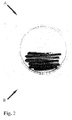
- the amylosucrase activity was detected by subjecting the colonies to iodine vapor (Fig. 2).
- Amylosucrase-expressing colonies exhibit a blue corona. Amylosucrase activity can be observed even if no IPTG was present, probably due to the activity of the endogenous amylosucrase promoters.
- E . coli were transformed with the vector pNB2 according to standard techniques.
- YT medium 100 ⁇ g/ml ampicillin; 5% sucrose
- the cells were incubated over night at 37°C under constant agitation (rotation mixer; 150-200 rpm).
- the products of the reaction catalyzed by amylosucrase were detected by adding Lugol's solution to the culture supernatant, leading to blue staining.
- E . coli cells were transformed with the vector pNB2 according to standard techniques.
- YT medium 100 ⁇ g/ml ampicillin
- the cells were incubated over night at 37°C under constant agitation (rotation mixer; 150-200 rpm). Then the cells were removed by centrifugation (30 min, 4°C, 5500 rpm, JA10 Beckmann rotor). The supernatant was filtered through a 0.2 ⁇ m filter (Schleicher & Schuell) under sterile conditions. Detection of an amylosucrase activity was carried out by
- E . coli cells were transformed with the vector pNB2 according to standard techniques.
- YT medium 100 ⁇ g/ml ampicillin
- the cells were incubated over night at 37°C under constant agitation (rotation mixer; 150-200 rpm). Then the cells were removed by centrifugation (30 min, 4°C, 5500 rpm, JA10 Beckmann rotor). The supernatant was filtered through a 0.2 ⁇ m filter (Schleicher & Schuell) under sterile conditions.
- the concentrated supernatant was added to 50 ml of a sucrose solution (5% sucrose in 50 mM sodium citrate buffer pH 6.5). The entire solution was incubated at 37°C. Whitish insoluble polysaccharides are formed.
- the insoluble reaction products described in Example 4 are soluble in 1 M NaOH.
- the reaction products were characterized by measuring the absorption maximum. Approx. 100 mg of the isolated reaction products (wet weight) were dissolved in 200 ⁇ l 1 M NaOH and diluted with H 2 O 1:10. 900 ⁇ l of 0.1 M NaOH and 1 ml Lugol's solution were added to 100 ⁇ l of this dilution. The absorption spectrum was measured between 400 and 700 nm. The maximum is 605 nm (absorption maximum of amylose: approx. 614 nm). HPLC analysis of the reaction mixture of Example 4 on a CARBOPAC PA1 column (DIONEX) showed that in addition to the insoluble products soluble products were also formed.
- PCR polymerase chain reaction
- the resulting fragment contains the coding region for amylosucrase except for the nucleotides coding for the 16 N-terminal amino acids. These amino acids comprise the sequences that are necessary for the secretion of the enzyme from the cell. Furthermore, this PCR fragment contains 88 bp of the 3' untranslated region. By way of the primers used Nco I restriction sites were intoduced into both ends of the fragment. After digestion with the restriction endonuclease NcoI the resulting fragment was ligated with the NcoI digested expression vector pMex 7. The ligation products were transformed in E . coli cells and transformed clones were selected.
Landscapes
- Health & Medical Sciences (AREA)
- Life Sciences & Earth Sciences (AREA)
- Genetics & Genomics (AREA)
- Chemical & Material Sciences (AREA)
- Engineering & Computer Science (AREA)
- Organic Chemistry (AREA)
- Biotechnology (AREA)
- Wood Science & Technology (AREA)
- Zoology (AREA)
- Molecular Biology (AREA)
- Bioinformatics & Cheminformatics (AREA)
- Biomedical Technology (AREA)
- Biochemistry (AREA)
- General Engineering & Computer Science (AREA)
- General Health & Medical Sciences (AREA)
- Microbiology (AREA)
- Nutrition Science (AREA)
- Plant Pathology (AREA)
- Cell Biology (AREA)
- Medicinal Chemistry (AREA)
- Biophysics (AREA)
- Physics & Mathematics (AREA)
- Environmental Sciences (AREA)
- Tropical Medicine & Parasitology (AREA)
- Physiology (AREA)
- Virology (AREA)
- Botany (AREA)
- Developmental Biology & Embryology (AREA)
- Micro-Organisms Or Cultivation Processes Thereof (AREA)
- Breeding Of Plants And Reproduction By Means Of Culturing (AREA)
- Enzymes And Modification Thereof (AREA)
- Polysaccharides And Polysaccharide Derivatives (AREA)
- Measuring Or Testing Involving Enzymes Or Micro-Organisms (AREA)
- Preparation Of Compounds By Using Micro-Organisms (AREA)
Claims (34)
- Séquence d'ADN codant pour une protéine ayant l'activité enzymatique d'une amylosaccharase qui catalyse la synthèse de α-1,4-glucanes linéaires à partir du saccharose, choisie dans le groupe constitué par(a) des séquences d'ADN codant pour une protéine ayant la séquence d'acides aminés du polypeptide encodé par la région codante codant pour une amylosaccharase provenant de Neisseria polysaccharea telle que contenue dans le segment d'insertion d'ADN du plasmide pNB2 (DSM 9196);(b) la séquence d'ADN ayant la séquence nucléotidique de la région codante codant pour une amylosaccharase provenant de Neisseria polysaccharea telle que contenue dans le segment d'insertion d'ADN du plasmide pNB2 (DSM 9196);(c) des séquences d'ADN s'hybridant à l'une quelconque des séquences de (a) ou (b);(d) des séquences d'ADN qui sont identiques à raison d'au moins 40% à la séquence d'ADN telle que définie en (b); et(e) des séquences d'ADN qui sont dégénérées de façon intrinsèque au code génétique en comparaison avec les séquences indiquées en (a), (b), (c) ou (d).
- Séquence d'ADN selon la revendication 1 (d), dans laquelle l'identité de séquence est d'au moins 60%.
- Séquence d'ADN selon la revendication 1 (d), dans laquelle l'identité de séquence est d'au moins 80%.
- Séquence d'ADN selon la revendication 1(d), dans laquelle l'identité de séquence est d'au moins 95%.
- Séquence d'ADN selon la revendication 1 (c), dans laquelle les conditions d'hybridation sont des conditions d'hybridation stringentes.
- Molécule d'ADN recombinant contenant une séquence d'ADN selon l'une quelconque des revendications 1 à 5.
- Molécule d'ADN recombinant selon la revendication 6, dans laquelle la séquence d'ADN codant pour une protéine ayant l'activité enzymatique d'une amylosaccharase qui catalyse la synthèse de α-1,4-glucanes linéaires à partir du saccharose, est liée à des séquences d'ADN permettant la transcription dans les cellules procaryotes ou eucaryotes.
- Plasmide pNB2, déposé sous la référence DSM 9196.
- Micro-organisme, contenant une molécule d'ADN recombinant selon l'une quelconque des revendications 6 à 8.
- Champignon, contenant une molécule d'ADN recombinant selon l'une quelconque des revendications 6 à 8.
- Procédé de production d'une protéine ayant une activité de type amylosaccharase qui catalyse la synthèse de α-1,4-glucanes linéaires à partir du saccharose comprenant la mise en culture d'un micro-organisme selon la revendication 9 ou d'un champignon selon la revendication 10 dans un milieu de culture convenable.
- Protéine ayant l'activité enzymatique d'une amylosaccharase qui catalyse la synthèse de α-1,4-glucanes linéaires à partir du saccharose et qui est encodée par une séquence d'ADN selon l'une quelconque des revendications 1 à 5.
- Procédé de production de plantes capables de synthétiser des α-1,4-glucanes linéaires, caractérisé en ce qu'une séquence d'ADN selon l'une quelconque des revendications 1 à 5 liée à des séquences d'ADN assurant l'expression de ladite séquence d'ADN, est introduite dans des cellules végétales et en ce que des plantes entières sont régénérées à partir desdites cellules végétales.
- Procédé selon la revendication 13, comprenant les étapes opératoires suivantes :(a) la production d'une cassette d'expression comportant les séquences partielles suivantes :(i) un promoteur qui est actif chez les végétaux et assure la formation d'un ARN dans le tissu cible ou les cellules cibles respectives;(ii) au moins une séquence d'ADN telle qu'indiquée dans la revendication 13 qui code pour une protéine ayant l'activité enzymatique d'une amylosaccharase catalysant la synthèse de α-1,4-glucanes linéaires à partir du saccharose et qui est soudée au promoteur suivant une orientation sens;(iii) un signal qui est fonctionnel chez les végétaux à des fins de terminaison de la transcription et de polyadénylation d'une molécule d'ARN,(b) le transfert de la cassette d'expression dans des cellules végétales; et(c) la régénération de plantes entières intactes à partir des cellules végétales transformées.
- Procédé de production de micro-organismes capables de synthétiser des α-1,4-glucanes linéaires dans lequel une séquence d'ADN selon l'une quelconque des revendications 1 à 5, est introduite dans le micro-organisme et se trouve exprimée.
- Procédé selon la revendication 15, comprenant les étapes opératoires suivantes :(a) la production d'une cassette d'expression ayant les séquences partielles suivantes :(i) un promoteur qui est actif dans le micro-organisme sélectionné et assure la transcription de la séquence d'ADN en aval;(ii) une séquence d'ADN codant pour une amylosaccharase qui catalyse la synthèse de α-1,4-glucanes linéaires à partir du saccharose et qui est soudée au promoteur suivant une orientation sens;(iii) un signal de terminaison de la transcription qui est fonctionnel dans les micro-organismes et(b) la transformation d'un micro-organisme approprié par la cassette d'expression construite à l'étape (a).
- Procédé de production de cellules fongiques capables de synthétiser des α-1,4-glucanes linéaires, dans lequel une séquence d'ADN selon l'une quelconque des revendications 1 à 5, est introduite dans les cellules fongiques et se trouve exprimée.
- Procédé selon la revendication 17, comprenant les étapes suivantes :(a) la production d'une cassette d'expression comportant les séquences partielles suivantes :(i) un promoteur qui est actif dans les cellules du champignon sélectionné et assure la transcription de la séquence d'ADN en aval;(ii) une séquence d'ADN codant pour une amylosaccharase qui catalyse la synthèse de α-1,4-glucanes linéaires à partir du saccharose et qui est soudée audit promoteur suivant une orientation sens,(iii) un signal de terminaison de la transcription qui est fonctionnel dans lesdites cellules fongiques; et(b) la transformation des cellules fongiques par la cassette d'expression construite à l'étape (a).
- Cellules végétales contenant une séquence d'ADN selon l'une quelconque des revendications 1 à 5 en association avec des séquences d'ADN permettant l'expression de la séquence d'ADN dans les cellules végétales.
- Plante comprenant des cellules végétales selon la revendication 19.
- Plante selon la revendication 20 qui est une plante de culture.
- Plante selon l'une quelconque des revendications 20 ou 21 qui est une plante de maïs, de riz, de blé, d'orge, de betterave à sucre, de canne à sucre, de tabac, de tomate ou de pomme de terre.
- Procédé de production de α-1,4-glucanes linéaires comprenant les étapes de mise en culture du micro-organisme selon la revendication 9 ou d'un champignon selon la revendication 10 dans un milieu de culture comprenant du saccharose et l'isolement des glucanes produits à partir de la culture.
- Procédé de production in vitro de α-1,4-glucanes linéaires comprenant les étapes de mise en contact de la protéine selon la revendication 12 avec une solution contenant du saccharose et l'isolement des α-1,4-glucanes produits à partir de la solution.
- Procédé de production de fructose comprenant les étapes de mise en contact de la protéine selon la revendication 12 avec une solution contenant du saccharose et l'isolement du fructose produit à partir de la solution.
- Procédé selon la revendication 24 ou 25, dans lequel la protéine est immobilisée.
- Procédé de production de cyclodextrine qui comprend les étapes de mise en contact d'une solution contenant du saccharose avec la protéine selon la revendication 12 et une cyclodextrine-transglycosylase.
- Utilisation d'une séquence d'ADN selon l'une quelconque des revendications 1 à 5 ou d'une molécule sonde qui en dérive pour l'isolement de séquences d'ADN ou d'ARN homologues.
- Utilisation de protéines selon la revendication 12 pour la production de α-1,4-glucanes linéaires.
- Utilisation de protéines selon la revendication 12 pour la production de fructose.
- Procédé de production de α-1,4-glucanes linéaires, comprenant les étapes du procédé selon la revendication 13 ou 14 et comprenant en outre l'étape d'isolement des α-1,4-glucanes linéaires synthétisés dans les plantes à partir de ces plantes.
- Procédé selon la revendication 31, dans lequel la cassette d'expression contient une séquence codant pour un peptide de transit qui assure le transport de la protéine amylosaccharase jusque dans la vacuole ou l'apoplaste.
- Procédé selon la revendication 31, dans lequel la séquence d'ADN telle qu'indiquée en (ii) qui code pour une protéine ayant l'activité enzymatique d'une amylosaccharase catalysant la synthèse de α-1,4-glucanes linéaires à partir du saccharose ne contient pas la séquence signal induisant la sécrétion dans l'apoplaste.
- Procédé selon la revendication 31, dans lequel le promoteur défini en (i) assure l'expression de l'amylosaccharase dans les organes de la plante qui mettent en réserve le saccharose.
Applications Claiming Priority (5)
| Application Number | Priority Date | Filing Date | Title |
|---|---|---|---|
| DE19944417879 DE4417879A1 (de) | 1994-05-18 | 1994-05-18 | DNA-Sequenzen die die Synthese linearer alpha-1,4-Glukane in Pflanzen, Pilzen und Mikroorganismen ermöglichen |
| DE4417879 | 1994-05-18 | ||
| DE19944447388 DE4447388A1 (de) | 1994-12-22 | 1994-12-22 | DNA-Sequenzen, die die Synthese linearer alpha-1,4-Glukane in Pflanzen, Pilzen und Mikroorganismen ermöglichen |
| DE4447388 | 1994-12-22 | ||
| PCT/EP1995/001893 WO1995031553A1 (fr) | 1994-05-18 | 1995-05-18 | SEQUENCES D'ADN CODANT DES ENZYMES SUSCEPTIBLES DE FACILITER LA SYNTHESE D'α-1,4 GLYCANNES LINEAIRES CHEZ LES VEGETAUX, LES CHAMPIGNONS ET LES MICRO-ORGANISMES |
Publications (2)
| Publication Number | Publication Date |
|---|---|
| EP0759993A1 EP0759993A1 (fr) | 1997-03-05 |
| EP0759993B1 true EP0759993B1 (fr) | 2007-07-25 |
Family
ID=25936786
Family Applications (1)
| Application Number | Title | Priority Date | Filing Date |
|---|---|---|---|
| EP95920833A Expired - Lifetime EP0759993B1 (fr) | 1994-05-18 | 1995-05-18 | Sequences d'adn codant des enzymes susceptibles de faciliter la synthese d'alpha-1,4 glycanes lineaires chez les vegetaux, les champignons et les micro-organismes |
Country Status (15)
| Country | Link |
|---|---|
| US (3) | US6265635B1 (fr) |
| EP (1) | EP0759993B1 (fr) |
| JP (2) | JP3555086B2 (fr) |
| KR (1) | KR100352532B1 (fr) |
| AT (1) | ATE368118T1 (fr) |
| AU (1) | AU699552B2 (fr) |
| CA (1) | CA2190149C (fr) |
| DE (1) | DE69535543T2 (fr) |
| DK (1) | DK0759993T3 (fr) |
| ES (1) | ES2287935T3 (fr) |
| HU (1) | HU226874B1 (fr) |
| IL (1) | IL113776A (fr) |
| PT (1) | PT759993E (fr) |
| RU (1) | RU2201963C2 (fr) |
| WO (1) | WO1995031553A1 (fr) |
Families Citing this family (231)
| Publication number | Priority date | Publication date | Assignee | Title |
|---|---|---|---|---|
| DE19729273C2 (de) * | 1997-07-09 | 2000-08-17 | Aventis Res & Tech Gmbh & Co | Thermoplastische Mischung auf 1,4-alpha-D-Polyglucanbasis, Verfahren zu deren Herstellung und Verwendung |
| DE19737481A1 (de) * | 1997-08-28 | 1999-03-04 | Hoechst Ag | Sphärische lineare Polysaccharide enthaltende Mikropartikel |
| DE19827978C2 (de) * | 1998-06-24 | 2000-11-30 | Aventis Res & Tech Gmbh & Co | Verfahren zur Herstellung wasserunlöslicher alpha-1,4 Glucane |
| DE19830618A1 (de) | 1998-07-09 | 2000-01-13 | Aventis Res & Tech Gmbh & Co | alpha-Amylase resistente Polysaccharide, Herstellungsverfahren, Verwendung und Lebensmittel mit diesen Polysacchariden |
| WO2000014249A1 (fr) * | 1998-09-02 | 2000-03-16 | Planttec Biotechnologie Gmbh | Molecules d'acide nucleique codant une amylosucrase |
| DE19924342A1 (de) | 1999-05-27 | 2000-11-30 | Planttec Biotechnologie Gmbh | Genetisch modifizierte Pflanzenzellen und Pflanzen mit erhöhter Aktivität eines Amylosucraseproteins und eines Verzweigungsenzyms |
| WO2000022155A2 (fr) * | 1998-10-09 | 2000-04-20 | Celanese Ventures Gmbh | Polyglucane et derives de polyglucane pouvant etre obtenus a partir d'amylosucrase par biocatalyse en presence de substances biogeniques |
| DK1117802T3 (da) | 1998-10-09 | 2010-05-25 | Bayer Bioscience Gmbh | Nukleinsyremolekyler, der koder for et forgreningsenzym fra bakterier af slægten Neisseria samt fremgangsmåde til fremstilling af alfa-1,6-forgrenede alfa-1,4-glucaner |
| DE19846635A1 (de) * | 1998-10-09 | 2000-05-11 | Planttec Biotechnologie Gmbh | Verfahren zur Herstellung von alpha-1,6-verzweigten alpha-1,4-Glucanen sowie Nucleinsäuremoleküle codierend ein Verzweigungsenzym aus Bakterien der Gattung Neisseria |
| DE19847593A1 (de) * | 1998-10-15 | 2000-04-20 | Aventis Res & Tech Gmbh & Co | Zusammensetzung für die parenterale Applikation von Wirkstoffen |
| DE19852826A1 (de) * | 1998-11-17 | 2000-05-18 | Aventis Res & Tech Gmbh & Co | Poly(alpha-1,4-D-Glucan) |
| DE19857654A1 (de) | 1998-12-14 | 2000-06-15 | Max Planck Gesellschaft | Beeinflussung des Blühverhaltens von Pflanzen durch Expression Saccharose-spaltender Proteine |
| DE19860367A1 (de) * | 1998-12-28 | 2000-08-03 | Aventis Res & Tech Gmbh & Co | Mundpflegemittel enthaltend ein lineares wasserunlösliches Poly-alpha-glucan |
| DE19860374A1 (de) * | 1998-12-28 | 2000-07-06 | Aventis Res & Tech Gmbh & Co | Verwendung von resistenter Stärke als Mehlersatzstoff für Nahrungsmittel und Nahrungsmittelinhaltsstoffe |
| DE19860371A1 (de) | 1998-12-28 | 2000-06-29 | Aventis Res & Tech Gmbh & Co | Kosmetische oder medizinische Zubereitung für die topische Anwendung |
| DE19860375A1 (de) * | 1998-12-28 | 2000-07-06 | Aventis Res & Tech Gmbh & Co | Alpha Amylase-resistente Stärke zur Herstellung von Nahrungs- und Arzneimittel |
| DE19860376A1 (de) | 1998-12-28 | 2000-07-06 | Aventis Res & Tech Gmbh & Co | Alpha-1,4 Glucanketten enthaltende Polysaccharide sowie Verfahren zu ihrer Herstellung |
| DE19860366A1 (de) * | 1998-12-28 | 2000-06-29 | Aventis Res & Tech Gmbh & Co | Kosmetische oder medizinische Zubereitung für die topische Anwendung |
| DE19902917C2 (de) * | 1999-01-26 | 2001-03-29 | Aventis Res & Tech Gmbh & Co | Wasserunlösliche lineare Polysaccharide zur Filtration |
| DE19948408A1 (de) * | 1999-10-07 | 2001-05-03 | Axiva Gmbh | Neue immobilisierbare Amylosucrase und dessen Verwendung sowie Verfahren zur Herstellung von Poly(1,4-alpha-glucan) |
| RU2268584C2 (ru) * | 2000-11-09 | 2006-01-27 | Коммонуэлт Сайентифик Энд Индастриал Рисёрч Организейшн | Ячмень с пониженной активностью синтазы крахмала ii (ssii) и крахмалсодержащие продукты с пониженным содержанием амилопектина |
| EP1339432A1 (fr) * | 2000-11-30 | 2003-09-03 | Celanese Ventures GmbH | Composes d'inclusion moleculaires constitues de polysaccharides lineaires insolubles dans l'eau fabriques de maniere biocatalytique et d'acides gras ou de derives d'acides gras |
| WO2003035026A2 (fr) * | 2001-10-23 | 2003-05-01 | Innogel Ag | Reseau a base de polysaccharides et procede de fabrication |
| AUPS219802A0 (en) * | 2002-05-09 | 2002-06-06 | Commonwealth Scientific And Industrial Research Organisation | Barley with altered branching enzyme activity and starch and starch containing products with a reduced amylopectin content |
| JP4989855B2 (ja) * | 2005-02-04 | 2012-08-01 | 三和澱粉工業株式会社 | ガラス繊維集束剤およびガラス繊維 |
| EP1897954A1 (fr) * | 2006-09-11 | 2008-03-12 | Wageningen Universiteit | Procédé et moyens pour produire un amidon avec au moins une caractéristique modifiée |
| CL2007003743A1 (es) * | 2006-12-22 | 2008-07-11 | Bayer Cropscience Ag | Composicion que comprende fenamidona y un compuesto insecticida; y metodo para controlar de forma curativa o preventiva hongos fitopatogenos de cultivos e insectos. |
| CL2007003744A1 (es) | 2006-12-22 | 2008-07-11 | Bayer Cropscience Ag | Composicion que comprende un derivado 2-piridilmetilbenzamida y un compuesto insecticida; y metodo para controlar de forma curativa o preventiva hongos fitopatogenos de cultivos e insectos. |
| EP1969929A1 (fr) | 2007-03-12 | 2008-09-17 | Bayer CropScience AG | Phénylamidine substituée et son utilisation en tant que fongicide |
| EP1969930A1 (fr) | 2007-03-12 | 2008-09-17 | Bayer CropScience AG | Phenoxyphenylamidine substituée et son utilisation en tant que fongicides |
| EP1969931A1 (fr) * | 2007-03-12 | 2008-09-17 | Bayer CropScience Aktiengesellschaft | Fluoalkylphénylamidine et son utilisation en tant que fongicide |
| JP2010520900A (ja) | 2007-03-12 | 2010-06-17 | バイエル・クロツプサイエンス・アクチエンゲゼルシヤフト | フェノキシ置換されたフェニルアミジン誘導体及び殺真菌剤としてのその使用 |
| EP1969934A1 (fr) | 2007-03-12 | 2008-09-17 | Bayer CropScience AG | Phénoxyphénylamidine substituée par 4 cycloalkyl ou 4 aryl et son utilisation en tant que fongicide |
| BRPI0808786A2 (pt) | 2007-03-12 | 2014-09-16 | Bayer Cropscience Ag | Di-halogenofenoxifenilamidinas e seu uso como fungicidas |
| BRPI0808798A2 (pt) * | 2007-03-12 | 2014-10-07 | Bayer Cropscience Ag | Fenoxifenilamidinas 3,5-dissubstituídas e seu uso como fungicidas |
| WO2008128639A1 (fr) * | 2007-04-19 | 2008-10-30 | Bayer Cropscience Aktiengesellschaft | Thiadiazolyloxyphénylamidines et leur utilisation comme fongicides |
| US20090004715A1 (en) | 2007-06-01 | 2009-01-01 | Solazyme, Inc. | Glycerol Feedstock Utilization for Oil-Based Fuel Manufacturing |
| US8039214B2 (en) * | 2007-06-29 | 2011-10-18 | Cellscript, Inc. | Synthesis of tagged nucleic acids |
| DE102007045922A1 (de) | 2007-09-26 | 2009-04-02 | Bayer Cropscience Ag | Wirkstoffkombinationen mit insektiziden und akariziden Eigenschaften |
| DE102007045919B4 (de) | 2007-09-26 | 2018-07-05 | Bayer Intellectual Property Gmbh | Wirkstoffkombinationen mit insektiziden und akariziden Eigenschaften |
| DE102007045920B4 (de) | 2007-09-26 | 2018-07-05 | Bayer Intellectual Property Gmbh | Synergistische Wirkstoffkombinationen |
| DE102007045956A1 (de) | 2007-09-26 | 2009-04-09 | Bayer Cropscience Ag | Wirkstoffkombination mit insektiziden und akariziden Eigenschaften |
| DE102007045953B4 (de) | 2007-09-26 | 2018-07-05 | Bayer Intellectual Property Gmbh | Wirkstoffkombinationen mit insektiziden und akariziden Eigenschaften |
| EP2090168A1 (fr) | 2008-02-12 | 2009-08-19 | Bayer CropScience AG | Méthode destinée à l'amélioration de la croissance des plantes |
| EP2072506A1 (fr) | 2007-12-21 | 2009-06-24 | Bayer CropScience AG | Thiazolyloxyphenylamidine ou thiadiazolyloxyphenylamidine et son utilisation en tant que fongicide |
| EP2168434A1 (fr) | 2008-08-02 | 2010-03-31 | Bayer CropScience AG | Utilisation d'azoles destinés à l'augmentation de la résistance de plantes ou de parties de plantes contre le stress abiotique |
| CN102186809A (zh) | 2008-08-14 | 2011-09-14 | 拜尔农作物科学股份公司 | 杀虫性的4-苯基-1h-吡唑 |
| DE102008041695A1 (de) | 2008-08-29 | 2010-03-04 | Bayer Cropscience Ag | Methoden zur Verbesserung des Pflanzenwachstums |
| MY182693A (en) * | 2008-11-28 | 2021-01-29 | Terravia Holdings Inc | Production of tailored oils in heterotrophic microorganisms |
| EP2201838A1 (fr) | 2008-12-05 | 2010-06-30 | Bayer CropScience AG | Combinaisons utiles de matière active ayant des propriétés insecticides et acaricides |
| EP2198709A1 (fr) | 2008-12-19 | 2010-06-23 | Bayer CropScience AG | Procédé destiné à lutter contre des parasites animaux résistants |
| EP2204094A1 (fr) | 2008-12-29 | 2010-07-07 | Bayer CropScience AG | Procédé pour l'utilisation améliorée d'un potentiel de production d'introduction de plantes transgéniques |
| CN102333445B (zh) | 2008-12-29 | 2014-09-03 | 拜尔农作物科学股份公司 | 改善利用转基因植物生产潜力的方法 |
| EP2223602A1 (fr) | 2009-02-23 | 2010-09-01 | Bayer CropScience AG | Procédé destiné à l'utilisation améliorée du potentiel de production de plantes génétiquement modifiées |
| EP2039771A2 (fr) | 2009-01-06 | 2009-03-25 | Bayer CropScience AG | Procédé pour améliorer l'utilisation du potentiel de production de plantes transgéniques |
| EP2039770A2 (fr) | 2009-01-06 | 2009-03-25 | Bayer CropScience AG | Procédé pour améliorer l'utilisation du potentiel de production de plantes transgéniques |
| EP2039772A2 (fr) | 2009-01-06 | 2009-03-25 | Bayer CropScience AG | Procédé pour améliorer l'utilisation du potentiel de production de plantes transgéniques |
| JP5558490B2 (ja) | 2009-01-19 | 2014-07-23 | バイエル・クロップサイエンス・アーゲー | 環状ジオンならびに殺虫剤、殺ダニ剤および/または殺真菌剤としてのその使用 |
| EP2227951A1 (fr) | 2009-01-23 | 2010-09-15 | Bayer CropScience AG | Utilisation des composés d'énaminocarbonyle de combattre des virus transmis par les insectes |
| US8349884B2 (en) | 2009-01-28 | 2013-01-08 | Bayer Cropscience Ag | Fungicide N-cycloalkyl-N-bicyclimethylene-carboxamide derivatives |
| AR075126A1 (es) | 2009-01-29 | 2011-03-09 | Bayer Cropscience Ag | Metodo para el mejor uso del potencial de produccion de plantas transgenicas |
| WO2010094666A2 (fr) | 2009-02-17 | 2010-08-26 | Bayer Cropscience Ag | N-(phénylcycloalkyl)carboxamide, n-(benzylcycloalkyl)carboxamide et dérivés thiocarboxamides fongicides |
| EP2218717A1 (fr) | 2009-02-17 | 2010-08-18 | Bayer CropScience AG | Dérivés de N-((HET)aryléthyl)thiocarboxamide fongicides |
| TW201031331A (en) | 2009-02-19 | 2010-09-01 | Bayer Cropscience Ag | Pesticide composition comprising a tetrazolyloxime derivative and a fungicide or an insecticide active substance |
| KR101647702B1 (ko) | 2009-03-25 | 2016-08-11 | 바이엘 인텔렉쳐 프로퍼티 게엠베하 | 살충 및 살비성을 지니는 활성 성분 배합물 |
| JP2012521371A (ja) | 2009-03-25 | 2012-09-13 | バイエル・クロップサイエンス・アーゲー | 殺虫特性および殺ダニ特性を有する活性化合物の組合せ |
| BRPI0924451B1 (pt) | 2009-03-25 | 2017-12-26 | Bayer Intellectual Property Gmbh | Combinations of active substances and their uses, as well as methods for the control of animal pests and method for the manufacture of insecticides and acaricides |
| MX2011009916A (es) | 2009-03-25 | 2011-10-06 | Bayer Cropscience Ag | Combinaciones de principios activos con propiedades insecticidas y acaricidas. |
| EP2232995A1 (fr) | 2009-03-25 | 2010-09-29 | Bayer CropScience AG | Procédé destiné à l'utilisation améliorée du potentiel de production de plantes transgéniques |
| WO2010108507A2 (fr) | 2009-03-25 | 2010-09-30 | Bayer Cropscience Ag | Combinaisons d'agents actifs synergiques |
| EP2239331A1 (fr) | 2009-04-07 | 2010-10-13 | Bayer CropScience AG | Procédé pour améliorer l'utilisation du potentiel de production dans des plantes transgéniques |
| CN102458125B (zh) | 2009-05-06 | 2015-04-29 | 拜尔农作物科学股份公司 | 环戊二酮化合物及其用作杀昆虫剂、杀螨剂和/或杀菌剂的用途 |
| AR076839A1 (es) | 2009-05-15 | 2011-07-13 | Bayer Cropscience Ag | Derivados fungicidas de pirazol carboxamidas |
| EP2251331A1 (fr) | 2009-05-15 | 2010-11-17 | Bayer CropScience AG | Dérivés de carboxamides de pyrazole fongicides |
| EP2255626A1 (fr) | 2009-05-27 | 2010-12-01 | Bayer CropScience AG | Utilisation d'inhibiteurs de succinate déhydrogénase destinés à l'augmentation de la résistance de plantes ou de parties de plantes contre le stress abiotique |
| UA106618C2 (uk) | 2009-06-02 | 2014-09-25 | Баєр Кропсаєнс Аг | Застосування інгібіторів сукцинатдегідрогенази для контролю підвиду sclerotinia |
| CN102510721B (zh) | 2009-07-16 | 2014-11-19 | 拜尔农作物科学股份公司 | 含苯基三唑的协同活性物质结合物 |
| WO2011015524A2 (fr) | 2009-08-03 | 2011-02-10 | Bayer Cropscience Ag | Dérivés dhétérocycles fongicides |
| EP2292094A1 (fr) | 2009-09-02 | 2011-03-09 | Bayer CropScience AG | Combinaisons de composés actifs |
| EP2343280A1 (fr) | 2009-12-10 | 2011-07-13 | Bayer CropScience AG | Dérivés de quinoléine fongicides |
| EP2519103B1 (fr) | 2009-12-28 | 2014-08-13 | Bayer Intellectual Property GmbH | Dérivés fongicides d'hydroximoyl-tétrazole |
| BR112012012340A2 (pt) | 2009-12-28 | 2015-09-08 | Bayer Cropscience Ag | composto, composição fungicida e método para o controle de fungo fitopatogênico de culturas |
| JP5894928B2 (ja) | 2009-12-28 | 2016-03-30 | バイエル・クロップサイエンス・アクチェンゲゼルシャフト | 殺菌剤ヒドロキシモイル−ヘテロ環誘導体 |
| EP2525658B1 (fr) | 2010-01-22 | 2017-03-01 | Bayer Intellectual Property GmbH | Combinaisons d'agents actifs acaricides et/ou insecticides |
| WO2011107504A1 (fr) | 2010-03-04 | 2011-09-09 | Bayer Cropscience Ag | 2-amidobenzimidazoles substitués par fluoroalkyle et leur utilisation pour augmenter la tolérance au stress chez les végétaux |
| JP2013523795A (ja) | 2010-04-06 | 2013-06-17 | バイエル・インテレクチユアル・プロパテイー・ゲー・エム・ベー・ハー | 植物のストレス耐性を増強させるための4−フェニル酪酸及び/又はその塩の使用 |
| BR112012025848A2 (pt) | 2010-04-09 | 2015-09-08 | Bayer Ip Gmbh | uso de derivados do ácido (1-cianociclopropil) fenilfosfínico, os ésteres do mesmo e/ou os sais do mesmo para aumentar a tolerância de plantas a estresse abiótico. |
| WO2011134911A2 (fr) | 2010-04-28 | 2011-11-03 | Bayer Cropscience Ag | Dérivés hydroximoyle-tétrazole fongicides |
| US20130045995A1 (en) | 2010-04-28 | 2013-02-21 | Christian Beier | Fungicide hydroximoyl-heterocycles derivatives |
| WO2011134913A1 (fr) | 2010-04-28 | 2011-11-03 | Bayer Cropscience Ag | Dérivés d'hydroximoyl-hétérocycles fongicides |
| SG10201504187YA (en) | 2010-05-28 | 2015-06-29 | Solazyme Inc | Tailored oils produced from recombinant heterotrophic microorganisms |
| EP2576517B1 (fr) | 2010-06-03 | 2014-12-17 | Bayer Intellectual Property GmbH | N-[(het)arylalkyl)]pyrazole(thio)carboxamides et leurs analogues hétérosubstitués |
| US9232799B2 (en) | 2010-06-03 | 2016-01-12 | Bayer Intellectual Property Gmbh | N-[(het)arylethyl)] pyrazole(thio)carboxamides and their heterosubstituted analogues |
| UA110703C2 (uk) | 2010-06-03 | 2016-02-10 | Байєр Кропсайнс Аг | Фунгіцидні похідні n-[(тризаміщений силіл)метил]-карбоксаміду |
| US9593317B2 (en) | 2010-06-09 | 2017-03-14 | Bayer Cropscience Nv | Methods and means to modify a plant genome at a nucleotide sequence commonly used in plant genome engineering |
| AU2011264075B2 (en) | 2010-06-09 | 2015-01-29 | Bayer Cropscience Nv | Methods and means to modify a plant genome at a nucleotide sequence commonly used in plant genome engineering |
| AR082286A1 (es) | 2010-07-20 | 2012-11-28 | Bayer Cropscience Ag | Benzocicloalquenos como agentes antifungicos |
| WO2012019168A2 (fr) | 2010-08-06 | 2012-02-09 | Moderna Therapeutics, Inc. | Acides nucléiques modifiés et leurs procédés d'utilisation |
| CN103228141B (zh) | 2010-09-03 | 2016-04-20 | 拜耳知识产权有限责任公司 | 取代的稠合的嘧啶酮和二氢嘧啶酮 |
| EP2460406A1 (fr) | 2010-12-01 | 2012-06-06 | Bayer CropScience AG | Utilisation de fluopyram pour contrôler les nématodes dans les cultures résistant aux nématodes |
| CN103298341B (zh) | 2010-09-22 | 2016-06-08 | 拜耳知识产权有限责任公司 | 活性成分在抗线虫作物中用于防治线虫的用途 |
| RU2013120302A (ru) | 2010-10-01 | 2014-11-20 | Модерна Терапьютикс, Инк. | Сконструированные нуклеиновые кислоты и способы их применения |
| RS58401B1 (sr) | 2010-10-07 | 2019-04-30 | Bayer Cropscience Ag | Sastav fungicida koji sadrži derivat tetrazoliloksima i derivat tiazolilpiperidina |
| KR20130132816A (ko) | 2010-10-21 | 2013-12-05 | 바이엘 인텔렉쳐 프로퍼티 게엠베하 | 1-(헤테로시클릭 카르보닐) 피페리딘 |
| MX2013004278A (es) | 2010-10-21 | 2013-06-05 | Bayer Ip Gmbh | N-bencil carboxamidas heterociclicas. |
| UA109460C2 (uk) | 2010-11-02 | 2015-08-25 | Байєр Інтелекчуал Проперті Гмбх | N-гетарилметилпіразолілкарбоксаміди |
| KR101177218B1 (ko) | 2010-11-02 | 2012-08-27 | 세종대학교산학협력단 | 아밀로수크라제를 이용한 투라노즈의 제조방법 및 상기 투라노즈를 이용한 감미료 |
| CN108823254A (zh) | 2010-11-03 | 2018-11-16 | 柯碧恩生物技术公司 | 具有降低倾点的微生物油、从其中产生的介电流体、以及相关方法 |
| US20130231303A1 (en) | 2010-11-15 | 2013-09-05 | Bayer Intellectual Property Gmbh | 5-halogenopyrazole(thio)carboxamides |
| EP2640706B1 (fr) | 2010-11-15 | 2017-03-01 | Bayer Intellectual Property GmbH | N-aryl pyrazole(thio)carboxamides |
| WO2012065947A1 (fr) | 2010-11-15 | 2012-05-24 | Bayer Cropscience Ag | 5-halogénopyrazolecarboxamides |
| JP6412311B2 (ja) | 2010-12-01 | 2018-10-24 | バイエル・インテレクチュアル・プロパティ・ゲゼルシャフト・ミット・ベシュレンクテル・ハフツングBayer Intellectual Property GmbH | 作物において線虫類を防除するための、及び、収量を増加させるための、フルオピラムの使用 |
| EP2460407A1 (fr) | 2010-12-01 | 2012-06-06 | Bayer CropScience AG | Combinaisons de substance actives comprenant du pyridyléthylbenzamide et d'autres substances actives |
| EP2474542A1 (fr) | 2010-12-29 | 2012-07-11 | Bayer CropScience AG | Dérivés fongicides d'hydroximoyl-tétrazole |
| CN103380124A (zh) | 2010-12-29 | 2013-10-30 | 拜耳知识产权有限责任公司 | 杀真菌剂肟基-四唑衍生物 |
| EP2471363A1 (fr) | 2010-12-30 | 2012-07-04 | Bayer CropScience AG | Utilisation d'acides aryl-, hétéroaryl- et benzylsulfonaminés, d'esters d'acide aminé, d'amides d'acide aminé et carbonitrile ou leurs sels pour l'augmentation de la tolérance au stress dans des plantes |
| MX344012B (es) | 2011-02-02 | 2016-12-02 | Terravia Holdings Inc | Aceites adaptados producidos a partir de microorganismos oleaginosos recombinantes. |
| EP2494867A1 (fr) | 2011-03-01 | 2012-09-05 | Bayer CropScience AG | Composés substitués par un halogène en combinaison avec des fongicides |
| EP2683239A1 (fr) | 2011-03-10 | 2014-01-15 | Bayer Intellectual Property GmbH | Utilisation de composés de lipochito-oligosaccharide pour la protection des graines traitées |
| JP2014509599A (ja) | 2011-03-14 | 2014-04-21 | バイエル・インテレクチユアル・プロパテイー・ゲー・エム・ベー・ハー | 殺菌剤ヒドロキシモイル−テトラゾール誘導体 |
| EP2691101A2 (fr) | 2011-03-31 | 2014-02-05 | Moderna Therapeutics, Inc. | Administration et formulation d'acides nucléiques génétiquement modifiés |
| WO2012136581A1 (fr) | 2011-04-08 | 2012-10-11 | Bayer Cropscience Ag | Dérivés fongicides d'hydroximoyl-tétrazole |
| AR085585A1 (es) | 2011-04-15 | 2013-10-09 | Bayer Cropscience Ag | Vinil- y alquinilciclohexanoles sustituidos como principios activos contra estres abiotico de plantas |
| AR085568A1 (es) | 2011-04-15 | 2013-10-09 | Bayer Cropscience Ag | 5-(biciclo[4.1.0]hept-3-en-2-il)-penta-2,4-dienos y 5-(biciclo[4.1.0]hept-3-en-2-il)-pent-2-en-4-inos sustituidos como principios activos contra el estres abiotico de las plantas |
| AR090010A1 (es) | 2011-04-15 | 2014-10-15 | Bayer Cropscience Ag | 5-(ciclohex-2-en-1-il)-penta-2,4-dienos y 5-(ciclohex-2-en-1-il)-pent-2-en-4-inos sustituidos como principios activos contra el estres abiotico de las plantas, usos y metodos de tratamiento |
| EP2511255A1 (fr) | 2011-04-15 | 2012-10-17 | Bayer CropScience AG | Dérivés de prop-2-yn-1-ol et prop-2-en-1-ol substitués |
| CA2833749C (fr) | 2011-04-22 | 2019-06-04 | Bayer Intellectual Property Gmbh | Combinaisons de composes actifs comprenant un derive de (thio)carboximide et un compose fongicide |
| US8846352B2 (en) | 2011-05-06 | 2014-09-30 | Solazyme, Inc. | Genetically engineered microorganisms that metabolize xylose |
| WO2012168124A1 (fr) | 2011-06-06 | 2012-12-13 | Bayer Cropscience Nv | Méthodes et moyens pour modifier le génome d'une plante en un site présélectionné |
| EP2729007A1 (fr) | 2011-07-04 | 2014-05-14 | Bayer Intellectual Property GmbH | Utilisation d'isoquinoléinones, d'isoquinoléinediones, d'isoquinoléinetriones et de dihydroisoquinoléinones substituées ou de leurs sels comme principes actifs contre le stress abiotique des plantes |
| US9265252B2 (en) | 2011-08-10 | 2016-02-23 | Bayer Intellectual Property Gmbh | Active compound combinations comprising specific tetramic acid derivatives |
| EP2748161A1 (fr) | 2011-08-22 | 2014-07-02 | Bayer Intellectual Property GmbH | Dérivés d'hydroximoyl-tétrazole fongicides |
| CN103890181A (zh) | 2011-08-22 | 2014-06-25 | 拜尔作物科学公司 | 修饰植物基因组的方法和手段 |
| EP2561759A1 (fr) | 2011-08-26 | 2013-02-27 | Bayer Cropscience AG | 2-amidobenzimidazoles fluoroalkyl substitués et leur effet sur la croissance des plantes |
| BR112014005262A2 (pt) | 2011-09-09 | 2017-04-04 | Bayer Ip Gmbh | método para aprimorar um vegetal e utilização de um composto de fórmula (i) ou (ii) |
| WO2013037717A1 (fr) | 2011-09-12 | 2013-03-21 | Bayer Intellectual Property Gmbh | Dérivés de 3-{phényl[(hétérocyclylméthoxy)imino]méthyl}-1,2,4-oxadizol-5(4h)-one 4-substituée fongicides |
| US9464124B2 (en) | 2011-09-12 | 2016-10-11 | Moderna Therapeutics, Inc. | Engineered nucleic acids and methods of use thereof |
| CA2848622A1 (fr) | 2011-09-16 | 2013-03-21 | Bayer Intellectual Property Gmbh | Utilisation de 5-phenyl- ou de 5-benzyl-2-isoxazoline-3-carboxylates pour ameliorer le rendement de vegetaux |
| EA029005B1 (ru) | 2011-09-16 | 2018-01-31 | Байер Интеллектчуал Проперти Гмбх | Применение фенилпиразолин-3-карбоксилатов для повышения урожайности растений |
| CN103929956B (zh) | 2011-09-16 | 2017-02-22 | 拜耳知识产权有限责任公司 | 酰基磺酰胺用于改善植物产量的用途 |
| BR112014006940A2 (pt) | 2011-09-23 | 2017-04-04 | Bayer Ip Gmbh | uso de derivados de ácido 1-fenilpirazol-3-carboxílico 4-substituído como agentes contra estresse abiótico em plantas |
| RU2648950C2 (ru) | 2011-10-03 | 2018-04-02 | Модерна Терапьютикс, Инк. | Модифицированные нуклеозиды, нуклеотиды и нуклеиновые кислоты и их применение |
| CN103842507A (zh) | 2011-10-04 | 2014-06-04 | 拜耳知识产权有限责任公司 | 通过抑制酵母氨酸脱氢酶基因控制真菌和卵菌的RNAi |
| WO2013050324A1 (fr) | 2011-10-06 | 2013-04-11 | Bayer Intellectual Property Gmbh | Combinaison, destinée à réduire le stress abiotique de plantes, contenant de l'acide 4-phénylbutyrique (4-pba) ou un de ses sels (composant (a)) et un ou plusieurs autres composés agronomiquement actifs sélectionnés (composant(s) (b) |
| KR20140102238A (ko) | 2011-11-21 | 2014-08-21 | 바이엘 인텔렉쳐 프로퍼티 게엠베하 | 살진균제 n-[(트리치환실릴)메틸]-카르복사미드 유도체 |
| CN104066721B (zh) | 2011-11-30 | 2016-03-30 | 拜耳知识产权有限责任公司 | 杀真菌的n-二环烷基和n-三环烷基吡唑-4-(硫代)羧酰胺衍生物 |
| CN104114572A (zh) | 2011-12-16 | 2014-10-22 | 现代治疗公司 | 经修饰的核苷、核苷酸和核酸组合物 |
| US9414595B2 (en) | 2011-12-19 | 2016-08-16 | Bayer Cropscience Ag | Use of anthranilic acid diamide derivatives for pest control in transgenic crops |
| JP6002242B2 (ja) | 2011-12-29 | 2016-10-05 | バイエル・インテレクチュアル・プロパティ・ゲゼルシャフト・ミット・ベシュレンクテル・ハフツングBayer Intellectual Property GmbH | 殺菌性3−[(ピリジン−2−イルメトキシイミノ)(フェニル)メチル]−2−置換−1,2,4−オキサジアゾール−5(2h)−オン誘導体 |
| JP5976837B2 (ja) | 2011-12-29 | 2016-08-24 | バイエル・インテレクチュアル・プロパティ・ゲゼルシャフト・ミット・ベシュレンクテル・ハフツングBayer Intellectual Property GmbH | 殺菌性3−[(1,3−チアゾール−4−イルメトキシイミノ)(フェニル)メチル]−2−置換−1,2,4−オキサジアゾール−5(2h)−オン誘導体 |
| NZ722692A (en) | 2012-02-22 | 2018-02-23 | Bayer Ip Gmbh | Use of succinate dehydrogenase inhibitors (sdhis) for controlling wood diseases in grape |
| MX360174B (es) | 2012-02-27 | 2018-10-12 | Bayer Ip Gmbh | Combinaciones de compuestos activos que contienen una tiazolilisoxazolina y un fungicida. |
| WO2013139949A1 (fr) | 2012-03-23 | 2013-09-26 | Bayer Intellectual Property Gmbh | Compositions comprenant un composé de strigolactame pour la croissance et le rendement accrus de plantes |
| US9254311B2 (en) | 2012-04-02 | 2016-02-09 | Moderna Therapeutics, Inc. | Modified polynucleotides for the production of proteins |
| US9283287B2 (en) | 2012-04-02 | 2016-03-15 | Moderna Therapeutics, Inc. | Modified polynucleotides for the production of nuclear proteins |
| US9572897B2 (en) | 2012-04-02 | 2017-02-21 | Modernatx, Inc. | Modified polynucleotides for the production of cytoplasmic and cytoskeletal proteins |
| AU2013243948A1 (en) | 2012-04-02 | 2014-10-30 | Moderna Therapeutics, Inc. | Modified polynucleotides for the production of proteins associated with human disease |
| EP2836489B1 (fr) | 2012-04-12 | 2016-06-29 | Bayer Cropscience AG | N-acyl-2-(cyclo) alkylpyrrolidines et piperidines utilisés comme fongicides |
| KR20150001830A (ko) | 2012-04-18 | 2015-01-06 | 솔라짐, 인코포레이티드 | 맞춤 오일 |
| US9719114B2 (en) | 2012-04-18 | 2017-08-01 | Terravia Holdings, Inc. | Tailored oils |
| UA115663C2 (uk) | 2012-04-20 | 2017-12-11 | Байєр Кропсайнс Аг | (тіо)карбоксамідні похідні n-циклоалкіл-n-[(гетероциклілфеніл)метилену] |
| EP2838363A1 (fr) | 2012-04-20 | 2015-02-25 | Bayer Cropscience AG | Dérivés de n-cycloalkyl-n-[(silylphényle trisubstitué) méthylène]-(thio)carboxamide |
| AU2013254857B2 (en) | 2012-04-23 | 2018-04-26 | Bayer Cropscience Nv | Targeted genome engineering in plants |
| EP2662361A1 (fr) | 2012-05-09 | 2013-11-13 | Bayer CropScience AG | Carboxamides indanyles de pyrazole |
| EP2662360A1 (fr) | 2012-05-09 | 2013-11-13 | Bayer CropScience AG | Carboxamides indanyles 5-halogenopyrazoles |
| EP2662363A1 (fr) | 2012-05-09 | 2013-11-13 | Bayer CropScience AG | Biphénylcarboxamides 5-halogenopyrazoles |
| EP2662370A1 (fr) | 2012-05-09 | 2013-11-13 | Bayer CropScience AG | Carboxamides de benzofuranyle 5-halogenopyrazole |
| EP2662364A1 (fr) | 2012-05-09 | 2013-11-13 | Bayer CropScience AG | Carboxamides tétrahydronaphtyles de pyrazole |
| MX2014013489A (es) | 2012-05-09 | 2015-02-12 | Bayer Cropscience Ag | 5-halogenopirazolindanil carboxamidas. |
| JP6262208B2 (ja) | 2012-05-09 | 2018-01-17 | バイエル・クロップサイエンス・アクチェンゲゼルシャフト | ピラゾールインダニルカルボキサミド類 |
| EP2662362A1 (fr) | 2012-05-09 | 2013-11-13 | Bayer CropScience AG | Carboxamides indanyles de pyrazole |
| AR091104A1 (es) | 2012-05-22 | 2015-01-14 | Bayer Cropscience Ag | Combinaciones de compuestos activos que comprenden un derivado lipo-quitooligosacarido y un compuesto nematicida, insecticida o fungicida |
| AU2013289301A1 (en) | 2012-07-11 | 2015-01-22 | Bayer Cropscience Ag | Use of fungicidal combinations for increasing the tolerance of a plant towards abiotic stress |
| EA201590482A1 (ru) | 2012-09-05 | 2015-07-30 | Байер Кропсайенс Аг | Применение замещенных 2-амидобензимидазолов, 2-амидобензоксазолов и 2-амидобензотиазолов или их солей в качестве биологически активных веществ против абиотического стресса растений |
| EP2908640B1 (fr) | 2012-10-19 | 2019-10-02 | Bayer Cropscience AG | Procédé de promotion de la croissance végétale à l'aide de dérivés de carboxamide |
| JP6153619B2 (ja) | 2012-10-19 | 2017-06-28 | バイエル・クロップサイエンス・アクチェンゲゼルシャフト | カルボキサミド誘導体を含む活性化合物の組み合わせ |
| UA114648C2 (uk) | 2012-10-19 | 2017-07-10 | Байєр Кропсайнс Аг | Спосіб обробки рослин проти грибів, стійких до фунгіцидів, із застосуванням карбоксамідних або тіокарбоксамідних похідних |
| WO2014060519A1 (fr) | 2012-10-19 | 2014-04-24 | Bayer Cropscience Ag | Procédé d'amélioration de la tolérance des plantes aux stress abiotiques à l'aide de dérivés carboxamide ou thiocarboxamide |
| EP2735231A1 (fr) | 2012-11-23 | 2014-05-28 | Bayer CropScience AG | Combinaisons de composés actifs |
| WO2014079957A1 (fr) | 2012-11-23 | 2014-05-30 | Bayer Cropscience Ag | Inhibition sélective de la transduction du signal éthylène |
| WO2014081507A1 (fr) | 2012-11-26 | 2014-05-30 | Moderna Therapeutics, Inc. | Arn modifié à son extrémité terminale |
| EP2925135A2 (fr) | 2012-11-30 | 2015-10-07 | Bayer CropScience AG | Mélanges binaires pesticides et fongicides |
| CA2892712A1 (fr) | 2012-11-30 | 2014-06-05 | Bayer Cropscience Ag | Melanges fongicides et pesticides ternaires |
| CA2892693C (fr) | 2012-11-30 | 2021-08-10 | Bayer Cropscience Ag | Melanges fongicides binaires |
| BR122020019349B1 (pt) | 2012-11-30 | 2021-05-11 | Bayer Cropscience Ag | composição, seu processo de preparação, método para controlar um ou mais microrganismos nocivos, semente resistente a microorganismos nocivos e seu método de tratamento |
| BR112015012054A2 (pt) | 2012-11-30 | 2017-07-11 | Bayer Cropscience Ag | mistura fungicida ou pesticida binária |
| WO2014086751A1 (fr) | 2012-12-05 | 2014-06-12 | Bayer Cropscience Ag | Utilisation de 1-(aryléthinyl)-cyclohexanols, 1-(hétéroaryléthinyl)-cyclohexanols, 1-(hétérocyclyléthinyl)-cyclohexanols et 1-(cyloalcényléthinyl)-cyclohexanols substitués comme principes actifs contre le stress abiotique des plantes |
| EP2740356A1 (fr) | 2012-12-05 | 2014-06-11 | Bayer CropScience AG | Dérivés d'acides (2Z)-5(1-hydroxycyclohexyl)pent-2-en-4-ines substitués |
| EP2740720A1 (fr) | 2012-12-05 | 2014-06-11 | Bayer CropScience AG | Dérivés d'acides pent-2-en-4-ines bicycliques et tricycliques substitués et leur utilisation pour augmenter la tolérance au stress chez les plantes |
| AR093909A1 (es) | 2012-12-12 | 2015-06-24 | Bayer Cropscience Ag | Uso de ingredientes activos para controlar nematodos en cultivos resistentes a nematodos |
| AR093996A1 (es) | 2012-12-18 | 2015-07-01 | Bayer Cropscience Ag | Combinaciones bactericidas y fungicidas binarias |
| BR112015014307A2 (pt) | 2012-12-19 | 2017-07-11 | Bayer Cropscience Ag | difluorometil-nicotínico- tetrahidronaftil carboxamidas |
| CN105705490A (zh) | 2013-03-07 | 2016-06-22 | 拜耳作物科学股份公司 | 杀真菌的3-{苯基[(杂环基甲氧基)亚氨基]甲基}-杂环衍生物 |
| US8980864B2 (en) | 2013-03-15 | 2015-03-17 | Moderna Therapeutics, Inc. | Compositions and methods of altering cholesterol levels |
| EP2981614A1 (fr) | 2013-04-02 | 2016-02-10 | Bayer CropScience NV | Modification ciblée du génome dans des cellules eucaryotes |
| EP2984080B1 (fr) | 2013-04-12 | 2017-08-30 | Bayer CropScience Aktiengesellschaft | Nouveaux dérivés de triazole |
| JP6397482B2 (ja) | 2013-04-12 | 2018-09-26 | バイエル・クロップサイエンス・アクチェンゲゼルシャフト | 新規トリアゾール誘導体 |
| JP2016519687A (ja) | 2013-04-19 | 2016-07-07 | バイエル・クロップサイエンス・アクチェンゲゼルシャフト | バイナリー殺虫または農薬混合物 |
| WO2014170345A2 (fr) | 2013-04-19 | 2014-10-23 | Bayer Cropscience Ag | Procédé pour l'utilisation améliorée du potentiel de production de plantes transgéniques |
| WO2014177514A1 (fr) | 2013-04-30 | 2014-11-06 | Bayer Cropscience Ag | Phénéthylcarboxamides n-substitués nématicides |
| TW201507722A (zh) | 2013-04-30 | 2015-03-01 | Bayer Cropscience Ag | 做為殺線蟲劑及殺體內寄生蟲劑的n-(2-鹵素-2-苯乙基)-羧醯胺類 |
| EP3013802B1 (fr) | 2013-06-26 | 2019-08-14 | Bayer Cropscience AG | Dérivés de n-cycloalkyl-n-[(bicyclylphenyl)méthylène]-(thio)carboxamide |
| AU2014289341A1 (en) | 2013-07-09 | 2016-01-28 | Bayer Cropscience Aktiengesellschaft | Use of selected pyridone carboxamides or salts thereof as active substances against abiotic plant stress |
| JP2016538829A (ja) | 2013-10-03 | 2016-12-15 | モデルナ セラピューティクス インコーポレイテッドModerna Therapeutics,Inc. | 低密度リポタンパク質受容体をコードするポリヌクレオチド |
| SG11201602638SA (en) | 2013-10-04 | 2016-05-30 | Solazyme Inc | Tailored oils |
| US10070645B2 (en) | 2013-12-05 | 2018-09-11 | Bayer Cropscience Aktiengesellschaft | N-cycloalkyl-N-{[2-(1-substitutedcycloalkyl)phenyl]methylene}-(thio)carboxamide derivatives |
| WO2015082587A1 (fr) | 2013-12-05 | 2015-06-11 | Bayer Cropscience Ag | Dérivés de n-cycloalkyl-n-{[2- (cycloalkyl-1-substitué)phényl]méthylène}-(thio)carboxamide |
| CN106574255A (zh) | 2014-07-10 | 2017-04-19 | 泰拉瑞亚控股公司 | 酮脂酰acp合酶基因及其用途 |
| AR101214A1 (es) | 2014-07-22 | 2016-11-30 | Bayer Cropscience Ag | Ciano-cicloalquilpenta-2,4-dienos, ciano-cicloalquilpent-2-en-4-inas, ciano-heterociclilpenta-2,4-dienos y ciano-heterociclilpent-2-en-4-inas sustituidos como principios activos contra el estrés abiótico de plantas |
| AR103024A1 (es) | 2014-12-18 | 2017-04-12 | Bayer Cropscience Ag | Piridoncarboxamidas seleccionadas o sus sales como sustancias activas contra estrés abiótico de las plantas |
| CN107531676A (zh) | 2015-04-13 | 2018-01-02 | 拜耳作物科学股份公司 | N‑环烷基‑n‑(双杂环基亚乙基)‑(硫代)羧酰胺衍生物 |
| CA3012607A1 (fr) | 2015-06-18 | 2016-12-22 | The Broad Institute Inc. | Enzymes et systemes crispr |
| US10266861B2 (en) | 2015-12-14 | 2019-04-23 | E. I. Du Pont De Nemours And Company | Production and composition of fructose syrup |
| BR112019001764A2 (pt) | 2016-07-29 | 2019-05-07 | Bayer Cropscience Ag | combinações de compostos ativos e métodos para proteção de material de propagação de plantas |
| EP3515907A1 (fr) | 2016-09-22 | 2019-07-31 | Bayer CropScience Aktiengesellschaft | Nouveaux dérivés triazole |
| CN109715622A (zh) | 2016-09-22 | 2019-05-03 | 拜耳作物科学股份公司 | 新的三唑衍生物及其作为杀真菌剂的用途 |
| US20190225974A1 (en) | 2016-09-23 | 2019-07-25 | BASF Agricultural Solutions Seed US LLC | Targeted genome optimization in plants |
| WO2018064208A1 (fr) | 2016-09-28 | 2018-04-05 | The Broad Institute, Inc. | Criblage systématique et cartographie d'éléments régulateurs dans des régions non codantes du génome, ainsi que procédés, compositions et applications associés |
| CN109890204A (zh) | 2016-10-26 | 2019-06-14 | 拜耳作物科学股份公司 | Pyraziflumid用于在种子处理应用中控制核盘菌属种的用途 |
| RU2755433C2 (ru) | 2016-12-08 | 2021-09-16 | Байер Кропсайенс Акциенгезельшафт | Применение инсектицидов для борьбы с проволочниками |
| EP3332645A1 (fr) | 2016-12-12 | 2018-06-13 | Bayer Cropscience AG | Utilisation de pyrimidinedione ou ses sels respectifs en tant qu'agent contre l'agression abiotique des plantes |
| WO2018108627A1 (fr) | 2016-12-12 | 2018-06-21 | Bayer Cropscience Aktiengesellschaft | Utilisation d'indolinylméthylsulfonamides substitués ou de leurs sels pour accroître la tolérance au stress chez les plantes |
| US11591601B2 (en) | 2017-05-05 | 2023-02-28 | The Broad Institute, Inc. | Methods for identification and modification of lncRNA associated with target genotypes and phenotypes |
| EP3625342B1 (fr) | 2017-05-18 | 2022-08-24 | The Broad Institute, Inc. | Systèmes, procédés et compositions d'édition ciblée d'acides nucléiques |
| WO2019025153A1 (fr) | 2017-07-31 | 2019-02-07 | Bayer Cropscience Aktiengesellschaft | Utilisation de n-sulfonyl-n'-aryldiaminoalcanes et de n-sulfonyl-n'-hétéroaryldiaminoalcanes substitués ou de leurs sels pour accroître la tolérance au stress chez les plantes |
| JP2020535802A (ja) | 2017-09-21 | 2020-12-10 | ザ・ブロード・インスティテュート・インコーポレイテッド | 標的化核酸編集のための系、方法、及び組成物 |
| WO2019126709A1 (fr) | 2017-12-22 | 2019-06-27 | The Broad Institute, Inc. | Systèmes cas12b, procédés et compositions pour l'édition de base d'adn ciblée |
| US10968257B2 (en) | 2018-04-03 | 2021-04-06 | The Broad Institute, Inc. | Target recognition motifs and uses thereof |
| WO2019233863A1 (fr) | 2018-06-04 | 2019-12-12 | Bayer Aktiengesellschaft | Benzoylpyrazoles bicycliques utilisés comme herbicide |
| CA3124110A1 (fr) | 2018-12-17 | 2020-06-25 | The Broad Institute, Inc. | Systemes de transposases associes a crispr et procedes d'utilisation correspondants |
| KR102831123B1 (ko) * | 2021-10-22 | 2025-07-07 | 세종대학교산학협력단 | 알파-1,4-1,6-글루칸 폴리머를 포함하는 화장료 조성물 및 이의 제조방법 |
Family Cites Families (6)
| Publication number | Priority date | Publication date | Assignee | Title |
|---|---|---|---|---|
| AU3852089A (en) * | 1988-06-21 | 1990-01-12 | Calgene, Inc. | Methods and compositions for altering physical characteristics of fruit and fruit products |
| WO1990002484A1 (fr) * | 1988-09-06 | 1990-03-22 | Washington University | Immunisation par voie orale a l'aide de plantes transgeniques |
| SE9004095L (sv) * | 1990-12-21 | 1992-06-01 | Amylogene Hb | Genetisk foeraendring av potatis foer bildning av staerkelse av amylostyp |
| DE4104782B4 (de) * | 1991-02-13 | 2006-05-11 | Bayer Cropscience Gmbh | Neue Plasmide, enthaltend DNA-Sequenzen, die Veränderungen der Karbohydratkonzentration und Karbohydratzusammensetzung in Pflanzen hervorrufen, sowie Pflanzen und Pflanzenzellen enthaltend dieses Plasmide |
| DE4227061A1 (de) | 1992-08-12 | 1994-02-17 | Inst Genbiologische Forschung | DNA-Sequenzen, die in der Pflanze die Bildung von Polyfructanen (Lävanen) hervorrufen, Plasmide enthaltend diese Sequenzen sowie Verfahren zur Herstellung transgener Pflanzen |
| DE4420223C1 (de) * | 1994-06-06 | 1995-05-04 | Inst Genbiologische Forschung | Verfahren zur Kombination der intrazellulären Polyhydroxyalkanoat-Synthese in Mikroorganismen mit einer extrazellulären Polysaccharid-Synthese |
-
1995
- 1995-05-18 PT PT95920833T patent/PT759993E/pt unknown
- 1995-05-18 DE DE69535543T patent/DE69535543T2/de not_active Expired - Lifetime
- 1995-05-18 US US08/737,752 patent/US6265635B1/en not_active Expired - Lifetime
- 1995-05-18 DK DK95920833T patent/DK0759993T3/da active
- 1995-05-18 EP EP95920833A patent/EP0759993B1/fr not_active Expired - Lifetime
- 1995-05-18 RU RU96124069/13A patent/RU2201963C2/ru active
- 1995-05-18 ES ES95920833T patent/ES2287935T3/es not_active Expired - Lifetime
- 1995-05-18 HU HU9603170A patent/HU226874B1/hu unknown
- 1995-05-18 WO PCT/EP1995/001893 patent/WO1995031553A1/fr not_active Ceased
- 1995-05-18 AU AU26141/95A patent/AU699552B2/en not_active Expired
- 1995-05-18 CA CA2190149A patent/CA2190149C/fr not_active Expired - Lifetime
- 1995-05-18 KR KR1019960706453A patent/KR100352532B1/ko not_active Expired - Lifetime
- 1995-05-18 JP JP52937795A patent/JP3555086B2/ja not_active Expired - Lifetime
- 1995-05-18 AT AT95920833T patent/ATE368118T1/de active
- 1995-05-18 IL IL113776A patent/IL113776A/en not_active IP Right Cessation
-
2001
- 2001-04-26 US US09/843,007 patent/US6818421B2/en not_active Expired - Fee Related
-
2003
- 2003-05-06 JP JP2003127694A patent/JP3511027B2/ja not_active Expired - Lifetime
-
2004
- 2004-10-15 US US10/966,523 patent/US7456003B2/en not_active Expired - Fee Related
Non-Patent Citations (1)
| Title |
|---|
| None * |
Also Published As
| Publication number | Publication date |
|---|---|
| EP0759993A1 (fr) | 1997-03-05 |
| CA2190149C (fr) | 2011-01-04 |
| KR970703427A (ko) | 1997-07-03 |
| RU2201963C2 (ru) | 2003-04-10 |
| AU2614195A (en) | 1995-12-05 |
| IL113776A (en) | 2008-12-29 |
| HUT76087A (en) | 1997-06-30 |
| US20050227319A1 (en) | 2005-10-13 |
| PT759993E (pt) | 2007-08-10 |
| US7456003B2 (en) | 2008-11-25 |
| HU226874B1 (en) | 2010-01-28 |
| CA2190149A1 (fr) | 1995-11-23 |
| KR100352532B1 (ko) | 2004-02-18 |
| AU699552B2 (en) | 1998-12-10 |
| JP3511027B2 (ja) | 2004-03-29 |
| DE69535543T2 (de) | 2008-04-30 |
| DK0759993T3 (da) | 2007-11-12 |
| JP3555086B2 (ja) | 2004-08-18 |
| IL113776A0 (en) | 1995-08-31 |
| US20020092040A1 (en) | 2002-07-11 |
| ES2287935T3 (es) | 2007-12-16 |
| DE69535543D1 (de) | 2007-09-06 |
| US6818421B2 (en) | 2004-11-16 |
| JPH10500297A (ja) | 1998-01-13 |
| HU9603170D0 (en) | 1997-01-28 |
| ATE368118T1 (de) | 2007-08-15 |
| US6265635B1 (en) | 2001-07-24 |
| WO1995031553A1 (fr) | 1995-11-23 |
| JP2003325067A (ja) | 2003-11-18 |
Similar Documents
| Publication | Publication Date | Title |
|---|---|---|
| EP0759993B1 (fr) | Sequences d'adn codant des enzymes susceptibles de faciliter la synthese d'alpha-1,4 glycanes lineaires chez les vegetaux, les champignons et les micro-organismes | |
| Ebskamp et al. | Accumulation of fructose polymers in transgenic tobacco | |
| CA2142308C (fr) | Sequences d'adn conduisant a la formation de polyfructanes (levanes); plasmides renfermant ces sequences et methode pour la preparation de plantes transgeniques | |
| EP1029067B1 (fr) | Molecules d'acides nucleiques codant pour des proteines ayant une activite de fructosyle transferase et procedes de production d'inuline a longue chaine | |
| WO2000014249A1 (fr) | Molecules d'acide nucleique codant une amylosucrase | |
| JP4659983B2 (ja) | フルクトース転移酵素活性を有する酵素をコードする核酸分子、およびその使用 | |
| RU2272842C2 (ru) | Линейные альфа-1,4-глюканы и способ их получения | |
| AU725197B2 (en) | Nucleic acid molecules encoding soluble starch synthases from maize | |
| DE4447388A1 (de) | DNA-Sequenzen, die die Synthese linearer alpha-1,4-Glukane in Pflanzen, Pilzen und Mikroorganismen ermöglichen | |
| MXPA01003625A (en) | NUCLEIC ACID MOLECULES WHICH CODE A BRANCHING ENZYME FROM BACTERIA OF THE GENUS NEISSERIA, AND A METHOD FOR PRODUCING&agr;-1,6-BRANCHED&agr;-1,4-GLUCANS |
Legal Events
| Date | Code | Title | Description |
|---|---|---|---|
| PUAI | Public reference made under article 153(3) epc to a published international application that has entered the european phase |
Free format text: ORIGINAL CODE: 0009012 |
|
| 17P | Request for examination filed |
Effective date: 19961029 |
|
| AK | Designated contracting states |
Kind code of ref document: A1 Designated state(s): AT BE CH DE DK ES FR GB GR IE IT LI LU MC NL PT SE |
|
| RAP1 | Party data changed (applicant data changed or rights of an application transferred) |
Owner name: HOECHST SCHERING AGREVO GMBH |
|
| RAP1 | Party data changed (applicant data changed or rights of an application transferred) |
Owner name: PLANTTEC BIOTECHNOLOGIE GMBH |
|
| 17Q | First examination report despatched |
Effective date: 20030826 |
|
| RAP1 | Party data changed (applicant data changed or rights of an application transferred) |
Owner name: PLANTTEC BIOTECHNOLOGIE GMBH |
|
| RAP1 | Party data changed (applicant data changed or rights of an application transferred) |
Owner name: BAYER BIOSCIENCE GMBH |
|
| 17Q | First examination report despatched |
Effective date: 20030826 |
|
| 17Q | First examination report despatched |
Effective date: 20030826 |
|
| GRAP | Despatch of communication of intention to grant a patent |
Free format text: ORIGINAL CODE: EPIDOSNIGR1 |
|
| RIN1 | Information on inventor provided before grant (corrected) |
Inventor name: WELSH, THOMAS Inventor name: BUETTCHER, VOLKER Inventor name: KOSSMANN, JENS |
|
| RTI1 | Title (correction) |
Free format text: DNA SEQUENCES CODING FOR ENZYMES CAPABLE OF FACILITATING THE SYNTHESIS OF LINEAR ALPHA-1,4 GLUCANS IN PLANTS, FUNGI AND MICROORGANISMS |
|
| GRAS | Grant fee paid |
Free format text: ORIGINAL CODE: EPIDOSNIGR3 |
|
| GRAA | (expected) grant |
Free format text: ORIGINAL CODE: 0009210 |
|
| AK | Designated contracting states |
Kind code of ref document: B1 Designated state(s): AT BE CH DE DK ES FR GB GR IE IT LI LU MC NL PT SE |
|
| REG | Reference to a national code |
Ref country code: GB Ref legal event code: FG4D |
|
| RIN2 | Information on inventor provided after grant (corrected) |
Inventor name: WELSH, THOMAS Inventor name: BUETTCHER, VOLKER Inventor name: KOSSMANN, JENS |
|
| REG | Reference to a national code |
Ref country code: PT Ref legal event code: SC4A Free format text: AVAILABILITY OF NATIONAL TRANSLATION Effective date: 20070727 |
|
| REG | Reference to a national code |
Ref country code: CH Ref legal event code: EP |
|
| REG | Reference to a national code |
Ref country code: IE Ref legal event code: FG4D |
|
| REF | Corresponds to: |
Ref document number: 69535543 Country of ref document: DE Date of ref document: 20070906 Kind code of ref document: P |
|
| REG | Reference to a national code |
Ref country code: GR Ref legal event code: EP Ref document number: 20070402476 Country of ref document: GR |
|
| REG | Reference to a national code |
Ref country code: SE Ref legal event code: TRGR |
|
| REG | Reference to a national code |
Ref country code: DK Ref legal event code: T3 |
|
| REG | Reference to a national code |
Ref country code: CH Ref legal event code: NV Representative=s name: VOSSIUS & PARTNER |
|
| REG | Reference to a national code |
Ref country code: ES Ref legal event code: FG2A Ref document number: 2287935 Country of ref document: ES Kind code of ref document: T3 |
|
| ET | Fr: translation filed | ||
| REG | Reference to a national code |
Ref country code: CH Ref legal event code: PCAR Free format text: VOSSIUS & PARTNER;NADELBERG 3;4051 BASEL (CH) |
|
| PLBE | No opposition filed within time limit |
Free format text: ORIGINAL CODE: 0009261 |
|
| STAA | Information on the status of an ep patent application or granted ep patent |
Free format text: STATUS: NO OPPOSITION FILED WITHIN TIME LIMIT |
|
| 26N | No opposition filed |
Effective date: 20080428 |
|
| REG | Reference to a national code |
Ref country code: DE Ref legal event code: R082 Ref document number: 69535543 Country of ref document: DE Representative=s name: MAI DOERR BESIER PATENTANWAELTE, DE |
|
| REG | Reference to a national code |
Ref country code: DE Ref legal event code: R082 Ref document number: 69535543 Country of ref document: DE Representative=s name: MAI DOERR BESIER PATENTANWAELTE, DE |
|
| REG | Reference to a national code |
Ref country code: DE Ref legal event code: R082 Ref document number: 69535543 Country of ref document: DE Representative=s name: MAI DOERR BESIER PATENTANWAELTE, DE Effective date: 20120502 Ref country code: DE Ref legal event code: R082 Ref document number: 69535543 Country of ref document: DE Representative=s name: MAI DOERR BESIER PATENTANWAELTE, DE Effective date: 20131122 Ref country code: DE Ref legal event code: R081 Ref document number: 69535543 Country of ref document: DE Owner name: BAYER CROPSCIENCE AKTIENGESELLSCHAFT, DE Free format text: FORMER OWNER: BAYER BIOSCIENCE GMBH, 14473 POTSDAM, DE Effective date: 20131122 |
|
| REG | Reference to a national code |
Ref country code: PT Ref legal event code: PC4A Owner name: BAYER CROPSCIENCE AKTIENGESELLSCHAFT, DE Effective date: 20140219 |
|
| REG | Reference to a national code |
Ref country code: NL Ref legal event code: SD Effective date: 20140305 |
|
| REG | Reference to a national code |
Ref country code: ES Ref legal event code: PC2A Owner name: BAYER CROPSCIENCE AG Effective date: 20140313 |
|
| REG | Reference to a national code |
Ref country code: FR Ref legal event code: TP Owner name: BAYER CROPSCIENCE AKTIENGESELLSCHAFT, DE Effective date: 20140224 Ref country code: FR Ref legal event code: CA Effective date: 20140224 |
|
| REG | Reference to a national code |
Ref country code: CH Ref legal event code: PCOW Free format text: NEW ADDRESS: ALLFRED-NOBEL-STRASSE 50, 40789 MONHEIM (DE) |
|
| REG | Reference to a national code |
Ref country code: CH Ref legal event code: PFUS Owner name: BAYER CROPSCIENCE AG, DE Free format text: FORMER OWNER: BAYER BIOSCIENCE GMBH, DE |
|
| PGFP | Annual fee paid to national office [announced via postgrant information from national office to epo] |
Ref country code: LU Payment date: 20140522 Year of fee payment: 20 |
|
| REG | Reference to a national code |
Ref country code: AT Ref legal event code: PC Ref document number: 368118 Country of ref document: AT Kind code of ref document: T Owner name: BAYER CROPSCIENCE AG, DE Effective date: 20140613 |
|
| PGFP | Annual fee paid to national office [announced via postgrant information from national office to epo] |
Ref country code: GB Payment date: 20140528 Year of fee payment: 20 Ref country code: IE Payment date: 20140523 Year of fee payment: 20 Ref country code: MC Payment date: 20140527 Year of fee payment: 20 |
|
| REG | Reference to a national code |
Ref country code: GB Ref legal event code: 732E Free format text: REGISTERED BETWEEN 20140710 AND 20140716 |
|
| PGFP | Annual fee paid to national office [announced via postgrant information from national office to epo] |
Ref country code: SE Payment date: 20140524 Year of fee payment: 20 Ref country code: FR Payment date: 20140522 Year of fee payment: 20 Ref country code: DE Payment date: 20140630 Year of fee payment: 20 Ref country code: GR Payment date: 20140529 Year of fee payment: 20 Ref country code: CH Payment date: 20140528 Year of fee payment: 20 Ref country code: ES Payment date: 20140528 Year of fee payment: 20 Ref country code: AT Payment date: 20140528 Year of fee payment: 20 Ref country code: NL Payment date: 20140524 Year of fee payment: 20 Ref country code: PT Payment date: 20140428 Year of fee payment: 20 Ref country code: IT Payment date: 20140522 Year of fee payment: 20 |
|
| PGFP | Annual fee paid to national office [announced via postgrant information from national office to epo] |
Ref country code: DK Payment date: 20140524 Year of fee payment: 20 Ref country code: BE Payment date: 20140523 Year of fee payment: 20 |
|
| REG | Reference to a national code |
Ref country code: DE Ref legal event code: R071 Ref document number: 69535543 Country of ref document: DE |
|
| REG | Reference to a national code |
Ref country code: NL Ref legal event code: V4 Effective date: 20150518 |
|
| REG | Reference to a national code |
Ref country code: PT Ref legal event code: MM4A Free format text: MAXIMUM VALIDITY LIMIT REACHED Effective date: 20150518 Ref country code: DK Ref legal event code: EUP Effective date: 20150518 |
|
| REG | Reference to a national code |
Ref country code: CH Ref legal event code: PL |
|
| REG | Reference to a national code |
Ref country code: GB Ref legal event code: PE20 Expiry date: 20150517 |
|
| REG | Reference to a national code |
Ref country code: SE Ref legal event code: EUG |
|
| REG | Reference to a national code |
Ref country code: IE Ref legal event code: MK9A |
|
| REG | Reference to a national code |
Ref country code: AT Ref legal event code: MK07 Ref document number: 368118 Country of ref document: AT Kind code of ref document: T Effective date: 20150518 |
|
| REG | Reference to a national code |
Ref country code: ES Ref legal event code: FD2A Effective date: 20150724 |
|
| REG | Reference to a national code |
Ref country code: GR Ref legal event code: MA Ref document number: 20070402476 Country of ref document: GR Effective date: 20150519 |
|
| PG25 | Lapsed in a contracting state [announced via postgrant information from national office to epo] |
Ref country code: PT Free format text: LAPSE BECAUSE OF EXPIRATION OF PROTECTION Effective date: 20150526 Ref country code: GB Free format text: LAPSE BECAUSE OF EXPIRATION OF PROTECTION Effective date: 20150517 |
|
| PG25 | Lapsed in a contracting state [announced via postgrant information from national office to epo] |
Ref country code: IE Free format text: LAPSE BECAUSE OF EXPIRATION OF PROTECTION Effective date: 20150518 |
|
| PG25 | Lapsed in a contracting state [announced via postgrant information from national office to epo] |
Ref country code: ES Free format text: LAPSE BECAUSE OF EXPIRATION OF PROTECTION Effective date: 20150519 |