EP0760500B1 - Division d'une partition dans un système de mémoire à disques - Google Patents
Division d'une partition dans un système de mémoire à disques Download PDFInfo
- Publication number
- EP0760500B1 EP0760500B1 EP96112923A EP96112923A EP0760500B1 EP 0760500 B1 EP0760500 B1 EP 0760500B1 EP 96112923 A EP96112923 A EP 96112923A EP 96112923 A EP96112923 A EP 96112923A EP 0760500 B1 EP0760500 B1 EP 0760500B1
- Authority
- EP
- European Patent Office
- Prior art keywords
- file
- raw
- contiguous
- storage
- disk
- Prior art date
- Legal status (The legal status is an assumption and is not a legal conclusion. Google has not performed a legal analysis and makes no representation as to the accuracy of the status listed.)
- Expired - Lifetime
Links
Images

Classifications
-
- G—PHYSICS
- G06—COMPUTING OR CALCULATING; COUNTING
- G06F—ELECTRIC DIGITAL DATA PROCESSING
- G06F3/00—Input arrangements for transferring data to be processed into a form capable of being handled by the computer; Output arrangements for transferring data from processing unit to output unit, e.g. interface arrangements
- G06F3/06—Digital input from, or digital output to, record carriers, e.g. RAID, emulated record carriers or networked record carriers
- G06F3/0601—Interfaces specially adapted for storage systems
- G06F3/0602—Interfaces specially adapted for storage systems specifically adapted to achieve a particular effect
- G06F3/0604—Improving or facilitating administration, e.g. storage management
- G06F3/0607—Improving or facilitating administration, e.g. storage management by facilitating the process of upgrading existing storage systems, e.g. for improving compatibility between host and storage device
-
- G—PHYSICS
- G06—COMPUTING OR CALCULATING; COUNTING
- G06F—ELECTRIC DIGITAL DATA PROCESSING
- G06F16/00—Information retrieval; Database structures therefor; File system structures therefor
- G06F16/10—File systems; File servers
-
- G—PHYSICS
- G06—COMPUTING OR CALCULATING; COUNTING
- G06F—ELECTRIC DIGITAL DATA PROCESSING
- G06F3/00—Input arrangements for transferring data to be processed into a form capable of being handled by the computer; Output arrangements for transferring data from processing unit to output unit, e.g. interface arrangements
- G06F3/06—Digital input from, or digital output to, record carriers, e.g. RAID, emulated record carriers or networked record carriers
- G06F3/0601—Interfaces specially adapted for storage systems
- G06F3/0628—Interfaces specially adapted for storage systems making use of a particular technique
- G06F3/0638—Organizing or formatting or addressing of data
- G06F3/0643—Management of files
-
- G—PHYSICS
- G06—COMPUTING OR CALCULATING; COUNTING
- G06F—ELECTRIC DIGITAL DATA PROCESSING
- G06F3/00—Input arrangements for transferring data to be processed into a form capable of being handled by the computer; Output arrangements for transferring data from processing unit to output unit, e.g. interface arrangements
- G06F3/06—Digital input from, or digital output to, record carriers, e.g. RAID, emulated record carriers or networked record carriers
- G06F3/0601—Interfaces specially adapted for storage systems
- G06F3/0628—Interfaces specially adapted for storage systems making use of a particular technique
- G06F3/0638—Organizing or formatting or addressing of data
- G06F3/0644—Management of space entities, e.g. partitions, extents, pools
-
- G—PHYSICS
- G06—COMPUTING OR CALCULATING; COUNTING
- G06F—ELECTRIC DIGITAL DATA PROCESSING
- G06F3/00—Input arrangements for transferring data to be processed into a form capable of being handled by the computer; Output arrangements for transferring data from processing unit to output unit, e.g. interface arrangements
- G06F3/06—Digital input from, or digital output to, record carriers, e.g. RAID, emulated record carriers or networked record carriers
- G06F3/0601—Interfaces specially adapted for storage systems
- G06F3/0668—Interfaces specially adapted for storage systems adopting a particular infrastructure
- G06F3/0671—In-line storage system
- G06F3/0673—Single storage device
- G06F3/0674—Disk device
-
- Y—GENERAL TAGGING OF NEW TECHNOLOGICAL DEVELOPMENTS; GENERAL TAGGING OF CROSS-SECTIONAL TECHNOLOGIES SPANNING OVER SEVERAL SECTIONS OF THE IPC; TECHNICAL SUBJECTS COVERED BY FORMER USPC CROSS-REFERENCE ART COLLECTIONS [XRACs] AND DIGESTS
- Y10—TECHNICAL SUBJECTS COVERED BY FORMER USPC
- Y10S—TECHNICAL SUBJECTS COVERED BY FORMER USPC CROSS-REFERENCE ART COLLECTIONS [XRACs] AND DIGESTS
- Y10S707/00—Data processing: database and file management or data structures
- Y10S707/964—Database arrangement
- Y10S707/966—Distributed
- Y10S707/967—Peer-to-peer
- Y10S707/968—Partitioning
-
- Y—GENERAL TAGGING OF NEW TECHNOLOGICAL DEVELOPMENTS; GENERAL TAGGING OF CROSS-SECTIONAL TECHNOLOGIES SPANNING OVER SEVERAL SECTIONS OF THE IPC; TECHNICAL SUBJECTS COVERED BY FORMER USPC CROSS-REFERENCE ART COLLECTIONS [XRACs] AND DIGESTS
- Y10—TECHNICAL SUBJECTS COVERED BY FORMER USPC
- Y10S—TECHNICAL SUBJECTS COVERED BY FORMER USPC CROSS-REFERENCE ART COLLECTIONS [XRACs] AND DIGESTS
- Y10S707/00—Data processing: database and file management or data structures
- Y10S707/99951—File or database maintenance
- Y10S707/99956—File allocation
Definitions
- This invention relates to a method and apparatus for creating a partition within a partition in a disk file storage system. More particularly, the invention relates to creating a new partition within the storage space of a pre-existing partition irrespective of the file system type of the pre-existing partition or whether all of the storage space within the new partition is or is not contiguous.
- a disk drive in a data processing system may have its storage space partitioned into one or more contiguous allotments of storage space with each partition set to a selected file system type such as FAT (File Allocation Table), HPFS (High Performance File System), UFS (UNIX File System), etc.
- FAT File Allocation Table
- HPFS High Performance File System
- UFS UNIX File System
- To add a new partition in disk storage space already partitioned requires a lengthy process. First, all the files in the existing partition must be back-up preferably to another storage device. Second the old partition is split into a first partition for the old files and a second partition. The first partition must be set to the same file system type as the old partition. The new partition must be set to a selected file system type. Finally, the old files must be restored to the first partition. This process carries significant risk for the old files as dumping these files and then restoring them is not always successful.
- disk space reorganizing programs have become available. These programs simplify the above process for the user. For example, the user may be able to select icons that trigger program routines to perform each of the above operations in repartitioning an existing partition of disk storage space.
- EP-A-0,319,147 discloses a method of establishing allocatable physical partitions on a disk, and initially allocating, in response to a request of the operating system, a preselected number of partitions for each group of related information, where the partitions in each group are not necessarily physically contiguous and where the number that is selected is the minimum number of partitions required to store the group of related information.
- the method further includes the step of automatically allocating one or more additional partitions, located physically on any device, to a previously allocated group of related partitions, dynamically in response to another request of the operating system.
- a group of partitions that have been allocated to store a group of related information, such as individual files that are related in a hierarchical file system, is called a "Logical Volume". Logical Volumes may be further combined for administration and data management reasons into a "Volume Group".
- Apparatus in a computing system for creating and accessing a raw file would comprise a storage system controller for creating a raw file of a predetermined size with the attributes of a partition, a storage space driver for accessing storage space in a data storage system and a storage access control for translating an access request for a raw file to an actual address for the raw file so the storage space driver can access the raw file based on the actual address for the raw file.
- the controller includes storage allocator for allocating storage locations in a disk to accommodate the storage space required by a first file, and a converter for converting the first file to a raw file with a unique identifier as a file partition using the same storage locations allocated to the first file.
- the converter in the preferred embodiment is an initializer and a control storage device. The initializer initializes the first file as a raw file with attributes of a partition, and the control storage device stores a raw file allocation map based on the storage locations allocated the first file by said storage allocator.
- the storage access control in one feature of the invention includes a detector for detecting whether the actual addresses for the raw file indicate one contiguous storage space or multiple noncontiguous sections of contiguous storage space. If the detector detects one contiguous storage space for the raw file, a requestor device generates a storage location request based on the actual address for that one contiguous storage space. If the detector detects multiple noncontiguous sections of contiguous storage space for the raw file, the requestor device generates multiple storage location requests with each request based on the actual address for one of the sections of contiguous storage space.
- the storage access control in another feature of the invention comprises a parser for separating raw address parameters into a raw address parameter for each section of contiguous space in the raw file, a translator for translating each raw address parameter for a section of contiguous space into an actual address for the section of contiguous space, requestor device for requesting storage access for each section of contiguous space based on the actual address for that section of contiguous space, and an indicator for detecting there are no more sections of contiguous storage space and indicating the access to the raw file is complete.
- the inventive process includes the computer implemented steps of creating a first file of a predetermined size in a first disk file system, allocating storage locations in the first disk file system to accommodate the storage space required by the first file, storing a first file allocation map indicating storage locations allocated to the first file, and converting the first file to a raw file with a unique identifier as a file partition using the same storage locations allocated to the first file.
- the raw file is accessed by transforming the access request for a raw file to an actual address for a storage device driver.
- the transformation of the access request may be accomplished in various ways.
- the transformation is accomplished by translating the raw addresses in the access request for a raw file into actual addresses and detecting whether the actual addresses for the raw file indicate one contiguous storage space or multiple noncontiguous chunks of contiguous storage space. If said detecting step detects one contiguous storage space for the raw file, a disk request based on the actual address is generated. If said detecting step detects multiple noncontiguous chunks of contiguous storage space, multiple disk requests are generated with each disk request based on the actual address for each chunk of contiguous storage space.
- the transformation of the access request is accomplished by splitting the raw addresses into a raw address for each chunk of contiguous space in the raw file, and translating the raw address for a chunk of contiguous space into an actual address for the chunk of contiguous space.
- a disk request is generated for each chunk or section of contiguous space based on the actual address and the translating and generating steps are repeated until there are no more chunks of contiguous storage space in the raw file.
- the invention is particularly useful as it provides a quick and efficient way in a computer system to create a new file system partition within an existing file system partition. Further, the usefulness of the invention is enhanced as it accomplishes this result without having to dump and restore existing files. Therefore, there is no risk of losing existing file.
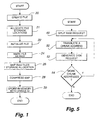
- Fig. 1 illustrates the logical operations of a preferred embodiment of the invention for creating a raw file as a new partition within an existing partition.
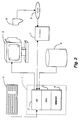
- Fig. 2 shows the operating environment for the invention.
- Fig. 3 shows the preferred embodiment of the invention for accessing raw files as well as conventional files.
- Fig. 4 shows one of the preferred embodiments of the invention for converting a raw file disk request to a real disk request.
- Fig. 5 shows another preferred embodiment of the invention for converting a raw file disk request to a real disk request.
- Fig. 1 illustrates the logical operations or flow of process steps required to generate a raw file.
- the process begins by creating a conventional file at logical operation 20.
- the conventional file is created within the existing partition using the existing partitions file system protocols.
- Step 21 allocates storage locations for the conventional file.
- the allocated storage locations for the file need not be contiguous.
- this file is initialized to a file space desired for the new partition. All of the space requested for this new file may or may not be contiguous. As a file, there is no requirement that the storage space be contiguous. In some cases, particularly Unix, the file space is initialized by writing zeros into all of the storage locations consumed by the new file.
- the file is marked as a raw file by operation 24.
- the raw file is initialized to have the attributes of a partition. These attributes include being undeletable and having a fixed size. In other words, the file may not be erased, it may not grow, and it may not be truncated.
- step 26 maps the raw file's storage allocation. Since the raw file is created initially as a conventional file, the storage space for the raw file will likely contain non-contiguous chunks of space. A chunk or section of storage space as referred to herein means contiguous storage space.
- the raw file allocation map from step 26 is compressed at step 28, and the compressed map is stored in system memory by step 30. When stored in memory, the raw file allocation map is given a unique identification. separate from the original file identification for the file created and initialized at steps 20 and 22.
- the operating environment in which the present invention is used encompasses the general distributed computing system, wherein general purpose computers, workstations, or personal computers are connected via communication links of various types, in a client-server arrangement, wherein programs and data, many in the form of objects, are made available by various members of the system.
- general distributed computing systems include SPARC systems offered by Sun MicroSystems, Inc., client-server systems configured from personal computers offered by IBM Corporation and by other manufacturers of IBM-compatible personal computers, and systems running the UNIX operating system.
- a processor 1 having an input/output (I/O) section 2, a central processing unit (CPU) 3 and a memory section 4.
- the I/O section 2 is connected to a keyboard 5, a display unit 6, a disk storage unit 9 and a CD-ROM drive unit 7.
- the CD-ROM unit 7 can read a CD-ROM medium 8 which typically contains programs 10 and data.
- the computer program products containing mechanisms to effectuate the apparatus and methods of the present invention may reside in the memory section 4, or on a disk storage unit 9, or on the CD-ROM 8 of such a system.
- Such mechanisms when operated in CPU 3, memory 4, and I/O section 2 of processor 1 and in disk storage unit 9 would include a storage system controller for creating files, a storage space driver for accessing storage space in the disk storage unit and a storage access control for translating access requests to an actual addresses.
- the storage system controller includes a storage allocator for allocating storage locations, an initializer and a control storage device.
- the initializer initializes files and file attributes, and the control storage device stores a file allocation map.
- Fig. 3 the logical operations for interpreting conventional files and raw files at the disk driver software are illustrated.
- the process begins with the receipt of a disk request at step 32.
- a disk request or access request for access to file space on a disk is based on the offset address and the number of sectors to be accessed.
- a disk request is applied directly to a disk driver and does not go through a file system. In other words, a file request would normally go through a file system and be converted to a disk request.
- the process flow illustrated in Fig. 3 is directed to disk requests going directly to a disk driver.
- Decision operation 34 tests the disk request to see if the disk request is associated with a file or a raw file. If the disk request is for a raw file, the file attributes will contain a mark as a raw file. In this event, the process flow branches yes to operation 36 to convert the disk request for a raw file to the same format as a conventional disk request.
- the disk request for a raw file will be referred to hereinafter as a raw request.
- operation 36 must translate the storage addresses in the raw request to the offset and number of sectors format of a conventional disk request. This translation, as will be discussed hereinafter, is based on the raw file's allocation map created in Fig. 1.
- the disk request is passed to the disk driver and the disk driver is called by operation 38 to execute the request.
- the disk request received at step 32 had been a conventional disk request, i.e. , not a raw file disk request, then the process would have branched "No" directly to step 38 to call the disk driver.
- this is the flow for accessing disk space with a request that may be either a conventional disk request or a raw request (raw file disk request).
- the conversion operation 36 in Fig. 3 for a raw request is handled either as a disk request accessing a raw file in one contiguous space or as multiple disk requests accessing a raw file having multiple chunks in non-contiguous space.
- the process in Fig. 4 begins at step 40 which translates the raw request into a disk request.
- the translate operation 40 uses the raw file allocation map to convert a raw file address to an actual offset and number of sectors address for the actual disk request.
- the decision operation 42 tests whether all of the actual addresses for the disk request specify a single contiguous space on the disk. If so, operation 44 then generates the single actual disk request for the contiguous space.
- decision operation 42 detects that the actual addresses generated by the translation operation 40 are not contiguous, the process branches "No" to operation 46.
- operation 46 the multiple non-contiguous actual addresses are split into multiple disk requests. Each disk request will access a contiguous portion of the raw file partition based on the offset and number of sectors in the disk request for that contiguous portion. After all of the multiple disk requests are generated the response to the raw request is complete.
- Fig. 5 illustrates an alternative embodiment for the conversion operation 36 in Fig. 3.
- the process begins at operation 48.
- Operation 48 splits the raw request into contiguous chunks of actual disk space.
- the raw request has multiple address parameters with an address parameter for each portion of contiguous space making up the raw file or partition. Accordingly, operation 48 splits the raw request into a list of requests for chunks of space.
- operation 50 translates each raw address into an actual address for the disk.
- Operation 50 uses the raw file allocation map to convert the raw address parameter into an offset and number of sections which is the actual address to be used by the disk driver software.
- operation 52 retrieves the translated actual address and generates the disk request for that chunk of space on the disk.
- decision operation 54 detects whether there are more raw addresses to be translated. If there are more raw addresses, the process branches "Yes" back to operation 50 to retrieve and translate the next raw address to a real or actual address. If all chunk addresses in the raw file or partition have been translated, then the process branches "No" from operation 54. This completes the translation process in Fig. 5, and the retrieval of the raw file or partition as performed by Fig. 5 in combination with the process of Fig. 3.
Landscapes
- Engineering & Computer Science (AREA)
- Theoretical Computer Science (AREA)
- Physics & Mathematics (AREA)
- General Engineering & Computer Science (AREA)
- General Physics & Mathematics (AREA)
- Human Computer Interaction (AREA)
- Data Mining & Analysis (AREA)
- Databases & Information Systems (AREA)
- Information Retrieval, Db Structures And Fs Structures Therefor (AREA)
- Memory System Of A Hierarchy Structure (AREA)
Claims (11)
- Procédé pouvant être utilisé dans un dispositif de traitement de données afin de gérer un fichier sur disque comme une division de système de fichiers sur disque, ledit procédé permettant d'affecter de manière dynamique une division supplémentaire ou un groupe de divisions sur le disque, sans nécessiter que tout l'espace de mémoire de la division supplémentaire ou du groupe de divisions soit physiquement continu, ledit procédé étant caractérisé par les étapes de:création (20) d'un premier fichier d'une taille prédéterminée dans un premier système de fichiers sur disque;affectation (21) d'emplacement de mémoire dans le premier système de fichiers sur disque pour prendre en compte l'espace de mémoire requis par le premier fichier et mémorisation d'une première carte d'affectation de fichier indiquant les emplacements de mémoire affectés au premier fichier; etconversion du premier fichier en un fichier brut avec un identificateur unique comme une division de fichier, ledit fichier brut utilisant les mêmes emplacements de mémoire que ceux affectés au premier fichier à ladite étape d'affectation.
- Procédé selon la revendication 1, dans lequel ladite étape de conversion comprend les étapes de:marquage (24) du premier fichier comme un fichier brut;initialisation (22) du fichier brut avec les attributs d'une division;lecture de la première carte d'affectation de fichiers;mémorisation (30) de la première carte d'affectation de fichiers comme la carte d'affectation de fichier brut avec un identificateur unique comme une division de fichiers, ledit fichier brut utilisant les mêmes emplacements de mémoire que ceux affectés au premier fichier à ladite étape d'affectation.
- Procédé selon la revendication 2, et comprenant en outre l'étape d'accès audit fichier brut dans un premier cas comme à un fichier et dans un second cas comme à une division.
- Procédé selon la revendication 1, et comprenant en outre les étapes de:détection (34) d'une demande d'accès à un fichier brut;transformation (36) de la demande d'accès à un fichier brut en une demande d'accès transformée et transmission (38) de la demande d'accès transformée à un gestionnaire de disque.
- Procédé selon la revendication 4, dans lequel ladite étape de transformation comprend les étapes de:conversion (40) des adresses brutes dans la demande d'accès à un fichier brut en adresses réelles dans la demande d'accès transformée transmise au gestionnaire de disque pour accéder à l'espace de mémoire de fichier brut;détection (42) de ce que les adresses réelles pour le fichier brut indiquent un espace de mémoire continu ou des blocs multiples non continus d'espace de mémoire continu;si, à ladite étape de détection, un espace de mémoire continu pour le fichier brut est détecté, production (44) d'une demande de disque en fonction de l'adresse réelle; etsi, ladite étape de détection, des blocs multiples non continus d'espace de mémoire continu sont détectés, production de demandes de disque multiples (46), chaque demande de disque étant fonction de l'adresse réelle de l'un des différents blocs d'espace de mémoire continu.
- Procédé selon la revendication 4, dans lequel la demande d'accès à un fichier brut contient une ou plusieurs adresses brutes et ladite étape de transformation comprend les étapes de:découpage (48) des adresses brutes en une adresse brute pour chaque bloc d'espace continu dans le fichier brut;conversion (50) de l'adresse brute pour un bloc d'espace continu en une adresse réelle pour le bloc d'espace continu;production (52) d'une demande de disque pour le bloc d'espace continu en fonction de l'adresse réelle du bloc d'espace continu;détection (54) de l'existence d'autres blocs d'espace de mémoire continu dans le fichier brut; etrépétition de ladite étape de conversion, de ladite étape de production et de ladite étape de détection jusqu'à ce que, à ladite étape de détection, aucun autre bloc d'espace de mémoire continu n'est détecté dans le fichier brut.
- Dispositif pouvant être utilisé dans un dispositif de traitement de données pour la gestion d'un fichier sur disque comme une division de système de fichiers sur disque, par affectation dynamique d'une division supplémentaire ou d'un groupe de divisions sur le disque, sans nécessiter que la totalité de l'espace de mémoire dans la division supplémentaire ou le groupe de divisions soit physiquement continu, ledit dispositif étant caractérisé par:une unité de commande de dispositif de mémoire destinée à créer (20) un fichier brut d'une taille prédéterminée dans un dispositif de mémoire de données, ledit fichier brut présentant les attributs d'une division à l'exception que ledit fichier brut peut contenir des sections non continues d'espace de mémoire;un gestionnaire de mémoire destiné à accéder à un espace de mémoire dans un dispositif de mémoire de données en fonction d'une adresse réelle de l'espace de mémoire dans le dispositif de mémoire:un moyen de commande d'accès à la mémoire destiné à convertir (36) une demande d'accès à un fichier brut en une adresse réelle d'un fichier brut et à transmettre (38) l'adresse réelle audit gestionnaire de mémoire; etledit gestionnaire de mémoire étant destiné à accéder à l'espace de mémoire de fichier brut en fonction de l'adresse réelle d'un fichier brut.
- Dispositif selon la revendication 7, dans ]equel ladite unité de commande de mémoire comprend en outre;un élément d'affectation de mémoire destiné à affecter des emplacements de mémoire dans un disque afin de prendre en compte l'espace de mémoire requis par un premier fichier; etun convertisseur destiné à convertir le premier fichier en un fichier brut avec un identificateur unique comme une division de fichiers, ledit fichier brut utilisant les mêmes emplacements d'adresse que ceux affectés au premier fichier par ledit élément d'affectation.
- Dispositif selon la revendication 8, dans lequel ledit convertisseur comprend:un élément d'initialisation destiné à initialiser (22) le premier fichier comme un fichier brut avec les attributs d'une division;une mémoire de commande destinée à mémoriser une carte d'affectation de fichier brut (26) en fonction des emplacements de mémoire affectés au premier fichier par ledit élément d'affectation de mémoire.
- Dispositif selon la revendication 7, dans lequel ledit moyen de commande d'accès à la mémoire comprend:un élément de détection destiné à détecter (42) si les adresses réelles du fichier brut indiquent un espace de mémoire continu ou des sections multiples non continues d'espace de mémoire continu;un générateur de demande destiné à produire (44) une demande de disque en fonction de l'adresse réelle pour cet espace de mémoire continu si ledit élément de détection détecte un espace de mémoire continu pour le fichier brut; etledit générateur de demande étant destiné à produire des demandes multiples de disque, chaque demande de disque étant fonction de l'adresse réelle de l'une des différentes sections d'espace de mémoire continu, si ledit élément de détection détecte des sections multiples non continues d'espace de mémoire continu pour le fichier brut.
- Dispositif selon la revendication 7, dans lequel la demande d'accès à un fichier brut contient une ou plusieurs adresses brutes, et ledit moyen de commande d'accès à la mémoire comprend:un élément de découpage destiné à découper des paramètres d'adresse brute en un paramètre d'adresse brute pour chaque section d'espace continu dans le fichier brut;un élément de conversion destiné à convertir (50) chaque paramètre d'adresse brute pour une section d'espace continu en une adresse réelle pour la section d'espace continu;un générateur de demande destiné à demander (52) l'accès de mémoire pour chaque section d'espace continu en fonction de l'adresse réelle pour la section d'espace continu:un indicateur destiné à détecter (54) qu'il n'y a plus d'autre section d'espace de mémoire continu et à indiquer que l'accès au fichier brut est total.
Applications Claiming Priority (2)
| Application Number | Priority Date | Filing Date | Title |
|---|---|---|---|
| US522753 | 1983-08-12 | ||
| US08/522,753 US6002866A (en) | 1995-09-01 | 1995-09-01 | Partitioning within a partition in a disk file storage system |
Publications (2)
| Publication Number | Publication Date |
|---|---|
| EP0760500A1 EP0760500A1 (fr) | 1997-03-05 |
| EP0760500B1 true EP0760500B1 (fr) | 1998-10-07 |
Family
ID=24082194
Family Applications (1)
| Application Number | Title | Priority Date | Filing Date |
|---|---|---|---|
| EP96112923A Expired - Lifetime EP0760500B1 (fr) | 1995-09-01 | 1996-08-12 | Division d'une partition dans un système de mémoire à disques |
Country Status (4)
| Country | Link |
|---|---|
| US (2) | US6002866A (fr) |
| EP (1) | EP0760500B1 (fr) |
| JP (1) | JPH09114710A (fr) |
| DE (1) | DE69600754T2 (fr) |
Families Citing this family (25)
| Publication number | Priority date | Publication date | Assignee | Title |
|---|---|---|---|---|
| US6178489B1 (en) * | 1998-06-08 | 2001-01-23 | International Business Machines Corporation | Method and apparatus for managing linear address mapped storage under selective compression and regency of usage constraints |
| US6473774B1 (en) * | 1998-09-28 | 2002-10-29 | Compaq Computer Corporation | Method and apparatus for record addressing in partitioned files |
| US6279093B1 (en) * | 1998-11-24 | 2001-08-21 | Dell Usa, L.P. | Computer system and method for preparing a computer-readable medium |
| US6574705B1 (en) | 2000-11-16 | 2003-06-03 | International Business Machines Corporation | Data processing system and method including a logical volume manager for storing logical volume data |
| EP1274009A3 (fr) * | 2001-07-03 | 2003-12-03 | Hewlett-Packard Company | Système et méthode pour permettre à un système BIOS légué de démarrer à partir d'un disque qui contient des partitions EFI GPT |
| PL351779A1 (en) * | 2002-01-18 | 2003-07-28 | Advanced Digital Broadcast Ltd | Apparatus for storing data and method of subdividing te data storage area |
| PL351784A1 (en) * | 2002-01-21 | 2003-07-28 | Advanced Digital Broadcast Ltd | System for of storing data and method of recording them in that system |
| US7269612B2 (en) * | 2002-05-31 | 2007-09-11 | International Business Machines Corporation | Method, system, and program for a policy based storage manager |
| US7299239B1 (en) * | 2002-12-02 | 2007-11-20 | Oracle International Corporation | Methods for partitioning an object |
| US6915420B2 (en) * | 2003-01-06 | 2005-07-05 | John Alan Hensley | Method for creating and protecting a back-up operating system within existing storage that is not hidden during operation |
| EP1639599A2 (fr) * | 2003-06-19 | 2006-03-29 | Koninklijke Philips Electronics N.V. | Formatage souple pour dispositif de stockage universel |
| KR100532505B1 (ko) * | 2004-02-17 | 2005-11-30 | 삼성전자주식회사 | 하드디스크 드라이브의 분할 방법 및 이에 적합한하드디스크 드라이브 |
| JP4521206B2 (ja) * | 2004-03-01 | 2010-08-11 | 株式会社日立製作所 | ネットワークストレージシステム、コマンドコントローラ、及びネットワークストレージシステムにおけるコマンド制御方法 |
| US7246216B2 (en) * | 2004-07-14 | 2007-07-17 | Lsi Corporation | Dynamic partitioning of storage media for mixed applications |
| US7409523B2 (en) * | 2005-12-16 | 2008-08-05 | Microsoft Corporation | Online storage volume shrink |
| US8200869B2 (en) * | 2006-02-07 | 2012-06-12 | Seagate Technology Llc | Storage system with alterable background behaviors |
| US7766562B2 (en) * | 2006-07-13 | 2010-08-03 | Michael Dowell | Support cradle and strap for large camera lens |
| US8140493B2 (en) * | 2007-06-15 | 2012-03-20 | Oracle International Corporation | Changing metadata without invalidating cursors |
| US8135688B2 (en) * | 2007-06-15 | 2012-03-13 | Oracle International Corporation | Partition/table allocation on demand |
| US8356014B2 (en) * | 2007-06-15 | 2013-01-15 | Oracle International Corporation | Referring to partitions with for (values) clause |
| US8209294B2 (en) * | 2007-06-15 | 2012-06-26 | Oracle International Corporation | Dynamic creation of database partitions |
| US7945587B2 (en) * | 2007-10-10 | 2011-05-17 | Microsoft Corporation | Random allocation of media storage units |
| US8527467B2 (en) * | 2011-06-30 | 2013-09-03 | International Business Machines Corporation | Compression-aware data storage tiering |
| US9778845B2 (en) * | 2015-02-02 | 2017-10-03 | Western Digital Technologies, Inc. | File management system |
| CN112069535B (zh) * | 2020-08-13 | 2023-01-31 | 中国电子科技集团公司第三十研究所 | 一种基于访问分区物理隔离的双系统安全智能终端架构 |
Family Cites Families (5)
| Publication number | Priority date | Publication date | Assignee | Title |
|---|---|---|---|---|
| EP0319147B1 (fr) * | 1987-11-30 | 1996-05-01 | International Business Machines Corporation | Méthode de mise en mémoire de fichiers de groupes préstructurés d'informations connexes dans un système de traitement de données |
| US5109485A (en) * | 1988-08-30 | 1992-04-28 | Ncr Corporation | Method for transferring data between memories |
| JP2776006B2 (ja) * | 1990-07-06 | 1998-07-16 | 松下電器産業株式会社 | 情報記録再生装置 |
| JPH0527915A (ja) * | 1991-07-23 | 1993-02-05 | Canon Inc | 情報記録再生方式 |
| US5652863A (en) * | 1995-06-07 | 1997-07-29 | International Business Machines Corporation | Graphical method of media partitioning on a hard disk |
-
1995
- 1995-09-01 US US08/522,753 patent/US6002866A/en not_active Expired - Lifetime
-
1996
- 1996-08-12 EP EP96112923A patent/EP0760500B1/fr not_active Expired - Lifetime
- 1996-08-12 DE DE69600754T patent/DE69600754T2/de not_active Expired - Fee Related
- 1996-08-29 JP JP8228609A patent/JPH09114710A/ja active Pending
-
1998
- 1998-12-28 US US09/221,384 patent/US6032161A/en not_active Expired - Lifetime
Also Published As
| Publication number | Publication date |
|---|---|
| US6002866A (en) | 1999-12-14 |
| JPH09114710A (ja) | 1997-05-02 |
| EP0760500A1 (fr) | 1997-03-05 |
| DE69600754T2 (de) | 1999-05-06 |
| US6032161A (en) | 2000-02-29 |
| DE69600754D1 (de) | 1998-11-12 |
Similar Documents
| Publication | Publication Date | Title |
|---|---|---|
| EP0760500B1 (fr) | Division d'une partition dans un système de mémoire à disques | |
| EP0805395B1 (fr) | Procédé pour mettre en antémémoire des accès au réseau et au CD-ROM en utilisant un disque dur local | |
| US5454103A (en) | Method and apparatus for file storage allocation for secondary storage using large and small file blocks | |
| US5129088A (en) | Data processing method to create virtual disks from non-contiguous groups of logically contiguous addressable blocks of direct access storage device | |
| US6598129B2 (en) | Storage device and method for data sharing | |
| US7197598B2 (en) | Apparatus and method for file level striping | |
| US6654772B1 (en) | Multi-volume extent based file system | |
| US5715455A (en) | Apparatus and method for storing file allocation table efficiently in memory | |
| US5774715A (en) | File system level compression using holes | |
| US5890169A (en) | Disk fragmentation reduction using file allocation tables | |
| US6591356B2 (en) | Cluster buster | |
| JP7794381B2 (ja) | データ圧縮方法及び装置 | |
| US6081879A (en) | Data processing system and virtual partitioning method for creating logical multi-level units of online storage | |
| EP0851366A1 (fr) | Adressage amélioré dans un système de fichiers | |
| US7136981B2 (en) | Method and apparatus for creating a virtual storage volume with a file size independent of a file size limitation | |
| US6697795B2 (en) | Virtual file system for dynamically-generated web pages | |
| US5953522A (en) | Temporary computer file system implementing using anonymous storage allocated for virtual memory | |
| US6449613B1 (en) | Method and data processing system for hashing database record keys in a discontinuous hash table | |
| US6574705B1 (en) | Data processing system and method including a logical volume manager for storing logical volume data | |
| WO2001042985A2 (fr) | Partage de donnees entre systemes d'exploitation | |
| US5829005A (en) | Circular size-bounded file technique for a computer operating system | |
| US5608905A (en) | DOS and Macintosh preformatted computer storage media | |
| US7350042B1 (en) | Method of optimizing the space and improving the write performance of volumes with multiple virtual copies | |
| EP0319147A2 (fr) | Méthode de mise en mémoire de fichiers de groupes préstructurés d'informations connexes dans un système de traitement de données | |
| US7533225B1 (en) | Method and apparatus for enabling adaptive endianness |
Legal Events
| Date | Code | Title | Description |
|---|---|---|---|
| PUAI | Public reference made under article 153(3) epc to a published international application that has entered the european phase |
Free format text: ORIGINAL CODE: 0009012 |
|
| AK | Designated contracting states |
Kind code of ref document: A1 Designated state(s): DE FR GB IT NL |
|
| 17P | Request for examination filed |
Effective date: 19970217 |
|
| 17Q | First examination report despatched |
Effective date: 19970506 |
|
| GRAG | Despatch of communication of intention to grant |
Free format text: ORIGINAL CODE: EPIDOS AGRA |
|
| GRAG | Despatch of communication of intention to grant |
Free format text: ORIGINAL CODE: EPIDOS AGRA |
|
| GRAH | Despatch of communication of intention to grant a patent |
Free format text: ORIGINAL CODE: EPIDOS IGRA |
|
| GRAH | Despatch of communication of intention to grant a patent |
Free format text: ORIGINAL CODE: EPIDOS IGRA |
|
| GRAA | (expected) grant |
Free format text: ORIGINAL CODE: 0009210 |
|
| AK | Designated contracting states |
Kind code of ref document: B1 Designated state(s): DE FR GB IT NL |
|
| REF | Corresponds to: |
Ref document number: 69600754 Country of ref document: DE Date of ref document: 19981112 |
|
| ET | Fr: translation filed | ||
| RAP2 | Party data changed (patent owner data changed or rights of a patent transferred) |
Owner name: SUN MICROSYSTEMS, INC. |
|
| NLT2 | Nl: modifications (of names), taken from the european patent patent bulletin |
Owner name: SUN MICROSYSTEMS, INC |
|
| PLBE | No opposition filed within time limit |
Free format text: ORIGINAL CODE: 0009261 |
|
| STAA | Information on the status of an ep patent application or granted ep patent |
Free format text: STATUS: NO OPPOSITION FILED WITHIN TIME LIMIT |
|
| 26N | No opposition filed | ||
| REG | Reference to a national code |
Ref country code: FR Ref legal event code: CA |
|
| REG | Reference to a national code |
Ref country code: GB Ref legal event code: IF02 |
|
| PGFP | Annual fee paid to national office [announced via postgrant information from national office to epo] |
Ref country code: NL Payment date: 20020830 Year of fee payment: 7 |
|
| PG25 | Lapsed in a contracting state [announced via postgrant information from national office to epo] |
Ref country code: NL Free format text: LAPSE BECAUSE OF NON-PAYMENT OF DUE FEES Effective date: 20040301 |
|
| NLV4 | Nl: lapsed or anulled due to non-payment of the annual fee |
Effective date: 20040301 |
|
| PGFP | Annual fee paid to national office [announced via postgrant information from national office to epo] |
Ref country code: FR Payment date: 20040810 Year of fee payment: 9 |
|
| PGFP | Annual fee paid to national office [announced via postgrant information from national office to epo] |
Ref country code: GB Payment date: 20040811 Year of fee payment: 9 |
|
| PGFP | Annual fee paid to national office [announced via postgrant information from national office to epo] |
Ref country code: DE Payment date: 20040819 Year of fee payment: 9 |
|
| PG25 | Lapsed in a contracting state [announced via postgrant information from national office to epo] |
Ref country code: IT Free format text: LAPSE BECAUSE OF NON-PAYMENT OF DUE FEES;WARNING: LAPSES OF ITALIAN PATENTS WITH EFFECTIVE DATE BEFORE 2007 MAY HAVE OCCURRED AT ANY TIME BEFORE 2007. THE CORRECT EFFECTIVE DATE MAY BE DIFFERENT FROM THE ONE RECORDED. Effective date: 20050812 Ref country code: GB Free format text: LAPSE BECAUSE OF NON-PAYMENT OF DUE FEES Effective date: 20050812 |
|
| PG25 | Lapsed in a contracting state [announced via postgrant information from national office to epo] |
Ref country code: DE Free format text: LAPSE BECAUSE OF NON-PAYMENT OF DUE FEES Effective date: 20060301 |
|
| GBPC | Gb: european patent ceased through non-payment of renewal fee |
Effective date: 20050812 |
|
| PG25 | Lapsed in a contracting state [announced via postgrant information from national office to epo] |
Ref country code: FR Free format text: LAPSE BECAUSE OF NON-PAYMENT OF DUE FEES Effective date: 20060428 |
|
| REG | Reference to a national code |
Ref country code: FR Ref legal event code: ST Effective date: 20060428 |