EP0761816A2 - Verfahren zur Erhöhung der pflanzlichen Samenproduktion und zur Beschleunigung des Pflanzenwachstums durch zusätzliche plastidäre Pyruvat Phosphat Dikinase - Google Patents
Verfahren zur Erhöhung der pflanzlichen Samenproduktion und zur Beschleunigung des Pflanzenwachstums durch zusätzliche plastidäre Pyruvat Phosphat Dikinase Download PDFInfo
- Publication number
- EP0761816A2 EP0761816A2 EP96250180A EP96250180A EP0761816A2 EP 0761816 A2 EP0761816 A2 EP 0761816A2 EP 96250180 A EP96250180 A EP 96250180A EP 96250180 A EP96250180 A EP 96250180A EP 0761816 A2 EP0761816 A2 EP 0761816A2
- Authority
- EP
- European Patent Office
- Prior art keywords
- ppdk
- plants
- pyruvate
- plant
- seeds
- Prior art date
- Legal status (The legal status is an assumption and is not a legal conclusion. Google has not performed a legal analysis and makes no representation as to the accuracy of the status listed.)
- Withdrawn
Links
- 238000000034 method Methods 0.000 title claims abstract description 6
- 230000008635 plant growth Effects 0.000 title claims abstract 3
- 238000004519 manufacturing process Methods 0.000 title claims description 6
- 230000008569 process Effects 0.000 title claims description 4
- MWMOPIVLTLEUJO-UHFFFAOYSA-N 2-oxopropanoic acid;phosphoric acid Chemical compound OP(O)(O)=O.CC(=O)C(O)=O MWMOPIVLTLEUJO-UHFFFAOYSA-N 0.000 title abstract 2
- 210000002706 plastid Anatomy 0.000 claims abstract description 11
- 101100409013 Mesembryanthemum crystallinum PPD gene Proteins 0.000 claims description 50
- 101150063097 ppdK gene Proteins 0.000 claims description 49
- 241000196324 Embryophyta Species 0.000 claims description 37
- 108090000623 proteins and genes Proteins 0.000 claims description 15
- 239000002299 complementary DNA Substances 0.000 claims description 13
- 244000021685 Mesembryanthemum crystallinum Species 0.000 claims description 12
- 108090000790 Enzymes Proteins 0.000 claims description 7
- 102000004190 Enzymes Human genes 0.000 claims description 7
- LCTONWCANYUPML-UHFFFAOYSA-M Pyruvate Chemical compound CC(=O)C([O-])=O LCTONWCANYUPML-UHFFFAOYSA-M 0.000 claims description 6
- 210000004027 cell Anatomy 0.000 claims description 2
- 229910019142 PO4 Inorganic materials 0.000 claims 1
- -1 enol pyruvate Chemical class 0.000 claims 1
- LCCNCVORNKJIRZ-UHFFFAOYSA-N parathion Chemical compound CCOP(=S)(OCC)OC1=CC=C([N+]([O-])=O)C=C1 LCCNCVORNKJIRZ-UHFFFAOYSA-N 0.000 claims 1
- NBIIXXVUZAFLBC-UHFFFAOYSA-K phosphate Chemical compound [O-]P([O-])([O-])=O NBIIXXVUZAFLBC-UHFFFAOYSA-K 0.000 claims 1
- 239000010452 phosphate Substances 0.000 claims 1
- 229930029653 phosphoenolpyruvate Natural products 0.000 abstract description 7
- DTBNBXWJWCWCIK-UHFFFAOYSA-N phosphoenolpyruvic acid Chemical compound OC(=O)C(=C)OP(O)(O)=O DTBNBXWJWCWCIK-UHFFFAOYSA-N 0.000 abstract 1
- CURLTUGMZLYLDI-UHFFFAOYSA-N Carbon dioxide Chemical compound O=C=O CURLTUGMZLYLDI-UHFFFAOYSA-N 0.000 description 32
- 244000061176 Nicotiana tabacum Species 0.000 description 29
- 235000002637 Nicotiana tabacum Nutrition 0.000 description 29
- 229910002092 carbon dioxide Inorganic materials 0.000 description 16
- 239000001569 carbon dioxide Substances 0.000 description 16
- 108091000041 Phosphoenolpyruvate Carboxylase Proteins 0.000 description 14
- 230000000694 effects Effects 0.000 description 9
- 235000018102 proteins Nutrition 0.000 description 9
- 102000004169 proteins and genes Human genes 0.000 description 9
- 210000001519 tissue Anatomy 0.000 description 9
- 230000029058 respiratory gaseous exchange Effects 0.000 description 8
- DTBNBXWJWCWCIK-UHFFFAOYSA-K phosphonatoenolpyruvate Chemical compound [O-]C(=O)C(=C)OP([O-])([O-])=O DTBNBXWJWCWCIK-UHFFFAOYSA-K 0.000 description 7
- 230000029553 photosynthesis Effects 0.000 description 7
- 238000010672 photosynthesis Methods 0.000 description 7
- 230000012010 growth Effects 0.000 description 6
- 241000589155 Agrobacterium tumefaciens Species 0.000 description 5
- 238000005259 measurement Methods 0.000 description 5
- 108020004999 messenger RNA Proteins 0.000 description 5
- 235000000346 sugar Nutrition 0.000 description 5
- OKTJSMMVPCPJKN-UHFFFAOYSA-N Carbon Chemical group [C] OKTJSMMVPCPJKN-UHFFFAOYSA-N 0.000 description 4
- 238000000692 Student's t-test Methods 0.000 description 4
- 229930006000 Sucrose Natural products 0.000 description 4
- CZMRCDWAGMRECN-UGDNZRGBSA-N Sucrose Chemical compound O[C@H]1[C@H](O)[C@@H](CO)O[C@@]1(CO)O[C@@H]1[C@H](O)[C@@H](O)[C@H](O)[C@@H](CO)O1 CZMRCDWAGMRECN-UGDNZRGBSA-N 0.000 description 4
- 235000001014 amino acid Nutrition 0.000 description 4
- 150000001413 amino acids Chemical class 0.000 description 4
- 238000004458 analytical method Methods 0.000 description 4
- 238000006243 chemical reaction Methods 0.000 description 4
- 239000005720 sucrose Substances 0.000 description 4
- 238000012353 t test Methods 0.000 description 4
- 239000013598 vector Substances 0.000 description 4
- 108091032973 (ribonucleotides)n+m Proteins 0.000 description 3
- LFQSCWFLJHTTHZ-UHFFFAOYSA-N Ethanol Chemical compound CCO LFQSCWFLJHTTHZ-UHFFFAOYSA-N 0.000 description 3
- 108010060309 Glucuronidase Proteins 0.000 description 3
- 239000002775 capsule Substances 0.000 description 3
- 229910052799 carbon Inorganic materials 0.000 description 3
- 150000002632 lipids Chemical class 0.000 description 3
- 230000004060 metabolic process Effects 0.000 description 3
- 239000000203 mixture Substances 0.000 description 3
- 229930027945 nicotinamide-adenine dinucleotide Natural products 0.000 description 3
- 239000000758 substrate Substances 0.000 description 3
- 150000008163 sugars Chemical class 0.000 description 3
- 238000012546 transfer Methods 0.000 description 3
- WQZGKKKJIJFFOK-GASJEMHNSA-N Glucose Natural products OC[C@H]1OC(O)[C@H](O)[C@@H](O)[C@@H]1O WQZGKKKJIJFFOK-GASJEMHNSA-N 0.000 description 2
- QNAYBMKLOCPYGJ-REOHCLBHSA-N L-alanine Chemical compound C[C@H](N)C(O)=O QNAYBMKLOCPYGJ-REOHCLBHSA-N 0.000 description 2
- ACFIXJIJDZMPPO-NNYOXOHSSA-N NADPH Chemical compound C1=CCC(C(=O)N)=CN1[C@H]1[C@H](O)[C@H](O)[C@@H](COP(O)(=O)OP(O)(=O)OC[C@@H]2[C@H]([C@@H](OP(O)(O)=O)[C@@H](O2)N2C3=NC=NC(N)=C3N=C2)O)O1 ACFIXJIJDZMPPO-NNYOXOHSSA-N 0.000 description 2
- 241000208134 Nicotiana rustica Species 0.000 description 2
- 229920002472 Starch Polymers 0.000 description 2
- OIRDTQYFTABQOQ-KQYNXXCUSA-N adenosine Chemical compound C1=NC=2C(N)=NC=NC=2N1[C@@H]1O[C@H](CO)[C@@H](O)[C@H]1O OIRDTQYFTABQOQ-KQYNXXCUSA-N 0.000 description 2
- 235000004279 alanine Nutrition 0.000 description 2
- 230000000692 anti-sense effect Effects 0.000 description 2
- 230000008901 benefit Effects 0.000 description 2
- 239000013604 expression vector Substances 0.000 description 2
- 235000013305 food Nutrition 0.000 description 2
- 239000008103 glucose Substances 0.000 description 2
- 150000002402 hexoses Chemical class 0.000 description 2
- 238000009396 hybridization Methods 0.000 description 2
- 229930027917 kanamycin Natural products 0.000 description 2
- 229960000318 kanamycin Drugs 0.000 description 2
- SBUJHOSQTJFQJX-NOAMYHISSA-N kanamycin Chemical compound O[C@@H]1[C@@H](O)[C@H](O)[C@@H](CN)O[C@@H]1O[C@H]1[C@H](O)[C@@H](O[C@@H]2[C@@H]([C@@H](N)[C@H](O)[C@@H](CO)O2)O)[C@H](N)C[C@@H]1N SBUJHOSQTJFQJX-NOAMYHISSA-N 0.000 description 2
- 229930182823 kanamycin A Natural products 0.000 description 2
- 239000013642 negative control Substances 0.000 description 2
- 239000013641 positive control Substances 0.000 description 2
- 230000001105 regulatory effect Effects 0.000 description 2
- 239000000523 sample Substances 0.000 description 2
- 210000000582 semen Anatomy 0.000 description 2
- 235000019698 starch Nutrition 0.000 description 2
- 239000008107 starch Substances 0.000 description 2
- 238000003860 storage Methods 0.000 description 2
- 239000000126 substance Substances 0.000 description 2
- 230000009466 transformation Effects 0.000 description 2
- 230000009261 transgenic effect Effects 0.000 description 2
- QFVHZQCOUORWEI-UHFFFAOYSA-N 4-[(4-anilino-5-sulfonaphthalen-1-yl)diazenyl]-5-hydroxynaphthalene-2,7-disulfonic acid Chemical compound C=12C(O)=CC(S(O)(=O)=O)=CC2=CC(S(O)(=O)=O)=CC=1N=NC(C1=CC=CC(=C11)S(O)(=O)=O)=CC=C1NC1=CC=CC=C1 QFVHZQCOUORWEI-UHFFFAOYSA-N 0.000 description 1
- 239000002126 C01EB10 - Adenosine Substances 0.000 description 1
- 241000701489 Cauliflower mosaic virus Species 0.000 description 1
- 108010066133 D-octopine dehydrogenase Proteins 0.000 description 1
- YAHZABJORDUQGO-NQXXGFSBSA-N D-ribulose 1,5-bisphosphate Chemical compound OP(=O)(O)OC[C@@H](O)[C@@H](O)C(=O)COP(O)(O)=O YAHZABJORDUQGO-NQXXGFSBSA-N 0.000 description 1
- 229930091371 Fructose Natural products 0.000 description 1
- 239000005715 Fructose Substances 0.000 description 1
- RFSUNEUAIZKAJO-ARQDHWQXSA-N Fructose Chemical compound OC[C@H]1O[C@](O)(CO)[C@@H](O)[C@@H]1O RFSUNEUAIZKAJO-ARQDHWQXSA-N 0.000 description 1
- 206010021033 Hypomenorrhoea Diseases 0.000 description 1
- 239000007836 KH2PO4 Substances 0.000 description 1
- 108010025815 Kanamycin Kinase Proteins 0.000 description 1
- CKLJMWTZIZZHCS-REOHCLBHSA-N L-aspartic acid Chemical compound OC(=O)[C@@H](N)CC(O)=O CKLJMWTZIZZHCS-REOHCLBHSA-N 0.000 description 1
- 101710138460 Leaf protein Proteins 0.000 description 1
- 238000000636 Northern blotting Methods 0.000 description 1
- 108700026244 Open Reading Frames Proteins 0.000 description 1
- 108010016852 Orthophosphate Dikinase Pyruvate Proteins 0.000 description 1
- 101150071594 PPDK2 gene Proteins 0.000 description 1
- 108010076504 Protein Sorting Signals Proteins 0.000 description 1
- 108091081024 Start codon Proteins 0.000 description 1
- 235000019486 Sunflower oil Nutrition 0.000 description 1
- 108020005038 Terminator Codon Proteins 0.000 description 1
- 102000003929 Transaminases Human genes 0.000 description 1
- 108090000340 Transaminases Proteins 0.000 description 1
- 101100409004 Zea mays PPDK1 gene Proteins 0.000 description 1
- 229960005305 adenosine Drugs 0.000 description 1
- 238000013459 approach Methods 0.000 description 1
- 235000003704 aspartic acid Nutrition 0.000 description 1
- 230000001580 bacterial effect Effects 0.000 description 1
- WQZGKKKJIJFFOK-VFUOTHLCSA-N beta-D-glucose Chemical compound OC[C@H]1O[C@@H](O)[C@H](O)[C@@H](O)[C@@H]1O WQZGKKKJIJFFOK-VFUOTHLCSA-N 0.000 description 1
- OQFSQFPPLPISGP-UHFFFAOYSA-N beta-carboxyaspartic acid Natural products OC(=O)C(N)C(C(O)=O)C(O)=O OQFSQFPPLPISGP-UHFFFAOYSA-N 0.000 description 1
- 230000015572 biosynthetic process Effects 0.000 description 1
- 238000009395 breeding Methods 0.000 description 1
- 230000001488 breeding effect Effects 0.000 description 1
- 238000010804 cDNA synthesis Methods 0.000 description 1
- 238000004364 calculation method Methods 0.000 description 1
- 150000001720 carbohydrates Chemical class 0.000 description 1
- 235000014633 carbohydrates Nutrition 0.000 description 1
- 230000021523 carboxylation Effects 0.000 description 1
- 238000006473 carboxylation reaction Methods 0.000 description 1
- 235000013339 cereals Nutrition 0.000 description 1
- 230000008859 change Effects 0.000 description 1
- 210000003763 chloroplast Anatomy 0.000 description 1
- 230000014107 chromosome localization Effects 0.000 description 1
- 239000000287 crude extract Substances 0.000 description 1
- 238000012217 deletion Methods 0.000 description 1
- 230000037430 deletion Effects 0.000 description 1
- 230000002255 enzymatic effect Effects 0.000 description 1
- 239000000284 extract Substances 0.000 description 1
- 238000012239 gene modification Methods 0.000 description 1
- 230000002068 genetic effect Effects 0.000 description 1
- 238000010353 genetic engineering Methods 0.000 description 1
- 230000005017 genetic modification Effects 0.000 description 1
- 235000013617 genetically modified food Nutrition 0.000 description 1
- 238000000265 homogenisation Methods 0.000 description 1
- 230000007062 hydrolysis Effects 0.000 description 1
- 238000006460 hydrolysis reaction Methods 0.000 description 1
- 230000006872 improvement Effects 0.000 description 1
- 238000003780 insertion Methods 0.000 description 1
- 230000037431 insertion Effects 0.000 description 1
- 230000010354 integration Effects 0.000 description 1
- 230000003834 intracellular effect Effects 0.000 description 1
- 235000020061 kirsch Nutrition 0.000 description 1
- 230000001404 mediated effect Effects 0.000 description 1
- 210000000473 mesophyll cell Anatomy 0.000 description 1
- 230000007102 metabolic function Effects 0.000 description 1
- 229910000402 monopotassium phosphate Inorganic materials 0.000 description 1
- 235000019796 monopotassium phosphate Nutrition 0.000 description 1
- BOPGDPNILDQYTO-NNYOXOHSSA-N nicotinamide-adenine dinucleotide Chemical compound C1=CCC(C(=O)N)=CN1[C@H]1[C@H](O)[C@H](O)[C@@H](COP(O)(=O)OP(O)(=O)OC[C@@H]2[C@H]([C@@H](O)[C@@H](O2)N2C3=NC=NC(N)=C3N=C2)O)O1 BOPGDPNILDQYTO-NNYOXOHSSA-N 0.000 description 1
- KHPXUQMNIQBQEV-UHFFFAOYSA-N oxaloacetic acid Chemical compound OC(=O)CC(=O)C(O)=O KHPXUQMNIQBQEV-UHFFFAOYSA-N 0.000 description 1
- 125000002467 phosphate group Chemical group [H]OP(=O)(O[H])O[*] 0.000 description 1
- 230000004962 physiological condition Effects 0.000 description 1
- 238000003976 plant breeding Methods 0.000 description 1
- 239000013612 plasmid Substances 0.000 description 1
- 230000008488 polyadenylation Effects 0.000 description 1
- GNSKLFRGEWLPPA-UHFFFAOYSA-M potassium dihydrogen phosphate Chemical compound [K+].OP(O)([O-])=O GNSKLFRGEWLPPA-UHFFFAOYSA-M 0.000 description 1
- 230000009467 reduction Effects 0.000 description 1
- 230000000241 respiratory effect Effects 0.000 description 1
- 230000005070 ripening Effects 0.000 description 1
- 238000000926 separation method Methods 0.000 description 1
- 210000002107 sheath cell Anatomy 0.000 description 1
- 239000002689 soil Substances 0.000 description 1
- 238000009331 sowing Methods 0.000 description 1
- 239000002600 sunflower oil Substances 0.000 description 1
- 230000002123 temporal effect Effects 0.000 description 1
- 238000012360 testing method Methods 0.000 description 1
- 238000013518 transcription Methods 0.000 description 1
- 230000035897 transcription Effects 0.000 description 1
- 238000013519 translation Methods 0.000 description 1
- 230000004102 tricarboxylic acid cycle Effects 0.000 description 1
- 235000013311 vegetables Nutrition 0.000 description 1
- 239000002699 waste material Substances 0.000 description 1
- 238000001262 western blot Methods 0.000 description 1
Images



Classifications
-
- C—CHEMISTRY; METALLURGY
- C12—BIOCHEMISTRY; BEER; SPIRITS; WINE; VINEGAR; MICROBIOLOGY; ENZYMOLOGY; MUTATION OR GENETIC ENGINEERING
- C12N—MICROORGANISMS OR ENZYMES; COMPOSITIONS THEREOF; PROPAGATING, PRESERVING, OR MAINTAINING MICROORGANISMS; MUTATION OR GENETIC ENGINEERING; CULTURE MEDIA
- C12N9/00—Enzymes; Proenzymes; Compositions thereof; Processes for preparing, activating, inhibiting, separating or purifying enzymes
- C12N9/10—Transferases (2.)
- C12N9/12—Transferases (2.) transferring phosphorus containing groups, e.g. kinases (2.7)
- C12N9/1294—Phosphotransferases with paired acceptors (2.7.9)
-
- A—HUMAN NECESSITIES
- A01—AGRICULTURE; FORESTRY; ANIMAL HUSBANDRY; HUNTING; TRAPPING; FISHING
- A01H—NEW PLANTS OR NON-TRANSGENIC PROCESSES FOR OBTAINING THEM; PLANT REPRODUCTION BY TISSUE CULTURE TECHNIQUES
- A01H1/00—Processes for modifying genotypes ; Plants characterised by associated natural traits
- A01H1/06—Processes for producing mutations, e.g. treatment with chemicals or with radiation
-
- C—CHEMISTRY; METALLURGY
- C12—BIOCHEMISTRY; BEER; SPIRITS; WINE; VINEGAR; MICROBIOLOGY; ENZYMOLOGY; MUTATION OR GENETIC ENGINEERING
- C12N—MICROORGANISMS OR ENZYMES; COMPOSITIONS THEREOF; PROPAGATING, PRESERVING, OR MAINTAINING MICROORGANISMS; MUTATION OR GENETIC ENGINEERING; CULTURE MEDIA
- C12N15/00—Mutation or genetic engineering; DNA or RNA concerning genetic engineering, vectors, e.g. plasmids, or their isolation, preparation or purification; Use of hosts therefor
- C12N15/09—Recombinant DNA-technology
- C12N15/63—Introduction of foreign genetic material using vectors; Vectors; Use of hosts therefor; Regulation of expression
- C12N15/79—Vectors or expression systems specially adapted for eukaryotic hosts
- C12N15/82—Vectors or expression systems specially adapted for eukaryotic hosts for plant cells, e.g. plant artificial chromosomes (PACs)
- C12N15/8241—Phenotypically and genetically modified plants via recombinant DNA technology
- C12N15/8242—Phenotypically and genetically modified plants via recombinant DNA technology with non-agronomic quality (output) traits, e.g. for industrial processing; Value added, non-agronomic traits
- C12N15/8243—Phenotypically and genetically modified plants via recombinant DNA technology with non-agronomic quality (output) traits, e.g. for industrial processing; Value added, non-agronomic traits involving biosynthetic or metabolic pathways, i.e. metabolic engineering, e.g. nicotine, caffeine
-
- C—CHEMISTRY; METALLURGY
- C12—BIOCHEMISTRY; BEER; SPIRITS; WINE; VINEGAR; MICROBIOLOGY; ENZYMOLOGY; MUTATION OR GENETIC ENGINEERING
- C12N—MICROORGANISMS OR ENZYMES; COMPOSITIONS THEREOF; PROPAGATING, PRESERVING, OR MAINTAINING MICROORGANISMS; MUTATION OR GENETIC ENGINEERING; CULTURE MEDIA
- C12N15/00—Mutation or genetic engineering; DNA or RNA concerning genetic engineering, vectors, e.g. plasmids, or their isolation, preparation or purification; Use of hosts therefor
- C12N15/09—Recombinant DNA-technology
- C12N15/63—Introduction of foreign genetic material using vectors; Vectors; Use of hosts therefor; Regulation of expression
- C12N15/79—Vectors or expression systems specially adapted for eukaryotic hosts
- C12N15/82—Vectors or expression systems specially adapted for eukaryotic hosts for plant cells, e.g. plant artificial chromosomes (PACs)
- C12N15/8241—Phenotypically and genetically modified plants via recombinant DNA technology
- C12N15/8261—Phenotypically and genetically modified plants via recombinant DNA technology with agronomic (input) traits, e.g. crop yield
-
- Y—GENERAL TAGGING OF NEW TECHNOLOGICAL DEVELOPMENTS; GENERAL TAGGING OF CROSS-SECTIONAL TECHNOLOGIES SPANNING OVER SEVERAL SECTIONS OF THE IPC; TECHNICAL SUBJECTS COVERED BY FORMER USPC CROSS-REFERENCE ART COLLECTIONS [XRACs] AND DIGESTS
- Y02—TECHNOLOGIES OR APPLICATIONS FOR MITIGATION OR ADAPTATION AGAINST CLIMATE CHANGE
- Y02A—TECHNOLOGIES FOR ADAPTATION TO CLIMATE CHANGE
- Y02A40/00—Adaptation technologies in agriculture, forestry, livestock or agroalimentary production
- Y02A40/10—Adaptation technologies in agriculture, forestry, livestock or agroalimentary production in agriculture
- Y02A40/146—Genetically Modified [GMO] plants, e.g. transgenic plants
Definitions
- Plants are amazing organisms. You can cover all of your energy needs with the help of sunlight. In addition, in the process known as photosynthesis, they generate carbohydrates from carbon dioxide. These substances can be used both as energy stores, for biosynthesis and as structural components. But not all plant tissues are capable of photosynthesis. Non-photosynthetically active tissues include anyone who does not come into contact with light or who has other tasks, such as the underground roots, the lead tissues and the ripening seeds. Of course, no photosynthesis can take place in the dark. The photosynthetically active tissues must therefore produce and store enough energy during the light phases to supply the entire organism and, if possible, to promote growth and reproduction. Usually short-term storage (starch, sucrose) and transfer (sucrose) of energy take place in the form of sugars.
- the main customers of sucrose are growing leaves and the non-photosynthetically active parts of plants.
- the non-photosynthetically active plant parts must also produce all of their organic components from the transferred carbon skeletons (Dennis and Turpin 1990; Mohr and Schopfer 1978; Strasburger et al. 1991; Taiz and Zeiger 1991).
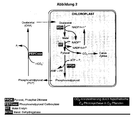
- Figure 1 shows a biochemical way of refixing carbon dioxide (Latzko and Kelly 1983).
- the fixation is carried out here by the phosphoenol pyruvate carboxylase (PEPCase; EC 4.1.1.31).
- PEPCase is a key enzyme in anaplerotic metabolism (filling up the tricarboxylic acid cycle).
- the vegetable pyruvate, phosphate dikinase (PPDK; EC 2.7.9.1) is a plastid enzyme which is suspected to provide phosphoenolpyruvate (PEP) for the PEPCase reaction in non-photosynthetically active tissues (Latzko and Kelly 1983; Meyer et al. 1978).
- the product of the phosphoenolpyruvate carboxylation is oxaloacetate. This can be converted to the amino acid aspartic acid in a transaminase reaction.
- Alanine mostly serves as a substrate here.
- Pyruvate is formed from the alanine, which can be used again by the PPDK.
- the cycle shown in Figure 1 allows carbon dioxide to be fixed at the expense of two high-energy phosphate groups (or the equivalent of two ATP).
- the Calvin cycle requires three ATP and two NADPH + H + (or the equivalent of nine ATP) for the fixation of carbon dioxide (Taiz and Zeiger 1991). Refixing carbon dioxide with PPDK and PEPCase can help plants save a lot of energy (seven ATP per refixed carbon dioxide) and, at the same time, protects the plant at the same time as part of the carbon dioxide released during breathing.
- PEPCase and PPDK are used for the intracellular carbon dioxide enrichment, which led to increased carbon dioxide fixation by the ribulose-1,5-bisphosphate carboxylase (RubisCo). This type of primary carbon dioxide fixation and enrichment is used by CAM and C 4 plants.
- a substrate of the PEPCase is phosphoenol pyruvate.
- this can be generated from pyruvate by the PPDK, so that the PEPCase may also be limited by the replenishment of phosphoenolpyruvate.
- the enzymatic characteristics and metabolic functions of PPDK from non-photosynthetically active tissues or C 3 plants are not yet fully understood (Fißlthaler et al. 1995; Rosche et al. 1994).
- the cDNA of the M. crystallinum PPDK codes for a plastid enzyme of 103 kDa with and 94 kDa without a plastid recognition sequence (Fißlthaler 1993; Fißlthaler et al. 1995).
- This cDNA was cloned in a sense orientation into a binary expression vector (Bevan 1984) (see Figure 3).
- the cDNA was cloned into the binary expression vector in reverse orientation ( ⁇ antisense).
- This inverted cDNA lacks 183 base pairs at the former 5 'end ( ⁇ PPDK).
- the ppdk cDNA was under the control of the constitutive CaMV 35S promoter expressed in all tissues.
- the vector without PPDK represents a further control.
- This vector contained a ⁇ -glucuronidase gene for transformation control (Vancanneyt et al. 1990). Tobacco received additional genetic information from these binary vectors (see Figure 3) with the help of Agrobacterium tumefaciens .
- the T-DNA of the binary plasmid is integrated into plant genomes by A. tumefaciens .
- the integration of the T-DNA into the plant genome takes place at an undetermined location of the genome, so that one has to reckon with variations in the expression of the genes in different transformants, since this is influenced by the chromosomal localization (Schell 1987).
- the control constructs ( ⁇ Antisense-PPDK and ⁇ -glucoronidase) behaved like the wild type in all cases. They are therefore not always mentioned separately below.
- FIG. 6 shows that the PPDK-overexpressing tobacco plants also had increased PPDK activity (125-166% of the wild-type activity).
- the control transformant with the ⁇ -glucuronidase gene (Gus) showed no increased PPDK activity.
- the wild-type PPDK activity corresponded to the values described in the literature for tobacco (Edwards et al. 1980; Kisaki et al. 1973).
- the PPDK-overexpressing tobacco plants were probably more efficient in using the energy available to the seed pods. They did not always produce more seed pods or seeds than the wild type, but definitely more seeds per seed pod (up to 74% more). In addition, these plants grew faster than the wild type.
- the seeds produced by the PPDK overexpressing tobacco were 90% germinable. No other significant changes in the weight or composition of the seeds were observed.
- Figure 9 shows that the seeds had the same weight as the wild-type seeds and also accumulated the same amounts of protein, lipid and sugar. It was found that the tobacco seeds did not store starch but soluble sugars. As expected, the main storage substances in the small tobacco seeds were lipids (approx. 48% of the seed weight). Free sugars and proteins only made up about 8% of the seed weight. The properties of the tobacco seeds were not changed by the increased efficiency of energy utilization in the observed criteria.
- the additional plastid PPDK provides the substrate phosphoenolpyruvate required for refixation by PEPCase in larger quantities and thus eliminates a bottleneck leading to energy waste and carbon loss. Even the smallest measured activity increase of 125% leads to significantly increased seed production efficiency and faster growth of the plants ( Figures 6, 7 and 8).
- the genetic modification described here with a plastid PPDK should make it possible to improve almost any plant in the manner described above. Genetic engineering also allows such changes to be brought about very quickly, while breeding such a trait is at least a very time-consuming process.
- Lipid analysis was carried out with 100 mg seeds from two transformants and two wild type samples according to Zöllner and Kirsch (1962). The measurements were standardized with sunflower oil. Changes are not significant (t-test, P ⁇ 0.05).
Landscapes
- Health & Medical Sciences (AREA)
- Life Sciences & Earth Sciences (AREA)
- Genetics & Genomics (AREA)
- Engineering & Computer Science (AREA)
- Chemical & Material Sciences (AREA)
- Zoology (AREA)
- Organic Chemistry (AREA)
- Bioinformatics & Cheminformatics (AREA)
- Wood Science & Technology (AREA)
- Molecular Biology (AREA)
- Biotechnology (AREA)
- Biomedical Technology (AREA)
- General Engineering & Computer Science (AREA)
- General Health & Medical Sciences (AREA)
- Biochemistry (AREA)
- Microbiology (AREA)
- Biophysics (AREA)
- Plant Pathology (AREA)
- Physics & Mathematics (AREA)
- Cell Biology (AREA)
- Environmental Sciences (AREA)
- Developmental Biology & Embryology (AREA)
- Botany (AREA)
- Nutrition Science (AREA)
- Medicinal Chemistry (AREA)
- Breeding Of Plants And Reproduction By Means Of Culturing (AREA)
- Enzymes And Modification Thereof (AREA)
Abstract
Description
- Während des zwanzigsten Jahrhunderts wurden durch Pflanzenzüchtung und -selektion bemerkenswerte Verbesserungen im Ertrag und der Qualität von Getreidesamen erzielt (Borlaug und Dowswell 1988). Doch solche Zuwächse können nicht fortwährend erzielt werden. Von den vielen schwerwiegenden Problemen mit denen der Mensch konfrontiert ist, ist das Bevölkerungswachstum das größte. Bei der momentanen Geschwindigkeit des Bevölkerungswachstums wird sich die Weltbevölkerung bis zum Jahre 2030 auf 11 Milliarden verdoppelt haben. Das führt schon jetzt zum Verlust von landwirtschaftlich genutzten Gebieten. Um die Weltbevölkerung auch in 40 Jahren noch mit Nahrung zu versorgen, wird es all unserer Erfindungsgabe bedürfen. Die dringende Notwendigkeit, die Nahrungsproduktion zu erhöhen, kann vielleicht unter Zuhilfenahme der Pflanzenmolekularbiologie befriedigt werden. Diese erlaubt den direkten Zugang zu einem immensen Genpool, da sie den Transfer von nützlichen Genen aus jedwedem Organismus in Pflanzen erlaubt.
- Pflanzen sind ganz erstaunliche Organismen. Sie können ihren gesamten Energiebedarf mit Hilfe des Sonnenlichtes decken. Zusätzlich generieren sie bei dem, als Photosynthese bekannten Prozeß, Kohlenhydrate aus Kohlendioxid. Diese Stoffe können sowohl als Energiespeicher, zur Biosynthese als auch als strukturelle Bestandteile verwendet werden. Aber nicht alle pflanzlichen Gewebe sind zur Photosynthese befähigt. Zu den nicht-photosynthetisch aktiven Geweben gehören alle, die nicht mit Licht in Kontakt kommen oder aber andere Aufgaben haben, wie beispielsweise die unterirdischen Wurzeln, die Leitgewebe und die reifenden Samen. Im Dunkeln kann natürlich auch keine Photosynthese stattfinden. Die photosynthetisch aktiven Gewebe müssen also während der Lichtphasen genügend Energie produzieren und speichern, um den gesamten Organismus zu versorgen und wenn möglich das Wachstum und die Reproduktion voranzutreiben. Normalerweise erfolgen kurzfristige Speicherung (Stärke, Saccharose) und Transfer (Saccharose) von Energie in Form von Zuckern. Hauptabnehmer von Saccharose sind heranwachsende Blätter und die nicht-photosynthetisch aktiven Pflanzenteile. Die nicht-photosynthetisch aktiven Pflanzenteile müssen auch ihre gesamten organischen Bestandteile aus den transferierten Kohlenstoffgerüsten herstellen (Dennis und Turpin 1990; Mohr und Schopfer 1978; Strasburger et al. 1991; Taiz und Zeiger 1991).
- Bei der Veratmung der aus der Saccharose stammenden Hexosen Glucose und Fructose können bis zu 38 ATP* gewonnen werden (Voet und Voet 1992). Gleichzeitig wird aber auch das während der Photosynthese fixierte Kohlendioxid wieder freigesetzt. Die Photosynthese benötigt 18 ATP und 12 NADPH für die Produktion einer Hexose (Mohr und Schopfer 1978; Strasburger et al. 1991; Taiz und Zeiger 1991). Dies entspricht einer Energiemenge von 54 ATP. Eine einfache Rechnung zeigt, daß von Photosynthese zu Atmung 16 ATP Verlust zu verzeichnen sind.
* Adenosintriphophat (ATP) ist die Energiewährung der Zellen. Die Änderung der freien Energie (ΔG) für die ATP-Hydrolyse beträgt unter physiologischen Bedingungen -50 bis -65 kJ/mol. Ein NADH kann zu 3 ATP umgewandelt werden. - Kann die Atmung den Ernteertrag verringern? Die Antwort lautet: Ja. Eine 20% Verringerung der Atmung kann zu 10 - 20% Steigerung des Ernteertrages führen (Lambers 1985; Wilson und Jones 1982). Nun kann man auf dem Acker schlecht für längere Lichtperioden, optimale Wachstumstemperaturen, optimale Luft- oder Bodenfeuchte sorgen. Deshalb müssen andere Lösungen zur Reduktion des Kohlendioxidverlustes durch Atmung gefunden werden.
- Wie kann das während der Atmung freigesetzte Kohlendioxid unabhängig von der Photosynthese erneut fixiert werden? In Abbildung 1 ist eine biochemische Möglichkeit zur Refixierung von Kohlendioxid aufgeführt (Latzko und Kelly 1983). Die Fixierung wird hier von der Phosphoenolpyruvat Carboxylase (PEPCase; EC 4.1.1.31) vorgenommen. Die PEPCase ist ein Schlüsselenzym im anaplerotischen Stoffwechsel (Auffüllen des Tricarbonsäurezyklus). Die pflanzliche Pyruvat, Phosphat Dikinase (PPDK; EC 2.7.9.1) ist ein plastidäres Enzym von dem vermutet wird, daß es in nicht-photosynthetisch aktiven Geweben Phosphoenolpyruvat (PEP) für die PEPCase-Reaktion zur Verfügung stellt (Latzko und Kelly 1983; Meyer et al. 1978).
- Das Produkt der Phosphoenolpyruvat Carboxylierung ist Oxalacetat. Dieses kann in einer Transaminasereaktion zu der Aminosäure Asparaginsäure umgewandelt werden. Alanin dient hier zumeist als Substrat. Aus dem Alanin entsteht dabei Pyruvat, welches wieder von der PPDK genutzt werden kann. Durch den in Abbildung 1 gezeigten Zyklus kann Kohlendioxid auf Kosten von zwei energiereichen Phosphatgruppen (oder umgerechnet zwei ATP) fixiert werden. Der Calvin-Zyklus benötigt drei ATP und zwei NADPH+H+ (oder umgerechnet neun ATP) für die Fixierung von Kohlendioxid (Taiz und Zeiger 1991). Die Refixierung von Kohlendioxid durch PPDK und PEPCase kann Pflanzen also helfen, viel Energie zu sparen (sieben ATP pro refixiertem Kohlendioxid) und bewahrt der Pflanze vor allem gleichzeitig einen Teil des bei der Atmung freigesetzten Kohlendioxids.
- Ein anderer Grund für das Vorkommen von PEPCase und PPDK in photosynthetisch aktiven Geweben von C3-Pflanzen wird von Aoyagi und Bassham (1986) vorgeschlagen (Abbildung 2). Hierbei dienen PEPCase und PPDK der intrazellulären Kohlendioxidanreicherung, was zu vermehrter Kohlendioxidfixierung durch die Ribulose-1,5-bisphosphat Carboxylase (RubisCo) führte. Diese Art der primären Kohlendioxidfixierung und -anreicherung wird von CAM- und C4-Pflanzen ausgenutzt. Allerdings gibt es bei CAM Pflanzen eine zeitliche Trennung zwischen PEPCase- (Nacht) und RubisCo-Reaktion (Tag), während C4-Pflanzen PEPCase (Mesophyllzellen) und RubisCo (Bündelscheidenzellen) räumlich trennen, denn beide Enzyme stehen natürlich auch in Konkurrenz um Kohlendioxid (Dennis und Turpin 1990; Mohr und Schopfer 1978; Strasburger et al. 1991; Taiz und Zeiger 1991; Ting 1985).
- Latzko und Kelly (1983) schlagen noch zehn weitere biochemische Gründe für das Vorkommen von PEPCase vor. Diese weiteren Einsatzmöglichkeiten ergeben allerdings keine unmittelbaren energetischen Vorteile. Ein Substrat der PEPCase ist Phosphoenolpyruvat. Dieses kann unter anderem aus Pyruvat durch die PPDK generiert werden, so daß die PEPCase eventuell auch durch den Nachschub an Phosphoenolpyruvat limitiert ist. Die enzymatischen Charakteristika und metabolischen Funktionen der PPDK aus nicht-photosynthetisch aktiven Geweben oder C3-Pflanzen werden allerdings noch nicht endgültig verstanden (Fißlthaler et al. 1995; Rosche et al. 1994).
- Meine Idee besteht nun darin, einen eventuellen Mangel an Phosphoenolpyruvat zu beheben. Meine Hauptannahme ist, daß die PPDK den limitierenden Faktor darstellt. Bringt man Pflanzen nun dazu, größere PPDK-Mengen zu produzieren, müßte sich ein solcher Engpaß beheben lassen. Um diese These zu beweisen, wurde die PPDK-cDNA aus der fakultativen CAM-Pflanze Mesembryanthemum crystallinum in Nicotiana tabacum (Samsun SNN) eingebracht und überexprimiert. Das Testsystem Tabak dient hier nur als Modell und wurde aufgrund der einfachen Handhabung gewählt. Die PPDK aus M. crystallinum dient als Stellvertreter dieser Enzymklasse und wurde aufgrund ihrer Verfügbarkeit gewählt.
- Die cDNA der M. crystallinum PPDK kodiert für ein plastidäres Enzym von 103 kDa mit und 94 kDa ohne Plastidenerkennungssequenz (Fißlthaler 1993; Fißlthaler et al. 1995). Diese cDNA wurde in Sense-Orientierung in einen binären Expressionsvektor (Bevan 1984) kloniert (siehe Abbildung 3). In einem Kontrollkonstrukt wurde die cDNA in umgekehrter Orientierung (ΔAntisense) in den binären Expressionsvektor kloniert. Dieser umgedrehten cDNA fehlen 183 Basenpaare am ehemaligen 5'-Ende (ΔPPDK). Die ppdk-cDNA befand sich in beiden Fällen unter der Kontrolle des konstitutiv, in allen Geweben exprimierten CaMV 35S-Promotors. Eine weitere Kontrolle stellt der Vektor ohne PPDK dar. Dieser Vektor enthielt zur Transformationskontrolle ein β-Glucuronidase-Gen (Vancanneyt et al. 1990). Tabak erhielt durch diese binären Vektoren (siehe Abbildung 3) mit Hilfe von Agrobacterium tumefaciens zusätzliche Erbinformation. Die T-DNA des binären Plasmids wird von A. tumefaciens in Pflanzengenome integriert. Die Integration der T-DNA in das Pflanzengenom erfolgt an einen unbestimmten Ort des Genoms, so daß man bei verschiedenen Transformanten mit Variationen in der Expression der Gene rechnen muß, da diese von der chromosomalen Lokalisation beeinflußt wird (Schell 1987). Die Kontrollkonstrukte (ΔAntisense-PPDK und β-Glucoronidase) verhielten sich in allen Fällen wie der Wildtyp. Im weiteren werden sie daher nicht immer gesondert erwähnt.
- Die Expression der heterologen Gene in Tabakblättern ist in Abbildung 4 gezeigt. Sowohl Sense-, wie auch ΔAntisene-mRNAs wurden hierbei detektiert, da bei der Hybridisierung mit einer doppelsträngigen Sonde operiert wurde. Der mRNA-Spiegel der heterolog exprimierten PPDK war etwa 1/4x so hoch wie in Blättern von M. crystallinum im CAM-Zustand. Der Tabak-Wildtyp zeigte unter den gewählten Reaktionsbedingungen keinerlei ppdk-mRNA-Signal. Abbildung 5 zeigt, daß in den Sense-PPDK-Pflanzen die PPDK produziert wurde und in Samen wie auch in Blättern dieser Pflanzen zu finden war. Im Verhältnis zu salzgestreßten M. crystallinum-Pflanzen war die Expressionshöhe des Proteins allerdings sehr gering und steht damit im Kontrast zum mRNA-Spiegel, der bei den meisten Pflanzen recht hoch war. Im Wildtyp wie auch in den ΔAntisense-PPDK-Pflanzen konnten unter diesen Bedingungen keine oder nur geringe PPDK-Mengen detektiert werden.
- Abbildung 6 zeigt, daß die PPDK-überexprimierenden Tabakpflanzen auch erhöhte PPDK-Aktivität (125 - 166% der Aktivität des Wildtyps) besaßen. Die Kontrolltransformante mit dem β-Glucuronidase-Gen (Gus) zeigte keine erhöhte PPDK-Aktivität. Die PPDK-Aktivität des Wildtyps entsprach den in der Literatur für Tabak beschriebenen Werten (Edwards et al. 1980; Kisaki et al. 1973).
- Als nächstes wurde die Produktivität der PPDK-überexprimierenden Tabaklinien ermittelt. Hierzu muß zunächst angemerkt werden, daß die PPDK-überexprimierenden Tabakpflanzen schneller wuchsen als der Wildtyp und ungefähr drei Wochen früher Samen produzierten (Abbildung 7).
- Die in Abbildung 8 gezeigten Daten befassen sich allein mit dem Effekt der zusätzlichen PPDK auf die Samenproduktion. Auffälligerweise produzierten alle elf analysierten Linien mehr Samen pro Samenkapsel als der Wildtyp (= 100%). Den höchsten Wert erreichte hier die Linie PPDK 6 mit 174%. Diese Produktivitätssteigerung spiegelte sich auch im Verhältnis der Gewichtsanteile von Samen zu Samenkapsel wieder. Während die Samen beim Wildtyp gerade 50% des Gewichtes der Samenkapsel ausmachten, machten die Samen bei den PPDK-überexprimierenden Pflanzen um die 65% des Gewichts der Samenkapsel aus. Am effektivsten war hier die Linie PPDK 2 mit 78%. Zusätzlich war das Gewicht der Samenkapseln an sich in den meisten der PPDK-überexprimierenden Tabaklinien höher als beim Wildtyp. Den Spitzenwert erreichte hier wieder die Linie PPDK 6 mit 125%. Folgerichtig produzierten die meisten dieser Linien auch insgesamt mehr Samen als der Wildtyp. PPDK 2 erreichte hier mit 185% den höchsten Wert.
- Zusammenfassend kann hier festgestellt werden, daß die PPDK-überexprimierenden Tabakpflanzen wahrscheinlich effizienter mit der Energie umgingen, die den Samenkapseln zur Verfügung stand. Sie produzierten nicht in jedem Falle mehr Samenkapseln oder Samen als der Wildtyp, aber auf jeden Fall mehr Samen pro Samenkapsel (bis zu 74% mehr). Zusätzlich wuchsen diese Pflanzen schneller als der Wildtyp.
- Die Samen, die der PPDK-überexprimierende Tabak produzierte, waren, wie die des Wildtyps, zu 90% keimungsfähig. Auch sonst waren keine signifikanten Veränderungen im Gewicht oder in der Zusammensetzung der Samen zu beobachten. Abbildung 9 zeigt, daß die Samen das gleiche Gewicht wie die Samen des Wildtyps aufwiesen und auch die gleichen Protein-, Lipid- und Zuckermengen akkumulierten. Dabei zeigte sich, daß die Tabaksamen keine Stärke, sondern lösliche Zucker speicherten. Die Hauptspeichersubstanzen in den kleinen Tabaksamen waren, wie erwartet, Lipide (ca. 48% des Samengewichts). Freie Zucker und Proteine machten nur etwa 8% des Samengewichtes aus. Die Eigenschaften der Tabaksamen wurden durch die erhöhte Effizienz der Energieverwertung in den beobachteten Kriterien nicht verändert.
- Aus den Daten lassen sich folgende Schlüsse ziehen: Mit Hilfe zusätzlicher plastidärer PPDK können Pflanzen zu schnellerem Wachstum veranlaßt werden. Diese Pflanzen produzieren mehr Samen als der Wildtyp. Die erhöhte Samenproduktion kommt durch schwerere Samenkapseln und höhere Samenmengen pro Samenkapsel zustande. Der Grund für diese Effekte konnte nicht eindeutig geklärt werden, liegt aber mit großer Wahrscheinlichkeit an der Refixierung von Kohlendioxid (siehe Abbildung 1), welches während der Atmung entsteht, da auch nicht-photosynthetisch aktive Gewebe wie Samen vom zusätzlichen Phosphoenolpyruvat profitieren. Dies führt zu effizienterer Nutzung der zur Verfügung stehenden Kohlenstoffgerüste. Die zusätzliche plastidäre PPDK stellt das für die Refixierung durch PEPCase benötigte Substrat Phosphoenolpyruvat in größeren Mengen zur Verfügung und behebt so einen zu Energieverschwendung und Kohlenstoffverlust führenden Engpaß. Auch die geringste gemessene Aktivitätserhöhung von 125% führt zu deutlich erhöhter Samenproduktionseffizienz und schnellerem Wachstum der Pflanzen (Abbildung 6, 7 und 8).
- Durch die hier beschriebene gentechnische Veränderung mit einer plastidären PPDK sollte sich nahezu jede Pflanze in oben beschriebener Weise verbessern lassen. Die Gentechnik erlaubt zusätzlich, solche Veränderungen sehr schnell herbeizuführen, während die Züchtung eines solchen Merkmals zumindest ein sehr zeitaufwendiger Prozeß ist.
-
- Aoyagi K. and Bassham J.A. (1986) Appearance and accumulation of C4 carbon pathway enzymes in developing wheat leaves. Plant Physiol. 80 , 334-340.
- Bevan M. (1984) Binary Agrobacterium vectors for plant transformation. Nucl. Acids Res. 12, 8711-8721.
- Borlaug N.E. and Dowswell C.R. (1988) World revolution in agriculture. In Book of the Year 1988, eds) Chicago: Encyclopedia Britannica, pp. pp. 514.
- Carroll N.V., Langley R.W. and Roe J.H. (1956) The determination of glycogen in liver and muscle by use of anthrone reagent. J. Biol. Chem. 220, 583-593.
- Dennis D.T. and Turpin D.H. (1990) Plant Physiology, Biochemistry and Molecular Biology. Longman Group UK Limited, Essex
- Edwards G.E., Ujihira M. and Sugiyama T. (1980) Light and temperature dependence of the rate and degree of activation of pyruvate, Pi dikinase in vivo in maize. Photosynth. Res. 1, 199-207.
- Fißlthaler B. (1993) Die Pyruvat, Phosphat Dikinase aus der fakultativen Crassulaceen-Säurestoffwechsel-Pflanze Mesembryanthemum crystallinum: Sequenzierung und Charakterisierung des Gens. Freie Universität Berlin, Dissertation
- Fißlthaler B., Meyer G., Bohnert H.J. and Schmitt J.M. (1995) Age-dependent induction of pyruvate, othophosphate dikinase in Mesembryanthemum crystallinum L. Planta 196, 492-500.
- Horsch R.B., Fry J.E., Hoffmann N.L., Eichholtz D., Rogers S.G. and Fraley R.T. (1985) A simple general method for transferring genes into plants. Science 227 , 1229-1231.
- Kisaki T., Hirabayashi S. and Yano N. (1973) Effect of the age of tobacco leaves on photosynthesis and photorespiration. Plant Cell Physiol. 14, 505-514.
- Lambers H. (1985) Respiration in intact plants and tissues. Its regulation and dependence on environmental factors, metabolism and invaded organisms. In Higher Plant Cell Respiration, (Douce R. and Day D.A., eds) Berlin: Springer-Verlag, pp. 418-473.
- Latzko E. and Kelly G.J. (1983) The many-faceted function of phosphoenolpyruvate carboxylase in C3 plants. Physiol. Veg. 2, 805-815.
- Meyer A.O., Kelly G.J. and Latzko E. (1978) Pyruvate orthophosphate dikinase of immature wheat grains. Plant Sci. Lett. 12, 35-40.
- Mohr H. and Schopfer P. (1978) Lehrbuch der Pflanzenphysiologie. Springer-Verlag, Berlin
- Rosche E., Streubel M. and Westhoff P. (1994) Primary structure of the photosynthetic pyruvate orthophosphate dikinase of the C3 plant Flaveria pringlei and expression analysis of pyruvate orthophosphate dikinase sequences in C3, C3-C4 and C4 Flaveria species. Plant Mol. Biol. 26, 763-769.
- Schell J. (1987) Transgenic Plants as Tools to Study the Molecular Organization of Plant Genes. Science 237, 1176-1183.
- Spector T. (1978) Refinement of the Coomassie blue method of protein quantitation. Anal. Biochem. 86, 142-146.
- Strasburger E., Noll F., Schenck H. and Schimper A.F.W. (1991) Lehrbuch der Botanik. Gustav Fischer Verlag, Stuttgart
- Taiz L. and Zeiger E. (1991) Plant Physiology. The Benjamin/Cummings Publishing Company, Inc., Redwood City
- Ting I.P. (1985) Crassulacean acid metabolism. Ann. Rev. Plant. Physiol. 36, 595-622. Vancanneyt G., Schmidt R., O'Connor-Sanchez A., Willmitzer L. and Rocha-Sosa M. (1990) Construction of an intron-containing marker gene: Splicing of the intron in transgenic plants and its use in monitoring early events in Agrobacterium-mediated plant transformation. MGG 220, 245-250.
- Voet D. and Voet J.G. (1992) Biochemie. VCH, Weinheim
- Wilson D. and Jones J.G. (1982) Effect of selection for dark respiration rate of mature leaves on crop yields of Lolium perenne cv. S23. Ann. Bot. 49, 313-320.
- Zöllner N. and Kirsch K. (1962) Z. ges. exp. Med. 135, 545.
-
- Abbildung 1: Stoffwechselschema nach Latzko und Kelly (1983) zeigt eine Möglichkeit zur Refixierung respiratorischen Kohlendioxids.
- Abbildung 2: Stoffwechselschema nach Aoyagi und Bassham (1986) zeigt eine Möglichkeit zur Kohlendioxidanreicherung.
- Abbildung 3: Schematische Zeichnung der konstruierten binären Vektoren mit M. crystallinum-PPDK-Insertion. Ganz oben ist die PPDK-cDNA mit einigen Restriktionsschnittstellen dargestellt (Fißlthaler 1993). Die PPDK-cDNA-Sequenz aus M. crystallinum ist 3173 bp lang, von denen 9 bp am 5'-Ende die Linkersequenz aus der cDNA-Synthese und die 3'-terminalen 12 bp das nach der Transkription angehängte PolyA-Ende darstellen. Das Startkodon befindet sich an Position 63, das Terminationskodon des längsten offenen Leserasters an Position 2910. Das aus der cDNA-Sequenz der PPDK aus M. crystallinum abgeleitete Protein besteht aus 949 Aminosäuren, was einem Molekulargewicht von 103244 Dalton entspricht. Die Präsequenz der PPDK aus M. crystallinum hat eine Länge von 74 Aminosäuren, so daß das reife, im Chloroplasten prozessierte Protein, eine Größe von etwa 94 kDa hat. Die Aminosäurezusammensetzung des reifen, prozessierten Proteins ergibt einen pl von 7,6. 5'- und 3'-untranslatierte Bereiche der cDNA sind als terminale schraffierte Boxen dargestellt. In der Sense-PPDK ist die PPDK-cDNA in richtiger Orientierung dargestellt (links 5'-, rechts 3'-untranslatierter Bereich; die gepunktete Box stellt die Plastidensignalsequenz mit den drei im Leseraster befindlichen ATGs dar; das erste ATG wird normalerweise als Translationsstart benutzt). Δ zeigt eine Deletion von 183 bp am ursprünglichen 5'-Ende an.
BR, BL: rechte bzw. linke Grenzregion der T-DNA von Agrobacterium tumefaciens; Km: Kanamycinresistenz mit bakteriellen Regulationselementen; nptll: Neomycinphosphotransferase (Kanamycinresistenz) mit pflanzlichen Regulationselementen; 35S CaMV: Promotor des Blumenkohlmosaikvirus; ocs polyA: Polyadenylierungssignal des Octopinsynthasegens von Agrobacterium tumefaciens.
Die Transformation der Tabakpflanzen mit Hilfe des A. tumefaciens-vermittelten Gentransfers wurde nach Horsch et al. (1985) vollzogen. - Abbildung 4: Die ppdk-mRNA aus Blättern von PPDK-überexprimierenden Tabakpflanzen (Sense und ΔAntisense; siehe auch Abbildung 3) wurde durch Hybridisierung mit der M. crystallinum-ppdk-cDNA-Sonde auf einem Northern-Blot sichtbar gemacht. Blatt-RNA des untransformierten Tabaks (Wt) diente als Negativkontrolle und Blatt-RNA einer M. crystallinum im CAM-Zustand als Positivkontrolle. Die einzelnen PPDK-Mutanten sind in allen Abbildungen mit den selben Nummern versehen. Es wurden je 40 µg Tabak-RNA und 20 µg M. crystallinum-RNA eingesetzt.
- Abbildung 5: PPDK-Proteinspiegel von PPDK-überexprimierenden Tabakpflanzen (siehe auch Abbildung 3) wurden durch Western-Blots untersucht. 2 µg Rohextrakt einer salzgestreßten M. crystallinum dienten als Positivkontrollen. Untransformierter Tabak (Wt) und AAntisense-Tabakpflanzen dienten als Negativkontrollen. 62 µg der löslichen Blattproteine und 45 µg der löslichen Samenproteine der Tabakpflanzen wurden eingesetzt. Bei den analysierten transgenen Pflanzen handelte es sich jeweils um die F1-Generation unabhängiger Transformanten.
- Abbildung 6: PPDK-Aktivitätsmessungen nach Holtum und Winter (1982) aber ohne Pyruvat und KH2PO4 im Homogenisationsmedium. Die Bestimmung wurde aus Blattrohextrakten vorgenommen. Die Standardfehler von zehn (Gus, PPDK2 - 4 und PPDK7 - 12), 28 (PPDK6) und 41 (Wt) unabhängigen Messungen sind eingezeichnet. Der Tabak-Wildtyp (Wt; Samsun SNN), die Kontrolltransformanten mit dem β-Glucuronidase-Gen (Gus) und Tabaklinien mit zusätzlicher Mesembryanthemum crystallinum-PPDK wurden analysiert. Die Veränderungen der PPDK-Aktivität sind signifikant (t-test, P < 0.05, mit Ausnahme von PPDK8: P < 0.1).
- Abbildung 7: Unterschiede in der Wachstumgeschwindigkeit von Wildtyp (rechts) und einer PPDK-überexprimierenden Tabaklinie (PPDK6) vier Monate nach Aussaat. Eine transgene Linie wurde als Beispiel ausgewählt.
- Abbildung 8: Ertragsanalyse der PPDK-überexprimierenden Tabaklinien. Für die Analyse wurden 33 Wildtyp-Tabakpflanzen und 155 der PPDK-überexprimierenden Tabakpflanzen bis zur Samenreife herangezogen und ausgewertet. Die einzelnen unabhängigen Transformanten (F1-Generation) wurden in folgenden Mengen analysiert: Transformant Nr. 6: 16 Pflanzen; Transformant Nr. 1, 2, 8, 9, 12: je 15 Pflanzen; Transformant Nr. 4: 14 Pflanzen; Transformant Nr. 3, 10: je 13 Pflanzen; Transformant Nr. 7, 11: je 12 Pflanzen. Die Standardfehler sind eingezeichnet. Nicht-signifikante Veränderungen sind durch ein Sternchen gekennzeichnet (*; t-Test, P > 0.1). Alle anderen sind signifikant (t-Test, P < 0.05).
- Abbildung 9: Zusammensetzung der Samen der PPDK-überexprimierenden Tabaklinien. Für die Bestimmung des Samengewichtes wurden 6 x 100 Wildtyp-Samen und 3 x 100 Samen von fünf PPDK-überexprimierenden Tabaklinien ausgewogen. Die Proteinmengen der Wildtyp-Samen und aller Transformanten-Samen (je 100 mg) wurden mit Coomassie Blau bestimmt (Spector 1978). Zu sehen sind nur die Werte für Samen, deren Gewicht auch bestimmt wurde. Alle anderen Transformanten-Samen akkumulierten im Rahmen der Meßgenauigkeit die gleichen Proteinmengen. Die Zuckeranalyse wurde nach Carroll et al. (1956) durchgeführt. 100 mg Samen wurden homogenisiert und mit 2 ml 25% Ethanol bei 70°C für 30 min inkubiert. Die Messungen wurden mit Glucose standardisiert.
- Die Lipidanalyse wurde mit 100 mg Samen von zwei Transformanten und zwei Wildtypproben nach Zöllner und Kirsch (1962) durchgeführt. Die Messungen wurden mit Sonnenblumenöl standardisiert. Veränderungen sind nicht signifikant (t-Test, P < 0.05).
Claims (2)
- Verfahren zur Erhöhung der pflanzlichen Samenproduktion und zur Beschleunigung des Pflanzenwachstums, dadurch gekennzeichnet, daß ein zusätzliches Gen für eine in den Plastiden lokalisierte Pyruvat, Phosphat Dikinase (PPDK; EC 2.7.9.1) oder ein anderes Enzym bzw. eine Enzymabfolge, welche Pyruvat in Phosphenolpyruvat umwandeln kann, in Pflanzenzellen integriert wird und dadurch in den Plastiden von Pflanzen zusätzliches Phosphenolpyruvat produziert wird.
- Verfahren nach Anspruch 1, dadurch gekennzeichnet, daß beispielsweise die PPDK-cDNA aus der fakultativen CAM-Pflanze Mesembryanthemum crystallinum in Pflanzen eingebracht und überexprimiert wird.
Applications Claiming Priority (2)
| Application Number | Priority Date | Filing Date | Title |
|---|---|---|---|
| DE19531783 | 1995-08-30 | ||
| DE19531783A DE19531783C2 (de) | 1995-08-30 | 1995-08-30 | Verfahren zur Erhöhung der pflanzlichen Samenproduktion und zur Beschleunigung des Pflanzenwachstums durch zusätzliche plastidäre Pyruvat, Phosphat Dikinase |
Publications (2)
| Publication Number | Publication Date |
|---|---|
| EP0761816A2 true EP0761816A2 (de) | 1997-03-12 |
| EP0761816A3 EP0761816A3 (de) | 1997-03-26 |
Family
ID=7770679
Family Applications (1)
| Application Number | Title | Priority Date | Filing Date |
|---|---|---|---|
| EP96250180A Withdrawn EP0761816A3 (de) | 1995-08-30 | 1996-08-23 | Verfahren zur Erhöhung der pflanzlichen Samenproduktion und zur Beschleunigung des Pflanzenwachstums durch zusätzliche plastidäre Pyruvat Phosphat Dikinase |
Country Status (4)
| Country | Link |
|---|---|
| US (1) | US5891726A (de) |
| EP (1) | EP0761816A3 (de) |
| CA (1) | CA2184420A1 (de) |
| DE (1) | DE19531783C2 (de) |
Families Citing this family (3)
| Publication number | Priority date | Publication date | Assignee | Title |
|---|---|---|---|---|
| JP3210960B2 (ja) * | 1997-03-11 | 2001-09-25 | 農林水産省農業生物資源研究所長 | C4植物の光合成酵素を発現するc3植物体 |
| US20020106712A1 (en) * | 2000-12-11 | 2002-08-08 | Kloti Andreas S. | Methods for the identification of inhibitors of pyruvate orthophosphate dikinase expression or activity in plants |
| CA2463326A1 (en) * | 2001-10-23 | 2003-05-01 | Japan Tobacco Inc. | Method of elevating photosynthesis speed of plant by improving pyruvate phosphate dikinase |
Family Cites Families (6)
| Publication number | Priority date | Publication date | Assignee | Title |
|---|---|---|---|---|
| JPH0630587B2 (ja) * | 1985-08-23 | 1994-04-27 | 住友化学工業株式会社 | クロ−ン化されたトウモロコシのppc遺伝子 |
| AU644619B2 (en) * | 1989-12-21 | 1993-12-16 | Advanced Technologies (Cambridge) Limited | Modification of plant metabolism |
| FR2673643B1 (fr) * | 1991-03-05 | 1993-05-21 | Rhone Poulenc Agrochimie | Peptide de transit pour l'insertion d'un gene etranger dans un gene vegetal et plantes transformees en utilisant ce peptide. |
| JP3329820B2 (ja) * | 1993-12-03 | 2002-09-30 | 日本たばこ産業株式会社 | 低温耐性ピルビン酸リン酸ジキナーゼ活性を有するポリペプチド及びそれをコードするdna並びに該dnaを含む組換えベクター及び形質転換植物 |
| JPH07184657A (ja) * | 1993-12-28 | 1995-07-25 | Japan Turf Glass:Kk | イネにおけるc4光合成関連遺伝子およびそのプロモーター |
| DE19531678C2 (de) * | 1995-08-29 | 1997-10-02 | Ahmed Dr Sheriff | Verfahren zur Behinderung oder Verhinderung der Bildung von atmendem pflanzlichen Gewebe, insbesondere zur Erzeugung samenloser Pflanzen durch zusätzliche cystosolische Pyruvat, Phosphat Dikinase |
-
1995
- 1995-08-30 DE DE19531783A patent/DE19531783C2/de not_active Expired - Fee Related
-
1996
- 1996-08-23 EP EP96250180A patent/EP0761816A3/de not_active Withdrawn
- 1996-08-28 US US08/705,900 patent/US5891726A/en not_active Expired - Fee Related
- 1996-08-29 CA CA002184420A patent/CA2184420A1/en not_active Abandoned
Non-Patent Citations (4)
| Title |
|---|
| JOURNAL OF BACTERIOLOGY, Bd. 175, Nr. 21, 1993, Seiten 6939-6944, XP002023134 YUN-PENG CHAO ET AL.: "Control opf gluconeogenic growth by pps and pck in E. coli" * |
| PLANT CELL PHYSIOLOGY, Bd. 30, Nr. 4, 1989, Seiten 479-476, XP002023132 MAKOTO MATSUOKA AND NAOKI YAMAMOTO: "Induction of mRNAs for phosphoenolpyruvate carboxylase and pyruvate, orthophosphate dikinase in leaves of a c3 plant exposed to light" * |
| PLANT PHYSIOLOGY, Bd. 75, 1984, Seiten 393-396, XP002023131 KAZUKO AOYAGI ET AL.: "Pyruvate orthophosphate dikinase gene expression in developping wheat seeds" * |
| PLANTA, Bd. 196, 1995, Seiten 492-500, XP002023133 B. FISSLTHALER ET AL.: "Age-dependent induction of pyruvate, orthophosphate dikinase in Mesembryanthemum crystallinum L." * |
Also Published As
| Publication number | Publication date |
|---|---|
| US5891726A (en) | 1999-04-06 |
| DE19531783C2 (de) | 1999-12-02 |
| DE19531783A1 (de) | 1997-03-06 |
| CA2184420A1 (en) | 1997-03-01 |
| EP0761816A3 (de) | 1997-03-26 |
Similar Documents
| Publication | Publication Date | Title |
|---|---|---|
| Reiser et al. | Molecular physiological analysis of the two plastidic ATP/ADP transporters from Arabidopsis | |
| DE69433941T2 (de) | Gen für die fettsäure-desaturase, besagtes gen enthaltender vektor, eine pflanze, in die besagtes gen eingebracht ist, und ein verfahren zur schaffung besagter pflanze | |
| EP0765393B1 (de) | Dna-moleküle, die für einen plastidären 2-oxoglutarat/malat-translokator codieren | |
| Martin et al. | Two cytosolic glutamine synthetase isoforms of maize are specifically involved in the control of grain production | |
| Chen et al. | Are isocitrate lyase and phospho enol pyruvate carboxykinase involved in gluconeogenesis during senescence of barley leaves and cucumber cotyledons? | |
| Lian et al. | Physiological and photosynthetic characteristics of indica Hang2 expressing the sugarcane PEPC gene | |
| JP2019088284A (ja) | 植物油脂の製造方法、トランスジェニック植物及びキット | |
| DE19502053A1 (de) | Verfahren und DNA-Moleküle zur Steigerung der Photosyntheserate in Pflanzen, sowie Pflanzenzellen und Pflanzen mit gesteigerter Photosyntheserate | |
| Nguyen et al. | Generation of parthenocarpic tomato plants in multiple elite cultivars using the CRISPR/Cas9 system | |
| DE69837588T2 (de) | C4 zyklus des pck types | |
| Charlton et al. | Non-coordinate expression of peroxisome biogenesis, β-oxidation and glyoxylate cycle genes in mature Arabidopsis plants | |
| DE19752647C1 (de) | Reduktiion des Chlorophyllgehaltes in Ölpflanzensamen | |
| Jiao et al. | Physiological characteristics of the primitive CO2 concentrating mechanism in PEPC transgenic rice | |
| DE69930270T2 (de) | Verfahren zur erhöhung des gehaltes an schwefelverbindungen in pflanzen | |
| DE19853778C1 (de) | DNA-Sequenzen kodierend einen Glutamat/Malat-Translokator, Plasmide Bakterien, Hefen und Pflanzen enthaltend diesen Transporter | |
| DE19531783C2 (de) | Verfahren zur Erhöhung der pflanzlichen Samenproduktion und zur Beschleunigung des Pflanzenwachstums durch zusätzliche plastidäre Pyruvat, Phosphat Dikinase | |
| DE69837396T2 (de) | Genetisches verfahren | |
| US6518486B1 (en) | Enhanced storage organ production in plants | |
| EP0918849A1 (de) | TRANSGENE PFLANZENZELLEN UND PFLANZEN MIT VERÄNDERTER ACETYL-CoA-BILDUNG | |
| DE19531678A1 (de) | Verfahren zur Behinderung oder Verhinderung der Bildung von atmendem pflanzlichen Gewebe, insbesondere zur Erzeugung samenloser Pflanzen durch zusätzliche cystosolische Pyruvat, Phosphat Dikinase | |
| DE19700334A1 (de) | Verfahren zur Herstellung von Pflanzen mit erhöhter Wachstumsrate und erhöhtem Ertrag durch zusätzliche Pyruvat, Phosphat-Dikinase, die von einem Klasse I-Patatingenpromotor (B33) reguliert wird | |
| EP1911847A1 (de) | Verbesserung der Kernproduktivität von Mais durch die Modulation der Glutaminsynthetasetätigkeit | |
| Choi et al. | Enhancing tomato quality, high sugar content and GABA accumulation, with mutations in ESKs and GAD3 genes | |
| WO1999022011A1 (de) | Reduktion des chlorophyllgehaltes in ölpflanzensamen | |
| DE19600357C1 (de) | DNA-Sequenz kodierend einen Phosphoenolpyruvat-Phosphat-Translokator, Plasmide, Bakterien, Hefen und Pflanzen enthaltend diesen Transporter |
Legal Events
| Date | Code | Title | Description |
|---|---|---|---|
| PUAI | Public reference made under article 153(3) epc to a published international application that has entered the european phase |
Free format text: ORIGINAL CODE: 0009012 |
|
| PUAL | Search report despatched |
Free format text: ORIGINAL CODE: 0009013 |
|
| AK | Designated contracting states |
Kind code of ref document: A2 Designated state(s): AT BE CH DK ES FR GB GR IE IT LI NL PT SE |
|
| AK | Designated contracting states |
Kind code of ref document: A3 Designated state(s): AT BE CH DK ES FR GB GR IE IT LI NL PT SE |
|
| 17P | Request for examination filed |
Effective date: 19970411 |
|
| 17Q | First examination report despatched |
Effective date: 19970724 |
|
| STAA | Information on the status of an ep patent application or granted ep patent |
Free format text: STATUS: THE APPLICATION IS DEEMED TO BE WITHDRAWN |
|
| 18D | Application deemed to be withdrawn |
Effective date: 20020302 |