EP0762894B1 - Procede d'induction de reaction immunitaire au moyen d'un virus vivant de l'encephalite equine de venezuela exprimant un immunogene heterologue - Google Patents
Procede d'induction de reaction immunitaire au moyen d'un virus vivant de l'encephalite equine de venezuela exprimant un immunogene heterologue Download PDFInfo
- Publication number
- EP0762894B1 EP0762894B1 EP95922131A EP95922131A EP0762894B1 EP 0762894 B1 EP0762894 B1 EP 0762894B1 EP 95922131 A EP95922131 A EP 95922131A EP 95922131 A EP95922131 A EP 95922131A EP 0762894 B1 EP0762894 B1 EP 0762894B1
- Authority
- EP
- European Patent Office
- Prior art keywords
- attenuating mutation
- vee
- amino acid
- virus
- mutation
- Prior art date
- Legal status (The legal status is an assumption and is not a legal conclusion. Google has not performed a legal analysis and makes no representation as to the accuracy of the status listed.)
- Expired - Lifetime
Links
- 241000710959 Venezuelan equine encephalitis virus Species 0.000 title claims abstract description 29
- 230000002163 immunogen Effects 0.000 title claims description 33
- 230000028993 immune response Effects 0.000 title description 4
- 238000000034 method Methods 0.000 title description 4
- 230000001939 inductive effect Effects 0.000 title description 2
- 230000035772 mutation Effects 0.000 claims abstract description 104
- 206010014611 Encephalitis venezuelan equine Diseases 0.000 claims abstract description 57
- 208000002687 Venezuelan Equine Encephalomyelitis Diseases 0.000 claims abstract description 57
- 201000009145 Venezuelan equine encephalitis Diseases 0.000 claims abstract description 57
- 208000015181 infectious disease Diseases 0.000 claims abstract description 18
- 230000002458 infectious effect Effects 0.000 claims abstract description 17
- 239000002299 complementary DNA Substances 0.000 claims abstract description 11
- 239000002245 particle Substances 0.000 claims abstract description 11
- 239000008194 pharmaceutical composition Substances 0.000 claims abstract description 8
- 235000001014 amino acid Nutrition 0.000 claims description 45
- 150000001413 amino acids Chemical class 0.000 claims description 39
- 241000700605 Viruses Species 0.000 claims description 35
- 108020004705 Codon Proteins 0.000 claims description 34
- 101710154606 Hemagglutinin Proteins 0.000 claims description 30
- 101710093908 Outer capsid protein VP4 Proteins 0.000 claims description 30
- 101710135467 Outer capsid protein sigma-1 Proteins 0.000 claims description 30
- 101710176177 Protein A56 Proteins 0.000 claims description 30
- 239000000185 hemagglutinin Substances 0.000 claims description 29
- 108091032973 (ribonucleotides)n+m Proteins 0.000 claims description 27
- 206010022000 influenza Diseases 0.000 claims description 27
- 108090000623 proteins and genes Proteins 0.000 claims description 18
- 102000004169 proteins and genes Human genes 0.000 claims description 12
- 235000018102 proteins Nutrition 0.000 claims description 11
- 238000006467 substitution reaction Methods 0.000 claims description 10
- 108091027544 Subgenomic mRNA Proteins 0.000 claims description 9
- 241000712461 unidentified influenza virus Species 0.000 claims description 9
- 238000003776 cleavage reaction Methods 0.000 claims description 8
- 201000010099 disease Diseases 0.000 claims description 8
- 208000037265 diseases, disorders, signs and symptoms Diseases 0.000 claims description 8
- 239000002773 nucleotide Substances 0.000 claims description 8
- 125000003729 nucleotide group Chemical group 0.000 claims description 8
- 108090000765 processed proteins & peptides Proteins 0.000 claims description 8
- 230000007017 scission Effects 0.000 claims description 8
- 230000003612 virological effect Effects 0.000 claims description 7
- 108020000999 Viral RNA Proteins 0.000 claims description 6
- 239000003814 drug Substances 0.000 claims description 5
- 239000003937 drug carrier Substances 0.000 claims description 4
- 239000004475 Arginine Substances 0.000 claims description 3
- 241000711573 Coronaviridae Species 0.000 claims description 3
- 241000713730 Equine infectious anemia virus Species 0.000 claims description 3
- 241000710831 Flavivirus Species 0.000 claims description 3
- 241000713666 Lentivirus Species 0.000 claims description 3
- 102000018697 Membrane Proteins Human genes 0.000 claims description 3
- 108010052285 Membrane Proteins Proteins 0.000 claims description 3
- ODKSFYDXXFIFQN-UHFFFAOYSA-N arginine Natural products OC(=O)C(N)CCCNC(N)=N ODKSFYDXXFIFQN-UHFFFAOYSA-N 0.000 claims description 3
- 235000003704 aspartic acid Nutrition 0.000 claims description 3
- CKLJMWTZIZZHCS-REOHCLBHSA-N aspartic acid group Chemical group N[C@@H](CC(=O)O)C(=O)O CKLJMWTZIZZHCS-REOHCLBHSA-N 0.000 claims description 3
- OQFSQFPPLPISGP-UHFFFAOYSA-N beta-carboxyaspartic acid Natural products OC(=O)C(N)C(C(O)=O)C(O)=O OQFSQFPPLPISGP-UHFFFAOYSA-N 0.000 claims description 3
- 230000000415 inactivating effect Effects 0.000 claims description 2
- 238000011144 upstream manufacturing Methods 0.000 claims description 2
- 125000003275 alpha amino acid group Chemical group 0.000 claims 6
- 239000013598 vector Substances 0.000 description 33
- 241000699670 Mus sp. Species 0.000 description 23
- 229940024606 amino acid Drugs 0.000 description 21
- 108020004414 DNA Proteins 0.000 description 18
- 101150039660 HA gene Proteins 0.000 description 18
- 210000004027 cell Anatomy 0.000 description 17
- 230000002238 attenuated effect Effects 0.000 description 13
- 239000013604 expression vector Substances 0.000 description 8
- 239000012634 fragment Substances 0.000 description 7
- 229960005486 vaccine Drugs 0.000 description 7
- 239000013605 shuttle vector Substances 0.000 description 6
- 210000001519 tissue Anatomy 0.000 description 6
- 210000004072 lung Anatomy 0.000 description 5
- AYFVYJQAPQTCCC-GBXIJSLDSA-N L-threonine Chemical compound C[C@@H](O)[C@H](N)C(O)=O AYFVYJQAPQTCCC-GBXIJSLDSA-N 0.000 description 4
- 241001465754 Metazoa Species 0.000 description 4
- 238000010367 cloning Methods 0.000 description 4
- 108091092330 cytoplasmic RNA Proteins 0.000 description 4
- 238000012217 deletion Methods 0.000 description 4
- 230000037430 deletion Effects 0.000 description 4
- 230000029087 digestion Effects 0.000 description 4
- 239000013612 plasmid Substances 0.000 description 4
- 230000010076 replication Effects 0.000 description 4
- 210000002966 serum Anatomy 0.000 description 4
- 108020004635 Complementary DNA Proteins 0.000 description 3
- 241000699800 Cricetinae Species 0.000 description 3
- 102000004594 DNA Polymerase I Human genes 0.000 description 3
- 108010017826 DNA Polymerase I Proteins 0.000 description 3
- 238000002965 ELISA Methods 0.000 description 3
- 108090000288 Glycoproteins Proteins 0.000 description 3
- 241000282412 Homo Species 0.000 description 3
- OKKJLVBELUTLKV-UHFFFAOYSA-N Methanol Chemical compound OC OKKJLVBELUTLKV-UHFFFAOYSA-N 0.000 description 3
- MTCFGRXMJLQNBG-UHFFFAOYSA-N Serine Natural products OCC(N)C(O)=O MTCFGRXMJLQNBG-UHFFFAOYSA-N 0.000 description 3
- HEMHJVSKTPXQMS-UHFFFAOYSA-M Sodium hydroxide Chemical compound [OH-].[Na+] HEMHJVSKTPXQMS-UHFFFAOYSA-M 0.000 description 3
- AYFVYJQAPQTCCC-UHFFFAOYSA-N Threonine Natural products CC(O)C(N)C(O)=O AYFVYJQAPQTCCC-UHFFFAOYSA-N 0.000 description 3
- 239000004473 Threonine Substances 0.000 description 3
- 239000013553 cell monolayer Substances 0.000 description 3
- 238000000338 in vitro Methods 0.000 description 3
- 238000003780 insertion Methods 0.000 description 3
- 230000037431 insertion Effects 0.000 description 3
- 231100000518 lethal Toxicity 0.000 description 3
- 230000001665 lethal effect Effects 0.000 description 3
- 230000000699 topical effect Effects 0.000 description 3
- MTCFGRXMJLQNBG-REOHCLBHSA-N (2S)-2-Amino-3-hydroxypropansäure Chemical compound OC[C@H](N)C(O)=O MTCFGRXMJLQNBG-REOHCLBHSA-N 0.000 description 2
- CSCPPACGZOOCGX-UHFFFAOYSA-N Acetone Chemical compound CC(C)=O CSCPPACGZOOCGX-UHFFFAOYSA-N 0.000 description 2
- 229920000936 Agarose Polymers 0.000 description 2
- 108091026890 Coding region Proteins 0.000 description 2
- 101150082674 E2 gene Proteins 0.000 description 2
- 241000283073 Equus caballus Species 0.000 description 2
- 241000588724 Escherichia coli Species 0.000 description 2
- 241000287828 Gallus gallus Species 0.000 description 2
- WZUVPPKBWHMQCE-UHFFFAOYSA-N Haematoxylin Chemical compound C12=CC(O)=C(O)C=C2CC2(O)C1C1=CC=C(O)C(O)=C1OC2 WZUVPPKBWHMQCE-UHFFFAOYSA-N 0.000 description 2
- 241000700721 Hepatitis B virus Species 0.000 description 2
- 241000725303 Human immunodeficiency virus Species 0.000 description 2
- AGPKZVBTJJNPAG-WHFBIAKZSA-N L-isoleucine Chemical compound CC[C@H](C)[C@H](N)C(O)=O AGPKZVBTJJNPAG-WHFBIAKZSA-N 0.000 description 2
- 241000699666 Mus <mouse, genus> Species 0.000 description 2
- 238000000636 Northern blotting Methods 0.000 description 2
- 241000282887 Suidae Species 0.000 description 2
- 108091036066 Three prime untranslated region Proteins 0.000 description 2
- 239000000427 antigen Substances 0.000 description 2
- 230000000890 antigenic effect Effects 0.000 description 2
- 102000036639 antigens Human genes 0.000 description 2
- 108091007433 antigens Proteins 0.000 description 2
- 125000002091 cationic group Chemical group 0.000 description 2
- 239000003795 chemical substances by application Substances 0.000 description 2
- 235000013330 chicken meat Nutrition 0.000 description 2
- 230000000295 complement effect Effects 0.000 description 2
- 238000010276 construction Methods 0.000 description 2
- 238000001514 detection method Methods 0.000 description 2
- 239000003085 diluting agent Substances 0.000 description 2
- 238000009472 formulation Methods 0.000 description 2
- 230000003053 immunization Effects 0.000 description 2
- 239000007924 injection Substances 0.000 description 2
- 238000002347 injection Methods 0.000 description 2
- 229960000310 isoleucine Drugs 0.000 description 2
- AGPKZVBTJJNPAG-UHFFFAOYSA-N isoleucine Natural products CCC(C)C(N)C(O)=O AGPKZVBTJJNPAG-UHFFFAOYSA-N 0.000 description 2
- 210000003734 kidney Anatomy 0.000 description 2
- 230000000670 limiting effect Effects 0.000 description 2
- 239000002502 liposome Substances 0.000 description 2
- 229940124590 live attenuated vaccine Drugs 0.000 description 2
- 229940023012 live-attenuated vaccine Drugs 0.000 description 2
- 239000012528 membrane Substances 0.000 description 2
- 239000000203 mixture Substances 0.000 description 2
- 239000000523 sample Substances 0.000 description 2
- 239000007787 solid Substances 0.000 description 2
- 238000010186 staining Methods 0.000 description 2
- 239000000725 suspension Substances 0.000 description 2
- 206010003445 Ascites Diseases 0.000 description 1
- 241000271566 Aves Species 0.000 description 1
- 241000282693 Cercopithecidae Species 0.000 description 1
- 102000053602 DNA Human genes 0.000 description 1
- 102000016928 DNA-directed DNA polymerase Human genes 0.000 description 1
- 108010014303 DNA-directed DNA polymerase Proteins 0.000 description 1
- 101150029662 E1 gene Proteins 0.000 description 1
- 241000283074 Equus asinus Species 0.000 description 1
- 241001524679 Escherichia virus M13 Species 0.000 description 1
- 108700039691 Genetic Promoter Regions Proteins 0.000 description 1
- 208000031886 HIV Infections Diseases 0.000 description 1
- 108010001336 Horseradish Peroxidase Proteins 0.000 description 1
- 241000713772 Human immunodeficiency virus 1 Species 0.000 description 1
- 241000713340 Human immunodeficiency virus 2 Species 0.000 description 1
- 241000711450 Infectious bronchitis virus Species 0.000 description 1
- 241000710842 Japanese encephalitis virus Species 0.000 description 1
- ROHFNLRQFUQHCH-YFKPBYRVSA-N L-leucine Chemical compound CC(C)C[C@H](N)C(O)=O ROHFNLRQFUQHCH-YFKPBYRVSA-N 0.000 description 1
- ROHFNLRQFUQHCH-UHFFFAOYSA-N Leucine Natural products CC(C)CC(N)C(O)=O ROHFNLRQFUQHCH-UHFFFAOYSA-N 0.000 description 1
- 239000004677 Nylon Substances 0.000 description 1
- 108091034117 Oligonucleotide Proteins 0.000 description 1
- 241000710960 Sindbis virus Species 0.000 description 1
- 108020004682 Single-Stranded DNA Proteins 0.000 description 1
- 230000024932 T cell mediated immunity Effects 0.000 description 1
- 101710137500 T7 RNA polymerase Proteins 0.000 description 1
- 241000711484 Transmissible gastroenteritis virus Species 0.000 description 1
- 102000004142 Trypsin Human genes 0.000 description 1
- 108090000631 Trypsin Proteins 0.000 description 1
- 241000710772 Yellow fever virus Species 0.000 description 1
- HMNZFMSWFCAGGW-XPWSMXQVSA-N [3-[hydroxy(2-hydroxyethoxy)phosphoryl]oxy-2-[(e)-octadec-9-enoyl]oxypropyl] (e)-octadec-9-enoate Chemical compound CCCCCCCC\C=C\CCCCCCCC(=O)OCC(COP(O)(=O)OCCO)OC(=O)CCCCCCC\C=C\CCCCCCCC HMNZFMSWFCAGGW-XPWSMXQVSA-N 0.000 description 1
- 239000000443 aerosol Substances 0.000 description 1
- 239000011543 agarose gel Substances 0.000 description 1
- 238000004458 analytical method Methods 0.000 description 1
- 230000000692 anti-sense effect Effects 0.000 description 1
- 230000030741 antigen processing and presentation Effects 0.000 description 1
- 238000013459 approach Methods 0.000 description 1
- 238000003556 assay Methods 0.000 description 1
- 229940031567 attenuated vaccine Drugs 0.000 description 1
- 230000001580 bacterial effect Effects 0.000 description 1
- 238000010804 cDNA synthesis Methods 0.000 description 1
- 238000006243 chemical reaction Methods 0.000 description 1
- 238000007796 conventional method Methods 0.000 description 1
- 230000001086 cytosolic effect Effects 0.000 description 1
- 230000003247 decreasing effect Effects 0.000 description 1
- 239000012895 dilution Substances 0.000 description 1
- 238000010790 dilution Methods 0.000 description 1
- 229940079593 drug Drugs 0.000 description 1
- 230000000694 effects Effects 0.000 description 1
- ZMMJGEGLRURXTF-UHFFFAOYSA-N ethidium bromide Chemical compound [Br-].C12=CC(N)=CC=C2C2=CC=C(N)C=C2[N+](CC)=C1C1=CC=CC=C1 ZMMJGEGLRURXTF-UHFFFAOYSA-N 0.000 description 1
- 229960005542 ethidium bromide Drugs 0.000 description 1
- 238000002474 experimental method Methods 0.000 description 1
- 239000012530 fluid Substances 0.000 description 1
- 230000000521 hyperimmunizing effect Effects 0.000 description 1
- 238000002649 immunization Methods 0.000 description 1
- 238000010348 incorporation Methods 0.000 description 1
- 239000003999 initiator Substances 0.000 description 1
- 230000003834 intracellular effect Effects 0.000 description 1
- 239000007927 intramuscular injection Substances 0.000 description 1
- 238000010255 intramuscular injection Methods 0.000 description 1
- 238000007912 intraperitoneal administration Methods 0.000 description 1
- 239000007928 intraperitoneal injection Substances 0.000 description 1
- 239000007788 liquid Substances 0.000 description 1
- 238000004519 manufacturing process Methods 0.000 description 1
- 230000000813 microbial effect Effects 0.000 description 1
- 238000010369 molecular cloning Methods 0.000 description 1
- 108020004707 nucleic acids Proteins 0.000 description 1
- 102000039446 nucleic acids Human genes 0.000 description 1
- 150000007523 nucleic acids Chemical class 0.000 description 1
- 229920001778 nylon Polymers 0.000 description 1
- 230000003071 parasitic effect Effects 0.000 description 1
- 244000052769 pathogen Species 0.000 description 1
- 239000002504 physiological saline solution Substances 0.000 description 1
- 230000007505 plaque formation Effects 0.000 description 1
- 230000001681 protective effect Effects 0.000 description 1
- 230000000717 retained effect Effects 0.000 description 1
- 108020004418 ribosomal RNA Proteins 0.000 description 1
- 238000012216 screening Methods 0.000 description 1
- 238000012163 sequencing technique Methods 0.000 description 1
- 238000002741 site-directed mutagenesis Methods 0.000 description 1
- 239000001488 sodium phosphate Substances 0.000 description 1
- 229910000162 sodium phosphate Inorganic materials 0.000 description 1
- 241000894007 species Species 0.000 description 1
- 238000013112 stability test Methods 0.000 description 1
- 239000007929 subcutaneous injection Substances 0.000 description 1
- 238000010254 subcutaneous injection Methods 0.000 description 1
- 239000006228 supernatant Substances 0.000 description 1
- 238000012360 testing method Methods 0.000 description 1
- 238000013518 transcription Methods 0.000 description 1
- 230000035897 transcription Effects 0.000 description 1
- 238000001890 transfection Methods 0.000 description 1
- 230000009466 transformation Effects 0.000 description 1
- 238000013519 translation Methods 0.000 description 1
- RYFMWSXOAZQYPI-UHFFFAOYSA-K trisodium phosphate Chemical compound [Na+].[Na+].[Na+].[O-]P([O-])([O-])=O RYFMWSXOAZQYPI-UHFFFAOYSA-K 0.000 description 1
- 239000012588 trypsin Substances 0.000 description 1
- 230000029812 viral genome replication Effects 0.000 description 1
- 229960004854 viral vaccine Drugs 0.000 description 1
- 230000001018 virulence Effects 0.000 description 1
- XLYOFNOQVPJJNP-UHFFFAOYSA-N water Substances O XLYOFNOQVPJJNP-UHFFFAOYSA-N 0.000 description 1
- 229940051021 yellow-fever virus Drugs 0.000 description 1
Images




Classifications
-
- C—CHEMISTRY; METALLURGY
- C07—ORGANIC CHEMISTRY
- C07K—PEPTIDES
- C07K14/00—Peptides having more than 20 amino acids; Gastrins; Somatostatins; Melanotropins; Derivatives thereof
- C07K14/005—Peptides having more than 20 amino acids; Gastrins; Somatostatins; Melanotropins; Derivatives thereof from viruses
-
- A—HUMAN NECESSITIES
- A61—MEDICAL OR VETERINARY SCIENCE; HYGIENE
- A61K—PREPARATIONS FOR MEDICAL, DENTAL OR TOILETRY PURPOSES
- A61K39/00—Medicinal preparations containing antigens or antibodies
- A61K39/12—Viral antigens
-
- A—HUMAN NECESSITIES
- A61—MEDICAL OR VETERINARY SCIENCE; HYGIENE
- A61K—PREPARATIONS FOR MEDICAL, DENTAL OR TOILETRY PURPOSES
- A61K39/00—Medicinal preparations containing antigens or antibodies
- A61K39/12—Viral antigens
- A61K39/193—Equine encephalomyelitis virus
-
- A—HUMAN NECESSITIES
- A61—MEDICAL OR VETERINARY SCIENCE; HYGIENE
- A61P—SPECIFIC THERAPEUTIC ACTIVITY OF CHEMICAL COMPOUNDS OR MEDICINAL PREPARATIONS
- A61P31/00—Antiinfectives, i.e. antibiotics, antiseptics, chemotherapeutics
- A61P31/12—Antivirals
-
- A—HUMAN NECESSITIES
- A61—MEDICAL OR VETERINARY SCIENCE; HYGIENE
- A61P—SPECIFIC THERAPEUTIC ACTIVITY OF CHEMICAL COMPOUNDS OR MEDICINAL PREPARATIONS
- A61P31/00—Antiinfectives, i.e. antibiotics, antiseptics, chemotherapeutics
- A61P31/12—Antivirals
- A61P31/14—Antivirals for RNA viruses
- A61P31/16—Antivirals for RNA viruses for influenza or rhinoviruses
-
- C—CHEMISTRY; METALLURGY
- C07—ORGANIC CHEMISTRY
- C07K—PEPTIDES
- C07K14/00—Peptides having more than 20 amino acids; Gastrins; Somatostatins; Melanotropins; Derivatives thereof
- C07K14/195—Peptides having more than 20 amino acids; Gastrins; Somatostatins; Melanotropins; Derivatives thereof from bacteria
- C07K14/285—Peptides having more than 20 amino acids; Gastrins; Somatostatins; Melanotropins; Derivatives thereof from bacteria from Pasteurellaceae (F), e.g. Haemophilus influenza
-
- C—CHEMISTRY; METALLURGY
- C12—BIOCHEMISTRY; BEER; SPIRITS; WINE; VINEGAR; MICROBIOLOGY; ENZYMOLOGY; MUTATION OR GENETIC ENGINEERING
- C12N—MICROORGANISMS OR ENZYMES; COMPOSITIONS THEREOF; PROPAGATING, PRESERVING, OR MAINTAINING MICROORGANISMS; MUTATION OR GENETIC ENGINEERING; CULTURE MEDIA
- C12N15/00—Mutation or genetic engineering; DNA or RNA concerning genetic engineering, vectors, e.g. plasmids, or their isolation, preparation or purification; Use of hosts therefor
- C12N15/09—Recombinant DNA-technology
- C12N15/63—Introduction of foreign genetic material using vectors; Vectors; Use of hosts therefor; Regulation of expression
- C12N15/79—Vectors or expression systems specially adapted for eukaryotic hosts
- C12N15/85—Vectors or expression systems specially adapted for eukaryotic hosts for animal cells
- C12N15/86—Viral vectors
-
- A—HUMAN NECESSITIES
- A61—MEDICAL OR VETERINARY SCIENCE; HYGIENE
- A61K—PREPARATIONS FOR MEDICAL, DENTAL OR TOILETRY PURPOSES
- A61K39/00—Medicinal preparations containing antigens or antibodies
- A61K2039/51—Medicinal preparations containing antigens or antibodies comprising whole cells, viruses or DNA/RNA
- A61K2039/525—Virus
- A61K2039/5254—Virus avirulent or attenuated
-
- A—HUMAN NECESSITIES
- A61—MEDICAL OR VETERINARY SCIENCE; HYGIENE
- A61K—PREPARATIONS FOR MEDICAL, DENTAL OR TOILETRY PURPOSES
- A61K39/00—Medicinal preparations containing antigens or antibodies
-
- C—CHEMISTRY; METALLURGY
- C12—BIOCHEMISTRY; BEER; SPIRITS; WINE; VINEGAR; MICROBIOLOGY; ENZYMOLOGY; MUTATION OR GENETIC ENGINEERING
- C12N—MICROORGANISMS OR ENZYMES; COMPOSITIONS THEREOF; PROPAGATING, PRESERVING, OR MAINTAINING MICROORGANISMS; MUTATION OR GENETIC ENGINEERING; CULTURE MEDIA
- C12N2740/00—Reverse transcribing RNA viruses
- C12N2740/00011—Details
- C12N2740/10011—Retroviridae
- C12N2740/15011—Lentivirus, not HIV, e.g. FIV, SIV
- C12N2740/15022—New viral proteins or individual genes, new structural or functional aspects of known viral proteins or genes
-
- C—CHEMISTRY; METALLURGY
- C12—BIOCHEMISTRY; BEER; SPIRITS; WINE; VINEGAR; MICROBIOLOGY; ENZYMOLOGY; MUTATION OR GENETIC ENGINEERING
- C12N—MICROORGANISMS OR ENZYMES; COMPOSITIONS THEREOF; PROPAGATING, PRESERVING, OR MAINTAINING MICROORGANISMS; MUTATION OR GENETIC ENGINEERING; CULTURE MEDIA
- C12N2760/00—MICROORGANISMS OR ENZYMES; COMPOSITIONS THEREOF; PROPAGATING, PRESERVING, OR MAINTAINING MICROORGANISMS; MUTATION OR GENETIC ENGINEERING; CULTURE MEDIA ssRNA viruses negative-sense
- C12N2760/00011—Details
- C12N2760/16011—Orthomyxoviridae
- C12N2760/16111—Influenzavirus A, i.e. influenza A virus
- C12N2760/16122—New viral proteins or individual genes, new structural or functional aspects of known viral proteins or genes
-
- C—CHEMISTRY; METALLURGY
- C12—BIOCHEMISTRY; BEER; SPIRITS; WINE; VINEGAR; MICROBIOLOGY; ENZYMOLOGY; MUTATION OR GENETIC ENGINEERING
- C12N—MICROORGANISMS OR ENZYMES; COMPOSITIONS THEREOF; PROPAGATING, PRESERVING, OR MAINTAINING MICROORGANISMS; MUTATION OR GENETIC ENGINEERING; CULTURE MEDIA
- C12N2760/00—MICROORGANISMS OR ENZYMES; COMPOSITIONS THEREOF; PROPAGATING, PRESERVING, OR MAINTAINING MICROORGANISMS; MUTATION OR GENETIC ENGINEERING; CULTURE MEDIA ssRNA viruses negative-sense
- C12N2760/00011—Details
- C12N2760/16011—Orthomyxoviridae
- C12N2760/16111—Influenzavirus A, i.e. influenza A virus
- C12N2760/16134—Use of virus or viral component as vaccine, e.g. live-attenuated or inactivated virus, VLP, viral protein
-
- C—CHEMISTRY; METALLURGY
- C12—BIOCHEMISTRY; BEER; SPIRITS; WINE; VINEGAR; MICROBIOLOGY; ENZYMOLOGY; MUTATION OR GENETIC ENGINEERING
- C12N—MICROORGANISMS OR ENZYMES; COMPOSITIONS THEREOF; PROPAGATING, PRESERVING, OR MAINTAINING MICROORGANISMS; MUTATION OR GENETIC ENGINEERING; CULTURE MEDIA
- C12N2770/00—MICROORGANISMS OR ENZYMES; COMPOSITIONS THEREOF; PROPAGATING, PRESERVING, OR MAINTAINING MICROORGANISMS; MUTATION OR GENETIC ENGINEERING; CULTURE MEDIA ssRNA viruses positive-sense
- C12N2770/00011—Details
- C12N2770/20011—Coronaviridae
- C12N2770/20022—New viral proteins or individual genes, new structural or functional aspects of known viral proteins or genes
-
- C—CHEMISTRY; METALLURGY
- C12—BIOCHEMISTRY; BEER; SPIRITS; WINE; VINEGAR; MICROBIOLOGY; ENZYMOLOGY; MUTATION OR GENETIC ENGINEERING
- C12N—MICROORGANISMS OR ENZYMES; COMPOSITIONS THEREOF; PROPAGATING, PRESERVING, OR MAINTAINING MICROORGANISMS; MUTATION OR GENETIC ENGINEERING; CULTURE MEDIA
- C12N2770/00—MICROORGANISMS OR ENZYMES; COMPOSITIONS THEREOF; PROPAGATING, PRESERVING, OR MAINTAINING MICROORGANISMS; MUTATION OR GENETIC ENGINEERING; CULTURE MEDIA ssRNA viruses positive-sense
- C12N2770/00011—Details
- C12N2770/36011—Togaviridae
- C12N2770/36111—Alphavirus, e.g. Sindbis virus, VEE, EEE, WEE, Semliki
- C12N2770/36141—Use of virus, viral particle or viral elements as a vector
- C12N2770/36143—Use of virus, viral particle or viral elements as a vector viral genome or elements thereof as genetic vector
-
- C—CHEMISTRY; METALLURGY
- C12—BIOCHEMISTRY; BEER; SPIRITS; WINE; VINEGAR; MICROBIOLOGY; ENZYMOLOGY; MUTATION OR GENETIC ENGINEERING
- C12N—MICROORGANISMS OR ENZYMES; COMPOSITIONS THEREOF; PROPAGATING, PRESERVING, OR MAINTAINING MICROORGANISMS; MUTATION OR GENETIC ENGINEERING; CULTURE MEDIA
- C12N2830/00—Vector systems having a special element relevant for transcription
- C12N2830/38—Vector systems having a special element relevant for transcription being a stuffer
Definitions
- the present invention relates to live attenuated vaccines in general, and particularly relates to attenuated vaccine produced from Venezuelan Equine Encephalitis (VEE) virus.
- VEE Venezuelan Equine Encephalitis
- Live, attenuated viral vaccines are among the most successful means of controlling viral disease.
- immunization with a live virus strain may be either impractical or unsafe.
- One alternative strategy is the insertion of genes encoding immunizing antigens of such agents into the vaccine strain of another virus.
- relatively few such systems are currently available.
- Sindbis virus constructs which express a truncated form of the influenza hemagglutinin protein. The constructs are used to study antigen processing and presentation in vitro and in mice. Although no infectious challenge dose is tested, it is also suggested that such constructs might be used to produce protective B- and T-cell mediated immunity.
- a first aspect of the present invention is a recombinant Venezuelan Equine Encephalitis (VEE) virus, said VEE virus containing at least one attenuating mutation and a heterologous RNA segment, said heterologous RNA segment comprising a promoter operatively associated with an RNA encoding an immunogenic protein or peptide, for use as a medicament.
- VEE Venezuelan Equine Encephalitis
- the recombinant Venezuelan Equine Encephalitis (VEE) virus comprises at least one attenuating mutation selected from the groups comprising:
- VEE Venezuelan Equine Encephalitis
- VEE Venezuelan Equine Encephalitis
- a further aspect involves the use of the VEE virus of the invention for treating a viral disease.
- the immunogenic protein or peptide of the recombinant VEE virus is selected from the group consisting of influenza immunogens, lentivirus immunogens, coronavirus immunogens, and flavivirus immunogens.
- heterologous RNA encodes an influenza virus hemagglutinin (HA) surface protein.
- HA hemagglutinin
- heterologous RNA encodes an equine infectious anemia virus immunogen.
- the promoter is a Venezuelan equine encephalitis virus 26S subgenomic promoter.
- the medicament is administered parenterally, topically, intranasally, or is inhaled.
- the present invention also provides a DNA comprising a cDNA clone coding for an infectious Venezuelan Equine Encephalitis (VEE) virus RNA transcript.
- the DNA contains at least one attenuating mutation and encodes a heterologous RNA segment.
- the DNA also has a promoter positioned upstream from the cDNA clone which is operatively associated therewith.
- the heterologous RNA encodes an immunogenic protein or peptide.
- the DNA comprises at least one attenuating mutation which is selected from the groups comprising:
- the DNA comprises at least one attenuating mutation in the E1 region selected from the groups comprising:
- the DNA comprises at least one attenuating mutation in the E2 region which is selected from the groups comprising:
- the DNA comprises a first attenuating mutation which is a codon at E1 amino acid 253 which specifies an attenuating mutation and a second mutation which is an inactivated E3 amino acid 56 to 59 cleavage recognition site.
- the heterologous RNA is at least 1 kilobase in length.
- the present invention comprises an infectious VEE virus RNA transcript encoded by cDNA clones as given herein.
- the invention also includes infectious VEE virus particles containing such RNA transcripts.
- the invention provides a pharmaceutical formulation comprising such infectious VEE virus particles in an effective immunogenic amount in a pharmaceutically acceptable carrier.
- VEE viruses which express a Hepatitis B virus, antigenic protein.
- the use of an attenuated VEE virus, strain 230 is described. However, it is not suggested that the attenuated virus itself be administered to humans. To the contrary, these viruses are used to manufacture the antigenic Hepatitis B virus proteins themselves in tissue culture, which are then harvested and administered to humans. Strain 230 itself replicates poorly, if at all, in humans.
- VEE Venezuelan Equine Encephalitis
- Attenuating mutation and "attenuating amino acid” as used herein mean a nucleotide mutation or an amino acid coded for in view of such mutation which result in a decreased probability of causing disease in its host (i . e ., a loss of virulence), in accordance with standard terminology in the art (See, e.g., B. Davis et al., Microbiology, 132 (3d ed. 1980)), whether the mutation be a substitution mutation or an in-frame deletion mutation.
- the phrase "attenuating mutation” excludes mutations which would be lethal to the virus.
- VEE attenuating mutations examples include codons at E2 amino acid position 76 which specify an attenuating mutation, codons at E2 amino acid position 209 which specify an attenuating mutation, and codons at E2 amino acid 120 which specify an attenuating mutation (see , e . g ., U.S. Patent No. 5,185,440 to N. Davis et al.); a G to C mutation at viral RNA nucleotide 3.
- Novel attenuating mutations disclosed herein which may be used to carry out the present invention include codons at E1 amino acid 272 which specify an attenuating mutation (preferably a substitution mutation, such as a threonine or serine (most preferably threonine); codons at E1 amino acid 81 which specify an attenuating mutation (preferably a substitution mutation, such as an isoleucine or leucine (most preferably isoleucine); and codons at E1 amino acid 253 which specify an attenuating mutation (preferably a substitution mutation such as a serine or threonine (most preferably serine).
- a novel pair of attenuating mutations which may be inserted together in a cDNA clone encoding an attenuated VEE virus is (a) a first attenuating mutation which is a codon at E1 amino acid 253 which specifies an attenuating mutation; and (b) a second mutation which is an inactivated E3 amino acid 56 to 59 cleavage recognition site.
- An advantage of this combination of attenuating mutations is that the inactivated cleavage site, of itself, is lethal to the virus. Thus, if the attenuating mutation at E1 amino acid 253 reverts to the virulent wild-type, the remaining mutation kills the virus.
- the E3 amino acid 56 to 59 cleavage recognition site may be inactivated by any suitable means: the cleavage recognition site may be deleted, in whole or in part; a substitution mutation may be made therein (e.g., an arginine to aspartic acid substitution mutation at amino acid 59).
- Attenuating mutations may be introduced into cDNAs encoding live VEE by any suitable means, such as site-directed mutagenesis (see , e.g., U.S. Patent No. 4,873,192 to Kunkel).
- the immunogenic protein or peptide, or "immunogen” may be any immunogen suitable for protecting the subject against a disease, including but not limited to microbial, bacterial, protozoal, parasitic, and viral diseases.
- the immunogen may be an influenza virus immunogen (e.g., an influenza virus hemagglutinin (HA) surface protein, or an equine influenza virus immunogen), or a lentivirus immunogen (e.g., an equine infectious anemia virus immunogen, a Human Immunodeficiency Virus (HIV) immunogen, such as an HIV-1 immunogen, or an HIV-2 immunogen).
- influenza virus immunogen e.g., an influenza virus hemagglutinin (HA) surface protein, or an equine influenza virus immunogen
- a lentivirus immunogen e.g., an equine infectious anemia virus immunogen, a Human Immunodeficiency Virus (HIV) immunogen, such as an HIV-1 immunogen, or an
- the immunogen may also be a coronavirus immunogen (e.g., a transmissible gastroenteritis virus immunogen for pigs, or an infectious bronchitis virus immunogen for chickens,) or a flavivirus immunogen (e.g., a yellow fever virus immunogen or a Japanese encephalitis virus immunogen).
- a coronavirus immunogen e.g., a transmissible gastroenteritis virus immunogen for pigs, or an infectious bronchitis virus immunogen for chickens,
- a flavivirus immunogen e.g., a yellow fever virus immunogen or a Japanese encephalitis virus immunogen.
- an advantage of the instant invention is that the heterologous insert containing the DNA encoding the immunogen as given above may be a relatively large insert, at least 1 kilobase in length.
- the heterologous promoter is preferably a Venezuelan equine encephalitis virus 26S subgenomic promoter. This definition is intended to include derivatives of this promoter such as deletion mutants thereof, so long as activity as a promoter is retained.
- Subjects which may be administered the live attenuated viruses and vaccine formulations disclosed herein include both human and animal (e.g. , horse, donkey, pigs, mouse, hamster, monkey, chicken) subjects.
- Vaccine formulations of the present invention comprise an immunogenic amount of a live attenuated virus as disclosed herein in combination with a pharmaceutically acceptable carrier.
- An "immunogenic amount” is an amount of the attenuated virus sufficient to evoke an immune response, particularly an immune response to the protein or peptide encoded by the heterologous DNA carried by the virus, in the subject to which the virus is administered.
- An amount of from about 10 1 to 10 5 plaque forming units of the live virus per dose is suitable, depending upon the age and species of the subject being treated.
- Exemplary pharmaceutically acceptable carriers include, but are not limited to, sterile pyrogen-free water and sterile pyrogen-free physiological saline solution.
- Administration of the live attenuated viruses disclosed herein may be carried out by any suitable means, including both parenteral injection (such as intraperitoneal, subcutaneous, or intramuscular injection), by in ovo injection in birds, and by topical application of the virus (typically carried in the pharmaceutical formulation) to an airway surface.
- Topical application of the virus to an airway surface can be carried out by intranasal administration (e.g., by use of a dropper, swab, or inhaler which deposits a pharmaceutical formulation intranasally).
- Topical application of the virus to an airway surface can also be carried out by inhalation administration, such as by creating respirable particles of a pharmaceutical formulation (including both solid particles and liquid particles) containing the virus as an aerosol suspension, and then causing the subject to inhale the respirable particles.
- respirable particles of a pharmaceutical formulation including both solid particles and liquid particles
- Methods and apparatus for administering respirable particles of pharmaceutical formulations are well known, and any conventional technique can be employed. See, e.g., U.S. Patent No. 5,304,125 to D. Leith; U.S. Patent No. 5,299,566 to C. Davis and R. Snyder; U.S. Patent No. 5,290,550 to R. Fisher and W. Metzger; and U.S. Patent No. 5,292,498 to R. Boucher.
- a full-length cDNA clone derived from the TRD strain of VEE, pV3507, and containing three attenuating mutations in the E2 gene was employed in this study.
- the mutations occur at E2 76 lys, E2 120 lys and E2 209 lys, as reported in Davis et al., Virology 183 :20 (1991).
- the cDNA clone was digested with Tth111I, converted to blunt ends with Klenow fragment of E. coli DNA polymerase, and then digested with EcoRI.
- the 3.9 kb fragment was isolated and ligated with M12 mp19 RF DNA that had been digested with HindIII, treated with Klenow fragment and then digested with EcoRI.
- the resulting M13 phage, TE3 contained the structural gene region of pV3507, but not the 26S promoter region.
- the HindIII site was regenerated in the ligation.
- Single-stranded DNA from phage was produced following transformation of E. coli CJ236 ( dut-ung -) with TE3 and used in the procedure outlined by Kunkel, Proc. Natl. Acad. Sci. USA 82 :488 (1985), with a synthetic oligonucleotide designed to give the following insertion (in bold): (SEQ ID NO: 1)
- the regions flanking the inserted sequence are identified by nucleotide numbers based on the full-length VEE sequence, as identified by Kinney et al., Virol . 170 :19 (1989).
- the correct insertion was identified initially by screening with ClaI digestion of phage RF DNA, and confirmed by sequencing across the junction between the E1 gene and the 3'-untranslated region on single-stranded phage DNA.
- a 1.5 kb Sa1I-Sa1I "stuffer" fragment lacking an initiator AUG codon was isolated from the glycoprotein gene region of the TR5000 full-length Sindbis clone (identified by Schoepp et al., Virology 193 :149 (1993)), and inserted into the Sa1I site of the Cla12 adaptor plasmid.
- the Cla12 plasmid containing a multiple cloning site (mcs) flanked by ClaI sites was identified by Hughes et al., J. Virol. 61 :3004 (1987).
- VEE second promoter expression vector including three attenuating mutations was prepared.
- Transformants were screened with ClaI. Plasmids containing a ClaI site were linearized at the unique NotI site and transcribed in vitro with T7 RNA polymerase. Transcripts were quantitated by incorporation of alpha- 32 P-labeled UTP.
- FIG. 2a-2c illustrate double promoter vectors.
- Figure 2b is an illustration of pV4002, one of the downstream second promoter expression vectors.
- the complete coding sequence of the HA gene from influenza strain PR/8 cloned into the BamHI site of pGem4 was obtained from Dr. Andy Caton at the Wistar Institute.
- the 1.7 kb BamHI fragment containing the HA sequence was ligated to BamHI digested, dephosphorylated shuttle vector DNA.
- V4002 DNA was cut with ClaI and dephosphorylated. Thereafter, the ClaI fragment containing the HA sequence was purified from the shuttle vector and ligated to prepare V4002 DNA.
- Clones containing the HA gene in the multiple cloning site downstream of the second 26S promoter were identified using digestion with HpaI. Clones including both coding (pV4002HA) and noncoding (pV4002AH) orientations were identified.
- RNA from vector-infected cells was analyzed for HA sequence-containing subgenomic RNA transcripts using Northern blots probed with VEE-specific or HA-specific probes as described in Sambrook et al., Molecular Cloning pp 7.39-7.52.
- Purified cytoplasmic RNA was glyoxylated, electrophoresed on agarose gels containing 0.01 M sodium phosphate (pH 7), and transferred to Biotrans nylon membranes (ICN) with 7.5 M sodium hydroxide.
- a VEE-specific 32 P-labeled riboprobe was made using a subclone of the VEE glycoprotein gene region (nt 9493 to 10486) in the pGEM3 transcription vector, pGEM19.
- the pGEM4 HA clone obtained from Dr. Andy Caton at the Wistar Institute was used to generate an HA-specific 32 P-labeled riboprobe.
- Duplicate membranes were hybridized to either probe, dried and exposed to x-ray film. The results are illustrated in Figure 3. Lanes A and D contain total cytoplasmic RNA from cells infected with a VEE strain containing three attenuating mutations in E2.
- Lanes B and E contain total cytoplasmic RNA from cells infected with the same mutant strain with a second subgenomic promoter followed by the influenza HA gene in the coding orientation (V4002HA). Lanes C and F contain total cytoplasmic RNA from cells infected with the VEE vector containing the HA gene in the noncoding orientation (V4002AH). Lanes A, B and C were probed with a 32 P-labeled riboprobe complementary to a portion of the influenza HA gene. Lanes D, E and F were probed with a 32 P-labeled riboprobe complementary to a portion of the VEE glycoprotein genes. The positions of ribosomal RNA markers were determined in a parallel lane stained with ethidium bromide. VEE genome length RNA (40S) was not detectable in this experiment.
- the complete coding sequence of the HA gene from influenza PR/8 cloned into the HindIII site of pBR322 was obtained from Dr. P. Palese at the Mt. Sinai School of Medicine.
- the HA-containing HindIII fragment was ligated to the HindIII-cut and dephosphorylated shuttle vector ( see Figure 1 ). ClaI was then used to insert these HA sequences in both coding (V4036a) and noncoding (V4036e) orientations into a VEE second promoter expression vector that carried two attenuating mutations, E2 lys 209 and E1 thr 272.
- RNA transcribed in vitro from these clones showed comparable specific infectivities to RNA from the parental clone without the HA gene.
- Virus-containing supernatants obtained following transfection of BHK cells with cationic liposomes contained both small and large plaques, with the proportion of large plaques increasing with time. A greater proportion of large plaque variants were seen with V4036a, carrying HA in the coding orientation, than with V4036e.
- BHK cell monolayers were infected at a multiplicity of 1 with either egg-grown influenza virus (PR/8 strain), the second promoter expression vector with the HA gene in the coding orientation, or the vector without the insert.
- the monolayers were fixed with methanol:acetone (1:1) at -20 °C and air dried.
- methanol:acetone (1:1) at -20 °C and air dried.
- biotin-avidin detection system Vector labs
- cells were tested for the presence of viral antigens using an HA-specific monoclonal antibody, or VEE-specific hyperimmune mouse ascites fluid, as primary antibodies. Cells were then counterstained with Meyer's hematoxylin.
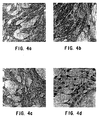
- FIGS 4a-4d The monolayers infected with influenza PR/8 or with the coding HA vector showed positive staining for HA.
- Figures 4a-4d The results are illustrated in Figures 4a-4d.
- Figure 4a illustrates cells infected with influenza PR/8 stained with anti-HA antibody.
- Figure 4b illustrates VEE HA-vector infected cells stained with anti-HA antibody.
- Figure 4c illustrates cells infected with VEE vector without insert stained with anti-VEE antibody.
- Figure 4d illustrates cells infected with VEE vector without insert stained with anti-HA antibody.
- influenza stain in HA vector infected cells was cytoplasmic, and was as intense, under these conditions, as the staining for HA in the influenza-infected control monolayers.
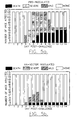
- CD-1 mice Four-week-old CD-1 mice were inoculated subcutaneously into each rear footpad with 1 x 10 4 pfu of (1) diluent (PBS) alone, (2) the HA-expressing doubly attenuated vector (V4036a), or with (3) the vaccine vector without insert. Three weeks later, the mice were challenged intranasally with 10 5 EID 50 (50% egg infectious dose) of influenza virus. The results are reported in Figures 5a-5c. All 24 control mice suffered severe disease and 50% died. Only one of 12 HA-vector-inoculated mice died, and another exhibited signs of disease for one day and recovered.
- Pre-challenge anti-flu serum IgG ELISA titers were measured, and the results are illustrated in Figure 6 .
- the geometric mean ELISA titer of anti-HA serum IgG in the HA-vector inoculated mice was 246, while sera from only 3 of 24 control mice gave a detectable titer, and they were positive only at the lowest dilution tested (1:50).
- the two HA-vector-inoculated mice affected by the influenza challenge showed no detectable anti-HA IgG. Therefore, in 10 of 12 mice, the HA-vector elicited a detectable level of anti-HA serum IgG, and 11 of 12 mice were protected against lethal influenza challenge.
- mice Four-week-old CD-1 mice were inoculated subcutaneously into each rear footpad with 1 x 10 4 pfu of (1) diluent (PBS) alone, (2) the HA-expressing doubly attenuated vector, or with (3) the vaccine vector without insert. Three weeks later, the mice were challenged intranasally with 10 5 EID 50 (50% egg infectious dose) of influenza virus. The lungs were removed 4 days after challenge. Lung tissue was homogenized in PBS + 0.1% BSA to give a 20% suspension, centrifuged, aliquoted and frozen at -70°C. For each animal, two aliquots were assayed for pfu on MDCK cells under agarose containing 0.1% trypsin.
- PBS diluent
- EID 50 50% egg infectious dose
Landscapes
- Health & Medical Sciences (AREA)
- Life Sciences & Earth Sciences (AREA)
- Chemical & Material Sciences (AREA)
- Virology (AREA)
- Organic Chemistry (AREA)
- Genetics & Genomics (AREA)
- General Health & Medical Sciences (AREA)
- Medicinal Chemistry (AREA)
- Molecular Biology (AREA)
- Biophysics (AREA)
- Microbiology (AREA)
- Engineering & Computer Science (AREA)
- Biochemistry (AREA)
- Pharmacology & Pharmacy (AREA)
- Animal Behavior & Ethology (AREA)
- Veterinary Medicine (AREA)
- Public Health (AREA)
- Biomedical Technology (AREA)
- Bioinformatics & Cheminformatics (AREA)
- Zoology (AREA)
- Communicable Diseases (AREA)
- Wood Science & Technology (AREA)
- Proteomics, Peptides & Aminoacids (AREA)
- General Engineering & Computer Science (AREA)
- Biotechnology (AREA)
- Mycology (AREA)
- Epidemiology (AREA)
- Gastroenterology & Hepatology (AREA)
- Immunology (AREA)
- Nuclear Medicine, Radiotherapy & Molecular Imaging (AREA)
- General Chemical & Material Sciences (AREA)
- Physics & Mathematics (AREA)
- Plant Pathology (AREA)
- Oncology (AREA)
- Chemical Kinetics & Catalysis (AREA)
- Pulmonology (AREA)
- Medicines Containing Antibodies Or Antigens For Use As Internal Diagnostic Agents (AREA)
- Micro-Organisms Or Cultivation Processes Thereof (AREA)
- Medicines That Contain Protein Lipid Enzymes And Other Medicines (AREA)
- Peptides Or Proteins (AREA)
Claims (20)
- Virus de l'encéphalite équine du Venezuela (VEE) recombiné, ledit virus VEE contenant au moins une mutation atténuante et un segment d'ARN hétérologue, ledit segment d'ARN hétérologue comprenant un promoteur fonctionnellement associé avec un ARN encodant une protéine ou un peptide immunogène, à utiliser comme un médicament.
- Virus de l'encéphalite équine du Venezuela (VEE) recombiné selon la revendication 1, comprenant au moins une mutation atténuante choisie parmi les groupes comprenant :(i) une mutation G en C au nucléotide 3 de l'ARN viral ;(ii) une mutation atténuante dans la région E1 ; et/ou(iii) une mutation atténuante dans la région E2.
- Virus de l'encéphalite équine du Venezuela (VEE) recombiné selon la revendication 2, comprenant au moins une mutation atténuante dans la région E1 choisie parmi le groupe comprenant :(i) les codons de l'acide aminé 272 de E1 qui définissent une mutation atténuante ;(ii) les codons de l'acide aminé 81 de E1 qui définissent une mutation atténuante ; et/ou(iii) les codons de l'acide aminé 253 de E1 qui définissent une mutation atténuante.
- Virus de l'encéphalite équine du Venezuela (VEE) recombiné selon la revendication 2 ou 3, comprenant au moins une mutation atténuante dans la région E2 choisie parmi le groupe comprenant :(i) les codons à la position 76 d'acide aminé de E2 qui définissent une mutation atténuante ;(ii) les codons à la position 209 d'acide aminé de E2 qui définissent une mutation atténuante ;(iii) les codons à la position 120 d'acide aminé de E2 qui définissent une mutation atténuante.
- Virus VEE selon l'une des revendications 1 à 4 à utiliser dans un traitement d'une maladie virale.
- Virus VEE selon l'une des revendications précédentes caractérisé en ce que ladite protéine ou ledit peptide immunogène est choisi(e) parmi le groupe comprenant les immunogènes de la grippe, les immunogènes de lentivus, les immunogènes de coronavirus, et les immunogènes de flavivirus.
- Virus VEE selon la revendication 6, caractérisé en ce que ledit ARN hétérologue encode une protéine de surface hémaglutinine (HA) du virus de la grippe.
- Virus VEE selon l'une des revendications 1 à 5, caractérisé en ce que ledit ARN hétérologue encode un immunogène de virus d'anémie infectieuse équine.
- Virus VEE selon l'une des revendications précédentes, caractérisé en ce que ledit promoteur est un promoteur sous-génomique 26S du virus d'encéphalite équine du Venezuela.
- Virus VEE selon l'une des revendications précédentes, caractérisé en ce que ledit médicament est administré de manière parentérale, topique, intranasale, ou est inhalé.
- ADN comprenant un clone d'ADNc codant pour un produit de la transcription d'ARN du virus d'encéphalite équine du Venezuela (VEE). infectieux, ledit ADN contenant au moins une mutation atténuante et encodant un segment d'ARN hétérologue et un promoteur positionné en amont dudit clone d'ADNc et fonctionnellement associé avec celui-ci, ledit ARN hétérologue encodant une protéine ou un peptide immunogène.
- ADN selon la revendication 11, comprenant au moins une mutation atténuante choisie parmi le groupe comprenant :(i) une mutation G en C au nucléotide 3 de l'ARN viral ;(ii) une mutation atténuante dans la région E1 ; et/ou(iii) une mutation atténuante dans la région E2.
- ADN selon la revendication 12, comprenant au moins une mutation atténuante dans la région E1 choisie parmi le groupe comprenant :(i) les codons de l'acide aminé 272 de E1 qui définissent une mutation atténuante ;(ii) les codons de l'acide aminé 81 de E1 qui définissent une mutation atténuante ; et/ou(iii) les codons de l'acide aminé 253 de E1 qui définissent une mutation atténuante.
- ADN selon la revendication 12 ou 13, comprenant au moins une mutation atténuante dans la région E2 choisie parmi le groupe comprenant :(iv) les codons à la position 76 d'acide aminé de E2 qui définissent une mutation atténuante ;(v) les codons à la position 209 d'acide aminé de E2 qui définissent une mutation atténuante ;(vi) les codons à la position 120 d'acide aminé de E2 qui définissent une mutation atténuante.
- ADN selon la revendication 11, ladite mutation atténuante comprenant :une première mutation atténuante qui est un codon de l'acide aminé 253 de E1 qui définit une mutation atténuante ; etune seconde mutation qui est un site de reconnaissance de division de l'acide aminé 56 à 59 de E3 désactivé.
- ADN selon la revendication 15, caractérisé en ce que ledit site de reconnaissance de division de l'acide aminé 56 à 59 de E3 ;(i) est effacé,(ii) contient une mutation de substitution désactivante ; ou(iii) contient une mutation de substitution d'une arginine en acide aspartique à l'acide aminé 59.
- ADN selon l'une des revendications 11 à 16, caractérisé en ce que ledit ARN hétérologue est d'au moins 1 kilobase en longueur.
- Produit de la transcription d'ARN de virus VEE infectieux encodé par un clone d'ADNc selon l'une des revendications 11 à 16.
- Particules du virus VEE infectieux comprenant un produit de la transcription ARN selon la revendication 18.
- Formulation pharmaceutique comprenant des particules de virus VEE infectieux selon la revendication 19 dans une quantité immunogène efficace dans un porteur pharmaceutiquement acceptable.
Applications Claiming Priority (3)
| Application Number | Priority Date | Filing Date | Title |
|---|---|---|---|
| US08/250,445 US5505947A (en) | 1994-05-27 | 1994-05-27 | Attenuating mutations in Venezuelan Equine Encephalitis virus |
| US250445 | 1994-05-27 | ||
| PCT/US1995/006739 WO1995032733A1 (fr) | 1994-05-27 | 1995-05-26 | Procede d'induction de reaction immunitaire au moyen d'un virus vivant de l'encephalite equine de venezuela exprimant un immunogene heterologue |
Publications (3)
| Publication Number | Publication Date |
|---|---|
| EP0762894A1 EP0762894A1 (fr) | 1997-03-19 |
| EP0762894A4 EP0762894A4 (fr) | 1997-11-26 |
| EP0762894B1 true EP0762894B1 (fr) | 2004-03-10 |
Family
ID=22947786
Family Applications (1)
| Application Number | Title | Priority Date | Filing Date |
|---|---|---|---|
| EP95922131A Expired - Lifetime EP0762894B1 (fr) | 1994-05-27 | 1995-05-26 | Procede d'induction de reaction immunitaire au moyen d'un virus vivant de l'encephalite equine de venezuela exprimant un immunogene heterologue |
Country Status (7)
| Country | Link |
|---|---|
| US (2) | US5505947A (fr) |
| EP (1) | EP0762894B1 (fr) |
| JP (2) | JPH10501405A (fr) |
| AT (1) | ATE261312T1 (fr) |
| CA (1) | CA2193210C (fr) |
| DE (1) | DE69532672T2 (fr) |
| WO (1) | WO1995032733A1 (fr) |
Families Citing this family (132)
| Publication number | Priority date | Publication date | Assignee | Title |
|---|---|---|---|---|
| US6015686A (en) * | 1993-09-15 | 2000-01-18 | Chiron Viagene, Inc. | Eukaryotic layered vector initiation systems |
| US5505947A (en) * | 1994-05-27 | 1996-04-09 | The University Of North Carolina At Chapel Hill | Attenuating mutations in Venezuelan Equine Encephalitis virus |
| US5792462A (en) * | 1995-05-23 | 1998-08-11 | University Of North Carolina At Chapel Hill | Alphavirus RNA replicon systems |
| US6451592B1 (en) | 1996-04-05 | 2002-09-17 | Chiron Corporation | Recombinant alphavirus-based vectors with reduced inhibition of cellular macromolecular synthesis |
| US6458560B1 (en) | 1996-04-05 | 2002-10-01 | Chiron Corporation | Recombinant alphavirus-based vectors with reduced inhibition of cellular macromolecular synthesis |
| US5811407A (en) * | 1997-02-19 | 1998-09-22 | The University Of North Carolina At Chapel Hill | System for the in vivo delivery and expression of heterologous genes in the bone marrow |
| US6261570B1 (en) | 1997-05-20 | 2001-07-17 | The United States Of America As Represented By The Secretary Of The Army | Live attenuated virus vaccines for western equine encephalitis virus, eastern equine encephalitis virus, and venezuelan equine encephalitis virus IE and IIIA variants |
| US6699478B1 (en) * | 1997-09-19 | 2004-03-02 | Wyeth Holdings Corporation | Enhanced immune response to attachment (G) protein of Respiratory Syncytial Virus |
| US7964192B1 (en) | 1997-12-02 | 2011-06-21 | Janssen Alzheimer Immunotherapy | Prevention and treatment of amyloidgenic disease |
| US7179892B2 (en) | 2000-12-06 | 2007-02-20 | Neuralab Limited | Humanized antibodies that recognize beta amyloid peptide |
| CA2309765A1 (fr) * | 1997-12-18 | 1999-06-24 | G.D. Searle & Co. | Vecteurs viraux de l'encephalite equine venezuelienne exprimant des antigenes associes aux tumeurs, suscitant une immunite contre le cancer |
| US20020147143A1 (en) | 1998-03-18 | 2002-10-10 | Corixa Corporation | Compositions and methods for the therapy and diagnosis of lung cancer |
| US6844188B1 (en) | 1998-04-08 | 2005-01-18 | University Of North Carolina At Chapel Hill | Methods and modified cells for the treatment of cancer |
| CA2327835C (fr) | 1998-04-08 | 2010-09-21 | University Of North Carolina At Chapel Hill | Methodes et cellules modifiees pour le traitement du cancer |
| GB2337755B (en) | 1998-05-29 | 2003-10-29 | Secr Defence | Virus vaccine |
| US20030235557A1 (en) | 1998-09-30 | 2003-12-25 | Corixa Corporation | Compositions and methods for WT1 specific immunotherapy |
| US8647864B2 (en) * | 1999-04-14 | 2014-02-11 | Novartis Ag | Compositions and methods for generating an immune response utilizing alphavirus-based vector systems |
| CA2373300C (fr) * | 1999-04-14 | 2012-02-21 | Chiron Corporation | Compositions et procedes permettant de generer une reponse immunitaire au moyen de systemes de vecteurs a base d'alphavirus |
| UA81216C2 (en) | 1999-06-01 | 2007-12-25 | Prevention and treatment of amyloid disease | |
| ATE412763T1 (de) * | 1999-08-31 | 2008-11-15 | Univ North Carolina | Antikörper-abhängige vergrösserung der alphavirus-infektvität |
| SI1650221T1 (sl) | 2000-02-23 | 2012-09-28 | Glaxosmithkline Biolog Sa | Nove spojine |
| US6767699B2 (en) | 2000-05-31 | 2004-07-27 | Chiron Corporation | Method for the quantitation of alphavirus replicon particles |
| EP1319069B1 (fr) | 2000-06-28 | 2008-05-21 | Corixa Corporation | Compositions et methodes pour le traitement et le diagnostic du cancer du poumon |
| US6783939B2 (en) | 2000-07-07 | 2004-08-31 | Alphavax, Inc. | Alphavirus vectors and virosomes with modified HIV genes for use in vaccines |
| WO2002020721A2 (fr) * | 2000-09-07 | 2002-03-14 | University Of North Carolina At Chapel Hill | Vecteurs derives de l'arbovirus sud-africain numero.86 |
| PE20020574A1 (es) | 2000-12-06 | 2002-07-02 | Wyeth Corp | Anticuerpos humanizados que reconocen el peptido amiloideo beta |
| CN101124237A (zh) * | 2001-04-13 | 2008-02-13 | 惠氏 | 酿脓链球菌的表面蛋白 |
| US20070128229A1 (en) * | 2002-04-12 | 2007-06-07 | Wyeth | Surface proteins of Streptococcus pyogenes |
| KR100886095B1 (ko) | 2001-04-16 | 2009-02-27 | 와이어쓰 홀딩스 코포레이션 | 폴리펩티드 항원을 암호화하는 신규한 스트렙토코쿠스 뉴모니애 개방형 판독 프레임 및 이를 포함하는 조성물 |
| CA2446788A1 (fr) | 2001-05-09 | 2002-11-14 | Corixa Corporation | Compositions et procedes pour la therapie et le diagnostic du cancer de la prostate |
| US7446185B2 (en) * | 2001-07-18 | 2008-11-04 | The Regents Of The University Of California | Her2/neu target antigen and use of same to stimulate an immune response |
| WO2003023026A1 (fr) | 2001-09-06 | 2003-03-20 | Alphavax, Inc. | Systemes de vecteurs a base de replicons alphaviraux |
| ES2344253T3 (es) | 2001-10-11 | 2010-08-23 | MERCK SHARP & DOHME CORP. | Vacuna contra el virus de la hepatitis c. |
| JP4475561B2 (ja) | 2001-10-11 | 2010-06-09 | メルク・シャープ・エンド・ドーム・コーポレイション | C型肝炎ウイルスワクチン |
| EP1581119B1 (fr) | 2001-12-17 | 2013-01-30 | Corixa Corporation | Compositions et procedes applicables a la therapie et au diagnostic pour la maladie intestinale inflammatoire |
| US20080057492A1 (en) * | 2002-05-10 | 2008-03-06 | Quinnan Jr Gerald V | Interacting site for gp41 on gp120 of hiv-1 |
| AU2003267971A1 (en) * | 2002-06-21 | 2004-01-06 | Alphavax, Inc. | Improved alphavirus vectors having attenuated virion structural proteins |
| US8506959B2 (en) | 2002-11-01 | 2013-08-13 | Neotope Biosciences Limited | Prevention and treatment of synucleinopathic and amyloidogenic disease |
| TW200509968A (en) | 2002-11-01 | 2005-03-16 | Elan Pharm Inc | Prevention and treatment of synucleinopathic disease |
| AU2003297039B2 (en) * | 2002-12-13 | 2009-03-05 | Alphavax, Inc. | Multi-antigenic alphavirus replicon particles and methods |
| AU2003297041B2 (en) * | 2002-12-13 | 2009-02-26 | Alphavax, Inc. | Alphavirus particles and methods for preparation |
| US7960522B2 (en) | 2003-01-06 | 2011-06-14 | Corixa Corporation | Certain aminoalkyl glucosaminide phosphate compounds and their use |
| SI1589934T1 (sl) | 2003-01-06 | 2016-02-29 | Corixa Corporation Corporation Service Company | Določene aminoalkil glukozaminid fosfat spojine in njih uporaba |
| EP1608762B1 (fr) | 2003-03-20 | 2014-01-08 | Alphavax, Inc. | Replicons d'alphavirus ameliores et produits de recombinaison auxiliaires |
| MXPA05012754A (es) * | 2003-05-29 | 2006-05-17 | Army Medical Res Inst For I | Vacunas virales atenuadas vivas para virus de encefalitis equina oriental. |
| US7541038B2 (en) * | 2003-06-05 | 2009-06-02 | Wyeth Holdings Corporation | Fusogenic, self-propagating blebs as immunogenic compositions |
| US20060099587A1 (en) * | 2003-06-20 | 2006-05-11 | Johnston Robert E | Alphavirus vectors having attentuated virion structural proteins |
| PT1651666E (pt) * | 2003-07-11 | 2009-08-28 | Alphavax Inc | Vacinas de citomegalovírus à base de alfavírus |
| PT1751289E (pt) | 2004-05-18 | 2009-03-31 | Alphavax Inc | Vectores de alfavirais derivados da tc-83, partículas e métodos |
| AU2005327198B2 (en) * | 2004-07-09 | 2011-03-31 | University Of North Carolina At Chapel Hill | Viral adjuvants |
| MX2007001679A (es) | 2004-08-09 | 2007-05-23 | Elan Pharm Inc | Prevencion y tratamiento de la enfermedad sinucleinopatica y amiloidogenica. |
| ES2730275T3 (es) | 2004-09-22 | 2019-11-11 | Glaxosmithkline Biologicals Sa | Composición inmunógena para uso en vacunación contra estafilococos |
| BRPI0516974A (pt) | 2004-10-21 | 2008-09-30 | Wyeth Corp | composição imunogênica compreendendo um polipeptìdeo; um método para induzir uma resposta imune contra staphylococcus epidermidis; um método para induzir uma resposta imune contra staphylococcus aureus; um método para a detecção e/ou identificação de staphylococcus epidermidis; um método para a detecção e/ou identificação de anticorpos para staphylococcus epidermidis |
| EP1856250B1 (fr) * | 2005-02-15 | 2013-07-24 | The University of North Carolina At Chapel Hill | Nouveaux vaccins à base de virus vivant |
| CA2610919C (fr) | 2005-06-17 | 2013-09-10 | Istituto Di Ricerche Di Biologia Molecolare P. Angeletti S.P.A. | Vaccin a base d'acide nucleique contre le virus de l'hepatite c |
| WO2007120368A2 (fr) | 2006-01-09 | 2007-10-25 | The Regents Of The University Of California | Combinaisons immunostimulatrices de tnfrsf, tlr, nlr, rhr, du récepteur purinergique et des agonistes du récepteur de la cytokine utilisées pour les vaccins et en immunothérapie anti-tumorale |
| AU2007342333B2 (en) | 2006-09-12 | 2013-02-28 | Alphavax, Inc. | Alphavirus replicon particles encoding IL- 12 as immunological adjuvants |
| US20090022760A1 (en) * | 2006-09-12 | 2009-01-22 | Alphavax | Alphavirus Replicon Particles Matched to Protein Antigens as Immunological Adjuvants |
| US20090047255A1 (en) * | 2006-11-03 | 2009-02-19 | Alphavax, Inc. | Alphavirus and Alphavirus Replicon Particle Formulations and Methods |
| LT3067066T (lt) | 2007-02-23 | 2019-06-25 | Prothena Biosciences Limited | Sinukleopatinių ir amiloidogeninių ligų prevencija ir gydymas |
| PL2583978T3 (pl) | 2007-02-23 | 2016-07-29 | Prothena Biosciences Ltd Co | Profilaktyka i leczenie chorób synukleinopatycznych i amyloidogennych |
| DK2947149T3 (en) | 2007-06-21 | 2018-06-06 | Alphavax Inc | ALPHAVIRUS REPLICATION PARTICLES FOR USE IN VACCINATION |
| WO2009042794A2 (fr) * | 2007-09-26 | 2009-04-02 | Vanderbilt University | Vaccin contre le vrs et le mpv |
| WO2009086539A2 (fr) | 2007-12-28 | 2009-07-09 | Elan Pharmaceuticals, Inc. | Traitement et prophylaxie de l'amylose |
| US20100040650A1 (en) * | 2008-05-30 | 2010-02-18 | Crowe Jr James E | Virus-Like paramyxovirus particles and vaccines |
| WO2009155484A2 (fr) | 2008-06-20 | 2009-12-23 | Wyeth | Compositions et procédés d'utilisation d'orf1358 provenant de souches de streptocoques bêta-hémolytiques |
| SMT202000101T1 (it) | 2008-10-10 | 2020-03-13 | Childrens Medical Center | Vaccino con trimero di env di hiv-1 stabilizzato biochimicamente |
| AU2009313615B2 (en) | 2008-11-05 | 2012-11-29 | Regents Of The University Of Minnesota | Multicomponent immunogenic composition for the prevention of beta-hemolytic streptococcal (BHS) disease |
| PL2358757T3 (pl) | 2008-11-18 | 2019-02-28 | Beth Israel Deaconess Medical Center | Szczepionki antywirusowe o ulepszonej immunogenności komórkowej |
| EP2376111A4 (fr) | 2008-11-26 | 2013-01-09 | Merck Sharp & Dohme | Polypeptides pour induire une réponse immunitaire protectrice contre staphylococcus aureus |
| CN102292105A (zh) | 2008-11-26 | 2011-12-21 | 默沙东公司 | 用于诱导抗金黄色葡萄球菌的保护性免疫应答的多肽 |
| US8680258B2 (en) | 2008-12-01 | 2014-03-25 | Alphavax, Inc. | Use of microRNAs to control virus helper nucleic acids |
| CA2787099A1 (fr) | 2009-03-30 | 2010-10-14 | Anice C. Lowen | Polypeptides d'hemagglutinine du virus de l'influenza renfermant des domaines souches, vaccins et utilisations associees |
| JP5931724B2 (ja) | 2009-06-29 | 2016-06-08 | ジェノセア バイオサイエンシーズ, インコーポレイテッド | StreptococcusPneumoniaeに対するワクチンおよび組成物 |
| WO2011123495A1 (fr) | 2010-03-30 | 2011-10-06 | Mount Sinai School Of Medicine | Vaccins contre le virus de la grippe et utilisations associées |
| SG10201600435UA (en) | 2011-01-20 | 2016-02-26 | Genocea Biosciences Inc | Vaccines And Compositions Against Streptococcus Pneumoniae |
| JP2014527398A (ja) | 2011-06-21 | 2014-10-16 | オンコファクター コーポレイション | がんの療法および診断のための組成物および方法 |
| EP3275461A1 (fr) | 2011-09-19 | 2018-01-31 | Axon Neuroscience SE | Thérapie protéique et diagnostic d'une pathologie à médiation par tau dans la maladie d'alzheimer |
| EP2758075B1 (fr) | 2011-09-20 | 2023-05-03 | Icahn School of Medicine at Mount Sinai | Vaccins contre le virus de la grippe et leurs utilisations |
| US9765125B2 (en) | 2012-01-20 | 2017-09-19 | Genocea Biosciences, Inc. | Fused antigen vaccines and compositions against Streptococcus pneumoniae |
| EP2934581B1 (fr) | 2012-12-18 | 2022-09-14 | Icahn School of Medicine at Mount Sinai | Vaccins contre le virus de la grippe et leurs utilisations |
| WO2014107744A1 (fr) | 2013-01-07 | 2014-07-10 | Beth Israel Deaconess Medical Center, Inc. | Vaccins de trimère d'enveloppe (env) de virus d'immunodéficience humaine (vih) stabilisés et procédés d'utilisation de ceux-ci |
| WO2014165271A2 (fr) | 2013-03-13 | 2014-10-09 | Neotope Biosciences Limited | Immunothérapie contre tau |
| US9908930B2 (en) | 2013-03-14 | 2018-03-06 | Icahn School Of Medicine At Mount Sinai | Antibodies against influenza virus hemagglutinin and uses thereof |
| EP3666790A1 (fr) | 2013-10-04 | 2020-06-17 | Beth Israel Deaconess Medical Center, Inc. | Caccins de trimères d'enveloppe (env) de clade c du virus de l'immunodéficience humaine (vih) stabilisés et procédés d'utilisation de ceux-ci |
| WO2015054427A1 (fr) | 2013-10-10 | 2015-04-16 | Beth Israel Deaconess Medical Center, Inc. | Protéines de liaison de tm4sf1 et leurs procédés d'utilisation |
| MA40765B1 (fr) | 2014-09-26 | 2021-04-30 | Beth Israel Deaconess Medical Ct Inc | Méthodes et compositions d'induction d'une immunité protectrice contre l'infection par le virus de l'immunodéficience humaine |
| JP2018504412A (ja) | 2015-01-23 | 2018-02-15 | アイカーン スクール オブ メディシン アット マウント サイナイ | インフルエンザウイルスワクチン接種レジメン |
| EP3270897A4 (fr) | 2015-03-20 | 2018-12-05 | The Regents Of The University Of Michigan | Compositions immunogènes pour une utilisation en vaccination contre les bordetella |
| PL3390430T3 (pl) | 2015-12-15 | 2020-03-31 | Janssen Vaccines & Prevention B.V. | Antygeny ludzkiego wirusa niedoboru odporności, wektory, kompozycje i sposoby ich zastosowania |
| MX2018013384A (es) | 2016-05-02 | 2019-02-28 | Prothena Biosciences Ltd | Anticuerpos que reconocen tau. |
| EP3452507B1 (fr) | 2016-05-02 | 2022-10-19 | Prothena Biosciences Limited | Immunothérapie anti-tau |
| US10906964B2 (en) | 2016-05-02 | 2021-02-02 | Prothena Biosciences Limited | Antibodies recognizing tau |
| EP3471767A4 (fr) | 2016-06-15 | 2020-01-15 | Icahn School of Medicine at Mount Sinai | Hémagglutinines du virus de la grippe et utilisations de celles-ci |
| EA201892735A1 (ru) | 2016-06-16 | 2019-05-31 | Янссен Вэксинс Энд Превеншн Б.В. | Состав вакцины против hiv |
| US11285191B2 (en) | 2016-07-26 | 2022-03-29 | The Board Of Supervisors Of Louisiana State University And Agricultural And Mechanical College | Immunostimulatory compositions and uses therefor |
| CA3035759A1 (fr) | 2016-09-02 | 2018-03-08 | Janssen Vaccines & Prevention B.V. | Procedes pour induire une reponse immunitaire contre une infection par le virus de l'immunodeficience humaine chez des sujets subissant un traitement antiretroviral |
| JP7178344B2 (ja) | 2016-09-15 | 2022-11-25 | ヤンセン ファッシンズ アンド プリベンション ベーフェー | 三量体安定化hivエンベロープタンパク質変異 |
| RU2642312C1 (ru) * | 2016-09-20 | 2018-01-24 | Федеральное государственное бюджетное военное образовательное учреждение высшего образования Военно-медицинская академия им. С.М. Кирова Министерства обороны Российской Федерации (ВМедА) | Способ профилактики и лечения опасных нейровирусных инфекций |
| EP3526236B1 (fr) | 2016-10-17 | 2025-12-10 | Beth Israel Deaconess Medical Center, Inc. | Vaccins contenant un trimère d'enveloppe (env) du virus de l'immunodéficience humaine (vih) à base de signatures et procédés d'utilisation de ceux-ci |
| WO2018187706A2 (fr) | 2017-04-07 | 2018-10-11 | Icahn School Of Medicine At Mount Sinai | Anticorps anti-neuraminidase du virus influenza de type b et leurs utilisations |
| SG11201910066QA (en) | 2017-05-02 | 2019-11-28 | Prothena Biosciences Ltd | Antibodies recognizing tau |
| KR102945203B1 (ko) | 2017-05-08 | 2026-03-31 | 시애틀 프로젝트 코포레이션 | 알파바이러스 신생항원 벡터 |
| BR112019026126A2 (pt) | 2017-06-15 | 2020-06-30 | Janssen Vaccines & Prevention B.V. | vetores de poxvírus que codificam antígenos do hiv e métodos de uso dos mesmos |
| MY200554A (en) | 2017-07-19 | 2024-01-03 | Janssen Vaccines & Prevention Bv | Trimer stabilizing hiv envelope protein mutations |
| WO2019099970A1 (fr) | 2017-11-20 | 2019-05-23 | Janssen Pharmaceuticals Inc. | Procédé d'administration sûre de vecteurs adénoviraux codant pour un antigène du virus zika |
| KR102823029B1 (ko) | 2017-12-20 | 2025-06-20 | 브이엘피 테라퓨틱스 인코포레이티드 | 알파바이러스 레플리콘 입자 |
| WO2019246363A1 (fr) | 2018-06-21 | 2019-12-26 | Icahn School Of Medicine At Mount Sinai | Polypeptides d'hémagglutinines du virus de la grippe en mosaïque et leurs utilisations |
| KR20210090650A (ko) | 2018-11-07 | 2021-07-20 | 그릿스톤 바이오, 인코포레이티드 | 알파바이러스 신생항원 벡터 및 인터페론 억제제 |
| SG11202104549TA (en) | 2018-11-08 | 2021-05-28 | Prothena Biosciences Ltd | Antibodies recognizing tau |
| TWI859197B (zh) | 2019-03-03 | 2024-10-21 | 愛爾蘭商普羅帝納生物科學公司 | 識別tau之抗體 |
| WO2020219719A1 (fr) | 2019-04-24 | 2020-10-29 | Icahn School Of Medicine At Mount Sinai | Anticorps anti-neuraminidase du virus influenza de type b et leurs utilisations |
| SG11202113187WA (en) | 2019-05-30 | 2021-12-30 | Gritstone Bio Inc | Modified adenoviruses |
| CN115003328A (zh) | 2019-10-22 | 2022-09-02 | 西奈山伊坎医学院 | 重组神经氨酸酶及其用途 |
| US20230026352A1 (en) | 2019-12-26 | 2023-01-26 | Figene, Llc | Suppression of interleukin-17 production and inhibition of th17 cell generation by fibroblasts and products thereof |
| TW202204380A (zh) | 2020-01-31 | 2022-02-01 | 美商詹森藥物公司 | 用於預防及治療冠狀病毒感染之組合物及方法-sars-cov-2疫苗 |
| TWI891771B (zh) | 2020-04-17 | 2025-08-01 | 美商Vlp醫療股份有限公司 | 冠狀病毒疫苗 |
| MX2022013638A (es) | 2020-04-30 | 2023-01-24 | Vlp Therapeutics Inc | Inmunoterapia con citocina. |
| AU2021276401A1 (en) | 2020-05-19 | 2022-12-15 | Othair Prothena Limited | Multi-epitope vaccine for the treatment of Alzheimer's disease |
| AU2021297540A1 (en) | 2020-06-24 | 2023-02-02 | Prothena Biosciences Limited | Antibodies recognizing sortilin |
| IL300026A (en) | 2020-08-06 | 2023-03-01 | Gritstone Bio Inc | Multiepitope vaccine cassettes |
| CN116472055A (zh) | 2020-08-07 | 2023-07-21 | 欧萨尔普罗席纳有限公司 | 治疗阿尔兹海默氏病的多表位疫苗 |
| WO2023039108A1 (fr) | 2021-09-08 | 2023-03-16 | Affinivax, Inc. | Vaccin anti-coronavirus |
| AU2024208643A1 (en) | 2023-01-12 | 2025-06-26 | Bavarian Nordic A/S | RECOMBINANT MODIFIED saRNA (VRP) FOR CANCER VACCINE |
| WO2024229176A1 (fr) | 2023-05-04 | 2024-11-07 | Affinivax, Inc. | Variants de rhizavidine |
| WO2024233791A1 (fr) | 2023-05-11 | 2024-11-14 | Seelos Therapeutics, Inc. | Méthodes de traitement de troubles neurodégénératifs |
| AU2024341632A1 (en) | 2023-09-15 | 2026-04-23 | Prothena Biosciences Limited | Compositions and methods of reducing immunogenicity and improving stability of antibodies |
| WO2025059487A2 (fr) | 2023-09-15 | 2025-03-20 | Othair Prothena Limited | Agents de pénétration cellulaire et leurs utilisations |
| CN122070299A (zh) | 2023-09-15 | 2026-05-19 | 普罗塞纳生物科学有限公司 | 细胞穿透剂及其用途 |
| EP4777522A2 (fr) | 2023-09-15 | 2026-07-22 | Prothena Platform Technologies Limited | Procédés, compositions et kits comprenant des agents de pénétration cellulaire |
| WO2025059486A1 (fr) | 2023-09-15 | 2025-03-20 | Prothena Biosciences Limited | Anticorps anti-tdp-43 et leurs utilisations |
| WO2025193903A1 (fr) | 2024-03-15 | 2025-09-18 | Affinivax, Inc. | Compositions de polysaccharide pneumococcique et leurs utilisations |
Family Cites Families (3)
| Publication number | Priority date | Publication date | Assignee | Title |
|---|---|---|---|---|
| US5185440A (en) * | 1989-06-20 | 1993-02-09 | North Carolina State University | cDNA clone coding for Venezuelan equine encephalitis virus and attenuating mutations thereof |
| SE9003978D0 (sv) * | 1990-12-13 | 1990-12-13 | Henrik Garoff | Dna expressionssystem baserade paa ett virus replikon |
| US5505947A (en) * | 1994-05-27 | 1996-04-09 | The University Of North Carolina At Chapel Hill | Attenuating mutations in Venezuelan Equine Encephalitis virus |
-
1994
- 1994-05-27 US US08/250,445 patent/US5505947A/en not_active Expired - Lifetime
-
1995
- 1995-05-19 US US08/444,563 patent/US5643576A/en not_active Expired - Lifetime
- 1995-05-26 CA CA002193210A patent/CA2193210C/fr not_active Expired - Lifetime
- 1995-05-26 EP EP95922131A patent/EP0762894B1/fr not_active Expired - Lifetime
- 1995-05-26 DE DE69532672T patent/DE69532672T2/de not_active Expired - Lifetime
- 1995-05-26 AT AT95922131T patent/ATE261312T1/de not_active IP Right Cessation
- 1995-05-26 JP JP8500055A patent/JPH10501405A/ja active Pending
- 1995-05-26 WO PCT/US1995/006739 patent/WO1995032733A1/fr not_active Ceased
-
2005
- 2005-07-08 JP JP2005199854A patent/JP2006006335A/ja active Pending
Also Published As
| Publication number | Publication date |
|---|---|
| JPH10501405A (ja) | 1998-02-10 |
| AU2692395A (en) | 1995-12-21 |
| ATE261312T1 (de) | 2004-03-15 |
| EP0762894A4 (fr) | 1997-11-26 |
| EP0762894A1 (fr) | 1997-03-19 |
| WO1995032733A1 (fr) | 1995-12-07 |
| AU709795B2 (en) | 1999-09-09 |
| US5505947A (en) | 1996-04-09 |
| DE69532672D1 (de) | 2004-04-15 |
| CA2193210C (fr) | 2007-02-20 |
| US5643576A (en) | 1997-07-01 |
| DE69532672T2 (de) | 2005-02-17 |
| CA2193210A1 (fr) | 1995-12-07 |
| JP2006006335A (ja) | 2006-01-12 |
Similar Documents
| Publication | Publication Date | Title |
|---|---|---|
| US5505947A (en) | Attenuating mutations in Venezuelan Equine Encephalitis virus | |
| JP3826055B2 (ja) | 組換えアビポックスウイルスによる免疫方法 | |
| RU2280690C2 (ru) | Рекомбинантные вирусы гриппа а | |
| AU633663B2 (en) | Recombinant herpesvirus of turkeys and live vector vaccines derived thereof | |
| EP1012295B1 (fr) | Systemes de replicons d'arn d'alphavirus | |
| CN108368488B (zh) | 鸭肠炎病毒及其用途 | |
| JP2007254489A (ja) | Htlv抗原を発現する組換え弱毒化ポックスウイルスを含有する免疫原性組成物 | |
| CA2099069C (fr) | Vaccin recombinant anti-herpesvirus du chat | |
| EP0606452B1 (fr) | Vaccins vecteurs d'herpesvirus felin recombine | |
| JP2002513575A (ja) | 弱毒インフルエンザウイルス | |
| AU709795C (en) | Method of inducing an immune response with a live venezuelan equine encephalitis virus expressing a heterologous immunogen | |
| AU753566B2 (en) | Method of inducing an immune response with a live Venezuelan equine encephalitis virus expressing heterologous immunogen | |
| US20070003577A1 (en) | Purified trimeric S protein as vaccine against severe acute respiratory syndrome virus infections | |
| Van der Ryst et al. | Study of the immunogenicity of different recombinant Mengo viruses expressing HIV1 and SIV epitopes | |
| WO2002083896A2 (fr) | Virus recombinant segmente a polarite negative contenant un segment d'arnv bicistronique avec duplication de sa sequence laterale 3' non codante, et vaccins et compositions therapeutiques le contenant | |
| Saikh et al. | Protective cross-reactive epitope on the nonstructural protein NS1 of influenza A virus | |
| WO1992002250A1 (fr) | Immunisation a reaction croisee contre la grippe a | |
| KR20230173042A (ko) | 변형된 코로나바이러스 스파이크 항원 단백질 및 이의 용도 | |
| IE60309B1 (en) | Recombinant viruses, vaccines containing them and in vitro cell cultures thereof |
Legal Events
| Date | Code | Title | Description |
|---|---|---|---|
| PUAI | Public reference made under article 153(3) epc to a published international application that has entered the european phase |
Free format text: ORIGINAL CODE: 0009012 |
|
| 17P | Request for examination filed |
Effective date: 19961227 |
|
| AK | Designated contracting states |
Kind code of ref document: A1 Designated state(s): AT BE CH DE DK ES FR GB GR IE IT LI LU MC NL PT SE |
|
| A4 | Supplementary search report drawn up and despatched |
Effective date: 19971013 |
|
| AK | Designated contracting states |
Kind code of ref document: A4 Designated state(s): AT BE CH DE DK ES FR GB GR IE IT LI LU MC NL PT SE |
|
| 17Q | First examination report despatched |
Effective date: 20001205 |
|
| REG | Reference to a national code |
Ref country code: GB Ref legal event code: FG4D |
|
| GRAP | Despatch of communication of intention to grant a patent |
Free format text: ORIGINAL CODE: EPIDOSNIGR1 |
|
| GRAS | Grant fee paid |
Free format text: ORIGINAL CODE: EPIDOSNIGR3 |
|
| GRAA | (expected) grant |
Free format text: ORIGINAL CODE: 0009210 |
|
| AK | Designated contracting states |
Kind code of ref document: B1 Designated state(s): AT BE CH DE DK ES FR GB GR IE IT LI LU MC NL PT SE |
|
| PG25 | Lapsed in a contracting state [announced via postgrant information from national office to epo] |
Ref country code: NL Free format text: LAPSE BECAUSE OF FAILURE TO SUBMIT A TRANSLATION OF THE DESCRIPTION OR TO PAY THE FEE WITHIN THE PRESCRIBED TIME-LIMIT Effective date: 20040310 Ref country code: IT Free format text: LAPSE BECAUSE OF FAILURE TO SUBMIT A TRANSLATION OF THE DESCRIPTION OR TO PAY THE FEE WITHIN THE PRE;WARNING: LAPSES OF ITALIAN PATENTS WITH EFFECTIVE DATE BEFORE 2007 MAY HAVE OCCURRED AT ANY TIME BEFORE 2007. THE CORRECT EFFECTIVE DATE MAY BE DIFFERENT FROM THE ONE RECORDED.SCRIBED TIME-LIMIT Effective date: 20040310 Ref country code: BE Free format text: LAPSE BECAUSE OF FAILURE TO SUBMIT A TRANSLATION OF THE DESCRIPTION OR TO PAY THE FEE WITHIN THE PRESCRIBED TIME-LIMIT Effective date: 20040310 Ref country code: AT Free format text: LAPSE BECAUSE OF FAILURE TO SUBMIT A TRANSLATION OF THE DESCRIPTION OR TO PAY THE FEE WITHIN THE PRESCRIBED TIME-LIMIT Effective date: 20040310 |
|
| REG | Reference to a national code |
Ref country code: CH Ref legal event code: EP |
|
| REG | Reference to a national code |
Ref country code: IE Ref legal event code: FG4D |
|
| REF | Corresponds to: |
Ref document number: 69532672 Country of ref document: DE Date of ref document: 20040415 Kind code of ref document: P |
|
| REG | Reference to a national code |
Ref country code: CH Ref legal event code: NV Representative=s name: BRAUN & PARTNER PATENT-, MARKEN-, RECHTSANWAELTE |
|
| PG25 | Lapsed in a contracting state [announced via postgrant information from national office to epo] |
Ref country code: LU Free format text: LAPSE BECAUSE OF NON-PAYMENT OF DUE FEES Effective date: 20040526 |
|
| PG25 | Lapsed in a contracting state [announced via postgrant information from national office to epo] |
Ref country code: MC Free format text: LAPSE BECAUSE OF NON-PAYMENT OF DUE FEES Effective date: 20040531 |
|
| PG25 | Lapsed in a contracting state [announced via postgrant information from national office to epo] |
Ref country code: SE Free format text: LAPSE BECAUSE OF FAILURE TO SUBMIT A TRANSLATION OF THE DESCRIPTION OR TO PAY THE FEE WITHIN THE PRESCRIBED TIME-LIMIT Effective date: 20040610 Ref country code: GR Free format text: LAPSE BECAUSE OF FAILURE TO SUBMIT A TRANSLATION OF THE DESCRIPTION OR TO PAY THE FEE WITHIN THE PRESCRIBED TIME-LIMIT Effective date: 20040610 Ref country code: DK Free format text: LAPSE BECAUSE OF FAILURE TO SUBMIT A TRANSLATION OF THE DESCRIPTION OR TO PAY THE FEE WITHIN THE PRESCRIBED TIME-LIMIT Effective date: 20040610 |
|
| PG25 | Lapsed in a contracting state [announced via postgrant information from national office to epo] |
Ref country code: ES Free format text: LAPSE BECAUSE OF FAILURE TO SUBMIT A TRANSLATION OF THE DESCRIPTION OR TO PAY THE FEE WITHIN THE PRESCRIBED TIME-LIMIT Effective date: 20040621 |
|
| NLV1 | Nl: lapsed or annulled due to failure to fulfill the requirements of art. 29p and 29m of the patents act | ||
| ET | Fr: translation filed | ||
| PLBE | No opposition filed within time limit |
Free format text: ORIGINAL CODE: 0009261 |
|
| STAA | Information on the status of an ep patent application or granted ep patent |
Free format text: STATUS: NO OPPOSITION FILED WITHIN TIME LIMIT |
|
| 26N | No opposition filed |
Effective date: 20041213 |
|
| PGFP | Annual fee paid to national office [announced via postgrant information from national office to epo] |
Ref country code: IE Payment date: 20070529 Year of fee payment: 13 |
|
| PGFP | Annual fee paid to national office [announced via postgrant information from national office to epo] |
Ref country code: CH Payment date: 20070530 Year of fee payment: 13 |
|
| PG25 | Lapsed in a contracting state [announced via postgrant information from national office to epo] |
Ref country code: PT Free format text: LAPSE BECAUSE OF NON-PAYMENT OF DUE FEES Effective date: 20040810 |
|
| REG | Reference to a national code |
Ref country code: CH Ref legal event code: PL |
|
| PG25 | Lapsed in a contracting state [announced via postgrant information from national office to epo] |
Ref country code: LI Free format text: LAPSE BECAUSE OF NON-PAYMENT OF DUE FEES Effective date: 20080531 Ref country code: CH Free format text: LAPSE BECAUSE OF NON-PAYMENT OF DUE FEES Effective date: 20080531 |
|
| REG | Reference to a national code |
Ref country code: IE Ref legal event code: MM4A |
|
| PG25 | Lapsed in a contracting state [announced via postgrant information from national office to epo] |
Ref country code: IE Free format text: LAPSE BECAUSE OF NON-PAYMENT OF DUE FEES Effective date: 20080526 |
|
| PGFP | Annual fee paid to national office [announced via postgrant information from national office to epo] |
Ref country code: GB Payment date: 20140527 Year of fee payment: 20 |
|
| PGFP | Annual fee paid to national office [announced via postgrant information from national office to epo] |
Ref country code: FR Payment date: 20140519 Year of fee payment: 20 Ref country code: DE Payment date: 20140529 Year of fee payment: 20 |
|
| REG | Reference to a national code |
Ref country code: DE Ref legal event code: R071 Ref document number: 69532672 Country of ref document: DE |
|
| REG | Reference to a national code |
Ref country code: GB Ref legal event code: PE20 Expiry date: 20150525 |
|
| PG25 | Lapsed in a contracting state [announced via postgrant information from national office to epo] |
Ref country code: GB Free format text: LAPSE BECAUSE OF EXPIRATION OF PROTECTION Effective date: 20150525 |