EP0765111B1 - Amidon et grain moulue presentant un genotype nouveau - Google Patents
Amidon et grain moulue presentant un genotype nouveau Download PDFInfo
- Publication number
- EP0765111B1 EP0765111B1 EP95923702A EP95923702A EP0765111B1 EP 0765111 B1 EP0765111 B1 EP 0765111B1 EP 95923702 A EP95923702 A EP 95923702A EP 95923702 A EP95923702 A EP 95923702A EP 0765111 B1 EP0765111 B1 EP 0765111B1
- Authority
- EP
- European Patent Office
- Prior art keywords
- starch
- gene
- grain
- waxy
- plants
- Prior art date
- Legal status (The legal status is an assumption and is not a legal conclusion. Google has not performed a legal analysis and makes no representation as to the accuracy of the status listed.)
- Expired - Lifetime
Links
- 229920002472 Starch Polymers 0.000 title claims description 187
- 235000019698 starch Nutrition 0.000 title claims description 187
- 239000008107 starch Substances 0.000 title claims description 162
- 241000196324 Embryophyta Species 0.000 claims description 85
- 108090000623 proteins and genes Proteins 0.000 claims description 57
- 235000002017 Zea mays subsp mays Nutrition 0.000 claims description 45
- 240000008042 Zea mays Species 0.000 claims description 44
- 235000013339 cereals Nutrition 0.000 claims description 43
- 235000016383 Zea mays subsp huehuetenangensis Nutrition 0.000 claims description 34
- 235000009973 maize Nutrition 0.000 claims description 34
- 229920000856 Amylose Polymers 0.000 claims description 23
- 239000004606 Fillers/Extenders Substances 0.000 claims description 14
- 238000000034 method Methods 0.000 claims description 14
- XLYOFNOQVPJJNP-UHFFFAOYSA-N water Substances O XLYOFNOQVPJJNP-UHFFFAOYSA-N 0.000 claims description 11
- 238000010411 cooking Methods 0.000 claims description 7
- 239000002002 slurry Substances 0.000 claims description 6
- 229920002261 Corn starch Polymers 0.000 claims description 5
- 235000019759 Maize starch Nutrition 0.000 claims description 4
- 101000662549 Zea mays Sucrose synthase 1 Proteins 0.000 claims description 4
- 239000002253 acid Substances 0.000 claims description 2
- 238000003801 milling Methods 0.000 claims description 2
- 239000000499 gel Substances 0.000 description 36
- 235000013305 food Nutrition 0.000 description 32
- 235000015108 pies Nutrition 0.000 description 17
- 229920000881 Modified starch Polymers 0.000 description 16
- 108700028369 Alleles Proteins 0.000 description 14
- 235000019426 modified starch Nutrition 0.000 description 14
- 238000007385 chemical modification Methods 0.000 description 13
- 239000008187 granular material Substances 0.000 description 13
- 238000004519 manufacturing process Methods 0.000 description 13
- 238000012360 testing method Methods 0.000 description 13
- 238000004132 cross linking Methods 0.000 description 11
- 229920000945 Amylopectin Polymers 0.000 description 10
- 244000061456 Solanum tuberosum Species 0.000 description 10
- 230000000694 effects Effects 0.000 description 10
- 239000000523 sample Substances 0.000 description 10
- 208000035199 Tetraploidy Diseases 0.000 description 9
- 238000011049 filling Methods 0.000 description 8
- 230000008569 process Effects 0.000 description 8
- 210000004027 cell Anatomy 0.000 description 7
- 210000000349 chromosome Anatomy 0.000 description 7
- 238000006467 substitution reaction Methods 0.000 description 7
- FAPWRFPIFSIZLT-UHFFFAOYSA-M Sodium chloride Chemical compound [Na+].[Cl-] FAPWRFPIFSIZLT-UHFFFAOYSA-M 0.000 description 6
- YXFVVABEGXRONW-UHFFFAOYSA-N Toluene Chemical compound CC1=CC=CC=C1 YXFVVABEGXRONW-UHFFFAOYSA-N 0.000 description 6
- 235000005824 Zea mays ssp. parviglumis Nutrition 0.000 description 6
- 230000008859 change Effects 0.000 description 6
- 235000005822 corn Nutrition 0.000 description 6
- 238000000196 viscometry Methods 0.000 description 6
- 108700005079 Recessive Genes Proteins 0.000 description 5
- 102000052708 Recessive Genes Human genes 0.000 description 5
- 235000002595 Solanum tuberosum Nutrition 0.000 description 5
- 241000482268 Zea mays subsp. mays Species 0.000 description 5
- 230000002068 genetic effect Effects 0.000 description 5
- 239000000126 substance Substances 0.000 description 5
- CSCPPACGZOOCGX-UHFFFAOYSA-N Acetone Chemical compound CC(C)=O CSCPPACGZOOCGX-UHFFFAOYSA-N 0.000 description 4
- 239000000853 adhesive Substances 0.000 description 4
- 230000001070 adhesive effect Effects 0.000 description 4
- 239000012530 fluid Substances 0.000 description 4
- 238000010438 heat treatment Methods 0.000 description 4
- 239000000203 mixture Substances 0.000 description 4
- 230000004048 modification Effects 0.000 description 4
- 238000012986 modification Methods 0.000 description 4
- 210000004940 nucleus Anatomy 0.000 description 4
- 239000000047 product Substances 0.000 description 4
- 238000000518 rheometry Methods 0.000 description 4
- 238000003756 stirring Methods 0.000 description 4
- 239000004368 Modified starch Substances 0.000 description 3
- HEMHJVSKTPXQMS-UHFFFAOYSA-M Sodium hydroxide Chemical compound [OH-].[Na+] HEMHJVSKTPXQMS-UHFFFAOYSA-M 0.000 description 3
- 238000004458 analytical method Methods 0.000 description 3
- 230000015572 biosynthetic process Effects 0.000 description 3
- 238000006243 chemical reaction Methods 0.000 description 3
- 235000019219 chocolate Nutrition 0.000 description 3
- 238000001816 cooling Methods 0.000 description 3
- 230000010154 cross-pollination Effects 0.000 description 3
- 229910052739 hydrogen Inorganic materials 0.000 description 3
- 239000001257 hydrogen Substances 0.000 description 3
- 239000004615 ingredient Substances 0.000 description 3
- 239000000463 material Substances 0.000 description 3
- 239000000123 paper Substances 0.000 description 3
- 238000003976 plant breeding Methods 0.000 description 3
- 239000011780 sodium chloride Substances 0.000 description 3
- 241000894007 species Species 0.000 description 3
- 239000000725 suspension Substances 0.000 description 3
- 239000002562 thickening agent Substances 0.000 description 3
- 238000001238 wet grinding Methods 0.000 description 3
- 102220533703 Histone-lysine N-methyltransferase SUV39H1_W64A_mutation Human genes 0.000 description 2
- 206010021929 Infertility male Diseases 0.000 description 2
- 208000007466 Male Infertility Diseases 0.000 description 2
- 241001465754 Metazoa Species 0.000 description 2
- 208000020584 Polyploidy Diseases 0.000 description 2
- 208000026487 Triploidy Diseases 0.000 description 2
- 238000009825 accumulation Methods 0.000 description 2
- 125000002777 acetyl group Chemical group [H]C([H])([H])C(*)=O 0.000 description 2
- 230000002378 acidificating effect Effects 0.000 description 2
- WQZGKKKJIJFFOK-DVKNGEFBSA-N alpha-D-glucose Chemical group OC[C@H]1O[C@H](O)[C@H](O)[C@@H](O)[C@@H]1O WQZGKKKJIJFFOK-DVKNGEFBSA-N 0.000 description 2
- 239000007900 aqueous suspension Substances 0.000 description 2
- 150000001720 carbohydrates Chemical class 0.000 description 2
- 235000014633 carbohydrates Nutrition 0.000 description 2
- 239000004464 cereal grain Substances 0.000 description 2
- 230000001086 cytosolic effect Effects 0.000 description 2
- 238000011161 development Methods 0.000 description 2
- 239000003814 drug Substances 0.000 description 2
- 229940079593 drug Drugs 0.000 description 2
- 210000005069 ears Anatomy 0.000 description 2
- 238000000605 extraction Methods 0.000 description 2
- 235000013882 gravy Nutrition 0.000 description 2
- 238000000227 grinding Methods 0.000 description 2
- 238000003306 harvesting Methods 0.000 description 2
- -1 hydroxypropyl Chemical group 0.000 description 2
- 230000006872 improvement Effects 0.000 description 2
- 230000003993 interaction Effects 0.000 description 2
- JVTAAEKCZFNVCJ-UHFFFAOYSA-N lactic acid Chemical compound CC(O)C(O)=O JVTAAEKCZFNVCJ-UHFFFAOYSA-N 0.000 description 2
- 210000000056 organ Anatomy 0.000 description 2
- 239000004033 plastic Substances 0.000 description 2
- 229920003023 plastic Polymers 0.000 description 2
- 230000010152 pollination Effects 0.000 description 2
- 102000004169 proteins and genes Human genes 0.000 description 2
- 238000005057 refrigeration Methods 0.000 description 2
- 230000001105 regulatory effect Effects 0.000 description 2
- 239000007787 solid Substances 0.000 description 2
- 238000003860 storage Methods 0.000 description 2
- 125000001424 substituent group Chemical group 0.000 description 2
- 235000000346 sugar Nutrition 0.000 description 2
- 239000004753 textile Substances 0.000 description 2
- 230000000007 visual effect Effects 0.000 description 2
- 108090000344 1,4-alpha-Glucan Branching Enzyme Proteins 0.000 description 1
- 102000003925 1,4-alpha-Glucan Branching Enzyme Human genes 0.000 description 1
- AZUYLZMQTIKGSC-UHFFFAOYSA-N 1-[6-[4-(5-chloro-6-methyl-1H-indazol-4-yl)-5-methyl-3-(1-methylindazol-5-yl)pyrazol-1-yl]-2-azaspiro[3.3]heptan-2-yl]prop-2-en-1-one Chemical compound ClC=1C(=C2C=NNC2=CC=1C)C=1C(=NN(C=1C)C1CC2(CN(C2)C(C=C)=O)C1)C=1C=C2C=NN(C2=CC=1)C AZUYLZMQTIKGSC-UHFFFAOYSA-N 0.000 description 1
- YYTSGNJTASLUOY-UHFFFAOYSA-N 1-chloropropan-2-ol Chemical group CC(O)CCl YYTSGNJTASLUOY-UHFFFAOYSA-N 0.000 description 1
- GAWIXWVDTYZWAW-UHFFFAOYSA-N C[CH]O Chemical group C[CH]O GAWIXWVDTYZWAW-UHFFFAOYSA-N 0.000 description 1
- 241001012508 Carpiodes cyprinus Species 0.000 description 1
- 241001137251 Corvidae Species 0.000 description 1
- 108090000790 Enzymes Proteins 0.000 description 1
- 102000004190 Enzymes Human genes 0.000 description 1
- PLUBXMRUUVWRLT-UHFFFAOYSA-N Ethyl methanesulfonate Chemical compound CCOS(C)(=O)=O PLUBXMRUUVWRLT-UHFFFAOYSA-N 0.000 description 1
- 241000282412 Homo Species 0.000 description 1
- 229920002774 Maltodextrin Polymers 0.000 description 1
- 239000005913 Maltodextrin Substances 0.000 description 1
- 240000007594 Oryza sativa Species 0.000 description 1
- 235000007164 Oryza sativa Nutrition 0.000 description 1
- 229910019142 PO4 Inorganic materials 0.000 description 1
- 206010039509 Scab Diseases 0.000 description 1
- 241000706359 Solanum phureja Species 0.000 description 1
- 108010039811 Starch synthase Proteins 0.000 description 1
- 244000290333 Vanilla fragrans Species 0.000 description 1
- 235000009499 Vanilla fragrans Nutrition 0.000 description 1
- 235000012036 Vanilla tahitensis Nutrition 0.000 description 1
- 241000006770 Xenia Species 0.000 description 1
- 235000007244 Zea mays Nutrition 0.000 description 1
- 230000009418 agronomic effect Effects 0.000 description 1
- 230000004075 alteration Effects 0.000 description 1
- XAGFODPZIPBFFR-UHFFFAOYSA-N aluminium Chemical compound [Al] XAGFODPZIPBFFR-UHFFFAOYSA-N 0.000 description 1
- 229910052782 aluminium Inorganic materials 0.000 description 1
- 235000008452 baby food Nutrition 0.000 description 1
- 244000052616 bacterial pathogen Species 0.000 description 1
- 230000008901 benefit Effects 0.000 description 1
- 238000009395 breeding Methods 0.000 description 1
- 230000001488 breeding effect Effects 0.000 description 1
- 239000006227 byproduct Substances 0.000 description 1
- 238000012512 characterization method Methods 0.000 description 1
- 239000002962 chemical mutagen Substances 0.000 description 1
- 239000003153 chemical reaction reagent Substances 0.000 description 1
- 235000014651 chocolate spreads Nutrition 0.000 description 1
- 239000007979 citrate buffer Substances 0.000 description 1
- 239000000084 colloidal system Substances 0.000 description 1
- 239000008120 corn starch Substances 0.000 description 1
- 239000002537 cosmetic Substances 0.000 description 1
- 239000006071 cream Substances 0.000 description 1
- 244000038559 crop plants Species 0.000 description 1
- 238000013211 curve analysis Methods 0.000 description 1
- 235000011950 custard Nutrition 0.000 description 1
- 230000002559 cytogenic effect Effects 0.000 description 1
- 230000019827 double fertilization forming a zygote and endosperm Effects 0.000 description 1
- 238000010410 dusting Methods 0.000 description 1
- 210000002257 embryonic structure Anatomy 0.000 description 1
- 238000005516 engineering process Methods 0.000 description 1
- 238000011156 evaluation Methods 0.000 description 1
- 238000002474 experimental method Methods 0.000 description 1
- 230000004720 fertilization Effects 0.000 description 1
- 239000000835 fiber Substances 0.000 description 1
- 239000000706 filtrate Substances 0.000 description 1
- 238000001914 filtration Methods 0.000 description 1
- 239000000796 flavoring agent Substances 0.000 description 1
- 235000019634 flavors Nutrition 0.000 description 1
- 239000011888 foil Substances 0.000 description 1
- 235000013373 food additive Nutrition 0.000 description 1
- 239000002778 food additive Substances 0.000 description 1
- 239000004459 forage Substances 0.000 description 1
- 239000012634 fragment Substances 0.000 description 1
- 239000003517 fume Substances 0.000 description 1
- 230000008303 genetic mechanism Effects 0.000 description 1
- 239000011521 glass Substances 0.000 description 1
- 150000004676 glycans Chemical class 0.000 description 1
- 235000006486 human diet Nutrition 0.000 description 1
- 238000009396 hybridization Methods 0.000 description 1
- 230000036571 hydration Effects 0.000 description 1
- 238000006703 hydration reaction Methods 0.000 description 1
- 239000001341 hydroxy propyl starch Substances 0.000 description 1
- 235000013828 hydroxypropyl starch Nutrition 0.000 description 1
- 235000019531 indirect food additive Nutrition 0.000 description 1
- 230000005865 ionizing radiation Effects 0.000 description 1
- 230000002427 irreversible effect Effects 0.000 description 1
- 238000002372 labelling Methods 0.000 description 1
- 235000014655 lactic acid Nutrition 0.000 description 1
- 239000004310 lactic acid Substances 0.000 description 1
- 238000011068 loading method Methods 0.000 description 1
- 229940035034 maltodextrin Drugs 0.000 description 1
- 210000001161 mammalian embryo Anatomy 0.000 description 1
- 238000005259 measurement Methods 0.000 description 1
- 238000002156 mixing Methods 0.000 description 1
- 238000002703 mutagenesis Methods 0.000 description 1
- 231100000350 mutagenesis Toxicity 0.000 description 1
- 230000035772 mutation Effects 0.000 description 1
- 235000016709 nutrition Nutrition 0.000 description 1
- 150000002895 organic esters Chemical class 0.000 description 1
- 230000010355 oscillation Effects 0.000 description 1
- 238000013021 overheating Methods 0.000 description 1
- 239000003973 paint Substances 0.000 description 1
- NBIIXXVUZAFLBC-UHFFFAOYSA-K phosphate Chemical compound [O-]P([O-])([O-])=O NBIIXXVUZAFLBC-UHFFFAOYSA-K 0.000 description 1
- 239000008363 phosphate buffer Substances 0.000 description 1
- LFGREXWGYUGZLY-UHFFFAOYSA-N phosphoryl Chemical group [P]=O LFGREXWGYUGZLY-UHFFFAOYSA-N 0.000 description 1
- 230000000704 physical effect Effects 0.000 description 1
- 210000002706 plastid Anatomy 0.000 description 1
- 229920000642 polymer Polymers 0.000 description 1
- 229920001282 polysaccharide Polymers 0.000 description 1
- 239000005017 polysaccharide Substances 0.000 description 1
- 235000012015 potatoes Nutrition 0.000 description 1
- 239000000843 powder Substances 0.000 description 1
- 238000002360 preparation method Methods 0.000 description 1
- 230000009290 primary effect Effects 0.000 description 1
- 230000000644 propagated effect Effects 0.000 description 1
- 238000001243 protein synthesis Methods 0.000 description 1
- 235000011962 puddings Nutrition 0.000 description 1
- 239000002994 raw material Substances 0.000 description 1
- 230000009467 reduction Effects 0.000 description 1
- 230000001850 reproductive effect Effects 0.000 description 1
- 238000012552 review Methods 0.000 description 1
- 235000009566 rice Nutrition 0.000 description 1
- 150000003839 salts Chemical class 0.000 description 1
- 235000015067 sauces Nutrition 0.000 description 1
- 230000035945 sensitivity Effects 0.000 description 1
- 238000000926 separation method Methods 0.000 description 1
- 238000004513 sizing Methods 0.000 description 1
- HRZFUMHJMZEROT-UHFFFAOYSA-L sodium disulfite Chemical compound [Na+].[Na+].[O-]S(=O)S([O-])(=O)=O HRZFUMHJMZEROT-UHFFFAOYSA-L 0.000 description 1
- 229940001584 sodium metabisulfite Drugs 0.000 description 1
- 235000010262 sodium metabisulphite Nutrition 0.000 description 1
- 239000000243 solution Substances 0.000 description 1
- 239000002904 solvent Substances 0.000 description 1
- 230000000087 stabilizing effect Effects 0.000 description 1
- 229910001220 stainless steel Inorganic materials 0.000 description 1
- 239000010935 stainless steel Substances 0.000 description 1
- 150000008163 sugars Chemical class 0.000 description 1
- 239000006228 supernatant Substances 0.000 description 1
- 230000008961 swelling Effects 0.000 description 1
- 238000002076 thermal analysis method Methods 0.000 description 1
- 230000008719 thickening Effects 0.000 description 1
- 210000001519 tissue Anatomy 0.000 description 1
- 230000014616 translation Effects 0.000 description 1
- 108700026220 vif Genes Proteins 0.000 description 1
- 239000002699 waste material Substances 0.000 description 1
Images
Classifications
-
- A—HUMAN NECESSITIES
- A01—AGRICULTURE; FORESTRY; ANIMAL HUSBANDRY; HUNTING; TRAPPING; FISHING
- A01H—NEW PLANTS OR NON-TRANSGENIC PROCESSES FOR OBTAINING THEM; PLANT REPRODUCTION BY TISSUE CULTURE TECHNIQUES
- A01H5/00—Angiosperms, i.e. flowering plants, characterised by their plant parts; Angiosperms characterised otherwise than by their botanic taxonomy
- A01H5/10—Seeds
-
- A—HUMAN NECESSITIES
- A01—AGRICULTURE; FORESTRY; ANIMAL HUSBANDRY; HUNTING; TRAPPING; FISHING
- A01H—NEW PLANTS OR NON-TRANSGENIC PROCESSES FOR OBTAINING THEM; PLANT REPRODUCTION BY TISSUE CULTURE TECHNIQUES
- A01H6/00—Angiosperms, i.e. flowering plants, characterised by their botanic taxonomy
- A01H6/46—Gramineae or Poaceae, e.g. ryegrass, rice, wheat or maize
- A01H6/4684—Zea mays [maize]
-
- C—CHEMISTRY; METALLURGY
- C08—ORGANIC MACROMOLECULAR COMPOUNDS; THEIR PREPARATION OR CHEMICAL WORKING-UP; COMPOSITIONS BASED THEREON
- C08B—POLYSACCHARIDES; DERIVATIVES THEREOF
- C08B30/00—Preparation of starch, degraded or non-chemically modified starch, amylose, or amylopectin
- C08B30/04—Extraction or purification
- C08B30/042—Extraction or purification from cereals or grains
- C08B30/044—Extraction or purification from cereals or grains from corn or maize
Definitions
- This invention relates to starch bearing plants and to starch which has been obtained from a grain or vegetative plant part with a novel genotype homozygous recessive for the waxy gene ( wx ), heterozygous for the amylose extender gene ( ae ), and heterozygous for either the dull ( du ), sugary-1 ( su1 ), or shrunken-1 ( sh1 ) genes.
- Starch is a mixture of two polysaccharides, amylose and amylopectin.
- Amylose is an unbranched chain of up to several thousand ⁇ -D-glucopyranose units linked by ⁇ -1-4 glycosidic bonds.
- Amylopectin is a highly branched molecule made of up to 50,000 ⁇ -D-glucopyranose residues linked by ⁇ -1-4 and ⁇ -1-6 glycosidic bonds. Approximately 5% of the glycosidic linkages in amylopectin are ⁇ -1-6 bonds, which leads to the branched structure of the polymer.
- Amylose and amylopectin molecules are organized into granules that are stored in plastids.
- the starch granules produced by most plants are 15-30% amylose and 70-85% amylopectin.
- the ratio of amylose to amylopectin and the degree of branching of amylopectin affects the physical and functional properties of the starch.
- Functional properties such as viscosity and stability of a gelatinized starch, determine the usefulness and hence the value of starches in food and industrial applications. Where a specific functional property is needed, starches obtained from various crops such as maize, rice, or potatoes may meet the functionality requirements.
- a starch does not meet a required functional property, if for example it must have stable viscosity under high temperatures and acidic conditions, the functionality can sometimes be achieved by chemically modifying the starch.
- chemically modifying the starch Various types and degrees of chemical modification are used in the starch industry, and the labelling and use of chemically modified starches must meet government regulations.
- amylose to amylopectin Within the starch bearing organs of plants, the proportion of amylose to amylopectin and the degree of branching of amylopectin are under genetic control.
- plants homozygous recessive for the waxy gene lack a granule bound starch synthase enzyme and produce nearly 100% amylopectin.
- Plants homozygous recessive for the amylose extender gene can produce starch granules that are up to 90% amylose. The dull gene has been shown to control the activity of a starch branching enzyme.
- Genes that have their primary effect on starch or protein synthesis including amylose extender ( ae ), brittle ( bt ), dull ( du ), floury ( fl ), horny ( h ), opaque ( o ), shrunken ( sh ), sugary ( su ), and waxy ( wx ), are referred to as recessive genes because their effect on kernel appearance can be masked in F1 seed by the presence of a dominant form of each respective gene.
- Conventional nomenclature of plant varieties has been established to identify genotypes that carry a particular gene of interest. For the previously listed genes, genotypes are identified by the homozygous recessive mutant alleles they carry. Other genes not listed in the variety name are homozygous dominant.
- a variety described as ae wx is homozygous recessive for the amylose extender and waxy genes and homozygous dominant for the other starch biosynthesis genes such as brittle, dull, shrunken, and sugary.
- the effect of a recessive gene is not expressed unless the gene is homozygous recessive.
- reports on the properties of starch from mutant plant species typically describe starch obtained from plants homozygous recessive for a particular gene or combination of genes.
- the properties of starch obtained from maize plants homozygous recessive for ae , du , wx , and aewx are reported in an article by E. Brockett et al.
- the pollen grain contains two sperm nuclei. At the time of fertilization one of the sperm nuclei fuses with the nucleus of the ovule to form the embryo of the seed, and one fuses with two female nuclei to form the endosperm of the seed. The endosperm receives two thirds of its genetic material from the female plant and one third from the pollen. The immediate effect of pollen on the developing seed is termed xenia.
- Gene dosage effects have been studied for the ae and wx genes.
- the ae allele In non-waxy maize, the ae allele is usually completely recessive to the dominant allele Ae with respect to kernel appearance.
- kernels with varying doses of the ae allele can often be visually distinguished from each other.
- the effect on starch properties of various doses of ae in waxy maize has been shown by T. Yamada et al. in an article entitled "A Novel Type of Corn Starch from a Strain of Maize" published in Starke 30 (1978) Nr. 5, pp. 145-148.
- U.S. patents describe the utility of various homozygous recessive gene combinations on starch production.
- the patents describe starch extracted from plants homozygous recessive for double or triple mutant gene combinations.
- U.S. Pat. No. 4,789,557 relates to starch extracted from a plant homozygous recessive for the du and wx genes
- U.S. Pat. No. 5,009,911 relates to starch extracted from a plant homozygous recessive for the ae and wx genes.
- specialty maize is differentiated from "normal" maize, also known as field corn, by altered endosperm properties, such as an overall change in the degree of starch branching as in waxy or high amylose maize, an increased accumulation of sugars as in sweet corn, or an alteration in the degree of endosperm hardness as in food grade maize or popcorn; Glover, D. V. and E. T. Mertz, 1987, Corn.
- a specialty crop such as waxy maize is more valuable as a raw material to the starch industry than is normal or commodity grade maize, and thus is referred to as a value added crop.
- a value added crop is such that approximately 150,000 acres are grown in the United States.
- farmers are paid a premium for growing specialty crops such as waxy maize because it is more valuable than normal maize and must not be mixed with normal maize.
- the current invention offers the buyers of value added crops like waxy maize a source of starch having properties superior to waxy starch and offers farmers the opportunity to grow a higher value crop than normal or waxy maize.
- Purified starch is obtained from plants by a milling process.
- Maize starch is extracted from kernels through the use of a wet milling process.
- Wet milling is a multi-step process involving steeping and grinding of the kernels and separation of the starch, protein, oil, and fiber fractions.
- a review of the maize wet milling process is given by S. R. Eckhoff in the Proceedings of the Fourth Corn Utilization Conference, June 24-26, 1992, St. Louis, MO., printed by the National Corn Growers Association, CIBA-GEIGY Seed Division and the United States Department of Agriculture.
- Starch is used in numerous food and industrial applications and is the major source of carbohydrates in the human diet. Typically, starch is mixed with water and cooked to form a thickened gel.
- starch Three important properties of a starch are the temperature at which it cooks, the viscosity the gel reaches, and the stability of the gel viscosity over time.
- Unmodified starches have very limited use in food products because the granules swell and rupture easily, thus forming weak bodied, undesirable gels.
- shortcomings of unmodified starches include excess or uncontrolled viscosity after cooking; cohesive or rubbery texture of cooked starch; structural break down during cooking or when exposed to shear or to low pH; and lack of clarity and the tendency of starch to become opaque and gel when cooled.
- Chemical modifications are used to stabilize starch granules thereby making the starch suitable for thousands of food and industrial applications including baby foods, powdered coffee creamer, surgical dusting powders, paper and yarn sizings, and adhesives.
- Common chemical modifications include cross linking in which chemical bonds are introduced to act as stabilizing bridges between starch molecules, and substitution in which substituent groups such as hydroxyethyl, hydroxypropyl or acetyl groups are introduced into the starch molecules.
- Cross linking and substitution are multi-step processes involving reactions that are usually run on aqueous suspensions of starch at wide ranges of temperature and pH. Cross linking reactions are often run for 1 to 5 hours at 40°C to 50°C and pH 8 to 12. However, cross linking under acidic conditions and for up to 28 hours is necessary for some applications; Wurzburg, O. B., 1986, Cross-Linked Starches, In Modified Starches: Properties and Uses; O. B Wurzburg, ed.; pp. 41-53. Cross linking reinforces hydrogen bonds in starch granules with chemical bonds between molecules.
- Cross linked starches are used in foods, textiles, and adhesives, with the main use for high viscosity starches being as thickeners for food products; Jarowenko, W., 1986, Acetylated Starch and Miscellaneous Organic Esters. In Modified Starches: Properties and Uses, O. B. Wurzburg, ed., CRC Press, Boca Raton, FL, pp. 55-77.
- Food starch thickeners must be stable under various conditions such as low pH, high speed mixing (shear), refrigeration, and freeze-thaw cycles.
- Cross linking provides resistance to low pH and shear, but the starches synerese (lose water holding capacity) during refrigeration. Therefore, cross linking is often combined with substitution to improve the thickening performance of starch.
- Cross-linked starches are stabilized by the addition of substituents such as acetyl, phosphoryl, and hydroxypropyl groups.
- substituents such as acetyl, phosphoryl, and hydroxypropyl groups.
- the substitution reactions normally require the use of high concentrations of a salt to prevent starch granule gelatinization under the required conditions of high temperature and high pH.
- These cross-linked, substituted starches are used in baked, frozen, canned, and dry foods. Common uses are in pie fillings, gravies, custards, and cream fillings.
- the present invention offers a way to produce starch with the functional properties of certain chemically modified starches, without the need for chemical modification.
- Starch of the present invention can be used in food products as a direct replacement for chemically modified starch.
- the present invention offers the starch industry considerable cost and time savings, and dramatic reductions in waste treatment needs.
- the present invention offers the starch industry a new type of starch with physical and functional properties not attainable through chemical modification. This new starch is also expected to serve as a superior base starch for chemical modifications by providing superior functionality at much lower levels of cross-linking and substitution than are currently required using a normal waxy base starch.
- This starch is obtained from a grain produced by a novel combination of the waxy ( wx ), amylose extender ( ae ), and either of sugary-1 ( su1 ), dull ( du ), or shrunken-1( sh1 ) genes, produced by cross pollination of double mutant aewx plants by either su1wx , duwx , or sh1wx plants.
- one aspect of the present inverttion is a grain produced by a starch bearing plant in which the genotype of the grain comprises a genome which is homozygous recessive for the wx gene, heterozygous for the ae gene, and heterozygous for a gene selected from the group consisting of the su1 , du , and sh1 genes.
- Another aspect of the present invention involves a method for making a thickened foodstuff by combining an effective amount of the starch extracted from the novel grain of Applicants' invention with water and a foodstuff and cooking the resulting composition as necessary to produce a thickened foodstuff.
- Maize is preferred as a starch bearing plant by virtue of established breeding strategies and widespread production, two doses of the recessive ae allele are preferred due to greater improvement in functionality of starch and single dose heterozygous genotypes for du , sh and su are preferred based upon the ease of preparation.
- the present invention teaches that grain heterozygous at the du , su1 , or sh1 genes, heterozygous at the ae gene, and homozygous recessive at the wx gene will produce starch functionally superior to waxy, dull waxy, and amylose extender waxy starches, and can replace chemically modified starches. Valuable properties of this new starch are higher paste viscosity, greater shear resistance, and greater acid resistance than waxy or dull waxy ( du wx ) maize starch. In contrast with amylose extender waxy ( ae wx ) starch, this new starch offers much lower pasting temperature, and much greater stability and clarity of the cooked paste.
- the starch of the present invention is suitable for use in a wide range of food and industrial products in its native form, and would also be a superior base starch for chemical modification.
- a major advantage of the starch of the present invention is that it can be used as a thickener without being chemically modified.
- starches are most commonly altered by chemical modification.
- starch manufacturers will save money and food product manufacturers will be able to offer products containing natural food starch. This natural starch could be used in countries where some chemically modified food starches are prohibited by law.
- allele refers to one of two or more forms of a gene that exists at a chromosome location, distinguished by their differing effects on the phenotype.
- Chemically modified starch refers to a starch that has been subjected to processes such as cross linking, derivitization, substitution, or other processes that involve chemical treatment to impart desired functional properties.
- a "female plant” is any plant incapable of producing or shedding viable pollen.
- field corn refers to the commonly grown commodity grade maize used for grain and/or forage, also known as dent corn when the kernels have an indented crown.
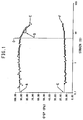
- “Gel quality” is a viscoelastic property of a gel measured by the ratio of viscous modulus to elastic modulus. If the ratio is 1 or greater, the material displays a more liquid-like than solid-like behavior (See Figure 1).
- “Genome” refers to the entire set of genetic information found within a cell of an organism, while “genotype” is the genetic constitution in respect to the alleles at one, a few, or many of the alleles under observation.
- grain which is the starch bearing, reproductive organ of a plant.
- grain In maize, grain is comprised of the mature kernels produced by growers for on farm use or for sale to customers while in potato and other tubers it is the vegetative plant part.
- heterozygous refers to a condition in which different alleles exist at corresponding loci on homologous chromosomes
- homozygous refers to a condition in which identical alleles exist at corresponding loci on homologous chromosomes.
- the heterozygous condition refers to the existence of either one or two copies of a given allele at the locus.
- a “male plant” is a plant capable of shedding viable pollen.
- “Modulus” is the ratio of stress over strain, where stress is the applied force per unit area and strain is the change in length per unit length or change in volume per unit volume. Strain can also be referred to as shear.
- the elastic, or storage, modulus of a starch slurry is the component of rigidity contributed by the network of polymeric materials that make up the starch.
- the viscous, or loss, modulus is the component of rigidity of a starch slurry contributed by the fluid components (e.g., water molecules and non-entangled carbohydrate molecules) of the slurry.
- mutant is an organism carrying a mutant gene
- a mutant gene is a gene that is in any way different from other, more frequently found forms of that gene.
- the term "pasting” refers to an irreversible physical change in starch granules or a suspension of starch granules characterized by swelling and hydration of granules, a rapid increase in viscosity of a suspension, and the formation of a sol from the suspension. This change is also known as cooking or gelatinization.
- the "phenotype” refers to the observable properties of an organism, produced by the interaction of the genotype and the environment.
- the term “plasticity” is a measure of the quality of a gel, measured as the rate of change of the elastic modulus in the nonlinear range of strain (See Figure 1).
- polyploid means a cell having more than two chromosome sets, or an organism composed of such cells.
- the kernel endosperm is triploid, a form of polyploidy in which each cell has three chromosome sets, two from the female parent and one from the male (pollen) parent.
- "Recessive” is a term describing an allele that is not phenotypically expressed in the heterozygous condition.
- the term "sol” refers to a fluid colloidal system.
- a “starch bearing plant” is a crop plant commercially grown for the harvest of grain.
- the "viscosity” is a measure of the internal friction of a fluid that can be thought of as the consistency or thickness of a fluid.
- the “yield strain” refers to the strain at which a material starts displaying nonlinear viscoelastic behavior (See Figure 1).
- homozygous recessive ae wx plants are cross pollinated with homozygous recessive du wx , su1 wx , or sh1 wx plants.
- the male plants used to make the cross pollination are homozygous dominant for the ae gene.
- a plant carrying the recessive ae allele (Parent A) is crossbred with a plant carrying the recessive wx allele (Parent B). Progeny from this cross are grown and self pollinated, producing F2 generation seeds which carry both recessive genes. If Parent A and Parent B are homozygous recessive for ae and wx respectively, then 1/16 of the F2 progeny can be expected to be homozygous recessive for both genes. These plants are used as female plants in producing grain of the present invention. The male parent double mutants are produced by the same process, using a plant carrying recessive genes for the du , su1 , or sh1 genes as Parent A in the above development method.
- the plants to be used as the female are rendered male sterile. This can be accomplished by physical removal of the male pollen-shedding part of the plant, by chemical treatment, or by a genetic mechanism such as cytoplasmic male sterility.
- the male part of the plant is the tassel which can be easily removed by hand or machine.
- Production of the present invention in maize requires planting male and female genotypes in close proximity in the field. Typically four rows of female plants alternate with one row of male plants when only the female plants are to be harvested for seed or grain; Female plants are rendered male sterile and are pollinated by male plants. Grain is harvested from female plants for subsequent starch extraction.
- the seed required to grow the male and female plants are mixed uniformly and planted together in the field.
- the percentage of male plants in the field will range between 5% and 20% to ensure adequate pollen without significantly altering the desired starch phenotype of the grain or significantly reducing starch yield.
- the female plants are rendered male sterile by such means as cytoplasmic male sterility, essentially all pollen in the field is produced by the male plants, thus the female plants bear only grain of the desired heterozygous phenotype.
- This production system requires that the female plants be separated by sufficient distance, preferably at least 200 meters, from pollen-shedding maize plants differing in genotype from the male plants.
- the male plants will be self-pollinated, and the grain produced on those plants will be homozygous for the starch mutants comprising their genome.
- the starch of the homozygous double mutants will be functionally inferior to the starch of the present invention, providing lower paste viscosity and less shear resistance.
- the kernels on the male plants will accumulate significantly less starch in their endosperm than either normal waxy grain or grain of the present invention.
- the grain harvested from the male plants, mixed with the grain harvested from the female plants, will dilute the superior functionality of the starch obtained from the female plants, and will also decrease the total amount of starch obtained from the grain. Enough male plants must be present in the field to ensure adequate pollination, but excessive numbers of male plants are undesirable due to these effects. Pollen production from the male plants should occur at the same time as the silks on the female plants are receptive to pollen to obtain maximum production of the desired grain with the minimum number of male plants, and also the male plants could be bred for maximum pollen production and minimum grain production.
- Starch of the present invention could be produced in potato ( Solanum tuberosum L.) and the heterozygous genotype could be maintained indefinitely by vegetative propagation.
- the double mutants ae wx , du wx , su1 wx , and sh1 wx could be introduced into potato plants as follows:
- the mutant genes ae , du , su1 , sh1 , and wx could be introduced into potato plants in several ways including mutagenesis of seeds by treatment with ionizing radiation or chemical mutagens such as ethyl methane sulfonate, or by tissue culture induced somaclonal mutation.
- Diploid plants can be produced from tetraploid plants by several ways including inter-specific or intergeneric hybridization, irradiation, chemical treatment, or anther and pollen culture; Schultz-Schaeffer, J., 1980, Cytogenetics - Plants, Animals, Humans. p. 245. Springer-Verlag New York Inc. Pollination of tetraploid S .
- diploid plants by diploid S . phureja plants often gives rise to seeds having diploid embryos derived from the female plant; Hoopes, R. W., and R. L. Plaisted, 1987; Potato, pp. 385-437, In : Principles of Cultivar Development, Vol. 2., W. R. Fehr, ed., Macmillan Publishing Company.
- diploid plants single mutants could be identified by starch analysis or by analyzing the enzymes controlled by ae , du , su1 , sh1 , and wx . Once the single mutants are identified in diploid plants, the conventional plant breeding strategies described previously could be used to combine the mutant genes into plants homozygous recessive for the desired double mutants.
- Diploid plants homozygous for these double mutants can be cross pollinated to tetraploid plants. Diploid plants often produce unreduced gametes capable of fertilizing gametes of tetraploid plants thus resulting in tetraploid offspring. Progeny must be self pollinated to produce the necessary homozygous recessive double mutant plants. Flowers of homozygous ae wx tetraploid plants can be emasculated (anthers removed) and pollinated by homozygous du wx , su1 wx , or sh1 wx tetraploid plants, or vice versa, to produce heterozygous plants in accordance with the present invention. The heterozygous plants can then be vegetatively propagated to produce tubers from which starch can be extracted.
- the present invention is further defined in the following examples. It will be understood that the examples are given for illustration only and the present invention is not limited to uses described in the examples.
- the present invention can be used for any purpose where its properties are useful such as in, but not limited to, foods, paper, plastics, adhesives, or paint. From the above discussion and the following examples, one skilled in the art of plant breeding can make various changes and modifications of the invention to adapt it to various usages and conditions. All such modifications are intended to fall within the scope of the intended claims.
- the symbol "*" is used to indicate the pedigree of the endosperm resulting from a cross, with the female plant indicated to the left and the male plant to the right of the *.
- This example illustrates the production of maize grain possessing starch of the present invention.
- Seed of the double mutant ae wx version of the maize line S3-61 from Pennsylvania State University was planted in the field and used as the female parent. At anthesis the silks on these plants were pollinated with pollen from one of the following double mutants: IA5125 suwx , W64A duwx (both from Pennsylvania State University) or a sh1wx line from the Maize Genetics Cooperation Stock Center (S-116 Turner Hall, Agronomy Department, University of Illinois, 1102 S. Goodwin Avenue, Urbana, IL 61801, USA).
- the triploid endosperm genotypes of these 3 types of maize grain contain 3 doses of the mutant wx gene, 2 doses of the mutant ae gene, and one mutant dose, respectively, of either the su1 , du , or sh1 genes.
- Seed of the maize lines S3-61 aewx , W64A duwx , and IA5125 suwx have been deposited in the American Type Culture Collection (ATCC), a Budapest Treaty designated depository, Rockville, MD 20852-1776 on April 19, 1994 and have been assigned numbers 75743, 75742, and 75744, respectively.
- ATCC American Type Culture Collection
- Starch was extracted from dry, mature kernels that were produced as described in Example 1a. For each sample, 15.0 grams of undamaged kernels were weighed into a 50 mL Erlenmeyer flask. Forty mL steep solution, (1% lactic acid + 0.3% sodium metabisulfite in water (w/v) pH 3.82 with NaOH) was added. The tightly-stoppered flasks were held at 52°C for 18-24 hours, then the kernels were drained and rinsed with water. The pericarps and germs were removed from each kernel with a sharpened spatula.
- a filtration apparatus was prepared by stretching a 72 micron mesh screen over a 15 cm plastic funnel using a rubber band then placing the stem of the funnel into a 1 liter beaker.
- the degerminated kernels were placed into a 120 mL square glass bottle and about 50 mL of 50 mM NaCl was added.
- a 20 mm Polytron probe (Kinematica GmbH: Kriens-Luzern, Switzerland) the kernels were alternately ground and filtered through the mesh until microscopic examination of the residue on the mesh showed no intact starch-bearing cells. The speed and duration of grinding were increased until this occurred, starting with 30 seconds at half speed and increasing to 90 seconds at full speed.
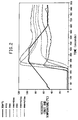
- a Rapid Visco Analyzer (Newport Scientific: Sydney, Australia) with high sensitivity option and ThermoCline software was used for pasting curve analysis using the following temperature profile: Idle temperature 50°C, hold 0.5 minutes at 50°C, linear heating to 95°C over 4 minutes, hold at 95°C for 2.5 minutes, linear cooling to 50°C over 4 minutes, hold at 50°C for 4 minutes.
- Idle temperature 50°C For analysis of each starch sample, 1.50 grams of starch was weighed into the sample cup, and 25 mL of a phosphate/citrate buffer at pH 6.50 containing 1% NaCl was added.
- Bohlin software BRS4.1
- BRS4.1 Bohlin software
- the sample was loaded in the C14 cup so that at least 1 mm thick layer stayed above the bob.
- a solvent trap Bohlin Instruments
- the sample was then sheared for 30 seconds at a low shear rate (18 s-1 ).
- a programmed delay time (at least 5 minutes) was used to let the sample recover and the strain sweep test was performed. After the strain sweep test, and following another delay time, the viscometry test was performed on the same sample. The same experimental parameters and conditions were used for all samples tested.
- the strain sweep test is a dynamic sinusoidal oscillation test that was conducted a 1 Hz frequency applying strain over the range 0.02% to 20%.
- the output from the test contains elastic and viscous moduli, phase lag, and dynamic viscosity at each of the various strains.
- Plasticity of the starch of the present invention was intermediate between aewx and the other two samples.
- the no strain gel quality showed the most solid-like behavior for aewx starch, however under 20% shear that sample was more liquid-like than any of the others, showing that the gel was not resistant to shear.
- the gel from the starch of the present invention was the most solid-like of all the samples at 20% strain. Gel strength followed the same trend; the waxy and dull waxy samples showed fairly low gel strength which was fairly stable under 20% strain.
- the aewx starch however, showed extremely high gel strength under no strain, but lost most of this strength under 20% strain.
- This example demonstrates a utility for the starch obtained from a plant which is homozygous recessive for the wx gene and heterozygous for the ae and su1 genes.
- This starch serves to thicken a chocolate cream pie filling, providing functionality greatly superior to waxy starch.
- Example 2 Ingredients used to make pie filling of Example 2 Ingredient % grams Half-and-Half 66.67 400.0 Sugar 16.67 100.0 Chocolate, unsweetened (Nestle Food Co.) 9.33 56.0 Starch 5.00 30.0 Maltrin M150 maltodextrin (GPC) 1.50 9.0 Vanilla extract (1X) 0.83 5.0 Total 100.00 600.0
- Pie fillings were made by combining ingredients listed in Table 2 in a stainless-steel double boiler, then heating while stirring at 60 RPM. After peak viscosity was attained, the fillings were held at 88°C while stirring for 3 minutes, cooled to 4°C, and poured into pre-baked crusts for visual evaluation. Samples were stored 24 hours at 4°C, then brought to 25°C for strain sweep and viscometry testing. Experimental methods of the strain sweep and viscometry tests are provided in Example 1c, and results of the rheological properties of the chocolate pie fillings are shown in Table 3. The gel quality of the pie filling made with WAXY-1 starch was much more liquid-like than the pie filling made with a starch of the instant invention.
- the gel strength of the pie filling made with a starch of the instant invention was several-fold greater than the gel strength of the pie filling made with WAXY-1 starch, both under no strain and under 20% strain.
- the starch of the present invention combines very high paste viscosity with good stability, paste clarity, and bland flavor characteristics, it is extremely versatile and would be useful in a wide variety of food products including, but not limited to, gravies, sauces, pie fillings and puddings.
Landscapes
- Life Sciences & Earth Sciences (AREA)
- Health & Medical Sciences (AREA)
- Chemical & Material Sciences (AREA)
- Physiology (AREA)
- Botany (AREA)
- Developmental Biology & Embryology (AREA)
- Environmental Sciences (AREA)
- Biochemistry (AREA)
- Engineering & Computer Science (AREA)
- Materials Engineering (AREA)
- Chemical Kinetics & Catalysis (AREA)
- Medicinal Chemistry (AREA)
- Polymers & Plastics (AREA)
- Organic Chemistry (AREA)
- Natural Medicines & Medicinal Plants (AREA)
- Polysaccharides And Polysaccharide Derivatives (AREA)
- Saccharide Compounds (AREA)
- Breeding Of Plants And Reproduction By Means Of Culturing (AREA)
Claims (11)
- Grain moulu obtenu à partir d'une plante amylacée dans laquelle le génotype du grain comprend un génome qui est homozygote récessif pour le gène wx ("waxy"), hétérozygote pour le gène ae ("amylose extendeur") et hétérozygote pour un gène choisi dans le groupe consistant en du ("dull"), su1 ("sugary-1") ou sh1 ("shrunken-1").
- Un grain moulu selon la revendication 1, dans lequel ledit génome possède une copie du gène du et deux copies du gène ae.
- Un grain moulu selon la revendication 1, dans lequel ledit génome possède une copie du gène su-1 et deux copies du gène ae.
- Un grain moulu selon la revendication 1, dans lequel ledit génome possède une copie du gène sh-1 et deux copies du gène ae.
- Un grain moulu selon l'une quelconque des revendications 1 à 4, dans lequel ladite plante amylacée est le maïs.
- Un amidon sensiblement pur extractible à partir d'un grain moulu selon l'une quelconque des revendications 1 à 5.
- Un amidon selon la revendication 6, dans lequel l'amidon a une viscosité de pâte plus élevée que l'amidon de maïs wx ou duwx.
- Un amidon selon la revendication 6, dans lequel l'amidon présente une viscosité de pâte, une résistance au cisaillement et une résistance aux acides qui sont plus élevées que celles de l'amidon de maïs wx ou duwx.
- Un procédé de préparation d'un sol avec un amidon selon l'une quelconque des revendication 6 à 8 comprenant la formation d'une suspension avec de l'eau et une quantité efficace dudit amidon, la cuisson de la suspension autant que nécessaire pour obtenir ledit sol.
- Un procédé de préparation d'un amidon selon l'une quelconque des revendications 6 à 8 comprenant la mouture du grain d'une plante amylacée dans laquelle le génotype dudit grain comprend un génome tel que défini selon l'une quelconque des revendications 1 à 4 pour obtenir ledit amidon.
- Un procédé pour obtenir un produit alimentaire épaissi comprenant la combinaison du produit alimentation, de l'eau et d'une quantité efficace d'un amidon selon l'une quelconque des revendications 6 à 8 et la cuisson de ladite combinaison autant que nécessaire pour obtenir ledit produit alimentaire épaissi.
Applications Claiming Priority (3)
| Application Number | Priority Date | Filing Date | Title |
|---|---|---|---|
| US08/261,564 US5516939A (en) | 1994-06-17 | 1994-06-17 | Starch and grain with a novel genotype |
| US261564 | 1994-06-17 | ||
| PCT/US1995/007056 WO1995035027A1 (fr) | 1994-06-17 | 1995-06-14 | Amidon et grain presentant un genotype nouveau |
Publications (2)
| Publication Number | Publication Date |
|---|---|
| EP0765111A1 EP0765111A1 (fr) | 1997-04-02 |
| EP0765111B1 true EP0765111B1 (fr) | 1999-08-25 |
Family
ID=22993879
Family Applications (1)
| Application Number | Title | Priority Date | Filing Date |
|---|---|---|---|
| EP95923702A Expired - Lifetime EP0765111B1 (fr) | 1994-06-17 | 1995-06-14 | Amidon et grain moulue presentant un genotype nouveau |
Country Status (11)
| Country | Link |
|---|---|
| US (2) | US5516939A (fr) |
| EP (1) | EP0765111B1 (fr) |
| AU (1) | AU2816795A (fr) |
| BR (1) | BR9508704A (fr) |
| CA (1) | CA2188769C (fr) |
| DE (1) | DE69511696T2 (fr) |
| ES (1) | ES2137525T3 (fr) |
| HU (1) | HU222440B1 (fr) |
| MX (1) | MX9606488A (fr) |
| WO (1) | WO1995035027A1 (fr) |
| ZA (1) | ZA954935B (fr) |
Families Citing this family (10)
| Publication number | Priority date | Publication date | Assignee | Title |
|---|---|---|---|---|
| US6274792B1 (en) * | 1995-06-20 | 2001-08-14 | Ming-Tang Chang | Plants and processes for obtaining them |
| US6881433B1 (en) | 1994-06-21 | 2005-04-19 | Peter Lewis Keeling | Food products containing altered starch |
| US6218155B1 (en) * | 1994-06-21 | 2001-04-17 | Zeneca Limited | Plants and processes for obtaining them |
| US5954883A (en) * | 1996-10-08 | 1999-09-21 | National Starch And Chemical Investment Holding Corporation | Waxy maize starch derived from grain of a plant which is heterozygous for the sugary-2 allele |
| US6639126B1 (en) | 1999-12-06 | 2003-10-28 | Pioneer Hi-Bred International, Inc. | Production of modified polysaccharides |
| EP1174512A1 (fr) * | 2000-07-17 | 2002-01-23 | Peter Stamp | Composition de graines et méthode visant à réduire ou à prévenir le rejet du pollen génétiquement modifié |
| US7091398B2 (en) | 2001-02-22 | 2006-08-15 | Pioneer Hi-Bred International, Inc. | Isolated sucrose sythase polynucleotides and uses thereof |
| US6960703B2 (en) * | 2002-03-06 | 2005-11-01 | National Starch And Chemical Investment Holdings Corporation | Grain production method for maize starch with novel functionality |
| US6828474B2 (en) | 2002-03-06 | 2004-12-07 | National Starch & Chemical Investment Holding Corporation | Method of grain production for heterozygous waxy sugary-2 maize |
| AT502676B1 (de) * | 2005-10-11 | 2007-05-15 | Tulln Zuckerforschung Gmbh | Verdicker für farbsysteme |
Family Cites Families (5)
| Publication number | Priority date | Publication date | Assignee | Title |
|---|---|---|---|---|
| US4789557A (en) * | 1987-04-10 | 1988-12-06 | American Maize-Products Company | Foodstuffs containing starch of a dull waxy genotype |
| US4801470A (en) * | 1987-07-02 | 1989-01-31 | American Maize-Products Company | Foodstuffs containing starch of a waxy shrunken-2 genotype |
| US5004864A (en) * | 1988-11-28 | 1991-04-02 | Iowa State University Research Foundation, Inc. | Dominant amylose-extender mutant of maize |
| US5009911A (en) * | 1989-08-18 | 1991-04-23 | American Maize-Products Company | Foodstuff containing aewx starch |
| US5502270A (en) * | 1993-03-30 | 1996-03-26 | E. I. Du Pont De Nemours And Company | Starch and grain with a novel genotype |
-
1994
- 1994-06-17 US US08/261,564 patent/US5516939A/en not_active Expired - Lifetime
-
1995
- 1995-05-23 US US08/447,596 patent/US5675064A/en not_active Expired - Lifetime
- 1995-06-14 ES ES95923702T patent/ES2137525T3/es not_active Expired - Lifetime
- 1995-06-14 CA CA002188769A patent/CA2188769C/fr not_active Expired - Fee Related
- 1995-06-14 DE DE69511696T patent/DE69511696T2/de not_active Expired - Fee Related
- 1995-06-14 WO PCT/US1995/007056 patent/WO1995035027A1/fr not_active Ceased
- 1995-06-14 MX MX9606488A patent/MX9606488A/es active IP Right Grant
- 1995-06-14 ZA ZA954935A patent/ZA954935B/xx unknown
- 1995-06-14 BR BR9508704A patent/BR9508704A/pt not_active Application Discontinuation
- 1995-06-14 HU HU9603468A patent/HU222440B1/hu not_active IP Right Cessation
- 1995-06-14 EP EP95923702A patent/EP0765111B1/fr not_active Expired - Lifetime
- 1995-06-14 AU AU28167/95A patent/AU2816795A/en not_active Abandoned
Also Published As
| Publication number | Publication date |
|---|---|
| DE69511696T2 (de) | 2000-04-06 |
| BR9508704A (pt) | 1997-08-12 |
| HU9603468D0 (en) | 1997-02-28 |
| CA2188769A1 (fr) | 1995-12-28 |
| ES2137525T3 (es) | 1999-12-16 |
| HUT76256A (en) | 1997-07-28 |
| US5516939A (en) | 1996-05-14 |
| HU222440B1 (hu) | 2003-07-28 |
| WO1995035027A1 (fr) | 1995-12-28 |
| ZA954935B (en) | 1996-12-17 |
| US5675064A (en) | 1997-10-07 |
| MX9606488A (es) | 1997-03-29 |
| AU2816795A (en) | 1996-01-15 |
| CA2188769C (fr) | 2008-06-03 |
| EP0765111A1 (fr) | 1997-04-02 |
| DE69511696D1 (de) | 1999-09-30 |
Similar Documents
| Publication | Publication Date | Title |
|---|---|---|
| AU706849B2 (en) | Novel plants and processes for obtaining them | |
| Utrilla-Coello et al. | In vitro digestibility, physicochemical, thermal and rheological properties of banana starches | |
| Peng et al. | Small-granule starches from sweet corn and cow cockle: Physical properties and amylopectin branching pattern | |
| Wang et al. | Thermal and gelling properties of maize mutants from the OH43 inbred line | |
| EP0691807B1 (fr) | Amidon et graine moulee a genotype nouveau | |
| JPH08503123A (ja) | 高アミロース澱粉および抵抗性澱粉画分 | |
| EP0765111B1 (fr) | Amidon et grain moulue presentant un genotype nouveau | |
| US10226004B2 (en) | Hybrid corn plant and seed A7882 | |
| US5009911A (en) | Foodstuff containing aewx starch | |
| US6274792B1 (en) | Plants and processes for obtaining them | |
| White | Properties of corn starch | |
| Stamp et al. | Southeast Asian waxy maize (Zea mays L.), a resource for amylopectin starch quality types? | |
| AU2007202088B2 (en) | Hybrid corn plant and seed PP59302 | |
| JP3079251B2 (ja) | 新規特性をもつ小麦澱粉 | |
| US20100011459A1 (en) | Hybrid corn plant and seed ppvo1864 | |
| US20090317534A1 (en) | Hybrid corn plant and seed pp59601 | |
| Chen | Characterization of Functional Properties of Breadfruit Flour (Arthocarpus altilis) | |
| JP2010063401A (ja) | イネ変異体及びその製造方法、並びに該イネ変異体に由来する澱粉及びその製造方法 | |
| Ng | Growth development and growing location effects on thermal properties of starch from mutant and exotic corn | |
| Al-Dhaher | Properties of starch from Australian waxy wheat | |
| Krieger | Effect of pollination method on the fatty acid composition and starch thermal properties of 24 dent corn hybrids grown in two locations | |
| Steele | Characterisation of starch in Musa fruits | |
| Svendsen | Properties of dull1 corn starch: Influence of an exotic background | |
| Alford et al. | J. Bao, Zhejiang University, China and CJ Bergman, University of Nevada, USA | |
| CN101381415A (zh) | 一种直链淀粉含量较高的淀粉、谷粒及谷粒生产方法 |
Legal Events
| Date | Code | Title | Description |
|---|---|---|---|
| PUAI | Public reference made under article 153(3) epc to a published international application that has entered the european phase |
Free format text: ORIGINAL CODE: 0009012 |
|
| 17P | Request for examination filed |
Effective date: 19961121 |
|
| AK | Designated contracting states |
Kind code of ref document: A1 Designated state(s): DE ES FR IT LU |
|
| 17Q | First examination report despatched |
Effective date: 19971020 |
|
| GRAG | Despatch of communication of intention to grant |
Free format text: ORIGINAL CODE: EPIDOS AGRA |
|
| GRAG | Despatch of communication of intention to grant |
Free format text: ORIGINAL CODE: EPIDOS AGRA |
|
| GRAH | Despatch of communication of intention to grant a patent |
Free format text: ORIGINAL CODE: EPIDOS IGRA |
|
| GRAH | Despatch of communication of intention to grant a patent |
Free format text: ORIGINAL CODE: EPIDOS IGRA |
|
| GRAA | (expected) grant |
Free format text: ORIGINAL CODE: 0009210 |
|
| AK | Designated contracting states |
Kind code of ref document: B1 Designated state(s): DE ES FR IT LU |
|
| ET | Fr: translation filed | ||
| REF | Corresponds to: |
Ref document number: 69511696 Country of ref document: DE Date of ref document: 19990930 |
|
| ITF | It: translation for a ep patent filed | ||
| REG | Reference to a national code |
Ref country code: ES Ref legal event code: FG2A Ref document number: 2137525 Country of ref document: ES Kind code of ref document: T3 |
|
| PLBE | No opposition filed within time limit |
Free format text: ORIGINAL CODE: 0009261 |
|
| STAA | Information on the status of an ep patent application or granted ep patent |
Free format text: STATUS: NO OPPOSITION FILED WITHIN TIME LIMIT |
|
| 26N | No opposition filed | ||
| PGFP | Annual fee paid to national office [announced via postgrant information from national office to epo] |
Ref country code: LU Payment date: 20080618 Year of fee payment: 14 |
|
| PGFP | Annual fee paid to national office [announced via postgrant information from national office to epo] |
Ref country code: IT Payment date: 20090617 Year of fee payment: 15 |
|
| PGFP | Annual fee paid to national office [announced via postgrant information from national office to epo] |
Ref country code: ES Payment date: 20090709 Year of fee payment: 15 |
|
| PGFP | Annual fee paid to national office [announced via postgrant information from national office to epo] |
Ref country code: DE Payment date: 20090615 Year of fee payment: 15 |
|
| REG | Reference to a national code |
Ref country code: FR Ref legal event code: ST Effective date: 20110228 |
|
| PG25 | Lapsed in a contracting state [announced via postgrant information from national office to epo] |
Ref country code: IT Free format text: LAPSE BECAUSE OF NON-PAYMENT OF DUE FEES Effective date: 20100614 |
|
| PG25 | Lapsed in a contracting state [announced via postgrant information from national office to epo] |
Ref country code: LU Free format text: LAPSE BECAUSE OF NON-PAYMENT OF DUE FEES Effective date: 20090614 Ref country code: DE Free format text: LAPSE BECAUSE OF NON-PAYMENT OF DUE FEES Effective date: 20110101 |
|
| PG25 | Lapsed in a contracting state [announced via postgrant information from national office to epo] |
Ref country code: FR Free format text: LAPSE BECAUSE OF NON-PAYMENT OF DUE FEES Effective date: 20100630 |
|
| REG | Reference to a national code |
Ref country code: ES Ref legal event code: FD2A Effective date: 20110718 |
|
| PG25 | Lapsed in a contracting state [announced via postgrant information from national office to epo] |
Ref country code: ES Free format text: LAPSE BECAUSE OF NON-PAYMENT OF DUE FEES Effective date: 20110706 |
|
| PG25 | Lapsed in a contracting state [announced via postgrant information from national office to epo] |
Ref country code: ES Free format text: LAPSE BECAUSE OF NON-PAYMENT OF DUE FEES Effective date: 20100615 |
|
| PGFP | Annual fee paid to national office [announced via postgrant information from national office to epo] |
Ref country code: FR Payment date: 20090611 Year of fee payment: 15 |