EP0767659B1 - Administration transdermique d'oxybutynine - Google Patents
Administration transdermique d'oxybutynine Download PDFInfo
- Publication number
- EP0767659B1 EP0767659B1 EP93911284A EP93911284A EP0767659B1 EP 0767659 B1 EP0767659 B1 EP 0767659B1 EP 93911284 A EP93911284 A EP 93911284A EP 93911284 A EP93911284 A EP 93911284A EP 0767659 B1 EP0767659 B1 EP 0767659B1
- Authority
- EP
- European Patent Office
- Prior art keywords
- oxybutynin
- reservoir
- skin
- permeation
- monoglyceride
- Prior art date
- Legal status (The legal status is an assumption and is not a legal conclusion. Google has not performed a legal analysis and makes no representation as to the accuracy of the status listed.)
- Expired - Lifetime
Links
Images

Classifications
-
- A—HUMAN NECESSITIES
- A61—MEDICAL OR VETERINARY SCIENCE; HYGIENE
- A61K—PREPARATIONS FOR MEDICAL, DENTAL OR TOILETRY PURPOSES
- A61K31/00—Medicinal preparations containing organic active ingredients
- A61K31/13—Amines
- A61K31/135—Amines having aromatic rings, e.g. ketamine, nortriptyline
-
- A—HUMAN NECESSITIES
- A61—MEDICAL OR VETERINARY SCIENCE; HYGIENE
- A61K—PREPARATIONS FOR MEDICAL, DENTAL OR TOILETRY PURPOSES
- A61K9/00—Medicinal preparations characterised by special physical form
- A61K9/70—Web, sheet or filament bases ; Films; Fibres of the matrix type containing drug
- A61K9/7023—Transdermal patches and similar drug-containing composite devices, e.g. cataplasms
- A61K9/703—Transdermal patches and similar drug-containing composite devices, e.g. cataplasms characterised by shape or structure; Details concerning release liner or backing; Refillable patches; User-activated patches
- A61K9/7038—Transdermal patches of the drug-in-adhesive type, i.e. comprising drug in the skin-adhesive layer
- A61K9/7046—Transdermal patches of the drug-in-adhesive type, i.e. comprising drug in the skin-adhesive layer the adhesive comprising macromolecular compounds
- A61K9/7053—Transdermal patches of the drug-in-adhesive type, i.e. comprising drug in the skin-adhesive layer the adhesive comprising macromolecular compounds obtained by reactions only involving carbon to carbon unsaturated bonds, e.g. polyvinyl, polyisobutylene, polystyrene
-
- A—HUMAN NECESSITIES
- A61—MEDICAL OR VETERINARY SCIENCE; HYGIENE
- A61K—PREPARATIONS FOR MEDICAL, DENTAL OR TOILETRY PURPOSES
- A61K31/00—Medicinal preparations containing organic active ingredients
- A61K31/21—Esters, e.g. nitroglycerine, selenocyanates
- A61K31/215—Esters, e.g. nitroglycerine, selenocyanates of carboxylic acids
-
- A—HUMAN NECESSITIES
- A61—MEDICAL OR VETERINARY SCIENCE; HYGIENE
- A61K—PREPARATIONS FOR MEDICAL, DENTAL OR TOILETRY PURPOSES
- A61K31/00—Medicinal preparations containing organic active ingredients
- A61K31/21—Esters, e.g. nitroglycerine, selenocyanates
- A61K31/215—Esters, e.g. nitroglycerine, selenocyanates of carboxylic acids
- A61K31/216—Esters, e.g. nitroglycerine, selenocyanates of carboxylic acids of acids having aromatic rings, e.g. benactizyne, clofibrate
-
- A—HUMAN NECESSITIES
- A61—MEDICAL OR VETERINARY SCIENCE; HYGIENE
- A61K—PREPARATIONS FOR MEDICAL, DENTAL OR TOILETRY PURPOSES
- A61K47/00—Medicinal preparations characterised by the non-active ingredients used, e.g. carriers or inert additives; Targeting or modifying agents chemically bound to the active ingredient
- A61K47/06—Organic compounds, e.g. natural or synthetic hydrocarbons, polyolefins, mineral oil, petrolatum or ozokerite
- A61K47/08—Organic compounds, e.g. natural or synthetic hydrocarbons, polyolefins, mineral oil, petrolatum or ozokerite containing oxygen, e.g. ethers, acetals, ketones, quinones, aldehydes, peroxides
- A61K47/14—Esters of carboxylic acids, e.g. fatty acid monoglycerides, medium-chain triglycerides, parabens or PEG fatty acid esters
-
- A—HUMAN NECESSITIES
- A61—MEDICAL OR VETERINARY SCIENCE; HYGIENE
- A61K—PREPARATIONS FOR MEDICAL, DENTAL OR TOILETRY PURPOSES
- A61K9/00—Medicinal preparations characterised by special physical form
- A61K9/0012—Galenical forms characterised by the site of application
- A61K9/0014—Skin, i.e. galenical aspects of topical compositions
-
- A—HUMAN NECESSITIES
- A61—MEDICAL OR VETERINARY SCIENCE; HYGIENE
- A61K—PREPARATIONS FOR MEDICAL, DENTAL OR TOILETRY PURPOSES
- A61K9/00—Medicinal preparations characterised by special physical form
- A61K9/70—Web, sheet or filament bases ; Films; Fibres of the matrix type containing drug
-
- A—HUMAN NECESSITIES
- A61—MEDICAL OR VETERINARY SCIENCE; HYGIENE
- A61K—PREPARATIONS FOR MEDICAL, DENTAL OR TOILETRY PURPOSES
- A61K9/00—Medicinal preparations characterised by special physical form
- A61K9/70—Web, sheet or filament bases ; Films; Fibres of the matrix type containing drug
- A61K9/7023—Transdermal patches and similar drug-containing composite devices, e.g. cataplasms
- A61K9/703—Transdermal patches and similar drug-containing composite devices, e.g. cataplasms characterised by shape or structure; Details concerning release liner or backing; Refillable patches; User-activated patches
- A61K9/7084—Transdermal patches having a drug layer or reservoir, and one or more separate drug-free skin-adhesive layers, e.g. between drug reservoir and skin, or surrounding the drug reservoir; Liquid-filled reservoir patches
-
- A—HUMAN NECESSITIES
- A61—MEDICAL OR VETERINARY SCIENCE; HYGIENE
- A61P—SPECIFIC THERAPEUTIC ACTIVITY OF CHEMICAL COMPOUNDS OR MEDICINAL PREPARATIONS
- A61P13/00—Drugs for disorders of the urinary system
- A61P13/02—Drugs for disorders of the urinary system of urine or of the urinary tract, e.g. urine acidifiers
-
- A—HUMAN NECESSITIES
- A61—MEDICAL OR VETERINARY SCIENCE; HYGIENE
- A61P—SPECIFIC THERAPEUTIC ACTIVITY OF CHEMICAL COMPOUNDS OR MEDICINAL PREPARATIONS
- A61P15/00—Drugs for genital or sexual disorders; Contraceptives
-
- A—HUMAN NECESSITIES
- A61—MEDICAL OR VETERINARY SCIENCE; HYGIENE
- A61P—SPECIFIC THERAPEUTIC ACTIVITY OF CHEMICAL COMPOUNDS OR MEDICINAL PREPARATIONS
- A61P25/00—Drugs for disorders of the nervous system
Definitions
- This invention relates the efficacious and safe, controlled transdermal administration of oxybutynin and related compounds for the treatment of neurogenic bladder disorders.
- Neurogenic bladder disease is a disorder involving loss of control of urination.
- the major symptoms of this disease are urinary frequency, urinary retention or incontinence.
- the second lesion, a lower motoneuron lesion involves hypotonia and hyporeflexia of the bladder.
- the major symptoms in this condition are urinary retention, since the voiding reflex has been lost, and incontinence, which occurs when the bladder "leaks", being full to overflowing.
- the majority of neurogenic bladder patients have the spastic or hypertonic bladder.
- the clinician usually attempts to convert the condition of hyperreflexia and hypertonia to hypotonia, thereby treating the primary problem of incontinence.
- hypotonia When the condition has been converted to hypotonia, it can be managed by intermittent catheterization.
- the drug of choice is oxybutynin (4-diethylamino-2-butynylphenylcyclohexylglycolate).
- Oxybutynin chloride is normally administered to human beings orally at relatively high doses (5 mg tablets taken two to four times a day).
- Oxybutynin has been incorporated into tablets, capsules, granules or pills containing 1-5 mg, preferably 5 mg, of oxybutynin chloride, syrups containing 1-5 mg, preferably 5 mg, of oxybutynin chloride per 5 ml and transdermal compositions (creams or ointments) containing 1-10 weight percent ("wt %") oxybutynin chloride. See, BE 902605.
- oxybutynin was listed as an agent that could be incorporated into a transdermal synthetic resin matrix system for extended duration drug release, but oxybutynin was not used in the device.
- oxybutynin was given as a pharmacologically active agent suitable for transdermal delivery, but as with the above reference, oxybutynin was not incorporated into the device.
- Oxybutynin has been incorporated into a device having a water impermeable barrier layer, a reservoir containing oxybutynin in contact with the inner surface of the barrier layer and a removable protector layer in contact with the other surface of the reservoir.
- the reservoir is a polyurethane fiber mat impregnated with an aqueous solution containing 25 mg/ml of oxybutynin.
- the device was placed on a 20 ⁇ m thick polybutadiene film.
- the non-device carrying surface was in contact with 0.05 M isotonic phosphate buffer solution.
- the in vitro release rate measured was approximately 12 mg over 24 hours through a 49 cm 2 area or 10 ⁇ g/cm 2 /hr. (U.S. Patent No. 4,784,857 and EP 0 250 125).
- permeation enhancers for transdermal administration is described in numerous technical publications and patents, such as U.S. Patents Nos. 4,940,586; 4,863,738; 4,820,720; 4,746,515; 4,568,343; 4,405,616; 4,379,454; 4,343,798; 4,335,115; 4,299,826; 4,130,667; 4,130,643; 4,046,886; British Patent No. 1,001,949 and Idson, Percutaneous Absorption, J. Phar. Sci., Vol. 64, No. 66, June 1975, pp. 901-924.
- Permeation enhancers that are not normally toxic at the concentrations employed in cosmetic or medical compositions may exhibit toxic effects at the higher concentrations required to produce adequate permeation enhancement. No "universal" permeation enhancer has been identified. Instead, the behavior of permeation enhancers is highly idiosyncratic; a permeation enhancer effective for one drug may not be effective with other drugs, including closely related drugs.
- a permeation enhancer will exacerbate irritation and sensitization problems by allowing high transdermal permeation rates of the drug or permeation enhancer or permitting otherwise impermeable components of the transdermal device to enter the skin.
- Many potential permeation enhancers interact adversely with other components of transdermal devices.
- One major problem is that many potential permeation enhancers are not compatible with medically acceptable contact adhesives. Enhancers may improve the transdermal permeation rate adequately, but not adequately reduce the lag time.
- permeation enhancers cause compatibility problems throughout the delivery system. Instead of having to characterize the properties of the reservoir compositions, adhesives, and release-controlling materials with respect to just the drug, these materials must now have the proper characteristics with respect to both the drug and the permeation enhancer.
- drugs and permeation enhancers have very different physical and chemical properties, and, in most cases, the properties of mixtures of the drug with the permeation enhancer are unknown.
- permeation enhancers can cause, among other problems, cohesive failure of adhesives and can partition through other components in the system.
- oxybutynin is used to designate oxybutynin, acid addition salts of oxybutynin and the related compounds thereof.
- the preferred active agent according to the present invention is oxybutynin itself.
- Oxybutynin is a base capable of forming acid addition salts with organic and mineral acids, for example, with hydrochloric acid to form oxybutynin chloride.
- the device of this invention contains oxybutynin as the free base.
- transdermal delivery or application refers to the delivery or application of oxybutynin by passage through skin, mucosa and/or other body surfaces by topical application.
- the term "therapeutically effective" amount or rate refers to the amount or rate of oxybutynin needed to effect the desired therapeutic result.
- monoesters refers to those monoesters having from 10 to 20 carbon atoms.
- glycerol monooleate refers to glycerol monooleate itself or a mixture of monoglycerides wherein glycerol monooleate is present in the greatest amount.
- glycerol monooleate refers to glycerol monooleate itself or a mixture of monoglycerides wherein glycerol monooleate is present in the greatest amount.
- glycerol monooleate refers to glycerol monooleate itself or a mixture of monoglycerides wherein glycerol monooleate is present in the greatest amount.
- DATABASE WPIL week 9219 discloses an aqueous base agent for external adhesive drugs of which oxybutynin HCl may be one.
- the aqueous base agent may be selected for a wide range of agents, including generally fatty acids and their derivatives.
- oxybutynin may be safely and efficaciously administered transdermally, together with a suitable permeation enhancer selected from a monoglyceride or mixture of monoglycerides of a fatty acid with a total monoester content of at least 51%.
- the present invention provides a device for the transdermal administration, at a therapeutically effective rate, of oxybutynin, which device comprises:
- oxybutynin may be administered to the human body in a therapeutically effective amount via the transdermal route when it is co-administered with a suitable permeation enhancer.
- Therapeutic blood levels from about 0.5 ng/ml to about 3.0 ng/ml can be obtained from administration rates in the range of 0.08 mg/hr to 0.5 mg/hr.
- Representative skin permeation rates of oxybutynin through living human skin are in the range of about 12 ⁇ g/cm 2 /hr to about 40 ⁇ g/cm 2 /hr, depending on the permeation enhancer.
- Therapeutic blood levels can be achieved within approximately 1-5 hours, and peak blood concentrations are achieved at about 3 hours when the system is worn for 24 hours.
- the range of desired and achievable system permeation rates of oxybutynin, arriving through the skin from a limited area, is 1-20 mg over a period of 24 hours.
- the system application is easily adapted for shorter or longer duration treatments, but generally 24 hours is the nominal duration for treatment.
- transdermal delivery devices are described in U.S. patent numbers 3,598,122; 3,598,123; 4,286,592; 4,314,557; 4,379,454; 4,559,222; 4,573,995; and 4,849,226, for example. All of these are incorporated herein by reference.
- the co-administration of oxybutynin and a permeation enhancer as disclosed herein can be accomplished by using transdermal devices of these kinds.
- oxybutynin and the permeation enhancer be administered from a rate-controlled transdermal delivery device.
- Rate control can be obtained either through a rate-controlling membrane or adhesive or through the other means disclosed in the patents noted above.
- a certain amount of oxybutynin will bind to the skin, and it is accordingly preferred that the skin-contacting layer of the device include this amount of the agent as a loading dose.
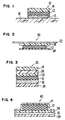
- FIGS. 1, 2 and 3 Examples of suitable transdermal delivery devices are illustrated in FIGS. 1, 2 and 3.
- the same reference numbers are used throughout the different figures to designate the same or similar components. The figures are not drawn to scale.
- transdermal delivery device 10 comprises a reservoir 12 containing both oxybutynin and a suitable permeation enhancer.
- Reservoir 12 is preferably in the form of a matrix containing oxybutynin and enhancer dispersed therein.
- Reservoir 12 is sandwiched between a backing layer 14, which is permeable to water vapor, and an in-line contact adhesive layer 16.
- the backing is a spun-laced polyester, such as Sontara®, a nylon reinforced polyurethane, such as NRU-100-C Flexcon® or a multi laminate film layer, such as EVA/EVA/polyvinyldienefluoride/EVA/EVA film layer Saranex® Type 52.
- the device 10 adheres to the surface of the skin 18 by means of the adhesive layer 16.
- the adhesive layer 16 may optionally contain enhancer and/or oxybutynin.
- a strippable release liner (not shown in FIG. 1) is normally provided along the exposed surface of adhesive layer 16 and is removed prior to application of device 10 to the skin 18.
- a rate-controlling membrane (not shown) may be present between the reservoir 12 and the adhesive layer 16.
- transdermal therapeutic device 20 may be attached to the skin or mucosa of a patient by means of an adhesive overlay 22.
- Device 20 is comprised of a oxybutynin-and permeation enhancer-containing reservoir 12 which is preferably in the form of a matrix containing oxybutynin and the enhancer dispersed therein.
- a backing layer 14, which is impermeable to oxybutynin, the permeation enhancer and water vapor, is provided adjacent one surface of reservoir 12.
- Adhesive overlay 22 maintains the device on the skin and may be fabricated together with, or provided separately from, the remaining elements of the device. With certain formulations, the adhesive overlay 22 may be preferable to the in-line contact adhesive 16 as shown in FIG. 1.
- the oxybutynin/enhancer reservoir contains a material which adversely affects the adhesive properties of the in-line contact adhesive layer 16.
- Backing layer 14 is preferably slightly larger than reservoir 12, and in this manner prevents the materials in reservoir 12 from adversely interacting with the adhesive in overlay 22.
- a rate-controlling membrane (not shown in FIG. 2) may be provided on the skin-proximal side of reservoir 12.
- a strippable release liner 24 is also provided with device 20 and is removed just prior to application of device 20 to the skin.
- transdermal delivery device 30 comprises a oxybutynin and permeation enhancer containing reservoir (“oxybutynin reservoir”) 12 substantially as described with respect to FIG. 1.
- Permeation enhancer reservoir (“enhancer reservoir”) 26 comprises permeation enhancer dispersed throughout and is substantially free of any undissolved oxybutynin.
- Enhancer reservoir 26 is preferably made from substantially the same matrix as is used to form oxybutynin reservoir 12.
- a rate-controlling membrane 28 for controlling the release rate of the permeation enhancer from enhancer reservoir 26 to oxybutynin reservoir 12 is placed between the two reservoirs.
- a rate-controlling membrane (not shown in FIG. 3) for controlling the release rate of the enhancer from oxybutynin reservoir 12 to the skin may also optionally be utilized and would be present between adhesive layer 16 and reservoir 12.
- the rate-controlling membrane may be fabricated from permeable, semipermeable or microporous materials which are Known in the art to control the rate of agents into and out of delivery devices and having a permeability to the permeation enhancer lower than that of oxybutynin reservoir 12.
- Suitable materials include, but are not limited to, polyethylene, polyvinyl acetate and ethylene vinyl acetate copolymers.
- a backing 14 Superimposed over the permeation enhancer reservoir 26 of device 30 is a backing 14 that is permeable to water vapor.
- an adhesive layer 16 On the skin-proximal side of reservoir 12 are an adhesive layer 16 and a strippable liner 24 which would be removed prior to application of the device 30 to the skin.
- the carrier or matrix material of the reservoirs has sufficient viscosity to maintain its shape without oozing or flowing. If, however, the matrix or carrier is a low viscosity flowable material such as a liquid or a gel, the composition can be fully enclosed in a pouch or pocket, as known to the art from U.S. Pat. No. 4,379,454 (noted above), for example, and as illustrated in FIG. 4.
- Device 40 shown in FIG. 4 comprises a backing member 14 which serves as a protective cover for the device, imparts structural support, and substantially keeps components in device 40 from escaping the device.
- Device 40 also includes reservoir 12 which contains the oxybutynin and permeation enhancer and bears on its surface distant from backing member 14 a rate-controlling membrane 28 for controlling the release of oxybutynin and/or permeation enhancer from device 40.
- the outer edges of backing member 14 overlay the edges of reservoir 12 and are joined along the perimeter with the outer edges of the rate-controlling membrane 28 in a fluid-tight arrangement. This sealed reservoir may be effected by pressure, fusion, adhesion, an adhesive applied to the edges, or other methods known in the art.
- reservoir 12 is contained wholly between backing member 14 and rate-controlling membrane 28.
- rate-controlling membrane 28 On the skin-proximal side of rate-controlling membrane 28 are an adhesive layer 16 and a strippable liner 24 which would be removed prior to application of the device 40 to the skin.
- reservoir 12 contains the permeation enhancer only and is substantially free of oxybutynin.
- the oxybutynin and an additional amount of permeation enhancer are present in adhesive layer 16 which acts as a separate reservoir.
- the oxybutynin and the permeation enhancer can be co-extensively administered to human skin or mucosa by direct application to the skin or mucosa in the form of an ointment, gel, cream or lotion, for example, but are preferably administered from a skin patch or other known transdermal delivery device which contains a saturated or unsaturated formulation of oxybutynin and the enhancer.
- the formulation may be aqueous or non-aqueous based.
- the formulation should be designed to deliver the oxybutynin and the permeation enhancer at the necessary release rates.
- Aqueous formulations typically comprise water or water/ethanol and about 1-2 wt % of a gelling agent, an example being a hydrophilic polymer such as hydroxyethylcellulose or hydroxypropylcellulose.
- Typical non-aqueous gels are comprised of silicone fluid or mineral oil.
- Mineral oil-based gels also typically contain 1-2 wt % of a gelling agent such as colloidal silicon dioxide. The suitability of a particular gel depends upon the compatibility of its constituents with both the oxybutynin and the permeation enhancer and any other components in the formulation.
- the reservoir matrix should be compatible with oxybutynin, the permeation enhancer and any carrier therefor.
- matrix refers to a well-mixed composite of ingredients fixed into shape.
- the reservoir matrix is preferably a hydrophilic polymer, e.g., a hydrogel.
- the reservoir matrix is preferably composed of a hydrophobic polymer. Suitable polymeric matrices are well known in the transdermal drug delivery art, and examples are listed in the above-named patents previously incorporated herein by reference.
- a typical laminated system would comprise a polymeric membrane and/or matrix such as ethylene vinyl acetate (EVA) copolymers, such as those described in U.S. Pat. No. 4,144,317, preferably having a vinyl acetate (VA) content in the range of from about 9% up to about 60% and more preferably about 28% to about 60% VA.
- EVA ethylene vinyl acetate
- VA vinyl acetate
- Polyisobutylene/oil polymers containing from 4-25% high molecular weight polyisobutylene and 20-81% low molecular weight polyisobutylene with the balance being an oil such as mineral oil or polybutynes may also be used as the matrix material.
- the amount of oxybutynin present in the therapeutic device and required to achieve an effective therapeutic result depends on many factors, such as the minimum necessary dosage of oxybutynin for the particular indication being treated; the solubility and permeability of the matrix, of the adhesive layer and of the rate-controlling membrane, if present; and the period of time for which the device will be fixed to the skin.
- the minimum amount of oxybutynin is determined by the requirement that sufficient quantities of oxybutynin must be present in the device to maintain the desired rate of release over the given period of application.
- the maximum amount for safety purposes is determined by the requirement that the quantity of oxybutynin present cannot exceed a rate of release that reaches toxic levels.
- the oral lethal dose discovered for rats is 1220 mg/kg.
- the oxybutynin When a constant oxybutynin delivery rate is desired, the oxybutynin is normally present in the matrix or carrier at a concentration in excess of saturation, the amount of excess being a function of the desired length of the oxybutynin delivery period of the system.
- the oxybutynin may, however, be present at a level below saturation without departing from this invention as long as oxybutynin is continuously administered to the same skin or mucosa site in an amount and for a period of time sufficient to provide the desired therapeutic rate and delivery profile of oxybutynin delivery.
- the permeation enhancer is dispersed through the matrix or carrier, preferably at a concentration sufficient to provide permeation-enhancing amounts of enhancer in the reservoir throughout the anticipated administration period. Where there is an additional, separate permeation enhancer matrix layer as well, as in FIGS. 3 and 4, the permeation enhancer normally is present in the separate reservoir in excess of saturation.
- the preferred permeation enhancers of the present invention are a monoglyceride or a mixture of monoglycerides of fatty acids with a total monoester content of at least 51%.
- Fatty acids may be saturated or unsaturated and straight or chained, and include, for example, lauric acid, myristic acid, stearic acid, oleic acid, linoleic acid and palmitic acid.
- Monoglycerides are generally available as a mixture of monoglycerides, with the mixture deriving its name from the monoglyceride present in the greatest amount.
- Monoglyceride permeation enhancers include, for example, glycerol monooleate, glycerol monolaurate and glycerol monolinoleate.
- the permeation enhancer is glycerol monooleate.
- the matrix or carrier may also contain dyes, pigments, inert fillers, excipients and other conventional components of pharmaceutical products or transdermal devices known to the art.
- oxybutynin is deliverable at a therapeutically effective rate (that is, a rate that provides a desired therapeutic effect) and the permeation enhancer is deliverable at a permeation-enhancing rate (that is, a rate that provides increased permeability of the application site to the oxybutynin) for a predetermined time period and in the required delivery pattern.
- a therapeutically effective rate that is, a rate that provides a desired therapeutic effect
- the permeation enhancer is deliverable at a permeation-enhancing rate (that is, a rate that provides increased permeability of the application site to the oxybutynin) for a predetermined time period and in the required delivery pattern.
- oxybutynin should be present in plasma at levels above about 0.5 ng/ml, preferably at levels above about 1.0 ng/ml and most preferably at levels of about 2.0 ng/ml. To achieve this result, oxybutynin should be delivered at a therapeutic rate of at least about 40-200 ⁇ g per hour, but typically of at least 80 ⁇ g/hr, and more typically at about 80-160 ⁇ g/hr, for the treatment period, usually about 24 hours to 7 days.
- the administration rate through the skin should be sufficient to minimize the size of the device.
- the size of the device of this invention can vary from less than 1 cm 2 to greater than 200 cm 2 .
- a typical device will have a size within the range of 5-50 cm 2 .
- the delivery device containing the oxybutynin and a permeation enhancer should be placed on a user such that the device is delivering oxybutynin in a therapeutically effective amount to the user to treat a neurogenic bladder disorder.
- the length of time of oxybutynin presence and the total amount of oxybutynin in the plasma can be changed following the teachings of this invention to provide different treatment regimens. Thus, they can be controlled by the amount of time during which exogenous oxybutynin is delivered transdermally to an individual or animal.
- the devices of this invention can be designed to effectively deliver oxybutynin for an extended time period of from several hours up to 7 days or longer. Seven days is generally the maximum time limit for application of a single device because the adverse affect of occlusion of a skin site increases with time and the normal cycle of sloughing and replacement of the skin cells occurs in about 7 days.
- the transdermal therapeutic devices of the present invention are prepared in a manner known in the art, such as by those procedures, for example, described in the transdermal device patents listed previously herein. Having thus generally described the invention, the following specific examples describe preferred embodiments thereof.
- Example 1 The devices for Example 1 were prepared as follows:
- a formulation containing 30 wt % oxybutynin base in a matrix of EVA 40 (U.S.I. Chemicals Illinois) was prepared by dissolving the oxybutynin base and EVA 40 in methylene chloride. The solution was poured onto a sheet of fluorocarbon diacrylate ("FCD")/polyester release liner to dry. The dried material was pressed to 5 mil (a. 0.1 mm) thickness between two sheets of FCD/polyester release liner at 75°C. The resulting film was laminated to a flexible cloth backing (spun laced polyester, 1.3 oz/yd 2 ), and 2.0 cm 2 discs were cut from the laminate.
- FCD fluorocarbon diacrylate
- Formulations containing oxybutynin base at 30 wt %, and various permeation enhancers glycerol monolaurate, glycerol monooleate, and glycerol monolinoleate) at 25 wt % in a matrix of EVA 40 were prepared by dissolving the oxybutynin base, permeation enhancer and EVA 40 in methylene chloride. The same procedure as described above was then used to make the device.
- the glycerol monooleate (GMO) used was Myverol® 18-99K glycerol monooleate (Eastman Kodak Chemicals), which has a glycerol monooleate content of 61% and a total monoester content of 93%
- the glycerol monolinoleate (GMLO) used was Myverol® 18-92K glycerol monolinoleate, which has a glycerol monolinoleate content of 68% and a minimum total monoester content of 90%
- the glycerol monolaurate (GML) used was Grindtek® ML 90 glycerol monolaurate, which has a glycerol monolaurate content of 90% and a minimum total monoester content of 90%.
- each of the oxybutynin matrix/cloth backing laminates were divided in half, and one half of each was laminated to 3M acylate transfer adhesive MSP 32589 (1.6 mil, an acrylate adhesive with 2-5% acid functionality). Before testing, each final laminate was equilibrated for at least 5 days to allow the enhancer and oxybutynin to partition into the contact adhesive. The edges of the devices with in-line adhesive were masked with polyester tape so that the oxybutynin reservoir edges were not exposed to the epidermis or solutions when they were tested.
- a formulation containing 27 wt % oxybutynin base and 27 wt % GMO (Myverol® 18-99K glycerol monooleate) in a matrix of EVA 40 was prepared using a Brabender Mixer and a 50 cc mixing bowl. The EVA 40 was added to the mixing bowl and mixed until pellets were no longer visible. The oxybutynin base was slowly added to the mixing bowl. Mixing was continued for an additional 10 minutes after addition was complete. GMO was heated to 40°C and added very slowly to the mixing bowl. Addition time was approximately 45 minutes. The bowl was then closed and mixing continued for at least 20 minutes before removing the completed oxybutynin mix from the bowl.
- GMO Myverol® 18-99K glycerol monooleate
- the oxybutynin mix was calendared to 5 mil thickness between release liners (FCD/polyester). Five one-foot sections of the oxybutynin film were heat laminated to Medpar® backing (medium density polyethylene layer/aluminum polyester layer/EVA layer). Three of the oxybutynin film/backing laminates were laminated to 3M acrylate transfer adhesive MSP 1006 P.
- the in vitro transdermal oxybutynin permeation rates through the epidermis of two human skin donors from devices described above were determined. For each device tested, the release liner was removed and the oxybutynin-releasing surface was placed against the stratum corneum side of a disc of human epidermis which had been blotted dry just prior to use. The excess epidermis was wrapped around the device so that none of the device edge was exposed to the receptor solution. The device covered with epidermis was attached to the flat side of the Teflon® holder of a release rate rod using nylon mesh and metal string. The rods were reciprocated in a fixed volume of receptor solution 0.05 M phosphate buffer, pH 6.5. The entire receptor solution was changed at each sampling time. The temperature of the receptor solution in the water bath was maintained at 35°C.
- Example 1 The in vitro transdermal oxybutynin permeation rates through the epidermis of five human skin donors from devices described above were determined as described in Example 1.
- the control formulation contained 30 wt % oxybutynin base (no permeation enhancer) in an EVA 40 matrix. No in-line adhesive was present.
- the other formulation contained 28 wt % oxybutynin base and 28 wt % Myverol® 18-99K glycerol monooleate in an EVA 40 matrix. There was a 3M acrylate in-line adhesive present. This same device was used in the in vivo testing described in Examples 3 and 4. The results are summarized in the following table: Skin Donor Control Without Permeation Enhancer With Permeation Enhancer ⁇ g/cm 2 /hr 1 4.7 15.4 2 3.1 6.8 3 2.6 9.4 4 2.5 4.7 5 2.6 5.4
- This experiment was carried out using standard glass diffusion cells which consist of a donor compartment with a 4 ml capacity, and a receptor compartment with a 22 ml capacity.
- the receptor compartment has both a venting tube (uncapped) and a sampling port (capped).
- the stratum corneum side of the epidermis faced the donor compartment.
- An O-ring was positioned between the epidermis and the donor compartment, and a clamp held the compartments together.
- the receptor solution 22 ml of 0.05 M phosphate buffer solution, pH 6.5, was added to each receptor compartment.
- the cells were placed in a temperature controlled water bath shaker at 35°C and allowed to come to temperature before the donor solution was added.
- the donor solutions tested were oxybutynin saturated in 0.05 M phosphate buffer solution, pH 6.5, oxybutynin saturated in mineral oil, oxybutynin saturated in a solution of 30% ethanol in phosphate buffer, oxybutynin saturated in a solution of 10.6% Myverol 18-99K glycerol monooleate in mineral oil, and oxybutynin saturated in a solution of 10.6% glycerol monolaurate in mineral oil. All donor solutions were at pH 6.5.
- the receptor solution was removed from the test cell and replaced with an equal volume of fresh receptor solution previously equilibrated at 35°C.
- the receptor solutions for each time interval were then assayed for oxybutynin, by HPLC (Zorbax Rx-C8, 15 cm x 4.6 mm ID, 5 ⁇ m, 30% acetonitrile/water, 0.06% dimethyloctylamine, 0.03% H 3 PO 4 , 220 nm, 1.0 ml/min), to calculate the permeation rate of oxybutynin through epidermis from the donor solution.
- the in vivo plasma levels of oxybutynin were measured for two body sites.
- a 10 cm 2 device was worn on the penis for 101 ⁇ 2 hours and two 10 cm 2 devices were worn on the inner thigh for 24 hours.
- a control sample was drawn before applying the systems.
- the device worn on the penis produced a plasma oxybutynin level of 2.0 ng/mL within 4 hours, and the levels varied between 1.4 and 2.1 ng/mL during the following 61 ⁇ 2 hours of wearing.
- the systems worn on the inner thigh produced a plasma oxybutynin concentration of 0.9 ng/mL after 12 hours of wearing, and after 24 hours of wearing the level had reached 1.1 ng/mL.
- the in vivo plasma oxybutynin concentration were also measured in two additional subjects who each wore two 10 cm 2 systems on the inner thigh.
- One subject achieved a plasma oxybutynin concentration of 2.0 ng/mL after 9 hours, and the plasma level was 1.7 ng/mL after 24 hours of wearing.
- the other subject achieved a plasma level of 0.7 ng/mL after 12 hours, and the plasma level was 0.8 ng/mL after 24 hours.
Landscapes
- Health & Medical Sciences (AREA)
- Chemical & Material Sciences (AREA)
- Engineering & Computer Science (AREA)
- Medicinal Chemistry (AREA)
- Veterinary Medicine (AREA)
- Public Health (AREA)
- Life Sciences & Earth Sciences (AREA)
- General Health & Medical Sciences (AREA)
- Animal Behavior & Ethology (AREA)
- Pharmacology & Pharmacy (AREA)
- Bioinformatics & Cheminformatics (AREA)
- Epidemiology (AREA)
- Dermatology (AREA)
- Chemical Kinetics & Catalysis (AREA)
- General Chemical & Material Sciences (AREA)
- Emergency Medicine (AREA)
- Nuclear Medicine, Radiotherapy & Molecular Imaging (AREA)
- Organic Chemistry (AREA)
- Oil, Petroleum & Natural Gas (AREA)
- Neurosurgery (AREA)
- Endocrinology (AREA)
- Reproductive Health (AREA)
- Biomedical Technology (AREA)
- Neurology (AREA)
- Urology & Nephrology (AREA)
- Acyclic And Carbocyclic Compounds In Medicinal Compositions (AREA)
- Medicinal Preparation (AREA)
- Pharmaceuticals Containing Other Organic And Inorganic Compounds (AREA)
Claims (10)
- Dispositif (10, 20, 30 et 40) pour l'administration transdermique, à un taux thérapeutiquement efficace, d'oxybutynine, lequel dispositif comprend :caractérisé par le fait que le réservoir comprend une quantité thérapeutiquement efficace d'oxybutynine base et une quantité augmentant la pénétration à travers la peau d'un monoglycéride ou d'un mélange de monoglycérides d'un acide gras avec une teneur totale en monoester d'au moins 51%.(a) un réservoir (12) ;(b) un support (14) sur la surface du réservoir distale par rapport à la peau ; et(c) un moyen (16 & 22) pour maintenir le réservoir en relation de transmission avec la peau (18) d'oxybutynine et d'agent augmentant la pénétration,
- Dispositif selon la revendication 1, caractérisé par le fait que le réservoir (12) comprend en outre :(d) un second réservoir (26) comprenant un excès du monoglycéride ou du mélange de monoglycérides et sensiblement exempt d'oxybutynine ;(e) une membrane (28) entre le premier réservoir et le second réservoir, ladite membrane comprenant du polyéthylène, du poly(acétate de vinyle) ou des copolymères éthylène vinyle ; et par le fait que(f) le support (14) sur la surface du réservoir distale par rapport à la peau est disposé sur le second réservoir.
- Dispositif selon l'une des revendications 1 ou 2, dans lequel le monoglycéride le mélange de monoglycérides comprend du monooléate de glycérol, du monolaurate de glycérol ou du monolinoléate de glycérol.
- Dispositif selon l'une quelconque de revendications précédentes, dans lequel l'oxybutynine est apte à être administrée à travers la peau à raison d'au moins 0,08 mg/heure pendant une période de temps prédéterminée.
- Dispositif selon l'une quelconque des revendications précédentes, dans lequel l'oxybutynine est apte à être administrée à travers la peau à une vitesse de perméation d'au moins 12 µg/cm2/h pendant une période de temps prédéterminée.
- Dispositif selon l'une quelconque des revendications précédentes, dans lequel le support est perméable à la vapeur d'eau.
- Dispositif selon l'une quelconque des revendications précédentes, dans lequel le monoglycéride est le monooléate de glycérol et le réservoir comprend en outre une matrice contenant un copolymère éthylène acétate de vinyle ayant d'environ 9% à 60% d'acétate de vinyle.
- Dispositif selon l'une quelconque des revendications précédentes, dans lequel le moyen pour maintenir le réservoir en relation avec la peau comprend une couche adhésive en ligne (16) sur la surface du réservoir (12) proximale par rapport à la peau.
- Dispositif selon l'une quelconque des revendications 2 à 8, dans lequel le premier réservoir (12) est également une couche adhésive qui joue le rôle du moyen pour maintenir le ou les réservoirs en relation avec la peau.
- Dispositif (10, 20, 30, 40) pour l'administration transdermique, à un taux thérapeutiquement efficace, d'oxybutynine, lequel dispositif comprend :caractérisé par le fait que le réservoir (12) comprend une quantité thérapeutiquement efficace d'oxybutynine base, une quantité augmentant la pénétration à travers la peau d'un monoglycéride ou d'un mélange de monoglycérides d'un acide gras avec une teneur totale en monoester d'au moins 51%, et un copolymère éthylène acétate de vinyle ayant de 9 à 60% d'acétate de vinyle.(a) un réservoir (12), de l'oxybutynine, et une quantité augmentant la pénétration à travers la peau d'un agent augmentant la pénétration ;(b) un support (14) sur la surface du réservoir distale par rapport à la peau ; et(c) un moyen (16,22) pour maintenir le réservoir en relation de transmission avec la peau d'oxybutynine et d'agent augmentant la pénétration ;
Applications Claiming Priority (3)
| Application Number | Priority Date | Filing Date | Title |
|---|---|---|---|
| US88265292A | 1992-05-13 | 1992-05-13 | |
| US882652 | 1992-05-13 | ||
| PCT/US1993/004518 WO1993023025A1 (fr) | 1992-05-13 | 1993-05-13 | Administration transdermique d'oxybutynine |
Publications (2)
| Publication Number | Publication Date |
|---|---|
| EP0767659A1 EP0767659A1 (fr) | 1997-04-16 |
| EP0767659B1 true EP0767659B1 (fr) | 1999-10-20 |
Family
ID=25381055
Family Applications (1)
| Application Number | Title | Priority Date | Filing Date |
|---|---|---|---|
| EP93911284A Expired - Lifetime EP0767659B1 (fr) | 1992-05-13 | 1993-05-13 | Administration transdermique d'oxybutynine |
Country Status (15)
| Country | Link |
|---|---|
| US (2) | US5411740A (fr) |
| EP (1) | EP0767659B1 (fr) |
| JP (1) | JP3786684B2 (fr) |
| KR (1) | KR950701516A (fr) |
| AT (1) | ATE185694T1 (fr) |
| AU (1) | AU666735B2 (fr) |
| CA (1) | CA2132865C (fr) |
| DE (1) | DE69326848T2 (fr) |
| ES (1) | ES2137261T3 (fr) |
| FI (1) | FI945311A7 (fr) |
| MX (1) | MX9302812A (fr) |
| NO (1) | NO944249L (fr) |
| NZ (1) | NZ252598A (fr) |
| WO (1) | WO1993023025A1 (fr) |
| ZA (1) | ZA933349B (fr) |
Cited By (1)
| Publication number | Priority date | Publication date | Assignee | Title |
|---|---|---|---|---|
| US6773421B2 (en) | 2001-12-14 | 2004-08-10 | Kimberly-Clark Worlwide, Inc. | Combination for managing the involuntary loss of bladder control |
Families Citing this family (75)
| Publication number | Priority date | Publication date | Assignee | Title |
|---|---|---|---|---|
| US5900250A (en) | 1992-05-13 | 1999-05-04 | Alza Corporation | Monoglyceride/lactate ester permeation enhancer for oxybutnin |
| EP0705097B2 (fr) * | 1993-06-25 | 2004-01-14 | Alza Corporation | Incorporation d'un amide poly-n-vinylique a un systeme transdermique |
| EP0721349A1 (fr) * | 1993-09-29 | 1996-07-17 | Alza Corporation | Renforcateur de permeation de l'oxybutine a base de monoglyceride/lactate |
| US5399359A (en) * | 1994-03-04 | 1995-03-21 | Edward Mendell Co., Inc. | Controlled release oxybutynin formulations |
| DK0760238T3 (da) * | 1994-05-18 | 2002-07-22 | Hisamitsu Pharmaceutical Co | Præparat, der kan indgives perkutant, til behandling af vandladningslidelse |
| US5635203A (en) * | 1994-09-29 | 1997-06-03 | Alza Corporation | Transdermal device having decreased delamination |
| DE69520292T2 (de) * | 1994-12-14 | 2001-06-13 | Bioglan Ireland (R & D) Ltd., Dublin | Pharmazeutische zubereitung zur direktverpressung |
| US5532278A (en) * | 1995-01-31 | 1996-07-02 | Sepracor, Inc. | Methods and compositions for treating urinary incontinence using optically pure (S)-oxybutynin |
| SE9501670L (sv) * | 1995-05-05 | 1996-06-10 | Perstorp Ab | Omläggningsset |
| US5730721A (en) | 1996-01-25 | 1998-03-24 | Vesture Corporation | Medical applicator and method |
| US6171298B1 (en) | 1996-05-03 | 2001-01-09 | Situs Corporation | Intravesical infuser |
| AU4990797A (en) * | 1996-10-24 | 1998-05-15 | Alza Corporation | Permeation enhancers for transdermal drug delivery compositions, devices, and methods |
| US5968547A (en) | 1997-02-24 | 1999-10-19 | Euro-Celtique, S.A. | Method of providing sustained analgesia with buprenorphine |
| US6660295B2 (en) | 1997-09-30 | 2003-12-09 | Alza Corporation | Transdermal drug delivery device package with improved drug stability |
| WO1999032153A1 (fr) * | 1997-12-22 | 1999-07-01 | Alza Corporation | Compositions de monoglyceride et de palmitate d'ethyle stimulatrices de permeation |
| US6183461B1 (en) | 1998-03-11 | 2001-02-06 | Situs Corporation | Method for delivering a medication |
| EP0957073A1 (fr) | 1998-05-12 | 1999-11-17 | Schwarz Pharma Ag | Dérivés de 3,3-diphénylpropylamines |
| HUP0103206A3 (en) * | 1998-06-25 | 2002-11-28 | Lavipharm Lab Inc Piscataway | A device and method for the treatment of erectile dysfunction and for its making |
| CZ302630B6 (cs) * | 1998-08-27 | 2011-08-10 | Pharmacia & Upjohn Ab | Farmaceutický prostredek obsahující tolterodin nebo tolterodinu príbuznou slouceninu |
| SE9802864D0 (sv) | 1998-08-27 | 1998-08-27 | Pharmacia & Upjohn Ab | Transdermally administered tolterodine as antimuscarinic agent for the treatment of overactive bladder |
| US6348210B1 (en) | 1998-11-13 | 2002-02-19 | Alza Corporation | Methods for transdermal drug administration |
| HUP0104728A3 (en) * | 1998-12-18 | 2006-07-28 | Alza Corp Mountain View | Transparent transdermal nicotine delivery device |
| AU3932600A (en) * | 1999-04-01 | 2000-10-23 | Alza Corporation | Transdermal drug delivery devices comprising a polyurethane drug reservoir |
| ATE485815T1 (de) * | 1999-04-13 | 2010-11-15 | Hisamitsu Pharmaceutical Co | Zubereitungen zur perkutanen absorption |
| DE60021749T2 (de) | 1999-11-11 | 2006-04-20 | Pfizer Health Ab | Pharmazeutische formulierung enthaltend tolterodin sowie ihre verwendung |
| US6562368B2 (en) * | 1999-12-16 | 2003-05-13 | Dermatrends, Inc. | Transdermal administration of oxybutynin using hydroxide-releasing agents as permeation enhancers |
| US6582724B2 (en) | 1999-12-16 | 2003-06-24 | Dermatrends, Inc. | Dual enhancer composition for topical and transdermal drug delivery |
| US6673363B2 (en) | 1999-12-16 | 2004-01-06 | Dermatrends, Inc. | Transdermal and topical administration of local anesthetic agents using basic enhancers |
| US20030104041A1 (en) * | 1999-12-16 | 2003-06-05 | Tsung-Min Hsu | Transdermal and topical administration of drugs using basic permeation enhancers |
| US6586000B2 (en) * | 1999-12-16 | 2003-07-01 | Dermatrends, Inc. | Hydroxide-releasing agents as skin permeation enhancers |
| US6436428B1 (en) | 2000-03-21 | 2002-08-20 | Enhance Pharmaceuticals, Inc. | Device and method for treating urinary incontinence in females |
| US7179483B2 (en) * | 2000-04-26 | 2007-02-20 | Watson Pharmaceuticals, Inc. | Compositions and methods for transdermal oxybutynin therapy |
| US20030124177A1 (en) * | 2000-04-26 | 2003-07-03 | Watson Pharmaceuticals, Inc. | Compositions and methods for transdermal oxybutynin therapy |
| US7029694B2 (en) * | 2000-04-26 | 2006-04-18 | Watson Laboratories, Inc. | Compositions and methods for transdermal oxybutynin therapy |
| CN1438861A (zh) * | 2000-04-26 | 2003-08-27 | 沃特森药物公司 | 最小化与奥昔布宁疗法有关的副作用 |
| US6545046B2 (en) | 2000-08-30 | 2003-04-08 | Theramax Inc. | Method for enhanced delivery of oxybutynin and compositions thereof |
| DE10060550C1 (de) * | 2000-12-06 | 2002-04-18 | Lohmann Therapie Syst Lts | Transdermales therapeutisches System mit dem Wirkstoff Oxybutynin und Verfahren zur Herstellung Oxybutynin enthaltender Wirkstoffschichten |
| ITMI20012060A1 (it) * | 2001-10-05 | 2003-04-05 | Recordati Chem Pharm | Nuovi eterocilcli n-acilati |
| US7921999B1 (en) * | 2001-12-20 | 2011-04-12 | Watson Laboratories, Inc. | Peelable pouch for transdermal patch and method for packaging |
| DE10224556A1 (de) * | 2002-05-31 | 2004-01-08 | Grünenthal GmbH | 1-Dimethylamino- 3-(3-methoxy-phenyl)2-methyl-pentan-3-ol entaltendes Arzneimittel in verschiedenen Formulierungen |
| US8246979B2 (en) * | 2002-07-30 | 2012-08-21 | Ucb Pharma Gmbh | Transdermal delivery system for the administration of rotigotine |
| US8246980B2 (en) * | 2002-07-30 | 2012-08-21 | Ucb Pharma Gmbh | Transdermal delivery system |
| DE60325486D1 (de) | 2002-08-30 | 2009-02-05 | Alza Corp | Prägbare und beschreibbare verbundrückschicht |
| DE10251256A1 (de) * | 2002-11-04 | 2004-05-13 | Novosis Ag | Transdermales Wirkstoffabgabesystem für Oxybutynin |
| AU2004220541B2 (en) | 2003-03-12 | 2009-03-26 | Epitome Pharmaceuticals Limited | Rapidly absorbing lipophilic skin compositions and uses therefor |
| US20070031477A1 (en) * | 2003-03-26 | 2007-02-08 | Lavipharm S.A. | Methods and devices for holding a composition |
| DE10315917A1 (de) * | 2003-04-08 | 2004-11-18 | Schwarz Pharma Ag | Hochreine Basen von 3,3-Diphenylpropylaminmonoestern |
| DE10315878B4 (de) * | 2003-04-08 | 2009-06-04 | Schwarz Pharma Ag | Vorrichtung zur transdermalen Verabreichung von Fesoterodin und Verwendung |
| US7105263B2 (en) * | 2003-12-30 | 2006-09-12 | Samsung Electronics Company | Dry toner comprising encapsulated pigment, methods and uses |
| US20060008432A1 (en) * | 2004-07-07 | 2006-01-12 | Sebastiano Scarampi | Gilsonite derived pharmaceutical delivery compositions and methods: nail applications |
| US8252319B2 (en) | 2004-10-21 | 2012-08-28 | Durect Corporation | Transdermal delivery system for sufentanil |
| ATE471146T1 (de) | 2004-10-21 | 2010-07-15 | Durect Corp | Transdermale verabreichungssysteme |
| WO2006124584A2 (fr) * | 2005-05-13 | 2006-11-23 | Alza Corporation | Systeme d'administration de medicaments a couches multiples equipe d'une protection contre l'ecoulement de matiere de reservoir |
| EP1743638A1 (fr) | 2005-07-15 | 2007-01-17 | Laboratorios Del Dr. Esteve, S.A. | Formulations pharmaceutiques des derivés de la pyrazoline |
| CN101340884A (zh) | 2005-10-19 | 2009-01-07 | 曼尼·马纳舍·辛格尔 | 用于治疗多汗症的方法 |
| US8518926B2 (en) * | 2006-04-10 | 2013-08-27 | Knopp Neurosciences, Inc. | Compositions and methods of using (R)-pramipexole |
| US20070259930A1 (en) * | 2006-04-10 | 2007-11-08 | Knopp Neurosciences, Inc. | Compositions and methods of using r(+) pramipexole |
| KR20090021169A (ko) * | 2006-05-16 | 2009-02-27 | 크놉 뉴로사이언시스 인코포레이티드 | R(+) 및 s(-) 프라미펙솔을 포함하는 조성물 및 이의 사용 방법 |
| US8524695B2 (en) * | 2006-12-14 | 2013-09-03 | Knopp Neurosciences, Inc. | Modified release formulations of (6R)-4,5,6,7-tetrahydro-N6-propyl-2,6-benzothiazole-diamine and methods of using the same |
| US20100041704A1 (en) * | 2007-01-12 | 2010-02-18 | Aberg A K Gunnar | Dermal compositions of substituted amides and the use thereof as medication for pain and pruritus |
| CN101715443A (zh) | 2007-03-14 | 2010-05-26 | 诺普神经科学股份有限公司 | 手性纯化的取代的苯并噻唑二胺的合成 |
| EP2230911A4 (fr) * | 2007-12-21 | 2013-07-03 | Zars Pharma Inc | Timbres, formulations, et procédés associés pour l'administration transdermique d'alprazolame et d'autres médicaments |
| US20110190356A1 (en) * | 2008-08-19 | 2011-08-04 | Knopp Neurosciences Inc. | Compositions and Methods of Using (R)- Pramipexole |
| CN102802418A (zh) * | 2009-06-19 | 2012-11-28 | 诺普神经科学股份有限公司 | 用于治疗肌萎缩性侧索硬化的组合物和方法 |
| JP6527305B2 (ja) | 2011-01-10 | 2019-06-05 | インヴィオン, インコーポレイテッド | 禁煙のためのβ−アドレナリン作動性インバースアゴニストの使用 |
| EP2772252B1 (fr) * | 2011-10-26 | 2020-03-18 | Hisamitsu Pharmaceutical Co., Inc. | Préparation à absorption transdermique comprenant une oxybutynine |
| WO2013096816A1 (fr) | 2011-12-22 | 2013-06-27 | Biogen Idec Ma Inc. | Synthèse améliorée de composés substitués par amine de 4,5,6,7-tétrahydrobenzothiazole |
| US9662313B2 (en) | 2013-02-28 | 2017-05-30 | Knopp Biosciences Llc | Compositions and methods for treating amyotrophic lateral sclerosis in responders |
| WO2014188329A2 (fr) | 2013-05-20 | 2014-11-27 | Mylan, Inc. | Système thérapeutique transdermique pour dosage à libération prolongée de pramipexole dans le traitement de troubles neurologiques |
| ES3043076T3 (en) | 2013-07-12 | 2025-11-24 | Areteia Therapeutics Inc | Treating elevated levels of eosinophils and/or basophils |
| US9468630B2 (en) | 2013-07-12 | 2016-10-18 | Knopp Biosciences Llc | Compositions and methods for treating conditions related to increased eosinophils |
| ES2871556T3 (es) | 2013-08-13 | 2021-10-29 | Knopp Biosciences Llc | Composiciones y métodos para el tratamiento de la urticaria crónica |
| WO2015023786A1 (fr) | 2013-08-13 | 2015-02-19 | Knopp Biosciences Llc | Compositions et méthodes de traitement de troubles des cellules plasmatiques et de troubles prolymphocytaires à cellules b |
| US10149828B2 (en) | 2015-01-09 | 2018-12-11 | Chase Pharmaceuticals Corporation | Oxybutynin transdermal therapeutic system combination |
| ES3065670T3 (en) | 2017-04-24 | 2026-05-07 | Alto Neuroscience Inc | Compositions and method for treating depression |
Family Cites Families (46)
| Publication number | Priority date | Publication date | Assignee | Title |
|---|---|---|---|---|
| NL281225A (fr) * | 1961-07-20 | |||
| GB1031303A (en) * | 1964-01-16 | 1966-06-02 | Boving & Co Ltd | Improvements in and relating to hydraulic valves |
| US3598123A (en) * | 1969-04-01 | 1971-08-10 | Alza Corp | Bandage for administering drugs |
| US3598122A (en) * | 1969-04-01 | 1971-08-10 | Alza Corp | Bandage for administering drugs |
| US3797494A (en) * | 1969-04-01 | 1974-03-19 | Alza Corp | Bandage for the administration of drug by controlled metering through microporous materials |
| US4405616A (en) * | 1975-06-19 | 1983-09-20 | Nelson Research & Development Company | Penetration enhancers for transdermal drug delivery of systemic agents |
| US4031894A (en) * | 1975-12-08 | 1977-06-28 | Alza Corporation | Bandage for transdermally administering scopolamine to prevent nausea |
| US4130667A (en) * | 1976-01-12 | 1978-12-19 | The Procter & Gamble Company | Dermatological compositions |
| US4335115A (en) * | 1976-11-01 | 1982-06-15 | The Procter & Gamble Company | Anti-acne composition |
| US4201211A (en) * | 1977-07-12 | 1980-05-06 | Alza Corporation | Therapeutic system for administering clonidine transdermally |
| US4299826A (en) * | 1979-10-12 | 1981-11-10 | The Procter & Gamble Company | Anti-acne composition |
| US4286592A (en) * | 1980-02-04 | 1981-09-01 | Alza Corporation | Therapeutic system for administering drugs to the skin |
| US4314557A (en) * | 1980-05-19 | 1982-02-09 | Alza Corporation | Dissolution controlled active agent dispenser |
| US4379454A (en) * | 1981-02-17 | 1983-04-12 | Alza Corporation | Dosage for coadministering drug and percutaneous absorption enhancer |
| US4343798A (en) * | 1981-06-23 | 1982-08-10 | The Procter & Gamble Company | Topical antimicrobial anti-inflammatory compositions |
| US4849226A (en) * | 1981-06-29 | 1989-07-18 | Alza Corporation | Method for increasing oxygen supply by administering vasodilator |
| US4435180A (en) * | 1982-05-25 | 1984-03-06 | Alza Corporation | Elastomeric active agent delivery system and method of use |
| US4474845A (en) * | 1982-08-26 | 1984-10-02 | General Motors Corporation | Compacted sheet molding compound |
| US4559222A (en) * | 1983-05-04 | 1985-12-17 | Alza Corporation | Matrix composition for transdermal therapeutic system |
| US4747845A (en) * | 1983-10-17 | 1988-05-31 | Enquay Pharmaceutical Associates | Synthetic resin matrix system for the extended delivery of drugs |
| US4704282A (en) * | 1984-06-29 | 1987-11-03 | Alza Corporation | Transdermal therapeutic system having improved delivery characteristics |
| US4588580B2 (en) * | 1984-07-23 | 1999-02-16 | Alaz Corp | Transdermal administration of fentanyl and device therefor |
| US4573995A (en) * | 1984-10-09 | 1986-03-04 | Alza Corporation | Transdermal therapeutic systems for the administration of naloxone, naltrexone and nalbuphine |
| US4568343A (en) * | 1984-10-09 | 1986-02-04 | Alza Corporation | Skin permeation enhancer compositions |
| US4645502A (en) * | 1985-05-03 | 1987-02-24 | Alza Corporation | Transdermal delivery of highly ionized fat insoluble drugs |
| BE902605A (fr) * | 1985-06-06 | 1985-09-30 | Therabel Res S A N V | Composition pharmaceutique utilisable dans le traitement des maladies des voies urinaires, son procede de preparation et methode d'utilisation de cette composition. |
| CA1272922A (fr) * | 1986-06-03 | 1990-08-21 | Peter William Berry | Dispositif d'administration de medicaments, preparation et utilisation |
| US4908027A (en) * | 1986-09-12 | 1990-03-13 | Alza Corporation | Subsaturated transdermal therapeutic system having improved release characteristics |
| US4940586A (en) * | 1987-02-26 | 1990-07-10 | Alza Corporation | Skin permeation enhancer compositions using sucrose esters |
| US4865848A (en) * | 1987-02-26 | 1989-09-12 | Alza Corporation | Skin permeation enhancer compositions using sucrose esters |
| US4788062A (en) * | 1987-02-26 | 1988-11-29 | Alza Corporation | Transdermal administration of progesterone, estradiol esters, and mixtures thereof |
| US4816258A (en) * | 1987-02-26 | 1989-03-28 | Alza Corporation | Transdermal contraceptive formulations |
| US4746515A (en) * | 1987-02-26 | 1988-05-24 | Alza Corporation | Skin permeation enhancer compositions using glycerol monolaurate |
| US5071656A (en) * | 1987-03-05 | 1991-12-10 | Alza Corporation | Delayed onset transdermal delivery device |
| US4820720A (en) * | 1987-08-24 | 1989-04-11 | Alza Corporation | Transdermal drug composition with dual permeation enhancers |
| GB8721659D0 (en) * | 1987-09-15 | 1987-10-21 | Smith & Nephew Ass | Adhesive coated dressings & applicators |
| US4943435A (en) * | 1987-10-05 | 1990-07-24 | Pharmetrix Corporation | Prolonged activity nicotine patch |
| US4849224A (en) * | 1987-11-12 | 1989-07-18 | Theratech Inc. | Device for administering an active agent to the skin or mucosa |
| US4863738A (en) * | 1987-11-23 | 1989-09-05 | Alza Corporation | Skin permeation enhancer compositions using glycerol monooleate |
| US4994278A (en) * | 1988-03-04 | 1991-02-19 | Noven Pharmaceuticals, Inc. | Breathable backing |
| US5004610A (en) * | 1988-06-14 | 1991-04-02 | Alza Corporation | Subsaturated nicotine transdermal therapeutic system |
| JP3243564B2 (ja) * | 1990-08-20 | 2002-01-07 | リードケミカル株式会社 | 外用貼付剤 |
| US5152997A (en) * | 1990-12-11 | 1992-10-06 | Theratech, Inc. | Method and device for transdermally administering testosterone across nonscrotal skin at therapeutically effective levels |
| JP3136413B2 (ja) * | 1991-02-22 | 2001-02-19 | リードケミカル株式会社 | 経皮吸収型頻尿・尿失禁治療剤 |
| JPH04273818A (ja) * | 1991-02-28 | 1992-09-30 | Kissei Pharmaceut Co Ltd | 経皮投与製剤 |
| MX9202350A (es) * | 1991-05-20 | 1992-11-01 | Alza Corp | Composiciones de incrementador de penetracion a la piel que usan monolinoleato de glicerol. |
-
1993
- 1993-05-13 JP JP50372594A patent/JP3786684B2/ja not_active Expired - Fee Related
- 1993-05-13 KR KR1019940704052A patent/KR950701516A/ko not_active Withdrawn
- 1993-05-13 ES ES93911284T patent/ES2137261T3/es not_active Expired - Lifetime
- 1993-05-13 DE DE69326848T patent/DE69326848T2/de not_active Expired - Fee Related
- 1993-05-13 FI FI945311A patent/FI945311A7/fi not_active Application Discontinuation
- 1993-05-13 CA CA002132865A patent/CA2132865C/fr not_active Expired - Fee Related
- 1993-05-13 WO PCT/US1993/004518 patent/WO1993023025A1/fr not_active Ceased
- 1993-05-13 AT AT93911284T patent/ATE185694T1/de not_active IP Right Cessation
- 1993-05-13 ZA ZA933349A patent/ZA933349B/xx unknown
- 1993-05-13 EP EP93911284A patent/EP0767659B1/fr not_active Expired - Lifetime
- 1993-05-13 AU AU42473/93A patent/AU666735B2/en not_active Ceased
- 1993-05-13 MX MX9302812A patent/MX9302812A/es unknown
- 1993-05-13 NZ NZ252598A patent/NZ252598A/en not_active IP Right Cessation
-
1994
- 1994-02-08 US US08/193,661 patent/US5411740A/en not_active Expired - Lifetime
- 1994-11-08 NO NO944249A patent/NO944249L/no unknown
-
1995
- 1995-02-15 US US08/388,767 patent/US5500222A/en not_active Expired - Lifetime
Cited By (1)
| Publication number | Priority date | Publication date | Assignee | Title |
|---|---|---|---|---|
| US6773421B2 (en) | 2001-12-14 | 2004-08-10 | Kimberly-Clark Worlwide, Inc. | Combination for managing the involuntary loss of bladder control |
Also Published As
| Publication number | Publication date |
|---|---|
| JP3786684B2 (ja) | 2006-06-14 |
| AU666735B2 (en) | 1996-02-22 |
| FI945311L (fi) | 1994-11-11 |
| FI945311A0 (fi) | 1994-11-11 |
| EP0767659A1 (fr) | 1997-04-16 |
| JPH08502952A (ja) | 1996-04-02 |
| DE69326848T2 (de) | 2000-01-27 |
| FI945311A7 (fi) | 1994-11-11 |
| NO944249L (no) | 1994-11-14 |
| ZA933349B (en) | 1994-06-15 |
| CA2132865C (fr) | 2003-12-02 |
| AU4247393A (en) | 1993-12-13 |
| NZ252598A (en) | 1997-01-29 |
| CA2132865A1 (fr) | 1993-11-25 |
| US5411740A (en) | 1995-05-02 |
| WO1993023025A1 (fr) | 1993-11-25 |
| US5500222A (en) | 1996-03-19 |
| ES2137261T3 (es) | 1999-12-16 |
| DE69326848D1 (de) | 1999-11-25 |
| NO944249D0 (no) | 1994-11-08 |
| MX9302812A (es) | 1993-11-01 |
| ATE185694T1 (de) | 1999-11-15 |
| KR950701516A (ko) | 1995-04-28 |
Similar Documents
| Publication | Publication Date | Title |
|---|---|---|
| US5500222A (en) | Transdermal administration of oxybutynin | |
| AU679794B2 (en) | Monoglyceride/lactate ester permeation enhancer for oxybutynin | |
| US5122382A (en) | Transdermal contraceptive formulations, methods and devices | |
| US5198223A (en) | Transdermal formulations, methods and devices | |
| US5314694A (en) | Transdermal formulations, methods and devices | |
| US5614211A (en) | Oxybutynin transdermal device having decreased delamination | |
| AU677206B2 (en) | The use of glycerin in moderating transdermal drug delivery | |
| AU657502B2 (en) | Transdermal contraceptive formulations, methods and devices | |
| US5641504A (en) | Skin permeation enhancer compositions using glycerol monolinoleate | |
| US5900250A (en) | Monoglyceride/lactate ester permeation enhancer for oxybutnin | |
| JP2010500992A (ja) | アルツハイマー病の経皮的治療法及び経皮的治療システム | |
| WO1994021262A1 (fr) | Dispositif d'administration transdermique d'alprazolam | |
| JP4271869B2 (ja) | 経皮投与用抗嘔吐剤組成物およびこれを含む製剤 | |
| US6960353B2 (en) | Formulations for the transdermal administration of fenoldopam | |
| PT907359E (pt) | Reservatorios para farmacos de hidrogel de poliuretano para utilizacao em sistemas de administracao transdermica de farmacos | |
| EP1100476B1 (fr) | Formulations pour l'administration transdermique de fenoldopam | |
| US4834980A (en) | Transdermal delivery of azatidine | |
| AU721101B2 (en) | Formulation for the treatment and/or prophylaxis of dementia | |
| HK1036594B (en) | Formulations for the transdermal administration of fenoldopam | |
| KR19980027318A (ko) | 비스테로이드성 소염진통제를 함유하는 경피흡수제제와 그의 제조방법 |
Legal Events
| Date | Code | Title | Description |
|---|---|---|---|
| PUAI | Public reference made under article 153(3) epc to a published international application that has entered the european phase |
Free format text: ORIGINAL CODE: 0009012 |
|
| 17P | Request for examination filed |
Effective date: 19941017 |
|
| AK | Designated contracting states |
Kind code of ref document: A1 Designated state(s): AT BE CH DE DK ES FR GB GR IE IT LI LU NL PT SE |
|
| 17Q | First examination report despatched |
Effective date: 19970609 |
|
| GRAG | Despatch of communication of intention to grant |
Free format text: ORIGINAL CODE: EPIDOS AGRA |
|
| GRAG | Despatch of communication of intention to grant |
Free format text: ORIGINAL CODE: EPIDOS AGRA |
|
| GRAG | Despatch of communication of intention to grant |
Free format text: ORIGINAL CODE: EPIDOS AGRA |
|
| GRAH | Despatch of communication of intention to grant a patent |
Free format text: ORIGINAL CODE: EPIDOS IGRA |
|
| GRAH | Despatch of communication of intention to grant a patent |
Free format text: ORIGINAL CODE: EPIDOS IGRA |
|
| GRAA | (expected) grant |
Free format text: ORIGINAL CODE: 0009210 |
|
| AK | Designated contracting states |
Kind code of ref document: B1 Designated state(s): AT BE CH DE DK ES FR GB GR IE IT LI LU NL PT SE |
|
| PG25 | Lapsed in a contracting state [announced via postgrant information from national office to epo] |
Ref country code: SE Free format text: THE PATENT HAS BEEN ANNULLED BY A DECISION OF A NATIONAL AUTHORITY Effective date: 19991020 Ref country code: NL Free format text: LAPSE BECAUSE OF FAILURE TO SUBMIT A TRANSLATION OF THE DESCRIPTION OR TO PAY THE FEE WITHIN THE PRESCRIBED TIME-LIMIT Effective date: 19991020 Ref country code: LI Free format text: LAPSE BECAUSE OF FAILURE TO SUBMIT A TRANSLATION OF THE DESCRIPTION OR TO PAY THE FEE WITHIN THE PRESCRIBED TIME-LIMIT Effective date: 19991020 Ref country code: GR Free format text: LAPSE BECAUSE OF NON-PAYMENT OF DUE FEES Effective date: 19991020 Ref country code: CH Free format text: LAPSE BECAUSE OF FAILURE TO SUBMIT A TRANSLATION OF THE DESCRIPTION OR TO PAY THE FEE WITHIN THE PRESCRIBED TIME-LIMIT Effective date: 19991020 Ref country code: BE Free format text: LAPSE BECAUSE OF FAILURE TO SUBMIT A TRANSLATION OF THE DESCRIPTION OR TO PAY THE FEE WITHIN THE PRESCRIBED TIME-LIMIT Effective date: 19991020 Ref country code: AT Free format text: LAPSE BECAUSE OF FAILURE TO SUBMIT A TRANSLATION OF THE DESCRIPTION OR TO PAY THE FEE WITHIN THE PRESCRIBED TIME-LIMIT Effective date: 19991020 |
|
| REF | Corresponds to: |
Ref document number: 185694 Country of ref document: AT Date of ref document: 19991115 Kind code of ref document: T |
|
| REG | Reference to a national code |
Ref country code: CH Ref legal event code: EP |
|
| REF | Corresponds to: |
Ref document number: 69326848 Country of ref document: DE Date of ref document: 19991125 |
|
| ET | Fr: translation filed | ||
| REG | Reference to a national code |
Ref country code: ES Ref legal event code: FG2A Ref document number: 2137261 Country of ref document: ES Kind code of ref document: T3 |
|
| ITF | It: translation for a ep patent filed | ||
| PG25 | Lapsed in a contracting state [announced via postgrant information from national office to epo] |
Ref country code: PT Free format text: LAPSE BECAUSE OF FAILURE TO SUBMIT A TRANSLATION OF THE DESCRIPTION OR TO PAY THE FEE WITHIN THE PRESCRIBED TIME-LIMIT Effective date: 20000120 Ref country code: DK Free format text: LAPSE BECAUSE OF FAILURE TO SUBMIT A TRANSLATION OF THE DESCRIPTION OR TO PAY THE FEE WITHIN THE PRESCRIBED TIME-LIMIT Effective date: 20000120 |
|
| REG | Reference to a national code |
Ref country code: IE Ref legal event code: FG4D |
|
| NLV1 | Nl: lapsed or annulled due to failure to fulfill the requirements of art. 29p and 29m of the patents act | ||
| REG | Reference to a national code |
Ref country code: CH Ref legal event code: PL |
|
| PG25 | Lapsed in a contracting state [announced via postgrant information from national office to epo] |
Ref country code: LU Free format text: LAPSE BECAUSE OF NON-PAYMENT OF DUE FEES Effective date: 20000513 Ref country code: IE Free format text: LAPSE BECAUSE OF NON-PAYMENT OF DUE FEES Effective date: 20000513 |
|
| PLBE | No opposition filed within time limit |
Free format text: ORIGINAL CODE: 0009261 |
|
| STAA | Information on the status of an ep patent application or granted ep patent |
Free format text: STATUS: NO OPPOSITION FILED WITHIN TIME LIMIT |
|
| 26N | No opposition filed | ||
| REG | Reference to a national code |
Ref country code: IE Ref legal event code: MM4A |
|
| REG | Reference to a national code |
Ref country code: GB Ref legal event code: IF02 |
|
| PGFP | Annual fee paid to national office [announced via postgrant information from national office to epo] |
Ref country code: ES Payment date: 20080619 Year of fee payment: 16 Ref country code: DE Payment date: 20080522 Year of fee payment: 16 |
|
| PGFP | Annual fee paid to national office [announced via postgrant information from national office to epo] |
Ref country code: IT Payment date: 20080528 Year of fee payment: 16 |
|
| PGFP | Annual fee paid to national office [announced via postgrant information from national office to epo] |
Ref country code: GB Payment date: 20080514 Year of fee payment: 16 |
|
| GBPC | Gb: european patent ceased through non-payment of renewal fee |
Effective date: 20090513 |
|
| REG | Reference to a national code |
Ref country code: FR Ref legal event code: ST Effective date: 20100129 |
|
| PG25 | Lapsed in a contracting state [announced via postgrant information from national office to epo] |
Ref country code: FR Free format text: LAPSE BECAUSE OF NON-PAYMENT OF DUE FEES Effective date: 20090602 |
|
| PGFP | Annual fee paid to national office [announced via postgrant information from national office to epo] |
Ref country code: FR Payment date: 20080514 Year of fee payment: 16 |
|
| PG25 | Lapsed in a contracting state [announced via postgrant information from national office to epo] |
Ref country code: GB Free format text: LAPSE BECAUSE OF NON-PAYMENT OF DUE FEES Effective date: 20090513 |
|
| PG25 | Lapsed in a contracting state [announced via postgrant information from national office to epo] |
Ref country code: DE Free format text: LAPSE BECAUSE OF NON-PAYMENT OF DUE FEES Effective date: 20091201 |
|
| REG | Reference to a national code |
Ref country code: ES Ref legal event code: FD2A Effective date: 20090514 |
|
| PG25 | Lapsed in a contracting state [announced via postgrant information from national office to epo] |
Ref country code: ES Free format text: LAPSE BECAUSE OF NON-PAYMENT OF DUE FEES Effective date: 20090514 |
|
| PG25 | Lapsed in a contracting state [announced via postgrant information from national office to epo] |
Ref country code: IT Free format text: LAPSE BECAUSE OF NON-PAYMENT OF DUE FEES Effective date: 20090513 |