EP0768381A2 - Kauren-Synthase - Google Patents
Kauren-Synthase Download PDFInfo
- Publication number
- EP0768381A2 EP0768381A2 EP96116005A EP96116005A EP0768381A2 EP 0768381 A2 EP0768381 A2 EP 0768381A2 EP 96116005 A EP96116005 A EP 96116005A EP 96116005 A EP96116005 A EP 96116005A EP 0768381 A2 EP0768381 A2 EP 0768381A2
- Authority
- EP
- European Patent Office
- Prior art keywords
- ent
- kaurene
- polypeptide
- amino acid
- dna
- Prior art date
- Legal status (The legal status is an assumption and is not a legal conclusion. Google has not performed a legal analysis and makes no representation as to the accuracy of the status listed.)
- Withdrawn
Links
Images



Classifications
-
- C—CHEMISTRY; METALLURGY
- C12—BIOCHEMISTRY; BEER; SPIRITS; WINE; VINEGAR; MICROBIOLOGY; ENZYMOLOGY; MUTATION OR GENETIC ENGINEERING
- C12N—MICROORGANISMS OR ENZYMES; COMPOSITIONS THEREOF; PROPAGATING, PRESERVING, OR MAINTAINING MICROORGANISMS; MUTATION OR GENETIC ENGINEERING; CULTURE MEDIA
- C12N9/00—Enzymes; Proenzymes; Compositions thereof; Processes for preparing, activating, inhibiting, separating or purifying enzymes
Definitions
- the present invention relates to a novel kaurene synthase and a DNA which encodes the enzyme.
- ent-Kaurene is an important intermediate in gibberellin (GA) biosynthesis, and is synthesized from geranylgeranyl pyrophosphate (GGPP) via copalyl pyrophosphate (CPP). These steps are catalyzed by ent-kaurene synthase A (KSA) and ent-kaurene synthase B (KSB), respectively (Coolbaugh, R.C., The Biochemistry and Physiology of Gibberellins, Vol.1, Pracger Publishers, New York, pp.53-98, 1983).
- terpenoids such as carotenoids, xanthophyll, and phytol are also synthesized from geranylgeranyl pyrophosphate as a precursor, while copalyl pyrophosphate is used as precursors for macrocyclic diterpene biosyntheses.
- ent-kaurene synthase A and ent-kaurene synthase B are thus important enzymes in the initial stage of gibberellin biosynthesis (Coolbaugh, supra; Chung C.H. et al., Plant Physiol., 80, pp.544-548, 1986; Graebe, J.E., Annu. Rev. Plant. Physiol., 38, pp.419-465, 1987).
- ent-kaurene synthase A catalyzes the conversion of geranylgeranyl pyrophosphate (GGPP) to copalyl pyrophosphate (CPP), and the resulting copalyl pyrophosphate is successively converted to ent-kaurene by ent-kaurene synthase B.
- GGPP geranylgeranyl pyrophosphate
- CPP copalyl pyrophosphate
- ent-kaurene synthase B the enzyme was partially purified from Ricinus communis (Spickett, C.M., et al., Phytochem., 37, pp.971-973, 1994).
- Ricinus communis biosynthesizes kaurene and its family diterpenes, i.e., bayarene, torakiroban, and sandarakopymaradiene. These compounds are synthesized through selective cyclizations from a common intermediate, copalyl pyrophosphate.
- An object of the present invention is to provide a purified ent-kaurene synthase B. Another object of the present invention is to provide the amino acid sequence of the enzyme and a DNA encoding the enzyme.
- the present inventors succeeded in purifying an ent-kaurene synthase B from endosperm of pumpkin (Cucurbita maxima L.) seeds.
- the inventors revealed its amino acid sequence (a partial sequence), and based on the information of the amino acid sequence, they succeeded in cloning a gene which encodes ent-kaurene synthase B .
- the present invention provides a polypeptide which is characterized by the amino acid sequence as defined by SEQ ID NO:1 of the sequence listing (amino acids No. 1-789: the amino acid sequence is shown by the IUPAC one-letter symbols).
- the polypeptide can act as an enzyme having the catalytic activity of converting copalyl pyrophosphate to ent-kaurene (in the specification, this enzyme will be occasionally referred to as ent-kaurene synthase B , or more symply as KSB).
- DNAs encoding the above-described polypeptide are provided.
- a DNA which is characterized by nucleotide Nos. 138-2507 (including the termination codon) of the nucleic acid sequence as defined by SEQ ID NO:2 of the sequence listing is also provided.
- Fig. 1 is a chromatogram profile of the ent-kaurene synthase B of the present invention applied to hydrophobic interaction chromatography.
- Fig. 2 is a chromatogram profile of the ent-kaurene synthase B of the present invention purified by a DEAE column.
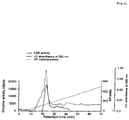
- Fig. 3 is a chromatogram of an ent-kaurene synthase B of the present invention purified by a hydroxyapatite column.
- Fig. 4 shows activities of an ent-kaurene synthase B of the present invention in the presence of divalent cations.
- any polypeptides also fall within the scope of the polypeptides provided by the present invention which have the amino acid sequence difined by SEQ ID NO:1 of the sequence listing together with insertion, deletion, and/or substitution by one or more amino acid residues and which have the catalytic activity of converting copalyl pyrophosphate to ent-kaurenethe.
- Particularly preferred embodiments of the polypeptide of the present invention include naturally-derived ent-kaurene synthases expressed in plant bodies such as pumpkin, maize, rice, or soybean.
- polypeptides which contain in their molecules amino acid sequences of the polypeptide of the naturally-derived ent-kaurene synthase B from pumpkin or variant polypeptides thereof and which have catalytic activities of converting copalyl pyrophosphate to ent-kaurene.
- polypeptides are characterized by the entire sequences of the above-described polypeptides contained as a part thereof.
- polypeptides having catalytic activities of converting copalyl pyrophosphate to ent-kaurene consist of, or alternatively comprise as a part thereof, a partial amino acid sequence of the polypeptide of the naturally-derived ent-kaurene synthase B from pumpkin or its variant polypeptide wherein said partial sequence has the catalytic activity of converting copalyl pyrophosphate to ent-kaurene, i.e., being a so-called active domain.
- Such peptides may consist solely of the active domain, per se, or may comprise the active domain as a part thereof.
- the naturally-derived ent-kaurene synthase B obtained from pumpkin which is a preferred embodiment of the present invention, may occasionally be retained inside the cells after expression.
- a membrane-binding domain (a hydrophobic domain) may be selectively removed from the entire amino acid sequence of the enzyme and the remaining polypeptide containing an active domain can be ligated to a signal peptide to produce an extracellularly releasable soluble enzyme.
- methods well known in the art e.g., the method of Kyte et al, (Kyte, J. et al., J. Mol. Bio., 157, pp-105-132, 1982), the Hopp & Woods method and the like can be employed.
- DNAs which encode any one of the above-described polypeptides are provided.
- the present invention encompasses DNAs encoding the aforementioned naturally-derived ent-kaurene synthase B from pumpkin, and as a preferred example, the DNA characterized by nucleotides of from No. 138 to 2507 (including the termination codon) of the nucleic acid sequence as defined by SEQ ID NO:3 of the sequence listing.
- DNAs which act as antisense DNAs against the gene containing the aforementioned sense DNAs also fall within the scope of the present invention.
- One example of such antisense DNAs is a DNA which acts as an antisense DNA against an ent-kaurene synthase B gene comprising a DNA encoding any one of the aforementioned polypeptides wherein said DNA sequence includes insertion, deletion, or substitution of one or more of the constituting nucleotides of the sequence that is complimentary to the DNA characterized by nucleotides of from No. 138 to 2507 (including the termination codon) of the nucleic acid sequence defined as SEQ ID NO:3 of the sequence listing.
- DNAs encoding the naturally-derived ent-kaurene synthase B from pumpkin a preferred example of the DNAs of the present invention, method for the isolation thereof will be detailed in the examples of the specification. Therefore, DNAs encoding ent-kaurene synthase Bs derived from pumpkin and other plants can be readily obtained by those skilled in the art by following the methods described in the examples, or alternatively, by referring to the description and optionally applying appropriate modifications or alterations to the described methods. Furthermore, it should be understood that DNAs containing any one of the aforementioned DNAs as a part thereof also fall within the scope of the present invention.
- the DNAs of the present invention and antisense DNAs against said DNAs are useful for the regulation of the expression of ent-kaurene synthase B in plant that has important functions in the growths of plants and seeds.
- a transgenic plant introduced with the DNA of the present invention may have an increased height, and its promoted growth can be expected.
- a transgenic plant introduced with the antisense DNA may have a reduced hight while the quantities of seeds and fruits can be maintained. Therefore, a plant bearable against a damage from a storm and flood can be obtained.
- the present invention also provides a recombinant vector containing the aforementioned DNA and a transformant cell containing the recombinant vector.
- types of the vectors are not particularly limited so long as available to those skilled in the art, an appropriate vector should be chosen depending on a combination with a host cell to be transformed.
- Sorts of the host cell are also not particularly limited and any cells such as microbial cells (prokaryote), e.g., E. coli and animal or plant cells (eukaryote) can be used.
- Geranylgeraniol was a gift from Dr. T. Takigawa of Kurare Co. Ltd. (Kurashiki, Japan).
- Copalic acid Nakano, T. and Djerassi C., J. Org. Chem., 26, pp.167-173, 1961
- natural resin "Brazil copal" which contains copalic acid
- Prof. T. Nakano of Venezuela National Institute of Science Caracas, Venezuela
- Prof. Y. Ichinohe and Dr. H. Sakamaki of Nihon University respectively.
- [ 3 H] sodium borohydride (296 GBq mmol -1 ) was purchased from Amersham Int. (Buckinghamshire, UK).
- [1- 3 H]geranylgeraniol (74 GBq mmol -1 ) and [15- 3 H]copalol (74 GBq mmol -1 ) were prepared by reduction of geranylgeranial and copalal with [ 3 H]sodium borohydride (Bensen, R.J. and Zeevaart, J.A., J. Plant Growth Regul., 9, pp.237-242, 1990).
- Tritium labeled geranylgeranyl pyrophosphate (GGPP) and copalyl pyrophosphate (CPP) were prepared through chlorination and subsequent pyrophosphorylation (Davisson et al., J. Org. Chem., 51, pp.4768-4779, 1986).
- the pyrophosphates were purified by reverse-phase chromatography on a Bond-Elut Cl8 cartridge (1 mL, Varian, Harbor City, CA) with stepwise elution using 20, 30, 50 and 70% (v/v) aqueous methanol.
- Optically pure uniconazole (Izumi, K., et al., Plant Cell Physiol., 26, pp.821-827, 1985) was obtained from Sumitomo Chemical Co.
- KSB activity was measured in the incubation mixtures consisted of enzyme solution in Kpi buffer (50 mM, pH 8.0, 100 ⁇ L) containing glycerol (10%, v/v), dithlothreitol (DTT) (2 mM), MgCl 2 (5 mM), uniconazole (20 ⁇ M, Izumi, K., et al., Plant Cell Physiol., 26, pp.821-827, 1985) and [15- 3 H]CPP (1.0 kBq). [1- 3 H]GGPP (1.0 kBq) was used as a substrate for the measurement of KSAB activity (conversion from geranylgeranyl pyrophosphate (GGPP) to ent-kaurene).
- Kpi buffer 50 mM, pH 8.0, 100 ⁇ L
- DTT dithlothreitol
- MgCl 2 5 mM
- uniconazole 20 ⁇ M, Izumi, K.,
- the mixture was incubated at 30 °C for 30 min, and the enzyme reaction was terminated by the addition of acetone (200 ⁇ L) and water (100 ⁇ L).
- the mixture was extracted with n-hexane (400 ⁇ L), and 300 ⁇ L aliquots of the extract were concentrated in vacuo and applied to a silica gel plate. After developing with n-hexane, the radioactivity of the silica gel of the ent-kaurene region (Rf 0.6-1.0) was determined.
- One unit of kaurene synthase activity was defined as the production of 1 pmol of ent-kaurene per minute.
- the protein concentration was determined using BIO-RAD (Richmond, CA) microassay (Bradford, M.M., Anal. Biochem., 72, pp.248-245, 1976) using BSA as the standard.
- buffer A 50 mM KPi buffer (pH 8.0) containing 2 mM DTT
- buffer B buffer A containing 10% glycerol
- buffer C 20 mM Tris-HCl buffer (pH 7.4) containing 10% glycerol and 2 mM DTT
- buffer D 1 mM KPi buffer (pH 6.0) containing 20% glycerol, 2 mM DTT and 5 mM MgCl 2 .
- Crude enzyme extract (1 L) was prepared by the method of Graebe et al. (Graebe, J.E., et al., Pytochem., 13, pp.1433-1440, 1974). Butyl-Toyopearl 650S gel (Toso, Tokyo, Japan) was packed into a glass column (AP-1, 10 mm X 100 mm, Waters, Millipore Corp., Milford, MA) and the column was equilibrated with a buffer A containing 1.7 M (NH 4 ) 2 SO 4 . Ammonium sulfate was added to the crude enzyme preparation (77 mL) to 1.7 M of a final concentration, and stirred for 10 min.
- the enzyme solution was centrifuged at 2,000 g for 10 min, and the supernatant was loaded onto the column at a flow rate of 3.0 mL/min.
- the column was eluted with a 30-min linear gradient of 1.7 to 0 M (NH 4 ) 2 SO 4 , and then with buffer B for 45 min.
- the fraction volume was 6 mL and a 5 ⁇ L aliquot of each fraction was assayed.
- the major active fractions (No. 32-37) were concentrated by ultrafiltration (YM-10 filter, Amicon, Beverly, MA) and the active fractions from several runs were pooled (53 mL).
- the butyl-purified enzyme preparation equilibrated with buffer C (8.4 mL) was loaded onto a DEAE-8HR column (10 mm X 190 mm, Waters). The column was eluted with a 50-min linear gradient of 0 to 500 mM NaCl in buffer C. The flow rate was 1.0 mL/min and the fraction volume was 2.0 mL.
- the active fractions (No. 33-38) were pooled and concentrated by ultrafiltration (YM-10). Ammonium sulfate was added to the DEAE-purified enzyme preparation (7.9 mL) to 1.7 M of a final concentration.
- the enzyme solution was loaded onto a TSK phenyl-5PW column (7.5 mm X 75 mm, Toso), which was equilibrated with buffer B containing 1.7 M (NH 4 ) 2 SO 4 .
- the column was eluted with a 60-min linear gradient of 1.7 to 0 M (NH 4 ) 2 SO 4 , and then with buffer B for 30 min. The flow rate was 1.0 mL/min and 2.0 mL fractions were collected.
- the major KSB activity was found in fractions No. 37-41.
- the phenyl-purified enzyme preparation (2.0 mL) was charged to the DEAE column and eluted as described above.
- the fractions containing most of the KSB activity were concentrated to 300 ⁇ L by ultrafiltration (Centicon 30, Amicon). This preparation was charged to a hydroxyapatite column (TONEN TAPS-050805 HG, 8.0 mm X 50 mm, Tonen, Tokyo, Japan) equilibrated with buffer D. The column was eluted with a 60-min linear gradient of 1 to 500 mM phosphate. The flow rate was 1.0 mL/min and the fraction volume was 1 mL.
- the major KSB active fractions (No. 23-25) were concentrated by ultrafiltration (Centricon 30) and stored at -80°C (70 ⁇ g , 673 units).
- the phenyl-purified enzyme preparation was charged onto the gel permeation column (TSK G3000SWx1, 7.8 mm x 300 mm, Toso, Tokyo, Japan) which was pre-equilibrated with buffer B containing 200 mM NaCl.
- the column was eluted with the same buffer at a flow rate of 0.4 mL/min and fractions were collected every 30 sec.
- Active enzyme fractions of the sequential purification steps were analyzed by SDS-PAGE using a 7.5% (w/v) gel (Laemmli, U.K., Nature, 227, pp.680-685, 1970). Approximately 3 ⁇ g of total protein was applied to each lane. After electrophoresis, proteins were visualized by Coomassie Brilliant Blue R250 (CBB) staining. Ovalbumin (45.0 kD), BSA (66,2 kD), phosphorylase B (97.4 kD), B-galactosidase (116 kD), and myosin (200 kD) were used as standard proteins (BIO-RAD).
- the phenyl-purified enzyme preparation (0.47 ⁇ g of total protein) was used as the enzyme solution.
- the amount of [1- 3 H]CPP was 2.2 kBg and the incubation period was 15 min. The other conditions were the same as those for the enzyme assay.
- KPi buffer 50 mM
- the phenyl-purified enzyme preparation (1.2 ⁇ g of total protein) was used, and the concentrations of [1- 3 H]CPP were in the range of 7 to 480 nM.
- the production of ent-kaurene was calculated and the K m value was determined from a Lineweaver-Burk plot.
- the final purified enzyme preparation (14.5 ⁇ g ) was purified on a 7.5% (w/v) polyacrylamide gel. Proteins were electroblotted to a polyvinylidene difluoride membrane and visualized (Matsudaira, P., J. Biol. Chem., 262, pp.10035-10038), 1987). The 81 kD band on the membrane was cut out and the amino-acid sequence of the protein was analyzed by a protein sequencer (477A protein sequencer, Applied Biosystems Inc., Foster City, CA).
- the 81 kD protein was digested in situ (Kawasaki, H., et al., Anal. Biochem., 191, pp.332-336, 1990) with the Acromobacter protease I (a gift from Dr. T. Masaki of Ibaraki University).
- the generated peptide fragments were extracted from the gel and separated by reverse phase HPLC using a Superspher RP-Select B column.
- Aqueous 0.09% (v/v) TFA and 80% (v/v) acetonitrile containing 0.075% (v/v) TFA were used as eluents A and B, respectively.
- the flow rate was 0.2 mL/min and a 32-min linear gradient of 0 to 80% of eluent B was used (1090M HPLC system, Hewlett Packard, Avondale, PA). Absorbances at 215, 254, 275 and 290 nm were monitored. Amino acid sequences of separated peptides were analyzed with the protein sequencer.
- the synthetic peptide (3.1 mg, 1.4 nmol) was combined to keyhole limpet hemocyanin by using an Imjet Immunogen EDC Conjugation Kit (Pierce, Rockford, IL) according to the manufacturer's instructions.
- the combined protein (1 mg) was injected into a rabbit three times with intervals of 2 weeks, and 4 weeks after the last injection antiserum was collected by centrifugation of the blood.
- Immunogloblin G was purified from the antiserum using a HiTrap Protein G column (1 mL, Pharmacia LKB biotechnology, Uppsala, Sweden).
- the crude enzyme prepared from immature seeds was first purified by a hydrophobic interaction chromatography in order to remove metal ions and GAs, and to concentrate the enzyme.
- the majority of the KSB activity was eluted at an (NH 4 ) 2 SO 4 concentration of 0.6-0.1 M, whereas the majority of the KSAB ativity was eluted after the (NH 4 ) 2 SO 4 gradient was complete (Fig. 1).
- Fractions corresponding to an (NH 4 ) 2 SO 4 concentration of 0.6-0.1 M were collected as the butyl-purified KSB preparation, although this preparation contained some KSA activity.
- KSB preparation was purified further by DEAE ion exchange chromatography with a NaCl gradient. Both KSA and KSB co-eluted at fractions corresponding to 240-360 mM NaCl. Separation of KSA and KSB was not achieved by DEAE chromatography but the specific activity of KSB was increased (Table 1). These fractions were collected and were further purified by high performance hydrophobic interaction chromatography using a Phenyl-5PW column. The majority of KSB activity eluted at (NH 4 ) 2 SO 4 concentrations of 0.5-0.2 M, and KSAB activity eluted later.
- KSB activity was detected in fractions of 250-280 mM NaCl (Fig. 2), which were collected as the second DEAE-purified enzyme preparation.
- This enzyme preparation contained four major proteins by SDS-PAGE, and was further purified on a hydroxyapatite column.
- the KSB ativity was eluted at phosphate concentrations of 90-140 mM, and the peak shape of KSB activity was corresponded with that of UV-absorbance at 280 nm (Fig. 3).
- the purest KSB preparation did not show KSAB activity suggesting that KSA was not present in the preparation.
- ent-Kaurene synthase B was purified 291-fold from endosperm of Cucurbita maxima L. (Table 1) and 70 ⁇ g of purified enzyme was obtained.
- Table 1 Enzyme preparation Total protein (mg) Total activity (units) Yield (%) Specific activity (units/mg) Purification (fold) Crude enzyme 530 17,500 100 33.0 1 Butyl-purified 168 11,000 63.8 65.4 1.98 1st DEAE-purified 13.9 5,170 29.6 372 11.3 Phenyl-purified 4.43 3,340 19.2 754 22.8 2nd DEAE-purified 0.407 2,820 16.2 6,930 210 HA-purified 0.070 673 3.87 9,610 291
- the hydroxyapatite-purified enzyme preparation showed a major band at apparent molecular mass of 81 kD.
- the amount of protein corresponding to the 81 kD band estimated by SDS-PAGE in each fraction of the second DEAE chromatography correlated with KSB activity.
- KSB The properties of KSB were examined with the phenyl-purified enzyme preparation.
- the optimal pH for KSB was 6.8-7.5 in 50mM KPi buffer.
- the K m value for [15- 3 H]CPP was 0.35 ⁇ M.
- KSB could convert CPP to ent-kaurene, but was not active without exogenous cations. Since EDTA (1-100 mM) did not change KSB activity, the phenyl-purified enzyme preparation did not contain endogenous cations that affected KSB activity.
- Some divalent cations (0.1-50mM, as chlorides) were added to the incubation mixture instead of 5 mM Mg 2+ , and KSB activity was measured. As shown in Fig. 4, Mg 2+ , Co 2+ and Mn 2+ promoted KSB activity and their optimal concentrations were around 10 mM. Ni 2+ and Fe 2+ weakly promoted KSB activity, while Cu 2+ , Ca 2+ and Ba 2+ showed no effects.
- Cu 2+ , Ca 2+ and Ba 2+ were added to the incubation mixture in combination with 5 mM Mg 2+ , all three inhibited KSB activity promoted by Mg 2+ . In particular Cu 2+ completely inhibited the conversion promoted by 5 mM Mg 2+ at concentrations above 0.5 mM.
- the N-terminal peptide sequence of the 81 kD protein from SDS-PAGE was analyzed and the N-terminus of the protein was found to be blocked.
- the 81 kD protein band was cut out from the polyacrylamide gel and treated with a lysyl endopeptidase, Acromobacter protease I (Masaki, T., et al., Biochem. Biophys. Acta, 660, pp.44-50, 1981).
- the resulting peptides were separated by reverse-phase HPLC and the sequences of the major peptides analyzed (Kawasaki, H., et al., Anal. Biochem., 191, pp.332-336, 1990).
- Sequences and approximate amounts of the peptides recovered are (1) ASQIITHPDESVLENINSWT (74 pmol), (2) EAEWSTNK (45 pmol), (3) RAMESYSGDIVRISK (37 pmol), (4) HGLSSDSVW (24 pmol), (5) LQDWSMVMQYQRK (17 pmol).
- oligonucleotides were synthesized for PCR primers in both sense and antisense directions. Using these synthetic oligonucleotides as primers, (RT)-PCR was tried to amplify cDNA fragments from poly(A) + RNA prepared from immature cotyledons of Cucurbita maxima.
- a 472-bp cDNA fragment was amplified when a combination of the forward primer designed from the underlined part of the sequence [5] and the reverse primer from the underlined sequence in [1] was used as a primer set.
- the amino acid sequence showed relatively high homology with KSA of Arabidopsis (39% identity, 66% similarity). Because the amino acid sequence of this region of putative maize KSA (Bensen, R.J. et al., Plant Cell, 7, pp.75-84, 1995) has much higher homology with Arabidopsis KSA, it was suggested that the PCR amplified fragment was not a part of KSA, but that of one of other terpene cyclases.
- RNA blot analysis was performed against poly(A) + RNA prepared from the same material to detect a 2.7-kb transcript, a possible size compared to the estimated size of the purified protein (81 kD).
- the final purified enzyme fraction the hydroxyapatite purified fraction as described above
- the 472-bp PCR-amplified fragment encodes a part of KSB cDNA.
- KSB cDNA clone a cDNA library consisting of 1.2 million independent clones was constructed from poly(A) + RNA prepared from immature cotyledons of Cucurbita maxima using ⁇ ZAP II as a vector. After the amplification of the library, 5 x 10 5 clones were screened to isolate 9 independent clones after 3 rounds of purifications. After the subcloning into pBluescriptSK(-), the size of the insert cDNA was determined to select 2 clones, pKB3 and pKB16 for further studies. Both of the clones contained 2.4-kb insert and showed same restriction enzyme maps.
- pHB 20 contains a cDNA insert consisting of 2658 nucleotides, which contains the identical sequence (801 to 1269) to the PCR amplified fragment which was used as a probe.
- the nucleotide sequence of the full length cDNA is given in SEQ ID NO:2 of the sequence listing.
- the KSB code region of the cDNA and the amino acid sequence of the corresponding KSB are given in SEQ ID NO:3 of the sequence listing.
- the amino acid sequence of KSB is shown in SEQ ID NO:1 of the sequence listing according to the IUPAC single character coding.
- the ATG codon at the position of 138 to 140 is most likely the starting codon for KSB protein, which is followed by a long ORF of 2367 nucleotides and polyadenylation signal sequence (AATAAA) at the position of 103 to 109 nucleotides downstream from the translational stop codon.
- AATAAA polyadenylation signal sequence
- the ORF consists of 789 amino acids, where all the peptide sequences obtained from the protease-digested purified protein are detected, although there was a change of amino acid in [5] LQDW SM VMQYQRK to LQDW DM VMQYQRK.
- the first 50 N-terminal amino acid sequence is rich in serine (18%) and threonine (12%) and the estimated pI of this region is 9.8, which are common characters of transit peptides targeting chloroplasts (Keegstra, et al., Annu. Rev. Plant Physiol. Mol. Biol., 40, 471-501, 1989).
- the polyclonal antibody raised against the synthetic oligopeptide, [1] ASQIITHPDESVLENINSWT, combined to a carrier protein did not recognize the native KSB protein, although it recognized a 81 kD protein on SDS-PAGE. From the results, it was predicted that the peptide sequence located not on the surface, but in the core part of the properly folded protein, so that the antibody could recognize only the denatured protein. In the sequence of above, the peptide sequence used for the production of the antibody is found in just the middle of the sequence (nucleotide 1244 to 1304), not in the N-terminus nor C-terminus region, which are supporting the experimental results of Example 1.
- pKB20 encodes KSB
- the protein encoded by the cloned cDNA was over-expressed as a fusion protein with maltose binding protein (Guan, et al., Gene, 67, 21-30, 1987) in Escherichia coli to analyze the enzyme activity of the expressed protein.
- Plasmid pMAL-KB containing a fragment (tac promoter sequence-malE-KSB) for the expression of the fusion protein (MBP-KB) and the control plasmid pMAL (42 kD for MBD expression) containing tac-promoter sequence-malE fragment were prepared.
- the expression of the fusion protein is under the regulation of tac promoter, which is induced by the addition of isopropyl-b-D-thiogalactopyranoside (IPTG).
- IPTG isopropyl-b-D-thiogalactopyranoside
- MBP-KB isopropyl-b-D-thiogalactopyranoside
- coli extracts in the presence of Mg 2+ (cofactor for KSB of pumpkin) and uniconazole (an inhibitor of ent-kaurene oxidation), the reaction mixture was extracted with n-hexane followed by fractionation on silica-gel thin-layer chromatography (TLC) to isolate LP (low polarity) fraction, where ent-kaurene is fractionated.
- Mg 2+ cofactor for KSB of pumpkin
- uniconazole an inhibitor of ent-kaurene oxidation
- KSB activity was tentatively defined as the radioactivity (dpm) of the "LP fraction".
- the extract of E. coli producing MBP-KB20 showed significant KSB activities, athough that of the bacteria cells expressing only MBP had no activities. It was analyzed on OSD-HPLC to confirm whether the radioactivity in "LP fraction" on TLC corresponds to ent-kaurene.
- the retention time of the major peak in LP fraction of the E. coli extract was identical to that of the original pumpkin enzyme preparation, besides, those of them are identical to retention time of authentic [ 14 C]ent-kaurene. It was also proved that the radioactivity in LP fraction of the E. coli extracts were mostly derived from the major peak (95%) identical to ent-kaurene fraction. Thus, it was indicated that the extract of E. coli producing MBP-KB had enzyme activity to convert CPP to ent-kaurene.
- KSB transcripts were detected in all of the tested tissues and this fact indicates that the KSB could be expressed not only in immature seeds but in vegetative tissues.
- a message of 20-oxidase of pumpkin is detected only in immature seeds in contrast to KSB (Lange, T., et al., Proc. Natl. Acad. Sci. USA, 91, pp.8552-8556, 1994).
- the expression level of KSB is relatively high in young tissues and the transcripts were detected most abundantly in growing cotyledon on growth of immature seeds.
- KB20 sequence shared homology with tobacco sesquiterpene cyclase (Facchini, P.J., Proc. Natl. Acad. Sci. USA, 89, pp.11088-11092, 1992), limonene synthase (Colby, S.M., J. Biol. Chem., 268, pp.23016-23024, 1993), caster bean casbene synthase (Colby, S.M., J. Biol. Chem., 268, pp.23016-23024, 1993) and in particular, Arabidopsis KSA (Sun T.P. and Kamiya, Y., Plant Cell, 6, pp.1509-1518, 1994).
Landscapes
- Life Sciences & Earth Sciences (AREA)
- Chemical & Material Sciences (AREA)
- Health & Medical Sciences (AREA)
- Genetics & Genomics (AREA)
- Organic Chemistry (AREA)
- Zoology (AREA)
- Engineering & Computer Science (AREA)
- Bioinformatics & Cheminformatics (AREA)
- Wood Science & Technology (AREA)
- Microbiology (AREA)
- Biotechnology (AREA)
- Biomedical Technology (AREA)
- Molecular Biology (AREA)
- Biochemistry (AREA)
- General Engineering & Computer Science (AREA)
- General Health & Medical Sciences (AREA)
- Medicinal Chemistry (AREA)
- Enzymes And Modification Thereof (AREA)
- Micro-Organisms Or Cultivation Processes Thereof (AREA)
- Saccharide Compounds (AREA)
- Peptides Or Proteins (AREA)
- Breeding Of Plants And Reproduction By Means Of Culturing (AREA)
Applications Claiming Priority (2)
| Application Number | Priority Date | Filing Date | Title |
|---|---|---|---|
| JP261147/95 | 1995-10-09 | ||
| JP7261147A JPH09104698A (ja) | 1995-10-09 | 1995-10-09 | カウレン合成酵素 |
Publications (2)
| Publication Number | Publication Date |
|---|---|
| EP0768381A2 true EP0768381A2 (de) | 1997-04-16 |
| EP0768381A3 EP0768381A3 (de) | 1999-01-27 |
Family
ID=17357763
Family Applications (1)
| Application Number | Title | Priority Date | Filing Date |
|---|---|---|---|
| EP96116005A Withdrawn EP0768381A3 (de) | 1995-10-09 | 1996-10-07 | Kauren-Synthase |
Country Status (3)
| Country | Link |
|---|---|
| US (1) | US6020176A (de) |
| EP (1) | EP0768381A3 (de) |
| JP (1) | JPH09104698A (de) |
Cited By (2)
| Publication number | Priority date | Publication date | Assignee | Title |
|---|---|---|---|---|
| US6468772B1 (en) | 1998-09-18 | 2002-10-22 | The Salk Institute For Biological Studies | Methods of making modified polypeptides |
| US8106260B2 (en) | 1996-04-12 | 2012-01-31 | The Board Of Trustees Of The University Of Kentucky | Chimeric isoprenoid synthases and uses thereof |
Families Citing this family (3)
| Publication number | Priority date | Publication date | Assignee | Title |
|---|---|---|---|---|
| US6825132B1 (en) | 1996-02-29 | 2004-11-30 | Sanyo Electric Co., Ltd. | Manufacturing method of semiconductor device including an insulation film on a conductive layer |
| US6690084B1 (en) | 1997-09-26 | 2004-02-10 | Sanyo Electric Co., Ltd. | Semiconductor device including insulation film and fabrication method thereof |
| CN111393318B (zh) * | 2020-04-13 | 2023-02-10 | 上海师范大学 | 一种粉背蕨酸酰胺衍生物的合成及其在抗肿瘤药物中的应用 |
Family Cites Families (1)
| Publication number | Priority date | Publication date | Assignee | Title |
|---|---|---|---|---|
| AU676468B2 (en) * | 1992-02-18 | 1997-03-13 | General Hospital Corporation, The | Recombinant gibberellin DNA and uses thereof |
-
1995
- 1995-10-09 JP JP7261147A patent/JPH09104698A/ja active Pending
-
1996
- 1996-10-07 EP EP96116005A patent/EP0768381A3/de not_active Withdrawn
- 1996-10-08 US US08/727,308 patent/US6020176A/en not_active Expired - Fee Related
Cited By (8)
| Publication number | Priority date | Publication date | Assignee | Title |
|---|---|---|---|---|
| US8106260B2 (en) | 1996-04-12 | 2012-01-31 | The Board Of Trustees Of The University Of Kentucky | Chimeric isoprenoid synthases and uses thereof |
| US8354504B2 (en) | 1996-04-12 | 2013-01-15 | The Board Of Trustees Of The University Of Kentucky | Chimeric isoprenoid synthases and uses thereof |
| US8741651B2 (en) | 1996-04-12 | 2014-06-03 | The Board Of Trustees Of The University Of Kentucky | Chimeric isoprenoid synthases and uses thereof |
| US6468772B1 (en) | 1998-09-18 | 2002-10-22 | The Salk Institute For Biological Studies | Methods of making modified polypeptides |
| US6495354B2 (en) | 1998-09-18 | 2002-12-17 | University Of Kentucky Research Foundation | Synthases |
| US6559297B2 (en) | 1998-09-18 | 2003-05-06 | The Salk Institute For Biological Studies | Synthases |
| US6569656B2 (en) | 1998-09-18 | 2003-05-27 | The University Of Kentucky Research Foundation | Synthases |
| US6890752B2 (en) | 1998-09-18 | 2005-05-10 | The University Of Kentucky Research Foundation | Synthases |
Also Published As
| Publication number | Publication date |
|---|---|
| EP0768381A3 (de) | 1999-01-27 |
| US6020176A (en) | 2000-02-01 |
| JPH09104698A (ja) | 1997-04-22 |
Similar Documents
| Publication | Publication Date | Title |
|---|---|---|
| Galuszka et al. | Cytokinin oxidase/dehydrogenase genes in barley and wheat: cloning and heterologous expression | |
| Yang et al. | Characterization and heterologous expression of hydroxycinnamoyl/benzoyl-CoA: anthranilate N-hydroxycinnamoyl/benzoyltransferase from elicited cell cultures of carnation, Dianthus caryophyllus L. | |
| Rottmann et al. | 1-Aminocyclopropane-1-carboxylate synthase in tomato is encoded by a multigene family whose transcription is induced during fruit and floral senescence | |
| Nakagawa et al. | Cloning of a complementary DNA for auxin-induced 1-aminocyclopropane-1-carboxylate synthase and differential expression of the gene by auxin and wounding | |
| Beaty et al. | Tzs, a nopaline Ti plasmid gene from Agrobacterium tumefaciens associated with trans-zeatin biosynthesis | |
| US5639950A (en) | Nucleotide sequence encoding for bifunctional enzyme for proline production | |
| Ritchie et al. | Identification of a maize root transcript expressed in the primary response to nitrate: characterization of a cDNA with homology to ferredoxin-NADP+ oxidoreductase | |
| EP1009839A1 (de) | Transgene kartoffeln mit reduzierter alpha glucan l- oder h-typ knollen phosphortylase aktivität mit reduziertem "cold-sweetening" | |
| KR100271594B1 (ko) | 엔도-1, 4-베타-d-글루카나제 | |
| Yonekura-Sakakibara et al. | Molecular characterization of tobacco sulfite reductase: enzyme purification, gene cloning, and gene expression analysis | |
| US20230114811A1 (en) | Glycosyltransferases, polynucleotides encoding these and methods of use | |
| Saito et al. | Purification and properties of ent-kaurene synthase B from immature seeds of pumpkin | |
| CN103589694B (zh) | 郁金香类黄酮-3’-羟化酶TfF3’H蛋白及其编码基因 | |
| US8962920B2 (en) | Use of active cytokinin synthase gene | |
| JPH0686670A (ja) | エンド型キシログルカン転移酵素遺伝子 | |
| EP0768381A2 (de) | Kauren-Synthase | |
| US5210189A (en) | DNA sequence encoding glycerol 3-phosphate acyltransferase | |
| KR101556927B1 (ko) | 식물 왜화 유도 기능을 가진 폴리펩티드, 이를 암호화하는 폴리뉴클레오티드 및 이들의 용도 | |
| JPWO1995015385A1 (ja) | 低温耐性ピルビン酸リン酸ジキナーゼ活性を有するポリペプチド及びそれをコードするdna並びに該dnaを含む組換えベクター及び形質転換植物 | |
| US6495317B1 (en) | DNA encodingmannose 6-phosphate reductase and recombinants produced therefrom | |
| CN113227383B (zh) | Hak基因在调控植物性状中的作用 | |
| EP1077255A1 (de) | Nicotianamin synthase und für diese kodierendes gen | |
| US6930227B1 (en) | Camellia sinensis gene encoding a caffeine synthesis associated n-methyl transferase with 7-methylxanthine n3 methyl transferase, theobromine n1 methyl transferase, and paraxanthine n3 methyl transferase activities and use thereof | |
| JP5257880B2 (ja) | 植物由来高重合度フルクタン合成スクロース:フルクタン−6−フルクトシルトランスフェラーゼ遺伝子 | |
| JP3512217B2 (ja) | エンド型キシログルカン転移酵素遺伝子 |
Legal Events
| Date | Code | Title | Description |
|---|---|---|---|
| PUAI | Public reference made under article 153(3) epc to a published international application that has entered the european phase |
Free format text: ORIGINAL CODE: 0009012 |
|
| AK | Designated contracting states |
Kind code of ref document: A2 Designated state(s): DE FR GB |
|
| PUAL | Search report despatched |
Free format text: ORIGINAL CODE: 0009013 |
|
| AK | Designated contracting states |
Kind code of ref document: A3 Designated state(s): DE FR GB |
|
| STAA | Information on the status of an ep patent application or granted ep patent |
Free format text: STATUS: THE APPLICATION IS DEEMED TO BE WITHDRAWN |
|
| 18D | Application deemed to be withdrawn |
Effective date: 19990728 |