EP0770138B1 - Funktionelles aufspüren und/oder expressionsvektoren bei mycobakterien - Google Patents
Funktionelles aufspüren und/oder expressionsvektoren bei mycobakterien Download PDFInfo
- Publication number
- EP0770138B1 EP0770138B1 EP95929147A EP95929147A EP0770138B1 EP 0770138 B1 EP0770138 B1 EP 0770138B1 EP 95929147 A EP95929147 A EP 95929147A EP 95929147 A EP95929147 A EP 95929147A EP 0770138 B1 EP0770138 B1 EP 0770138B1
- Authority
- EP
- European Patent Office
- Prior art keywords
- sequence
- tuberculosis
- chain
- nucleotides
- sequences
- Prior art date
- Legal status (The legal status is an assumption and is not a legal conclusion. Google has not performed a legal analysis and makes no representation as to the accuracy of the status listed.)
- Expired - Lifetime
Links
- 238000012216 screening Methods 0.000 title abstract description 13
- 239000013604 expression vector Substances 0.000 title abstract 2
- 108090000623 proteins and genes Proteins 0.000 claims abstract description 129
- 102000004169 proteins and genes Human genes 0.000 claims abstract description 62
- 108020004414 DNA Proteins 0.000 claims abstract description 45
- 230000014509 gene expression Effects 0.000 claims abstract description 44
- 239000002773 nucleotide Substances 0.000 claims abstract description 42
- 125000003729 nucleotide group Chemical group 0.000 claims abstract description 42
- 230000028327 secretion Effects 0.000 claims abstract description 24
- 230000001105 regulatory effect Effects 0.000 claims abstract description 20
- 241000186359 Mycobacterium Species 0.000 claims abstract description 14
- 238000000338 in vitro Methods 0.000 claims abstract description 9
- 238000011144 upstream manufacturing Methods 0.000 claims abstract description 8
- 201000008827 tuberculosis Diseases 0.000 claims description 97
- 241000187480 Mycobacterium smegmatis Species 0.000 claims description 46
- 108090000765 processed proteins & peptides Proteins 0.000 claims description 38
- 102000004196 processed proteins & peptides Human genes 0.000 claims description 33
- 229920001184 polypeptide Polymers 0.000 claims description 32
- 241000186362 Mycobacterium leprae Species 0.000 claims description 24
- 150000001413 amino acids Chemical class 0.000 claims description 21
- 108010076504 Protein Sorting Signals Proteins 0.000 claims description 20
- 108091028043 Nucleic acid sequence Proteins 0.000 claims description 19
- 210000004027 cell Anatomy 0.000 claims description 15
- 238000001514 detection method Methods 0.000 claims description 11
- 108091026890 Coding region Proteins 0.000 claims description 10
- 239000000203 mixture Substances 0.000 claims description 10
- 208000015181 infectious disease Diseases 0.000 claims description 8
- 230000002163 immunogen Effects 0.000 claims description 7
- 239000012528 membrane Substances 0.000 claims description 7
- 101710101517 Gluconate operon transcriptional repressor Proteins 0.000 claims description 6
- 241000186366 Mycobacterium bovis Species 0.000 claims description 6
- 244000052769 pathogen Species 0.000 claims description 6
- 230000000890 antigenic effect Effects 0.000 claims description 4
- 238000013508 migration Methods 0.000 claims description 4
- 230000005012 migration Effects 0.000 claims description 4
- 210000002966 serum Anatomy 0.000 claims description 4
- 238000001727 in vivo Methods 0.000 claims description 3
- 229920002401 polyacrylamide Polymers 0.000 claims description 2
- 230000003297 denaturating effect Effects 0.000 claims 1
- 210000003527 eukaryotic cell Anatomy 0.000 claims 1
- 210000001236 prokaryotic cell Anatomy 0.000 claims 1
- 239000013598 vector Substances 0.000 abstract description 57
- 238000000034 method Methods 0.000 abstract description 26
- 238000010367 cloning Methods 0.000 abstract description 21
- 239000003550 marker Substances 0.000 abstract description 19
- 238000013518 transcription Methods 0.000 abstract description 10
- 230000035897 transcription Effects 0.000 abstract description 10
- 108091081024 Start codon Proteins 0.000 abstract description 9
- 230000003321 amplification Effects 0.000 abstract description 6
- 238000003199 nucleic acid amplification method Methods 0.000 abstract description 6
- 108700008625 Reporter Genes Proteins 0.000 abstract description 5
- 238000012512 characterization method Methods 0.000 abstract description 4
- 230000033228 biological regulation Effects 0.000 abstract description 3
- 241000701533 Escherichia virus T4 Species 0.000 abstract description 2
- 108091008146 restriction endonucleases Proteins 0.000 abstract description 2
- 238000001976 enzyme digestion Methods 0.000 abstract 1
- 230000014726 immortalization of host cell Effects 0.000 abstract 1
- 239000012634 fragment Substances 0.000 description 42
- 239000013612 plasmid Substances 0.000 description 41
- 230000000694 effects Effects 0.000 description 32
- 230000004927 fusion Effects 0.000 description 29
- 241000588724 Escherichia coli Species 0.000 description 23
- 108020004774 Alkaline Phosphatase Proteins 0.000 description 20
- 102000002260 Alkaline Phosphatase Human genes 0.000 description 20
- 102000004190 Enzymes Human genes 0.000 description 20
- 108090000790 Enzymes Proteins 0.000 description 20
- 108020001507 fusion proteins Proteins 0.000 description 20
- 102000037865 fusion proteins Human genes 0.000 description 20
- 101150009573 phoA gene Proteins 0.000 description 20
- 238000010276 construction Methods 0.000 description 19
- 238000003780 insertion Methods 0.000 description 19
- 230000037431 insertion Effects 0.000 description 19
- 239000000427 antigen Substances 0.000 description 17
- 108091007433 antigens Proteins 0.000 description 17
- 102000036639 antigens Human genes 0.000 description 17
- 101710149506 28 kDa protein Proteins 0.000 description 14
- 101710137943 Complement control protein C3 Proteins 0.000 description 14
- 101710152003 Suppressor of silencing P0 Proteins 0.000 description 14
- 125000003275 alpha amino acid group Chemical group 0.000 description 14
- 229960005486 vaccine Drugs 0.000 description 14
- 101150066555 lacZ gene Proteins 0.000 description 13
- 101100084022 Pseudomonas aeruginosa (strain ATCC 15692 / DSM 22644 / CIP 104116 / JCM 14847 / LMG 12228 / 1C / PRS 101 / PAO1) lapA gene Proteins 0.000 description 12
- 230000029087 digestion Effects 0.000 description 12
- 230000002068 genetic effect Effects 0.000 description 12
- 241000894006 Bacteria Species 0.000 description 9
- 108010005774 beta-Galactosidase Proteins 0.000 description 9
- 102000005936 beta-Galactosidase Human genes 0.000 description 9
- 229930027917 kanamycin Natural products 0.000 description 9
- 229960000318 kanamycin Drugs 0.000 description 9
- SBUJHOSQTJFQJX-NOAMYHISSA-N kanamycin Chemical compound O[C@@H]1[C@@H](O)[C@H](O)[C@@H](CN)O[C@@H]1O[C@H]1[C@H](O)[C@@H](O[C@@H]2[C@@H]([C@@H](N)[C@H](O)[C@@H](CO)O2)O)[C@H](N)C[C@@H]1N SBUJHOSQTJFQJX-NOAMYHISSA-N 0.000 description 9
- 229930182823 kanamycin A Natural products 0.000 description 9
- 101100406843 Neurospora crassa (strain ATCC 24698 / 74-OR23-1A / CBS 708.71 / DSM 1257 / FGSC 987) prr-3 gene Proteins 0.000 description 8
- 230000001580 bacterial effect Effects 0.000 description 8
- 230000001413 cellular effect Effects 0.000 description 8
- 238000004520 electroporation Methods 0.000 description 8
- GUBGYTABKSRVRQ-PICCSMPSSA-N Maltose Natural products O[C@@H]1[C@@H](O)[C@H](O)[C@@H](CO)O[C@@H]1O[C@@H]1[C@@H](CO)OC(O)[C@H](O)[C@H]1O GUBGYTABKSRVRQ-PICCSMPSSA-N 0.000 description 7
- 238000004519 manufacturing process Methods 0.000 description 7
- 239000000047 product Substances 0.000 description 7
- 101710139711 IkB-like protein Proteins 0.000 description 6
- 101150096027 blaF gene Proteins 0.000 description 6
- 239000000284 extract Substances 0.000 description 6
- 238000002360 preparation method Methods 0.000 description 6
- 238000012163 sequencing technique Methods 0.000 description 6
- 238000012360 testing method Methods 0.000 description 6
- 101100347612 Arabidopsis thaliana VIII-B gene Proteins 0.000 description 5
- 108090000204 Dipeptidase 1 Proteins 0.000 description 5
- 108090001030 Lipoproteins Proteins 0.000 description 5
- 102000004895 Lipoproteins Human genes 0.000 description 5
- 241000186365 Mycobacterium fortuitum Species 0.000 description 5
- 238000012408 PCR amplification Methods 0.000 description 5
- 238000003776 cleavage reaction Methods 0.000 description 5
- 230000001681 protective effect Effects 0.000 description 5
- 239000000523 sample Substances 0.000 description 5
- 230000007017 scission Effects 0.000 description 5
- OWEGMIWEEQEYGQ-UHFFFAOYSA-N 100676-05-9 Natural products OC1C(O)C(O)C(CO)OC1OCC1C(O)C(O)C(O)C(OC2C(OC(O)C(O)C2O)CO)O1 OWEGMIWEEQEYGQ-UHFFFAOYSA-N 0.000 description 4
- 101710127328 28 kDa antigen Proteins 0.000 description 4
- 101100364969 Dictyostelium discoideum scai gene Proteins 0.000 description 4
- XEEYBQQBJWHFJM-UHFFFAOYSA-N Iron Chemical compound [Fe] XEEYBQQBJWHFJM-UHFFFAOYSA-N 0.000 description 4
- 101100364971 Mus musculus Scai gene Proteins 0.000 description 4
- 241001467552 Mycobacterium bovis BCG Species 0.000 description 4
- 108091034117 Oligonucleotide Proteins 0.000 description 4
- JLCPHMBAVCMARE-UHFFFAOYSA-N [3-[[3-[[3-[[3-[[3-[[3-[[3-[[3-[[3-[[3-[[3-[[5-(2-amino-6-oxo-1H-purin-9-yl)-3-[[3-[[3-[[3-[[3-[[3-[[5-(2-amino-6-oxo-1H-purin-9-yl)-3-[[5-(2-amino-6-oxo-1H-purin-9-yl)-3-hydroxyoxolan-2-yl]methoxy-hydroxyphosphoryl]oxyoxolan-2-yl]methoxy-hydroxyphosphoryl]oxy-5-(5-methyl-2,4-dioxopyrimidin-1-yl)oxolan-2-yl]methoxy-hydroxyphosphoryl]oxy-5-(6-aminopurin-9-yl)oxolan-2-yl]methoxy-hydroxyphosphoryl]oxy-5-(6-aminopurin-9-yl)oxolan-2-yl]methoxy-hydroxyphosphoryl]oxy-5-(6-aminopurin-9-yl)oxolan-2-yl]methoxy-hydroxyphosphoryl]oxy-5-(6-aminopurin-9-yl)oxolan-2-yl]methoxy-hydroxyphosphoryl]oxyoxolan-2-yl]methoxy-hydroxyphosphoryl]oxy-5-(5-methyl-2,4-dioxopyrimidin-1-yl)oxolan-2-yl]methoxy-hydroxyphosphoryl]oxy-5-(4-amino-2-oxopyrimidin-1-yl)oxolan-2-yl]methoxy-hydroxyphosphoryl]oxy-5-(5-methyl-2,4-dioxopyrimidin-1-yl)oxolan-2-yl]methoxy-hydroxyphosphoryl]oxy-5-(5-methyl-2,4-dioxopyrimidin-1-yl)oxolan-2-yl]methoxy-hydroxyphosphoryl]oxy-5-(6-aminopurin-9-yl)oxolan-2-yl]methoxy-hydroxyphosphoryl]oxy-5-(6-aminopurin-9-yl)oxolan-2-yl]methoxy-hydroxyphosphoryl]oxy-5-(4-amino-2-oxopyrimidin-1-yl)oxolan-2-yl]methoxy-hydroxyphosphoryl]oxy-5-(4-amino-2-oxopyrimidin-1-yl)oxolan-2-yl]methoxy-hydroxyphosphoryl]oxy-5-(4-amino-2-oxopyrimidin-1-yl)oxolan-2-yl]methoxy-hydroxyphosphoryl]oxy-5-(6-aminopurin-9-yl)oxolan-2-yl]methoxy-hydroxyphosphoryl]oxy-5-(4-amino-2-oxopyrimidin-1-yl)oxolan-2-yl]methyl [5-(6-aminopurin-9-yl)-2-(hydroxymethyl)oxolan-3-yl] hydrogen phosphate Polymers Cc1cn(C2CC(OP(O)(=O)OCC3OC(CC3OP(O)(=O)OCC3OC(CC3O)n3cnc4c3nc(N)[nH]c4=O)n3cnc4c3nc(N)[nH]c4=O)C(COP(O)(=O)OC3CC(OC3COP(O)(=O)OC3CC(OC3COP(O)(=O)OC3CC(OC3COP(O)(=O)OC3CC(OC3COP(O)(=O)OC3CC(OC3COP(O)(=O)OC3CC(OC3COP(O)(=O)OC3CC(OC3COP(O)(=O)OC3CC(OC3COP(O)(=O)OC3CC(OC3COP(O)(=O)OC3CC(OC3COP(O)(=O)OC3CC(OC3COP(O)(=O)OC3CC(OC3COP(O)(=O)OC3CC(OC3COP(O)(=O)OC3CC(OC3COP(O)(=O)OC3CC(OC3COP(O)(=O)OC3CC(OC3COP(O)(=O)OC3CC(OC3CO)n3cnc4c(N)ncnc34)n3ccc(N)nc3=O)n3cnc4c(N)ncnc34)n3ccc(N)nc3=O)n3ccc(N)nc3=O)n3ccc(N)nc3=O)n3cnc4c(N)ncnc34)n3cnc4c(N)ncnc34)n3cc(C)c(=O)[nH]c3=O)n3cc(C)c(=O)[nH]c3=O)n3ccc(N)nc3=O)n3cc(C)c(=O)[nH]c3=O)n3cnc4c3nc(N)[nH]c4=O)n3cnc4c(N)ncnc34)n3cnc4c(N)ncnc34)n3cnc4c(N)ncnc34)n3cnc4c(N)ncnc34)O2)c(=O)[nH]c1=O JLCPHMBAVCMARE-UHFFFAOYSA-N 0.000 description 4
- 238000004458 analytical method Methods 0.000 description 4
- 210000002421 cell wall Anatomy 0.000 description 4
- 238000011161 development Methods 0.000 description 4
- 230000012010 growth Effects 0.000 description 4
- 230000028993 immune response Effects 0.000 description 4
- 239000000463 material Substances 0.000 description 4
- 239000002609 medium Substances 0.000 description 4
- 230000037361 pathway Effects 0.000 description 4
- 239000013600 plasmid vector Substances 0.000 description 4
- 230000010076 replication Effects 0.000 description 4
- 238000002415 sodium dodecyl sulfate polyacrylamide gel electrophoresis Methods 0.000 description 4
- 230000002103 transcriptional effect Effects 0.000 description 4
- 230000009466 transformation Effects 0.000 description 4
- 238000001262 western blot Methods 0.000 description 4
- 229920001817 Agar Polymers 0.000 description 3
- 206010024229 Leprosy Diseases 0.000 description 3
- 108010052285 Membrane Proteins Proteins 0.000 description 3
- 241001302239 Mycobacterium tuberculosis complex Species 0.000 description 3
- PXHVJJICTQNCMI-UHFFFAOYSA-N Nickel Chemical compound [Ni] PXHVJJICTQNCMI-UHFFFAOYSA-N 0.000 description 3
- 241000283973 Oryctolagus cuniculus Species 0.000 description 3
- 238000002105 Southern blotting Methods 0.000 description 3
- 102000019197 Superoxide Dismutase Human genes 0.000 description 3
- 108010012715 Superoxide dismutase Proteins 0.000 description 3
- 108010008038 Synthetic Vaccines Proteins 0.000 description 3
- 210000001744 T-lymphocyte Anatomy 0.000 description 3
- 108010036419 acyl-(acyl-carrier-protein)desaturase Proteins 0.000 description 3
- 239000008272 agar Substances 0.000 description 3
- 238000003556 assay Methods 0.000 description 3
- 244000052616 bacterial pathogen Species 0.000 description 3
- 230000015572 biosynthetic process Effects 0.000 description 3
- 210000000170 cell membrane Anatomy 0.000 description 3
- 239000000706 filtrate Substances 0.000 description 3
- HNDVDQJCIGZPNO-UHFFFAOYSA-N histidine Natural products OC(=O)C(N)CC1=CN=CN1 HNDVDQJCIGZPNO-UHFFFAOYSA-N 0.000 description 3
- 238000009396 hybridization Methods 0.000 description 3
- 230000002209 hydrophobic effect Effects 0.000 description 3
- 238000002955 isolation Methods 0.000 description 3
- 150000007523 nucleic acids Chemical class 0.000 description 3
- 230000001717 pathogenic effect Effects 0.000 description 3
- 125000002924 primary amino group Chemical group [H]N([H])* 0.000 description 3
- 238000000746 purification Methods 0.000 description 3
- 229940124551 recombinant vaccine Drugs 0.000 description 3
- 239000000758 substrate Substances 0.000 description 3
- 230000001131 transforming effect Effects 0.000 description 3
- QRXMUCSWCMTJGU-UHFFFAOYSA-L (5-bromo-4-chloro-1h-indol-3-yl) phosphate Chemical compound C1=C(Br)C(Cl)=C2C(OP([O-])(=O)[O-])=CNC2=C1 QRXMUCSWCMTJGU-UHFFFAOYSA-L 0.000 description 2
- XZKIHKMTEMTJQX-UHFFFAOYSA-N 4-Nitrophenyl Phosphate Chemical compound OP(O)(=O)OC1=CC=C([N+]([O-])=O)C=C1 XZKIHKMTEMTJQX-UHFFFAOYSA-N 0.000 description 2
- HRPVXLWXLXDGHG-UHFFFAOYSA-N Acrylamide Chemical compound NC(=O)C=C HRPVXLWXLXDGHG-UHFFFAOYSA-N 0.000 description 2
- 241000193830 Bacillus <bacterium> Species 0.000 description 2
- 108010035563 Chloramphenicol O-acetyltransferase Proteins 0.000 description 2
- 108020004705 Codon Proteins 0.000 description 2
- 102000004163 DNA-directed RNA polymerases Human genes 0.000 description 2
- 108090000626 DNA-directed RNA polymerases Proteins 0.000 description 2
- 206010022971 Iron Deficiencies Diseases 0.000 description 2
- 101710175243 Major antigen Proteins 0.000 description 2
- 102000018697 Membrane Proteins Human genes 0.000 description 2
- 241000699670 Mus sp. Species 0.000 description 2
- 241001467553 Mycobacterium africanum Species 0.000 description 2
- 241000186367 Mycobacterium avium Species 0.000 description 2
- 101001043272 Mycobacterium tuberculosis (strain ATCC 25177 / H37Ra) Lipoprotein LpqH Proteins 0.000 description 2
- 240000004808 Saccharomyces cerevisiae Species 0.000 description 2
- 235000014680 Saccharomyces cerevisiae Nutrition 0.000 description 2
- 241000187398 Streptomyces lividans Species 0.000 description 2
- 108700009124 Transcription Initiation Site Proteins 0.000 description 2
- 108010045649 agarase Proteins 0.000 description 2
- 239000011543 agarose gel Substances 0.000 description 2
- 230000008901 benefit Effects 0.000 description 2
- 102000006635 beta-lactamase Human genes 0.000 description 2
- 238000006243 chemical reaction Methods 0.000 description 2
- 239000002299 complementary DNA Substances 0.000 description 2
- 230000001276 controlling effect Effects 0.000 description 2
- 238000012217 deletion Methods 0.000 description 2
- 230000037430 deletion Effects 0.000 description 2
- 235000014113 dietary fatty acids Nutrition 0.000 description 2
- 231100000676 disease causative agent Toxicity 0.000 description 2
- 238000005516 engineering process Methods 0.000 description 2
- 230000006862 enzymatic digestion Effects 0.000 description 2
- 230000002255 enzymatic effect Effects 0.000 description 2
- 101150025819 erp gene Proteins 0.000 description 2
- 238000011156 evaluation Methods 0.000 description 2
- 238000002474 experimental method Methods 0.000 description 2
- 239000000194 fatty acid Substances 0.000 description 2
- 229930195729 fatty acid Natural products 0.000 description 2
- 150000004665 fatty acids Chemical class 0.000 description 2
- 238000001502 gel electrophoresis Methods 0.000 description 2
- 230000028996 humoral immune response Effects 0.000 description 2
- 230000007062 hydrolysis Effects 0.000 description 2
- 238000006460 hydrolysis reaction Methods 0.000 description 2
- 238000003119 immunoblot Methods 0.000 description 2
- 230000005847 immunogenicity Effects 0.000 description 2
- 230000006698 induction Effects 0.000 description 2
- 230000001939 inductive effect Effects 0.000 description 2
- 230000003834 intracellular effect Effects 0.000 description 2
- 229910052742 iron Inorganic materials 0.000 description 2
- 210000002540 macrophage Anatomy 0.000 description 2
- 230000007918 pathogenicity Effects 0.000 description 2
- 230000004044 response Effects 0.000 description 2
- UCSJYZPVAKXKNQ-HZYVHMACSA-N streptomycin Chemical compound CN[C@H]1[C@H](O)[C@@H](O)[C@H](CO)O[C@H]1O[C@@H]1[C@](C=O)(O)[C@H](C)O[C@H]1O[C@@H]1[C@@H](NC(N)=N)[C@H](O)[C@@H](NC(N)=N)[C@H](O)[C@H]1O UCSJYZPVAKXKNQ-HZYVHMACSA-N 0.000 description 2
- 238000013519 translation Methods 0.000 description 2
- 108010087967 type I signal peptidase Proteins 0.000 description 2
- 108091032973 (ribonucleotides)n+m Proteins 0.000 description 1
- NKDFYOWSKOHCCO-YPVLXUMRSA-N 20-hydroxyecdysone Chemical compound C1[C@@H](O)[C@@H](O)C[C@]2(C)[C@@H](CC[C@@]3([C@@H]([C@@](C)(O)[C@H](O)CCC(C)(O)C)CC[C@]33O)C)C3=CC(=O)[C@@H]21 NKDFYOWSKOHCCO-YPVLXUMRSA-N 0.000 description 1
- 101710176159 32 kDa protein Proteins 0.000 description 1
- 208000030507 AIDS Diseases 0.000 description 1
- 229920000936 Agarose Polymers 0.000 description 1
- 238000008940 Alkaline Phosphatase assay kit Methods 0.000 description 1
- 229920000856 Amylose Polymers 0.000 description 1
- 108700003860 Bacterial Genes Proteins 0.000 description 1
- 101710110830 Beta-agarase Proteins 0.000 description 1
- 101900341263 Borrelia burgdorferi Outer surface protein A Proteins 0.000 description 1
- 108020004635 Complementary DNA Proteins 0.000 description 1
- 102000012410 DNA Ligases Human genes 0.000 description 1
- 108010061982 DNA Ligases Proteins 0.000 description 1
- 230000004544 DNA amplification Effects 0.000 description 1
- 239000003298 DNA probe Substances 0.000 description 1
- 238000002965 ELISA Methods 0.000 description 1
- 108010042407 Endonucleases Proteins 0.000 description 1
- 102000004533 Endonucleases Human genes 0.000 description 1
- 241000588722 Escherichia Species 0.000 description 1
- 101900345593 Escherichia coli Alkaline phosphatase Proteins 0.000 description 1
- 241001288713 Escherichia coli MC1061 Species 0.000 description 1
- 241000701959 Escherichia virus Lambda Species 0.000 description 1
- 108060002716 Exonuclease Proteins 0.000 description 1
- 101710152192 Exported repetitive protein Proteins 0.000 description 1
- 102000016359 Fibronectins Human genes 0.000 description 1
- 108010067306 Fibronectins Proteins 0.000 description 1
- 108700039691 Genetic Promoter Regions Proteins 0.000 description 1
- 101710198693 Invasin Proteins 0.000 description 1
- 241000186779 Listeria monocytogenes Species 0.000 description 1
- 101710175625 Maltose/maltodextrin-binding periplasmic protein Proteins 0.000 description 1
- 101710085938 Matrix protein Proteins 0.000 description 1
- 101710127721 Membrane protein Proteins 0.000 description 1
- 241000699666 Mus <mouse, genus> Species 0.000 description 1
- 206010062207 Mycobacterial infection Diseases 0.000 description 1
- 241000187482 Mycobacterium avium subsp. paratuberculosis Species 0.000 description 1
- 101100291912 Mycobacterium bovis (strain ATCC BAA-935 / AF2122/97) mpb64 gene Proteins 0.000 description 1
- 241000187479 Mycobacterium tuberculosis Species 0.000 description 1
- 101710163270 Nuclease Proteins 0.000 description 1
- 229910019142 PO4 Inorganic materials 0.000 description 1
- 108091005804 Peptidases Proteins 0.000 description 1
- 102000035195 Peptidases Human genes 0.000 description 1
- 108010033276 Peptide Fragments Proteins 0.000 description 1
- 102000007079 Peptide Fragments Human genes 0.000 description 1
- ISWSIDIOOBJBQZ-UHFFFAOYSA-N Phenol Chemical compound OC1=CC=CC=C1 ISWSIDIOOBJBQZ-UHFFFAOYSA-N 0.000 description 1
- 101710194807 Protective antigen Proteins 0.000 description 1
- 108020004518 RNA Probes Proteins 0.000 description 1
- 239000003391 RNA probe Substances 0.000 description 1
- 230000006819 RNA synthesis Effects 0.000 description 1
- 108020004511 Recombinant DNA Proteins 0.000 description 1
- 108010008281 Recombinant Fusion Proteins Proteins 0.000 description 1
- 102000007056 Recombinant Fusion Proteins Human genes 0.000 description 1
- 108700005075 Regulator Genes Proteins 0.000 description 1
- 240000000528 Ricinus communis Species 0.000 description 1
- 235000004443 Ricinus communis Nutrition 0.000 description 1
- 241000191940 Staphylococcus Species 0.000 description 1
- 241000187759 Streptomyces albus Species 0.000 description 1
- 230000024932 T cell mediated immunity Effects 0.000 description 1
- 108010006785 Taq Polymerase Proteins 0.000 description 1
- 206010044756 Tuberculous infections Diseases 0.000 description 1
- 241000700618 Vaccinia virus Species 0.000 description 1
- 208000025087 Yersinia pseudotuberculosis infectious disease Diseases 0.000 description 1
- 238000001042 affinity chromatography Methods 0.000 description 1
- 125000000539 amino acid group Chemical group 0.000 description 1
- 238000004873 anchoring Methods 0.000 description 1
- 239000003242 anti bacterial agent Substances 0.000 description 1
- 229940088710 antibiotic agent Drugs 0.000 description 1
- 238000013459 approach Methods 0.000 description 1
- 229960000190 bacillus calmette–guérin vaccine Drugs 0.000 description 1
- 238000002306 biochemical method Methods 0.000 description 1
- 230000003115 biocidal effect Effects 0.000 description 1
- 238000010804 cDNA synthesis Methods 0.000 description 1
- 239000013522 chelant Substances 0.000 description 1
- 239000003795 chemical substances by application Substances 0.000 description 1
- 239000012501 chromatography medium Substances 0.000 description 1
- 239000013599 cloning vector Substances 0.000 description 1
- 238000007398 colorimetric assay Methods 0.000 description 1
- 238000004040 coloring Methods 0.000 description 1
- 230000000052 comparative effect Effects 0.000 description 1
- 230000000295 complement effect Effects 0.000 description 1
- 150000001875 compounds Chemical class 0.000 description 1
- 239000012228 culture supernatant Substances 0.000 description 1
- 238000012258 culturing Methods 0.000 description 1
- 230000009089 cytolysis Effects 0.000 description 1
- 230000001419 dependent effect Effects 0.000 description 1
- 238000003745 diagnosis Methods 0.000 description 1
- 238000001962 electrophoresis Methods 0.000 description 1
- 108010000306 endodeoxyribonuclease PaeI Proteins 0.000 description 1
- 230000001747 exhibiting effect Effects 0.000 description 1
- 102000013165 exonuclease Human genes 0.000 description 1
- 239000000499 gel Substances 0.000 description 1
- 230000008303 genetic mechanism Effects 0.000 description 1
- 101150006844 groES gene Proteins 0.000 description 1
- 230000005802 health problem Effects 0.000 description 1
- 244000052637 human pathogen Species 0.000 description 1
- 230000001900 immune effect Effects 0.000 description 1
- 210000000987 immune system Anatomy 0.000 description 1
- 230000036039 immunity Effects 0.000 description 1
- 238000003018 immunoassay Methods 0.000 description 1
- 230000006872 improvement Effects 0.000 description 1
- 238000011534 incubation Methods 0.000 description 1
- 230000000977 initiatory effect Effects 0.000 description 1
- 230000003993 interaction Effects 0.000 description 1
- 125000003473 lipid group Chemical group 0.000 description 1
- 230000037356 lipid metabolism Effects 0.000 description 1
- 230000004807 localization Effects 0.000 description 1
- 238000013507 mapping Methods 0.000 description 1
- 238000002844 melting Methods 0.000 description 1
- 230000008018 melting Effects 0.000 description 1
- 244000005700 microbiome Species 0.000 description 1
- 208000027531 mycobacterial infectious disease Diseases 0.000 description 1
- 229910052759 nickel Inorganic materials 0.000 description 1
- 108020004707 nucleic acids Proteins 0.000 description 1
- 102000039446 nucleic acids Human genes 0.000 description 1
- 230000003071 parasitic effect Effects 0.000 description 1
- 210000000680 phagosome Anatomy 0.000 description 1
- NBIIXXVUZAFLBC-UHFFFAOYSA-K phosphate Chemical compound [O-]P([O-])([O-])=O NBIIXXVUZAFLBC-UHFFFAOYSA-K 0.000 description 1
- 239000010452 phosphate Substances 0.000 description 1
- 238000013492 plasmid preparation Methods 0.000 description 1
- 238000007747 plating Methods 0.000 description 1
- 230000004481 post-translational protein modification Effects 0.000 description 1
- 230000003389 potentiating effect Effects 0.000 description 1
- 239000002244 precipitate Substances 0.000 description 1
- 230000008569 process Effects 0.000 description 1
- 125000001500 prolyl group Chemical group [H]N1C([H])(C(=O)[*])C([H])([H])C([H])([H])C1([H])[H] 0.000 description 1
- 235000019833 protease Nutrition 0.000 description 1
- 230000005180 public health Effects 0.000 description 1
- 230000009257 reactivity Effects 0.000 description 1
- 238000011084 recovery Methods 0.000 description 1
- 108020004418 ribosomal RNA Proteins 0.000 description 1
- 210000003705 ribosome Anatomy 0.000 description 1
- 230000000405 serological effect Effects 0.000 description 1
- 239000013605 shuttle vector Substances 0.000 description 1
- 239000007787 solid Substances 0.000 description 1
- 238000000527 sonication Methods 0.000 description 1
- 241000894007 species Species 0.000 description 1
- 229960000268 spectinomycin Drugs 0.000 description 1
- UNFWWIHTNXNPBV-WXKVUWSESA-N spectinomycin Chemical compound O([C@@H]1[C@@H](NC)[C@@H](O)[C@H]([C@@H]([C@H]1O1)O)NC)[C@]2(O)[C@H]1O[C@H](C)CC2=O UNFWWIHTNXNPBV-WXKVUWSESA-N 0.000 description 1
- 238000010561 standard procedure Methods 0.000 description 1
- 229960005322 streptomycin Drugs 0.000 description 1
- 230000004960 subcellular localization Effects 0.000 description 1
- 229940031626 subunit vaccine Drugs 0.000 description 1
- 230000004083 survival effect Effects 0.000 description 1
- 241000701447 unidentified baculovirus Species 0.000 description 1
- 238000002255 vaccination Methods 0.000 description 1
- 230000001018 virulence Effects 0.000 description 1
Images








Classifications
-
- C—CHEMISTRY; METALLURGY
- C07—ORGANIC CHEMISTRY
- C07K—PEPTIDES
- C07K14/00—Peptides having more than 20 amino acids; Gastrins; Somatostatins; Melanotropins; Derivatives thereof
- C07K14/195—Peptides having more than 20 amino acids; Gastrins; Somatostatins; Melanotropins; Derivatives thereof from bacteria
- C07K14/35—Peptides having more than 20 amino acids; Gastrins; Somatostatins; Melanotropins; Derivatives thereof from bacteria from Mycobacteriaceae (F)
-
- C—CHEMISTRY; METALLURGY
- C12—BIOCHEMISTRY; BEER; SPIRITS; WINE; VINEGAR; MICROBIOLOGY; ENZYMOLOGY; MUTATION OR GENETIC ENGINEERING
- C12N—MICROORGANISMS OR ENZYMES; COMPOSITIONS THEREOF; PROPAGATING, PRESERVING, OR MAINTAINING MICROORGANISMS; MUTATION OR GENETIC ENGINEERING; CULTURE MEDIA
- C12N15/00—Mutation or genetic engineering; DNA or RNA concerning genetic engineering, vectors, e.g. plasmids, or their isolation, preparation or purification; Use of hosts therefor
- C12N15/09—Recombinant DNA-technology
- C12N15/63—Introduction of foreign genetic material using vectors; Vectors; Use of hosts therefor; Regulation of expression
- C12N15/74—Vectors or expression systems specially adapted for prokaryotic hosts other than E. coli, e.g. Lactobacillus, Micromonospora
-
- A—HUMAN NECESSITIES
- A61—MEDICAL OR VETERINARY SCIENCE; HYGIENE
- A61K—PREPARATIONS FOR MEDICAL, DENTAL OR TOILETRY PURPOSES
- A61K39/00—Medicinal preparations containing antigens or antibodies
-
- C—CHEMISTRY; METALLURGY
- C07—ORGANIC CHEMISTRY
- C07K—PEPTIDES
- C07K2319/00—Fusion polypeptide
Definitions
- the genus Mycobacterium includes major human pathogens such as M. leprae and M. tuberculosis, the causative agents of leprosy and tuberculosis, which remain serious public health problems worldwide.
- M. bovis and M. tuberculosis the causative agents of tuberculosis, are facultative intracellular bacteria.
- SDS-PAGE analyzes of M. tuberculosis culture filtrate show at least 30 secreted proteins (1,19,38). Some of them have been characterized, their genes cloned and sequenced (7,35,37). Others, although they are immunodominant antigens of major importance for inducing protective immunity (2,21), are not fully identified.
- Proteins localized on the outer surface of various pathogenic bacteria such as 103 kDa invasin of Yersina pseudotuberculosis (14) or the 80 kDa internalin of Listeria monocytogenes (10) play an important role in interactions with host cells and consequently in pathogenicity as well as in induction of protective responses .
- a membrane-bound protein could be important for M. tuberculosis infection as well as for induction of a protective response against this infection.
- These Proteins may be of interest for the preparation of vaccines.
- BCG Bacillus Calmette and Guerin
- the inventors have defined and made for this purpose new vectors for screening DNA sequences of mycobacteria to identify among these sequences, nucleic acids encoding proteins of interest.
- Vectors have been defined to evaluate the effectiveness of expression regulation sequences within mycobacteria.
- the invention also relates to novel mycobacterial polypeptides which have been isolated by means of the preceding vectors and which may be used in the production of compositions for the detection of an infection by mycobacteria, or for the protection against infection due to mycobatéries.
- the export and / or secretion marker is a nucleotide sequence whose expression followed by export and / or secretion depends on the regulatory elements that control its expression.
- expression control sequences or elements is meant a transcriptional promoter sequence, a sequence comprising the ribosome binding site (RBS), the export and / or secretion-causing sequences such as the sequence said sequence signals.
- RBS ribosome binding site
- a first interesting export and / or expression marker is a coding sequence derived from the phoA gene. If necessary, it is truncated in such a way that the alkaline phosphatase activity is however likely to be restored when the truncated coding sequence is placed under the control of a promoter and appropriate regulatory elements.
- the transcription terminator must be functional in mycobacteria.
- An advantageous terminator is in this respect the terminator of coliphage T4 (tT4).
- Other terminators suitable for carrying out the invention can be isolated using the technique presented in the examples, for example by means of the vector pJN3.
- a particular vector described is the plasmid pJEM11 deposited at the CNCM (National Collection of Cultures of Microorganisms in Paris - France) under No. I-1375, November 3, 1993.
- the described vector will comprise, in accordance with one of the sites of the polylinker, a nucleotide sequence of a mycobacterium in which the search is sought for the presence of regulatory sequences associated with all or part of a gene of interest allowing, when the vector carrying these sequences (recombinant vector) is integrated or replicates in a mycobacterial cell host, obtaining exposure at the membrane or cell wall of the host and / or the export and / or secretion of the expression product of the aforesaid sequence nucleotides.
- the subject sequence of mycobacteria may be any sequence which is to be detected if it contains expression-regulating elements associated with all or part of a gene of interest and likely to allow or promote exposure at the the cell membrane of a host in which it is expressed and / or the export and / or secretion of an expression product of a given coding sequence and as a test for the export marker and / or secretion.
- this sequence is obtained by enzymatic digestion of the genomic DNA or of the DNA complementary to an RNA of a mycobacterium and preferably of a pathogenic mycobacterium.
- the enzymatic digestion of the genomic DNA or of the complementary DNA is carried out from M. tuberculosis.
- this DNA is digested with an enzyme such as sau3A.
- digestion enzymes such as Sca I, Apa I, Sca II, Kpn I or exonucleases or polymerases can naturally be used, as long as they make it possible to obtain fragments whose ends can be inserted into one of the cloning sites of the polylinker of the vector of the invention.
- digests with different enzymes will be performed simultaneously.
- the vectors of the invention may also be used to determine the presence of sequences of interest, as previously stated, in mycobacteria such as M. africanum , M. bovis, M. avium or M. leprae will have treated the DNA or cDNA with specific enzymes.
- mycobacteria such as M. africanum , M. bovis, M. avium or M. leprae will have treated the DNA or cDNA with specific enzymes.
- Step i) of the method may comprise a step of sequencing the selected insertions.
- the vector used is the plasmid pJEM11 (CNCM I-1375) and the digestion is carried out using the enzyme sau3A.
- the screening method is, for example, characterized in that the mycobacterial sequences originate from a pathogenic mycobacterium, for example M. tuberculosis , M. bovis , M. avium , M. africanum or M. leprae .
- a pathogenic mycobacterium for example M. tuberculosis , M. bovis , M. avium , M. africanum or M. leprae .
- the application also describes the nucleotide sequences of mycobacteria selected after carrying out the process described above.
- Selected sequences are, for example, the mycobacteria DNA fragments contained in the pIPX412 vectors (CNCM I-1463 filed on 8/08/94), pExp53, pExp59, pExp410 or pExp421.
- the export and / or secretion of the product of the phoA gene is obtained only when this sequence is inserted in phase with the upstream sequence, which contains the elements controlling expression and / or export and / or secretion derived from mycobacterial sequence.
- the application also describes recombinant mycobacteria containing a recombinant vector described above.
- a preferred mycobacterium is a mycobacterium of the M. smegmatis type.
- M. smegmatis advantageously makes it possible to test the efficacy of mycobacterial sequences, for the control of the expression and / or the export and / or the secretion of a given sequence, for example of a sequence coding for a marker such as alkaline phosphatase.
- mycobacterium is a mycobacterium of the M. bovis type , for example the BCG strain. currently used for vaccination against tuberculosis.
- the application also describes a recombinant mycobacterium, characterized in that it contains a recombinant vector defined above.
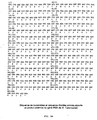
- a polypeptide of M. tuberculosis characterized in that it responds to the sequence of amino acids VIIIA or the sequence VIIIB represented in the Figure 6A and 6B respectively or in that it comprises one of these sequences.
- a preferred polypeptide is characterized in that it has a theoretical molecular weight of about 28 kDa, determined according to the technique described in the examples.
- the M. tuberculosis p28 protein has been characterized by its ability to be exported and thus potentially localized across the plasma bacterial membrane or the cell wall. Moreover, as shown by the sequences presented in figure 6 some peptide motifs of the sequence are repeated. For these reasons, the M. tuberculosis p28 protein is now more often referred to as ERP protein and the gene containing the coding sequence of this protein is called either irsa gene or erp gene.
- Another polypeptide of interest within the scope of the invention comprises part of the previously described amino acid sequence VIII or VIIIB and immunoreacts with antibodies directed against the M. tuberculosis p28 protein .
- Amino acid sequences of particular interest in the context of the invention are the sequences comprising one of the following sequences in one or more copies: PGLTS, PGLTD, PGLTP, PALTN, PALTS, PALGG, PTGAT, PTGLD, PVGLD.
- polypeptide sequences can be expressed as recombinant polypeptides.
- they may be partially replaced, in particular with regard to the previously described amino acid sequences, by sequences of interest originating from mycobacteria or other pathogenic organisms, this replacement being able to lead to inclusion, within recombinant polypeptides, epitopes or antigenic determinants of a pathogenic organism or a protein of interest against which one would seek to obtain antibodies.
- polypeptides of the invention while possibly themselves possessing antigenic or even immunogenic properties, can be used as interesting carrier molecules for preparing, where appropriate, vaccines having various properties.
- the invention also relates to monoclonal antibodies or polyclonal sera directed against a polypeptide as defined above.
- the monoclonal antibodies are preferably directed specifically against a polypeptide of the invention and do not recognize, for example, the p28 protein of M. leprae.
- the subject of the invention is also a composition for the in vitro detection of an infection with M. tuberculosis, characterized in that it comprises a polypeptide defined above, capable of reacting immunologically with antibodies formed in a patient infected by M. tuberculosis.
- compositions for the in vitro detection of an infection with M. tuberculosis are characterized by a nucleotide sequence containing at least 9 nucleotides, resulting from a sequence defined above, or a nucleotide sequence containing at least 9 nucleotides and hybridizing under stringent conditions with the M. tuberculosis DNA and not hybridizing under the same conditions with the M. leprae DNA, this sequence being a DNA or RNA sequence, where appropriate labeled.
- the subject of the invention is also a prokaryotic or eukaryotic cellular host characterized in that it is transformed by a nucleotide sequence as described in the preceding pages, under conditions permitting the expression of this sequence and / or its exposure to the level of the membrane of the cellular host and / or its export and / or its secretion from the aforesaid membrane.
- the cellular hosts are mycobacteria such as M. smegmatis or M. bovis BCG.
- cellular hosts are for example E. coli, CHO, BHK, Spf9 / Baculovirus cells, yeasts such as Saccharomyces cerevisiae, vaccinia virus.
- the subject of the invention is also an immunogenic composition comprising a polypeptide as presented above or a cellular host as defined above.
- the application furthermore discloses a vector for screening and / or cloning and / or expression of functional nucleotide sequences in mycobacteria, derived from a previously described vector and characterized in that the coding sequence derived from a gene coding for an export and / or secretion marker is replaced by a reporter gene or a reporter sequence.
- the gene or the reporter sequence may be devoid of its regulatory sequences, in particular of its ribosome binding sequences and / or its sequences for export and / or secretion of the label produced when the vector is incorporated into a recombinant cell host.
- the gene or the reporter sequence contains the lacZ gene coding sequence or a portion of this sequence sufficient for the polypeptide to exhibit ⁇ -galactosidase activity.
- a particular vector is characterized in that it comprises, at one of the cloning sites of the polylinker, a nucleotide sequence comprising a promoter and, if appropriate, regulatory sequences, for example for anchoring to the surface, the export or even the secretion of a polypeptide which would be produced under the control of the promoter, the ability of which is to evaluate the ability to promote or regulate the expression of a reporter nucleotide sequence in mycobacteria.
- Particular vectors are plasmids chosen from the plasmids pJEM12, pJEM13, pJEM14 or pJEM15 as represented in FIG. figure 12 .
- Such a vector can be used to evaluate the interest of expression control sequences or promoters, for example the promoter sequences pAN, pblaF *, psul3, pgroES / EL1.
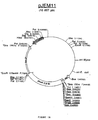
- pJEM11 has origins of replication (ori) of E. coli and mycobacteria. It is therefore a shuttle plasmid.
- the selection marker is the kanamycin resistance gene (Km).
- Km kanamycin resistance gene
- the truncated PhoA gene of pPH07 (22) lacks a promoter, start codon and signal sequence, so the expression and export of PhoA depend on the translational fusion with the amino termini of other proteins.
- the transcriptional terminator (T) of the omega cassette avoids read-through transcription from plasmid sequences.
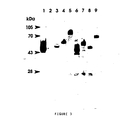
- Transformed M. smegmatis strains were cultured in Beck medium containing kanamycin (20 ⁇ g / ml). Total extracts of sonicated bacteria were solubilized with SDS, resolved by SDS-PAGE and immunoblotted. The preparation of anti-PhoA rabbit serum has been previously described (34). PhoA-coupled rabbit antibodies (Promega) and as a substrate a mixture of XP and nitrobleutetrazolium (BCIP-NBT, Promega) were used to reveal PhoA fusions. Column 1: purified bacterial PhoA, M.
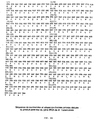
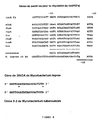
- Clones of M. smegmatis with alkaline phosphatase activity were selected on XP / kanamycin boxes. Their plasmids were amplified in E. coli XL-1 B, and the nucleotide sequence of the inserts determined as described in Materials and Methods.
- C pExp59 encodes a characteristic signal sequence.
- a putative ribosome binding site (RBS) is underlined.
- the putative cleavage site by the signal peptidase is indicated by an arrow.
- D pExp421 code for amino acid motifs conserved with proteins of the stearoyl-protein-carrier-acyl (ACP) desaturase family.
- ACP stearoyl-protein-carrier-acyl
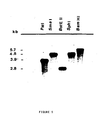
- the gene similar to the 28 kDa antigen gene of M. leprae is present in a single copy in the M. tuberculosis genome .
- the genomic DNA of M. tuberculosis was extracted according to standard protocols (27), digested with Pst I, Sma I, Bst EII, Sph I, Bam HI endonucleases and subjected to migration on an agarose gel. 1%. Southern blot hybridization was performed according to standard protocols (27). The 32 P-labeled probe was a 180 bp PCR fragment of the pExp53 insert.
- IRG's Bacterial genes for iron regulation
- Plasmids pRR3 and pJN1 have been described in the prior art (60) (58).
- the omega cassette was obtained by SmaI digestion of pHP45X (59) followed by purification of a 2 kb fragment of an agarose gel using the Geneclean kit (Bio 101 Inc.). Standard recombinant DNA techniques have been used in accordance with the description given in the state of the art (61).
- pJN3 and pJN11 the ⁇ -lactamase gene (bla) was interrupted.
- oriE and oriM designate the origins of replication of pUC ( E. coli ) and pAL5000 (mycobacteria), respectively.
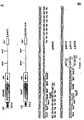
- pJEM15 resulted from cloning into the ScaI site of pRR3, i) of a fragment obtained by PCR amplification (using OJN1: 1 -AAGCTTCCGATTCGTAGAGCC-3 'and OJN2: 5'-GGGCTCGAGCTGCAG TGGATGACCTTTTG-3' as primers; and pJN11 as template) and containing tT4 and the N-terminus of cII; ii) synthetic oligonucleotides corresponding to MCS1; and iii) the HindIII-DraI lacZ 'fragment of pNM480.
- pJEM12-13-14 were obtained by cloning the PCR amplified fragment described above into the Scal site of pRR3. Synthetic oligonucleotides corresponding to MCS2 were then inserted. Finally, each of the three forms of the pNM480 series was introduced into the HindIII site in MCS2.
- B Nucleotide sequences of the regions between the OJN1 primer and the 8th codon of lacZ '(labeled ****). These sequences have been verified experimentally. The tT4 region is underlined and the synthetic RBS is in bold type. The amino acid sequence of the N-terminus of cII is given below the DNA sequence. HindIII sites are marked with an asterisk because they are not unique. For additional descriptions, see the legend of the fig.11 .
- phoA plasmid vector for mycobacteria The construction of a phoA plasmid vector for mycobacteria is described first and then it has been shown that the introduction into this vector of the ⁇ -lactamase gene exported from M. fortuitum (blaF *) (34) leads to the production of in M. smegmatis fusion proteins with PhoA enzymatic activity.
- a library of fusion sequences between the genomic DNA of M. tuberculosis and the phoA gene was then constructed. Twelve independent clones that exported fusion proteins were isolated. Among them, the 19 kDa exported lipoprotein already described in M. tuberculosis, a new M. tuberculosis sequence with similarities to the 28 kDa protein of M. leprae, a protein with amino acid residues, was identified. preserved with stearoyl-protein-carrier-acyl (ACP) desaturases, and other novel sequences.
- ACP stearoyl-protein-
- the bacterial strains and plasmids used in this study are presented in Table 1.
- the growth of strains of E. coli and M. smegmatis , electroporation, the screening on agar containing 20 ⁇ g / ml of kanamycin and 20 ⁇ g / ml 5-bromo-4-chloro-3-indolyl phosphate (XP) were made as previously described (14)
- M. tuberculosis a patient isolate (strain 103), was grown on Lowenstein-Jensen solid medium.
- DNA manipulation and Southern blot analyzes were performed using standard techniques (27).
- the oligonucleotides (5-GGCCCGACGAGTCCCGC-3 'and 5'-TTGGGGACCCTAGAGGT-3') were developed for sequencing through the fusion junctions of M. tuberculosis inserts into pJEM11 (see below). -Dessous).
- the double-stranded plasmid DNA sequences were determined by the dideoxy chain termination method (28) using the T7 sequencing kit (Pharmacia) according to the manufacturer's instructions, or with the Taq Terminator Cycle sequencing kit.
- Dyc Deoxy (Applied Biosystems), on a GeneAmp 9600 PCR system (Perkin Elmer), and run on a DNA analysis system - Model 373 (Applied Biosystems).
- nucleotide sequences were compared to those of the EMBL and GenBank databases using the FASTA algorithm (23) and the derived protein sequences were analyzed for possible similarity to the sequences contained in the databanks. of PIR and SwissProt proteins using the BLAST algorithm (1).
- pJEM11 The construction of pJEM11 is summarized on the Fig. 1 . Briefly, pJEM2 was constructed from the E. coli-mycobacteria shuttle plasmid pRR3 (26), by inserting the truncated lacZ fragment of pNM480 (18), a cloning multisite or poly-linker (MCS), and transcriptional terminator of the omega cassette (24). The N-terminal Eco RV-Kpn I fragment of lacZ is replaced by the truncated phoA fragment of pPHO7 (11), without a start codon or signal sequence to give pJEM10. Finally, a potential start codon in the MCS was eliminated to give pJEM11.
- pLA71, pLA72, and pLA73 Fragments of different length of blaF * (34) obtained by PCR amplification were inserted at the Bam HI site of pJEM11 to give pLA71, pLA72, and pLA73 ( Fig. 2 ).
- Oligonucleotides (Genset, Paris) used for PCR amplification were forward 5'-CGGGATCCTGCTCGGCGGACTCCGGG-3 'and backward 5'-CGGGATCCGGTCATCGATCGGTGCCGCGAA-3', 5'-CGGGATCCCGCCGTGCTCGG CCATCTGCAG-3 'and 5' -CGGGATCCAGAGTAAG GACGGCAGCACCAG-3 ', for pLA71, pLA72 and pLA73 respectively.
- the PCR amplifications were carried out in a thermal cycler with DNA (Perkin Elmer), using Taq polymerase (Cetus), according to the manufacturer's recommendations.
- Genomic DNA from M. tuberculosis was extracted according to standard protocols (27). This DNA was partially digested with Sau3A (with 1U per 2 ⁇ g) at 37 ° C for 2min 30sec. Digestion was stopped by the addition of phenol. This DNA was then migrated on low melting point agarose (Gibco, BRL). The fragment containing fragments having 400 to 2000 bp was extracted with agarase (GELase, Epicenter Technologies) and ligated to the BamHI compatible site of pJEM11 with T4 DNA ligase (Boehringer Mannheim) at 16 ° C for night.
- agarase GELase, Epicenter Technologies
- pJEM11 has a truncated phoA gene of E. coli without initiation codon or any regulatory elements ( Fig. 1 ).
- the multiple cloning site allows the insertion of fragments from genes encoding putative exported proteins at the same time as their regulatory elements.
- fusion proteins could be produced which expressed the activity of alkaline phosphatase when the fusion was exported.
- pJEM11 is an E. coli / mycobacteria shuttle plasmid that includes the kanamycin antibiotic resistance gene of tn903 as a selection marker.
- the three plasmids were constructed by inserting fragments of different length from the ⁇ -lactamase gene of the M. fortuitum D316 overproducing strain (blaF *) (34) at the Bam HI site of pJEM11 ( Fig. 2 ).
- the 1384 bp fragment includes the promoter, the segment encoding the 32 amino acids of the signal sequence, and the first 5 amino acids of the mature protein (there is no Shine-Dalgarno sequence for binding ribosomal in the original sequence of blaF *).
- pLA72 carries a 1550 bp fragment including the elements coding for the signal sequence and the first 61 amino acids of the mature protein.
- the 2155 bp fragment contains the entire blaF *.
- These plasmids were used to transform M. smegmatis and the transformants were screened for enzymatically active PhoA fusions by plating on agar media. containing kanamycin and XP.
- XP is soluble and colorless, but after phosphate cleavage by alkaline phosphatase, a blue precipitate is produced. Thus, clones producing alkaline phosphatase could be easily identified by their blue coloring.
- the expression of pLA71, 72 and 73 in M. smegmatis led to blue colonies, whereas colonies with pJEM11 remained white.
- M. smegmatis with pLA73 expresses approximately twice as much activity compared to pLA73 and 72.
- intracellular production of phoA under the control of a mycobacterial promoter, without fusion with an exported protein was not associated with the expression of alkaline phosphatase activity. All these results indicate that in this system, the activity of alkaline phosphatase depends on the translational fusion and the actual export of the product. Therefore, pJEM11 is suitable for the genetic identification of proteins exported by mycobacteria.
- the genomic DNA of a clinical isolate of M. tuberculosis was purified and partially digested by Sau3A. The fraction of 400/2000 bp was inserted at Bam HI compatible pJEM11. The ligation products were transferred to blue E. coli XL-1 by electroporation to obtain an amplification step. About 2500 clones containing plasmids with insertions were grown on an agar medium containing kanamycin. The purified plasmids from the transformants were pooled and transferred by electroporation into M. smegmatis MC 2 155. The transformed bacteria were plated on L-agar-kanamycin-XP. About 14,000 clones were obtained.
- pExp410 One of the plasmids (pExp410) has an insertion corresponding to a part of the already known 19 kDa protein gene. This gene encodes an exported lipoprotein (5,31).
- the Fig. 4 A shows the DNA sequence corresponding to the fusion between this gene and phoA. As expected, the same reading phase is maintained between the two proteins. The expected molecular weight of the fusion protein, according to the sequence, would be close to 57 kDa. However, the true molecular weight observed by Western blot analysis is identical to the purified PhoA protein ( Fig. 3 , column 1 and 6), suggesting that the fusion protein is cleaved near the PhoA junction.
- the 28 kDa protein of M. leprae is a major antigen that is very often recognized by sera from patients with the lepromatous form of leprosy (9).
- M. tuberculosis insertion library prepared a sequence carried by a recombinant vector (pExP53) having a similarity of 77% with the nucleotide sequence of this gene and 68% for the deduced amino acid sequence ( Fig. 4 B ) has been identified.
- the molecular weight of the fusion protein is approximately 52 kDa ( Fig. 3 , column 7), which provides about 45 amino acids of the mycobacterial protein in the fusion protein, after cleavage of the signal peptide. This is consistent with the length of the fragment of the M. tuberculosis gene fused with phoA ( Fig. 4 B ).
- the Fig. 4 C shows the sequence of an insertion carried by a recombinant vector (pExp59) fused with phoA. It has a typical signal sequence allowing the export of proteins.
- the sequence presented is according to the usual rules as established in Gram-negative bacteria (25). It contains two positively charged amino acids (Arg, Asn) after the start codon, followed by a hydrophobic peptide, with a Gly, probably corresponding to a loop in the three-dimensional structure of the peptide.
- a potential signal peptidase cleavage site is indicated by an arrow, giving a fusion protein with a molecular weight close to that of phoA, as shown in FIG. Fig. 3 , column 8, according to.
- ACP-desaturases are enzymes involved in the pathways of fatty acid biosynthesis. In general, these enzymes are integral membrane proteins (29). Analyzes of the plasmid pExp421 of the prepared library revealed two amino acid motifs conserved with ACP-desaturases, one of 9 amino acids and the second of 14 amino acids ( Fig. 4 D). The remainder of the sequence revealed no significant similarity with known proteins.
- secreted proteins More than 30 secreted proteins were found in short-term BCG or M. tuberculosis filtrates, with minimal lysis of the bacteria (1,19,38). These proteins have been classified according to their molecular weight and their immunological reactivities. Some have been further characterized. For example, the secreted proteins of the 85 antigen complex (antigens 85 A, B and C) are 32 kDa proteins with cross-serological reactions (7.35). The 85 A and 85 B antigens have affinity for fibronectin and would be involved in internalisation of M. tuberculosis in macrophages.
- PhoA methodology has been developed and described here for the identification of proteins exported by mycobacteria.
- the insertion of blaF * into pJEM11 leads to the production of fusion proteins by M. smegmatis with alkaline phosphatase activity.
- PhoA fusions with 3 different fragments of BlaF * were enzymatically active, suggesting that most fusions in phase with exported proteins will have PhoA activity.
- a library of M. tuberculosis inserts in pJEM11 was constructed and expressed in M. smegmatis.
- this library part of the gene coding for the exported 19 kDa exported lipoprotein (pExp410) was isolated.
- This M. tuberculosis protein is one of the serologically immunodominant antigens found in this bacillus.
- DNA sequence analyzes of the gene encoding this antigen indicate that the hydrophobic NH 2 -terminal region is a lipoprotein signal peptide (5).
- Part of this lipoprotein has been fused to Borrelia burgdorferi outer surface protein A to construct a recombinant BCG vaccine capable of inducing a strong immune response (31).
- M. leprae 28 kDa antigen gene has been shown to be similar to the M. leprae 28 kDa antigen gene.
- This M. leprae antigen was found by screening a library of ⁇ gt 11 with the serum of patients with the lepromatous form of leprosy. It is a major antigen involved in the humoral immune response to M. leprae (9).
- a 20 amino acid peptide of this protein shows considerable similarity to a peptide of the 19 kDa antigen of M. tuberculosis , and it is a T cell epitope exhibiting crossed (12).
- leprae 28 kDa antigen suggests that "the predicted amino acid sequence of the protein contains a potential signal peptide at its amino terminus and two long hydrophobic domains, which suggests that it is targeted for localization on the bacterial plasma membrane or cell wall "(9).
- a fusion protein encoded by a plasmid from our library shared amino acid motifs with the desaturases.
- ACP-desaturases are enzymes involved in the pathways of fatty acid biosynthesis. In general, these enzymes are integral membrane proteins (39). This result suggests that part of a gene important in lipid metabolism may have been isolated from M. tuberculosis, possibly involved in the pathway of lipid cell wall biosynthesis.
- BCG is a live vaccine. It is the only vaccine used to protect against tuberculosis. His Efficacy has varied from vaccinated populations, ranging from about 80% in England to 0% in India. It therefore appears essential to search for a more effective vaccine. On the other hand, using a live vaccine is a problem today because of the spread of the AIDS epidemic.
- the methodology detailed in Part I is based on the use of translational fusions with the gene encoding Escherichia coli alkaline phosphatase , PhoA.
- Such fusion proteins have detectable alkaline phosphatase activity only if they are exported.
- a plasmid vector carrying a phoA gene lacking its promoter, site of attachment to ribosomal RNA and its signal sequence was constructed. From this vector a PhoA activity can be observed only after translational fusion in the right reader frame with an exported protein.
- the vector, called pJEM11 has an origin of replication for E. coli and another for mycobacteria. He also has a selection marker, the kanamycin resistance gene of the transposon Tn905. A multiple cloning site precedes the truncated phoA gene.
- a genomic DNA library from a strain of M. tuberculosis (Mt103) isolated from a tuberculous patient was constructed in pJEM11 by inserting DNA fragments derived from partial hydrolysis by Sau3a enzyme. Selected clones identified a nucleotide fragment of the M. tuberculosis 28 kDa gene homologous to the gene encoding the M. leprae 28 kDa protein .
- the 28kDa protein with homologies to the M. leprae 28kDa protein could also be an immunodominant antigen and could be used for the construction of specific immunoassays for detection. of tuberculous infection or tuberculosis disease. It could perhaps be used for the construction of sub-unit vaccines in different vaccine preparations. In addition, it could be useful as a vector for the expression of antigens in mycobacteria for the construction of recombinant vaccines.
- the entire gene encoding the M. tuberculosis 28 kDa protein was cloned by colony hybridization of a M. tuberculosis DNA library constructed by inserting fragments of M. tuberculosis DNA of size between 2 and 6 kb obtained by total hydrolysis with the enzyme PstI in the vector pBluescript KS-.
- the PstI fragment of M. tuberculosis corresponding to the positive clone and comprising a 4.1 kb insertion was sequenced.
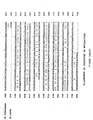
- the figure 10 shows the nucleotide sequence of the fragment and the similarities with the gene coding for the M. leprae 28kDa protein.
- the sequence of the 28kDa gene of M. tuberculosis is like that of M. leprae preceded by a sequence having similarities with the "iron" boxes found upstream of the genes expressed during an iron deficiency. A situation of iron deficiency is encountered during in vivo growth. The hypothesis is made that the expression of this gene is induced during growth in the macrophages of the mycobacteria harboring this gene.
- the 28kDa protein of M. tuberculosis has in its central portion two regions containing tandemly repeated amino acid units, which are absent from the homologous protein of M. leprae. Analogous repeat structures have been previously identified in major antigens present on the surface of other bacterial or parasitic pathogens such as the Streptococcacea M protein (40) and the Plasmodiae CS protein (41).
- All or part of the M. tuberculosis 28 kDa protein whose gene sequence is presented here could be a potential protective antigen for the construction of a TB vaccine.
- Such an antigen can be obtained by purification from cell extracts of M. tuberculosis or from cell extracts of genetically recombinant heterologous organisms.
- the 28kDa protein of M. tuberculosis or peptides derived therefrom could be an antigen that can be used in ELISA tests for the detection of tuberculosis patients.
- the sequence corresponding to the 28kDa gene of M. tuberculosis is a specific sequence that can be used for bacilli detection assays of the tuberculosis, using DNA or RNA probes and in vitro gene amplification methods .
- the regulatory region and the M. tuberculosis 28kDa gene can be used as carrier molecules to express heterologous antigens in BCG or any other mycobacterial vector useful for vaccine construction.
- Probe-regulatory sequence vectors have been used in the prior art to isolate and analyze regulatory sequences in a large number of bacteria (54).
- the inventors' definition of such tools specific to mycobacteria facilitates the study of genetic mechanisms regulating virulence in pathogenic species, and the isolation of new regulatory sequences that would be useful for the development of improved recombinant BCG vaccines.
- Plasmid pSD7 allows the construction of operon fusions to a promoter-free chloramphenicol acetyltransferase (CAT) gene (47). Using In these vectors, a number of mycobacterial regulatory sequences were isolated and evaluated in both E. coli and Mycobacterium smegmatis.
- CAT chloramphenicol acetyltransferase
- lacZ was chosen as a reporter gene because the encoded enzyme, ⁇ -galactosidase, remains active when heterologous sequences are fused at its amino-terminus (45) (64). Its activity can be easily measured in vitro, even at very low levels using fluorescent compounds (48).
- ⁇ -Galactosidase is also highly immunogenic. It induces both humoral and cellular immune responses after presentation to the immune system of mice by recombinant bacteria (44) (56).
- ⁇ -galactosidase can also be used as a reporter for the immunogenicity of a recombinant vaccine.
- pJEM vectors new active regulatory sequences in BCG could be isolated and recombinant BCG strains easily tested for their ability to induce immune responses in mice.
- a promoter-probe plasmid vector should contain five elements: i) a replicon, ii) a selection marker, and a reporter cassette containing iii) a follow-up transcription terminator iv) of cloning multisites (MCS) and v) a reporter gene lacking its regulatory sequences.
- plasmid pAL5000 from Mycobacterium fortuitum
- aph kanamycin resistance
- Tn903 Tn903
- These genetic elements are the basic components of most plasmids currently used for the transformation of mycobacteria. They appear to confer high stability on the transformed clones of M. smegmatis and M. bovis BCG both in vitro and in vivo (in the mouse) even in the absence of selection by antibiotics (56).
- most of these plasmids also contain an E. coli replicon .
- pJN3 was constructed by cloning, in the ScaI site of pRR3, a cassette composed of a truncated lacZ associated with a synthetic RBS (sRBS) and the 5 'end of the lambda phage cII regulatory gene and the pL promoter ( Fig. 11 ).
- M. smegmatis mc2155 (61) was transformed with pJN3 (pL-sRBS-cII-lacZ) or pJN11 (pL-X-sRBS-cII-lacZ) by electroporation and the transforming clones were spotted after growth on LB-Xgal boxes.
- coli pJEM15 expressed a higher ⁇ -galactosidase activity, and consequently a blue color on LB-Xgal dishes. This is probably due to its high copy number.
- pUC vectors are present in a high copy number (greater than 500), whereas in mycobacteria, plasmids derived from pAL5000 replicons have a copy number of approximately 3 to 10. (50).
- the DNA fragment test for the promoter activity, using pJEM15, by blue-white screening must thus be carried out directly in the mycobacteria.
- pgroES / EL1 is a Streptomyces albus promoter that regulates the expression of the groES / EL1 operon, and is active in both M. smegmatis and BCG (65).
- the activity of ⁇ -galactosidase was assayed on sonicated extracts of M. smegmatis and BCG (Table 2).
- the activity of the promoters varied considerably too well between promoters in a mycobacterial host and between hosts for each promoter.
- the relative strength of these promoters was not the same in M. smegmatis and BCG.
- pblaF * was the most potent promoter in both M. smegmatis and BCG, the situation is different for other promoters: pAN and pgroES / EL1 were more active than psu13 in BCG, but in M. smegmatis , psu13 was more active than pAN or pgroES / Ell.
- the family of constructs facilitates the study of gene expression in mycobacteria.
- a wide range of fragments can be easily cloned in lacZ 'phase (gene fusion) or upstream of cII-lacZ (operon fusion) and evaluated for promoter activity by blue-white screening of mycobacterial transformants on LB dishes. -Xgal.
- the activity of these promoters can also be measured (by assaying ⁇ -galactosidase activity), their determined sequences, and their mapped transcription start site (by primer extension analysis) using 'universal primer' or related sequences (53) as a primer.
- tuberculosis gene similar to the M. leprae 28 kDa antigen gene this work pExp59 pJEM11 in which has been cloned the signal sequence of a M. tuberculosis unidentified gene this work pExp421 pJEM11 in which has been cloned to M. tuberculosis gene encoding with amino acids motives similar to desaturases this work
Landscapes
- Health & Medical Sciences (AREA)
- Genetics & Genomics (AREA)
- Chemical & Material Sciences (AREA)
- Organic Chemistry (AREA)
- Life Sciences & Earth Sciences (AREA)
- Engineering & Computer Science (AREA)
- Zoology (AREA)
- Biochemistry (AREA)
- General Engineering & Computer Science (AREA)
- Molecular Biology (AREA)
- General Health & Medical Sciences (AREA)
- Bioinformatics & Cheminformatics (AREA)
- Biotechnology (AREA)
- Wood Science & Technology (AREA)
- Biophysics (AREA)
- Biomedical Technology (AREA)
- Microbiology (AREA)
- Plant Pathology (AREA)
- Physics & Mathematics (AREA)
- Gastroenterology & Hepatology (AREA)
- Medicinal Chemistry (AREA)
- Proteomics, Peptides & Aminoacids (AREA)
- Micro-Organisms Or Cultivation Processes Thereof (AREA)
- Measuring Or Testing Involving Enzymes Or Micro-Organisms (AREA)
- Peptides Or Proteins (AREA)
- Medicines Containing Antibodies Or Antigens For Use As Internal Diagnostic Agents (AREA)
- Preparation Of Compounds By Using Micro-Organisms (AREA)
- Medicines Containing Material From Animals Or Micro-Organisms (AREA)
Claims (14)
- Nucleotidsequenz, die aus einem Gen stammt, das für ein exportiertes Protein von M. tuberculosis codiert, dadurch gekennzeichnet, dass sie aus den folgenden Sequenzen ausgewählt ist:■ einer Sequenz IA, die der in
Fig. 6A dargestellten Nucleotidkette entspricht, oder einer Sequenz UB, die einer inFig. 6B dargestellten Nucleotidkette entspricht, oder einer Sequenz, die für ein exportiertes Protein von M. tuberculosis codiert und unter erhöhten Härtebedingungen mit einer Sequenz IA oder IB hybridisiert,■ einer Sequenz, welche die Nucleotidkette IA umfasst, oder die Nucleotidkette IB umfasst, und für ein Protein P28 von M. tuberculosis codiert, das ein theoretisches Molekulargewicht von ca. 28 kDa hat,■ einer Sequenz, die in der Sequenz IA oder in der Sequenz IB enthalten ist und für ein Polypeptid codiert, das durch die gegen das Protein P28 von M. tuberculosis gerichteten Antikörper erkannt wird, das der inFig. 6A dargestellten Aminosäurekette VIIIA oder der inFig. 6B dargestellten Aminosäurekette VIIIB entspricht,■ einer Sequenz IV, welche die Regulatorsequenzen des Gens umfasst, das die codierende Sequenz IA oder die codierende Sequenz IB umfasst, wobei diese Sequenzen in den inFig. 7A und Fig. 7B dargestellten Vorläufer- und Nachläufernucleotidsequenzen enthalten sind,■ einer Sequenz V, die der Kette entspricht, die unter den Nucleotiden 1 bis 72 der Sequenz IA oder der Sequenz IB enthalten ist und der Signalsequenz entspricht,■ einer Sequenz VI, die der Kette entspricht, die unter den Nucleotiden 62 bis 687 der Sequenz IA oder der Sequenz IB enthalten ist,■ einer Sequenz VII, die der Kette entspricht, die unter den Nucleotiden 688 bis 855 der Sequenz IA oder der Sequenz IB enthalten ist. - Polypeptid von M. tuberculosis, dadurch gekennzeichnet, dass es der Aminosäurekette VIIIA oder der Aminosäurekette VIIIB entspricht, die in Fig. 6A bzw. Fig. 6B dargestellt sind, oder dass es diese Kette enthält.
- Polypeptid nach Anspruch 2, dadurch gekennzeichnet, dass es ein theoretisches Molekulargewicht von ca. 28 kDa hat.
- Polypeptid nach Anspruch 2 oder 3, dadurch gekennzeichnet, dass es ein beobachtetes Molekulargewicht von ca. 36 kDa hat, das durch elektrophoretische Auftrennung in denaturierendem Polyacrylamidgel (PAGE-DOS) bestimmt wird.
- Polypeptid, dadurch gekennzeichnet, dass es einen Teil der Aminosäurekette VIIIA oder der Aminosäurekette VIIIB nach dem Anspruch 2 umfasst, und dass es immunologisch mit den Antikörpern reagiert, die gegen das Protein P28 von M. tuberculosis gerichtet sind, das der Aminosäurekette VIIIA oder der Aminosäurekette VIIIB entspricht.
- Polypeptid nach Anspruch 2, 3 oder 4, dadurch gekennzeichnet, dass es eine oder mehrere der folgenden Ketten umfasst: PGLTS, PGLTD, PGLTP, PALTN, PALTS, PALGG, PTGAT, PTGLD, PVGLD.
- Polypeptid nach einem der Ansprüche 2 bis 4, dadurch gekennzeichnet, dass eine oder mehrere der folgenden Ketten: PGLTS, PGLTD, PGLTP, PALTN, PALTS, PALGG, PTGAT, PTGLD, PVGLD
durch eine Aminosäuresequenz eines Epitops oder eine Antigendeterminante eines bestimmten pathogenen Organismus ersetzt wird. - Monoklonale Antikörper oder polyklonales Serum, die/das sich gegen ein Polypeptid nach einem der Ansprüche 2 bis 7 richten/richtet.
- Zusammensetzung für die in vitro- oder in vivo-Erfassung einer Infektion durch M. tuberculosis, dadurch gekennzeichnet, dass sie ein Polypeptid nach einem der Ansprüche 2 bis 7 umfasst, das in der Lage ist, immunologisch mit den Antikörpern zu reagieren, die sich bei einem durch M. tuberculosis infizierten Patienten gebildet haben.
- Zusammensetzung zur in vitro-Erfassung einer Infektion durch M. tuberculosis, dadurch gekennzeichnet, dass sie eine Nucleotidsequenz umfasst, die mindestens 9 Nucleotide enthält, die aus einer Sequenz nach Anspruch 1 stammen, oder eine Nucleotidsequenz, die mindestens 9 Nucleotide enthält und unter Härtebedingungen mit der DNA von M. tuberculosis hybridisiert und unter denselben Bedingungen mit der DNA von M. leprae nicht hybridisiert, wobei diese Sequenz eine gegebenenfalls markierte DNA oder RNA ist.
- Verwendung eines Polypeptids oder einer Aminosäuresequenz nach einem der Ansprüche 2 bis 7 als Trägermolekül.
- Prokaryotischer oder eukaryotischer Zellwirt, dadurch gekennzeichnet, dass er durch eine Nucleotidsequenz nach Anspruch 1 unter Bedingungen transformiert wird, welche die Expression dieser Sequenz und/oder ihre Exposition im Bereich der Membran des Zellwirts und/oder ihren Export und/oder ihre Sekretion aus der vorgenannten Membran zulässt.
- Zellwirt nach Anspruch 12, dadurch gekennzeichnet, dass es sich um ein Mycobakterium, beispielsweise eines Stamms von M. smegmatis, M. tuberculosis oder M. bovis handelt.
- Immungenetische Zusammensetzung, dadurch gekennzeichnet, dass sie ein Polypeptid nach einem der Ansprüche 2 bis 7 oder einen Zellwirt nach einer der Ansprüche 12 oder 13 umfasst.
Priority Applications (1)
| Application Number | Priority Date | Filing Date | Title |
|---|---|---|---|
| EP03021544A EP1396546A3 (de) | 1994-09-02 | 1995-08-30 | funktionelles aufspüren und/oder expressionsvektoren bei mycobakterien |
Applications Claiming Priority (3)
| Application Number | Priority Date | Filing Date | Title |
|---|---|---|---|
| FR9410585 | 1994-09-02 | ||
| FR9410585A FR2724183B1 (fr) | 1994-09-02 | 1994-09-02 | Vecteurs de criblage et/ou d'expression fonctionnels chez les mycobacteries - utilisation pour l'identification et l'expression de polypeptides exportes |
| PCT/FR1995/001133 WO1996007745A2 (fr) | 1994-09-02 | 1995-08-30 | Vecteurs de criblage et/ou d'expression fonctionnels chez les mycobacteries |
Related Child Applications (1)
| Application Number | Title | Priority Date | Filing Date |
|---|---|---|---|
| EP03021544A Division EP1396546A3 (de) | 1994-09-02 | 1995-08-30 | funktionelles aufspüren und/oder expressionsvektoren bei mycobakterien |
Publications (2)
| Publication Number | Publication Date |
|---|---|
| EP0770138A2 EP0770138A2 (de) | 1997-05-02 |
| EP0770138B1 true EP0770138B1 (de) | 2008-02-13 |
Family
ID=9466676
Family Applications (2)
| Application Number | Title | Priority Date | Filing Date |
|---|---|---|---|
| EP95929147A Expired - Lifetime EP0770138B1 (de) | 1994-09-02 | 1995-08-30 | Funktionelles aufspüren und/oder expressionsvektoren bei mycobakterien |
| EP03021544A Withdrawn EP1396546A3 (de) | 1994-09-02 | 1995-08-30 | funktionelles aufspüren und/oder expressionsvektoren bei mycobakterien |
Family Applications After (1)
| Application Number | Title | Priority Date | Filing Date |
|---|---|---|---|
| EP03021544A Withdrawn EP1396546A3 (de) | 1994-09-02 | 1995-08-30 | funktionelles aufspüren und/oder expressionsvektoren bei mycobakterien |
Country Status (11)
| Country | Link |
|---|---|
| US (3) | US6248581B1 (de) |
| EP (2) | EP0770138B1 (de) |
| JP (1) | JPH10504966A (de) |
| AT (1) | ATE386125T1 (de) |
| CA (1) | CA2197717C (de) |
| DE (1) | DE69535705T2 (de) |
| DK (1) | DK0770138T3 (de) |
| ES (1) | ES2301162T3 (de) |
| FR (1) | FR2724183B1 (de) |
| PT (1) | PT770138E (de) |
| WO (1) | WO1996007745A2 (de) |
Families Citing this family (10)
| Publication number | Priority date | Publication date | Assignee | Title |
|---|---|---|---|---|
| ZA964896B (en) * | 1995-06-07 | 1997-01-08 | Connaught Lab | Expression of lipoproteins |
| JP2001500004A (ja) * | 1996-07-26 | 2001-01-09 | アンスティテュ、パストゥール | ヒト型結核菌(mycobacterium tuberculosis)のデサチュレーション抗原 |
| FR2766495B1 (fr) | 1997-07-22 | 2001-07-13 | Pasteur Institut | Souche de mycobacterium dont le gene erp est modifie et composition vaccinale la contenant |
| FR2767337B1 (fr) * | 1997-08-14 | 2002-07-05 | Pasteur Institut | Sequences nucleiques de polypeptides exportes de mycobacteri es, vecteurs les comprenant et applications au diagnostic et a la prevention de la tuberculose |
| FR2767336B1 (fr) * | 1997-08-14 | 2001-05-18 | Pasteur Institut | Vecteurs recombinants, polynucleotide codant pour un polypeptide pd428 de 12kd de mycobacteries appartenant au complexe de mycobacterium tuberculosis et applications au diagnostic et a la prevention de la tuberculose |
| AT410217B (de) * | 2000-06-15 | 2003-03-25 | Cistem Biotechnologies Gmbh | Vektor und ein verfahren zur expression und selektion randomisierter peptid-sequenzen |
| ATE470324T1 (de) * | 2003-11-12 | 2010-06-15 | Interdigital Tech Corp | System für autonomen anwendungsserver-zugriff üebr verschiedene arten von zugriffstechnologienetzwerken hinweg |
| TWI285861B (en) * | 2004-05-21 | 2007-08-21 | Sanyo Electric Co | Display device |
| CN101001951B (zh) * | 2004-08-02 | 2011-06-15 | 巴斯福植物科学有限公司 | 分离转录终止序列的方法 |
| US20060134009A1 (en) * | 2004-12-16 | 2006-06-22 | Daniel Deaver | Low dose corticosteroid powders for inhalation |
Family Cites Families (1)
| Publication number | Priority date | Publication date | Assignee | Title |
|---|---|---|---|---|
| US4906742A (en) * | 1986-07-31 | 1990-03-06 | Whitehead Institute For Biomedical Research | Encoding antigens of M. Leprae |
-
1994
- 1994-09-02 FR FR9410585A patent/FR2724183B1/fr not_active Expired - Fee Related
-
1995
- 1995-08-30 DE DE69535705T patent/DE69535705T2/de not_active Expired - Lifetime
- 1995-08-30 PT PT95929147T patent/PT770138E/pt unknown
- 1995-08-30 CA CA2197717A patent/CA2197717C/fr not_active Expired - Fee Related
- 1995-08-30 DK DK95929147T patent/DK0770138T3/da active
- 1995-08-30 EP EP95929147A patent/EP0770138B1/de not_active Expired - Lifetime
- 1995-08-30 WO PCT/FR1995/001133 patent/WO1996007745A2/fr not_active Ceased
- 1995-08-30 ES ES95929147T patent/ES2301162T3/es not_active Expired - Lifetime
- 1995-08-30 EP EP03021544A patent/EP1396546A3/de not_active Withdrawn
- 1995-08-30 JP JP8509250A patent/JPH10504966A/ja active Pending
- 1995-08-30 AT AT95929147T patent/ATE386125T1/de not_active IP Right Cessation
- 1995-08-30 US US08/793,701 patent/US6248581B1/en not_active Expired - Fee Related
-
2000
- 2000-05-26 US US09/579,264 patent/US6565855B1/en not_active Expired - Fee Related
-
2003
- 2003-01-15 US US10/342,232 patent/US7601350B2/en not_active Expired - Fee Related
Also Published As
| Publication number | Publication date |
|---|---|
| FR2724183A1 (fr) | 1996-03-08 |
| DE69535705D1 (de) | 2008-03-27 |
| DK0770138T3 (da) | 2008-06-09 |
| WO1996007745A2 (fr) | 1996-03-14 |
| FR2724183B1 (fr) | 1997-04-11 |
| ATE386125T1 (de) | 2008-03-15 |
| US7601350B2 (en) | 2009-10-13 |
| DE69535705T2 (de) | 2009-04-16 |
| US6248581B1 (en) | 2001-06-19 |
| US20060127959A1 (en) | 2006-06-15 |
| EP1396546A2 (de) | 2004-03-10 |
| EP1396546A3 (de) | 2004-06-02 |
| EP0770138A2 (de) | 1997-05-02 |
| US6565855B1 (en) | 2003-05-20 |
| JPH10504966A (ja) | 1998-05-19 |
| CA2197717A1 (fr) | 1996-03-14 |
| ES2301162T3 (es) | 2008-06-16 |
| WO1996007745A3 (fr) | 1996-07-11 |
| CA2197717C (fr) | 2010-10-26 |
| PT770138E (pt) | 2008-04-29 |
Similar Documents
| Publication | Publication Date | Title |
|---|---|---|
| Stroeher et al. | Serotype conversion in Vibrio cholerae O1. | |
| Lim et al. | Identification of Mycobacterium tuberculosis DNA sequences encoding exported proteins by using phoA gene fusions | |
| Wu et al. | Identification of dipeptide repeats and a cell wall sorting signal in the fimbriae‐associated adhesin, Fap1, of Streptococcus parasanguis | |
| AU709405B2 (en) | Bacterial exported proteins and acellular vaccines based thereon | |
| Kremer et al. | Analysis of the Mycobacterium tuberculosis 85A antigen promoter region | |
| EP1003888B1 (de) | Nukleotidsequenzen, die für sekretierte polypeptide aus mycobacterium kodieren, vektoren, die diese enthalten, und anwendungen zur diagnostik und verhütung von tuberkulose | |
| EP0770138B1 (de) | Funktionelles aufspüren und/oder expressionsvektoren bei mycobakterien | |
| Püls et al. | Activation of Helicobacter pylori CagA by tyrosine phosphorylation is essential for dephosphorylation of host cell proteins in gastric epithelial cells | |
| CA2121598A1 (fr) | Promoteur de m. paratuberculosis et son utilisation pour l'expression de sequences immunogenes | |
| AU735447B2 (en) | Novel lanthionine antibiotic compositions and methods | |
| KR20000049090A (ko) | 헬리코박터 필로리 생백신 | |
| Motin et al. | The difference in the IcrV sequences between Y. pestis and Y. pseudotuberculosis and its application for characterization of Y. pseudotuberculosis strains | |
| AU743165B2 (en) | Live attenuated bacteria of the species Actinobacillus pleuropneumoniae | |
| Shazand et al. | Isolation and molecular genetic characterization of the Bacillus subtilis gene (infB) encoding protein synthesis initiation factor 2 | |
| FR2780733A1 (fr) | Polynucleotide, vecteur et cellule hote le contenant, polypeptide correspondant, procede pour leur production et leur utilisation | |
| FR2714074A1 (fr) | Promoteurs des gènes GRA1, GRA2, GRA5 et GRA6 de toxoplasma gondii et vecteurs d'expression comprenant lesdits promoteurs. | |
| EP1785487A2 (de) | Beim Ausdruck der Resistenz gegenüber Glykopeptid-Antibiotika implizierte Polypeptide | |
| EP1015579B1 (de) | Clostridiumtoxin und verfahren zur herstellung immunogene zusammensetzungen | |
| CA2435874A1 (en) | Systems for expression of heterologous proteins in m. capsulatus | |
| JP3060399B2 (ja) | ラクトバチルス・デルブリュエキイ由来のプラスミド | |
| Provvedi et al. | Selection and characterization of a promoter for expression of single-copy recombinant genes in Gram-positive bacteria | |
| JP2025536332A (ja) | 細胞外膜リポタンパク質PrsA発現系を用いた細胞表面大量発現技術 | |
| FR2690459A1 (fr) | Plasmide de B. bronchiseptica, dérivés de ce plasmide et leur utilisation en tant que vecteurs pour la transformation de cellules hôtes. | |
| HU222982B1 (hu) | Heterológ proteinek kifejezése attenuált baktériumokban htrA promoter alkalmazásával | |
| US6521596B1 (en) | Lanthionine antibiotic compositions and method |
Legal Events
| Date | Code | Title | Description |
|---|---|---|---|
| PUAI | Public reference made under article 153(3) epc to a published international application that has entered the european phase |
Free format text: ORIGINAL CODE: 0009012 |
|
| 17P | Request for examination filed |
Effective date: 19970130 |
|
| AK | Designated contracting states |
Kind code of ref document: A2 Designated state(s): AT BE CH DE DK ES FR GB GR IE IT LI LU MC NL PT SE |
|
| 17Q | First examination report despatched |
Effective date: 20000215 |
|
| GRAP | Despatch of communication of intention to grant a patent |
Free format text: ORIGINAL CODE: EPIDOSNIGR1 |
|
| RIC1 | Information provided on ipc code assigned before grant |
Ipc: C12N 1/21 20060101ALI20070406BHEP Ipc: C07K 16/12 20060101ALI20070406BHEP Ipc: C12Q 1/68 20060101ALI20070406BHEP Ipc: A61K 39/116 20060101ALI20070406BHEP Ipc: A61K 39/04 20060101ALI20070406BHEP Ipc: C12N 15/62 20060101ALI20070406BHEP Ipc: C07K 14/35 20060101ALI20070406BHEP Ipc: C12N 15/31 20060101ALI20070406BHEP Ipc: C12N 15/74 20060101AFI20070406BHEP |
|
| GRAJ | Information related to disapproval of communication of intention to grant by the applicant or resumption of examination proceedings by the epo deleted |
Free format text: ORIGINAL CODE: EPIDOSDIGR1 |
|
| GRAP | Despatch of communication of intention to grant a patent |
Free format text: ORIGINAL CODE: EPIDOSNIGR1 |
|
| GRAS | Grant fee paid |
Free format text: ORIGINAL CODE: EPIDOSNIGR3 |
|
| GRAA | (expected) grant |
Free format text: ORIGINAL CODE: 0009210 |
|
| AK | Designated contracting states |
Kind code of ref document: B1 Designated state(s): AT BE CH DE DK ES FR GB GR IE IT LI LU MC NL PT SE |
|
| REG | Reference to a national code |
Ref country code: GB Ref legal event code: FG4D Free format text: NOT ENGLISH |
|
| REG | Reference to a national code |
Ref country code: CH Ref legal event code: EP |
|
| REG | Reference to a national code |
Ref country code: CH Ref legal event code: NV Representative=s name: SCHNEIDER FELDMANN AG PATENT- UND MARKENANWAELTE |
|
| REG | Reference to a national code |
Ref country code: IE Ref legal event code: FG4D Free format text: LANGUAGE OF EP DOCUMENT: FRENCH |
|
| REF | Corresponds to: |
Ref document number: 69535705 Country of ref document: DE Date of ref document: 20080327 Kind code of ref document: P |
|
| GBT | Gb: translation of ep patent filed (gb section 77(6)(a)/1977) |
Effective date: 20080312 |
|
| REG | Reference to a national code |
Ref country code: PT Ref legal event code: SC4A Free format text: AVAILABILITY OF NATIONAL TRANSLATION Effective date: 20080416 |
|
| REG | Reference to a national code |
Ref country code: GR Ref legal event code: EP Ref document number: 20080401026 Country of ref document: GR |
|
| REG | Reference to a national code |
Ref country code: SE Ref legal event code: TRGR |
|
| REG | Reference to a national code |
Ref country code: DK Ref legal event code: T3 |
|
| REG | Reference to a national code |
Ref country code: ES Ref legal event code: FG2A Ref document number: 2301162 Country of ref document: ES Kind code of ref document: T3 |
|
| PLBE | No opposition filed within time limit |
Free format text: ORIGINAL CODE: 0009261 |
|
| STAA | Information on the status of an ep patent application or granted ep patent |
Free format text: STATUS: NO OPPOSITION FILED WITHIN TIME LIMIT |
|
| 26N | No opposition filed |
Effective date: 20081114 |
|
| PGFP | Annual fee paid to national office [announced via postgrant information from national office to epo] |
Ref country code: MC Payment date: 20090722 Year of fee payment: 15 Ref country code: IE Payment date: 20090730 Year of fee payment: 15 Ref country code: ES Payment date: 20090825 Year of fee payment: 15 Ref country code: DK Payment date: 20090728 Year of fee payment: 15 |
|
| PGFP | Annual fee paid to national office [announced via postgrant information from national office to epo] |
Ref country code: SE Payment date: 20090722 Year of fee payment: 15 Ref country code: PT Payment date: 20090722 Year of fee payment: 15 Ref country code: NL Payment date: 20090722 Year of fee payment: 15 Ref country code: LU Payment date: 20090911 Year of fee payment: 15 Ref country code: GB Payment date: 20090807 Year of fee payment: 15 Ref country code: DE Payment date: 20090812 Year of fee payment: 15 Ref country code: CH Payment date: 20090813 Year of fee payment: 15 Ref country code: AT Payment date: 20090724 Year of fee payment: 15 |
|
| PGFP | Annual fee paid to national office [announced via postgrant information from national office to epo] |
Ref country code: BE Payment date: 20090909 Year of fee payment: 15 |
|
| PGFP | Annual fee paid to national office [announced via postgrant information from national office to epo] |
Ref country code: IT Payment date: 20090820 Year of fee payment: 15 |
|
| PGFP | Annual fee paid to national office [announced via postgrant information from national office to epo] |
Ref country code: GR Payment date: 20090730 Year of fee payment: 15 |
|
| BERE | Be: lapsed |
Owner name: INSTITUT PASTEUR Effective date: 20100831 |
|
| REG | Reference to a national code |
Ref country code: PT Ref legal event code: MM4A Free format text: LAPSE DUE TO NON-PAYMENT OF FEES Effective date: 20110228 |
|
| REG | Reference to a national code |
Ref country code: NL Ref legal event code: V1 Effective date: 20110301 |
|
| REG | Reference to a national code |
Ref country code: DK Ref legal event code: EBP |
|
| EUG | Se: european patent has lapsed | ||
| PG25 | Lapsed in a contracting state [announced via postgrant information from national office to epo] |
Ref country code: MC Free format text: LAPSE BECAUSE OF NON-PAYMENT OF DUE FEES Effective date: 20100831 |
|
| REG | Reference to a national code |
Ref country code: CH Ref legal event code: PL |
|
| GBPC | Gb: european patent ceased through non-payment of renewal fee |
Effective date: 20100830 |
|
| PG25 | Lapsed in a contracting state [announced via postgrant information from national office to epo] |
Ref country code: LI Free format text: LAPSE BECAUSE OF NON-PAYMENT OF DUE FEES Effective date: 20100831 Ref country code: CH Free format text: LAPSE BECAUSE OF NON-PAYMENT OF DUE FEES Effective date: 20100831 |
|
| REG | Reference to a national code |
Ref country code: FR Ref legal event code: ST Effective date: 20110502 |
|
| PG25 | Lapsed in a contracting state [announced via postgrant information from national office to epo] |
Ref country code: PT Free format text: LAPSE BECAUSE OF NON-PAYMENT OF DUE FEES Effective date: 20110228 Ref country code: NL Free format text: LAPSE BECAUSE OF NON-PAYMENT OF DUE FEES Effective date: 20110301 Ref country code: IT Free format text: LAPSE BECAUSE OF NON-PAYMENT OF DUE FEES Effective date: 20100830 Ref country code: AT Free format text: LAPSE BECAUSE OF NON-PAYMENT OF DUE FEES Effective date: 20100830 |
|
| REG | Reference to a national code |
Ref country code: DE Ref legal event code: R119 Ref document number: 69535705 Country of ref document: DE Effective date: 20110301 |
|
| PG25 | Lapsed in a contracting state [announced via postgrant information from national office to epo] |
Ref country code: GR Free format text: LAPSE BECAUSE OF NON-PAYMENT OF DUE FEES Effective date: 20110302 |
|
| PG25 | Lapsed in a contracting state [announced via postgrant information from national office to epo] |
Ref country code: FR Free format text: LAPSE BECAUSE OF NON-PAYMENT OF DUE FEES Effective date: 20100831 Ref country code: DE Free format text: LAPSE BECAUSE OF NON-PAYMENT OF DUE FEES Effective date: 20110301 Ref country code: IE Free format text: LAPSE BECAUSE OF NON-PAYMENT OF DUE FEES Effective date: 20100830 Ref country code: BE Free format text: LAPSE BECAUSE OF NON-PAYMENT OF DUE FEES Effective date: 20100831 |
|
| PG25 | Lapsed in a contracting state [announced via postgrant information from national office to epo] |
Ref country code: GB Free format text: LAPSE BECAUSE OF NON-PAYMENT OF DUE FEES Effective date: 20100830 Ref country code: DK Free format text: LAPSE BECAUSE OF NON-PAYMENT OF DUE FEES Effective date: 20100831 |
|
| PGFP | Annual fee paid to national office [announced via postgrant information from national office to epo] |
Ref country code: FR Payment date: 20090914 Year of fee payment: 15 |
|
| REG | Reference to a national code |
Ref country code: ES Ref legal event code: FD2A Effective date: 20111019 |
|
| PG25 | Lapsed in a contracting state [announced via postgrant information from national office to epo] |
Ref country code: ES Free format text: LAPSE BECAUSE OF NON-PAYMENT OF DUE FEES Effective date: 20100831 |
|
| PG25 | Lapsed in a contracting state [announced via postgrant information from national office to epo] |
Ref country code: SE Free format text: LAPSE BECAUSE OF NON-PAYMENT OF DUE FEES Effective date: 20100831 Ref country code: LU Free format text: LAPSE BECAUSE OF NON-PAYMENT OF DUE FEES Effective date: 20100830 |