EP0771086B1 - Méthode de réallocation d'assignement de trames de récepteurs dans un système de communication - Google Patents
Méthode de réallocation d'assignement de trames de récepteurs dans un système de communication Download PDFInfo
- Publication number
- EP0771086B1 EP0771086B1 EP96116892A EP96116892A EP0771086B1 EP 0771086 B1 EP0771086 B1 EP 0771086B1 EP 96116892 A EP96116892 A EP 96116892A EP 96116892 A EP96116892 A EP 96116892A EP 0771086 B1 EP0771086 B1 EP 0771086B1
- Authority
- EP
- European Patent Office
- Prior art keywords
- frame
- receiver
- identifier
- selective call
- offset
- Prior art date
- Legal status (The legal status is an assumption and is not a legal conclusion. Google has not performed a legal analysis and makes no representation as to the accuracy of the status listed.)
- Expired - Lifetime
Links
- 238000000034 method Methods 0.000 title claims abstract description 35
- 238000004891 communication Methods 0.000 title claims description 20
- 230000004044 response Effects 0.000 claims abstract description 24
- 230000003213 activating effect Effects 0.000 claims 5
- 230000008569 process Effects 0.000 description 19
- 238000010586 diagram Methods 0.000 description 14
- 230000001360 synchronised effect Effects 0.000 description 13
- 230000005540 biological transmission Effects 0.000 description 12
- 230000011664 signaling Effects 0.000 description 7
- 230000006870 function Effects 0.000 description 6
- 230000003247 decreasing effect Effects 0.000 description 2
- 230000007958 sleep Effects 0.000 description 2
- 239000013598 vector Substances 0.000 description 2
- 230000004913 activation Effects 0.000 description 1
- 230000010267 cellular communication Effects 0.000 description 1
- 230000001413 cellular effect Effects 0.000 description 1
- 230000007423 decrease Effects 0.000 description 1
- 230000003467 diminishing effect Effects 0.000 description 1
- 238000005516 engineering process Methods 0.000 description 1
- 230000036039 immunity Effects 0.000 description 1
- 230000000977 initiatory effect Effects 0.000 description 1
- 238000012986 modification Methods 0.000 description 1
- 230000004048 modification Effects 0.000 description 1
Images




Classifications
-
- H—ELECTRICITY
- H04—ELECTRIC COMMUNICATION TECHNIQUE
- H04W—WIRELESS COMMUNICATION NETWORKS
- H04W88/00—Devices specially adapted for wireless communication networks, e.g. terminals, base stations or access point devices
- H04W88/18—Service support devices; Network management devices
- H04W88/185—Selective call encoders for paging networks, e.g. paging centre devices
- H04W88/187—Selective call encoders for paging networks, e.g. paging centre devices using digital or pulse address codes
Definitions
- This invention relates in general to communication systems, and more specifically to method for reallocating frame assignments of at least one receiver in a synchronous communication system.
- Prior art communication systems have endeavored to efficiently communicate information to receivers while extending battery life of the receivers at the expense of system throughput or vice versa.
- One prior art protocol provides a preamble signal, which initially synchronizes the receivers to a protocol signal.
- a synchronous selective signaling system is disclosed in US-5325088
- an encoder for transmitted message activation code is disclosed in US-4427980
- a digital paging system having bit rate switching means and digital paging receiver therefore is disclosed in US-4642652.
- One of the several well known preamble signals may be used, each identifying a different group of receivers which are used to decode message information.
- the operation of the prior art communication system requires receivers to synchronously decode the received signal subsequent to being synchronized to the protocol signal.
- a receiver synchronized to the signal needs to search for its address in only a predetermined one of M frames. In the remaining M-1 frames, the receiver conserves power by one of the well known techniques of battery saving.
- M is too small, the receivers have to sample the channel frequently which results in poor (or low) battery life and when is too large, the receivers sample the channel less frequently resulting in improved battery life but reduced message throughput.
- the transmissions begin with a long preamble signal providing for receiver synchronization before the message transmission and providing for battery saving in the absence thereof.
- the preamble signal although providing for battery saving and synchronization, decreases the overall system message throughput. During the time taken for a preamble transmission, no message information can be communicated to the receivers, thereby decreasing throughput of the system.
- Synchronous protocols eliminate preamble signal, thereby enabling a more efficient battery savings.
- a synchronous signal divides the receivers into one of a plurality of group fields, each group field occurring at a predetermined period and having a predetermined maximum message information capacity. Since the synchronous signal is always being transmitted, no preamble signals are required, and a receiver needs only decode information while its preassigned group is being transmitted. However, varying traffic demands (the amount of message information for a group of receivers) may cause the amount of message information for one group of receivers to exceed the maximum capacity of the group field while another group field has available capacity. This causes transmission of idle signals during one group field, while in another group field, numerous messages are being queued because its capacity is exceeded. The throughput of the overall system is decreased because selective overload patterns are generated from the varying traffic levels within different group fields.
- FIG. 1 is an electrical block diagram of a selective call system communicating with a plurality of selective call signals in accordance with a preferred embodiment of the present invention.
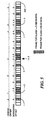
- FIGs. 2-5 are timing diagrams of a communication signal in accordance with the preferred protocol for transmitting selective call messages according to FIG. 1.
- FIG. 6 is block diagram illustrating traffic queue on the plurality of frames of the communication signal in accordance with the preferred embodiment of the present invention.
- FIG. 7 is an electrical block diagram of a battery operated selective call receiver operating in accordance with the preferred embodiment of the present invention.
- FIG. 8 is a more detailed electrical block diagram of the decoder/controller of the selective call receiver according to FIG. 7.
- FIG. 9 a flow diagram illustrating the details of reallocating frame assignments according to the communication system of FIG. 1.
- FIG. 10 a flow diagram for illustrating the steps of determining frame assignment of the selective call receiver of FIG. 7.
- FIG. 1 shows an electrical block diagram of a synchronous communication system, for example a selective call (paging) system, transmitting a signal, for example a communication signal or a selective call (paging) signal, in accordance with a preferred embodiment of the present invention.
- a selective call (paging) system transmitting a signal, for example a communication signal or a selective call (paging) signal, in accordance with a preferred embodiment of the present invention.
- a selective call (paging) system transmitting a signal, for example a communication signal or a selective call (paging) signal, in accordance with a preferred embodiment of the present invention.
- a selective call (paging) system transmitting a signal, for example a communication signal or a selective call (paging) signal, in accordance with a preferred embodiment of the present invention.
- the functions of the selective call (paging) system 100 are preferably implemented within software, for example within a MODAX 500 Radio Paging Terminal which is manufactured by Motorola Inc.
- a subscriber uses a telephone 102 for initiating a transmission of a selective call signal including the message addressed to a designated at least one of the selective call receivers 140.
- the telephone 102 couples to the selective call system 100 via a telephone network 104, the operation of which is well known to one of ordinary skill in the art.
- a computer/modem 106 is also coupled to the telephone network 104 for entering information, for example alphanumeric, numeric or voice messages.
- the telephone network 104 couples to a message receiver 108 which receives the messages to be transmitted to a plurality of selective call receivers 140 typically from the public switched telephone network 104.
- a processor (or terminal processor) 109 couples to the message receiver 108, and determines the appropriate protocol and address for encoding the message. If the processor 109 determines the signal format of the message to be other than FLEXTM protocol then the processor 109 passes the message to one of another protocol generator 116 which can include Golay Synchronous Code (GSC) and POCSAG (Post Office Standardisation Signaling Advisory Group) protocol generators well known to one of ordinary skill in the art.
- GSC Golay Synchronous Code
- POCSAG Post Office Standardisation Signaling Advisory Group
- FIGs. 2-4 show timing diagrams for the FLEXTM protocol synchronous signal in accordance with the preferred protocol for transmitting selective call messages according to FIG. 1.
- the selective call (paging) signal comprises a number of, preferably one-hundred-twenty-eight (128), message packets or frames 200.
- Each frame 200 is preferably 1.875 seconds in duration and has a preferred base data rate of 6400 bits per second.
- each frame comprises of a bit sync signal 302, preferably 32 bits of alternating 1,0 pattern followed by a frame sync #1 signal 304 preferably one of several predetermined thirty-two bit words, and a frame info signal 306, preferably one thirty-two bit word having twenty-one variable information bits containing information such as a cycle number and a frame number.
- the bit sync signal 302 provides bit synchronization to the selective call receiver(s) 140 while the frame sync signal 304 provides frame synchronization and includes a signal indicative of the data rate of the message information.
- a frame sync #2 308 Following the frame info word 306 is a frame sync #2 308. Following the frame sync #2 308 is a block info word signal 310 having more than one thirty-two bit words including information such as the number of priority addresses, end of block information field, vector start fields and the system collapse value mask.
- the system collapse mask is the same for each 128 frames of a selective call transmission, and is used by the selective call receiver 140 to operate in another battery saving mode or period different from the battery saving mode or period preprogrammed in the selective call receiver 140.
- the block info signal 310 has a 32 bit code word which preferably includes a frame identifier (ID) 402, an owner ID 404, a lending offset 406 and a borrowing offset 408.
- the remaining four bits 410 are used for some type of error correction, for example parity.
- the code word of each frames 200 is preferably encoded as 31,21 Bose-Chaudhuri-Hocquenghem (BCH) code words having twenty-one information bits and ten parity bits generated according to the well known BCH algorithm. An additional even parity bit extends the word to a 32,21 code word.
- BCH Bose-Chaudhuri-Hocquenghem
- the frame ID 402 can be transmitted in the frame info word 306 while the block info 310 includes the owner ID 404, the lending offset 406, and the borrowing offset 408, each having seven bits in length with ten bits used for parity and one bit as even parity according to BCH code word.
- the addresses are located in block 312 and the vectors pointing to the messages, if applicable, are located in block 314 and the messages are located in the remaining blocks 316.
- all of the address signals within the frame are located in a first portion 312 and the information signals are located in a subsequent portion of the block 316.
- Words 312-316 are shown in a vertical orientation to indicate that these words can be interleaved in order to improve the immunity of the transmission to burst errors. It is understood by one of ordinary skill in the art that interleaving may be modified or eliminated.
- a queue controller 132 in response to the processor 109 determines the frame queue 110 that corresponds to the designated frame number of the selective call signal (FIG. 2) and a message allocator 134 stores the messages to be transmitted on the FLEXTM protocol in a frame queue buffer 110 which has queues corresponding to each frame of the selective call signal.
- the corresponding number of frames N are 0-127.
- the assigned frame of the selective call receiver 140 corresponding to the message designation is determined by the processor 109.
- the queue controller 132 measures a parameter indicating a traffic associated with each of the plurality of frames 200 and the queue controller 132 determines and stores a lending threshold (130) and a borrowing threshold (128) in memory 124 for reallocating the designated selective call receiver 140 to another frame queue 110 when the traffic on the designated queue exceeds the frame borrowing threshold.
- the processor 109 thereafter identifies a frame queue having traffic below the lending threshold as a first frame (a frame to be lent or a lending frame) and the designated frame which has traffic exceeding the borrowing threshold as the second frame (borrowing frame).
- the processor 109 calculates the frame lending offset for the lending frame indicating the battery saving period of the selective call receivers 140 assigned to the lending frame, and calculates the frame borrowing offset for the receivers assigned to the borrowing frame indicating the battery saving period to receive the lending frame.
- a message formatter 114 encodes the frame identifier, the owner identifier, the frame borrowing offset and the frame lending offset in the first and second (the lending and borrowing) frames for reallocating the designated (second) selective call receiver(s) 140 assigned to the second frame to the first frame.
- a message allocator 134 distributes the messages addressed to the selective call receiver assigned to the borrowing frame in the borrowing and lending frames.
- a capacity analyzer and frame ID/cycle generator 112 determine the sequence of frames to be transmitted, analyze the capacity of each frame and determine the cycle value to be used. The capacity analyzer 112 is also responsive to other protocols being transmitted.
- a bit and frame sync generator 118 synchronously generates bit and frame synchronization signals.
- a message formatter 114 determines, in response to the address of selective call receivers 140 and the frame queue, the frame in which the message is to be included. The messages are then formatted for transmission.
- a terminal transmitter 120 accepts signals from blocks 118, 114 and 112 and modulates and transmits radio frequency selective call signals to the selective call receiver(s) 140 via an antenna 122 in a manner well known to those of ordinary skilled in the art.
- an example of the selective call signal is shown illustrating the reallocation of frames according to the preferred embodiment of the present invention.
- the selective call receiver receives its assigned (home) frame. Thereafter, if the frame lending offset is set, then the assigned frame is being lent to selective call receiver(s) of another class. If the lending offset is not set, and the borrowing offset is set, the selective call receiver will receive the borrowing offset to determine a new battery saving period because the selective call receiver is being reallocated to another frame (a lending frame or a borrowed frame). Alternatively, when the receiver identifier is not equal to the frame ID, the selective call receiver is not receiving its home frame.
- the selective call receiver checks if the borrowing offset is set to determine if it is being reallocated to another frame before it receives its home frame.
- the selective call receiver can be reallocated more than once before the next occurrence of its home frame.
- the lending offset cannot exceed a latency (receiver latency) 126 of the selective call receivers 140 which is stored in memory 124 because some selective call receiver 140 cannot be reallocated because they belong to emergency personnel who must receive their messages immediately. Latency determines the maximum time a selective call receiver 140 can wait before it receives its message.
- the lending offset determines the number of assigned frame a selective call receiver should battery saving through because its assigned frame is being temporarily reassigned to another class of selective call receivers 140.
- the selective call receiver therefore sleeps for the number of multiple of frames indicated by the lending offset.
- a selective call receiver 140 assigned to the frame i (the class i selective call receiver) will receive a borrowing offset of four (4) and battery saves to the i+4 frame and receive information in the i+4 frame.
- the class i+3 selective call receiver 140 (the selective call receiver assigned to the i+3 frame) receives the lending offset equal to one (1) indicating the battery saving period which informs the receiver to battery save or sleep through its next assigned frame.
- the selective call receiver assigned to the i+3 frame will not receive the next occurrence of the i+3 frame because its home frame will be reallocated to another class of selective call receiver(s).
- the class i selective call receiver 140 will therefore receive its home or assigned frame, the next occurrence of frame i.
- the selective call receiver 140 assigned to that frame will receive a borrowing offset of three (3) and will battery save to receive the next i+3 frame.
- the i+3 frame has a borrowing offset of one (1) and a lending offset of zero (0).
- the selective call receiver 140 assigned to the i+3 frame was to just turn-on, it will know that its frame has been reallocated because the receiver ID does not equal the owner ID 404; and because the lending offset is zero (0), the selective call receiver 140 will know that it should receive the next occurrence of its i+3 assigned frame.
- the class i selective call receiver 140 will receive the i+4 frame which directs it to the i+5 frame.
- the i+8 frame directs the class i selective call receiver 140 to the i+11 frame which directs the class i selective call receiver 140 to the i+15 frame.
- the i+15 frame has a zero (0) borrowing offset, so the class i selective call receiver 140 will receive its home (assigned) frame which is the next frame because this illustration used a multiple frame size of sixteen (16) frames for convenience.
- the selective call receiver 140 assigned to the i+3 frame will receive the next i+3 frames having a borrowing offset of zero (0) and a lending offset equal to zero (0) indicating that the messages are directed only to the class i+3 selective call receiver 140. However, the selective call receiver 140 assigned to the ith frame, will borrow the next i+4 frame, the next i+5 frame, the next i+8 frame and the next i+11 frame before it receives its assigned frame i again.
- selective call receivers assigned to a home frame can be temporarily be reassigned to another frame if the selective call receiver's home frame has a queue exceeding the borrowing threshold and another frame is identified that has a queue below the lending threshold.
- the lending and borrowing frames are encoded with the owner ID, the frame lending offset and the frame borrowing offset to reallocate different classes of selective call receiver to different frames as determined by the traffic on the plurality of frames.
- FIG. 6 a block diagram illustrating traffic queue on the plurality of frames of the communication signal is shown in accordance with the preferred embodiment of the present invention.
- Frames 1 to 8 are illustrated for convenience.
- Paging message chains 651, 652, 653, 655, 656, 657, 658 are shown for each of the eight frames designating the traffic load or messages queued to be transmitted.
- the queues or traffic can be measured as the average bits-per-second, instantaneous bits-per-second or the number of packets in the paging message chains.
- frame 605 will be designated a borrowing frame and frame 603 will be designated a lending frame. Therefore, in the next occurrence of frame 4, frame 4 will be lent of the selective call receivers 140 assigned to frame 5 while the selective call receivers 140 assigned to frame 4 will battery save during the time their assigned frame are reallocated to the selective call receivers 140 assigned to frame 5.
- the selective call receiver 140 comprises an antenna 502 for intercepting transmitted radio frequency (RF) signals which are coupled to the input of a receiver 504.
- the RF signals are preferably selective call (paging) message signals which provide, for example, a receiver address and an associated message, for example as alphanumeric.
- paging selective call
- the receiver 504 processes the RF signal and produces at the output a data stream representative of a demodulated data information.
- the demodulated data information is coupled into the input of a decoder/controller 506 which processes the information in a manner well known in the art.
- An ack-back transmitter 534 is coupled to the antenna 502 and the decoder/controller 506 for providing acknowledgment.
- a power switch 510, coupled to the decoder/controller 506, is used to control the supply of power to the receiver 504, thereby providing a battery saving function or for changing the battery saving periods.
- the receiver becomes bit and frame synchronized and the address is received by the decoder/controller 506, the received address is compared with one or more addresses stored in a code plug (memory) 522, and when a match is detected, an alert signal is generated to alert a user that a selective call message, or page, has been received.
- the alert signal is directed to an audible alerting device 514 for generating an audible alert or to a tactile alerting device 516 for generating a silent vibrating alert.
- Switches 520 allow the user of the selective call receiver to, among other things, select between the audible alert 514 and the tactile alert 516 in a manner well known in the art.
- the message information which is subsequently received is stored in memory 620 (FIG. 8) and can be accessed by the user for display using one or more of the switches 520 which provide such additional functions as reset, read, and delete, etc. Specifically, by the use of appropriate functions provided by the switches 520, the stored message is recovered from memory and processed by the decoder/controller 506 for displaying by a display 508 which enables the user to view the message.
- the receipt of the message by the selective call receiver 140 can automatically generate the ack-back response to the selective call base station to inform it that the message was successfully received.
- the user will have the opportunity to input a message by using switches 520 or some other input devices well known to one of ordinary skill in the art.
- the decoder/controller 506 processes the message by encoding an addressed derived from the received message to generate the ack-back response.
- the encoded ack-back response is then transmitted to the selective call base station that originated the paging message by techniques well known to one of ordinary skill in the art.
- FIG. 8 shows a more detailed electrical block diagram of the decoder/controller of the selective call receiver according to FIG. 7.
- the decoder/controller 506 preferably includes a frame decoder 606 for identifying the received frames or packets.
- a bit sync (synchronizer) 602 uses the bit sync block 302 to obtain bit synchronization to the selective call signal and the frame sync (synchronizer) 604 uses the frame sync #1, #2 304, 308 to obtain frame synchronization to the selective call signal in a manner known to one of ordinary skill in the art.
- the code plug 522 has a predetermined frame ID 608, a predetermined cycle value 610, and a predetermined address assigned to the selective call receiver 140, as well as other signals which configure the selective call receiver 140 for desired operating characteristics.
- the predetermined cycle value 610 allows one selective call receiver 140 to be assigned to a plurality of frames (assigned or home frame).
- the predetermined frame ID 608 is masked with the predetermined cycle value 610 to generate a mask 612 (the receiver identifier or receiver ID) indicating of a first period of reception of the selective call receiver and is used by battery saver 618 to determine the battery saving period of the selective call receiver 140.
- the receiver identifier (ID) is the classification of the receiver address to determine the home frame or assigned frame. For example, if there are a multiple of one hundred-twenty-eight (128) frames, the receiver ID preferably comprises the last seven (7) bits of the selective call receiver's address wherein 2 7 is equal to 128.
- the battery saver 618 deactivates and activates receiver 504 via the power switch 510 (FIG. 7) for certain frames thereby conserving battery power.
- a frame decoder 606 determines the home frame of the selective call receiver by docoding the frame identifier (ID), the owner identifier (ID).
- a frame determinator 614 compares the receiver ID with the frame ID to determine if the selective call receiver is receiving information in its home frame. When the receiver ID and the frame ID are equal, the selective call receiver is receiving information in its home frame. Also, if the owner identifier (ID) is equal to the receiver ID, the information transmitted in the assigned frame is directed to the selective call selective call receiver assigned to that frames.
- a processor 616 couples to the frame decoder 606 and calculates a first battery saving period indicated by the frame lending offset of the block info 310 of the assigned frame in response to receiving the selective call signal having the receiver ID equal to the frame identifier (ID) 404 encoded in the assigned frame.
- the processor 616 checks the frame borrowing offset, and if it is set, the processor 616 calculates a second battery saving period to a next occurrence of a borrowed frame indicated by the frame borrowing offset 408.
- the battery saver 618 in response to the processor 616 disables the receiver 504 during the first or the second battery saving period in response to the frame determinator 614 and activates the receiver 504 for receiving a next frame.
- a selective call receiver can determine from the received selective call signal whether the selective call system has reallocated its assigned frame because the number of message packets were below the frame lending threshold, or whether it is can receive other frames because the message packets on its assigned frame exceeds the frame borrowing threshold.
- the selective call receiver whether it is borrowing or lending frames, determines a new battery saving period which is designated by the frame borrowing offset or the frame lending offset, respectively.
- the selective call system via the message receiver 108 receives message from a user or subscriber designating a selective call receiver 140, step 902.
- the processor 109 identifies the selective call receiver 140 to be addressed and the queue controller 132 determines the frame queue number to store the message to be transmitted in a corresponding frame number, step 904.
- the queue controller 132 measures a parameter indicating a traffic associated with each of the plurality of frames, step 906.
- the parameter according to the preferred embodiment includes the message packets queued at each frame queue number for subsequent transmission to a designated selective call receiver 140.
- the queue controller 132 determines a lending threshold and a borrowing threshold for reallocating a frame assignment, step 908.
- the lending threshold 130 determines when the number of message packets queued on a frame is below a predetermined number to allow the system to reallocate or to lend that frame to other selective call receiver(s) assigned to another frame that has a number of message packets queued on its assigned frame exceeding a predetermined number, the borrowing threshold 128.
- the borrowing threshold 128 indicates when a frame is overloaded, and to improved the system capacity, the selective call receivers assigned to the borrowing frame should be temporarily assigned to another frame, the lending frame.
- the number of message packets are checked on the frame queue number to determine if the number exceeds the borrowing threshold.
- step 910 the message is encoded and stored in the frame queue corresponding to the assigned frame (channel) of the designated selective call receiver, step 912.
- the message is queued, step 926.
- step 928 the traffic on the frame is checked to determine if it is below the lending threshold. If so, the latency is checked to determine if it is acceptable, step 932. If so, the frame is marked as "lendable", step 934. If the traffic is not below the lending threshold, step 928, or the latency is not acceptable, step 932, the next transmission is schedule, step 930.
- step 910 the frames are checked to determine if any frames were previously marked as lendable, step 913. If no lendable frame exists, the frame is identified as a borrowing frame, and the system begins to measure the traffic on the other queues (frames) to determine a lending frame (a frame to be borrowed), step 914. In step 916, each other queue that is measured is checked to determine if the traffic is below the lending threshold, 130. If not, the process checks if all frames have been checked for traffic below the lending threshold, step 930. If not, the step returns to step 914 to measure traffic on other frames. If all frames have been checked in step 930, the process continues to step 912 to encode the message in the assigned channel.
- the processor determines the receiver latency 126 of the selective call receivers assigned to the lending frame to ensure that the selective call receivers can tolerate their assigned frame being lent and not receive any messages during that period if a new message is received, step 918. If the receiver latency 126 is not acceptable, the process returns to step 930 to check if all frame have been measured. If, however, the receiver latency is acceptable in step 918 or if there are lendable frames, step 913, the frame lending offset and the frame borrowing offset are calculated to determine the new battery saving periods for the selective call receivers assigned to the lending frame and the borrowing frame, step 920.
- the message allocator 134 distributes the messages in the lending frame for the selective call receiver assigned to the borrowing frame, step 922.
- the step of distributing includes encoding the frame identifier, the owner identifier, the frame borrowing offset and the frame lending offset in the frames for reallocating frame assignment, step 922.
- the message is then encoded in the borrowed or lending frame, step 924, and the process returns to step 910.
- the selective call system can determine from the queue length on each frame queue whether the selective call system can increase system capacity by reallocating frames when the number of message packets are below the frame lending threshold of at least one frame and the number of message packets on another frame exceeds the frame borrowing threshold.
- the messages destined for a frame number that has traffic exceeding the borrowing threshold are reallocated to another frame that has traffic below the frame lending threshold.
- the lending frame is encoded with a new owner ID, a frame lending offset, and a frame borrowing offset; the frame borrowing offset is encoded when the selective call receivers borrowing the lending frame are to be reallocated again before the next occurrence of its home frame.
- the borrowing frame is encoded with a new frame borrowing offset to determine the battery saving period to receive the lending frame being reallocated to the selective call receivers assigned to the borrowing frame.
- step 1012 a flow diagram for illustrating the steps of determining the frame assignment of the selective call receiver of FIG. 7 is shown.
- the selective call receiver 140 powers-up and performs its initialization functions, step 1002, it begins to receive and to become synchronized to the selective call signal, step 1004.
- the selective call receiver 140 determines its assigned frame, step 1006, by interrogating the frame ID 402 and battery saves to the frame determined to be its assigned frame, step 1008.
- Power is applied to the receiver of the selective call receiver (the receiver is activated) to receive information or messages in the predetermined frame, step 1010.
- step 1012 the process checks if the receiver ID is equal to the frame ID 402. If not, process checks if the receiver ID is equal to the owner ID 404.
- step 1013 the battery saving period is set to receive the next frame (or to disable battery saving), step 1013 and then the process returns to step 1008.
- the receiver ID is equal to the owner ID in step 1014
- the frame borrowing offset is received, step 1016 and the message is received, step 1017.
- step 1018 the process checks if the borrowing offset is set, and if so, the battery saving period is calculated from the borrowing offset, 1020, and then the process returns to step 1008.
- the borrowing offset is not set in step 1018, the battery saving period is set to receive the next occurrence of the assigned or home frame, step 1032.
- step 1012 if the receiver ID is equal to the frame ID, the process checks if the lending offset is set, step 1022. If yes, the lending offset is received, step 1024, and the battery saving period is calculated from the lending offset, step 1026. The process then checks if the receiver ID is equal to the owner ID, step 1034, and if so, the message is received, step 1036, and then the process returns to step 1008. When the receiver ID is not equal to the owner ID in step 1034, the process returns to step 1008. If, however, the lending offset is not set in step 1022, the process checks if the receiver ID is equal to the owner ID, step 1028. If so, the process flows continues to step 1017 to receive the message.
- the battery saving period is set or calculated to the next assigned frame of the receiver, step 1032 and the process returns to step 1008 to battery save to the next assigned frame.
- the selective call receiver determines a new battery saving period to skip at least one of its assigned frames as determined by the frame lending offset when the traffic on that assigned frame is below the frame lending threshold.
- the selective call receiver determines the battery saving period to received information on a borrowed frame, the lending frame.
- a communication system communicates with a plurality of receivers having assigned frames with at least a first receiver assigned to a first frame and at least a second receiver assigned to a second frame of a signal.
- a method for reallocating frame assignments comprises the steps of (a) receiving a message being designated for the second receiver, and (b) transmitting the signal to the plurality of receivers in the assigned frames.
- the signal comprises a plurality of frames, each frame has a frame identifier, an owner identifier, a frame lending offset and a frame borrowing offset.
- the method further comprises the steps of (c) measuring a parameter indicating a traffic associated with each of the plurality of frames, the step (c) of measuring further includes a step (d) of determining a lending threshold and a borrowing threshold for reallocating a frame assignment, (e) identifying a frame having traffic below the lending threshold as the first frame and another frame having traffic exceeding the borrowing threshold as the second frame in response to the parameter indicating the traffic, (f) calculating the frame lending offset for the first frame and the frame borrowing offset for the second frame, (g) encoding the frame identifier, the owner identifier, the frame borrowing offset and the frame lending offset in the first and second frames for reallocating frame assignment and (h) distributing messages addressed to the second receiver in the first frame and the second frame.
Landscapes
- Engineering & Computer Science (AREA)
- Computer Networks & Wireless Communication (AREA)
- Signal Processing (AREA)
- Mobile Radio Communication Systems (AREA)
- Time-Division Multiplex Systems (AREA)
- Data Exchanges In Wide-Area Networks (AREA)
- Radio Relay Systems (AREA)
- Communication Control (AREA)
Claims (10)
- Procédé pour réallouer des assignations de trames dans un système de communication (100) pour communiquer depuis un émetteur (120) jusqu'à une plucalité de récepteurs (140) comportant des trames assignées (200), dans lequel au moins un premier récepteur est assigné à une première trame et au moins un second récepteur est assigné à une seconde trame d'un signal, caractérisé par et en ce qu'il comprend les étapes de :(a) réception d'un message qui est désigné sur le second récepteur ;(b) émission du signal sur la pluralité de récepteurs (140) dans les trames assignées (200), le signal comprenant une pluralité de trames, chaque trame comportant :un identificateur de trame (402) ;un identificateur de propriétaire (404) ;un décalage de prêt de trame (406) ; etun décalage d'emprunt de trame (408) ;(c) mesure d'un paramètre qui indique un trafic qui est associé à chacune de la pluralité de trames, ladite étape (c) de mesure incluant en outre une étape (d) de détermination d'un seuil de prêt (130) et d'un seuil d'emprunt (128) pour réallouer une assignation de trames ;(e) identification d'une trame qui présente un trafic au-dessous du seuil de prêt (130) en tant que première trame et d'une autre trame qui présente un trafic qui excède le seuil d'emprunt (128) en tant que seconde trame en réponse au paramètre qui indique le trafic ;(f) calcul du décalage de prêt de trame (406) pour la première trame et du décalage d'emprunt de trame (408) pour la seconde trame ;(g) codage de l'identificateur de trame (402), de l'identificateur de propriétaire (404), du décalage d'emprunt de trame (408) et du décalage de prêt de trame (406) dans les première et seconde trames pour réallouer une assignation de trames ; et(h) distribution de messages qui sont adressés sur le second récepteur dans la première trame et dans la seconde trame.
- Procédé selon la revendication 1, dans lequel le premier récepteur assigné à la première trame comprend en outre les étapes de :(i) détermination d'une période d'économie d'accumulateur qui est indiquée par le décalage de prêt de trame (406) de la première trame en réponse au fait que le premier récepteur reçoit le signal tandis que l'identificateur de trame (402) codé dans la première trame est non égal à un identificateur de récepteur ; et(j) invalidation du premier récepteur pendant la période d'économie d'accumulateur comme déterminé au niveau de l'étape (i).
- Procédé selon la revendication 2, comprenant en outre une étape de comparaison d'une latence de récepteur (126) à la période d'économie d'accumulateur pour déterminer si oui ou non il convient de prêter la première trame.
- Procédé selon la revendication 1, dans lequel le second récepteur assigné à la seconde trame comprend en outre les étapes de :(i) détermination d'une période d'économie d'accumulateur qui est indiquée par le décalage d'emprunt de trame (408) de la seconde trame lorsqu'un identificateur de récepteur n'est pas égal à l'identificateur de trame (402) mais est égal à l'identificateur de propriétaire (404) ;(j) invalidation du second récepteur pendant la période d'économie d'accumulateur déterminée au niveau de l'étape (i) jusqu'à une survenue suivante de la première trame ; et(k) activation du second récepteur pour recevoir la survenue suivante de la première trame.
- Procédé selon la revendication 1, comprenant en outre les étapes de :(i) le premier récepteur détermine une période d'économie d'accumulateur indiquée par le décalage de prêt de trame (406) de la première trame en réponse à la réception du signal présentant l'identificateur de trame (402) codé dans la première trame qui est non égal à un identificateur de récepteur ;(j) économie d'accumulateur de premier récepteur pendant la période d'économie d'accumulateur déterminée au niveau de l'étape (i) ;(k) le second récepteur détermine une période d'économie d'accumulateur indiquée par le décalage d'emprunt de trame (408) de la seconde trame lorsqu'un identificateur de récepteur n'est pas égal à l'identificateur de trame (402) mais est égal à l'identificateur de propriétaire (404) ; et(l) invalidation du second récepteur pendant la période d'économie d'accumulateur déterminée au niveau de l'étape (k) jusqu'à une survenue suivante de la première trame ; et(m) activation du second récepteur pour recevoir la survenue suivante de la première trame.
- Système de communication (100) pour réallouer des assignations de trame, incluant un terminal pour communiquer un signal d'appel sélectif sur une pluralité de récepteurs d'appel sélectif (140) comportant des trames assignées (200), dans lequel au moins un premier récepteur d'appel sélectif est assigné à une première trame et au moins un second récepteur d'appel sélectif est assigné à une seconde trame du signal d'appel sélectif, le terminal étant caractérisé par et en ce qu'il comprendun récepteur de message (108) pour recevoir un message qui désigne le second récepteur d'appel sélectif ;un émetteur de terminal (120) pour émettre le signal d'appel sélectif sur la pluralité de récepteurs d'appel sélectif (140) dans les trames assignées (200), le signal d'appel sélectif comprenant une pluralité de trames, chaque trame comportant :un identificateur de trame (402) ;un identificateur de propriétaire (404) ;un décalage de prêt de trame (406) ; etun décalage d'emprunt de trame (408) ;un contrôleur de file d'attente (132) pour mesurer un paramètre qui indique un trafic qui est associé à chacune de la pluralité de trames où le contrôleur de file d'attente (132) détermine un seuil de prêt (130) et un seuil d'emprunt (128) pour réallouer le second récepteur d'appel sélectif à la première trame ;un processeur (109), qui est couplé au contrôleur de file d'attente (132), pour identifier une trame qui présente un trafic au-dessous du seuil de prêt (130) en tant que première trame et une trame qui présente un trafic qui excède le seuil d'emprunt (128) en tant que seconde trame en réponse au contrôleur de file d'attente (132), le processeur (109) calcule le décalage de prêt de trame (406) pour la première trame et le décalage d'emprunt de trame (408) pour la seconde trame ;un dispositif de formatage de message (114) pour coder l'identificateur de trame (402), l'identificateur de propriétaire (404), le décalage d'emprunt de trame (408) et le décalage de prêt de trame (406) dans les première et seconde trames pour réallouer le second récepteur d'appel sélectif à la première trame ; etun dispositif d'allocation de message (134) pour distribuer des messages adressés sur le second récepteur d'appel sélectif dans la première trame et dans la seconde trame.
- Système de communication (100) selon la revendication 6, dans lequel le premier récepteur d'appel sélectif comprend :un récepteur (504) pour recevoir le signal d'appel sélectif et pour réaliser une synchronisation avec celui-ci ;un décodeur de trame (606) pour décoder l'identificateur de trame (402) et l'identificateur de propriétaire (404) qui sont codés dans les trames assignées ;un moyen de détermination de trame (614) pour déterminer si la trame est en train d'être réallouée lorsque l'identificateur de trame (402) est différent d'un identificateur de récepteur du premier récepteur d'appel sélectif ;un processeur (616) pour calculer une période d'économie d'accumulateur indiquée par le décalage de prêt de trame (406) de la première trame en réponse à la réception du signal d'appel sélectif présentant l'identificateur de propriétaire (404) qui n'est pas égal à l'identificateur de récepteur codé dans la première trame ; etun dispositif d'économie d'accumulateur (618) qui, en réponse au processeur (616), invalide le récepteur (504) pendant la période d'économie d'accumulateur.
- Récepteur d'appel sélectif (140) pour recevoir des messages dans une trame assignée d'un signal d'appel sélectif comprenant une pluralité de trames où chaque trame comporte un identificateur de trame (402), un identificateur de propriétaire (404), un décalage de prêt de trame (406) et un décalage d'emprunt de trame (408), le récepteur d'appel sélectif comprenant :un récepteur (504) pour synchroniser et recevoir le signal d'appel sélectif ;un décodeur de trame (606) pour déterminer la trame assignée et pour décoder l'identificateur de trame (402) et l'identificateur de propriétaire (404) qui sont codés dans la trame assignée ;un moyen de détermination de trame (614) pour déterminer si oui ou non la trame est en train d'être réallouée lorsque l'identificateur de trame (402) est différent d'un identificateur de récepteur qui est associé au récepteur d'appel sélectif (140) ;un processeur (616), qui est couplé au décodeur de trame (606), pour calculer une première période d'économie d'accumulateur qui est indiquée par le décalage de prêt de trame (406) de la trame assignée en réponse à la réception du signal d'appel sélectif qui présente l'identificateur de trame (402) codé dans la trame qui n'est pas égal à l'identificateur de récepteur ; etun dispositif d'économie d'accumulateur (618) qui, en réponse au processeur (616), invalide le récepteur (504) pendant la première période d'économie d'accumulateur en réponse au moyen de détermination de trame (614) et pour activer le récepteur (504) pour recevoir une trame suivante.
- Procédé pour un récepteur d'appel sélectif (140) qui reçoit des messages dans une trame assignée d'un signal d'appel sélectif comprenant une pluralité de trames où chaque trame comporte un identificateur de trame (402), un identificateur de propriétaire (404), un décalage de prêt de trame (406) et un décalage d'emprunt de trame (408), dans lequel le récepteur inclut un identificateur de récepteur, comprenant les étapes de :(a) réception du signal d'appel sélectif et synchronisation sur celui-ci ;(b) détermination de la trame assignée ;(c) décodage de l'identificateur de trame (402) et de l'identificateur de propriétaire (404) qui sont codés dans la trame assignée ;(d) détermination de si oui ou non la trame est réallouée lorsque l'identificateur de trame (402) est différent de l'identificateur de récepteur ;(e) calcul d'une première période d'économie d'accumulateur indiquée par le décalage de prêt de trame (406) de la trame assignée en réponse à la réception du signal d'appel sélectif qui comporte l'identificateur de trame (402) codé dans la trame qui n'est pas égal à l'identificateur de récepteur ; et(f) invalidation de l'étape (a) de réception pendant la première période d'économie d'accumulateur et activation de l'étape (a) de réception pour recevoir une trame suivante.
- Système de communication (100) pour réallouer des assignations de trames selon la revendication 6, dans lequel le premier récepteur d'appel sélectif de la pluralité de récepteurs d'appel sélectif comprend :un premier récepteur (504) pour recevoir le signal d'appel sélectif et pour réaliser une synchronisation avec celui-ci ;un premier décodeur de trame (606) pour décoder l'identificateur de trame (402) et l'identificateur de propriétaire (404) qui sont codés dans les trames assignées ;un premier dispositif de détermination de trame (614) pour déterminer si la trame est en train d'être réallouée en réponse à l'identificateur de trame (402) et à l'identificateur de propriétaire (404) ;un premier processeur (616) qui est couplé au premier décodeur de trame (606) pour calculer une première période d'économie d'accumulateur indiquée par le décalage de prêt de trame (406) de la première trame en réponse à la réception du signal d'appel sélectif comportant l'identificateur de trame (402) codé dans la première trame qui n'est pas égal à l'identificateur de récepteur ; etun premier dispositif d'économie d'accumulateur (618) qui, en réponse au premier processeur (616), invalide le premier récepteur (504) pendant la première période d'économie d'accumulateur et en outre dans lequel le second récepteur d'appel sélectif comprendun second récepteur (504) pour recevoir le signal d'appel sélectif et pour réaliser une synchronisation avec celui-ci ;un second décodeur de trame (606) pour décoder l'identificateur de trame (402) et l'identificateur de propriétaire (404) qui sont codés dans les trames assignées ;un second dispositif de détermination de trame (614) pour déterminer si la trame est en train d'être réallouée en réponse à l'idéntificateur de trame (402) et à l'identificateur de propriétaire (404) ;un second processeur (616) qui est couplé au second décodeur de trame (606) pour calculer une seconde période d'économie d'accumulateur jusqu'à une survenue suivante de la première trame comme indiqué par le décalage d'emprunt de trame (408) de la seconde trame lorsque l'identificateur de récepteur n'est pas égal à l'identificateur de trame (402) mais est égal à l'identificateur de propriétaire (404) ; etun second dispositif d'économie d'accumulateur (618) qui est couplé au second processeur (616), pour invalider le second récepteur (504) pendant la seconde période d'économie d'accumulateur et pour activer le second récepteur (504) pour recevoir la survenue suivante de la première trame.
Applications Claiming Priority (2)
| Application Number | Priority Date | Filing Date | Title |
|---|---|---|---|
| US08/547,342 US5550829A (en) | 1995-10-24 | 1995-10-24 | Method for reallocation frame assignments of receives in a communication system |
| US547342 | 1995-10-24 |
Publications (3)
| Publication Number | Publication Date |
|---|---|
| EP0771086A2 EP0771086A2 (fr) | 1997-05-02 |
| EP0771086A3 EP0771086A3 (fr) | 2000-07-12 |
| EP0771086B1 true EP0771086B1 (fr) | 2002-12-18 |
Family
ID=24184282
Family Applications (1)
| Application Number | Title | Priority Date | Filing Date |
|---|---|---|---|
| EP96116892A Expired - Lifetime EP0771086B1 (fr) | 1995-10-24 | 1996-10-21 | Méthode de réallocation d'assignement de trames de récepteurs dans un système de communication |
Country Status (4)
| Country | Link |
|---|---|
| US (1) | US5550829A (fr) |
| EP (1) | EP0771086B1 (fr) |
| AT (1) | ATE230196T1 (fr) |
| DE (1) | DE69625446T2 (fr) |
Families Citing this family (8)
| Publication number | Priority date | Publication date | Assignee | Title |
|---|---|---|---|---|
| US5943328A (en) * | 1996-08-13 | 1999-08-24 | Lucent Technologies Inc. | Frame counter for synchronized communication |
| US6373884B1 (en) * | 1997-03-11 | 2002-04-16 | Motorola, Inc. | Method and apparatus for transmitting data |
| ZA9810567B (en) * | 1997-11-25 | 1999-06-09 | Clariti Telecommunications Int | Voice paging protocol |
| US6088577A (en) * | 1999-01-13 | 2000-07-11 | Clariti Telecommunications International, Ltd. | Multiple subcarrier communication system |
| US6636978B1 (en) * | 1999-11-17 | 2003-10-21 | International Business Machines Corporation | Rescheduling data input and output commands for bus synchronization by using digital latency shift detection |
| US7478393B2 (en) * | 2003-04-30 | 2009-01-13 | International Business Machines Corporation | Method for marketing to instant messaging service users |
| KR100902499B1 (ko) * | 2005-08-02 | 2009-06-15 | 삼성전자주식회사 | 광대역 무선통신시스템에서 프레임 통신 장치 및 방법 |
| US8077607B2 (en) * | 2007-03-14 | 2011-12-13 | Cisco Technology, Inc. | Dynamic response to traffic bursts in a computer network |
Family Cites Families (14)
| Publication number | Priority date | Publication date | Assignee | Title |
|---|---|---|---|---|
| US4422162A (en) * | 1980-10-01 | 1983-12-20 | Motorola, Inc. | Non-dissipative memory system |
| US4427980A (en) * | 1981-10-13 | 1984-01-24 | Motorola, Inc. | Encoder for transmitted message activation code |
| US4495619A (en) * | 1981-10-23 | 1985-01-22 | At&T Bell Laboratories | Transmitter and receivers using resource sharing and coding for increased capacity |
| US4398192A (en) * | 1981-12-04 | 1983-08-09 | Motorola Inc. | Battery-saving arrangement for pagers |
| JPS58124338A (ja) * | 1982-01-20 | 1983-07-23 | Nec Corp | 選択呼出通信方式 |
| JPS5961644U (ja) * | 1982-10-15 | 1984-04-23 | 日本電気株式会社 | 選択呼出受信機 |
| US5150954A (en) * | 1984-12-05 | 1992-09-29 | Seiko Corporation | Pager watch system utilizing time slot communication |
| US4897835A (en) * | 1985-11-27 | 1990-01-30 | At&E Corporation | High capacity protocol with multistation capability |
| US4860003A (en) * | 1988-05-27 | 1989-08-22 | Motorola, Inc. | Communication system having a packet structure field |
| US5128932A (en) * | 1990-08-27 | 1992-07-07 | Bell Communications Research, Inc. | Traffic flow control and call set-up in multi-hop broadband networks |
| US5325088A (en) * | 1991-12-02 | 1994-06-28 | Motorola, Inc. | Synchronous selective signalling system |
| US5280630A (en) * | 1992-01-21 | 1994-01-18 | Motorola, Inc. | Method and apparatus for dynamic channel allocation |
| US5437054A (en) * | 1993-02-05 | 1995-07-25 | The Research Foundation Of State University Of New York | Method and apparatus of assigning and sharing channels in a cellular communication system |
| US5513379A (en) * | 1994-05-04 | 1996-04-30 | At&T Corp. | Apparatus and method for dynamic resource allocation in wireless communication networks utilizing ordered borrowing |
-
1995
- 1995-10-24 US US08/547,342 patent/US5550829A/en not_active Expired - Lifetime
-
1996
- 1996-10-21 DE DE69625446T patent/DE69625446T2/de not_active Expired - Fee Related
- 1996-10-21 EP EP96116892A patent/EP0771086B1/fr not_active Expired - Lifetime
- 1996-10-21 AT AT96116892T patent/ATE230196T1/de not_active IP Right Cessation
Also Published As
| Publication number | Publication date |
|---|---|
| EP0771086A2 (fr) | 1997-05-02 |
| EP0771086A3 (fr) | 2000-07-12 |
| ATE230196T1 (de) | 2003-01-15 |
| DE69625446D1 (de) | 2003-01-30 |
| US5550829A (en) | 1996-08-27 |
| DE69625446T2 (de) | 2003-06-18 |
Similar Documents
| Publication | Publication Date | Title |
|---|---|---|
| US5382949A (en) | Method for increasing battery life for selective call receivers | |
| US5230084A (en) | Selective call receiver having extended battery saving capability | |
| RU2111628C1 (ru) | Способ и устройство для передачи сообщений портативным средствам связи в системе радиосвязи | |
| US5325088A (en) | Synchronous selective signalling system | |
| EP0815664B1 (fr) | Procede et appareil pour gerer et recuperer des informations transmises par un systeme de radiocommunications | |
| US5371899A (en) | Communication system capable of reassigning radio receivers | |
| EP0511008B1 (fr) | Système de communication "sans-fil" | |
| US5635914A (en) | Method and apparatus for dynamic group calling in a selective call system | |
| US6131045A (en) | Radio communication device for restricting specific function and method for restricting the function | |
| US5555183A (en) | Method and apparatus for synchronizing to a synchronous selective call signal | |
| US5649315A (en) | Method for selecting between first, second and third battery saving periods in a selective call | |
| JP2001508274A (ja) | 通信システムにおける電池の節約 | |
| EP0771086B1 (fr) | Méthode de réallocation d'assignement de trames de récepteurs dans un système de communication | |
| EP0090042B1 (fr) | Decodeur pour code de desactivation d'un message transmis | |
| US5491469A (en) | Communication system for temporarily directing radio receivers to a second radio frequency | |
| US5850186A (en) | Method of receiving radio paging signal | |
| JP2619762B2 (ja) | 同期選択信号システム | |
| CA2065274C (fr) | Systeme de radiomessagerie national a modes locaux | |
| CA2282018C (fr) | Dispositif d'appel selectif et technique de preservation de batterie lors de services d'information | |
| EP0872042A1 (fr) | Procede et appareil de transmission d'informations d'evenements globaux dans un systeme de radiocommunication | |
| JP3173613B2 (ja) | バースト・エラー保護データ同期機能を有するデータ通信受信機 | |
| JP2540769B2 (ja) | 無線呼び出し方式 | |
| JPH0537446A (ja) | 選択呼出通信システム | |
| KR100284197B1 (ko) | 무선호출 단말기의 밧데리 절약 방법 | |
| JP3073843B2 (ja) | ディジタルコードレス電話機及び基地局状態情報伝送方法 |
Legal Events
| Date | Code | Title | Description |
|---|---|---|---|
| PUAI | Public reference made under article 153(3) epc to a published international application that has entered the european phase |
Free format text: ORIGINAL CODE: 0009012 |
|
| AK | Designated contracting states |
Kind code of ref document: A2 Designated state(s): AT BE CH DE DK ES FR GB GR IE IT LI LU MC NL PT SE |
|
| PUAL | Search report despatched |
Free format text: ORIGINAL CODE: 0009013 |
|
| AK | Designated contracting states |
Kind code of ref document: A3 Designated state(s): AT BE CH DE DK ES FR GB GR IE IT LI LU MC NL PT SE |
|
| RIC1 | Information provided on ipc code assigned before grant |
Free format text: 7H 04Q 7/10 A, 7H 04Q 7/18 B, 7H 04Q 7/36 B |
|
| 17P | Request for examination filed |
Effective date: 20010112 |
|
| 17Q | First examination report despatched |
Effective date: 20010309 |
|
| GRAG | Despatch of communication of intention to grant |
Free format text: ORIGINAL CODE: EPIDOS AGRA |
|
| GRAG | Despatch of communication of intention to grant |
Free format text: ORIGINAL CODE: EPIDOS AGRA |
|
| GRAH | Despatch of communication of intention to grant a patent |
Free format text: ORIGINAL CODE: EPIDOS IGRA |
|
| GRAH | Despatch of communication of intention to grant a patent |
Free format text: ORIGINAL CODE: EPIDOS IGRA |
|
| GRAA | (expected) grant |
Free format text: ORIGINAL CODE: 0009210 |
|
| AK | Designated contracting states |
Kind code of ref document: B1 Designated state(s): AT BE CH DE DK ES FR GB GR IE IT LI LU MC NL PT SE |
|
| PG25 | Lapsed in a contracting state [announced via postgrant information from national office to epo] |
Ref country code: LI Free format text: LAPSE BECAUSE OF FAILURE TO SUBMIT A TRANSLATION OF THE DESCRIPTION OR TO PAY THE FEE WITHIN THE PRESCRIBED TIME-LIMIT Effective date: 20021218 Ref country code: IT Free format text: LAPSE BECAUSE OF FAILURE TO SUBMIT A TRANSLATION OF THE DESCRIPTION OR TO PAY THE FEE WITHIN THE PRE;WARNING: LAPSES OF ITALIAN PATENTS WITH EFFECTIVE DATE BEFORE 2007 MAY HAVE OCCURRED AT ANY TIME BEFORE 2007. THE CORRECT EFFECTIVE DATE MAY BE DIFFERENT FROM THE ONE RECORDED.SCRIBED TIME-LIMIT Effective date: 20021218 Ref country code: GR Free format text: LAPSE BECAUSE OF FAILURE TO SUBMIT A TRANSLATION OF THE DESCRIPTION OR TO PAY THE FEE WITHIN THE PRESCRIBED TIME-LIMIT Effective date: 20021218 Ref country code: CH Free format text: LAPSE BECAUSE OF FAILURE TO SUBMIT A TRANSLATION OF THE DESCRIPTION OR TO PAY THE FEE WITHIN THE PRESCRIBED TIME-LIMIT Effective date: 20021218 Ref country code: BE Free format text: LAPSE BECAUSE OF FAILURE TO SUBMIT A TRANSLATION OF THE DESCRIPTION OR TO PAY THE FEE WITHIN THE PRESCRIBED TIME-LIMIT Effective date: 20021218 Ref country code: AT Free format text: LAPSE BECAUSE OF FAILURE TO SUBMIT A TRANSLATION OF THE DESCRIPTION OR TO PAY THE FEE WITHIN THE PRESCRIBED TIME-LIMIT Effective date: 20021218 |
|
| REF | Corresponds to: |
Ref document number: 230196 Country of ref document: AT Date of ref document: 20030115 Kind code of ref document: T |
|
| REG | Reference to a national code |
Ref country code: GB Ref legal event code: FG4D |
|
| REG | Reference to a national code |
Ref country code: CH Ref legal event code: EP |
|
| REG | Reference to a national code |
Ref country code: IE Ref legal event code: FG4D |
|
| REF | Corresponds to: |
Ref document number: 69625446 Country of ref document: DE Date of ref document: 20030130 Kind code of ref document: P Date of ref document: 20030130 |
|
| PG25 | Lapsed in a contracting state [announced via postgrant information from national office to epo] |
Ref country code: SE Free format text: LAPSE BECAUSE OF FAILURE TO SUBMIT A TRANSLATION OF THE DESCRIPTION OR TO PAY THE FEE WITHIN THE PRESCRIBED TIME-LIMIT Effective date: 20030318 Ref country code: PT Free format text: LAPSE BECAUSE OF FAILURE TO SUBMIT A TRANSLATION OF THE DESCRIPTION OR TO PAY THE FEE WITHIN THE PRESCRIBED TIME-LIMIT Effective date: 20030318 Ref country code: DK Free format text: LAPSE BECAUSE OF FAILURE TO SUBMIT A TRANSLATION OF THE DESCRIPTION OR TO PAY THE FEE WITHIN THE PRESCRIBED TIME-LIMIT Effective date: 20030318 |
|
| PG25 | Lapsed in a contracting state [announced via postgrant information from national office to epo] |
Ref country code: ES Free format text: LAPSE BECAUSE OF FAILURE TO SUBMIT A TRANSLATION OF THE DESCRIPTION OR TO PAY THE FEE WITHIN THE PRESCRIBED TIME-LIMIT Effective date: 20030627 |
|
| REG | Reference to a national code |
Ref country code: CH Ref legal event code: PL |
|
| ET | Fr: translation filed | ||
| PG25 | Lapsed in a contracting state [announced via postgrant information from national office to epo] |
Ref country code: LU Free format text: LAPSE BECAUSE OF NON-PAYMENT OF DUE FEES Effective date: 20031021 Ref country code: IE Free format text: LAPSE BECAUSE OF NON-PAYMENT OF DUE FEES Effective date: 20031021 Ref country code: GB Free format text: LAPSE BECAUSE OF NON-PAYMENT OF DUE FEES Effective date: 20031021 |
|
| PLBE | No opposition filed within time limit |
Free format text: ORIGINAL CODE: 0009261 |
|
| STAA | Information on the status of an ep patent application or granted ep patent |
Free format text: STATUS: NO OPPOSITION FILED WITHIN TIME LIMIT |
|
| PG25 | Lapsed in a contracting state [announced via postgrant information from national office to epo] |
Ref country code: MC Free format text: LAPSE BECAUSE OF NON-PAYMENT OF DUE FEES Effective date: 20031031 |
|
| 26N | No opposition filed |
Effective date: 20030919 |
|
| PG25 | Lapsed in a contracting state [announced via postgrant information from national office to epo] |
Ref country code: NL Free format text: LAPSE BECAUSE OF NON-PAYMENT OF DUE FEES Effective date: 20040501 Ref country code: DE Free format text: LAPSE BECAUSE OF NON-PAYMENT OF DUE FEES Effective date: 20040501 |
|
| GBPC | Gb: european patent ceased through non-payment of renewal fee |
Effective date: 20031021 |
|
| PG25 | Lapsed in a contracting state [announced via postgrant information from national office to epo] |
Ref country code: FR Free format text: LAPSE BECAUSE OF NON-PAYMENT OF DUE FEES Effective date: 20040630 |
|
| NLV4 | Nl: lapsed or anulled due to non-payment of the annual fee |
Effective date: 20040501 |
|
| REG | Reference to a national code |
Ref country code: IE Ref legal event code: MM4A |
|
| REG | Reference to a national code |
Ref country code: FR Ref legal event code: ST |
|
| P01 | Opt-out of the competence of the unified patent court (upc) registered |
Effective date: 20230511 |