EP0771876B1 - VERFAHREN ZUR HERSTELLUNG VON cis-3-HYDROXY-L-PROLIN - Google Patents
VERFAHREN ZUR HERSTELLUNG VON cis-3-HYDROXY-L-PROLIN Download PDFInfo
- Publication number
- EP0771876B1 EP0771876B1 EP96905023A EP96905023A EP0771876B1 EP 0771876 B1 EP0771876 B1 EP 0771876B1 EP 96905023 A EP96905023 A EP 96905023A EP 96905023 A EP96905023 A EP 96905023A EP 0771876 B1 EP0771876 B1 EP 0771876B1
- Authority
- EP
- European Patent Office
- Prior art keywords
- proline
- cells
- hydroxy
- sequence
- cis
- Prior art date
- Legal status (The legal status is an assumption and is not a legal conclusion. Google has not performed a legal analysis and makes no representation as to the accuracy of the status listed.)
- Expired - Lifetime
Links
Images




Classifications
-
- C—CHEMISTRY; METALLURGY
- C12—BIOCHEMISTRY; BEER; SPIRITS; WINE; VINEGAR; MICROBIOLOGY; ENZYMOLOGY; MUTATION OR GENETIC ENGINEERING
- C12N—MICROORGANISMS OR ENZYMES; COMPOSITIONS THEREOF; PROPAGATING, PRESERVING, OR MAINTAINING MICROORGANISMS; MUTATION OR GENETIC ENGINEERING; CULTURE MEDIA
- C12N9/00—Enzymes; Proenzymes; Compositions thereof; Processes for preparing, activating, inhibiting, separating or purifying enzymes
- C12N9/0004—Oxidoreductases (1.)
- C12N9/0071—Oxidoreductases (1.) acting on paired donors with incorporation of molecular oxygen (1.14)
-
- C—CHEMISTRY; METALLURGY
- C12—BIOCHEMISTRY; BEER; SPIRITS; WINE; VINEGAR; MICROBIOLOGY; ENZYMOLOGY; MUTATION OR GENETIC ENGINEERING
- C12P—FERMENTATION OR ENZYME-USING PROCESSES TO SYNTHESISE A DESIRED CHEMICAL COMPOUND OR COMPOSITION OR TO SEPARATE OPTICAL ISOMERS FROM A RACEMIC MIXTURE
- C12P13/00—Preparation of nitrogen-containing organic compounds
- C12P13/04—Alpha- or beta- amino acids
- C12P13/24—Proline; Hydroxyproline; Histidine
Definitions
- the present invention relates to industrial methods for producing cis-3-hydroxy-L-proline which is useful as a starting compound for medicines and an additive to foods, genes which code for a protein having the enzymatic activity of hydroxylating the 3-position of L-proline and which are useful for the above-mentioned process (hereinafter referred to as L-proline 3-hydroxylase genes), transformants containing the gene, and methods for producing L-proline 3-hydroxylases using the transformants.
- the object of the present invention is to provide methods for efficiently producing cis-3-hydroxy-L-proline from inexpensive and easily-available L-proline by using L-proline 3-hydroxylases, for which, in order to more industrially advantageously produce cis-3-hydroxy-L-proline, L-proline 3-hydroxylase genes and transformants containing the gene are provided.
- L-proline 3-hydroxylases are produced in large quantities by using the genes and the transformants, and cis-3-hydroxy-L-proline is industrially produced at low costs by using the transformants or the hydroxylases.
- the present invention relates to novel, microorganism-derived L-proline 3-hydroxylase genes, to recombinant DNAs containing the gene, to transformants containing the recombinant DNA, to methods for producing L-proline 3-hydroxylases using the transformants, to the hydroxylases, and to methods for producing cis-3-hydroxy-L-proline using the transformants or the hydroxylases
- the L-proline-3-hydroxylases of the present invention are enzymes which hydroxylate free L-proline in the presence of 2-ketoglutaric acid and divalent iron ions to produce cis-3-hydroxy-L-proline.
- the present invention encompasses any and every protein having the enzymatic activity of hydroxylating the 3-position of L-proline, which includes, for example, a protein having the amino acid sequence indicated by Sequence No. 1 or 2, a fused protein having an amino acid sequence that results from the protein or a protein having a partial amino acid sequence of the protein as bonded to a peptide having a partial amino acid sequence of an Escherichia coli -derived ⁇ -galactosidase protein, a fused protein having an amino acid sequence that results from the protein having the amino acid sequence indicated by Sequence No. 1 or 2 or a protein having a partial amino acid sequence of the protein as bonded to a peptide having a partial amino acid sequence of an E. coli -derived maltose-binding protein, etc.
- the fused proteins include proteins having the amino acid sequence as indicated by Sequence No. 15, 16 or 17, etc.
- the amino acid sequence indicated by Sequence No. 1, 2, 15, 16 or 17 includes proteins having an amino acid sequence with one or more amino acids substituted, deleted or added and having the enzymatic activity of hydroxylating the 3-position of L-proline.
- the substitution, the deletion and the addition of amino acids can be conducted in accordance with the methods described in Nucleic Acids Research, Vol. 10, pp. 6487-6500 (1982); Proc. Natl. Acad. Sci., USA, Vol. 79, pp. 6409-6413 (1982); Proc. Natl. Acad. Sci., USA, Vol.81, pp. 5662-5666 (1984); Science, Vol. 224, pp.
- the present invention encompasses any and every L-proline-3-hydroxylase genes of a DNA fragment containing a gene that codes for a protein having the enzymatic activity of hydroxylating the 3-position of L-proline, and this may include, for example, genes coding for the protein having the amino acid sequence as indicated by Sequence No. 1, 2, 15, 16, or 17, and also genes which code for a protein that has an amino acid sequence corresponding to the amino acid sequence as indicated by Sequence No. 1, 2, 15, 16 or 17 and derived therefrom by substitution, deletion or addition of at least one amino acid and which have the enzymatic activity of hydroxylating the 3-position of L-proline. Concretely mentioned are DNAs indicated by Sequence Nos. 3, 4, 13 and 14.
- the L-proline-3-hydroxylases genes of the present invention include the DNAs as defined hereinabove and also DNAs as derived therefrom by mutation, such as substituting mutation, deleting mutation, inserting mutation or the like, to be conducted to the extent that the mutated DNAs do not lose the L-proline-3-hydroxylases activity, for example, DNAs with homology to Sequence No. 3, 4, 13 or 14.
- Such homologous DNAs are those to be obtained by colony hybridization or plaque hybridization using, as a probe, the DNA having the nucleotide sequence as indicated by Sequence No. 3, 4, 13 or 14.
- DNA fragments containing the L-proline-3-hydroxylases gene can be obtained from microorganisms having the ability of hydroxylating L-proline to produce cis-3-hydroxy-L-proline.
- any microorganism having the ability of hydroxylating L-proline to produce cis-3-hydroxy-L-proline can be employed in the present invention.
- microorganisms belonging to the genus Streptomyces or Bacillus and having the enzymatic activity of hydroxylating the 3-position of L-proline can be mentioned.
- Streptomyces canus ATCC12647 Streptomyces canus ATCC12646, Streptomyces sp. TH1 (FERM BP-4399), Bacillus sp. TH2 (FERM BP-4397), Bacillus sp. TH3 (FERM BP-4398), or mutants or derivatives of these strains.
- Chromosomal DNA is prepared from a microorganism having the ability of producing L-proline-3-hydroxylase through a usual DNA isolation method, for example, a phenol method [see Biochim. Biophys. Acta, 72 , 619-629 (1963)].
- the thus-obtained chromosomal DNA is cleaved with suitable restriction enzymes, then the resulting fragments are inserted into vector DNAs to construct chromosomal DNA libraries for the chromosomes of the microorganisms.
- host microorganisms can be transformed.
- the transformants containing the L-proline-3-hydroxylase gene are selected from the obtained transformants by the hybridization method.
- DNAs containing the intended gene can be obtained from the thus-selected transformants.
- phage vectors and plasmid vectors can be used if they can be replicated autonomously in Escherichia coli K12 strain.
- the vector DNA include ⁇ ZAPII, pUC18 and pBluescript (commercially available from STRATAGENE Co.).
- any of the microorganisms belonging to the genus Escherichia can be used.
- the host microorganisms include E . coli XL1-Blue, E . coli XL2-Blue, E . coli DH1, E . coli MC1000, etc.
- DNA primers are synthesized. Using the DNA primers, DNA fragments are prepared through polymerase chain reaction (hereinafter referred to as PCR). Using the thus-obtained DNA fragments, transformants containing an L-proline-3-hydroxylase gene can be selected by the hybridization method.
- the information on the amino acid sequences of L-proline-3-hydroxylases can be obtained through analysis of pure L-proline-3-hydroxylases using ordinary amino acid sequencers, such as Protein Sequencer Model PPSQ-10 (produced by Shimadzu Seisakusho K.K.). As the information on the amino acid sequences thus obtained, concretely mentioned are the amino acid sequences as indicated by Sequence Nos. 5 to 7, etc.
- the DNA primers can be synthesized by means of an ordinary DNA synthesizers, for example, 380A ⁇ DNA Synthesizer (produced by Applied Biosystems Co.), etc.
- a DNA as indicated by Sequence No. 8 in the Sequence List (this corresponds to a sense chain DNA coding for from the first to the sixth amino acids in the amino acid sequence of Sequence No. 1) and a DNA as indicated by Sequence No. 10 in the Sequence List (this corresponds to an anti-sense chain DNA coding for from the 21st to 25th amino acids in the amino acid sequence of Sequence No. 1) are chemically synthesized.
- PCR using these partial fragment as DNA primers, obtained is a DNA fragment of 74 bp as indicated by Sequence No. 11. The thus-obtained DNA fragment can be used as the probe for the hybridization.
- the DNA which is obtained from the transformant as selected through the hybridization and which contains an L-proline-3-hydroxylases gene is cleaved with suitable restriction enzymes, such as Pst I or the like, and then cloned into plasmids, such as pBluescript KS(+) (commercially available from STRATAGENE Co.).
- suitable restriction enzymes such as Pst I or the like
- plasmids such as pBluescript KS(+) (commercially available from STRATAGENE Co.).
- the nucleotide sequence of the above-mentioned gene can be determined by ordinary base sequencing methods, such as the dideoxy chain termination method of Sanger et al[see Proc. Natl. Acad. Sci., USA, 74 , 5463 (1977)].
- the determination of the nucleotide sequence can be conducted using automatic DNA sequencers, such as 373A ⁇ DNA Sequencer (produced by Applied Biosystems Co.) or the like.
- nucleotide sequences of L-proline-3-hydroxylases genes for example the nucleotide sequences as indicated by Sequence Nos. 3, 4, 13 and 14 can be mentioned.
- Escherichia coli XL2-Blue/pTH30 which is an Escherichia coli strain containing pTH30
- Escherichia coli XL2-Blue/pTH75 which is an Escherichia coli strain containing pTH75
- FERM BP-5026 for the strain XL2-Blue/pTH30
- FERM BP-5409 for the strain XL2-Blue/pTH75
- the DNA fragment containing the L-proline-3-hydroxylase gene is first cleaved with a restriction enzyme or deoxyribonucleases (DNases) to form a DNA fragment of a suitable length containing the L-proline-3-hydroxylases gene.
- DNases deoxyribonucleases
- the thus-formed DNA fragment is inserted into an expression vector at the downstream position of the promoter therein, and thereafter the expression vector having the thus-inserted DNA therein is introduced into a host cell suitable for the expression vector.
- the host usable is any one capable of being expressed in the intended gene.
- the host includes microorganisms belonging to the genus Escherichia , Serratia , Corynebacterium , Brevibacterium , Pseudomonas , Bacillus, etc., as well as yeast strains, animal cell hosts, etc.
- the expression vector usable is one which is autonomously replicable in the above-mentioned hosts or capable of being inserted into their chromosomes and which contains a promoter at the position at which the L-proline-3-hydroxylases gene can be transcribed.
- the L-proline-3-hydroxylases expression vector is replicable autonomously in the microorganisms and is composed of a promoter, a ribosome-binding sequence, an L-proline-3-hydroxylase gene and a transcription terminator sequence.
- a regulatory gene may be contained therein.
- pBTrp2 As examples of the expression vector, mentioned are pBTrp2, pBTac1, pBTac2 (all commercially available from Boehringer Mannheim Co.); pKYP10 (see Japanese Published Unexamined Patent Application No. 58-110600); pKYP200 [see Agric. Biol. Chem., Vol. 48, pp. 669-675 (1984)]; pLSA1 [see Agric. Biol. Chem., Vol. 53, p. 277 (1989)]; pGEL1 [see Proc. Natl. Acad. Sci., USA, Vol. 82, p.
- pBluescript produced by STRATAGENE Co.
- pTrs30 prepared from Escherichia coli JM109/pTrS30 (FERM BP-5407)
- pTrs32 prepared from Escherichia coli JM109/pTrs32 (FERM BP-5408)], etc.
- promoter any one capable of being expressed in hosts such as Escherichia coli , etc.
- promoters derived from Escherichia coli , phage, etc. such as trp promoter (P trp ), lac promoter (P lac ), P L promoter and P R promoter.
- P trp promoter P trp
- lac promoter P lac
- P L promoter P L promoter
- P R promoter trp promoter
- artificially designed and modified promoters such as P trp x2 to be prepared by connecting two P trp 's in series, as well as tac promoter.
- ribosome-binding sequence any one capable of being expressed in hosts such as Escherichia coli can be used. However, it is desirable to use plasmids having a ribosome-binding sequence and an initiation codon as spaced at suitable intervals therebetween (for example, by from 6 to 18 bases).
- the L-proline-3-hydroxylase gene may be any and every gene that codes for an L-proline-3-hydroxylase. However, it is desirable that the bases constituting the DNA sequence of the gene are suitably substituted in order that the substituted DNA sequence can be constituted of codon most suitable for expression in the host microorganisms to be used.
- Transcription terminator sequences are not always necessary for the expression of the genes of the present invention. However, it is desirable that a transcription terminator sequence is arranged just after the structural gene.
- Examples of the hosts usable in the present invention include Escherichia coli XL1-Blue, Escherichia coli XL2-Blue, Escherichia coli DH1, Escherichia coli MC1000, Escherichia coli KY3276, Escherichia coli W1485, Escherichia coli JM109, Escherichia coli HB101, Escherichia coli No.
- yeast strains for example, YEp13 (ATCC37115), YEp24 (ATCC37051), YCp50 (ATCC37419), etc. can be used as the expression vector.
- any one that can be expressed in the host of yeast strains can be used.
- usable are promoters in genes of glycolases, such as hexosekinase, etc., as well as other promoters such as gal 1 promoter, gal 10 promoter, heat-shock protein promoters, MF ⁇ 1 promoter, CUP 1 promoter, etc.
- Saccharomyces cerevisae As examples of the host cells, Saccharomyces cerevisae , Schizosaccharomyces pombe , Kluyveromyces lactis , Trichosporon pullulans, Schwanniomyces alluvius , etc. can be mentioned.
- pcDNA I/Amp When animal cells are used as the host, for example, pcDNA I/Amp, pcDNA I, pcDM8 (all commercially available from Funakoshi Co.), etc. can be used as the expression vector.
- the promoter any one that can be expressed in the host of animal cells can be used.
- usable are promoters such as those in human CMV IE (immediate early) genes.
- An enhancer of human CMV IE genes can be used along with the promoter.
- Namalwa cells As examples of the host cells, Namalwa cells, HBT 5637 cells (see Japanese Published Unexamined Patent Application No. 299/88), COS cells, CHO cells, etc. can be used.
- any and every method capable of introducing DNA into animal cells can be employed herein.
- employable are electroporation methods [see Miyaji et al., Cytotechnology, 3 , 133 (1990)], calcium phosphate methods (see Japanese Published Unexamined Patent Application No. 227075/90), lipofection methods [see Philip L. Felgner, et al., Proc. Natl. Acad. Sci., USA, 84 , 7413 (1987)], etc.
- the resulting transformants can be collected and cultivated in accordance with the methods described in Japanese Published Unexamined Patent Application Nos. 227075/90 and 257891/90.
- the transformants obtained in the manner mentioned above can be cultivated according to ordinary incubation methods.
- both natural and synthetic media can be employed so long as they properly contain carbon sources, nitrogen sources, inorganic salts and other materials capable of being assimilated by the microbial hosts and in which the transformants can be efficiently cultivated.
- any carbon sources that can be assimilated by the microorganisms may be used.
- the carbon source include carbohydrates such as glucose, fructose, sucrose, molasses containing these components, starch and starch hydrolyzates; organic acids such as acetic acid and propionic acid; and alcohols such as ethanol and propanol.
- ammonia ammonium salts of inorganic and organic acids such as ammonium chloride, ammonium sulfate, ammonium acetate and ammonium phosphate, other nitrogen-containing compounds, peptone, meat extracts, yeast extracts, corn steep liquor, casein hydrolyzates, soybean cakes, soybean cake hydrolyzates, cultured fermented cells, their digested products, etc. may be used.
- potassium dihydrogen phosphate dipotassium hydrogen phosphate
- magnesium phosphate magnesium sulfate
- sodium chloride ferrous sulfate
- manganese sulfate copper sulfate
- calcium carbonate etc.
- the cultivation is conducted under aerobic conditions, for example, with shaking culture or submerged-aerial stirring culture.
- the temperature for the cultivation is 15 to 40°C.
- the period for the cultivation is usually 16 to 96 hours.
- the pH of the medium is kept at 3.0 to 9.0.
- the pH is adjusted using inorganic or organic acids, alkaline solutions, urea, calcium carbonate, ammonia or the like.
- L-Proline is suitably added to the media in such a manner that its concentration may be from 5 to 1000 mM, preferably from 20 to 200 mM, whereby the intended L-proline-3-hydroxylases can be produced more efficiently.
- Antibiotics such as ampicillin, tetracycline or the like may be added to the medium during the cultivation, if required.
- inducers may be added to the medium, if required.
- inducers may be added to the medium in cultivation of microorganisms transformed with the expression vector using lac promoter, isopropyl- ⁇ -D-thiogalactopyranoside (IPTG) may be added to the medium.
- IPTG isopropyl- ⁇ -D-thiogalactopyranoside
- IAA indoleacrylic acid
- RPMI1640 medium and Eagle's MEM medium which are generally used or these culture media containing a fetal bovine serum can be used.
- the cultivation of the cells is conducted in the presence of 5% CO 2 .
- the temperature for the cultivation is preferably 35 to 37°C, and the period for the cultivation is usually 3 to 7 days.
- L-Proline is suitably added to the media in such a manner that its concentration may be from 5 to 1000mM, preferably from 20 to 200 mM, whereby the intended L-proline-3-hydroxylases can be produced more efficiently.
- Antibiotics such as kanamycin, penicillin or the like may be added to the medium during the cultivation, if required.
- L-proline-3-hydroxylase A considerable amount of L-proline-3-hydroxylase is produced and accumulated in the thus-cultivated transformants in comparison to the microorganism strain used as the gene source, such as Streptomyces sp. TH1 or the like.
- the isolation and purification of the enzyme or the production of cis-3-hydroxy-L-proline from L-proline using the enzyme can be performed far more efficiently in comparison to the production of cis-3-hydroxy-L-proline from L-proline using the non genetically-engineered microorganism as the enzyme source, such as Streptomyces sp. TH1 or the like.
- the production of L-proline-3-hydroxylase in the transformants can be carried out by adding the culture, the cells or the treated cells to an aqueous medium suitable for the enzymatic reaction together with L-proline, a divalent iron ion and 2-ketoglutaric acid, and adding a surfactant or an organic solvent, if required, to determine cis-3-hydroxy-L-proline produced.
- the activity of the L-proline-3-hydroxylase of which the formation is confirmed in the cell the activity of the enzyme for producing 1 nmol of cis-3-hydroxy-L-proline for 1 minute under the following conditions is defined as 1 unit (U).
- the microorganism cells and the animal cells are here called cells.
- the cells, the treated cells or the enzyme preparation are added to 200 mM TES [N-tris(hydroxymethyl)methyl-2-aminoethanesulfonic acid] buffer containing 12 mM L-proline, 24 mM 2-ketoglutaric acid, 4 mM ferrous sulfate and 8 mM L-ascorbic acid to make 250 ⁇ l in total.
- the mixture is kept at 35°C for 10 minutes.
- the reaction mixture is heated at 100°C for 2 minutes to stop the reaction, and the amount of cis-3-hydroxy-L-proline produced in the reaction mixture is determined by high-performance liquid chromatography (hereinafter referred to as HPLC).
- HPLC high-performance liquid chromatography
- any method capable of determining it can be employed.
- employable are a method of separating and eluting cis-3-hydroxy-L-proline from the reaction mixture by means of HPLC using a ligand exchange chromatography column, such as SUMICHIRAL OA5000 (produced by Sumika Analysis Center Co.), or the like, followed by reacting it with 7-chloro-4-nitrobenz-2-oxa-1,3-diaiole (hereinafter referred to as NBD) to give its derivative after the column and detecting the resulting derivative (post-column derivative method); a method of previously reacting the product in the reaction mixture with NBD to give its derivative therein followed by isolating and detecting the resulting derivative with NBD by means of reversed-phase chromatography with HPLC (pre-column derivative method) [see William J.
- the detection of the derivative with NBD is conducted by measuring its luminescence (at the excited wavelength of 503 nm and the fluorescent wavelength of 541 nm) in both cases.
- the enzyme may be isolated and purified in a usual manner from the culture of the transformant in which the formation of L-proline-3-hydroxylase is confirmed in the cultivated cell as mentioned above.
- the culture broth of the transformant is centrifuged to collect the cultivated cells therefrom, and the cells are washed and then disrupted by an ultrasonic cell disrupter, a French press, a Manton-Gauline homogenizer, a Dyno mill or the like to obtain a cell-free extract.
- the purified enzyme preparation can be obtained by ammonium sulfate precipitation, anion exchange chromatography such as diethylaminoethyl (DEAE) Sepharose or the like, hydrophobic chromatography such as butyl-Sepharose, phenyl-Sepharose or the like, gel filtration, electrophoresis such as isoelectric point electrophoresis, and so on from the supernatant of the cell-free extract obtained by centrifugation.
- anion exchange chromatography such as diethylaminoethyl (DEAE) Sepharose or the like
- hydrophobic chromatography such as butyl-Sepharose, phenyl-Sepharose or the like
- electrophoresis such as isoelectric point electrophoresis, and so on from the supernatant of the cell-free extract obtained by centrifugation.
- the cultivated transformant cells that have been identified to contain the L-proline-3-hydroxylase as formed therein can be cultivated under the same conditions as above, under which the transformant was cultivated, to thereby make the cells produce and accumulate cis-3-hydroxy-L-proline in the cells, and the thus-produced cis-3-hydroxy-L-proline can be collected from the culture to obtain it.
- the transformant cells derived from host cells which have the ability of producing L-proline from saccharide sources and accumulating it in the cultures and where such cells are used, it is possible to produce cis-3-hydroxy-L-proline even if L-proline is not added to the media during the cultivation of the cells therein.
- transformant cells have the ability of producing 2-ketoglutaric acid from saccharide sources and accumulating it in the cultures and where such cells are used, it is possible to produce cis-3-hydroxy-L-proline even if 2-ketoglutaric acid is not added to the media during the cultivation of the cells therein.
- saccharide sources such as glucose, etc. may be suitably added to the media to make the cells produce and accumulate 2-ketoglutaric acid in the cultures, whereby the intended L-proline-3-hydroxylases can be produced more efficiently.
- transformant cells not having the ability of producing 2-ketoglutaric acid from saccharide sources are used, 2-ketoglutaric acid may be added to the media during the cultivation of the cells, if desired.
- divalent iron ions may be added to the media during the cultivation of the transformant cells.
- cis-3-hydroxy-L-proline also employable is another method to be mentioned below using, as the enzyme source, the cultures of the transformant cells where the formation of L-proline-3-hydroxylases has been identified, the cells isolated from the cultures, or the products as obtained by processing the cells.
- the method to produce cis-3-hydroxy-L-proline is as follows: The cultures of the transformant cells, the cells isolated from the culture, or the products as obtained by processing the cells are added to aqueous media suitable for enzymatic reaction, along with L-proline, divalent iron ions and 2-ketoglutaric acid and optionally with surfactants and organic solvents, thereby converting L-proline into cis-3-hydroxy-L-proline, and thereafter the resulting cis-3-hydroxy-L-proline is collected from the reaction mixtures.
- the processed cells dried cells, lyophilized cells, surfactant-treated cells, enzymatically-treated cells, ultrasonically-treated cells, mechanically-ground cells, mechanically-compressed cells, solvent-treated cells, fractionated cell proteins, immobilized cells, immobilized materials obtained by processing their cells, etc.
- the enzyme preparations obtained by extraction from the cells having L-proline-3-hydroxylase activity, purified products of these enzyme preparations, and immobilized products thereof can also be used.
- aqueous medium water, buffers such as phosphates, carbonates, acetates, borates, citrates and tris-buffers, alcohols such as methanol and ethanol, esters such as ethyl acetate, ketones such as acetone, and amides such as acetamide can be mentioned.
- buffers such as phosphates, carbonates, acetates, borates, citrates and tris-buffers
- alcohols such as methanol and ethanol
- esters such as ethyl acetate
- ketones such as acetone
- amides such as acetamide
- cationic surfactants such as polyoxyethylene-stearylamine (for example, Nymeen S215 produced by Nippon Oils & Fats Co.), cetyltrimethylammonium bromide, Cation FB, Cation F2-40E, etc.; anionic surfactants such as sodium oleylamidosulfate, Newrex TAB, and Rapizole 80.; ampholytic surfactants such as polyoxyethylene-sorbitan monostearate (for example, Nonion ST221) or the like; and also other tertiary amines PB, hexadecyldimethylamine, etc. can be mentioned. Any and every surfactant that promotes the reaction may be employed.
- the concentration of the surfactant is usually from 0.1 to 50 mg/liter, preferably from 1 to 20 mg/liter.
- the organic solvent toluene, xylene, aliphatic alcohols, benzene and ethyl acetate can be mentioned.
- the concentration of the organic solvent is usually from 0.1 to 50 ⁇ l/ml, preferably from 1 to 20 ⁇ l/ml.
- the reaction may be conducted during the cultivation of the transformant having the activity of L-proline-3-hydroxylase, or may also be conducted after the completion of the cultivation, in the aqueous medium using the cells, the treated cells, the purified enzyme or the crude enzyme prepared from the culture.
- the activity of the enzyme added to the reaction mixture is determined depending on the amount of the substrate used. It is usually from 1,000 to 10,000,000 U/liter, preferably from 10,000 to 3,000,000 U/liter. In case of using the cells or the treated cells of the microorganism, the concentration of wet cells is usually from 1 to 300 g/liter.
- the reaction is usually conducted at a temperature from 15 to 50°C at a pH from 6.0 to 9.0 for 1 to 96 hours.
- the concentration of L-proline used in the reaction may be from 1 mM to 2 M.
- L-Proline can be supplied by adding L-proline itself to the reaction mixture, or adding the culture of the microorganism which can produce and accumulate L-proline from sugar source. Further, if a microorganism having the ability of producing L-proline from a sugar source is used as the host microorganism of the transformant, L-proline produced from a sugar source by the host microorganism can be used in the reaction.
- the divalent iron ion is required for the reaction.
- This divalent iron ion is ordinarily used in a concentration of from 1 to 100 mM. Any divalent iron ion can be used so long it does not inhibit the reaction.
- the divalent iron ion sulfates such as ferrous sulfate; chlorides such as ferrous chloride; ferrous carbide; and organic acid salts such as citrates, lactates and fumarates can be mentioned.
- the divalent iron ion is contained in the cells, the treated cells or the reaction mixture, the divalent iron ion need not be added.
- 2-Ketoglutaric acid itself may be added to the reaction mixture or may be supplied from a compound which can be converted into 2-ketaglutaric acid by the metabolic activity of the cells or the treated cells used.
- a compound which can be converted into 2-ketaglutaric acid by the metabolic activity of the cells or the treated cells used.
- saccharides such as glucose
- amino acids such as glutamic acid
- organic acids such as succinic acid
- Cis-3-hydroxy-L-proline is recovered from the culture or the aqueous medium by any ordinary separation method, for example, column chromatography using an ion-exchange resin, crystallization, etc.
- the structure of the thus-recovered cis-3-hydroxy-L-proline can be identified by ordinary analytical method such as 13 C-NMR spectrum, 1 H-NMR spectrum, mass spectrum, specific rotation or the like.
- the cis-3-hydroxy-L-proline produced by the present invention can be determined quantitatively by the above-mentioned post-column derivatization method or pre-column derivatization method.
- Fig. 1 shows the steps of constructing plasmid pTH30 and plasmid pTH40.
- the thick, solid black lines each indicate a cloned Streptomyces sp. TH1 chromosome site.
- Ap indicates a pBR322-derived ampicillin-resistant gene.
- P lac indicates an Escherichia coli lactose promoter; lacZ indicates a ⁇ -galactosidase structural gene; and MCS indicates a multi-cloning site. In this, only the restriction enzyme sites having relation to the construction of the plasmids are shown.
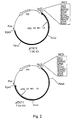
- Fig. 2 shows plasmid pTH71 and plasmid pTH75.
- the thick, solid black lines each indicate a cloned Streptomyces sp. TH1 chromosome site.
- the site has the base sequence corresponding to Sequence No. 14.
- the direction of each arrow indicates the direction toward the terminal of the sequence of Sequence No. 14 from the head thereof.
- Ap indicates a pBR322-derived ampicillin-resistant gene.
- Plac indicates an Escherichia coli lactose promoter; lac Z indicates a ⁇ -galactosidase structural gene; and MCS indicates a multi-cloning site. In this, only the restriction enzyme sites having relation to the construction of the plasmids are shown.
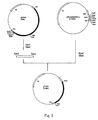
- Fig. 3 shows the steps of constructing plasmid pTH50.
- the thick, solid black lines each indicate a part containing a Streptomyces sp. TH1 chromosome site-derived L-proline-3-hydroxylase gene.
- Ap indicates a pBR322-derived ampicillin-resistant gene.
- P lac indicates an Escherichia coli lactose promoter; lac Z indicates a ⁇ -galactosidase structural gene; and MCS indicates a multi-cloning site. In this, only the restriction enzyme sites having relation to the construction of the plasmid are shown.
- Fig. 4 shows the steps of constructing plasmid pEX1-5.
- the thick, solid black lines each indicate a part containing a Streptomyces sp. TH1 chromosome site-derived L-proline-3-hydroxylase gene.
- Ap indicates a pBR322-derived ampicillin-resistant gene.
- P lac indicates an Escherichia coli lactose promoter; lac Z indicates a ⁇ -galactosidase structural gene; and MCS indicates a multi-cloning site. In this, only the restriction enzyme sites having relation to the construction of the plasmid are shown.
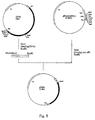
- Fig. 5 shows the steps of constructing plasmid pTH60.
- the thick, solid black lines each indicate a part containing a Streptomyces sp. TH1 chromosome site-derived L-proline-3-hydroxylase gene.
- Ap indicates a pBR322-derived ampicillin-resistant gene.
- P lac indicates an Escherichia coli lactose promoter; lac Z indicates a ⁇ -galactosidase structural gene; and MCS indicates a multi-cloning site. In this, only the restriction enzyme sites having relation to the construction of the plasmid are shown.
- Fig. 6 shows the steps of constructing plasmid pTH70.
- the thick, solid black lines each indicate a part containing a Streptomyces sp. TH1 chromosome site-derived L-proline-3-hydroxylase gene.
- Ap indicates a pBR322-derived ampicillin-resistant gene.
- P lac indicates an Escherichia coli lactose promoter; lac Z indicates a ⁇ -galactosidase structural gene; and MCS indicates a multi-cloning site. In this, only the restriction enzyme sites having relation to the construction of the plasmid are shown.
- Fig. 7 shows the steps of constructing plasmid pTH80.
- the thick, solid black lines each indicate apart containing a Streptomyces sp. TH1 chromosome site-derived L-proline-3-hydroxylase gene.
- Ap indicates a pBR322-derived ampicillin-resistant gene.
- P lac indicates an Escherichia coli lactose promoter; lac Z indicates a ⁇ -galactosidase structural gene; and MCS indicates a multi-cloning site. In this, only the restriction enzyme sites having relation to the construction of the plasmid are shown.
- Example 1 Preparation of partial DNA fragment of the gene encoding L-proline -3-hydroxylase protein derived from Streptomyces sp. TH1:
- Chromosomal DNA of Streptomyces sp. TH1 was isolated in the usual manner as follows.
- SK#2 medium (comprising 0.25 % glucose, 1.0 % soluble starch, 0.25 % yeast extract, 0.25 % peptone, 0.15 % meat extract, 0.01 % potassium dihydrogen phosphate and 0.03 % magnesium sulfate, and adjusted to a pH 7.6 with 6 N NaOH) containing 5 % mannitol and 0.05 % glycine, was put in test tubes in an amount of 10 ml each, and sterilized at 120°C for 20 minutes.
- TH1 which had grown in HT-agar plate medium comprising 1% soluble starch, 0.2% NZ amine, 0.1% yeast extract, 0.1% meat extract and 1.5 % agar, and adjusted to pH 7.2 with 6N NaOH was inoculated in the above-mentioned SK#2 medium, and cultivated at 28°C for 3 days with shaking.
- the culture was centrifuged, and the obtained cells were washed with 10 ml of a 10.3 % sucrose solution, and suspended in 6 ml of TS comprising 10.3 % sucrose, 50 mM tris-HCl (pH 8.0) and 25 mM EDTA.
- a lysozyme solution 50 mg/ml ⁇ TS was added thereto, and the mixture was incubated at 37°C for 60 minutes.
- the upper layer was taken, and again subjected to extraction with the mixture of TE saturated phenol-chloroform.
- the extract was centrifuged, and an equal amount of chloroform was then added to the upper layer, and mixed. The mixture was recentrifuged.
- the upper layer was taken, and 20 ⁇ l of an RNase A aqueous solution (10 mg/ml) heat-treated at 100°C for 10 minutes were added to the upper layer. The mixture was incubated at 37°C for 45 minutes. To the RNase A-treated solution were added 1/10 volume of a 5 M NaCl aqueous solution and 1/4 volume of 50 % PEG6000, and gently mixed. The mixture was allowed to stand overnight while being cooled with ice. After the mixed solution was centrifuged at 12,000 rpm for 10 minutes, the supernatant was discarded completely, and the precipitate was dissolved in 5 ml of TE.
- L-proline-3-hydroxylase produced by Streptomyces sp. TH1 was isolated and purified according to the method described in Reference Example 1, and the N-terminal amino acid sequence of the protein of the purified enzyme was analyzed, using Protein Sequencer Model PPSQ-10 (produced by Shimadzu Seisakusho Co.), to determine the N-terminal amino acid sequence thereof as indicated by Sequence No. 5.
- Example 5 Furthermore, the purifed enzyme obtained in Example 5 was treated with lysyl endopeptidase in 0.1 M Tris-HCl with 4 M urea (pH 9), at 37°C for 6 hours, and the thus-obtained peptide fragments were collected through HPLC. Their amino acid sequences were also analyzed in the same manner as above to determine the partial amino acid sequences as indicated by Sequence Nos. 6 and 7.
- a sense chain mix DNA primer as indicated by Sequence No. 8, which corresponds to the sequence of from the 1st to 6th amino acids in the amino acid sequence as indicated by Sequence No. 5, and an anti-sense chain mix DNA primer as indicated by Sequence No. 9, which corresponds to the sequence of from the 24th to 28th amino acids in the amino acid sequence as indicated by Sequence No. 5, were synthesized, using 380A DNA Synthesizer (produced by Applied Biosystems Co.).
- the PCR was conducted using DNA Thermal Cycler 480 (produced by Perkin Elmer Cetus Co.).
- the reaction was conducted using 20 ⁇ l of a reaction mixture having the following formulation.
- Formulation of the reaction mixture 21 ng/ ⁇ l Streptomyces sp. TH1 chromosome DNA, 10 ⁇ M sense chain mix DNA primer, 10 ⁇ M anti-sense chain mix DNA primer, 0.125 U/ ⁇ l Pfu DNA polymerase (produced by STRATAGENE Co.), 10 % DMSO, 20 mM Tris-HCl (pH 8.2), 10 mM KCl, 6 mM ammonium sulfate, 2 mM magnesium chloride, 0.1 % Triton X-100, 10 ng/ ⁇ l bovine serum albumin.
- the sense strand mix DNA primer indicated in Sequence No. 8 as a primer and the anti-sense strand mix DNA primer indicated in Sequence No. 10 corresponding to amino acids Nos. 21st to 25th of an amino acid sequence indicated in Sequence No. 5 as a primer the PCR was conducted again in the same manner, and the amplified 74 bp DNA was recovered.
- the thus-recovered DNA fragment was inserted into a Sma I site of pUC18 using Sure Clone Ligation Kit (produced by Pharmacia Co.), and the nucleotide sequence was determined by a nucleotide sequencing kit (Taq DyeDeoxyTM Terminator Cycle Sequencing Kit produced by Applied Biosystems).
- the nucleotide sequences thus determined are indicated by Sequence Nos. 11 and 12. Thus, the two nucleotide sequences were determined.
- the amino acid sequence to be presumed from the nucleotide sequence of Sequence No. 11 completely corresponded to the N-terminal amino acid sequence of the pure enzyme as indicated by Sequence No. 5, except for the 2nd amino acid that could not be identified in the sequencing of the N-terminal amino acid sequence.
- the amino acid sequence to be presumed from the nucleotide sequence of Sequence No. 12 exhibited high homology to the N-terminal amino acid sequence of the pure enzyme as indicated by Sequence No. 5.
- each plasmid was subjected to PCR in the same manner as in (3) of Example 1, using 50 ⁇ l of a reaction mixture containing 10 ⁇ M of the sense chain synthetic DNA as indicated by Sequence No. 8 and 10 ⁇ M of the anti-sense chain synthetic DNA as indicated by Sequence No. 10.
- the resulting reaction mixture each were subjected to 12.5 % polyacrylamide gel electrophoresis to identify the formation of an amplified 74 bp fragment. From each gel, the amplified fragment was recovered in the same manner as in (3) of Example 1.
- the 74 bp fragment was digoxigeniated (DIGated), using PCR DIG Labeling Kit (produced by Boehringer Mannheim Co.).
- each fragment was subjected to PCR, using 2.5 U of Pfu DNA polymerase (produced by STRATAGENE Co.), 5 ⁇ l of x10 buffer for Pfu DNA polymerase (produced by STRATAGENE Co.), 5 ⁇ l of DMSO, 5 ⁇ l of x 10 PCR DIG mix (produced by Boehringer Mannheim Co.) and 50 ⁇ l of a reaction mixture comprising 10 ⁇ M of the sense chain synthetic DNA of Sequence No. 8 and 10 ⁇ M of the anti-sense chain synthetic DNA of Sequence No. 10.
- each reaction mixture was subjected to 12.5 % polyacrylamide gel electrophoresis to identify the formation of an amplified 74 bp fragment. From each gel, was recovered the amplified fragment in the same manner as in (3) of Example 1. The resulting two amplified fragments were used as probes.
- the probe derived from the nucleotide sequence of Sequence No. 11 is referred to as probe A, and that from the nucleotide sequence of Sequence No. 12 as probe B.
- the gel was gently shaken in 0.25 N HCl for 20 minutes and then blotted onto Hybond-N + membrane (produced by Amersham Co.) in 0.4 M sodium hydroxide solution, while being sucked at 7.5 mmHg using Genopirator Pump AE-6680P (produced by ATTO Co.) and Genopirator AE-6680C (produced by ATTO Co.). The thus-blotted membrane was dried in air.
- the resulting membrane was dipped in 10 ml of a hybridization buffer of DIG Luminescent Detection Kit [comprising 50 % v/v formamide, 2 % a blocking reagent, 0.1 % w/v N-laurylsarcosine and 0.02 % w/v SDS in x5 SSC (x1 SSC is comprised of 150 mM sodium chloride and 15 mM sodium citrate)] at 42°C for 1 hour and thereafter dipped in a probe solution [prepared by adding 3 ⁇ l of the probe A as obtained in (1) of Example 2 to 200 ⁇ l of the hybridization buffer, then heating the mixture at 95°C for 2 hours and thereafter adding thereto the hybridization buffer until the total volume was 1.5 ml], at 42°C overnight.
- DIG Luminescent Detection Kit comprising 50 % v/v formamide, 2 % a blocking reagent, 0.1 % w/v N-laurylsarcosine and 0.02
- the thus-obtained membrane was washed twice each with 25 ml of x2 SSC containing 0.1 % SDS for 5 minutes at room temperature and then twice each with 25 ml of x0.1 SSC containing 0.1 % SDS for 15 minutes at 68°C.
- the membrane was treated with a washing buffer [buffer 1 (0.1 M maleic acid, 0.15 M sodium chloride, pH 7.5) containing 0.3 % w/v Tween-20] for 1 to 5 minutes at room temperature, then with 50 ml of buffer 2 (buffer 1 containing 1 % blocking reagent) for 30 minutes at room temperature, then with 10 ml of buffer 2 containing 1 ⁇ l of anti-digoxigenin-AP Fab for 30 minutes at room temperature, then twice each with 50 ml of buffer 2 for 30 minutes at room temperature, then with 10 ml of buffer 3 (0.1 M Tris-HCl, 0.1 M sodium chloride, 50 mM magnesium chloride, pH 9.5) for from 2 to 5 minutes at room temperature, and then with 5 ml of buffer 3 containing 50 ⁇ l of Lumigen PPD for 5 minutes at room temperature, in that order.
- buffer 1 0.1 M maleic acid, 0.15 M sodium chloride, pH 7.5
- buffer 2 buffer 1 containing 1 % blocking reagent
- a DNA fragment as strongly hybridized with the probe was detected at the position of approximately 6 kb.
- the process of obtaining the ethanol precipitate by using TE-saturated phenol/chloroform and cold ethanol is hereinafter referred to as an ethanol precipitation.
- the ethanol precipitate was dissolved in 120 ⁇ l of TE and subjected to agarose gel electrophoresis. After the completion of the electrophoresis, a DNA fraction at approximately 6 kb was extracted from the agarose gel and purified by the use of Prep-A-Gene (produced by Biorad Co.). Thus approximately 0.5 ⁇ g of a Pst I-cleaved chromosome DNA fraction was obtained.
- the colonies having the desired clone was selected from the above-obtained colonies as follows.
- the colonies appearing on the LB-agar medium were transferred onto a nylon membrane (Nytran, produced by Schleicher & Schuell Co.) that has been previously washed with x5 SSC, and the membrane was put on filter paper immersed with 0.5 M NaOH for 5 minutes. Subsequently, the film was put on filter paper immersed with 1.0 M Tris-HCl (pH 8.0) for 5 minutes and then on filter paper immersed with 1.5 M sodium chloride-1.0 M Tris-HCl (pH 8.0) for 5 minutes. After the film was lightly washed with x2 SSC, then crosslinking was conducted by exposure to ultraviolet rays (120 mJ/cm 2 ). Then the surface of the film was wiped with x2 SSC containing 0.1 % of SDS, and the membrane was dried in air.
- the detection was conducted using the DIGated probes as obtained in (1) of Example 2, and positive colonies were detected on the membrane DIG Luminescent Detection Kit (produced by Boehringer Mannheim Co.), in accordance with the process as described in (2) of Example 2.
- the structures of the plasmids were identified through digestion with restriction enzymes.
- the structure of pTH30 was such that a Pst I-cleaved DNA fragment of approximately 6 kb was inserted into the Pst I site of pBluescriptII KS(+) (see Fig. 1); while the structures of pTH71 and pTH75 were such that a Kpn I-cleaved DNA fragment of approximately 5 kb was inserted into the Kpn I site of pBluescriptII KS(+) in the opposite directions (see Fig. 2).
- the nucleotide sequence of the fragment thus sequenced comprised the nucleotide sequence indicated by Sequence No. 4 that codes for the protein composed of 290 amino acid residues as indicated by Sequence No. 2.
- the nucleotide sequence of Sequence No. 4 comprised the nucleotide sequence indicated by Sequence No. 12.
- the nucleotide sequence indicated by Sequence No. 4 was homologous at 78.5 % to the L-proline-3-hydroxylase I-type gene.
- the gene indicated by Sequence No. 4 is hereinafter referred to as L-proline-3-hydroxylase II-type gene.
- Plasmid pTH30 as obtained in Example 2 was cleaved with a restriction enzyme Eco RI, and then self-ligated using a ligation kit (produced by Takara Shuzo Co., LTD). E . coli XL1-Blue MRF' strain was transformed with the DNA resulting from the self-ligation in a usual manner. A plasmid was extracted from the transformant in a usual manner, and the structure of the plasmid was identified through digestion with restriction enzyme.
- plasmid pTH40 was cleaved with Kpn I and Sma I, then a fragment of approximately 0.95 kbp containing L-proline-3-hydroxylase I-type gene was identified through agarose gel electrophoresis, and the fragment was recovered from the agarose gel in a usual manner.
- the Kpn I- Sma I-cleaved fragment was inserted into the Kpn I- Sma I-cleaved site of pBluescriptII KS(+), using a ligation kit (produced by Takara Shuzo Co., LTD). With the resulting DNA, E. coli XL1-Blue MRF' strain was transformed in a usual manner.
- the resulting transformant was spread on LB-agar medium containing 50 ⁇ g/ml ampicillin and cultivated thereon overnight at 37°C.
- a plasmid was extracted from the colonies of the transformant thus grown in a usual manner, and its structure was identified through digestion with restriction enzyme.
- Plasmid pTH75 as obtained in Example 2 was cleaved with restriction enzymes Nru I and Sac I, and thus-cleaved fragment of approximately 1900 bp containing L-proline-3-hydroxylase II-type gene was recovered through agarose gel electrophoresis.
- the Nru I- Sac I-cleaved fragment was inserted into the Hinc II- Sac I-cleaved site of pBluescriptII KS(+), using a ligation kit (produced by Takara Shuzo Co., LTD). With the resulting DNA, E . coli XL2-Blue MRF' strain was transformed in a usual manner.
- the resulting transformant was spread on LB-agar medium containing 50 ⁇ g/ml ampicillin and cultivated thereon overnight at 37°C.
- a plasmid was extracted from the colonies of the transformant thus grown in a usual manner, and its structure was identified through digestion with restriction enzyme.
- E . coli ATCC12435 was transformed with plasmid pTH50 as obtained in Example 3.
- the resulting transformant was inoculated in 3 ml of an LB medium containing 50 ⁇ g/ml ampicillin and cultivated therein overnight at 30°C by shaking.
- the resulting culture was centrifuged and the thus-obtained wet cells were frozen at -20°C.
- the resulting reaction mixture was centrifuged, and 100 ⁇ l of 0.3 M borate buffer (pH 10.7), 4 ⁇ l of 10 % (v/v) mercaptoethanol aqueous solution and 16 ⁇ l of 5 % (w/v) OPA in ethanol were added to 100 ⁇ l of the resulting supernatant and left at 60°C for 30 seconds, and then 50 ⁇ l of 2 % (w/v) NBD in ethanol was added thereto. The mixture was allowed to stand at 60°C for 40 minutes. Then 30 ⁇ l of 1 N hydrochloric acid was added to the reaction mixture to stop the reaction. The resulting reaction mixture was centrifuged and filtered through a filter to remove the precipitate therefrom, and the resulting filtrate was analyzed through HPLC by which the product cis-3-hydroxy-L-proline produced was quantitatively determined.
- HPLC was conducted under the following conditions.
- the transformant E. coli ATCC12435/pTH50 produced L-proline-3-hydroxylase more by approximately 34 times/cell than the Streptomyces sp. TH1 strain which had been used as the gene source.
- L-proline-3-hydroxylase Activity Produced by Transformant Strain Cell Activity Relative Activity
- E. coli ATCC12435/pTH50 1.94 34.0
- E . coli ATCC12435 was transformed with plasmid pEX1-5 as obtained in Example 3.
- the resulting transformant was inoculated in 3 ml of a TB medium containing 50 ⁇ g/ml ampicillin and cultivated therein overnight at 30°C by shaking.
- the resulting culture was centrifuged, and the cells were collected. If desired, the cells were frozen and stored at -20°C, and the frozen cells were thawed before use.
- the cells were added to 500 ⁇ l of a reaction mixture [containing 25 mM L-proline, 50 mM 2-ketoglutaric acid, 4 mM ferrous sulfate and 8 mM L-ascorbic acid in 200 mM TES buffer (pH 7.5)] at 2.2 % (w/v) in terms of the wet cells, and reacted for 15 minutes at 35°C.
- the reaction mixture was heated at 100°C for 2 minutes to stop the reaction.
- the resulting reaction mixture was centrifuged, and 100 ⁇ l of 0.3 M borate buffer (pH 10.7), 4 ⁇ l of 10 % (v/v) mercaptoethanol aqueous solution and 16 ⁇ l of 5 % (w/v) OPA in ethanol were added to 100 ⁇ l of the resulting supernatant and left at 60°C for 30 seconds, and thereafter the mixture was neutralized.
- This treatment resulted in modification of primary amino acids with OPA but not the secondary amino acid, hydroxyproline.
- the thus-processed reaction mixture was analyzed through HPLC, by which the product of cis-3-hydroxy-L-proline produced was quantitatively determined. HPLC was conducted under the following conditions.
- the eluate as optically resolved under the conditions mentioned above was on-line mixed with reactants mentioned below under the conditions mentioned below, in which the eluate was modified with NBD in a reaction box CRB-6A (produced by Shimadzu Co.) and the NBDated-secondary amino acid was quantitatively determined through fluorophotometry.
- the transformant E. coli ATCC12435/pEX1-5 produced L-proline-3-hydroxylase more by approximately 77 times/cell than the Streptomyces sp. TH1 strain which had been used as the gene source.
- L-Proline-3-hydroxylase Activity Produced by Transformant Strain Cell Activity Relative Activity
- E. coli ATCC12435/pEX1-5 4.42 77.5
- Example 5 Construction of Expression Plasmid for a fused protein with a ⁇ -galactosidase protein fragment:
- DNA fragment was dissolved in 36 ⁇ l of TE, and the both terminals of the DNA fragment were blunted using Takara DNA Blunting Kit (produced by Takara Shuzo Co., LTD). The resulting DNA fragment was recovered through ethanol precipitation.
- the DNA was cleaved with Eco RI and subjected to agarose gel electrophoresis, a fragment of approximately 1 kb containing the structural gene of L-proline-3-hydroxylase was extracted from the agarose gel and recovered in a usual manner using Prep-A-Gene (produced by Biorad Co.). The DNA fragment was then dissolved in 10 ⁇ l of TE.
- E . coli XL1-Blue MRF' strain was transformed in a usual manner.
- the resulting transformant was spread on LB-agar medium containing 50 ⁇ g/ml ampicillin and then cultivated thereon overnight at 37°C.
- a plasmid was extracted from the grown colonies of the transformant in a usual manner, and its structure was identified through digestion with restriction enzyme.
- plasmid pTH60 into which had been inserted the structural gene of L-proline-3-hydroxylase as fused with the N-terminal amino acid sequence of ⁇ -Gal, in the direction same as that for transcription of lac promoter (see Fig. 5).
- the structure of the amino acid sequence of the fused protein thus constructed hereinabove was such that the N-terminal sequence of ⁇ -Gal comprised of 21 amino acids has been fused to the L-proline-3-hydroxylase protein via arginine (22nd) as newly formed at the DNA binding site.
- methionine (GTG) which is the first amino acid of the L-proline-3-hydroxylase protein is translated as valine.
- the amino acid sequence of the fused protein is indicated by Sequence No. 15.
- pBluescriptII KS(+) DNA (2.4 ⁇ g) was cleaved with Acc I and subjected to ethanol precipitation to obtain an ethanol precipitate (DNA fragment).
- the both terminals of the DNA fragment were blunted using Takara DNA Blunting Kit (produced by Takara Shuzo Co., LTD).
- the resulting DNA fragment was cleaved with Eco RI and then subjected to ethanol precipitation to obtain an ethanol precipitate.
- the ethanol precipitate was dissolved in 5 ⁇ l of TE.
- E . coli XL1-Blue MRF' strain was transformed in a usual manner.
- the resulting transformant was spread on LB-agar medium containing 50 ⁇ g/ml ampicillin and then cultivated thereon overnight at 37°C.
- a plasmid was extracted from the grown colonies of the transformant in a usual manner, and its structure was identified through digestion with restriction enzyme.
- plasmid pTH70 into which had been inserted the structural gene of L-proline-3-hydroxylase as fused with the N-terminal amino acid sequence of ⁇ -Gal in the direction same as that for transcription of lac promoter (see Fig. 6).
- the structure of the amino acid sequence of the fused protein thus constructed hereinabove was such that the N-terminal sequence of ⁇ -Gal comprised of 27 amino acids has been fused to the L-proline-3-hydroxylase via arginine (28th) as newly formed at the DNA binding site.
- methionine (GTG) which is the first amino acid of the L-proline-3-hydroxylase protein is translated as valine.
- the amino acid sequence of the fused protein is indicated by Sequence No. 16.
- DNA fragment 2.4 ⁇ g of plasmid pBluescriptII KS(+) DNA was cleaved with Pst I and subjected to ethanol precipitation to obtain an ethanol precipitate (DNA fragment).
- This DNA fragment was dissolved in 36 ⁇ l of TE, and the both terminals of the DNA fragment were blunted using Takara DNA Blunting Kit (produced by Takara Shuzo Co., LTD).
- the resulting DNA fragment was then cleaved with Sac II and subjected to ethanol precipitation to obtain an ethanol precipitate (DNA fragment).
- the DNA fragment was then dissolved in 5 ⁇ l of TE.
- E . coli XL1-Blue MRF' strain was transformed in a usual manner.
- the resulting transformant was spread on LB-agar medium containing 50 ⁇ g/ml ampicillin and then cultivated thereon overnight at 37°C.
- a plasmid was extracted from the grown colonies of the transformant in a usual manner, and its structure was identified through digestion with restriction enzyme.
- plasmid pTH80 into which had been inserted the structural gene of L-proline-3-hydroxylase as fused with the N-terminal amino acid sequence of ⁇ -Gal in the direction same as that for transcription of lac promoter (see Fig. 7).
- the structure of the amino acid sequence of the fused protein thus constructed hereinabove was such that the N-terminal sequence of ⁇ -Gal comprised of 37 amino acids has been fused to the L-proline-3-hydroxylase protein via arginine (38th) as newly formed at the DNA binding site.
- methionine (GTG) which is the first amino acid of the L-proline-3-hydroxylase protein is translated as valine.
- the amino acid sequence of the fused protein is indicated by Sequence No. 17.
- E . coli ATCC12435 was transformed with any one of plasmids pTH60, pTH70 and pTH80 as obtained in Example 5.
- the resulting transformant was cultivated, and the productivity of L-proline-3-hydroxylase by the transformant cells was examined.
- the transformant produced L-proline-3-hydroxylase in an amount of 46 to 121 times per cell in comparison to Streptomyces sp. TH1 strain which had been used as L-proline-3-hydroxylase Activity Produced by Transformants Strain Cell Activity Relative Activity
- E. coli ATCC12435/pTH60 5.19 91.1
- E. coli ATCC12435/pTH80 2.63 46.1
- the transformant of E . coli ATCC12435/pTH70 was inoculated in 3 ml of a TB medium (comprising 12 g of bactotryptone, 24 g of bactoyeast extract, 4 g of glycerol, 2.3 g of KH 2 PO 4 and 12.5 g of dipotassium phosphate in one liter of distilled water and sterilized at 120°C for 20 minutes) containing 100 ⁇ g/ml ampicillin, and cultivated therein at 30°C for 16 hours by shaking culture. The resulting culture was centrifuged, and the amount of cis-3-hydroxy-L-proline in the supernatant thus separated was quantitatively determined.
- a TB medium comprising 12 g of bactotryptone, 24 g of bactoyeast extract, 4 g of glycerol, 2.3 g of KH 2 PO 4 and 12.5 g of dipotassium phosphate in one liter of distilled water and sterilize
- the transformant of E . coli ATCC12435/pTH70 was inoculated in 50 ml of a Med4 medium containing 100 ⁇ g/ml ampicillin, and cultivated therein at 30°C for 16 hours by shaking.
- the culture was used as a seed culture, which was inoculated in a 5-liter jar fermenter containing therein 2 liters of a Med6 medium. 200 mM L-proline and 100 ⁇ g/ml ampicillin were added thereto, and the transformant was cultivated in the fermenter under the condition of 400 rpm and 1vvm, at 30°C.
- glucose and L-proline were suitably added to the medium in such a manner that glucose was always present in the medium and L-proline could be at about 50 mM therein, and the lowermost limit of the pH of the medium was controlled at 6.5 by adding NH 4 OH to the medium.
- the culture was centrifuged, and the amount of cis-3-hydroxy-L-proline in the supernatant separated was quantitatively determined. Seventy two hours after the start of the incubation, 115 mM (15 g/liter) cis-3-hydroxy-L-proline was produced and accumulated in the supernatant of the culture of E. coli ATCC12435/pTH70.
- the transformant was inoculated in 10 ml of an LB medium containing 50 ⁇ g/ml ampicillin and cultivated therein overnight at 30°C by shaking. Then 7 ml of the culture was centrifuged to collect the cells (wet cells). If desired, the cells were frozen and stored at -20°C and thawed before use.
- reaction mixture comprising 24 mM L-proline, 24 mM 2-ketoglutaric acid, 4 mM ferrous sulfate and 8 mM L-ascorbic acid in 200 mM TES buffer (pH 7.5)
- reaction was conducted at 35°C for 60 minutes.
- the amount of cis-3-hydroxy-L-proline as formed in the reaction mixture was quantitatively determined.
- 17.7 mM (2.3 g/liter) of cis-3-hydroxy-L-proline was formed in the reaction mixture.
- Ten milliliters of an SR3 medium (comprising 1.0 % glucose, 1.0 % soluble starch, 0.5 % yeast extract, 0.5 % tryptone, 0.3 % meat extract and 0.05 % magnesium phosphate and adjusted at pH 7.2 with 6 N NaOH) was put into a test tube and sterilized at 120°C for 20 minutes.
- SR3 medium comprising 1.0 % glucose, 1.0 % soluble starch, 0.5 % yeast extract, 0.5 % tryptone, 0.3 % meat extract and 0.05 % magnesium phosphate and adjusted at pH 7.2 with 6 N NaOH
- TH1 that had grown in HT-agar plate medium (comprising 1% soluble starch, 0.2% NZ amine, 0.1% yeast extract, 0.1% meat extract and 1.5% agar, adjusted to pH 7.2 with 6N NaOH, and sterilized at 120°C for 20 minutes) was inoculated into the above-mentioned SR3 medium in each test tube and cultivated at 28°C for 2 days by shaking. The resulting culture was used as the seed culture in the following step.
- HT-agar plate medium comprising 1% soluble starch, 0.2% NZ amine, 0.1% yeast extract, 0.1% meat extract and 1.5% agar, adjusted to pH 7.2 with 6N NaOH, and sterilized at 120°C for 20 minutes
- Df3 medium comprising 5% soluble starch, 3% corn steep liquor, 0.05% potassium dihydrogen phosphate, 0.05% magnesium sulfate 7 hydrate and 0.5% calcium carbonate, and adjusted to pH 7.0 with 6N NaOH, was put in 5 liter-jar fermenters in an amount of 2 liters each and sterilized at 120°C for 20 minutes.
- the above-mentioned seed culture was inoculated in the DF3 medium in each jar fermenter under germ-free condition and cultivated under the condition of 700 rpm and 1 vvm, at 28°C for 2 days. During the cultivation, the pH of the medium was not adjusted.
- the thus-obtained culture was subjected to centrifugation at 15,000 x g for 10 minutes at 4°C and 75g of the wet cells thus separated were obtained per liter of the culture.
- the wet cells were washed with a physiological saline at 4°C and then recentrifuged.
- the thus-obtained wet cells were frozen and stored at -80°C before use.
- the pH of the supernatant obtained in the previous step was adjusted at 4.5 with 6 N HCl, and the precipitate formed was removed therefrom through centrifugation as conducted at 15,000 g for 30 minutes to obtain a supernatant.
- the supernatant obtained in the previous step was passed through a RESOURCETM Q column (6 ml; produced by Pharmacia Co.) that had been equilibrated with Buffer (A).
- the column was washed with Buffer (A), and the fraction containing the desired enzyme was eluted with Buffer (A) having a linear concentration gradient of NaCl of 0 to 0.3M.
- the active fraction obtained in the previous step was diluted 3-fold with Buffer (B) [20 mM TES buffer (pH 7.5) containing 1 mM DTT, 0.2 mM EDTA and 10% (v/v) of glycerol] and was passed through a RESOURCETM Q column (1 ml; produced by Pharmacia Co.) that had been equilibrated with Buffer (B). After the column was washed with Buffer (B), the fraction containing the enzyme was eluted with Buffer (B) having a linear concentration gradient of NaCl of 0 to 0.3 M.
- Buffer (B) 20 mM TES buffer (pH 7.5) containing 1 mM DTT, 0.2 mM EDTA and 10% (v/v) of glycerol
- NaCl was added to the active fraction obtained in the previous step until an NaCl concentration was 2M.
- the mixture was applied to a Phenyl Sepharose column (1 ml; Phenyl Sepharose HP HiLoad) that had been equilibrated with Buffer (B) containing 2M NaCl.
- Buffer (B) containing 2M NaCl.
- the column was washed with Buffer (B) containing 2M NaCl, and the fraction containing the desired enzyme was eluted with Buffer (B) containing 0.1% (v/v) of Tween 20.
- the active fraction obtained in the previous step was de-salted using a PD-10 column, and the resulting mixture was passed through a RESOURCE TH Q column (1 ml; produced by Pharmacia Co.) that had been equilibrated with Buffer (A). After the column was washed with Buffer (A), the fraction containing the desired enzyme was eluted with Buffer (A) having a linear concentration gradient of NaCl of 0 to 0.3 M.
- the active fraction obtained in the previous step was diluted 3-fold with Buffer (B) containing 0.1% (v/v) Tween 20 and passed through a RESOURCE TH Q column (1 ml; produced by Pharmacia Co.) that had been equilibrated with Buffer (B). The column was washed with Buffer (B), and the fraction containing the desired enzyme was eluted with Buffer B having a linear concentration gradient of NaCl of 0 to 0.3M.
- SR3 medium was put into a test tube in an amount of 10 ml and sterilized at 120°C for 20 minutes.
- One loopful of cells of Streptomyces sp. TH1 that had grown in HT-agar plate medium, was inoculated into the above-mentioned SR3 medium in each test tube and cultivated at 28°C for 2 days by shaking. The resulting culture was used as the seed culture in the following step.
- Df3 medium was put into a test tube in an amount of 10 ml each and sterilized at 120°C for 20 minutes.
- the above-mentioned seed culture was inoculated in the Df3 medium in each test tube under germ-free condition and cultivated at 28°C for 2 days with shaking.
- the thus-obtained culture was subjected to centrifugation at 8,000 rpm for 10 minutes at 4°C.
- the cells thus separated were suspended in 80 mM TES (N-tris(hydroxymethyl)methyl-2-aminoethanesulfonic acid)buffer (pH 7.5), washed and then centrifuged to separate the wet cells.
- TES N-tris(hydroxymethyl)methyl-2-aminoethanesulfonic acid
Landscapes
- Chemical & Material Sciences (AREA)
- Life Sciences & Earth Sciences (AREA)
- Organic Chemistry (AREA)
- Wood Science & Technology (AREA)
- Zoology (AREA)
- Engineering & Computer Science (AREA)
- Health & Medical Sciences (AREA)
- Bioinformatics & Cheminformatics (AREA)
- Genetics & Genomics (AREA)
- General Engineering & Computer Science (AREA)
- Microbiology (AREA)
- Biotechnology (AREA)
- General Health & Medical Sciences (AREA)
- Biochemistry (AREA)
- Medicinal Chemistry (AREA)
- Molecular Biology (AREA)
- Biomedical Technology (AREA)
- Chemical Kinetics & Catalysis (AREA)
- General Chemical & Material Sciences (AREA)
- Preparation Of Compounds By Using Micro-Organisms (AREA)
- Micro-Organisms Or Cultivation Processes Thereof (AREA)
- Enzymes And Modification Thereof (AREA)
- Pyrrole Compounds (AREA)
- Organic Low-Molecular-Weight Compounds And Preparation Thereof (AREA)
Claims (20)
- Ein isoliertes Nukleinsäurefragment, das für ein Protein mit der Aminosäuresequenz ausgewählt aus den Sequenzen Nr. 1, 2, 15, 16 und 17 kodiert.
- Isoliertes Nukleinsäurefragment, ausgewählt aus Nukleinsäuresequenzen der Sequenzen Nr. 3, 4, 13 und 14.
- Isoliertes Nukleinsäurefragment, das mit dem Nukleinsäurefragment gemäß den Ansprüchen 1 oder 2 hybridisiert und für ein Protein kodiert, das die enzymatische Fähigkeit zur Hydroxylierung der 3-Position von L-Prolin besitzt, und das aus freiem L-Prolin in Anwesenheit von 2-Ketoglutarsäure und zweiwertigen Eisenionen cis-3-Hydroxy-L-Prolin herstellt.
- Nukleinsäurefragment gemäß den Ansprüchen 1 bis 3, wobei das Gen aus Mikroorganismen der Gattung Streptomyces oder Bacillus stammt.
- Nukleinsäurefragment gemäß Anspruch 4, wobei die Mikroorganismen ausgewählt sind aus Streptomyces canus ATCC12647, Streptomyces canus ATCC12646, Streptomyces sp. TH1 (FERM BP-4399), Bacillus sp. TH2 (FERM BP-4397) und Bacillus sp. TH3 (FERM BP-4398).
- Expressionsvektor, hergestellt durch Insertion eines Nukleinsäurefragments gemäß den Ansprüchen 1 bis 5 in einen Vektor.
- Transformierte Zelle, enthaltend einen Expressionsvektor gemäß Anspruch 6.
- Transformierte Zelle gemäß Anspruch 7, die ausgewählt ist aus Escherichia coli XL2-Blue/pTH30 (FERM BP-5026) und Escherichia coli XL2-Blue/pTH75 (FERM BP-5409).
- Protein mit der Aminosäuresequenz, ausgewählt aus den Sequenzen Nr. 2, 15, 16 und 17.
- Verfahren zur Herstellung von L-Prolin-3-hydroxylase, umfassend das Kultivieren transformierter Zellen gemäß Anspruch 7 oder 8 in einem Medium, wodurch L-Prolin-3-hydroxylase hergestellt und angereichert wird, gefolgt von Gewinnen der L-Prolin-3-hydroxylase aus der resultierenden Kultur.
- Verfahren zur Herstellung von L-Prolin-3-hydroxylase gemäß Anspruch 10, wobei L-Prolin dem Medium zugesetzt wird.
- Verfahren zur Herstellung von cis-3-Hydroxy-L-Prolin, umfassend das Kultivieren transformierter Zellen gemäß den Ansprüchen 7 oder 8 in einem Medium, wodurch cis-3-Hydroxyl-L-Prolin hergestellt und angereichert wird, gefolgt von Gewinnen des cis-3-Hydroxy-L-Prolins aus der resultierenden Kultur.
- Verfahren zur Herstellung von cis-3-Hydroxy-L-Prolin gemäß Anspruch 12, wobei die transformierfe Zelle die Fähigkeit zur Herstellung von L-Prolin aus Zuckerquellen in dem Medium besitzt und Anreichern von cis-3-Hydroxy-L-Prolin in der Kultur.
- Verfahren zur Herstellung von cis-3-Hydroxy-L-Prolin gemäß Anspruch 12, wobei die transformierte Zelle die Fähigkeit zur Herstellung von 2-Ketoglutarsäure aus Zuckerquellen in dem Medium besitzt, und Anreichern von cis-3-Hydroxy-L-Prolin in der Kultur.
- Verfahren zur Herstellung von cis-3-Hydroxy-L-Prolin gemäß Anspruch 12, wobei L-Prolin dem Medium zugesetzt wird.
- Verfahren zur Herstellung von cis-3-Hydroxy-L-Prolin gemäß Anspruch 12, wobei L-Prolin, 2-Ketoglutarsäure und zweiwertige Eisenionen dem Medium zugesetzt werden.
- Verfahren zur Herstellung von cis-3-Hydroxy-L-Prolin, umfassend Kultivieren transformierter Zellen gemäß Anspruch 7 oder 8 in einem Medium, dann Umsetzen von L-Prolin zu cis-3-Hydroxy-L-Prolin in Anwesenheit von 2-Ketoglutarsäure und zweiwertigen Eisenionen in der Kultur oder in einem wässrigen Medium, während die Kultur, die kultivierten Zellen oder ein Produkt, das durch Verarbeiten der Zellen hergestellt werden soll, als enzymatische Quelle verwendet wird, gefolgt von Gewinnen des resultierenden cis-3-Hydroxy-L-Prolins aus der Kultur oder dem wässrigen Medium.
- Verfahren zur Herstellung von cis-3-Hydroxy-L-Prolin gemäß Anspruch 17, wobei die transformierte Zelle die Fähigkeit zur Herstellung von L-Prolin aus Zuckerquellen in dem Medium besitzt, und Anreichern von L-Prolin in der Kultur.
- Verfahren zur Herstellung von cis-3-Hydroxy-L-Prolin gemäß Anspruch 17, wobei die transformierte Zelle die Fähigkeit zur Herstellung von 2-Ketoglutarsäure aus Zuckerquellen in dem Medium besitzt, und Anreichern von 2-Ketoglutarsäure in der Kultur.
- Verfahren zur Herstellung von cis-3-Hydroxy-L-Prolin gemäß Anspruch 17, wobei das Prodükt, das hergestellt werden soll, durch Verarbeiten der kultivierten Zellen ausgewählt ist aus getrockneten Zellen, lyophilisierten Zellen, verarbeiteten Surfaktanzien-behandelten Zellen, enzymatisch behandelten Zellen, ultraschallbehandelten Zellen, mechanisch zermahlenen Zellen, mechanisch komprimierten Zellen, Lösungsmittel-behandelten Zellen, fraktionierten Zellproteinen, immobilisierten Zellen, immobilisierten Materialien erhalten durch Behandlung der Zellen, Enzymen mit der enzymatischen Fähigkeit zur Hydroxylierung der 3-Position von L-Prolin, das aus den Zellen extrahiert werden soll, reinen Produkten, die durch Reinigen der Enzyme und immobilisierten Enzyme hergestellt werden sollen.
Applications Claiming Priority (4)
| Application Number | Priority Date | Filing Date | Title |
|---|---|---|---|
| JP4698795 | 1995-03-07 | ||
| JP46987/95 | 1995-03-07 | ||
| JP4698795 | 1995-03-07 | ||
| PCT/JP1996/000558 WO1996027668A1 (en) | 1995-03-07 | 1996-03-07 | PROCESS FOR PRODUCING cis-3-HYDROXY-L-PROLINE |
Publications (3)
| Publication Number | Publication Date |
|---|---|
| EP0771876A1 EP0771876A1 (de) | 1997-05-07 |
| EP0771876A4 EP0771876A4 (de) | 1999-06-02 |
| EP0771876B1 true EP0771876B1 (de) | 2002-07-10 |
Family
ID=12762566
Family Applications (1)
| Application Number | Title | Priority Date | Filing Date |
|---|---|---|---|
| EP96905023A Expired - Lifetime EP0771876B1 (de) | 1995-03-07 | 1996-03-07 | VERFAHREN ZUR HERSTELLUNG VON cis-3-HYDROXY-L-PROLIN |
Country Status (9)
| Country | Link |
|---|---|
| EP (1) | EP0771876B1 (de) |
| JP (1) | JP3781776B2 (de) |
| KR (1) | KR100460580B1 (de) |
| CN (1) | CN1144876C (de) |
| AT (1) | ATE220419T1 (de) |
| CA (1) | CA2189675C (de) |
| DE (1) | DE69622239T2 (de) |
| ES (1) | ES2177762T3 (de) |
| WO (1) | WO1996027668A1 (de) |
Families Citing this family (2)
| Publication number | Priority date | Publication date | Assignee | Title |
|---|---|---|---|---|
| JP5697327B2 (ja) * | 2009-11-09 | 2015-04-08 | 協和発酵バイオ株式会社 | シス−ヒドロキシ−l−プロリンの製造方法 |
| CN109232351A (zh) * | 2018-10-19 | 2019-01-18 | 武汉恒和达生物医药有限公司 | 一种顺式-3-羟基-l-脯氨酸的制备方法 |
Family Cites Families (2)
| Publication number | Priority date | Publication date | Assignee | Title |
|---|---|---|---|---|
| KR100356927B1 (ko) * | 1993-09-07 | 2003-01-24 | 교와 핫꼬 고교 가부시끼가이샤 | 시스-3-히드록시-l-프롤린의제조법 |
| CA2131776C (en) * | 1994-04-05 | 2002-04-23 | Akio Ozaki | Process for producing cis-3-hydroxy-l-proline |
-
1996
- 1996-03-07 KR KR1019960706293A patent/KR100460580B1/ko not_active Expired - Lifetime
- 1996-03-07 WO PCT/JP1996/000558 patent/WO1996027668A1/ja not_active Ceased
- 1996-03-07 CA CA002189675A patent/CA2189675C/en not_active Expired - Lifetime
- 1996-03-07 ES ES96905023T patent/ES2177762T3/es not_active Expired - Lifetime
- 1996-03-07 CN CNB961903554A patent/CN1144876C/zh not_active Expired - Lifetime
- 1996-03-07 JP JP52676996A patent/JP3781776B2/ja not_active Expired - Lifetime
- 1996-03-07 AT AT96905023T patent/ATE220419T1/de not_active IP Right Cessation
- 1996-03-07 DE DE69622239T patent/DE69622239T2/de not_active Expired - Lifetime
- 1996-03-07 EP EP96905023A patent/EP0771876B1/de not_active Expired - Lifetime
Also Published As
| Publication number | Publication date |
|---|---|
| CN1144876C (zh) | 2004-04-07 |
| EP0771876A1 (de) | 1997-05-07 |
| DE69622239D1 (de) | 2002-08-14 |
| CN1150822A (zh) | 1997-05-28 |
| KR100460580B1 (ko) | 2005-01-15 |
| ES2177762T3 (es) | 2002-12-16 |
| ATE220419T1 (de) | 2002-07-15 |
| EP0771876A4 (de) | 1999-06-02 |
| KR970702920A (ko) | 1997-06-10 |
| CA2189675A1 (en) | 1996-09-08 |
| JP3781776B2 (ja) | 2006-05-31 |
| HK1000713A1 (en) | 2002-10-11 |
| DE69622239T2 (de) | 2003-03-27 |
| WO1996027668A1 (en) | 1996-09-12 |
| CA2189675C (en) | 2007-12-11 |
Similar Documents
| Publication | Publication Date | Title |
|---|---|---|
| US7632663B1 (en) | Method for microbially producing L-valine | |
| US20090263885A1 (en) | Process for producing trans-4-hydroxy-L-proline | |
| EP0641862A2 (de) | Verfahren zur Herstellung von Trans-4-Hydroxy-1-Proline | |
| CA2209889C (en) | Process for producing trans-4-hydroxy-l-proline | |
| US6767726B2 (en) | Process for producing cis-3-hydroxy-L-proline | |
| EP0771876B1 (de) | VERFAHREN ZUR HERSTELLUNG VON cis-3-HYDROXY-L-PROLIN | |
| EP0759472B1 (de) | Verfahren zur herstellung von trans-4-hydroxy-l-prolin | |
| KR20050108387A (ko) | L-세린 대사에 관여하는 단백질을 암호화하는 코리네형박테리아의 뉴클레오티드 서열 및 미생물에 의한 l-세린의제조 방법 | |
| HK1000712B (en) | Process for producing trans-4-hydroxy-l-proline | |
| HK1000713B (en) | Process for producing cis-3-hydroxy-l-proline | |
| US7112432B2 (en) | Process for producing cis-3-hydroxy-L-proline | |
| JPWO1996027669A1 (ja) | トランス−4−ヒドロキシ−l−プロリンの製造法 | |
| JPWO1996027668A1 (ja) | シス−3−ヒドロキシ−l−プロリンの製造法 | |
| EP0645457B1 (de) | L-Proline-3-Hydroxylase und Verfahren zur Herstellung von cis-3-Hydroxy-L-Prolin | |
| WO2008013262A1 (en) | L-leucine hydroxylase and dna encoding the enzyme | |
| HK1000714B (en) | L-proline-3-hydroxylase and process for producing cis-3-hydroxy-l-proline | |
| CA2131775C (en) | Process for producing trans-4-hydroxy-l-proline |
Legal Events
| Date | Code | Title | Description |
|---|---|---|---|
| PUAI | Public reference made under article 153(3) epc to a published international application that has entered the european phase |
Free format text: ORIGINAL CODE: 0009012 |
|
| 17P | Request for examination filed |
Effective date: 19961122 |
|
| AK | Designated contracting states |
Kind code of ref document: A1 Designated state(s): AT BE CH DE DK ES FI FR GB GR IE IT LI LU MC NL PT SE |
|
| A4 | Supplementary search report drawn up and despatched |
Effective date: 19990416 |
|
| AK | Designated contracting states |
Kind code of ref document: A4 Designated state(s): AT BE CH DE DK ES FI FR GB GR IE IT LI LU MC NL PT SE |
|
| RIN1 | Information on inventor provided before grant (corrected) |
Inventor name: SHIBASAKI, TAKESHI Inventor name: MORI, HIDEO Inventor name: OZAKI, AKIO |
|
| 17Q | First examination report despatched |
Effective date: 20000407 |
|
| GRAG | Despatch of communication of intention to grant |
Free format text: ORIGINAL CODE: EPIDOS AGRA |
|
| GRAG | Despatch of communication of intention to grant |
Free format text: ORIGINAL CODE: EPIDOS AGRA |
|
| GRAG | Despatch of communication of intention to grant |
Free format text: ORIGINAL CODE: EPIDOS AGRA |
|
| GRAH | Despatch of communication of intention to grant a patent |
Free format text: ORIGINAL CODE: EPIDOS IGRA |
|
| GRAH | Despatch of communication of intention to grant a patent |
Free format text: ORIGINAL CODE: EPIDOS IGRA |
|
| GRAA | (expected) grant |
Free format text: ORIGINAL CODE: 0009210 |
|
| AK | Designated contracting states |
Kind code of ref document: B1 Designated state(s): AT BE CH DE DK ES FI FR GB GR IE IT LI LU MC NL PT SE |
|
| PG25 | Lapsed in a contracting state [announced via postgrant information from national office to epo] |
Ref country code: GR Free format text: LAPSE BECAUSE OF FAILURE TO SUBMIT A TRANSLATION OF THE DESCRIPTION OR TO PAY THE FEE WITHIN THE PRESCRIBED TIME-LIMIT Effective date: 20020710 |
|
| REF | Corresponds to: |
Ref document number: 220419 Country of ref document: AT Date of ref document: 20020715 Kind code of ref document: T |
|
| REG | Reference to a national code |
Ref country code: GB Ref legal event code: FG4D |
|
| REG | Reference to a national code |
Ref country code: CH Ref legal event code: EP |
|
| REG | Reference to a national code |
Ref country code: IE Ref legal event code: FG4D |
|
| REF | Corresponds to: |
Ref document number: 69622239 Country of ref document: DE Date of ref document: 20020814 |
|
| PG25 | Lapsed in a contracting state [announced via postgrant information from national office to epo] |
Ref country code: SE Free format text: LAPSE BECAUSE OF FAILURE TO SUBMIT A TRANSLATION OF THE DESCRIPTION OR TO PAY THE FEE WITHIN THE PRESCRIBED TIME-LIMIT Effective date: 20021010 Ref country code: PT Free format text: LAPSE BECAUSE OF FAILURE TO SUBMIT A TRANSLATION OF THE DESCRIPTION OR TO PAY THE FEE WITHIN THE PRESCRIBED TIME-LIMIT Effective date: 20021010 Ref country code: DK Free format text: LAPSE BECAUSE OF FAILURE TO SUBMIT A TRANSLATION OF THE DESCRIPTION OR TO PAY THE FEE WITHIN THE PRESCRIBED TIME-LIMIT Effective date: 20021010 |
|
| REG | Reference to a national code |
Ref country code: CH Ref legal event code: NV Representative=s name: BOVARD AG PATENTANWAELTE |
|
| REG | Reference to a national code |
Ref country code: ES Ref legal event code: FG2A Ref document number: 2177762 Country of ref document: ES Kind code of ref document: T3 |
|
| ET | Fr: translation filed | ||
| PG25 | Lapsed in a contracting state [announced via postgrant information from national office to epo] |
Ref country code: LU Free format text: LAPSE BECAUSE OF NON-PAYMENT OF DUE FEES Effective date: 20030307 Ref country code: IE Free format text: LAPSE BECAUSE OF NON-PAYMENT OF DUE FEES Effective date: 20030307 |
|
| PG25 | Lapsed in a contracting state [announced via postgrant information from national office to epo] |
Ref country code: MC Free format text: LAPSE BECAUSE OF NON-PAYMENT OF DUE FEES Effective date: 20030331 |
|
| PLBE | No opposition filed within time limit |
Free format text: ORIGINAL CODE: 0009261 |
|
| STAA | Information on the status of an ep patent application or granted ep patent |
Free format text: STATUS: NO OPPOSITION FILED WITHIN TIME LIMIT |
|
| 26N | No opposition filed |
Effective date: 20030411 |
|
| REG | Reference to a national code |
Ref country code: IE Ref legal event code: MM4A |
|
| PGFP | Annual fee paid to national office [announced via postgrant information from national office to epo] |
Ref country code: CH Payment date: 20070301 Year of fee payment: 12 |
|
| PGFP | Annual fee paid to national office [announced via postgrant information from national office to epo] |
Ref country code: NL Payment date: 20070304 Year of fee payment: 12 |
|
| PGFP | Annual fee paid to national office [announced via postgrant information from national office to epo] |
Ref country code: AT Payment date: 20070313 Year of fee payment: 12 |
|
| PGFP | Annual fee paid to national office [announced via postgrant information from national office to epo] |
Ref country code: FI Payment date: 20070314 Year of fee payment: 12 |
|
| PGFP | Annual fee paid to national office [announced via postgrant information from national office to epo] |
Ref country code: ES Payment date: 20070417 Year of fee payment: 12 |
|
| PG25 | Lapsed in a contracting state [announced via postgrant information from national office to epo] |
Ref country code: FI Free format text: LAPSE BECAUSE OF NON-PAYMENT OF DUE FEES Effective date: 20080307 |
|
| REG | Reference to a national code |
Ref country code: CH Ref legal event code: PL |
|
| PG25 | Lapsed in a contracting state [announced via postgrant information from national office to epo] |
Ref country code: NL Free format text: LAPSE BECAUSE OF NON-PAYMENT OF DUE FEES Effective date: 20081001 Ref country code: AT Free format text: LAPSE BECAUSE OF NON-PAYMENT OF DUE FEES Effective date: 20080307 |
|
| NLV4 | Nl: lapsed or anulled due to non-payment of the annual fee |
Effective date: 20081001 |
|
| PG25 | Lapsed in a contracting state [announced via postgrant information from national office to epo] |
Ref country code: LI Free format text: LAPSE BECAUSE OF NON-PAYMENT OF DUE FEES Effective date: 20080331 Ref country code: CH Free format text: LAPSE BECAUSE OF NON-PAYMENT OF DUE FEES Effective date: 20080331 |
|
| REG | Reference to a national code |
Ref country code: ES Ref legal event code: FD2A Effective date: 20080308 |
|
| PG25 | Lapsed in a contracting state [announced via postgrant information from national office to epo] |
Ref country code: ES Free format text: LAPSE BECAUSE OF NON-PAYMENT OF DUE FEES Effective date: 20080308 |
|
| REG | Reference to a national code |
Ref country code: FR Ref legal event code: PLFP Year of fee payment: 20 |
|
| PGFP | Annual fee paid to national office [announced via postgrant information from national office to epo] |
Ref country code: IT Payment date: 20150220 Year of fee payment: 20 Ref country code: DE Payment date: 20150305 Year of fee payment: 20 |
|
| PGFP | Annual fee paid to national office [announced via postgrant information from national office to epo] |
Ref country code: FR Payment date: 20150309 Year of fee payment: 20 Ref country code: GB Payment date: 20150304 Year of fee payment: 20 |
|
| PGFP | Annual fee paid to national office [announced via postgrant information from national office to epo] |
Ref country code: BE Payment date: 20150311 Year of fee payment: 20 |
|
| REG | Reference to a national code |
Ref country code: DE Ref legal event code: R071 Ref document number: 69622239 Country of ref document: DE |
|
| REG | Reference to a national code |
Ref country code: GB Ref legal event code: PE20 Expiry date: 20160306 |
|
| PG25 | Lapsed in a contracting state [announced via postgrant information from national office to epo] |
Ref country code: GB Free format text: LAPSE BECAUSE OF EXPIRATION OF PROTECTION Effective date: 20160306 |