EP0772465B1 - Alginatfasern, herstellung und verwendung - Google Patents
Alginatfasern, herstellung und verwendung Download PDFInfo
- Publication number
- EP0772465B1 EP0772465B1 EP95926887A EP95926887A EP0772465B1 EP 0772465 B1 EP0772465 B1 EP 0772465B1 EP 95926887 A EP95926887 A EP 95926887A EP 95926887 A EP95926887 A EP 95926887A EP 0772465 B1 EP0772465 B1 EP 0772465B1
- Authority
- EP
- European Patent Office
- Prior art keywords
- fibres
- alginate
- composition
- fibre
- bioerodible
- Prior art date
- Legal status (The legal status is an assumption and is not a legal conclusion. Google has not performed a legal analysis and makes no representation as to the accuracy of the status listed.)
- Expired - Lifetime
Links
- 235000010443 alginic acid Nutrition 0.000 title claims abstract description 72
- 229920000615 alginic acid Polymers 0.000 title claims abstract description 72
- FHVDTGUDJYJELY-UHFFFAOYSA-N 6-{[2-carboxy-4,5-dihydroxy-6-(phosphanyloxy)oxan-3-yl]oxy}-4,5-dihydroxy-3-phosphanyloxane-2-carboxylic acid Chemical compound O1C(C(O)=O)C(P)C(O)C(O)C1OC1C(C(O)=O)OC(OP)C(O)C1O FHVDTGUDJYJELY-UHFFFAOYSA-N 0.000 title claims abstract description 69
- 229940072056 alginate Drugs 0.000 title claims abstract description 63
- 238000004519 manufacturing process Methods 0.000 title claims description 4
- 239000000203 mixture Substances 0.000 claims abstract description 52
- 238000002513 implantation Methods 0.000 claims abstract description 17
- 230000002163 immunogen Effects 0.000 claims abstract description 9
- 239000000835 fiber Substances 0.000 claims description 45
- 150000001768 cations Chemical class 0.000 claims description 23
- 150000002500 ions Chemical class 0.000 claims description 20
- 238000000034 method Methods 0.000 claims description 19
- XLYOFNOQVPJJNP-UHFFFAOYSA-N water Substances O XLYOFNOQVPJJNP-UHFFFAOYSA-N 0.000 claims description 15
- -1 salt alginate Chemical class 0.000 claims description 13
- 239000008367 deionised water Substances 0.000 claims description 10
- 230000008569 process Effects 0.000 claims description 9
- 239000002253 acid Substances 0.000 claims description 8
- 239000003814 drug Substances 0.000 claims description 7
- 239000000783 alginic acid Substances 0.000 claims description 6
- 229960001126 alginic acid Drugs 0.000 claims description 6
- 150000004781 alginic acids Chemical class 0.000 claims description 6
- 239000007864 aqueous solution Substances 0.000 claims description 6
- 239000000648 calcium alginate Substances 0.000 claims description 6
- 235000010410 calcium alginate Nutrition 0.000 claims description 6
- 229960002681 calcium alginate Drugs 0.000 claims description 6
- OKHHGHGGPDJQHR-YMOPUZKJSA-L calcium;(2s,3s,4s,5s,6r)-6-[(2r,3s,4r,5s,6r)-2-carboxy-6-[(2r,3s,4r,5s,6r)-2-carboxylato-4,5,6-trihydroxyoxan-3-yl]oxy-4,5-dihydroxyoxan-3-yl]oxy-3,4,5-trihydroxyoxane-2-carboxylate Chemical compound [Ca+2].O[C@@H]1[C@H](O)[C@H](O)O[C@@H](C([O-])=O)[C@H]1O[C@H]1[C@@H](O)[C@@H](O)[C@H](O[C@H]2[C@H]([C@@H](O)[C@H](O)[C@H](O2)C([O-])=O)O)[C@H](C(O)=O)O1 OKHHGHGGPDJQHR-YMOPUZKJSA-L 0.000 claims description 6
- 238000012377 drug delivery Methods 0.000 claims description 6
- 230000004580 weight loss Effects 0.000 claims description 6
- KIUKXJAPPMFGSW-DNGZLQJQSA-N (2S,3S,4S,5R,6R)-6-[(2S,3R,4R,5S,6R)-3-Acetamido-2-[(2S,3S,4R,5R,6R)-6-[(2R,3R,4R,5S,6R)-3-acetamido-2,5-dihydroxy-6-(hydroxymethyl)oxan-4-yl]oxy-2-carboxy-4,5-dihydroxyoxan-3-yl]oxy-5-hydroxy-6-(hydroxymethyl)oxan-4-yl]oxy-3,4,5-trihydroxyoxane-2-carboxylic acid Chemical compound CC(=O)N[C@H]1[C@H](O)O[C@H](CO)[C@@H](O)[C@@H]1O[C@H]1[C@H](O)[C@@H](O)[C@H](O[C@H]2[C@@H]([C@@H](O[C@H]3[C@@H]([C@@H](O)[C@H](O)[C@H](O3)C(O)=O)O)[C@H](O)[C@@H](CO)O2)NC(C)=O)[C@@H](C(O)=O)O1 KIUKXJAPPMFGSW-DNGZLQJQSA-N 0.000 claims description 4
- AEMOLEFTQBMNLQ-BZINKQHNSA-N D-Guluronic Acid Chemical compound OC1O[C@H](C(O)=O)[C@H](O)[C@@H](O)[C@H]1O AEMOLEFTQBMNLQ-BZINKQHNSA-N 0.000 claims description 4
- AEMOLEFTQBMNLQ-UHFFFAOYSA-N beta-D-galactopyranuronic acid Natural products OC1OC(C(O)=O)C(O)C(O)C1O AEMOLEFTQBMNLQ-UHFFFAOYSA-N 0.000 claims description 4
- 230000009477 glass transition Effects 0.000 claims description 4
- 229920002674 hyaluronan Polymers 0.000 claims description 4
- 229960003160 hyaluronic acid Drugs 0.000 claims description 4
- 150000003839 salts Chemical class 0.000 claims description 4
- 238000005406 washing Methods 0.000 claims description 4
- 230000028993 immune response Effects 0.000 claims description 3
- 229920006395 saturated elastomer Polymers 0.000 claims description 3
- 238000005213 imbibition Methods 0.000 claims description 2
- 230000002265 prevention Effects 0.000 claims 1
- 239000000243 solution Substances 0.000 description 17
- 229910052708 sodium Inorganic materials 0.000 description 16
- DGAQECJNVWCQMB-PUAWFVPOSA-M Ilexoside XXIX Chemical compound C[C@@H]1CC[C@@]2(CC[C@@]3(C(=CC[C@H]4[C@]3(CC[C@@H]5[C@@]4(CC[C@@H](C5(C)C)OS(=O)(=O)[O-])C)C)[C@@H]2[C@]1(C)O)C)C(=O)O[C@H]6[C@@H]([C@H]([C@@H]([C@H](O6)CO)O)O)O.[Na+] DGAQECJNVWCQMB-PUAWFVPOSA-M 0.000 description 15
- 239000011575 calcium Substances 0.000 description 15
- 229910052791 calcium Inorganic materials 0.000 description 15
- 239000011734 sodium Substances 0.000 description 15
- OYPRJOBELJOOCE-UHFFFAOYSA-N Calcium Chemical compound [Ca] OYPRJOBELJOOCE-UHFFFAOYSA-N 0.000 description 14
- CDBYLPFSWZWCQE-UHFFFAOYSA-L Sodium Carbonate Chemical compound [Na+].[Na+].[O-]C([O-])=O CDBYLPFSWZWCQE-UHFFFAOYSA-L 0.000 description 14
- 230000003628 erosive effect Effects 0.000 description 12
- FAPWRFPIFSIZLT-UHFFFAOYSA-M Sodium chloride Chemical compound [Na+].[Cl-] FAPWRFPIFSIZLT-UHFFFAOYSA-M 0.000 description 10
- 239000002250 absorbent Substances 0.000 description 9
- 230000002745 absorbent Effects 0.000 description 9
- 229910000029 sodium carbonate Inorganic materials 0.000 description 7
- BHPQYMZQTOCNFJ-UHFFFAOYSA-N Calcium cation Chemical compound [Ca+2] BHPQYMZQTOCNFJ-UHFFFAOYSA-N 0.000 description 6
- UXVMQQNJUSDDNG-UHFFFAOYSA-L Calcium chloride Chemical compound [Cl-].[Cl-].[Ca+2] UXVMQQNJUSDDNG-UHFFFAOYSA-L 0.000 description 6
- 229910001424 calcium ion Inorganic materials 0.000 description 6
- 239000000463 material Substances 0.000 description 6
- 239000000661 sodium alginate Substances 0.000 description 6
- 235000010413 sodium alginate Nutrition 0.000 description 6
- 229940005550 sodium alginate Drugs 0.000 description 6
- 238000002411 thermogravimetry Methods 0.000 description 6
- IXPNQXFRVYWDDI-UHFFFAOYSA-N 1-methyl-2,4-dioxo-1,3-diazinane-5-carboximidamide Chemical compound CN1CC(C(N)=N)C(=O)NC1=O IXPNQXFRVYWDDI-UHFFFAOYSA-N 0.000 description 5
- CSCPPACGZOOCGX-UHFFFAOYSA-N Acetone Chemical compound CC(C)=O CSCPPACGZOOCGX-UHFFFAOYSA-N 0.000 description 5
- VEXZGXHMUGYJMC-UHFFFAOYSA-N Hydrochloric acid Chemical compound Cl VEXZGXHMUGYJMC-UHFFFAOYSA-N 0.000 description 5
- ZLMJMSJWJFRBEC-UHFFFAOYSA-N Potassium Chemical compound [K] ZLMJMSJWJFRBEC-UHFFFAOYSA-N 0.000 description 5
- 206010052428 Wound Diseases 0.000 description 5
- 208000027418 Wounds and injury Diseases 0.000 description 5
- 239000007943 implant Substances 0.000 description 5
- 239000011777 magnesium Substances 0.000 description 5
- 229910052749 magnesium Inorganic materials 0.000 description 5
- 239000011591 potassium Substances 0.000 description 5
- 229910052700 potassium Inorganic materials 0.000 description 5
- 238000002360 preparation method Methods 0.000 description 5
- 238000001356 surgical procedure Methods 0.000 description 5
- FYYHWMGAXLPEAU-UHFFFAOYSA-N Magnesium Chemical compound [Mg] FYYHWMGAXLPEAU-UHFFFAOYSA-N 0.000 description 4
- 229940030225 antihemorrhagics Drugs 0.000 description 4
- 238000006243 chemical reaction Methods 0.000 description 4
- 230000000694 effects Effects 0.000 description 4
- 239000004744 fabric Substances 0.000 description 4
- 230000000025 haemostatic effect Effects 0.000 description 4
- 239000003094 microcapsule Substances 0.000 description 4
- 239000011780 sodium chloride Substances 0.000 description 4
- 238000010998 test method Methods 0.000 description 4
- 239000011701 zinc Substances 0.000 description 4
- 229910052725 zinc Inorganic materials 0.000 description 4
- QGZKDVFQNNGYKY-UHFFFAOYSA-O Ammonium Chemical compound [NH4+] QGZKDVFQNNGYKY-UHFFFAOYSA-O 0.000 description 3
- KFZMGEQAYNKOFK-UHFFFAOYSA-N Isopropanol Chemical compound CC(C)O KFZMGEQAYNKOFK-UHFFFAOYSA-N 0.000 description 3
- WHXSMMKQMYFTQS-UHFFFAOYSA-N Lithium Chemical compound [Li] WHXSMMKQMYFTQS-UHFFFAOYSA-N 0.000 description 3
- OKKJLVBELUTLKV-UHFFFAOYSA-N Methanol Chemical compound OC OKKJLVBELUTLKV-UHFFFAOYSA-N 0.000 description 3
- HCHKCACWOHOZIP-UHFFFAOYSA-N Zinc Chemical compound [Zn] HCHKCACWOHOZIP-UHFFFAOYSA-N 0.000 description 3
- 150000007513 acids Chemical class 0.000 description 3
- 239000003242 anti bacterial agent Substances 0.000 description 3
- 239000001110 calcium chloride Substances 0.000 description 3
- 229910001628 calcium chloride Inorganic materials 0.000 description 3
- 210000004027 cell Anatomy 0.000 description 3
- 230000001419 dependent effect Effects 0.000 description 3
- 238000006386 neutralization reaction Methods 0.000 description 3
- 229910001415 sodium ion Inorganic materials 0.000 description 3
- GKFPPCXIBHQRQT-UHFFFAOYSA-N 6-(2-carboxy-4,5-dihydroxy-6-methoxyoxan-3-yl)oxy-4,5-dihydroxy-3-methoxyoxane-2-carboxylic acid Chemical compound OC1C(O)C(OC)OC(C(O)=O)C1OC1C(O)C(O)C(OC)C(C(O)=O)O1 GKFPPCXIBHQRQT-UHFFFAOYSA-N 0.000 description 2
- 241000894006 Bacteria Species 0.000 description 2
- LFQSCWFLJHTTHZ-UHFFFAOYSA-N Ethanol Chemical compound CCO LFQSCWFLJHTTHZ-UHFFFAOYSA-N 0.000 description 2
- 229930182566 Gentamicin Natural products 0.000 description 2
- CEAZRRDELHUEMR-URQXQFDESA-N Gentamicin Chemical compound O1[C@H](C(C)NC)CC[C@@H](N)[C@H]1O[C@H]1[C@H](O)[C@@H](O[C@@H]2[C@@H]([C@@H](NC)[C@@](C)(O)CO2)O)[C@H](N)C[C@@H]1N CEAZRRDELHUEMR-URQXQFDESA-N 0.000 description 2
- 241000296380 Laminaria hyperborea Species 0.000 description 2
- 241001465754 Metazoa Species 0.000 description 2
- 241000700159 Rattus Species 0.000 description 2
- QAOWNCQODCNURD-UHFFFAOYSA-L Sulfate Chemical compound [O-]S([O-])(=O)=O QAOWNCQODCNURD-UHFFFAOYSA-L 0.000 description 2
- 239000004098 Tetracycline Chemical class 0.000 description 2
- 230000033115 angiogenesis Effects 0.000 description 2
- 239000003904 antiprotozoal agent Substances 0.000 description 2
- OSGAYBCDTDRGGQ-UHFFFAOYSA-L calcium sulfate Chemical compound [Ca+2].[O-]S([O-])(=O)=O OSGAYBCDTDRGGQ-UHFFFAOYSA-L 0.000 description 2
- 125000003178 carboxy group Chemical group [H]OC(*)=O 0.000 description 2
- 238000007796 conventional method Methods 0.000 description 2
- 239000003480 eluent Substances 0.000 description 2
- 238000001125 extrusion Methods 0.000 description 2
- JYGXADMDTFJGBT-VWUMJDOOSA-N hydrocortisone Chemical compound O=C1CC[C@]2(C)[C@H]3[C@@H](O)C[C@](C)([C@@](CC4)(O)C(=O)CO)[C@@H]4[C@@H]3CCC2=C1 JYGXADMDTFJGBT-VWUMJDOOSA-N 0.000 description 2
- NOESYZHRGYRDHS-UHFFFAOYSA-N insulin Chemical compound N1C(=O)C(NC(=O)C(CCC(N)=O)NC(=O)C(CCC(O)=O)NC(=O)C(C(C)C)NC(=O)C(NC(=O)CN)C(C)CC)CSSCC(C(NC(CO)C(=O)NC(CC(C)C)C(=O)NC(CC=2C=CC(O)=CC=2)C(=O)NC(CCC(N)=O)C(=O)NC(CC(C)C)C(=O)NC(CCC(O)=O)C(=O)NC(CC(N)=O)C(=O)NC(CC=2C=CC(O)=CC=2)C(=O)NC(CSSCC(NC(=O)C(C(C)C)NC(=O)C(CC(C)C)NC(=O)C(CC=2C=CC(O)=CC=2)NC(=O)C(CC(C)C)NC(=O)C(C)NC(=O)C(CCC(O)=O)NC(=O)C(C(C)C)NC(=O)C(CC(C)C)NC(=O)C(CC=2NC=NC=2)NC(=O)C(CO)NC(=O)CNC2=O)C(=O)NCC(=O)NC(CCC(O)=O)C(=O)NC(CCCNC(N)=N)C(=O)NCC(=O)NC(CC=3C=CC=CC=3)C(=O)NC(CC=3C=CC=CC=3)C(=O)NC(CC=3C=CC(O)=CC=3)C(=O)NC(C(C)O)C(=O)N3C(CCC3)C(=O)NC(CCCCN)C(=O)NC(C)C(O)=O)C(=O)NC(CC(N)=O)C(O)=O)=O)NC(=O)C(C(C)CC)NC(=O)C(CO)NC(=O)C(C(C)O)NC(=O)C1CSSCC2NC(=O)C(CC(C)C)NC(=O)C(NC(=O)C(CCC(N)=O)NC(=O)C(CC(N)=O)NC(=O)C(NC(=O)C(N)CC=1C=CC=CC=1)C(C)C)CC1=CN=CN1 NOESYZHRGYRDHS-UHFFFAOYSA-N 0.000 description 2
- 238000002955 isolation Methods 0.000 description 2
- 229910052744 lithium Inorganic materials 0.000 description 2
- 229960000282 metronidazole Drugs 0.000 description 2
- VAOCPAMSLUNLGC-UHFFFAOYSA-N metronidazole Chemical compound CC1=NC=C([N+]([O-])=O)N1CCO VAOCPAMSLUNLGC-UHFFFAOYSA-N 0.000 description 2
- 239000000178 monomer Substances 0.000 description 2
- 210000000056 organ Anatomy 0.000 description 2
- 230000000717 retained effect Effects 0.000 description 2
- 159000000000 sodium salts Chemical class 0.000 description 2
- 230000003381 solubilizing effect Effects 0.000 description 2
- 239000007858 starting material Substances 0.000 description 2
- 229910021653 sulphate ion Inorganic materials 0.000 description 2
- 238000012360 testing method Methods 0.000 description 2
- 229960002180 tetracycline Drugs 0.000 description 2
- 229930101283 tetracycline Chemical class 0.000 description 2
- 235000019364 tetracycline Nutrition 0.000 description 2
- 150000003522 tetracyclines Chemical class 0.000 description 2
- 210000001519 tissue Anatomy 0.000 description 2
- 238000012546 transfer Methods 0.000 description 2
- 230000007704 transition Effects 0.000 description 2
- 238000002054 transplantation Methods 0.000 description 2
- 230000029663 wound healing Effects 0.000 description 2
- SFLSHLFXELFNJZ-QMMMGPOBSA-N (-)-norepinephrine Chemical compound NC[C@H](O)C1=CC=C(O)C(O)=C1 SFLSHLFXELFNJZ-QMMMGPOBSA-N 0.000 description 1
- QDZOEBFLNHCSSF-PFFBOGFISA-N (2S)-2-[[(2R)-2-[[(2S)-1-[(2S)-6-amino-2-[[(2S)-1-[(2R)-2-amino-5-carbamimidamidopentanoyl]pyrrolidine-2-carbonyl]amino]hexanoyl]pyrrolidine-2-carbonyl]amino]-3-(1H-indol-3-yl)propanoyl]amino]-N-[(2R)-1-[[(2S)-1-[[(2R)-1-[[(2S)-1-[[(2S)-1-amino-4-methyl-1-oxopentan-2-yl]amino]-4-methyl-1-oxopentan-2-yl]amino]-3-(1H-indol-3-yl)-1-oxopropan-2-yl]amino]-1-oxo-3-phenylpropan-2-yl]amino]-3-(1H-indol-3-yl)-1-oxopropan-2-yl]pentanediamide Chemical compound C([C@@H](C(=O)N[C@H](CC=1C2=CC=CC=C2NC=1)C(=O)N[C@@H](CC(C)C)C(=O)N[C@@H](CC(C)C)C(N)=O)NC(=O)[C@@H](CC=1C2=CC=CC=C2NC=1)NC(=O)[C@H](CCC(N)=O)NC(=O)[C@@H](CC=1C2=CC=CC=C2NC=1)NC(=O)[C@H]1N(CCC1)C(=O)[C@H](CCCCN)NC(=O)[C@H]1N(CCC1)C(=O)[C@H](N)CCCNC(N)=N)C1=CC=CC=C1 QDZOEBFLNHCSSF-PFFBOGFISA-N 0.000 description 1
- AEMOLEFTQBMNLQ-SYJWYVCOSA-N (2s,3s,4s,5s,6r)-3,4,5,6-tetrahydroxyoxane-2-carboxylic acid Chemical compound O[C@@H]1O[C@H](C(O)=O)[C@@H](O)[C@H](O)[C@@H]1O AEMOLEFTQBMNLQ-SYJWYVCOSA-N 0.000 description 1
- MXOAEAUPQDYUQM-QMMMGPOBSA-N (S)-chlorphenesin Chemical compound OC[C@H](O)COC1=CC=C(Cl)C=C1 MXOAEAUPQDYUQM-QMMMGPOBSA-N 0.000 description 1
- GBYYTNDVCDADIY-HCWSKCQFSA-N 1-[(2s,3r,4s,5r)-3,4-dihydroxy-5-(hydroxymethyl)-2-iodooxolan-2-yl]pyrimidine-2,4-dione Chemical compound O[C@@H]1[C@H](O)[C@@H](CO)O[C@@]1(I)N1C(=O)NC(=O)C=C1 GBYYTNDVCDADIY-HCWSKCQFSA-N 0.000 description 1
- QTBSBXVTEAMEQO-UHFFFAOYSA-M Acetate Chemical class CC([O-])=O QTBSBXVTEAMEQO-UHFFFAOYSA-M 0.000 description 1
- 241000512259 Ascophyllum nodosum Species 0.000 description 1
- GHXZTYHSJHQHIJ-UHFFFAOYSA-N Chlorhexidine Chemical compound C=1C=C(Cl)C=CC=1NC(N)=NC(N)=NCCCCCCN=C(N)N=C(N)NC1=CC=C(Cl)C=C1 GHXZTYHSJHQHIJ-UHFFFAOYSA-N 0.000 description 1
- 241000195493 Cryptophyta Species 0.000 description 1
- RGHNJXZEOKUKBD-SQOUGZDYSA-M D-gluconate Chemical class OC[C@@H](O)[C@@H](O)[C@H](O)[C@@H](O)C([O-])=O RGHNJXZEOKUKBD-SQOUGZDYSA-M 0.000 description 1
- 206010016654 Fibrosis Diseases 0.000 description 1
- 208000005422 Foreign-Body reaction Diseases 0.000 description 1
- WQZGKKKJIJFFOK-GASJEMHNSA-N Glucose Natural products OC[C@H]1OC(O)[C@H](O)[C@@H](O)[C@@H]1O WQZGKKKJIJFFOK-GASJEMHNSA-N 0.000 description 1
- 229920002683 Glycosaminoglycan Polymers 0.000 description 1
- 102000004877 Insulin Human genes 0.000 description 1
- 108090001061 Insulin Proteins 0.000 description 1
- PWWVAXIEGOYWEE-UHFFFAOYSA-N Isophenergan Chemical compound C1=CC=C2N(CC(C)N(C)C)C3=CC=CC=C3SC2=C1 PWWVAXIEGOYWEE-UHFFFAOYSA-N 0.000 description 1
- IAJILQKETJEXLJ-SQOUGZDYSA-N L-guluronic acid Chemical compound O=C[C@@H](O)[C@@H](O)[C@H](O)[C@@H](O)C(O)=O IAJILQKETJEXLJ-SQOUGZDYSA-N 0.000 description 1
- 241001598113 Laminaria digitata Species 0.000 description 1
- 241001491705 Macrocystis pyrifera Species 0.000 description 1
- NVNLLIYOARQCIX-MSHCCFNRSA-N Nisin Chemical compound N1C(=O)[C@@H](CC(C)C)NC(=O)C(=C)NC(=O)[C@@H]([C@H](C)CC)NC(=O)[C@@H](NC(=O)C(=C/C)/NC(=O)[C@H](N)[C@H](C)CC)CSC[C@@H]1C(=O)N[C@@H]1C(=O)N2CCC[C@@H]2C(=O)NCC(=O)N[C@@H](C(=O)N[C@H](CCCCN)C(=O)N[C@@H]2C(NCC(=O)N[C@H](C)C(=O)N[C@H](CC(C)C)C(=O)N[C@H](CCSC)C(=O)NCC(=O)N[C@H](CS[C@@H]2C)C(=O)N[C@H](CC(N)=O)C(=O)N[C@H](CCSC)C(=O)N[C@H](CCCCN)C(=O)N[C@@H]2C(N[C@H](C)C(=O)N[C@@H]3C(=O)N[C@@H](C(N[C@H](CC=4NC=NC=4)C(=O)N[C@H](CS[C@@H]3C)C(=O)N[C@H](CO)C(=O)N[C@H]([C@H](C)CC)C(=O)N[C@H](CC=3NC=NC=3)C(=O)N[C@H](C(C)C)C(=O)NC(=C)C(=O)N[C@H](CCCCN)C(O)=O)=O)CS[C@@H]2C)=O)=O)CS[C@@H]1C NVNLLIYOARQCIX-MSHCCFNRSA-N 0.000 description 1
- 108010053775 Nisin Proteins 0.000 description 1
- 239000004100 Oxytetracycline Substances 0.000 description 1
- 229920002873 Polyethylenimine Polymers 0.000 description 1
- 206010038848 Retinal detachment Diseases 0.000 description 1
- 241000015177 Saccharina japonica Species 0.000 description 1
- 108010086019 Secretin Proteins 0.000 description 1
- 102100037505 Secretin Human genes 0.000 description 1
- FKNQFGJONOIPTF-UHFFFAOYSA-N Sodium cation Chemical compound [Na+] FKNQFGJONOIPTF-UHFFFAOYSA-N 0.000 description 1
- 244000057717 Streptococcus lactis Species 0.000 description 1
- 235000014897 Streptococcus lactis Nutrition 0.000 description 1
- 102400000096 Substance P Human genes 0.000 description 1
- 101800003906 Substance P Proteins 0.000 description 1
- GXBMIBRIOWHPDT-UHFFFAOYSA-N Vasopressin Natural products N1C(=O)C(CC=2C=C(O)C=CC=2)NC(=O)C(N)CSSCC(C(=O)N2C(CCC2)C(=O)NC(CCCN=C(N)N)C(=O)NCC(N)=O)NC(=O)C(CC(N)=O)NC(=O)C(CCC(N)=O)NC(=O)C1CC1=CC=CC=C1 GXBMIBRIOWHPDT-UHFFFAOYSA-N 0.000 description 1
- 108010004977 Vasopressins Proteins 0.000 description 1
- 102000002852 Vasopressins Human genes 0.000 description 1
- 230000002411 adverse Effects 0.000 description 1
- 238000007605 air drying Methods 0.000 description 1
- 238000004458 analytical method Methods 0.000 description 1
- 229940121363 anti-inflammatory agent Drugs 0.000 description 1
- 239000002260 anti-inflammatory agent Substances 0.000 description 1
- 229940088710 antibiotic agent Drugs 0.000 description 1
- 239000003429 antifungal agent Substances 0.000 description 1
- 229940121375 antifungal agent Drugs 0.000 description 1
- KBZOIRJILGZLEJ-LGYYRGKSSA-N argipressin Chemical compound C([C@H]1C(=O)N[C@@H](CCC(N)=O)C(=O)N[C@@H](CC(N)=O)C(=O)N[C@@H](CSSC[C@@H](C(N[C@@H](CC=2C=CC(O)=CC=2)C(=O)N1)=O)N)C(=O)N1[C@@H](CCC1)C(=O)N[C@@H](CCCN=C(N)N)C(=O)NCC(N)=O)C1=CC=CC=C1 KBZOIRJILGZLEJ-LGYYRGKSSA-N 0.000 description 1
- 238000001479 atomic absorption spectroscopy Methods 0.000 description 1
- 230000003115 biocidal effect Effects 0.000 description 1
- 150000004287 bisbiguanides Chemical class 0.000 description 1
- 239000008280 blood Substances 0.000 description 1
- 210000004369 blood Anatomy 0.000 description 1
- 210000000988 bone and bone Anatomy 0.000 description 1
- 239000001175 calcium sulphate Substances 0.000 description 1
- 235000011132 calcium sulphate Nutrition 0.000 description 1
- 150000004649 carbonic acid derivatives Chemical class 0.000 description 1
- 125000002915 carbonyl group Chemical group [*:2]C([*:1])=O 0.000 description 1
- 238000012512 characterization method Methods 0.000 description 1
- 239000003795 chemical substances by application Substances 0.000 description 1
- 229960003260 chlorhexidine Drugs 0.000 description 1
- CYDMQBQPVICBEU-UHFFFAOYSA-N chlorotetracycline Natural products C1=CC(Cl)=C2C(O)(C)C3CC4C(N(C)C)C(O)=C(C(N)=O)C(=O)C4(O)C(O)=C3C(=O)C2=C1O CYDMQBQPVICBEU-UHFFFAOYSA-N 0.000 description 1
- 229960003993 chlorphenesin Drugs 0.000 description 1
- ZPEIMTDSQAKGNT-UHFFFAOYSA-N chlorpromazine Chemical compound C1=C(Cl)C=C2N(CCCN(C)C)C3=CC=CC=C3SC2=C1 ZPEIMTDSQAKGNT-UHFFFAOYSA-N 0.000 description 1
- 229960001076 chlorpromazine Drugs 0.000 description 1
- CYDMQBQPVICBEU-XRNKAMNCSA-N chlortetracycline Chemical compound C1=CC(Cl)=C2[C@](O)(C)[C@H]3C[C@H]4[C@H](N(C)C)C(O)=C(C(N)=O)C(=O)[C@@]4(O)C(O)=C3C(=O)C2=C1O CYDMQBQPVICBEU-XRNKAMNCSA-N 0.000 description 1
- 208000037976 chronic inflammation Diseases 0.000 description 1
- 208000037893 chronic inflammatory disorder Diseases 0.000 description 1
- 229920001577 copolymer Polymers 0.000 description 1
- 238000005520 cutting process Methods 0.000 description 1
- 238000000354 decomposition reaction Methods 0.000 description 1
- 239000002274 desiccant Substances 0.000 description 1
- 206010012601 diabetes mellitus Diseases 0.000 description 1
- 238000000113 differential scanning calorimetry Methods 0.000 description 1
- 229940079593 drug Drugs 0.000 description 1
- 238000001035 drying Methods 0.000 description 1
- 238000005538 encapsulation Methods 0.000 description 1
- 235000019441 ethanol Nutrition 0.000 description 1
- 210000002950 fibroblast Anatomy 0.000 description 1
- 230000004761 fibrosis Effects 0.000 description 1
- 238000001914 filtration Methods 0.000 description 1
- 238000009472 formulation Methods 0.000 description 1
- 239000012458 free base Substances 0.000 description 1
- 229940050410 gluconate Drugs 0.000 description 1
- 239000008103 glucose Substances 0.000 description 1
- 239000000122 growth hormone Substances 0.000 description 1
- 210000005161 hepatic lobe Anatomy 0.000 description 1
- 229920001519 homopolymer Polymers 0.000 description 1
- 229940088597 hormone Drugs 0.000 description 1
- 239000005556 hormone Substances 0.000 description 1
- 150000003840 hydrochlorides Chemical class 0.000 description 1
- 229960000890 hydrocortisone Drugs 0.000 description 1
- 150000002460 imidazoles Chemical class 0.000 description 1
- 210000000987 immune system Anatomy 0.000 description 1
- 230000009851 immunogenic response Effects 0.000 description 1
- 238000011065 in-situ storage Methods 0.000 description 1
- 238000010348 incorporation Methods 0.000 description 1
- 208000015181 infectious disease Diseases 0.000 description 1
- 238000002329 infrared spectrum Methods 0.000 description 1
- 229940125396 insulin Drugs 0.000 description 1
- 229940079865 intestinal antiinfectives imidazole derivative Drugs 0.000 description 1
- 230000009545 invasion Effects 0.000 description 1
- 210000004153 islets of langerhan Anatomy 0.000 description 1
- 210000003734 kidney Anatomy 0.000 description 1
- 230000000670 limiting effect Effects 0.000 description 1
- 239000007788 liquid Substances 0.000 description 1
- 210000004185 liver Anatomy 0.000 description 1
- 210000005228 liver tissue Anatomy 0.000 description 1
- 238000005259 measurement Methods 0.000 description 1
- 230000002503 metabolic effect Effects 0.000 description 1
- 150000007522 mineralic acids Chemical class 0.000 description 1
- 238000012544 monitoring process Methods 0.000 description 1
- 239000004309 nisin Substances 0.000 description 1
- 235000010297 nisin Nutrition 0.000 description 1
- 239000002777 nucleoside Substances 0.000 description 1
- 125000003835 nucleoside group Chemical group 0.000 description 1
- 235000015097 nutrients Nutrition 0.000 description 1
- 150000007524 organic acids Chemical class 0.000 description 1
- 229960000625 oxytetracycline Drugs 0.000 description 1
- IWVCMVBTMGNXQD-PXOLEDIWSA-N oxytetracycline Chemical compound C1=CC=C2[C@](O)(C)[C@H]3[C@H](O)[C@H]4[C@H](N(C)C)C(O)=C(C(N)=O)C(=O)[C@@]4(O)C(O)=C3C(=O)C2=C1O IWVCMVBTMGNXQD-PXOLEDIWSA-N 0.000 description 1
- 235000019366 oxytetracycline Nutrition 0.000 description 1
- 150000002990 phenothiazines Chemical class 0.000 description 1
- 229920000729 poly(L-lysine) polymer Polymers 0.000 description 1
- 229920000642 polymer Polymers 0.000 description 1
- 229920001184 polypeptide Polymers 0.000 description 1
- 229960005205 prednisolone Drugs 0.000 description 1
- OIGNJSKKLXVSLS-VWUMJDOOSA-N prednisolone Chemical compound O=C1C=C[C@]2(C)[C@H]3[C@@H](O)C[C@](C)([C@@](CC4)(O)C(=O)CO)[C@@H]4[C@@H]3CCC2=C1 OIGNJSKKLXVSLS-VWUMJDOOSA-N 0.000 description 1
- 102000004196 processed proteins & peptides Human genes 0.000 description 1
- 108090000765 processed proteins & peptides Proteins 0.000 description 1
- 229960003910 promethazine Drugs 0.000 description 1
- 230000001737 promoting effect Effects 0.000 description 1
- 238000011084 recovery Methods 0.000 description 1
- 230000002829 reductive effect Effects 0.000 description 1
- 230000008439 repair process Effects 0.000 description 1
- 206010039073 rheumatoid arthritis Diseases 0.000 description 1
- 238000009938 salting Methods 0.000 description 1
- 239000012047 saturated solution Substances 0.000 description 1
- 229960002101 secretin Drugs 0.000 description 1
- OWMZNFCDEHGFEP-NFBCVYDUSA-N secretin human Chemical compound C([C@@H](C(=O)N[C@H](C(=O)N[C@@H](CO)C(=O)N[C@@H](CCC(O)=O)C(=O)N[C@@H](CC(C)C)C(=O)N[C@@H](CO)C(=O)N[C@@H](CCCNC(N)=N)C(=O)N[C@@H](CC(C)C)C(=O)N[C@@H](CCCNC(N)=N)C(=O)N[C@@H](CCC(O)=O)C(=O)NCC(=O)N[C@@H](C)C(=O)N[C@@H](CCCNC(N)=N)C(=O)N[C@@H](CC(C)C)C(=O)N[C@@H](CCC(N)=O)C(=O)N[C@@H](CCCNC(N)=N)C(=O)N[C@@H](CC(C)C)C(=O)N[C@@H](CC(C)C)C(=O)N[C@@H](CCC(N)=O)C(=O)NCC(=O)N[C@@H](CC(C)C)C(=O)N[C@@H](C(C)C)C(N)=O)[C@@H](C)O)NC(=O)[C@@H](NC(=O)CNC(=O)[C@H](CC(O)=O)NC(=O)[C@H](CO)NC(=O)[C@@H](N)CC=1NC=NC=1)[C@@H](C)O)C1=CC=CC=C1 OWMZNFCDEHGFEP-NFBCVYDUSA-N 0.000 description 1
- 229910052709 silver Inorganic materials 0.000 description 1
- 239000004332 silver Substances 0.000 description 1
- 241000894007 species Species 0.000 description 1
- 210000000952 spleen Anatomy 0.000 description 1
- 150000003431 steroids Chemical class 0.000 description 1
- 238000003756 stirring Methods 0.000 description 1
- 238000003860 storage Methods 0.000 description 1
- 210000002301 subretinal fluid Anatomy 0.000 description 1
- SEEPANYCNGTZFQ-UHFFFAOYSA-N sulfadiazine Chemical compound C1=CC(N)=CC=C1S(=O)(=O)NC1=NC=CC=N1 SEEPANYCNGTZFQ-UHFFFAOYSA-N 0.000 description 1
- 229960004306 sulfadiazine Drugs 0.000 description 1
- 150000003456 sulfonamides Chemical class 0.000 description 1
- 239000000725 suspension Substances 0.000 description 1
- 230000002459 sustained effect Effects 0.000 description 1
- 238000013268 sustained release Methods 0.000 description 1
- 239000012730 sustained-release form Substances 0.000 description 1
- 230000008961 swelling Effects 0.000 description 1
- 210000001179 synovial fluid Anatomy 0.000 description 1
- 229940066767 systemic antihistamines phenothiazine derivative Drugs 0.000 description 1
- IWVCMVBTMGNXQD-UHFFFAOYSA-N terramycin dehydrate Natural products C1=CC=C2C(O)(C)C3C(O)C4C(N(C)C)C(O)=C(C(N)=O)C(=O)C4(O)C(O)=C3C(=O)C2=C1O IWVCMVBTMGNXQD-UHFFFAOYSA-N 0.000 description 1
- 229960003726 vasopressin Drugs 0.000 description 1
- 210000004127 vitreous body Anatomy 0.000 description 1
Images
Classifications
-
- A—HUMAN NECESSITIES
- A61—MEDICAL OR VETERINARY SCIENCE; HYGIENE
- A61L—METHODS OR APPARATUS FOR STERILISING MATERIALS OR OBJECTS IN GENERAL; DISINFECTION, STERILISATION OR DEODORISATION OF AIR; CHEMICAL ASPECTS OF BANDAGES, DRESSINGS, ABSORBENT PADS OR SURGICAL ARTICLES; MATERIALS FOR BANDAGES, DRESSINGS, ABSORBENT PADS OR SURGICAL ARTICLES
- A61L31/00—Materials for other surgical articles, e.g. stents, stent-grafts, shunts, surgical drapes, guide wires, materials for adhesion prevention, occluding devices, surgical gloves, tissue fixation devices
- A61L31/14—Materials characterised by their function or physical properties, e.g. injectable or lubricating compositions, shape-memory materials, surface modified materials
- A61L31/16—Biologically active materials, e.g. therapeutic substances
-
- A—HUMAN NECESSITIES
- A61—MEDICAL OR VETERINARY SCIENCE; HYGIENE
- A61K—PREPARATIONS FOR MEDICAL, DENTAL OR TOILETRY PURPOSES
- A61K9/00—Medicinal preparations characterised by special physical form
- A61K9/70—Web, sheet or filament bases ; Films; Fibres of the matrix type containing drug
-
- A—HUMAN NECESSITIES
- A61—MEDICAL OR VETERINARY SCIENCE; HYGIENE
- A61L—METHODS OR APPARATUS FOR STERILISING MATERIALS OR OBJECTS IN GENERAL; DISINFECTION, STERILISATION OR DEODORISATION OF AIR; CHEMICAL ASPECTS OF BANDAGES, DRESSINGS, ABSORBENT PADS OR SURGICAL ARTICLES; MATERIALS FOR BANDAGES, DRESSINGS, ABSORBENT PADS OR SURGICAL ARTICLES
- A61L17/00—Materials for surgical sutures or for ligaturing blood vessels ; Materials for prostheses or catheters
- A61L17/005—Materials for surgical sutures or for ligaturing blood vessels ; Materials for prostheses or catheters containing a biologically active substance, e.g. a medicament or a biocide
-
- A—HUMAN NECESSITIES
- A61—MEDICAL OR VETERINARY SCIENCE; HYGIENE
- A61L—METHODS OR APPARATUS FOR STERILISING MATERIALS OR OBJECTS IN GENERAL; DISINFECTION, STERILISATION OR DEODORISATION OF AIR; CHEMICAL ASPECTS OF BANDAGES, DRESSINGS, ABSORBENT PADS OR SURGICAL ARTICLES; MATERIALS FOR BANDAGES, DRESSINGS, ABSORBENT PADS OR SURGICAL ARTICLES
- A61L17/00—Materials for surgical sutures or for ligaturing blood vessels ; Materials for prostheses or catheters
- A61L17/06—At least partially resorbable materials
- A61L17/10—At least partially resorbable materials containing macromolecular materials
-
- A—HUMAN NECESSITIES
- A61—MEDICAL OR VETERINARY SCIENCE; HYGIENE
- A61L—METHODS OR APPARATUS FOR STERILISING MATERIALS OR OBJECTS IN GENERAL; DISINFECTION, STERILISATION OR DEODORISATION OF AIR; CHEMICAL ASPECTS OF BANDAGES, DRESSINGS, ABSORBENT PADS OR SURGICAL ARTICLES; MATERIALS FOR BANDAGES, DRESSINGS, ABSORBENT PADS OR SURGICAL ARTICLES
- A61L27/00—Materials for grafts or prostheses or for coating grafts or prostheses
- A61L27/14—Macromolecular materials
- A61L27/20—Polysaccharides
-
- A—HUMAN NECESSITIES
- A61—MEDICAL OR VETERINARY SCIENCE; HYGIENE
- A61L—METHODS OR APPARATUS FOR STERILISING MATERIALS OR OBJECTS IN GENERAL; DISINFECTION, STERILISATION OR DEODORISATION OF AIR; CHEMICAL ASPECTS OF BANDAGES, DRESSINGS, ABSORBENT PADS OR SURGICAL ARTICLES; MATERIALS FOR BANDAGES, DRESSINGS, ABSORBENT PADS OR SURGICAL ARTICLES
- A61L27/00—Materials for grafts or prostheses or for coating grafts or prostheses
- A61L27/50—Materials characterised by their function or physical properties, e.g. injectable or lubricating compositions, shape-memory materials, surface modified materials
- A61L27/54—Biologically active materials, e.g. therapeutic substances
-
- A—HUMAN NECESSITIES
- A61—MEDICAL OR VETERINARY SCIENCE; HYGIENE
- A61L—METHODS OR APPARATUS FOR STERILISING MATERIALS OR OBJECTS IN GENERAL; DISINFECTION, STERILISATION OR DEODORISATION OF AIR; CHEMICAL ASPECTS OF BANDAGES, DRESSINGS, ABSORBENT PADS OR SURGICAL ARTICLES; MATERIALS FOR BANDAGES, DRESSINGS, ABSORBENT PADS OR SURGICAL ARTICLES
- A61L31/00—Materials for other surgical articles, e.g. stents, stent-grafts, shunts, surgical drapes, guide wires, materials for adhesion prevention, occluding devices, surgical gloves, tissue fixation devices
- A61L31/04—Macromolecular materials
- A61L31/042—Polysaccharides
-
- A—HUMAN NECESSITIES
- A61—MEDICAL OR VETERINARY SCIENCE; HYGIENE
- A61L—METHODS OR APPARATUS FOR STERILISING MATERIALS OR OBJECTS IN GENERAL; DISINFECTION, STERILISATION OR DEODORISATION OF AIR; CHEMICAL ASPECTS OF BANDAGES, DRESSINGS, ABSORBENT PADS OR SURGICAL ARTICLES; MATERIALS FOR BANDAGES, DRESSINGS, ABSORBENT PADS OR SURGICAL ARTICLES
- A61L2300/00—Biologically active materials used in bandages, wound dressings, absorbent pads or medical devices
- A61L2300/40—Biologically active materials used in bandages, wound dressings, absorbent pads or medical devices characterised by a specific therapeutic activity or mode of action
- A61L2300/404—Biocides, antimicrobial agents, antiseptic agents
Definitions
- the present invention relates to alginate fibres and a process for their preparation and their use.
- the present invention relates to an implantation composition comprising alginate fibres.
- Alginate is a heterogeneous group of linear binary copolymers of 1-4 linked ⁇ -D-mannuronic acid (M) and its C-5 epimer ⁇ -L-guluronic acid (G).
- the monomers are arranged in a blockwise pattern along the polymeric chain where homopolymeric regions (M blocks and G blocks) are interspaced with sequences containing both monomers (MG blocks).
- the proportion and sequential arrangement of the uronic acids in alginate depend upon the species of algae and the kind of algal tissue from which the material is prepared.
- Alginate fibres have been known for some time as being useful in the preparation of wound dressings.
- EP 433354 describes a wound dressing comprising a backing layer and a wound contact pad, the latter comprising a mixed salt alginate.
- EP 476756 describes a non-woven alginate fabric useful for the preparation of wound and burn dressings, the fabric being characterised in terms of its absorptive properties whereby the absorbency of the fabric is greater than 25.0 grams, of deionised water or 19.0 grams of saline water per gram of fabric.
- WO 94/17227 describes highly absorbent alginate fibres for use in the manufacture of dressings. This publication is prior art to be considered under Art. 54(3) EPC.
- Alginates have also been used in transplantation and implantation compositions, however this use of alginates has been somewhat problematic due to immunogenic responses which have been observed.
- Lim and Sun ((1980) Science 210, 908) microencapsulated islets using alginate gel, poly-L-lysine and polyethylenimine.
- the encapsulated islets were injected intraperitoneally into diabetic rats.
- the animals blood glucose levels dropped to normal for two to three weeks, suggesting that the encapsulation process had protected the islets from invasion by the recipients' immune system.
- microcapsules were eventually rejected as a result of fibrosis, or fibroblast formulation around the microcapsule, which eventually restricts the flow of nutrients to the cells contained in the microcapsule and the outflow of material from the microcapsule created by the islet cells disposed therein.
- WO91/07951 describes a transplantation or implantation composition which provokes a reduced immune response and which employs an alginate comprising greater than 50% L-guluronic acid.
- the compositions described by WO91/07951 would not however be bioerodible when incorporated within the body cavity.
- Alginate fibres which alleviate the above problems have now been discovered, and there is provided by the present invention a non-immunogenic, bioerodible implantation composition which comprises alginate fibres according to claim 1.
- Implantation compositions according to the prsent invention are seen to induce substantially no immune response when implanted in a mammalian body for a residence time of up to 4 to 6 months. Accordingly, it is generally preferred that the alginate fibres employed in compositions according to the present invention have a mid or high guluronic acid content, by which is meant the fibres comprise 50 to 80% by weight guluronic acid.
- compositions according to the present invention are 'bioerodible' as hereinbefore described, in that when present in a mammalian body they are seen to be degradable in situ leaving substantially no detectable alginate fibre within the body.
- infra red analysis was seen to find no detectable alginate fibre (mixed salt) employed according to the invention present in an implant site in liver tissue, at 28 days after implantation.
- Typical erosion times of compositions according to the present invention will vary from about one week up to several months, such as four to six months, dependent, inter alia, on the nature of the alginate salt employed. Increased amounts of insolubilising ions will increase the erosion times of the compositions, whereas conversely increaed amount of solubilising ions will decrease the erosion times.
- a typical erosion time in a mammalian body will be of the order of about 1 to 3 weeks.
- Suitable solubilising ions include sodium, potassium, lithium, ammonium, magnesium and the like, sodium being preferred.
- an erosion time in a mammalian body will be of the order of several months such as 3 to 5 months, or even up to 6 months.
- typical erosion times of compositions according to the present invention will be of the order of 3 weeks to 2 months. The above erosion times will further be dependent on other factors, such as, for example, the rate of metabolic activity at the implant site.
- the alginate fibres according to the present invention comprise a mixed salt alginate which has first and second cations, the first cation being capable of forming an insoluble alginate salt and the second cation being capable of forming a soluble alginate salt.
- the first cation is calcium, although it will be appreciated that other cations such as zinc and the like could be employed.
- the second cation comprises a solubilising cation such as sodium, potassium, litium, ammonium, magnesium and the like, sodium being preferred.
- Apt ratios of the first (insolubilising) to the second (solubilising) cations is in the range of 20:80% to 100:0% by weight.
- bioerosion characteristics of alginate fibres employed in the implantation compositions of the present invention can therefore be tailored depending on the required application of the compositions. Skilled researchers will appreciate that it is extremely advantageous to be able to select the erosion characteristics of the implantation compositions in this way.
- compositions according to the present invention include bioerodible sutures; bioerodible support structures used in surgical applications, such as surgical nets used in organ support conventionally during spleen, liver or kidney repair or the like; bioerodible drug delivery systems, exemplary drugs being substantially as hereinafter described; use in sinus cavities for example in obviating the trapping of bacteria in such cavities as a result of closure of the latter from the outside; for use as internal haemostatic swabs and the like.
- the sutures comprise alginate fibres, aptly provided in rope form, suitably of 2.5 to 3.5mm in diameter and of 2.5 to 3.5 cm in length.
- the alginate fibre employed in the sutures comprise a solubilising ion, or both solubilising and insolubilising ions.
- Such sutures will typically erode over a period of 6 to 10 days when the algiante fibres employ a solubilising ion, such as sodium, or over a period of 4 to 6 weeks when a mixed salt alginate, such as a sodium/calcium alginate is employed.
- surgical support nets these may be employed during surgery to facilitate operation on the body by a surgeon.
- surgical supports prepared from an implantation composition according to the present invention can be retained in the body following surgery in view of the non-immunogenic and bioerodible properties thereof.
- the use of these supports is desirable in supporting organs during recovery following surgery.
- the nets employ alginate fibres, aptly in rope form, typically of 2.5 to 3.5 mm in diameter, and 2.5 to 3.5 cm in length as described above, and exhibit erosion characteristics as described with reference to the sutures.
- the drug delivery system may be in pad or sliver form.
- the dimension and erosion characteristics of a drug delivery system in the form of a pad are as hereinafter described with reference to the internal haemostatic swabs.
- the sliver is typically of 3 to 5mm in diameter and 10 to 20cm in length and typically erode over a time period of 1 to 2 weeks, 5 to 7 weeks and three to four months in respective cases where solubilising, solubilising/insolubilising and insolubilising ions are employed.
- the drug delivery system includes an antibiotic, such as gentamycin sulphate, and in an advantageous application of the present invention the delivery system, in the form of a pad or sliver, is employed at a site of infection, often in a case where part of a patient's bone has been removed.
- a further advantageous application of the present invention is in dental treatment, wherein aptly a sliver of alginate fibre as hereinbefore described is administered to a treatment site in a patient's mouth.
- a preferred medicament comprises an antiprotozoal agent such as metronidazole.
- slivers of alginate fibres are employed in the treatment of sinus cavities, suitably of 3 to 5mm in diameter and 10 to 20 cm in length and exhibit erosion characteristics as described above with reference to the slivers for use as drug delivery systems.
- Suitably pads of alginate fibres are employed as internal haemostatic swabs, the size and shape thereof being adapted for their intended use, aptly the swabs can be 0.5 to 7.5mm thick and are preferably 1 to 5mm thick, for example 1.5 to 3mm thick. Typical swab sizes are rectangular with sides of from 4 to 20cm, for example 5 to 15cm, 10 to 10cm and the like although other shapes may be employed such as circular, oval or the like.
- the pad is a wet-laid pad of fibres which if desired can be needle-tacked or hydraulically entangled.
- the swabs typically have erosion times within the range of 2 to 3 weeks, 6 to 8 weeks and three to five months in the respective cases when solubilising, solubilising/insolubilising and insolubilising ions are employed.
- alginate fibres for use as a non-immunogenic, bioerodible implantation composition substantially as hereinbefore described, and further the use of the alginate fibres for the manufacture of an article of implantation for use in a method of treating a mammalian animal, which method comprises implanting non-immunogenic bioerodible alginate fibres in a mammalian body.
- the nature of the fibres and the site of the implant will be dependent on the treatment required.
- the fibres employed in a composition according to the invention may be characterised by reference to their unique thermal properties, in that a plot of the first order derivative of percentage weight loss of the fibre with temperature against temperature has two maxima in the range of 100 to 400°C.
- the two maxima in the plot of the first order derivative of percentage weight loss with temperature against temperature for a fibre according to the invention will fall within the range 200 to 300°C, preferably 220 to 290°C.
- Thermogravimetric analysis was performed using a 2950TGA manufactured by TA Instruments, Delaware, U.S.A.
- Differential scanning calorimetry (DSC) was performed using a DSC7 manufactured by Perkin-Elmer.
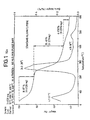
- Figure 1 shows the percentage weight loss of a conventional alginate fibre with increasing temperature, and the first order derivative of that function.
- the derivative shows a single maximum at approximately 240°C.
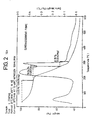
- the first order derivative of percentage weight loss with temperature for a corresponding fibre employed in a composition according to the present invention, shown in Figure 2 has two peaks, one at a lower temperature than the maximum observed for the conventional fibre (approximately 225°C), and one at a higher temperature than the maximum observed for the conventional fibre (approximately 280°C).
- This "splitting" of the derivative maximum for the conventional fibre of the same composition is characteristic of fibres employed according to the present invention.
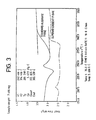
- FIG 3 also shows differences in the thermal properties of a conventional alginate fibre and a fibre employed according to the present invention.
- Heat flow is effectively a measure of enthalpy associated with a transition, reaction or decomposition.
- the glass transition termperature (Tg) shown in Figure 3 is the same for both fibres (288°C). However, it can be seen that the transition for the conventional fibre is broad, occuring over some 50°C, whereas that for the fibre in accordance with the invention is sharp, taking place over less than 20°C.
- Alginate fibres employed in compositions according to the present invention can further be characterised in terms of their glass transition temperature, and in a further or alternative aspect, the present invention thus provides a non-immunogenic, bioerodible composition comprising alginate fibre having a glass transition temperature range of less than 30°C, such as about 26°C.
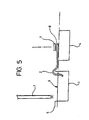
- Alginate fibres employed in compositions of the present invention exhibit improved absorptive properties and the present invention accordingly provides a non-immunogenic, bioerodible compositions comprising alginate fibres wherein the absorbency of the fibres may be at least 40.0 grams of deionised water per gram of fibres as measured with reference to a test method depicted in Figure 5 appended hereto.
- Alginate fibres employed in the present invention aptly have an absorbency of at least 40 times their own weight of deionised water and more aptly at least 60 times and most aptly at least 80 times its own weight of deionised water. Typically the fibres have an absorbency of much greater than this, for example 80 to 280 times their own weight, such as about 120 grams of deionised water per gram of fibres.
- compositions according to the present invention may have medicaments incorporated therein.
- suitable medicaments for use in conjunction with the alginate fibre according to the invention include antibacterial agents, for example bisbiguanide derivatives such as chlorhexidine, both in the free base form and as the acetate, gluconate or hydrochloride salts, tetracycline derivatives such as chlorotetracycline; nisin, a polypeptide available in nature from various strains of the bacterium streptococcus lactis; oxytetracycline and tetracycline itself, and sulphonamide derivatives such as sulphadiazine; antiprotozoal agents, for example imidazole derivatives such as metronidazole; antifungal agents such as chlorphenesin; phenothiazine derivatives such as promethazine and chlorpromazine; nucleosides such as iodouridine; hormones such as noradrenalin, insulin, growth hormones, secretin, va
- hyaluronic acid can be incorporated into the alginate fibres of the compositions according to the present invention.
- Hyaluronic acid (hereinafter referred to as HA) is a natural high viscosity mucopolysaccharide, generally having a molecular weight range of 3 x 10 3 to 8 x 10 6 Daltons (although there are reports of HA having molecular weights as high as 13 x 10 6 ) depending on source, method of isolation and method of determination.
- the isolation and characterisation of HA are described in Meyer, et al ., J. Biol. Chem. 107 , 629, (1934); J. Biol. Chem. 114 , 689, (1936); Balazs, Fed. Proc. 17 , 1086, (1958); Laurent, et al ., Biochem. Biophys. Acta. 42 , 476, (1960); Weissman, et al ., J. Am. Chem. Soc., 76 , 1753, (1954); and Meyer, Fed. Proc. 17 , 1075, (1958).
- HA is normally employed as its sodium salt although some other salting ions such as potassium or calcium or the like may also be preesnt. All such physiologically acceptable forms and especially the sodium salt are encompassed within the term HA herein.
- HA is frequently used in ocular surgery as a replacement for subretinal fluid and vitreous humor. HA can also be used as a replacement for synovial fluid that is lost as a result of surgery or chronic inflammatory disease such as rheumatoid arthritis. HA is also known to be implicated in wound healing and angiogenesis. A wound dressing capable of providing sustained release of hyaluronic acid might therefore be expected to promote wound healing and/or angiogenesis.
- a suitable average molecular weight range for HA for use in the fibres employed in the present invention is 1.5 x 10 3 to 2 x 10 6 , such as 1 x 10 4 to 1 x 10 6 , preferably 1.5 x 10 4 to 1 x 10 5 , more preferably about 7.5 x 10 4 .
- the HA incorporated into alginate fibres of the compositions of the invention resides in spaces or "pockets" in the internal structure of the fibre and that release of the HA from the fibre to the environment of use takes place in a sustained manner as the fibre swells under the conditions of use.
- Incorporation of HA into the alginate fibres may be achieved by contacting alginate fibres with an aqueous solution of HA followed by a suitable aqueous ionic solution, such as a solution of calcium, magnesium or zinc cations, preferably a solution of calcium cations, more preferably aqueous calcium chloride solution.
- a suitable aqueous ionic solution such as a solution of calcium, magnesium or zinc cations, preferably a solution of calcium cations, more preferably aqueous calcium chloride solution.
- Alginate fibres suitable for preparing a composition according to the present invention are typically obtained by a process comprising the following steps:
- the present invention also provides a non-immunogenic, bioerodible implantation composition comprising alginate fibres prepared according to the abovedescribed process.
- the fibres used as starting material in step 1 may be conventional salted alginate fibres (for example sodium, calcium, mixed sodium/calcium fibres produced in conventional manner, for example from 2-10% w/w solutions, for example 4% solution).
- conventional salted alginate fibres for example sodium, calcium, mixed sodium/calcium fibres produced in conventional manner, for example from 2-10% w/w solutions, for example 4% solution.
- the alginate fibres for use in step (1) are calcium alginate fibres, which can be spun from a dope solution of 2 to 8% by weight sodium alginate, suitably 4 to 6% by weight, employing techniques conventional to the art.
- the alginate fibres preferably have a mid or high guluronic acid content, and aptly the fibres employed as starting materials are produced by Laminaria hyperborea or Eclonia maxima .
- Suitable acids for use in step (1) include acids capable of protonating alginic acid and may include both organic and inorganic acids.
- acids capable of protonating alginic acid may include both organic and inorganic acids.
- hydrochloric acid will be used.
- the resulting alginic acid fibres have at least 95% of the acid residues in the unsalted form.
- Suitable mono- or divalent cations for use in step (2) include solutions of sodium, potassium and magnesium cations.
- a pharmaceutically acceptable monovalent cation is used, most preferably a sodium ion.
- Step (3) is preferably effected by washing the fibres in a stream of deionised water. Desirably step (3) may be discontinued when swelling has ceased.
- Cations capable of forming water-soluble alginate salts include, for example, sodium, potassium, lithium, ammonium and magnesium cations.
- the source of a cation capable of forming a water-soluble alginate salt used in step (4) is a source of sodium cations, more preferably sodium carbonate.
- Other carbonates may be used in like manner to produce the alternative salts.
- step (4) Small quantities of other ions (for example zinc or silver) may be present in step (4) if desired but generally these may be included in the fibre after completion of step (4) if their presence is required.
- other ions for example zinc or silver
- a method of treating the product of the above process to include other ions is to treat the product with an aqueous solution of a source of the ions.
- the fibres may be collected at the end of step (4) by filtration or other suitable method and may be dried, for example by treatment with a volatile drying agent, such as methyl alcohol, ethyl alcohol, isopropyl alcohol, acetone and the like, and then drying in air. It is one of the advantages of this invention that the highly absorbent fibres may be dried without losing their ability to be highly absorbent when rewetted.
- a volatile drying agent such as methyl alcohol, ethyl alcohol, isopropyl alcohol, acetone and the like
- the solubility of the fibres may be modified by choosing the degree of neutralisation of the unsalted carbonyl groups by solubilizing ion.
- a sheet of fibres such as may be employed in a dressing
- the fibres are produced under conditions where a small proportion of residual carboxy groups is retained (for example by using insufficient Na 2 CO 3 or the like to effect complete neutralisation).
- the material can be made fully soluble by replacing essentially all of the unsalted carboxy groups with a solubilizing ion such as sodium (for example by using at least a sufficient amount of Na 2 CO 3 or the like to effect complete neutralisation).
- a method of preparing fibres having a higher content of insolubilising cations, such as calcium, than those prepared directly by the process described above which employs sufficient Na 2 CO 3 is to treat the fibre with insolubilising ions, such as calcium ions, for example from a solution of calcium chloride, calcium sulphate, or the like, so that some of the sodium ions are replaced by calcium ions.
- insolubilising ions such as calcium ions
- calcium chloride is employed.
- the absorbency of fibres employed in compositions according to the invention may be determined according to the following method.
- Fig. 5 The apparatus used in the determination of absorbency is depicted in Fig. 5, and consists of water bath 1 containing a 0.9% (w/w) aqueous saline solution, or deionised water, absorbent strip 2, burette 3, top-pan balance 4 and overflow 5.
- the thickness of the absorbent strip 2 is substantially equivalent to that of the dressing 7.
- the filter paper 8 has substantially the same planar dimensions as the dressing 7, but not necessarily the same thickness.
- the apparatus is set up with the surface 6 of the saline solution or water level with the top surface of the top-pan balance 4.
- the flow of liquid from the burette 3 is then adjusted to approximately 1.5 ml per minute.
- the absorbent strip 2 is then saturated and placed between the bath 1 and the balance 4, as depicted in Fig. 5.
- the balance 4 is then tared.
- a weighed dressing 7 and filter paper 8 (cut to size) is positioned as depicted in Fig. 5. Care must be taken to ensure that the edge of the absorbent strip 2 furthest away from the water bath 1 does not extend beyond the corresponding edge of the dressing 7, as shown in Fig. 5.
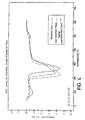
- the Tan ⁇ value of a fibre was determined by using a Thurlby Thandor TG502 sweep/function generator, a Tectronics 2212 digital storage oscilloscope and a capacitance test cell (plate area 16 square centimetres and fitted with a 22K ⁇ resistor).
- the material to be tested was placed in a small engineers vice and the vice closed.
- the distance between the plates was measured using a vernier calliper and the earth connection made between the vice and the earth terminal of the capacitance test cell.
- the function generator and oscilloscope were then connected and the amplitude of the applied sinusoidal voltage measured together with the voltage drop across the resistor and the phase angle between the applied voltage signal and current.
- the frequency of the applied field was then altered and the measurements repeated for many points in the range 5mHz to 5MHZ.
- the following non-limiting Examples are intended to illustrate the present invention.
- Calcium alginate fibres were spun form a dope solution containing 4 to 6 % sodium alginate employing conventional techniques, and 4g of the resultant alginate fibres were immersed in 1M hydrochloric acid (1 litre) for 20-30 seconds.
- the degree of acid conversion was determined from the relative intensities of the peaks at 1720cm -1 and 1600cm - 1 in the infrared spectrum, to ensure that the degree of conversion was in excess of 95%.
- the fibre was then washed with water and immersed in saturated saline solution (2 litres). The fibre was then chopped to the required staple length (2.5 to 3.5cm). After cutting to the appropriate length the fibre was dispersed into a stirring vessel containing deionised water (2 litres).
- the fibres were washed in a stream of running water until they swelled to their maximum extent and no sodium chloride could be deteced in the eluent.
- Sodium carbonate solution (0.1M) was then added in 1ml aliquots whilst monitoring the pH and the conductivity of the medium. Care was taken to ensure that the pH did not exceed 6.5.
- the material was filtered and dried with acetone followed by air drying.
- the product was then re-suspended in water (200cm 3 ) and filtered through a Buchner funnel. Three aliquots (50cm 3 ) of calcium chloride solution (0.1M) were then slowly filtered through the pad followed by washing with water (200cm 3 ). The pad was removed and the calcium/sodium content determined by atomic absorption spectrometry (99% calcium, 1% sodium). The pad was then air dried at room temperature.
- the resultant pad was suitable for use in an implantation composition, such as a haemostatic swab, according to the present invention.
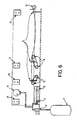
- This example describes the preparation of alginate fibre suitable for use as biodegradable sutures, and employs the apparatus depicted in Figure 6.
- the apparatus comprises a dope reservoir 9 connected to a pump 10 which effects transfer of a dope solution from reservoir 9 to a spinnerette 11 for extrusion into spin bath 12.
- a pump controller 20 and spinnerette pressure gauge 19 are provided for control of the transfer of dope solution.
- Guides 16 are provided to control passage of fibre around godets 13, 14.
- the yarn was stretched to between 150% and 170% and collected on the wind up roller 15.
- the yarn and its wind up roller 15 were then immersed in 1M HCl for 2 minutes and transferred to a bath containing a saturated solution of sodium chloride (2 litres). After 10 minutes the yarn and holder were washed exhaustively under running water until no sodium chloride could be detected in the eluent.
- the yarn and holder were then immersed in a bath of deionised water (2 litres).
- Sodium carbonate solution (0.1M, 12cm 3 ) was then added slowly whilst ensuring that the pH did not exceed 7.5.
- the product was then removed, washed in water (20cm 3 ) and placed in a bath of calcium chloride (0.1M, 2 litres) the product was then air dried.
- An alginate pad was prepared as described in Example 1, with the exception that the process was modified so that the resulting product contained 50% calcium by weight and 50% sodium by weight.
- the pad was embedded within the hepatic lobes of rats (sacrificed) and the implants were monitored for foreign body reaction and also the bioerosion properties thereof.
- Tan ⁇ values were measured according to Test Method 2 above for a range of fibre samples. The results were as follows: Fibre Peak 1 Hz Peak 2 Hz Peak 3 Hz KALTOSTAT 6449 1000 896 KALTOGEL 578 416 46 KALTOSTAT acid treated, neutralised and dried. 2929 541 54 Fibre prepared as in Example 1, the re-suspension treatment omitted. 0.056 0.018 --- Fibre prepared as in Example 1. 5.412 2.928 0.464
Landscapes
- Health & Medical Sciences (AREA)
- Life Sciences & Earth Sciences (AREA)
- Animal Behavior & Ethology (AREA)
- Chemical & Material Sciences (AREA)
- Veterinary Medicine (AREA)
- Public Health (AREA)
- General Health & Medical Sciences (AREA)
- Epidemiology (AREA)
- Engineering & Computer Science (AREA)
- Medicinal Chemistry (AREA)
- Surgery (AREA)
- Vascular Medicine (AREA)
- Biomedical Technology (AREA)
- Molecular Biology (AREA)
- Oral & Maxillofacial Surgery (AREA)
- Dermatology (AREA)
- Materials Engineering (AREA)
- Transplantation (AREA)
- Heart & Thoracic Surgery (AREA)
- Pharmacology & Pharmacy (AREA)
- Bioinformatics & Cheminformatics (AREA)
- Materials For Medical Uses (AREA)
- Medicinal Preparation (AREA)
- Artificial Filaments (AREA)
- Compositions Of Macromolecular Compounds (AREA)
Claims (15)
- Nicht-immunogene, bioerodierbare Implantationszusammensetzung, umfassend Alginatfasern, die 50 bis 80 Gew.-% Guluronsäure umfassen, wobei die Alginatfasern mit einem Verfahren herstellbar sind, das die folgenden Schritte umfasst:i. Behandeln von Alginatfasern mit einer geeigneten Säure, um Fasern herzustellen, die ungefähr 90 bis 96% Alginsäurefasern umfassen;ii. Behandeln der Alginsäurefasern mit einer gesättigten wässrigen Lösung aus monovalenten oder divalenten Kationen;iii. Waschen der Fasern mit Wasser, bis das Aufsaugen von Wasser durch die Fasern tatsächlich beendet ist; undiv. Behandeln der Fasern mit einer Quelle eines Kations, das ein wasserlösliches Alginatsalz bilden kann.
- Zusammensetzung nach Anspruch 1, wobei die Alginatfasern ein Mischsalzalginat umfassen, das erste und zweite Kationen besitzt, wobei das erste Kation ein unlösliches Alginatsalz bilden kann und das zweite Kation ein lösliches Alginatsalz bilden kann, wobei das Verhältnis des ersten (unlöslich machenden) Kations zu dem zweiten (löslich machenden) Kation im Bereich von 20:80 bis 100:0 bezogen auf das Gewicht liegt.
- Zusammensetzung nach einem der vorangehenden Ansprüche, wobei die Saugfähigkeit der Fasern mindestens 40,0 Gramm deionisiertes Wasser pro Gramm Fasern beträgt.
- Zusammensetzung nach einem der vorangehenden Ansprüche, wobei die Zusammensetzung Alginatfasern umfasst, die dadurch gekennzeichnet sind, dass sie aufgespaltene Maxima im Bereich von 100°C bis 400°C in einem Diagramm besitzen, in dem die erste Ableitung des prozentualen Gewichtsverlusts der Faser in Abhängigkeit von der Temperatur gegen die Temperatur aufgetragen ist.
- Zusammensetzung nach einem der vorangehenden Ansprüche, wobei die Zusammensetzung Fasern umfasst, die dadurch gekennzeichnet sind, dass sie zwei Maxima im Bereich von 220°C bis 290°C in einem Diagramm besitzen, in dem die erste Ableitung des prozentualen Gewichtsverlusts der Faser in Abhängigkeit von der Temperatur gegen die Temperatur aufgetragen ist.
- Zusammensetzung nach einem der vorangehenden Ansprüche, wobei das Verfahren den zusätzlichen Schritt des Behandelns der Fasern mit einer Quelle eines Kations, das ein wasserunlösliches Alginatsalz bilden kann,
umfasst. - Zusammensetzung nach einem der vorangehenden Ansprüche, wobei die Alginatfasern in Schrift i Calciumalginat sind.
- Zusammensetzung nach einem der vorangehenden Ansprüche, wobei die anderen lonen und/oder Medikamente nach oder während Schritt iv eingebracht werden.
- Zusammensetzung nach einem der vorangehenden Ansprüche, wobei die Faser Hyaluronsäure oder ein pharmazeutisch verträgliches Salz davon enthält.
- Zusammensetzung nach einem der vorangehenden Ansprüche, wobei die Fasern dadurch gekennzeichnet sind, dass sie einen Glasübergangstemperatur-Bereich von weniger als 30°C besitzen.
- Zusammensetzung nach einem der vorangehenden Ansprüche, wobei die Fasern dadurch gekennzeichnet sind, dass sie einen Tanδ-Wert im Bereich von 0 bis 15 Hz besitzen.
- Verwendung von bioerodierbaren Alginatfasern nach einem der vorangehenden Ansprüche für die Herstellung eines Artikels zur implantation im Körper eines Säugers zur Verwendung bei der Verhinderung einer immunantwort.
- Bioerodierbares Nahtmaterial, umfassend eine Zusammensetzung nach einem der vorangehenden Ansprüche 1 bis 11.
- Bioerodierbare Trägerstruktur, umfassend eine Zusammensetzung nach einem der vorangehenden Ansprüche 1 bis 11.
- Bioerodierbares, Arzneimittel freisetzendes System, umfassend eine Zusammensetzung nach einem der vorangehenden Ansprüche 1 bis 11.
Applications Claiming Priority (3)
| Application Number | Priority Date | Filing Date | Title |
|---|---|---|---|
| GB9414304 | 1994-07-15 | ||
| GB9414304A GB9414304D0 (en) | 1994-07-15 | 1994-07-15 | Fibres, manufacture and use |
| PCT/EP1995/002772 WO1996002285A1 (en) | 1994-07-15 | 1995-07-14 | Alginate fibres, manufacture and use |
Publications (2)
| Publication Number | Publication Date |
|---|---|
| EP0772465A1 EP0772465A1 (de) | 1997-05-14 |
| EP0772465B1 true EP0772465B1 (de) | 2003-05-02 |
Family
ID=10758387
Family Applications (1)
| Application Number | Title | Priority Date | Filing Date |
|---|---|---|---|
| EP95926887A Expired - Lifetime EP0772465B1 (de) | 1994-07-15 | 1995-07-14 | Alginatfasern, herstellung und verwendung |
Country Status (11)
| Country | Link |
|---|---|
| US (1) | US5874100A (de) |
| EP (1) | EP0772465B1 (de) |
| JP (1) | JP3689112B2 (de) |
| AT (1) | ATE238820T1 (de) |
| AU (1) | AU3111195A (de) |
| DE (1) | DE69530589T2 (de) |
| DK (1) | DK0772465T3 (de) |
| ES (1) | ES2196071T3 (de) |
| GB (1) | GB9414304D0 (de) |
| PT (1) | PT772465E (de) |
| WO (1) | WO1996002285A1 (de) |
Families Citing this family (13)
| Publication number | Priority date | Publication date | Assignee | Title |
|---|---|---|---|---|
| US5658329A (en) * | 1995-02-14 | 1997-08-19 | Mentor Corporation | Filling material for soft tissue implant prostheses and implants made therewith |
| FR2778081B1 (fr) | 1998-04-29 | 2000-08-25 | Fabrice Thevenet | Implants de renfort pour sutures tissulaires |
| US6663596B2 (en) | 2001-08-13 | 2003-12-16 | Scimed Life Systems, Inc. | Delivering material to a patient |
| US7790699B2 (en) * | 2004-10-12 | 2010-09-07 | Fmc Biopolymer As | Self-gelling alginate systems and uses thereof |
| WO2009108760A2 (en) | 2008-02-26 | 2009-09-03 | Board Of Regents, The University Of Texas System | Dendritic macroporous hydrogels prepared by crystal templating |
| US8986728B2 (en) | 2008-05-30 | 2015-03-24 | Abbott Cardiovascular Systems Inc. | Soluble implantable device comprising polyelectrolyte with hydrophobic counterions |
| KR101070358B1 (ko) | 2009-12-24 | 2011-10-05 | 한국생산기술연구원 | 의료용 부직포 및 그의 제조방법 |
| US9095558B2 (en) | 2010-10-08 | 2015-08-04 | Board Of Regents, The University Of Texas System | Anti-adhesive barrier membrane using alginate and hyaluronic acid for biomedical applications |
| US8946194B2 (en) | 2010-10-08 | 2015-02-03 | Board Of Regents, University Of Texas System | One-step processing of hydrogels for mechanically robust and chemically desired features |
| BR112015013774A2 (pt) | 2012-12-11 | 2017-07-11 | Univ Texas | membrana de hidrogel para prevenção de adesão |
| US11565027B2 (en) | 2012-12-11 | 2023-01-31 | Board Of Regents, The University Of Texas System | Hydrogel membrane for adhesion prevention |
| US11980700B2 (en) | 2017-03-08 | 2024-05-14 | Alafair Biosciences, Inc. | Hydrogel medium for the storage and preservation of tissue |
| CN111671966B (zh) * | 2020-06-17 | 2022-01-28 | 浙江理工大学 | 一种医用缝合线及其制备方法与应用 |
Family Cites Families (7)
| Publication number | Priority date | Publication date | Assignee | Title |
|---|---|---|---|---|
| GB8820564D0 (en) * | 1988-08-31 | 1988-09-28 | Britcair Ltd | Wound dressing |
| EP0502949A4 (en) * | 1989-12-05 | 1993-02-24 | Trancel Corporation | Homologous guluronic acid alginate coating composition for in-vivo application and implantation and method of using same |
| IL102785A (en) * | 1991-08-20 | 1998-06-15 | Univ Leicester | Method for removing protein from a water- soluble gum and a method of making biocompatible capsules using said gum |
| DE4204012A1 (de) * | 1992-02-12 | 1993-08-19 | Ulrich Prof Dr Zimmermann | Mitogenfreie substanz, deren herstellung und verwendung |
| US5578314A (en) * | 1992-05-29 | 1996-11-26 | The Regents Of The University Of California | Multiple layer alginate coatings of biological tissue for transplantation |
| GB9213773D0 (en) * | 1992-06-29 | 1992-08-12 | Cv Lab Ltd | Dual release alginate fibre |
| EP0680525B1 (de) * | 1993-01-20 | 1997-05-07 | E.R. SQUIBB & SONS, INC. | Fasern |
-
1994
- 1994-07-15 GB GB9414304A patent/GB9414304D0/en active Pending
-
1995
- 1995-07-14 EP EP95926887A patent/EP0772465B1/de not_active Expired - Lifetime
- 1995-07-14 AU AU31111/95A patent/AU3111195A/en not_active Abandoned
- 1995-07-14 DK DK95926887T patent/DK0772465T3/da active
- 1995-07-14 JP JP50469596A patent/JP3689112B2/ja not_active Expired - Fee Related
- 1995-07-14 DE DE69530589T patent/DE69530589T2/de not_active Expired - Fee Related
- 1995-07-14 ES ES95926887T patent/ES2196071T3/es not_active Expired - Lifetime
- 1995-07-14 PT PT95926887T patent/PT772465E/pt unknown
- 1995-07-14 US US08/765,569 patent/US5874100A/en not_active Expired - Fee Related
- 1995-07-14 AT AT95926887T patent/ATE238820T1/de not_active IP Right Cessation
- 1995-07-14 WO PCT/EP1995/002772 patent/WO1996002285A1/en not_active Ceased
Also Published As
| Publication number | Publication date |
|---|---|
| ES2196071T3 (es) | 2003-12-16 |
| AU3111195A (en) | 1996-02-16 |
| US5874100A (en) | 1999-02-23 |
| JP3689112B2 (ja) | 2005-08-31 |
| PT772465E (pt) | 2003-07-31 |
| DK0772465T3 (da) | 2003-08-11 |
| JPH10502554A (ja) | 1998-03-10 |
| GB9414304D0 (en) | 1994-09-07 |
| WO1996002285A1 (en) | 1996-02-01 |
| EP0772465A1 (de) | 1997-05-14 |
| DE69530589D1 (de) | 2003-06-05 |
| ATE238820T1 (de) | 2003-05-15 |
| DE69530589T2 (de) | 2004-03-25 |
Similar Documents
| Publication | Publication Date | Title |
|---|---|---|
| EP0772463B1 (de) | Alginatfaser, verfahren zu ihrer herstellung und verwendung | |
| Blaine | Experimental observations on absorbable alginate products in surgery: gel, film, gauze and foam | |
| DE69530553T2 (de) | Medizinisches polymergel | |
| RU2468129C2 (ru) | Биополимерное волокно, состав формовочного раствора для его получения, способ приготовления формовочного раствора, полотно биомедицинского назначения, способ его модификации, биологическая повязка и способ лечения ран | |
| DE69032125T2 (de) | Gelwundverbandszusammensetzungen und verfahren zu deren gebrauch | |
| US5874100A (en) | Alginate fibres, manufacture and use | |
| EP3569260A1 (de) | Vliesstoffebandage und ein verfahren zur herstellung von einer vliesstoffebandage | |
| US4074713A (en) | Poly(N-acetyl-D-glucosamine) products | |
| JP2017526739A (ja) | 骨および軟組織の治癒および再生を向上させるための組成物および方法 | |
| US10894113B1 (en) | Prosthetic implantable antibacterial surgical mesh | |
| BRPI0613606A2 (pt) | biomateriais na forma de feltros de não tecido, processo para a preparação e uso dos mesmos e fibras | |
| CN116549742A (zh) | 具有止血、抗炎、防粘连的复合材料及其制备方法和应用 | |
| CN107261195A (zh) | 一种运动创伤康复敷料用抗菌生物质凝胶网的制备方法与用途 | |
| Ölmez et al. | Chitosan and alginate scaffolds for bone tissue regeneration | |
| Morgan | Alginate dressings: part 1: historical aspects | |
| CN112023108A (zh) | 一种三维敷料及其制备方法 | |
| KR100262142B1 (ko) | 치주조직재생용약물함유생분해성차폐막및그의제조방법 | |
| Wiśniewska-Wrona et al. | Functional three-component polymeric biocomposites for the treatment of bedsores | |
| US20230069878A1 (en) | Dental preparation comprising fibers based on hyaluronic acid with regulated biodegradability | |
| KR102670876B1 (ko) | 폴리(알킬 시아노아크릴레이트)계 나노/마이크로섬유의 제조 방법 및 그의 용도 | |
| Kumar et al. | Tailoring biodegradable elctrospun membrane for the potential treatment of periodontics: In vitro and in vivo evaluations | |
| RO137879A2 (ro) | Matrice cu efect antimicrobian local şi imunomodulator general pe bază de doxiciclină încapsulată în nanofibre de acid polilactic şi hidroxiapatită | |
| CN116617440A (zh) | 一种基于丝素蛋白的明胶/没食子酸抗菌伤口复合敷料及其制备方法 | |
| WO2023208059A1 (zh) | 一种温敏性改性甲壳素海绵载药植入缓释体系及其制备方法和应用 | |
| CN115806633A (zh) | 京尼平交联的pdrn-sacran生物聚合物支架 |
Legal Events
| Date | Code | Title | Description |
|---|---|---|---|
| PUAI | Public reference made under article 153(3) epc to a published international application that has entered the european phase |
Free format text: ORIGINAL CODE: 0009012 |
|
| 17P | Request for examination filed |
Effective date: 19970217 |
|
| AK | Designated contracting states |
Kind code of ref document: A1 Designated state(s): AT BE CH DE DK ES FR GB GR IE IT LI LU MC NL PT SE |
|
| 17Q | First examination report despatched |
Effective date: 20000731 |
|
| GRAG | Despatch of communication of intention to grant |
Free format text: ORIGINAL CODE: EPIDOS AGRA |
|
| GRAG | Despatch of communication of intention to grant |
Free format text: ORIGINAL CODE: EPIDOS AGRA |
|
| GRAH | Despatch of communication of intention to grant a patent |
Free format text: ORIGINAL CODE: EPIDOS IGRA |
|
| GRAH | Despatch of communication of intention to grant a patent |
Free format text: ORIGINAL CODE: EPIDOS IGRA |
|
| GRAA | (expected) grant |
Free format text: ORIGINAL CODE: 0009210 |
|
| AK | Designated contracting states |
Designated state(s): AT BE CH DE DK ES FR GB GR IE IT LI LU MC NL PT SE |
|
| REG | Reference to a national code |
Ref country code: GB Ref legal event code: FG4D |
|
| REG | Reference to a national code |
Ref country code: CH Ref legal event code: EP |
|
| REF | Corresponds to: |
Ref document number: 69530589 Country of ref document: DE Date of ref document: 20030605 Kind code of ref document: P |
|
| REG | Reference to a national code |
Ref country code: IE Ref legal event code: FG4D |
|
| REG | Reference to a national code |
Ref country code: GR Ref legal event code: EP Ref document number: 20030401654 Country of ref document: GR |
|
| REG | Reference to a national code |
Ref country code: CH Ref legal event code: NV Representative=s name: N&G PATENT SERVICES SA |
|
| REG | Reference to a national code |
Ref country code: DK Ref legal event code: T3 |
|
| REG | Reference to a national code |
Ref country code: SE Ref legal event code: TRGR |
|
| ET | Fr: translation filed | ||
| REG | Reference to a national code |
Ref country code: ES Ref legal event code: FG2A Ref document number: 2196071 Country of ref document: ES Kind code of ref document: T3 |
|
| PLBE | No opposition filed within time limit |
Free format text: ORIGINAL CODE: 0009261 |
|
| STAA | Information on the status of an ep patent application or granted ep patent |
Free format text: STATUS: NO OPPOSITION FILED WITHIN TIME LIMIT |
|
| 26N | No opposition filed |
Effective date: 20040203 |
|
| PGFP | Annual fee paid to national office [announced via postgrant information from national office to epo] |
Ref country code: PT Payment date: 20080630 Year of fee payment: 14 Ref country code: MC Payment date: 20080627 Year of fee payment: 14 |
|
| PGFP | Annual fee paid to national office [announced via postgrant information from national office to epo] |
Ref country code: ES Payment date: 20080821 Year of fee payment: 14 Ref country code: DK Payment date: 20080721 Year of fee payment: 14 Ref country code: DE Payment date: 20080717 Year of fee payment: 14 Ref country code: CH Payment date: 20080912 Year of fee payment: 14 Ref country code: LU Payment date: 20080721 Year of fee payment: 14 |
|
| PGFP | Annual fee paid to national office [announced via postgrant information from national office to epo] |
Ref country code: NL Payment date: 20080703 Year of fee payment: 14 Ref country code: IT Payment date: 20080728 Year of fee payment: 14 Ref country code: IE Payment date: 20080714 Year of fee payment: 14 Ref country code: FR Payment date: 20080718 Year of fee payment: 14 Ref country code: AT Payment date: 20080711 Year of fee payment: 14 |
|
| REG | Reference to a national code |
Ref country code: GB Ref legal event code: 732E |
|
| PGFP | Annual fee paid to national office [announced via postgrant information from national office to epo] |
Ref country code: GB Payment date: 20080716 Year of fee payment: 14 |
|
| PGFP | Annual fee paid to national office [announced via postgrant information from national office to epo] |
Ref country code: SE Payment date: 20080709 Year of fee payment: 14 |
|
| BECA | Be: change of holder's address |
Owner name: CONVATEC TECHNOLOGIES INC.6100 NEIL ROAD, SUITE 50 Effective date: 20090302 |
|
| BECH | Be: change of holder |
Owner name: CONVATEC TECHNOLOGIES INC.6100 NEIL ROAD, SUITE 50 Effective date: 20090302 |
|
| PGFP | Annual fee paid to national office [announced via postgrant information from national office to epo] |
Ref country code: GR Payment date: 20080619 Year of fee payment: 14 |
|
| PGFP | Annual fee paid to national office [announced via postgrant information from national office to epo] |
Ref country code: BE Payment date: 20090126 Year of fee payment: 14 |
|
| REG | Reference to a national code |
Ref country code: CH Ref legal event code: PCAR Free format text: NOVAGRAAF INTERNATIONAL SA;25, AVENUE DU PAILLY;1220 LES AVANCHETS (CH) |
|
| REG | Reference to a national code |
Ref country code: PT Ref legal event code: MM4A Free format text: LAPSE DUE TO NON-PAYMENT OF FEES Effective date: 20100114 |
|
| BERE | Be: lapsed |
Owner name: CONVATEC TECHNOLOGIES INC. Effective date: 20090731 |
|
| PG25 | Lapsed in a contracting state [announced via postgrant information from national office to epo] |
Ref country code: MC Free format text: LAPSE BECAUSE OF NON-PAYMENT OF DUE FEES Effective date: 20090731 |
|
| REG | Reference to a national code |
Ref country code: CH Ref legal event code: PL |
|
| REG | Reference to a national code |
Ref country code: DK Ref legal event code: EBP |
|
| EUG | Se: european patent has lapsed | ||
| GBPC | Gb: european patent ceased through non-payment of renewal fee |
Effective date: 20090714 |
|
| NLV4 | Nl: lapsed or anulled due to non-payment of the annual fee |
Effective date: 20100201 |
|
| REG | Reference to a national code |
Ref country code: FR Ref legal event code: ST Effective date: 20100331 |
|
| REG | Reference to a national code |
Ref country code: IE Ref legal event code: MM4A |
|
| PG25 | Lapsed in a contracting state [announced via postgrant information from national office to epo] |
Ref country code: PT Free format text: LAPSE BECAUSE OF NON-PAYMENT OF DUE FEES Effective date: 20100114 Ref country code: LI Free format text: LAPSE BECAUSE OF NON-PAYMENT OF DUE FEES Effective date: 20090731 Ref country code: FR Free format text: LAPSE BECAUSE OF NON-PAYMENT OF DUE FEES Effective date: 20090731 Ref country code: CH Free format text: LAPSE BECAUSE OF NON-PAYMENT OF DUE FEES Effective date: 20090731 |
|
| PG25 | Lapsed in a contracting state [announced via postgrant information from national office to epo] |
Ref country code: GB Free format text: LAPSE BECAUSE OF NON-PAYMENT OF DUE FEES Effective date: 20090714 |
|
| PG25 | Lapsed in a contracting state [announced via postgrant information from national office to epo] |
Ref country code: DE Free format text: LAPSE BECAUSE OF NON-PAYMENT OF DUE FEES Effective date: 20100202 Ref country code: BE Free format text: LAPSE BECAUSE OF NON-PAYMENT OF DUE FEES Effective date: 20090731 Ref country code: AT Free format text: LAPSE BECAUSE OF NON-PAYMENT OF DUE FEES Effective date: 20090714 |
|
| PG25 | Lapsed in a contracting state [announced via postgrant information from national office to epo] |
Ref country code: IE Free format text: LAPSE BECAUSE OF NON-PAYMENT OF DUE FEES Effective date: 20090714 Ref country code: DK Free format text: LAPSE BECAUSE OF NON-PAYMENT OF DUE FEES Effective date: 20090731 |
|
| REG | Reference to a national code |
Ref country code: ES Ref legal event code: FD2A Effective date: 20090715 |
|
| PG25 | Lapsed in a contracting state [announced via postgrant information from national office to epo] |
Ref country code: GR Free format text: LAPSE BECAUSE OF NON-PAYMENT OF DUE FEES Effective date: 20100204 Ref country code: ES Free format text: LAPSE BECAUSE OF NON-PAYMENT OF DUE FEES Effective date: 20090715 |
|
| PG25 | Lapsed in a contracting state [announced via postgrant information from national office to epo] |
Ref country code: IT Free format text: LAPSE BECAUSE OF NON-PAYMENT OF DUE FEES Effective date: 20090714 |
|
| PG25 | Lapsed in a contracting state [announced via postgrant information from national office to epo] |
Ref country code: LU Free format text: LAPSE BECAUSE OF NON-PAYMENT OF DUE FEES Effective date: 20090714 |
|
| PG25 | Lapsed in a contracting state [announced via postgrant information from national office to epo] |
Ref country code: SE Free format text: LAPSE BECAUSE OF NON-PAYMENT OF DUE FEES Effective date: 20090715 |
|
| PG25 | Lapsed in a contracting state [announced via postgrant information from national office to epo] |
Ref country code: NL Free format text: LAPSE BECAUSE OF NON-PAYMENT OF DUE FEES Effective date: 20100201 |