EP0775199B1 - Superoxid dismutase-4 - Google Patents
Superoxid dismutase-4 Download PDFInfo
- Publication number
- EP0775199B1 EP0775199B1 EP94923172A EP94923172A EP0775199B1 EP 0775199 B1 EP0775199 B1 EP 0775199B1 EP 94923172 A EP94923172 A EP 94923172A EP 94923172 A EP94923172 A EP 94923172A EP 0775199 B1 EP0775199 B1 EP 0775199B1
- Authority
- EP
- European Patent Office
- Prior art keywords
- polypeptide
- polynucleotide
- sod
- sequence
- dna
- Prior art date
- Legal status (The legal status is an assumption and is not a legal conclusion. Google has not performed a legal analysis and makes no representation as to the accuracy of the status listed.)
- Expired - Lifetime
Links
Images

Classifications
-
- C—CHEMISTRY; METALLURGY
- C12—BIOCHEMISTRY; BEER; SPIRITS; WINE; VINEGAR; MICROBIOLOGY; ENZYMOLOGY; MUTATION OR GENETIC ENGINEERING
- C12N—MICROORGANISMS OR ENZYMES; COMPOSITIONS THEREOF; PROPAGATING, PRESERVING, OR MAINTAINING MICROORGANISMS; MUTATION OR GENETIC ENGINEERING; CULTURE MEDIA
- C12N9/00—Enzymes; Proenzymes; Compositions thereof; Processes for preparing, activating, inhibiting, separating or purifying enzymes
- C12N9/0004—Oxidoreductases (1.)
- C12N9/0089—Oxidoreductases (1.) acting on superoxide as acceptor (1.15)
-
- A—HUMAN NECESSITIES
- A61—MEDICAL OR VETERINARY SCIENCE; HYGIENE
- A61P—SPECIFIC THERAPEUTIC ACTIVITY OF CHEMICAL COMPOUNDS OR MEDICINAL PREPARATIONS
- A61P1/00—Drugs for disorders of the alimentary tract or the digestive system
- A61P1/04—Drugs for disorders of the alimentary tract or the digestive system for ulcers, gastritis or reflux esophagitis, e.g. antacids, inhibitors of acid secretion, mucosal protectants
-
- A—HUMAN NECESSITIES
- A61—MEDICAL OR VETERINARY SCIENCE; HYGIENE
- A61P—SPECIFIC THERAPEUTIC ACTIVITY OF CHEMICAL COMPOUNDS OR MEDICINAL PREPARATIONS
- A61P17/00—Drugs for dermatological disorders
- A61P17/02—Drugs for dermatological disorders for treating wounds, ulcers, burns, scars, keloids, or the like
-
- A—HUMAN NECESSITIES
- A61—MEDICAL OR VETERINARY SCIENCE; HYGIENE
- A61P—SPECIFIC THERAPEUTIC ACTIVITY OF CHEMICAL COMPOUNDS OR MEDICINAL PREPARATIONS
- A61P19/00—Drugs for skeletal disorders
- A61P19/02—Drugs for skeletal disorders for joint disorders, e.g. arthritis, arthrosis
-
- A—HUMAN NECESSITIES
- A61—MEDICAL OR VETERINARY SCIENCE; HYGIENE
- A61P—SPECIFIC THERAPEUTIC ACTIVITY OF CHEMICAL COMPOUNDS OR MEDICINAL PREPARATIONS
- A61P29/00—Non-central analgesic, antipyretic or antiinflammatory agents, e.g. antirheumatic agents; Non-steroidal antiinflammatory drugs [NSAID]
-
- A—HUMAN NECESSITIES
- A61—MEDICAL OR VETERINARY SCIENCE; HYGIENE
- A61P—SPECIFIC THERAPEUTIC ACTIVITY OF CHEMICAL COMPOUNDS OR MEDICINAL PREPARATIONS
- A61P43/00—Drugs for specific purposes, not provided for in groups A61P1/00-A61P41/00
-
- A—HUMAN NECESSITIES
- A61—MEDICAL OR VETERINARY SCIENCE; HYGIENE
- A61P—SPECIFIC THERAPEUTIC ACTIVITY OF CHEMICAL COMPOUNDS OR MEDICINAL PREPARATIONS
- A61P9/00—Drugs for disorders of the cardiovascular system
- A61P9/06—Antiarrhythmics
-
- A—HUMAN NECESSITIES
- A61—MEDICAL OR VETERINARY SCIENCE; HYGIENE
- A61P—SPECIFIC THERAPEUTIC ACTIVITY OF CHEMICAL COMPOUNDS OR MEDICINAL PREPARATIONS
- A61P9/00—Drugs for disorders of the cardiovascular system
- A61P9/10—Drugs for disorders of the cardiovascular system for treating ischaemic or atherosclerotic diseases, e.g. antianginal drugs, coronary vasodilators, drugs for myocardial infarction, retinopathy, cerebrovascula insufficiency, renal arteriosclerosis
-
- A—HUMAN NECESSITIES
- A61—MEDICAL OR VETERINARY SCIENCE; HYGIENE
- A61K—PREPARATIONS FOR MEDICAL, DENTAL OR TOILETRY PURPOSES
- A61K38/00—Medicinal preparations containing peptides
Definitions
- This invention relates to newly identified polynucleotides, polypeptides encoded by such polynucleotides, the use of such polynucleotides and polypeptides, as well as the production of such polynucleotides and polypeptides. More particularly, the polypeptide of the present invention is Superoxide Dismutase-4 (SOD-4).
- SOD-4 Superoxide Dismutase-4
- the toxic reactions are in general initiated by processes giving rise to oxygen radicals, which in themselves cause direct damage to biochemical compounds or start chain reactions involving oxygen.
- Some compounds react spontaneously with oxygen, i.e., they autoxidize. Virtually all autoxidations result in the formation of toxic oxygen reduction intermediates.
- Autoxidation of adrenalin, pyrogallol and several other compounds lead to the formation of the superoxide radical.
- the superoxide radical is the radical found in the highest concentration.
- the toxic oxygen reduction products so formed are of fundamental importance for the killing ability of the cells, but may also lead to damage in the surrounding tissue.
- Hydrogen peroxide is always formed when superoxide is formed by way of the dismutation reaction. Most oxidases in the body directly reduce oxygen to hydrogen peroxide.
- Organisms living in the presence of oxygen have been forced to develop a number of protective mechanisms against the toxic oxygen reduction metabolites.
- the protective factors include superoxide dismutases (SOD) which dismutate the superoxide radical and are found in relatively constant amounts in mammalian cells and tissue.
- SOD superoxide dismutases
- CuZnSOD which is a dimer with a molecular weight of 33,000 containing two copper and two zinc atoms.
- CuZnSOD is found in the cytosol and in the intermembrane space of the mitochondria.
- MnSOD is a tetramer with a molecular weight of 85,000 containing four Mn atoms, and is mainly located in the mitochondrial matrix.
- Japanese Patent No. 4327541 discloses a therapeutic drug for immuno-reactions with organs after transplantation containing the active substance of human CuZnSOD obtained by gene recombination.
- Japanese Patent No. 4312533 discloses a composition for treating cerebral ischaemia which comprises recombinant CuZn human SOD and inhibits delayed nerve necrosis accompanying ischaemia.
- Japanese Patent No. 4248984 discloses a superoxide dismutase derivative which has a longer half-life in blood than SOD and therefore helps treat various diseases.
- European Patent No. 499621 discloses a method for purifying recombinant CuZnSOD and a method for increasing the yield of the B isoform analog of this polypeptide.
- Japanese Patent No. 2156884 discloses a 153 amino acid polypeptide having human superoxide dismutase properties and a DNA sequence encoding such polypeptide, a DNA sequence expressed by the nucleic acid sequence and production of the polypeptide by culture of host cells.
- Japanese Patent No. 63313581 discloses a pharmacologically active modified superoxide dismutase which is obtained by reacting SOD with a compound containing an amino or carboxyl group.
- Japanese Patent No. 63077822 discloses an agent for improving the function of organs which uses a human SOD-like polypeptide as the active substance.
- polypeptide of the present invention is of human origin.
- polynucleotides (DNA or RNA) which encode such polypeptides.
- such polypeptides or polynucleotides encoding such polypeptides may be utilized for therapeutic purposes, for example, for. treating inflammatory pathologies, ulcers, arrhythmia, ischaemia, oedema, paraquat intoxication, rheumatoid arthritis and osteoarthritis, reducing reperfusion injuries and decreasing blood pressure.
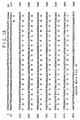
- Fig. 1 shows the cDNA sequence and deduced amino acid sequence for the SOD-4 gene.
- the amino acid sequence encodes for one of the mature forms of the polypeptide, since there are at least two in-frame ATG start codons.
- the mature polypeptide could start at either one of the ATG codons.
- the standard one letter abbreviation for amino acids is used.
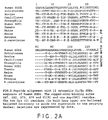
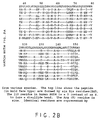
- Fig. 2 displays the amino acid homology between SOD-4 with eleven other cytosolic CuZnSODs from various species.
- the copper-zinc-bind sites (in boldface type) are formed by six His residues and one Asp residue.
- the Arg (R) residue is believed necessary to guide the superoxide to the activity site.
- Identical residues are represented by dashes and deletions are represented by dots.
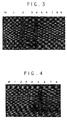
- Fig. 3 shows the results of bacterial expression and purification of human SOD-4 after separation on an SDS polyacrylamide gel.
- Fig. 4 shows the results of expression of recombinant SOD-4 in COS cells after separation on an SDS polyacrylamide gel.
- nucleic acid which encodes for the mature polypeptide having the deduced amino acid sequence of Figure 1 or for the mature polypeptide encoded by the cDNA of the clone deposited as ATCC Deposit No. 75716 on March 22, 1994.
- the polynucleotide of the present invention was isolated from an early stage human brain cDNA library. It contains an open reading frame encoding a polypeptide of 255 amino acids. The polypeptide has the highest degree of homology to CuZnSOD isolated from Schistosoma mansoni having 51% identity and 72% similarity over a 151 amino acid overlap.
- the polynucleotide of the present invention may be in the form of RNA or in the form of DNA, which DNA includes cDNA, genomic DNA, and synthetic DNA.
- the DNA may be double-stranded or single-stranded, and if single stranded may be the coding strand or non-coding (anti-sense) strand.
- the coding sequence which encodes the mature polypeptide may be identical to the coding sequence shown in Figure 1 or that of the deposited clone or may be a different coding sequence which coding sequence, as a result of the redundancy or degeneracy of the genetic code, encodes the same, mature polypeptide as the DNA of Figure 1 or the deposited cDNA.
- the polynucleotide which encodes for the mature polypeptide of Figure 1 or for the mature polypeptide encoded by the deposited cDNA may include: only the coding sequence for the mature polypeptide; the coding sequence for the mature polypeptide and additional coding sequence such as a leader or secretory sequence or a proprotein sequence; the coding sequence for the mature polypeptide (and optionally additional coding sequence) and non-coding sequence, such as introns or non-coding sequence 5' and/or 3' of the coding sequence for the mature polypeptide.
- polynucleotide encoding a polypeptide encompasses a polynucleotide which includes only coding sequence for the polypeptide as, well as a polynucleotide which includes additional coding and/or non-coding sequence.
- the present invention further relates to polynucleotides which hybridize under stringent conditions to the hereinabove-described polynucleotides.
- stringent conditions means hybridization will occur only if there is at least 95% and preferably at least 97% identity between the sequences.
- the polynucleotides which hybridize to the hereinabove described polynucleotides in a preferred embodiment encode polypeptides which retain substantially the same biological function or activity as the mature polypeptide encoded by the cDNA of Figure 1 or the deposited cDNA.
- polynucleotides may include variants of the hereinabove described polynucleotides which encode for fragments of the polypeptide having the deduced amino acid sequence of Figure 1 or the polypeptide encoded by the cDNA of the deposited clone.
- the variant of the polynucleotide may also be a naturally occurring allelic variant of the polynucleotide or a non-naturally occurring variant of the polynucleotide.
- the present invention includes polynucleotides encoding the same mature polypeptide as shown in Figure 1 or the same mature polypeptide encoded by the cDNA of the deposited clone as well as variants of such polynucleotides which variants encode for a fragment of the polypeptide of Figure 1 or the polypeptide encoded by the cDNA of the deposited clone.
- Further nucleotide variants include deletion variants, substitution variants and addition or insertion variants.
- the polynucleotide may have a coding sequence which is a naturally occurring allelic variant of the coding sequence shown in Figure 1 or of the coding sequence of the deposited clone.
- an allelic variant is an alternate form of a polynucleotide sequence which may have a substitution, deletion or addition of one or more nucleotides, which does not substantially alter the function of the encoded polypeptide.
- the polynucleotides of the present invention may also have the coding sequence fused in frame to a marker sequence which allows for purification of the polypeptide of the present invention.
- the marker sequence may be a hexahistidine tag supplied by a pD10 vector to provide for purification of the mature polypeptide fused to the marker in the case of a bacterial host, or, for example, the marker sequence may be a hemagglutinin (HA) tag when a mammalian host, e.g. COS-7 cells, is used.
- the HA tag corresponds to an epitope derived from the influenza hemagglutinin protein (Wilson, I., et al., Cell, 37:767 (1984)).
- the present invention further relates to a SOD-4 polypeptide which has the deduced amino acid sequence of Figure 1 or which has the amino acid sequence encoded by the deposited cDNA, as well as to fragments of such polypeptides.
- the present invention relates to polypeptides which are encoded by a polynucleotide as described herein-above.
- fragment when referring to the polypeptide of Figure 1 or that encoded by the deposited cDNA, means a polypeptide which retains essentially the same biological function or activity as such polypeptide.
- the polypeptide of the invention also includes a proprotein which can be activated by cleavage of the proprotein portion to produce an active mature polypeptide.
- the polypeptide of the present invention may be a recombinant polypeptide, a natural polypeptide or a synthetic polypeptide, preferably a recombinant polypeptide.
- the fragment of the polypeptide of Figure 1 or that encoded by the deposited cDNA or any other polypeptide of the invention may be (i) one in which one or more of the amino acid residues are substituted with a conserved or non-conserved amino acid residue (preferably a conserved amino acid residue) and such substituted amino acid residue may or may not be one encoded by the genetic code, or (ii) one in which one or more of the amino acid residues includes a substituent group, or (iii) one in which the mature polypeptide is fused with another compound, such as a compound to increase the half-life of the polypeptide (for example, polyethylene glycol), or (iv) one in which the additional amino acids are fused to the mature polypeptide, such as a leader or secretory sequence or a sequence which is employed for purification of the mature polypeptide or a proprotein sequence.
- Such polypeptides are deemed to be within the scope of those skilled in the art from the teachings herein.
- polypeptides and polynucleotides of the present invention are preferably provided in an isolated form, and preferably are purified to homogeneity.
- isolated means that the material is removed from its original environment (e.g., the natural environment if it is naturally occurring).
- a naturally-occurring polynucleotide or polypeptide present in a living animal is not isolated, but the same polynucleotide or polypeptide, separated from some or all of the coexisting materials in the natural system, is isolated.
- Such polynucleotides could be part of a vector and/or such polynucleotides or polypeptides could be part of a composition, and still be isolated in that such vector or composition is not part of its natural environment.
- the present invention also relates to vectors which include polynucleotides of the present invention, host cells which are genetically engineered with vectors of the invention and the production of polypeptides of the invention by recombinant techniques.
- Host cells are genetically engineered (transduced or transformed or transfected) with the vectors of this invention which may be, for example, a cloning vector or an expression vector.
- the vector may be, for example, in the form of a plasmid, a viral particle, a phage, etc.
- the engineered host cells can be cultured in conventional nutrient media modified as appropriate for activating promoters, selecting transformants or amplifying the SOD-4 genes.
- the culture conditions such as temperature, pH and the like, are those previously used with the host cell selected for expression, and will be apparent to the ordinarily skilled artisan.
- the polynucleotides of the present invention may be employed for producing polypeptides by recombinant techniques.
- the polynucleotide may be included in any one of a variety of expression vectors for expressing a polypeptide.
- Such vectors include chromosomal, nonchromosomal and synthetic DNA sequences, e.g., derivatives of SV40; bacterial plasmids; phage DNA; baculovirus; yeast plasmids; vectors derived from combinations of plasmids and phage DNA, viral DNA such as vaccinia, adenovirus, fowl pox virus, and pseudorabies.
- any other vector may be used as long as it is replicable and viable in the host.
- the appropriate DNA sequence may be inserted into the vector by a variety of procedures.
- the DNA sequence is inserted into an appropriate restriction endonuclease site(s) by procedures known in the art. Such procedures and others are deemed to be within the scope of those skilled in the art.
- the DNA sequence in the expression vector is operatively linked to an appropriate expression control sequence(s) (promoter) to direct mRNA synthesis.
- promoter for example, LTR or SV40 promoter, the E. coli. lac or trp , the phage lambda P L promoter and other promoters known to control expression of genes in prokaryotic or eukaryotic cells or their viruses.
- the expression vector also contains a ribosome binding site for translation initiation and a transcription terminator.
- the vector may also include appropriate sequences for amplifying expression.
- the expression vectors preferably contain one or more selectable marker genes to provide a phenotypic trait for selection of transformed host cells such as dihydrofolate reductase or neomycin resistance for eukaryotic cell culture, or such as tetracycline or ampicillin resistance in E. coli.
- the vector containing the appropriate DNA sequence as hereinabove described, as well as an appropriate promoter or control sequence, may be employed to transform an appropriate host to permit the host to express the protein.
- bacterial cells such as E. coli, Streptomyces , Salmonella typhimurium
- fungal cells such as yeast
- insect cells such as Drosophila and Sf9
- animal cells such as CHO, COS or Bowes melanoma
- plant cells etc.
- the selection of an appropriate host is deemed to be within the scope of those skilled in the art from the teachings herein.
- the present invention also includes recombinant constructs comprising one or more of the sequences as broadly described above.
- the constructs comprise a vector, such as a plasmid or viral vector, into which a sequence of the invention has been inserted, in a forward or reverse orientation.
- the construct further comprises regulatory sequences, including, for example, a promoter, operably linked to the sequence.
- a promoter operably linked to the sequence.
- Bacterial pQE70, pQE60, pQE-9 (Qiagen), pbs, pD10, phagescript, psiX174, pbluescript SK, pbsks, pNHBA, pNH16a, pNH18A, pNH46A (Stratagene); ptrc99a, pKK223-3, pKK233-3, pDR540, pRIT5 (Pharmacia).
- Eukaryotic pWLNEO, pSV2CAT, pOG44, pXT1, pSG (Stratagene) pSVK3, pBPV, pMSG, pSVL (Pharmacia).
- any other plasmid or vector may be used as long as they are replicable and viable in the host.
- Promoter regions can be selected from any desired gene using CAT (chloramphenicol transferase) vectors or other vectors with selectable markers.
- Two appropriate vectors are PKK232-8 and PCM7.
- Particular named bacterial promoters include lacI, lacZ, T3, T7, gpt, lambda P R , P L and trp.
- Eukaryotic promoters include CMV immediate early, HSV thymidine kinase, early and late SV40, LTRs from retrovirus, and mouse metallothionein-I. Selection of the appropriate vector and promoter is well within the level of ordinary skill in the art.
- the present invention relates to host cells containing the above-described constructs.
- the host cell can be a higher eukaryotic cell, such as a mammalian cell, or a lower eukaryotic cell, such as a yeast cell, or the host cell can be a prokaryotic cell, such as a bacterial cell.
- Introduction of the construct into the host cell can be effected by calcium phosphate transfection, DEAE-Dextran mediated transfection, or electroporation. (Davis, L., Dibner, M., Battey, I., Basic Methods in Molecular Biology, (1986)).
- constructs in host cells can be used in a conventional manner to produce the gene product encoded by the recombinant sequence.
- the polypeptides of the invention can be synthetically produced by conventional peptide synthesizers.
- Mature proteins can be expressed in mammalian cells, yeast, bacteria, or other cells under the control of appropriate promoters. Cell-free translation systems can also be employed to produce such proteins using RNAs derived from the DNA constructs of the present invention. Appropriate cloning and expression vectors for use with prokaryotic and eukaryotic hosts are described by Sambrook, et al., Molecular Cloning: A Laboratory Manual, Second Edition, Cold Spring Harbor, N.Y., (1989), the disclosure of which is hereby incorporated by reference.
- Enhancers are cis-acting elements of DNA, usually about from 10 to 300 bp that act on a promoter to increase its transcription. Examples including the SV40 enhancer on the late side of the replication origin bp 100 to 270, a cytomegalovirus early promoter enhancer, the polyoma enhancer on the late side of the replication origin, and adenovirus enhancers.
- recombinant expression vectors will include origins of replication and selectable markers permitting transformation of the host cell, e.g., the ampicillin resistance gene of E. coli and S. cerevisiae TRP1 gene, and a promoter derived from a highly-expressed gene to direct transcription of a downstream structural sequence.
- promoters can be derived from operons encoding glycolytic enzymes such as 3-phosphoglycerate kinase (PGK), ⁇ -factor, acid phosphatase, or heat shock proteins, among others.
- the heterologous structural sequence is assembled in appropriate phase with translation initiation and termination sequences, and preferably, a leader sequence capable of directing secretion of translated protein into the periplasmic space or extracellular medium.
- the heterologous sequence can encode a fusion protein including an N-terminal identification peptide imparting desired characteristics, e.g., stabilization or simplified purification of expressed recombinant product.
- Useful expression vectors for bacterial use are constructed by inserting a structural DNA sequence encoding a desired protein together with suitable translation initiation and termination signals in operable reading phase with a functional promoter.
- the vector will comprise one or more phenotypic selectable markers and an origin of replication to ensure maintenance of the vector and to, if desirable, provide amplification within the host.
- Suitable prokaryotic hosts for transformation include E. coli, Bacillus subtilis, Salmonella typhimurium and various species within the genera Pseudomonas, Streptomyces, and Staphylococcus, although others may also be employed as a matter of choice.
- useful expression vectors for bacterial use can comprise a selectable marker and bacterial origin of replication derived from commercially available plasmids comprising genetic elements of the well known cloning vector pBR322 (ATCC 37017).
- cloning vector pBR322 ATCC 37017
- Such commercial vectors include, for example, pKK223-3 (Pharmacia Fine Chemicals, Uppsala, Sweden) and GEM1 (Promega Biotec, Madison, WI, USA). These pBR322 "backbone" sections are combined with an appropriate promoter and the structural sequence to be expressed.
- the selected promoter is induced by appropriate means (e.g., temperature shift or chemical induction) and cells are cultured for an additional period.
- Cells are typically harvested by centrifugation, disrupted by physical or chemical means, and the resulting crude extract retained for further purification.
- Microbial cells employed in expression of proteins can be disrupted by any convenient method, including freeze-thaw cycling, sonication, mechanical disruption, or use of cell lysing agents, such methods are well know to those skilled in the art.
- mammalian cell culture systems can also be employed to express recombinant protein.
- mammalian expression systems include the COS-7 lines of monkey kidney fibroblasts, described by Gluzman, Cell, 23:175 (1981), and other cell lines capable of expressing a compatible vector, for example, the C127, 3T3, CHO, HeLa and BHK cell lines.
- Mammalian expression vectors will comprise an origin of replication, a suitable promoter and enhancer, and also any necessary ribosome binding sites, polyadenylation site, splice donor and acceptor sites, transcriptional termination sequences, and 5' flanking nontranscribed sequences. DNA sequences derived from the SV40 splice, and polyadenylation sites may be used to provide the required nontranscribed genetic elements.
- the polypeptides can be recovered and purified from recombinant cell cultures by methods including ammonium sulfate or ethanol precipitation, acid extraction, anion or cation exchange chromatography, phosphocellulose chromatography, hydrophobic interaction chromatography, affinity chromatography hydroxylapatite chromatography and lectin chromatography. It is preferred to have low concentrations (approximately 0.15-5 mM) of calcium ion present during purification. (Price et al., J. Biol. Chem., 244:917 (1969)). Protein refolding steps can be used, as necessary, in completing configuration of the mature protein. Finally, high performance liquid chromatography (HPLC) can be employed for final purification steps.
- HPLC high performance liquid chromatography
- polypeptides of the present invention may be a naturally purified product, or a product of chemical synthetic procedures, or produced by recombinant techniques from a prokaryotic or eukaryotic host (for example, by bacterial, yeast, higher plant, insect and mammalian cells in culture). Depending upon the host employed in a recombinant production procedure, the polypeptides of the present invention may be glycosylated or may be non-glycosylated. Polypeptides of the invention may also include an initial methionine amino acid residue.
- SOD-4 may also be employed as an anti-inflammatory agent.
- Other SOD proteins have been shown to exhibit an anti-inflammatory affect in a series of animal models of inflammation as well as in inflammatory diseases in animals (Huber et al, eds. Michelson el al, Academic Press, 517-549, (1977).
- SOD-4 may also be used to treat rheumatoid arthritis and the adverse effects of ionizing radiation since, in humans, positive affects have been shown using SOD proteins to treat rheumatoid arthritis and arthroses as well as adverse affects of treatment with ionizing radiation.
- the mechanism by which SOD-4 works is by removing oxidation products, which products cause tissue degeneration.
- SOD-4 may be used to treat Crohn's disease, Bechet's disease, dermatitis, ulcers, ulcerative colitis, and against the adverse effects of radiation therapy.
- Other SOD proteins have been found to be effective against these conditions (Niwa, Y et al, Free Rad. Res. Comms. 1:137-153 (1985)).
- SOD-4 may be employed to reduce the incidence of ischaemia and reperfusion induced arrhythmias by a similar mechanism, since SOD proteins have been reported to affect these conditions (Woodward, B. et al, J. Mol. Cell. Cardiol. 17:485-493 (1985).
- SOD-4 may be employed to treat cerebral ischaemia and kidney ischaemia
- SOD proteins have been demonstrated to protect tissues in ischaemia or anoxiareperfusion models in the kidney (Baker, G.L., et al., Am. Surg., 202:628-41 (1985).
- SOD-4 may be employed in connection with kidney transplantations and other organ transplantations such as skin, lung, liver and pancreas.
- SOD-4 may be employed to treat burns.
- the local oedema after an experimental slight burn in rats could be somewhat decreased through injection of SOD proteins (Bjork and Artursson, Burns, 9:249-256 (1983).
- CuZnSOD has been reported to prevent bronchopulmonary dysplasia in preterm neonates suffering from infantile respiratory distress.
- the CuZnSOD has recently received orphan drug status for this treatment. Accordingly, SOD-4 may also be employed to treat these diseases also.
- autoimmune diseases such as systemic lupus erythematosus, and rheumatoid arthritis an increased frequency of chromosomal breaks in lymphocytes has been demonstrated.
- Plasma from such patients contains a chromosome breaking factor, called clastogenic factor.
- Superoxide radicals in the plasma results in formation of this factor.
- SOD-4 may protect against this clastogenic activity by removing the superoxide radicals.
- SOD-4 can be employed to prevent or control cancer by the removal of superoxide radicals from a patient's system.
- Oxygen radicals contribute to the damaging effects of a number of toxic substances such as paraquat and alloxan. SOD-4 may protect against these toxic substances through direct injection.
- Beta-cells of the pancreas are extremely sensitive to alloxan, and this sensitivity may lead to insulin-dependent diabetes mellitus. It may therefore be contemplated to protect the Beta cells with injections with SOD-4 at the first onset of diabetes mellitus.
- polypeptides may also be employed in accordance with the present invention by expression of such polypeptides in vivo, which is often referred to as "gene therapy.”
- cells from a patient may be engineered with a polynucleotide (DNA or RNA) encoding a polypeptide ex vivo , with the engineered cells then being provided to a patient to be treated with the polypeptide.
- a polynucleotide DNA or RNA
- cells may be engineered by procedures known in the art by use of a retroviral particle containing RNA encoding a polypeptide of the present invention.
- cells may be engineered in vivo for expression of a polypeptide in vivo by, for example, procedures known in the art.
- a producer cell for producing a retroviral particle containing RNA encoding the polypeptide of the present invention may be administered to a patient for engineering cells in vivo and expression of the polypeptide in vivo.
- the expression vehicle for engineering cells may be other than a retrovirus, for example, an adenovirus which may be used to engineer cells in vivo after combination with a suitable delivery vehicle.
- compositions comprise a therapeutically effective amount of the polypeptide, and a pharmaceutically acceptable carrier or excipient.
- a pharmaceutically acceptable carrier includes but is not limited to saline, buffered saline, dextrose, water, glycerol, ethanol, and combinations thereof.
- the formulation should suit the mode of administration.
- the invention also provides a pharmaceutical pack or kit comprising one or more containers filled with one or more of the ingredients of the pharmaceutical compositions of the invention.
- a pharmaceutical pack or kit comprising one or more containers filled with one or more of the ingredients of the pharmaceutical compositions of the invention.
- Associated with such container(s) can be a notice in the form prescribed by a governmental agency regulating the manufacture, use or sale of pharmaceuticals or biological products, which notice reflects approval by the agency of manufacture, use or sale for human administration.
- the polypeptides of the present invention may be employed in conjunction with other therapeutic compounds.
- compositions may be administered in a convenient manner such as by the oral, topical, intravenous, intraperitoneal, intramuscular, subcutaneous, intranasal or intradermal routes.
- the amounts and dosage regimens of SOD-4 administered to a subject will depend on a number of factors such as the mode of administration, the nature of the condition being treated and the judgment of the prescribing physician. Generally speaking, they are given, for example, in therapeutically effective doses of at least about 10 ⁇ g/kg body weight and in most cases they will be administered in an amount not in excess of about 8 mg/Kg body weight per day and preferably the dosage is from about 10 ⁇ g/kg to about 1 mg/kg body weight daily, taking into account the routes of administration, symptoms, etc.
- sequences of the present invention are also valuable for chromosome identification.
- the sequence is specifically targeted to and can hybridize with a particular location on an individual human chromosome.
- Few chromosome marking reagents based on actual sequence data (repeat polymorphisms) are presently available for marking chromosomal location.
- the mapping of DNAs to chromosomes according to the present invention is an important first step in correlating those sequences with genes associated with disease.
- sequences can be mapped to chromosomes by preparing PCR primers (preferably 15-25 bp) from the cDNA. Computer analysis of the cDNA is used to rapidly select primers that do not span more than one exon in the genomic DNA, thus complicating the amplification process. These primers are then used for PCR screening of somatic cell hybrids containing individual human chromosomes. Only those hybrids containing the human gene corresponding to the primer will yield an amplified fragment.
- PCR mapping of somatic cell hybrids is a rapid procedure for assigning a particular DNA to a particular chromosome.
- sublocalization can be achieved with panels of fragments from specific chromosomes or pools of large genomic clones in an analogous manner.
- Other mapping strategies that can similarly be used to map to its chromosome include in situ hybridization, prescreening with labeled flow-sorted chromosomes and preselection by hybridization to construct chromosome specific-cDNA libraries.
- Fluorescence in situ hybridization (FISH) of a cDNA clones to a metaphase chromosomal spread can be used to provide a precise chromosomal location in one step.
- This technique can be used with cDNA as short as 500 or 600 bases; however, clones larger than 2,000 bp have a higher likelihood of binding to a unique chromosomal location with sufficient signal intensity for simple detection.
- FISH requires use of the clones from which the EST was derived, and the longer the better. For example, 2,000 bp is good, 4,000 is better, and more than 4,000 is probably not necessary to get good results a reasonable percentage of the time.
- Verma et al. Human Chromosomes: a Manual of Basic Techniques, Pergamon Press, New York (1988).
- a cDNA precisely localized to a chromosomal region associated with the disease could be one of between 50 and 500 potential causative genes. (This assumes 1 megabase mapping resolution and one gene per 20 kb).
- Comparison of affected and unaffected individuals generally involves first looking for structural alterations in the chromosomes, such as deletions or translocations that are visible from chromosome spreads or detectable using PCR based on that cDNA sequence. Ultimately, complete sequencing of genes from several individuals is required to confirm the presence of a mutation and to distinguish mutations from polymorphisms.
- the polypeptides of the invention or cells expressing them can be used as an immunogen to produce antibodies thereto. These antibodies can be, for example, polyclonal or monoclonal antibodies.
- the present invention also includes chimeric, single chain, and humanized antibodies, as well as Fab fragments, or the product of an Fab expression library. Various procedures known in the art may be used for the production of such antibodies and fragments.
- Antibodies generated against the polypeptides corresponding to a sequence of the present invention can be obtained by direct injection of the polypeptides into an animal or by administering the polypeptides to an animal, preferably a nonhuman. The antibody so obtained will then bind the polypeptides itself. In this manner, even a sequence encoding only a fragment of the polypeptides can be used to generate antibodies binding the whole native polypeptides. Such antibodies can then be used to isolate the polypeptide from tissue expressing that polypeptide.
- any technique which provides antibodies produced by continuous cell line cultures can be used. Examples include the hybridoma technique (Kohler and Milstein, 1975, Nature, 256:495-497), the trioma technique, the human B-cell hybridoma technique (Kozbor et al., 1983, Immunology Today 4:72), and the EBV-hybridoma technique to produce human monoclonal antibodies (Cole, et al., 1985, in Monoclonal Antibodies and Cancer Therapy, Alan R. Liss, Inc., pp. 77-96).
- a process for determining susceptibility to disorders directly related to a mutation in the SOD-4 gene product Such disorders include but are not limited, amyotrophic lateral sclerosis "ALS", and Parkinson's disease.
- ALS amyotrophic lateral sclerosis
- a mutation in an SOD-4 protein indicates a susceptibility to these disorders, and the nucleic acid sequences encoding an SOD-4 polypeptide may be employed in an assay for ascertaining such susceptibility.
- the assay may be employed to determine a mutation in a human SOD-4 protein as herein described, such as a deletion, truncation, insertion, frameshift, etc., with such mutation being indicative of a susceptibility to the above-mentioned diseases.
- a mutation may be ascertained, for example, by a DNA sequencing assay.
- Tissue samples including but not limited to blood samples, are obtained from a patient. The samples are processed by methods known in the art to capture the RNA.
- the first strand cDNA is synthesized from the RNA samples by adding an oligonucleotide primer consisting of polythymidine residues which hybridize to the polyadenosine stretch present on the mRNA's. Reverse transcriptase and deoxynucleotides are added to allow synthesis of the first strand cDNA.
- Primer sequences are synthesized based on the DNA sequence encoding the SOD-4 polypeptide of the invention.
- the primer sequence is generally comprised of 15 to 30 and preferably from 18 to 25 consecutive basis of the SOD-4 gene.
- the primers are used in pairs (one "sense” and one "anti-sense") to amplify the cDNA from the patients by the PCR method such that three overlapping fragments of the patients' cDNAs are generated.
- the overlapping fragments are then subjected to dideoxynucleotide sequencing using a set of primer sequences synthesized to correspond to the base pairs of the cDNAs at a point approximately every 200 base pairs throughout the gene.
- the primer sequences are used for sequencing to determine where a mutation in the patients' SOD-4 protein may be.
- the sequence information determined from the patient is then compared to non-mutated sequences to determine if any mutations are present.
- the primer sequences are used in the PCR method to amplify a mutated region.
- the region could be sequenced and used as a diagnostic tool to predict a predisposition to such mutated genes.
- the assay to detect mutations in the SOD-4 gene may be performed by generating cDNA from the RNA and expressing the protein encoded by the cDNA by in vitro transcription and translation.
- the expressed protein may then be analyzed by electrophoresis on an SDS, polyacrylamide or other gel.
- a "normal" SOD-4 gene product is also electrophoresed on the gel, and the gel is then dried and subjected to auto-radiography and the suspected mutated gene product and the "normal" gene product are analyzed and any differences in the banding pattern of such gene products are indicative of a mutation in the cDNA.
- a mutation in the gene product can also be detected by using SOD-4 antibody in a Western Blot analysis. Accordingly, the mutations in the genes of the present invention may be determined directly by sequencing or indirectly by examining an expressed protein.
- Plasmids are designated by a lower case p preceded and/or followed by capital letters and/or numbers.
- the starting plasmids herein are either commercially available, publicly available on an unrestricted basis, or can be constructed from available plasmids in accord with published procedures.
- equivalent plasmids to those described are known in the art and will be apparent to the ordinarily skilled artisan.
- “Digestion” of DNA refers to catalytic cleavage of the DNA with a restriction enzyme that acts only at certain sequences in the DNA.
- the various restriction enzymes used herein are commercially available and their reaction conditions, cofactors and other requirements were used as would be known to the ordinarily skilled artisan.
- For analytical purposes typically 1 ⁇ g of plasmid or DNA fragment is used with about 2 units of enzyme in about 20 ⁇ l of buffer solution.
- For the purpose of isolating DNA fragments for plasmid construction typically 5 to 50 ⁇ g of DNA are digested with 20 to 250 units of enzyme in a larger volume. Appropriate buffers and substrate amounts for particular restriction enzymes are specified by the manufacturer. Incubation times of about 1 hour at 37°C are ordinarily used, but may vary in accordance with the supplier's instructions. After digestion the reaction is electrophoresed directly on a polyacrylamide gel to isolate the desired fragment.
- Size separation of the cleaved fragments is performed using 8 percent polyacrylamide gel described by Goeddel, D. et al ., Nucleic Acids Res., 8:4057 (1980).
- Oligonucleotides refers to either a single stranded polydeoxynucleotide or two complementary polydeoxynucleotide strands which may be chemically synthesized. Such synthetic oligonucleotides have no 5' phosphate and thus will not ligate to another oligonucleotide without adding a phosphate with an ATP in the presence of a kinase. A synthetic oligonucleotide will ligate to a fragment that has not been dephosphorylated.
- Ligase refers to the process of forming phosphodiester bonds between two double stranded nucleic acid fragments (Maniatis, T., et al., Id., p. 146). Unless otherwise provided, ligation may be accomplished using known buffers and conditions with 10 units to T4 DNA ligase ("ligase”) per 0.5 ⁇ g of approximately equimolar amounts of the DNA fragments to be ligated.
- ligase T4 DNA ligase
- the DNA sequence encoding for SOD-4, ATCC # 75716 is initially amplified using PCR oligonucleotide primers corresponding to the 5' and 3' sequences of the processed SOD-4 protein (minus the signal peptide sequence) and the vector sequences 3' to the SOD-4 gene. Additional nucleotides corresponding to SOD-4 are added to the 5' and 3' sequences respectively.
- the 5' oligonucleotide primer has the sequence 5'- CGGGATCCATGGGCAGCGGCCAGTTG-3' and contains a Bam HI restriction enzyme site followed by 18 nucleotides of SOD-4 coding sequence starting from one of the presumed terminal amino acids of the processed protein.
- the 3' sequence, 5'- CGTCTAGAGGTCCTGCTCAAAGGTGGG-3' contains complementary sequences to an Xba I restriction site and the last 21 nucleotides of SOD-4 and to a pD10 vector sequence located 3' to the SOD-4 DNA insert.
- the restriction enzyme sites correspond to the restriction enzyme sites on the bacterial expression vector pD10 (Qiagen, Inc. 9259 Eton Avenue, Chatsworth, CA, 91311).
- pD10 encodes antibiotic resistance (Amp r ), a bacterial origin of replication (ori), an IPTG-regulatable promoter operator (P/O), a ribosome binding site (RBS), a 6-His tag and restriction enzyme sites.
- pD10 was then digested with Bam HI and Xba I.
- the amplified sequences were ligated into pD10 and were inserted in frame with the sequence encoding for the histidine tag and the RBS.
- the ligation mixture was then used to transform E. coli strain M15/rep4 available from Qiagen under the trademark M15/rep 4 by the procedure described in Sambrook, J et al., Molecular Cloning: A Laboratory Manual, Cold Spring Laboratory Press, 1989.
- M15/rep4 contains multiple copies of the plasmid pREP4, which expresses the lacI repressor and also confers kanamycin resistance (Kan r ).
- Transformants are identified by their ability to grow on LB plates and ampicillin/kanamycin resistant colonies were selected. Plasmid DNA was isolated and confirmed by restriction analysis. Clones containing the desired constructs were grown overnight (O/N) in liquid culture in LB media supplemented with both Amp (100 ug/ml) and Kan (25 ug/ml). The O/N culture is used to inoculate a large culture at a ratio of 1:100 to 1:250. The cells were grown to an optical density 600 (O.D. 600 ) of between 0.4 and 0.6. IPTG (“Isopropyl-B-D-thiogalacto pyranoside”) was then added to a final concentration of 1 mM.
- O.D. 600 optical density 600
- IPTG induces by inactivating the lacI repressor, clearing the P/O leading to increased gene expression.
- Cells were grown an extra 3 to 4 hours. Cells were then harvested by centrifugation. The cell pellet was solubilized in the chaotropic agent 6 Molar Guanidine HCl. After clarification, solubilized SOD-4 was purified from this solution by chromatography on a Nickel-Chelate column under conditions that allow for tight binding by proteins containing the 6-His tag. Hochuli, E. et al., J. Chromatography 411:177-184 (1984). Proteins from different stages of purification were separated on a 12.5% SDS polyacrylamide gel and stained with Coomassie blue dye. M represents a molecular sizing marker.
- Lanes 1 and 2 are total extracts from bacteria containing the vector pD10 in the absence (lane 1) and presence (lane 2) of IPTG.
- Lanes 3 and 4 are total extracts from bacteria containing the expression plasmid pD10-SOD-4 in the absence (lane 3) and presence (lane 4) of IPTG.
- Lanes 5 through 9 represent elution fractions from a Nickel-Chelate column. Lane 5 is flow-through; lanes 6 and 7 represent elution fractions washed with 6 M guanidine HCl, 50 mM NaPO 4 , pH 8 and pH 6; lanes 8 and 9 are elution fractions washed with 6 M guanidine HCl 50 mM NaPO 4 pH 5 and pH 2. See Figure 3.
- plasmid, pSOD-4-HA is derived from a vector pcDNAI/Amp (Invitrogen) containing: 1) SV40 origin of replication, 2) ampicillin resistance gene, 3) E.coli replication origin, 4) CMV promoter followed by a polylinker region, a SV40 intron and polyadenylation site.
- a DNA fragment encoding the entire SOD-4 precursor and a HA tag fused in frame to its 3' end was cloned into the polylinker region of the vector, therefore, the recombinant protein expression is directed under the CMV promoter.
- the HA tag correspond to an epitope derived from the influenza hemagglutinin protein as previously described (I. Wilson, H. Niman, R.
- HA tag to our target protein allows easy detection of the recombinant protein with an antibody that recognizes the HA epitope.
- the plasmid construction strategy is described as follows:
Landscapes
- Health & Medical Sciences (AREA)
- Life Sciences & Earth Sciences (AREA)
- Chemical & Material Sciences (AREA)
- Organic Chemistry (AREA)
- Engineering & Computer Science (AREA)
- Bioinformatics & Cheminformatics (AREA)
- Medicinal Chemistry (AREA)
- General Health & Medical Sciences (AREA)
- Animal Behavior & Ethology (AREA)
- General Chemical & Material Sciences (AREA)
- Pharmacology & Pharmacy (AREA)
- Nuclear Medicine, Radiotherapy & Molecular Imaging (AREA)
- Public Health (AREA)
- Veterinary Medicine (AREA)
- Chemical Kinetics & Catalysis (AREA)
- Genetics & Genomics (AREA)
- Wood Science & Technology (AREA)
- Zoology (AREA)
- Microbiology (AREA)
- Rheumatology (AREA)
- Biochemistry (AREA)
- Biotechnology (AREA)
- Biomedical Technology (AREA)
- Molecular Biology (AREA)
- Cardiology (AREA)
- Heart & Thoracic Surgery (AREA)
- General Engineering & Computer Science (AREA)
- Orthopedic Medicine & Surgery (AREA)
- Pain & Pain Management (AREA)
- Physical Education & Sports Medicine (AREA)
- Urology & Nephrology (AREA)
- Vascular Medicine (AREA)
- Dermatology (AREA)
- Immunology (AREA)
- Medicines That Contain Protein Lipid Enzymes And Other Medicines (AREA)
- Enzymes And Modification Thereof (AREA)
- Peptides Or Proteins (AREA)
- Micro-Organisms Or Cultivation Processes Thereof (AREA)
- Pharmaceuticals Containing Other Organic And Inorganic Compounds (AREA)
- Preparation Of Compounds By Using Micro-Organisms (AREA)
Claims (15)
- Polynucleotid, codierend ein Polypeptid mit der biologischen Aktivität von Superoxiddismutase-4 (SOD-4) ausgewählt aus der Gruppe bestehend aus(a) Polynucleotiden, codierend zumindest die reife Form des Polypeptids, das die abgeleitete Aminosäuresequenz aus Figur 1 aufweist;(b) Polynucleotiden, die die codierende Sequenz aufweisen wie in Figur 1 gezeigt;(c) Polynucleotiden, codierend die Aminosäuresequenz von zumindest der reifen Form des Polypeptids, das von der in ATCC 75716 enthaltenen cDNA codiert wird;(d) Polynucleotiden, die die codierende Sequenz der in ATCC 75716 enthaltenen cDNA aufweisen;(e) Polynucleotiden, codierend ein Fragment eines Polypeptids, das codiert ist von einem Polynucleotid gemäß einem der Teile (a) bis (d); und(f) Polynucleotiden, deren komplementärer Strang unter stringenten Bedingungen mit einem Polynucleotid, wie es in einem der Teile (a) bis (e) definiert ist, hybridisiert.
- Polynucleotid nach Anspruch 1, das DNA ist.
- DNA nach Anspruch 2, die genomische DNA ist.
- Polynucleotid nach Anspruch 1, das RNA ist.
- Vektor, enthaltend das Polynucleotid nach einem der Ansprüche 1 bis 4.
- Vektor nach Anspruch 5, in dem das Polynucleotid funktionell verbunden ist mit Expressionskontrollsequenzen, die die Expression in prokaryontischen oder eukaryontischen Wirtszellen erlauben.
- Wirtzelle, die mit dem Vektor nach Anspruch 5 oder 6 gentechnisch verändert ist.
- Verfahren zur Herstellung eines Polypeptids, das Superoxiddismutase-4-Aktivität aufweist, umfassend: Züchten der Wirtszelle nach Anspruch 7 und Gewinnen des Polypeptids, das von dem Polynucleotid codiert wird, aus der Kultur.
- Verfahren zur Herstellung von Zellen, die in der Lage sind, ein Polypeptid, das Superoxiddismutase-4-Aktivität aufweist, zu exprimieren, umfassend die gentechnische Veränderung der Zellen mit dem Vektor nach Anspruch 5 oder 6.
- Polypeptid, codiert von dem Polynucleotid nach einem der Ansprüche 1 bis 4 oder erhältlich durch das Verfahren nach Anspruch 8.
- Antikörper, der gegen das Polypeptid nach Anspruch 10 gerichtet ist.
- Arzneimittel umfassend das Polynucleotid nach einem der Ansprüche 1 bis 4 oder das Polypeptid nach Anspruch 10 und gegebenenfalls einen pharmazeutisch verträglichen Träger.
- Diagnostisches Mittel, umfassend ein Polynucleotid nach einem der Ansprüche 1 bis 4 oder den Antikörper nach Anspruch 11.
- Verwendung eines Polypeptids nach Anspruch 10 oder eines Polynucleotids nach einem der Ansprüche 1 bis 4 zur Herstellung eines Arzneimittels, das nützlich ist als entzündungshemmender Wirkstoff, zur Behandlung von rheumatoider Arthritis, Entzündungskrankheitsbildern, Geschwüren, Arrhythmie, Ischämie, Ödem, Paraquatvergiftung, Osteoarthrose, zur Verminderung von Reperfusionsverletzungen, zur Herabsetzung des Blutdrucks, zur Behandlung von schädigenden Auswirkungen von ionisierender Strahlung, von Crohn-Krankheit, Bechet-Krankheit, Dermatitis, Colitis ulcerosa, zur Behandlung von Verbrennungen, bronchopulmonaler Dysplasie in frühzeitig Neugeborenen, die unter infantiler Atemnot leiden, Autoimmunkrankheiten oder zur Vorbeugung gegen Krebs.
- Verfahren zum Nachweis einer Krankheit, die mit einer Mutation des Polynucleotids nach einem der Ansprüche 1 bis 4 verbunden ist, umfassend das Nachweisen der Anwesenheit einer Mutation in dem Polynucleotid nach einem der Ansprüche 1 bis 4 in einer Probe, die einem Wirt entnommen wurde.
Priority Applications (1)
| Application Number | Priority Date | Filing Date | Title |
|---|---|---|---|
| EP01120917A EP1158046A1 (de) | 1994-04-11 | 1994-05-31 | Superoxid Dismutase-4 |
Applications Claiming Priority (3)
| Application Number | Priority Date | Filing Date | Title |
|---|---|---|---|
| US08/225,757 US5506133A (en) | 1994-04-11 | 1994-04-11 | Superoxide dismutase-4 |
| US225757 | 1994-04-11 | ||
| PCT/US1994/006099 WO1995027781A1 (en) | 1994-04-11 | 1994-05-31 | Superoxide dismutase-4 |
Related Child Applications (1)
| Application Number | Title | Priority Date | Filing Date |
|---|---|---|---|
| EP01120917A Division EP1158046A1 (de) | 1994-04-11 | 1994-05-31 | Superoxid Dismutase-4 |
Publications (3)
| Publication Number | Publication Date |
|---|---|
| EP0775199A1 EP0775199A1 (de) | 1997-05-28 |
| EP0775199A4 EP0775199A4 (de) | 1997-12-03 |
| EP0775199B1 true EP0775199B1 (de) | 2002-04-03 |
Family
ID=22846108
Family Applications (2)
| Application Number | Title | Priority Date | Filing Date |
|---|---|---|---|
| EP01120917A Withdrawn EP1158046A1 (de) | 1994-04-11 | 1994-05-31 | Superoxid Dismutase-4 |
| EP94923172A Expired - Lifetime EP0775199B1 (de) | 1994-04-11 | 1994-05-31 | Superoxid dismutase-4 |
Family Applications Before (1)
| Application Number | Title | Priority Date | Filing Date |
|---|---|---|---|
| EP01120917A Withdrawn EP1158046A1 (de) | 1994-04-11 | 1994-05-31 | Superoxid Dismutase-4 |
Country Status (13)
| Country | Link |
|---|---|
| US (3) | US5506133A (de) |
| EP (2) | EP1158046A1 (de) |
| JP (2) | JPH09511648A (de) |
| CN (2) | CN1073154C (de) |
| AT (1) | ATE215599T1 (de) |
| AU (1) | AU683286B2 (de) |
| CA (1) | CA2187635A1 (de) |
| DE (1) | DE69430326T2 (de) |
| DK (1) | DK0775199T3 (de) |
| ES (1) | ES2173919T3 (de) |
| PT (1) | PT775199E (de) |
| WO (1) | WO1995027781A1 (de) |
| ZA (1) | ZA944039B (de) |
Families Citing this family (8)
| Publication number | Priority date | Publication date | Assignee | Title |
|---|---|---|---|---|
| US5672509A (en) * | 1993-08-25 | 1997-09-30 | Pfizer Inc. | hPDE IV-C: a human phosphodiesterase IV isozyme |
| US5506133A (en) * | 1994-04-11 | 1996-04-09 | Human Genome Sciences, Inc. | Superoxide dismutase-4 |
| US20060223077A1 (en) * | 1997-06-06 | 2006-10-05 | Human Genome Sciences, Inc. | 207 human secreted proteins |
| FR2792000B1 (fr) * | 1999-04-08 | 2003-04-11 | Centre Nat Rech Scient | Procede de cartographie d'une molecule d'adn comprenant une etape d'amplification ad infinitum |
| US20080125382A1 (en) * | 2004-01-20 | 2008-05-29 | Regents Of The University Of California | Extracellular superoxide dismutase (EC-SOD) gene delivery to prevent oxidative injury |
| DE102007010785A1 (de) * | 2007-03-02 | 2008-09-04 | Henkel Ag & Co. Kgaa | Verwendung von Superoxid-Dismutasen in Wasch- und Reinigungsmitteln |
| KR102593542B1 (ko) * | 2021-06-10 | 2023-10-26 | 씨제이제일제당 주식회사 | 슈퍼옥사이드 디스뮤테이즈 1 변이체 및 이를 이용한 글루타치온 또는 그 유도체의 생산방법 |
| CN116103253B (zh) * | 2023-01-10 | 2026-04-28 | 杭州浦泰生物科技有限公司 | 一种重组人超氧化物歧化酶及其制备方法和应用 |
Family Cites Families (21)
| Publication number | Priority date | Publication date | Assignee | Title |
|---|---|---|---|---|
| US5252476A (en) * | 1983-10-03 | 1993-10-12 | Chiron Corporation | Superoxide dismutase cloning and expression in microorganisms |
| US5162217A (en) * | 1984-08-27 | 1992-11-10 | Bio-Technology General Corp. | Plasmids for expression of human superoxide dismutase (SOD) analogs containing lambda PL promoter with engineered restriction site for substituting ribosomal binding sites and methods of use thereof |
| US5242794A (en) * | 1984-12-13 | 1993-09-07 | Applied Biosystems, Inc. | Detection of specific sequences in nucleic acids |
| US5248603A (en) * | 1985-09-03 | 1993-09-28 | Symbicom Aktiebolag | Superoxide dismutase |
| JPS62103026A (ja) * | 1985-10-28 | 1987-05-13 | Nikken Food Kk | Sod活性剤およびその製造法 |
| US4976959A (en) * | 1986-05-12 | 1990-12-11 | Burroughs Wellcome Co. | T-PA and SOD in limiting tissue damage |
| US4946778A (en) * | 1987-09-21 | 1990-08-07 | Genex Corporation | Single polypeptide chain binding molecules |
| JPS6377822A (ja) * | 1986-09-18 | 1988-04-08 | Ube Ind Ltd | 臓器機能改善剤 |
| ES2083357T3 (es) * | 1987-03-14 | 1996-04-16 | Boehringer Ingelheim Int | Manganeso-superoxido-dismutasa humana (hmn-sod). |
| JPS63313581A (ja) * | 1987-06-16 | 1988-12-21 | Ube Ind Ltd | 修飾ス−パ−オキシドジスムタ−ゼ |
| JPH02156884A (ja) * | 1988-12-10 | 1990-06-15 | Hagiwara Yoshihide | ポリペプチド及びその製造方法 |
| US5530101A (en) * | 1988-12-28 | 1996-06-25 | Protein Design Labs, Inc. | Humanized immunoglobulins |
| US5360729A (en) * | 1989-11-07 | 1994-11-01 | Bio-Technology General Corp. | Method for purification of recombinant copper/zinc (CU-ZN) superoxide dismutase from bacteria or eucaryotic cells |
| IL96136A (en) * | 1989-11-07 | 2000-12-06 | Bio Technology General Corp | Use of hydrophobic chromatography in a method for purification of copper-zinc superoxide dismutase from cells containing same |
| US5219737A (en) | 1990-03-27 | 1993-06-15 | Kikkoman Corporation | Mutant luciferase of a firefly, mutant luciferase genes, recombinant dnas containing the genes and a method of producing mutant luciferase |
| JPH04108379A (ja) * | 1990-08-28 | 1992-04-09 | Suntory Ltd | 新規スーパーオキサイドディスムターゼ |
| AU8947791A (en) * | 1990-11-01 | 1992-05-26 | Scripps Research Institute, The | Glycosaminoglycan-targeted fusion proteins, their design, construction and compositions |
| JPH04248984A (ja) * | 1991-02-05 | 1992-09-04 | Kuraray Co Ltd | スーパーオキシドジスムターゼ誘導体およびその製造方法 |
| JPH04312533A (ja) * | 1991-04-09 | 1992-11-04 | Nippon Kayaku Co Ltd | 脳虚血症治療剤 |
| JPH04327541A (ja) * | 1991-04-23 | 1992-11-17 | Nippon Kayaku Co Ltd | 拒絶反応による移植臓器障害治療剤 |
| US5506133A (en) * | 1994-04-11 | 1996-04-09 | Human Genome Sciences, Inc. | Superoxide dismutase-4 |
-
1994
- 1994-04-11 US US08/225,757 patent/US5506133A/en not_active Expired - Lifetime
- 1994-05-31 DK DK94923172T patent/DK0775199T3/da active
- 1994-05-31 PT PT94923172T patent/PT775199E/pt unknown
- 1994-05-31 AT AT94923172T patent/ATE215599T1/de not_active IP Right Cessation
- 1994-05-31 JP JP7526308A patent/JPH09511648A/ja active Pending
- 1994-05-31 EP EP01120917A patent/EP1158046A1/de not_active Withdrawn
- 1994-05-31 CA CA002187635A patent/CA2187635A1/en not_active Abandoned
- 1994-05-31 WO PCT/US1994/006099 patent/WO1995027781A1/en not_active Ceased
- 1994-05-31 US US08/722,050 patent/US5871729A/en not_active Expired - Fee Related
- 1994-05-31 CN CN94195125A patent/CN1073154C/zh not_active Expired - Fee Related
- 1994-05-31 ES ES94923172T patent/ES2173919T3/es not_active Expired - Lifetime
- 1994-05-31 DE DE69430326T patent/DE69430326T2/de not_active Expired - Fee Related
- 1994-05-31 AU AU73123/94A patent/AU683286B2/en not_active Ceased
- 1994-05-31 EP EP94923172A patent/EP0775199B1/de not_active Expired - Lifetime
- 1994-06-08 ZA ZA944039A patent/ZA944039B/xx unknown
-
2001
- 2001-02-20 CN CN01104081A patent/CN1332240A/zh active Pending
- 2001-05-30 JP JP2001163501A patent/JP2002085082A/ja active Pending
- 2001-06-20 US US09/883,985 patent/US6635252B2/en not_active Expired - Fee Related
Also Published As
| Publication number | Publication date |
|---|---|
| ZA944039B (en) | 1995-12-08 |
| ES2173919T3 (es) | 2002-11-01 |
| EP0775199A1 (de) | 1997-05-28 |
| DK0775199T3 (da) | 2002-06-03 |
| US20020081288A1 (en) | 2002-06-27 |
| CN1152337A (zh) | 1997-06-18 |
| CN1332240A (zh) | 2002-01-23 |
| CN1073154C (zh) | 2001-10-17 |
| DE69430326D1 (de) | 2002-05-08 |
| EP0775199A4 (de) | 1997-12-03 |
| EP1158046A1 (de) | 2001-11-28 |
| JP2002085082A (ja) | 2002-03-26 |
| CA2187635A1 (en) | 1995-10-19 |
| ATE215599T1 (de) | 2002-04-15 |
| AU7312394A (en) | 1995-10-30 |
| US5506133A (en) | 1996-04-09 |
| US6635252B2 (en) | 2003-10-21 |
| AU683286B2 (en) | 1997-11-06 |
| JPH09511648A (ja) | 1997-11-25 |
| US5871729A (en) | 1999-02-16 |
| PT775199E (pt) | 2002-08-30 |
| DE69430326T2 (de) | 2002-11-07 |
| WO1995027781A1 (en) | 1995-10-19 |
Similar Documents
| Publication | Publication Date | Title |
|---|---|---|
| US6538121B1 (en) | Interleukin-1 β converting enzyme like apoptosis protease-3 and 4 | |
| AU697535B2 (en) | Haemopoietic maturation factor | |
| US5792639A (en) | Paraoxonase polypeptides and use therefor | |
| US20030211582A1 (en) | Human DNA Ligase III | |
| AU683286B2 (en) | Superoxide dismutase-4 | |
| US6200796B1 (en) | Human oxalyl-CoA decarboxylase | |
| US5710035A (en) | Human elastase IV | |
| US6573360B1 (en) | Human ABH | |
| EP0764204B1 (de) | HUMANE OXALYL-CoA DECARBOXYLASE | |
| WO1995031537A9 (en) | HUMAN OXALYL-CoA DECARBOXYLASE | |
| US5635616A (en) | Human oxalyl-CoA decarboxylase | |
| US6455274B1 (en) | Human DNA Ligase IV | |
| WO1996012791A1 (en) | Human abh | |
| US6255077B1 (en) | Human DNA topoisomerase I α | |
| US20040126858A1 (en) | Novel polypeptide-nadp dependent leukotriene b412-hydroxydehydrogenase-36 and the polynucleotide encoding said polypeptide | |
| JPH10501966A (ja) | ヒトdnaトポイソメラーゼi−アルファ | |
| EP0796320A1 (de) | Menschliche dna-ligase | |
| JP2002012554A (ja) | ヒトのオキサリル−CoAデカルボキシラーゼ |
Legal Events
| Date | Code | Title | Description |
|---|---|---|---|
| PUAI | Public reference made under article 153(3) epc to a published international application that has entered the european phase |
Free format text: ORIGINAL CODE: 0009012 |
|
| 17P | Request for examination filed |
Effective date: 19961030 |
|
| AK | Designated contracting states |
Kind code of ref document: A1 Designated state(s): AT BE CH DE DK ES FR GB GR IE IT LI LU MC NL PT SE |
|
| A4 | Supplementary search report drawn up and despatched |
Effective date: 19971020 |
|
| AK | Designated contracting states |
Kind code of ref document: A4 Designated state(s): AT BE CH DE DK ES FR GB GR IE IT LI LU MC NL PT SE |
|
| 17Q | First examination report despatched |
Effective date: 19980716 |
|
| GRAG | Despatch of communication of intention to grant |
Free format text: ORIGINAL CODE: EPIDOS AGRA |
|
| GRAG | Despatch of communication of intention to grant |
Free format text: ORIGINAL CODE: EPIDOS AGRA |
|
| GRAH | Despatch of communication of intention to grant a patent |
Free format text: ORIGINAL CODE: EPIDOS IGRA |
|
| REG | Reference to a national code |
Ref country code: GB Ref legal event code: IF02 |
|
| GRAH | Despatch of communication of intention to grant a patent |
Free format text: ORIGINAL CODE: EPIDOS IGRA |
|
| GRAA | (expected) grant |
Free format text: ORIGINAL CODE: 0009210 |
|
| AK | Designated contracting states |
Kind code of ref document: B1 Designated state(s): AT BE CH DE DK ES FR GB GR IE IT LI LU MC NL PT SE |
|
| REF | Corresponds to: |
Ref document number: 215599 Country of ref document: AT Date of ref document: 20020415 Kind code of ref document: T |
|
| REG | Reference to a national code |
Ref country code: CH Ref legal event code: EP |
|
| REF | Corresponds to: |
Ref document number: 69430326 Country of ref document: DE Date of ref document: 20020508 |
|
| REG | Reference to a national code |
Ref country code: IE Ref legal event code: FG4D |
|
| REG | Reference to a national code |
Ref country code: DK Ref legal event code: T3 |
|
| REG | Reference to a national code |
Ref country code: CH Ref legal event code: NV Representative=s name: E. BLUM & CO. PATENTANWAELTE |
|
| REG | Reference to a national code |
Ref country code: PT Ref legal event code: SC4A Free format text: AVAILABILITY OF NATIONAL TRANSLATION Effective date: 20020604 |
|
| ET | Fr: translation filed | ||
| REG | Reference to a national code |
Ref country code: GR Ref legal event code: EP Ref document number: 20020401612 Country of ref document: GR |
|
| REG | Reference to a national code |
Ref country code: ES Ref legal event code: FG2A Ref document number: 2173919 Country of ref document: ES Kind code of ref document: T3 |
|
| PLBE | No opposition filed within time limit |
Free format text: ORIGINAL CODE: 0009261 |
|
| STAA | Information on the status of an ep patent application or granted ep patent |
Free format text: STATUS: NO OPPOSITION FILED WITHIN TIME LIMIT |
|
| 26N | No opposition filed |
Effective date: 20030106 |
|
| PGFP | Annual fee paid to national office [announced via postgrant information from national office to epo] |
Ref country code: PT Payment date: 20030513 Year of fee payment: 10 |
|
| PGFP | Annual fee paid to national office [announced via postgrant information from national office to epo] |
Ref country code: DE Payment date: 20030626 Year of fee payment: 10 |
|
| PGFP | Annual fee paid to national office [announced via postgrant information from national office to epo] |
Ref country code: FR Payment date: 20030718 Year of fee payment: 10 |
|
| PGFP | Annual fee paid to national office [announced via postgrant information from national office to epo] |
Ref country code: SE Payment date: 20030721 Year of fee payment: 10 Ref country code: NL Payment date: 20030721 Year of fee payment: 10 Ref country code: IE Payment date: 20030721 Year of fee payment: 10 |
|
| PGFP | Annual fee paid to national office [announced via postgrant information from national office to epo] |
Ref country code: MC Payment date: 20030722 Year of fee payment: 10 Ref country code: GR Payment date: 20030722 Year of fee payment: 10 Ref country code: DK Payment date: 20030722 Year of fee payment: 10 |
|
| PGFP | Annual fee paid to national office [announced via postgrant information from national office to epo] |
Ref country code: GB Payment date: 20030723 Year of fee payment: 10 |
|
| PGFP | Annual fee paid to national office [announced via postgrant information from national office to epo] |
Ref country code: LU Payment date: 20030724 Year of fee payment: 10 Ref country code: ES Payment date: 20030724 Year of fee payment: 10 |
|
| PGFP | Annual fee paid to national office [announced via postgrant information from national office to epo] |
Ref country code: AT Payment date: 20030821 Year of fee payment: 10 |
|
| PGFP | Annual fee paid to national office [announced via postgrant information from national office to epo] |
Ref country code: CH Payment date: 20030825 Year of fee payment: 10 |
|
| PGFP | Annual fee paid to national office [announced via postgrant information from national office to epo] |
Ref country code: BE Payment date: 20030826 Year of fee payment: 10 |
|
| PG25 | Lapsed in a contracting state [announced via postgrant information from national office to epo] |
Ref country code: MC Free format text: LAPSE BECAUSE OF NON-PAYMENT OF DUE FEES Effective date: 20040531 Ref country code: LU Free format text: LAPSE BECAUSE OF NON-PAYMENT OF DUE FEES Effective date: 20040531 Ref country code: LI Free format text: LAPSE BECAUSE OF NON-PAYMENT OF DUE FEES Effective date: 20040531 Ref country code: IE Free format text: LAPSE BECAUSE OF NON-PAYMENT OF DUE FEES Effective date: 20040531 Ref country code: GB Free format text: LAPSE BECAUSE OF NON-PAYMENT OF DUE FEES Effective date: 20040531 Ref country code: CH Free format text: LAPSE BECAUSE OF NON-PAYMENT OF DUE FEES Effective date: 20040531 Ref country code: BE Free format text: LAPSE BECAUSE OF NON-PAYMENT OF DUE FEES Effective date: 20040531 Ref country code: AT Free format text: LAPSE BECAUSE OF NON-PAYMENT OF DUE FEES Effective date: 20040531 |
|
| PG25 | Lapsed in a contracting state [announced via postgrant information from national office to epo] |
Ref country code: SE Free format text: LAPSE BECAUSE OF NON-PAYMENT OF DUE FEES Effective date: 20040601 Ref country code: ES Free format text: LAPSE BECAUSE OF NON-PAYMENT OF DUE FEES Effective date: 20040601 Ref country code: DK Free format text: LAPSE BECAUSE OF NON-PAYMENT OF DUE FEES Effective date: 20040601 |
|
| BERE | Be: lapsed |
Owner name: *HUMAN GENOME SCIENCES INC. Effective date: 20040531 |
|
| PG25 | Lapsed in a contracting state [announced via postgrant information from national office to epo] |
Ref country code: PT Free format text: LAPSE BECAUSE OF NON-PAYMENT OF DUE FEES Effective date: 20041130 |
|
| PG25 | Lapsed in a contracting state [announced via postgrant information from national office to epo] |
Ref country code: NL Free format text: LAPSE BECAUSE OF NON-PAYMENT OF DUE FEES Effective date: 20041201 Ref country code: DE Free format text: LAPSE BECAUSE OF NON-PAYMENT OF DUE FEES Effective date: 20041201 |
|
| PG25 | Lapsed in a contracting state [announced via postgrant information from national office to epo] |
Ref country code: GR Free format text: LAPSE BECAUSE OF NON-PAYMENT OF DUE FEES Effective date: 20041203 |
|
| REG | Reference to a national code |
Ref country code: DK Ref legal event code: EBP |
|
| REG | Reference to a national code |
Ref country code: CH Ref legal event code: PL |
|
| GBPC | Gb: european patent ceased through non-payment of renewal fee | ||
| PG25 | Lapsed in a contracting state [announced via postgrant information from national office to epo] |
Ref country code: FR Free format text: LAPSE BECAUSE OF NON-PAYMENT OF DUE FEES Effective date: 20050131 |
|
| EUG | Se: european patent has lapsed | ||
| NLV4 | Nl: lapsed or anulled due to non-payment of the annual fee |
Effective date: 20041201 |
|
| EUG | Se: european patent has lapsed | ||
| REG | Reference to a national code |
Ref country code: PT Ref legal event code: MM4A Free format text: LAPSE DUE TO NON-PAYMENT OF FEES Effective date: 20041130 |
|
| REG | Reference to a national code |
Ref country code: FR Ref legal event code: ST |
|
| REG | Reference to a national code |
Ref country code: IE Ref legal event code: MM4A |
|
| PG25 | Lapsed in a contracting state [announced via postgrant information from national office to epo] |
Ref country code: IT Free format text: LAPSE BECAUSE OF NON-PAYMENT OF DUE FEES;WARNING: LAPSES OF ITALIAN PATENTS WITH EFFECTIVE DATE BEFORE 2007 MAY HAVE OCCURRED AT ANY TIME BEFORE 2007. THE CORRECT EFFECTIVE DATE MAY BE DIFFERENT FROM THE ONE RECORDED. Effective date: 20050531 |
|
| REG | Reference to a national code |
Ref country code: ES Ref legal event code: FD2A Effective date: 20040601 |