EP0780989A2 - Funktelefon mit reduziertem Stromverbrauch - Google Patents
Funktelefon mit reduziertem Stromverbrauch Download PDFInfo
- Publication number
- EP0780989A2 EP0780989A2 EP96309263A EP96309263A EP0780989A2 EP 0780989 A2 EP0780989 A2 EP 0780989A2 EP 96309263 A EP96309263 A EP 96309263A EP 96309263 A EP96309263 A EP 96309263A EP 0780989 A2 EP0780989 A2 EP 0780989A2
- Authority
- EP
- European Patent Office
- Prior art keywords
- information
- receiver
- bit
- stage
- receiver according
- Prior art date
- Legal status (The legal status is an assumption and is not a legal conclusion. Google has not performed a legal analysis and makes no representation as to the accuracy of the status listed.)
- Withdrawn
Links
Images



Classifications
-
- H—ELECTRICITY
- H04—ELECTRIC COMMUNICATION TECHNIQUE
- H04W—WIRELESS COMMUNICATION NETWORKS
- H04W52/00—Power management, e.g. Transmission Power Control [TPC] or power classes
- H04W52/02—Power saving arrangements
- H04W52/0209—Power saving arrangements in terminal devices
- H04W52/0225—Power saving arrangements in terminal devices using monitoring of external events, e.g. the presence of a signal
- H04W52/0229—Power saving arrangements in terminal devices using monitoring of external events, e.g. the presence of a signal where the received signal is a wanted signal
-
- Y—GENERAL TAGGING OF NEW TECHNOLOGICAL DEVELOPMENTS; GENERAL TAGGING OF CROSS-SECTIONAL TECHNOLOGIES SPANNING OVER SEVERAL SECTIONS OF THE IPC; TECHNICAL SUBJECTS COVERED BY FORMER USPC CROSS-REFERENCE ART COLLECTIONS [XRACs] AND DIGESTS
- Y02—TECHNOLOGIES OR APPLICATIONS FOR MITIGATION OR ADAPTATION AGAINST CLIMATE CHANGE
- Y02D—CLIMATE CHANGE MITIGATION TECHNOLOGIES IN INFORMATION AND COMMUNICATION TECHNOLOGIES [ICT], I.E. INFORMATION AND COMMUNICATION TECHNOLOGIES AIMING AT THE REDUCTION OF THEIR OWN ENERGY USE
- Y02D30/00—Reducing energy consumption in communication networks
- Y02D30/70—Reducing energy consumption in communication networks in wireless communication networks
Definitions
- the present invention relates to a receiver, and method for operation thereof, for a radio telephone.
- Radio telephones in particular battery powered hand portable telephones, have been designed to be smaller and more lightweight than ever before. This is due to user requirements for small, lightweight mobile terminals. However, users also require longer periods of use of the mobile terminals before the battery requires replacing or recharging. This requirement is in conflict with the requirement that mobile terminals are small and lightweight, since a battery's current capacity is proportional to its weight and/or volume. Thus, in order to increase the time period of operation of a mobile terminal between recharging or replacing of a battery, effort has been made to reduce the power consumption of the mobile terminal, as well as attempting to increase the power to weight (volume) ratio of the batteries for the mobile terminal.
- a mobile terminal For a mobile terminal there are two distinct modes of operation, each characterised by different power consumption levels.
- the first mode known as an "in call” mode
- power consumption is high since the mobile will be periodically transmitting up to 0.8 watts of power for a Class III PDC hand portable for example.
- the second mode is the "standby" mode. In this mode the mobile terminal operates on a low current consumption for internal housekeeping of the mobile terminal such as a clock, only periodically “waking up” to receive information signals such as paging information from a base station of the radio telephone network. Even when receiving signals the power consumption of the mobile terminal is much lower than when it is transmitting.
- a user of a mobile telephone does not make many calls, and if they do they accept high power consumption.
- users are concerned with the length of standby time, and this is an important marketing feature of a mobile terminal.
- FIG. 6 shows a typical radio telephone.
- the portable radio telephone shown in Figure 6 is a cellular telephone 1 powered by a rechargeable battery pack.
- the telephone 1 includes a transceiver 8 comprising a receiver and transmitter and all the other features 9 conventionally found in a cellular telephone. Also, since these aspects of the telephone are not directly relevant to the instant invention no further details will be given here, except to say that a single microprocessor 4 is employed to control all the basic functions of the telephone 1 and to control the keypad and display functions.
- the telephone functions may be controlled by a master microcomputer, while the keypad and display functions are under the control of a separate slave microcomputer coupled to communicate with the master microcomputer.
- the user-interface of telephone 1 comprises a display, e.g. a liquid crystal display 5, itself well-known in the art and a keypad 6 on the front of the telephone 1.
- the display is coupled to and regulated by the microprocessor 4 in the usual manner.
- the keypad 6 essentially comprises two main sets of keys, namely alpha numeric keys 6a associated with alpha numeric data especially for dialling telephone numbers, but also (optionally) for entering alphanumeric data into the telephone memories, e.g. a subscriber number index, and a set of function keys 6b for enabling various predetermined functions or operations.
- the keys 6a are arranged in four rows of three keys each. As is conventional for the numeric key layout of a telephone, the top row comprises keys for numbers 1, 2 and 3 respectively, the second row down for numbers 4, 5 and 6 respectively, the next row down for numbers 7, 8 and 9 respectively, and the bottom row for *, 0 and # respectively. Some or all of these keys may also be associated with alphabet information, as again is quite conventional.
- the alphabetic rather than numeric data is selected for example by preceding the alphanumeric keystroke with another predetermined keystroke or set of keystrokes, specifically using the function keys. Hence the alphabetic data mode may be enabled for example by preceding the particular keystroke with previously depressing a "MEMORY" or "STORE" key disposed among the function keys 6b.
- the keys 6b include a "SEND” and "END” key for respectively initiating and terminating a telephone call.
- Another key, specifically located in the top left-hand corner is an “ON/OFF” key for turning the telephone on and off, i.e. by connecting and disconnecting the battery pack power supply.
- Another of the function keys may be a menu or function key labelled, for example, "MENU” or “FUNCTION” or with a suitable abbreviation thereof. Depression of this key enables a variety of pre-set menus, the related instructions of which are stored in memory, to be viewed and selectively enabled. The various menus are selected by depressing the appropriate alphanumeric keys after depressing the "MENU” or "FUNCTION” key. The relevant menu is shown to the user in words or abbreviations on the display panel 5.
- a receiver for a radio telephone comprising receiving means for receiving a signal comprising multi-stage encoded information, means for recognising information from the multi-stage encoded information or first stage decoded information, and control means for enabling a quiescent mode for the receiver in accordance with a recognition result.
- a method of receiving multi-stage encoded information signals for a radio telephone receiver comprising
- the means for recognising information comprises means for deriving information from the multi-stage encoded information or a first stage decoded information, and comparing means for comparing derived information with predetermined information, the quiescent mode being enabled in accordance with a comparison result
- recognising information comprises deriving information from the multi-stage encoded information or first stage decoded information, comparing the derived information with predetermined information, and enabling the quiescent mode in accordance with a comparison result.
- the predetermined information is a bit pattern
- the deriving means derives information bit by bit.
- information is derived bit by bit. This has the advantage that information can be derived quickly on a bit by bit or collection of bits basis, for example block by block.
- the comparing means compares the derived information bit by bit with the predetermined bit pattern, and in a second aspect the derived information is compared bit by bit with the predetermined bit pattern.
- the first stage decoded information is derivable after de-scrambling the received signal.
- the predetermined information is adaptable in accordance with a scrambling process, and the information is derivable from the received multi-stage encoded information signal.
- the received signal is a paging control channel message.
- a receiver in standby mode a receiver is only turned on when expecting a message, and only for a duration during which it detects a likelihood of there being a paging message for it.
- the Applicant believes that the utilisation of the present invention in standby mode for the reception of paging channel messages may result in up to 30% increase in standby time for a given power source (e.g. battery type).
- a given power source e.g. battery type
- the paging control channel message is indicative of a paging message being present in the received signal.
- the paging control channel message is indicative of no paging messages being present in the received signal.
- the received signal may be an actual page, and in standby mode a receiver is only turned on when the paging message includes a page for that receiver.
- a typical radio telephone system such as the Japanese RCR-27 personal digital cellular system, is a Time Division Multiple Access (TDMA) system.
- TDMA Time Division Multiple Access
- the sequence format is continuously repeated, and a radio telephone is typically assigned to at least one of the time slots in the format during which slot it receives or transmits information, whilst ignoring signals in the other time slots.
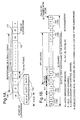
- FIG. 1A shows the superframe structure 102 for a RCR radio telephone system.
- Each superframe 102 comprises 36 (0...35) frames 106 of 20 ms duration and each frame 106 comprises three time slots 104 each of 6.6 ms duration. From start 108 to finish 110 of a superframe 102 is 720 ms.
- the control channel structure is shown in Figure 1B. In this figure only 1 slot 104 (e.g. slot 0) from each frame 106 of a superframe 102 is shown.
- the slots labelled B are reserved for transmitting broadcast messages from a base station to radio telephones.
- the slots labelled P are paging channels (PCH), and those labelled S are Signalling Control Channels.
- the number of each type of slot and their position in the control channel are determined by the base station parameters A b , A s1 , A p , A s2 and N p which may vary from base station to base station, and network to network.
- a radio telephone When a radio telephone registers with a system or a new base station, it is assigned one or more slots 104 for receiving paging information. This is known as the paging control channel (PCH), and in Figure 1B is shown as slot 112 labelled P. Only one such PCH channel is assigned for each radio telephone.
- PCH paging control channel
- the radio telephone During standby mode the radio telephone is in its quiescent or sleep state, and only housekeeping functions, such as timers, are operable for the radio telephone.
- the timing during the sleep state operates to activate the radio telephone during each superframe 102 to enter a receive state co-incident with the PCH 112.
- the receive state can account for between 50% to 80% of the power consumed during the standby mode.
- the structure of slot or burst 104 is shown in Figure 2.
- the slot is 6.6 ms in length and at each end 212, 214 there are ramp bits 204.
- Data is split into two blocks 206, separated by a synchronisation (sync.) word 208 and a colour code 210.
- the sync. word 208 is a fixed sequence of bits different for respective slots and is used to adjust the timing of the radio telephone to the incoming frame or burst 106.
- the colour code 210 is different for each channel and is again a fixed pattern of bits.
- the colour code 210 acts to inhibit co-channel interference.
- When a radio telephone When a radio telephone first registers with a base station or system, it looks for a control message and uses the sync. word to sychronise itself with the system and records the colour code as indicative of the channel assigned for the radio telephone.
- the data in blocks 206 contain information on whether a paging message is present in the PCH, and to which radio telephone the paging message is sent. Respective radio telephones are identified by their Mobile Station Identity (MSI), which is typically transmitted to the network when the radio telephone registers with the network and is assigned a PCH.
- MSI Mobile Station Identity
- the data in blocks 206 transmitted over the physical channel has first been encoded, interleaved and then scrambled in a well known manner by the network before being transmitted to the radio telephone.
- the data has to be de-scrambled, de-interleaved and decoded by the mobile station.
- Figure 3 shows a standard paging message for a radio telephone system such as the RCR-27 system.
- the paging message shown in Figure 3 is before (or after) any decoding, de-interleaving, or de-scrambling, coding, interleaving or scrambling has been performed on it.
- the bits labelled "1" or “0” are fixed for a paging message being present on the paging channel and the bits labelled "X" are "don't care" and can vary for each message sent.
- the sequence of bits "1", "0” are fixed for indicating that a paging message is present on the paging control channel, and thus there is always this unique sequence of bits to indicate the presence of a paging message on the PCH.
- a first embodiment of the present invention use is made of an observed relationship between the sequence of bits prior to coding, interleaving and scrambling a paging message and the sequence of bits after de-scrambling the paging message, when a paging message is present on the PCH.
- the sequence of bits after de-scrambling is shown in Figure 4. Those bits labelled “1", "0” are fixed and indicate the presence of a paging message.
- the bits labelled "X" are "don't care" for the purposes of the present invention and can vary from message to message.
- each bit "1", "0" of interest of a received PCH message can be inspected on a bit by bit basis, and as soon as the de-scrambled message departs from the fixed sequence of bits the receiver can be switched into a quiescent mode or low power mode, or even switched off since the message does not contain a paging message.
- the receiver is switched on only for a time period in which there is a possibility of a paging message being present on the PCH.
- the receiver may interpret the corrupted data as indicating that the message is not a paging message, even when such a message may be present.
- the Applicant When no paging message is transmitted on the PCH, the data before coding, interleaving and scrambling is zero.
- the Applicant has utilised the relationship between the de-scrambled sequence of bits and the sequence of bits for the paging message which would always be transmitted for no paging message.
- the Applicant is able to inspect the de-scrambled message on a bit by bit basis to see if a paging message has been sent.
- a radio telephone comprises control circuitry such as dedicated logic, digital signal processors and microcontrollers 4.
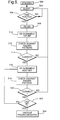
- a receiver of a radio telephone may be under the control of such circuitry, and Figure 5 shows a flow chart for circuitry configured or conditioned in accordance with an embodiment of the invention.
- the radio telephone enters standby mode, and sleeps at step 504. During the sleep the quiescent operations of the radio telephone monitor the time for the next PCH, step 506. If it is determined at step 506 that it is time for a PCH then the operation of the circuitry proceeds to step 508 where the receiver is activated. At step 510 the first bit of the incoming message is de-scrambled.
- the de-scrambled first bit is checked against the first bit of the known bit pattern in Figure 4 which is typically stored in a memory at step 512, and if it is correct the operation branches at step 514 to step 516 where the next bit is de-scrambled. If the decision at step 514 is NO then the operation returns to step 504. At step 516 the next bit is de-scrambled and checked at step 518 against the next bit is the known bit pattern shown in Figure 4. If the bit is incorrect then the process branches at step 520 to step 504. If the decision at step 520 is YES then it is checked at step 522 as to whether it is the last bit in the known sequence or not. If the decision at 522 is NO then the process returns to step 516, otherwise a NO decision causes the process to proceed to step 524 where the paging message is decoded.
- the principle of the method shown in Figure 5 can be used for either comparing a de-scrambled incoming message with the bit pattern which indicates a paging message is present, or the bit pattern indicating no paging messages are present or with appropriate minor modification comparing the de-scrambled incoming message with both types of bit pattern.
- the de-scrambling may be performed taking two or more bits at a time, such as a block at a time.
- the comparison with the known bit pattern can be carried out before de-scrambling and the known bit pattern be configured to have the bit pattern for scrambled messages.
- This can be done by utilising the known or assigned colour code and scrambling, for example Exclusive Oring, the known bit pattern of Figure 4 with the colour code to obtain a scrambled bit pattern to compare with the received scrambled signal.
- Embodiments of the invention are not limited to receiving paging messages, but may be used for receiving any type of message for which the de-scrambled bit pattern can be derived in advance and stored in memory, such as an actual page for a particular receiver. Such page being that receiver's unique identity.
- the invention be limited to radio telephone messages, but can be applied to other communication systems.
Landscapes
- Engineering & Computer Science (AREA)
- Computer Networks & Wireless Communication (AREA)
- Signal Processing (AREA)
- Mobile Radio Communication Systems (AREA)
Applications Claiming Priority (2)
| Application Number | Priority Date | Filing Date | Title |
|---|---|---|---|
| GB9526459A GB2308531B (en) | 1995-12-22 | 1995-12-22 | Radio telephone |
| GB9526459 | 1995-12-22 |
Publications (2)
| Publication Number | Publication Date |
|---|---|
| EP0780989A2 true EP0780989A2 (de) | 1997-06-25 |
| EP0780989A3 EP0780989A3 (de) | 2000-05-10 |
Family
ID=10786028
Family Applications (1)
| Application Number | Title | Priority Date | Filing Date |
|---|---|---|---|
| EP96309263A Withdrawn EP0780989A3 (de) | 1995-12-22 | 1996-12-19 | Funktelefon mit reduziertem Stromverbrauch |
Country Status (4)
| Country | Link |
|---|---|
| US (1) | US6195573B1 (de) |
| EP (1) | EP0780989A3 (de) |
| JP (1) | JP3755845B2 (de) |
| GB (1) | GB2308531B (de) |
Cited By (8)
| Publication number | Priority date | Publication date | Assignee | Title |
|---|---|---|---|---|
| WO1999060711A1 (en) * | 1998-05-20 | 1999-11-25 | Lojack Venture Corporation-Micrologic, Inc. | Radio receivers |
| FR2796795A1 (fr) * | 1999-07-20 | 2001-01-26 | Motorola Inc | Procede et appareil pour reduire la consommation d'energie d'un dispositif de communication |
| WO2001076295A3 (en) * | 2000-03-31 | 2002-05-16 | Qualcomm Inc | Dynamic recognition of an empty general paging message |
| EP1111943A3 (de) * | 1999-12-24 | 2002-07-17 | Philips Corporate Intellectual Property GmbH | Mobilfunkgerät mit adaptiver Erkennung von leeren Rufmeldungen |
| EP1389883A1 (de) * | 2002-08-13 | 2004-02-18 | Motorola, Inc. | Verfahren zur Dekodierung ankommender Meldungen für Funkkommunikationsgeräte |
| EP1481483A4 (de) * | 2002-02-13 | 2005-07-13 | Interdigital Tech Corp | System und verfahren zum effizienten erkennen der identifikation eines empfangenen signals |
| WO2009022294A3 (en) * | 2007-08-14 | 2009-05-22 | Nokia Corp | Power saving for uplink scheduling grant signaling and decoding |
| WO2014112715A1 (ko) * | 2013-01-16 | 2014-07-24 | (주)에이투유정보통신 | 근거리 무선 통신을 통해 무선 패킷을 수신하는 방법, 휴대형 단말기 및 근거리 무선 통신 시스템 |
Families Citing this family (9)
| Publication number | Priority date | Publication date | Assignee | Title |
|---|---|---|---|---|
| US7590083B2 (en) | 1995-12-07 | 2009-09-15 | Transcore Link Logistics Corp. | Wireless packet data distributed communications system |
| US6539242B1 (en) * | 2000-03-31 | 2003-03-25 | Qualcomm Incorporated | Efficient detection of general paging messages in poor signal to noise environments |
| US6330234B1 (en) * | 2000-04-27 | 2001-12-11 | Peter A. Tomasi | Method and apparatus for reducing current consumption |
| US7277679B1 (en) * | 2001-09-28 | 2007-10-02 | Arraycomm, Llc | Method and apparatus to provide multiple-mode spatial processing to a terminal unit |
| US6950684B2 (en) | 2002-05-01 | 2005-09-27 | Interdigital Technology Corporation | Method and system for optimizing power resources in wireless devices |
| KR101061955B1 (ko) * | 2002-05-06 | 2011-09-05 | 인터디지탈 테크날러지 코포레이션 | 배터리 수명을 연장시키기 위한 동기화 방법 |
| US7689196B2 (en) * | 2002-06-26 | 2010-03-30 | Qualcomm Incorporated | Timer-based sleep for terminals in wireless communication systems |
| US7933577B2 (en) * | 2005-11-29 | 2011-04-26 | Electronics And Telecommunications Research Institute | Method and apparatus for sharing portable terminal in CDMA system and mobile RFID system |
| US8190177B2 (en) * | 2008-01-10 | 2012-05-29 | Research In Motion Limited | Paging a mobile station individually and using broadcast pages |
Family Cites Families (15)
| Publication number | Priority date | Publication date | Assignee | Title |
|---|---|---|---|---|
| JPH01141423A (ja) * | 1987-11-28 | 1989-06-02 | Toshiba Corp | 選択呼出方式 |
| US5241284A (en) | 1990-02-16 | 1993-08-31 | Nokia Mobile Phones Ltd. | Circuit arrangement for connecting RF amplifier and supply voltage filter |
| US5224152A (en) | 1990-08-27 | 1993-06-29 | Audiovox Corporation | Power saving arrangement and method in portable cellular telephone system |
| US5265270A (en) * | 1990-10-31 | 1993-11-23 | Motorola, Inc. | Method and apparatus for providing power conservation in a communication system |
| FI88657C (fi) | 1991-02-12 | 1993-06-10 | Nokia Mobile Phones Ltd | Foerfarande foer att minska stroemfoerbrukningen i en mobiltelefon |
| EP0522720B1 (de) | 1991-06-18 | 1999-08-18 | Nokia Mobile Phones Ltd. | Einstellung der Taktfrequenz einer elektrischen Schaltung |
| US5384564A (en) * | 1992-01-23 | 1995-01-24 | Keith H. Wycoff | Battery saving arrangement for selectively addressable, portable receivers |
| FI95980C (fi) | 1992-09-04 | 1996-04-10 | Nokia Mobile Phones Ltd | Menetelmä ja kytkentäjärjestely ajan mittaamiseksi tarkasti epätarkalla kellolla |
| JPH0738488A (ja) * | 1993-07-16 | 1995-02-07 | Matsushita Electric Ind Co Ltd | 無線通信装置 |
| FR2711865B1 (fr) * | 1993-10-26 | 1995-12-01 | Alcatel Mobile Comm France | Procédés de signalisation et de commande utilisés dans un système de radiocommunications, station de base et station mobile pour la mise en Óoeuvre de ces procédés. |
| FI97765C (fi) * | 1993-11-26 | 1997-02-10 | Nokia Mobile Phones Ltd | Menetelmä sekä kytkentäjärjestely kutsuviestien käsittelemiseksi matkaviestimessä |
| US5471655A (en) | 1993-12-03 | 1995-11-28 | Nokia Mobile Phones Ltd. | Method and apparatus for operating a radiotelephone in an extended stand-by mode of operation for conserving battery power |
| US5491718A (en) | 1994-01-05 | 1996-02-13 | Nokia Mobile Phones Ltd. | CDMA radiotelephone having optimized slotted mode and long code operation |
| FI941221A7 (fi) * | 1994-03-15 | 1995-09-16 | Nokia Corp | Menetelmä matkaviestinjärjestelmän radiopuhelimen tehonkulutuksen pienentämiseksi ja matkaviestin |
| GB2290399B (en) * | 1994-06-11 | 1997-10-22 | Motorola Israel Ltd | Method of operation of a radio system |
-
1995
- 1995-12-22 GB GB9526459A patent/GB2308531B/en not_active Expired - Fee Related
-
1996
- 1996-12-19 EP EP96309263A patent/EP0780989A3/de not_active Withdrawn
- 1996-12-19 US US08/772,075 patent/US6195573B1/en not_active Expired - Fee Related
- 1996-12-20 JP JP34069096A patent/JP3755845B2/ja not_active Expired - Fee Related
Non-Patent Citations (1)
| Title |
|---|
| None |
Cited By (12)
| Publication number | Priority date | Publication date | Assignee | Title |
|---|---|---|---|---|
| WO1999060711A1 (en) * | 1998-05-20 | 1999-11-25 | Lojack Venture Corporation-Micrologic, Inc. | Radio receivers |
| FR2796795A1 (fr) * | 1999-07-20 | 2001-01-26 | Motorola Inc | Procede et appareil pour reduire la consommation d'energie d'un dispositif de communication |
| EP1111943A3 (de) * | 1999-12-24 | 2002-07-17 | Philips Corporate Intellectual Property GmbH | Mobilfunkgerät mit adaptiver Erkennung von leeren Rufmeldungen |
| WO2001076295A3 (en) * | 2000-03-31 | 2002-05-16 | Qualcomm Inc | Dynamic recognition of an empty general paging message |
| KR100864121B1 (ko) * | 2000-03-31 | 2008-10-16 | 콸콤 인코포레이티드 | 빈 일반 페이징 메시지에 대한 동적 인지 |
| EP1481483A4 (de) * | 2002-02-13 | 2005-07-13 | Interdigital Tech Corp | System und verfahren zum effizienten erkennen der identifikation eines empfangenen signals |
| EP1971034A1 (de) * | 2002-02-13 | 2008-09-17 | Interdigital Technology Corporation | System und Verfahren zum effizienten Erkennen der Identifikation eines empfangenen Signals |
| EP1389883A1 (de) * | 2002-08-13 | 2004-02-18 | Motorola, Inc. | Verfahren zur Dekodierung ankommender Meldungen für Funkkommunikationsgeräte |
| US7715333B2 (en) | 2002-08-13 | 2010-05-11 | Motorola, Inc. | Incoming message decoding in wireless communications devices and methods |
| WO2009022294A3 (en) * | 2007-08-14 | 2009-05-22 | Nokia Corp | Power saving for uplink scheduling grant signaling and decoding |
| WO2014112715A1 (ko) * | 2013-01-16 | 2014-07-24 | (주)에이투유정보통신 | 근거리 무선 통신을 통해 무선 패킷을 수신하는 방법, 휴대형 단말기 및 근거리 무선 통신 시스템 |
| US9717052B2 (en) | 2013-01-16 | 2017-07-25 | A2Uict Co., Ltd. | Method for receiving radio packet through short-range wireless communication, portable terminal, and short-range wireless communication system |
Also Published As
| Publication number | Publication date |
|---|---|
| GB2308531B (en) | 2000-03-08 |
| JP3755845B2 (ja) | 2006-03-15 |
| GB9526459D0 (en) | 1996-02-21 |
| EP0780989A3 (de) | 2000-05-10 |
| JPH09191335A (ja) | 1997-07-22 |
| US6195573B1 (en) | 2001-02-27 |
| GB2308531A (en) | 1997-06-25 |
Similar Documents
| Publication | Publication Date | Title |
|---|---|---|
| US6195573B1 (en) | Radio telephone receiver with quick quiescent mode | |
| US4618860A (en) | Radio paging method of arranging message information with reference to a key code and a base station and a pager receiver for use in the method | |
| TW396698B (en) | Method for transmitting broadcast information in a digital control channel | |
| RU2121224C1 (ru) | Способ и устройство для сбережения энергии в системе связи | |
| US4679244A (en) | Method of transmitting terminating call signals within a restricted duration and a base station and a portable unit for use in the same | |
| EP0930798B1 (de) | Gebrauch eines Funkrufkanals für zellulare Rundfunkinformationen | |
| JP4988365B2 (ja) | 無線通信システムにおけるページングメッセージデコーディング方法と装置 | |
| US6324397B1 (en) | Portable terminal equipment | |
| EP0655872B1 (de) | Funkrufnachrichterverarbeitung | |
| EP0473465A1 (de) | Energiesparende Anordnung und Verfahren in einem tragbaren zellularem Fernsprechsystem | |
| EP1459584B1 (de) | Zuverlässige dekodierung eines schnellen funkrufkanals | |
| JPH0418491B2 (de) | ||
| US6310558B1 (en) | Selective calling system and selective calling receiver | |
| EP0586170B1 (de) | Mobiles Funkkommunikationsgerät | |
| KR20050023822A (ko) | 이동통신단말기에서 저전력모드 수행 방법 | |
| JPH05327586A (ja) | 間欠受信方式 | |
| JP2965566B2 (ja) | 選択呼出受信機及び受信機 | |
| JPH01265732A (ja) | 選択呼出方式 | |
| JPH04304043A (ja) | 無線選択呼出受信機 | |
| JPH1084296A (ja) | 無線電話 | |
| KR0153350B1 (ko) | 무선 선택 호출 수신기 | |
| JP3292769B2 (ja) | 移動局間通信方法 | |
| JPS5934019B2 (ja) | 移動無線電話方式 | |
| JPH06216833A (ja) | 移動通信方式 | |
| JPH0748895B2 (ja) | 選択呼出受信機 |
Legal Events
| Date | Code | Title | Description |
|---|---|---|---|
| PUAI | Public reference made under article 153(3) epc to a published international application that has entered the european phase |
Free format text: ORIGINAL CODE: 0009012 |
|
| AK | Designated contracting states |
Kind code of ref document: A2 Designated state(s): DE FR GB SE |
|
| PUAL | Search report despatched |
Free format text: ORIGINAL CODE: 0009013 |
|
| AK | Designated contracting states |
Kind code of ref document: A3 Designated state(s): DE FR GB SE |
|
| RIC1 | Information provided on ipc code assigned before grant |
Free format text: 7H 04B 1/16 A, 7H 04Q 7/32 B |
|
| 17P | Request for examination filed |
Effective date: 20001110 |
|
| RAP1 | Party data changed (applicant data changed or rights of an application transferred) |
Owner name: NOKIA CORPORATION |
|
| 17Q | First examination report despatched |
Effective date: 20040223 |
|
| STAA | Information on the status of an ep patent application or granted ep patent |
Free format text: STATUS: THE APPLICATION IS DEEMED TO BE WITHDRAWN |
|
| 18D | Application deemed to be withdrawn |
Effective date: 20040907 |