EP0789492B1 - Méthode de commande de vidéoconférences multipoints et système capable de synchroniser des paquets vidéo et audio - Google Patents
Méthode de commande de vidéoconférences multipoints et système capable de synchroniser des paquets vidéo et audio Download PDFInfo
- Publication number
- EP0789492B1 EP0789492B1 EP97101971A EP97101971A EP0789492B1 EP 0789492 B1 EP0789492 B1 EP 0789492B1 EP 97101971 A EP97101971 A EP 97101971A EP 97101971 A EP97101971 A EP 97101971A EP 0789492 B1 EP0789492 B1 EP 0789492B1
- Authority
- EP
- European Patent Office
- Prior art keywords
- video
- packets
- audio
- packet
- sequence numbers
- Prior art date
- Legal status (The legal status is an assumption and is not a legal conclusion. Google has not performed a legal analysis and makes no representation as to the accuracy of the status listed.)
- Expired - Lifetime
Links
Images


Classifications
-
- H—ELECTRICITY
- H04—ELECTRIC COMMUNICATION TECHNIQUE
- H04N—PICTORIAL COMMUNICATION, e.g. TELEVISION
- H04N7/00—Television systems
- H04N7/14—Systems for two-way working
- H04N7/15—Conference systems
-
- H—ELECTRICITY
- H04—ELECTRIC COMMUNICATION TECHNIQUE
- H04N—PICTORIAL COMMUNICATION, e.g. TELEVISION
- H04N21/00—Selective content distribution, e.g. interactive television or video on demand [VOD]
- H04N21/20—Servers specifically adapted for the distribution of content, e.g. VOD servers; Operations thereof
- H04N21/23—Processing of content or additional data; Elementary server operations; Server middleware
- H04N21/236—Assembling of a multiplex stream, e.g. transport stream, by combining a video stream with other content or additional data, e.g. inserting a URL [Uniform Resource Locator] into a video stream, multiplexing software data into a video stream; Remultiplexing of multiplex streams; Insertion of stuffing bits into the multiplex stream, e.g. to obtain a constant bit-rate; Assembling of a packetised elementary stream
- H04N21/2368—Multiplexing of audio and video streams
-
- H—ELECTRICITY
- H04—ELECTRIC COMMUNICATION TECHNIQUE
- H04N—PICTORIAL COMMUNICATION, e.g. TELEVISION
- H04N21/00—Selective content distribution, e.g. interactive television or video on demand [VOD]
- H04N21/20—Servers specifically adapted for the distribution of content, e.g. VOD servers; Operations thereof
- H04N21/23—Processing of content or additional data; Elementary server operations; Server middleware
- H04N21/236—Assembling of a multiplex stream, e.g. transport stream, by combining a video stream with other content or additional data, e.g. inserting a URL [Uniform Resource Locator] into a video stream, multiplexing software data into a video stream; Remultiplexing of multiplex streams; Insertion of stuffing bits into the multiplex stream, e.g. to obtain a constant bit-rate; Assembling of a packetised elementary stream
- H04N21/2365—Multiplexing of several video streams
-
- H—ELECTRICITY
- H04—ELECTRIC COMMUNICATION TECHNIQUE
- H04N—PICTORIAL COMMUNICATION, e.g. TELEVISION
- H04N21/00—Selective content distribution, e.g. interactive television or video on demand [VOD]
- H04N21/20—Servers specifically adapted for the distribution of content, e.g. VOD servers; Operations thereof
- H04N21/23—Processing of content or additional data; Elementary server operations; Server middleware
- H04N21/242—Synchronisation processes, e.g. processing of PCR [Programme Clock References]
-
- H—ELECTRICITY
- H04—ELECTRIC COMMUNICATION TECHNIQUE
- H04N—PICTORIAL COMMUNICATION, e.g. TELEVISION
- H04N21/00—Selective content distribution, e.g. interactive television or video on demand [VOD]
- H04N21/20—Servers specifically adapted for the distribution of content, e.g. VOD servers; Operations thereof
- H04N21/25—Management operations performed by the server for facilitating the content distribution or administrating data related to end-users or client devices, e.g. end-user or client device authentication, learning user preferences for recommending movies
- H04N21/266—Channel or content management, e.g. generation and management of keys and entitlement messages in a conditional access system, merging a VOD unicast channel into a multicast channel
- H04N21/2665—Gathering content from different sources, e.g. Internet and satellite
-
- H—ELECTRICITY
- H04—ELECTRIC COMMUNICATION TECHNIQUE
- H04N—PICTORIAL COMMUNICATION, e.g. TELEVISION
- H04N21/00—Selective content distribution, e.g. interactive television or video on demand [VOD]
- H04N21/40—Client devices specifically adapted for the reception of or interaction with content, e.g. set-top-box [STB]; Operations thereof
- H04N21/43—Processing of content or additional data, e.g. demultiplexing additional data from a digital video stream; Elementary client operations, e.g. monitoring of home network or synchronising decoder's clock; Client middleware
- H04N21/4302—Content synchronisation processes, e.g. decoder synchronisation
- H04N21/4307—Synchronising the rendering of multiple content streams or additional data on devices, e.g. synchronisation of audio on a mobile phone with the video output on the TV screen
- H04N21/43072—Synchronising the rendering of multiple content streams or additional data on devices, e.g. synchronisation of audio on a mobile phone with the video output on the TV screen of multiple content streams on the same device
-
- H—ELECTRICITY
- H04—ELECTRIC COMMUNICATION TECHNIQUE
- H04N—PICTORIAL COMMUNICATION, e.g. TELEVISION
- H04N21/00—Selective content distribution, e.g. interactive television or video on demand [VOD]
- H04N21/40—Client devices specifically adapted for the reception of or interaction with content, e.g. set-top-box [STB]; Operations thereof
- H04N21/43—Processing of content or additional data, e.g. demultiplexing additional data from a digital video stream; Elementary client operations, e.g. monitoring of home network or synchronising decoder's clock; Client middleware
- H04N21/434—Disassembling of a multiplex stream, e.g. demultiplexing audio and video streams, extraction of additional data from a video stream; Remultiplexing of multiplex streams; Extraction or processing of SI; Disassembling of packetised elementary stream
- H04N21/4341—Demultiplexing of audio and video streams
-
- H—ELECTRICITY
- H04—ELECTRIC COMMUNICATION TECHNIQUE
- H04N—PICTORIAL COMMUNICATION, e.g. TELEVISION
- H04N21/00—Selective content distribution, e.g. interactive television or video on demand [VOD]
- H04N21/40—Client devices specifically adapted for the reception of or interaction with content, e.g. set-top-box [STB]; Operations thereof
- H04N21/43—Processing of content or additional data, e.g. demultiplexing additional data from a digital video stream; Elementary client operations, e.g. monitoring of home network or synchronising decoder's clock; Client middleware
- H04N21/434—Disassembling of a multiplex stream, e.g. demultiplexing audio and video streams, extraction of additional data from a video stream; Remultiplexing of multiplex streams; Extraction or processing of SI; Disassembling of packetised elementary stream
- H04N21/4347—Demultiplexing of several video streams
-
- H—ELECTRICITY
- H04—ELECTRIC COMMUNICATION TECHNIQUE
- H04N—PICTORIAL COMMUNICATION, e.g. TELEVISION
- H04N7/00—Television systems
- H04N7/14—Systems for two-way working
- H04N7/15—Conference systems
- H04N7/152—Multipoint control units therefor
Definitions
- This invention relates to a multipoint video conference controlling method and system which communicates by using video signals and audio signals such as in a television conference and a conference kept at seat.
- Recommendation H.320 is determined as an international standard specification for a video conference controlling system. This recommendation H. 320 does not describe a method which synchronizes the video signals and the audio signals. Conventionally, a means which seemingly and nearly synchronizes the video signals and the audio signals by giving a constant delay to the audio signals is known. The means can not strictly synchronize the video signals and the audio signals.
- a multipoint video conference controlling system which communicates by using video packets and audio packets in networks of transfer rate changing type such as Ethernet and ATM (asynchronous transfer mode)-LAN (local area network) is known.
- transfer rate changing type such as Ethernet and ATM (asynchronous transfer mode)-LAN (local area network)
- One of methods which synchronize the video packets and the audio packets in the multipoint video conference controlling system is described in JP-A-2 022 991.
- a terminal adds the same sequence number to the video packet and the audio packet which are, at the same time, encoded to transmit the video packet and the audio packet to a receiving device.
- the receiving device synchronously displays and outputs the video packet and the audio packet having the same sequence numbers.
- the method does not have a multipoint video conference controlling unit (MCU), in the method, only a conference in one to one is carried out. Thus, it is impossible to use the method in a conference among three and more points.
- the multipoint video conference controlling unit uses a network which operates in a relatively low speed of transfer rate of about 64 Kbps. Consequently, a method of using a dynamic image is used to see the images of faces of each other and to indicate materials by using a camera for photographing pictures and calligraphic works.
- a network operating in a high speed such as an ATM, there are many opportunities where entry persons carry out team works in response to the dynamic image, it is important to strictly synchronize the video packets and the audio packets.
- EP-A-0 669 764 discloses a multipoint video teleconferencing apparatus and system, wherein line interfaces are connected to communication channels for receiving data-compressed integrated frame format signals from an adjacent video teleconferencing apparatus.
- US 5,440,565 discusses a test method and apparatus capable of testing reception of a desired cell through a virtual path, wherein a sequence number is included in an operation administrating cell to specify the cell.
- the multipoint video conference controlling system comprises a multipoint video conference controlling unit 1 and a plurality of video conference terminals 21 to 2n connected to the multipoint video conference controlling unit 1, where n represents an integer greater than two.
- the video conference terminals 21 to 2n transmit video packets V1 to Vn and audio packets A1 to An to the multipoint video conference controlling unit 1.
- a display device 3 of each of the video conference terminals 21 to 2n has four video surfaces VD1 to VD4.
- each of video packets V1 to Vn has a sequence number Nv and each of the audio packets A1 to An has a sequence number Na.
- the multipoint video conference controlling unit 1 is supplied with the video packets V1 to Vn and the audio packets A1 to An from the video conference terminals 21 to 2n.
- the multipoint video conference controlling unit 1 multiplexes the video packets V1 to Vn to produce a composite packet CV. Also, the multipoint video conference controlling unit 1 mixes the audio packets A1 to An to produce a mixed audio packet MA. The multipoint video conference controlling unit 1 transmits the composite packet CV and the mixed audio packet MA to the video conference terminals 21 to 2n.
- the multipoint video conference controlling unit 1 comprises a video multiplexing device 4, a video sequence number processing device 5, a sequence number collating device 6, a MCU controlling device 7, a video transmitting device 8, an audio mixing device 9, an audio sequence number processing device 10, an audio transmitting device 11, and a communicating device 12.
- the communicating device 12 is connected to the video conference terminals 21 to 2n.
- the video multiplexing device 4 is connected to the communicating device 12, the video sequence number processing device 5, the sequence number collating device 6, and the MCU controlling device 7.
- the video sequence number processing device 5 is connected to the communicating device 12 and the sequence number collating device 6.
- the video transmitting device 8 is connected to the communicating device 12, the sequence number collating device 6, and the MCU controlling device 7.
- the audio mixing device 9 is connected to the communicating device 12, the audio sequence number processing device 10, the sequence number collating device 6, and the MCU controlling device 7.
- the audio sequence number processing device 10 is connected to the communicating device 12 and the sequence number collating device 6.
- the audio transmitting device 11 is connected to the communicating device 12, the sequence number collating device 6, and the MCU controlling device 7.
- the MCU controlling device 7 is connected to the communicating device 12.
- the communicating device 12 is supplied with the video packets V1 to Vn having the sequence numbers from the video conference terminals 21 to 2n to supply the video packets V1 to Vn having the sequence numbers for the video sequence number processing device 5.
- the video sequence number processing device 5 holds one of the sequence numbers to supply the video packets V1 to Vn for the video multiplexing device 4.
- the video multiplexing device 4 multiplexes the video packets V1 to Vn to produce a composite packet CV.
- the video multiplexing device 4 supplies the composite packet CV for the sequence number collating device 6.
- the communicating device 12 is supplied with the audio packets A1 to An having the sequence numbers from the video conference terminals 21 to 2n to supply the audio packets A1 to An having the sequence numbers for the audio sequence number processing device 10.
- the audio sequence number processing device 10 holds one of the sequence numbers to supply the audio packets A1 to An for the audio mixing device 9.
- the audio mixing device 9 mixes the audio packets A1 to An to produce a mixed audio packet MA.
- the audio mixing device 9 supplies the mixed audio packet MA for the sequence number collating device 6.
- the sequence number collating device 6 is supplied with the composite packet CV and the mixed audio packet MA from the video multiplexing device 4 and the audio mixing device 9.
- sequence number collating device 6 is supplied with the two ones of the sequence numbers of the video packets V1 to Vn and the audio packets A1 to An from the video sequence number processing device 5 and the audio sequence number processing device 10.
- the sequence number collating device 6 collates the two ones of the sequence numbers of the video packets V1 to Vn and the audio packets A1 to An to produce a coincidence signal when the two ones of the sequence numbers of the video packets V1 to Vn and the audio packets A1 to An coincide with each other.
- the sequence number collating device 6 supplies the coincidence signal and the composite packet CV for the video transmitting device 8. Also, the sequence number collating device 6 supplies the coincidence signal and the mixed audio packet MA for the audio transmitting device 11. The sequence number collating device 6, at the same time, supplies the coincidence signal for both of the video transmitting device 8 and the audio transmitting device 11. The video transmitting device 8 and the audio transmitting device 11 synchronously transmit the composite video packet CV and the mixed audio packet MA in response to the coincidence signal to the video conference terminals 21 to 2n through the communicating device 12.
- the MCU controlling device 7 controls the video multiplexing device 4, the video transmitting device 8, the audio mixing device 9, the audio transmitting device 11, and the communicating device 12.
- the multipoint video conference controlling system may comprise video conference terminals which supply the video packets and the audio packets without the sequence numbers for the communicating device 12.
- the communicating device 12 is supplied with the video packets without the sequence numbers from the video conference terminals to supply the video packets for the video multiplexing device 4.
- the communicating device 12 is supplied with the audio packets without the sequence numbers from the video conference terminals to supply the audio packets for the audio mixing device 9.
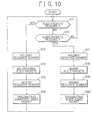
- step S1 the MCU controlling device 7 judges whether or not the video packets V1 to Vn are received by the communicating device 12. When the video packets V1 to Vn are received by the communicating device 12, the step S1 is followed by step S3. Otherwise, the step S1 is followed by step S2.
- step S2 the MCU controlling device 7 judges whether or not the audio packets A1 to An are received by the communicating device 12. When the audio packets A1 to An are received by the communicating device 12, the step S2 is followed by a step S6. Otherwise, the step S2 returns to the step S1.
- the video sequence number processing device 5 holds the one of the sequence numbers of the video packets V1 to Vn to supply the video packets V1 to Vn for the video multiplexing device 4.
- the step S3 proceeds to step S4 at which the video multiplexing device 4 multiplexes the video packets V1 to Vn to produce a composite packet CV.
- the video multiplexing device 4 supplies the composite packet CV for the sequence number collating device 6.
- the step S4 proceeds to step S5.
- the audio sequence number processing device 10 holds the one of the sequence numbers of the audio packets A1 to An to supply the audio packets A1 to An for the audio mixing device 9.
- the step S6 proceeds to step S7 at which the audio mixing device 9 mixes the audio packets A1 to An to produce a mixed audio packet MA.
- the audio mixing device 9 supplies the mixed audio packet MA for the sequence number collating device 6.
- the step S7 proceeds to the step S5.
- the sequence number collating device 6 collates the two ones of the sequence numbers of the video packets V1 to Vn and the audio packets A1 to An to produce a coincidence signal when the two ones of the sequence numbers of the video packets V1 to Vn and the audio packets A1 to An coincide with each other. Also, at the step S5, the sequence number collating device 6 supplies the coincidence signal and the composite packet CV for the video transmitting device 8. In addition, at the step S5, the sequence number collating device 6 supplies the coincidence signal and the mixed audio packet MA for the audio transmitting device 11. In this event, the sequence number collating device 6, at the same time, supplies the coincidence signal for both of the video transmitting device 8 and the audio transmitting device 11. The step S5 proceeds to steps S8 and S9.
- the video transmitting device 8 transmits the composite packet CV to the video conference terminals 21 to 2n through the communicating device 12.
- the audio transmitting device 11 transmit the composite packet CV and the mixed audio packet MA to the video conference terminals 21 to 2n through the communicating device 12. In this event, the video transmitting device 8 and the audio transmitting device 11 synchronously transmit the composite packet CV and the mixed audio packet MA in response to the coincidence signal.
- the steps S8 and S9 return to the step S1.
- the multipoint video conference controlling system further comprises a video server 13.
- the video server 13 is connected to the communicating device 12.
- the video server 13 supplies video packets VoDV and audio packets VoDA having sequence numbers for the communicating device 12.
- the communicating device 12 is supplied with the video packets V1 to Vn and VoDV having the sequence numbers from the video conference terminals 21 to 2n and the video server 13 to supply the video packets V1 to Vn and VoDV having the sequence numbers for the video sequence number processing device 5.
- the video sequence number processing device 5 holds one of the sequence numbers to supply the video packets V1 to Vn and VoDV for the video multiplexing device 4.
- the video multiplexing device 4 multiplexes the video packets V1 to Vn and VoDV to produce a composite packet CV.
- the video multiplexing device 4 supplies the composite packet CV for the sequence number collating device 6.
- the communicating device 12 is supplied with the audio packets A1 to An and VoDA having the sequence numbers from the video conference terminals 21 to 2n and the video server 13 to supply the audio packets A1 to An and VoDA having the sequence numbers for the audio sequence number processing device 10.
- the audio sequence number processing device 10 holds one of the sequence numbers to supply the audio packets A1 to An and VoDA for the audio mixing device 9.
- the audio mixing device 9 mixes the audio packets A1 to An and VoDA to produce a mixed audio packet MA.
- the audio mixing device 9 supplies the mixed audio packet MA for the sequence number collating device 6.
- the sequence number collating device 6 is supplied with the composite packet CV and the mixed audio packet MA from the video multiplexing device 4 and the audio mixing device 9.
- sequence number collating device 6 is supplied with the two ones of the sequence numbers of the video packets V1 to Vn and VoDV and the audio packets A1 to An and VoDA from the video sequence number processing device 5 and the audio sequence number processing device 10.
- the sequence number collating device 6 collates the two ones of the sequence numbers of the video packets V1 to Vn and VoDV and the audio packets A1 to An and VoDA to produce a coincidence signal when the two ones of the sequence numbers of the video packets V1 to Vn and VoDV and the audio packets A1 to An and VoDA coincide with each other.
- the sequence number collating device 6 supplies the coincidence signal and the composite packet CV for the video transmitting device 8. Also, the sequence number collating device 6 supplies the coincidence signal and the mixed audio packet MA for the audio transmitting device 11. The sequence number collating device 6, at the same time, supplies the coincidence signal for both of the video transmitting device 8 and the audio transmitting device 11.
- the multipoint video conference controlling system may comprise the video conference terminals which supply the video packets and the audio packets without the sequence numbers for the communicating device 12.
- the multipoint video conference controlling system may comprise a video server which supplies the video packets and the audio packets without the sequence numbers for the communicating device 12.
- the multipoint video conference controlling system comprises the multipoint video conference controlling unit 1, the video conference terminals 21 to 2n, and the video server 13.
- the multipoint video conference controlling unit 1 comprises the video multiplexing device 4, the video sequence number processing device 5, the MCU controlling device 7, the video transmitting device 8, the audio mixing device 9, the audio sequence number processing device 10, the audio transmitting device 11, and the communicating device 12.
- the communicating device 12 is connected to the video conference terminals 21 to 2n and the video server 13.
- the video multiplexing device 4 is connected to the communicating device 12, the video sequence number processing device 5, and the MCU controlling device 7.
- the video sequence number processing device 5 is connected to the communicating device 12.
- the video transmitting device 8 is connected to the communicating device 12, the video sequence number processing device 5, and the MCU controlling device 7.
- the audio mixing device 9 is connected to the communicating device 12, the audio sequence number processing device 10, and the MCU controlling device 7.
- the audio sequence number processing device 10 is connected to the communicating device 12.
- the audio transmitting device 11 is connected to the communicating device 12, the audio sequence number processing device 10, and the MCU controlling device 7.
- the MCU controlling device 7 is connected to the communicating device 12.
- the communicating device 12 When the communicating device 12 is supplied with the video packets V1 to Vn having the sequence numbers from the video conference terminals 21 to 2n, the communicating device 12 supplies the video packets V1 to Vn having the sequence numbers for the video sequence number processing device 5.
- the video sequence number processing device 5 holds one of the sequence numbers to supply the video packets V1 to Vn for the video multiplexing device 4.
- the video multiplexing device 4 multiplexes the video packets V1 to Vn to produce a composite packet CV.
- the video multiplexing device 4 supplies the composite packet CV for the video sequence number processing device 5.
- the video sequence number processing device 5 adds the one Nv of the sequence numbers to the composite packet CV, for example, as shown in Fig. 9.
- the video sequence number processing device 5 supplies the composite packet CV having the one of the sequence numbers for the video transmitting device 8.
- the communicating device 12 When the communicating device 12 is supplied with the video packets VoDV having the sequence numbers from the video server 13, the communicating device 12 supplies the video packets VoDV having the sequence numbers for the video sequence number processing device 5.
- the video sequence number processing device 5 holds one of the sequence numbers to supply the video packets VoDV for the video multiplexing device 4.
- the video multiplexing device 4 multiplexes the video packets VoDV to produce a composite packet CV.
- the video multiplexing device 4 supplies the composite packet CV for the video sequence number processing device 5.
- the video sequence number processing device 5 adds the one of the sequence numbers to the composite packet CV.
- the video sequence number processing device 5 supplies the composite packet CV having the one of the sequence numbers for the video transmitting device 8.
- the communicating device 12 When the communicating device 12 is supplied with the video packets V1 to Vn and VoDV having the sequence numbers from the video conference terminals 21 to 2n and the video server 13, the communicating device 12 supplies the video packets V1 to Vn and VoDV having the sequence numbers for the video sequence number processing device 5.
- the video sequence number processing device 5 holds one of the sequence numbers to supply the video packets V1 to Vn and VoDV for the video multiplexing device 4.
- the video multiplexing device 4 multiplexes the video packets V1 to Vn and VoDV to produce a composite packet CV.
- the video multiplexing device 4 supplies the composite packet CV for the video sequence number processing device 5.
- the video sequence number processing device 5 adds the one of the sequence numbers to the composite packet CV.
- the video sequence number processing device 5 supplies the composite packet CV having the one of the sequence numbers for the video transmitting device 8.
- the communicating device 12 When the communicating device 12 is supplied with the audio packets A1 to An having the sequence numbers from the video conference terminals 21 to 2n, the communicating device 12 supplies the audio packets A1 to An having the sequence numbers for the audio sequence number processing device 10. In this event, the audio sequence number processing device 10 holds one of the sequence numbers to supply the audio packets A1 to An for the audio mixing device 9. The audio mixing device 9 mixes the audio packets A1 to An to produce a mixed audio packet MA. The audio mixing device 9 supplies the mixed audio packet MA for the audio sequence number processing device 10. The audio sequence number processing device 10 adds the one Na of the sequence numbers to the mixed audio packet MA, for example, as shown in Fig. 9. The audio sequence number processing device 10 supplies the mixed audio packet MA having the one of the sequence numbers for the audio transmitting device 11.
- the communicating device 12 When the communicating device 12 is supplied with the audio packets VoDA having the sequence numbers from the video server 13, the communicating device 12 supplies the audio packets VoDA having the sequence numbers for the audio sequence number processing device 10.
- the audio sequence number processing device 10 holds one of the sequence numbers to supply the audio packets VoDA for the audio mixing device 9.
- the audio mixing device 9 mixes the audio packets VoDA to produce a mixed audio packet MA.
- the audio mixing device 9 supplies the mixed audio packet MA for the audio sequence number processing device 10.
- the audio sequence number processing device 10 adds the one of the sequence numbers to the mixed audio packet MA.
- the audio sequence number processing device 10 supplies the mixed audio packet MA having the one of the sequence numbers for the audio transmitting device 11.
- the communicating device 12 When the communicating device 12 is supplied with the audio packets A1 to An and VoDA having the sequence numbers from the video conference terminals 21 to 2n and the video server 13, the communicating device 12 supplies the audio packets A1 to An and VoDA having the sequence numbers for the audio sequence number processing device 10.
- the audio sequence number processing device 10 holds one of the sequence numbers to supply the audio packets A1 to An and VoDA to the audio mixing device 9.
- the audio mixing device 9 mixes the audio packets A1 to An and VoDA to produce a mixed audio packet MA.
- the audio mixing device 9 supplies the mixed audio packet MA for the audio sequence number processing device 10.
- the audio sequence number processing device 10 adds the one of the sequence numbers to the mixed audio packet MA.
- the audio sequence number processing device 10 supplies the mixed audio packet MA having the one of the sequence numbers for the audio transmitting device 11.
- the video transmitting device 8 and the audio transmitting device 11 synchronously transmit the composite packet CV and the mixed audio packet MA each of which has the sequence numbers to the video conference terminals 21 to 2n through the communicating device 12.
- the MCU controlling device 7 controls the video multiplexing device 4, the video transmitting device 8, the audio mixing device 9, the audio transmitting device 11, and the communicating device 12. In this event, the video conference terminals 21 to 2n display and output the composite packet CV and the mixed audio packet MA in response to the sequence numbers of the composite packet CV and the mixed audio packet MA.
- step S11 the MCU controlling device 7 judges whether or not the video packets are received by the communicating device 12.
- step S11 is followed by step S13.
- step S11 is followed by step S12.
- the MCU controlling device 7 judges whether or not the audio packets are received by the communicating device 12.
- step S12 is followed by step S17. Otherwise, the step S12 returns to the step S11.
- the video sequence number processing device 5 holds the one of the sequence numbers of the video packets to supply the video packets for the video multiplexing device 4.
- the step S13 proceeds to step S14 at which the video multiplexing device 4 multiplexes the video packets to produce the composite packet CV.
- the video multiplexing device 4 supplies the composite packet CV for the video sequence number processing device 5.
- the step S14 proceeds to step S15 at which the video sequence number processing device 5 adds the one of the sequence numbers to the composite video packet CV.
- the video sequence number processing device 5 supplies the composite video packet CD having the one of the sequence numbers for the video transmitting device 8.
- the step S15 proceeds to step S16.
- the audio sequence number processing device 10 holds the one of the sequence numbers of the audio packets to supply the audio packets for the audio mixing device 9.
- the step S17 proceeds to step S18 at which the audio mixing device 9 mixes the audio packets to produce a mixed audio packet MA.
- the audio mixing device 9 supplies the mixed audio packet MA for the audio sequence number processing device 10.
- the step S18 proceeds to step S19 at which the audio sequence number processing device 10 adds the one of the sequence numbers to the mixed audio packet MA.
- the audio sequence number processing device 10 supplies the mixed audio packet MA having the one of the sequence numbers for the audio transmitting device 11.
- the step S19 proceeds to step S20.
- the video transmitting device 8 transmits the composite packet CV having the one of the sequence numbers to the video conference terminals 21 to 2n through the communicating device 12.
- the audio transmitting device 11 transmits the mixed audio packet MA having the one of the sequence numbers to the video conference terminals 21 to 2n through the communicating device 12. In this event, the video transmitting device 8 and the audio transmitting device 11 synchronously transmit the composite packet CV and the mixed audio packet MA each of which has the one of the sequence numbers to the video conference terminals 21 to 2n through the communicating device 12.
- the steps S16 and S20 return to the step S11.
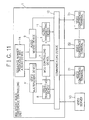
- the multipoint video conference controlling system comprises the multipoint video conference controlling unit 1, the video conference terminals 21 to 2n, and the video server 13.
- the multipoint video conference controlling unit 1 comprises the video multiplexing device 4, a sequence number producing and adding device 14, the MCU controlling device 7, the video transmitting device 8, the audio mixing device 9, the audio transmitting device 11, and the communicating device 12.
- the communicating device 12 is connected to the video conference terminals 21 to 2n and the video server 13.
- the video multiplexing device 4 is connected to the communicating device 12, the sequence number producing and adding device 14, and the MCU controlling device 7.
- the video transmitting device 8 is connected to the communicating device 12, the video multiplexing device 4, and the MCU controlling device 7.
- the audio mixing device 9 is connected to the communicating device 12, the sequence number producing and adding device 14, and the MCU controlling device 7.
- the audio transmitting device 11 is connected to the communicating device 12, the audio mixing device 9, and the MCU controlling device 7.
- the MCU controlling device 7 is connected to the communicating device 12.
- the video server 13 supplies multiplexed video and audio packets each of which has the video packets and the audio packets. The video packets and the audio packets of the multiplexed video and audio packet are synchronized.
- the communicating device 12 When the communicating device 12 is supplied with the video packets V1 to Vn having the sequence numbers from the video conference terminals 21 to 2n, the communicating device 12 supplies the video packets V1 to Vn having the sequence numbers for the video multiplexing device 4. In this event. the video multiplexing device 4 multiplexes the video packets V1 to Vn to produce the composite video packet CV. The video multiplexing device 4 supplies the composite video packet CV for the video conference terminals 21 to 2n through the communicating device 12.
- the communicating device 12 When the communicating device 12 is supplied with one of the multiplexed video and audio packets that has the video packets and the audio packets from the video server 13, the communicating device 12 demultiplexes the one of the multiplexed video and audio packets that has the video packets and the audio packets to produce the video packets and the audio packets. In this event, the communicating device 12 supplies the video packets for the video multiplexing device 4 and supplies the audio packets for the audio mixing device 9.
- the MCU controlling device 7 produces and supplies a sequence number adding command signal to the sequence number producing and adding device 14.
- the sequence number producing and adding device 14 produces a sequence number in response to the sequence number adding command signal to hold the sequence number.
- the sequence number producing and adding device 14 supplies the sequence number for the video multiplexing device 4 and for the audio mixing device 9.
- the video multiplexing device 4 multiplexes the video packets to produce the composite video packet CV.
- the sequence number producing and adding device 14 adds the sequence number to the composite video packet CV of the video multiplexing device 4.
- the video multiplexing device 4 supplies the composite video packet CV having the sequence number for the video transmitting device 8.
- the audio mixing device 9 mixes the audio packets to produce the mixed audio packet MA.
- the sequence number producing and adding device 14 adds the sequence number to the mixed audio packet MA of the audio mixing device 9.
- the audio mixing device 9 supplies the mixed audio packet MA having the sequence number for the audio transmitting device 11.
- the video transmitting device 8 and the audio transmitting device 11 synchronously transmit the composite video packet CV having the sequence number and the mixed audio packet MA having the sequence number to the video conference terminals 21 to 2n through the communicating device 12. In this event, the video conference terminals 21 to 2n display and output the composite packet CV and the mixed audio packet MA in response to the sequence numbers of the composite packet CV and the mixed audio packet MA.
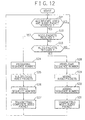
- step S21 the MCU controlling device 7 judges whether or not the multiplexed video and audio packet is received by the communicating device 12. When the multiplexed video and audio packet is received by the communicating device 12, the step S21 is followed by step S22. Otherwise, the step S21 is repeated again.
- step S22 the MCU controlling device 7 judges whether or not the video packets are received by the communicating device 12. When the video packets are received by the communicating device 12, the step S22 is followed by step S24. Otherwise, the step S22 is followed by step S23.
- step S23 the MCU controlling device 7 judges whether or not the audio packets are received by the communicating device 12. When the audio packets are received by the communicating device 12, the step S23 is followed by step S28.
- step S23 returns to the step S21.
- the sequence number producing and adding device 14 produces a sequence number in response to the sequence number adding command signal from the MCU controlling device 7 to supply the sequence number for the video multiplexing device 4.
- the step S24 proceeds to step S25 at which the video multiplexing device 4 multiplexes the video packets to produce the composite packet CV.
- the step S25 proceeds to step S26 at which the sequence number producing and adding device 14 adds the sequence number to the composite video packet CV of the video multiplexing device 4.
- step S26 the video multiplexing device 4 supplies the composite video packet CD having the sequence numbers for the video transmitting device 8.
- step S26 proceeds to step S27.
- the sequence number producing and adding device 14 produces the sequence number in response to the sequence number adding command signal from the MCU controlling device 7 to supply the sequence number for the audio mixing device 9.
- the step S28 proceeds to step S29 at which the audio mixing device 9 mixes the audio packets to produce a mixed audio packet MA.
- the step S29 proceeds to step S30 at which the sequence number producing and adding device 14 adds the sequence numbers to the mixed audio packet MA of the audio mixing device 9.
- the audio mixing device 9 supplies the mixed audio packet MA having the sequence number for the audio transmitting device 11.
- the step S30 proceeds to step S31.
- the video transmitting device 8 transmits the composite packet CV having the sequence number to the video conference terminals 21 to 2n through the communicating device 12.
- the audio transmitting device 11 transmits the mixed audio packet MA having the sequence number to the video conference terminals 21 to 2n through the communicating device 12. In this event, the video transmitting device 8 and the audio transmitting device 11 synchronously transmit the composite packet CV and the mixed audio packet MA each of which has the sequence number to the video conference terminals 21 to 2n through the communicating device 12.
- the steps S27 and S31 return to the step S21.
Landscapes
- Engineering & Computer Science (AREA)
- Multimedia (AREA)
- Signal Processing (AREA)
- Physics & Mathematics (AREA)
- Astronomy & Astrophysics (AREA)
- General Physics & Mathematics (AREA)
- Databases & Information Systems (AREA)
- Two-Way Televisions, Distribution Of Moving Picture Or The Like (AREA)
- Telephonic Communication Services (AREA)
- Data Exchanges In Wide-Area Networks (AREA)
Claims (12)
- Procédé de commande de vidéoconférence multipoints qui est fourni avec des paquets vidéo et des paquets audio en provenance d'une pluralité de terminaux de vidéoconférence (21 à 2n), multiplexe lesdits paquets vidéo afin de produire un paquet composite, mixe lesdits paquets audio afin de produire un paquet audio mixé, et transmet ledit paquet composite et ledit paquet audio mixé aux dits terminaux de vidéoconférence, ledit procédé de commande de vidéoconférence multipoints comprenant les étapes de :interclassement de numéros de séquence desdits paquets vidéo et desdits paquets audio afin de produire un signal de coïncidence lorsque lesdits numéros de séquence desdits paquets vidéo et desdits paquets audio coïncident les uns avec les autres (S5) ; ettransmission synchronisée dudit paquet composite et dudit paquet audio mixé en réponse au dit signal de coïncidence (S8, S9).
- Procédé de commande de vidéoconférence multipoints qui est fourni avec des paquets vidéo et des paquets audio en provenance d'une pluralité de terminaux de vidéoconférence (21 à 2n), multiplexe lesdits paquets vidéo afin de produire un paquet composite, mixe lesdits paquets audio afin de produire un paquet audio mixé, et transmet ledit paquet composite et ledit paquet audio mixé aux dits terminaux de vidéoconférence, ledit procédé de commande de vidéoconférence multipoints comprenant les étapes de :addition d'un des numéros de séquence au dit paquet composite et au dit paquet audio mixé lorsque lesdits paquets vidéo et lesdits paquets audio ont lesdits numéros de séquence (S15, S19) ; ettransmission synchronisée dudit paquet composite et dudit paquet audio mixé ayant lesdits numéros de séquence (S16, S20).
- Procédé de commande de vidéoconférence multipoints selon la revendication 1, dans lequel lesdits paquets vidéo et lesdits paquets audio sont fournis par lesdits terminaux de vidéoconférence (21 à 2n) et par un serveur vidéo (13) ; et lesdits numéros de séquence desdits paquets vidéo et desdits paquets audio en provenance dudit serveur vidéo sont interclassés afin de produire un signal de coïncidence lorsque lesdits numéros de séquence desdits paquets vidéo et desdits paquets audio en provenance dudit serveur vidéo coïncident les uns avec les autres (S5).
- Procédé de commande de vidéoconférence multipoints selon la revendication 2, dans lequel lesdits paquets vidéo et lesdits paquets audio sont fournis par lesdits terminaux de vidéoconférence (21 à 2n) et par un serveur vidéo (13) ; et l'un desdits numéros de séquence dudit paquet composite est ajouté au dit paquet audio mixé lorsque lesdits paquets vidéo et iesdits paquets audio en provenance dudit serveur vidéo ont lesdits numéros de séquence (S15, S19).
- Procédé de commande de vidéoconférence multipoints qui est fourni avec des paquets vidéo et des paquets audio en provenance d'une pluralité de terminaux de vidéoconférence (21 à 2n), et avec des paquets vidéo et des paquets audio multiplexés dont chacun a lesdits paquets vidéo et lesdits paquets audio en provenance d'un serveur vidéo (13), multiplexe lesdits paquets vidéo afin de produire un paquet composite, mixe lesdits paquets audio afin de produire un paquet audio mixé, et transmet ledit paquet composite et ledit paquet audio mixé aux dits terminaux de vidéoconférence, ledit procédé de commande de vidéoconférence multipoints comprenant les étapes de :production de numéros de séquence en réponse à l'un desdits paquets vidéo et audio multiplexés en provenance dudit serveur vidéo (S24, S28) ;addition desdits numéros de séquence au dit paquet composite et au dit paquet audio mixé (S26, S30) ; ettransmission synchronisée dudit paquet composite et dudit paquet audio mixé ayant lesdits numéros de séquence (S27, S31)
- Système de commande de vidéoconférence multipoints utilisant le procédé de la revendication 1, ledit système de commande de vidéoconférence multipoints comprenant :des moyens d'interclassement (6) destinés à interclasser des numéros de séquence desdits paquets vidéo et desdits paquets audio afin de produire un signal de coïncidence lorsque lesdits numéros de séquence desdits paquets vidéo et desdits paquets audio coïncident les uns avec les autres ; etdes moyens de transmission (8, 11) destinés à transmettre de manière synchronisée ledit paquet composite et ledit paquet audio mixé lorsque lesdits moyens de transmission sont fournis avec ledit signal de coïncidence en provenance desdits moyens d'interclassement.
- Système de commande de vidéoconférence multipoints utilisant le procédé de la revendication 2, ledit système de commande de vidéoconférence multipoints comprenant :des moyens d'addition (5, 10) destinés à ajouter l'un des numéros de séquence au dit paquet composite et au dit paquet audio mixé lorsque lesdits paquets vidéo et lesdits paquets audio ont lesdits numéros de séquence ; etdes moyens de transmission (8, 11) destinés à transmettre de manière synchronisée ledit paquet composite et ledit paquet audio mixé ayant lesdits numéros de séquence.
- Système de commande de vidéoconférence multipoints selon la revendication 6, dans lequel lesdits paquets vidéo et lesdits paquets audio sont fournis par des terminaux de vidéoconférence (21 à 2n) et par un serveur vidéo (13), et lesdits moyens d'interclassement (6) sont destinés à interclasser des numéros de séquence desdits paquets vidéo et desdits paquets audio en provenance dudit serveur vidéo afin de produire un signal de coïncidence lorsque lesdits numéros de séquence desdits paquets vidéo et desdits paquets audio en provenance dudit serveur vidéo coïncident les uns avec les autres
- Système de commande de vidéoconférence multipoints selon la revendication 8, dans lequel ledit système de commande de vidéoconférence multipoints comprend en outre :d'autres moyens d'interclassement (6) destinés à interclasser des numéros de séquence desdits paquets vidéo et desdits paquets audio en provenance desdits terminaux de vidéoconférence afin de produire un autre signal de coïncidence lorsque lesdits numéros de séquence desdits paquets vidéo et desdits paquets audio en provenance desdits terminaux de vidéoconférence coïncident les uns avec les autres ;d'autres moyens de transmission (8, 11) destinés à transmettre de manière synchronisée ledit paquet composite et ledit paquet audio mixé lorsque les autres moyens de transmission sont fournis avec l'autre signal de coïncidence en provenance des autres moyens d'interclassement.
- Système de commande de vidéoconférence multipoints selon la revendication 7, dans lequel lesdits paquets vidéo et lesdits paquets audio sont fournis par des terminaux de vidéoconférence (21 à 2n) et par un serveur vidéo (13), et lesdits moyens d'addition (5, 10) sont destinés à ajouter l'un des numéros de séquence au dit paquet composite et au dit paquet audio mixé lorsque lesdits paquets vidéo et lesdits paquets audio en provenance du serveur vidéo ont lesdits numéros de séquence.
- Système de commande de vidéoconférence multipoints selon la revendication 10, dans lequel ledit système de commande de vidéoconférence multipoints comprend en outre d'autres moyens d'addition (5, 10) destinés à ajouter l'un des numéros de séquence au dit paquet composite et au dit paquet audio mixé lorsque lesdits paquets vidéo et lesdits paquets audio en provenance desdits terminaux de vidéoconférence ont lesdits numéros de séquence.
- Système de commande de vidéoconférence multipoints utilisant le procédé de la revendication 5, ledit système de commande de vidéoconférence multipoints comprenant :des moyens de production (14) destinés à produire des numéros de séquence en réponse à l'un desdits paquets vidéo et audio multiplexés en provenance dudit serveur vidéo ;des moyens d'addition (4, 9,14) destinés à ajouter lesdits numéros de séquence au dit paquet composite et au dit paquet audio mixé ; etdes moyens de transmission (8, 11) destinés à transmettre de manière synchronisée ledit paquet composite et ledit paquet audio mixé ayant lesdits numéros de séquence.
Applications Claiming Priority (3)
| Application Number | Priority Date | Filing Date | Title |
|---|---|---|---|
| JP48364/96 | 1996-02-09 | ||
| JP8048364A JPH09219851A (ja) | 1996-02-09 | 1996-02-09 | 多地点ビデオ会議制御方法及び装置 |
| JP4836496 | 1996-02-09 |
Publications (3)
| Publication Number | Publication Date |
|---|---|
| EP0789492A2 EP0789492A2 (fr) | 1997-08-13 |
| EP0789492A3 EP0789492A3 (fr) | 1997-12-29 |
| EP0789492B1 true EP0789492B1 (fr) | 2001-10-10 |
Family
ID=12801301
Family Applications (1)
| Application Number | Title | Priority Date | Filing Date |
|---|---|---|---|
| EP97101971A Expired - Lifetime EP0789492B1 (fr) | 1996-02-09 | 1997-02-07 | Méthode de commande de vidéoconférences multipoints et système capable de synchroniser des paquets vidéo et audio |
Country Status (7)
| Country | Link |
|---|---|
| US (1) | US5914940A (fr) |
| EP (1) | EP0789492B1 (fr) |
| JP (1) | JPH09219851A (fr) |
| KR (1) | KR100255061B1 (fr) |
| AU (1) | AU732355B2 (fr) |
| CA (1) | CA2196948C (fr) |
| DE (1) | DE69707168T2 (fr) |
Families Citing this family (62)
| Publication number | Priority date | Publication date | Assignee | Title |
|---|---|---|---|---|
| JPH09266460A (ja) * | 1996-03-28 | 1997-10-07 | Sony Corp | 送受信システム |
| US7243363B1 (en) * | 1997-07-10 | 2007-07-10 | Sony Computer Entertainment, Inc. | Entertainment system, picture display apparatus, information processing apparatus and synchronization control method |
| US5949763A (en) * | 1997-07-17 | 1999-09-07 | Ameritech Corporation | Method and apparatus for providing broadband access conferencing services |
| US6418125B1 (en) * | 1998-06-18 | 2002-07-09 | Cisco Technology, Inc. | Unified mixing, speaker selection, and jitter buffer management for multi-speaker packet audio systems |
| US7089285B1 (en) * | 1999-10-05 | 2006-08-08 | Polycom, Inc. | Videoconferencing apparatus having integrated multi-point conference capabilities |
| US6826159B1 (en) | 2000-05-24 | 2004-11-30 | Cisco Technology, Inc. | System and method for providing speaker identification in a conference call |
| US6683858B1 (en) * | 2000-06-28 | 2004-01-27 | Paltalk Holdings, Inc. | Hybrid server architecture for mixing and non-mixing client conferencing |
| US6792265B1 (en) * | 2000-10-02 | 2004-09-14 | Sbc Technology Resources, Inc. | Conference call setup utilizing a wireless access protocol capable telephone |
| US7158534B2 (en) * | 2000-11-30 | 2007-01-02 | Imajet Communications, Inc. | Unified distributed architecture for a multi-point video conference and interactive broadcast systems |
| US8977683B2 (en) | 2000-12-26 | 2015-03-10 | Polycom, Inc. | Speakerphone transmitting password information to a remote device |
| US8948059B2 (en) | 2000-12-26 | 2015-02-03 | Polycom, Inc. | Conference endpoint controlling audio volume of a remote device |
| US7221663B2 (en) * | 2001-12-31 | 2007-05-22 | Polycom, Inc. | Method and apparatus for wideband conferencing |
| US7864938B2 (en) * | 2000-12-26 | 2011-01-04 | Polycom, Inc. | Speakerphone transmitting URL information to a remote device |
| US7339605B2 (en) * | 2004-04-16 | 2008-03-04 | Polycom, Inc. | Conference link between a speakerphone and a video conference unit |
| US8964604B2 (en) * | 2000-12-26 | 2015-02-24 | Polycom, Inc. | Conference endpoint instructing conference bridge to dial phone number |
| US9001702B2 (en) * | 2000-12-26 | 2015-04-07 | Polycom, Inc. | Speakerphone using a secure audio connection to initiate a second secure connection |
| EP1366607B1 (fr) * | 2001-02-07 | 2010-09-15 | Paltalk Holdings Inc. | Architecture de systemes servant a relier des clients a commutation de circuits et a commutation de paquets |
| US8976712B2 (en) * | 2001-05-10 | 2015-03-10 | Polycom, Inc. | Speakerphone and conference bridge which request and perform polling operations |
| JP4231698B2 (ja) * | 2001-05-10 | 2009-03-04 | ポリコム イスラエル リミテッド | 多地点マルチメディア/音声システムの制御ユニット |
| US8934382B2 (en) * | 2001-05-10 | 2015-01-13 | Polycom, Inc. | Conference endpoint controlling functions of a remote device |
| US8705719B2 (en) | 2001-12-31 | 2014-04-22 | Polycom, Inc. | Speakerphone and conference bridge which receive and provide participant monitoring information |
| US8102984B2 (en) | 2001-12-31 | 2012-01-24 | Polycom Inc. | Speakerphone and conference bridge which receive and provide participant monitoring information |
| US8885523B2 (en) * | 2001-12-31 | 2014-11-11 | Polycom, Inc. | Speakerphone transmitting control information embedded in audio information through a conference bridge |
| US7978838B2 (en) * | 2001-12-31 | 2011-07-12 | Polycom, Inc. | Conference endpoint instructing conference bridge to mute participants |
| US7742588B2 (en) | 2001-12-31 | 2010-06-22 | Polycom, Inc. | Speakerphone establishing and using a second connection of graphics information |
| US8023458B2 (en) * | 2001-12-31 | 2011-09-20 | Polycom, Inc. | Method and apparatus for wideband conferencing |
| US8947487B2 (en) * | 2001-12-31 | 2015-02-03 | Polycom, Inc. | Method and apparatus for combining speakerphone and video conference unit operations |
| US7787605B2 (en) * | 2001-12-31 | 2010-08-31 | Polycom, Inc. | Conference bridge which decodes and responds to control information embedded in audio information |
| US8144854B2 (en) | 2001-12-31 | 2012-03-27 | Polycom Inc. | Conference bridge which detects control information embedded in audio information to prioritize operations |
| US8223942B2 (en) | 2001-12-31 | 2012-07-17 | Polycom, Inc. | Conference endpoint requesting and receiving billing information from a conference bridge |
| US8934381B2 (en) | 2001-12-31 | 2015-01-13 | Polycom, Inc. | Conference endpoint instructing a remote device to establish a new connection |
| JP2004007539A (ja) | 2002-04-19 | 2004-01-08 | Sumitomo Electric Ind Ltd | ビジュアル情報の記録/再生方法、その装置及び通信システム |
| JP3825416B2 (ja) * | 2003-04-14 | 2006-09-27 | 国立大学法人北陸先端科学技術大学院大学 | データ同期方法、データ同期システム及びデータ同期プログラム |
| AU2004306740B2 (en) * | 2003-10-08 | 2010-11-25 | Cisco Technology, Inc. | System and method for performing distributed video conferencing |
| US8081205B2 (en) * | 2003-10-08 | 2011-12-20 | Cisco Technology, Inc. | Dynamically switched and static multiple video streams for a multimedia conference |
| KR100581060B1 (ko) * | 2003-11-12 | 2006-05-22 | 한국전자통신연구원 | 오감 데이터 동기화 전송 장치 및 그 방법과 그를 이용한실감형 멀티미디어 데이터 제공 시스템 및 그 방법 |
| US8149739B2 (en) * | 2004-10-15 | 2012-04-03 | Lifesize Communications, Inc. | Background call validation |
| US7545435B2 (en) * | 2004-10-15 | 2009-06-09 | Lifesize Communications, Inc. | Automatic backlight compensation and exposure control |
| US20060106929A1 (en) * | 2004-10-15 | 2006-05-18 | Kenoyer Michael L | Network conference communications |
| US7692683B2 (en) * | 2004-10-15 | 2010-04-06 | Lifesize Communications, Inc. | Video conferencing system transcoder |
| US20060248210A1 (en) * | 2005-05-02 | 2006-11-02 | Lifesize Communications, Inc. | Controlling video display mode in a video conferencing system |
| US8199791B2 (en) | 2005-06-08 | 2012-06-12 | Polycom, Inc. | Mixed voice and spread spectrum data signaling with enhanced concealment of data |
| US7796565B2 (en) | 2005-06-08 | 2010-09-14 | Polycom, Inc. | Mixed voice and spread spectrum data signaling with multiplexing multiple users with CDMA |
| US8126029B2 (en) * | 2005-06-08 | 2012-02-28 | Polycom, Inc. | Voice interference correction for mixed voice and spread spectrum data signaling |
| BRPI0615511A2 (pt) * | 2005-07-12 | 2011-05-17 | Nec Corp | servidor de conferência multiponto, sistema de conferência multiponto, programa a ser executado por um computador e método de conferência multiponto |
| US8713105B2 (en) * | 2006-01-03 | 2014-04-29 | Cisco Technology, Inc. | Method and apparatus for transcoding and transrating in distributed video systems |
| US9635315B2 (en) | 2006-08-07 | 2017-04-25 | Oovoo Llc | Video conferencing over IP networks |
| US8856371B2 (en) * | 2006-08-07 | 2014-10-07 | Oovoo Llc | Video conferencing over IP networks |
| US8319814B2 (en) * | 2007-06-22 | 2012-11-27 | Lifesize Communications, Inc. | Video conferencing system which allows endpoints to perform continuous presence layout selection |
| US8139100B2 (en) * | 2007-07-13 | 2012-03-20 | Lifesize Communications, Inc. | Virtual multiway scaler compensation |
| US9661267B2 (en) * | 2007-09-20 | 2017-05-23 | Lifesize, Inc. | Videoconferencing system discovery |
| US8514265B2 (en) * | 2008-10-02 | 2013-08-20 | Lifesize Communications, Inc. | Systems and methods for selecting videoconferencing endpoints for display in a composite video image |
| US20100110160A1 (en) * | 2008-10-30 | 2010-05-06 | Brandt Matthew K | Videoconferencing Community with Live Images |
| US8456510B2 (en) * | 2009-03-04 | 2013-06-04 | Lifesize Communications, Inc. | Virtual distributed multipoint control unit |
| US8643695B2 (en) * | 2009-03-04 | 2014-02-04 | Lifesize Communications, Inc. | Videoconferencing endpoint extension |
| US8305421B2 (en) * | 2009-06-29 | 2012-11-06 | Lifesize Communications, Inc. | Automatic determination of a configuration for a conference |
| US8350891B2 (en) * | 2009-11-16 | 2013-01-08 | Lifesize Communications, Inc. | Determining a videoconference layout based on numbers of participants |
| CN104135667B (zh) | 2014-06-10 | 2015-06-24 | 腾讯科技(深圳)有限公司 | 一种视频异地解说同步方法、终端设备,及系统 |
| CN109831833B (zh) * | 2019-03-18 | 2021-01-05 | 成都极客通科技有限公司 | 一种基于混音控制的紧急插话系统及方法 |
| WO2022031872A1 (fr) | 2020-08-04 | 2022-02-10 | Owl Labs Inc. | Vue désignée dans un signal de webcam composite à vues multiples |
| EP4186229A2 (fr) * | 2020-08-24 | 2023-05-31 | Owl Labs, Inc. | Fusion de signaux webcaméra provenant de multiples caméras |
| WO2022064394A1 (fr) * | 2020-09-23 | 2022-03-31 | Landr Audio Inc. | Procédé et système de diffusion en continu d'un signal audio par l'intermédiaire d'une plateforme logicielle de vidéoconférence |
Family Cites Families (12)
| Publication number | Priority date | Publication date | Assignee | Title |
|---|---|---|---|---|
| US4360827A (en) * | 1981-06-02 | 1982-11-23 | Darome, Inc. | Method and means for interactive audio and video conferencing |
| JPH0771278B2 (ja) * | 1988-07-12 | 1995-07-31 | 三菱電機株式会社 | パケットテレビ会議端末 |
| JP3292248B2 (ja) * | 1991-05-29 | 2002-06-17 | 富士通株式会社 | 遠隔会議システム |
| JPH05244196A (ja) * | 1991-10-24 | 1993-09-21 | Nec Corp | Atmシステムのvp試験方式及びvp試験装置 |
| JPH05130601A (ja) * | 1991-11-07 | 1993-05-25 | Canon Inc | 多地点間制御装置 |
| US5375068A (en) * | 1992-06-03 | 1994-12-20 | Digital Equipment Corporation | Video teleconferencing for networked workstations |
| JPH0750818A (ja) * | 1993-08-06 | 1995-02-21 | Matsushita Electric Ind Co Ltd | 音声と映像のパケット同期転送制御方法 |
| US5384772A (en) * | 1993-09-01 | 1995-01-24 | Intel Corporation | Method and apparatus for audio flow control during teleconferencing |
| GB2281672A (en) * | 1993-09-03 | 1995-03-08 | Ibm | Video conferencing system |
| JP2830750B2 (ja) * | 1994-02-24 | 1998-12-02 | 日本電気株式会社 | 画像多地点通信制御装置と画像通信端末および画像通信システム |
| US5657096A (en) * | 1995-05-03 | 1997-08-12 | Lukacs; Michael Edward | Real time video conferencing system and method with multilayer keying of multiple video images |
| US5764277A (en) * | 1995-11-08 | 1998-06-09 | Bell Communications Research, Inc. | Group-of-block based video signal combining for multipoint continuous presence video conferencing |
-
1996
- 1996-02-09 JP JP8048364A patent/JPH09219851A/ja active Pending
-
1997
- 1997-02-06 KR KR1019970003789A patent/KR100255061B1/ko not_active Expired - Fee Related
- 1997-02-06 CA CA002196948A patent/CA2196948C/fr not_active Expired - Fee Related
- 1997-02-07 US US08/796,628 patent/US5914940A/en not_active Expired - Fee Related
- 1997-02-07 EP EP97101971A patent/EP0789492B1/fr not_active Expired - Lifetime
- 1997-02-07 AU AU12578/97A patent/AU732355B2/en not_active Ceased
- 1997-02-07 DE DE69707168T patent/DE69707168T2/de not_active Expired - Fee Related
Also Published As
| Publication number | Publication date |
|---|---|
| KR970064231A (ko) | 1997-09-12 |
| CA2196948A1 (fr) | 1997-08-10 |
| AU1257897A (en) | 1997-08-14 |
| DE69707168T2 (de) | 2002-06-20 |
| US5914940A (en) | 1999-06-22 |
| AU732355B2 (en) | 2001-04-26 |
| KR100255061B1 (ko) | 2000-05-01 |
| CA2196948C (fr) | 2000-06-27 |
| DE69707168D1 (de) | 2001-11-15 |
| EP0789492A2 (fr) | 1997-08-13 |
| EP0789492A3 (fr) | 1997-12-29 |
| JPH09219851A (ja) | 1997-08-19 |
Similar Documents
| Publication | Publication Date | Title |
|---|---|---|
| EP0789492B1 (fr) | Méthode de commande de vidéoconférences multipoints et système capable de synchroniser des paquets vidéo et audio | |
| CA2316738C (fr) | Station pivot de traitement central pour un systeme de teleconference multimedia | |
| KR0163723B1 (ko) | 종합정보통신망을 이용한 화상회의시스템의 화상회의 제어장치 | |
| CA2231780C (fr) | Systeme et procede de teleconference multimedia | |
| WO2003081892A3 (fr) | Systeme de telecommunication | |
| EP0619679B1 (fr) | Système de vidéoconférence à une pluralité de stations et appareil de commande | |
| US6621514B1 (en) | Video conferencing system | |
| EP0669764B1 (fr) | Appareil et système de vidéo conférence multipoint | |
| US5325194A (en) | Multipoint video conferencing system | |
| WO1999018728A1 (fr) | Interconnexion de flux de donnees multimedia presentant differents formats de compression | |
| US5754836A (en) | Split bus architecture for multipoint control unit | |
| JPH06209470A (ja) | 映像伝送処理装置 | |
| JPS6132683A (ja) | 多地点間テレビ会議方式 | |
| JP3123685B2 (ja) | グループ映像通信システム | |
| KR0176632B1 (ko) | 기준동기를 이용한 동기통합형 화상회의 제어장치 | |
| AU708458B2 (en) | Multipoint video teleconferencing apparatus and system using the same | |
| JP3254304B2 (ja) | テレビ会議通信装置 | |
| JPS62108691A (ja) | 多地点間映像会議方式 | |
| JPH0662398A (ja) | 画像通信端末装置 | |
| JPH09233199A (ja) | テレビ会議通信端末装置および多地点制御装置 | |
| JPH10313453A (ja) | 異速度間での多地点テレビ会議接続方法及びシステム | |
| JPH06141321A (ja) | 映像表示方式 | |
| JPH09270792A (ja) | 多地点テレビ会議システム | |
| JPH02162889A (ja) | 多地点間テレビ会議接続システム | |
| JPS646595B2 (fr) |
Legal Events
| Date | Code | Title | Description |
|---|---|---|---|
| PUAI | Public reference made under article 153(3) epc to a published international application that has entered the european phase |
Free format text: ORIGINAL CODE: 0009012 |
|
| AK | Designated contracting states |
Kind code of ref document: A2 Designated state(s): DE FR GB IT NL SE |
|
| PUAL | Search report despatched |
Free format text: ORIGINAL CODE: 0009013 |
|
| AK | Designated contracting states |
Kind code of ref document: A3 Designated state(s): DE FR GB IT NL SE |
|
| 17P | Request for examination filed |
Effective date: 19971113 |
|
| 17Q | First examination report despatched |
Effective date: 19991201 |
|
| GRAG | Despatch of communication of intention to grant |
Free format text: ORIGINAL CODE: EPIDOS AGRA |
|
| GRAG | Despatch of communication of intention to grant |
Free format text: ORIGINAL CODE: EPIDOS AGRA |
|
| GRAG | Despatch of communication of intention to grant |
Free format text: ORIGINAL CODE: EPIDOS AGRA |
|
| GRAH | Despatch of communication of intention to grant a patent |
Free format text: ORIGINAL CODE: EPIDOS IGRA |
|
| GRAH | Despatch of communication of intention to grant a patent |
Free format text: ORIGINAL CODE: EPIDOS IGRA |
|
| GRAA | (expected) grant |
Free format text: ORIGINAL CODE: 0009210 |
|
| AK | Designated contracting states |
Kind code of ref document: B1 Designated state(s): DE FR GB IT NL SE |
|
| REF | Corresponds to: |
Ref document number: 69707168 Country of ref document: DE Date of ref document: 20011115 |
|
| REG | Reference to a national code |
Ref country code: GB Ref legal event code: IF02 |
|
| ET | Fr: translation filed | ||
| PLBE | No opposition filed within time limit |
Free format text: ORIGINAL CODE: 0009261 |
|
| STAA | Information on the status of an ep patent application or granted ep patent |
Free format text: STATUS: NO OPPOSITION FILED WITHIN TIME LIMIT |
|
| 26N | No opposition filed | ||
| PGFP | Annual fee paid to national office [announced via postgrant information from national office to epo] |
Ref country code: NL Payment date: 20090215 Year of fee payment: 13 Ref country code: DE Payment date: 20090206 Year of fee payment: 13 |
|
| PGFP | Annual fee paid to national office [announced via postgrant information from national office to epo] |
Ref country code: GB Payment date: 20090204 Year of fee payment: 13 |
|
| PGFP | Annual fee paid to national office [announced via postgrant information from national office to epo] |
Ref country code: SE Payment date: 20090206 Year of fee payment: 13 Ref country code: IT Payment date: 20090214 Year of fee payment: 13 |
|
| PGFP | Annual fee paid to national office [announced via postgrant information from national office to epo] |
Ref country code: FR Payment date: 20090213 Year of fee payment: 13 |
|
| REG | Reference to a national code |
Ref country code: NL Ref legal event code: V1 Effective date: 20100901 |
|
| EUG | Se: european patent has lapsed | ||
| GBPC | Gb: european patent ceased through non-payment of renewal fee |
Effective date: 20100207 |
|
| REG | Reference to a national code |
Ref country code: FR Ref legal event code: ST Effective date: 20101029 |
|
| PG25 | Lapsed in a contracting state [announced via postgrant information from national office to epo] |
Ref country code: NL Free format text: LAPSE BECAUSE OF NON-PAYMENT OF DUE FEES Effective date: 20100901 Ref country code: FR Free format text: LAPSE BECAUSE OF NON-PAYMENT OF DUE FEES Effective date: 20100301 |
|
| PG25 | Lapsed in a contracting state [announced via postgrant information from national office to epo] |
Ref country code: DE Free format text: LAPSE BECAUSE OF NON-PAYMENT OF DUE FEES Effective date: 20100901 |
|
| PG25 | Lapsed in a contracting state [announced via postgrant information from national office to epo] |
Ref country code: GB Free format text: LAPSE BECAUSE OF NON-PAYMENT OF DUE FEES Effective date: 20100207 Ref country code: IT Free format text: LAPSE BECAUSE OF NON-PAYMENT OF DUE FEES Effective date: 20100207 |
|
| PG25 | Lapsed in a contracting state [announced via postgrant information from national office to epo] |
Ref country code: SE Free format text: LAPSE BECAUSE OF NON-PAYMENT OF DUE FEES Effective date: 20100208 |