EP0791065B1 - Protein aufspüren auf hiv virion auf basis von hiv-1 vpr fusionmolekulen - Google Patents
Protein aufspüren auf hiv virion auf basis von hiv-1 vpr fusionmolekulen Download PDFInfo
- Publication number
- EP0791065B1 EP0791065B1 EP95929707A EP95929707A EP0791065B1 EP 0791065 B1 EP0791065 B1 EP 0791065B1 EP 95929707 A EP95929707 A EP 95929707A EP 95929707 A EP95929707 A EP 95929707A EP 0791065 B1 EP0791065 B1 EP 0791065B1
- Authority
- EP
- European Patent Office
- Prior art keywords
- hiv
- protein
- vpr
- vpx
- incorporation
- Prior art date
- Legal status (The legal status is an assumption and is not a legal conclusion. Google has not performed a legal analysis and makes no representation as to the accuracy of the status listed.)
- Expired - Lifetime
Links
- 210000002845 virion Anatomy 0.000 title claims abstract description 111
- 230000004927 fusion Effects 0.000 title description 8
- 230000018883 protein targeting Effects 0.000 title 1
- 101710149136 Protein Vpr Proteins 0.000 claims abstract description 201
- 108090000623 proteins and genes Proteins 0.000 claims abstract description 138
- 102000004169 proteins and genes Human genes 0.000 claims abstract description 127
- 241000713772 Human immunodeficiency virus 1 Species 0.000 claims abstract description 122
- 208000031886 HIV Infections Diseases 0.000 claims abstract description 110
- 241000713340 Human immunodeficiency virus 2 Species 0.000 claims abstract description 74
- 238000010348 incorporation Methods 0.000 claims abstract description 65
- 239000012634 fragment Substances 0.000 claims abstract description 50
- 238000011282 treatment Methods 0.000 claims abstract description 24
- 210000004027 cell Anatomy 0.000 claims description 99
- 108020001507 fusion proteins Proteins 0.000 claims description 78
- 102000037865 fusion proteins Human genes 0.000 claims description 78
- 239000013598 vector Substances 0.000 claims description 43
- 150000001413 amino acids Chemical class 0.000 claims description 39
- 241000725303 Human immunodeficiency virus Species 0.000 claims description 37
- 239000004365 Protease Substances 0.000 claims description 35
- 230000014509 gene expression Effects 0.000 claims description 34
- 108091005804 Peptidases Proteins 0.000 claims description 30
- 230000000694 effects Effects 0.000 claims description 29
- 108020004414 DNA Proteins 0.000 claims description 27
- 102100037486 Reverse transcriptase/ribonuclease H Human genes 0.000 claims description 22
- 238000000034 method Methods 0.000 claims description 22
- 239000002243 precursor Substances 0.000 claims description 22
- 230000010076 replication Effects 0.000 claims description 20
- 238000004519 manufacturing process Methods 0.000 claims description 19
- 108700018662 Human immunodeficiency virus 1 vpr Proteins 0.000 claims description 18
- 239000003814 drug Substances 0.000 claims description 18
- 108090000765 processed proteins & peptides Proteins 0.000 claims description 14
- 230000008685 targeting Effects 0.000 claims description 14
- 108010067390 Viral Proteins Proteins 0.000 claims description 12
- 229920001184 polypeptide Polymers 0.000 claims description 12
- 102000004196 processed proteins & peptides Human genes 0.000 claims description 12
- 230000000840 anti-viral effect Effects 0.000 claims description 8
- 238000003776 cleavage reaction Methods 0.000 claims description 8
- 239000003937 drug carrier Substances 0.000 claims description 8
- 230000007017 scission Effects 0.000 claims description 8
- 108091028043 Nucleic acid sequence Proteins 0.000 claims description 7
- 210000003958 hematopoietic stem cell Anatomy 0.000 claims description 7
- 210000004899 c-terminal region Anatomy 0.000 claims description 6
- 230000010261 cell growth Effects 0.000 claims description 6
- 238000011144 upstream manufacturing Methods 0.000 claims description 6
- 230000002452 interceptive effect Effects 0.000 claims description 5
- 241000206602 Eukaryota Species 0.000 claims description 4
- 239000008194 pharmaceutical composition Substances 0.000 claims description 3
- 241000894006 Bacteria Species 0.000 claims description 2
- 108700018663 Human immunodeficiency virus 2 vpr Proteins 0.000 claims description 2
- 108091023040 Transcription factor Proteins 0.000 claims description 2
- 102000040945 Transcription factor Human genes 0.000 claims description 2
- 125000003275 alpha amino acid group Chemical group 0.000 claims 14
- 239000000203 mixture Substances 0.000 claims 4
- 150000007523 nucleic acids Chemical group 0.000 claims 4
- 108020001580 protein domains Proteins 0.000 claims 2
- 108091036060 Linker DNA Proteins 0.000 claims 1
- 210000003527 eukaryotic cell Anatomy 0.000 claims 1
- 210000001236 prokaryotic cell Anatomy 0.000 claims 1
- 230000008520 organization Effects 0.000 abstract description 9
- 238000001415 gene therapy Methods 0.000 abstract description 8
- 238000011161 development Methods 0.000 abstract description 5
- 235000018102 proteins Nutrition 0.000 description 80
- 230000003612 virological effect Effects 0.000 description 45
- 239000002245 particle Substances 0.000 description 32
- 241000700605 Viruses Species 0.000 description 23
- 238000013459 approach Methods 0.000 description 19
- 208000015181 infectious disease Diseases 0.000 description 18
- 230000001177 retroviral effect Effects 0.000 description 17
- 102100034343 Integrase Human genes 0.000 description 15
- 230000002255 enzymatic effect Effects 0.000 description 14
- 108010092799 RNA-directed DNA polymerase Proteins 0.000 description 13
- 230000006916 protein interaction Effects 0.000 description 13
- 108010035563 Chloramphenicol O-acetyltransferase Proteins 0.000 description 12
- 230000029812 viral genome replication Effects 0.000 description 11
- 239000013612 plasmid Substances 0.000 description 10
- 101710149951 Protein Tat Proteins 0.000 description 9
- 210000001744 T-lymphocyte Anatomy 0.000 description 9
- 239000000047 product Substances 0.000 description 9
- 239000006228 supernatant Substances 0.000 description 9
- 229940124597 therapeutic agent Drugs 0.000 description 9
- 241001430294 unidentified retrovirus Species 0.000 description 9
- 102000035195 Peptidases Human genes 0.000 description 8
- 230000006870 function Effects 0.000 description 8
- 230000003993 interaction Effects 0.000 description 8
- RXWNCPJZOCPEPQ-NVWDDTSBSA-N puromycin Chemical compound C1=CC(OC)=CC=C1C[C@H](N)C(=O)N[C@H]1[C@@H](O)[C@H](N2C3=NC=NC(=C3N=C2)N(C)C)O[C@@H]1CO RXWNCPJZOCPEPQ-NVWDDTSBSA-N 0.000 description 8
- 230000015572 biosynthetic process Effects 0.000 description 7
- 230000037430 deletion Effects 0.000 description 7
- 238000012217 deletion Methods 0.000 description 7
- 230000035772 mutation Effects 0.000 description 7
- 238000004806 packaging method and process Methods 0.000 description 7
- 210000002966 serum Anatomy 0.000 description 7
- 238000006467 substitution reaction Methods 0.000 description 7
- 208000030507 AIDS Diseases 0.000 description 6
- 101710205625 Capsid protein p24 Proteins 0.000 description 6
- 208000037357 HIV infectious disease Diseases 0.000 description 6
- 108700026244 Open Reading Frames Proteins 0.000 description 6
- 101710177166 Phosphoprotein Proteins 0.000 description 6
- 108010076039 Polyproteins Proteins 0.000 description 6
- -1 Rev Proteins 0.000 description 6
- 101710149279 Small delta antigen Proteins 0.000 description 6
- CZMRCDWAGMRECN-UGDNZRGBSA-N Sucrose Chemical compound O[C@H]1[C@H](O)[C@@H](CO)O[C@@]1(CO)O[C@@H]1[C@H](O)[C@@H](O)[C@H](O)[C@@H](CO)O1 CZMRCDWAGMRECN-UGDNZRGBSA-N 0.000 description 6
- 229930006000 Sucrose Natural products 0.000 description 6
- 102100022563 Tubulin polymerization-promoting protein Human genes 0.000 description 6
- 230000019552 anatomical structure morphogenesis Effects 0.000 description 6
- 230000012010 growth Effects 0.000 description 6
- 208000033519 human immunodeficiency virus infectious disease Diseases 0.000 description 6
- 230000002458 infectious effect Effects 0.000 description 6
- 230000035800 maturation Effects 0.000 description 6
- 239000005720 sucrose Substances 0.000 description 6
- 108700026215 vpr Genes Proteins 0.000 description 6
- 101150024249 vpr gene Proteins 0.000 description 6
- 101710177291 Gag polyprotein Proteins 0.000 description 5
- 101710125418 Major capsid protein Proteins 0.000 description 5
- 241000283973 Oryctolagus cuniculus Species 0.000 description 5
- DBMJMQXJHONAFJ-UHFFFAOYSA-M Sodium laurylsulphate Chemical compound [Na+].CCCCCCCCCCCCOS([O-])(=O)=O DBMJMQXJHONAFJ-UHFFFAOYSA-M 0.000 description 5
- 238000004458 analytical method Methods 0.000 description 5
- 238000000211 autoradiogram Methods 0.000 description 5
- 230000008901 benefit Effects 0.000 description 5
- 230000034303 cell budding Effects 0.000 description 5
- 238000011160 research Methods 0.000 description 5
- 238000001890 transfection Methods 0.000 description 5
- 108091032973 (ribonucleotides)n+m Proteins 0.000 description 4
- 102000004190 Enzymes Human genes 0.000 description 4
- 108090000790 Enzymes Proteins 0.000 description 4
- FAPWRFPIFSIZLT-UHFFFAOYSA-M Sodium chloride Chemical compound [Na+].[Cl-] FAPWRFPIFSIZLT-UHFFFAOYSA-M 0.000 description 4
- 239000000427 antigen Substances 0.000 description 4
- 108091007433 antigens Proteins 0.000 description 4
- 102000036639 antigens Human genes 0.000 description 4
- 238000003556 assay Methods 0.000 description 4
- 239000013592 cell lysate Substances 0.000 description 4
- 230000001413 cellular effect Effects 0.000 description 4
- 238000010276 construction Methods 0.000 description 4
- 230000002950 deficient Effects 0.000 description 4
- 230000018109 developmental process Effects 0.000 description 4
- 108700004025 env Genes Proteins 0.000 description 4
- 238000000338 in vitro Methods 0.000 description 4
- 230000010354 integration Effects 0.000 description 4
- 230000007246 mechanism Effects 0.000 description 4
- 239000002609 medium Substances 0.000 description 4
- 238000012545 processing Methods 0.000 description 4
- 230000002797 proteolythic effect Effects 0.000 description 4
- 229950010131 puromycin Drugs 0.000 description 4
- 241000701022 Cytomegalovirus Species 0.000 description 3
- 101710201961 Virion infectivity factor Proteins 0.000 description 3
- 238000007792 addition Methods 0.000 description 3
- 239000003443 antiviral agent Substances 0.000 description 3
- 125000003178 carboxy group Chemical group [H]OC(*)=O 0.000 description 3
- 238000004113 cell culture Methods 0.000 description 3
- 230000006378 damage Effects 0.000 description 3
- 230000006735 deficit Effects 0.000 description 3
- 238000002474 experimental method Methods 0.000 description 3
- 239000013604 expression vector Substances 0.000 description 3
- 238000010874 in vitro model Methods 0.000 description 3
- 230000002401 inhibitory effect Effects 0.000 description 3
- 239000000543 intermediate Substances 0.000 description 3
- 108700004029 pol Genes Proteins 0.000 description 3
- 238000003752 polymerase chain reaction Methods 0.000 description 3
- 230000008569 process Effects 0.000 description 3
- 230000002829 reductive effect Effects 0.000 description 3
- 238000002741 site-directed mutagenesis Methods 0.000 description 3
- 230000001225 therapeutic effect Effects 0.000 description 3
- 210000001519 tissue Anatomy 0.000 description 3
- 238000005199 ultracentrifugation Methods 0.000 description 3
- 230000010464 virion assembly Effects 0.000 description 3
- 108090000565 Capsid Proteins Proteins 0.000 description 2
- 102100023321 Ceruloplasmin Human genes 0.000 description 2
- 108060003393 Granulin Proteins 0.000 description 2
- 108010016183 Human immunodeficiency virus 1 p16 protease Proteins 0.000 description 2
- 108090001074 Nucleocapsid Proteins Proteins 0.000 description 2
- 239000012083 RIPA buffer Substances 0.000 description 2
- 108700008625 Reporter Genes Proteins 0.000 description 2
- 108010083644 Ribonucleases Proteins 0.000 description 2
- 102000006382 Ribonucleases Human genes 0.000 description 2
- 101710172711 Structural protein Proteins 0.000 description 2
- 108700019146 Transgenes Proteins 0.000 description 2
- GLNADSQYFUSGOU-GPTZEZBUSA-J Trypan blue Chemical compound [Na+].[Na+].[Na+].[Na+].C1=C(S([O-])(=O)=O)C=C2C=C(S([O-])(=O)=O)C(/N=N/C3=CC=C(C=C3C)C=3C=C(C(=CC=3)\N=N\C=3C(=CC4=CC(=CC(N)=C4C=3O)S([O-])(=O)=O)S([O-])(=O)=O)C)=C(O)C2=C1N GLNADSQYFUSGOU-GPTZEZBUSA-J 0.000 description 2
- 208000036142 Viral infection Diseases 0.000 description 2
- 238000000376 autoradiography Methods 0.000 description 2
- 210000004369 blood Anatomy 0.000 description 2
- 239000008280 blood Substances 0.000 description 2
- 150000001875 compounds Chemical class 0.000 description 2
- 230000000120 cytopathologic effect Effects 0.000 description 2
- 229960003964 deoxycholic acid Drugs 0.000 description 2
- KXGVEGMKQFWNSR-LLQZFEROSA-N deoxycholic acid Chemical compound C([C@H]1CC2)[C@H](O)CC[C@]1(C)[C@@H]1[C@@H]2[C@@H]2CC[C@H]([C@@H](CCC(O)=O)C)[C@@]2(C)[C@@H](O)C1 KXGVEGMKQFWNSR-LLQZFEROSA-N 0.000 description 2
- 230000001419 dependent effect Effects 0.000 description 2
- 238000001514 detection method Methods 0.000 description 2
- 230000004069 differentiation Effects 0.000 description 2
- 201000010099 disease Diseases 0.000 description 2
- 208000037265 diseases, disorders, signs and symptoms Diseases 0.000 description 2
- 230000037433 frameshift Effects 0.000 description 2
- 239000012737 fresh medium Substances 0.000 description 2
- 108700004026 gag Genes Proteins 0.000 description 2
- 108010027225 gag-pol Fusion Proteins Proteins 0.000 description 2
- 108091006104 gene-regulatory proteins Proteins 0.000 description 2
- 102000034356 gene-regulatory proteins Human genes 0.000 description 2
- 230000002068 genetic effect Effects 0.000 description 2
- 239000001963 growth medium Substances 0.000 description 2
- 210000005260 human cell Anatomy 0.000 description 2
- 210000000987 immune system Anatomy 0.000 description 2
- 230000001939 inductive effect Effects 0.000 description 2
- 230000003834 intracellular effect Effects 0.000 description 2
- 230000007774 longterm Effects 0.000 description 2
- 210000002540 macrophage Anatomy 0.000 description 2
- 210000004962 mammalian cell Anatomy 0.000 description 2
- 230000001404 mediated effect Effects 0.000 description 2
- 108020004999 messenger RNA Proteins 0.000 description 2
- 239000002773 nucleotide Substances 0.000 description 2
- 125000003729 nucleotide group Chemical group 0.000 description 2
- 210000005105 peripheral blood lymphocyte Anatomy 0.000 description 2
- 210000003819 peripheral blood mononuclear cell Anatomy 0.000 description 2
- 101150088264 pol gene Proteins 0.000 description 2
- 230000023603 positive regulation of transcription initiation, DNA-dependent Effects 0.000 description 2
- 230000001566 pro-viral effect Effects 0.000 description 2
- 238000011002 quantification Methods 0.000 description 2
- 230000004044 response Effects 0.000 description 2
- 230000000717 retained effect Effects 0.000 description 2
- 239000011780 sodium chloride Substances 0.000 description 2
- AJPJDKMHJJGVTQ-UHFFFAOYSA-M sodium dihydrogen phosphate Chemical compound [Na+].OP(O)([O-])=O AJPJDKMHJJGVTQ-UHFFFAOYSA-M 0.000 description 2
- 229910000162 sodium phosphate Inorganic materials 0.000 description 2
- 239000000758 substrate Substances 0.000 description 2
- 230000017960 syncytium formation Effects 0.000 description 2
- 238000012546 transfer Methods 0.000 description 2
- 230000009385 viral infection Effects 0.000 description 2
- 102000040650 (ribonucleotides)n+m Human genes 0.000 description 1
- QKNYBSVHEMOAJP-UHFFFAOYSA-N 2-amino-2-(hydroxymethyl)propane-1,3-diol;hydron;chloride Chemical compound Cl.OCC(N)(CO)CO QKNYBSVHEMOAJP-UHFFFAOYSA-N 0.000 description 1
- LKDMKWNDBAVNQZ-UHFFFAOYSA-N 4-[[1-[[1-[2-[[1-(4-nitroanilino)-1-oxo-3-phenylpropan-2-yl]carbamoyl]pyrrolidin-1-yl]-1-oxopropan-2-yl]amino]-1-oxopropan-2-yl]amino]-4-oxobutanoic acid Chemical compound OC(=O)CCC(=O)NC(C)C(=O)NC(C)C(=O)N1CCCC1C(=O)NC(C(=O)NC=1C=CC(=CC=1)[N+]([O-])=O)CC1=CC=CC=C1 LKDMKWNDBAVNQZ-UHFFFAOYSA-N 0.000 description 1
- 241000192542 Anabaena Species 0.000 description 1
- 108020005544 Antisense RNA Proteins 0.000 description 1
- 241001225321 Aspergillus fumigatus Species 0.000 description 1
- 125000001433 C-terminal amino-acid group Chemical group 0.000 description 1
- 101710155556 Calcium-dependent protease Proteins 0.000 description 1
- 102000004173 Cathepsin G Human genes 0.000 description 1
- 108090000617 Cathepsin G Proteins 0.000 description 1
- 108091062157 Cis-regulatory element Proteins 0.000 description 1
- 101710094648 Coat protein Proteins 0.000 description 1
- 108020004705 Codon Proteins 0.000 description 1
- 241001464430 Cyanobacterium Species 0.000 description 1
- 229920002307 Dextran Polymers 0.000 description 1
- 238000002965 ELISA Methods 0.000 description 1
- 108010059378 Endopeptidases Proteins 0.000 description 1
- 102000005593 Endopeptidases Human genes 0.000 description 1
- 102000018389 Exopeptidases Human genes 0.000 description 1
- 108010091443 Exopeptidases Proteins 0.000 description 1
- 108010010369 HIV Protease Proteins 0.000 description 1
- 101710135007 Histone-like protein p6 Proteins 0.000 description 1
- 241000282412 Homo Species 0.000 description 1
- 101100005713 Homo sapiens CD4 gene Proteins 0.000 description 1
- 108010070875 Human Immunodeficiency Virus tat Gene Products Proteins 0.000 description 1
- 101710203526 Integrase Proteins 0.000 description 1
- 108010061833 Integrases Proteins 0.000 description 1
- ROHFNLRQFUQHCH-YFKPBYRVSA-N L-leucine Chemical compound CC(C)C[C@H](N)C(O)=O ROHFNLRQFUQHCH-YFKPBYRVSA-N 0.000 description 1
- 241000713666 Lentivirus Species 0.000 description 1
- ROHFNLRQFUQHCH-UHFFFAOYSA-N Leucine Natural products CC(C)CC(N)C(O)=O ROHFNLRQFUQHCH-UHFFFAOYSA-N 0.000 description 1
- 108010090054 Membrane Glycoproteins Proteins 0.000 description 1
- 102000012750 Membrane Glycoproteins Human genes 0.000 description 1
- 241000713869 Moloney murine leukemia virus Species 0.000 description 1
- 101710164418 Movement protein TGB2 Proteins 0.000 description 1
- 241001529936 Murinae Species 0.000 description 1
- 108020004485 Nonsense Codon Proteins 0.000 description 1
- 101710163270 Nuclease Proteins 0.000 description 1
- 108091034117 Oligonucleotide Proteins 0.000 description 1
- 101710088675 Proline-rich peptide Proteins 0.000 description 1
- 241000712907 Retroviridae Species 0.000 description 1
- 241000714474 Rous sarcoma virus Species 0.000 description 1
- 102100021225 Serine hydroxymethyltransferase, cytosolic Human genes 0.000 description 1
- 241000713311 Simian immunodeficiency virus Species 0.000 description 1
- 238000002105 Southern blotting Methods 0.000 description 1
- 108091081024 Start codon Proteins 0.000 description 1
- 230000024932 T cell mediated immunity Effects 0.000 description 1
- 108020005038 Terminator Codon Proteins 0.000 description 1
- 101000722167 Thermus virus P23-45 Decoration protein Proteins 0.000 description 1
- 101800001690 Transmembrane protein gp41 Proteins 0.000 description 1
- 102220515105 Vacuolar protein sorting-associated protein 4A_A30F_mutation Human genes 0.000 description 1
- 102220503313 Vacuolar protein sorting-associated protein 4A_E25K_mutation Human genes 0.000 description 1
- 241000713325 Visna/maedi virus Species 0.000 description 1
- JLCPHMBAVCMARE-UHFFFAOYSA-N [3-[[3-[[3-[[3-[[3-[[3-[[3-[[3-[[3-[[3-[[3-[[5-(2-amino-6-oxo-1H-purin-9-yl)-3-[[3-[[3-[[3-[[3-[[3-[[5-(2-amino-6-oxo-1H-purin-9-yl)-3-[[5-(2-amino-6-oxo-1H-purin-9-yl)-3-hydroxyoxolan-2-yl]methoxy-hydroxyphosphoryl]oxyoxolan-2-yl]methoxy-hydroxyphosphoryl]oxy-5-(5-methyl-2,4-dioxopyrimidin-1-yl)oxolan-2-yl]methoxy-hydroxyphosphoryl]oxy-5-(6-aminopurin-9-yl)oxolan-2-yl]methoxy-hydroxyphosphoryl]oxy-5-(6-aminopurin-9-yl)oxolan-2-yl]methoxy-hydroxyphosphoryl]oxy-5-(6-aminopurin-9-yl)oxolan-2-yl]methoxy-hydroxyphosphoryl]oxy-5-(6-aminopurin-9-yl)oxolan-2-yl]methoxy-hydroxyphosphoryl]oxyoxolan-2-yl]methoxy-hydroxyphosphoryl]oxy-5-(5-methyl-2,4-dioxopyrimidin-1-yl)oxolan-2-yl]methoxy-hydroxyphosphoryl]oxy-5-(4-amino-2-oxopyrimidin-1-yl)oxolan-2-yl]methoxy-hydroxyphosphoryl]oxy-5-(5-methyl-2,4-dioxopyrimidin-1-yl)oxolan-2-yl]methoxy-hydroxyphosphoryl]oxy-5-(5-methyl-2,4-dioxopyrimidin-1-yl)oxolan-2-yl]methoxy-hydroxyphosphoryl]oxy-5-(6-aminopurin-9-yl)oxolan-2-yl]methoxy-hydroxyphosphoryl]oxy-5-(6-aminopurin-9-yl)oxolan-2-yl]methoxy-hydroxyphosphoryl]oxy-5-(4-amino-2-oxopyrimidin-1-yl)oxolan-2-yl]methoxy-hydroxyphosphoryl]oxy-5-(4-amino-2-oxopyrimidin-1-yl)oxolan-2-yl]methoxy-hydroxyphosphoryl]oxy-5-(4-amino-2-oxopyrimidin-1-yl)oxolan-2-yl]methoxy-hydroxyphosphoryl]oxy-5-(6-aminopurin-9-yl)oxolan-2-yl]methoxy-hydroxyphosphoryl]oxy-5-(4-amino-2-oxopyrimidin-1-yl)oxolan-2-yl]methyl [5-(6-aminopurin-9-yl)-2-(hydroxymethyl)oxolan-3-yl] hydrogen phosphate Polymers Cc1cn(C2CC(OP(O)(=O)OCC3OC(CC3OP(O)(=O)OCC3OC(CC3O)n3cnc4c3nc(N)[nH]c4=O)n3cnc4c3nc(N)[nH]c4=O)C(COP(O)(=O)OC3CC(OC3COP(O)(=O)OC3CC(OC3COP(O)(=O)OC3CC(OC3COP(O)(=O)OC3CC(OC3COP(O)(=O)OC3CC(OC3COP(O)(=O)OC3CC(OC3COP(O)(=O)OC3CC(OC3COP(O)(=O)OC3CC(OC3COP(O)(=O)OC3CC(OC3COP(O)(=O)OC3CC(OC3COP(O)(=O)OC3CC(OC3COP(O)(=O)OC3CC(OC3COP(O)(=O)OC3CC(OC3COP(O)(=O)OC3CC(OC3COP(O)(=O)OC3CC(OC3COP(O)(=O)OC3CC(OC3COP(O)(=O)OC3CC(OC3CO)n3cnc4c(N)ncnc34)n3ccc(N)nc3=O)n3cnc4c(N)ncnc34)n3ccc(N)nc3=O)n3ccc(N)nc3=O)n3ccc(N)nc3=O)n3cnc4c(N)ncnc34)n3cnc4c(N)ncnc34)n3cc(C)c(=O)[nH]c3=O)n3cc(C)c(=O)[nH]c3=O)n3ccc(N)nc3=O)n3cc(C)c(=O)[nH]c3=O)n3cnc4c3nc(N)[nH]c4=O)n3cnc4c(N)ncnc34)n3cnc4c(N)ncnc34)n3cnc4c(N)ncnc34)n3cnc4c(N)ncnc34)O2)c(=O)[nH]c1=O JLCPHMBAVCMARE-UHFFFAOYSA-N 0.000 description 1
- 230000021736 acetylation Effects 0.000 description 1
- 238000006640 acetylation reaction Methods 0.000 description 1
- 239000002253 acid Substances 0.000 description 1
- 150000007513 acids Chemical class 0.000 description 1
- 230000009471 action Effects 0.000 description 1
- 230000001464 adherent effect Effects 0.000 description 1
- 238000001042 affinity chromatography Methods 0.000 description 1
- 229940091771 aspergillus fumigatus Drugs 0.000 description 1
- 230000033228 biological regulation Effects 0.000 description 1
- 239000001045 blue dye Substances 0.000 description 1
- 210000001185 bone marrow Anatomy 0.000 description 1
- 210000000234 capsid Anatomy 0.000 description 1
- 230000015556 catabolic process Effects 0.000 description 1
- 230000024245 cell differentiation Effects 0.000 description 1
- 210000000170 cell membrane Anatomy 0.000 description 1
- 230000036978 cell physiology Effects 0.000 description 1
- 230000003833 cell viability Effects 0.000 description 1
- 230000007541 cellular toxicity Effects 0.000 description 1
- 210000003169 central nervous system Anatomy 0.000 description 1
- 238000005119 centrifugation Methods 0.000 description 1
- 238000012512 characterization method Methods 0.000 description 1
- 238000010382 chemical cross-linking Methods 0.000 description 1
- 239000003153 chemical reaction reagent Substances 0.000 description 1
- 239000003795 chemical substances by application Substances 0.000 description 1
- 230000001684 chronic effect Effects 0.000 description 1
- 238000010367 cloning Methods 0.000 description 1
- 239000003184 complementary RNA Substances 0.000 description 1
- 230000001276 controlling effect Effects 0.000 description 1
- 239000012228 culture supernatant Substances 0.000 description 1
- 210000000805 cytoplasm Anatomy 0.000 description 1
- 230000001085 cytostatic effect Effects 0.000 description 1
- 230000034994 death Effects 0.000 description 1
- 230000007423 decrease Effects 0.000 description 1
- 230000007850 degeneration Effects 0.000 description 1
- 238000006731 degradation reaction Methods 0.000 description 1
- 238000010217 densitometric analysis Methods 0.000 description 1
- 241001493065 dsRNA viruses Species 0.000 description 1
- 238000005516 engineering process Methods 0.000 description 1
- 230000002708 enhancing effect Effects 0.000 description 1
- 108010078428 env Gene Products Proteins 0.000 description 1
- 230000009088 enzymatic function Effects 0.000 description 1
- 210000002375 erythropoietic cell Anatomy 0.000 description 1
- 230000007717 exclusion Effects 0.000 description 1
- 230000001747 exhibiting effect Effects 0.000 description 1
- 239000013613 expression plasmid Substances 0.000 description 1
- 230000002349 favourable effect Effects 0.000 description 1
- 231100000221 frame shift mutation induction Toxicity 0.000 description 1
- 238000001502 gel electrophoresis Methods 0.000 description 1
- 238000002523 gelfiltration Methods 0.000 description 1
- 230000002209 hydrophobic effect Effects 0.000 description 1
- 238000002649 immunization Methods 0.000 description 1
- 230000003053 immunization Effects 0.000 description 1
- 239000012133 immunoprecipitate Substances 0.000 description 1
- 238000001114 immunoprecipitation Methods 0.000 description 1
- 230000001771 impaired effect Effects 0.000 description 1
- 238000001727 in vivo Methods 0.000 description 1
- 230000005764 inhibitory process Effects 0.000 description 1
- 238000002347 injection Methods 0.000 description 1
- 239000007924 injection Substances 0.000 description 1
- 230000006662 intracellular pathway Effects 0.000 description 1
- 238000010253 intravenous injection Methods 0.000 description 1
- 238000004255 ion exchange chromatography Methods 0.000 description 1
- 150000002605 large molecules Chemical class 0.000 description 1
- 231100000518 lethal Toxicity 0.000 description 1
- 230000001665 lethal effect Effects 0.000 description 1
- 230000000670 limiting effect Effects 0.000 description 1
- 239000002502 liposome Substances 0.000 description 1
- 210000004698 lymphocyte Anatomy 0.000 description 1
- 239000006166 lysate Substances 0.000 description 1
- 229920002521 macromolecule Polymers 0.000 description 1
- 239000003550 marker Substances 0.000 description 1
- 238000002703 mutagenesis Methods 0.000 description 1
- 231100000350 mutagenesis Toxicity 0.000 description 1
- 231100000219 mutagenic Toxicity 0.000 description 1
- 230000003505 mutagenic effect Effects 0.000 description 1
- 210000000653 nervous system Anatomy 0.000 description 1
- 208000015122 neurodegenerative disease Diseases 0.000 description 1
- 230000030648 nucleus localization Effects 0.000 description 1
- 230000008506 pathogenesis Effects 0.000 description 1
- 230000004962 physiological condition Effects 0.000 description 1
- 238000002264 polyacrylamide gel electrophoresis Methods 0.000 description 1
- 230000003389 potentiating effect Effects 0.000 description 1
- 238000002360 preparation method Methods 0.000 description 1
- 230000002265 prevention Effects 0.000 description 1
- 125000002924 primary amino group Chemical group [H]N([H])* 0.000 description 1
- 230000000750 progressive effect Effects 0.000 description 1
- 230000009465 prokaryotic expression Effects 0.000 description 1
- 230000000069 prophylactic effect Effects 0.000 description 1
- 235000004252 protein component Nutrition 0.000 description 1
- 230000004850 protein–protein interaction Effects 0.000 description 1
- 230000017854 proteolysis Effects 0.000 description 1
- 230000006337 proteolytic cleavage Effects 0.000 description 1
- 230000001105 regulatory effect Effects 0.000 description 1
- 230000008844 regulatory mechanism Effects 0.000 description 1
- 238000010839 reverse transcription Methods 0.000 description 1
- 201000009410 rhabdomyosarcoma Diseases 0.000 description 1
- 239000013605 shuttle vector Substances 0.000 description 1
- 238000002415 sodium dodecyl sulfate polyacrylamide gel electrophoresis Methods 0.000 description 1
- 238000001179 sorption measurement Methods 0.000 description 1
- 241000894007 species Species 0.000 description 1
- 238000001228 spectrum Methods 0.000 description 1
- 230000006641 stabilisation Effects 0.000 description 1
- 238000011105 stabilization Methods 0.000 description 1
- 238000010561 standard procedure Methods 0.000 description 1
- 208000011580 syndromic disease Diseases 0.000 description 1
- 238000012360 testing method Methods 0.000 description 1
- 238000011285 therapeutic regimen Methods 0.000 description 1
- 230000005026 transcription initiation Effects 0.000 description 1
- 230000009466 transformation Effects 0.000 description 1
- 210000004881 tumor cell Anatomy 0.000 description 1
- 239000003981 vehicle Substances 0.000 description 1
- 230000035899 viability Effects 0.000 description 1
Images


Classifications
-
- C—CHEMISTRY; METALLURGY
- C12—BIOCHEMISTRY; BEER; SPIRITS; WINE; VINEGAR; MICROBIOLOGY; ENZYMOLOGY; MUTATION OR GENETIC ENGINEERING
- C12N—MICROORGANISMS OR ENZYMES; COMPOSITIONS THEREOF; PROPAGATING, PRESERVING, OR MAINTAINING MICROORGANISMS; MUTATION OR GENETIC ENGINEERING; CULTURE MEDIA
- C12N15/00—Mutation or genetic engineering; DNA or RNA concerning genetic engineering, vectors, e.g. plasmids, or their isolation, preparation or purification; Use of hosts therefor
- C12N15/09—Recombinant DNA-technology
- C12N15/63—Introduction of foreign genetic material using vectors; Vectors; Use of hosts therefor; Regulation of expression
- C12N15/79—Vectors or expression systems specially adapted for eukaryotic hosts
- C12N15/85—Vectors or expression systems specially adapted for eukaryotic hosts for animal cells
- C12N15/86—Viral vectors
-
- A—HUMAN NECESSITIES
- A61—MEDICAL OR VETERINARY SCIENCE; HYGIENE
- A61P—SPECIFIC THERAPEUTIC ACTIVITY OF CHEMICAL COMPOUNDS OR MEDICINAL PREPARATIONS
- A61P31/00—Antiinfectives, i.e. antibiotics, antiseptics, chemotherapeutics
- A61P31/12—Antivirals
-
- C—CHEMISTRY; METALLURGY
- C07—ORGANIC CHEMISTRY
- C07K—PEPTIDES
- C07K14/00—Peptides having more than 20 amino acids; Gastrins; Somatostatins; Melanotropins; Derivatives thereof
- C07K14/005—Peptides having more than 20 amino acids; Gastrins; Somatostatins; Melanotropins; Derivatives thereof from viruses
-
- C—CHEMISTRY; METALLURGY
- C12—BIOCHEMISTRY; BEER; SPIRITS; WINE; VINEGAR; MICROBIOLOGY; ENZYMOLOGY; MUTATION OR GENETIC ENGINEERING
- C12N—MICROORGANISMS OR ENZYMES; COMPOSITIONS THEREOF; PROPAGATING, PRESERVING, OR MAINTAINING MICROORGANISMS; MUTATION OR GENETIC ENGINEERING; CULTURE MEDIA
- C12N9/00—Enzymes; Proenzymes; Compositions thereof; Processes for preparing, activating, inhibiting, separating or purifying enzymes
- C12N9/14—Hydrolases (3)
- C12N9/48—Hydrolases (3) acting on peptide bonds (3.4)
- C12N9/50—Proteinases, e.g. Endopeptidases (3.4.21-3.4.25)
- C12N9/52—Proteinases, e.g. Endopeptidases (3.4.21-3.4.25) derived from bacteria or Archaea
-
- C—CHEMISTRY; METALLURGY
- C12—BIOCHEMISTRY; BEER; SPIRITS; WINE; VINEGAR; MICROBIOLOGY; ENZYMOLOGY; MUTATION OR GENETIC ENGINEERING
- C12N—MICROORGANISMS OR ENZYMES; COMPOSITIONS THEREOF; PROPAGATING, PRESERVING, OR MAINTAINING MICROORGANISMS; MUTATION OR GENETIC ENGINEERING; CULTURE MEDIA
- C12N9/00—Enzymes; Proenzymes; Compositions thereof; Processes for preparing, activating, inhibiting, separating or purifying enzymes
- C12N9/14—Hydrolases (3)
- C12N9/48—Hydrolases (3) acting on peptide bonds (3.4)
- C12N9/50—Proteinases, e.g. Endopeptidases (3.4.21-3.4.25)
- C12N9/58—Proteinases, e.g. Endopeptidases (3.4.21-3.4.25) derived from fungi
- C12N9/62—Proteinases, e.g. Endopeptidases (3.4.21-3.4.25) derived from fungi from Aspergillus
-
- C—CHEMISTRY; METALLURGY
- C12—BIOCHEMISTRY; BEER; SPIRITS; WINE; VINEGAR; MICROBIOLOGY; ENZYMOLOGY; MUTATION OR GENETIC ENGINEERING
- C12N—MICROORGANISMS OR ENZYMES; COMPOSITIONS THEREOF; PROPAGATING, PRESERVING, OR MAINTAINING MICROORGANISMS; MUTATION OR GENETIC ENGINEERING; CULTURE MEDIA
- C12N9/00—Enzymes; Proenzymes; Compositions thereof; Processes for preparing, activating, inhibiting, separating or purifying enzymes
- C12N9/14—Hydrolases (3)
- C12N9/48—Hydrolases (3) acting on peptide bonds (3.4)
- C12N9/50—Proteinases, e.g. Endopeptidases (3.4.21-3.4.25)
- C12N9/64—Proteinases, e.g. Endopeptidases (3.4.21-3.4.25) derived from animal tissue
- C12N9/6421—Proteinases, e.g. Endopeptidases (3.4.21-3.4.25) derived from animal tissue from mammals
- C12N9/6424—Serine endopeptidases (3.4.21)
-
- A—HUMAN NECESSITIES
- A61—MEDICAL OR VETERINARY SCIENCE; HYGIENE
- A61K—PREPARATIONS FOR MEDICAL, DENTAL OR TOILETRY PURPOSES
- A61K39/00—Medicinal preparations containing antigens or antibodies
- A61K2039/51—Medicinal preparations containing antigens or antibodies comprising whole cells, viruses or DNA/RNA
- A61K2039/53—DNA (RNA) vaccination
-
- A—HUMAN NECESSITIES
- A61—MEDICAL OR VETERINARY SCIENCE; HYGIENE
- A61K—PREPARATIONS FOR MEDICAL, DENTAL OR TOILETRY PURPOSES
- A61K38/00—Medicinal preparations containing peptides
-
- A—HUMAN NECESSITIES
- A61—MEDICAL OR VETERINARY SCIENCE; HYGIENE
- A61K—PREPARATIONS FOR MEDICAL, DENTAL OR TOILETRY PURPOSES
- A61K48/00—Medicinal preparations containing genetic material which is inserted into cells of the living body to treat genetic diseases; Gene therapy
-
- C—CHEMISTRY; METALLURGY
- C07—ORGANIC CHEMISTRY
- C07K—PEPTIDES
- C07K2319/00—Fusion polypeptide
-
- C—CHEMISTRY; METALLURGY
- C12—BIOCHEMISTRY; BEER; SPIRITS; WINE; VINEGAR; MICROBIOLOGY; ENZYMOLOGY; MUTATION OR GENETIC ENGINEERING
- C12N—MICROORGANISMS OR ENZYMES; COMPOSITIONS THEREOF; PROPAGATING, PRESERVING, OR MAINTAINING MICROORGANISMS; MUTATION OR GENETIC ENGINEERING; CULTURE MEDIA
- C12N2740/00—Reverse transcribing RNA viruses
- C12N2740/00011—Details
- C12N2740/10011—Retroviridae
- C12N2740/15011—Lentivirus, not HIV, e.g. FIV, SIV
- C12N2740/15022—New viral proteins or individual genes, new structural or functional aspects of known viral proteins or genes
-
- C—CHEMISTRY; METALLURGY
- C12—BIOCHEMISTRY; BEER; SPIRITS; WINE; VINEGAR; MICROBIOLOGY; ENZYMOLOGY; MUTATION OR GENETIC ENGINEERING
- C12N—MICROORGANISMS OR ENZYMES; COMPOSITIONS THEREOF; PROPAGATING, PRESERVING, OR MAINTAINING MICROORGANISMS; MUTATION OR GENETIC ENGINEERING; CULTURE MEDIA
- C12N2740/00—Reverse transcribing RNA viruses
- C12N2740/00011—Details
- C12N2740/10011—Retroviridae
- C12N2740/16011—Human Immunodeficiency Virus, HIV
- C12N2740/16041—Use of virus, viral particle or viral elements as a vector
- C12N2740/16043—Use of virus, viral particle or viral elements as a vector viral genome or elements thereof as genetic vector
-
- C—CHEMISTRY; METALLURGY
- C12—BIOCHEMISTRY; BEER; SPIRITS; WINE; VINEGAR; MICROBIOLOGY; ENZYMOLOGY; MUTATION OR GENETIC ENGINEERING
- C12N—MICROORGANISMS OR ENZYMES; COMPOSITIONS THEREOF; PROPAGATING, PRESERVING, OR MAINTAINING MICROORGANISMS; MUTATION OR GENETIC ENGINEERING; CULTURE MEDIA
- C12N2740/00—Reverse transcribing RNA viruses
- C12N2740/00011—Details
- C12N2740/10011—Retroviridae
- C12N2740/16011—Human Immunodeficiency Virus, HIV
- C12N2740/16041—Use of virus, viral particle or viral elements as a vector
- C12N2740/16045—Special targeting system for viral vectors
-
- C—CHEMISTRY; METALLURGY
- C12—BIOCHEMISTRY; BEER; SPIRITS; WINE; VINEGAR; MICROBIOLOGY; ENZYMOLOGY; MUTATION OR GENETIC ENGINEERING
- C12N—MICROORGANISMS OR ENZYMES; COMPOSITIONS THEREOF; PROPAGATING, PRESERVING, OR MAINTAINING MICROORGANISMS; MUTATION OR GENETIC ENGINEERING; CULTURE MEDIA
- C12N2740/00—Reverse transcribing RNA viruses
- C12N2740/00011—Details
- C12N2740/10011—Retroviridae
- C12N2740/16011—Human Immunodeficiency Virus, HIV
- C12N2740/16111—Human Immunodeficiency Virus, HIV concerning HIV env
- C12N2740/16122—New viral proteins or individual genes, new structural or functional aspects of known viral proteins or genes
-
- C—CHEMISTRY; METALLURGY
- C12—BIOCHEMISTRY; BEER; SPIRITS; WINE; VINEGAR; MICROBIOLOGY; ENZYMOLOGY; MUTATION OR GENETIC ENGINEERING
- C12N—MICROORGANISMS OR ENZYMES; COMPOSITIONS THEREOF; PROPAGATING, PRESERVING, OR MAINTAINING MICROORGANISMS; MUTATION OR GENETIC ENGINEERING; CULTURE MEDIA
- C12N2740/00—Reverse transcribing RNA viruses
- C12N2740/00011—Details
- C12N2740/10011—Retroviridae
- C12N2740/16011—Human Immunodeficiency Virus, HIV
- C12N2740/16311—Human Immunodeficiency Virus, HIV concerning HIV regulatory proteins
- C12N2740/16322—New viral proteins or individual genes, new structural or functional aspects of known viral proteins or genes
-
- C—CHEMISTRY; METALLURGY
- C12—BIOCHEMISTRY; BEER; SPIRITS; WINE; VINEGAR; MICROBIOLOGY; ENZYMOLOGY; MUTATION OR GENETIC ENGINEERING
- C12N—MICROORGANISMS OR ENZYMES; COMPOSITIONS THEREOF; PROPAGATING, PRESERVING, OR MAINTAINING MICROORGANISMS; MUTATION OR GENETIC ENGINEERING; CULTURE MEDIA
- C12N2810/00—Vectors comprising a targeting moiety
- C12N2810/40—Vectors comprising a peptide as targeting moiety, e.g. a synthetic peptide, from undefined source
-
- C—CHEMISTRY; METALLURGY
- C12—BIOCHEMISTRY; BEER; SPIRITS; WINE; VINEGAR; MICROBIOLOGY; ENZYMOLOGY; MUTATION OR GENETIC ENGINEERING
- C12N—MICROORGANISMS OR ENZYMES; COMPOSITIONS THEREOF; PROPAGATING, PRESERVING, OR MAINTAINING MICROORGANISMS; MUTATION OR GENETIC ENGINEERING; CULTURE MEDIA
- C12N2810/00—Vectors comprising a targeting moiety
- C12N2810/50—Vectors comprising as targeting moiety peptide derived from defined protein
- C12N2810/60—Vectors comprising as targeting moiety peptide derived from defined protein from viruses
- C12N2810/6045—RNA rev transcr viruses
- C12N2810/6054—Retroviridae
Definitions
- This invention relates to two different approaches using the Vpr/Vpx protein or p6 protein for treatment of HIV-1 and/or HIV-2 infections.
- AIDS Acquired Immune Deficiency Syndrome
- HIV Human Immunodeficiency Virus
- the life cycle of HIV lies at the heart of the AIDS pandemic.
- the spread of the disease is primarily determined by the infectious properties of this virus.
- Progressive lethal degeneration of the immune and central nervous systems results from long term chronic replication of this virus.
- HIV belongs to a unique virus family, the retroviridae, a group of small, enveloped, positive stranded, RNA viruses (Lavhui et al., 1994, J. Virol., 68 :1926-1934; International Patent Application No. WO 90/158,75 on December 27, 1990 in the name of DANA FARBER CANCER INSTITUTE).
- These viruses code for an enzyme, the reverse transcriptase (RT), which enables them to replicate their RNA genome through a DNA intermediate.
- Simple retroviruses contain three, contiguous reading frames coding for the gag , pol and env genes, which constitute their structural and enzymatic repertoire, all packaged in the progeny virion.
- gag and env genes encode the core nucleocapsids proteins and the membrane glycoproteins of the virus, respectively, whereas the pol gene gives rise to the reverse transcriptase and other enzymatic activities (ribonuclease H, integrase and protease) that are essential for viral replication.
- HIV belongs to the lentivirus subfamily, members of which are characterized by several additional open reading frames (ORF) not found in simple retroviruses (Fig. 1). These ORFs all appear following gag-pol sequences, either immediately preceding the env sequences or overlapping it, and at least in one case, nef , extending well into the 3'Long Terminal Repeat (LTR).
- LTR 3'Long Terminal Repeat
- HIV-1 possesses at least six such auxiliary proteins, namely, Vif, Vpr, Tat, Rev, Vpu and Nef.
- the closely related HIV-2 does not code for Vpu, but codes for another unrelated protein, Vpx, not found in HIV-1.
- Mutations affecting either Tat or Rev severely impair viral replication indicating that these two auxiliary proteins are essential for viral replication.
- mutations affecting other auxiliary proteins result in minimal effect on the viral replication kinetics.
- these proteins have been dubbed dispensable or non-essential for in vitro replication, and are usually referred to as accessory gene products.
- the vpr gene encodes a 14kDa protein (96 amino acids) in most strains of HIV-1 (Fig. 2; Myers et al., 1993, Human Retroviruses and AIDS 1993 I-II, Los Alamos National Laboratory, New Mexico, USA), although the open reading frame is often truncated in viral strains extensively passaged in tissue culture.
- the vpr open reading frame is also present in HIV-2 isolates and in most but not in all SIV isolates.
- a sequence similar to HIV-1 vpr is also found in Visna virus.
- the Vpr protein is made from a singly spliced rev-dependent mRNA species that accumulates late in infection.
- Vpr protein of HIV and SIV have recently been shown to be present in mature viral particles in multiple copies. Amino acid comparison between vpx (a gene unique to HIV-2 and SIVs), and vpr from both HIV-2 and HIV-1, showed regions of strong homology (Tristem et al., 1992, EMBO J. 11 : 3405-12). Like Vpr, Vpx is also packaged into the mature virion and has been shown to confer a growth advantage to viruses expressing the protein (Yu et al., 1993, J. Virol. 67 : 4386-90). Interestingly, Vpx can be incorporated into HIV-1, HIV-2 or SIV with similar efficiencies.
- Vpr and Vpx are the first regulatory protein of any retrovirus found to be associated with viral particles.
- Other regulatory proteins such as tat, Rev, Nef, Vif and Vpu are not virion-associated.
- the assembly and maturation of HIV-1 viral particles is a complex process in which the structural Gag, Pol and Env gene products are expressed in the form of polyprotein precursors.
- the Gag proteins of HIV play a central role in virion assembly and budding. Gag proteins are initially synthesized as myristylated polyprotein precursors, Pr55 gag and Pr160 gag-pol , which are transported to the inner face of the plasma membrane where they can direct particle formation, even in the absence of other viral proteins. Complete budding leads to formation of immature particles, followed by HIV protease mediated cleavage of the Gag and Gag-Pol precursor polyproteins and formation of mature HIV particles with condensed core.
- the mature virion proteins derived from cleavage of the gag- encoded precursor, Pr55 gag include the p17 matrix protein (MA), the p24 capsid protein (CA), the p7 nucleocapsid protein (NC), and a small proline-rich peptide of approximately 6 kDa designated p6 which are linked in this order in the polyprotein precursor.
- Vpr is not part of the virus polyprotein precursors and its incorporation occurs by way of an interaction with a component normally found in the viral particle. It was recently reported that the HIV-1 Vpr could be incorporated in trans into viral-like particle (VLP) originating from expression of the Pr55 gag only (Lavowing et al., 1994, J. Virol., 68 :1926-1934).
- Vpr The carboxyl terminal sequence of Vpr have been shown to be important for Vpr mediated transactivation as prematurely truncated proteins are non-functional and are not packaged into the virion. Interestingly, a recent report also indicated that the carboxyl terminal of the protein is important for nuclear localization (Lu et al., 1993, J. Virol., 67 (1):6542-6550). A specific vpr responsive LTR sequence was not identified and the exact mechanism by which vpr augments reporter gene expression is not clear. The precise mode of action of vpr is yet to be established. However, the presence of Vpr in the viral particle (a property also shared by Vpx) suggests that this protein has a role in the early stage of infection.
- HIV-1 Vpr has been reported to be involved in inducing cellular differentiation in rhabdomyosarcoma cells (Levy et al., 1993, Cell, 72 :541-550).
- Vpr is synthesized late in the infection cycle of HIV, it may regulate the morphogenesis of the virus (late events) by an unknown mechanism or constitute a structural protein involved in the integrity of the virions.
- the use of transport polypeptides for biological targeting is well known and was adapted to many fields.
- the HIV Tat protein has been described to effect the delivery of molecules into the cytoplasm and nuclei of cells (International Application published on March 3, 1994 as No. WO 94/04686 in the name of BIOGEN, INC.).
- the Tat transport polypeptides can not allow the delivery of molecules to HIV virions.
- Viral proteins such as Gag of Rous sarcoma virus and Moloney murine leukemia virus and portion of HIV-1 Gag protein have been used as carrier for incorporation of foreign antigens and enzymatic markers into retroviral particles (Wang et al., 1994, Virology, 200 :524-534).
- most of the Gag protein sequences are essential for efficient viral particles assembly, thus limiting the use of such virion components as carrier.
- HIV-1 or HIV-2 biological targeting in HIV-1 or HIV-2 has been contemplated.
- Paxton et al.,1993 J. Virol. vol. 67 : 7229-72357 teach that a tagged Vpr but not a tagged Vpx can be incorporated into HIV-1 particles through a specific interaction between Vpr and one or more HIV-1 virions components. P6 is suggested yet not proven to be one such component of HIV-1 virion. Unfortunately, tagged Vpr had no detectable effect on viral infectivity. Horton et al., 1994 (J. Virol. 199 : 453-457) on the other hand teach that HIV-2 Vpx interacts with gag precursor protein p27 (the homolog of p24 in HIV-1).
- PCT application number WO-9419456 of Weiner et al., published on September 1, 1994 relates to the function of Vpr in the cell and is shown to induce cellular growth inhibition and differentiation of tumor cell lines. The function of Vpr in potentiating differentiation is linked to its cytostatic effect on cells.
- WO-9419456 also relates to a method of enhancing retroviral propagation in cell culture. As well, it also teaches an assay to identify compounds that inhibit binding of Vpr to a particular gag precursor protein, such compounds are antibodies.
- PCT application number WO-9325235 of Essex et al., published on December 23, 1994 relates to the inhibiting effect of certain Vpx polypeptides on HIV-1 infection.
- Vpx is indeed responsible for the inhibiting effect on HIV-1 infection.
- the Essex et al. teach that the regions of Vpx which are non-homologous to Vpr would be responsible for conferring the inhibiting activity to HIV-1.
- the interaction between Vpx and the virion would be through a Vpx-RNA interaction.
- the art relating to a targeting using Vpr and/or Vpx does not provide guidance as to the feasability of the use of Vpr and/or Vpx in interfering with the replication and/or infectivity of HIV-1 or HIV-2 virions. It would therefore be highly desirable to be provided with a means to target components of HIV-1 and/or HIV-2 virions and affect the replication and/or infectivity thereof.
- HIV-2 virions to affect their structural organization and/or functional integrity.
- Vpr protein a Vpx protein or fragments thereof which permit the development of chimeric molecules that can be specifically targeted into the mature HIV-1 and/or HIV-2 virions to affect their structural organization and/or functional integrity, thereby resulting in treatment of HIV-1 and/or HIV-2 infections.
- Vpr or Vpx into the mature HIV-1 and/or HIV-2 virions by making use of the protein interactions responsible for incorporation of Vpr or Vpx therein, thereby affecting the functional integrity of the HIV virions.
- Vpr protein fragment a Vpx protein fragment, a p6 protein or p6 protein fragment which permits the development of molecules that can specifically interfere with the protein interactions responsible for Vpr or Vpx incorporation into the mature HIV-1 and/or HIV-2 virions to affect their functional integrity, thereby resulting in treatment of HIV-1 and/or HIV-2 infections.
- One aim of the present invention is to provide means to target molecules to mature HIV-1 and/or HIV-2 virions to affect their structural organization and/or functional integrity
- Another aim of the present invention is to provide a Vpr protein, a Vpx protein or fragments thereof which permit the development of chimeric molecules that can be specifically targeted into the mature HIV-1 and/or HIV-2 virions to affect their structural organization and/or functional integrity, thereby resulting in treatment of HIV-1 and/or HIV-2 infections.
- Another aim of the present invention is to provide a therapeutic agent which permits the targeting of chimeric molecules into the mature HIV-1 and/or HIV-2 virions as a treatment for HIV-1 and/or HIV-2 infections.
- Another aim of the present invention is to provide the identification of the protein interactions responsible for Vpr or Vpx incorporation into the mature HIV-1 and/or HIV-2 virions.
- Another aim of the present invention is to provide means to incorporate Vpr or Vpx into the mature HIV-1 and/or HIV-2 virions by making use of the protein interactions responsible for incorporation of Vpr or Vpx therein, thereby affecting the functional integrity of the HIV virions.
- Another aim of the present invention is to provide a Vpr protein fragment, a Vpx protein fragment, a p6 protein or p6 protein fragment which permit the development of molecules that can specifically interfere with the protein interactions responsible for Vpr or Vpx incorporation into the mature HIV-1 and/or HIV-2 virions to affect their functional integrity, thereby resulting in treatment of HIV-1 and/or HIV-2 infections.
- Another aim of the present invention is to provide a therapeutic agent which interferes with the protein interactions responsible for Vpr or Vpx incorporation into the mature HIV-1 and/or HIV-2 virions as a treatment for HIV-1 and/or HIV-2 infections.
- a protein for targeting into a mature HIV-1 and/or HIV-2 virion comprising a sufficient number of amino acids of a Vpr protein, a Vpx protein, functional derivatives or fragments thereof, wherein the protein interacts with a Gag-precursor protein of the mature virion and is incorporated by the virion. More specifically, the protein interacts with the protein p6 which is a component of the Gag-precursor protein.
- the protein of the present invention further comprises a protein fragment covalently attached to its N- or C-terminal to form a chimeric protein which is also incorporated by the mature virion.
- a protein fragment of the present invention consists of amino acid sequence effective in reducing HIV expression or replication, the amino acid sequence encoding for example a RNase activity, protease activity, creating steric hindrance during virion assembly and morphogenesis and/or affecting viral protein interactions responsible for infectivity and/or viral replication.
- the protein of the present invention further comprises a molecule to form a protein-molecule complex which is also incorporated by the mature virion.
- a molecule is selected from the group consisting of anti-viral agents, RNases, proteases, and amino acid sequences capable of creating steric hindrance during virion assembly and morphogenesis.
- the molecule of the protein-molecule complex of the present invention affects the structural organization or functional integrity of the mature virion by steric hindrance or enzymatic disturbance of the virion.
- a protein which interferes with Vpr or Vpx incorporation into HIV-1 and/or HIV-2 virions and which comprises a sufficient number of amino acids of a Vpr protein fragment, a Vpx protein fragment, a p6 protein, p6 protein fragment, or its functional derivative thereof, wherein the protein interacts either with a Gag-precursor or with Vpr or Vpx protein to compete with the Vpr-Gag-precursor or Vpx-Gag-precursor interaction and consequently to interfere with the incorporation of the native Vpr or Vpx into the virions and to substantially prevent replication of the mature virion.
- a method of substantially reducing HIV expression or replication in a patient infected with HIV-1 and/or HIV-2 which comprises administering at least one therapeutic agent selected from the group consisting of the protein or DNA sequences encoding the protein of the present invention, to the patient in association with a pharmaceutically acceptable carrier.
- the administration step of the method is effected intracellularly for anti-viral treatment including gene therapy or intracellular immunization of the patient through DNA transfection or administration of the chimeric protein.
- the anti-viral treatment can be effected through transfection of a patient's hematopoietic cells with a DNA construct harboring a Vpr/Vpx chimeric protein, followed by readministration of the transfected cells, and/or through administration of a DNA construct harboring a Vpr/Vpx chimeric protein or directly by administration of a Vpr/Vpx chimeric protein, via the blood stream or otherwise.
- a vector comprising: (a)a DNA segment encoding a protein which interferes with the incorporation of native Vpr/Vpx into HIV-1 and/or HIV-2 virions, comprising a sufficient number of amino acids of a Vpr protein, a Vpx protein, a p6 protein, functional derivatives or fragments thereof; and(b)a promoter upstream of the DNA segment.
- a pharmaceutical composition for reducing HIV expression in a patient infected with HIV-1 and/or HIV-2 which comprises a sufficient amount of the therapeutic agent of the present invention in association with a pharmaceutically acceptable carrier.
- Vpr/Vpx protein and p6 protein two different approaches using the Vpr/Vpx protein and p6 protein are described herein for the treatment of HIV-1 and HIV-2 infections.
- the region of Vpr/Vpx protein which is involved in the protein interaction responsible for Vpr/Vpx virion-incorporation, is used as a carrier to target molecules to mature HIV-1 and HIV-2 virions.
- the region of Vpr/Vpx protein or alternatively the region of Gag-precursor, which are both involved in the protein interaction responsible for Vpr/Vpx virion-incorporation, is used to interfere with the native viral Vpr/Vpx protein incorporation.
- the term therapeutic agent should be taken in a broad sense so as to also include a combination of at least two such therapeutic agents.
- the DNA segments or proteins according to the present invention can be introduced into individuals in a number of ways. For example, erythropoietic cells can be isolated from the afflicted individual, transformed with a DNA construct according to the invention and reintroduced to the afflicted individual in a number of ways, including intravenous injection. Alternatively, the DNA construct can be administered directly to the afflicted individual, for example, by injection in the bone marrow. The DNA construct can also be delivered through a vehicle such as a liposome, which can be designed to be targeted to a specific cell type, and engineered to be administered through different routes.
- a vehicle such as a liposome
- Vpr or Vpx protein which is referred to as the "Vpr/Vpx” protein, functional derivatives or fragments thereof for the targeting of molecules to the HIV-1 and/or HIV-2 virions.
- the sequence responsible for such targeting is termed herein the Vpr/Vpx incorporation domain.
- the preferred Vpr/Vpx protein which is used in accordance with the first approach of the present invention, contains a sufficient number of amino acids corresponding to at least one of the following amino acid sequences consisting of: functional fragments or derivatives thereof, wherein the Vpr/Vpx protein, its fragments or derivatives thereof have retained the virion-incorporation function of the native Vpr/Vpx protein.
- a preferred Vpr/Vpx chimeric protein comprises an amino acid sequence of a Vpr/Vpx protein or a functional derivative thereof and a molecule attached to the amino acid sequence.
- Said molecule may be covalently attached at the N- or C-terminal of the amino acid sequence or it may be attached to the amino acid sequence at any amino acid position by chemical cross-linking or by genetic fusion.
- a preferred molecule used in accordance with the present invention may be selected from the group consisting of an anti-viral agent and/or a second amino acid sequence which contains a sufficient number of amino acids corresponding to RNases, proteases, or any protein capable of creating steric hindrance during virion morphogenesis and/or affecting viral protein interactions responsible for infectivity and/or viral replication.
- Vpr/Vpx chimeric protein in accordance with the first approach of the present invention may be used for the targeting of molecules into the mature virions of HIV-1 and/or HIV-2, such as polypeptides, proteins and anti-viral agents, among others.
- Vpr/Vpx protein fragments, p6 protein, p6 protein fragment, or functional derivatives thereof which interfere with the native Vpr/Vpx incorporation into HIV-1 and/or HIV-2 virions.
- the Vpr/Vpx protein fragments, p6 protein, p6 protein fragments, or functional derivatives thereof have retained their ability to interact with the native Vpr/Vpx or p6 protein, respectively.
- the expression "functional derivatives" when used herein is intended to mean any substitutions, deletions and/or additions of amino acids that do not destroy the functionality of the Vpr/Vpx incorporation domain or the region of the p6 protein which interacts therewith.
- Vpr/Vpx protein fragments which is used in accordance with the second approach of the present invention is a fragment of the following amino acid sequence consisting of: wherein said fragment is a region of the Vpr/Vpx protein which binds to a Gag-precursor.
- the preferred p6 protein which is used in accordance with the second approach of the present invention contains a sufficient number of amino acids corresponding to the following amino acid sequences consisting of:
- Vpr/Vpx fragment, p6 protein and p6 protein fragment in accordance with the second approach of the present invention may be used for interfering with the virion-incorporation of native Vpr/Vpx into HIV-1 and/or HIV-2 virions.
- the purpose of the treatment in accordance with the first and second approaches of the present invention may be a prevention or a treatment.
- the product in these treatment procedures may be expressed intracellularly or provided to the cell via the blood stream.
- the expressed or administered product may be effective in the production of defective viral particles, for instance, viral particles with Vpr/Vpx chimeric proteins such as the ones associated with virally directed protease or nuclease or with a portion of protein which affects the structural organization and/or functional integrity of the virions.
- defective viral particles for instance, viral particles with Vpr/Vpx chimeric proteins such as the ones associated with virally directed protease or nuclease or with a portion of protein which affects the structural organization and/or functional integrity of the virions.
- the treatment in accordance with the second approach of the present invention may consists in the production of viral particles having substantially reduced replication capacity, for instance, HIV-1 and HIV-2 viral particles devoid of functional level of Vpr/Vpx protein as a consequence of Vpr-Gag-precursor or Vpx-Gag-precursor interaction interference using Vpr/Vpx protein fragments, p6 protein and p6 protein fragments.
- vpr The substitution mutations and deletions of vpr were generated by site-directed mutagenesis. Wildtype vpr sequence and location of predicted alpha-helix structures are indicated at the top of Fig. 3. Oligonucleotide-directed mutagenesis of the vpr gene was carried out on DNA fragments derived from the pHxBRU template (Fig. 3) and then cloned into an infectious provirus (pHxBRU) (Lavhui et al., 1994, J. Virol., 68 :1926-1934). Amino acid substitutions are indicated. BRUR 77/79, BRUR 76/79 and HxBH10 72/78 (Yao et al., 1992, J. Virol. 66 :5119-5126) are truncated vpr proteins with additional unrelated amino acids generated by frame shift mutations.
- Figs. 4A-4E are autoradiograms that illustrate the analysis of truncated or substituted Vpr mutants in HIV-1 infected MT4 cells.
- 2x10 6 T-lymphoid cells (MT4) were infected (or transfected, Figs. 4D & 4E) with HIV-1 which contain wildtype or truncated Vpr (Fig. 3), as shown at the top of the autoradiograms.
- the position of HIV-1 viral proteins are indicated at the left of the autoradiograms (Vpr).
- cells were labelled with 100 ⁇ Ci of 35 S-methionine and 100 ⁇ Ci of 3 H-leucine for 16 h.
- Virions were pelleted from cell-free supernatants by ultracentrifugation at 35,000 rpm through a 20% sucrose cushion for 2 h. Both cells (Figs. 4A, 4C [left] & 4D) and sucrose cushion pelleted viruses (Figs. 4B, 4C[right] & 4E ) were lyzed in RIPA buffer (140 mM NaCl, 8 mM NaHPO 4 , 2 mM NaH 2 PO 4 , 1% NonidetTM P-40, 0.5% sodium deoxycholate, 0.05% SDS) and immuno-precipitated with a HIV-1 positive human serum combined with a rabbit anti-Vpr serum.
- RIPA buffer 140 mM NaCl, 8 mM NaHPO 4 , 2 mM NaH 2 PO 4 , 1% NonidetTM P-40, 0.5% sodium deoxycholate, 0.05% SDS
- Proteins were then analyzed on a sodium dodecyl sulfate (SDS) 12.5%-17% gradient polyacrylamide gel electrophoresis (PAGE) and autoradiography. Quantification of virion associated Vpr and protein stability was determined by densitometric scanning of the autoradiograms using a laser densitometer (Molecular DynamicsTM densitometer).
- SDS sodium dodecyl sulfate
- PAGE gradient polyacrylamide gel electrophoresis
- Fig. 5 shows the stability of different truncated (Fig. 5B) or substituted (Fig. 5A) Vpr mutants in HIV-1 infected cell lysates.
- the intensity of wildtype or mutated Vpr proteins were quantified relative to the intensity of the p66 reverse transcriptase (RT) bands.
- Immunoprecipitation analysis has shown that all truncated Vpr proteins were present at low level in cell lysates suggesting the importance of the C-terminal region for Vpr stability (Figs. 4A and 5B).
- Fig. 6 shows the efficiency of incorporation of different mutated Vpr into HIV-1 virions.
- the incorporation of mutated Vpr into virions was also evaluated by densitometric analysis.
- the intensity of Vpr proteins into virions were quantified relative to the intensity of the p66 reverse transcriptase (RT) bands in autoradiograms presented in Figs. 4C and 4E.
- the results of the present invention demonstrate that substitution mutations (A30F, H33l and E25K) in the N-terminal portion of Vpr significantly impair the incorporation of Vpr protein into virions (Figs. 4C, 4E & 6).
- this region of the protein is predicted to form an alpha helix and thus is reminiscent of a structure involved in protein-protein interaction.
- an alpha helix is also predicted from the corresponding region of Vpx.
- Gag-expressor plasmids harboring deletions or mutations in the C-terminus of the capsid precursor, to target Vpr into virions in transiently transfected cells was tested.
- two expressor plasmids described in Fig. 7A were cotransfected into COS-7 cells (Lavowing et al., 1994, J. Virol., 68 :1926-1934; Fig. 7A). Deletions are shown as dotted lines between the thick lines.
- ptrENV contains 3109 (nucleotides 989 to 4098) and 1294 (nucleotides 5925 to 7219) base pair deletions affecting respectively gag , pol and the gp120 domain of env genes.
- ptrENV encodes Vpr as well as all HIV-1 auxilliary proteins (Vif, Tat, Rev, Vpu Nef and gp41).
- P6 is the C-terminal components of the Pr55 gag precursor (Fig. 7A).
- Plasmids expressing P6 mutant were generated by introducing a termination codon or a substitution by polymerase chain reaction (PCR)-based site-directed mutagenesis in pIIIgagCAR plasmid.
- PCR polymerase chain reaction
- Figs. 8A & 8B illustrate the trans incorporation of Vpr into virus-like particles.
- COS-7 cells were transfected with pIIIgagCAR plasmid (lane 1), or ptrENV plasmid (lane 2) or cotransfected with both constructs (lane 3).
- ptrENV was cotransfected with pIIIgagCAR based construct harboring a substitution or a premature termination codon in the p6 protein: L1/stop (lane 4), S17/stop (lane 5), Y36/stop (lane 6), P10,11L (lane 7), L44/stop (lane 8), P49/stop (lane 9).
- the 14kDa vpr product can be detected in the pelleted virions produced by cells cotransfected with pIIIgagCAR and ptrENV or the P49/stop or P10,11L mutants (Fig. 8B, lanes 3, 9 and 7, respectively).
- virions produced from cells cotransfected in the presence of ptrENV and L1/stop, S17/stop, Y36/stop or L44/stop constructs lacked detectable Vpr (Fig. 8B, lanes 4, 5, 6 and 8, respectively).
- deletion analysis suggests that the carboxyl terminal of p6 is important for Vpr incorporation. It has already been mentioned that Vpr and Vpx share strong regions of homology. Strikingly, the region of highest homology is found in the region of Vpr which has been shown to interact with p55Gag. This region which is predicted to form an alpha helical structure is thought to be the packaging region of Vpr/Vpx.
- incorporation domains can be used in a variety of ways.
- fusion proteins thereof can be inserted in expression vectors according to standard procedures.
- Such vectors contain all the necessary regulatory signals to promote expression of the fusion protein of interest.
- expression vectors are prokaryote specific or eukaryote specific although shuttle vectors are also widely available.
- Prokaryotic expression are useful for the preparation of large quantities of the protein encoded by the DNA sequence of interest.
- This protein can be purified according to standard protocols that take advantage of the intrinsic properties thereof, such as size and charge (i.e. SDS gel electrophoresis, gel filtration, centrifugation, ion exchange chromatography).
- the protein of interest can be purified via affinity chromatography using polyclonal or monoclonal antibodies. The purified protein can be used for therapeutic applications.
- the prescribing medical professional will ultimately determine the appropriate dosage for a given patient, and this can be expected to vary according to the chosen therapeutic regimen (i.e DNA construct, protein, cells), the response and condition of the patient as well as the severity of the disease.
- the chosen therapeutic regimen i.e DNA construct, protein, cells
- Vpr chimeric proteins The ability of a foreign antigen to be incorporated when expressed in cis (with respect to the viral genome) into viral particles when fused to Vpr protein was examined.
- Trans-incorporation ( trans with respect to the viral genome) of Vpr chimeric proteins into Vpr-virion in MT4 cells presents limitations due to the low transfection efficiency-obtained when two expression vectors are transfected in T cell lines.
- a construct expressing a Vpr chimeric protein was designed.
- a Vpr-Vpu fusion protein was cloned into a Vpu-minus HIV-1 provirus plasmid (pHxBRU; Lavhui et al., 1994, J.
- VprIE the fusion protein
- Fig. 9 the last 18 C-terminal amino acids of Vpu which contains a specific epitope (Cohen et al., 1988, Nature, 334 :532-534) has been cloned into a XbaI-created restriction site located at the 3' end of the Vpr sequence, at position 5410 on the pHxBRU genome to yield pHxBRU-VprIE.
- the Vpu epitope is recognized by the specific Rabbit anti-Vpu peptide serum described by (Cohen et al., 1988, Nature, 334 :532-534).
- the pHxBRU-VprIE construct was transfected in MT4 cells and the incorporation of the Vpr-Vpu fusion protein into virions was measured.
- Two million MT4 cells were transfected with the pHxBRU VprIE provirus. 48 h post-transfection, cells were labelled with 100 ⁇ Ci of 35 S-methionine and 100 ⁇ Ci of 3 H leucine for 16 h. Virions were pelleted from the cell-free supernatants by ultracentrifugation at 35,000 rpm through a 20% sucrose cushion for 2 h.
- Both cells and sucrose cushion pelleted viruses were lyzed in RIPA buffer (140 mM NaCl, 8 mM NaHPO 4 , 2 mM NaH 2 PO 4 , 1% NonidetTM P-40, 0.5% sodium deoxycholate, 0.05% SDS) and immunoprecipitated with a HIV-1 positive human serum combined with a rabbit anti-Vpr serum or with a rabbit anti-Vpu serum.
- RIPA buffer 140 mM NaCl, 8 mM NaHPO 4 , 2 mM NaH 2 PO 4 , 1% NonidetTM P-40, 0.5% sodium deoxycholate, 0.05% SDS
- Vpr-Vpu chimeras are stably expressed in transfected cells and 2) both Vpu ( ⁇ Vpu) and Vpr ( ⁇ Vpr) antisera are able to immunoprecipitate the chimeric product from the virions. These data indicate that the Vpu epitope was successfully transferred into virions when expressed as a Vpr fusion product.
- one purpose of the present invention is to provide a therapeutic and/or prophylactic agent for HIV infections
- an in vitro model was developed in order to express a vpr/vpx-chimeric protein in trans with respect to the viral genome.
- the ability of a foreign antigen to be incorporated in trans into viral particles was examined then with this in vitro model.
- Vpr Chimeric molecules were developed by fusion of Vpr sequences with either sequences encoding different enzymatic activities or random amino acid sequences of different lengths.
- VprIE Fig. 9
- VprCAT prokaryotic gene chloramphenicol acetyl-transferase
- CAT chloramphenicol acetyl-transferase
- CAT prokaryotic gene chloramphenicol acetyl-transferase
- retroviral vector technology was used to generate stable CD4 + T cell lines expressing constitutively Vpr-based chimeriC proteins. Since an important feature in any gene therapy approach is the method by which foreign DNA is introduced into cells, the method used to transduce a desired gene inside the cells must be accurately chosen.
- Retroviral vectors are preferred vectors for gene transfer of mammalian cells in culture, because they lead to high efficiency transformation of mammalian cells through stable integration of proviral DNA into transcriptionally active regions of cellular genome.
- These vectors contain cis-acting elements [long terminal repeats (LTR), primer binding site (PBS), packaging signal (psi), and polyuridine track], required for viral replication, integration, gene expression and packaging as well as a selectable marker.
- the transacting proteins (Gag, Pol and Env) required for viral assembly, infection, replication and integration are provided by helper plasmid(s) present in packaging cell lines and are expressed from an RNA lacking a psi signal.
- Vpr-CAT and Vpr-IE gene were amplified by PCR with mutagenic BamHI oligonucleotides and inserted into the unique BamHI restriction site of the retroviral vector pBaBepuro, which contains a puromycin resistant gene (Fig 9; Morgenstern et al., 1990, Nucl. Acids Res. 18 : 3587-96).
- pBaBepuro-VprCAT and pBaBepuro-VprIE were then transfected into the amphotropic Damp packaging cell line.
- Damp cell lines (Damp-Vpr-CAT and Damp- Vpr-IE) able to produce recombinant retroviruses (Morgan et al., 1993, Annu. Rev. Biochem. 62 : 191-217) were generated.
- the amphotropic murine retroviruses encoding pBaBepuro-VprCAT or pBaBepuro-VprIE (Fig. 9), produced respectively from Damp-VprCAT and Damp-VprIE, were used to transduce CD4 + Jurkat cells (CD4+ T cell lines highly permissive to HIV infection). Following puromycin selection Jurkat-VprCAT and Jurkat-VprIE cell lines were isolated. Briefly, 1,2 x 10 6 Damp-VprX, cells were seeded in 100-mm petris dishes for 48 hours. Vpr-X indicates VprIE, VprCAT or any Vpr (or Vpx) chimeric protein.
- the medium was then removed and replaced by 4 ml of fresh medium. 16 hours later the medium containing a high level of retroviruses was harvested and used to infect 3 x 10 6 of centrifuged Jurkat cells. After 48 hours, the transduced Jurkat cells were cultured in fresh medium containing 0,2 ug/ml puromycin for 3 weeks. Jurkat-VprCAT and Jurkat-VprIE resistant cell lines were then isolated and amplified.
- the fusion protein derived from pBaBepuro-VprX are driven by the 5' MoMuLV LTR and are expected to be constitutively expressed.
- the CAT activity associated with the virions generated in transduced Jurkat cells was measured.
- the rapid, sensitive, quantifyable and reproducible assays have been extensively described to measure the activity of CAT (European Patent Application published under No. 474,797 on March 18, 1992 in the name of DANA FARBER CANCER INSTITUTE)
- 3 x 10 6 Jurkat-VprCAT cells were infected with equivalent amounts of HIV-1 Vpr+ or Vpr-virus (pHxBRU and pHxBRU-RATG - , respectively), as evaluated by reverse transcriptase (RT) activity associated with the HIV-1 Vpr+ or Vpr- viral stocks (100 000 CPM), in 1 ml of culture medium for 3 hours and then diluted in 6 ml of medium (Aldovini et al., Eds, 1990, Techniques in HIV research, Stockton Press).
- RT reverse transcriptase
- pHxBRU-RATG - was generated by introducing a GTG codon instead of the ATG initiation codon in the Vpr gene from the pHxBRU proviral clone (Lavowing et al., 1994, J. Virol., 68 :1926-1934). Following viral adsorption, cells were passed every three days. After 20 days, during the peak of viral production, supernatants containing the virus were collected. Virions were then purified by ultracentrifugation through a 20% sucrose cushion (Laviers et al., 1994, J. Virol., 68 :1926-1934).
- Table 1 shows the CAT activity associated with the HIV-1 virions produced in the Jurkat VprCAT transduced cells.
- VprCAT chimera is constitutively expressed in transduced Jurkat cells
- the fusion protein is incorporated into viral particles following infection
- Vpr fusion protein can be successfully expressed in transduced cells and transferred into virions when expressed in trans from a CD4 + T cell line.
- data demonstrate that enzymatic activity associated with the chimeric protein can be targeted into HIV virions.
- the VprCAT chimera can be incorporated in trans in HIV virions when expressed from a stable cell line.
- Vpr-based chimeric proteins and protection against HIV infection
- Vpr fusion proteins to protect CD4 + T cell lines against HIV infection was then evaluated.
- the Jurkat-VprIE and Jurkat-VprCAT cell lines were challenged with HIV vpr + and HIV vpr - viruses (pHxBRU and pHxBRU-R ATG - , respectively) to assess their susceptibility to viral infection.
- the infection kinetic was monitored by measuring viral production (RT activity in the supernatant) and the presence of cytopathic effects (syncytium formation and viable cell counts) every three days during four weeks (Aldovini et al., Eds, 1990, Techniques in HIV research, Stockton Press).
- 3 X 10 6 cells of each Jurkat cell lines were infected with a 100 000 CPM RT activity-associated viral stock in 1 ml of medium for 3 hrs and then diluted in 6 ml with culture medium. Every 3 days during one month, RT activities were measured from supernatant aliquots and the number of cells in the cultures was determined by counting, from aliquot therefrom, the number of cells able to exclude trypan blue dye.
- the cell cultures were diluted to approximately 500,000 cells per ml and 200 ul of supernatant were harvested for R.T. activity detection (Aldovini et al., Eds, 1990, Techniques in HIV research, Stockton Press).
- the data obtained demonstrate that 1) the VprIE fusion protein when provided in trans in Jurkat cells can efficiently delay HIV-1 replication and cytopathic effect such as syncytium formation; and 2) the VprIE chimeric protein was successfully able to protect Jurkat cells from HIV-1 infection for more than 25 days post-infection while allowing normal cell growth.
- Vpr-chimeric protein B- Incorporation of Vpr-chimeric protein into HIV virion affects viral infectivity
- the assembly and maturation of HIV-1 viral particles is a complex process which involves multiple interactions between viral and cellular constituants.
- the presence of non-relevant amino acid sequence fused to Vpr during assembly and budding may, due to steric hindrance, affect viral morphogenesis and maturation, thereby resulting in the production of virus with drastically reduced infectious potential.
- the introduction of 18 amino acids derived from HIV-1 Vpu at the C-terminal end of Vpr reduced considerably the replication and spread of HIV in tissue culture. Similar results were also obtained when a larger amino-acid sequence encoding CAT was fused to Vpr and similar results are expected using a Vpx-Vpu fusion or Vpx-X fusion.
- Jurkat-VprCAT and Jurkat-VprIE cells were transfected with HIV-1 vpr + or HIV-1 vpr - viruses. Briefly, 10 x 10 6 Jurkat or Jurkat-VprX cells were transfected by the DEAE-Dextran method with bug of HIV-1 vpr + (pHxBRU) or HIV-1 vpr - (pHXBRU-R ATG - ) infectious molecular clones. After 12 and 24 hr, p24 assay (ELISA) was performed on culture supernatants to evaluate viral production.
- the level of p24 antigen was similar in all samples indicating that no impairment at the level of gene expression, assembly and release of the viral particles had occurred. These results indicated that the infectivity potential of the released particles that incorporated Vpr-based chimeric molecules may be affected.
- a MAGGI assay was performed (Kimpton et al., 1992, J. Virol. 66 : 2232-39).
- Vpr-protepse chimeric proteins Use of Vpr-protepse chimeric proteins against HIV infections
- Vpr chimeric proteins are targeted into HIV virions and affect the structural organization and/or functional integrity of the virions.
- Vpr-antiviral chimera such as a Vpr-protease chimera for protecting the cells, in which it is expressed, against HIV infection. Indeed, degradation of the protein content in the virions will lead to completely defective viral particles even though small level of Vpr-protease chimeric molecules are incorporated.
- Vpr-based chimeric molecules in which the Vpr incorporation domain is fused to peptide sequences exhibiting potential antiviral properties
- Virus-encoded RNA and proteins represent the major components of viral particles.
- a preferred strategy according to the present invention takes advantage of the experiments that had indicated that functional enzymatic activity can be targeted to the virion as Vpr-based chimeric molecules.
- a sequence encoding a proteolytic activity can be fused to the Vpr C-terminus. It is believed that the presence of such an activity in the virion will lead to the destruction and/or formation of defective viral particles.
- Proteases are enzymes that catalyze the cleavage of peptide bonds of protein substrates. Many eukaryotic and prokaryotic proteases have been extensively studied and are commercially available as reagents for molecular biology.
- proteases for Vpr-based gene therapy will be preferentially based on the following characteristics: i) the candidate protease has a large spectrum endopeptidase activity; ii) the protease should be functional in the physiological conditions found in the virion; and iii) its molecular weight should not interfere with virion packaging.
- Uncontrolled proteolytic activity can destroy the protein component of cells and tissues.
- One naturally-occurring mechanism for controlling protease activity during biosynthesis is the presence of an amino-terminal extension fused to the enzyme. Proteolytic cleavage of the peptide bond between the so-called propeptide and the enzyme essentially reverses this evolutionary addition and restores enzymatic activity. It is thus a preferred embodiment of the present invention to use the Vpr/Vpx virion incorporation domain as a propeptide and fuse it to the active proteolytic domain of protease.
- One candidate protease that is considered for fusion to the Vpr/Vpx sequence is a prokaryotic protease such as the calcium-dependent protease of the cyanobacterium Anabaena , or a eukaryotic protease such as the alkaline exoprotease (ALP) of Aspergillus fumigatus and Cathepsin G.
- ALP alkaline exoprotease
- prokaryotic proteases over eukaryotic proteases is that they do not require to go through an intracellular pathway for maturation and proper folding.
- Vpr-protease fusion products can be designed to lead to the formation of inactive enzymatic products during intracellular biosynthesis.
- the constructs preferably contains a regulatory mechanism that can specifically activate the enzymatic activity of the protease in the virions.
- the HIV-1 Gag precursor proteolytic processing sites are cleaved specifically and sequentially by the viral protease during virion budding and maturation.
- Gag proteins When full-length Gag proteins are digested with recombinant HIV-1 protease in vitro, four of the five major processing sites in Gag are cleaved at rates that differ by as much as 400-fold. Preferably, it will introduce an HIV-1 specific protease cleavage site sequence, corresponding by example to the p17/p24 processing site (Myers et al., 1993, Human Retroviruses and AIDS 1993 I-II, Los Alamos National Laboratory, New Mexico, USA)), between the Vpr virion incorporation domain and the protease sequences (Figure 13).
- Vmax, Ki hydrophobic/hydrophilic property and enzymatic cleavage kinetic of the p17/p24 processing site (intermediate rate of cleavage)
- this sequence is predicted: i) to be located at the surface of the fusion proteins; and ii) to be digested only within the virions since only there substrate will reach concentrations necessary for efficient proteolysis.
- cleavage of Vpr-protease chimeric protein by the HIV-1 protease will activate the prokaryotic enzymatic activity in the virions.
- linkers between the Vpr/Vpx sequence and the chosen antiviral sequence are well known and available to the skilled artisan. The presence of such non-specific protease activity in the virion is predicted to lead to the destruction and/or generation of defective viral particles.
- Vpr/Vpx-chimeric proteins can be expressed in trans from a foreign gene integrated in the cell genome.
- expression of the Vpr-chimeric proteins will be preferentially restricted to HIV-1 infected cells since: i) long term expression of Vpr/Vpx-chimeras could lead to cellular toxicity; and ii) existing cell-mediated immunity (in patients) could lead to the death of all transformed cells expressing the anti-HIV-1 protein, although not infected by HIV-1.
- Selected fusion proteins are preferentially cloned 3' to a constitutive or inducible promoter.
- the cytomegalovirus (CMV) early gene promoter which is an example of a powerful constitutive promoter. Numerous types of promoters could also be used.
- CMV cytomegalovirus
- the CMV promoter is prefentially fused to the transactivator (Tat) responsive element (TAR), which in response to HIV-1 Tat binding, mediates an increase of transcription initiation and facilitates mRNA elongation (Fig. 13).
- Tat transactivator responsive element
- a retroviral vector containing a frameshift mutation in the Vpr virion incorporation domain can also be generated.
- the retroviral vector is transfected into the psi CRIP amphotropic packaging cell line to generate retroviral vector producer cell lines.
- Amphotropic pseudotyped retroviral vector particles capable of infecting human cells can then be tested for: i) their titer using NIH-3T3 and human CD4 + lymphocyte-derived CEM-10 (adherent) cell lines; ii) lack of recombinant virus via southern blot analysis; and iii) lack of helper virus production via infection of a mouse cell line.
- the Vpr-protease chimera will be tested in CD4 + T cell lines or CD4 + peripheral blood lymphocytes (PBL) to evaluate the ability of the fusion protein to protect the cells against HIV infection.
Landscapes
- Health & Medical Sciences (AREA)
- Life Sciences & Earth Sciences (AREA)
- Chemical & Material Sciences (AREA)
- Genetics & Genomics (AREA)
- Organic Chemistry (AREA)
- Engineering & Computer Science (AREA)
- Zoology (AREA)
- Bioinformatics & Cheminformatics (AREA)
- Wood Science & Technology (AREA)
- Biomedical Technology (AREA)
- General Health & Medical Sciences (AREA)
- Biotechnology (AREA)
- Molecular Biology (AREA)
- Biochemistry (AREA)
- General Engineering & Computer Science (AREA)
- Medicinal Chemistry (AREA)
- Microbiology (AREA)
- Virology (AREA)
- Biophysics (AREA)
- Gastroenterology & Hepatology (AREA)
- Proteomics, Peptides & Aminoacids (AREA)
- Physics & Mathematics (AREA)
- Plant Pathology (AREA)
- Mycology (AREA)
- Nuclear Medicine, Radiotherapy & Molecular Imaging (AREA)
- Public Health (AREA)
- Chemical Kinetics & Catalysis (AREA)
- General Chemical & Material Sciences (AREA)
- Communicable Diseases (AREA)
- Pharmacology & Pharmacy (AREA)
- Animal Behavior & Ethology (AREA)
- Oncology (AREA)
- Veterinary Medicine (AREA)
- Peptides Or Proteins (AREA)
- Medicines That Contain Protein Lipid Enzymes And Other Medicines (AREA)
- Micro-Organisms Or Cultivation Processes Thereof (AREA)
- Medicines Containing Antibodies Or Antigens For Use As Internal Diagnostic Agents (AREA)
- Pharmaceuticals Containing Other Organic And Inorganic Compounds (AREA)
Claims (70)
- Protein zum Abzielen auf HIV-1- oder HIV-2-Virionen, wobei das Protein eine Vpr- und/oder Vpx-Einbaudomäne umfaßt, die einen der folgenden Bestandteile umfaßt:a) eine für die N-terminale α-Helix eines Vpr-Proteins kodierende Aminosäuresequenz;b) eine für die N-terminale α-Helix eines Vpx-Proteins kodierende Aminosäuresequenz; undc) ein funktionelles Derivat oder Fragment dieser Sequenz eines Vpr-Proteins oder Vpx-Proteins,
wobei diese Einbaudomäne mit einem Gag-Vorläuferprotein des reifen Virions, das dessen p6-Proteindomäne umfaßt, in Wechselwirkung tritt, wodurch der Einbau des Proteins in das HIV-1- oder HIV-2-Virion ermöglicht wird, wobei das Protein in bezug zum HIV-1- oder HIV-2-Genom in trans-Stellung exprimiert wird. - Protein nach Anspruch 1, wobei das Vpr-Protein aus der Gruppe HIV-1-Vpr und HIV-2-Vpr ausgewählt ist.
- Protein nach Anspruch 1, wobei es sich beim Vpx-Protein um HIV-2-Vpx handelt.
- Protein nach Anspruch 2, wobei es sich beim Vpr-Protein um HIV-1-Vpr handelt.
- Protein nach Anspruch 1, 2, 3 oder 4, das zusätzlich ein am Protein befestigtes Molekül umfaßt, wodurch ein chimäres Protein gebildet wird, das in das HIV-1- oder HIV-2-Virion eingebaut wird.
- Protein nach Anspruch 5, wobei es sich beim Molekül um ein Polypeptidfragment handelt, das kovalent am N- oder C-Terminus des Proteins angebracht ist.
- Protein nach Anspruch 6, wobei das Polypeptidfragment kovalent am C-Terminus des Proteins angebracht ist.
- Protein nach Anspruch 6 oder 7, wobei das Polypeptidfragment eine Aminosäuresequenz mit einer RNAse- oder Protease-Aktivität umfaßt.
- Protein nach einem der Ansprüche 1 bis 8, umfassend eine Aminosäuresequenz, ein funktionelles Derivat oder ein funktionelles Fragment davon, ausgewählt aus der folgenden Gruppe:
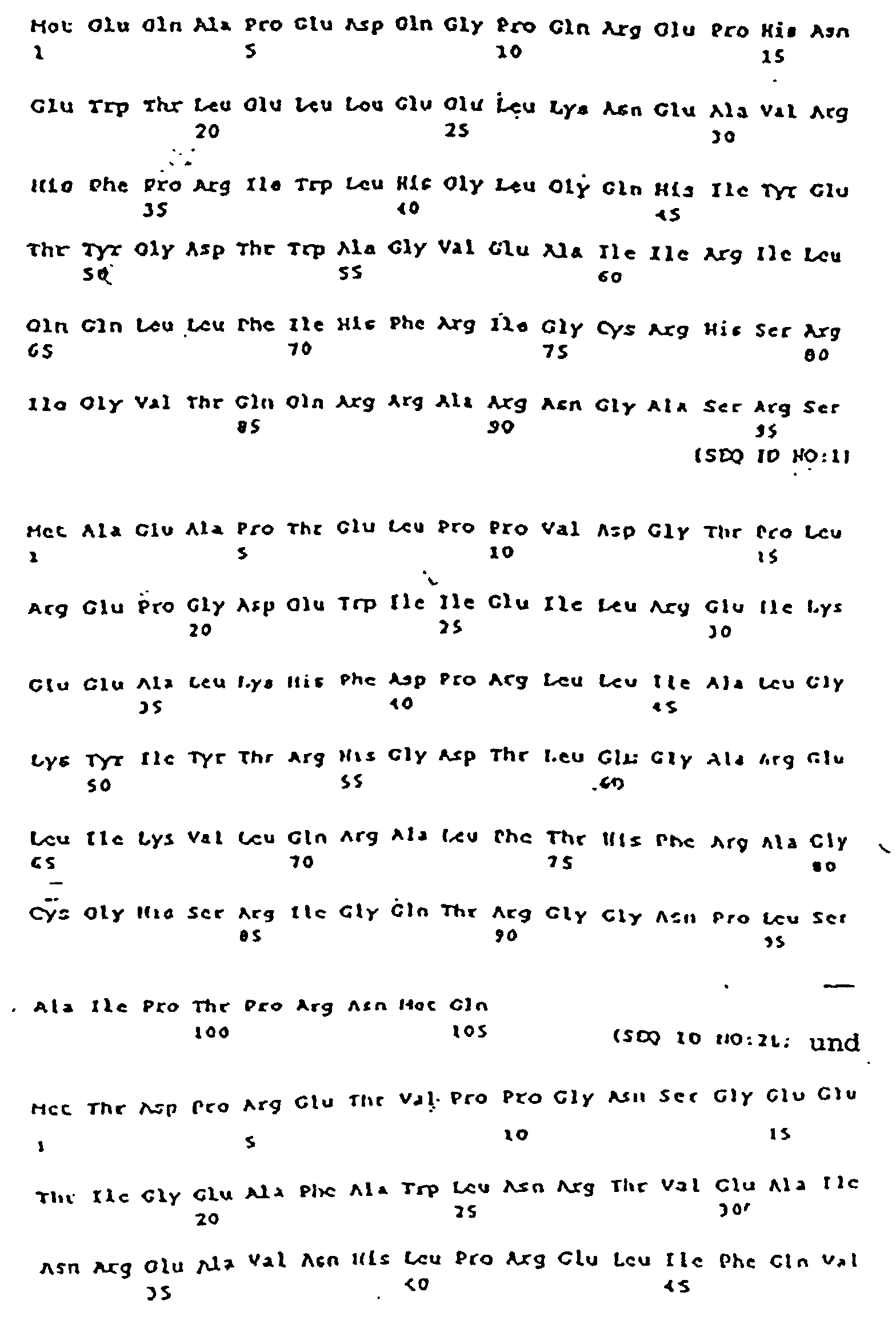
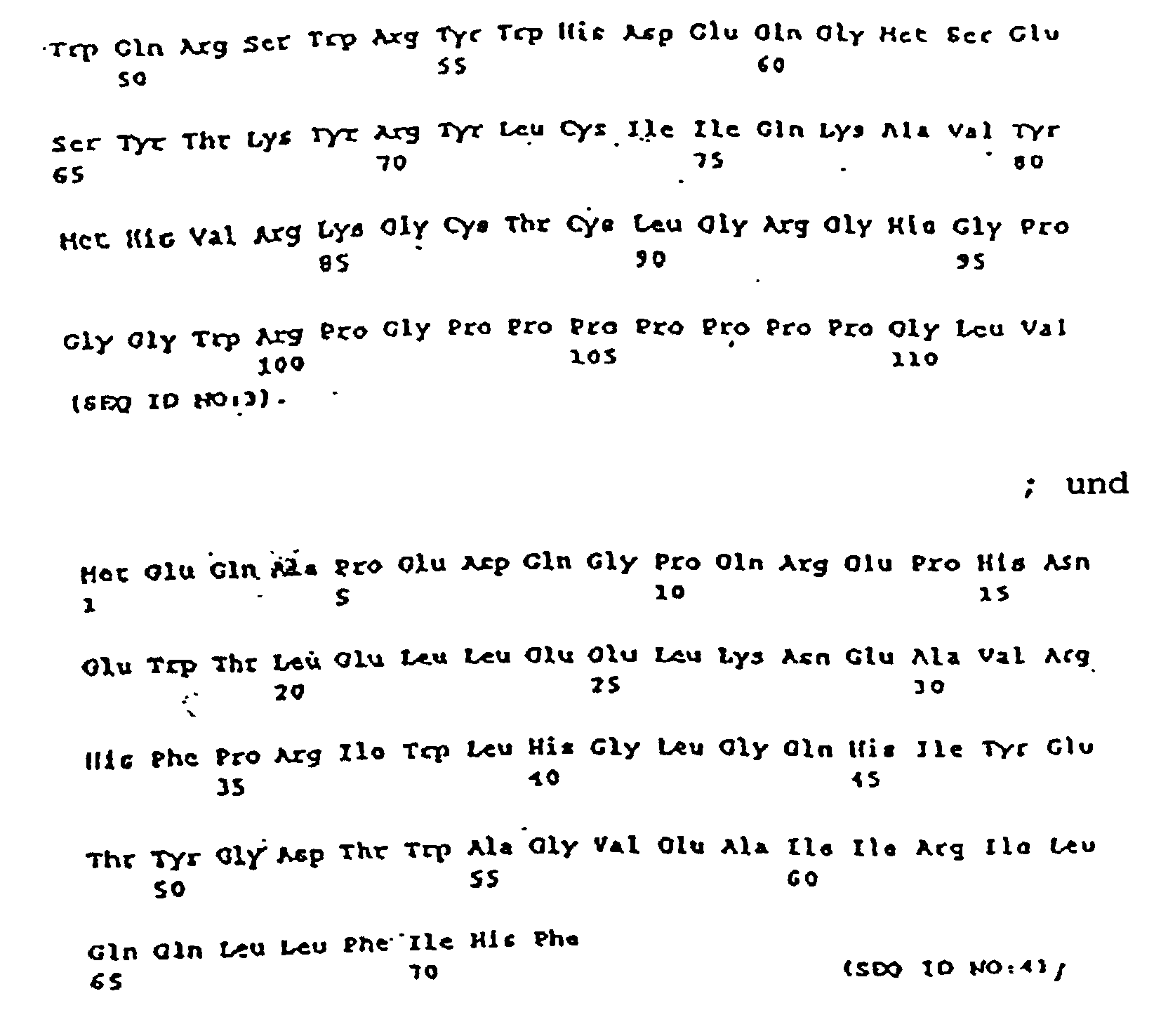
- Protein nach Anspruch 9, wobei dessen funktionelles Fragment eine Sequenz von etwa 25 bis etwa 63 Aminosäuren umfaßt.
- Verwendung eines Proteins zur Störung des Einbaus von nativem Vpr und/oder nativem Vpx in das HIV-1- oder HIV-2-Virion, wobei das Protein einen der folgenden Bestandteile umfaßt:a) eine Vpr-Einbaudomäne, die die N-terminale α-helikale Struktur eines Vpr-Proteins einschließt;b) eine Vpx-Einbaudomäne, die die N-terminale α-helikale Struktur eines Vpx-Proteins einschließt;c) ein p6-Protein oder ein Fragment davon; undd) funktionelle Derivate von a), b) oder c);
und wobei das Protein diesen Einbau durch Wechselwirkung mit einem der folgenden Bestandteile stört:ein natives Gag-Vorläuferprotein, das die p6-Proteindomäne davon umfaßt, ein natives Vpr-Protein und ein natives Vpx-Protein. - Verwendung des Proteins nach Anspruch 11, wobei das Protein den Einbau von nativem HIV-1-Vpr stört und einen der folgenden Bestandteile umfaßt:a) die Vpr- und/oder Vpx-Einbaudomäne von HIV-1-Vpr; undb) ein funktionelles Derivat von a).
- Verwendung des Proteins nach Anspruch 11, wobei das Protein den Einbau von nativem HIV-1-Vpr stört und einen der folgenden Bestandteile umfaßt:a) ein p6-Protein oder ein Fragment davon; undb) ein funktionelles Derivat von a).
- Verwendung des Proteins nach Anspruch 13, das eine Aminosäuresequenz umfaßt, die unter folgenden Sequenzen ausgewählt ist:
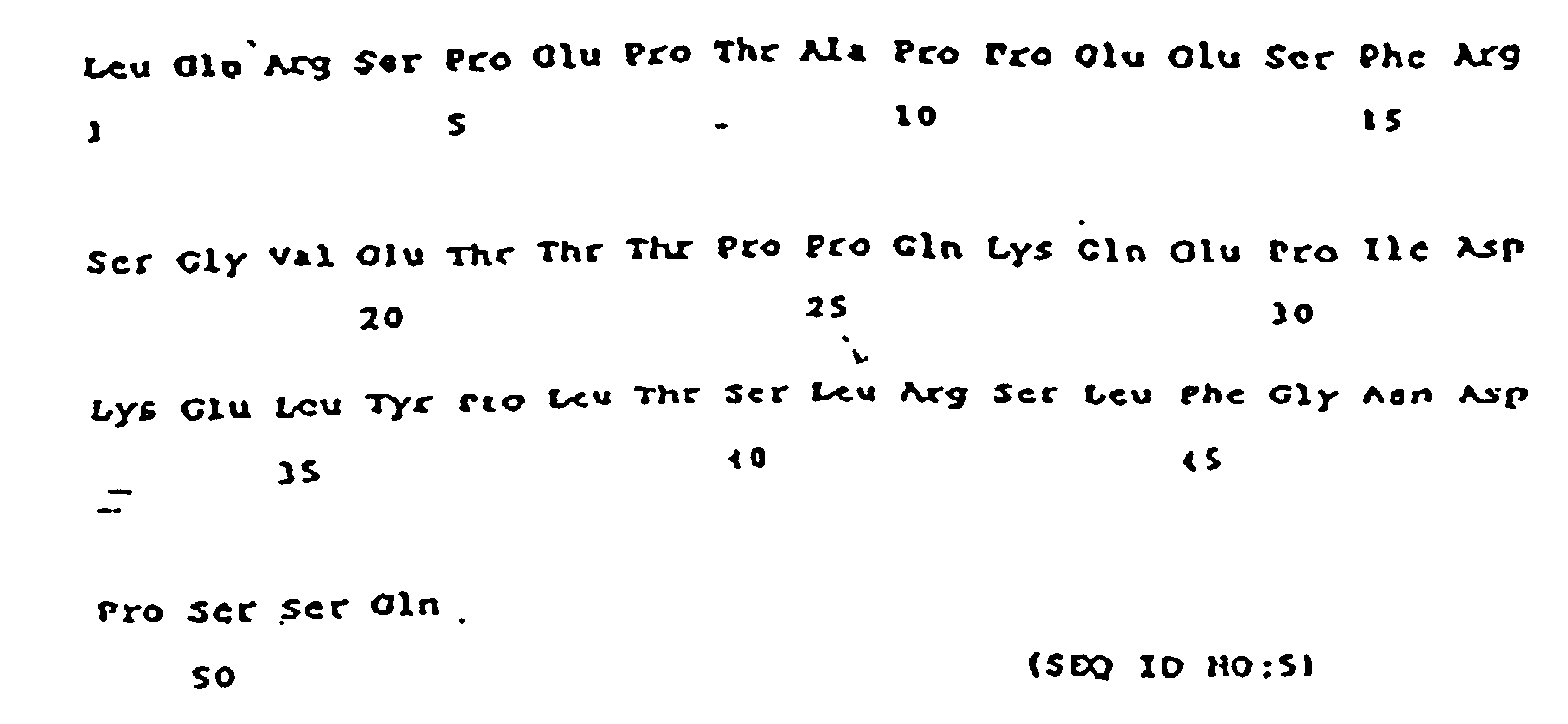 und ein funktionelles Derivat davon.
 - Verwendung eines Proteins nach einem der Ansprüche 1 bis 10 zur Herstellung eines Arzneimittels zur Behandlung eines mit HIV-1 und/oder HIV-2 infizierten Patienten.
- Pharmazeutische Zusammensetzung zur Verringerung der HIV-Expression in einem mit HIV-1 und/oder HIV-2 infizierten Patienten, umfassend eine wirksame Menge des Proteins nach einem der Ansprüche 1 bis 10 in Verbindung mit einem pharmazeutisch verträglichen Träger.
- Protein nach einem der Ansprüche 1 bis 10, wobei das Protein das normale Zellwachstum in einer nicht mit HIV-1 oder HIV-2 infizierten Zelle erlaubt.
- Vektor, umfassend:a) ein für ein Protein nach einem der Ansprüche 1 bis 10 kodierendes DNA-Segment; undb) einen stromaufwärtigen Promotor des DNA-Segments.
- Vektor nach Anspruch 18, wobei das DNA-Segment für ein chimäres Protein kodiert.
- Vektor nach Anspruch 19, wobei dieser Vektor für die Expression des chimären Proteins in prokaryontischen Zellen angepaßt ist.
- Vektor nach Anspruch 19, wobei der Vektor für die Expression des chimären Proteins in eukaryontischen Zellen angepaßt ist.
- Vektor nach Anspruch 19, wobei das chimäre Protein eine mit einer antiviralen Sequenz fusionierte Vpr- und/oder Vpx-Einbaudomäne umfaßt.
- Vektor nach Anspruch 22, wobei die antivirale Sequenz für eine Protease kodiert und wobei die Vpr- und/oder Vpx-Einbaudomäne mit der Proteasedomäne über ein Linker-DNA-Segment, das für eine HIV-spezifische Protease-Spaltungsstelle kodiert, fusioniert ist.
- Vektor nach Anspruch 23, ferner umfassend das Transaktivator-Antwortelement TAR in stromaufwärtiger Position zum DNA-Segment, das für das chimäre Protein kodiert.
- Vektor nach einem der Ansprüche 22 bis 24, wobei die antivirale Sequenz mit dem C-Terminus des Proteins fusioniert ist.
- Zelle eines Eukaryonten oder Prokaryonten, die mit dem Vektor nach einem der Ansprüche 18 bis 25 transformiert ist.
- Vektor, umfassend:a) ein für ein Protein nach Anspruch 9 oder 10 kodierendes DNA-Segment; undb) einen Promotor in stromaufwärtiger Position zum DNA-Segment.
- Verwendung eines Vektors nach einem der Ansprüche 18 bis 25 oder 27 zur Herstellung eines Arzneimittels zur Behandlung eines mit HIV-1 und/oder HIV-2 infizierten Patienten.
- Verfahren zur ex vivo-Verringerung der Expression oder Replikation von HIV-1 oder HIV-2 in hämatopoetischen Zellen eines Patienten, umfassend die Einführung eines Vektors nach einem der Ansprüche 18 bis 25 oder 27 in die hämatopoetischen Zellen.
- Verfahren zum Stören des Einbaus von nativem Vpr und/oder nativem Vpx in HIV-1 oder HIV-2, umfassend eine ex vivo-Einführung eines Vektors nach Anspruch 27 in hämatopoetische Zellen eines Patienten.
- Chimäres Protein, das in HIV-1- oder HIV-2-Virionen eingebaut werden kann, umfassend einen ersten und einen zweiten Teil, wobei der erste Teil eine Vpr- und/oder Vpx-Virion-Einbaudomäne aufweist, die die N-terminale α-Helix eines viralen Proteins umfaßt, das aus der Gruppe Vpr und Vpx ausgewählt ist, und wobei die Vpr- und/oder Vpx-Virion-Einbaudomäne mit der p6-Domäne von Pr55gag in Wechselwirkung tritt, wodurch der Einbau des chimären Proteins in das HIV-1- oder HIV-2-Virion ermöglicht wird, wobei das chimäre Protein in trans-Stellung in bezug auf das HIV-1- oder HIV-2-Genom exprimiert wird.
- Chimäres Protein nach Anspruch 31, wobei das virale Protein aus der Gruppe Vpr von HIV-1 und Vpr von HIV-2 ausgewählt ist.
- Chimäres Protein nach Anspruch 32, wobei es sich beim viralen Protein um HIV-1-Vpr handelt.
- Chimäres Protein nach Anspruch 32, wobei es sich beim zweiten Teil um ein Polypeptidfragment handelt, das kovalent an den N- oder C-Terminus des ersten Teils gebunden ist.
- Chimäres Protein nach Anspruch 34, wobei das Polypeptidfragment eine Aminosäuresequenz umfaßt, die RNAse- oder Protease-Aktivität aufweist.
- Chimäres Protein nach einem der Ansprüche 32-35, wobei der erste Teil eine Aminosäuresequenz umfaßt, die aus der Gruppe SEQ ID NO: 1, SEQ ID NO: 2 und SEQ ID NO: 4 ausgewählt ist.
- Chimäres Protein nach einem der Ansprüche 32-36, wobei es sich beim zweiten Teil um ein Polypeptidfragment handelt, das kovalent an den C-Terminus des ersten Teils gebunden ist.
- Chimäres Protein nach Anspruch 37, wobei der erste Teil die Aminosäuresequenz der Aminosäuren 1 bis 72 von SEQ ID NO: 1 umfaßt.
- Chimäres Protein nach Anspruch 37, wobei der erste Teil die Aminosäuresequenz der Aminosäuren 1 bis 88 von SEQ ID NO: 1 umfaßt.
- Chimäres Protein nach Anspruch 39, wobei der erste Teil die Aminosäuresequenz Von SEQ ID NO: 1 aufweist.
- Chimäres Protein nach Anspruch 31, wobei es sich beim viralen Protein um Vpx von HIV-2 handelt.
- Chimäres Protein nach Anspruch 41, wobei das HIV-2-Vpx die Aminosäuresequenz von SEQ ID NO: 3 aufweist.
- Zusammensetzung zum Abzielen auf ein HIV-1- oder HIV-2-Virion, die eine wirksame Menge des chimären Proteins von Anspruch 31 in Kombination mit einem pharmazeutisch verträglichen Träger umfaßt.
- Zusammensetzung zum Abzielen auf ein HIV-1- oder HIV-2-Virion, die eine wirksame Menge des chimären Proteins von Anspruch 32 in Kombination mit einem pharmazeutisch verträglichen Träger umfaßt.
- Zusammensetzung zum Abzielen auf ein HIV-1- oder HIV-2-Virion, die eine wirksame Menge des chimären Proteins von Anspruch 33 in Kombination mit einem pharmazeutisch verträglichen Träger umfaßt.
- Zusammensetzung zum Abzielen auf ein HIV-1- oder HIV-2-Virion, die eine wirksame Menge des chimären Proteins von Anspruch 37 zusammen mit einem pharmazeutisch verträglichen Träger umfaßt.
- Chimäres Protein nach Anspruch 31, wobei es sich beim zweiten Teil um ein Polypeptidfragment handelt, das an den N- oder C-Terminus des ersten Teils gebunden ist.
- Chimäres Protein nach Anspruch 45, wobei das Polypeptidfragment eine Aminosäuresequenz mit RNAse- oder Protease-Aktivität umfaßt.
- Chimäres Protein nach Anspruch 31, wobei der erste Teil eine Aminosäuresequenz umfaßt, die aus der Gruppe SEQ ID NO: 1, SEQ ID NO: 2, SEQ ID NO: 3 und SEQ ID NO: 4 ausgewählt ist.
- Chimäres Protein nach Anspruch 49, wobei der erste Teil die Aminosäuresequenz der Aminosäuren 1 bis 88 von SEQ ID NO: 1 umfaßt.
- Chimäres Protein nach Anspruch 50, wobei der erste Teil die Aminosäuresequenz der Aminosäuren 1 bis 72 von SEQ ID NO: 1 umfaßt.
- Nucleinsäuresequenz, kodierend für das Protein nach einem der Ansprüche 1 bis 10 oder 17.
- Nucleinsäuresequenz, kodierend für das chimäre Protein nach einem der Ansprüche 31 bis 42 oder 47 bis 51.
- Vektor, umfassend:a) ein DNA-Segment, das für ein chimäres Protein nach einem der Ansprüche 31 bis 42 oder 47 bis 51 kodiert; undb) einen stromaufwärts vom DNA-Segment angeordneten Promotor.
- Zelle eines Eukaryonten oder Prokaryonten, die mit der Nucleinsäuresequenz nach einem der Ansprüche 52 oder 53 transformiert ist.
- Zelle eines Eukaryonten oder Prokaryonten, die mit dem Vektor von Anspruch 54 transformiert ist.
- Verwendung des chimären Proteins nach einem der Ansprüche 31 bis 42 oder 47 bis 51 zur Herstellung eines Arzneimittels zur Behandlung eines mit HIV-1 und/oder HIV-2 infizierten Patienten.
- Verwendung einer Nucleinsäuresequenz nach Anspruch 52 oder 53 zur Herstellung eines Arzneimittels zur Behandlung eines mit HIV-1 und/oder HIV-2 infizierten Patienten.
- Verwendung eines Vektors nach Anspruch 54 zur Herstellung eines Arzneimittels zur Behandlung eines mit HIV-1 und/oder HIV-2 infizierten Patienten.
- Verwendung eines Proteins nach einem der Ansprüche 1 bis 10 zur Herstellung eines Arzneimittels zur Verringerung der Expression oder Replikation von HIV-1 und/oder HIV-2 in einem mit HIV-1 und/oder HIV-2 infizierten Patienten.
- Verwendung eines Vektors nach einem der Ansprüche 18 bis 25 oder 27 zur Herstellung eines Arzneimittels zur Verringerung der Expression oder Replikation von HIV-1 und/oder HIV-2 in einem mit HIV-1 und/oder HIV-2 infizierten Patienten.
- Protein nach Anspruch 9, wobei das funktionelle Fragment davon die Aminosäuren 1 bis 88 von SEQ ID NO: 1 umfaßt.
- Verwendung eines Proteins nach Anspruch 62 zur Herstellung eines Arzneimittels zur Behandlung eines mit HIV-1 und/oder HIV-2 infizierten Patienten.
- Pharmazeutische Zusammensetzung zur Verringerung der HIV-Expression in einem mit HIV-1 und/oder HIV-2 infizierten Patienten, umfassend eine wirksame Menge des Proteins nach Anspruch 62 in Kombination mit einem pharmazeutisch verträglichen Träger.
- Protein nach Anspruch 62, wobei das Protein das normale Zellwachstum in einer nicht mit dem HIV-1- oder HIV-2-Virion infizierten Zelle ermöglicht.
- Vektor, umfassend:a) ein DNA-Segment, das für ein Protein nach Anspruch 62 kodiert; undb) einen stromaufwärts von diesem DNA-Segment angeordneten Promotor.
- Vektor nach Anspruch 66, wobei das DNA-Segment für ein chimäres Protein kodiert.
- Verwendung eines Vektors nach Anspruch 66 oder 67 zur Herstellung eines Arzneimittels zur Behandlung eines mit HIV-1 und/oder HIV-2 infizierten Patienten.
- Verfahren zur ex vivo-Verringerung der Expression oder Replikation von HIV-1 oder HIV-2 in hämatopoetischen Zellen eines Patienten, umfassend die Einführung eines Vektors nach Anspruch 66 oder 67 in die hämatopoetischen Zellen.
- Verfahren zum Stören des Einbaus von nativem Vpr und/oder nativem Vpx in HIV-1 oder HIV-2, umfassend die ex vivo-Einführung eines Vektors nach Anspruch 66 oder 67 in hämatopoetische Zellen eines Patienten.
Applications Claiming Priority (3)
| Application Number | Priority Date | Filing Date | Title |
|---|---|---|---|
| US301915 | 1981-09-14 | ||
| US08/301,915 US5861161A (en) | 1994-09-07 | 1994-09-07 | Chimeric proteins comprising a Vpr/Vpx virion incorporation domain for targeting into HIV-1 or HIV-2 virions |
| PCT/CA1995/000510 WO1996007741A1 (en) | 1994-09-07 | 1995-09-07 | Protein targeting into hiv virions based on hiv-1 vpr fusion molecules |
Publications (2)
| Publication Number | Publication Date |
|---|---|
| EP0791065A1 EP0791065A1 (de) | 1997-08-27 |
| EP0791065B1 true EP0791065B1 (de) | 2000-12-27 |
Family
ID=23165435
Family Applications (1)
| Application Number | Title | Priority Date | Filing Date |
|---|---|---|---|
| EP95929707A Expired - Lifetime EP0791065B1 (de) | 1994-09-07 | 1995-09-07 | Protein aufspüren auf hiv virion auf basis von hiv-1 vpr fusionmolekulen |
Country Status (11)
| Country | Link |
|---|---|
| US (3) | US5861161A (de) |
| EP (1) | EP0791065B1 (de) |
| JP (1) | JPH10506008A (de) |
| AT (1) | ATE198354T1 (de) |
| AU (1) | AU711126B2 (de) |
| BR (1) | BR9509001A (de) |
| CA (1) | CA2198621A1 (de) |
| DE (1) | DE69519746T2 (de) |
| ES (1) | ES2155526T3 (de) |
| GR (1) | GR3035245T3 (de) |
| WO (1) | WO1996007741A1 (de) |
Families Citing this family (28)
| Publication number | Priority date | Publication date | Assignee | Title |
|---|---|---|---|---|
| DE69637677D1 (de) * | 1995-04-14 | 2008-10-23 | Univ Alabama Res Found | Transfer system basierend auf einem fusionsprotein und seine anwendungen. |
| US20020173643A1 (en) * | 1995-04-14 | 2002-11-21 | Kappes John C. | Fusion protein delivery system and uses thereof |
| US20070213290A1 (en) * | 1996-10-17 | 2007-09-13 | Kingsman Alan J | Neurite regeneration |
| US7198784B2 (en) * | 1996-10-17 | 2007-04-03 | Oxford Biomedica (Uk) Limited | Retroviral vectors |
| US6818627B1 (en) * | 1997-08-14 | 2004-11-16 | The Trustees Of The University Of Pennsylvania | Functional fragments of HIV-1 Vpr protein and methods of using the same |
| PT1076715E (pt) | 1998-05-13 | 2007-10-26 | Genetix Pharmaceuticals Inc | Células empacotadoras lentivirais |
| US7622300B2 (en) * | 1998-06-03 | 2009-11-24 | Kappes John C | Trans-lentiviral vector particles and transduction of eukaryotic cells therewith |
| US6555342B1 (en) * | 1998-06-03 | 2003-04-29 | Uab Research Foundation | Fusion protein delivery system and uses thereof |
| DE19908766C2 (de) * | 1999-02-19 | 2001-02-15 | Ulrich Schubert | Verwendung synthetischer Vpr-Peptide des Humanen Immundefizienzvirus Typ 1 (HIV-1) zur Entwicklung von therapeutischen und diagnostischen Reagenzien |
| WO2000049038A2 (de) | 1999-02-19 | 2000-08-24 | Ulrich Schubert | Synthetische peptide des regulatorischen virusproteins r (vpr) des humanen immundefizienzvirus typ 1 (hiv-1) und ihre verwendung |
| DE19908752A1 (de) * | 1999-02-19 | 2000-08-31 | Ulrich Schubert | Synthetische Peptide des regulatorischen Virusproteins R (Vpr) des Humanen Immundefizienzvirus Typ 1 |
| US6984486B1 (en) | 1999-02-19 | 2006-01-10 | J. David Gladstone Institutes | Synthetic peptide of regulatory virus protein R (VPR) of human immunodeficiency virus type 1 (HIV-1) and the utilization thereof |
| WO2000066615A1 (en) * | 1999-05-04 | 2000-11-09 | Rutgers, The State University Of New Jersey | Compositions and methods for detection of active proteases |
| US6664040B2 (en) | 2000-05-23 | 2003-12-16 | The Regents Of The University Of California | Compositions and methods for delivery of a molecule into a cell |
| US7488484B2 (en) * | 2000-07-14 | 2009-02-10 | The Trustees Of The University Of Pennsylvania | Nucleic acid expression cassette encoding an HIV polyprotein comprising the ancillary gene products Vif, Vpu, and Nef |
| US20040091853A1 (en) * | 2001-03-02 | 2004-05-13 | Hazuda Daria J. | Viral reporter particles |
| AU2002329176A1 (en) | 2001-05-25 | 2002-12-23 | The Trustees Of The University Of Pennsylvania | Targeted particles and methods of using the same |
| US9085807B2 (en) | 2004-09-14 | 2015-07-21 | Argos Therapeutics, Inc. | Strain-independent amplification of pathogens and vaccines thereto |
| RS56844B1 (sr) | 2007-12-11 | 2018-04-30 | Univ North Carolina Chapel Hill | Retrovirusni vektori sa modifikovanim polipurinskim nizom |
| EP2550362B1 (de) | 2010-03-25 | 2017-01-04 | Oregon Health&Science University | Cmv-glycoproteine und rekombinante vektoren |
| FR2973040B1 (fr) * | 2011-03-23 | 2016-04-15 | Centre Nat De La Rech Scient (C N R S) | Methode de criblage de composes antiretroviraux et vaccin |
| CA2832109C (en) | 2011-06-10 | 2021-07-06 | Oregon Health & Science University | Cmv glycoproteins and recombinant vectors |
| EP2568289A3 (de) | 2011-09-12 | 2013-04-03 | International AIDS Vaccine Initiative | Immunselektion von rekombinantem vesikulärem Stomatitisvirus mit Expression von HIV-1-Proteinen durch Breitbandneutralisierungs-Antikörper |
| EP2679596B1 (de) | 2012-06-27 | 2017-04-12 | International Aids Vaccine Initiative | HIV-1 Env-proteinvariante |
| EP2848937A1 (de) | 2013-09-05 | 2015-03-18 | International Aids Vaccine Initiative | Verfahren zur Identifizierung neuartiger HIV-1-Immunogene |
| US10058604B2 (en) | 2013-10-07 | 2018-08-28 | International Aids Vaccine Initiative | Soluble HIV-1 envelope glycoprotein trimers |
| EP3069730A3 (de) | 2015-03-20 | 2017-03-15 | International Aids Vaccine Initiative | Lösliche hiv-1-hüllglykoproteintrimere |
| EP3072901A1 (de) | 2015-03-23 | 2016-09-28 | International Aids Vaccine Initiative | Lösliche hiv-1-hüllglykoproteintrimere |
Family Cites Families (8)
| Publication number | Priority date | Publication date | Assignee | Title |
|---|---|---|---|---|
| US5278056A (en) | 1988-02-05 | 1994-01-11 | The Trustees Of Columbia University In The City Of New York | Retroviral packaging cell lines and process of using same |
| ATE127520T1 (de) * | 1989-06-02 | 1995-09-15 | Dana Farber Cancer Inst Inc | Protein mit transaktivierender eigenschaft, dieses protein exprimierende vektoren, zellinien und seine verwendungen. |
| WO1993025235A1 (en) * | 1992-06-09 | 1993-12-23 | President And Fellows Of Harvard College | Aids therapeutics based on hiv-2 vpx peptides |
| CA2135642C (en) * | 1992-08-21 | 1999-12-14 | James G. Barsoum | Tat-derived transport polypeptides |
| IL108707A (en) * | 1993-02-19 | 1999-06-20 | Weiner David B | Pharmaceutical compositions and diagnostic kits comprising hiv protein vpr or proteins that bind to vpr |
| US5650306A (en) * | 1993-06-07 | 1997-07-22 | University Of Michigan | Recombinant nucleic acids for inhibiting HIV gene expression |
| WO1995016705A1 (en) * | 1993-12-15 | 1995-06-22 | The Trustees Of The University Of Pennsylvania | Vpr receptor protein |
| DE69637677D1 (de) | 1995-04-14 | 2008-10-23 | Univ Alabama Res Found | Transfer system basierend auf einem fusionsprotein und seine anwendungen. |
-
1994
- 1994-09-07 US US08/301,915 patent/US5861161A/en not_active Expired - Lifetime
-
1995
- 1995-09-07 WO PCT/CA1995/000510 patent/WO1996007741A1/en not_active Ceased
- 1995-09-07 US US08/524,694 patent/US6043081A/en not_active Expired - Lifetime
- 1995-09-07 AU AU33391/95A patent/AU711126B2/en not_active Expired
- 1995-09-07 BR BR9509001A patent/BR9509001A/pt not_active Application Discontinuation
- 1995-09-07 DE DE69519746T patent/DE69519746T2/de not_active Expired - Lifetime
- 1995-09-07 CA CA002198621A patent/CA2198621A1/en not_active Abandoned
- 1995-09-07 EP EP95929707A patent/EP0791065B1/de not_active Expired - Lifetime
- 1995-09-07 AT AT95929707T patent/ATE198354T1/de active
- 1995-09-07 ES ES95929707T patent/ES2155526T3/es not_active Expired - Lifetime
- 1995-09-07 JP JP8509063A patent/JPH10506008A/ja active Pending
-
1999
- 1999-01-19 US US09/454,156 patent/US6468539B1/en not_active Expired - Lifetime
-
2001
- 2001-01-17 GR GR20010400065T patent/GR3035245T3/el unknown
Also Published As
| Publication number | Publication date |
|---|---|
| ES2155526T3 (es) | 2001-05-16 |
| AU3339195A (en) | 1996-03-27 |
| EP0791065A1 (de) | 1997-08-27 |
| DE69519746D1 (de) | 2001-02-01 |
| AU711126B2 (en) | 1999-10-07 |
| US6468539B1 (en) | 2002-10-22 |
| CA2198621A1 (en) | 1996-03-14 |
| US6043081A (en) | 2000-03-28 |
| DE69519746T2 (de) | 2001-04-19 |
| GR3035245T3 (en) | 2001-04-30 |
| ATE198354T1 (de) | 2001-01-15 |
| WO1996007741A1 (en) | 1996-03-14 |
| US5861161A (en) | 1999-01-19 |
| JPH10506008A (ja) | 1998-06-16 |
| BR9509001A (pt) | 1997-10-21 |
Similar Documents
| Publication | Publication Date | Title |
|---|---|---|
| EP0791065B1 (de) | Protein aufspüren auf hiv virion auf basis von hiv-1 vpr fusionmolekulen | |
| Paxton et al. | Incorporation of Vpr into human immunodeficiency virus type 1 virions: requirement for the p6 region of gag and mutational analysis | |
| Gallay et al. | Role of the karyopherin pathway in human immunodeficiency virus type 1 nuclear import | |
| Wang et al. | Conditional infectivity of a human immunodeficiency virus matrix domain deletion mutant | |
| AP1282A (en) | HIV envelope polypeptides and vaccine. | |
| US5880276A (en) | Purified retroviral constitutive transport enhancer elements that enhance nucleocytoplasmic transport of mRNA, and methods of making and using the elements | |
| US20110229964A1 (en) | Fusion Protein Delivery System and Uses Thereof | |
| Cherepanov et al. | High‐level expression of active HIV‐1 integrase from a synthetic gene in human cells | |
| Luo et al. | Expression of gag precursor protein and secretion of virus-like gag particles of HIV-2 from recombinant baculovirus-infected insect cells | |
| US6235881B1 (en) | Polypeptides encoded by novel HIV-2 proviruses | |
| HRP970092A2 (en) | Synthetic hiv genes | |
| US7534603B2 (en) | Fusion protein delivery system and uses thereof | |
| US6585979B1 (en) | HIV envelope polypeptides and immunogenic composition | |
| Wu et al. | Inhibition of human and simian immunodeficiency virus protease function by targeting Vpx-protease-mutant fusion protein into viral particles | |
| US6271354B1 (en) | Chimeric viral proteins | |
| EP0674657A1 (de) | Gp41 mütanten und ihre verwendung als hiv therapeutika | |
| Wang et al. | Sequence requirements for incorporation of human immunodeficiency virus Gag‐β‐galactosidase fusion proteins into virus‐like particles | |
| CA2150027A1 (en) | Aids therapeutics based on hiv ma peptides | |
| MXPA99007248A (en) | Synthetic hiv gag |
Legal Events
| Date | Code | Title | Description |
|---|---|---|---|
| PUAI | Public reference made under article 153(3) epc to a published international application that has entered the european phase |
Free format text: ORIGINAL CODE: 0009012 |
|
| 17P | Request for examination filed |
Effective date: 19970407 |
|
| AK | Designated contracting states |
Kind code of ref document: A1 Designated state(s): AT BE CH DE DK ES FR GB GR IE IT LI LU MC NL PT SE |
|
| AX | Request for extension of the european patent |
Free format text: LT PAYMENT 970407;LV PAYMENT 970407;SI PAYMENT 970407 |
|
| 17Q | First examination report despatched |
Effective date: 19971107 |
|
| GRAG | Despatch of communication of intention to grant |
Free format text: ORIGINAL CODE: EPIDOS AGRA |
|
| 17Q | First examination report despatched |
Effective date: 19971107 |
|
| GRAG | Despatch of communication of intention to grant |
Free format text: ORIGINAL CODE: EPIDOS AGRA |
|
| GRAH | Despatch of communication of intention to grant a patent |
Free format text: ORIGINAL CODE: EPIDOS IGRA |
|
| GRAH | Despatch of communication of intention to grant a patent |
Free format text: ORIGINAL CODE: EPIDOS IGRA |
|
| GRAA | (expected) grant |
Free format text: ORIGINAL CODE: 0009210 |
|
| AK | Designated contracting states |
Kind code of ref document: B1 Designated state(s): AT BE CH DE DK ES FR GB GR IE IT LI LU MC NL PT SE |
|
| AX | Request for extension of the european patent |
Free format text: LT PAYMENT 19970407;LV PAYMENT 19970407;SI PAYMENT 19970407 |
|
| LTIE | Lt: invalidation of european patent or patent extension | ||
| PG25 | Lapsed in a contracting state [announced via postgrant information from national office to epo] |
Ref country code: NL Free format text: LAPSE BECAUSE OF FAILURE TO SUBMIT A TRANSLATION OF THE DESCRIPTION OR TO PAY THE FEE WITHIN THE PRESCRIBED TIME-LIMIT Effective date: 20001227 |
|
| REF | Corresponds to: |
Ref document number: 198354 Country of ref document: AT Date of ref document: 20010115 Kind code of ref document: T |
|
| REG | Reference to a national code |
Ref country code: CH Ref legal event code: NV Representative=s name: A. BRAUN, BRAUN, HERITIER, ESCHMANN AG PATENTANWAE Ref country code: CH Ref legal event code: EP |
|
| ET | Fr: translation filed | ||
| REF | Corresponds to: |
Ref document number: 69519746 Country of ref document: DE Date of ref document: 20010201 |
|
| REG | Reference to a national code |
Ref country code: IE Ref legal event code: FG4D |
|
| ITF | It: translation for a ep patent filed | ||
| PG25 | Lapsed in a contracting state [announced via postgrant information from national office to epo] |
Ref country code: PT Free format text: LAPSE BECAUSE OF FAILURE TO SUBMIT A TRANSLATION OF THE DESCRIPTION OR TO PAY THE FEE WITHIN THE PRESCRIBED TIME-LIMIT Effective date: 20010327 Ref country code: DK Free format text: LAPSE BECAUSE OF FAILURE TO SUBMIT A TRANSLATION OF THE DESCRIPTION OR TO PAY THE FEE WITHIN THE PRESCRIBED TIME-LIMIT Effective date: 20010327 |
|
| ET1 | Fr: translation filed ** revision of the translation of the patent or the claims | ||
| NLV1 | Nl: lapsed or annulled due to failure to fulfill the requirements of art. 29p and 29m of the patents act | ||
| REG | Reference to a national code |
Ref country code: ES Ref legal event code: FG2A Ref document number: 2155526 Country of ref document: ES Kind code of ref document: T3 |
|
| PLBE | No opposition filed within time limit |
Free format text: ORIGINAL CODE: 0009261 |
|
| STAA | Information on the status of an ep patent application or granted ep patent |
Free format text: STATUS: NO OPPOSITION FILED WITHIN TIME LIMIT |
|
| 26N | No opposition filed | ||
| REG | Reference to a national code |
Ref country code: GB Ref legal event code: IF02 |
|
| REG | Reference to a national code |
Ref country code: CH Ref legal event code: PFA Owner name: UNIVERSITE DE MONTREAL Free format text: UNIVERSITE DE MONTREAL#2900 EDOUARD-MONTPETIT#MONTREAL, QUEBEC H3T 1J4 (CA) -TRANSFER TO- UNIVERSITE DE MONTREAL#2900 EDOUARD-MONTPETIT#MONTREAL, QUEBEC H3T 1J4 (CA) |
|
| REG | Reference to a national code |
Ref country code: CH Ref legal event code: PCAR Free format text: NEW ADDRESS: HOLBEINSTRASSE 36-38, 4051 BASEL (CH) |
|
| PGFP | Annual fee paid to national office [announced via postgrant information from national office to epo] |
Ref country code: LU Payment date: 20140826 Year of fee payment: 20 |
|
| PGFP | Annual fee paid to national office [announced via postgrant information from national office to epo] |
Ref country code: IE Payment date: 20140826 Year of fee payment: 20 Ref country code: MC Payment date: 20140826 Year of fee payment: 20 Ref country code: GR Payment date: 20140825 Year of fee payment: 20 Ref country code: CH Payment date: 20140826 Year of fee payment: 20 Ref country code: DE Payment date: 20140822 Year of fee payment: 20 |
|
| PGFP | Annual fee paid to national office [announced via postgrant information from national office to epo] |
Ref country code: AT Payment date: 20140825 Year of fee payment: 20 Ref country code: GB Payment date: 20140822 Year of fee payment: 20 Ref country code: ES Payment date: 20140910 Year of fee payment: 20 Ref country code: SE Payment date: 20140826 Year of fee payment: 20 |
|
| PGFP | Annual fee paid to national office [announced via postgrant information from national office to epo] |
Ref country code: IT Payment date: 20140826 Year of fee payment: 20 |
|
| PGFP | Annual fee paid to national office [announced via postgrant information from national office to epo] |
Ref country code: BE Payment date: 20140825 Year of fee payment: 20 Ref country code: FR Payment date: 20140922 Year of fee payment: 20 |
|
| REG | Reference to a national code |
Ref country code: DE Ref legal event code: R071 Ref document number: 69519746 Country of ref document: DE |
|
| REG | Reference to a national code |
Ref country code: CH Ref legal event code: PL |
|
| REG | Reference to a national code |
Ref country code: GB Ref legal event code: PE20 Expiry date: 20150906 |
|
| REG | Reference to a national code |
Ref country code: AT Ref legal event code: MK07 Ref document number: 198354 Country of ref document: AT Kind code of ref document: T Effective date: 20150907 |
|
| PG25 | Lapsed in a contracting state [announced via postgrant information from national office to epo] |
Ref country code: GB Free format text: LAPSE BECAUSE OF EXPIRATION OF PROTECTION Effective date: 20150906 |
|
| REG | Reference to a national code |
Ref country code: IE Ref legal event code: MK9A |
|
| REG | Reference to a national code |
Ref country code: SE Ref legal event code: EUG |
|
| REG | Reference to a national code |
Ref country code: GR Ref legal event code: MA Ref document number: 20010400065 Country of ref document: GR Effective date: 20150908 |
|
| REG | Reference to a national code |
Ref country code: ES Ref legal event code: FD2A Effective date: 20151229 |
|
| PG25 | Lapsed in a contracting state [announced via postgrant information from national office to epo] |
Ref country code: IE Free format text: LAPSE BECAUSE OF EXPIRATION OF PROTECTION Effective date: 20150907 |
|
| PG25 | Lapsed in a contracting state [announced via postgrant information from national office to epo] |
Ref country code: ES Free format text: LAPSE BECAUSE OF EXPIRATION OF PROTECTION Effective date: 20150908 |