EP0793697B1 - Produits elastomeres a proprietes insonorisantes - Google Patents
Produits elastomeres a proprietes insonorisantes Download PDFInfo
- Publication number
- EP0793697B1 EP0793697B1 EP95940172A EP95940172A EP0793697B1 EP 0793697 B1 EP0793697 B1 EP 0793697B1 EP 95940172 A EP95940172 A EP 95940172A EP 95940172 A EP95940172 A EP 95940172A EP 0793697 B1 EP0793697 B1 EP 0793697B1
- Authority
- EP
- European Patent Office
- Prior art keywords
- composition
- rubber
- groups
- weight
- compositions
- Prior art date
- Legal status (The legal status is an assumption and is not a legal conclusion. Google has not performed a legal analysis and makes no representation as to the accuracy of the status listed.)
- Revoked
Links
Images
Classifications
-
- C—CHEMISTRY; METALLURGY
- C09—DYES; PAINTS; POLISHES; NATURAL RESINS; ADHESIVES; COMPOSITIONS NOT OTHERWISE PROVIDED FOR; APPLICATIONS OF MATERIALS NOT OTHERWISE PROVIDED FOR
- C09K—MATERIALS FOR MISCELLANEOUS APPLICATIONS, NOT PROVIDED FOR ELSEWHERE
- C09K3/00—Materials not provided for elsewhere
- C09K3/10—Materials in mouldable or extrudable form for sealing or packing joints or covers
-
- C—CHEMISTRY; METALLURGY
- C08—ORGANIC MACROMOLECULAR COMPOUNDS; THEIR PREPARATION OR CHEMICAL WORKING-UP; COMPOSITIONS BASED THEREON
- C08K—Use of inorganic or non-macromolecular organic substances as compounding ingredients
- C08K3/00—Use of inorganic substances as compounding ingredients
- C08K3/02—Elements
- C08K3/04—Carbon
-
- C—CHEMISTRY; METALLURGY
- C08—ORGANIC MACROMOLECULAR COMPOUNDS; THEIR PREPARATION OR CHEMICAL WORKING-UP; COMPOSITIONS BASED THEREON
- C08K—Use of inorganic or non-macromolecular organic substances as compounding ingredients
- C08K3/00—Use of inorganic substances as compounding ingredients
- C08K3/02—Elements
- C08K3/06—Sulfur
-
- C—CHEMISTRY; METALLURGY
- C08—ORGANIC MACROMOLECULAR COMPOUNDS; THEIR PREPARATION OR CHEMICAL WORKING-UP; COMPOSITIONS BASED THEREON
- C08K—Use of inorganic or non-macromolecular organic substances as compounding ingredients
- C08K3/00—Use of inorganic substances as compounding ingredients
- C08K3/18—Oxygen-containing compounds, e.g. metal carbonyls
- C08K3/20—Oxides; Hydroxides
- C08K3/22—Oxides; Hydroxides of metals
-
- C—CHEMISTRY; METALLURGY
- C08—ORGANIC MACROMOLECULAR COMPOUNDS; THEIR PREPARATION OR CHEMICAL WORKING-UP; COMPOSITIONS BASED THEREON
- C08K—Use of inorganic or non-macromolecular organic substances as compounding ingredients
- C08K3/00—Use of inorganic substances as compounding ingredients
- C08K3/18—Oxygen-containing compounds, e.g. metal carbonyls
- C08K3/24—Acids; Salts thereof
- C08K3/26—Carbonates; Bicarbonates
-
- C—CHEMISTRY; METALLURGY
- C08—ORGANIC MACROMOLECULAR COMPOUNDS; THEIR PREPARATION OR CHEMICAL WORKING-UP; COMPOSITIONS BASED THEREON
- C08K—Use of inorganic or non-macromolecular organic substances as compounding ingredients
- C08K5/00—Use of organic ingredients
- C08K5/0008—Organic ingredients according to more than one of the "one dot" groups of C08K5/01 - C08K5/59
- C08K5/0025—Crosslinking or vulcanising agents; including accelerators
-
- C—CHEMISTRY; METALLURGY
- C08—ORGANIC MACROMOLECULAR COMPOUNDS; THEIR PREPARATION OR CHEMICAL WORKING-UP; COMPOSITIONS BASED THEREON
- C08L—COMPOSITIONS OF MACROMOLECULAR COMPOUNDS
- C08L19/00—Compositions of rubbers not provided for in groups C08L7/00 - C08L17/00
- C08L19/006—Rubber characterised by functional groups, e.g. telechelic diene polymers
-
- C—CHEMISTRY; METALLURGY
- C08—ORGANIC MACROMOLECULAR COMPOUNDS; THEIR PREPARATION OR CHEMICAL WORKING-UP; COMPOSITIONS BASED THEREON
- C08L—COMPOSITIONS OF MACROMOLECULAR COMPOUNDS
- C08L23/00—Compositions of homopolymers or copolymers of unsaturated aliphatic hydrocarbons having only one carbon-to-carbon double bond; Compositions of derivatives of such polymers
- C08L23/02—Compositions of homopolymers or copolymers of unsaturated aliphatic hydrocarbons having only one carbon-to-carbon double bond; Compositions of derivatives of such polymers not modified by chemical after-treatment
- C08L23/16—Ethylene-propylene or ethylene-propylene-diene copolymers
-
- C—CHEMISTRY; METALLURGY
- C08—ORGANIC MACROMOLECULAR COMPOUNDS; THEIR PREPARATION OR CHEMICAL WORKING-UP; COMPOSITIONS BASED THEREON
- C08L—COMPOSITIONS OF MACROMOLECULAR COMPOUNDS
- C08L23/00—Compositions of homopolymers or copolymers of unsaturated aliphatic hydrocarbons having only one carbon-to-carbon double bond; Compositions of derivatives of such polymers
- C08L23/02—Compositions of homopolymers or copolymers of unsaturated aliphatic hydrocarbons having only one carbon-to-carbon double bond; Compositions of derivatives of such polymers not modified by chemical after-treatment
- C08L23/18—Homopolymers or copolymers of hydrocarbons having four or more carbon atoms
- C08L23/20—Homopolymers or copolymers of hydrocarbons having four or more carbon atoms having four to nine carbon atoms
- C08L23/22—Copolymers of isobutene; Butyl rubber; Homopolymers or copolymers of other iso-olefins
-
- C—CHEMISTRY; METALLURGY
- C08—ORGANIC MACROMOLECULAR COMPOUNDS; THEIR PREPARATION OR CHEMICAL WORKING-UP; COMPOSITIONS BASED THEREON
- C08L—COMPOSITIONS OF MACROMOLECULAR COMPOUNDS
- C08L9/00—Compositions of homopolymers or copolymers of conjugated diene hydrocarbons
-
- C—CHEMISTRY; METALLURGY
- C09—DYES; PAINTS; POLISHES; NATURAL RESINS; ADHESIVES; COMPOSITIONS NOT OTHERWISE PROVIDED FOR; APPLICATIONS OF MATERIALS NOT OTHERWISE PROVIDED FOR
- C09D—COATING COMPOSITIONS, e.g. PAINTS, VARNISHES OR LACQUERS; FILLING PASTES; CHEMICAL PAINT OR INK REMOVERS; INKS; CORRECTING FLUIDS; WOODSTAINS; PASTES OR SOLIDS FOR COLOURING OR PRINTING; USE OF MATERIALS THEREFOR
- C09D109/00—Coating compositions based on homopolymers or copolymers of conjugated diene hydrocarbons
-
- C—CHEMISTRY; METALLURGY
- C09—DYES; PAINTS; POLISHES; NATURAL RESINS; ADHESIVES; COMPOSITIONS NOT OTHERWISE PROVIDED FOR; APPLICATIONS OF MATERIALS NOT OTHERWISE PROVIDED FOR
- C09J—ADHESIVES; NON-MECHANICAL ASPECTS OF ADHESIVE PROCESSES IN GENERAL; ADHESIVE PROCESSES NOT PROVIDED FOR ELSEWHERE; USE OF MATERIALS AS ADHESIVES
- C09J109/00—Adhesives based on homopolymers or copolymers of conjugated diene hydrocarbons
-
- C—CHEMISTRY; METALLURGY
- C09—DYES; PAINTS; POLISHES; NATURAL RESINS; ADHESIVES; COMPOSITIONS NOT OTHERWISE PROVIDED FOR; APPLICATIONS OF MATERIALS NOT OTHERWISE PROVIDED FOR
- C09J—ADHESIVES; NON-MECHANICAL ASPECTS OF ADHESIVE PROCESSES IN GENERAL; ADHESIVE PROCESSES NOT PROVIDED FOR ELSEWHERE; USE OF MATERIALS AS ADHESIVES
- C09J123/00—Adhesives based on homopolymers or copolymers of unsaturated aliphatic hydrocarbons having only one carbon-to-carbon double bond; Adhesives based on derivatives of such polymers
- C09J123/02—Adhesives based on homopolymers or copolymers of unsaturated aliphatic hydrocarbons having only one carbon-to-carbon double bond; Adhesives based on derivatives of such polymers not modified by chemical after-treatment
- C09J123/18—Homopolymers or copolymers of hydrocarbons having four or more carbon atoms
- C09J123/20—Homopolymers or copolymers of hydrocarbons having four or more carbon atoms having four to nine carbon atoms
- C09J123/22—Copolymers of isobutene; Butyl rubber ; Homo- or copolymers of other iso-olefines
-
- C—CHEMISTRY; METALLURGY
- C08—ORGANIC MACROMOLECULAR COMPOUNDS; THEIR PREPARATION OR CHEMICAL WORKING-UP; COMPOSITIONS BASED THEREON
- C08L—COMPOSITIONS OF MACROMOLECULAR COMPOUNDS
- C08L2312/00—Crosslinking
-
- C—CHEMISTRY; METALLURGY
- C08—ORGANIC MACROMOLECULAR COMPOUNDS; THEIR PREPARATION OR CHEMICAL WORKING-UP; COMPOSITIONS BASED THEREON
- C08L—COMPOSITIONS OF MACROMOLECULAR COMPOUNDS
- C08L2666/00—Composition of polymers characterized by a further compound in the blend, being organic macromolecular compounds, natural resins, waxes or and bituminous materials, non-macromolecular organic substances, inorganic substances or characterized by their function in the composition
- C08L2666/02—Organic macromolecular compounds, natural resins, waxes or and bituminous materials
- C08L2666/04—Macromolecular compounds according to groups C08L7/00 - C08L49/00, or C08L55/00 - C08L57/00; Derivatives thereof
-
- C—CHEMISTRY; METALLURGY
- C09—DYES; PAINTS; POLISHES; NATURAL RESINS; ADHESIVES; COMPOSITIONS NOT OTHERWISE PROVIDED FOR; APPLICATIONS OF MATERIALS NOT OTHERWISE PROVIDED FOR
- C09K—MATERIALS FOR MISCELLANEOUS APPLICATIONS, NOT PROVIDED FOR ELSEWHERE
- C09K2200/00—Chemical nature of materials in mouldable or extrudable form for sealing or packing joints or covers
- C09K2200/02—Inorganic compounds
- C09K2200/0239—Oxides, hydroxides, carbonates
-
- C—CHEMISTRY; METALLURGY
- C09—DYES; PAINTS; POLISHES; NATURAL RESINS; ADHESIVES; COMPOSITIONS NOT OTHERWISE PROVIDED FOR; APPLICATIONS OF MATERIALS NOT OTHERWISE PROVIDED FOR
- C09K—MATERIALS FOR MISCELLANEOUS APPLICATIONS, NOT PROVIDED FOR ELSEWHERE
- C09K2200/00—Chemical nature of materials in mouldable or extrudable form for sealing or packing joints or covers
- C09K2200/06—Macromolecular organic compounds, e.g. prepolymers
- C09K2200/0615—Macromolecular organic compounds, e.g. prepolymers obtained by reactions only involving carbon-to-carbon unsaturated bonds
- C09K2200/0617—Polyalkenes
-
- C—CHEMISTRY; METALLURGY
- C09—DYES; PAINTS; POLISHES; NATURAL RESINS; ADHESIVES; COMPOSITIONS NOT OTHERWISE PROVIDED FOR; APPLICATIONS OF MATERIALS NOT OTHERWISE PROVIDED FOR
- C09K—MATERIALS FOR MISCELLANEOUS APPLICATIONS, NOT PROVIDED FOR ELSEWHERE
- C09K2200/00—Chemical nature of materials in mouldable or extrudable form for sealing or packing joints or covers
- C09K2200/06—Macromolecular organic compounds, e.g. prepolymers
- C09K2200/0615—Macromolecular organic compounds, e.g. prepolymers obtained by reactions only involving carbon-to-carbon unsaturated bonds
- C09K2200/0622—Polyvinylalcohols, polyvinylacetates
Definitions
- the invention relates to thermosetting reactive Compositions based on natural and / or synthetic olefinic double bonds containing Elastomers and vulcanizing agents used in vulcanized Condition have acoustically damping properties.
- the invention further relates to a method of manufacture these compositions and their use as adhesives, Sealants and coatings.
- abrasion resistance is another selection criterion.
- EP-A-358598 or DE-A-3444863 describe Plastisol formulations that serve the dual function of a Underbody protection (protection against abrasion) and acoustic Meet damping.
- DE-A-4013318 describes a two-layer underbody protection, the functions of underbody protection and absorption of the noise emitted by impacting particles (stones, grit, water, etc.) stems from, fulfilled. While these products / processes are the Combination of underbody protection and noise insulation right satisfactory, there is mainly one Need, the function of an adhesive and / or Combine sealant with noise reduction. This is particularly desirable for the parts of a car, a machine or device that does not protect against Need abrasion such as the trunk lid, the Bonnet, the doors or the front wall of a vehicle.
- Adhesives and sealants for these parts are normally used early in the production process, in the so-called "body shop".
- the sheets used are covered with anti-corrosion oils and drawing oils of several grams per m 2 , so that the adhesive / sealant used must have the ability to absorb these oils.
- plastisols in particular PVC plastisols, are used in the body-in-white, the plastisols mentioned in EP-A-358598 or DE-A-3444863 are not suitable as adhesives / sealants for the body-in-white. Plastisol formulations that have been specially developed for the body-in-white have no or almost no sound-absorbing properties.
- compositions for the Shell application are suitable, based on rubbers, especially vulcanizable compositions on the Base of 1,4-polybutadienes and / or 1,4-polyisoprenes. These compositions preferably contain liquid ones Low molecular weight polydienes, sulfur and possibly Accelerator for sulfur vulcanization. In addition these compositions can be of high molecular weight, so-called solid rubber included, with both the liquid polydienes and / or the solid rubber functional groups such as e.g. Hydroxyl groups, carboxyl groups, anhydride groups or May contain epoxy groups.
- This group of adhesives / sealants rubber-based are in a number of patent applications described, e.g. EP-A-97394, EP-A-309903, EP-A-309904, DE-A-3834818, DE-A-4120502, DE-A-4122849, EP-A-181441 and EP-A-356715.
- EP-A-181441 describes two-component in heat crosslinkable compositions and processes for the production of the cold-curing masses, which is a binder Hydroxyl groups and the second binder Contains carboxylic acid groups or acid anhydride groups. The two of them must be used immediately Components are mixed, the curing takes place either in the heat with esterification between the Hydroxyl groups and the carboxylic acid groups, the curing in the cold, the addition of catalysts is required. It it is stated that these masses as vibration damping masses or noise damping compounds application can find. Further information, in particular on effectiveness this damping or which substrates are damped are missing in this document.
- thermosetting (Vulcanisable) adhesives / sealants based on Liquid rubbers and possibly solid rubbers modified in this way can be that the use of the inaccessible 3,4-polyisoprene is not necessary, but still very good acoustic damping of these compositions achieved become.
- Assessing the effectiveness of acoustic Damping properties of the compositions according to the invention takes place after the bending vibration test in accordance with part 3 of DIN 53440.
- steel sheets are used coated the compositions of the invention, these Coating is then carried out under temperature conditions such as they e.g. in vehicle construction for curing the various paint systems prevail, i.e. in the range between 130 ° C and 220 ° C, hardened.
- the bending vibration test is then performed at 200 Hz and different temperatures an effective acoustic damping effect of these compositions in the "service temperature range", i.e. between about 0 ° C and + 40 ° C.
- thermosetting should be effective in the sense of this invention (Vulcanizable) compositions apply that in the bending vibration test according to DIN 53440, part 3, a extremely high damping, i.e. a loss factor of coated sheet metal strip d (combi) of> 0.1, preferably have 0.2 or more.
- Liquid rubbers or elastomers can be made from the selected the following group of homo- and / or copolymers become:
- Polybutadienes especially the 1,4- and 1,2-polybutadienes, Polybutenes, polyisobutylenes, 1,4-polyisoprene, Styrene-butadiene copolymers, butadiene-acrylonitrile copolymers, these polymers being terminal and / or (statistically distributed) lateral functional Groups can have.
- functional Groups are hydroxyl, carboxyl, carboxylic anhydride or epoxy groups.
- the molecular weight of these liquid rubbers is typically below 20,000, preferably between 900 and 10,000.
- the proportion of Liquid rubber depends on the overall composition of the desired rheology of the uncured composition and the desired mechanical and acoustic Damping properties of the cured composition from.
- the proportion of liquid rubber or elastomer normally varies between 5 and 50% by weight of the Overall wording.
- Suitable solid rubbers or elastomers usually have a significantly higher molecular weight than that Liquid rubbers (100000 or higher), examples of suitable rubbers are polybutadiene, preferably with a very high proportion of 1,4-cis double bonds, (typically over 95%), styrene butadiene rubber, Butadiene acrylonitrile rubber, synthetic or natural Isoprene rubber, butyl rubber or polyurethane rubber.
- thermoplastic Polymer has a glass transition temperature in the range between 5 ° C and 50 ° C.
- suitable ones thermoplastic polymers are polypropylene, polyethylene, thermoplastic polyurethanes, methacrylate copolymers, Styrene copolymers, polyvinyl chloride, polyvinyl acetal and especially polyvinyl acetate and its copolymers.
- the fillers can be made from a variety of materials are selected, in particular should be mentioned here Chalks, natural ground or precipitated calcium carbonates, Calcium-magnesium carbonates, silicates, heavy spar as well as soot. In particular, they are also lamellar Fillers such as Vermiculite, mica, talc or similar layered silicates are suitable. In some Formulations have such flaky fillers the effect of acoustic damping significantly improved. It may be appropriate that at least some of the fillers are surface-treated, in particular with the various calcium carbonates or chalk a coating with stearic acid proven to be useful. The total proportion of fillers the formulation can contain between 10 and 70% by weight vary, the preferred range is between 25 and 60 % By weight.
- tackifiers and / or adhesion promoters hydrocarbon resins, Phenolic resins, terpene-phenolic resins, Resorcinol resins or their derivatives, modified or unmodified Resin acids or esters (abietic acid derivatives), Polyamines, polyaminoamides, polyepoxy resins, Anhydrides and anhydride-containing copolymers are used become.
- Type and amount of tackifiers or adhesion promoters depends on the polymer composition of the adhesive / Sealant or the coating composition from the strength of the cured composition and of that Substrate to which the composition is applied.
- Typical tackifying resins such as the Terpene phenolic resins or resin acid derivatives are usually used in concentrations between 5 and 20% by weight, typical adhesion promoters such as polyamines, polyaminoamides or resorcinol derivatives are in the range between 0.1 and 10% by weight used.
- compositions according to the invention are preferred free of plasticizers, especially phthalic acid esters or Extender oils.
- plasticizers especially phthalic acid esters or Extender oils.
- rheology may be necessary the uncured composition and / or the mechanical Properties and / or acoustic damping of the hardened compositions by the addition of so-called.
- Extender oils i.e. aliphatic, aromatic or to influence naphthenic oils.
- this is done by adding low molecular weight Polybutenes, polyisobutylenes or by Use of low molecular weight liquid rubbers. If extender oils are used, quantities in the Range between 5 and 20% used.
- the suitable hardeners or vulcanizing agents, Accelerators or catalysts depend on the reactive ones and / or functional groups of the selected polymers from.
- Vulcanization olefinic double bonds
- vulcanization systems especially based on organic or inorganic Peroxides
- Sulfur especially in combination with organic Vulcanization accelerators and possibly zinc compounds
- vulcanization systems from Quinones, dioximes or dinitrosobenzene.
- the vulcanization systems on the are particularly preferred Base of powdered sulfur, especially in Combination with vulcanization accelerators such as Mercaptobenzothiazole, dithiocarbamates, sulfenamides, Disulfides such as Dibenzothiazole disulfide and / or Thiuram disulfides, aldehyde amine accelerators, guanidines and metal oxides such as Zinc oxide.
- vulcanization accelerators such as Mercaptobenzothiazole, dithiocarbamates, sulfenamides, Disulfides such as Dibenzothiazole disulfide and / or Thiuram disulfides, aldehyde amine accelerators, guanidines and metal oxides such as Zinc oxide.
- vulcanization accelerators such as Mercaptobenzothiazole, dithiocarbamates, sulfenamides, Disulfides such as Dibenzothiazole disulfide and / or Thiuram disul
- the sulfur content depends on the reactivity of the used Rubbers, especially liquid rubbers from.
- the maximum can be determined via the sulfur content the loss factor and the usable temperature range of a sufficiently high loss factor.
- the content of vulcanization accelerators can be between 0 and vary about 10% by weight. Also the content of metal oxides is in the range between 0 and 10% by weight.
- compositions are particularly suitable as sulfur-free vulcanization systems Vulcanization systems based on p-benzoquinone dioxime, these compositions additionally the above-mentioned vulcanization accelerators and / or metal compounds in the above May contain quantity ranges.
- thermooxidative or ozone depletion of the Compositions of the invention can be conventional Stabilizers such as hindered phenols or Amine derivatives are used, typical quantity ranges for these stabilizers 0.1 to 5% by weight.
- compositions usually through the selection of Fillers and the quantitative ratio of low molecular weight Liquid rubbers brought into the desired area can be conventional rheology aids such as. fumed silica, bentone or fibrillated or pulp short fibers in the range between 0.1 and 7% be used.
- rheology aids such as. fumed silica, bentone or fibrillated or pulp short fibers in the range between 0.1 and 7% be used.
- other conventional Auxiliaries and additives in the compositions according to the invention Find use.
- the effectiveness of the acoustic damping of the invention Composition can be based on the specific Application needs in relation to the location of the Maximum of the loss factor and the temperature range, in which extremely high acoustic damping is achieved, to be influenced.
- the main influencing factors are Vulcanization system (content of sulfur, content of Vulcanization accelerator) and content and reactivity Rubbers, especially liquid rubbers.
- Vulcanization system content of sulfur, content of Vulcanization accelerator
- Rubbers especially liquid rubbers.
- the loss factor can be determined by the Coating thickness can be influenced. Foamed Materials are known to cause a higher loss factor although this may not be applicable in such cases is where high tensile shear strength for the adhesive is required. In most use cases it is desirable that the maximum loss factor be about at room temperature (about 20 ° C) and that the range a high damping (loss factor> 0.1) over a temperature range as wide as possible.
- the curing conditions for the adhesive / sealant or coating compositions according to this invention can the specific application can be adapted.
- compositions according to the invention compared to prior art plastisols their so-called "laundry resistance" is immediate after the application of the adhesives, i.e. they don't need anyone Pre-gelation like the plastisols to be used in the various washing and phosphating baths of the shell.
- the Invention will be explained in more detail, the selection of Examples do not limit the scope of the subject matter of the invention should represent.
- the acoustic damping property of the compositions was determined in the examples according to the "Oberst method", as described in DIN 53440, part 3, with the aid of coated steel strips. The coating was cured in a conventional laboratory drying cabinet. Unless otherwise stated, all parts in the examples below are parts by weight.
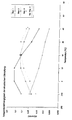
- the graphic shows the temperature dependence of the acoustic damping d (combi) 50% of Examples 1 to 3 and Comparative Example 4, which is less crosslinked.
- Comparative Example 4 shows in particular that the content of Sulfur> 3% and accelerator without sufficient Offer of reactive rubber not for the invention Networking and thus good acoustic damping.
Landscapes
- Chemical & Material Sciences (AREA)
- Organic Chemistry (AREA)
- Health & Medical Sciences (AREA)
- Chemical Kinetics & Catalysis (AREA)
- Medicinal Chemistry (AREA)
- Polymers & Plastics (AREA)
- Engineering & Computer Science (AREA)
- Materials Engineering (AREA)
- Life Sciences & Earth Sciences (AREA)
- Wood Science & Technology (AREA)
- Compositions Of Macromolecular Compounds (AREA)
- Sealing Material Composition (AREA)
- Laminated Bodies (AREA)
- Adhesives Or Adhesive Processes (AREA)
- Vibration Prevention Devices (AREA)
- Paints Or Removers (AREA)
Claims (10)
- Composition réactive durcissant à chaud à base d'élastomères et d'agents de vulcanisation naturels et/ou synthétiques contenant des doubles liaisons oléfiniques, caractérisée en ce que la composition comprend :a) 0-10 % en poids de caoutchouc(s) solide(s) ayant un poids moléculaire de 100 000 ou plus, le ou les caoutchouc(s) solide(s) ayant choisi(s) dans le groupe du cis-1,4-polybutadiène, du caoutchouc styrène-butadiène, du caoutchouc naturel, du caoutchouc éthylène-propylènediène (EPDM), du caoutchouc nitrile, du caoutchouc butyle, du caoutchouc acryle, du caoutchouc polyuréthane,b) 5-50 % en poids de polyène(s) liquide(s) ayant un poids moléculaire inférieur à 20 000,c) un système de vulcanisation choisi dans le groupe constitué parle soufre et un ou plusieurs accélérateurs organiques et oxydes métalliques, la proportion de soufre s'élevant à au moins 3 % en poids de la formulation totale,des systèmes de vulcanisation à fonction peroxyde,des quinones, des quinones dioximes ou du dinotrosobenzène, le cas échéant en combinaison avec des accélérateurs organiques et/ou des oxydes métalliques,d) le cas échéant d'autres additifs choisis dans le groupe formé parla somme des composants a) à d) étant égale à 100 %,les polymères thermoplastiques sous forme de poudre finement divisée,les charges,les agents collants et/ou les corps facilitant l'adhérence,des huiles diluantes,des agents de protection contre le vieillissement,des adjuvants rhéologiques ou leurs mélanges,
la maximum du facteur de perte de d (combi) de la composition vulcanisée dans l'essai de flexions alternées selon la norme DIN 53440 à 200 Hz se situant dans un intervalle de +10°C à +40°C et étant égal à au moins 0,1, de préférence à 0,2. - Composition selon la revendication 1,
caractérisée en ce qu'
on choisit un polyène liquide du groupe constitué par le 1,2-polybutadiène, le 1,4-polybutadiène, le polyisoprène, le polybutène, le polyisobutylène, les copolymères de butadiène et/ou d'isoprène avec le styrène et/ou l'acrylonitrile, les copolymères d'esters d'acide acrylique avec des diènes, le rapport molaire du polyène liquide se situant dans un intervalle de 900 à 10 000. - Composition selon la revendication 2,
caractérisée en ce que
le ou les polyènes liquides contiennent en outre des groupes carboxyle, des groupes anhydrides d'acides carboxylique, des groupes hydroxyle, des groupes amino, des groupes mercapto ou des groupes époxyde comme groupes fonctionnels terminaux et/ou statistiquement répartis. - Composition selon au moins une des revendications précédentes,
caractérisée en ce qu'
elle contient en outre un polymère thermoplastique ayant une température de transition vitreuse comprise entre 5°C et 50°C. - Composition selon la revendication 4,
caractérisée en ce que
le polymère thermoplastique contient des doubles liaisons oléfiniques, des groupes hydroxyle, des groupes carboxyle, des groupes époxyde, des groupes amino ou des groupes mercapto comme groupes fonctionnels. - Production de la composition réactif durcissant à chaud selon au moins une des revendications précédentes, par un mélange des composants avec un fort cisaillement.
- Utilisation de la composition selon au moins une des revendications précédentes, comme adhésif, masse d'étanchéité ou masse de revêtement à un ou deux composants comme isolant acoustique.
- Procédé de liaison de pièces métalliques et/ou d'étanchéification de joints entre des pièces métalliques,
caractérisé en ce queon recouvre au moins une surface d'une pièce avec les compositions selon au moins l'une des revendications précédentes,on rassemble les pièces à relier,et on chauffe les pièces jointes, le cas échéant avec fixation métallique, pour faire durcir la composition réactive. - Procédé de revêtement de pièces par pulvérisation ou extrusion de compositions selon au moins une des revendications 1 à 5 à la surface de la pièce et chauffage de la pièce revêtue en vue du durcissement de la composition.
- Procédé de revêtement, de collage, et/ou d'étanchéification de la pièce,
caractérisé en ce qu'
on dépose une feuille extrudée, ou un ruban extrudé, fabriqué à partir d'une composition selon au moins une des revendications 1 à 5, sur au moins une pièce, en ce que le cas échéant on assemble les pièces puis en ce qu'on chauffe pour durcir la composition.
Applications Claiming Priority (3)
| Application Number | Priority Date | Filing Date | Title |
|---|---|---|---|
| DE4441656 | 1994-11-23 | ||
| DE4441656A DE4441656A1 (de) | 1994-11-23 | 1994-11-23 | Elastomerprodukte mit akustischen Dämpfungseigenschaften |
| PCT/EP1995/004467 WO1996016136A1 (fr) | 1994-11-23 | 1995-11-14 | Produits elastomeres a proprietes insonorisantes |
Publications (2)
| Publication Number | Publication Date |
|---|---|
| EP0793697A1 EP0793697A1 (fr) | 1997-09-10 |
| EP0793697B1 true EP0793697B1 (fr) | 2000-02-16 |
Family
ID=6533927
Family Applications (1)
| Application Number | Title | Priority Date | Filing Date |
|---|---|---|---|
| EP95940172A Revoked EP0793697B1 (fr) | 1994-11-23 | 1995-11-14 | Produits elastomeres a proprietes insonorisantes |
Country Status (13)
| Country | Link |
|---|---|
| EP (1) | EP0793697B1 (fr) |
| JP (1) | JPH10509755A (fr) |
| AT (1) | ATE189828T1 (fr) |
| BR (1) | BR9509754A (fr) |
| CA (1) | CA2205953A1 (fr) |
| CZ (1) | CZ159297A3 (fr) |
| DE (2) | DE4441656A1 (fr) |
| ES (1) | ES2144646T3 (fr) |
| PT (1) | PT793697E (fr) |
| SK (1) | SK282185B6 (fr) |
| TR (1) | TR199501474A2 (fr) |
| WO (1) | WO1996016136A1 (fr) |
| ZA (1) | ZA959935B (fr) |
Cited By (5)
| Publication number | Priority date | Publication date | Assignee | Title |
|---|---|---|---|---|
| DE10250780A1 (de) * | 2002-10-30 | 2004-05-19 | Henkel Kgaa | Mehrschicht Laminate zum Versteifen |
| US8137500B2 (en) | 2005-01-22 | 2012-03-20 | Henkel Kgaa | Sprayable low-viscosity rubber damping compounds |
| EP3828219A1 (fr) | 2019-11-28 | 2021-06-02 | SCS Holding GmbH | Composition destinée à la fabrication d'une masse à propriétés d'amortissement acoustique et son utilisation |
| EP3947546B1 (fr) * | 2019-04-05 | 2023-04-19 | Fina Technology, Inc. | Polyenes pour des compositions durcissables à base de caoutchoucs liquids |
| EP4480983A1 (fr) | 2023-06-20 | 2024-12-25 | ECOPOX GmbH & Co. KG | Composition durcissante à base de matières premières renouvelables |
Families Citing this family (12)
| Publication number | Priority date | Publication date | Assignee | Title |
|---|---|---|---|---|
| EP1300291A3 (fr) * | 2001-09-28 | 2005-10-26 | CWW-GERKO Akustik GmbH & Co. KG | Procédé d'application d'un matériau à base de résines époxy pour couverture anti-bruit à une carrosserie d'un véhicule automobile |
| JP4363013B2 (ja) * | 2002-09-18 | 2009-11-11 | Nok株式会社 | 接着剤組成物 |
| DE10312815A1 (de) * | 2003-03-22 | 2004-10-07 | Henkel Kgaa | Verfahren zum Kontaminationstoleranten Kleben von Fügeteilen |
| JP2005320524A (ja) * | 2004-04-06 | 2005-11-17 | Riken Technos Corp | 熱可塑性エラストマー組成物 |
| DE102009026824A1 (de) | 2009-06-08 | 2010-12-09 | Henkel Ag & Co. Kgaa | Vulkanisierbare Zusammensetzung mit akustischen Dämpfungseigenschaften |
| US20140224577A1 (en) * | 2011-08-23 | 2014-08-14 | Avery Dennison Corporation | Pressure Sensitive Adhesive Laminate for High Performance Noise and Vibration Damping Applications |
| PL2626854T3 (pl) | 2012-02-09 | 2015-12-31 | Electrolux Home Products Corp Nv | Izolowany element urządzenia gospodarstwa domowego, zwłaszcza zmywarki do naczyń oraz sposób wytwarzania takiego elementu |
| DE102012209923A1 (de) | 2012-06-13 | 2013-12-19 | Henkel Ag & Co. Kgaa | Heißhärtende Reaktivsysteme |
| JP6655285B2 (ja) * | 2014-12-12 | 2020-02-26 | ヘンケルジャパン株式会社 | 低温にて衝撃耐久性を有する制振性付与組成物 |
| JP6726989B2 (ja) * | 2016-03-22 | 2020-07-22 | ヘンケルジャパン株式会社 | 熱硬化性組成物 |
| MX2020003065A (es) | 2020-03-19 | 2021-09-20 | Chemical & Schutz High Performance Lubricants S A De C V | Aditivo para mejorar la procesabilidad en la fabricacion de compuestos de etileno, propileno y dieno y metodo para producir el mismo. |
| CN113462088A (zh) * | 2021-08-04 | 2021-10-01 | 深圳市奥科杰环保材料科技有限公司 | 一种吸声降噪型复合橡胶及其制备方法 |
Family Cites Families (12)
| Publication number | Priority date | Publication date | Assignee | Title |
|---|---|---|---|---|
| JPS5937293B2 (ja) * | 1981-02-21 | 1984-09-08 | 旭化成株式会社 | 防振および防音性ゴム組成物 |
| JPS5847032A (ja) * | 1981-09-15 | 1983-03-18 | Showa Electric Wire & Cable Co Ltd | 振動減衰性樹脂組成物 |
| DE3436556A1 (de) * | 1984-10-05 | 1986-04-10 | Hüls AG, 4370 Marl | In der waerme vernetzbare massen und verfahren zur herstellung von in der kaelte vernetzenden massen |
| DE3444863A1 (de) * | 1984-12-08 | 1986-07-17 | Teroson Gmbh, 6900 Heidelberg | Spritzbare plastisolzusammensetzung und deren verwendung zur schalldaempfung |
| US4626568A (en) * | 1985-08-08 | 1986-12-02 | Polysar Limited | Vibration and noise insulating rubber compositions |
| JP2539833B2 (ja) * | 1987-06-29 | 1996-10-02 | エヌティエヌ株式会社 | 潤滑性ゴム組成物 |
| DE3830345C1 (fr) * | 1988-09-07 | 1989-11-02 | Teroson Gmbh, 6900 Heidelberg, De | |
| DE4013318A1 (de) * | 1990-04-26 | 1991-10-31 | Teroson Gmbh | Zweischichtige beschichtung und verfahren zu deren herstellung |
| US5300355A (en) * | 1991-05-31 | 1994-04-05 | Nichias Corporation | Vibration damping material |
| DE4122849A1 (de) * | 1991-07-10 | 1993-01-14 | Bostik Gmbh | Kleb/dichtstoff auf kautschukbasis |
| JP2956344B2 (ja) * | 1992-02-08 | 1999-10-04 | 日本ゼオン株式会社 | ゴム組成物 |
| EP0658597B1 (fr) * | 1993-12-17 | 1998-03-04 | Henkel Kommanditgesellschaft auf Aktien | Compositions adhésives et de scellement amortissant les vibrations |
-
1994
- 1994-11-23 DE DE4441656A patent/DE4441656A1/de not_active Ceased
-
1995
- 1995-11-14 BR BR9509754A patent/BR9509754A/pt not_active IP Right Cessation
- 1995-11-14 DE DE59507825T patent/DE59507825D1/de not_active Revoked
- 1995-11-14 PT PT95940172T patent/PT793697E/pt unknown
- 1995-11-14 CZ CZ971592A patent/CZ159297A3/cs unknown
- 1995-11-14 ES ES95940172T patent/ES2144646T3/es not_active Expired - Lifetime
- 1995-11-14 EP EP95940172A patent/EP0793697B1/fr not_active Revoked
- 1995-11-14 WO PCT/EP1995/004467 patent/WO1996016136A1/fr not_active Ceased
- 1995-11-14 SK SK648-97A patent/SK282185B6/sk unknown
- 1995-11-14 CA CA002205953A patent/CA2205953A1/fr not_active Abandoned
- 1995-11-14 JP JP8516529A patent/JPH10509755A/ja active Pending
- 1995-11-14 AT AT95940172T patent/ATE189828T1/de not_active IP Right Cessation
- 1995-11-22 TR TR95/01474A patent/TR199501474A2/xx unknown
- 1995-11-22 ZA ZA959935A patent/ZA959935B/xx unknown
Cited By (8)
| Publication number | Priority date | Publication date | Assignee | Title |
|---|---|---|---|---|
| DE10250780A1 (de) * | 2002-10-30 | 2004-05-19 | Henkel Kgaa | Mehrschicht Laminate zum Versteifen |
| US7238407B2 (en) | 2002-10-30 | 2007-07-03 | Henkel Kommanditgesellschaft Auf Aktien | Multi-layer reinforcing laminate |
| US8137500B2 (en) | 2005-01-22 | 2012-03-20 | Henkel Kgaa | Sprayable low-viscosity rubber damping compounds |
| EP1838778B2 (fr) † | 2005-01-22 | 2018-07-18 | Henkel AG & Co. KGaA | Matieres d'amortissement caoutchouteuses, de viscosite reduite, pulverisables |
| EP3947546B1 (fr) * | 2019-04-05 | 2023-04-19 | Fina Technology, Inc. | Polyenes pour des compositions durcissables à base de caoutchoucs liquids |
| EP3828219A1 (fr) | 2019-11-28 | 2021-06-02 | SCS Holding GmbH | Composition destinée à la fabrication d'une masse à propriétés d'amortissement acoustique et son utilisation |
| EP4480983A1 (fr) | 2023-06-20 | 2024-12-25 | ECOPOX GmbH & Co. KG | Composition durcissante à base de matières premières renouvelables |
| WO2024261685A1 (fr) | 2023-06-20 | 2024-12-26 | Ecopox Gmbh & Co. Kg | Composition durcissable à base de matières premières renouvelables |
Also Published As
| Publication number | Publication date |
|---|---|
| CZ159297A3 (en) | 1997-11-12 |
| BR9509754A (pt) | 1998-06-16 |
| SK64897A3 (en) | 1997-10-08 |
| DE4441656A1 (de) | 1996-05-30 |
| MX9703698A (es) | 1998-07-31 |
| JPH10509755A (ja) | 1998-09-22 |
| SK282185B6 (sk) | 2001-11-06 |
| EP0793697A1 (fr) | 1997-09-10 |
| PT793697E (pt) | 2000-09-29 |
| ES2144646T3 (es) | 2000-06-16 |
| ZA959935B (en) | 1996-05-23 |
| DE59507825D1 (de) | 2000-03-23 |
| WO1996016136A1 (fr) | 1996-05-30 |
| TR199501474A2 (tr) | 1996-07-21 |
| CA2205953A1 (fr) | 1996-05-30 |
| ATE189828T1 (de) | 2000-03-15 |
Similar Documents
| Publication | Publication Date | Title |
|---|---|---|
| EP0793697B1 (fr) | Produits elastomeres a proprietes insonorisantes | |
| EP0805841B1 (fr) | Adhesifs pour structures brutes, a base de caoutchouc | |
| EP1838778B1 (fr) | Matieres d'amortissement caoutchouteuses, de viscosite reduite, pulverisables | |
| EP0998538B1 (fr) | Scellement pour gros oeuvre, lessivable et thermodurcissable | |
| WO1998018853A1 (fr) | Pieces façonnees en caoutchouc expansibles, durcissables a chaud et exemptes de soufre | |
| EP2467422B2 (fr) | Composition de caoutchouc à élasticité supérieure | |
| US6361643B2 (en) | Method for reducing mechanical vibration in metal constructions | |
| US6204321B1 (en) | Sealant and adhesive with damping properties | |
| DE4122849A1 (de) | Kleb/dichtstoff auf kautschukbasis | |
| EP1343839B1 (fr) | Compositions caoutchouc presentant un comportement d'ecoulement de type plastisol | |
| DE10062859A1 (de) | Mehrschichtige Verbundmaterialien mit organischen Zwischenschichten auf Kautschukbasis | |
| EP2861686B1 (fr) | Systèmes réactifs durcissant à chaud | |
| DE29520113U1 (de) | Kleb- und Dichtstoff mit Dämpfeigenschaften | |
| MXPA97003698A (en) | Elastomer products, which have acup shock properties | |
| MXPA97005664A (en) | Structural adhesives, with rubber base, for lines without revestimie | |
| DE102005008132A1 (de) | Plastisches Klebemittel und Verfahren zum Verbinden von Karosserieblechen |
Legal Events
| Date | Code | Title | Description |
|---|---|---|---|
| PUAI | Public reference made under article 153(3) epc to a published international application that has entered the european phase |
Free format text: ORIGINAL CODE: 0009012 |
|
| 17P | Request for examination filed |
Effective date: 19970514 |
|
| AK | Designated contracting states |
Kind code of ref document: A1 Designated state(s): AT BE DE ES FR GB IT NL PT SE |
|
| 17Q | First examination report despatched |
Effective date: 19970922 |
|
| GRAG | Despatch of communication of intention to grant |
Free format text: ORIGINAL CODE: EPIDOS AGRA |
|
| GRAG | Despatch of communication of intention to grant |
Free format text: ORIGINAL CODE: EPIDOS AGRA |
|
| GRAH | Despatch of communication of intention to grant a patent |
Free format text: ORIGINAL CODE: EPIDOS IGRA |
|
| GRAH | Despatch of communication of intention to grant a patent |
Free format text: ORIGINAL CODE: EPIDOS IGRA |
|
| GRAA | (expected) grant |
Free format text: ORIGINAL CODE: 0009210 |
|
| AK | Designated contracting states |
Kind code of ref document: B1 Designated state(s): AT BE DE ES FR GB IT NL PT SE |
|
| REF | Corresponds to: |
Ref document number: 189828 Country of ref document: AT Date of ref document: 20000315 Kind code of ref document: T |
|
| REF | Corresponds to: |
Ref document number: 59507825 Country of ref document: DE Date of ref document: 20000323 |
|
| ITF | It: translation for a ep patent filed | ||
| ET | Fr: translation filed | ||
| RAP2 | Party data changed (patent owner data changed or rights of a patent transferred) |
Owner name: HENKEL TEROSON GMBH |
|
| GBT | Gb: translation of ep patent filed (gb section 77(6)(a)/1977) |
Effective date: 20000515 |
|
| REG | Reference to a national code |
Ref country code: ES Ref legal event code: FG2A Ref document number: 2144646 Country of ref document: ES Kind code of ref document: T3 |
|
| NLT2 | Nl: modifications (of names), taken from the european patent patent bulletin |
Owner name: HENKEL TEROSON GMBH |
|
| REG | Reference to a national code |
Ref country code: PT Ref legal event code: SC4A Free format text: AVAILABILITY OF NATIONAL TRANSLATION Effective date: 20000512 |
|
| PGFP | Annual fee paid to national office [announced via postgrant information from national office to epo] |
Ref country code: AT Payment date: 20001113 Year of fee payment: 6 |
|
| PLBQ | Unpublished change to opponent data |
Free format text: ORIGINAL CODE: EPIDOS OPPO |
|
| PLBI | Opposition filed |
Free format text: ORIGINAL CODE: 0009260 |
|
| PGFP | Annual fee paid to national office [announced via postgrant information from national office to epo] |
Ref country code: NL Payment date: 20001130 Year of fee payment: 6 |
|
| PLBF | Reply of patent proprietor to notice(s) of opposition |
Free format text: ORIGINAL CODE: EPIDOS OBSO |
|
| 26 | Opposition filed |
Opponent name: EFTEC AG Effective date: 20001115 |
|
| NLR1 | Nl: opposition has been filed with the epo |
Opponent name: EFTEC AG |
|
| PLBF | Reply of patent proprietor to notice(s) of opposition |
Free format text: ORIGINAL CODE: EPIDOS OBSO |
|
| PGFP | Annual fee paid to national office [announced via postgrant information from national office to epo] |
Ref country code: PT Payment date: 20011105 Year of fee payment: 7 |
|
| PGFP | Annual fee paid to national office [announced via postgrant information from national office to epo] |
Ref country code: SE Payment date: 20011106 Year of fee payment: 7 |
|
| PG25 | Lapsed in a contracting state [announced via postgrant information from national office to epo] |
Ref country code: AT Free format text: LAPSE BECAUSE OF NON-PAYMENT OF DUE FEES Effective date: 20011114 |
|
| REG | Reference to a national code |
Ref country code: GB Ref legal event code: IF02 |
|
| PG25 | Lapsed in a contracting state [announced via postgrant information from national office to epo] |
Ref country code: NL Free format text: LAPSE BECAUSE OF NON-PAYMENT OF DUE FEES Effective date: 20020601 |
|
| NLV4 | Nl: lapsed or anulled due to non-payment of the annual fee |
Effective date: 20020601 |
|
| PG25 | Lapsed in a contracting state [announced via postgrant information from national office to epo] |
Ref country code: SE Free format text: LAPSE BECAUSE OF NON-PAYMENT OF DUE FEES Effective date: 20021115 |
|
| RDAH | Patent revoked |
Free format text: ORIGINAL CODE: EPIDOS REVO |
|
| PG25 | Lapsed in a contracting state [announced via postgrant information from national office to epo] |
Ref country code: PT Free format text: LAPSE BECAUSE OF NON-PAYMENT OF DUE FEES Effective date: 20030531 |
|
| APAC | Appeal dossier modified |
Free format text: ORIGINAL CODE: EPIDOS NOAPO |
|
| EUG | Se: european patent has lapsed | ||
| APBQ | Date of receipt of statement of grounds of appeal recorded |
Free format text: ORIGINAL CODE: EPIDOSNNOA3O |
|
| REG | Reference to a national code |
Ref country code: PT Ref legal event code: MM4A Free format text: LAPSE DUE TO NON-PAYMENT OF FEES Effective date: 20030531 |
|
| APAA | Appeal reference recorded |
Free format text: ORIGINAL CODE: EPIDOS REFN |
|
| APAH | Appeal reference modified |
Free format text: ORIGINAL CODE: EPIDOSCREFNO |
|
| RAP2 | Party data changed (patent owner data changed or rights of a patent transferred) |
Owner name: HENKEL KGAA |
|
| APBU | Appeal procedure closed |
Free format text: ORIGINAL CODE: EPIDOSNNOA9O |
|
| PGFP | Annual fee paid to national office [announced via postgrant information from national office to epo] |
Ref country code: ES Payment date: 20071219 Year of fee payment: 13 Ref country code: DE Payment date: 20071108 Year of fee payment: 13 |
|
| PGFP | Annual fee paid to national office [announced via postgrant information from national office to epo] |
Ref country code: GB Payment date: 20071114 Year of fee payment: 13 Ref country code: FR Payment date: 20071108 Year of fee payment: 13 |
|
| RDAG | Patent revoked |
Free format text: ORIGINAL CODE: 0009271 |
|
| STAA | Information on the status of an ep patent application or granted ep patent |
Free format text: STATUS: PATENT REVOKED |
|
| RAP2 | Party data changed (patent owner data changed or rights of a patent transferred) |
Owner name: HENKEL AG & CO. KGAA |
|
| 27W | Patent revoked |
Effective date: 20060523 |
|
| GBPR | Gb: patent revoked under art. 102 of the ep convention designating the uk as contracting state |
Effective date: 20060523 |
|
| PGFP | Annual fee paid to national office [announced via postgrant information from national office to epo] |
Ref country code: BE Payment date: 20080131 Year of fee payment: 13 |
|
| PGFP | Annual fee paid to national office [announced via postgrant information from national office to epo] |
Ref country code: IT Payment date: 20081126 Year of fee payment: 14 |