EP0794253A2 - Aminopeptidase GX et procédé d'hydrolysation des protéines avec celles-ci - Google Patents
Aminopeptidase GX et procédé d'hydrolysation des protéines avec celles-ci Download PDFInfo
- Publication number
- EP0794253A2 EP0794253A2 EP97103862A EP97103862A EP0794253A2 EP 0794253 A2 EP0794253 A2 EP 0794253A2 EP 97103862 A EP97103862 A EP 97103862A EP 97103862 A EP97103862 A EP 97103862A EP 0794253 A2 EP0794253 A2 EP 0794253A2
- Authority
- EP
- European Patent Office
- Prior art keywords
- aminopeptidase
- activity
- protein
- enzyme
- peptide
- Prior art date
- Legal status (The legal status is an assumption and is not a legal conclusion. Google has not performed a legal analysis and makes no representation as to the accuracy of the status listed.)
- Granted
Links
Images





Classifications
-
- C—CHEMISTRY; METALLURGY
- C12—BIOCHEMISTRY; BEER; SPIRITS; WINE; VINEGAR; MICROBIOLOGY; ENZYMOLOGY; MUTATION OR GENETIC ENGINEERING
- C12N—MICROORGANISMS OR ENZYMES; COMPOSITIONS THEREOF; PROPAGATING, PRESERVING, OR MAINTAINING MICROORGANISMS; MUTATION OR GENETIC ENGINEERING; CULTURE MEDIA
- C12N9/00—Enzymes; Proenzymes; Compositions thereof; Processes for preparing, activating, inhibiting, separating or purifying enzymes
- C12N9/14—Hydrolases (3)
- C12N9/48—Hydrolases (3) acting on peptide bonds (3.4)
Definitions
- the present invention relates to a novel aminopeptidase and a method of hydrolyzing a peptide or protein by use of said aminopeptidase or a cell extract containing said aminopeptidase.
- the aminopeptidase is an enzyme which releases an N-terminal amino acid sequentially from a peptide or protein.
- soybean protein hydrolysate as a candidate for a natural seasoning by hydrolyzing soybean protein with an acid will require a reaction at 100 °C for 1 to 2 days, and such a high-temperature, long reaction needs high energy consumption.
- acid hydrolysis of a protein is easy, but there are problems in that the resulting amino acids would also be decomposed (destroyed) and a high salt content would result from neutralization.
- exopeptidases i.e. a group of enzymes decomposing a peptide into amino acids, such as aminopeptidase, carboxypeptidase etc.
- exopeptidases i.e. a group of enzymes decomposing a peptide into amino acids, such as aminopeptidase, carboxypeptidase etc.
- leucine aminopeptidase and acid carboxypeptidase is mentioned to increase a content of free amino acids for decomposing soybean protein with aspergillus, typically for making soy sauce by fermentation (Tadanobu Nakadai, Shouken, Vol. 11, No. 2, (1985)).
- dipeptide and tripeptide containing acidic amino acids in their sequences and these peptides are hardly decomposed with a peptidase derived from aspergillus. Further, these dipeptide and tripeptide also include a large number of peptides containing glutamic acid or aspartic acid at the N-terminal.
- peptides hardly decomposed herein used means that an enzyme serving as the catalyst for their decomposition, that is, a peptidase, has low substrate specificity for them.
- the present inventors searched soybean cotyledons for a clue to solving the above problem. This is because from the fact that the proteins stored in soybeans are decomposed completely into amino acids in a very short time as the soybeans germinate, the present inventors expected the germinated soybeans to contain a certain peptidase which can easily decompose even hardly decomposable peptides derived from the storage proteins.
- the present inventors speculated that there might be a certain peptidase with substrate specificity and properties by which glycinin and ⁇ -conglisinin, which are present as major storage proteins containing acidic amino acid-enriched motifs with e.g. successive acidic amino acids such as -Glu-Glu-Glu-Glu-Glu-, can be decomposed completely into amino acids.
- carboxypeptidase (Sachiho Kubota, Yakugaku Zasshi 96(5), 639 (1976)) and aminopeptidase (Shinji Watanabe et al., Nippon Nogei Kagakkaishi 63(3), 617 (1989)) have been reported as exopeptidase but these are not suitable for decomposing an acidic amino acid-containing peptide into amino acids.
- the object of the present invention is to provide an aminopeptidase effectively decomposing a low-molecular-weight peptide whose sequence contains glutamic acid and aspartic acid present in a soybean hydrolysate etc. as well as a method of hydrolyzing a peptide or protein by use of said aminopeptidase.
- an enzyme which can be used for decomposing a peptide containing acidic amino acids is present in an extract from germinated soybean cotyledons, to complete the present invention.
- the present invention provides aminopeptidase GX having the activity of easily decomposing a peptide or protein having acidic amino acids such as L- ⁇ -glutamylglutamic acid (Glu-Glu) etc. at the N-terminal.
- Glu-Glu L- ⁇ -glutamylglutamic acid
- aminopeptidase GX of the present invention possesses the following properties:
- a typical example of the aminopeptidase GX of the present invention is that derived from germinated soybean cotyledons.
- the present invention provides a method of hydrolyzing a peptide or protein which comprises allowing said aminopeptidase GX to contact and react with a peptide or protein, as well as a method of hydrolyzing a peptide or protein which comprises allowing a cell extract obtained by disrupting germinated soybean cotyledons containing said aminopeptidase GX to contact and react with a peptide or protein.
- the present invention provides a method of hydrolyzing a peptide or protein which comprises allowing a combination of said aminopeptidase GX and protease D3 (Japanese Patent LOP Publication No. 264/1996 and Japanese Patent Application No. 353,931/1995) to contact and react with a peptide or protein.
- the present invention provides a method of hydrolyzing a peptide or protein which comprises allowing a combination of aminopeptidase GX, protease D3 and leucine aminopeptidase to contact and react with a peptide or protein.
- Said protease D3 is an enzyme purified from an extract of germinated soybean cotyledons and its properties and purification method were described in detail in Japanese Patent LOP Publication No. 264/1996. Recombinant protease D3 was also prepared in E. coli (Japanese Patent Application No. 353,931/1995), and its details will be described in Example 11.
- the protease D3 used is preferably in the form of a high-purity preparation, but may be a crude enzyme prepared from germinated soybean cotyledons.
- the leucine aminopeptidase used may be a commercially available enzyme (e.g. No. 1503 available from Sigma) but is preferably a group of crude daizdu (soybean) leucine aminopeptidases obtained from an extract of germinated soybeans.
- daizdu (sotbean) leucine aminopeptidase (DLAP) There are 2 kinds of aminopeptodases in an extract of germinated soybeans as the daizdu (sotbean) leucine aminopeptidase (DLAP), that is DLAP1 and DLAP2.
- DLAP1 and DLAP2 are very similar in properties to those of soybean-derived aminopeptidase which has already been reported (Shinji Watanabe et al., Nippon Nogei Kagakkaishi 63(3), 617 (1989)), but there is no positive proof that they are the same.
- the preparation of DLAP1 and DLAP2 will be described in Example 14.
- DLAP1 is an aminopeptidase with the following properties:
- DLAP2 is an aminopeptidase with the following properties:
- the type of germinated soybeans preferably used as a material for preparing the novel aminopeptidase of the present invention is not limited. That is, the cultivation area and variety of the soybeans are not limited; that is, commercially available soybeans, or those used as raw materials to extract oil, is not limited. There is no limitation to their germination method and cultivation conditions, and they can be used regardless of the presence or absence of sprouts and the term after their germination, but germinated soybeans preferably used as raw materials are those grown for 7 days after seeding were allowed to absorb water.
- soybeans preferably those described above, are used as a source to extract the enzyme from it.
- cotyledons are removed from the soybeans and used as a source to extract the enzyme from it.
- this extract from soybeans can be used as such, or its crude or purified preparation can also be used.
- Example 3 The purification of the novel aminopeptidase of the present invention will be described in detail in Example 3.
- the preparation of a cell extract obtained by disrupting germinated soybean cotyledons will also be described in detail in the Examples below.
- novel aminopeptidase GX of the present invention will act on an protein or oligopeptide having glutamic acid or aspartic acid at the N-terminal, among usual proteins such as casein, bovine serum albumin, hemoglobin, soybean protein or peptides derived from the foregoing usual proteins, thus releasing said glutamic acid or aspartic acid.
- novel aminopeptidase GX will act on peptides generally hardly decomposed with exopeptidases (known aminopeptidase, carboxypeptidase), such as a dipeptide having an acidic amino acid at the N-terminal, a biologically active peptide having an acidic amino acid at the N-terminal, and ⁇ -polyglutamic acid, to release their N-terminal acidic amino acid (see Examples 7, 8, 9 and 10 below).
- exopeptidases known aminopeptidase, carboxypeptidase
- the optimum pH of the novel aminopeptidase GX of the present invention is in the range of about 5.5 to 9.5, strictly about pH 7 to about 9 (see FIG. 1). Therefore, the peptide or protein shall be hydrolyzed in this pH range.
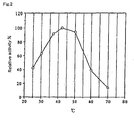
- the optimum temperature of the novel aminopeptidase GX is in the range of about 25 to 60 °C, strictly about 35 to 55 °C (see FIG. 2). Therefore, the peptide or protein shall be hydrolyzed in this temperature range.
- the temperature stability of the novel aminopeptidase GX maintains about 80 % or more of the original activity even after incubation at 50 °C for 80 minutes or about 40 % or more of the original activity after incubation at 60 °C for 40 minutes. Therefore, the hydrolysis reaction of the peptide or protein is carried out desirably at 50 °C or less in order to prevent the inactivation of the enzyme for a long time (see FIG. 3).
- novel aminopeptidase GX of the present invention is an aminopeptidase where a metal is involved in its activity expression.
- the estimated molecular weight of the novel aminopeptidase of the present invention is about 390 to 400 kD as determined in SDS-PAGE when the sample was not reduced nor heated (see FIG. 4).
- the enzyme was separated in SDS-PAGE into subunits with molecular weights of about 53 to 60 kD, about 30 to 32 kD, and 25 to 28 kD respectively (see FIG. 5).
- the novel aminopeptidase GX of the present invention as such, or a cell extract obtained by disrupting germinated soybean cotyledons, may be allowed to act on peptides or a protein hydrolysate after treatment with various proteases.
- Glu-Glu L- ⁇ -glutamylglutamic acid
- 50 mM sodium phosphate buffer (pH 8.0) in the presence of 2 mM sodium azide at 37 °C will result in significant release of glutamic acid from the substrate Glu-Glu. This decomposition does also proceed efficiently even in deionized water.
- an amino acid mixture with a high content of acidic amino acids released from soybean protein not only the novel aminopeptidase GX of the present invention as such, but a cell extract obtained by disrupting germinated soybean cotyledons can also be used to decompose a peptide mixture, that is, a protein hydrolysate treated with the enzyme cysteine protease D3 from germinated soybeans.
- the peptide mixture treated with the enzyme cysteine protease D3 from germinated soybeans may be hydrolyzed with leucine aminopeptidase in combination with the aminopeptidase GX of the present invention, to give a hydrolysate with amino acids in high yield.
- the protein hydrolysate treated with cysteine protease D3 is subjected to hydrolysis at 42 °C with a combination of the novel aminopeptidase GX with DLAP1 and DLAP2 (germinated soybean-derived leucine aminopeptidases) in amounts of 0.4 to 4 U GX, 10 to 130 U DLAP1 and 10 to 65 U DLAP2 per mg of the substrate in a solution adjusted to pH 8.0 with sodium hydroxide, the peptide will be decomposed to release various amino acids significantly (see the Examples)
- the present specification also comprises Fig. 1 to 18 as enclosed. The following is a brief description of the drawings.
- FIG. 1 shows a pH profile of aminopeptidase GX activity at different pH values.
- FIG. 2 shows a profile of aminopeptidase GX activity at different temperatures.
- FIG. 3 shows a profile of the stability of aminopeptidase GX activity at different temperatures.
- FIG. 4 shows a profile in SDS-PAGE of the purified aminopeptidase GX stained with Coomassie, where the sample was not heated nor reduced.
- FIG. 5 shows a profile in SDS-PAGE of the purified aminopeptidase GX stained with Coomassie, where the sample was not heated nor reduced.
- FIG. 6 shows the analysis of the molecular weight of the purified aminopeptidase GX by gel filtration through Superose 6.
- FIG. 7 shows a profile in SDS-PAGE of the purified aminopeptidase GX subjected to activity staining, where the sample was not heated nor reduced.
- FIG. 8 shows a mass spectrum of a reaction solution in which chromogranin A was decomposed with aminopeptidase A, the structure of chromogranin A, and masses of its respective fragments.
- FIG. 9 shows an increase in glutamic acid when ⁇ -polyglutamic acid was decomposed with aminopeptidase GX.
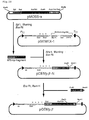
- FIG. 10 shows the (partial) construction of expression plasmid pGEMp ⁇ .
- FIG. 11 shows the (partial) construction of expression plasmid pGEMp ⁇ .
- FIG. 12 shows a profile in SDS-PAGE of the purified aminopeptidase DLAP1 subjected to activity staining, where the sample was not heated nor reduced.
- FIG. 13 shows a profile in SDS-PAGE of the purified aminopeptidase DLAP2 subjected to activity staining, where the sample was not heated nor reduced.
- FIG. 14 shows a pH profile of the activity of aminopeptidase DLAP1 activity at different pH values.
- FIG. 15 shows a profile of aminopeptidase DLAP1 activity at different temperatures.
- FIG. 16 shows a profile of the stability of aminopeptidase DLAP1 activity at different temperatures.
- FIG. 17 shows a pH profile of aminopeptidase DLAP2 activity at different pH values.
- FIG. 18 shows a profile of aminopeptidase DLAP2 activity at different temperatures.
- the substrate used was dipeptide Glu-Glu, i.e. consisting of glutamic acids, and the glutamic acid released by the action of the enzyme was determined.
- the glutamic acid was quantitatively determined using conventional amino acid analysis means with ninhydrin or Yamasa Glutamic Acid Assay Kit commercially available. Unless otherwise specified, the following conditions and method were used.
- 0.05 ml enzyme solution 0.02 ml of 50 mM L- ⁇ -glutamylglutamic acid, 0.02 ml of 100 mM N-2-hydroxyethylpiperazine-N'-2-ethanesulfonic acid (HEPES) buffer (pH 7.2), and 0.11 ml H 2 O were mixed and reacted at 37 °C for 20 minutes.
- the reaction was stopped by adding 0.05 ml of 50 % aqueous acetic acid, and the glutamic acid released in the reaction solution was quantitatively determined.
- the activity of the enzyme causing release of 2 ⁇ M glutamic acid from L- ⁇ -glutamylglutamic acid per minute was assumed to be 1 Unit.
- the above detection method was used to search for decomposition activity in an extract of germinated soybean cotyledons. First, the extract of cotyledons 7 days after germination was examined for Glu-Glu decomposition activity.
- the enzyme with this activity was designated GX, and the purification of GX was carried out in the following manner.
- the pH of the crude extract thus prepared was confirmed (adjusted to pH 7.0 with NaOH), and this solution was made 40 % saturation with ammonium sulfate by adding ammonium sulfate (763 g/3150 ml). The solution was stirred at 4 °C for 6 hours and centrifuged at 32,000 g for 30 minutes at 4 °C to give a supernatant. The supernatant was made 65 % saturation with ammonium sulfate by further adding ammonium sulfate (564 g/3,400 ml). It was stirred at 4 °C overnight (15 hours) and then centrifuged at 32,000 g for 30 minutes at 4 °C to recover precipitates.
- the precipitates were dissolved in 120 ml buffer (50 mM potassium phosphate buffer pH 7.0, 100 mM NaCl, 2 mM NaN 3 ) and dialyzed repeatedly against a buffer (2L x 5, 16 hours) at 7 °C. After dialysis, the dialysate was centrifuged at 32,000 g for 20 minutes at 4 °C and then filtered thorough a 0.2 ⁇ m filter (Nalgene filterware) to be applied to anion exchange chromatography in the subsequent step.
- the sample obtained in 2 above was fractionated through HiLoad 26/10 Q Sepharose HP in FPLC system (Pharmacia) as follows. About 190 ml sample was divided due to a large volume into 8 aliquots and each aliquot was subjected to this ion-exchange chromatography. The column was previously equilibrated with the same buffer as used in the previous dialysis, and after application of the sample, the column was washed with a 5-fold column volume of the buffer. After washing, the adsorbed active fraction was eluted with an increasing linear gradient of from 100 mM to 250 mM NaCl in an 8-fold column volume of the buffer.
- the active fraction was collected (2000 ml) and concentrated to 90 ml in an ultrafiltration unit (Minitan, manufactured by Millipore). The sample was adjusted to 1 M ammonium sulfate by adding 11.88 g ammonium sulfate. The solution was centrifuged at 32,000 g for 10 minutes at 4 °C to give a supernatant to be applied to hydrophobic chromatography in the subsequent step.
- the sample obtained in 3 above was fractionated thorough HiLoad 26/10 Phenyl Sepharose HP in the FPLC system as follows. The sample was divided into 2 aliquots and each aliquot was applied to the column. The column was previously equilibrated with a buffer (50 mM potassium phosphate buffer pH 7.0, 1 M (NH 4 ) 2 SO 4 , 2 mM NaN 3 ), and after addition of the sample, the column was washed with a 5-fold column volume of the buffer. Then, the adsorbed active component was fractionated in a decreasing linear gradient of from 1 M to 0 M ammonium sulfate in the buffer.
- a buffer 50 mM potassium phosphate buffer pH 7.0, 1 M (NH 4 ) 2 SO 4 , 2 mM NaN 3
- the active fraction 180 ml, was concentrated to 9.8 ml by an ultracentrifugation unit (Minitan (Millipore) and Centriprep 10 (Amicon)). The condensate was centrifuged at 32,000 g for 10 minutes at 4 °C to give a supernatant to be applied to gel filtration in the subsequent step.
- the sample obtained in 4 above was fractionated by gel filtration through HiLoad 26/60 Superdex 200pg in the FPLC system as follows. The sample was divided into 2 aliquots and each aliquot was subjected to chromatography. The column was previously equilibrated with a buffer (50 mM potassium phosphate buffer pH 7.0, 100 mM NaCl, 2 mM NaN 3 ) and the sample was fractionated through it. The active fraction was concentrated to give a purified enzyme. The molecular weight of the purified enzyme was estimated to be 390 to 400 kD in SDS-PAGE when not subjected to reduction nor thermal treatment (see FIG. 4).
- the enzyme When subjected to reduction and thermal treatment, the enzyme was separated into subunits having molecular weights of about 53 to 60 kD, about 30 to 32 kD and about 25 to 28 kD in SDS-PAGE respectively (see FIG. 5).
- the purified enzyme was analyzed for molecular weight further by gel filtration on a gel filtration column Superose 6 (Pharmacia), an active peak appeared in a molecular weight of about 400 to 550 kD (see FIG. 6).
- Activity staining of the enzyme in native PAGE indicated that the molecular weight of the active enzyme was about 380-460 kD.
- the active staining method is described.
- solution A 800 ⁇ l of 1 M HEPES, pH 7.0, 300 ⁇ l of L-amino acid oxidase (1 mg/ml), 12.5 U peroxidase, 4 ⁇ l of 3-amino-4-ethylcarbazole (20 mM), 530 ⁇ l of 4-aminoantipyrine, 5840 ⁇ l of Glu-Phe (20 mM)) and solution B (8 ml of 2 % aqueous agarose solution (55 °C)) and incubated in an incubator at 37 °C for 2 hours.
- solution B 8 ml of 2 % aqueous agarose solution (55 °C)
- the L-amino acid oxidase and peroxidase were purchased from Boehringer Mannheim, the 3-amino-4-ethylcarbazole were purchased from Dojin Kagaku K.K. and all the other reagents were purchased from Nakarai Tesque K.K. The results indicated that the active enzyme was found at a molecular weight of about 380 to 460 kD (see FIG. 7).
- a change in enzyme activity (optimum pH) due to reaction pH was determined in the following manner.
- the enzyme reaction buffers used were sodium acetate buffer (pH 4.0, 4.5, 5.0, 5.5, 6.0), potassium phosphate buffer (pH 6.0, 7.0), Tris-HCl buffer (pH 7.0, 7.8, 8.3, 8.8), and sodium carbonate buffer (pH 9.0, 9.5, 10.0).
- 180 ⁇ l of 3.5 mU GX was prepared in 50 mM buffer at each pH and pre-incubated for 5 minutes at 30 °C. 20 ⁇ l of the substrate Glu-Glu (5 mM for reaction) was added to each sample. It was stirred and incubated for 20 minutes. 20 ⁇ l of 1 M sodium acetate buffer (pH 4.0) was added to stop the reaction.
- the optimum pH of the aminopeptidase GX of the present invention is in the range of about 5.5 to 9.5, strictly about 7 to about 9 (see FIG. 1).
- the optimum temperature of the aminopeptidase GX of the present invention is in the range of about 25 to 60 °C, strictly about 35 to 55 °C (see FIG. 2).
- the measurement results are shown in FIG. 3.
- the enzyme of the present invention maintains about 80 % or more activity even after 80-minute incubation at 50 °C or about 40 % or more activity after 40-minute incubation at 60 °C. Therefore, the reaction temperature for a long reaction is preferably 50 °C or less.
- inhibitors and metals on the novel aminopeptidase GX of the present invention were examined.
- the inhibitors used were actinonin, amastatin, antipain, alphamenine A, diprotin A, leuhistin, phenylmethane sulfonyl fluoride (PMSF), trans-epoxysuccinyl-L-leucylamide (4-guanidino)-butane (E-64), iodoacetamide, and 1,10-orthophenanthroline, and the metals used were zinc chloride, manganese chloride, magnesium chloride and copper chloride.
- the 1,10-orthophenanthroline, zinc chloride, manganese chloride, magnesium chloride and copper chloride were purchased from Nakarai Tesque K.K. and all the other inhibitors were purchased from Peptide Institute, Inc.
- aminopeptidase GX of the present invention was strongly inhibited by aminopeptidase inhibitors such as leuhistin and actinonin and weakly inhibited by alphamenine A, 1,10-orthophenanthroline (i.e. metal chelate compound), magnesium chloride and copper chloride.
- the aminopeptidase GX of the present invention is an aminopeptidase where a metal is involved in its activity expression.
- Table 1 Effect of Each Protease Inhibitor on GX Inhibitor Concentration Remaining Activity (Relative Value %) - - 100 actinonin 100 ⁇ M 12 amastatin 100 ⁇ M 100 antipain 100 ⁇ M 100 alphamenine A 100 ⁇ M 63 diprotin A 100 ⁇ M 100 E-64 10 ⁇ M 100 leuhistin 100 ⁇ M 0 PMSF 10 ⁇ M 100 iodoacetamide 50 mM 100 orthophenanthroline 10 ⁇ M 47 zinc chloride 2 mM 76 manganese chloride 2 mM 88 magnesium chloride 2 mM 32 copper chloride 2 mM 56
- the dipeptides used are Glu-Asp, Glu-Ser, Glu-Thr, Glu-Phe, Glu-Ala, Glu-Gly, Glu-Lys, ⁇ -Glu-Glu, ⁇ -Glu-Leu, Ser-Glu, Ala-Glu, Phe-Glu, Lys-Glu, Pro-Glu, Asp-Asp, Asp-Phe, Asp-Glu, Asp-Ala, Asp-Lys, Asp- ⁇ -Lys, Gln-Gly and Gln-Gln, and the enzyme was allowed to act on each dipeptide in the same manner as in Example 1 using Glu-Glu as the substrate, then the amino acids in the reaction solution were quantified in amino acid analysis to compare the decomposition activity.
- the substrate specificity for each amino acid paranitroanilide derivative was compared with that for glutamic acid paranitroanilide (Glu-pNA).
- Glu-pNA glutamic acid paranitroanilide
- 0.02 ml of 2 mM each amino acid paranitroanilide, 0.02 ml of 100 mM HEPES buffer (pH 7.0), and 0.11 ml H 2 O were mixed and reacted at 37 °C for 20 minutes.
- the reaction was stopped by adding 0.05 ml of 50 % aqueous acetic acid, and the amount of paranitroaniline released in the reaction solution was determined.
- enzyme activity causing release of 1 ⁇ mole paranitroaniline per minute from each amino acid paranitroanilide derivative was assumed to be 1 Unit. Its substrate activity was compared with that of aminopeptidase M (APase M) which is an enzyme commercially available from Pierce company.
- chromogranin A (Peptide Institute Inc.) i.e. an oligopeptide containing glutamic acid at the N-terminal by GX was examined.
- 0.02 ml buffer 500 mM ammonium carbonate
- 0.05 ml of 5 mM chromogranin A 0.08 ml H 2 O
- 0.05 ml of 6 mU enzyme were reacted at 37 °C.
- the reaction solution was sampled with time in an amount of 0.02 ml for each sampling.
- the reaction was stopped with 0.02 ml of 50 % aqueous acetic acid.
- the reaction solution was analyzed for molecular weight by laser mass spectrum (Kompakt Maldi III, manufactured by Shimadzu Kratos).
- FIG. 8 shows a profile of the reaction solution after 15-hour reaction.
- the molecular weights of 1823.1, 1693.7, 1564.0, 1434.8, 1305.7, and 1176.1 was observed and these results corresponded to the molecular weights of chromogranin A and its fragments.
- GX had the aminopeptidase activity by which glutamic acid was released one by one from chromogranin A.
- Protease D3 derived from germinated soybean cotyledons is a novel thiol protease which is enzyme 1 or 2 described in Japanese Patent LOP Publication No. 264/1996 and either of the two can be used to decompose soybean protein.
- proteases D3- ⁇ and D3- ⁇ are described in Japanese Patent Application No. 353931/1995 and either of the two can be used to decompose soybean protein.
- a cDNA library was prepared from mRNA derived from germinated soybean cotyledons, and a part of protease D3- ⁇ cDNA from this library was cloned in a usual manner and integrated into an expression vector capable of functioning in E. coli .
- E. coli transformed with this expression vector was cultured to yield a gene product as a protein inclusion body. This inclusion body was removed from the microorganism, then lyzed and unwound in vitro and allowed to be in contact with a substrate with the pH shifted to an acid side.
- this method is described in detail.
- FIGS. 10 and 11 The construction of the expression plasmid is shown in FIGS. 10 and 11.
- clone pMOSS-a into which the whole-length D3- ⁇ cDNA had been integrated was cleaved with restriction enzyme SplI, then blunt-ended with Klenow enzyme, and next cleaved with EcoRI to give an about 870 bp fragment.
- a commercial expression vector pGEMEX-1 (Promega) was cleaved with NheI, then blunt-ended with Klenow enzyme, and cleaved with EcoRI to give a large fragment. The above 870 kb fragment was ligated to this large fragment to give plasmid pGEMp ⁇ -N.
- pMOSS-a was cleaved with EcoRI and PvuII to give a 190 bp fragment which was then inserted between EcoRI and SmaI sites on M13mp19 to construct M13 ⁇ -C.
- TGT Cys codon at the 242-position in an open reading frame of D3- ⁇ cDNA
- the microorganism thus cultured was collected, disrupted by ultrasonication and centrifuged to recover the protein inclusion body.
- This protein inclusion body was washed and dissolved in 50 mM Tris-HCl buffer, pH 8 containing 8 M urea, 10 mM dithiothreitol, 50 mM NaCl and 5 mM ethylenediaminetetraacetic acid (EDTA) to give an about 10 mg/ml protein solution.
- This solution was named solubilized pD3- ⁇ .
- the mixture was concentrated about 50-fold and the solvent was replaced by 5 mM potassium phosphate buffer (pH 10) containing 200 mM NaCl. This solution was named refolded pD3- ⁇ .
- the substrate used was leucine paranitroanilide, and the paranitroanilide released by the action of this enzyme was determined. Unless otherwise specified, the following conditions and method were used.
- the above detection method was used to search for decomposition activity in an extract of germinated soybean cotyledons. First, cotyledons 7 days after germination were examined for leucine paranitroanilide decomposition activity.
- DLAP daizdu leucine aminopeptidase
- the pH of the crude extract thus prepared was confirmed (adjusted to pH 7.0 with NaOH), and this solution was made 40 % saturation with ammonium sulfate by adding ammonium sulfate (763 g/3150 ml). The solution was stirred at 4 °C for 6 hours and centrifuged at 32,000 g for 30 minutes at 4 °C to give a supernatant. The supernatant was made 65 % saturation with ammonium sulfate by further adding ammonium sulfate (564 g/3,400 ml). It was stirred at 4 °C overnight (15 hours) and then centrifuged at 32,000 g for 30 minutes at 4 °C to recover precipitates.
- the precipitates were dissolved in 120 ml buffer (50 mM potassium phosphate buffer pH 7.0, 100 mM NaCl, 2 mM NaN 3 ) and dialyzed repeatedly against a buffer (2L x 5, 16 hours) at 7 °C. After dialysis, the dialysate was centrifuged at 32,000 g for 20 minutes at 4 °C and then filtered thorough a 0.2 ⁇ m filter (Nalgene filterware) to be applied to anion exchange chromatography in the subsequent step.
- the sample obtained in 2 above was fractionated through HiLoad 26/10 Q Sepharose HP in the FPLC system (Pharmacia) as follows. About 190 ml sample was divided due to a large volume into 8 aliquots and each aliquot was subjected to this ion-exchange chromatography. The column was previously equilibrated with the same buffer as used in the previous dialysis, and after application of the sample, the column was washed with a 5-fold column volume of the buffer. Just after application of the sample, the eluted fraction including the wash, about 2,000 ml in total, was concentrated to 55 ml in an ultracentrifugation unit (Minitan, manufactured by Millipore). This fraction was designated DLAP1 fraction.
- This sample was adjusted to 1 M ammonium sulfate by adding 7.26 g ammonium sulfate.
- the solution was centrifuged at 32,000 g for 20 minutes at 4 °C to give a supernatant to be applied to hydrophobic chromatography in the subsequent step.
- the active fraction remaining on the column was eluted with a linear gradient of from 100 mM to 300 mM NaCl in a 8-fold column volume of the buffer.
- the active fraction adsorbed in the column in this step was designated DLAP2 fraction.
- the DLAP2 fraction was eluted with 200 to 300 mM NaCl in the buffer, and the eluent, about 410 ml in total, was concentrated to 46 ml in an ultrafiltration unit (Minitan, Millipore). This sample was adjusted to 1 M ammonium sulfate by adding 6.07 g ammonium sulfate. This solution was centrifuged at 32,000 g for 20 minutes at 4 °C to be applied to hydrophobic chromatography in the subsequent step.
- the samples DLAP1 and DLAP2 obtained in 3 above were further fractionated with HiLoad 26/10 Phenyl Sepharose HP in the FPLC system as follows.
- DLAP1 about 60 ml, was divided into 2 aliquots and each aliquot was applied to the column.
- the column was previously equilibrated with a buffer (50 mM potassium phosphate buffer pH 7.0, 1 M (NH 4 ) 2 SO 4 , 2 mM NaN 3 ), and after application of the sample, the column was washed with a 5-fold column volume of the same buffer. Then, the active component was fractionated by eluting it in a decreasing leaner gradient of from 1 M to 0 M ammonium sulfate in the buffer.
- the active fraction was eluted with 0.4 to 0 M sulfate ammonium.
- This eluate 600 ml, was concentrated to 3.0 ml with Minitan and Centriprep 10 (Amicon).
- the condensate was centrifuged at 32,000 g for 10 minutes at 4 °C to give a supernatant to be subjected to gel filtration in the subsequent step.
- DLAP2 about 46 ml, was applied to the column.
- the column was previously equilibrated with a buffer (50 mM potassium phosphate buffer pH 7.0, 1 M (NH 4 ) 2 SO 4 , 2 mM NaN 3 ), and after application of the sample, the column was washed with a 5-fold column volume of the same buffer. Then, the active component was fractionated by eluting it in a decreasing linear gradient of from 1 M to 0 M ammonium sulfate in the buffer. In this step, the active fraction was eluted with 0.4 M to 0 M sulfate ammonium. This eluate, 100 ml, was concentrated to 1.0 ml with Minitan and Centriprep 10 (Amicon). The condensate was centrifuged at 32,000 g for 10 minutes at 4 °C to give a supernatant to be subjected to gel filtration in the subsequent step.
- a buffer 50 mM potassium phosphate buffer pH 7.0, 1 M (NH 4 ) 2 SO 4 , 2 m
- the DLAP1 obtained in above 4 was fractionated by gel filtration in HiLoad 26/60 Superdex 200pg in the FPLC system as follows. The sample was divided into 2 aliquots and each aliquot was applied to chromatography. The column was equilibrated with a buffer (50 mM potassium phosphate buffer pH 7.0, 100 mM NaCl, 2 mM NaN 3 ) prior to fractionation of the sample. The obatined active fraction was concentrated to give a DLAP1 preparation.
- a buffer 50 mM potassium phosphate buffer pH 7.0, 100 mM NaCl, 2 mM NaN 3
- the DLAP2 obtained in 4 above was fractionated by gel filtration through the same column in the FPLC.
- the obatined active fraction was concentrated to give a DLAP2 preparation.
- DLAP1 activity measurements using alanine paranitroanilide.
- DLAP2 was detected more sensitively by use of phenylalanine paranitroanilide (Phe-pNA) than Leu-pNA; that is, its specific activity was 3200 U/mg in terms of activity unit using phenylalanine paranitroanilide(Phe-pNA).
- the activity of DLAP2 will be expressed in activity measurements using phenylalanine paranitroanilide.
- the molecular weight of active DLAP1 enzyme was estimated to be about 60 to 70 kD (see FIG. 12).
- the molecular weight of active DLAP2 enzyme was estimated to be about 45 to 55 kD (see FIG. 13).
- the activity staining method is described.
- DLAP2 was similarly detected using 50 m M potassium buffer pH 8.0 and 0.5 mg/ml phenylalanine- ⁇ -naphtylamide as solution A. From the result, the molecular weight of active DLAP2 enzyme was estimated to be about 45 to 55 kD (see FIG. 13).
- the enzymatic properties of DLAP1 obtained in this manner are described below.
- the activity of DLAP1 was determined using L-alanine paranitroanilide as the substrate in place of L-leucine paranitroaniline used in the method of Example 12.
- a change in enzyme activity due to reaction pH was determined in the following manner.
- the enzyme reaction buffers used were sodium citrate buffer (pH 3.0, 3.5, 4.0, 4.5, 5.0, 5.5, 6.0), MES buffer (pH 5.5, 6.0, 6.5, 7.0), HEPES buffer (pH 7.0, 7.5, 8.0), Tris-HCl buffer (pH 8.0, 8.5, 9.0), and sodium carbonate buffer (pH 9.0, 9.5, 10.0, 10.5).
- a change in enzyme activity due to reaction temperature was determined as follows:
- the optimum temperature of the DLAP1 of the present invention is in the range of about 25 to 60 °C, strictly about 35 to 55 °C (see FIG. 15).
- the measurement results are shown in FIG. 16.
- the DLAP1 of the present invention maintained about 90 % or more of the original activity even after 60-minute incubation at 50 °C and the activity was maintained about 25 % or more after 10-minute incubation at 60 °C. Therefore, the reaction temperature for longer reaction is preferably 50°C or less.
- protease inhibitors on the DLAP1 of the present invention was examined.
- the inhibitors used were actinonin, amastatin, antipain, alphamenine A, diprotin A, leuhistin, phenylmethane sulfonyl fluoride (PMSF), transepoxysuccinyl-L-leucylamide (4-guanidino)-butane (E-64), iodoacetamide, 1,10-orthophenanthroline, and N-ethylmaleimide (NEM).
- the 1,10-orthophenanthroline and N-ethylmaleimide were purchased from Nakarai Tesque K.K. and all the other inhibitors were purchased from Peptide Kenkyusho K.K.
- Example 14 The enzymatic properties of DLAP2 obtained in Example 14 in the same manner as DLAP1 are described below.
- the enzyme activity of DLAP2 was determined by use of L-phenylalanine paranitroanilide in place of the substrate L-leucine paranitroanilide in the method of Example 12.
- a change in enzyme activity due to reaction pH was determined in the following manner.
- the enzyme reaction buffers used were sodium citrate buffer (pH 3.5, 4.0, 4.5, 5.0, 5.5, 6.0), MES buffer (pH 5.5, 6.0, 6.5, 7.0), HEPES buffer (pH 7.0, 7.5, 8.0), Tris-HCl buffer (pH 8.0, 8.5, 9.0), and sodium carbonate buffer (pH 9.0, 9.5, 10.0, 10.5).
- the optimum pH of DLAP2 of the present invention is in the range of about 5.0 to 9.0, strictly about 6 to about 9 (see FIG. 17).
- a change in enzyme activity due to reaction temperature was determined as follows:
- the optimum temperature of the DLAP2 of the present invention is in the range of about 30 to 70 °C, strictly about 35 to 65 °C (see FIG. 18).
- inhibitors on the DLAP2 of the present invention were actinonin, amastatin, antipain, alphamenine A, diprotin A, leuhistin, phenylmethane sulfonyl fluoride (PMSF), trans-epoxysuccinyl-L-leucylamide (4-guanidino)-butane (E-64), 1,10-orthophenanthroline, N-ethylmaleimide (NEM), and iodoacetamide.
- the 1,10-orthophenanthroline and N-ethylmaleimide were purchased from Nakarai Tesque K.K. and all the other inhibitors from Peptide Kenkyusho K.K.
- the substrate specificity for each amino acid paranitroanilide derivative was compared with that for phenylalanine paranitroanilide (Phe-pNA).
- Phe-pNA phenylalanine paranitroanilide
- 0.025 ml of 2 mM each amino acid paranitroanilide, 0.01 ml of 500 mM HEPES buffer (pH 8.0), and 0.04 ml H 2 O were mixed and then reacted with 0.025 ml enzyme solution at 37 °C for 20 minutes.
- the reaction was stopped by adding 0.025 ml of 50 % aqueous acetic acid, and the amount of paranitroaniline released in the reaction solution was determined.
- Example 22 Decomposition of Soybean Protein with Aminopeptldase GX, D3, DLAP1, and DLAP2 ⁇
- the soybean protein used was a soybean protein preparation, Ajipron SU (Ajinomoto Co. Inc).
- An aqueous solution of Ajipron SU (2.5 g/35 ml Milli-Q water) was sterilized in an autoclave at 120 °C for 10 minutes and then adjusted to pH 4.0 with HCl.
- This substrate solution (2.5 g/40 ml) was reacted with the refolded pD3- ⁇ from the recombinant E. coli (FERM BP-5793) prepared in Example 11.
- the primary hydrolysate obtained after 72-reaction in 1 above was decomposed with GX prepared in Example 3.
- the primary hydrolysate obtained in 1 above was adjusted to about pH 7 with sodium hydroxide.
- 200 ⁇ l of 1 U GX was added to 200 ⁇ l of the primary hydrolysate (containing 10 mg substrate) and 400 ⁇ l of thus obtained solution was reacted at 42°C for 72 hours (Group 1).
- 200 ⁇ l of 1 U GX was made 400 ⁇ l(not containing the substrate) and incubated at 42 °C for 72 hours (Control 1)
- 200 ⁇ l of the primary hydrolysate (containing 10 mg substrate) obtained in 1 above was made 400 ⁇ l and incubated at 42 °C for 72 hours (Control 2).
- the primary hydrolysate obtained after 72-hour reaction in 1 above was decomposed with aminopeptidase GX and DLAP1 and DLAP2 prepared in Example 14.
- the primary hydrolysate obtained in 1 above was adjusted to about pH 7 with sodium hydroxide.
- 350 ⁇ l of a mixture of GX (1 U), DLAP1 (320 U) and DLAP2 (100 U) was added to 50 ⁇ l of the primary hydrolysate (containing 2.5 mg substrate) and 400 ⁇ l of thus obtained solution was reacted at 42°C for 0 to 72 hours (Group 2).
- the total amino acids in the secondary hydrolysate of Group 2 are 32.1 mM and the total amino acids in the acid hydrolysate of Group 2 are 33.5 mM.
- the yield of the amino acids in the secondary hydrolysate Group 2 is therefore about 95.8 % of the acid hydrolysate.
- novel aminopeptidase GX of the present invention is considered to be an enzyme which is extremely useful in producing highly decomposed hydrolysates with high contents of acidic amino acids from starting materials containing peptides and proteins. That is, as shown in Example 8, the enzyme of the present invention highly releases acidic amino acids which are hardly released with even aminopeptidase M having broad substrate specificity.
- novel aminopeptidase GX of the present invention can be used in combination with the conventional protein decomposition method, so that those substrates particularly having N-terminal acidic amino acid still not released by the conventional method can be decomposed. More specifically, with the aminopeptidase GX of the present invention given, a peptide or protein containing glutamic acid or aspartic acid at the N-terminal can release the glutamic acid or aspartic acid participating in good tastes. The peptide or protein hydrolysate thus obtained can be used to various materials such as foods, seasonings, feeds etc.
- protease D3, DLAP1 and DLAP2 which all were derived from germinated soybean cotyledons can be used in combination to decompose soybean protein and a combination of these enzymes results in about 95.8 % yield based on a hydrochloric acid hydrolysate of soybean protein.
- soybean protein e.g. ⁇ -conglisinin, glycine etc.
- acidic amino acid-enriched sequences such as -Glu-Glu-Glu-Glu-Glu- etc. (J. J. Doyle et al., J. Biol. Chem., 261 9228 (1986), J. D. Ng et al., Plant Physiol., 101, 713 (1993), N. C. Nielsen et al., Plant Cell 1 313 (1989)), and these sequences would not be decomposed with the conventional protease and peptidase.
- aminopeptidase GX of the present invention derived from germinated soybean cotyledons is considered to have best specificity and properties as an enzyme for efficiently decomposing acidic peptides derived from soybean protein. It is therefore believed that the enzyme of the present invention, aminopeptidase GX, is the most effective aminopeptidase for improving the release of acidic amino acids.
- aminopeptidase specific for acidic amino acids includes those derived from porcine digestive tract membrane (A. Benajiba et al., Eur. J. Biochem. 107, 381 (1980)) and from lactic acid bacteria (F. A. Exterkate et al., Appln. Environ. Microbiol., 53, 577 (1987)) as EC. 3.4.11.7 glutamylaminopeptitase, the aminopeptidase GX of the present invention is not inhibited by an inhibitor (amastatin) of such conventional aminopeptidase.
- an inhibitor amastatin
- aminopeptidase GX of the present invention is inhibited by leuhistine and actinonin, but no report has been made of glutamylaminopeptidase inhibited by said inhibitors.
- An aminopeptidase derived from yeast of the genus Rhodotolura Japanese Patent LOP Publication No. 244,381/1987) is also an acidic amino acids specific aminopeptidase, but this enzyme is different from the enzyme of the present invention because it is not inhibited by magnesium chloride or manganese chloride.
- Another aminopeptidase from soybean is also reported (Shinji Watanabe et al., Nippon Nogei Kagakkaishi 63(3), 617 (1988)), but this prior enzyme completely differs in substrate specificity from the aminopeptidase GX of the present invention.
- ever reported aminopeptidases derived from other plants include none of an enzyme similar to the enzyme of the present invention, and it can thus be concluded that the enzyme of the present invention is an acidic amino acid-specific aminopeptidase found for the first time as being derived from a plant. Therefore, the novel aminopeptidase GX of the present invention is remarkable from a biological viewpoint as well.
Landscapes
- Life Sciences & Earth Sciences (AREA)
- Chemical & Material Sciences (AREA)
- Health & Medical Sciences (AREA)
- Genetics & Genomics (AREA)
- Organic Chemistry (AREA)
- Engineering & Computer Science (AREA)
- Bioinformatics & Cheminformatics (AREA)
- Zoology (AREA)
- Wood Science & Technology (AREA)
- Molecular Biology (AREA)
- Microbiology (AREA)
- Biotechnology (AREA)
- Biomedical Technology (AREA)
- Biochemistry (AREA)
- General Engineering & Computer Science (AREA)
- General Health & Medical Sciences (AREA)
- Medicinal Chemistry (AREA)
- Enzymes And Modification Thereof (AREA)
- Preparation Of Compounds By Using Micro-Organisms (AREA)
Applications Claiming Priority (6)
| Application Number | Priority Date | Filing Date | Title |
|---|---|---|---|
| JP5184896 | 1996-03-08 | ||
| JP5184896 | 1996-03-08 | ||
| JP51848/96 | 1996-03-08 | ||
| JP3045897 | 1997-02-14 | ||
| JP30458/97 | 1997-02-14 | ||
| JP9030458A JPH09294583A (ja) | 1996-03-08 | 1997-02-14 | アミノペプチダーゼgx及びそれを用いるタンパク質の加水分解方法 |
Publications (3)
| Publication Number | Publication Date |
|---|---|
| EP0794253A2 true EP0794253A2 (fr) | 1997-09-10 |
| EP0794253A3 EP0794253A3 (fr) | 1999-03-31 |
| EP0794253B1 EP0794253B1 (fr) | 2000-07-19 |
Family
ID=26368808
Family Applications (1)
| Application Number | Title | Priority Date | Filing Date |
|---|---|---|---|
| EP97103862A Expired - Lifetime EP0794253B1 (fr) | 1996-03-08 | 1997-03-07 | Aminopeptidase GX et procédé d'hydrolysation des protéines avec celles-ci |
Country Status (5)
| Country | Link |
|---|---|
| US (2) | US5824534A (fr) |
| EP (1) | EP0794253B1 (fr) |
| JP (1) | JPH09294583A (fr) |
| CN (1) | CN1166526A (fr) |
| DE (1) | DE69702554T2 (fr) |
Cited By (2)
| Publication number | Priority date | Publication date | Assignee | Title |
|---|---|---|---|---|
| WO2002077223A1 (fr) * | 2001-03-19 | 2002-10-03 | Ajinomoto Co.,Inc. | Nouvelle aminopeptidase et son gene |
| EP1629719A4 (fr) * | 2003-05-27 | 2010-11-17 | Ajinomoto Kk | Procede d'amelioration du gout et/ou de l'arome d'un aliment ou d'une boisson |
Families Citing this family (11)
| Publication number | Priority date | Publication date | Assignee | Title |
|---|---|---|---|---|
| JP2000083695A (ja) * | 1998-09-16 | 2000-03-28 | Ajinomoto Co Inc | 低苦味ペプチドの製造法 |
| WO2000017332A1 (fr) * | 1998-09-21 | 2000-03-30 | Eli Lilly And Company | Production d'analogues de trypsinogene de recombinaison solubles |
| US6303359B1 (en) | 1999-03-15 | 2001-10-16 | Ajinomoto Co., Inc. | DNA molecule encoding new aminopeptidase, and method of producing the aminopeptidase |
| US6176808B1 (en) * | 1999-07-15 | 2001-01-23 | Ford Global Technologies, Inc. | Hybrid vehicle powertrain and control therefor |
| US20030017526A1 (en) * | 2001-03-14 | 2003-01-23 | Ajinomoto Co., Inc. | Method for producing a protein hydrolysate with low bitterness |
| JPWO2002081708A1 (ja) * | 2001-04-05 | 2004-07-29 | 味の素株式会社 | チオールプロテアーゼd3の製造方法 |
| KR20100075922A (ko) * | 2007-11-07 | 2010-07-05 | 미드 존슨 뉴트리션 컴파니 | 단백질 무함유 및 가수분해된 유아용 조제유의 쓴맛 감소 및 미각 개선 방법 |
| KR100980595B1 (ko) * | 2009-04-01 | 2010-09-06 | 오진열 | 가축의 혈액을 이용한 아미노산 액상비료의 제조방법 및 이에 따라 제조되는 아미노산 액상비료 |
| WO2015156106A1 (fr) * | 2014-04-11 | 2015-10-15 | 株式会社カネカ | Procédé de fabrication d'une composition alimentaire fermentée |
| EP3873797B1 (fr) | 2018-11-02 | 2025-04-23 | Newcycle Inc. | Véhicule pliable |
| CN109650946B (zh) * | 2019-01-09 | 2021-09-21 | 广东省微生物研究所(广东省微生物分析检测中心) | 一种利用废弃羽毛生产氨基酸液肥的生物制方法 |
Family Cites Families (3)
| Publication number | Priority date | Publication date | Assignee | Title |
|---|---|---|---|---|
| JPH0824575B2 (ja) * | 1986-04-14 | 1996-03-13 | 鐘紡株式会社 | 新規アミノペプチダ−ゼ |
| JPH07115964A (ja) * | 1993-03-04 | 1995-05-09 | Ajinomoto Co Inc | 新規微生物,酵素および蛋白加水分解物 |
| JP3503319B2 (ja) * | 1994-12-29 | 2004-03-02 | 味の素株式会社 | 新規チオールプロテアーゼをコードするdnaおよびこれを用いた該チオールプロテアーゼの製造方法 |
-
1997
- 1997-02-14 JP JP9030458A patent/JPH09294583A/ja active Pending
- 1997-03-07 EP EP97103862A patent/EP0794253B1/fr not_active Expired - Lifetime
- 1997-03-07 DE DE69702554T patent/DE69702554T2/de not_active Expired - Lifetime
- 1997-03-07 US US08/813,591 patent/US5824534A/en not_active Ceased
- 1997-03-08 CN CN97109542.6A patent/CN1166526A/zh active Pending
-
2000
- 2000-02-09 US US09/500,651 patent/USRE37187E1/en not_active Expired - Lifetime
Cited By (3)
| Publication number | Priority date | Publication date | Assignee | Title |
|---|---|---|---|---|
| WO2002077223A1 (fr) * | 2001-03-19 | 2002-10-03 | Ajinomoto Co.,Inc. | Nouvelle aminopeptidase et son gene |
| US7087422B2 (en) | 2001-03-19 | 2006-08-08 | Ajinomoto Co., Inc. | Aminopeptidase and the genes thereof |
| EP1629719A4 (fr) * | 2003-05-27 | 2010-11-17 | Ajinomoto Kk | Procede d'amelioration du gout et/ou de l'arome d'un aliment ou d'une boisson |
Also Published As
| Publication number | Publication date |
|---|---|
| USRE37187E1 (en) | 2001-05-22 |
| US5824534A (en) | 1998-10-20 |
| EP0794253B1 (fr) | 2000-07-19 |
| DE69702554D1 (de) | 2000-08-24 |
| JPH09294583A (ja) | 1997-11-18 |
| EP0794253A3 (fr) | 1999-03-31 |
| DE69702554T2 (de) | 2001-03-08 |
| CN1166526A (zh) | 1997-12-03 |
Similar Documents
| Publication | Publication Date | Title |
|---|---|---|
| Kim et al. | Characterization of a metalloenzyme from a wild mushroom, Tricholoma saponaceum | |
| Hayashi et al. | Carboxypeptidase from yeast: large scale preparation and the application to COOH-terminal analysis of peptides and proteins | |
| EP0794253B1 (fr) | Aminopeptidase GX et procédé d'hydrolysation des protéines avec celles-ci | |
| Kaminogawa et al. | Isolation and characterization of a prolidase from Streptococcus cremoris H61 | |
| Cole et al. | Purification and partial characterisation of a novel trypsin-like cysteine protease from Metarhizium anisopliae | |
| ENDO et al. | Purification and properties of collagenase from a Streptomyces species | |
| Lecroisey et al. | Hypodermin B, a Trypsin‐Related Enzyme from the Insect Hypoderma lineatum: Comparison with Hypodermin A and Hypoderma Collagenase, Two Serine Proteinases from the Same Source | |
| Barthomeuf et al. | Collagenolytic activity of a new semi-alkaline protease from Aspergillus niger | |
| Swanson et al. | Lens exopeptidases | |
| Machuga et al. | Isolation and characterization of an aminopeptidase from Lactobacillus acidophilus R-26 | |
| Ichishima | Unique catalytic and molecular properties of hydrolases from Aspergillus used in Japanese bioindustries | |
| Caldwell et al. | Partial purification and characterization of two peptide hydrolases from pea seeds | |
| D'Aniello et al. | Hatching enzyme from the sea-squirt Ciona intestinalis: purification and properties | |
| Prescott et al. | Characterisation of a thermostable pepstatin-insensitive acid proteinase from a Bacillus sp. | |
| Kurotsu et al. | Characterization of an intracellular serine protease from sporulating cells of Bacillus brevis | |
| Baker et al. | Autocatalytic processing of pro-papaya proteinase IV is prevented by crowding of the active-site cleft | |
| US5053333A (en) | Protease | |
| US5369016A (en) | Peptide amidase and the use thereof | |
| Ninomiya et al. | Purification and properties of an aminopeptidase from seeds of Japanese apricot | |
| Fleminger et al. | Sequential hydrolysis of proline-containing peptides with immobilized aminopeptidases | |
| Tomita et al. | γ-Glutamyltranspeptidase activity and the properties of the extracellular glutaminase from Aspergillus oryzae | |
| KRISTJANSSON et al. | Heat stable proteinase from Thermomonospora fusca: Characterization as a serine proteinase | |
| JP3503220B2 (ja) | 新規チオールプロテアーゼ | |
| Du Toit | Isolation and partial characterization of a protease from Agave americana variegata | |
| Nagelschmidt et al. | Purification and properties of a collagen peptidase (PZ-peptidase) from rabbit serum |
Legal Events
| Date | Code | Title | Description |
|---|---|---|---|
| PUAI | Public reference made under article 153(3) epc to a published international application that has entered the european phase |
Free format text: ORIGINAL CODE: 0009012 |
|
| AK | Designated contracting states |
Kind code of ref document: A2 Designated state(s): CH DE FR GB IT LI |
|
| RAP1 | Party data changed (applicant data changed or rights of an application transferred) |
Owner name: AJINOMOTO CO., INC. |
|
| PUAL | Search report despatched |
Free format text: ORIGINAL CODE: 0009013 |
|
| AK | Designated contracting states |
Kind code of ref document: A3 Designated state(s): CH DE FR GB IT LI |
|
| 17P | Request for examination filed |
Effective date: 19990713 |
|
| GRAG | Despatch of communication of intention to grant |
Free format text: ORIGINAL CODE: EPIDOS AGRA |
|
| 17Q | First examination report despatched |
Effective date: 19990928 |
|
| GRAG | Despatch of communication of intention to grant |
Free format text: ORIGINAL CODE: EPIDOS AGRA |
|
| GRAG | Despatch of communication of intention to grant |
Free format text: ORIGINAL CODE: EPIDOS AGRA |
|
| GRAH | Despatch of communication of intention to grant a patent |
Free format text: ORIGINAL CODE: EPIDOS IGRA |
|
| GRAH | Despatch of communication of intention to grant a patent |
Free format text: ORIGINAL CODE: EPIDOS IGRA |
|
| GRAA | (expected) grant |
Free format text: ORIGINAL CODE: 0009210 |
|
| AK | Designated contracting states |
Kind code of ref document: B1 Designated state(s): CH DE FR GB IT LI |
|
| REG | Reference to a national code |
Ref country code: CH Ref legal event code: EP |
|
| REF | Corresponds to: |
Ref document number: 69702554 Country of ref document: DE Date of ref document: 20000824 |
|
| RAP2 | Party data changed (patent owner data changed or rights of a patent transferred) |
Owner name: AJINOMOTO CO., INC. |
|
| REG | Reference to a national code |
Ref country code: CH Ref legal event code: NV Representative=s name: BUECHEL, KAMINSKI & PARTNER PATENTANWAELTE EST |
|
| ET | Fr: translation filed | ||
| ITF | It: translation for a ep patent filed | ||
| PLBE | No opposition filed within time limit |
Free format text: ORIGINAL CODE: 0009261 |
|
| STAA | Information on the status of an ep patent application or granted ep patent |
Free format text: STATUS: NO OPPOSITION FILED WITHIN TIME LIMIT |
|
| 26N | No opposition filed | ||
| REG | Reference to a national code |
Ref country code: GB Ref legal event code: IF02 |
|
| REG | Reference to a national code |
Ref country code: CH Ref legal event code: PFA Owner name: AJINOMOTO CO., INC. Free format text: AJINOMOTO CO., INC.#15-1 KYOBASHI 1-CHOME, CHUO-KU#TOKYO 104-8315 (JP) -TRANSFER TO- AJINOMOTO CO., INC.#15-1 KYOBASHI 1-CHOME, CHUO-KU#TOKYO 104-8315 (JP) |
|
| PGFP | Annual fee paid to national office [announced via postgrant information from national office to epo] |
Ref country code: FR Payment date: 20110317 Year of fee payment: 15 Ref country code: IT Payment date: 20110315 Year of fee payment: 15 Ref country code: CH Payment date: 20110314 Year of fee payment: 15 |
|
| PGFP | Annual fee paid to national office [announced via postgrant information from national office to epo] |
Ref country code: DE Payment date: 20110302 Year of fee payment: 15 Ref country code: GB Payment date: 20110302 Year of fee payment: 15 |
|
| REG | Reference to a national code |
Ref country code: CH Ref legal event code: PL |
|
| GBPC | Gb: european patent ceased through non-payment of renewal fee |
Effective date: 20120307 |
|
| REG | Reference to a national code |
Ref country code: FR Ref legal event code: ST Effective date: 20121130 |
|
| REG | Reference to a national code |
Ref country code: DE Ref legal event code: R119 Ref document number: 69702554 Country of ref document: DE Effective date: 20121002 |
|
| PG25 | Lapsed in a contracting state [announced via postgrant information from national office to epo] |
Ref country code: FR Free format text: LAPSE BECAUSE OF NON-PAYMENT OF DUE FEES Effective date: 20120402 Ref country code: GB Free format text: LAPSE BECAUSE OF NON-PAYMENT OF DUE FEES Effective date: 20120307 Ref country code: CH Free format text: LAPSE BECAUSE OF NON-PAYMENT OF DUE FEES Effective date: 20120331 Ref country code: LI Free format text: LAPSE BECAUSE OF NON-PAYMENT OF DUE FEES Effective date: 20120331 |
|
| PG25 | Lapsed in a contracting state [announced via postgrant information from national office to epo] |
Ref country code: IT Free format text: LAPSE BECAUSE OF NON-PAYMENT OF DUE FEES Effective date: 20120307 |
|
| PG25 | Lapsed in a contracting state [announced via postgrant information from national office to epo] |
Ref country code: DE Free format text: LAPSE BECAUSE OF NON-PAYMENT OF DUE FEES Effective date: 20121002 |