EP0795533B1 - Procédé pour la préparation d'aldéhydes à l'aide d'un système catalytique contenant du rhodium et des diphényldiphosphanes substitués - Google Patents
Procédé pour la préparation d'aldéhydes à l'aide d'un système catalytique contenant du rhodium et des diphényldiphosphanes substitués Download PDFInfo
- Publication number
- EP0795533B1 EP0795533B1 EP97103609A EP97103609A EP0795533B1 EP 0795533 B1 EP0795533 B1 EP 0795533B1 EP 97103609 A EP97103609 A EP 97103609A EP 97103609 A EP97103609 A EP 97103609A EP 0795533 B1 EP0795533 B1 EP 0795533B1
- Authority
- EP
- European Patent Office
- Prior art keywords
- carbon atoms
- radical
- compound
- formula
- employed
- Prior art date
- Legal status (The legal status is an assumption and is not a legal conclusion. Google has not performed a legal analysis and makes no representation as to the accuracy of the status listed.)
- Expired - Lifetime
Links
- 239000003054 catalyst Substances 0.000 title claims description 61
- 239000010948 rhodium Substances 0.000 title claims description 41
- 238000000034 method Methods 0.000 title claims description 38
- 229910052703 rhodium Inorganic materials 0.000 title claims description 33
- MHOVAHRLVXNVSD-UHFFFAOYSA-N rhodium atom Chemical compound [Rh] MHOVAHRLVXNVSD-UHFFFAOYSA-N 0.000 title claims description 32
- 230000008569 process Effects 0.000 title claims description 29
- 238000002360 preparation method Methods 0.000 title claims description 5
- 150000001299 aldehydes Chemical class 0.000 title description 6
- MHQAUCDTONNZSE-UHFFFAOYSA-N phenyl(phenylphosphanyl)phosphane Chemical class C=1C=CC=CC=1PPC1=CC=CC=C1 MHQAUCDTONNZSE-UHFFFAOYSA-N 0.000 title description 2
- 150000001875 compounds Chemical class 0.000 claims description 67
- 125000004432 carbon atom Chemical group C* 0.000 claims description 44
- -1 alkyl radical Chemical class 0.000 claims description 28
- 238000006243 chemical reaction Methods 0.000 claims description 25
- 239000000203 mixture Substances 0.000 claims description 24
- 239000012528 membrane Substances 0.000 claims description 20
- 150000001336 alkenes Chemical class 0.000 claims description 16
- 239000007795 chemical reaction product Substances 0.000 claims description 12
- 238000011085 pressure filtration Methods 0.000 claims description 11
- 150000003254 radicals Chemical class 0.000 claims description 11
- 239000011541 reaction mixture Substances 0.000 claims description 10
- UGFAIRIUMAVXCW-UHFFFAOYSA-N Carbon monoxide Chemical compound [O+]#[C-] UGFAIRIUMAVXCW-UHFFFAOYSA-N 0.000 claims description 8
- 229910002091 carbon monoxide Inorganic materials 0.000 claims description 8
- 150000002148 esters Chemical class 0.000 claims description 8
- 239000001257 hydrogen Substances 0.000 claims description 8
- 229910052739 hydrogen Inorganic materials 0.000 claims description 8
- 238000004821 distillation Methods 0.000 claims description 6
- 239000002904 solvent Substances 0.000 claims description 6
- QVGXLLKOCUKJST-UHFFFAOYSA-N atomic oxygen Chemical compound [O] QVGXLLKOCUKJST-UHFFFAOYSA-N 0.000 claims description 5
- 239000001301 oxygen Substances 0.000 claims description 5
- 229910052760 oxygen Inorganic materials 0.000 claims description 5
- RTZKZFJDLAIYFH-UHFFFAOYSA-N Diethyl ether Chemical compound CCOCC RTZKZFJDLAIYFH-UHFFFAOYSA-N 0.000 claims description 4
- ACIAHEMYLLBZOI-ZZXKWVIFSA-N Unsaturated alcohol Chemical compound CC\C(CO)=C/C ACIAHEMYLLBZOI-ZZXKWVIFSA-N 0.000 claims description 4
- 150000005840 aryl radicals Chemical class 0.000 claims description 4
- 150000001732 carboxylic acid derivatives Chemical class 0.000 claims description 4
- 238000000605 extraction Methods 0.000 claims description 4
- HECLRDQVFMWTQS-RGOKHQFPSA-N 1755-01-7 Chemical compound C1[C@H]2[C@@H]3CC=C[C@@H]3[C@@H]1C=C2 HECLRDQVFMWTQS-RGOKHQFPSA-N 0.000 claims description 3
- 229920003235 aromatic polyamide Polymers 0.000 claims description 3
- JRZJOMJEPLMPRA-UHFFFAOYSA-N olefin Natural products CCCCCCCC=C JRZJOMJEPLMPRA-UHFFFAOYSA-N 0.000 claims description 3
- 125000001997 phenyl group Chemical group [H]C1=C([H])C([H])=C(*)C([H])=C1[H] 0.000 claims description 3
- DNIAPMSPPWPWGF-GSVOUGTGSA-N (R)-(-)-Propylene glycol Chemical compound C[C@@H](O)CO DNIAPMSPPWPWGF-GSVOUGTGSA-N 0.000 claims description 2
- 239000004952 Polyamide Substances 0.000 claims description 2
- 229910052799 carbon Inorganic materials 0.000 claims description 2
- 125000004122 cyclic group Chemical group 0.000 claims description 2
- 150000001925 cycloalkenes Chemical class 0.000 claims description 2
- 150000001993 dienes Chemical class 0.000 claims description 2
- QUPDWYMUPZLYJZ-UHFFFAOYSA-N ethyl Chemical compound C[CH2] QUPDWYMUPZLYJZ-UHFFFAOYSA-N 0.000 claims description 2
- WCYWZMWISLQXQU-UHFFFAOYSA-N methyl Chemical compound [CH3] WCYWZMWISLQXQU-UHFFFAOYSA-N 0.000 claims description 2
- 125000002496 methyl group Chemical group [H]C([H])([H])* 0.000 claims description 2
- 125000004437 phosphorous atom Chemical group 0.000 claims description 2
- 229920002647 polyamide Polymers 0.000 claims description 2
- 229920006395 saturated elastomer Polymers 0.000 claims description 2
- 125000003258 trimethylene group Chemical group [H]C([H])([*:2])C([H])([H])C([H])([H])[*:1] 0.000 claims description 2
- 125000004429 atom Chemical group 0.000 claims 1
- 125000002485 formyl group Chemical class [H]C(*)=O 0.000 claims 1
- 125000004435 hydrogen atom Chemical class [H]* 0.000 claims 1
- 238000007037 hydroformylation reaction Methods 0.000 description 24
- YXFVVABEGXRONW-UHFFFAOYSA-N Toluene Chemical compound CC1=CC=CC=C1 YXFVVABEGXRONW-UHFFFAOYSA-N 0.000 description 21
- QQONPFPTGQHPMA-UHFFFAOYSA-N propylene Natural products CC=C QQONPFPTGQHPMA-UHFFFAOYSA-N 0.000 description 15
- 125000004805 propylene group Chemical group [H]C([H])([H])C([H])([*:1])C([H])([H])[*:2] 0.000 description 13
- 239000000047 product Substances 0.000 description 12
- 238000000926 separation method Methods 0.000 description 11
- IJGRMHOSHXDMSA-UHFFFAOYSA-N Atomic nitrogen Chemical compound N#N IJGRMHOSHXDMSA-UHFFFAOYSA-N 0.000 description 10
- 238000005374 membrane filtration Methods 0.000 description 9
- VLKZOEOYAKHREP-UHFFFAOYSA-N n-Hexane Chemical compound CCCCCC VLKZOEOYAKHREP-UHFFFAOYSA-N 0.000 description 9
- 230000015572 biosynthetic process Effects 0.000 description 8
- IPCSVZSSVZVIGE-UHFFFAOYSA-N hexadecanoic acid Chemical compound CCCCCCCCCCCCCCCC(O)=O IPCSVZSSVZVIGE-UHFFFAOYSA-N 0.000 description 8
- UFHFLCQGNIYNRP-UHFFFAOYSA-N Hydrogen Chemical compound [H][H] UFHFLCQGNIYNRP-UHFFFAOYSA-N 0.000 description 6
- 239000012466 permeate Substances 0.000 description 6
- 150000003839 salts Chemical class 0.000 description 6
- RIOQSEWOXXDEQQ-UHFFFAOYSA-N triphenylphosphine Chemical compound C1=CC=CC=C1P(C=1C=CC=CC=1)C1=CC=CC=C1 RIOQSEWOXXDEQQ-UHFFFAOYSA-N 0.000 description 6
- 239000007789 gas Substances 0.000 description 5
- 239000003446 ligand Substances 0.000 description 5
- 229910052757 nitrogen Inorganic materials 0.000 description 5
- 239000012299 nitrogen atmosphere Substances 0.000 description 5
- 239000012465 retentate Substances 0.000 description 5
- 238000003786 synthesis reaction Methods 0.000 description 5
- QTBSBXVTEAMEQO-UHFFFAOYSA-N Acetic acid Chemical compound CC(O)=O QTBSBXVTEAMEQO-UHFFFAOYSA-N 0.000 description 4
- YNQLUTRBYVCPMQ-UHFFFAOYSA-N Ethylbenzene Chemical compound CCC1=CC=CC=C1 YNQLUTRBYVCPMQ-UHFFFAOYSA-N 0.000 description 4
- CTQNGGLPUBDAKN-UHFFFAOYSA-N O-Xylene Chemical group CC1=CC=CC=C1C CTQNGGLPUBDAKN-UHFFFAOYSA-N 0.000 description 4
- 235000021314 Palmitic acid Nutrition 0.000 description 4
- URLKBWYHVLBVBO-UHFFFAOYSA-N Para-Xylene Chemical group CC1=CC=C(C)C=C1 URLKBWYHVLBVBO-UHFFFAOYSA-N 0.000 description 4
- 229930195733 hydrocarbon Natural products 0.000 description 4
- 150000002430 hydrocarbons Chemical class 0.000 description 4
- IVSZLXZYQVIEFR-UHFFFAOYSA-N m-xylene Chemical group CC1=CC=CC(C)=C1 IVSZLXZYQVIEFR-UHFFFAOYSA-N 0.000 description 4
- WQEPLUUGTLDZJY-UHFFFAOYSA-N n-Pentadecanoic acid Natural products CCCCCCCCCCCCCCC(O)=O WQEPLUUGTLDZJY-UHFFFAOYSA-N 0.000 description 4
- YXMMDPZSJCFRFM-UHFFFAOYSA-N 4-[4-bis[4-(dimethylamino)phenyl]phosphanylbutyl-[4-(dimethylamino)phenyl]phosphanyl]-n,n-dimethylaniline Chemical compound C1=CC(N(C)C)=CC=C1P(C=1C=CC(=CC=1)N(C)C)CCCCP(C=1C=CC(=CC=1)N(C)C)C1=CC=C(N(C)C)C=C1 YXMMDPZSJCFRFM-UHFFFAOYSA-N 0.000 description 3
- 239000002253 acid Substances 0.000 description 3
- 150000001298 alcohols Chemical class 0.000 description 3
- 239000008346 aqueous phase Substances 0.000 description 3
- 238000009835 boiling Methods 0.000 description 3
- 229910017052 cobalt Inorganic materials 0.000 description 3
- 239000010941 cobalt Substances 0.000 description 3
- GUTLYIVDDKVIGB-UHFFFAOYSA-N cobalt atom Chemical compound [Co] GUTLYIVDDKVIGB-UHFFFAOYSA-N 0.000 description 3
- 230000000052 comparative effect Effects 0.000 description 3
- 229910052751 metal Inorganic materials 0.000 description 3
- 239000002184 metal Substances 0.000 description 3
- TVMXDCGIABBOFY-UHFFFAOYSA-N octane Chemical compound CCCCCCCC TVMXDCGIABBOFY-UHFFFAOYSA-N 0.000 description 3
- 239000003960 organic solvent Substances 0.000 description 3
- 150000003003 phosphines Chemical group 0.000 description 3
- 238000003825 pressing Methods 0.000 description 3
- 238000005086 pumping Methods 0.000 description 3
- 150000003284 rhodium compounds Chemical class 0.000 description 3
- 238000003756 stirring Methods 0.000 description 3
- 230000004584 weight gain Effects 0.000 description 3
- 235000019786 weight gain Nutrition 0.000 description 3
- VXNZUUAINFGPBY-UHFFFAOYSA-N 1-Butene Chemical compound CCC=C VXNZUUAINFGPBY-UHFFFAOYSA-N 0.000 description 2
- KAKZBPTYRLMSJV-UHFFFAOYSA-N Butadiene Chemical compound C=CC=C KAKZBPTYRLMSJV-UHFFFAOYSA-N 0.000 description 2
- XDTMQSROBMDMFD-UHFFFAOYSA-N Cyclohexane Chemical compound C1CCCCC1 XDTMQSROBMDMFD-UHFFFAOYSA-N 0.000 description 2
- VGGSQFUCUMXWEO-UHFFFAOYSA-N Ethene Chemical compound C=C VGGSQFUCUMXWEO-UHFFFAOYSA-N 0.000 description 2
- PPBRXRYQALVLMV-UHFFFAOYSA-N Styrene Chemical compound C=CC1=CC=CC=C1 PPBRXRYQALVLMV-UHFFFAOYSA-N 0.000 description 2
- 229960000583 acetic acid Drugs 0.000 description 2
- 150000001338 aliphatic hydrocarbons Chemical class 0.000 description 2
- 230000008901 benefit Effects 0.000 description 2
- 238000001816 cooling Methods 0.000 description 2
- 239000012043 crude product Substances 0.000 description 2
- HGCIXCUEYOPUTN-UHFFFAOYSA-N cyclohexene Chemical compound C1CCC=CC1 HGCIXCUEYOPUTN-UHFFFAOYSA-N 0.000 description 2
- 230000000694 effects Effects 0.000 description 2
- 125000000524 functional group Chemical group 0.000 description 2
- 239000012362 glacial acetic acid Substances 0.000 description 2
- 239000011521 glass Substances 0.000 description 2
- 238000007654 immersion Methods 0.000 description 2
- 238000004519 manufacturing process Methods 0.000 description 2
- AUHZEENZYGFFBQ-UHFFFAOYSA-N mesitylene Substances CC1=CC(C)=CC(C)=C1 AUHZEENZYGFFBQ-UHFFFAOYSA-N 0.000 description 2
- 125000001827 mesitylenyl group Chemical group [H]C1=C(C(*)=C(C([H])=C1C([H])([H])[H])C([H])([H])[H])C([H])([H])[H] 0.000 description 2
- 239000012071 phase Substances 0.000 description 2
- 150000003283 rhodium Chemical class 0.000 description 2
- 238000009938 salting Methods 0.000 description 2
- 235000007586 terpenes Nutrition 0.000 description 2
- 239000008096 xylene Substances 0.000 description 2
- RRKODOZNUZCUBN-CCAGOZQPSA-N (1z,3z)-cycloocta-1,3-diene Chemical compound C1CC\C=C/C=C\C1 RRKODOZNUZCUBN-CCAGOZQPSA-N 0.000 description 1
- BZJTUOGZUKFLQT-UHFFFAOYSA-N 1,3,5,7-tetramethylcyclooctane Chemical group CC1CC(C)CC(C)CC(C)C1 BZJTUOGZUKFLQT-UHFFFAOYSA-N 0.000 description 1
- PRBHEGAFLDMLAL-UHFFFAOYSA-N 1,5-Hexadiene Natural products CC=CCC=C PRBHEGAFLDMLAL-UHFFFAOYSA-N 0.000 description 1
- LIKMAJRDDDTEIG-UHFFFAOYSA-N 1-hexene Chemical compound CCCCC=C LIKMAJRDDDTEIG-UHFFFAOYSA-N 0.000 description 1
- KWKAKUADMBZCLK-UHFFFAOYSA-N 1-octene Chemical compound CCCCCCC=C KWKAKUADMBZCLK-UHFFFAOYSA-N 0.000 description 1
- FXNDIJDIPNCZQJ-UHFFFAOYSA-N 2,4,4-trimethylpent-1-ene Chemical group CC(=C)CC(C)(C)C FXNDIJDIPNCZQJ-UHFFFAOYSA-N 0.000 description 1
- BMTDZORNBFQUEA-UHFFFAOYSA-K 2-ethylhexanoate;rhodium(3+) Chemical compound [Rh+3].CCCCC(CC)C([O-])=O.CCCCC(CC)C([O-])=O.CCCCC(CC)C([O-])=O BMTDZORNBFQUEA-UHFFFAOYSA-K 0.000 description 1
- 125000003903 2-propenyl group Chemical group [H]C([*])([H])C([H])=C([H])[H] 0.000 description 1
- HGINCPLSRVDWNT-UHFFFAOYSA-N Acrolein Chemical class C=CC=O HGINCPLSRVDWNT-UHFFFAOYSA-N 0.000 description 1
- NLHHRLWOUZZQLW-UHFFFAOYSA-N Acrylonitrile Chemical compound C=CC#N NLHHRLWOUZZQLW-UHFFFAOYSA-N 0.000 description 1
- KDHFKMDVFWYSPT-UHFFFAOYSA-N Cc(ccc1c2cccc1)c2-c1c(cccc2)c2ccc1C Chemical compound Cc(ccc1c2cccc1)c2-c1c(cccc2)c2ccc1C KDHFKMDVFWYSPT-UHFFFAOYSA-N 0.000 description 1
- ABMKWMASVFVTMD-UHFFFAOYSA-N Cc(cccc1)c1-c1ccccc1C Chemical compound Cc(cccc1)c1-c1ccccc1C ABMKWMASVFVTMD-UHFFFAOYSA-N 0.000 description 1
- 241000723346 Cinnamomum camphora Species 0.000 description 1
- 235000008733 Citrus aurantifolia Nutrition 0.000 description 1
- 239000005977 Ethylene Substances 0.000 description 1
- CERQOIWHTDAKMF-UHFFFAOYSA-N Methacrylic acid Chemical class CC(=C)C(O)=O CERQOIWHTDAKMF-UHFFFAOYSA-N 0.000 description 1
- XYFCBTPGUUZFHI-UHFFFAOYSA-N Phosphine Chemical class P XYFCBTPGUUZFHI-UHFFFAOYSA-N 0.000 description 1
- FAPWRFPIFSIZLT-UHFFFAOYSA-M Sodium chloride Chemical compound [Na+].[Cl-] FAPWRFPIFSIZLT-UHFFFAOYSA-M 0.000 description 1
- 240000006909 Tilia x europaea Species 0.000 description 1
- 235000011941 Tilia x europaea Nutrition 0.000 description 1
- NTDQECXVEKMBFD-UHFFFAOYSA-K [Rh+3].CCC([O-])=O.CCC([O-])=O.CCC([O-])=O Chemical compound [Rh+3].CCC([O-])=O.CCC([O-])=O.CCC([O-])=O NTDQECXVEKMBFD-UHFFFAOYSA-K 0.000 description 1
- 150000007513 acids Chemical class 0.000 description 1
- 150000001252 acrylic acid derivatives Chemical class 0.000 description 1
- 230000002411 adverse Effects 0.000 description 1
- 150000007824 aliphatic compounds Chemical class 0.000 description 1
- 125000001931 aliphatic group Chemical group 0.000 description 1
- 125000000217 alkyl group Chemical group 0.000 description 1
- 125000003277 amino group Chemical group 0.000 description 1
- 239000004760 aramid Substances 0.000 description 1
- 150000004945 aromatic hydrocarbons Chemical class 0.000 description 1
- 125000003118 aryl group Chemical group 0.000 description 1
- 230000009286 beneficial effect Effects 0.000 description 1
- VVDUCPQZFYLJDA-UHFFFAOYSA-K butanoate;rhodium(3+) Chemical compound [Rh+3].CCCC([O-])=O.CCCC([O-])=O.CCCC([O-])=O VVDUCPQZFYLJDA-UHFFFAOYSA-K 0.000 description 1
- 239000006227 byproduct Substances 0.000 description 1
- 229930008380 camphor Natural products 0.000 description 1
- 150000007942 carboxylates Chemical group 0.000 description 1
- 150000001768 cations Chemical class 0.000 description 1
- 239000003795 chemical substances by application Substances 0.000 description 1
- 125000004093 cyano group Chemical group *C#N 0.000 description 1
- URYYVOIYTNXXBN-UPHRSURJSA-N cyclooctene Chemical compound C1CCC\C=C/CC1 URYYVOIYTNXXBN-UPHRSURJSA-N 0.000 description 1
- 239000004913 cyclooctene Substances 0.000 description 1
- NLDGJRWPPOSWLC-UHFFFAOYSA-N deca-1,9-diene Chemical compound C=CCCCCCCC=C NLDGJRWPPOSWLC-UHFFFAOYSA-N 0.000 description 1
- 238000000502 dialysis Methods 0.000 description 1
- WQABCVAJNWAXTE-UHFFFAOYSA-N dimercaprol Chemical compound OCC(S)CS WQABCVAJNWAXTE-UHFFFAOYSA-N 0.000 description 1
- 238000005516 engineering process Methods 0.000 description 1
- 150000002170 ethers Chemical class 0.000 description 1
- 239000006260 foam Substances 0.000 description 1
- PYGSKMBEVAICCR-UHFFFAOYSA-N hexa-1,5-diene Chemical compound C=CCCC=C PYGSKMBEVAICCR-UHFFFAOYSA-N 0.000 description 1
- 238000005984 hydrogenation reaction Methods 0.000 description 1
- 230000001771 impaired effect Effects 0.000 description 1
- 239000004571 lime Substances 0.000 description 1
- 239000007788 liquid Substances 0.000 description 1
- 230000014759 maintenance of location Effects 0.000 description 1
- 239000000463 material Substances 0.000 description 1
- 150000002739 metals Chemical class 0.000 description 1
- AFFLGGQVNFXPEV-UHFFFAOYSA-N n-decene Natural products CCCCCCCCC=C AFFLGGQVNFXPEV-UHFFFAOYSA-N 0.000 description 1
- 239000012074 organic phase Substances 0.000 description 1
- 125000002524 organometallic group Chemical group 0.000 description 1
- 150000002903 organophosphorus compounds Chemical class 0.000 description 1
- 230000003647 oxidation Effects 0.000 description 1
- 238000007254 oxidation reaction Methods 0.000 description 1
- YWAKXRMUMFPDSH-UHFFFAOYSA-N pentene Chemical compound CCCC=C YWAKXRMUMFPDSH-UHFFFAOYSA-N 0.000 description 1
- 230000000737 periodic effect Effects 0.000 description 1
- AQSJGOWTSHOLKH-UHFFFAOYSA-N phosphite(3-) Chemical group [O-]P([O-])[O-] AQSJGOWTSHOLKH-UHFFFAOYSA-N 0.000 description 1
- 230000000750 progressive effect Effects 0.000 description 1
- 230000035484 reaction time Effects 0.000 description 1
- 230000009257 reactivity Effects 0.000 description 1
- 238000011084 recovery Methods 0.000 description 1
- SVOOVMQUISJERI-UHFFFAOYSA-K rhodium(3+);triacetate Chemical compound [Rh+3].CC([O-])=O.CC([O-])=O.CC([O-])=O SVOOVMQUISJERI-UHFFFAOYSA-K 0.000 description 1
- VXNYVYJABGOSBX-UHFFFAOYSA-N rhodium(3+);trinitrate Chemical compound [Rh+3].[O-][N+]([O-])=O.[O-][N+]([O-])=O.[O-][N+]([O-])=O VXNYVYJABGOSBX-UHFFFAOYSA-N 0.000 description 1
- YWFDDXXMOPZFFM-UHFFFAOYSA-H rhodium(3+);trisulfate Chemical compound [Rh+3].[Rh+3].[O-]S([O-])(=O)=O.[O-]S([O-])(=O)=O.[O-]S([O-])(=O)=O YWFDDXXMOPZFFM-UHFFFAOYSA-H 0.000 description 1
- SONJTKJMTWTJCT-UHFFFAOYSA-K rhodium(iii) chloride Chemical compound [Cl-].[Cl-].[Cl-].[Rh+3] SONJTKJMTWTJCT-UHFFFAOYSA-K 0.000 description 1
- 229930195734 saturated hydrocarbon Natural products 0.000 description 1
- 150000003335 secondary amines Chemical class 0.000 description 1
- 239000011780 sodium chloride Substances 0.000 description 1
- 239000000126 substance Substances 0.000 description 1
- BDHFUVZGWQCTTF-UHFFFAOYSA-M sulfonate Chemical compound [O-]S(=O)=O BDHFUVZGWQCTTF-UHFFFAOYSA-M 0.000 description 1
- 150000003512 tertiary amines Chemical class 0.000 description 1
- 125000000383 tetramethylene group Chemical group [H]C([H])([*:1])C([H])([H])C([H])([H])C([H])([H])[*:2] 0.000 description 1
- 230000008542 thermal sensitivity Effects 0.000 description 1
- 229910052723 transition metal Inorganic materials 0.000 description 1
- 150000003624 transition metals Chemical class 0.000 description 1
- 230000007306 turnover Effects 0.000 description 1
- 125000000391 vinyl group Chemical group [H]C([*])=C([H])[H] 0.000 description 1
- XLYOFNOQVPJJNP-UHFFFAOYSA-N water Substances O XLYOFNOQVPJJNP-UHFFFAOYSA-N 0.000 description 1
- 150000003738 xylenes Chemical class 0.000 description 1
Classifications
-
- B—PERFORMING OPERATIONS; TRANSPORTING
- B01—PHYSICAL OR CHEMICAL PROCESSES OR APPARATUS IN GENERAL
- B01J—CHEMICAL OR PHYSICAL PROCESSES, e.g. CATALYSIS OR COLLOID CHEMISTRY; THEIR RELEVANT APPARATUS
- B01J31/00—Catalysts comprising hydrides, coordination complexes or organic compounds
- B01J31/02—Catalysts comprising hydrides, coordination complexes or organic compounds containing organic compounds or metal hydrides
- B01J31/04—Catalysts comprising hydrides, coordination complexes or organic compounds containing organic compounds or metal hydrides containing carboxylic acids or their salts
-
- B—PERFORMING OPERATIONS; TRANSPORTING
- B01—PHYSICAL OR CHEMICAL PROCESSES OR APPARATUS IN GENERAL
- B01J—CHEMICAL OR PHYSICAL PROCESSES, e.g. CATALYSIS OR COLLOID CHEMISTRY; THEIR RELEVANT APPARATUS
- B01J31/00—Catalysts comprising hydrides, coordination complexes or organic compounds
- B01J31/16—Catalysts comprising hydrides, coordination complexes or organic compounds containing coordination complexes
- B01J31/24—Phosphines, i.e. phosphorus bonded to only carbon atoms, or to both carbon and hydrogen atoms, including e.g. sp2-hybridised phosphorus compounds such as phosphabenzene, phosphole or anionic phospholide ligands
- B01J31/2404—Cyclic ligands, including e.g. non-condensed polycyclic ligands, the phosphine-P atom being a ring member or a substituent on the ring
- B01J31/2409—Cyclic ligands, including e.g. non-condensed polycyclic ligands, the phosphine-P atom being a ring member or a substituent on the ring with more than one complexing phosphine-P atom
-
- B—PERFORMING OPERATIONS; TRANSPORTING
- B01—PHYSICAL OR CHEMICAL PROCESSES OR APPARATUS IN GENERAL
- B01J—CHEMICAL OR PHYSICAL PROCESSES, e.g. CATALYSIS OR COLLOID CHEMISTRY; THEIR RELEVANT APPARATUS
- B01J31/00—Catalysts comprising hydrides, coordination complexes or organic compounds
- B01J31/16—Catalysts comprising hydrides, coordination complexes or organic compounds containing coordination complexes
- B01J31/24—Phosphines, i.e. phosphorus bonded to only carbon atoms, or to both carbon and hydrogen atoms, including e.g. sp2-hybridised phosphorus compounds such as phosphabenzene, phosphole or anionic phospholide ligands
- B01J31/2404—Cyclic ligands, including e.g. non-condensed polycyclic ligands, the phosphine-P atom being a ring member or a substituent on the ring
- B01J31/2409—Cyclic ligands, including e.g. non-condensed polycyclic ligands, the phosphine-P atom being a ring member or a substituent on the ring with more than one complexing phosphine-P atom
- B01J31/2414—Cyclic ligands, including e.g. non-condensed polycyclic ligands, the phosphine-P atom being a ring member or a substituent on the ring with more than one complexing phosphine-P atom comprising aliphatic or saturated rings
-
- B—PERFORMING OPERATIONS; TRANSPORTING
- B01—PHYSICAL OR CHEMICAL PROCESSES OR APPARATUS IN GENERAL
- B01J—CHEMICAL OR PHYSICAL PROCESSES, e.g. CATALYSIS OR COLLOID CHEMISTRY; THEIR RELEVANT APPARATUS
- B01J31/00—Catalysts comprising hydrides, coordination complexes or organic compounds
- B01J31/16—Catalysts comprising hydrides, coordination complexes or organic compounds containing coordination complexes
- B01J31/24—Phosphines, i.e. phosphorus bonded to only carbon atoms, or to both carbon and hydrogen atoms, including e.g. sp2-hybridised phosphorus compounds such as phosphabenzene, phosphole or anionic phospholide ligands
- B01J31/2404—Cyclic ligands, including e.g. non-condensed polycyclic ligands, the phosphine-P atom being a ring member or a substituent on the ring
- B01J31/2442—Cyclic ligands, including e.g. non-condensed polycyclic ligands, the phosphine-P atom being a ring member or a substituent on the ring comprising condensed ring systems
- B01J31/2447—Cyclic ligands, including e.g. non-condensed polycyclic ligands, the phosphine-P atom being a ring member or a substituent on the ring comprising condensed ring systems and phosphine-P atoms as substituents on a ring of the condensed system or on a further attached ring
- B01J31/2452—Cyclic ligands, including e.g. non-condensed polycyclic ligands, the phosphine-P atom being a ring member or a substituent on the ring comprising condensed ring systems and phosphine-P atoms as substituents on a ring of the condensed system or on a further attached ring with more than one complexing phosphine-P atom
-
- B—PERFORMING OPERATIONS; TRANSPORTING
- B01—PHYSICAL OR CHEMICAL PROCESSES OR APPARATUS IN GENERAL
- B01J—CHEMICAL OR PHYSICAL PROCESSES, e.g. CATALYSIS OR COLLOID CHEMISTRY; THEIR RELEVANT APPARATUS
- B01J31/00—Catalysts comprising hydrides, coordination complexes or organic compounds
- B01J31/40—Regeneration or reactivation
- B01J31/4015—Regeneration or reactivation of catalysts containing metals
- B01J31/4023—Regeneration or reactivation of catalysts containing metals containing iron group metals, noble metals or copper
- B01J31/4038—Regeneration or reactivation of catalysts containing metals containing iron group metals, noble metals or copper containing noble metals
- B01J31/4046—Regeneration or reactivation of catalysts containing metals containing iron group metals, noble metals or copper containing noble metals containing rhodium
-
- B—PERFORMING OPERATIONS; TRANSPORTING
- B01—PHYSICAL OR CHEMICAL PROCESSES OR APPARATUS IN GENERAL
- B01J—CHEMICAL OR PHYSICAL PROCESSES, e.g. CATALYSIS OR COLLOID CHEMISTRY; THEIR RELEVANT APPARATUS
- B01J31/00—Catalysts comprising hydrides, coordination complexes or organic compounds
- B01J31/40—Regeneration or reactivation
- B01J31/4015—Regeneration or reactivation of catalysts containing metals
- B01J31/4061—Regeneration or reactivation of catalysts containing metals involving membrane separation
-
- C—CHEMISTRY; METALLURGY
- C07—ORGANIC CHEMISTRY
- C07C—ACYCLIC OR CARBOCYCLIC COMPOUNDS
- C07C45/00—Preparation of compounds having >C = O groups bound only to carbon or hydrogen atoms; Preparation of chelates of such compounds
- C07C45/49—Preparation of compounds having >C = O groups bound only to carbon or hydrogen atoms; Preparation of chelates of such compounds by reaction with carbon monoxide
- C07C45/50—Preparation of compounds having >C = O groups bound only to carbon or hydrogen atoms; Preparation of chelates of such compounds by reaction with carbon monoxide by oxo-reactions
-
- C—CHEMISTRY; METALLURGY
- C07—ORGANIC CHEMISTRY
- C07C—ACYCLIC OR CARBOCYCLIC COMPOUNDS
- C07C45/00—Preparation of compounds having >C = O groups bound only to carbon or hydrogen atoms; Preparation of chelates of such compounds
- C07C45/78—Separation; Purification; Stabilisation; Use of additives
- C07C45/786—Separation; Purification; Stabilisation; Use of additives by membrane separation process, e.g. pervaporation, perstraction, reverse osmosis
-
- B—PERFORMING OPERATIONS; TRANSPORTING
- B01—PHYSICAL OR CHEMICAL PROCESSES OR APPARATUS IN GENERAL
- B01J—CHEMICAL OR PHYSICAL PROCESSES, e.g. CATALYSIS OR COLLOID CHEMISTRY; THEIR RELEVANT APPARATUS
- B01J2231/00—Catalytic reactions performed with catalysts classified in B01J31/00
- B01J2231/30—Addition reactions at carbon centres, i.e. to either C-C or C-X multiple bonds
- B01J2231/32—Addition reactions to C=C or C-C triple bonds
- B01J2231/321—Hydroformylation, metalformylation, carbonylation or hydroaminomethylation
-
- B—PERFORMING OPERATIONS; TRANSPORTING
- B01—PHYSICAL OR CHEMICAL PROCESSES OR APPARATUS IN GENERAL
- B01J—CHEMICAL OR PHYSICAL PROCESSES, e.g. CATALYSIS OR COLLOID CHEMISTRY; THEIR RELEVANT APPARATUS
- B01J2531/00—Additional information regarding catalytic systems classified in B01J31/00
- B01J2531/80—Complexes comprising metals of Group VIII as the central metal
- B01J2531/82—Metals of the platinum group
- B01J2531/822—Rhodium
-
- B—PERFORMING OPERATIONS; TRANSPORTING
- B01—PHYSICAL OR CHEMICAL PROCESSES OR APPARATUS IN GENERAL
- B01J—CHEMICAL OR PHYSICAL PROCESSES, e.g. CATALYSIS OR COLLOID CHEMISTRY; THEIR RELEVANT APPARATUS
- B01J2540/00—Compositional aspects of coordination complexes or ligands in catalyst systems
- B01J2540/40—Non-coordinating groups comprising nitrogen
-
- B—PERFORMING OPERATIONS; TRANSPORTING
- B01—PHYSICAL OR CHEMICAL PROCESSES OR APPARATUS IN GENERAL
- B01J—CHEMICAL OR PHYSICAL PROCESSES, e.g. CATALYSIS OR COLLOID CHEMISTRY; THEIR RELEVANT APPARATUS
- B01J2540/00—Compositional aspects of coordination complexes or ligands in catalyst systems
- B01J2540/40—Non-coordinating groups comprising nitrogen
- B01J2540/42—Quaternary ammonium groups
-
- Y—GENERAL TAGGING OF NEW TECHNOLOGICAL DEVELOPMENTS; GENERAL TAGGING OF CROSS-SECTIONAL TECHNOLOGIES SPANNING OVER SEVERAL SECTIONS OF THE IPC; TECHNICAL SUBJECTS COVERED BY FORMER USPC CROSS-REFERENCE ART COLLECTIONS [XRACs] AND DIGESTS
- Y02—TECHNOLOGIES OR APPLICATIONS FOR MITIGATION OR ADAPTATION AGAINST CLIMATE CHANGE
- Y02P—CLIMATE CHANGE MITIGATION TECHNOLOGIES IN THE PRODUCTION OR PROCESSING OF GOODS
- Y02P20/00—Technologies relating to chemical industry
- Y02P20/50—Improvements relating to the production of bulk chemicals
- Y02P20/584—Recycling of catalysts
Definitions
- the present invention relates to a process for the preparation of aldehydes by reacting olefinic compounds with hydrogen and Carbon monoxide at elevated pressure in a homogeneous phase and in the presence of a Rhodium and new substituted Diphenyldiphosphane containing Catalyst system and the separation of the reaction product from Catalyst.
- the rhodium catalyst in Form of modified hydridorhodium carbonyls used the additional and optionally contain excess ligands.
- Especially Tertiary phosphines or phosphites have proven themselves as ligands. Your Application enables the reaction pressure to be reduced to values below 30 MPa.
- the separation of the catalyst by thermal means is by application Avoid water-soluble catalyst systems.
- Such catalysts are e.g. described in DE-PS 26 27 354.
- the solubility of the Rhodium complex compounds are made by using sulfonated Triarylphosphinen achieved as a complex component.
- the separation of the Catalyst from the reaction product after completion of the In this process variant, the hydroformylation reaction is carried out simply by Separation of aqueous and organic phases, i.e. without distillation and with it without additional thermal process steps. Another characteristic of this Operation is that with high selectivity from terminal olefins n-aldehydes and only to a very minor extent iso-aldehydes become.
- water-soluble rhodium complex compounds also carboxylated Triarylphosphine used.
- Another advantageous method to separate the catalyst from the product consists of organometallic coordination complexes made of organic Separate liquids using a selective separating membrane.
- the catalyst containing organic solution is made with a semipermeable membrane brought into contact with an aromatic polyamide (polyaramid).
- a driving force Force for the separation process can be both a pressure difference (Pressure filtration) or concentration difference (dialysis).
- phosphines are monophosphines that Have sulfonate or carboxylate groups, i.e. around anionic phosphines.
- the associated cations are derived from secondary or tertiary amines wear long chain alkyl residues.
- a disadvantage of using these monophosphanes as a catalyst component is that the monophosphines in a comparatively high excess, based on the transition metal, for example rhodium, must be used. On the one hand this is uneconomical and on the other hand it leads to a high one Salt concentration in the reaction mixture. A high salt concentration can drop below Under certain circumstances, the reaction of the olefin with carbon monoxide and hydrogen adversely affect, because a high salt concentration, the solubility of Reaction partner impaired in the reaction mixture and also one Foam formation can favor.
- An advantage of the method according to the invention is that it is allows flexible handling with regard to the separation of the catalyst.
- Another interesting option opens up by using the catalyst in a particularly gentle way by means of membrane filtration (pressure filtration) from the reaction product separates.
- the reaction product is passed under pressure over a suitable membrane and separates the hydroformylated product as permeate, while the catalyst and ligand as salts accumulate strongly in the retentate.
- Another advantage of the process according to the invention is that the properties of the compound of the formula (I), which serves as a catalyst component and optionally as an excess ligand, can be influenced by varying the radicals R 3 -A and by varying the type of these radicals.
- Long-chain or bulky residues R 3 are advantageous when separating the catalyst by means of membrane filtration, since they promote the retention capacity of the membrane and reduce permeation through the membrane.
- the method according to the invention allows, by comparison low amounts of rhodium and a comparatively low ratio Compound of formula (I): Rh to work. This is proof that the Catalyst under reaction conditions a high reactivity, but at the same time also has high stability. These beneficial properties remain, as can be seen from example 2, when reusing the used, by Obtained membrane filtration catalyst.
- the method according to the invention is used as before mentions an olefinic compound with 2 to 20, in particular 6 to 18, preferably 8 to 16 carbon atoms, the one or more olefinic Can have double bonds.
- the olefinic compound can be aliphatic, cycloaliphatic or araliphatic.
- Straight-chain and / or are examples of aliphatic compounds branched olefins with terminal and / or internal position of the Double bond.
- Straight-chain olefins with 2 to 20 are particularly suitable Carbon atoms such as ethene, propene, butene-1, pentene-1, n-hexene-1, n-hepten-1, n-octene-1, n-nonen-1, n-decen-1, n-undecen-1 and n-dodecen-1, acyclic terpenes and branched olefins such as diisobutylene, tripropylene, Tetrapropylene and dimersol.
- Examples of aliphatic dienes are 1,3-butadiene, 1,5-hexadiene and 1,9 decadiene.
- Examples of cycloaliphatic feedstocks are cyclohexene, Cyclooctene, cyclooctadiene, dicyclopentadiene, cyclic terpenes, for example limes, pinene, camphors and bisaboles, in particular Dicyclopentadiene.
- Styrene is an example of araliphatic olefins.
- olefinic compounds with functional groups are acrylic acid derivatives, especially the esters, methacrylic acid derivatives, especially the esters, Allyl compounds, especially the alcohols and esters, vinyl compounds, especially the esters and ethers, cyano compounds, especially acrylonitrile, and to name acrolein derivatives.
- the catalyst contains rhodium and a compound of formula (I) or a mixture of compounds of formula (I). These mixtures of the compounds of the formula (I) often form in the course of the preparation, for example when the acid residues R 3 -A are introduced.
- the reaction of the as yet unprotonated bisphosphane containing amine groups with the acids containing the acid residues R 3 -A usually leads to a mixture of corresponding salts.
- the R 1 2 N and R 1 2 NR + groups can be located anywhere in the respective benzene ring.
- a compound of the formula (I) is expediently used, in which the R 1 2 N and R 1 2 NH + groups are in the meta or para position, in particular in the para position to the bond which connects the benzene ring to the respective one P atom connects, stands, or a mixture of these compounds.
- R 1 is an alkyl radical having 1 to 4 carbon atoms, in particular a methyl or ethyl radical, preferably a methyl radical, or a mixture of these compounds is used.
- R 2 is an alkylene radical having 1 to 4 carbon atoms or a radical - (CH 2 ) 2 -O- (CH 2 ) 2 -, in particular for one Trimethylene or tetramethylene residue, or perform using a mixture of these compounds.
- R 3 represents an alkyl radical having 12 to 24 carbon atoms or an aryl radical having 6 to 7 carbon atoms, in particular an alkyl radical having 14 to 22 carbon atoms , or to use a mixture of these compounds.
- A stands for a residue of COO - or SO 3 - , in particular for a residue of COO - .
- a mixture of these compounds of the formula (I) can also be used.
- the method according to the invention can be used in a number of cases perform comparatively low amounts of rhodium. But it can also can be practiced with relatively large amounts of rhodium. Generally lets the reaction in the presence of 5 to 500, especially 10 to 150 ppm Perform rhodium based on olefinic compound.
- the ratio of compound of formula (I) to rhodium can be quite wide Limits can be varied. Usually the compound of formula (I) and rhodium in a ratio of 1: 1 to 200: 1, in particular 2: 1 to 10: 1 (Mol compound of formula (I) per g-atom of rhodium).
- Rhodium compound for example a rhodium salt.
- Suitable rhodium salts are, without claiming to be complete, rhodium chloride, Rhodium sulfate, rhodium nitrate, rhodium carboxylates such as rhodium acetate, Rhodium propionate, rhodium butyrate, rhodium 2-ethylhexanoate.
- Suitable as Solvents are organic solvents that work under the conditions of Hydroformylation are inert. These include aromatic ones Hydrocarbons, for example toluene, ortho-xylene, meta-xylene, para-xylene, Mixtures of isomeric xylenes, ethylbenzene, mesitylene, mixtures of these Compounds, aliphatic hydrocarbons such as hexane, octane or cycloaliphatic hydrocarbons such as cyclohexane.
- the method according to the invention is suitable for the Hydroformylation of a variety of olefinic compounds.
- olefinic compounds Alkene having 2 to 20 carbon atoms, a substituted or unsubstituted Diene having 4 to 10 carbon atoms, a substituted or unsubstituted Cycloalkene or dicycloalkene with 5 to 12 carbon atoms in the ring system, an ester of an unsaturated carboxylic acid with 3 to 20 and an aliphatic Alcohol with 1 to 18 carbon atoms, an ester of a saturated Carboxylic acid with 2 to 20 carbon atoms and an unsaturated alcohol having 2 to 18 carbon atoms, an unsaturated alcohol or ether each have 3 to 20 carbon atoms or an araliphatic olefin with 8 to 20 Use carbon atoms.
- the reaction temperature also depends to a certain extent on the type of olefinic compound to be implemented. Comparatively reactive olefinic compounds can be produced at relatively low temperatures implement while comparatively inert olefinic compounds require relatively high temperatures.
- Carbon monoxide and Hydrogen can be in a molar ratio of 5: 1 to 1: 5, in particular 2: 1 to 1: 2, preferably 1.2: 1 to 1: 1.2.
- the process can be carried out in the presence or absence of an organic Solvent which is inert under the conditions of hydroformylation, carry out.
- Suitable solvents are aromatic hydrocarbons, for example toluene, ortho-xylene, meta-xylene, para-xylene, mixtures of isomers Xylenes, ethylbenzene, mesitylene, aliphatic hydrocarbons, for example Hexane, octane or cycloaliphatic hydrocarbons and mixtures of these connections.
- reaction product After completion of the reaction, the reaction product is cooled and through Relief of gaseous components. Then you separate it resulting reaction mixture by distillation, extraction or Pressure filtration from the catalyst.
- Hydroformylation products that are thermal are relatively stable and do not have very high boiling points, can be distilled, for example, under reduced pressure, are separated from the catalyst.
- Extractive removal of the catalyst will be preferred if it is is possible, for example, in the catalyst with a reasonable effort to convert a water-soluble form and by extraction as an aqueous Separate phase. In this way, a gentle separation of the To achieve catalyst from the reaction mixture. From the aqueous phase the catalyst can, if necessary by salting, again in a Convert water-insoluble form suitable for reuse.
- the reaction mixture is separated by pressure filtration using a semipermeable membrane, in particular by means of a polyamide membrane, preferably by means of a polyaramide membrane.
- a semipermeable membrane in particular by means of a polyamide membrane, preferably by means of a polyaramide membrane.
- the reaction mixture is passed under pressure, for example 1 to 5 MPa, over the membrane and receives a largely freed from the catalyst Permeate, while the catalyst accumulates strongly in the retentate.
- the retentates containing the catalyst can be combined and, if appropriate after preforming and, if necessary, after adding fresh ones Catalyst to be used again in the process.
- a multiple Reuse is possible without significant loss of activity and selectivity of the catalyst must be accepted, mostly on preforming (additional treatment with carbon monoxide and hydrogen) as well as the addition of fresh catalyst (rhodium and / or Compound of formula (I)) can be omitted.
- preforming additional treatment with carbon monoxide and hydrogen
- fresh catalyst rhodium and / or Compound of formula (I)
- the pressure and pressure are 270 bar [27 MPa] 125 ° C within 1.5 hours a total of 1300 g of propylene from one Pump template pumped into the autoclave.
- the pressure is applied by pressing kept at 270 bar by synthesis gas.
- the reaction temperature is 125 ° C, the excess heat released by the hydroformylation is removed by cooling (air blower).
- the hydroformylation runs in Presence of 15 ppm rhodium, based on total propylene used, from.
- the mixture is left to react for 1 hour, cooled then the autoclave and relaxes it within 1.5 hours.
- the contents of the autoclave are emptied with the remaining pressure into a 6 l three-necked flask with immersion nozzle and weighed (2630 g). A propylene conversion of 92% is calculated from the weight gain. Taking into account the losses that occur when the autoclave is depressurized, this corresponds to an almost complete conversion.
- the raw product contains: 8.74 pm Rh 118 ppm P (total) 1.6 mmol P (III) / kg 34.0 mg total basic nitrogen (in glacial acetic acid) / kg
- the flow rate drops during membrane filtration (pressure filtration) from initially 77.5 l / m 2 x hour to 49.1 l / m 2 x hour.
- the decrease in the flow rate is due to the progressive concentration of the retentate.
- the entire permeate is subjected to a second membrane filtration (pressure filtration) under the same conditions as described above.
- the amount of retentate is 141.6 g.
- the permeate contains: Backing 0.21 ppm Rh 97.65% 6.6 ppm P (total) 94.41% 1.00 mmol P (III) / kg 37.5% 11.00 mg total basic nitrogen (in glacial acetic acid) / kg
- the flow rate drops during the membrane filtration (pressure filtration) from the beginning 84 l / m 2 x hour to 81.4 l / m 2 x hour.
- the retentates (149.2 g + 141.2 g containing the catalyst) are laid out Example 1) under a nitrogen atmosphere, supplemented with toluene to a total of 550 g, sets a pressure of 270 with stirring by injecting synthesis gas bar and heats up to 125 ° C.
- the hydroformylation is then carried out with the addition of 1300 g Propylene within 1.5 hours as described in Example 1.
- the crude product obtained is subjected to membrane filtration (pressure filtration) subjected and the combined retentates containing the catalyst used again and the hydroformylation is, as described above, with 1300 g of propylene, which are pumped in within 1.5 hours, at 270 bar Pressure and 125 ° C. From the weight gain after second reuse of the catalyst (retentates of membrane filtration) obtained reaction product, a propylene conversion of 95.6% is calculated.
- 550 g of oxygen are placed in a glass template under a nitrogen atmosphere freed toluene and stirred with 0.249 g (0.95 mmol) Triphenylphosphine and 0.19 mmol rhodium, in the form of Rh-2-ethylhexanoate, transferred.
- the resulting toluene solution is dissolved in a nitrogen atmosphere transferred a 5 l autoclave, thoroughly flushed with nitrogen, with an agitator.
- a pressure of 270 is set with stirring by injecting synthesis gas bar [27 MPa], heats up to 125 ° C and allows to react for 2 hours. After that is the preforming of the catalyst is completed.
- the pressure and pressure are 270 bar [27 MPa] 125 ° C within 1.5 hours a total of 1300 g of propylene from one Pump template pumped into the autoclave.
- the pressure is applied by pressing kept at 270 bar by synthesis gas.
- the reaction temperature is 125 ° C, the excess heat released by the hydroformylation is removed by cooling (air blower).
- the hydroformylation runs in Presence of 15 ppm rhodium, based on total propylene used, from.
- the contents of the autoclave are put into a 6 l with the remaining pressure Three-necked flask with immersion nozzle emptied and weighed (1704 g). From the Weight gain is a propylene conversion of 59%.
- Example 1 For comparison, the reaction conditions and the results of Example 1 using 1,4-bis- [bis- (4-dimethylaminophenyl) phosphinobutane x 2 palmitic acid and of the comparative example using triphenylphosphine are compiled in the table below.
- Hydroformylation of propylene example 1 Comparative example Propylene 1300 g 1300 g Pumping time 1.5 h 1.5 h Rh 15 ppm 15 ppm temperature 125 ° C 125 ° C print 270 bar 270 bar P: Rh 5: 1 5: 1 Reaction product 2630 g 1704 g n: i ratio 62:38 60:40 Turnover (based on propylene) 92% 59%
Landscapes
- Chemical & Material Sciences (AREA)
- Organic Chemistry (AREA)
- Chemical Kinetics & Catalysis (AREA)
- Engineering & Computer Science (AREA)
- Materials Engineering (AREA)
- Inorganic Chemistry (AREA)
- Water Supply & Treatment (AREA)
- Organic Low-Molecular-Weight Compounds And Preparation Thereof (AREA)
- Low-Molecular Organic Synthesis Reactions Using Catalysts (AREA)
- Catalysts (AREA)
Claims (18)
- Procédé pour la préparation d'aldéhydes caractérisé en ce que l'on fait réagir à une température de 50 à 190°C et sous une pression de 0,1 à 45 MPa un composé oléfinique ayant de 2 à 20 atomes de carbone avec du monoxyde de carbone et de l'hydrogène en présence ou en l'absence d'un solvant, en présence d'un catalyseur contenant du rhodium et un composé ou un mélange de composés de la formule générale (I)dans laquelle R1 représente H ou un reste alkyle ayant de 1 à 12 atomes de carbone, R2 représente un reste alkylène linéaire ayant de 1 à 8 atomes de carbone, un reste alkylène contenant de l'oxygène ayant de 2 à 4 atomes de carbone, un reste de la formule (II) ou (III)
 ou un reste cycloalkylène ayant de 3 à 10 atomes de carbone, R3 représente un reste alkyle ayant de 1 à 25 atomes de carbone ou un reste aryle ayant de 6 à 10 atomes de carbone, A représente un reste -COO- ou -SO3 - et x = 0, y = 1, m = 1 et n = 1, ou x = 1, y = 1, m = (1 ou 2) et n = (1 ou 2), ou dans le cas où R2 est un reste de la formule (II) ou (III), x = 1, y = 0, m = (0 ou 1) et n = (0 ou 1), et on sépare le produit de la réaction du catalyseur.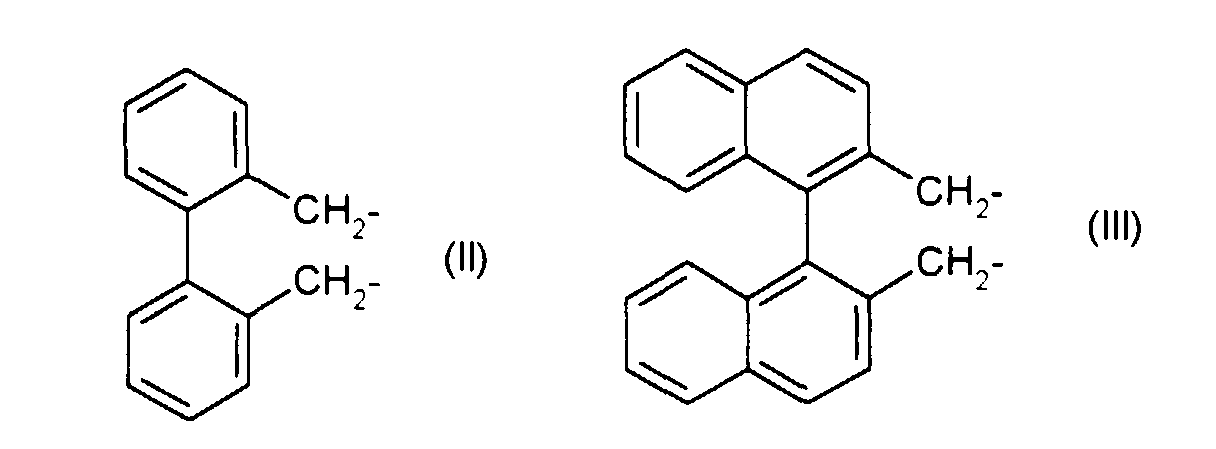
- Procédé selon la revendication 1, caractérisé en ce que l'on utilise un composé de la formule (I), dans laquelle x = 0, y = 1, m = 1 et n = 1 ou x = 1, y = 1, m = (1 ou 2) et n = (1 ou 2), ou un mélange de ces composés.
- Procédé selon la revendication 1 ou 2, caractérisé en ce que l'on utilise un composé de la formule (1), dans laquelle x = 1, y = 1, m = (1 ou 2) et n = (1 ou 2) ou un mélange de ces composés.
- Procédé selon l'une ou plusieurs quelconques des revendications 1 à 3, caractérisé en ce que l'on utilise un composé de la formule (1), dans laquelle les groupe R1 2N et R1 2HN+ sont en position méta ou para, particulièrement en position para par rapport à la liaison qui lie le cycle benzène à l'atome P correspondant, ou un mélange de ces composés.
- Procédé selon l'une ou plusieurs quelconques des revendications 1 à 4, caractérisé en ce que l'on utilise un composé de la formule (1), dans laquelle R1 représente un reste alkyle ayant de 1 à 4 atomes de carbone, en particulier un reste méthyle ou éthyle, de préférence un reste méthyle, ou un mélange de ces composés.
- Procédé selon l'une ou plusieurs quelconques des revendications 1 à 5, caractérisé en ce que l'on utilise un composé de la formule (1), dans laquelle R2 représente un reste alkylène ayant de 1 à 4 atomes de carbone ou un reste -(CH2)2-O-(CH2)2-, en particulier un reste triméthylène ou tétraméthylène, ou un mélange de ces composés.
- Procédé selon l'une ou plusieurs quelconques des revendications 1 à 6, caractérisé en ce que l'on utilise un composé de la formule (I), dans laquelle R3 représente un reste alkyle ayant de 12 à 24 atomes de carbone ou un reste aryle ayant de 6 à 7 atomes de carbone, en particulier un reste alkyle ayant de 14 à 22 atomes de carbone, ou un mélange de ces composés.
- Procédé selon l'une ou plusieurs quelconques des revendications 1 à 7, caractérisé en ce que l'on utilise un composé de la formule (1), dans laquelle A représente un reste -COO- ou un mélange de ces composés.
- Procédé selon l'une ou plusieurs quelconques des revendications 1 à 8, caractérisé en ce que l'on réalise la réaction en présence de 5 à 500, en particulier de 10 à 150 ppm de rhodium, rapportés au composé oléfinique.
- Procédé selon l'une ou plusieurs quelconques des revendications 1 à 9, caractérisé en ce que l'on utilise le composé de la formule (I) et le rhodium dans un rapport de 1 : 1 à 200 : 1, en particulier de 2 : 1 à 10 : 1 (mol de composé de la formule (I) par atome -g de rhodium).
- Procédé selon l'une ou plusieurs quelconques des revendications 1 à 10, caractérisé en ce que l'on utilise comme composé oléfinique un alcène substitué ou non substitué ayant de 2 à 20 atomes de carbone, un diène substitué ou non substitué ayant de 4 à 10 atomes de carbone, un cycloalcène ou un dicycloalcène substitué ou non substitué ayant de 5 à 12 atomes de carbone dans le système cyclique, un ester d'un acide carboxylique insaturé ayant de 3 à 20 atomes de carbone et d'un alcool aliphatique ayant de 1 à 18 atomes de carbone, un ester d'un acide carboxylique saturé ayant de 2 à 20 atomes de carbone et d'un alcool insaturé ayant de 2 à 18 atomes de carbone, un alcool insaturé ou un ester insaturé ayant à chaque fois de 3 à 20 atomes de carbone ou une oléfine araliphatique ayant de 8 à 20 atomes de carbone.
- Procédé selon l'une ou plusieurs quelconques des revendications 1 à 11, caractérisé en ce que l'on utilise comme composé oléfinique le dicyclopentadiène.
- Procédé selon l'une ou plusieurs quelconques des revendications 1 à 12, caractérisé en ce que l'on réalise la réaction à une température de 80 à 180°C, en particulier de 100 à 170°C.
- Procédé selon l'une ou plusieurs quelconques des revendications 1 à 13, caractérisé en ce que l'on réalise la réaction à une pression de 1 à 35, en particulier de 3 à 30 MPa.
- Procédé selon l'une ou plusieurs quelconques des revendications 1 à 14, caractérisé en ce que l'on sépare le mélange réactionnel du catalyseur au moyen d'une distillation, d'une extraction ou d'une filtration sous pression.
- Procédé selon l'une ou plusieurs quelconques des revendications 1 à 15, caractérisé en ce que l'on sépare le mélange réactionnel du catalyseur par filtration sous pression au moyen d'une membrane semi-perméable.
- Procédé selon la revendication 16, caractérisé en ce que l'on utilise comme membrane une membrane de polyamide.
- Procédé selon la revendication 16, caractérisé en ce que l'on utilise comme membrane une membrane de polyaramide.
Applications Claiming Priority (2)
| Application Number | Priority Date | Filing Date | Title |
|---|---|---|---|
| DE19609337 | 1996-03-11 | ||
| DE19609337A DE19609337C2 (de) | 1996-03-11 | 1996-03-11 | Verfahren zur Herstellung von Aldehyden mittels eines Rhodium und substituierte Diphenyldiphosphane enthaltenden Katalysatorsystems |
Publications (2)
| Publication Number | Publication Date |
|---|---|
| EP0795533A1 EP0795533A1 (fr) | 1997-09-17 |
| EP0795533B1 true EP0795533B1 (fr) | 2000-05-31 |
Family
ID=7787834
Family Applications (1)
| Application Number | Title | Priority Date | Filing Date |
|---|---|---|---|
| EP97103609A Expired - Lifetime EP0795533B1 (fr) | 1996-03-11 | 1997-03-05 | Procédé pour la préparation d'aldéhydes à l'aide d'un système catalytique contenant du rhodium et des diphényldiphosphanes substitués |
Country Status (5)
| Country | Link |
|---|---|
| US (1) | US5801291A (fr) |
| EP (1) | EP0795533B1 (fr) |
| JP (1) | JPH107613A (fr) |
| CN (1) | CN1078197C (fr) |
| DE (2) | DE19609337C2 (fr) |
Families Citing this family (3)
| Publication number | Priority date | Publication date | Assignee | Title |
|---|---|---|---|---|
| CA2204676A1 (fr) * | 1996-05-15 | 1997-11-15 | Helmut Bahrmann | Methode de preparation d'aldehydes |
| DE10114868C1 (de) * | 2001-03-26 | 2002-10-31 | Oxeno Olefinchemie Gmbh | Verfahren zur Herstellung von Diphosphinen und deren Verwendung |
| CN113698281B (zh) * | 2020-05-21 | 2023-10-10 | 中国石油化工股份有限公司 | 加氢甲酰化的方法 |
Family Cites Families (6)
| Publication number | Priority date | Publication date | Assignee | Title |
|---|---|---|---|---|
| GB1266180A (fr) * | 1969-12-19 | 1972-03-08 | ||
| US4248802A (en) * | 1975-06-20 | 1981-02-03 | Rhone-Poulenc Industries | Catalytic hydroformylation of olefins |
| US4935550A (en) * | 1988-08-12 | 1990-06-19 | Union Carbide Chemicals And Plastics Company Inc. | Catalytic metal recovery from non-polar organic solutions |
| DE3842819A1 (de) * | 1988-12-20 | 1990-06-21 | Hoechst Ag | Verfahren zur abtrennung von metallorganischen verbindungen und/oder metallcarbonylen aus ihren loesungen in organischen medien |
| CA2121308C (fr) * | 1993-04-19 | 2001-07-24 | Toshihiro Omatsu | Catalyseur a base de rhodium |
| DE4427428A1 (de) * | 1994-08-03 | 1996-02-29 | Basf Ag | Verfahren zur Herstellung von Aldehyden |
-
1996
- 1996-03-11 DE DE19609337A patent/DE19609337C2/de not_active Expired - Fee Related
-
1997
- 1997-03-05 EP EP97103609A patent/EP0795533B1/fr not_active Expired - Lifetime
- 1997-03-05 DE DE59701795T patent/DE59701795D1/de not_active Expired - Fee Related
- 1997-03-07 CN CN97103048A patent/CN1078197C/zh not_active Expired - Fee Related
- 1997-03-07 US US08/813,877 patent/US5801291A/en not_active Expired - Fee Related
- 1997-03-10 JP JP9055146A patent/JPH107613A/ja not_active Withdrawn
Also Published As
| Publication number | Publication date |
|---|---|
| CN1163258A (zh) | 1997-10-29 |
| DE19609337C2 (de) | 1998-11-19 |
| CN1078197C (zh) | 2002-01-23 |
| DE59701795D1 (de) | 2000-07-06 |
| DE19609337A1 (de) | 1997-09-18 |
| EP0795533A1 (fr) | 1997-09-17 |
| US5801291A (en) | 1998-09-01 |
| JPH107613A (ja) | 1998-01-13 |
Similar Documents
| Publication | Publication Date | Title |
|---|---|---|
| EP0157316A2 (fr) | Procédé de préparation d'aldéhydes | |
| EP2217555B1 (fr) | Procédé de production d'aldéhydes | |
| DE10108475A1 (de) | Verfahren zur Herstellung von Aldehyden | |
| DE4242725A1 (de) | Verfahren zur Herstellung von höheren, vorwiegend unverzweigten, primären Alkoholen | |
| EP0811424A2 (fr) | Systèmes catalytiques à base de complexes de Rhodium avec des ligands diphosphiniques et son utilisation pour la préparation d'aldéhydes | |
| EP0885183B1 (fr) | Procede de preparation d'aldehydes par hydroformylation d'olefines | |
| DE3726128A1 (de) | Verfahren zur herstellung von aldehyden | |
| EP0269011A1 (fr) | Procédé de préparation d'aldéhydes | |
| DE19609337C2 (de) | Verfahren zur Herstellung von Aldehyden mittels eines Rhodium und substituierte Diphenyldiphosphane enthaltenden Katalysatorsystems | |
| EP1273564B1 (fr) | Procédé pour la préparation d'aldéhydes | |
| EP1017492B1 (fr) | Procede de preparation d'aldehydes par hydroformylation | |
| DE10327434A1 (de) | Verfahren zur Hydroformylierung von olefinisch ungesättigten Verbindungen, insbesondere Olefinen in Gegenwart cyclischer Kohlensäureester | |
| EP0160249B1 (fr) | Procédé de préparation d'aldéhydes | |
| DE19630536C2 (de) | Katalysator und dessen Verwendung für die Herstellung von Aldehyden durch Hydroformylierung olefinischer Verbindungen | |
| EP0186075B1 (fr) | Procédé de préparation de 8- et 9-formyl-tricyclo-(5,2,1,0, 2,6)-décène-3 | |
| EP1017660B1 (fr) | Procede de production d'aldehydes par hydroformylation en presence d'ether couronne | |
| EP0796836A1 (fr) | Procédé pour la préparation d'aldéhydes | |
| DE102005019237B4 (de) | Verfahren zur Hydroformylierung von substituierten Allylbenzolen | |
| DE10163347A1 (de) | Verfahren zur Hydroformylierung in Gegenwart eines polymeren Liganden mit Phosphacyclohexan-Strukturelementen | |
| DE2456739C3 (de) | Verfahren zur Herstellung von Aldehyden | |
| EP0909218A1 (fr) | Catalyseur et procede pour la preparation d'aldehydes en presence de ce catalyseur | |
| DE10133072A1 (de) | Verfahren zur Herstellung von Aldehyden | |
| DE19632602A1 (de) | Verfahren zur Herstellung von Aldehyden | |
| DE19940249A1 (de) | Verfahren zur Herstellung von Aldehyden |
Legal Events
| Date | Code | Title | Description |
|---|---|---|---|
| PUAI | Public reference made under article 153(3) epc to a published international application that has entered the european phase |
Free format text: ORIGINAL CODE: 0009012 |
|
| AK | Designated contracting states |
Kind code of ref document: A1 Designated state(s): DE FR GB IT |
|
| 17P | Request for examination filed |
Effective date: 19980317 |
|
| RAP1 | Party data changed (applicant data changed or rights of an application transferred) |
Owner name: CELANESE GMBH |
|
| GRAG | Despatch of communication of intention to grant |
Free format text: ORIGINAL CODE: EPIDOS AGRA |
|
| GRAG | Despatch of communication of intention to grant |
Free format text: ORIGINAL CODE: EPIDOS AGRA |
|
| GRAH | Despatch of communication of intention to grant a patent |
Free format text: ORIGINAL CODE: EPIDOS IGRA |
|
| 17Q | First examination report despatched |
Effective date: 19990817 |
|
| GRAH | Despatch of communication of intention to grant a patent |
Free format text: ORIGINAL CODE: EPIDOS IGRA |
|
| RAP1 | Party data changed (applicant data changed or rights of an application transferred) |
Owner name: CELANESE CHEMICALS EUROPE GMBH |
|
| GRAA | (expected) grant |
Free format text: ORIGINAL CODE: 0009210 |
|
| AK | Designated contracting states |
Kind code of ref document: B1 Designated state(s): DE FR GB IT |
|
| REF | Corresponds to: |
Ref document number: 59701795 Country of ref document: DE Date of ref document: 20000706 |
|
| ITF | It: translation for a ep patent filed | ||
| GRAH | Despatch of communication of intention to grant a patent |
Free format text: ORIGINAL CODE: EPIDOS IGRA |
|
| ET | Fr: translation filed | ||
| GBT | Gb: translation of ep patent filed (gb section 77(6)(a)/1977) |
Effective date: 20000901 |
|
| PLBE | No opposition filed within time limit |
Free format text: ORIGINAL CODE: 0009261 |
|
| STAA | Information on the status of an ep patent application or granted ep patent |
Free format text: STATUS: NO OPPOSITION FILED WITHIN TIME LIMIT |
|
| 26N | No opposition filed | ||
| REG | Reference to a national code |
Ref country code: GB Ref legal event code: IF02 |
|
| PGFP | Annual fee paid to national office [announced via postgrant information from national office to epo] |
Ref country code: GB Payment date: 20020222 Year of fee payment: 6 |
|
| PGFP | Annual fee paid to national office [announced via postgrant information from national office to epo] |
Ref country code: DE Payment date: 20020226 Year of fee payment: 6 |
|
| PGFP | Annual fee paid to national office [announced via postgrant information from national office to epo] |
Ref country code: FR Payment date: 20020315 Year of fee payment: 6 |
|
| PG25 | Lapsed in a contracting state [announced via postgrant information from national office to epo] |
Ref country code: GB Free format text: LAPSE BECAUSE OF NON-PAYMENT OF DUE FEES Effective date: 20030305 |
|
| PG25 | Lapsed in a contracting state [announced via postgrant information from national office to epo] |
Ref country code: DE Free format text: LAPSE BECAUSE OF NON-PAYMENT OF DUE FEES Effective date: 20031001 |
|
| GBPC | Gb: european patent ceased through non-payment of renewal fee |
Effective date: 20030305 |
|
| PG25 | Lapsed in a contracting state [announced via postgrant information from national office to epo] |
Ref country code: FR Free format text: LAPSE BECAUSE OF NON-PAYMENT OF DUE FEES Effective date: 20031127 |
|
| REG | Reference to a national code |
Ref country code: FR Ref legal event code: ST |
|
| PG25 | Lapsed in a contracting state [announced via postgrant information from national office to epo] |
Ref country code: IT Free format text: LAPSE BECAUSE OF NON-PAYMENT OF DUE FEES;WARNING: LAPSES OF ITALIAN PATENTS WITH EFFECTIVE DATE BEFORE 2007 MAY HAVE OCCURRED AT ANY TIME BEFORE 2007. THE CORRECT EFFECTIVE DATE MAY BE DIFFERENT FROM THE ONE RECORDED. Effective date: 20050305 |