EP0800916B1 - Feuilles multicouches thermoplastiques en polyuréthane et procédé de leur fabrication - Google Patents
Feuilles multicouches thermoplastiques en polyuréthane et procédé de leur fabrication Download PDFInfo
- Publication number
- EP0800916B1 EP0800916B1 EP97105179A EP97105179A EP0800916B1 EP 0800916 B1 EP0800916 B1 EP 0800916B1 EP 97105179 A EP97105179 A EP 97105179A EP 97105179 A EP97105179 A EP 97105179A EP 0800916 B1 EP0800916 B1 EP 0800916B1
- Authority
- EP
- European Patent Office
- Prior art keywords
- film
- film according
- tpu
- layer
- shore
- Prior art date
- Legal status (The legal status is an assumption and is not a legal conclusion. Google has not performed a legal analysis and makes no representation as to the accuracy of the status listed.)
- Expired - Lifetime
Links
Images
Classifications
-
- B—PERFORMING OPERATIONS; TRANSPORTING
- B32—LAYERED PRODUCTS
- B32B—LAYERED PRODUCTS, i.e. PRODUCTS BUILT-UP OF STRATA OF FLAT OR NON-FLAT, e.g. CELLULAR OR HONEYCOMB, FORM
- B32B27/00—Layered products comprising a layer of synthetic resin
- B32B27/40—Layered products comprising a layer of synthetic resin comprising polyurethanes
-
- B—PERFORMING OPERATIONS; TRANSPORTING
- B32—LAYERED PRODUCTS
- B32B—LAYERED PRODUCTS, i.e. PRODUCTS BUILT-UP OF STRATA OF FLAT OR NON-FLAT, e.g. CELLULAR OR HONEYCOMB, FORM
- B32B27/00—Layered products comprising a layer of synthetic resin
- B32B27/06—Layered products comprising a layer of synthetic resin as the main or only constituent of a layer, which is next to another layer of the same or of a different material
- B32B27/08—Layered products comprising a layer of synthetic resin as the main or only constituent of a layer, which is next to another layer of the same or of a different material of synthetic resin
-
- B—PERFORMING OPERATIONS; TRANSPORTING
- B32—LAYERED PRODUCTS
- B32B—LAYERED PRODUCTS, i.e. PRODUCTS BUILT-UP OF STRATA OF FLAT OR NON-FLAT, e.g. CELLULAR OR HONEYCOMB, FORM
- B32B27/00—Layered products comprising a layer of synthetic resin
- B32B27/18—Layered products comprising a layer of synthetic resin characterised by the use of special additives
- B32B27/20—Layered products comprising a layer of synthetic resin characterised by the use of special additives using fillers, pigments, thixotroping agents
-
- B—PERFORMING OPERATIONS; TRANSPORTING
- B32—LAYERED PRODUCTS
- B32B—LAYERED PRODUCTS, i.e. PRODUCTS BUILT-UP OF STRATA OF FLAT OR NON-FLAT, e.g. CELLULAR OR HONEYCOMB, FORM
- B32B2309/00—Parameters for the laminating or treatment process; Apparatus details
- B32B2309/08—Dimensions, e.g. volume
- B32B2309/10—Dimensions, e.g. volume linear, e.g. length, distance, width
- B32B2309/105—Thickness
Definitions
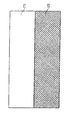
- This invention relates to at least two-layer elastic thermoplastic Films consisting of thermoplastic polyurethanes, at least one Layer of thermoplastic polyurethane elastomers made of aliphatic Diisocyanates were synthesized and at least one layer of thermoplastic Polyurethane elastomers made from aromatic diisocyanates were there.
- this invention relates to processes for their preparation as well as their use.
- this multilayer structure is ideal for elastic structures, that are exposed to ultraviolet light. Due to the dominant resetting behavior the aliphatic material component can be according to the invention Layer structures of composite films for applications can be used where rapid reset is important.
- TPU Thermoplastic polyurethanes (TPU), their manufacture, processing and Application are comprehensive in Becker, Braun (ed.): Kunststoff-Handbuch, volume 7, Polyurethane, Hanser Verlag, Kunststoff, 1983.
- Single-layer films made of TPU, process for their production and their use are known from the prior art, for example from EP 0 308 683 (BF Goodrich), EP 0 526 858 (Elf Atochem), EP 0 571 868 (Wolff Walsrode) or EP 0 603 680 (Wolff Walsrode).
- the ones in these writings described structures can be used as a higher melting layer or layers integrate in duplicate films or are already known in their kind Double foils have been integrated, e.g. in EP 0 024 740 (Plate Bonn).
- the production of TPU films using is essential incompatible polymers as matting agents in TPU elastomers e.g. described in DE 41 26 499 (Elastogran).
- thermoplastic elastomers aromatic TPUs however, often show a relatively slow expansion Reset to the initial state. Disadvantage of the known films aromatic TPU is also a low color fastness, which is particularly important in Coloring with light shades can be observed. Examples are white ones Highlighted foils, which under the influence of light a clear yellow discoloration Experienced. This interferes with, for example, the production of football sleeves from TPU films, in which yellowing is interpreted as supposed aging.
- Aliphatic TPUs of the same Shore hardness show faster after stretching Reset to the initial state, offer good lightfastness and do not tend to yellow.
- the aliphatic TPU have disadvantages in Range of strengths and heat levels. Especially the latter Circumstances affect the further processing of foils e.g. to Football cases unfavorably.
- Aliphatic TPU are also significantly more expensive than that known aromatic TPU. Due to often lack of melt strength in addition, processing into blown films on thin layers - often under 200 ⁇ m - limited.
- the object of the present invention is now a film to provide with higher heat resistance and sufficient melt strength. Film properties such as excellent color fastness, which must characterize at least one side of the film.
- the required foils to be cheaper to produce than for exclusively Aliphatic TPU existing foils is currently possible.
- the production should the foils are done in a one-step process.
- the multilayer structures according to the invention have at least one per layer TPU resin.
- These TPU resins are characterized in that they are made of linear, thermoplastically processable, segmented polyurethane molecules are. These polyurethanes are mainly made up of alternating blocks formed by soft and hard segments.
- the TPU resins suitable according to the invention preferably have weight average molecular weights between 50,000 and 150000 g / mol.
- the building blocks for the synthesis of the hard segments of the TPU resins can from the known for the production of TPU film raw materials Diisocyanate and diol components can be selected.
- the hard segments of the TPU resins are made from chain extensions A) and Diisocyanates B) formed.
- the soft segments of the TPU resins are made from long-chain compounds with at least 1.8 Zerewitinoff-active groups C) educated.
- Short-chain bifunctional fabrics are used as chain extenders A), whose molecular weight is between 18 and 350 g / mol.
- Short-chain ones are suitable Diols.
- diamines or diamine / diol multicomponent systems is possible.
- Divalent values are preferred Alcohols, such as, for example, ethylene glycol, 1,2-propylene glycol, 1,4-butylene glycol, 2,3-butylene glycol, 1,5 pentanediol, 1,6 hexanediol or 1,8-octanediol.
- Suitable diisocyanates B) for the aliphatic layer (1) come from the Group B1) of the aliphatic or cycloaliphatic diisocyanates.
- Group B1) includes diisocyanates such as, for example, 1,4-tetramethylene diisocyanate, 1,6-hexamethylene diisocyanate, cyclohexane-1,3- and -1,4-diisocyanate, isophorone diisocyanate and in particular hydrogenated diphenylmethane-2,4'- and / or -4,4'-diisocyanate - generally referred to as H 12 -MDI. Mixtures of the diisocyanates mentioned are also suitable.
- diisocyanates such as, for example, 1,4-tetramethylene diisocyanate, 1,6-hexamethylene diisocyanate, cyclohexane-1,3- and -1,4-diisocyanate, isophorone diisocyanate and in particular hydrogenated diphenylmethane-2,4'- and / or -4,4'-diisocyanate - generally referred to as H 12 -MD
- aromatic TPU resins of layer (2) find aromatic and / or partially aromatic diisocyanates B2) use.
- Suitable group B2) especially naphthylene-1,5-diisocyanate, 2,4- and 2,6-diisocyanatotoluene diphenylmethane-2,4'- and / or -4,4'-diisocyanate but also diisocyanate mixtures.
- ether or ester polyols are preferably used.
- the average molecular weight this polyol C) is preferably between 400 and 10000 g / mol.
- hydroxyl-terminated polyesters are e.g. reaction products of polyhydric, preferably dihydric alcohols with polyhydric, preferably dibasic carboxylic acids. Instead of the free polycarboxylic acids can also the corresponding carboxylic acid anhydrides or carboxylic acid esters be used.
- the carboxylic acids are preferably aliphatic in nature.
- Hydroxyl group-terminated polyesters of adipic acid and polyvalent are preferred Alcohols such as Ethylene glycol, 1,2- or 1,3-propylene glycol, 1,4-butylene glycol, 2,3-butylene glycol, 1,5 pentanediol, 1,6 hexanediol or 1,8-octanediol.
- lactones e.g. -Caprolactone
- hydroxycarboxylic acids e.g. -Hydroxycaproic acid
- polyethers that are suitable according to the invention are e.g. but also by polymerizing epoxides such as ethylene oxide or propylene oxide Compounds obtained tetrahydrofuran called. Even those known in the art Polyether carbonate compounds, which are produced by the implementation of i.a. Oligoethers connections obtained with phosgene are for the multilayer films according to the invention suitable as a soft segment component.
- the outer layer (1) of the multilayer film according to the invention is made of at least an aliphatic TPU resin constructed from at least one predominantly linear thermoplastic polyurethane elastomers, its longer chain Diol component is a polyester or polyether and its Shore hardness in the range of 75-95 A, preferably 85-95 A according to DIN 53 505.
- Suitable TPU resins are, for example, under the trade names Morthane, Tecoflex or Texin available.
- the second layer (2) is formed from aromatic TPU.
- This layer contains in a particularly preferred embodiment, polymers with Shore hardnesses less than 50 D, each determined according to DIN 53 505.
- the built from aromatic thermoplastic polyurethane elastomers Layer (2) is advantageously made of at least one thermoplastic polyurethane elastomer resin formed, preferably predominantly from at least one linear thermoplastic polyurethane elastomers, its longer chain diol component is a polyester or polyether and its Shore hardness in one range of preferably 75-95 A, particularly preferably 85-95 A, determined according to DIN 53 505.
- Suitable thermoplastic polyurethanes for the layer (2) are, for example under the trade names Elastollan, Estane, Desmopan, Pearlthane, Pellethane or Texin available.
- a high softening area on the Kofler bench is not found in the range of the values determined for the aliphatic component, but in Range of the softening aromatic component is.
- This is in a clear contrast to the double foils known from their kind from higher and lower softening layer, as described, for example, in EP 0 024 740 (Plate Bonn) are described.
- the aliphatic / aromatic multilayer structures described here do not stand out like those described in EP 0 024 740 Super sticky structures, so that the aliphatic aromatic
- the higher softening layer built up the function of a tough support can take over.
- the usual additives contained in the films according to the invention can be described, for example, by Gumbleter and Müller in: Plastic additives, Carl Hanser Verlag Kunststoff, 3rd edition (1989).
- the additives will be preferably in predispersed form, i.e. as masterbatches or additive concentrates, added to the TPU resins intended for film production. This type of addition enables easy handling and simple even dosing of the additive components.
- Films with a total thickness between are particularly suitable according to the invention 50 ⁇ m and 400 ⁇ m.
- the thickness of the layer of aliphatic TPU (1) is preferably between 20 ⁇ m and 250 ⁇ m and the thickness of the aromatic TPU Layer (2) preferably between 20 microns and 250 microns.
- the multilayer film of the invention is particularly suitable the common thermal forming processes for processing plastics multilayer fabrics.
- the production by coextrusion would be too name, which is preferably carried out by the blown film process.
- thermoplastic resins suitable for the digestion of thermoplastic resins are in their structure e.g. by Wortberg, Mahlke and Effen in: Kunststoffe, 84 (1994) 1131-1138, by Pearson in: Mechanics of Polymer Processing, Elsevier Publishers, New York, 1985 or Davis Standard in: Paper, Film & Foil Converter 64 (1990) pp. 84-90.
- Tools to shape the melt too Slides include by Michaeli in: Extrusion-Werkzeuge, Hanser Verlag, Kunststoff Explained in 1991.
- the films of the invention can with the known physical and chemical treatment methods such as corona treatment be modified on both sides in their surface properties.
- the films according to the invention are suitable for permanent use in the colored state flexible and colourfast but also abrasion-resistant outdoor applications.
- the use as outer casings of flexible containers is preferred, in particular of air cushions.
- the film according to the invention can also be inserted here be provided on both sides with carrier or reinforcement textiles.
- the films are particularly suitable for applications in the form of Air cushion damping system envelopes. Likewise find the invention Films as wrapping for air cushion buoyancy systems, for example Inflatable boats or life rafts, a preferred application.
- Another application of the films according to the invention is in the area of the outer casings for balls, especially sports balls, particularly preferred to find soccer balls.
- layer structures are to be selected, whose TPU resin starting materials made up of polymers with ether soft segments are that have a better hydrolysis stability compared to the ester-based Own TPU.
- a film was produced, the outer layer (1) of which was formed from a commercially available aliphatic ether TPU with Shore A hardness 87, measured according to DIN 53 505, corresponding to a hardness of approx. 33 Shore D.
- This TPU had a density of 1.08 g / cm 3 and a melt flow index (MFI) of 18 g / 10 min, measured according to DIN 53 735 at 160 ° C and a test load of 10 kg.
- MFI melt flow index
- the usual additives such as 2% by weight of silica as a spacer and 0.2% by weight of waxes were added to this 90 ⁇ m thick layer via a TPU additive concentrate. All components used for this layer were digested together in an extruder.
- the other outer layer (2) was formed from aromatic thermoplastic ether TPU with a Shore A hardness of 85, corresponding to a Shore D hardness of 32.
- This TPU had a density of 1.12 g / cm 3 and a melt flow index (MFI) of 18 g / 10 min, measured according to DIN 53 735 at 190 ° C. and a test load of 8.7 kg.
- MFI melt flow index
- the polymer resin used to form this 260 ⁇ m thick layer of aromatic TPU was plasticized together with 2% by weight of silica and 0.2% by weight of wax, which were metered in via a masterbatch, in a further extruder.
- the extrusion equipment was operated at temperatures between 160 ° C and 190 ° C operated.
- the two melt streams were in a blown film head with one Processing temperature of 190 ° C superimposed and through an annular gap nozzle discharged with a diameter of 400 mm. By blowing with air the annular melt plume was cooled, then laid flat, in the Trimmed edge area and wound up in the form of two sheets of film.
- a two-layer white film was produced analogously to Example A. However, 1.8% TiO 2 was added to each of the layers, each realized by adding masterbatch to the raw material mixture, with a weight fraction of about 60% by weight TiO 2 .
- Example A Using the blown film tool described in Example A, a film was produced, the two layers (1) and (2) of which were composed equally.
- Their matrix resin consisted of aromatic ether TPU of Shore A hardness 85, corresponding to a Shore D hardness of 32. It became a TPU resin with a density of 1.12 g / cm 3 and a melt flow index (MFI) of 18 g / 10 min, measured according to DIN 53 735 at 190 ° C and a test load of 8.7 kg. Before the melting, 2% by weight of silica and 0.2% by weight of wax were added to the matrix resin of the 350 ⁇ m thick film using a TPU additive concentrate. All components used for this film were melted together in an extruder.
- MFI melt flow index
- the extrusion equipment was operated at temperatures between 160 ° C and 190 ° C operated.
- the two melt streams were in a blown film head with one Processing temperature of 190 ° C superimposed and through an annular gap nozzle discharged with a diameter of 400 mm. By blowing with air the annular melt plume was cooled, then laid flat, in the Trimmed edge area and wound up in the form of two sheets of film.
- a white film was produced analogously to Comparative Example 1. It had a proportion of 1.8% by weight of TiO 2 which was achieved by adding masterbatch to the matrix resin.
- Example A Using the blown film tool described in Example A, a film was produced, the two layers (1) and (2) of which were composed equally.
- Their matrix resin consisted of aliphatic ether TPU or Shore A hardness 87, measured according to DIN 53 505, corresponding to a hardness of approx. 33 Shore D.
- the extrusion equipment was operated at temperatures between 160 ° C and 185 ° C operated.
- the two melt streams were in a blown film head with one Processing temperature of 180 ° C superimposed and through an annular gap nozzle discharged with a diameter of 400 mm.
- the annular melt plume was cooled in air, then laid flat, in the Trimmed edge area and wound up in the form of two sheets of film.
- the bond liability was based on the examples and comparative examples manufactured samples checked immediately after production. An exam according to DIN 53 357 was not possible because the multi-layer structures did not change had their layers separated.
- the residual elongation was determined using the examples and comparative examples samples produced after stretching to 300%. For this, a 15 mm wide film strip pulled with a tensile testing machine so that two in Markings made from 100 mm to a distance of 400 mm have been stretched.
- the softening range gives an indication of the thermal stability behavior of the slides.
- the place where the film tears and the rest of the film sticks to the Kofler bench is the Softening point. Five measurements were carried out per sample. Of the five values in a row become the lowest and highest values as the lower and upper limit of the softening range specified.
- the Xenotest rapid weathering gives an impression of material changes under the influence of UV light.
- the samples of Examples and comparative examples cut strips on a sample carrier assembled and in a Xenotest 150 S rapid weathering device from Heraeus Irradiated with UV light over 60 h at 60% relative humidity. The evaluation took place after visual comparison with non-irradiated reserve samples of the used Films.
- the table below shows characteristic data of the films produced in the context of the examples and comparative examples. These clearly show that the films according to the invention described in the examples have an advantage over the films shown in the comparative examples.
- Properties of the films produced in the examples and comparative examples property Determination method unit
- Example A Comparative example 1 Comparative example 2 Comparative example 3 Liability immediately DIN 53 357 N / 15mm Layers cannot be separated Layers cannot be separated ./. ./. ./. Tear strength. crosswise DIN 53455-7-4 N / 15mm 110 92 118 98 107 Elongation at break.
Landscapes
- Laminated Bodies (AREA)
- Extrusion Moulding Of Plastics Or The Like (AREA)
- Manufacture Of Macromolecular Shaped Articles (AREA)
Claims (10)
- Feuille multicouche avec au moins une couche externe caractérisée en ce qu'elle est formée essentiellement de polyuréthane aliphatique thermoplastique avec des duretés Shore de 75-95 Shore A mesurées selon DIN 53 505 et présente au moins une couche externe qui est formée essentiellement de polyuréthane thermoplastique aromatique et dont les couches ont été liées ensemble par de la chaleur de telle sorte qu'une séparation de la structure multicouche ne soit pas possible sans la destruction d'au moins une des couches.
- Feuille selon la revendication 1, caractérisée en ce que les polyuréthanes-résines présentent des duretés Shore de 85-95 Shore A.
- Feuille multicouche selon les revendications 1 et/ou 2, caractérisée en ce qu'au moins une des couches contienne au moins une substance choisie parmiI. des agents anti-adhérence de contact, des agents d'écartement inorganiques ou organiques,II. des lubrifiants ou des agents de démoulage,III des pigments inorganiques ou organiques ou des charges etIV. des stabilisateurs.
- Procédé pour la préparation d'une feuille selon au moins l'une des revendications précédentes, caractérisé en ce que la feuille a été préparée par un procédé de co-extrusion.
- Procédé pour la préparation d'une feuille selon au moins l'une quelconque des revendications précédentes, caractérisé en ce que la feuille a été préparée par co-extrusion de feuille de soufflage.
- Feuille selon au moins l'une quelconque des revendications 1 à 3, caractérisée en ce que la feuille présente une épaisseur globale comprise entre 50 µm et 400 µm, l'épaisseur de la couche constituée de TPU aliphatique (1) étant comprise entre 20 µm et 250 µm et l'épaisseur de la couche de TPU aromatique (2) étant comprise entre 20 µm et 250 µm.
- Feuille selon au moins l'une quelconque des revendications 1 à 3 ou 6, caractérisée en ce que l'on utilise comme polyuréthanes-résines thermoplastiques des polymères avec des segments mous d'éther.
- Utilisation d'une feuille selon au moins l'une quelconque des revendications 1 à 3 ou 6 et 7 comme constituant d'enveloppe solide en couleur, flexible et résistant à l'abrasion sur de longues durées pour des coussins ou des bulles gonflables.
- Utilisation d'une feuille selon au moins l'une quelconque des revendications 1 à 3 ou 6 et 7 comme constituant d'enveloppe de systèmes de chambres flexibles.
- Utilisation d'une feuille selon au moins l'une quelconque des revendications 1 à 3 ou 6 et 7 comme constituant d'enveloppe de ballons manipulés au pied, de canots pneumatiques ou d'íles de sauvetage.
Applications Claiming Priority (2)
| Application Number | Priority Date | Filing Date | Title |
|---|---|---|---|
| DE19614091A DE19614091A1 (de) | 1996-04-09 | 1996-04-09 | Mehrschichtige thermoplastische Folien aus Polyurethanen und Verfahren zu deren Herstellung |
| DE19614091 | 1996-04-09 |
Publications (3)
| Publication Number | Publication Date |
|---|---|
| EP0800916A2 EP0800916A2 (fr) | 1997-10-15 |
| EP0800916A3 EP0800916A3 (fr) | 1998-09-09 |
| EP0800916B1 true EP0800916B1 (fr) | 2004-06-02 |
Family
ID=7790846
Family Applications (1)
| Application Number | Title | Priority Date | Filing Date |
|---|---|---|---|
| EP97105179A Expired - Lifetime EP0800916B1 (fr) | 1996-04-09 | 1997-03-27 | Feuilles multicouches thermoplastiques en polyuréthane et procédé de leur fabrication |
Country Status (2)
| Country | Link |
|---|---|
| EP (1) | EP0800916B1 (fr) |
| DE (2) | DE19614091A1 (fr) |
Cited By (1)
| Publication number | Priority date | Publication date | Assignee | Title |
|---|---|---|---|---|
| EP4509316A1 (fr) * | 2023-08-08 | 2025-02-19 | Bestway Inflatables & Material Corp. | Appareil de fabrication de feuille et procédé de fabrication de feuille pour une feuille d'un produit gonflable |
Families Citing this family (12)
| Publication number | Priority date | Publication date | Assignee | Title |
|---|---|---|---|---|
| DE19803050A1 (de) * | 1998-01-28 | 1999-07-29 | Wolff Walsrode Ag | Selbsttragende Schmelzklebefolie, Verfahren zu ihrer Herstellung sowie ihre Verwendung |
| DE19806452C2 (de) * | 1998-02-17 | 2001-07-05 | Nordenia Technologies Gmbh | Thermoplastische Folie mit elastischen Eigenschaften |
| DE19832469A1 (de) | 1998-07-18 | 2000-01-20 | Kautex Textron Gmbh & Co Kg | Verfahren zum Herstellen einer Abdeckhaut für die Instrumententafel eines Kraftfahrzeuges |
| DE10007884B4 (de) * | 2000-02-21 | 2004-08-12 | Benecke-Kaliko Ag | Druck- und vakuumverformbare, genarbte Verbundfolie, Verfahren zu deren Herstellung und ihre Verwendung |
| US6998084B2 (en) | 2001-02-16 | 2006-02-14 | Daimlerchrysler Corporation | Co-extruded pigmented/clear coated polymeric coating for an article such as automotive exterior body panels |
| DE10327453A1 (de) * | 2003-06-18 | 2005-01-27 | Bayer Materialscience Ag | Verbundsysteme zur Herstellung von dekorierten Kunststoffformteilen und ein Verfahren zur Herstellung der Verbundsysteme |
| DE102010009230A1 (de) | 2010-02-25 | 2011-08-25 | Giesecke & Devrient GmbH, 81677 | Hochflexibles Folienverbundmaterial und seine Verwendung in Kartenkörpern |
| MY171968A (en) * | 2013-04-29 | 2019-11-09 | Basf Se | Elastomer pmma layered composites having improved properties |
| EP3106297A1 (fr) * | 2015-06-16 | 2016-12-21 | TMG - Tecidos Plastificados e Outros Revestimentos Para a Indústria Automóvel, SA | Matériau composite flexible, son procédé d'obtention et ses utilisations |
| AT518103A2 (de) | 2015-12-18 | 2017-07-15 | Schaefer Philipp | Verfahren zur Herstellung einer Beschichtungsfolie und eines Verbundmaterials |
| DE102017129900A1 (de) | 2017-12-14 | 2019-06-19 | Ewald Dörken Ag | Bauverbundfolie |
| CN110757923A (zh) * | 2019-10-28 | 2020-02-07 | 中纺新材料科技有限公司 | 一种高性能气胀式救生衣囊体材料及其制备方法 |
Family Cites Families (6)
| Publication number | Priority date | Publication date | Assignee | Title |
|---|---|---|---|---|
| GB1240664A (en) * | 1968-04-20 | 1971-07-28 | Dunlop Holdings Ltd | Flexible sheet material |
| DE3911066A1 (de) * | 1989-04-06 | 1990-10-18 | Bayer Ag | Mehrschichtfolien fuer crash-pad-anwendung |
| DE4022741A1 (de) * | 1990-07-18 | 1992-01-23 | Basf Ag | Mehrschichtige polyurethanfolien und ihre verwendung zur herstellung von deckschichten |
| DE4315663A1 (de) * | 1993-05-11 | 1994-11-17 | Wolff Walsrode Ag | Flexible siegelfähige Mehrschichtfolie aus thermoplastischen Elastomeren mit innenliegender Sperrschicht |
| DE69529255T2 (de) * | 1994-08-31 | 2009-09-17 | Nike International Ltd., Beaverton | Gas-aufgeblasene Blase zum Polstern |
| DE19525971A1 (de) * | 1995-07-17 | 1997-01-23 | Wolff Walsrode Ag | Trennschichtfreie Dublofolie, Verfahren zu ihrer Herstellung sowie ihre Verwendung |
-
1996
- 1996-04-09 DE DE19614091A patent/DE19614091A1/de not_active Withdrawn
-
1997
- 1997-03-27 DE DE59711681T patent/DE59711681D1/de not_active Expired - Lifetime
- 1997-03-27 EP EP97105179A patent/EP0800916B1/fr not_active Expired - Lifetime
Cited By (1)
| Publication number | Priority date | Publication date | Assignee | Title |
|---|---|---|---|---|
| EP4509316A1 (fr) * | 2023-08-08 | 2025-02-19 | Bestway Inflatables & Material Corp. | Appareil de fabrication de feuille et procédé de fabrication de feuille pour une feuille d'un produit gonflable |
Also Published As
| Publication number | Publication date |
|---|---|
| EP0800916A2 (fr) | 1997-10-15 |
| DE59711681D1 (de) | 2004-07-08 |
| DE19614091A1 (de) | 1997-10-16 |
| EP0800916A3 (fr) | 1998-09-09 |
Similar Documents
| Publication | Publication Date | Title |
|---|---|---|
| EP0800916B1 (fr) | Feuilles multicouches thermoplastiques en polyuréthane et procédé de leur fabrication | |
| DE2051027C3 (de) | Verfahren zur Herstellung von optisch klaren thermoplastischen Polyurethanen | |
| DE102009052044B3 (de) | Einseitig mattierte Folien und deren Verwendung | |
| EP1204688B1 (fr) | Polyurethannes thermoplastiques | |
| EP0004939A2 (fr) | Application de polyuréthanes thermoplastiques pour l'usinage dans des extrudeuses et/ou sur des calandres | |
| DE4442380A1 (de) | Wasserdichte und atmungsaktive Flächengebilde aus Harzmischungen thermoplastischer Polyurethane | |
| EP0417581A2 (fr) | ProcÀ©dé de préparation de matériaux polymeres contenant des polyuréthanes thermoplastiques | |
| WO2011157691A1 (fr) | Procédé de préparation de mélanges de polylactides (pla) et de polyuréthanes thermoplastiques (tpu) | |
| EP0842768B1 (fr) | Feuille souple multicouche et son utilisation | |
| WO2017108920A1 (fr) | Matériau tpu rétractable | |
| DE2415457C2 (de) | Masse aus thermoplastischem Polyurethan-Elastomer, chloriertem Polyäthylen und zusätzlichem Polyäthylenharz sowie ihre Verwendung | |
| WO2011120895A1 (fr) | Encollage à la colle fusible au moyen de polyuréthane thermoplastique | |
| EP2991830B1 (fr) | Composites feuilletés élastomère-ppma à propriétés améliorées | |
| DE10017817A1 (de) | Weichelastische Mehrschichtfolie und ihre Verwendung zur Herstellung geschlossener Füllkörper | |
| EP1884358B1 (fr) | Procédé de préparation d'un film thermoplastique multicouche en polyurethane | |
| DE102020100113A1 (de) | Zusammensetzung für Auto-Innenhaut, Herstellungsverfahren dafür und unter Verwendung derselben hergestellte Auto-Innenhaut | |
| EP3562648B1 (fr) | Procédé de fabrication additive d'un objet comprenant un matériau stratifié avec des couches différentes | |
| DE19630231A1 (de) | Kompostierbare Trägerbahn | |
| DE19652037A1 (de) | Elastische Folien mit verbesserter biologischer Abbaubarkeit sowie Verfahren für ihre Herstellung | |
| EP0111682B1 (fr) | Elastomères de polyuréthane facilement démoulables, exempts de blocking, procédé pour leur fabrication et leur utilisation | |
| EP2181844A2 (fr) | Feuille multicouche thermoplastique pour le revêtement de tissu et son procédé de fabrication | |
| EP0795575A2 (fr) | Feuille de mélange de terpolymère d'acrylat et son utilisation | |
| EP4630242A1 (fr) | Construction multicouche ayant de bonnes propriétés pour l'impression | |
| DE19804713A1 (de) | Latexfreie Kunststoffmischung | |
| EP0387590A2 (fr) | Compositions de moulage modifiées résistantes au choc de polyuréthanes thermoplastiques, procédé de leur préparation et leur utilisation |
Legal Events
| Date | Code | Title | Description |
|---|---|---|---|
| PUAI | Public reference made under article 153(3) epc to a published international application that has entered the european phase |
Free format text: ORIGINAL CODE: 0009012 |
|
| AK | Designated contracting states |
Kind code of ref document: A2 Designated state(s): CH DE FR GB IT LI |
|
| PUAL | Search report despatched |
Free format text: ORIGINAL CODE: 0009013 |
|
| AK | Designated contracting states |
Kind code of ref document: A3 Designated state(s): CH DE FR GB IT LI |
|
| 17P | Request for examination filed |
Effective date: 19990309 |
|
| 17Q | First examination report despatched |
Effective date: 20030228 |
|
| GRAP | Despatch of communication of intention to grant a patent |
Free format text: ORIGINAL CODE: EPIDOSNIGR1 |
|
| GRAS | Grant fee paid |
Free format text: ORIGINAL CODE: EPIDOSNIGR3 |
|
| GRAA | (expected) grant |
Free format text: ORIGINAL CODE: 0009210 |
|
| AK | Designated contracting states |
Kind code of ref document: B1 Designated state(s): CH DE FR GB IT LI |
|
| REG | Reference to a national code |
Ref country code: GB Ref legal event code: FG4D Free format text: NOT ENGLISH |
|
| REG | Reference to a national code |
Ref country code: CH Ref legal event code: NV Representative=s name: E. BLUM & CO. PATENTANWAELTE Ref country code: CH Ref legal event code: EP |
|
| REF | Corresponds to: |
Ref document number: 59711681 Country of ref document: DE Date of ref document: 20040708 Kind code of ref document: P |
|
| GBT | Gb: translation of ep patent filed (gb section 77(6)(a)/1977) |
Effective date: 20040701 |
|
| ET | Fr: translation filed | ||
| PLBE | No opposition filed within time limit |
Free format text: ORIGINAL CODE: 0009261 |
|
| STAA | Information on the status of an ep patent application or granted ep patent |
Free format text: STATUS: NO OPPOSITION FILED WITHIN TIME LIMIT |
|
| 26N | No opposition filed |
Effective date: 20050303 |
|
| REG | Reference to a national code |
Ref country code: CH Ref legal event code: PUE Owner name: EPUREX FILMS GMBH & CO. KG Free format text: WOLFF WALSRODE AG#POSTFACH 1515#29655 WALSRODE (DE) -TRANSFER TO- EPUREX FILMS GMBH & CO. KG#POSTFACH 16 52#29656 WALSRODE (DE) |
|
| REG | Reference to a national code |
Ref country code: GB Ref legal event code: 732E |
|
| REG | Reference to a national code |
Ref country code: FR Ref legal event code: TP |
|
| REG | Reference to a national code |
Ref country code: CH Ref legal event code: PFA Owner name: EPUREX FILMS GMBH & CO. KG Free format text: EPUREX FILMS GMBH & CO. KG#POSTFACH 16 52#29656 WALSRODE (DE) -TRANSFER TO- EPUREX FILMS GMBH & CO. KG#POSTFACH 16 52#29656 WALSRODE (DE) |
|
| PGFP | Annual fee paid to national office [announced via postgrant information from national office to epo] |
Ref country code: CH Payment date: 20140312 Year of fee payment: 18 |
|
| PGFP | Annual fee paid to national office [announced via postgrant information from national office to epo] |
Ref country code: IT Payment date: 20140306 Year of fee payment: 18 Ref country code: FR Payment date: 20140311 Year of fee payment: 18 |
|
| PGFP | Annual fee paid to national office [announced via postgrant information from national office to epo] |
Ref country code: GB Payment date: 20140326 Year of fee payment: 18 |
|
| PGFP | Annual fee paid to national office [announced via postgrant information from national office to epo] |
Ref country code: DE Payment date: 20140417 Year of fee payment: 18 |
|
| REG | Reference to a national code |
Ref country code: DE Ref legal event code: R119 Ref document number: 59711681 Country of ref document: DE |
|
| REG | Reference to a national code |
Ref country code: CH Ref legal event code: PL |
|
| GBPC | Gb: european patent ceased through non-payment of renewal fee |
Effective date: 20150327 |
|
| PG25 | Lapsed in a contracting state [announced via postgrant information from national office to epo] |
Ref country code: IT Free format text: LAPSE BECAUSE OF NON-PAYMENT OF DUE FEES Effective date: 20150327 |
|
| REG | Reference to a national code |
Ref country code: FR Ref legal event code: ST Effective date: 20151130 |
|
| PG25 | Lapsed in a contracting state [announced via postgrant information from national office to epo] |
Ref country code: CH Free format text: LAPSE BECAUSE OF NON-PAYMENT OF DUE FEES Effective date: 20150331 Ref country code: GB Free format text: LAPSE BECAUSE OF NON-PAYMENT OF DUE FEES Effective date: 20150327 Ref country code: DE Free format text: LAPSE BECAUSE OF NON-PAYMENT OF DUE FEES Effective date: 20151001 Ref country code: LI Free format text: LAPSE BECAUSE OF NON-PAYMENT OF DUE FEES Effective date: 20150331 |
|
| PG25 | Lapsed in a contracting state [announced via postgrant information from national office to epo] |
Ref country code: FR Free format text: LAPSE BECAUSE OF NON-PAYMENT OF DUE FEES Effective date: 20150331 |