EP0801043A2 - Verfahren zur Herstellung eines Bodenverbesserungsmittels - Google Patents
Verfahren zur Herstellung eines Bodenverbesserungsmittels Download PDFInfo
- Publication number
- EP0801043A2 EP0801043A2 EP97105844A EP97105844A EP0801043A2 EP 0801043 A2 EP0801043 A2 EP 0801043A2 EP 97105844 A EP97105844 A EP 97105844A EP 97105844 A EP97105844 A EP 97105844A EP 0801043 A2 EP0801043 A2 EP 0801043A2
- Authority
- EP
- European Patent Office
- Prior art keywords
- soil conditioner
- mushroom
- soil
- production method
- waste
- Prior art date
- Legal status (The legal status is an assumption and is not a legal conclusion. Google has not performed a legal analysis and makes no representation as to the accuracy of the status listed.)
- Withdrawn
Links
Images



Classifications
-
- C—CHEMISTRY; METALLURGY
- C05—FERTILISERS; MANUFACTURE THEREOF
- C05F—ORGANIC FERTILISERS NOT COVERED BY SUBCLASSES C05B, C05C, e.g. FERTILISERS FROM WASTE OR REFUSE
- C05F11/00—Other organic fertilisers
-
- A—HUMAN NECESSITIES
- A01—AGRICULTURE; FORESTRY; ANIMAL HUSBANDRY; HUNTING; TRAPPING; FISHING
- A01G—HORTICULTURE; CULTIVATION OF VEGETABLES, FLOWERS, RICE, FRUIT, VINES, HOPS OR SEAWEED; FORESTRY; WATERING
- A01G24/00—Growth substrates; Culture media; Apparatus or methods therefor
- A01G24/10—Growth substrates; Culture media; Apparatus or methods therefor based on or containing inorganic material
- A01G24/17—Growth substrates; Culture media; Apparatus or methods therefor based on or containing inorganic material containing slag
-
- A—HUMAN NECESSITIES
- A01—AGRICULTURE; FORESTRY; ANIMAL HUSBANDRY; HUNTING; TRAPPING; FISHING
- A01G—HORTICULTURE; CULTIVATION OF VEGETABLES, FLOWERS, RICE, FRUIT, VINES, HOPS OR SEAWEED; FORESTRY; WATERING
- A01G24/00—Growth substrates; Culture media; Apparatus or methods therefor
- A01G24/20—Growth substrates; Culture media; Apparatus or methods therefor based on or containing natural organic material
- A01G24/22—Growth substrates; Culture media; Apparatus or methods therefor based on or containing natural organic material containing plant material
- A01G24/25—Dry fruit hulls or husks, e.g. chaff or coir
-
- C—CHEMISTRY; METALLURGY
- C05—FERTILISERS; MANUFACTURE THEREOF
- C05F—ORGANIC FERTILISERS NOT COVERED BY SUBCLASSES C05B, C05C, e.g. FERTILISERS FROM WASTE OR REFUSE
- C05F1/00—Fertilisers made from animal corpses, or parts thereof
-
- Y—GENERAL TAGGING OF NEW TECHNOLOGICAL DEVELOPMENTS; GENERAL TAGGING OF CROSS-SECTIONAL TECHNOLOGIES SPANNING OVER SEVERAL SECTIONS OF THE IPC; TECHNICAL SUBJECTS COVERED BY FORMER USPC CROSS-REFERENCE ART COLLECTIONS [XRACs] AND DIGESTS
- Y02—TECHNOLOGIES OR APPLICATIONS FOR MITIGATION OR ADAPTATION AGAINST CLIMATE CHANGE
- Y02A—TECHNOLOGIES FOR ADAPTATION TO CLIMATE CHANGE
- Y02A40/00—Adaptation technologies in agriculture, forestry, livestock or agroalimentary production
- Y02A40/10—Adaptation technologies in agriculture, forestry, livestock or agroalimentary production in agriculture
- Y02A40/20—Fertilizers of biological origin, e.g. guano or fertilizers made from animal corpses
-
- Y—GENERAL TAGGING OF NEW TECHNOLOGICAL DEVELOPMENTS; GENERAL TAGGING OF CROSS-SECTIONAL TECHNOLOGIES SPANNING OVER SEVERAL SECTIONS OF THE IPC; TECHNICAL SUBJECTS COVERED BY FORMER USPC CROSS-REFERENCE ART COLLECTIONS [XRACs] AND DIGESTS
- Y02—TECHNOLOGIES OR APPLICATIONS FOR MITIGATION OR ADAPTATION AGAINST CLIMATE CHANGE
- Y02P—CLIMATE CHANGE MITIGATION TECHNOLOGIES IN THE PRODUCTION OR PROCESSING OF GOODS
- Y02P20/00—Technologies relating to chemical industry
- Y02P20/141—Feedstock
- Y02P20/145—Feedstock the feedstock being materials of biological origin
Definitions
- the present invention relates to a production method of a soil conditioner for promoting growth of plant by adding to a soil.
- the artificial soil is composed of a waste culture after cultivation of champignon or mushroom by a mushroom culture containing crushed grain shell as a primary component, blended with one or more additive required for soil constitution, to obtain good quality of virus free artificial soil.
- the artificial soil can be used as soil.
- such artificial soil may also be used as a soil additive (soil conditioner) providing good result for plant culture.
- soil additive soil conditioner
- growth of plant is promoted and a yield point is significantly increased.
- the live weight above ground of the cultivated Brassica chinensis komatsuna becomes about two or three times, the plant length becomes about 1.5 times, and number leaves becomes about 1.2 times.
- a production method of a soil conditioner comprises the steps of:
- animal protein is a powder of dried In chrysalis of silkworm.
- a blending amount of the powder or particle of dried chrysalis may be in a range of 1 to 50% by weight.
- animal products may is a fish meal or waste in fish processing. The blending amount of the fish meal or the waste of the fish processing may be in a range of 1 to 40% by weight.
- the animal protein material acts effectively for fermentation of ray fungus, defoliating.
- the soil conditioner material By blending the soil conditioner material to the natural soil, good soil which may maintain fertility. Namely, in general, when agricultural chemicals, chemical, chemical fertilizer are used, continuous cropping becomes difficult by lowering of fertility.
- the soil conditioner the soil which is resistive against root-knot disease (Brassicaceae), nematode (nematode disease), soil disease-causing bacteria (Fusarium, pichurim, lyzophtonia or so forth), can be obtained.
- root-knot disease Brassicaceae
- nematode nematode disease
- soil disease-causing bacteria Feusarium, pichurim, lyzophtonia or so forth
- a culture for mushroom is produced.
- large amount of corn cores after removal of corn grain of a sweet corn are disposed. Such corn cores are crushed into fine grain to utilize as primary component of the mushroom culture.
- the reason why the mushroom culture is intermediately produced instead of directly using the corn cores, is to provide higher added value by utilizing in cultivation of mushroom per se .
- other grain shell, walnut, chaff, further grain shells of peach, apricot and any other grain shells after removal of pulps may also be utilized.
- mushrooms (enoki mushroom, nameko mushroom, hiratake mushroom, maitake mushroom or the like) are cultivated in known mushroom cultivation method.
- the mushroom culture after harvesting the mushroom is used for production of the soil conditioner according to the present invention.
- a basic soil conditioner is produced.
- the basic soil conditioner is produced by blending one or two additives required for constitution of the soil to the waste culture. In practice, for 60 to 80% by weight of waste culture, 3 to 18% by weight of waste of fermentation material, 1 to 3% by weight of mineral component (slug), 5 to 15% by weight of carbon and quire small amount of commensal parasite are blended. It should be noted that blending is performed in sterilized room to pay attention for virus free production environment, and performs production with implementing necessary sterilization process.
- the additive required for constitution of soil is various additive required for physical property (air permeability or the like), chemical property (acidic property or the like), microorganic property (biodegradability or the like) and composite property of these properties. All of the foregoing additives are not always required and additives are selectively added as required. Other additive can also be added. Particularly, as other additive, activated carbon filtration membrane processed the waste generated during production process of rice wine, may be utilized as amino acid, and suitable for increasing of planting of bacteria.
- animal protein (waste animal protein) is blended.
- animal protein material a chrysalis powder produced by drying chrysalis of silkworm, crushing the chrysalis into a power having a grain of diameter of about 1 to 15 mm.
- the surface of the powder grain is coated with shellac resin (biodegradable plastic)
- the shellac resin is a natural resin which has a water repelling property but is dissolved within two or three days when it contact with the water.
- the grain of the chrysalis powder By coating the grain of the chrysalis powder, alternation of property of the powder, such as going moldy or so forth, can be successfully avoided until use. Also, upon use, by douche, rain water or the like, the coating may be dissolved so that the animal protein material may be admixed with other components within the soil.
- the blending amount of the chrysalis is 1 to 50% by weight with respect to the basic soil conditioner, and more preferably about 20% by weight.
- the soil conditioner thus produced may be packed as vacuum packing or packed together with a nitrogen gas. It should be noted that it is possible to use the power of the dried chrysalis of silkworm may be directly used as animal protein material. Also, dried chrysalis may be used as they are and, in the alternative after degreasing.
- Fig. 1 The result has been shown in Fig. 1 in a form of graph. Comparing the growth promoting effect, when blending amount of the chrysalis powder (animal protein material) versus the soil conditioner exceeds 50% by weight, growth promotion effect is just comparable or lower than the case where only basic soil conditioner is used. Therefore the blending amount of the animal protein material is optimal in a range of about 1 to 50% by weight as indicated by Da.
- fish meal or fish powder of sardine may also be used as the material of the animal protein.
- fish meal of sardine is preferred.
- the fish meal may also be used directly as fish meal or processed into powder, similarly to those in the case of chrysalis of silkworm.
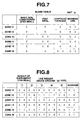
- Fig. 7 is a blend table similarly to Fig. 2
- Figs. 8 and 9 shows results corresponding to those in Figs. 3 and 4.
- the results in Figs. 8 and 9 are shown in a form graph in Fig. 6.
- the preferred range of the blending amount of the fish meal to the basic soil conditioner is about 1 to 40% by weight, as indicated by Db, similarly to the case of the chrysalis of the silkworm.
- the best result was obtained in the blending amount of about 20% by weight.
- waste of fish processing such as fish sausage, fermented fish products, liquor of tuna, crab, crab shell or so forth.
- cultivating mushroom should mean not only cultivating and harvesting the mushroom but also includes intermediate process from inoculation of bacteria to culturing of fungal thread.
Landscapes
- Chemical & Material Sciences (AREA)
- Life Sciences & Earth Sciences (AREA)
- Environmental Sciences (AREA)
- Organic Chemistry (AREA)
- Inorganic Chemistry (AREA)
- Engineering & Computer Science (AREA)
- Environmental & Geological Engineering (AREA)
- Soil Conditioners And Soil-Stabilizing Materials (AREA)
- Mushroom Cultivation (AREA)
- Cultivation Of Plants (AREA)
Applications Claiming Priority (2)
| Application Number | Priority Date | Filing Date | Title |
|---|---|---|---|
| JP8111945A JP2936251B2 (ja) | 1996-04-09 | 1996-04-09 | 土壌改良材の製造方法 |
| JP111945/96 | 1996-04-09 |
Publications (2)
| Publication Number | Publication Date |
|---|---|
| EP0801043A2 true EP0801043A2 (de) | 1997-10-15 |
| EP0801043A3 EP0801043A3 (de) | 1998-01-28 |
Family
ID=14574093
Family Applications (1)
| Application Number | Title | Priority Date | Filing Date |
|---|---|---|---|
| EP97105844A Withdrawn EP0801043A3 (de) | 1996-04-09 | 1997-04-09 | Verfahren zur Herstellung eines Bodenverbesserungsmittels |
Country Status (3)
| Country | Link |
|---|---|
| EP (1) | EP0801043A3 (de) |
| JP (1) | JP2936251B2 (de) |
| BR (1) | BR9701722A (de) |
Cited By (3)
| Publication number | Priority date | Publication date | Assignee | Title |
|---|---|---|---|---|
| WO2007022760A3 (de) * | 2005-08-23 | 2007-04-26 | Werner Landschulze | Bodenverbesserungsmittel und verfahren zu dessen herstellung |
| WO2014116114A3 (en) * | 2013-01-24 | 2014-09-04 | Upcycling Gemert B.V. | Method for composting spent mushroom compost |
| CN113666786A (zh) * | 2021-08-13 | 2021-11-19 | 广东拉多美化肥有限公司 | 牡蛎壳活化方法、混合液、牡蛎壳组合物及土壤调理剂制备方法 |
Families Citing this family (6)
| Publication number | Priority date | Publication date | Assignee | Title |
|---|---|---|---|---|
| KR20020033450A (ko) * | 2002-04-08 | 2002-05-06 | 장영수 | 유리아미노산 함유의 누에번데기를 이용한 생물자극형비료. |
| JP4901091B2 (ja) * | 2004-11-16 | 2012-03-21 | 株式会社イトウ精麥 | 有機質製品製造方法 |
| JP4963784B2 (ja) * | 2004-11-17 | 2012-06-27 | 大廣建設株式会社 | 栽培土壌蘇生用土、栽培土壌蘇生用土の製造方法、および田畑土壌の蘇生方法 |
| JP2007312647A (ja) * | 2006-05-24 | 2007-12-06 | Hitachi Constr Mach Co Ltd | 栽培土壌蘇生用土の原料製造システム |
| JP5902968B2 (ja) * | 2011-03-11 | 2016-04-13 | タカラバイオ株式会社 | きのこの菌床栽培方法 |
| JP5542232B1 (ja) * | 2013-05-17 | 2014-07-09 | グリーン産業株式会社 | キノコの廃菌床と有機質資材を用いた海岸植生復元方法 |
Family Cites Families (13)
| Publication number | Priority date | Publication date | Assignee | Title |
|---|---|---|---|---|
| US3942969A (en) * | 1974-05-21 | 1976-03-09 | Carroll Jr Alban David | Delayed release nutrients for mushroom culture |
| JPS5317131A (en) * | 1976-07-30 | 1978-02-16 | Otake Ichirou | Production of culture soil |
| JPS5415868A (en) * | 1977-06-29 | 1979-02-06 | Shiyuusaku Chiba | Fertilizer producing method |
| EP0058164A1 (de) * | 1980-08-25 | 1982-08-25 | HOLTZ, R. Barry | Wachstumsverbesserer für pilze sowie verfahren zu dessen herstellung |
| JPS6018632B2 (ja) * | 1982-12-13 | 1985-05-11 | 多木化学株式会社 | 有機態窒素含有過りん酸石灰 |
| JPS61152218A (ja) * | 1984-12-27 | 1986-07-10 | 金子農機株式会社 | 籾殻の有効利用方法 |
| JPH0671389B2 (ja) * | 1985-02-06 | 1994-09-14 | 金子農機株式会社 | 麦桿等の有効利用装置 |
| IE61533B1 (en) * | 1987-05-08 | 1994-11-16 | Penford Products Co | Hydrophilic mushroom growth supplement and method of using same |
| JP2511699B2 (ja) * | 1988-08-05 | 1996-07-03 | 重信 亘 | 人工土壌 |
| CN1020892C (zh) * | 1989-02-26 | 1993-05-26 | 烟台市福山区水貂颗粒饲料厂 | 有机颗粒肥料及其制取方法 |
| JPH03242391A (ja) * | 1990-02-20 | 1991-10-29 | Shinkiyou Sangyo Kk | 土壌改良剤 |
| JPH0444521A (ja) * | 1990-06-12 | 1992-02-14 | Nishimura Fuukouen:Kk | 植生基盤材 |
| JPH05194067A (ja) * | 1992-01-20 | 1993-08-03 | Yoshizo Matsumoto | 焼酎廃液の公害防止処理方法 |
-
1996
- 1996-04-09 JP JP8111945A patent/JP2936251B2/ja not_active Expired - Lifetime
-
1997
- 1997-04-08 BR BR9701722A patent/BR9701722A/pt not_active Application Discontinuation
- 1997-04-09 EP EP97105844A patent/EP0801043A3/de not_active Withdrawn
Cited By (3)
| Publication number | Priority date | Publication date | Assignee | Title |
|---|---|---|---|---|
| WO2007022760A3 (de) * | 2005-08-23 | 2007-04-26 | Werner Landschulze | Bodenverbesserungsmittel und verfahren zu dessen herstellung |
| WO2014116114A3 (en) * | 2013-01-24 | 2014-09-04 | Upcycling Gemert B.V. | Method for composting spent mushroom compost |
| CN113666786A (zh) * | 2021-08-13 | 2021-11-19 | 广东拉多美化肥有限公司 | 牡蛎壳活化方法、混合液、牡蛎壳组合物及土壤调理剂制备方法 |
Also Published As
| Publication number | Publication date |
|---|---|
| EP0801043A3 (de) | 1998-01-28 |
| BR9701722A (pt) | 1998-11-17 |
| JPH09271261A (ja) | 1997-10-21 |
| JP2936251B2 (ja) | 1999-08-23 |
Similar Documents
| Publication | Publication Date | Title |
|---|---|---|
| US5503647A (en) | Mushroom casing spawn | |
| US5312632A (en) | Method for the manufacture of fodder and/or soil improving agents from waste material | |
| CN1032567C (zh) | 培养真菌包括香菇(lentinus edodes)的基质和方法 | |
| US5201930A (en) | Plant growth product | |
| JP2002503486A (ja) | キノコ種菌 | |
| JPH0739248A (ja) | ササクレヒトヨタケの栽培方法 | |
| Mau et al. | The shelf life of Agaricus mushrooms | |
| CN105884464A (zh) | 一种食用菌栽培基料及其制作方法 | |
| JP2936251B2 (ja) | 土壌改良材の製造方法 | |
| KR20210116951A (ko) | 옥수수대와 사탕수수 줄기박을 이용한 수경재배용 고체배지의 제조방법, 이 고체배지를 포함하는 그로우백 | |
| KR100330789B1 (ko) | 정제형 부산물 비료 및 그 제조방법 | |
| JP3002061B2 (ja) | マツオウジ用人工培地 | |
| WO2025045423A1 (en) | A high-pressure processing based method for production of an organic fertilizer | |
| KR100422155B1 (ko) | 축분을 이용한 정제형 비료의 제조방법 | |
| CN1020841C (zh) | 生料地栽香菇的方法 | |
| KR20020008486A (ko) | 농업용 비료 | |
| CN113179856A (zh) | 一种香菇培养基质及其香菇栽培方法 | |
| JP2002306158A (ja) | 複合培養体、複合培養体の製造方法、前培養体、前培養体の製造方法及び微生物製剤の製造方法 | |
| JPH0994026A (ja) | 有効成分の多い茶の育成用培土 | |
| US20020151037A1 (en) | Microbiological controlled mycoculture nutrient substrates | |
| JP3798887B2 (ja) | コットンリンターを含有するきのこ栽培用培地およびその使用方法 | |
| KR102499322B1 (ko) | 음식물 쓰레기를 이용한 퇴비 제조방법 및 이에 의해 제조된 퇴비 | |
| JPH06181630A (ja) | 木材腐朽性きのこ用培地 | |
| CN105218201B (zh) | 一种防治鸡爪菌的鸡腿菇培养料及其制备方法 | |
| JPH09308373A (ja) | ハタケシメジの人工栽培方法 |
Legal Events
| Date | Code | Title | Description |
|---|---|---|---|
| PUAI | Public reference made under article 153(3) epc to a published international application that has entered the european phase |
Free format text: ORIGINAL CODE: 0009012 |
|
| AK | Designated contracting states |
Kind code of ref document: A2 Designated state(s): DE FR GB IT NL |
|
| PUAL | Search report despatched |
Free format text: ORIGINAL CODE: 0009013 |
|
| AK | Designated contracting states |
Kind code of ref document: A3 Designated state(s): DE FR GB IT NL |
|
| 17P | Request for examination filed |
Effective date: 19980507 |
|
| 17Q | First examination report despatched |
Effective date: 19980609 |
|
| GRAG | Despatch of communication of intention to grant |
Free format text: ORIGINAL CODE: EPIDOS AGRA |
|
| GRAG | Despatch of communication of intention to grant |
Free format text: ORIGINAL CODE: EPIDOS AGRA |
|
| GRAH | Despatch of communication of intention to grant a patent |
Free format text: ORIGINAL CODE: EPIDOS IGRA |
|
| STAA | Information on the status of an ep patent application or granted ep patent |
Free format text: STATUS: THE APPLICATION IS DEEMED TO BE WITHDRAWN |
|
| 18D | Application deemed to be withdrawn |
Effective date: 20000405 |