EP0807151B1 - Compositions fluides contenant un polymere pour stabiliser des sols et procede pour les utiliser - Google Patents
Compositions fluides contenant un polymere pour stabiliser des sols et procede pour les utiliser Download PDFInfo
- Publication number
- EP0807151B1 EP0807151B1 EP96905191A EP96905191A EP0807151B1 EP 0807151 B1 EP0807151 B1 EP 0807151B1 EP 96905191 A EP96905191 A EP 96905191A EP 96905191 A EP96905191 A EP 96905191A EP 0807151 B1 EP0807151 B1 EP 0807151B1
- Authority
- EP
- European Patent Office
- Prior art keywords
- polymer
- fluid
- earth
- acid
- polymers
- Prior art date
- Legal status (The legal status is an assumption and is not a legal conclusion. Google has not performed a legal analysis and makes no representation as to the accuracy of the status listed.)
- Expired - Lifetime
Links
- 239000012530 fluid Substances 0.000 title claims abstract description 272
- 238000000034 method Methods 0.000 title claims abstract description 54
- 239000000203 mixture Substances 0.000 title claims description 49
- 238000011105 stabilization Methods 0.000 claims abstract description 40
- 230000006641 stabilisation Effects 0.000 claims abstract description 38
- 229920000642 polymer Polymers 0.000 claims description 293
- XLYOFNOQVPJJNP-UHFFFAOYSA-N water Substances O XLYOFNOQVPJJNP-UHFFFAOYSA-N 0.000 claims description 85
- 239000000463 material Substances 0.000 claims description 60
- 125000002091 cationic group Chemical group 0.000 claims description 55
- 125000000129 anionic group Chemical group 0.000 claims description 47
- 239000007787 solid Substances 0.000 claims description 43
- 230000015572 biosynthetic process Effects 0.000 claims description 42
- 239000011049 pearl Substances 0.000 claims description 33
- -1 gums Polymers 0.000 claims description 29
- 229920006318 anionic polymer Polymers 0.000 claims description 22
- 238000012546 transfer Methods 0.000 claims description 22
- 239000000178 monomer Substances 0.000 claims description 21
- 150000003839 salts Chemical class 0.000 claims description 20
- 229920005615 natural polymer Polymers 0.000 claims description 16
- 229920001059 synthetic polymer Polymers 0.000 claims description 16
- VZCYOOQTPOCHFL-UHFFFAOYSA-N trans-butenedioic acid Natural products OC(=O)C=CC(O)=O VZCYOOQTPOCHFL-UHFFFAOYSA-N 0.000 claims description 13
- NIXOWILDQLNWCW-UHFFFAOYSA-N 2-Propenoic acid Natural products OC(=O)C=C NIXOWILDQLNWCW-UHFFFAOYSA-N 0.000 claims description 12
- VZCYOOQTPOCHFL-OWOJBTEDSA-N Fumaric acid Chemical compound OC(=O)\C=C\C(O)=O VZCYOOQTPOCHFL-OWOJBTEDSA-N 0.000 claims description 12
- XLYOFNOQVPJJNP-UHFFFAOYSA-M hydroxide Chemical compound [OH-] XLYOFNOQVPJJNP-UHFFFAOYSA-M 0.000 claims description 12
- 229920000867 polyelectrolyte Polymers 0.000 claims description 12
- 239000002253 acid Substances 0.000 claims description 11
- HRPVXLWXLXDGHG-UHFFFAOYSA-N Acrylamide Chemical compound NC(=O)C=C HRPVXLWXLXDGHG-UHFFFAOYSA-N 0.000 claims description 10
- 229920002554 vinyl polymer Polymers 0.000 claims description 10
- 150000004676 glycans Chemical class 0.000 claims description 9
- 229920001282 polysaccharide Polymers 0.000 claims description 9
- 239000005017 polysaccharide Substances 0.000 claims description 9
- AGBXYHCHUYARJY-UHFFFAOYSA-N 2-phenylethenesulfonic acid Chemical compound OS(=O)(=O)C=CC1=CC=CC=C1 AGBXYHCHUYARJY-UHFFFAOYSA-N 0.000 claims description 8
- 229920002134 Carboxymethyl cellulose Polymers 0.000 claims description 8
- 229920001222 biopolymer Polymers 0.000 claims description 8
- 235000010948 carboxy methyl cellulose Nutrition 0.000 claims description 8
- 229920006317 cationic polymer Polymers 0.000 claims description 8
- SMZOUWXMTYCWNB-UHFFFAOYSA-N 2-(2-methoxy-5-methylphenyl)ethanamine Chemical compound COC1=CC=C(C)C=C1CCN SMZOUWXMTYCWNB-UHFFFAOYSA-N 0.000 claims description 7
- BVKZGUZCCUSVTD-UHFFFAOYSA-M Bicarbonate Chemical class OC([O-])=O BVKZGUZCCUSVTD-UHFFFAOYSA-M 0.000 claims description 7
- OFOBLEOULBTSOW-UHFFFAOYSA-N Propanedioic acid Natural products OC(=O)CC(O)=O OFOBLEOULBTSOW-UHFFFAOYSA-N 0.000 claims description 7
- 229920002472 Starch Polymers 0.000 claims description 7
- VZCYOOQTPOCHFL-UPHRSURJSA-N maleic acid Chemical compound OC(=O)\C=C/C(O)=O VZCYOOQTPOCHFL-UPHRSURJSA-N 0.000 claims description 7
- 239000011976 maleic acid Substances 0.000 claims description 7
- 238000002360 preparation method Methods 0.000 claims description 7
- 235000019698 starch Nutrition 0.000 claims description 7
- CERQOIWHTDAKMF-UHFFFAOYSA-N Methacrylic acid Chemical compound CC(=C)C(O)=O CERQOIWHTDAKMF-UHFFFAOYSA-N 0.000 claims description 6
- 229910019142 PO4 Inorganic materials 0.000 claims description 6
- 239000001530 fumaric acid Substances 0.000 claims description 6
- FPYJFEHAWHCUMM-UHFFFAOYSA-N maleic anhydride Chemical compound O=C1OC(=O)C=C1 FPYJFEHAWHCUMM-UHFFFAOYSA-N 0.000 claims description 6
- 235000021317 phosphate Nutrition 0.000 claims description 6
- 239000008107 starch Substances 0.000 claims description 6
- NLVXSWCKKBEXTG-UHFFFAOYSA-N vinylsulfonic acid Chemical compound OS(=O)(=O)C=C NLVXSWCKKBEXTG-UHFFFAOYSA-N 0.000 claims description 6
- 229920001285 xanthan gum Polymers 0.000 claims description 6
- JAHNSTQSQJOJLO-UHFFFAOYSA-N 2-(3-fluorophenyl)-1h-imidazole Chemical compound FC1=CC=CC(C=2NC=CN=2)=C1 JAHNSTQSQJOJLO-UHFFFAOYSA-N 0.000 claims description 5
- 229920000536 2-Acrylamido-2-methylpropane sulfonic acid Polymers 0.000 claims description 5
- XHZPRMZZQOIPDS-UHFFFAOYSA-N 2-Methyl-2-[(1-oxo-2-propenyl)amino]-1-propanesulfonic acid Chemical compound OS(=O)(=O)CC(C)(C)NC(=O)C=C XHZPRMZZQOIPDS-UHFFFAOYSA-N 0.000 claims description 5
- XEEYSDHEOQHCDA-UHFFFAOYSA-N 2-methylprop-2-ene-1-sulfonic acid Chemical compound CC(=C)CS(O)(=O)=O XEEYSDHEOQHCDA-UHFFFAOYSA-N 0.000 claims description 5
- GJCOSYZMQJWQCA-UHFFFAOYSA-N 9H-xanthene Chemical compound C1=CC=C2CC3=CC=CC=C3OC2=C1 GJCOSYZMQJWQCA-UHFFFAOYSA-N 0.000 claims description 5
- 244000303965 Cyamopsis psoralioides Species 0.000 claims description 5
- FQPSGWSUVKBHSU-UHFFFAOYSA-N methacrylamide Chemical compound CC(=C)C(N)=O FQPSGWSUVKBHSU-UHFFFAOYSA-N 0.000 claims description 5
- LVHBHZANLOWSRM-UHFFFAOYSA-N methylenebutanedioic acid Natural products OC(=O)CC(=C)C(O)=O LVHBHZANLOWSRM-UHFFFAOYSA-N 0.000 claims description 5
- PPBRXRYQALVLMV-UHFFFAOYSA-N Styrene Chemical compound C=CC1=CC=CC=C1 PPBRXRYQALVLMV-UHFFFAOYSA-N 0.000 claims description 4
- 238000006116 polymerization reaction Methods 0.000 claims description 4
- 229920002873 Polyethylenimine Polymers 0.000 claims description 3
- 150000001252 acrylic acid derivatives Chemical class 0.000 claims description 3
- 150000001408 amides Chemical class 0.000 claims description 3
- 150000001412 amines Chemical class 0.000 claims description 3
- NEHMKBQYUWJMIP-UHFFFAOYSA-N chloromethane Chemical class ClC NEHMKBQYUWJMIP-UHFFFAOYSA-N 0.000 claims description 3
- GQOKIYDTHHZSCJ-UHFFFAOYSA-M dimethyl-bis(prop-2-enyl)azanium;chloride Chemical compound [Cl-].C=CC[N+](C)(C)CC=C GQOKIYDTHHZSCJ-UHFFFAOYSA-M 0.000 claims description 3
- 238000010348 incorporation Methods 0.000 claims description 3
- JNDVNJWCRZQGFQ-UHFFFAOYSA-N 2-methyl-N,N-bis(methylamino)hex-2-enamide Chemical compound CCCC=C(C)C(=O)N(NC)NC JNDVNJWCRZQGFQ-UHFFFAOYSA-N 0.000 claims description 2
- BRLQWZUYTZBJKN-UHFFFAOYSA-N Epichlorohydrin Chemical compound ClCC1CO1 BRLQWZUYTZBJKN-UHFFFAOYSA-N 0.000 claims description 2
- 229920002907 Guar gum Polymers 0.000 claims description 2
- WHNWPMSKXPGLAX-UHFFFAOYSA-N N-Vinyl-2-pyrrolidone Chemical compound C=CN1CCCC1=O WHNWPMSKXPGLAX-UHFFFAOYSA-N 0.000 claims description 2
- XTXRWKRVRITETP-UHFFFAOYSA-N Vinyl acetate Chemical compound CC(=O)OC=C XTXRWKRVRITETP-UHFFFAOYSA-N 0.000 claims description 2
- NJSSICCENMLTKO-HRCBOCMUSA-N [(1r,2s,4r,5r)-3-hydroxy-4-(4-methylphenyl)sulfonyloxy-6,8-dioxabicyclo[3.2.1]octan-2-yl] 4-methylbenzenesulfonate Chemical compound C1=CC(C)=CC=C1S(=O)(=O)O[C@H]1C(O)[C@@H](OS(=O)(=O)C=2C=CC(C)=CC=2)[C@@H]2OC[C@H]1O2 NJSSICCENMLTKO-HRCBOCMUSA-N 0.000 claims description 2
- 239000001768 carboxy methyl cellulose Substances 0.000 claims description 2
- 239000008112 carboxymethyl-cellulose Substances 0.000 claims description 2
- 150000001875 compounds Chemical class 0.000 claims description 2
- 238000007334 copolymerization reaction Methods 0.000 claims description 2
- 150000002148 esters Chemical class 0.000 claims description 2
- 239000000665 guar gum Substances 0.000 claims description 2
- 235000010417 guar gum Nutrition 0.000 claims description 2
- 229960002154 guar gum Drugs 0.000 claims description 2
- RQAKESSLMFZVMC-UHFFFAOYSA-N n-ethenylacetamide Chemical compound CC(=O)NC=C RQAKESSLMFZVMC-UHFFFAOYSA-N 0.000 claims description 2
- ZQXSMRAEXCEDJD-UHFFFAOYSA-N n-ethenylformamide Chemical compound C=CNC=O ZQXSMRAEXCEDJD-UHFFFAOYSA-N 0.000 claims description 2
- 150000003013 phosphoric acid derivatives Chemical class 0.000 claims description 2
- 239000007795 chemical reaction product Substances 0.000 claims 6
- ROSDSFDQCJNGOL-UHFFFAOYSA-N protonated dimethyl amine Natural products CNC ROSDSFDQCJNGOL-UHFFFAOYSA-N 0.000 claims 4
- PVEOYINWKBTPIZ-UHFFFAOYSA-N but-3-enoic acid Chemical compound OC(=O)CC=C PVEOYINWKBTPIZ-UHFFFAOYSA-N 0.000 claims 3
- HVAMZGADVCBITI-UHFFFAOYSA-N pent-4-enoic acid Chemical compound OC(=O)CCC=C HVAMZGADVCBITI-UHFFFAOYSA-N 0.000 claims 3
- 229920000615 alginic acid Polymers 0.000 claims 2
- 235000010443 alginic acid Nutrition 0.000 claims 2
- 239000000451 gelidium spp. gum Substances 0.000 claims 2
- STMDPCBYJCIZOD-UHFFFAOYSA-N 2-(2,4-dinitroanilino)-4-methylpentanoic acid Chemical compound CC(C)CC(C(O)=O)NC1=CC=C([N+]([O-])=O)C=C1[N+]([O-])=O STMDPCBYJCIZOD-UHFFFAOYSA-N 0.000 claims 1
- VSSGDAWBDKMCMI-UHFFFAOYSA-N 2-methyl-2-(2-methylprop-2-enoylamino)propane-1-sulfonic acid Chemical compound CC(=C)C(=O)NC(C)(C)CS(O)(=O)=O VSSGDAWBDKMCMI-UHFFFAOYSA-N 0.000 claims 1
- 244000215068 Acacia senegal Species 0.000 claims 1
- 229920001817 Agar Polymers 0.000 claims 1
- 240000008886 Ceratonia siliqua Species 0.000 claims 1
- 235000013912 Ceratonia siliqua Nutrition 0.000 claims 1
- JOYRKODLDBILNP-UHFFFAOYSA-N Ethyl urethane Chemical class CCOC(N)=O JOYRKODLDBILNP-UHFFFAOYSA-N 0.000 claims 1
- 241000206672 Gelidium Species 0.000 claims 1
- 229920000084 Gum arabic Polymers 0.000 claims 1
- ABLZXFCXXLZCGV-UHFFFAOYSA-N Phosphorous acid Chemical class OP(O)=O ABLZXFCXXLZCGV-UHFFFAOYSA-N 0.000 claims 1
- 235000010489 acacia gum Nutrition 0.000 claims 1
- 239000000205 acacia gum Substances 0.000 claims 1
- 150000007513 acids Chemical class 0.000 claims 1
- 235000010419 agar Nutrition 0.000 claims 1
- IOMDIVZAGXCCAC-UHFFFAOYSA-M diethyl-bis(prop-2-enyl)azanium;chloride Chemical compound [Cl-].C=CC[N+](CC)(CC)CC=C IOMDIVZAGXCCAC-UHFFFAOYSA-M 0.000 claims 1
- 125000000118 dimethyl group Chemical group [H]C([H])([H])* 0.000 claims 1
- JZMJDSHXVKJFKW-UHFFFAOYSA-M methyl sulfate(1-) Chemical compound COS([O-])(=O)=O JZMJDSHXVKJFKW-UHFFFAOYSA-M 0.000 claims 1
- 239000002736 nonionic surfactant Substances 0.000 claims 1
- 150000003014 phosphoric acid esters Chemical class 0.000 claims 1
- UIIIBRHUICCMAI-UHFFFAOYSA-N prop-2-ene-1-sulfonic acid Chemical compound OS(=O)(=O)CC=C UIIIBRHUICCMAI-UHFFFAOYSA-N 0.000 claims 1
- 239000002861 polymer material Substances 0.000 abstract description 2
- 238000009412 basement excavation Methods 0.000 description 115
- 239000002002 slurry Substances 0.000 description 101
- 239000002689 soil Substances 0.000 description 99
- 239000012071 phase Substances 0.000 description 50
- 238000005553 drilling Methods 0.000 description 45
- 238000005755 formation reaction Methods 0.000 description 42
- 239000002245 particle Substances 0.000 description 34
- 239000004576 sand Substances 0.000 description 34
- 239000004567 concrete Substances 0.000 description 30
- 230000036571 hydration Effects 0.000 description 27
- 238000006703 hydration reaction Methods 0.000 description 27
- 239000000839 emulsion Substances 0.000 description 25
- 239000000499 gel Substances 0.000 description 24
- 229920000768 polyamine Polymers 0.000 description 21
- 238000012360 testing method Methods 0.000 description 20
- 239000000440 bentonite Substances 0.000 description 19
- 229910000278 bentonite Inorganic materials 0.000 description 19
- SVPXDRXYRYOSEX-UHFFFAOYSA-N bentoquatam Chemical compound O.O=[Si]=O.O=[Al]O[Al]=O SVPXDRXYRYOSEX-UHFFFAOYSA-N 0.000 description 19
- 229920002401 polyacrylamide Polymers 0.000 description 19
- 238000011161 development Methods 0.000 description 16
- 238000011065 in-situ storage Methods 0.000 description 16
- 229910052500 inorganic mineral Inorganic materials 0.000 description 16
- 239000011707 mineral Substances 0.000 description 16
- 235000010755 mineral Nutrition 0.000 description 16
- 238000002156 mixing Methods 0.000 description 16
- 239000011148 porous material Substances 0.000 description 16
- 230000002829 reductive effect Effects 0.000 description 16
- 238000007792 addition Methods 0.000 description 15
- 230000000694 effects Effects 0.000 description 15
- 239000012065 filter cake Substances 0.000 description 15
- 239000000654 additive Substances 0.000 description 14
- 150000001768 cations Chemical class 0.000 description 14
- 239000000047 product Substances 0.000 description 14
- 239000000243 solution Substances 0.000 description 14
- 230000000887 hydrating effect Effects 0.000 description 13
- 230000007062 hydrolysis Effects 0.000 description 13
- 238000006460 hydrolysis reaction Methods 0.000 description 13
- 239000004094 surface-active agent Substances 0.000 description 13
- 125000003178 carboxy group Chemical group [H]OC(*)=O 0.000 description 12
- 239000011575 calcium Substances 0.000 description 11
- 229910052791 calcium Inorganic materials 0.000 description 11
- 238000010276 construction Methods 0.000 description 11
- 229920001577 copolymer Polymers 0.000 description 11
- 239000007788 liquid Substances 0.000 description 11
- OYPRJOBELJOOCE-UHFFFAOYSA-N Calcium Chemical compound [Ca] OYPRJOBELJOOCE-UHFFFAOYSA-N 0.000 description 10
- 238000004132 cross linking Methods 0.000 description 10
- 238000011068 loading method Methods 0.000 description 10
- HEMHJVSKTPXQMS-UHFFFAOYSA-M Sodium hydroxide Chemical compound [OH-].[Na+] HEMHJVSKTPXQMS-UHFFFAOYSA-M 0.000 description 9
- 239000004927 clay Substances 0.000 description 9
- 238000005516 engineering process Methods 0.000 description 9
- 230000006870 function Effects 0.000 description 9
- 230000002706 hydrostatic effect Effects 0.000 description 9
- UIIMBOGNXHQVGW-UHFFFAOYSA-M Sodium bicarbonate Chemical compound [Na+].OC([O-])=O UIIMBOGNXHQVGW-UHFFFAOYSA-M 0.000 description 8
- 125000003368 amide group Chemical group 0.000 description 8
- 230000008901 benefit Effects 0.000 description 8
- 239000000872 buffer Substances 0.000 description 8
- 230000003993 interaction Effects 0.000 description 8
- 239000011159 matrix material Substances 0.000 description 8
- 230000008569 process Effects 0.000 description 8
- 125000000391 vinyl group Chemical group [H]C([*])=C([H])[H] 0.000 description 8
- 239000004908 Emulsion polymer Substances 0.000 description 7
- 239000000084 colloidal system Substances 0.000 description 7
- 238000011109 contamination Methods 0.000 description 7
- 238000001914 filtration Methods 0.000 description 7
- 230000002209 hydrophobic effect Effects 0.000 description 7
- 229920003169 water-soluble polymer Polymers 0.000 description 7
- NIXOWILDQLNWCW-UHFFFAOYSA-M Acrylate Chemical compound [O-]C(=O)C=C NIXOWILDQLNWCW-UHFFFAOYSA-M 0.000 description 6
- XEEYBQQBJWHFJM-UHFFFAOYSA-N Iron Chemical compound [Fe] XEEYBQQBJWHFJM-UHFFFAOYSA-N 0.000 description 6
- 239000003518 caustics Substances 0.000 description 6
- 235000013339 cereals Nutrition 0.000 description 6
- 239000000356 contaminant Substances 0.000 description 6
- 239000006185 dispersion Substances 0.000 description 6
- FYYHWMGAXLPEAU-UHFFFAOYSA-N Magnesium Chemical compound [Mg] FYYHWMGAXLPEAU-UHFFFAOYSA-N 0.000 description 5
- 229960000892 attapulgite Drugs 0.000 description 5
- 230000015556 catabolic process Effects 0.000 description 5
- 239000003795 chemical substances by application Substances 0.000 description 5
- 238000006731 degradation reaction Methods 0.000 description 5
- 239000003673 groundwater Substances 0.000 description 5
- 125000002887 hydroxy group Chemical group [H]O* 0.000 description 5
- 239000011777 magnesium Substances 0.000 description 5
- 229910052749 magnesium Inorganic materials 0.000 description 5
- 229910052625 palygorskite Inorganic materials 0.000 description 5
- 230000035699 permeability Effects 0.000 description 5
- 229920000058 polyacrylate Polymers 0.000 description 5
- 238000012545 processing Methods 0.000 description 5
- 239000011347 resin Substances 0.000 description 5
- 229920005989 resin Polymers 0.000 description 5
- 239000013535 sea water Substances 0.000 description 5
- 238000011282 treatment Methods 0.000 description 5
- CDBYLPFSWZWCQE-UHFFFAOYSA-L Sodium Carbonate Chemical compound [Na+].[Na+].[O-]C([O-])=O CDBYLPFSWZWCQE-UHFFFAOYSA-L 0.000 description 4
- 230000000996 additive effect Effects 0.000 description 4
- 230000001070 adhesive effect Effects 0.000 description 4
- 125000002057 carboxymethyl group Chemical group [H]OC(=O)C([H])([H])[*] 0.000 description 4
- 239000004568 cement Substances 0.000 description 4
- 238000001246 colloidal dispersion Methods 0.000 description 4
- 238000013461 design Methods 0.000 description 4
- 238000004090 dissolution Methods 0.000 description 4
- 150000004679 hydroxides Chemical class 0.000 description 4
- 239000012466 permeate Substances 0.000 description 4
- 239000010452 phosphate Substances 0.000 description 4
- 229920006395 saturated elastomer Polymers 0.000 description 4
- 229910000030 sodium bicarbonate Inorganic materials 0.000 description 4
- 235000017557 sodium bicarbonate Nutrition 0.000 description 4
- 238000009736 wetting Methods 0.000 description 4
- IRLPACMLTUPBCL-KQYNXXCUSA-N 5'-adenylyl sulfate Chemical compound C1=NC=2C(N)=NC=NC=2N1[C@@H]1O[C@H](COP(O)(=O)OS(O)(=O)=O)[C@@H](O)[C@H]1O IRLPACMLTUPBCL-KQYNXXCUSA-N 0.000 description 3
- UIIMBOGNXHQVGW-DEQYMQKBSA-M Sodium bicarbonate-14C Chemical compound [Na+].O[14C]([O-])=O UIIMBOGNXHQVGW-DEQYMQKBSA-M 0.000 description 3
- 239000003431 cross linking reagent Substances 0.000 description 3
- 238000006073 displacement reaction Methods 0.000 description 3
- 238000010494 dissociation reaction Methods 0.000 description 3
- 230000005593 dissociations Effects 0.000 description 3
- 239000008187 granular material Substances 0.000 description 3
- 239000011440 grout Substances 0.000 description 3
- 229910052742 iron Inorganic materials 0.000 description 3
- 238000004519 manufacturing process Methods 0.000 description 3
- 230000007246 mechanism Effects 0.000 description 3
- NBIIXXVUZAFLBC-UHFFFAOYSA-K phosphate Chemical compound [O-]P([O-])([O-])=O NBIIXXVUZAFLBC-UHFFFAOYSA-K 0.000 description 3
- 238000007789 sealing Methods 0.000 description 3
- 238000005063 solubilization Methods 0.000 description 3
- 230000007928 solubilization Effects 0.000 description 3
- 239000000126 substance Substances 0.000 description 3
- 238000004381 surface treatment Methods 0.000 description 3
- HGINCPLSRVDWNT-UHFFFAOYSA-N Acrolein Chemical compound C=CC=O HGINCPLSRVDWNT-UHFFFAOYSA-N 0.000 description 2
- PNEYBMLMFCGWSK-UHFFFAOYSA-N Alumina Chemical compound [O-2].[O-2].[O-2].[Al+3].[Al+3] PNEYBMLMFCGWSK-UHFFFAOYSA-N 0.000 description 2
- QGZKDVFQNNGYKY-UHFFFAOYSA-N Ammonia Chemical compound N QGZKDVFQNNGYKY-UHFFFAOYSA-N 0.000 description 2
- DGAQECJNVWCQMB-PUAWFVPOSA-M Ilexoside XXIX Chemical compound C[C@@H]1CC[C@@]2(CC[C@@]3(C(=CC[C@H]4[C@]3(CC[C@@H]5[C@@]4(CC[C@@H](C5(C)C)OS(=O)(=O)[O-])C)C)[C@@H]2[C@]1(C)O)C)C(=O)O[C@H]6[C@@H]([C@H]([C@@H]([C@H](O6)CO)O)O)O.[Na+] DGAQECJNVWCQMB-PUAWFVPOSA-M 0.000 description 2
- 238000006683 Mannich reaction Methods 0.000 description 2
- 241001165050 Ocala Species 0.000 description 2
- 238000013459 approach Methods 0.000 description 2
- 238000006243 chemical reaction Methods 0.000 description 2
- 150000001805 chlorine compounds Chemical class 0.000 description 2
- 239000002734 clay mineral Substances 0.000 description 2
- 238000004140 cleaning Methods 0.000 description 2
- 239000011248 coating agent Substances 0.000 description 2
- 238000000576 coating method Methods 0.000 description 2
- 239000000470 constituent Substances 0.000 description 2
- 239000013078 crystal Substances 0.000 description 2
- 230000000593 degrading effect Effects 0.000 description 2
- 150000004985 diamines Chemical class 0.000 description 2
- 239000003792 electrolyte Substances 0.000 description 2
- 238000005538 encapsulation Methods 0.000 description 2
- 239000003822 epoxy resin Substances 0.000 description 2
- 238000000605 extraction Methods 0.000 description 2
- 239000007789 gas Substances 0.000 description 2
- LEQAOMBKQFMDFZ-UHFFFAOYSA-N glyoxal Chemical compound O=CC=O LEQAOMBKQFMDFZ-UHFFFAOYSA-N 0.000 description 2
- 238000005469 granulation Methods 0.000 description 2
- 230000003179 granulation Effects 0.000 description 2
- 238000001033 granulometry Methods 0.000 description 2
- 230000005484 gravity Effects 0.000 description 2
- 125000001165 hydrophobic group Chemical group 0.000 description 2
- 230000001050 lubricating effect Effects 0.000 description 2
- 238000012423 maintenance Methods 0.000 description 2
- 238000005259 measurement Methods 0.000 description 2
- 230000005012 migration Effects 0.000 description 2
- 238000013508 migration Methods 0.000 description 2
- ZIUHHBKFKCYYJD-UHFFFAOYSA-N n,n'-methylenebisacrylamide Chemical compound C=CC(=O)NCNC(=O)C=C ZIUHHBKFKCYYJD-UHFFFAOYSA-N 0.000 description 2
- 238000004181 pedogenesis Methods 0.000 description 2
- 229920000647 polyepoxide Polymers 0.000 description 2
- 239000002244 precipitate Substances 0.000 description 2
- 239000002243 precursor Substances 0.000 description 2
- 238000011084 recovery Methods 0.000 description 2
- 230000009467 reduction Effects 0.000 description 2
- 238000009738 saturating Methods 0.000 description 2
- 238000000926 separation method Methods 0.000 description 2
- 239000011734 sodium Substances 0.000 description 2
- 229910052708 sodium Inorganic materials 0.000 description 2
- 229910000029 sodium carbonate Inorganic materials 0.000 description 2
- 230000000087 stabilizing effect Effects 0.000 description 2
- 239000000725 suspension Substances 0.000 description 2
- 239000002699 waste material Substances 0.000 description 2
- 239000003643 water by type Substances 0.000 description 2
- JNYAEWCLZODPBN-JGWLITMVSA-N (2r,3r,4s)-2-[(1r)-1,2-dihydroxyethyl]oxolane-3,4-diol Chemical class OC[C@@H](O)[C@H]1OC[C@H](O)[C@H]1O JNYAEWCLZODPBN-JGWLITMVSA-N 0.000 description 1
- TURITJIWSQEMDB-UHFFFAOYSA-N 2-methyl-n-[(2-methylprop-2-enoylamino)methyl]prop-2-enamide Chemical compound CC(=C)C(=O)NCNC(=O)C(C)=C TURITJIWSQEMDB-UHFFFAOYSA-N 0.000 description 1
- 241000237858 Gastropoda Species 0.000 description 1
- PEDCQBHIVMGVHV-UHFFFAOYSA-N Glycerine Chemical class OCC(O)CO PEDCQBHIVMGVHV-UHFFFAOYSA-N 0.000 description 1
- 239000011837 N,N-methylenebisacrylamide Substances 0.000 description 1
- CNCOEDDPFOAUMB-UHFFFAOYSA-N N-Methylolacrylamide Chemical compound OCNC(=O)C=C CNCOEDDPFOAUMB-UHFFFAOYSA-N 0.000 description 1
- 240000007594 Oryza sativa Species 0.000 description 1
- 235000007164 Oryza sativa Nutrition 0.000 description 1
- 239000002202 Polyethylene glycol Substances 0.000 description 1
- 239000011398 Portland cement Substances 0.000 description 1
- ZLMJMSJWJFRBEC-UHFFFAOYSA-N Potassium Chemical compound [K] ZLMJMSJWJFRBEC-UHFFFAOYSA-N 0.000 description 1
- 244000166071 Shorea robusta Species 0.000 description 1
- 235000015076 Shorea robusta Nutrition 0.000 description 1
- HCHKCACWOHOZIP-UHFFFAOYSA-N Zinc Chemical compound [Zn] HCHKCACWOHOZIP-UHFFFAOYSA-N 0.000 description 1
- 150000003926 acrylamides Chemical class 0.000 description 1
- 229920006397 acrylic thermoplastic Polymers 0.000 description 1
- 239000000853 adhesive Substances 0.000 description 1
- 238000004026 adhesive bonding Methods 0.000 description 1
- 238000005054 agglomeration Methods 0.000 description 1
- 230000002776 aggregation Effects 0.000 description 1
- 238000013019 agitation Methods 0.000 description 1
- 150000001299 aldehydes Chemical class 0.000 description 1
- 229910021529 ammonia Inorganic materials 0.000 description 1
- 230000003466 anti-cipated effect Effects 0.000 description 1
- 239000007864 aqueous solution Substances 0.000 description 1
- 230000004888 barrier function Effects 0.000 description 1
- 230000009286 beneficial effect Effects 0.000 description 1
- 230000005540 biological transmission Effects 0.000 description 1
- 239000007767 bonding agent Substances 0.000 description 1
- 235000012206 bottled water Nutrition 0.000 description 1
- 230000003139 buffering effect Effects 0.000 description 1
- 230000008859 change Effects 0.000 description 1
- 238000005345 coagulation Methods 0.000 description 1
- 230000015271 coagulation Effects 0.000 description 1
- 238000004891 communication Methods 0.000 description 1
- 230000002860 competitive effect Effects 0.000 description 1
- 229920006037 cross link polymer Polymers 0.000 description 1
- 230000003247 decreasing effect Effects 0.000 description 1
- 230000006735 deficit Effects 0.000 description 1
- 230000001627 detrimental effect Effects 0.000 description 1
- 235000014113 dietary fatty acids Nutrition 0.000 description 1
- VAYGXNSJCAHWJZ-UHFFFAOYSA-N dimethyl sulfate Chemical compound COS(=O)(=O)OC VAYGXNSJCAHWJZ-UHFFFAOYSA-N 0.000 description 1
- 239000003651 drinking water Substances 0.000 description 1
- 230000008030 elimination Effects 0.000 description 1
- 238000003379 elimination reaction Methods 0.000 description 1
- 230000007613 environmental effect Effects 0.000 description 1
- 238000003912 environmental pollution Methods 0.000 description 1
- 239000000194 fatty acid Substances 0.000 description 1
- 229930195729 fatty acid Natural products 0.000 description 1
- 150000004665 fatty acids Chemical class 0.000 description 1
- 238000005189 flocculation Methods 0.000 description 1
- 230000016615 flocculation Effects 0.000 description 1
- 238000009472 formulation Methods 0.000 description 1
- 239000012634 fragment Substances 0.000 description 1
- 239000013505 freshwater Substances 0.000 description 1
- 125000000524 functional group Chemical group 0.000 description 1
- 125000005456 glyceride group Chemical group 0.000 description 1
- 229940015043 glyoxal Drugs 0.000 description 1
- 238000007542 hardness measurement Methods 0.000 description 1
- 239000008240 homogeneous mixture Substances 0.000 description 1
- 239000012456 homogeneous solution Substances 0.000 description 1
- 238000000265 homogenisation Methods 0.000 description 1
- 150000004677 hydrates Chemical class 0.000 description 1
- 230000003301 hydrolyzing effect Effects 0.000 description 1
- 230000006872 improvement Effects 0.000 description 1
- 230000006698 induction Effects 0.000 description 1
- 239000003112 inhibitor Substances 0.000 description 1
- 230000002401 inhibitory effect Effects 0.000 description 1
- 230000000977 initiatory effect Effects 0.000 description 1
- 238000009434 installation Methods 0.000 description 1
- 230000009545 invasion Effects 0.000 description 1
- 150000002500 ions Chemical class 0.000 description 1
- 230000002427 irreversible effect Effects 0.000 description 1
- 239000007791 liquid phase Substances 0.000 description 1
- 239000006193 liquid solution Substances 0.000 description 1
- 230000033001 locomotion Effects 0.000 description 1
- 230000007774 longterm Effects 0.000 description 1
- 230000035800 maturation Effects 0.000 description 1
- 229910052751 metal Inorganic materials 0.000 description 1
- 239000002184 metal Substances 0.000 description 1
- 150000002739 metals Chemical class 0.000 description 1
- 229940050176 methyl chloride Drugs 0.000 description 1
- 239000000693 micelle Substances 0.000 description 1
- 238000012986 modification Methods 0.000 description 1
- 230000004048 modification Effects 0.000 description 1
- DYUWTXWIYMHBQS-UHFFFAOYSA-N n-prop-2-enylprop-2-en-1-amine Chemical compound C=CCNCC=C DYUWTXWIYMHBQS-UHFFFAOYSA-N 0.000 description 1
- 239000000025 natural resin Substances 0.000 description 1
- 230000006855 networking Effects 0.000 description 1
- 238000005457 optimization Methods 0.000 description 1
- RPQRDASANLAFCM-UHFFFAOYSA-N oxiran-2-ylmethyl prop-2-enoate Chemical compound C=CC(=O)OCC1CO1 RPQRDASANLAFCM-UHFFFAOYSA-N 0.000 description 1
- 230000035515 penetration Effects 0.000 description 1
- 238000001935 peptisation Methods 0.000 description 1
- 230000002085 persistent effect Effects 0.000 description 1
- 239000003208 petroleum Substances 0.000 description 1
- UEZVMMHDMIWARA-UHFFFAOYSA-M phosphonate Chemical compound [O-]P(=O)=O UEZVMMHDMIWARA-UHFFFAOYSA-M 0.000 description 1
- 229920003023 plastic Polymers 0.000 description 1
- 239000004033 plastic Substances 0.000 description 1
- 229920003229 poly(methyl methacrylate) Polymers 0.000 description 1
- 229920001223 polyethylene glycol Polymers 0.000 description 1
- 239000011591 potassium Substances 0.000 description 1
- 229910052700 potassium Inorganic materials 0.000 description 1
- 238000001556 precipitation Methods 0.000 description 1
- 238000004321 preservation Methods 0.000 description 1
- 125000002924 primary amino group Chemical group [H]N([H])* 0.000 description 1
- 239000011253 protective coating Substances 0.000 description 1
- 230000009257 reactivity Effects 0.000 description 1
- 230000003134 recirculating effect Effects 0.000 description 1
- 239000012260 resinous material Substances 0.000 description 1
- 238000000518 rheometry Methods 0.000 description 1
- 235000009566 rice Nutrition 0.000 description 1
- 238000012216 screening Methods 0.000 description 1
- 230000035945 sensitivity Effects 0.000 description 1
- 239000003352 sequestering agent Substances 0.000 description 1
- 239000007779 soft material Substances 0.000 description 1
- 239000002195 soluble material Substances 0.000 description 1
- 238000001179 sorption measurement Methods 0.000 description 1
- 239000003381 stabilizer Substances 0.000 description 1
- 239000004575 stone Substances 0.000 description 1
- 238000005728 strengthening Methods 0.000 description 1
- 239000013589 supplement Substances 0.000 description 1
- 239000000057 synthetic resin Substances 0.000 description 1
- ISXSCDLOGDJUNJ-UHFFFAOYSA-N tert-butyl prop-2-enoate Chemical compound CC(C)(C)OC(=O)C=C ISXSCDLOGDJUNJ-UHFFFAOYSA-N 0.000 description 1
- 230000008719 thickening Effects 0.000 description 1
- 230000001052 transient effect Effects 0.000 description 1
- 230000005641 tunneling Effects 0.000 description 1
- 238000011144 upstream manufacturing Methods 0.000 description 1
- 229920006163 vinyl copolymer Polymers 0.000 description 1
- 239000007762 w/o emulsion Substances 0.000 description 1
- 238000003809 water extraction Methods 0.000 description 1
- 239000000230 xanthan gum Substances 0.000 description 1
- 235000010493 xanthan gum Nutrition 0.000 description 1
- 229940082509 xanthan gum Drugs 0.000 description 1
- 229910052725 zinc Inorganic materials 0.000 description 1
- 239000011701 zinc Substances 0.000 description 1
Images





Classifications
-
- C—CHEMISTRY; METALLURGY
- C09—DYES; PAINTS; POLISHES; NATURAL RESINS; ADHESIVES; COMPOSITIONS NOT OTHERWISE PROVIDED FOR; APPLICATIONS OF MATERIALS NOT OTHERWISE PROVIDED FOR
- C09K—MATERIALS FOR MISCELLANEOUS APPLICATIONS, NOT PROVIDED FOR ELSEWHERE
- C09K8/00—Compositions for drilling of boreholes or wells; Compositions for treating boreholes or wells, e.g. for completion or for remedial operations
- C09K8/60—Compositions for stimulating production by acting on the underground formation
- C09K8/92—Compositions for stimulating production by acting on the underground formation characterised by their form or by the form of their components, e.g. encapsulated material
-
- C—CHEMISTRY; METALLURGY
- C09—DYES; PAINTS; POLISHES; NATURAL RESINS; ADHESIVES; COMPOSITIONS NOT OTHERWISE PROVIDED FOR; APPLICATIONS OF MATERIALS NOT OTHERWISE PROVIDED FOR
- C09K—MATERIALS FOR MISCELLANEOUS APPLICATIONS, NOT PROVIDED FOR ELSEWHERE
- C09K17/00—Soil-conditioning materials or soil-stabilising materials
- C09K17/14—Soil-conditioning materials or soil-stabilising materials containing organic compounds only
- C09K17/16—Soil-conditioning materials or soil-stabilising materials containing organic compounds only applied in a physical form other than a solution or a grout, e.g. as platelets or granules
-
- C—CHEMISTRY; METALLURGY
- C09—DYES; PAINTS; POLISHES; NATURAL RESINS; ADHESIVES; COMPOSITIONS NOT OTHERWISE PROVIDED FOR; APPLICATIONS OF MATERIALS NOT OTHERWISE PROVIDED FOR
- C09K—MATERIALS FOR MISCELLANEOUS APPLICATIONS, NOT PROVIDED FOR ELSEWHERE
- C09K8/00—Compositions for drilling of boreholes or wells; Compositions for treating boreholes or wells, e.g. for completion or for remedial operations
- C09K8/02—Well-drilling compositions
- C09K8/03—Specific additives for general use in well-drilling compositions
- C09K8/035—Organic additives
-
- C—CHEMISTRY; METALLURGY
- C09—DYES; PAINTS; POLISHES; NATURAL RESINS; ADHESIVES; COMPOSITIONS NOT OTHERWISE PROVIDED FOR; APPLICATIONS OF MATERIALS NOT OTHERWISE PROVIDED FOR
- C09K—MATERIALS FOR MISCELLANEOUS APPLICATIONS, NOT PROVIDED FOR ELSEWHERE
- C09K8/00—Compositions for drilling of boreholes or wells; Compositions for treating boreholes or wells, e.g. for completion or for remedial operations
- C09K8/02—Well-drilling compositions
- C09K8/04—Aqueous well-drilling compositions
- C09K8/06—Clay-free compositions
- C09K8/12—Clay-free compositions containing synthetic organic macromolecular compounds or their precursors
-
- C—CHEMISTRY; METALLURGY
- C09—DYES; PAINTS; POLISHES; NATURAL RESINS; ADHESIVES; COMPOSITIONS NOT OTHERWISE PROVIDED FOR; APPLICATIONS OF MATERIALS NOT OTHERWISE PROVIDED FOR
- C09K—MATERIALS FOR MISCELLANEOUS APPLICATIONS, NOT PROVIDED FOR ELSEWHERE
- C09K8/00—Compositions for drilling of boreholes or wells; Compositions for treating boreholes or wells, e.g. for completion or for remedial operations
- C09K8/50—Compositions for plastering borehole walls, i.e. compositions for temporary consolidation of borehole walls
- C09K8/516—Compositions for plastering borehole walls, i.e. compositions for temporary consolidation of borehole walls characterised by their form or by the form of their components, e.g. encapsulated material
-
- C—CHEMISTRY; METALLURGY
- C09—DYES; PAINTS; POLISHES; NATURAL RESINS; ADHESIVES; COMPOSITIONS NOT OTHERWISE PROVIDED FOR; APPLICATIONS OF MATERIALS NOT OTHERWISE PROVIDED FOR
- C09K—MATERIALS FOR MISCELLANEOUS APPLICATIONS, NOT PROVIDED FOR ELSEWHERE
- C09K8/00—Compositions for drilling of boreholes or wells; Compositions for treating boreholes or wells, e.g. for completion or for remedial operations
- C09K8/60—Compositions for stimulating production by acting on the underground formation
Definitions
- This invention relates to polymer-based fluids for use in boring, excavating and trenching operations in the deep foundation construction industry, the subterranean construction industry, and in tunneling, in well drilling and in other applications of earth support fluids.
- the conventional materials for making these fluids are clays such as bentonite and attapulgite. More recently, water-soluble polymers have been introduced and used in place of or in combination with such clays. (In this document "water-soluble”, “soluble”, “dissolved” and similar terms describing the "dissolution” of polymers refers to polymers that form either true solutions or colloidal dispersions. With regard to polymers, we use the concepts of water solubility and water dispersibility to colloidal dimensions interchangeably.) A widely used type of water-soluble polymer in these applications is a partially-hydrolyzed polyacrylamide (PHPA), in the form of a primarily linear, or non-crosslinked, long chain polymer with an anionic charge density of twenty to thirty mole weight.
- PHPA partially-hydrolyzed polyacrylamide
- This type of polymer is available in liquid water-in-oil emulsion form and in dry form.
- Other polymers include guar gum, xanthan gum, cellulosic polymers, starch and blends of these. All of these polymers, including the PHPAs, have been prepared and applied in ways which are intended to accomplish complete dissolution or colloidal dispersion of the polymers when mixed with water to prepare earth support fluids.
- control of fluid loss has been achieved by adding bentonite, silts, and/or other available fines or colloids to the fluid or by boring native silts and clays in an attempt to form a mineral-enhanced filter cake on the face of the excavation.
- a mineral-based or mineral supplemented slurry is used in fine-grain sands, the dispersed mineral colloids in the slurry can provide improved control of fluid loss because the pores in the soil are small.
- mineral-based and mineral supplemented slurries due to the thick filter cakes they create, reduce borehole or excavation gauge. This reduced gauge can reduce the diameter or thickness of formed or cast structures created in the excavations and boreholes.
- mineral-based and mineral supplemented filter cakes can negatively affect the geometry of the formed or cast structures.
- mineral-based or mineral supplemented filter cakes as a sheath of continually reactive and hydratable colloids at the interface between the concrete and surrounding earth, can reduce skin friction, or perimeter load shear, on which formed or poured structures rely for their load-bearing capacities. Reduced friction may promote instability, movement and stress on these structures, which can damage the subterranean structure and the super-structure that rests on them.
- polymers were designed and intended to mix without forming masses or pearls of undissolved, incompletely dispersed or semi-hydrated polymer. It has been customary to prehydrate and maximize solubilization, homogenization and colloidal dispersion of these materials before introduction of the fluid into the excavation or borehole. This has been accomplished through the use of induction systems, recirculation, agitation, and processing of the polymer, and retaining the prepared fluid in a maturation tank for a period of time prior to introduction of the fluid into the excavation or borehole.
- Clay slurries or muds are formulated with about five to ten percent bentonite in fresh water or about five to ten percent attapulgite in salty water. Whether the slurries are formulated with clays or polymers, the object is to create a viscous and/or dense (high specific weight) fluid that stabilizes and supports the walls of the excavation, excludes groundwater and gases from the excavation, and facilitates the progress of the construction project.
- a key to success in these efforts is to avoid loss or seepage of the excavating fluid into the surrounding earth during the excavating operation. If the fluid is lost into the earth formation and the excavation cannot be kept full of fluid, the excavation can collapse and groundwater or gases can enter the excavation. Excessive fluid loss can also disrupt naturally occurring cohesive forces between the formation solids.
- the viscosity of the polymer-based earth support slurries has been maintained by design generally in a range of 30 to 45 seconds per quart as measured with a Marsh Funnel according to viscosity measurement procedures standardized by the American Petroleum Institute. This range of viscosities was felt, in light of "industry knowledge" of the prior art, to be the most effective and least damaging.
- Builders and engineers have expressed concerns that polymer slurries, especially high-viscosity polymer slurries, might interfere with the bonding of concrete to soil, thus degrading the frictional load-bearing capacity of structures such as bored piles. They have also expressed concerns that higher concentrations of polymer might interfere with concrete-to-rebar bonding and concrete compressive strength development.
- the cohesion of granular earth solids exposed in-situ by slurry-excavation or loaded onto or into excavating tools is governed, aside from the inherent cohesion of the soil, by the earth binding capacity of the slurry and maintenance of pore water pressure and intergranular stresses.
- the earth binding capacity is the composition's affinity for earth solids, which causes the earth support fluid to chemically and physically bond or attach to exposed and excavated earth, both on the excavation tool and on and within the excavation walls. This property also preserves or improves the tendency of grains of earth to hold together in mass as opposed to separating into individual grains or smaller masses (improved cohesion). This improved cohesion aids in loading excavation tools and conveying of the earth solids up from the excavation.
- an earth support fluid of high earth binding capacity permeates granular or permeable soil, it can preserve or improve the cohesion of the soil, which helps stabilize the excavation.
- the earth binding capacity is also manifested as the ability of the earth support fluid to film or encapsulate clay-bearing mineral solids and thereby reduce their tendency to adsorb, absorb or take up water.
- the conventional liquid emulsion PHPA When the conventional liquid emulsion PHPA is used as the primary slurry additive, it has occasionally been added directly into the borehole or excavation, and the drilling or excavating tools have been used to mix it with water and/or fluid in the borehole.
- this is not the industry-preferred method for emulsion PHPA addition, because it can produce agglomerates of undispersed, wasted polymer. These agglomerates have been documented to cause voids in concrete due to becoming intermingled with the concrete during placement and then slowly degrading, leaving holes or honeycomb structures within the concrete.
- an eduction unit or in-line mixer sometimes in conjunction with a hydration tank with recirculating pumps is utilized to assure complete solubilization or dispersion of the polymer prior to introduction to the excavation or borehole.
- the ability to rapidly mix and yield polymer directly in the borehole or excavation is advantageous because it eliminates the need for costly, cumbersome mixing and processing equipment. It can significantly reduce time required to drill, excavate and construct piers, walls, pads, wells, etc.
- polymer depletion can occur when silty or clay-bearing soils are excavated. Earth solids disturbed by the excavating tool are mechanically dispersed into the slurry. The increased solids surface area thus exposed creates an increased demand for polymer as the reactive sites on the solid particles attract and bond to the oppositely charged sites on the polymer. This ionic bonding of polymer to dispersed solids depletes the concentration of dissolved or colloidal polymer in the system, such that the properties of the system become governed increasingly by earth solids content and less by the solution properties of the polymer.
- the depletion of the polymer in the system allows further hydration of the walls of the excavation, with attendant de-stabilization.
- the polymer acts as a flocculant instead of a viscosifier and stabilizer/protective coating agent.
- the flocs of fine solids settle toward the bottom of the excavation and can form a soft mass of non-cohesive material which is difficult to remove with excavating tools. This soft material, if not removed, can create voids in formed concrete and can be detrimental to the integrity and bearing capacity of cast-in-place concrete structures formed in the excavations.
- the invention is a fluid based on vinyl polymer(s), especially those based on acrylic chemistry, composed of water-soluble, water-swellable, hydratable and/or water-dispersible material(s) and a method for using certain water-soluble polymers, polyelectrolytes and buffers to prepare and maintain earth support fluids which are more functionally effective than those known previously.
- the use of natural polymers is also within the scope of the invention.
- the earth support fluids are more functionally effective because they use a higher concentration of polymer, and/or increased ionic affinity, and/or higher viscosities, or because they contain a plurality of: partially-dissolved or hydrated or dispersible masses of synthetic, natural, or modified natural polymers; synthetic and natural resins and latexes; as well as all grafts and blends of the above materials with or without surfactants or hydration inhibitors.
- the earth support fluids are prepared and maintained without added commercial mineral colloids, and exhibit fluid loss control and preferably one or more of the following properties: borehole or excavation wall stabilization, earth solids encapsulation, improved management and separation of earth solids which have become dispersed into the fluids, improved cohesion of the excavated earth, and improved development of perimeter load transfer at concrete-to-earth interfaces in subterranean structures formed in excavations. It should be understood that for purposes of this application the terms "perimeter load transfer”, “perimeter shear”, and “skin friction” are used interchangeably.
- the earth support fluids of certain embodiments of the invention are formulated and applied in ways which use viscous solutions of polymers in concentrations sufficient to provide a means of creating in granular or permeable soils a zone permeated with gelled or highly viscous, relatively immobile polymer fluid immediately adjacent to and surrounding an excavation.
- This permeated zone of reduced hydraulic conductivity at the soil/excavation interface -- referred to herein as a pressure transfer zone -- serves as a medium to efficiently transfer hydrostatic pressure from a column of fluid in the excavation to the walls of the excavation, thus supporting the walls during the excavating process. Limited permeation or invasion of the soil adjacent to the excavation by the viscous fluid creates the pressure transfer zone.
- This polymer pressure transfer zone acts in effect as a pressure-reinforced structural support for granular or permeable soils which would tend to disintegrate and cave into the excavation in the absence of an effective soil-support medium.
- the Marsh Funnel viscosity measurement is a good indicator of viscosity requirements for pressure transfer zone formation and creation of an effective pressure transfer medium for providing directional support for the walls of the excavation.
- the polymer pressure-transfer zone of the invention serves the important function of controlling fluid loss, i.e., loss of the earth support fluid from the excavation into the soil.
- Improved cohesion of granular or permeable soils (e.g. sand) when permeated by a polymer-based slurry is primarily governed by a polymer's molecular structure, concentration, ionic character and charge density.
- the ability of charged sites on the polymer molecules to bond with or adhere to oppositely-charged sites on soil particles allows a polymer to increase bulk soil cohesion through an adhesive effect (bonding soil grains together).
- This effect is similar to the effect achieved by bonding a mass of sand grains together with a curable epoxy resin which hardens to form a cohesive and durable sand/resin complex, but in the case of the present invention the adhesive effect is temporary in practical application because the adhesive bonding agent is a viscous fluid or gel of polymer, which can be broken down by the alkalinity and calcium content of concrete or portland cement, instead of insoluble hardened epoxy resin.
- Cationic polyelectrolytes can also be incorporated into the anionic-based polymer fluid to (a) promote coagulation or removal of suspended soil particles and/or (b) to promote structuring of the fluid.
- This structuring or interaction between the anionic polymer based fluid and the cationic material imparts a semi-viscoelastic character to the continuous viscous phase. This viscoelasticity makes the fluid more resistant to seepage into the soil. The resistance to fluid migration into the surrounding earth assists the efficient transfer of hydrostatic pressure as described above, supporting the soil.
- a preferred embodiment of the present invention displays, due to the combination of molecular weight and anionic charge density and concentration of a polymer of the invention, and/or the viscosity of the prepared fluid, improved earth binding characteristics expressed by improved cohesion of exposed and excavated earth solids, especially sands and gravels.
- This improvement in earth binding and cohesion facilitates excavation operations, especially auger drilling, and results in greater productivity, improved excavation gauge, and improved preservation of the pre-excavation soil cohesion and pore water pressures in the surrounding earth.
- the materials of the present invention which are used as precursors to the formation of hydrated or hydrating masses which form the discontinuous phase of the two-phase fluids, due to one or any combination of their properties (their ionic charge density, molecular weight, chemical composition, cross-linking, surfactant treatments, physical granulometry, particle shape, plasticity, hydration characteristics, solubility characteristics), can provide fluid loss control when used according to the methods defined in this patent.
- This method provides for partially-hydrated, semi-solubilized, or functional, insoluble particles (hereinafter referred to as “pearls” or “masses”) to be dispersed in the slurry at all times or at specific times of need during the excavation or drilling process.
- Effective fluid loss control in granular or permeable soils can also be achieved with a fluid of the invention when adequate concentration and/or viscosity of a functionally effective polymer(s), as described above, are employed to prevent or limit the permeation of the soil by the fluid, or to permeate the soil surrounding the excavation with a zone of viscous, earth-binding, continuous or semi-continuous fluid or gel which resists flow or displacement.
- the polymer typically associates with the water molecules of the fluid, making the fluid mobile yet non-wetting.
- gel masses” or “pearls” or “composition masses” of this invention are formed in one of three principal ways using the methods of the invention: (1) upon hydration of solid or emulsified particles or micelles of water-dispersible polymer (polymer/water); (2) by interaction of anionic, cationic and/or amphoteric organic polymeric materials such as vinyls, acrylics, polyacrylamides and polyamines (polymer/polymer); (3) by interaction of anionic, cationic and/or amphoteric organic polymeric materials with each other and with soil particles to form polymer/soil complexes or agglomerates (polymer/soil or polymer/polymer/soil).
- These masses are formed in a variety of sizes and shapes, including but not limited to planar configurations (such as a potato-chip configuration); spheroidal configurations, elongated finger-like or fibrous configurations, and deformable globules, rice hull shapes, straw-like shapes and ovoid shapes.
- the dimensions of the hydrating or hydrated masses can range from 10 ⁇ m (micron) to 100 mm with presently available materials, and can be larger if composed of multiple individual masses which have fused together in the process of hydrating or by ionic interaction. Still larger hydrating or hydrated masses may be possible with modifications in the preparation of the dry compositions to produce larger dry particles which are the precursors of the hydrated masses. Relatively large masses can be produced through the addition of a cationic material to an existing anionic fluid, or the interaction among a cationic additive, the anionic polymer fluid, and soil particles.
- the smallest hydrated masses are produced by dissociation of larger hydrated masses or by direct hydration of finely-divided dry composition particles or by the ionic interaction created in an existing anionic fluid by misting or placing small droplets of a liquid cationic material into the slurry or placing a fine dry cationic material into the existing fluid.
- the masses when present in the fluid, can be partially or fully hydrated.
- the masses are preferably deformable. This deformability helps the masses conform to, lodge in and constrict or plug pore spaces in granular or permeable formations. This mechanism controls fluid loss, and is especially effective when used in conjunction with a high-dose, high-viscosity continuous or semi-continuous phase formed from dissolved functionally effective polymer(s).
- the masses can have a finite life span in the fluid, corresponding to the time required for the masses to completely hydrate and dissolve in the case of compositions which are completely water-soluble.
- the masses may go through phases of hydration followed by dissociation or adsorption to surrounding earth. During the hydrational phase the masses generally become larger; then at some point they can begin to dissociate and may produce many smaller hydrated particles in the fluid.
- Masses formed via in-situ reaction in an anionic based fluid with a cationic based additive may produce semi-hydrated to fully hydrated masses or globules which are indefinitely stable within the fluid system. These masses or globules are typically deformable and have a high affinity to bond or interact with soil.
- the hydrated or partially-hydrated natural and synthetic polymers which form masses that plug the pores in granular or permeable soils, and thereby slow the seepage of the earth support slurry into the surrounding soil, are preferred.
- Polymers which exhibit earth binding capacity are also preferred.
- Polymers which allow high formation-to-concrete adhesion, which is expressed as "perimeter load transfer coefficient", or “perimeter load shear” are also preferred.
- the ability of the polymeric and resinous materials to form both transient or degradable pearls or masses or form more persistent pearls or masses for controlling fluid loss, or for optimally plugging porosity in permeable formations is achieved in the manufacturing or processing of the material or during preparation of the fluid in the field by one or more of the following techniques: (a) partially crosslinking the material to retard hydration, reduce solubility, and increase branching; (b) highly crosslinking the material to retard hydration and reduce solubility; (c) surface treatment (including in-situ co-addition) of the materials, as with a surfactant, a coating, microencapsulation, or physical processing, to retard hydration; (d) blending the materials with co-additives (e.g.
- polyacrylamides, mannichs, polyDADMACs polyamines, polyMAPTACs, polyethylene imines, etc.
- cationic co-additives e.g. polyacrylamides, mannichs, polyDADMACs, polyamines, polyMAPTACs, polyethylene imines etc.
- synthetic, natural and modified natural polymers including blends and grafts, which are prepared and used in ways which create a fluid comprising a continuous liquid phase in which is present a plurality of hydrating or hydrated polymer masses.
- synthetic polymers and natural polymers such as polysaccharides, gums, biopolymers and combinations thereof.
- fluids composed of water-soluble or water-dispersible synthetic polymers which exhibit one or more of the characteristics or performance attributes of the invention described herein, when a plurality of hydrating or hydrated polymer masses is not present. The polymer masses are helpful in obtaining the desired performance in granular or permeable soils, but adequate performance can often be obtained without the masses if the polymer selection, dosage, and fluid viscosity are in accord with the method of the invention as described herein.
- a vinyl copolymer forms both the continuous fluid phase and the discontinuous phase of hydrating or hydrated masses dispersed in the fluid.
- hydrating or hydrated masses of natural polymers or modified polysaccharides are suspended in a continuous fluid phase of solubilized anionic or amphoteric polymer.
- cationic materials are added to a continuous or semi-continuous fluid phase containing solubilized anionic or amphoteric polymer to form masses or to increase the viscosity or structure of the excavation fluid.
- cationic materials When cationic materials are introduced into an anionic or amphoteric based polymer system they can create an effect through bonding of cationic sites with anionic sites that increases the viscosity of the fluid and can increase the capacity of the fluid to hold particles in suspension. This increased structure can also decrease migration or permeation of the fluid into the surrounding earth.
- the polymers of the present invention when the creation of a plurality of hydrating or hydrated polymer masses is desired, are preferably added in a solid granular, flaked, or agglomerated state with the dry particles ranging in size from 0.01 mm to 50 mm (in certain flaked products), and currently in a range of 0.01 mm to 10.0 mm, and with the majority by weight of the particles being between 0.10 mm and 2.5 mm for most available products. All of these materials become larger when initial hydration occurs, although dissociation may eventually reduce the hydrated particle size.
- the fluids of the present invention when the creation of a plurality of polymer masses is desired, can also be achieved through the addition of liquid polymers via methods designed to create discrete ionically reactive nuclei in the fluid.
- Liquid polymers in both solution and emulsion form of either cationic, anionic, or amphoteric charge character can be added via misting, controlled droplets, or specialized mixing equipment to produce the desired masses described hereinabove.
- the fluids of the present invention have API Marsh Funnel viscosities as follows:
- the dosage of the primary polymer is preferably greater than 0.7 gram per liter.
- Increased viscosity is a key feature of certain embodiments of the present invention.
- Viscosity, polymer selection and polymer dosage are specified in relation to reactivity, hydrational potential, granularity, porosity, permeability and hydraulic conductivity of the earth formation.
- the resultant fluids should allow settling of disturbed earth solids larger than 75 ⁇ m (micron), or should suspend disturbed earth solids indefinitely until the fluid has been removed from the excavation or until solids-separation processes are effected.
- the fluids should also allow dispersion of additional fresh polymer or incorporation of other additives.
- Polymeric earth support fluids based on anionic vinyls and other anionic polymer bases or carboxyl-containing polymers are generally sensitive to contamination from divalent and polyvalent cationic contaminants such as earth metals (calcium, magnesium, iron, zinc, etc.), and to a lesser extent monovalent cations such as sodium and potassium.
- divalent and polyvalent cationic contaminants such as earth metals (calcium, magnesium, iron, zinc, etc.), and to a lesser extent monovalent cations such as sodium and potassium.
- the sensitivity of such polymeric earth support fluids to such contaminants has certain benefits (e.g. allowing improved bonding between concrete and soil) and certain detriments (e.g. excessive concrete-induced degradation of fluid, causing increased consumption of polymer).
- buffers such as sodium carbonate, sodium bicarbonate, and various phosphates.
- these buffers have also been used, usually in conjunction with organic thinners, as treatments to precipitate contaminants such as calcium to allow deflocculation of the clay-based systems and to restore their properties.
- the novelty in our use of buffers, sequestrants and hydroxides lies in the discovery that they can be used, alone or in combination, to offset the effects of cation contamination in polymer systems via novel processes of cation replacement and polymer hydrolysis.
- soluble hydroxides present in high relative concentrations as hydroxyl ions can restore fluid viscosity and polymer functionality via a mechanism of "pulling" the contaminating cations off the passivated anionic sites on the polymer chain, which allows rehydration and uncoiling of the collapsed polymer.
- Excess hydroxyl ion. at pH levels above 11.5, can also restore system viscosity and anionic functionality by hydrolyzing amide groups to carboxyl groups.
- Hydrolysis of amide to acrylate creates new functional groups which restore viscosity and functionality to the system.
- the high-pH and high-soluble-calcium environment created by concrete or cement contamination caused irreversible precipitation of carboxyl-containing polymers.
- the precipitates they form with such contaminating cations as magnesium are used alone or when complexed with polymers as sealing or plugging agents to control fluid loss in granular, permeable or fissured formations.
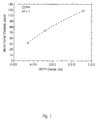
- Figure 1 is a graphic representation of the Marsh Funnel viscosity versus the CDP dosage.
- the term "CDP" shall be understood to refer to the trade name for a polymer based product within the scope of this invention marketed by KB Technologies Ltd.
- Figure 2 is a chart showing a comparison of viscosity development efficiency using a composition and method of this invention.
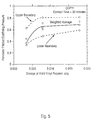
- Figure 3 is a graphic representation of the fluid loss control characteristics of the composition and method of this invention in comparison to prior art compositions and methods. Figure 3 also shows the effects of hydration time on fluid loss control of a composition and method of this invention and on a prior art polymer composition and method, both compared to bentonite.
- Figure 4 is a chart showing filtration control performance versus time at equal hydration times (30 minutes) for a preferred embodiment of this invention and for a composition of the prior art.
- Figure 5 is a graphic representation of peak values of perimeter friction/cell pressure from extraction testing for fine sand specimens drilled under CDP slurries.
- Figure 6 is a graphic representation of a comparison of perimeter load transfer coefficients for various materials.
- Figure 7 is a graphic representation of viscosity development efficiency of CDP versus emulsion PHPA at high dosage ranges.
- Figure 8 is a graphic representation of a comparison of mean normalized perimeter shear for 24 hours contact time.
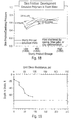
- Figures 9 and 10 are graphic representations of borehole profiles for pile holes bored using the earth stabilization fluids of this invention.
- Figure 11 is a graphic representation of load test results measured as a function of depth versus unit shear resistance for concrete piles cast in holes bored using the earth stabilization fluids of this invention.
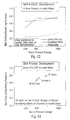
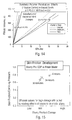
- Figures 12, 13, and 14 are graphic representations of the "skin friction development" and filtration control effects for bored piles constructed using the earth stabilization fluids of this invention.
- Figures 15, 16, 17, and 18 are graphic representations of the "skin friction development" of model bored piles constructed using the earth stabilization fluids of this invention in comparison to the prior art use of bentonite and attapulgite.
- Figure 19 is a graphic representation of load test results in a bored pile constructed using the earth stabilization fluids of this invention compared to the conventional use of bentonite.
- an earth support fluid is formulated as an aqueous slurry having suspended therein a plurality of masses of partially-hydrated, or hydrating, water-soluble, water-swellable, hydratable and/or water-dispersible compositions (the "composition masses").
- the earth support fluids contain suspended therein partially-dissolved and/or hydrated and/or dispersible synthetic or natural polymers, resins and/or latexes; and all grafts of the above compositions.
- the molecular weight of the composition(s) may vary over a wide range, e.g., 10,000 - 40,000,000 or higher.
- the invention finds its greatest usefulness when anionic acrylic polymers having molecular weights of 100,000 or more, preferably one million or more, and most preferably in excess of 10,000,000 are applied to form the continuous phase as well as all or a portion of the discontinuous phase, which is the plurality of hydrating or hydrated polymer masses.
- Cationic polymers may also be added to the continuous anionic polymer phase to enhance the structuring characteristics of the fluid, or to produce or supplement a discontinuous phase.
- the fluid can be prepared or used without the composition masses, but with a sufficient concentration of a selected functionally effective polymer to provide adequate viscosity and/or earth binding capacity to provide one or more of the following functions: add cohesion to granular or permeable soils by acting as a permeating adhesive; limit or control loss of the fluid into granular or permeable soils and support the walls of the excavation via hydrostatic pressure transfer by impregnating the pore system of the soil with viscous polymer fluid which resists displacement, or by using a fluid so viscous that it cannot freely permeate the soil; improve, through cohesion enhancement and adhesive effects, the loading and conveyance of excavated soil spoils on and in tools such as augers and grabs; allow improved bonding of concrete to soil, and improved frictional load transfer as compared with existing slurry technologies.
- a selected functionally effective polymer to provide adequate viscosity and/or earth binding capacity to provide one or more of the following functions: add cohesion to granular or permeable soil
- the anionicity of the polymer may be obtained from the hydrolysis of acrylamide during the polymerization or from the copolymerization of acrylamide with the anionic monomers comprising acrylic acid, methacrylic acid, maleic acid, maleic anhydride, fumaric acid, itaconic acid, vinyl or, styrene sulfonic acid, 2-acrylamido-2-methylpropane sulfonic acid (AMPS®) and the like, and water soluble salts thereof.
- the preferred anionic monomers are acrylic acid, methacrylic acid, maleic acid, vinyl or styrene sulfonates and AMPS® or their salts.
- Copolymers comprising acrylamide and/or other non-ionic monomer, with more than one anionic monomer foregoing is also within the scope of the invention.
- the molar percentage of the comonomers in the polymer may vary within certain limits, provided that the total adds up to 100%.
- the anionic charge density will vary from 5 % to 90%, preferably 10% to 80%, and most preferably 35% to 65% in the polymer.
- the composition, anionicity, and molecular weight of the copolymer may be optimized for the particular earth formation and water conditions in order to achieve the desired drilling, boring, or excavation and earth supporting functions.
- the anionic copolymer of the invention may be further modified by incorporating certain cationic monomers in the polymer forming ampholytic polymers.
- the cationic monomers are selected from the group consisting of: diallyldimethylammonium chloride, quaternized dimethylaminoethyl (meth)acrylates, and N,N-dimethylaminopropyl methacrylamide and combinations thereof. These cationic constituents may be reacted to form acid salts or quaternized using methyl chloride or dimethyl sulfate.
- Non-ionic monomers for use in the practice of the present invention are selected from the group consisting: acrylamide, methacrylamide, C 1 to C 20 acrylates, N-vinyl pyrrolidone, vinyl acetate, styrene, N-vinyl formamide, N-vinyl acetamide or mixtures of the forgoing. Especially preferred is acrylamide.
- a small amount of water insoluble/hydrophobic monomers such as C 5 to C 20 long chain alkylates, hydroxyalkylates, and N-alkyl substituted acrylamides may also be incorporated in the copolymer of the invention.
- These hydrophobic groups tend to associate with one another in an aqueous solution to form an inter/intra molecular association. As a result, the solution viscosity is increased and the viscosity is relatively insensitive to salts as compared to polymers without the hydrophobic groups.
- Polymerization of the monomers may be conducted in the presence of a crosslinking agent to form the crosslinked or branched composition.
- the crosslinking agent comprises molecules having either a double bond and a reactive group, two reactive groups or two double bonds.
- the agent may be selected from a group comprising N,N-methylenebisacrylamide, N,N-methylenebismethacrylamide, polyethyleneglycol di(meth)acrylate, glycidyl acrylate, acrolein, N-methylolacrylamide, alkylaldehydes C 1 -C 42 , glyoxal, diallylamine, triallylammonium salts, ammonia, C 1 to C 25 amines (including diamine or triamine), epichlorohydrin, diepoxy compounds or the like and mixtures of the foregoing.
- the crosslinking or branching is due to the inter or intra molecular reactions of the monomeric units in the polymer chain with the crosslinking agent.
- the agent is to be used in sufficient quantities to assure a crosslinked or branched composition so long as the resulting polymer is still water soluble or hydratable.
- 0.001% to 20%, and more preferably 0.01% to 10% based on the total monomer weight is used for the purpose.
- the proportion of these materials in this application can range from 0.01 to 300 kilograms per cubic meter by dry weight of polymer on volume of water or slurry.
- FIG. 2 is a chart showing a comparison of viscosity development efficiency using a composition and method of this invention.
- composition pearls or masses can exhibit a finite and controllable life span in the excavation fluid. This life span can range from several minutes to several weeks based on the composition chemistry, physical and chemical properties of the excavation fluid.
- the composition masses' life span can be controlled by any one or a combination of the following chemical mechanisms: (1) degree of crosslinking and/or branching; (2) method of crosslinking and/or branching; (3) solubility, and/or hydrophilic/hydrophobic nature of the compositions; and (4) inclusion of coadditives and/or surface treatments to the compositions.
- composition masses' life span may be influenced in-situ either positively or negatively by continued exposure to shear stress, exposure to cations or electrolytes, exposure to earth solids, or continued hydration over time.
- a composition pearl or mass can be defined as a discrete constituent, or element, existing independently within an excavation fluid, and possessing the characteristics given above in the Summary of Invention. These pearls or masses impart unique performance characteristics to the fluid allowing for the reduction of fluid loss to the excavated formation.
- the composition pearls' or masses' ability to decrease formation porosity at the formation interface is achieved through the pearls or masses being drawn into the formation voids and completely or partially plugging and sealing these voids.
- composition pearls or masses build on one another they constrict or plug pore throats to reduce fluid loss.
- a filter cake or in-depth soil matrix seal of synthetic or natural polymer and/or resin is formed.
- This filter cake or seal may incorporate colloidal or dissolved water soluble polymer or resin to further improve filtration control and filter cake construction.
- the optimization of these pearls or masses is a significant determinant of the performance and soil-sealing properties of the fluid and the filter cake or matrix seal.
- These composition pearls or masses of synthetic or natural polymer or resin or combinations thereof allow for the elimination of bentonite, silt, and/or other colloidal or finely divided material from the fluid design when used in one method of this invention.
- the interaction between the pearls or masses, the polymer, and the earth forms a filter cake on and within the excavation walls and, to a greater degree in coarse-grained soils, a polymer/soil viscous conglomerate or structure comprising the in-situ soil grains and the polymer/gel fluid which permeates the pore matrix of the soil under hydrostatic pressure.
- the polymer filter cake and the in-depth polymer/soil structure significantly assist in maintaining a stable side wall in the soil formation.
- Side wall stabilization is enhanced by reduction in fluid loss to the formation, maintenance of hydrostatic pressure differential transferred through the wall cake and in-depth matrix seal, and increased earth binding capacity of the fluid.
- the polymer filter cake, or polymer/soil matrix, produced by this invention significantly reduces the fluid loss to the surrounding formation. Excessive fluid loss to the soil formation, especially when the lost fluid is water or low-dosage polymer/water fluid, hydrates the formation and disrupts the natural cohesive forces between formation solids. This loss of cohesive forces causes side wall sloughing and cave-ins.
- the polymer/soil matrix maintains a significantly more stable excavation than that known in the prior an by reducing or inhibiting the hydration of the formation and/or changes in soil pore pressure and maintaining a hydrostatic pressure differential through or across the polymer/soil matrix.
- Figure 3 shows the fluid loss control versus polymer hydration time of a preferred embodiment of this invention and two other commercially available construction drilling slurry products. Hydration times shown in Figure 3 are time elapsed between introduction of polymer into mix water and initiation of filtration test. Hydration time is a principal determinant of the presence, abundance and quality of the partially-hydrated or hydrating gel masses in the fluid. Generally, as hydration time is increased, the number of discrete gel masses is reduced and the gel masses which are present become larger and more elastic.
- Figure 4 is a chart comparing filtration control performance of a preferred embodiment of this invention to filtration control of a prior-art polymer fluid, when both polymers have equal times of hydration.
- the polymer materials are introduced into the fluid by direct addition into the mouth of the borehole or excavation and the excavating or drilling tools are used to mix the fluid in-situ without benefit of other specialized mixing or pre-mixing equipment or procedure.
- the materials used to create the earth support slurry are introduced indirectly into the mouth of the borehole or excavation, without the excavating or drilling tools being exclusively used to mix the fluid in-situ. Material would be added to the system with the benefit of other specialized mixing, pre-mixing equipment, hoppers, or other indirect procedures.
- the charge density characteristics of the polymers of the invention are a primary factor in the earth binding capacity of the fluid.
- Earth binding capacity is a polymer's or material's ability and capacity to bond to and stabilize exposed or excavated earth. This affinity functions to improve side wall stabilization, borehole gauge and removal of excavated earth.
- Charge density, or the ratio of anionically and/or cationically charged pendant units on the polymer, is a primary contributor to the degree of earth binding capacity a polymer possesses.
- the excavation carrying capacity or the ability of the excavation tools or systems to hold and remove increased loadings of earth, is significantly improved due to the earth binding capacity of the slurry.
- the improved earth binding capacity allows removal of excavated solids, or earth, with excavation tools not previously successful when prior art materials have been used.
- Improved excavation carrying capacity increases the efficiency of the excavation operations.
- the polymer is a water-soluble or partially water-soluble or hydratable or water-dispersible linear, branched, crosslinked, partially-crosslinked, or grafted material, which is further treated with hydrophobic surfactant to retard hydration or through blending the materials.
- Hydrophobic surfactants can be added by in-situ co-addition, coating, micro encapsulation, or physical processing.
- the polymer of the subject invention is non-crosslinked and water-soluble, partially water-soluble, hydratable or water-dispersible
- the granulometry, hydrophilicity/hydrophobicity, molecular weight, rate of dissolution, and other factors are combined with an application technique which exploits the transitory hydrational phase (the period of time during which the polymer is suspended in the fluid as discrete partially-dissolved or dissolving masses or pearls) to accomplish control of fluid loss.
- Hydrophobic surfactants can be incorporated into the polymer during manufacture and as an interstitial component dried within the polymer granule or as a post-manufacture surface treatment to retard hydration and prolong the duration of pearls or masses with and without crosslinking.
- the hydrophobic surfactants comprise surface active agents having HLB (hydrophilic/lipophilic balance) values in the range of 2 to 10, preferably less than 8.
- Suitable surfactants include sorbitan esters, phthalic esters, fatty acids, glycerides, glycerines esters, as well as amides and ethoxylated or propoxylated versions of the above.
- a preferred embodiment of this invention incorporates slightly to moderately crosslinked polymers with slight surfactant treatment.
- the pearls or masses are transitory.
- the transitory nature of the pearls or masses is controlled by the type and amount of crosslinking of the polymers.
- the polymer crosslink ruptures over time and the pearls and masses degrade. Hydration, shear and ionization degrade the total polymer and disrupt the mass structure.
- the soluble polymers, pearls, and masses, collapse or degradation can be accelerated by contact with divalent and trivalent cations, oxidizers and/or chlorides.
- This collapse or degradation of the pearls and masses is critical for construction and other industries where concrete, grout, cement, or other materials are placed in a column, wall, or trench. In these applications side wall friction, or side wall load bearing capabilities are important.
- This invention provides for significantly reduced residual interference with side wall characteristics, thereby producing improved structural integrity and load bearing capacity.
- Figure 5 shows a graphical representation of perimeter friction/cell pressure from extraction testing for fine sand specimens drilled utilizing prior art technology and a preferred embodiment polymer. Slurry degradation also improves displacement by concrete, cement, grout, etc. yielding improved quality of the final structure or plug due to decreased contaminant intrusions, voids within, and/or direct contamination of the concrete, cement, grout, etc. of the final structure.
- the hydrated or partially-hydrated natural and synthetic polymers form masses that plug the pores in granular or permeable soils, and thereby slow the seepage of the earth support slurry into the surrounding soil are used.
- Polymers which exhibit earth binding capacity are preferred.
- Figure 8 shows skin friction development of a preferred embodiment of the invention after 24 hours contact time in an experimental drilled shaft.
- the figure shows that the preferred embodiment outperformed bentonite in developing skin friction.
- the figure also shows, by omission when compared to Figure 6, that slurries formulated from attapulgite and from emulsion PHPA failed to maintain a column of slurry in the experimental drilled shafts due to complete fluid loss.
- the polymer of the present invention developed the highest skin friction of the slurry formulations which were capable of maintaining fluid in the experimental drilled shaft for 24 hours.
- dry particles, flakes, agglomerates, or crystals of materials used to prepare a slurry are sorted or produced to consist of various size particulates or flakes, ranging in size from 0.01 mm to 50 mm, preferably 0.01 mm to 10.0 mm, and most preferably 0.10 mm to 2.5 mm as determined by screening with sieves having openings of these sizes.
- the dry particles, flakes, or crystals of materials used to prepare the slurry are of various sizes.
- the materials are produced, sorted and selected in various particle-size sub-ranges to optimize fluid loss control performance in specific types of granular, vugular or fractured earth formations having varying sizes of pores, vugs or fractures.
- the particle size for the granular, flaked or agglomerated polymer ranges from 0.01 mm to 50 mm, preferably 0.01 mm to 10.0 mm, and most preferably 0.1 mm to 2.5 mm, with the majority by weight of the granules being between 0.40 mm and 2.5 mm.
- All embodiments of this invention may be manufactured and used in liquid form, i.e., as an emulsion (oil-continuous or water-continuous), suspension form, dispersion form, solid form, or solution form.
- emulsion oil-continuous or water-continuous
- suspension form dispersion form
- solid form solid form
- solution form i.e., as an emulsion (oil-continuous or water-continuous), suspension form, dispersion form, solid form, or solution form.
- the preferred physical form for anionic acrylic-based polymers is dry granules, flakes or agglomerates.
- One preferred embodiment of this invention is a polymer with anionicity ranging from 35% to 65% with a molecular weight in excess of 100,000, preferably in excess of one million, and most preferably in excess of ten million, as measured prior to cross-linking, which is slightly crosslinked from 0.01% to 10% using either aldehyde, C 1 to C 25 alkylamines including diamine and triamine, and/or methylene bis acrylamide.
- the polymer is either a copolymer of acrylamide and acrylic acid or maleic acid, maleic anhydride, or fumaric acid, or AMPS®, styrene sulfonic acid, vinyl sulfonic acid, methallylsulfonic acid, and their salts and any combination thereof.
- the molar ratio of these components can vary in order to achieve the desired anionicity for the particular formation and water conditions.
- Particle size for the granular polymer in most formation conditions should range from 0.01 mm to 10.0 mm with the majority of the particles being between 0.1 mm and 2.5 mm.
- the invention can be expressed in a variety of preferred embodiments which incorporate various combinations of the attributes of the fluids and the methods described herein.
- the water in the fluid is considered to be bound up intimately with one or more of the polymers, such that the continuous fluid phase is a solution or colloidal dispersion of one or more polymers.
- "free" water may exist in the fluids of the invention or may be liberated from masses of earth solids extracted from the fluids.
- the present invention comprises a method of formulating and using polymer-based or polymer-containing earth support fluids which are capable of some or all of the following functions: controlling fluid loss, stabilizing the formation being excavated, improving loading and removal of earth by excavating tools, and allowing development of high concrete-to-formation friction coefficients.
- the methods may be used in subterranean construction operations, excavations, and well drilling wherein an earth support fluid or drilling fluid is used in a vertical, angled, or horizontal borehole, tunnel, trench, or other excavation.
- the materials tested comprised (1) Super MudTM an industry standard 30% anionic polyacrylamide emulsion with an active polymer content of approximately 30% (a product of Polymer Drilling Systems, Co.); (2) Attapulgite, a processed clay mineral; (3) Bentonite, a processed clay mineral; (4) SlurryPro® CDPTM, a "dry vinyl” synthetic polymer of the invention, and (5) SlurryPro® LSCTM, an emulsion based vinyl synthetic polymer of the invention.
- the SlurryPro polymers (4 and 5) are commercial products of KB Technologies Ltd ("KB"). KB specified that its SlurryPro polymers be mixed under low shear conditions utilizing a Lightnin'® type mixer with a paddle impeller running at 500 rpm for 20 minutes.
- KB also advised that the preferred dosage recommended for optimum overall performance was 1 g of active polymer per liter of water and suggested testing at 2 g of active polymer per liter of water as well to increase cohesion within the excavation sidewalls and the development of a pressure transfer vehicle. As a worst-case dosage, to see the effects of what KB felt would be inadequate polymer dosage, a concentration of 0.5 g/L was also tested.
- the leading supplier of polyacrylamide to the U.S. foundation construction industry advised the University of Houston to mix its product, Super MudTM on a Hamilton Beach high speed mixer for 30 minutes with a dosage of 1 part emulsion polymer to 800 parts of water or about 0.375 g of active polymer per liter.
- a fluid loss study was conducted utilizing a 500 cc filtration cell in which internal pressures could be controlled and which used an interchangeable bonded granular aloxite disk calibrated to specific darcy permeability ratings (e.g. 20 darcy, 50 darcy, and 110 darcy). Nominal mean pore diameters were also specified for some of the disks (e.g. 60 microns for the 20-darcy disks).
- polymer slurries containing a continuous and discontinuous phase were compared to polymer slurries with only a continuous phase and with bentonitic slurries at a charged pressure of either 34,500 Pa or 69,000 Pa (5 psi or 10 psi).
- a solids removal study was conducted utilizing polymeric slurries contaminated with Houston soil taken from outside the laboratory. Each slurry was prepared by mixing on a Lightnin' mixer with a paddle-type impeller. One liter of water was first added to the beaker and stirred at 500 rpm. To the water 40 grams of Houston soil were added and dispersed. To this water-soil mixture 0.3, 0.6, 1.0 and 1.5 grams of SlurryPro® CDPTM and Super Mud® polymer on an active weight basis were added and allowed to mix for 30 minutes. After mixing for 30 minutes the soil-contaminated slurries were transferred to 2.0 liter graduated cylinders.
- the polyamine and polyDADMAC solutions worked in all cases with each type of polymer slurry.
- One concern noted with the polymer slurries made with low doses of polymer was that the addition of both of these materials (polyamine or polyDADMAC) significantly reduced the MF viscosity.
- the two cationic solution polymers were very effective at cleaning virtually all entrained solids from each slurry with little to no impact on the Marsh Funnel viscosity.
- the dosages utilized ranged from 0.5 cc to 10.0 cc of the 5% solutions per liter of polymer fluid. Additions of between 2.0 cc and 5.0 cc appeared to work best in the higher viscosity fluids.
- a dry granular water-soluble polymer slurry of the present invention was tried under a field test in Seattle, Washington.
- the field test drilled over twenty soldier piles for the foundation of a building.
- the new dry polymer demonstrated very good performance in comparison to an industry-standard oil continuous phase emulsion polymer with an average charge density of 30% anionic, which had previously been used, and displayed advantages in controlling fluid loss to the borehole, cleaning the hole and loading the auger, simplifying polymer handling and addition, increasing drilling efficiency, and reducing polymer waste and environmental impact.
- This initial application of the polymer was successful and indicates that the novel dry polymer may be a valuable new tool for the foundation drilling industry.
- CDP solid dry granular polymer of the present invention
- CDP Liquid liquid emulsion analog of the present invention
- the soldier pile holes drilled with slurries prepared from the three different polymers ranged in diameter from 76.2 to 106.7 cm (30 inches to 42 inches), and in depth from 8.5 to 12.8 m (28 feet to 42 feet).
- the formation was glacial till, poorly sorted, with lenses of sand, layers of silty clayey sand, and sandy silt with cobbles and gravel. Water was encountered at various depths within the boreholes, and in some holes strong water flows were encountered.
- One hole was a re-drilling or reaming-out of a water extraction well previously drilled on the property to help lower the water table on site.
- the competitive test showed that the polymers of the invention had advantages over the conventional emulsion polymer with the dry form of the invention demonstrating advantages in ease of use.
- the hole drilled with the higher viscosity fluid has significantly improved side wall stability and gauge as seen in the caliper logs, and significantly higher perimeter load shear results as seen in the load tests.
- the results of the tests run are graphically represented by Figures 9, 10, and 19 of this application.
- KB was then asked to assist in saving the shaft, using materials and methods of the invention. Initially KB added 26.5 l (7 gallons) of 50% sodium hydroxide solution, which did not measurably change the pH, but increased the viscosity from 34 to 68 seconds per quart (no additional polymer added). Secondly 45.3 kg (100 pounds) of sodium bicarbonate were added to slow or stop any continuing hydrolysis of the polymer and to reduce the pH to 10.0. Fifteen pounds of SlurryPro CDP where then added with water, and the hole stabilized and the slurry level rose to within a few feet of the top of the excavation. The hole was then completed successfully with CDP and small additional amounts of caustic and bicarbonate to a depth of 17.70 m (58 feet). The drilling bucket was also replaced with an auger, significantly increasing excavation speed and reducing slurry wastage. The hole was held overnight and concreted the next morning prior to starting the second hole.
- a 2.75 m (108-inch) diameter hole was drilled using SlurryPro CDP from the start.
- Caustic and bicarbonate were used to adjust the slurry pH to 10 and to reduce hardness within the slurry throughout the excavation operation.
- the hole was drilled with an average Marsh Funnel viscosity of 72. Soil conditions were water sensitive clay/sand and shells.
- the hole was drilled to completion at 19.80 mm (65 feet) in six hours with an auger. At completion there was a sand content of1.25 percent at the bottom of the excavation.
Landscapes
- Chemical & Material Sciences (AREA)
- General Life Sciences & Earth Sciences (AREA)
- Life Sciences & Earth Sciences (AREA)
- Engineering & Computer Science (AREA)
- Materials Engineering (AREA)
- Organic Chemistry (AREA)
- Soil Sciences (AREA)
- Soil Conditioners And Soil-Stabilizing Materials (AREA)
- Compositions Of Macromolecular Compounds (AREA)
- Curing Cements, Concrete, And Artificial Stone (AREA)
- Excavating Of Shafts Or Tunnels (AREA)
- Addition Polymer Or Copolymer, Post-Treatments, Or Chemical Modifications (AREA)
- Processes Of Treating Macromolecular Substances (AREA)
- Colloid Chemistry (AREA)
- Macromolecular Compounds Obtained By Forming Nitrogen-Containing Linkages In General (AREA)
- Feeding, Discharge, Calcimining, Fusing, And Gas-Generation Devices (AREA)
- Treatment Of Sludge (AREA)
- Lubricants (AREA)
Claims (37)
- Fluide de stabilisation du sol, comprenantoù ledit fluide a une viscosité à l'entonnoir Marsh (MFV) de 28 ou plus.(a) une phase continue à base aqueuse,(b) un ou plusieurs polymères anioniques choisis parmi les polymères synthétiques, les polymères naturels, leurs sels solubles dans l'eau et leurs combinaisons, ledit ou lesdits polymères anioniques ayant une masse moléculaire de 25 000 ou plus, et(c) un polyélectrolyte cationique,
- Fluide de stabilisation du sol selon la revendication 1, dans lequel la combinaison de polymères forme des éléments fonctionnels, lesdits éléments fonctionnels comprenant une pluralité de perles ou de masses de constitution.
- Fluide de stabilisation du sol selon la revendication 1, dans lequel la combinaison de polymères forme des éléments fonctionnels, lesdits éléments fonctionnels comprenant un réseau polymère.
- Fluide de stabilisation du sol selon la revendication 1, dans lequel la combinaison de polymères forme des éléments fonctionnels, lesdits éléments fonctionnels comprenant une combinaison de perles ou masses de constitution et d'un réseau polymère.
- Fluide de stabilisation du sol selon la revendication 1, dans lequel au moins l'un desdits un ou plusieurs polymères est amphotère.
- Fluide de stabilisation du sol selon la revendication 1, dans lequel au moins l'un desdits un ou plusieurs polymères est un polymère associatif.
- Fluide de stabilisation du sol selon la revendication 6, dans lequel ledit polymère associatif est choisi parmi les dérivés uréthannes, amides et esters de tensioactifs non-ioniques, et leurs combinaisons.
- Fluide de stabilisation du sol selon la revendication 1, dans lequel ledit polymère anionique est obtenu par polymérisation ou copolymérisation de monomères choisis parmi l'acide acrylique, l'acrylamide, le méthacrylamide, l'acide méthacrylique, l'acide maléique, l'anhydride maléique, l'acide fumarique, l'acide itaconique, l'acide vinylsulfonique, l'acide styrènesulfonique, l'acide 2-acrylamido-2-méthylpropanesulfonique, l'acide méthallylsulfonique, l'acide vinylacétique, l'acide allylacétique, l'acrylate de B-hydroxyéthyle, l'acide 4-méthyl-4-pentanoïque, les acides x-halogènacryliques, l'acrylate de B-carboxyéthyle, leurs sels solubles dans l'eau, et leurs combinaisons.
- Fluide de stabilisation du sol selon la revendication 1, dans lequel ledit polymère anionique est un polymère synthétique ayant une masse moléculaire supérieure à 1 000 000.
- Fluide de stabilisation du sol selon la revendication 1, dans lequel au moins l'un desdits un ou plusieurs polymères est un polymère naturel ayant une masse moléculaire supérieure à 50 000.
- Fluide de stabilisation du sol selon la revendication 1, dans lequel au moins l'un de ladite combinaison d'un ou plusieurs polymères anioniques est réticulé selon un taux de 0,01 à 10 % par rapport à la masse totale des monomères.
- Fluide de stabilisation du sol selon la revendication 1, dans lequel au moins l'un dudit ou desdits polymères anioniques est un polymère vinylique.
- Fluide de stabilisation du sol selon la revendication 1, dans lequel au moins l'un desdits un ou plusieurs polymères est un produit de la réaction d'un ou plusieurs monomères choisis parmi l'acide acrylique, l'acrylamide, le méthacrylamide, l'acide méthacrylique, l'acide maléique, l'anhydride maléique, l'acide fumarique, l'acide itaconique, l'acide vinylsulfonique, l'acide styrènesulfonique, l'acide 2-acrylamido-2-méthylpropanesulfonique, l'acide méthallylsulfonique, l'acide vinylacétique, l'acide allylacétique, l'acrylate de B-hydroxyéthyle, l'acide 4-méthyl-4-pentanoïque, les acides x-halogènacryliques, l'acrylate de B-carboxyéthyle, leurs sels solubles dans l'eau, et leurs combinaisons.
- Fluide de stabilisation du sol selon la revendication 1, dans lequel ledit fluide de stabilisation a une viscosité à l'entonnoir Marsh supérieure à 35 secondes.
- Fluide de stabilisation du sol selon la revendication 12, qui comprend en outre un polymère naturel choisi parmi les polysaccharides, les gommes, les biopolymères, les alginates et leurs combinaisons.
- Fluide de stabilisation du sol selon la revendication 1, dans lequel ledit polymère synthétique de ladite combinaison d'un ou plusieurs polymères anioniques est le produit de la réaction d'un ou plusieurs monomères choisis parmi l'acrylamide, l'acide 2-méthacrylamido-2-méthylpropylsulfonique, l'acide styrènesulfonique, l'acide vinylsulfonique, les acrylates de sulfoalkyle, les méthacrylates d'alkyle, les n-sulfoalkylacrylamides, les méthacrylamides, l'acide allylsulfonique, l'acide méthallylsulfonique, l'allylglycidyléthersulfonate, leurs sels et leurs mélanges.
- Fluide de stabilisation du sol selon la revendication 1, dans lequel ledit polymère synthétique de ladite combinaison d'un ou plusieurs polymères est le produit de la réaction d'un ou plusieurs monomères choisis parmi les composés choisis parmi la méthacryloxyéthyldiméthylamine, la diméthacrylamidopropyldiméthylamine, l'acryloxyéthyldiméthylamine, l'acrylamidométhylpropyldiméthylamine, le chlorure de diméthyldiallylammonium, le chlorure de diéthyldiallylammonium, la diméthylallyloxyéthylamine, et leurs sels d'acides et leurs analogues sulfate de méthyle et chlorure de méthyle, et leurs mélanges.
- Fluide de stabilisation du sol selon la revendication 1, qui comprend en outre l'incorporation d'un ou plusieurs monomères cationiques dans lesdits un ou plusieurs polymères anioniques, ledit monomère cationique étant choisi parmi le chlorure de diallyldiméthylammonium, les (méth)acrylates de diméthylaminoéthyle quaternisés, les méthacrylates et acrylates en C1 à C20, le N,N-diméthylaminopropylméthacrylamide, leurs sels solubles dans l'eau et leurs combinaisons.
- Fluide de stabilisation du sol selon la revendication 18, qui comprend en outre un polymère cationique choisi parmi les produits de la réaction de l'épichlorhydrine ou de dihalogènalcanes, et les amines.
- Fluide de stabilisation du sol selon la revendication 18, dans lequel ledit polymère cationique est une polyéthylène-imine.
- Fluide de stabilisation du sol selon la revendication 1, dans lequel au moins l'un desdits un ou plusieurs polymères est le produit de la réaction d'un ou plusieurs monomères non-ioniques, lesdits monomères non-ioniques étant choisis parmi l'acrylamide, le méthacrylamide, la N-vinylpyrrolidone, l'acétate de vinyle, le styrène, le N-vinylformamide, le N-vinylacétamide, leurs sels solubles dans l'eau et leurs combinaisons.
- Procédé de préparation et d'utilisation d'un fluide de stabilisation du sol pour la formation d'une cavité dans le sol, le procédé consistant :(a) à introduire une phase continue à base aqueuse dans une cavité du sol ;(b) à ajouter à ladite phase continue un ou plusieurs polymères choisis parmi les polymères synthétiques, les polymères naturels, leurs sels solubles dans l'eau et leurs combinaisons, où au moins l'un desdits un ou plusieurs polymères est anionique ;(c) à ajouter à ladite phase continue un polyélectrolyte cationique de façon à réaliser un fluide ayant une viscosité à l'entonnoir Marsh (MFV) de 28 ou plus, et(d) à excaver pour former ou agrandir ladite cavité du sol.
- Procédé et utilisation selon la revendication 22, dans lesquels lesdits polymères synthétiques sont les produits de la réaction d'un ou plusieurs monomères choisis parmi l'acide acrylique, l'acrylamide, le méthacrylamide, l'acide méthacrylique, l'acide maléique, l'anhydride maléique, l'acide fumarique, l'acide itaconique, l'acide vinylsulfonique, l'acide styrènesulfonique, l'acide 2-acrylamido-2-méthylpropanesulfonique, l'acide méthallylsulfonique, l'acide vinylacétique, l'acide allylacétique, l'acrylate de B-hydroxyéthyle, l'acide 4-méthyl-4-pentanoïque, les acides x-halogènacryliques, l'acrylate de B-carboxyéthyle, leurs sels solubles dans l'eau, et leurs combinaisons.
- Procédé et utilisation selon la revendication 22, dans lesquels lesdits polymères naturels sont choisis parmi les polysaccharides, les gommes, les biopolymères, les alginates, les cellulosiques, les cellulosiques modifiés, les gommes de guar, les amidons, leurs sels solubles dans l'eau et leurs combinaisons.
- Procédé et utilisation selon la revendication 22, dans lesquels lesdits polymères synthétiques sont formés à partir de monomères choisis parmi l'acide acrylique, l'acide méthacrylique, l'acide maléique, l'anhydride maléique, l'acide fumarique, l'acide itaconique, l'acide vinylsulfonique, l'acide styrènesulfonique, l'acide 2-acrylamido-2-méthylpropanesulfonique, leurs sels solubles dans l'eau et leurs combinaisons.
- Procédé et utilisation selon la revendication 22, dans lesquels lesdits polymères naturels sont choisis parmi l'amidon, la carboxyméthylcellulose, la gomme de guar, la gomme arabique, la gomme xanthane, le whélane, la gélose, l'agar-agar, la gomme de caroube, leurs sels solubles dans l'eau et leurs combinaisons.
- Procédé et utilisation selon la revendication 22, dans lesquels lesdits un ou plusieurs polymères ont une efficacité fonctionnelle pour former une pluralité de perles ou masses de constitution dans ladite phase continue.
- Procédé et utilisation selon la revendication 22, dans lesquels lesdits un ou plusieurs polymères ont une efficacité fonctionnelle pour assurer une régulation de la perte de fluide dans ladite cavité du sol.
- Procédé et utilisation selon la revendication 22, dans lesquels lesdits un ou plusieurs polymères ont une efficacité fonctionnelle pour stabiliser le sol au voisinage de la cavité.
- Procédé et utilisation selon la revendication 22, dans lesquels lesdits un ou plusieurs polymères ont une efficacité fonctionnelle pour renforcer la cohésion des matières solides extractibles du sol, pour faciliter l'extraction, de ladite cavité, des solides du sol perturbés.
- Procédé et utilisation selon la revendication 22, dans lesquels lesdits un ou plusieurs polymères ont une efficacité fonctionnelle pour améliorer les caractéristiques de transfert de charge du périmètre des éléments structuraux formés dans ladite cavité du sol.
- Procédé et utilisation selon la revendication 22, dans lesquels ledit fluide a une viscosité à l'entonnoir Marsh de 45 secondes ou plus.
- Procédé et utilisation selon la revendication 22, qui comprennent en outre l'étape d'addition d'un hydroxyde soluble.
- Procédé et utilisation selon la revendication 33, qui comprennent en outre l'étape d'addition dudit hydroxyde soluble directement audit fluide de stabilisation du sol, après que ledit fluide se trouve dans ladite cavité du sol.
- Procédé et utilisation selon la revendication 33, qui comprennent en outre l'addition d'un produit régulateur de pH choisi parmi les bicarbonates, les phosphates, les esters phosphates, les phosphonates, les acides et leurs combinaisons.
- Fluide de stabilisation du sol, comprenant :(a) une phase continue à base aqueuse,(b) un polymère anionique à base acrylique, ayant une densité de charge de 3 à 90 % et une masse moléculaire de 50 000 ou plus, et(c) un polyélectrolyte cationique qui réagit avec la phase continue anionique pour créer dans le fluide des masses ou perles discrètes.
- Fluide pour utilisation dans l'excavation, le forage ou d'autres applications industrielles, comprenant :(a) une phase continue à base aqueuse,(b) un polymère anionique ayant une densité de charge de 3 à 90 % et une masse moléculaire de 100 000 ou plus,(c) un produit cationique, et(d) un hydroxyde soluble.
Priority Applications (1)
| Application Number | Priority Date | Filing Date | Title |
|---|---|---|---|
| EP99123096A EP0997515B1 (fr) | 1995-02-01 | 1996-01-19 | Compositons fluides contenant un polymère pour stabiliser des sols et procédé pour les utliser (1997/47) |
Applications Claiming Priority (3)
| Application Number | Priority Date | Filing Date | Title |
|---|---|---|---|
| US08/382,121 US5663123A (en) | 1992-07-15 | 1995-02-01 | Polymeric earth support fluid compositions and method for their use |
| US382121 | 1995-02-01 | ||
| PCT/US1996/000880 WO1996023849A1 (fr) | 1995-02-01 | 1996-01-19 | Compositions fluides contenant un polymere pour stabiliser des sols et procede pour les utiliser |
Related Child Applications (1)
| Application Number | Title | Priority Date | Filing Date |
|---|---|---|---|
| EP99123096A Division EP0997515B1 (fr) | 1995-02-01 | 1996-01-19 | Compositons fluides contenant un polymère pour stabiliser des sols et procédé pour les utliser (1997/47) |
Publications (2)
| Publication Number | Publication Date |
|---|---|
| EP0807151A1 EP0807151A1 (fr) | 1997-11-19 |
| EP0807151B1 true EP0807151B1 (fr) | 2000-08-16 |
Family
ID=23507599
Family Applications (2)
| Application Number | Title | Priority Date | Filing Date |
|---|---|---|---|
| EP99123096A Expired - Lifetime EP0997515B1 (fr) | 1995-02-01 | 1996-01-19 | Compositons fluides contenant un polymère pour stabiliser des sols et procédé pour les utliser (1997/47) |
| EP96905191A Expired - Lifetime EP0807151B1 (fr) | 1995-02-01 | 1996-01-19 | Compositions fluides contenant un polymere pour stabiliser des sols et procede pour les utiliser |
Family Applications Before (1)
| Application Number | Title | Priority Date | Filing Date |
|---|---|---|---|
| EP99123096A Expired - Lifetime EP0997515B1 (fr) | 1995-02-01 | 1996-01-19 | Compositons fluides contenant un polymère pour stabiliser des sols et procédé pour les utliser (1997/47) |
Country Status (11)
| Country | Link |
|---|---|
| US (1) | US5663123A (fr) |
| EP (2) | EP0997515B1 (fr) |
| JP (1) | JPH10513491A (fr) |
| AT (2) | ATE195546T1 (fr) |
| AU (1) | AU692368B2 (fr) |
| CA (1) | CA2212031A1 (fr) |
| DE (2) | DE69609814T2 (fr) |
| DK (1) | DK0807151T3 (fr) |
| ES (2) | ES2151148T3 (fr) |
| PT (2) | PT807151E (fr) |
| WO (1) | WO1996023849A1 (fr) |
Cited By (2)
| Publication number | Priority date | Publication date | Assignee | Title |
|---|---|---|---|---|
| DE102014116682A1 (de) | 2013-11-15 | 2015-05-21 | Wolfgang BITSCH | Verfahren zur Entwässerung von Bentonit-Suspensionen |
| RU2768348C1 (ru) * | 2021-07-07 | 2022-03-23 | федеральное государственное бюджетное образовательное учреждение высшего образования "Московский государственный технический университет имени Н.Э. Баумана (национальный исследовательский университет)" (МГТУ им. Н.Э. Баумана) | Способ укрепления грунта |
Families Citing this family (91)
| Publication number | Priority date | Publication date | Assignee | Title |
|---|---|---|---|---|
| DE69425982T2 (de) * | 1993-05-28 | 2001-04-26 | Den Norske Stats Oljeselskap A/S, Stavanger | Abdichtflüssigkeit zum abdichten einer unterirdischen formation |
| US6322293B1 (en) * | 1997-01-29 | 2001-11-27 | Patrick J. Stephens | Method for filling voids with aggregate material |
| US6322292B1 (en) * | 1997-01-29 | 2001-11-27 | Lloyd P. Zenari | Backfilling underground voids |
| AU6169598A (en) | 1997-02-12 | 1998-08-26 | K B Technologies Ltd. | Composition and method for a dual-function soil-grouting excavating or boring fluid |
| US6897186B2 (en) | 1997-02-12 | 2005-05-24 | Kg International, Llc | Composition and method for dual function soil grouting excavating or boring fluid |
| US6060434A (en) * | 1997-03-14 | 2000-05-09 | Halliburton Energy Services, Inc. | Oil based compositions for sealing subterranean zones and methods |
| US5913364A (en) * | 1997-03-14 | 1999-06-22 | Halliburton Energy Services, Inc. | Methods of sealing subterranean zones |
| US6258757B1 (en) * | 1997-03-14 | 2001-07-10 | Halliburton Energy Services, Inc. | Water based compositions for sealing subterranean zones and methods |
| US6258859B1 (en) * | 1997-06-10 | 2001-07-10 | Rhodia, Inc. | Viscoelastic surfactant fluids and related methods of use |
| US6076997A (en) * | 1997-12-03 | 2000-06-20 | Mbt Holding Ag | Deep mix soil stabilization method |
| US5947644A (en) * | 1998-04-03 | 1999-09-07 | Marathon Oil Company | Construction of a fluid impermeable subterranean barrier wall |
| GB2361948B (en) | 1998-11-06 | 2003-04-16 | Baker Hughes Inc | Drilling fluid systems with improved fluid loss properties |
| JP2000169838A (ja) * | 1998-12-10 | 2000-06-20 | Penta Ocean Constr Co Ltd | 孔壁自立工法用薬剤組成物 |
| US6328106B1 (en) | 1999-02-04 | 2001-12-11 | Halliburton Energy Services, Inc. | Sealing subterranean zones |
| US6271181B1 (en) | 1999-02-04 | 2001-08-07 | Halliburton Energy Services, Inc. | Sealing subterranean zones |
| US6281172B1 (en) | 1999-04-07 | 2001-08-28 | Akzo Nobel Nv | Quaternary nitrogen containing amphoteric water soluble polymers and their use in drilling fluids |
| MXPA01010220A (es) * | 1999-04-07 | 2002-03-27 | Akzo Nobel Nv | Polimerosanfotericos solubles en agua que contienen nitrogeno cuaternario y su uso en fluidos de perforacion. |
| US6855671B2 (en) * | 1999-10-01 | 2005-02-15 | Baker Hughes Incorporated | Water based fluids comprising multivalent salts and low molecular weight, low charge cationic polyacrylamide copolymers |
| US7439209B2 (en) | 1999-11-05 | 2008-10-21 | Baker Hughes Incorporated | Drilling fluid systems with improved fluid loss properties |
| US6465587B1 (en) | 2000-12-08 | 2002-10-15 | Hercules Incorporated | Polymeric fluid loss additives and method of use thereof |
| ITMI20011113A1 (it) | 2001-05-25 | 2002-11-25 | Eni Spa | Procedimento per diminuire la produzione di acqua nei pozzi petroliferi |
| US6814145B2 (en) * | 2001-08-02 | 2004-11-09 | Schlumberger Technology Corporation | Shear-sensitive plugging fluid for plugging and a method for plugging a subterranean formation zone |
| US7066284B2 (en) | 2001-11-14 | 2006-06-27 | Halliburton Energy Services, Inc. | Method and apparatus for a monodiameter wellbore, monodiameter casing, monobore, and/or monowell |
| US6691780B2 (en) | 2002-04-18 | 2004-02-17 | Halliburton Energy Services, Inc. | Tracking of particulate flowback in subterranean wells |
| US6702044B2 (en) | 2002-06-13 | 2004-03-09 | Halliburton Energy Services, Inc. | Methods of consolidating formations or forming chemical casing or both while drilling |
| EP1525250B1 (fr) * | 2002-07-31 | 2007-08-29 | Dow Corning Corporation | Resine de silicone pour la regulation des pertes de liquides de forage |
| US7741251B2 (en) * | 2002-09-06 | 2010-06-22 | Halliburton Energy Services, Inc. | Compositions and methods of stabilizing subterranean formations containing reactive shales |
| WO2004050791A1 (fr) * | 2002-12-02 | 2004-06-17 | Genesis International Oilfield Services Inc. | Fluide de forage et procedes de son utilisation |
| US7115546B2 (en) * | 2003-01-31 | 2006-10-03 | Bj Services Company | Acid diverting system containing quaternary amine |
| US6951250B2 (en) * | 2003-05-13 | 2005-10-04 | Halliburton Energy Services, Inc. | Sealant compositions and methods of using the same to isolate a subterranean zone from a disposal well |
| US8278250B2 (en) | 2003-05-16 | 2012-10-02 | Halliburton Energy Services, Inc. | Methods useful for diverting aqueous fluids in subterranean operations |
| US8631869B2 (en) | 2003-05-16 | 2014-01-21 | Leopoldo Sierra | Methods useful for controlling fluid loss in subterranean treatments |
| US8091638B2 (en) | 2003-05-16 | 2012-01-10 | Halliburton Energy Services, Inc. | Methods useful for controlling fluid loss in subterranean formations |
| US8181703B2 (en) | 2003-05-16 | 2012-05-22 | Halliburton Energy Services, Inc. | Method useful for controlling fluid loss in subterranean formations |
| US8251141B2 (en) | 2003-05-16 | 2012-08-28 | Halliburton Energy Services, Inc. | Methods useful for controlling fluid loss during sand control operations |
| US7759292B2 (en) | 2003-05-16 | 2010-07-20 | Halliburton Energy Services, Inc. | Methods and compositions for reducing the production of water and stimulating hydrocarbon production from a subterranean formation |
| US7066258B2 (en) * | 2003-07-08 | 2006-06-27 | Halliburton Energy Services, Inc. | Reduced-density proppants and methods of using reduced-density proppants to enhance their transport in well bores and fractures |
| US7766099B2 (en) | 2003-08-26 | 2010-08-03 | Halliburton Energy Services, Inc. | Methods of drilling and consolidating subterranean formation particulates |
| US8167045B2 (en) | 2003-08-26 | 2012-05-01 | Halliburton Energy Services, Inc. | Methods and compositions for stabilizing formation fines and sand |
| US20050173116A1 (en) | 2004-02-10 | 2005-08-11 | Nguyen Philip D. | Resin compositions and methods of using resin compositions to control proppant flow-back |
| US7211547B2 (en) | 2004-03-03 | 2007-05-01 | Halliburton Energy Services, Inc. | Resin compositions and methods of using such resin compositions in subterranean applications |
| US20050215439A1 (en) * | 2004-03-29 | 2005-09-29 | Blair Cecil C | Clay stabilization in sub-surface formations |
| US7541318B2 (en) | 2004-05-26 | 2009-06-02 | Halliburton Energy Services, Inc. | On-the-fly preparation of proppant and its use in subterranean operations |
| US7299875B2 (en) | 2004-06-08 | 2007-11-27 | Halliburton Energy Services, Inc. | Methods for controlling particulate migration |
| US7281580B2 (en) | 2004-09-09 | 2007-10-16 | Halliburton Energy Services, Inc. | High porosity fractures and methods of creating high porosity fractures |
| US7757768B2 (en) | 2004-10-08 | 2010-07-20 | Halliburton Energy Services, Inc. | Method and composition for enhancing coverage and displacement of treatment fluids into subterranean formations |
| US7883740B2 (en) | 2004-12-12 | 2011-02-08 | Halliburton Energy Services, Inc. | Low-quality particulates and methods of making and using improved low-quality particulates |
| US8703659B2 (en) * | 2005-01-24 | 2014-04-22 | Halliburton Energy Services, Inc. | Sealant composition comprising a gel system and a reduced amount of cement for a permeable zone downhole |
| US7287586B2 (en) * | 2005-02-01 | 2007-10-30 | Halliburton Energy Services, Inc. | Compositions and methods for plugging and sealing a subterranean formation |
| WO2006083914A2 (fr) * | 2005-02-02 | 2006-08-10 | Total Separation Solutions, Llc | Structure de filtre in situ |
| US7216705B2 (en) | 2005-02-22 | 2007-05-15 | Halliburton Energy Services, Inc. | Methods of placing treatment chemicals |
| US7673686B2 (en) | 2005-03-29 | 2010-03-09 | Halliburton Energy Services, Inc. | Method of stabilizing unconsolidated formation for sand control |
| US7448451B2 (en) | 2005-03-29 | 2008-11-11 | Halliburton Energy Services, Inc. | Methods for controlling migration of particulates in a subterranean formation |
| US7318474B2 (en) | 2005-07-11 | 2008-01-15 | Halliburton Energy Services, Inc. | Methods and compositions for controlling formation fines and reducing proppant flow-back |
| MY159180A (en) * | 2005-12-16 | 2016-12-30 | Loadtest Inc | Method and apparatus for investigating a borehole with a caliper |
| US7819192B2 (en) | 2006-02-10 | 2010-10-26 | Halliburton Energy Services, Inc. | Consolidating agent emulsions and associated methods |
| US8613320B2 (en) | 2006-02-10 | 2013-12-24 | Halliburton Energy Services, Inc. | Compositions and applications of resins in treating subterranean formations |
| US7926591B2 (en) | 2006-02-10 | 2011-04-19 | Halliburton Energy Services, Inc. | Aqueous-based emulsified consolidating agents suitable for use in drill-in applications |
| GB0610003D0 (en) * | 2006-05-19 | 2006-06-28 | Ciba Sc Holding Ag | Suppression of Dust |
| US7500521B2 (en) * | 2006-07-06 | 2009-03-10 | Halliburton Energy Services, Inc. | Methods of enhancing uniform placement of a resin in a subterranean formation |
| US7934557B2 (en) | 2007-02-15 | 2011-05-03 | Halliburton Energy Services, Inc. | Methods of completing wells for controlling water and particulate production |
| US20090105097A1 (en) * | 2007-10-22 | 2009-04-23 | Carlos Abad | Degradable Friction Reducer |
| US7703527B2 (en) * | 2007-11-26 | 2010-04-27 | Schlumberger Technology Corporation | Aqueous two-phase emulsion gel systems for zone isolation |
| WO2009091909A2 (fr) * | 2008-01-18 | 2009-07-23 | M-I L.L.C. | Systèmes de gel non aqueux dégradables |
| DE102008016325A1 (de) * | 2008-03-28 | 2009-10-01 | Poligate Ltd. | Boden- oder Fundamentverfestiger |
| BRPI0915391A2 (pt) | 2008-06-23 | 2015-11-03 | M I Drilling Fluids Uk Ltd | copolímero para estabilização de xisto e método de uso |
| US7832962B1 (en) * | 2008-09-19 | 2010-11-16 | Andreyev Engineering Independent Drilling, LLC | Sand slurry injection systems and methods |
| US7762329B1 (en) | 2009-01-27 | 2010-07-27 | Halliburton Energy Services, Inc. | Methods for servicing well bores with hardenable resin compositions |
| US9102865B2 (en) * | 2009-02-16 | 2015-08-11 | Chevron Phillips Chemical Company Lp | Wellbore servicing fluids comprising cationic polymers and methods of using same |
| US8813845B2 (en) * | 2009-08-31 | 2014-08-26 | Halliburton Energy Services, Inc. | Polymeric additives for enhancement of treatment fluids comprising viscoelastic surfactants and methods of use |
| US8881820B2 (en) * | 2009-08-31 | 2014-11-11 | Halliburton Energy Services, Inc. | Treatment fluids comprising entangled equilibrium polymer networks |
| US8887809B2 (en) * | 2009-08-31 | 2014-11-18 | Halliburton Energy Services, Inc. | Treatment fluids comprising transient polymer networks |
| CA2772215C (fr) | 2009-09-01 | 2017-05-23 | Rhodia Operations | Compositions de polymere |
| US8739877B2 (en) * | 2010-01-15 | 2014-06-03 | Halliburton Energy Services, Inc. | Treatment fluids for wetting control of multiple rock types and associated methods |
| US8573302B2 (en) * | 2010-01-15 | 2013-11-05 | Halliburton Energy Services, Inc. | Surfactants and friction reducing polymers for the reduction of water blocks and gas condensates and associated methods |
| US8905135B2 (en) * | 2010-03-24 | 2014-12-09 | Halliburton Energy Services, Inc. | Zero shear viscosifying agent |
| US8590621B2 (en) * | 2010-04-06 | 2013-11-26 | Halliburton Energy Services, Inc. | Low damage seawater based frac pack fluid |
| US8592350B2 (en) | 2010-06-30 | 2013-11-26 | Halliburton Energy Services, Inc. | Surfactant additives used to retain producibility while drilling |
| US8418761B2 (en) | 2010-07-29 | 2013-04-16 | Halliburton Energy Services, Inc. | Stimuli-responsive high viscosity pill |
| US8453741B2 (en) | 2010-09-23 | 2013-06-04 | Halliburton Energy Services, Inc. | Tethered polymers used to enhance the stability of microemulsion fluids |
| WO2012069784A1 (fr) * | 2010-11-25 | 2012-05-31 | Bp Exploration Company Lmited | Consolidation |
| CN105143400A (zh) | 2012-10-09 | 2015-12-09 | 韩国科学技术院 | 使用生物聚合物的土壤稳定和改良方法 |
| WO2014058145A1 (fr) * | 2012-10-09 | 2014-04-17 | 한국과학기술원 | Procédé de stabilisation et d'amélioration de sol utilisant un biopolymère |
| WO2015020640A1 (fr) * | 2013-08-06 | 2015-02-12 | Halliburton Energy Services, Inc. | Composition pour agglomération de fines |
| CN108779387B (zh) * | 2015-11-23 | 2022-07-01 | 艾纳沃技术有限责任公司 | 涂层颗粒以及该涂层颗粒的制备方法和使用方法 |
| CN106350041A (zh) * | 2016-08-25 | 2017-01-25 | 中国石油集团渤海钻探工程有限公司 | 丙烯酰胺类聚合物与油基复配体系及其用作水泥浆承托液的用途 |
| WO2018085340A1 (fr) * | 2016-11-01 | 2018-05-11 | University Of Florida Research Foundation, Inc. | Minéralisation bio-inspirée destinée à des sous-structures géotechniques |
| EP3721048A1 (fr) * | 2017-12-05 | 2020-10-14 | Saudi Arabian Oil Company | Impression de crépine de tubage de puits de forage |
| EP4237654A4 (fr) * | 2020-11-02 | 2024-07-10 | Schlumberger Technology B.V. | Procédé de régulation de perte de fluide comportant deux fluides de traitement |
| CN116396731B (zh) * | 2023-04-17 | 2024-03-22 | 中国石油大学(华东) | 一种页岩地层用疏水缔合高性能水基钻井液及其制备方法与应用 |
| CN117209659B (zh) * | 2023-09-26 | 2025-06-24 | 常州大学 | 一种耐高温、耐盐复合聚合物增粘剂及其制备方法 |
Family Cites Families (50)
| Publication number | Priority date | Publication date | Assignee | Title |
|---|---|---|---|---|
| US3878151A (en) * | 1968-05-28 | 1975-04-15 | Basf Ag | Thickeners for print pastes composed of cross-linked maleic anhydride-alkyl vinyl ether polymers |
| US3657175A (en) * | 1969-06-26 | 1972-04-18 | Standard Brands Chem Ind Inc | Carboxylic acid latices providing unique thickening and dispersing agents |
| US3652497A (en) * | 1970-04-20 | 1972-03-28 | Gen Latex And Chemical Corp | Polymeric thickeners and method of preparing same |
| US3726342A (en) * | 1971-03-24 | 1973-04-10 | Marathon Oil Co | Method of polymer flooding |
| US4167502A (en) * | 1972-12-06 | 1979-09-11 | Rohm And Haas Company | Carboxylic polymeric thickeners |
| US3894980A (en) * | 1973-04-30 | 1975-07-15 | Rohm & Haas | Thickener |
| US3794608A (en) * | 1973-05-11 | 1974-02-26 | Dow Chemical Co | Aqueous coating compositions thickened by a terpolymer of an alkenyl aromatic compound,an unsaturated dicarboxylic acid,and an ether of vinyl benzyl alcohol and an oxyalkylated compound |
| US4076628A (en) * | 1973-06-22 | 1978-02-28 | Phillips Petroleum Company | Drilling fluid compositions and methods of preparing same |
| CH606154A5 (fr) * | 1974-07-02 | 1978-11-15 | Goodrich Co B F | |
| US4138381A (en) * | 1975-04-14 | 1979-02-06 | E. I. Du Pont De Nemours And Company | Polymeric thickeners, processes for their preparation and uses thereof |
| GB1517422A (en) * | 1976-01-14 | 1978-07-12 | Allied Colloids Ltd | Dewatering of sewage sludges |
| US4282928A (en) * | 1977-07-08 | 1981-08-11 | The Dow Chemical Co. | Method for controlling permeability of subterranean formations |
| US4268641A (en) * | 1979-04-24 | 1981-05-19 | Union Carbide Corporation | Acrylic acid-acrylate copolymer thickening agents |
| US4384096A (en) * | 1979-08-27 | 1983-05-17 | The Dow Chemical Company | Liquid emulsion polymers useful as pH responsive thickeners for aqueous systems |
| US4338239A (en) * | 1980-10-10 | 1982-07-06 | Celanese Corporation | Polyacrylate thickening agents |
| US4500436A (en) * | 1980-10-17 | 1985-02-19 | Pabley Avtar S | Saltwater and hard water bentonite mud |
| DE3274743D1 (en) * | 1981-10-15 | 1987-01-29 | Allied Colloids Ltd | Adhesives for prepasted wallcoverings |
| US4506062A (en) * | 1982-08-09 | 1985-03-19 | Allied Colloids Limited | Inverse suspension polymerization process |
| US4421902A (en) * | 1982-09-30 | 1983-12-20 | Rohm And Haas Company | Alkyl, poly(oxyethylene) poly(carbonyloxyethylene) acrylate emulsion copolymers for thickening purposes |
| EP0129329B2 (fr) * | 1983-05-20 | 1998-04-01 | Ciba Specialty Chemicals Water Treatments Limited | Polymères solubles dans l'eau et dispersions les contenant |
| US4526937A (en) * | 1983-08-31 | 1985-07-02 | The B. F. Goodrich Company | Polycarbonates having plasticizers with fugitive activity |
| GB8410497D0 (en) * | 1984-04-25 | 1984-05-31 | Allied Colloids Ltd | Synthesis of vinyl esters |
| GB8331546D0 (en) * | 1983-11-25 | 1984-01-04 | Exxon Research Engineering Co | Polymeric compositions |
| US4554018A (en) * | 1984-02-01 | 1985-11-19 | Allied Colloids Limited | Production of polymeric thickeners and their use in printing |
| GB8412423D0 (en) * | 1984-05-16 | 1984-06-20 | Allied Colloids Ltd | Polymeric compositions |
| GB8414209D0 (en) * | 1984-06-04 | 1984-07-11 | Allied Colloids Ltd | Sub-soil injection of sludge |
| US4892916A (en) * | 1984-08-15 | 1990-01-09 | Allied Colloids Limited | Polymeric thickeners and their production |
| CA1273449A (fr) * | 1984-08-15 | 1990-08-28 | David Farrar | Dispersions concentrees anhydres et stables de polymere |
| EP0172723B2 (fr) * | 1984-08-15 | 1997-11-05 | Ciba Specialty Chemicals Water Treatments Limited | Polymères solubles dans l'eau |
| US4514552A (en) * | 1984-08-23 | 1985-04-30 | Desoto, Inc. | Alkali soluble latex thickeners |
| GB8506751D0 (en) * | 1985-03-15 | 1985-04-17 | Allied Colloids Ltd | Aqueous adhesives |
| US4600761A (en) * | 1985-04-04 | 1986-07-15 | Alco Chemical Corporation | Acrylic emulsion copolymers for thickening aqueous systems and copolymerizable surfactant monomers for use therein |
| EP0214760B1 (fr) * | 1985-08-12 | 1990-06-13 | Ciba Specialty Chemicals Water Treatments Limited | Adhésifs aqueux et leur utilisation |
| US4911736A (en) * | 1985-09-18 | 1990-03-27 | The Standard Oil Company | Emulsifier and stabilizer for water base emulsions and dispersions of hydrocarbonaceous materials |
| US4743698A (en) * | 1985-10-01 | 1988-05-10 | Alco Chemical Corp. | Acrylic emulsion copolymers for thickening aqueous systems and copolymerizable surfactant monomers for use therein |
| US4816551A (en) * | 1985-11-19 | 1989-03-28 | Mi Drilling Fluids Company | Oil based drilling fluids |
| US4683949A (en) * | 1985-12-10 | 1987-08-04 | Marathon Oil Company | Conformance improvement in a subterranean hydrocarbon-bearing formation using a polymer gel |
| US4744418A (en) * | 1986-01-27 | 1988-05-17 | Marathon Oil Company | Delayed polyacrylamide gelation process for oil recovery applications |
| US4844168A (en) * | 1985-12-10 | 1989-07-04 | Marathon Oil Company | Delayed in situ crosslinking of acrylamide polymers for oil recovery applications in high-temperature formations |
| GB8610762D0 (en) * | 1986-05-02 | 1986-06-11 | Allied Colloids Ltd | Soil sealing compositions |
| ES2061508T3 (es) * | 1986-10-01 | 1994-12-16 | Allied Colloids Ltd | Composiciones polimericas solubles en agua. |
| US4724906A (en) * | 1986-12-22 | 1988-02-16 | Marathon Oil Company | Wellbore cementing process using a polymer gel |
| US4722397A (en) * | 1986-12-22 | 1988-02-02 | Marathon Oil Company | Well completion process using a polymer gel |
| EP0335612B1 (fr) * | 1988-03-28 | 1993-01-27 | Ciba Specialty Chemicals Water Treatments Limited | Suppresseur de poussière pour des minéraux |
| US4935547A (en) * | 1988-08-19 | 1990-06-19 | Union Carbide Chemicals And Plastics Company Inc. | Homologation process making higher alcohols |
| US5032295A (en) * | 1989-04-25 | 1991-07-16 | National Starch And Chemical Investment Holding Corporation | Polymers for use in drilling muds |
| CA2088344C (fr) * | 1992-04-10 | 2004-08-03 | Arvind D. Patel | Additif pour fluide de forage et methode pour favoriser l'hydratation |
| AU687354B2 (en) * | 1992-07-15 | 1998-02-26 | K B Technologies Ltd. | Earth support fluid composition and method for its use |
| GB2277759B (en) * | 1993-05-07 | 1997-03-26 | Pumptech Nv | Additives for water-based drilling fluid |
| CA2126938A1 (fr) * | 1993-07-02 | 1995-01-03 | Arvind D. Patel | Additif pour fluide de forage et methode d'inhibition de l'hydratation |
-
1995
- 1995-02-01 US US08/382,121 patent/US5663123A/en not_active Expired - Lifetime
-
1996
- 1996-01-19 DK DK96905191T patent/DK0807151T3/da active
- 1996-01-19 PT PT96905191T patent/PT807151E/pt unknown
- 1996-01-19 JP JP8523602A patent/JPH10513491A/ja active Pending
- 1996-01-19 AT AT96905191T patent/ATE195546T1/de active
- 1996-01-19 EP EP99123096A patent/EP0997515B1/fr not_active Expired - Lifetime
- 1996-01-19 DE DE69609814T patent/DE69609814T2/de not_active Expired - Lifetime
- 1996-01-19 WO PCT/US1996/000880 patent/WO1996023849A1/fr not_active Ceased
- 1996-01-19 EP EP96905191A patent/EP0807151B1/fr not_active Expired - Lifetime
- 1996-01-19 CA CA002212031A patent/CA2212031A1/fr not_active Abandoned
- 1996-01-19 AU AU49015/96A patent/AU692368B2/en not_active Ceased
- 1996-01-19 DE DE69636045T patent/DE69636045T2/de not_active Expired - Lifetime
- 1996-01-19 ES ES96905191T patent/ES2151148T3/es not_active Expired - Lifetime
- 1996-01-19 ES ES99123096T patent/ES2263247T3/es not_active Expired - Lifetime
- 1996-01-19 AT AT99123096T patent/ATE323143T1/de not_active IP Right Cessation
- 1996-01-19 PT PT99123096T patent/PT997515E/pt unknown
Cited By (2)
| Publication number | Priority date | Publication date | Assignee | Title |
|---|---|---|---|---|
| DE102014116682A1 (de) | 2013-11-15 | 2015-05-21 | Wolfgang BITSCH | Verfahren zur Entwässerung von Bentonit-Suspensionen |
| RU2768348C1 (ru) * | 2021-07-07 | 2022-03-23 | федеральное государственное бюджетное образовательное учреждение высшего образования "Московский государственный технический университет имени Н.Э. Баумана (национальный исследовательский университет)" (МГТУ им. Н.Э. Баумана) | Способ укрепления грунта |
Also Published As
| Publication number | Publication date |
|---|---|
| DE69609814D1 (de) | 2000-09-21 |
| WO1996023849A1 (fr) | 1996-08-08 |
| EP0807151A1 (fr) | 1997-11-19 |
| DE69636045T2 (de) | 2006-11-30 |
| CA2212031A1 (fr) | 1996-08-08 |
| PT807151E (pt) | 2001-01-31 |
| ATE323143T1 (de) | 2006-04-15 |
| ES2263247T3 (es) | 2006-12-01 |
| ES2151148T3 (es) | 2000-12-16 |
| AU4901596A (en) | 1996-08-21 |
| DK0807151T3 (da) | 2000-12-18 |
| EP0997515B1 (fr) | 2006-04-12 |
| AU692368B2 (en) | 1998-06-04 |
| DE69609814T2 (de) | 2001-03-29 |
| US5663123A (en) | 1997-09-02 |
| PT997515E (pt) | 2006-08-31 |
| EP0997515A1 (fr) | 2000-05-03 |
| ATE195546T1 (de) | 2000-09-15 |
| JPH10513491A (ja) | 1998-12-22 |
| DE69636045D1 (de) | 2006-05-24 |
Similar Documents
| Publication | Publication Date | Title |
|---|---|---|
| EP0807151B1 (fr) | Compositions fluides contenant un polymere pour stabiliser des sols et procede pour les utiliser | |
| US5407909A (en) | Earth support fluid composition and method for its use | |
| US8763703B2 (en) | Nanohybrid phase interfaces for altering wettability in oil field applications | |
| US8770279B2 (en) | Nanohybrid phase interfaces for foaming in oil field applications | |
| US11053424B2 (en) | Temperature-resistant calcium-resistant water-based drilling fluid for oil and gas reservoir protection and use thereof | |
| BRPI0707411A2 (pt) | fluido para poço (sem revestimento) compreendendo um fluido de base e um agente de ligação em partìculas | |
| US20020155956A1 (en) | Aqueous drilling fluid and shale inhibitor | |
| JPH0643463B2 (ja) | 水性堀削液用高分子両性電解質の製造のための原料組成物 | |
| EA028131B1 (ru) | Целлюлозные нановискеры для обслуживания скважин | |
| RU2700148C2 (ru) | Жидкая композиция для интенсификации добычи нефти или газа | |
| CN110168012B (zh) | 多相聚合物悬浮液及其用途 | |
| CN110028940B (zh) | 一种强抑制双钾胺基离子聚合物钻井液及其制备方法 | |
| AU2013215336B2 (en) | Nanohybrid phase interfaces for altering wettability in oil field applications | |
| AU687354B2 (en) | Earth support fluid composition and method for its use | |
| JPH08199160A (ja) | 掘削添加材 | |
| WO2013116227A1 (fr) | Interfaces de phases à nanohybrides pour moussage dans des applications de champs pétroliers | |
| JP3523702B2 (ja) | シールド工法用掘削添加材 | |
| CA2140125C (fr) | Composition de fluide de soutien pour stabiliser le sol et methode d'utilisation connexe | |
| RU2839514C1 (ru) | Способ приготовления наноафроно бурового раствора | |
| RU2835336C1 (ru) | Состав для получения бурового раствора на водной основе | |
| US20250382516A1 (en) | Core-shell particles for subterranean operations | |
| Al-Riyamy | Synthesis and characterization of reversible emulsions: Application to Completion Fluids | |
| RU2232872C2 (ru) | Способ сохранения коллекторских свойств продуктивного пласта в прискважинной зоне |
Legal Events
| Date | Code | Title | Description |
|---|---|---|---|
| PUAI | Public reference made under article 153(3) epc to a published international application that has entered the european phase |
Free format text: ORIGINAL CODE: 0009012 |
|
| 17P | Request for examination filed |
Effective date: 19970826 |
|
| AK | Designated contracting states |
Kind code of ref document: A1 Designated state(s): AT BE CH DE DK ES FR GB GR IE IT LI LU MC NL PT SE |
|
| 17Q | First examination report despatched |
Effective date: 19971204 |
|
| GRAG | Despatch of communication of intention to grant |
Free format text: ORIGINAL CODE: EPIDOS AGRA |
|
| GRAG | Despatch of communication of intention to grant |
Free format text: ORIGINAL CODE: EPIDOS AGRA |
|
| GRAH | Despatch of communication of intention to grant a patent |
Free format text: ORIGINAL CODE: EPIDOS IGRA |
|
| GRAH | Despatch of communication of intention to grant a patent |
Free format text: ORIGINAL CODE: EPIDOS IGRA |
|
| GRAA | (expected) grant |
Free format text: ORIGINAL CODE: 0009210 |
|
| AK | Designated contracting states |
Kind code of ref document: B1 Designated state(s): AT BE CH DE DK ES FR GB GR IE IT LI LU MC NL PT SE |
|
| PG25 | Lapsed in a contracting state [announced via postgrant information from national office to epo] |
Ref country code: LI Free format text: LAPSE BECAUSE OF FAILURE TO SUBMIT A TRANSLATION OF THE DESCRIPTION OR TO PAY THE FEE WITHIN THE PRESCRIBED TIME-LIMIT Effective date: 20000816 Ref country code: CH Free format text: LAPSE BECAUSE OF FAILURE TO SUBMIT A TRANSLATION OF THE DESCRIPTION OR TO PAY THE FEE WITHIN THE PRESCRIBED TIME-LIMIT Effective date: 20000816 |
|
| REF | Corresponds to: |
Ref document number: 195546 Country of ref document: AT Date of ref document: 20000915 Kind code of ref document: T |
|
| REG | Reference to a national code |
Ref country code: CH Ref legal event code: EP |
|
| REG | Reference to a national code |
Ref country code: IE Ref legal event code: FG4D |
|
| REF | Corresponds to: |
Ref document number: 69609814 Country of ref document: DE Date of ref document: 20000921 |
|
| ITF | It: translation for a ep patent filed | ||
| PG25 | Lapsed in a contracting state [announced via postgrant information from national office to epo] |
Ref country code: SE Free format text: LAPSE BECAUSE OF FAILURE TO SUBMIT A TRANSLATION OF THE DESCRIPTION OR TO PAY THE FEE WITHIN THE PRESCRIBED TIME-LIMIT Effective date: 20001116 |
|
| PG25 | Lapsed in a contracting state [announced via postgrant information from national office to epo] |
Ref country code: GR Free format text: LAPSE BECAUSE OF FAILURE TO SUBMIT A TRANSLATION OF THE DESCRIPTION OR TO PAY THE FEE WITHIN THE PRESCRIBED TIME-LIMIT Effective date: 20001117 |
|
| ET | Fr: translation filed | ||
| REG | Reference to a national code |
Ref country code: ES Ref legal event code: FG2A Ref document number: 2151148 Country of ref document: ES Kind code of ref document: T3 |
|
| REG | Reference to a national code |
Ref country code: DK Ref legal event code: T3 |
|
| REG | Reference to a national code |
Ref country code: PT Ref legal event code: SC4A Free format text: AVAILABILITY OF NATIONAL TRANSLATION Effective date: 20001013 |
|
| REG | Reference to a national code |
Ref country code: CH Ref legal event code: PL |
|
| PLBE | No opposition filed within time limit |
Free format text: ORIGINAL CODE: 0009261 |
|
| STAA | Information on the status of an ep patent application or granted ep patent |
Free format text: STATUS: NO OPPOSITION FILED WITHIN TIME LIMIT |
|
| 26N | No opposition filed | ||
| REG | Reference to a national code |
Ref country code: GB Ref legal event code: IF02 |
|
| PGFP | Annual fee paid to national office [announced via postgrant information from national office to epo] |
Ref country code: LU Payment date: 20110124 Year of fee payment: 16 |
|
| PGFP | Annual fee paid to national office [announced via postgrant information from national office to epo] |
Ref country code: MC Payment date: 20110126 Year of fee payment: 16 |
|
| PG25 | Lapsed in a contracting state [announced via postgrant information from national office to epo] |
Ref country code: MC Free format text: LAPSE BECAUSE OF NON-PAYMENT OF DUE FEES Effective date: 20120131 |
|
| PGFP | Annual fee paid to national office [announced via postgrant information from national office to epo] |
Ref country code: AT Payment date: 20120126 Year of fee payment: 17 |
|
| PGFP | Annual fee paid to national office [announced via postgrant information from national office to epo] |
Ref country code: ES Payment date: 20120213 Year of fee payment: 17 |
|
| PGFP | Annual fee paid to national office [announced via postgrant information from national office to epo] |
Ref country code: GB Payment date: 20130529 Year of fee payment: 18 Ref country code: IE Payment date: 20130611 Year of fee payment: 18 Ref country code: DK Payment date: 20130611 Year of fee payment: 18 Ref country code: DE Payment date: 20130605 Year of fee payment: 18 |
|
| PGFP | Annual fee paid to national office [announced via postgrant information from national office to epo] |
Ref country code: PT Payment date: 20130604 Year of fee payment: 18 Ref country code: NL Payment date: 20130608 Year of fee payment: 18 Ref country code: FR Payment date: 20130624 Year of fee payment: 18 Ref country code: IT Payment date: 20130620 Year of fee payment: 18 |
|
| PGFP | Annual fee paid to national office [announced via postgrant information from national office to epo] |
Ref country code: BE Payment date: 20130614 Year of fee payment: 18 |
|
| PG25 | Lapsed in a contracting state [announced via postgrant information from national office to epo] |
Ref country code: LU Free format text: LAPSE BECAUSE OF NON-PAYMENT OF DUE FEES Effective date: 20120119 |
|
| REG | Reference to a national code |
Ref country code: PT Ref legal event code: MM4A Free format text: LAPSE DUE TO NON-PAYMENT OF FEES Effective date: 20140721 |
|
| BERE | Be: lapsed |
Owner name: *KB TECHNOLOGIES LTD Effective date: 20140131 |
|
| REG | Reference to a national code |
Ref country code: DE Ref legal event code: R119 Ref document number: 69609814 Country of ref document: DE |
|
| REG | Reference to a national code |
Ref country code: NL Ref legal event code: V1 Effective date: 20140801 |
|
| REG | Reference to a national code |
Ref country code: DK Ref legal event code: EBP Effective date: 20140131 |
|
| REG | Reference to a national code |
Ref country code: AT Ref legal event code: MM01 Ref document number: 195546 Country of ref document: AT Kind code of ref document: T Effective date: 20140119 |
|
| GBPC | Gb: european patent ceased through non-payment of renewal fee |
Effective date: 20140119 |
|
| PG25 | Lapsed in a contracting state [announced via postgrant information from national office to epo] |
Ref country code: DE Free format text: LAPSE BECAUSE OF NON-PAYMENT OF DUE FEES Effective date: 20140801 Ref country code: NL Free format text: LAPSE BECAUSE OF NON-PAYMENT OF DUE FEES Effective date: 20140801 |
|
| REG | Reference to a national code |
Ref country code: FR Ref legal event code: ST Effective date: 20140930 Ref country code: DE Ref legal event code: R079 Ref document number: 69609814 Country of ref document: DE Free format text: PREVIOUS MAIN CLASS: C09K0007020000 Ipc: C09K0008035000 |
|
| REG | Reference to a national code |
Ref country code: IE Ref legal event code: MM4A |
|
| PG25 | Lapsed in a contracting state [announced via postgrant information from national office to epo] |
Ref country code: AT Free format text: LAPSE BECAUSE OF NON-PAYMENT OF DUE FEES Effective date: 20140119 Ref country code: GB Free format text: LAPSE BECAUSE OF NON-PAYMENT OF DUE FEES Effective date: 20140119 Ref country code: FR Free format text: LAPSE BECAUSE OF NON-PAYMENT OF DUE FEES Effective date: 20140131 |
|
| REG | Reference to a national code |
Ref country code: DE Ref legal event code: R119 Ref document number: 69609814 Country of ref document: DE Effective date: 20140801 Ref country code: DE Ref legal event code: R079 Ref document number: 69609814 Country of ref document: DE Free format text: PREVIOUS MAIN CLASS: C09K0007020000 Ipc: C09K0008035000 Effective date: 20141031 |
|
| PG25 | Lapsed in a contracting state [announced via postgrant information from national office to epo] |
Ref country code: PT Free format text: LAPSE BECAUSE OF NON-PAYMENT OF DUE FEES Effective date: 20140721 |
|
| PG25 | Lapsed in a contracting state [announced via postgrant information from national office to epo] |
Ref country code: BE Free format text: LAPSE BECAUSE OF NON-PAYMENT OF DUE FEES Effective date: 20140131 Ref country code: DK Free format text: LAPSE BECAUSE OF NON-PAYMENT OF DUE FEES Effective date: 20140131 Ref country code: IE Free format text: LAPSE BECAUSE OF NON-PAYMENT OF DUE FEES Effective date: 20140119 |
|
| REG | Reference to a national code |
Ref country code: ES Ref legal event code: FD2A Effective date: 20150327 |
|
| PG25 | Lapsed in a contracting state [announced via postgrant information from national office to epo] |
Ref country code: ES Free format text: LAPSE BECAUSE OF NON-PAYMENT OF DUE FEES Effective date: 20140120 |
|
| PG25 | Lapsed in a contracting state [announced via postgrant information from national office to epo] |
Ref country code: IT Free format text: LAPSE BECAUSE OF NON-PAYMENT OF DUE FEES Effective date: 20140119 |