EP0808051B1 - Système de mémorisation et de reproduction de messages comportant séparément des processeurs et des mémoires - Google Patents
Système de mémorisation et de reproduction de messages comportant séparément des processeurs et des mémoires Download PDFInfo
- Publication number
- EP0808051B1 EP0808051B1 EP19970107596 EP97107596A EP0808051B1 EP 0808051 B1 EP0808051 B1 EP 0808051B1 EP 19970107596 EP19970107596 EP 19970107596 EP 97107596 A EP97107596 A EP 97107596A EP 0808051 B1 EP0808051 B1 EP 0808051B1
- Authority
- EP
- European Patent Office
- Prior art keywords
- message
- storing
- processors
- reproducing system
- messages
- Prior art date
- Legal status (The legal status is an assumption and is not a legal conclusion. Google has not performed a legal analysis and makes no representation as to the accuracy of the status listed.)
- Expired - Lifetime
Links
- 238000003860 storage Methods 0.000 title claims description 71
- 230000014759 maintenance of location Effects 0.000 title claims description 19
- 238000012545 processing Methods 0.000 claims description 45
- 230000004044 response Effects 0.000 claims description 15
- 238000000034 method Methods 0.000 claims description 12
- 230000008569 process Effects 0.000 claims description 12
- 238000012546 transfer Methods 0.000 claims description 9
- 230000005540 biological transmission Effects 0.000 claims description 3
- 230000000903 blocking effect Effects 0.000 claims description 3
- 238000010586 diagram Methods 0.000 description 4
- 230000008859 change Effects 0.000 description 3
- 238000006243 chemical reaction Methods 0.000 description 3
- 230000006866 deterioration Effects 0.000 description 3
- 230000036541 health Effects 0.000 description 3
- 238000010295 mobile communication Methods 0.000 description 3
- 230000007547 defect Effects 0.000 description 2
- 230000003044 adaptive effect Effects 0.000 description 1
- 238000004891 communication Methods 0.000 description 1
- 238000012790 confirmation Methods 0.000 description 1
- 238000013500 data storage Methods 0.000 description 1
- 238000001514 detection method Methods 0.000 description 1
- 238000012552 review Methods 0.000 description 1
- 238000012360 testing method Methods 0.000 description 1
- 230000001131 transforming effect Effects 0.000 description 1
- 230000032258 transport Effects 0.000 description 1
Images



Classifications
-
- H—ELECTRICITY
- H04—ELECTRIC COMMUNICATION TECHNIQUE
- H04L—TRANSMISSION OF DIGITAL INFORMATION, e.g. TELEGRAPHIC COMMUNICATION
- H04L49/00—Packet switching elements
- H04L49/55—Prevention, detection or correction of errors
- H04L49/557—Error correction, e.g. fault recovery or fault tolerance
-
- H—ELECTRICITY
- H04—ELECTRIC COMMUNICATION TECHNIQUE
- H04L—TRANSMISSION OF DIGITAL INFORMATION, e.g. TELEGRAPHIC COMMUNICATION
- H04L49/00—Packet switching elements
- H04L49/20—Support for services
-
- H—ELECTRICITY
- H04—ELECTRIC COMMUNICATION TECHNIQUE
- H04L—TRANSMISSION OF DIGITAL INFORMATION, e.g. TELEGRAPHIC COMMUNICATION
- H04L49/00—Packet switching elements
- H04L49/30—Peripheral units, e.g. input or output ports
-
- H—ELECTRICITY
- H04—ELECTRIC COMMUNICATION TECHNIQUE
- H04L—TRANSMISSION OF DIGITAL INFORMATION, e.g. TELEGRAPHIC COMMUNICATION
- H04L49/00—Packet switching elements
- H04L49/30—Peripheral units, e.g. input or output ports
- H04L49/3081—ATM peripheral units, e.g. policing, insertion or extraction
-
- H—ELECTRICITY
- H04—ELECTRIC COMMUNICATION TECHNIQUE
- H04M—TELEPHONIC COMMUNICATION
- H04M3/00—Automatic or semi-automatic exchanges
- H04M3/42—Systems providing special services or facilities to subscribers
- H04M3/50—Centralised arrangements for answering calls; Centralised arrangements for recording messages for absent or busy subscribers ; Centralised arrangements for recording messages
- H04M3/53—Centralised arrangements for recording incoming messages, i.e. mailbox systems
- H04M3/533—Voice mail systems
-
- H—ELECTRICITY
- H04—ELECTRIC COMMUNICATION TECHNIQUE
- H04L—TRANSMISSION OF DIGITAL INFORMATION, e.g. TELEGRAPHIC COMMUNICATION
- H04L12/00—Data switching networks
- H04L12/54—Store-and-forward switching systems
- H04L12/56—Packet switching systems
- H04L12/5601—Transfer mode dependent, e.g. ATM
- H04L2012/5619—Network Node Interface, e.g. tandem connections, transit switching
-
- H—ELECTRICITY
- H04—ELECTRIC COMMUNICATION TECHNIQUE
- H04L—TRANSMISSION OF DIGITAL INFORMATION, e.g. TELEGRAPHIC COMMUNICATION
- H04L12/00—Data switching networks
- H04L12/54—Store-and-forward switching systems
- H04L12/56—Packet switching systems
- H04L12/5601—Transfer mode dependent, e.g. ATM
- H04L2012/5638—Services, e.g. multimedia, GOS, QOS
Definitions
- This invention relates to a message storing and reproducing system and, more particularly, to a system which is of the type described and is connected to a message exchange network for a plurality of subscriber sets or subscribers and which comprises a predetermined number of message storages for storing messages or voice sequences from certain ones of the subscriber sets for reproduction.
- the message exchange network is in this case a telephone exchange network which is typically a public telephone network and may alternatively be a mobile communication exchange network accommodating mobile units as at least a part of the subscriber sets.
- a conventional voice storing and reproducing service system comprises a preselected number of voice processing and storing units connected to the telephone exchange network.
- Each voice processing and storing unit comprises a memory which may be a memory area of a memory unit common to parts of the voice storing and reproducing units.
- the assigned voice processing and storing unit When the originating subscriber sends a reproducing request which specifies one of the subscribers as a specified subscriber, the assigned voice processing and storing unit reads the stored message as a read message and processes the read message into a reproduced voice sequence to send the reproduced voice sequence through the message exchange network to one of the subscriber sets that is attended by the specified subscriber to.
- the service includes storage and reproduction of a voice sequence and may further comprise cancellation and other processings of the voice sequence.
- the originating subscriber can not access other voice processing and storing units from one to another while enjoying the service with the assigned voice processing and storing unit assigned to him. For example, the originating subscriber can not reproduce a stored datum from one of the voice processing and storing units that is not assigned to him.
- each voice processing and storing unit must be operable in various manners and is liable to a fault. If the fault is present in the assigned voice processing and storing unit, complicated switching must be carried out among the voice processing and storing units.
- a voice mail information transfer system is disclosed in Japanese Patent Prepublication (A) No. 208,749 of 1992.
- a voice file reproduction system is revealed in Japanese Patent Prepublication (A) No. 236,006 of 1993.
- a voice mail system for a plurality of groups of subscriber sets was invented by Shin-ichi Matsuoka, assignor to the present assignee, and filed February 27, 1996, in the United States as Patent Application Serial No. 08/607,460.
- Each of these three prior art systems is operable as a voice storing and reproducing service system and yet has the above-mentioned defects.
- the system of Matsuoka is excellently operable when the subscriber units are operable with different traffic.
- a voice mail system is known from Hidemitsu Kawanaka et al.: "Voice Mail System” Review of the Electrical Communications Laboratories, vol. 35, no. 6, 1987, Tokyo (JP), pages 613-620, XP002055388.
- VDCH Voice Data Channels
- pairs of what is called Voice Data Channels (VDCH) can access a certain number of (duplicated) disk drives. When one VDCH is in trouble, the other VDCH accesses the whole area of all 8 disk drives. Therefore, any voice message stored in disk drives can be taken out even if any VDCH or any disk drive is in trouble.
- US-A-4,549,047 discloses a system for receiving, storing and retransmitting voice messages with a plurality of signal conversion subsystems which are connected to a mass storage subsystem via a conversion subsystem bus.
- WO-A-8001349 discloses a data storage and retrieval structure for a message storage system.
- the structure comprises a number of interface circuits for transforming analog messages into digital signals.
- the interface circuits are coupled to a mass storage system via a switch.
- the mass storage system comprises a number of message controllers and disk transports.
- a message storing and reproducing system comprising message processing and storing means for processing messages sent from a plurality of subscriber sets into processed messages and storing said processed messages as stored messages and a control facility for controlling operation of said message processing and storing means.
- the said message processing and storing means comprises primary means which is for processing said messages into said processed messages and which comprises in turn a plurality of message processors connected to the subscriber sets through a telephone network. It further comprises secondary means for storing said processed messages as said stored messages for reproduction and which comprises a plurality of message storage units.
- the control facility comprises control means for controlling connection between said primary and said secondary means in response to an indication indicative of occurrence of a fault in one of said message processors.
- the control means comprises: a controller connected to the network; and a switch, located between the plurality of the message processors and the plurality of the message storage units and operable in response to the indication, for switching pairs of the message processors and the message storage units from one to another when the fault occurs in one of the message processors.
- the voice storing and reproducing service system is connected to a telephone exchange network 11 which is connected in turn to a plurality of subscriber sets, such as five thousand subscriber sets. As a representative, only one of the subscriber sets is depicted at 13 and labelled SUB.
- a voice processing and storing device 15 comprises first to N-th voice processing and storing units 15-1 to 15-N, where N represents a preselected integer which is equal to two or more.
- a time switch 17 is connected to the first to the N-th voice processing and storing units 15-1 to 15-N through a plurality of internal message lines 19, respectively, and to the telephone exchange network 11 through a plurality of external message lines 21 which are in one-to-one correspondence to the internal message lines 19.
- a control facility 23 is connected to the first to the N-th voice processing and reproducing units 15-1 to 15-N through a plurality of internal control lines 25, respectively, to the time switch 17 through an additional line 27, and to the telephone exchange network 11 through an external control line 29.
- Each of the voice processing and storing units 15-1 to 15-N comprises a memory (not shown).
- the control facility 23 makes the telephone exchange network 11 assign to the subscriber set 13 one of the first to the N-th voice processing and storing units 15-1 to 15-N as an assigned voice processing and storing unit. Processing the voice message into a processed message, the assigned voice processing unit stores the processed message in the assigned voice processing unit as a stored message which includes a telephone directory number of the subscriber unit 13 as an originating directory number.
- the control facility 23 energizes the time switch 17 to transmit the voice message from the telephone exchange network 11 to the assigned voice processing and storing unit in an incoming time division multiplexed signal.
- the originating attendant wishes as the service to reproduce the stored message from the voice storing and reproducing service system as a reproduced voice message.
- the telephone exchange network 11 accesses the assigned voice processing and storing unit.
- the control facility 23 makes the assigned voice processing and storing unit read the stored message as a read message and reproduce the reproduced voice message from the read message in an outgoing time division multiplexed signal.
- the time switch 17 demultiplexes the reproduced voice message from the outgoing time division multiplexed signal for delivery back to the subscriber unit 13 through the telephone exchange network 11.
- the memory may be a memory area of a memory unit common to parts of the voice storing and reproducing units 15-1 to 15-N.
- the service may further be cancelling the stored message and subjecting a part of the stored message to amendment.
- the conventional voice storing and reproducing service system has various defects pointed out heretobefore.
- the voice storing and reproducing service system is connected to a telephone exchange network 11 for a plurality of subscriber sets, one of which is depicted as a representative at 13 with the label SUB.
- This voice storing and reproducing service system need not comprise the time switch 17 described in conjunction with Fig. 1.
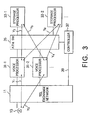
- a message processor or voice processing device 31 Connected to the telephone exchange network 11 is a message processor or voice processing device 31 comprising first through N-th voice or message processors 31-1 to 31-N, where N represents a first predetermined number which may be identical with the preselected integer and is therefore represented by an identical letter.
- a message storage or storage processing device 33 comprises first to N-th message storages or storage processors 33-1 to 33-N. Although represented by N, the storage processors may be equal in number to a second predetermined integer, which is not greater than the first predetermined number.
- the message processors 31-1 to 31-N and the message storages 33-1 to 33-N are connected to an ATM (asynchronous transfer mode) switch 35, which is controlled by a control unit or controller 37 connected through a control line 39 to the telephone exchange network 11.
- This control line 39 is preferably a signal line of a common-line signal scheme and is capable of transmitting circuit connection signals and application signals.
- Each of the first to the N-th message processors 31-1 to 31-N is connected to the telephone exchange network 11 through an external message line 21 of the type described in connection with Fig. 1 and to the ATM switch 35 by a first ATM channel 41.
- Each of the first to the N-th message storages 33-1 to 33-N is connected to the ATM switch 35 by a second ATM channel 43.
- a combination of the ATM switch 35 and the controller 37 corresponds to the control facility 23 of Fig. 1.
- an originating attendant uses the illustrated subscriber set 13 in enjoying a service of the voice storing and reproducing service system to store an originating voice message specifying one of the subscriber sets as a specified set and that the telephone exchange network 11 deals with such an originating voice message as a 64-Kbps PCM (pulse code modulated) message signal.
- the controller 37 assigns one of the first to the N-th message processors 31-1 to 31-N to make the telephone exchange network 11 connect the subscriber set 13 to this one of the message processors 31-1 to 31-N as an assigned processor.
- Each of the first to the N-th message processors 31-1 to 31-N processes a voice message into a processed message by real time converting the PCM message signal to an ADPCM (adaptive differential PCM) file.
- ADPCM adaptive differential PCM
- the controller 37 furthermore assigns one of the first to the N-th message storages 33-1 to 33-N as an assigned storage to the originating voice message and makes the ATM switch 35 connect the assigned processor and storage through the first and the second ATM channels 41 and 43.
- the processed message is stored in the assigned storage as a stored message, which includes telephone directory numbers of the subscriber set 13 and the specified set.
- the telephone exchange network 11 disconnects the assigned processor to turn the assigned message processor back to mere one of the first to the N-th message processors 31-1 to 31-N. Moreover, the controller 37 disconnects from the ATM switch 35 this mere one of first to N-th message processors and the assigned storage to turn the latter back to mere one of the first to the N-th message storages 33-1 to 33-N. That is, the assigned processor and storage are rendered idle.
- the illustrated voice storing and reproducing service system separately comprises the message processor device 31 and the message storage device 33.
- the message processor and the storage devices 31 and 33 are connected through the ATM channels 41 and 43 by the ATM switch 35 which is controlled by the controller 37 to transfer the voice message at the high speed between the assigned processor and storage.
- the message processors 31-1 to 31-N must be complicatedly operable during the service of the voice storing and reproducing service system.
- the service may be reproduction by the assigned processor of the stored message stored in the assigned storage.
- the assigned processor reads the stored message from the assigned storage as a voice guidance and subjects the voice guidance to inverted conversion to the PCM signal and to a reproduced voice message.
- the assigned processor may combine a plurality of voice guidances into a single guidance for reproduction into a reproduced voice message.
- Such a service may include to cancel the stored message and to change at least a part of the stored message.
- the controller 37 can locate a fault in any one of the first to the N-th message processors 31-1 to 31-N.
- the controller 37 blocks the faulty processor and afresh assigns, as a new assigned processor to continue the service, one of the message processors 31-1 to 31-N that is idle.
- Fig. 3 operation will be described more in detail as regards the voice storing and reproducing service system being illustrated.
- Fig. 3 depicted are two of the message processors 31-1 to 31-N as first and second message processors 31-1 and 31-2 and two of the message storages 33-1 to 33-N as first and second message storages 33-1 and 33-2 by way of example.
- the telephone exchange network 11 sends an arrival signal to the controller 37 through the control line 39.
- the controller 37 assigns the first message processor 31-1 as the assigned processor and the first message storage 33-1 as the assigned storage and searches for, by the telephone directory number of the subscriber set 13, also the first message storage 33-1 as the assigned storage for reproduction, cancellation, and at least partial change of the stored message.
- the first message processor 31-1 deals with storage and reproduction relative to the first message storage 33-1 in the manner indicated by bidirectionally arrow-headed lines Y1 and Y2.
- the originating attendant can use the subscriber set 13 in storing in addition and in. reproducing a stored message by using the second message storage 33-2 in which such a stored message is stored from a different subscriber set which is accommodated by the telephone exchange network 11 as another (not shown) of the plurality of subscriber sets.
- the controller 37 assigns, for example, the first message processor 31-1 to this service as the assigned processor and, with reference to the telephone directory number of the different subscriber set, the second message storage 33-2 as an assigned storage.
- the subscriber set 13 uses the first message processor 31-1 and the second message storage 33-2 as indicated by the line Y1 and a different arrow-headed line Y6.
- the controller 37 blocks out this message processor as a faulty processor.
- the subscriber unit 13 accesses the second message processor 31-2 instead of the faulty processor to make the second message processor 31-2 use the ATM switch 35 in storage and reproduction of the voice message by using the first message storage 33-1 in the manner indicated by arrow-headed lines Y3 and Y5.
- the message processor 31-2 can use the second message storage 33-2 rather than the busy processor for the storage as indicated by the line Y3 and a different arrow-headed line Y4.
- the first message processor 33-1 uses either the first message storage 33-1 as indicated by the arrow-headed lines Y1 and Y2 or the second message storage 33-2 in the manner indicated by arrow-headed lines Y1 and Y6.
- the illustrated voice storing and reproducing service system can continue the service with no deterioration in the quality by merely excluding from use a certain one or more of the voice processors 31-1 to 31-N that has fallen into misoperation. This is because the message processor device 31 is separated according to this invention from the message storage device 33.
- the controller 37 detects a fault in one of the first to the N-th message processors 31-1 to 31-N that may be in whichever of conditions of idle and busy.
- the controller 37 may be an electronic digital computer which comprises a processor, a memory, and a hard disk device.
- a fault tolerant computer is preferred in order to achieve a high reliability.
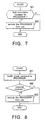
- the controller 37 After start by the arrival signal, the controller 37 first judges whether or not fault occurrence is indicated thereto from each of the message processors 31-1 to 31-N in the manner indicated in a first primary step 101. If the fault occurrence is indicated, the controller 37 sends an indication through the control line 39 to the telephone exchange network 11 so that the same may not use as indicated by a second primary step 102 the message processor that has made the controller 37 send the indication even if the message processor under consideration is assigned by the controller 37 as the assigned processor. In response, the telephone exchange network 11 avoids use of the message processor in question as represented by a third primary step 103 that is an end of this process. If the fault occurrence is indicated by none of the message processors 31-1 to 31-N, the first primary 101 step jumps to the third primary step 103 with no additional processes.
- the controller 37 confirms presence or absence of a fault individually in the message processors 31-1 to 31-N. For this purpose, the controller 37 sends at a first secondary step 201 a health check command as a query to each message processors. If no response is received in answer to the command at a second secondary step 202, it is surmised that a fault is present in the message processor to which the command is directed. An indication is sent through the control line 39 to make the telephone exchange network 11 exclude from use at a third secondary step 203 the message processor in which the fault has taken place. This process comes thereby to an end.
- the second secondary step 202 at once comes to the end. It is sufficient in the first secondary step 201 for confirmation of the response to send the command once about per one minute.
- FIG. 6 attention will be directed to another voice storing and reproducing service system which is a message storing and reproducing system according to a second preferred embodiment of this invention.
- This voice storing and reproducing service system is connected to a mobile communication exchange network 45 for a plurality of mobile units and comprises the time switch 17 described in conjunction with Fig. 1.
- One of the mobile units is depicted as a representative at 49 and labelled MU.
- Such a mobile unit may be a portable handset.
- the time switch 17 is connected to the first to the N-th voice processors 31-1 to 31-N through the internal message lines 19 of the type described with reference to Fig. 1.
- First to N-th primary ATM hubs 51-1 to 51-N are connected to the first to the N-th message processors 31-1 to 31-N, respectively, by a plurality of message channels 53 which are the 10 BASE-T channels, namely, the Ethernet 10 [Mbps]-UTP channels of the category 3 channels according to the Ethernet Standard IEEE 803.2 or the Ethernet Specification Ver. 2.0.
- Each primary ATM hub is connected to the time switch 17 through connections, only one of which is depicted with no reference numeral between the time switch 17 and the N-th primary ATM hub 51-N.
- First to N-th secondary ATM hubs 55-1 to 55-N are connected between the ATM switch 35 and the first to the N-th message storages 33-1 to 33-N, respectively.
- the second ATM channel 43 is used between the ATM switch 35 and each secondary ATM hub.
- the controller 37 controls the first to the N-th primary and secondary ATM hubs 51-1 to 51-N and 55-1 to 55-N, which are for controlling in turn the first to the N-th message processors 31-1 to 31-N and the first to the N-th message storages 33-1 to 33-N.
- each primary or secondary ATM hub is an Ethernet hub including an ATM interface of a 155 [Mbps]-MMF (STM-1) based on the ATM Forum.
- the time switch 17 is used to make it unnecessary to inform of occurrence of the fault in the first to the N-th message processors 31-1 to 31-N by confirming the fault in the voice storing and reproducing service system.
- the time switch 17 enables wrap test of the system.
- the controller 37 detects the fault and controls the ATM switch 35 as follows. For detection and control, processes are similar to those illustrated with reference to Figs. 4 and 5.
- the controller 37 first judges at a first tertiary step 301 whether or not an indication of occurrence of the fault is received from the message processors 31-1 to 31-N. If the occurrence is indicated, the controller 37 excludes from use at a second tertiary step 302 the message processor that has indicated the occurrence. The process comes to an end. If no indication is received at the first tertiary step 301, the process directly comes to the end.
- the controller 37 individually confirms by sending at a first quaternary step 401 a health check command as a query to each message processor.
- a health check command as a query
- the controller 37 individually confirms by sending at a first quaternary step 401 a health check command as a query to each message processor.
- a second quaternary step 402 it is surmised that a fault has taken place in the message processor to which the command is sent.
- the message processor under consideration is excluded at a third quaternary step 403 from one. This process thereby comes to an end.
- the process comes to the end with no further processing. Like in Fig. 5, it is sufficient in the first quaternary step 401 to produce the health check command once in about one minute.
- the message processor device 31 and the message storage device 33 are separated in contrast to prior art where the voice processing and storing device 15 is used instead. It is consequently enabled that the service is readily continued merely by blocking the message processor which deals with an implicated process and is subjected to the fault. Moreover, it is made possible with connection of the separated message processor and storage devices 31 and 33 by the high speed LAN comprising the ATM switch 35 to carry out with no deterioration in the quality a service of storing and reproducing the processed message in and from a pertinent one of the first to the N-th message storages 33-1 to 33-N that may be used by any one of the subscriber sets or the mobile units, such as the subscriber set 13 or the mobile unit 49.
- the voice storing and reproducing service system comprises the message processor device 31 and the message storage device 33 which are separated from each other.
- a merit is thereby achieved to readily continue the service of storage, reproduction, cancellation, partial change, or the like by merely blocking the message processor in which a fault has occurred.
- Another merit is attained by using the high speed LAN in connecting the assigned processor and storage such that a service quality is not deteriorated during storage, reproduction, and other processing of the stored message in connection with a relevant one of the message processors 33-1 to 33-N that may be used either by the subscriber sets and/or the mobile units.
- the voice storing and reproducing service system of this invention as a message storing and reproducing system in storing the originating voice message and a like message, which are herein referred to collectively as transmission messages.
- Such a message storing and reproducing system can reproduce from each stored message the reproduced voice message and a similar message which may collectively be called reproduced messages.
Landscapes
- Engineering & Computer Science (AREA)
- Signal Processing (AREA)
- Computer Networks & Wireless Communication (AREA)
- Telephonic Communication Services (AREA)
- Hardware Redundancy (AREA)
- Mobile Radio Communication Systems (AREA)
- Data Exchanges In Wide-Area Networks (AREA)
Claims (10)
- Système de mémorisation et de reproduction de messages comprenant des moyens de traitement et de mémorisation de messages (31, 33) destinés à traiter des messages envoyés par une pluralité d'appareils d'abonnés (13, 49) en des messages traités et à mémoriser lesdits messages traités en tant que messages mémorisés, et un dispositif de commande destiné à commander le fonctionnement desdits moyens de traitement et de mémorisation de messages,
lesdits moyens de traitement et de mémorisation de messages comprennent des moyens primaires (31) qui sont destinés à traiter lesdits messages en lesdits messages traités et qui comprennent, à leur tour, une pluralité de processeurs de messages (31-1 à 31-N) connectés aux appareils d'abonnés par l'intermédiaire d'un réseau téléphonique (11) ; et
des moyens secondaires (33) destinés à mémoriser lesdits messages traités en tant que lesdits messages mémorisés en vue de leur reproduction, et qui comprennent une pluralité d'unités de mémoire de messages (33-1 à 33-N) ;
ledit dispositif de commande comprenant des moyens de commande (35, 37) destinés à commander la connexion entre lesdits moyens primaires et lesdits moyens secondaires en réponse à une indication indicative de l'apparition d'un défaut dans l'un desdits processeurs de messages ;
caractérisé en ce que :les moyens de commande (35, 37) comprennent :un contrôleur (37) connecté au réseau (11) ; etun commutateur (35), situé entre la pluralité de processeurs de messages et la pluralité d'unités de mémoire de messages, et pouvant être actionné en réponse à l'indication, afin de commuter des paires des processeurs de messages et les unités de mémoire de messages les unes avec les autres lorsque le défaut survient dans l'un des processeurs de messages. - Système de mémorisation et de reproduction de messages selon la revendication 1, caractérisé en ce que :lesdits moyens primaires (31) sont conçus pour traiter plus avant les messages mémorisés envoyés par lesdits moyens secondaires (33), au travers desdits moyens de commande (35, 37), en des messages reproduits pour leur transmission auxdits appareils d'abonnés (13, 49) en réponse à une requête de reproduction.
- Système de mémorisation et de reproduction de messages selon la revendication 2 avec lesdits appareils d'abonnés (13, 49) connectés audit système de mémorisation et de reproduction de messages au travers d'un réseau d'échange (11, 45), caractérisé en ce que :lesdits moyens primaires (31) comprennent un premier nombre prédéterminé de processeurs de messages (31-1 - 31-N), dont le nombre est inférieur à celui de ladite pluralité d'appareils d'abonnés, pour traiter en lesdits messages traités, respectivement, les messages envoyés par lesdits appareils d'abonnés au travers dudit réseau d'échange et en lesdits messages reproduits, respectivement, les messages mémorisés envoyés par lesdits moyens secondaires (33), au travers desdits moyens de commande (35, 37) ;lesdits moyens secondaires comprenant un second nombre prédéterminé de mémoires de messages (33-1 -33-N) pour mémoriser en tant que lesdits messages mémorisés, respectivement, les messages traités envoyés par lesdits processeurs de messages au travers desdits moyens de commande, ledit second nombre prédéterminé n'étant pas supérieur audit premier nombre prédéterminé.
- Système de mémorisation et de reproduction de messages selon la revendication 3, caractérisé en ce que ladite indication indique un défaut dans l'un desdits processeurs de messages (31-1 - 31-N).
- Système de mémorisation et de reproduction de messages selon la revendication 4, caractérisé en ce que lesdits moyens de commande (35, 37) sont conçus de manière à transmettre, de façon cyclique, une demande auxdits processeurs de messages (31-1 - 31-N), environ une fois par minute, à chacun desdits processeurs de messages et à distinguer ledit défaut dans l'un desdits processeurs de messages lorsqu'aucune réponse n'est reçue de la part dudit un des processeurs de messages en réponse à ladite demande.
- Système de mémorisation et de reproduction de messages selon la revendication 5, caractérisé en ce que lesdits moyens de commande (35, 37) sont conçus pour produire, en réponse à ladite indication, un signal de blocage qui amène ledit réseau d'échange (11, 45) à utiliser, au lieu dudit un des processeurs de messages (31-1 - 31-N), un autre desdits processeurs de messages pour traiter l'un de ladite transmission et desdits messages mémorisés qui est envoyé par l'un desdits appareils d'abonnés (13, 49) au travers du réseau d'échange d'appareils et desdites mémoires de messages (33-1 - 33-N) au travers desdits moyens de commande.
- Système de mémorisation et de reproduction de messages selon la revendication 6, caractérisé en ce que lesdits moyens de commande (35, 37) comprennent un commutateur en mode de transfert asynchrone (35) connecté auxdits processeurs de messages (31-1 - 31-N) et auxdites mémoires de messages (31-1 - 31-N) et des moyens de commande de commutateur (37) pour commander ledit commutateur en mode de transfert asynchrone en réponse à l'une ou l'autre de ladite instruction et de ladite demande de reproduction.
- Système de mémorisation et de reproduction de messages selon la revendication 7, caractérisé en ce que lesdits processeurs de messages (31-1 - 31-N) et lesdites mémoires de messages (33-1 - 33-N) sont connectés audit commutateur en mode de transfert asynchrone (35) par une pluralité de canaux en mode de transfert asynchrone (41, 43).
- Système de mémorisation et de reproduction de messages selon la revendication 8, caractérisé en ce que ledit commutateur en mode de transfert asynchrone (35) et lesdits canaux en mode de transfert asynchrone (41, 43) sont conçus pour être utilisés collectivement en tant que réseau local.
- Système de mémorisation et de reproduction de messages selon la revendication 2 avec lesdits appareils d'abonnés (13, 49) connectés, au travers d'un réseau d'échange (11, 45), audit système de mémorisation et de reproduction de messages, caractérisé en ce que ledit système de mémorisation et de reproduction de messages comprend, en outre, un commutateur temporel (17) entre ledit réseau d'échange et lesdits moyens primaires (31) pour commuter lesdits messages par multiplexage par répartition dans le temps lors du transfert dudit réseau d'échange auxdits moyens primaires.
Applications Claiming Priority (3)
| Application Number | Priority Date | Filing Date | Title |
|---|---|---|---|
| JP11287496A JP2828029B2 (ja) | 1996-05-08 | 1996-05-08 | 音声蓄積再生サービス装置 |
| JP112874/96 | 1996-05-08 | ||
| JP11287496 | 1996-05-08 |
Publications (3)
| Publication Number | Publication Date |
|---|---|
| EP0808051A2 EP0808051A2 (fr) | 1997-11-19 |
| EP0808051A3 EP0808051A3 (fr) | 1998-04-22 |
| EP0808051B1 true EP0808051B1 (fr) | 2003-01-15 |
Family
ID=14597698
Family Applications (1)
| Application Number | Title | Priority Date | Filing Date |
|---|---|---|---|
| EP19970107596 Expired - Lifetime EP0808051B1 (fr) | 1996-05-08 | 1997-05-07 | Système de mémorisation et de reproduction de messages comportant séparément des processeurs et des mémoires |
Country Status (8)
| Country | Link |
|---|---|
| US (1) | US6091736A (fr) |
| EP (1) | EP0808051B1 (fr) |
| JP (1) | JP2828029B2 (fr) |
| AR (1) | AR007032A1 (fr) |
| BR (1) | BR9700664A (fr) |
| DE (1) | DE69718376T2 (fr) |
| ID (1) | ID16880A (fr) |
| PT (1) | PT808051E (fr) |
Families Citing this family (8)
| Publication number | Priority date | Publication date | Assignee | Title |
|---|---|---|---|---|
| KR20000018716A (ko) * | 1998-09-04 | 2000-04-06 | 윤종용 | 무선 데이터 통신 처리 장치의 속도 적응 처리부와 보드메신저 처리부 사이의 인터페이스 방법 |
| JP2000253072A (ja) * | 1999-03-03 | 2000-09-14 | Hitachi Ltd | 交換システム及び交換制御方法 |
| US7203187B1 (en) * | 1999-10-05 | 2007-04-10 | Thomson Licensing | Messaging services for digital subscriber loop |
| KR100331465B1 (ko) * | 1999-10-26 | 2002-04-09 | 서평원 | 네트워크에서 다중 접속 포트 일원화 장치 |
| US6438368B1 (en) * | 2000-03-30 | 2002-08-20 | Ikadega, Inc. | Information distribution system and method |
| JP2008035403A (ja) * | 2006-07-31 | 2008-02-14 | Toshiba Corp | 通信システム及び通信システムで使用される音声メッセージ処理方法 |
| JP2012080426A (ja) * | 2010-10-05 | 2012-04-19 | Nec Corp | 通信装置、通信システム、通信方法、および通信プログラム |
| JP5699202B1 (ja) * | 2013-12-25 | 2015-04-08 | エヌ・ティ・ティ・コムウェア株式会社 | 呼処理システム、負荷分散方法及び負荷分散プログラム |
Family Cites Families (24)
| Publication number | Priority date | Publication date | Assignee | Title |
|---|---|---|---|---|
| US4221933A (en) * | 1978-12-21 | 1980-09-09 | Cornell Ronald G | Data storage and retrieval structure for a message storage system |
| US4549047A (en) * | 1982-07-22 | 1985-10-22 | Voicemail International, Inc. | Digitized voice message storage system |
| US4646346A (en) * | 1985-01-22 | 1987-02-24 | At&T Company | Integrated message service system |
| US5199062A (en) * | 1988-01-20 | 1993-03-30 | Phone Base Systems Inc. | Telephone communications system including a digital telephone switch, a voice response unit and a stored program sequence for controlling both the switch and the voice response unit |
| US5031218A (en) * | 1988-03-30 | 1991-07-09 | International Business Machines Corporation | Redundant message processing and storage |
| US5023772A (en) * | 1988-10-31 | 1991-06-11 | International Business Machines Corporation | Method and system for storing messages based upon a non-queried name assignment |
| US4935954A (en) * | 1988-12-28 | 1990-06-19 | At&T Company | Automated message retrieval system |
| US5029199A (en) * | 1989-08-10 | 1991-07-02 | Boston Technology | Distributed control and storage for a large capacity messaging system |
| JPH04208749A (ja) * | 1990-11-30 | 1992-07-30 | Fujitsu Ltd | 音声メール情報転送方式 |
| JP3297459B2 (ja) * | 1991-04-12 | 2002-07-02 | キヤノン株式会社 | 無線電話システム |
| US5412719A (en) * | 1992-01-17 | 1995-05-02 | Hitachi, Ltd. | Radio paging system with voice transfer function and radio pager |
| US5301226A (en) * | 1992-02-05 | 1994-04-05 | Octel Communications Corporation | Voice processing systems connected in a cluster |
| DE4204929A1 (de) * | 1992-02-19 | 1993-08-26 | Sel Alcatel Ag | Digitales sprachspeichersystem fuer ein telekommunikationssystem |
| JPH05236006A (ja) * | 1992-02-24 | 1993-09-10 | Nippon Telegr & Teleph Corp <Ntt> | 音声ファイル再生方式 |
| US5422936A (en) * | 1992-08-28 | 1995-06-06 | Bell Atlantic Network Services, Inc. | Enhanced message service indication |
| US5479411A (en) * | 1993-03-10 | 1995-12-26 | At&T Corp. | Multi-media integrated message arrangement |
| US5394445A (en) * | 1993-06-25 | 1995-02-28 | Ball; Randel H. | Telephone call screening and answering device |
| US5475737A (en) * | 1993-09-17 | 1995-12-12 | Bell Atlantic Network Services, Inc. | Toll saver for centralized messaging systems |
| US5555288A (en) * | 1994-04-12 | 1996-09-10 | Voicetek Corporation | Voice processing system with a configurable telephone line interface |
| US5621727A (en) * | 1994-09-16 | 1997-04-15 | Octel Communications Corporation | System and method for private addressing plans using community addressing |
| US5818836A (en) * | 1995-08-09 | 1998-10-06 | Duval; Stephen C. | Method and apparatus for anonymous voice communication using an online data service |
| US5712903A (en) * | 1995-08-21 | 1998-01-27 | Bell Atlantic Network Services, Inc. | Split intelligent peripheral for broadband and narrowband services |
| US5699412A (en) * | 1995-09-18 | 1997-12-16 | Intervoice Limited Partnership | Systems and methods for statistical distribution of messages in a message recording system |
| US5657376A (en) * | 1995-10-13 | 1997-08-12 | Glenayre Electronics, Inc. | Architecture for voice messaging systems |
-
1996
- 1996-05-08 JP JP11287496A patent/JP2828029B2/ja not_active Expired - Lifetime
-
1997
- 1997-05-05 BR BR9700664A patent/BR9700664A/pt active Search and Examination
- 1997-05-07 EP EP19970107596 patent/EP0808051B1/fr not_active Expired - Lifetime
- 1997-05-07 ID ID971521A patent/ID16880A/id unknown
- 1997-05-07 AR ARP970101891 patent/AR007032A1/es unknown
- 1997-05-07 US US08/852,546 patent/US6091736A/en not_active Expired - Lifetime
- 1997-05-07 PT PT97107596T patent/PT808051E/pt unknown
- 1997-05-07 DE DE69718376T patent/DE69718376T2/de not_active Expired - Lifetime
Also Published As
| Publication number | Publication date |
|---|---|
| DE69718376D1 (de) | 2003-02-20 |
| EP0808051A2 (fr) | 1997-11-19 |
| ID16880A (id) | 1997-11-20 |
| HK1004177A1 (en) | 1998-11-20 |
| US6091736A (en) | 2000-07-18 |
| DE69718376T2 (de) | 2003-12-24 |
| AR007032A1 (es) | 1999-10-13 |
| JPH09298556A (ja) | 1997-11-18 |
| PT808051E (pt) | 2003-06-30 |
| EP0808051A3 (fr) | 1998-04-22 |
| JP2828029B2 (ja) | 1998-11-25 |
| BR9700664A (pt) | 1998-09-01 |
Similar Documents
| Publication | Publication Date | Title |
|---|---|---|
| EP0228204B1 (fr) | Architecture pour centraux de télécommunication à commande distribuée | |
| CA1126840A (fr) | Structure de stockage et d'extraction de donnees pour systeme de stockage de messages | |
| CA2161476C (fr) | Systeme de telecommunication a interface synchrone/asynchrone | |
| JP3860500B2 (ja) | 多重回線電話通信に対する分散制御交換ネットワーク | |
| US4229624A (en) | Switching network control arrangement | |
| JPH0552118B2 (fr) | ||
| US6449247B1 (en) | System and method for maintaining call services for remote users in the event of a communication failure | |
| US4985887A (en) | Systems for selecting a transmission control procedure in communications using integrated services digital networks | |
| US5420854A (en) | Digital interface system | |
| JP3195412B2 (ja) | デジタル・ループ・キャリア・システムにおいて回線を転送する方法および装置 | |
| EP0808051B1 (fr) | Système de mémorisation et de reproduction de messages comportant séparément des processeurs et des mémoires | |
| US5852652A (en) | Voice mail exchange with a message recorder divided into sectors for groups of voice mail telephone sets | |
| JPH0686341A (ja) | 通信方法 | |
| US4307454A (en) | Arrangement preventing multiple connections to peripheral circuits | |
| HK1004177B (en) | Message storing and reproducing system separately comprising processors and storages | |
| US4251684A (en) | Data storage systems | |
| JPS62112456A (ja) | 統合メ−ル装置接続方式 | |
| JPS62112453A (ja) | 統合メ−ル装置接続方式 | |
| CA1107401A (fr) | Systemes de stockage de donnees | |
| JPS61163766A (ja) | サ−ビス受付方式 | |
| JPS6346857A (ja) | 異種メデイアメ−ル作成方式 | |
| GB1581061A (en) | Data storage system | |
| JP2970604B2 (ja) | 音声蓄積再生システム | |
| JPH02142238A (ja) | 多地点間通信会議制御方式 | |
| JPS6350157A (ja) | 複合メデイア通信接続方式 |
Legal Events
| Date | Code | Title | Description |
|---|---|---|---|
| PUAI | Public reference made under article 153(3) epc to a published international application that has entered the european phase |
Free format text: ORIGINAL CODE: 0009012 |
|
| AK | Designated contracting states |
Kind code of ref document: A2 Designated state(s): DE GB PT |
|
| PUAL | Search report despatched |
Free format text: ORIGINAL CODE: 0009013 |
|
| AK | Designated contracting states |
Kind code of ref document: A3 Designated state(s): DE GB PT |
|
| 17P | Request for examination filed |
Effective date: 19980319 |
|
| 17Q | First examination report despatched |
Effective date: 20001213 |
|
| GRAG | Despatch of communication of intention to grant |
Free format text: ORIGINAL CODE: EPIDOS AGRA |
|
| GRAG | Despatch of communication of intention to grant |
Free format text: ORIGINAL CODE: EPIDOS AGRA |
|
| GRAH | Despatch of communication of intention to grant a patent |
Free format text: ORIGINAL CODE: EPIDOS IGRA |
|
| GRAH | Despatch of communication of intention to grant a patent |
Free format text: ORIGINAL CODE: EPIDOS IGRA |
|
| GRAA | (expected) grant |
Free format text: ORIGINAL CODE: 0009210 |
|
| AK | Designated contracting states |
Kind code of ref document: B1 Designated state(s): DE GB PT |
|
| REG | Reference to a national code |
Ref country code: GB Ref legal event code: FG4D |
|
| REF | Corresponds to: |
Ref document number: 69718376 Country of ref document: DE Date of ref document: 20030220 Kind code of ref document: P |
|
| REG | Reference to a national code |
Ref country code: PT Ref legal event code: SC4A Free format text: AVAILABILITY OF NATIONAL TRANSLATION Effective date: 20030414 |
|
| PLBE | No opposition filed within time limit |
Free format text: ORIGINAL CODE: 0009261 |
|
| STAA | Information on the status of an ep patent application or granted ep patent |
Free format text: STATUS: NO OPPOSITION FILED WITHIN TIME LIMIT |
|
| 26N | No opposition filed |
Effective date: 20031016 |
|
| PGFP | Annual fee paid to national office [announced via postgrant information from national office to epo] |
Ref country code: PT Payment date: 20090428 Year of fee payment: 13 |
|
| REG | Reference to a national code |
Ref country code: PT Ref legal event code: MM4A Free format text: LAPSE DUE TO NON-PAYMENT OF FEES Effective date: 20101108 |
|
| PG25 | Lapsed in a contracting state [announced via postgrant information from national office to epo] |
Ref country code: PT Free format text: LAPSE BECAUSE OF NON-PAYMENT OF DUE FEES Effective date: 20101108 |
|
| PGFP | Annual fee paid to national office [announced via postgrant information from national office to epo] |
Ref country code: DE Payment date: 20160504 Year of fee payment: 20 Ref country code: GB Payment date: 20160504 Year of fee payment: 20 |
|
| REG | Reference to a national code |
Ref country code: DE Ref legal event code: R071 Ref document number: 69718376 Country of ref document: DE |
|
| REG | Reference to a national code |
Ref country code: GB Ref legal event code: PE20 Expiry date: 20170506 |
|
| PG25 | Lapsed in a contracting state [announced via postgrant information from national office to epo] |
Ref country code: GB Free format text: LAPSE BECAUSE OF EXPIRATION OF PROTECTION Effective date: 20170506 |