EP0810532B1 - Verlustfreies Datenkomprimierungsverfahren und eine Vorrichtung dafür mit zusätzlicher Vereinfachung der Signalanalyse - Google Patents
Verlustfreies Datenkomprimierungsverfahren und eine Vorrichtung dafür mit zusätzlicher Vereinfachung der Signalanalyse Download PDFInfo
- Publication number
- EP0810532B1 EP0810532B1 EP97108809A EP97108809A EP0810532B1 EP 0810532 B1 EP0810532 B1 EP 0810532B1 EP 97108809 A EP97108809 A EP 97108809A EP 97108809 A EP97108809 A EP 97108809A EP 0810532 B1 EP0810532 B1 EP 0810532B1
- Authority
- EP
- European Patent Office
- Prior art keywords
- data
- samples
- compressed
- original
- sequence
- Prior art date
- Legal status (The legal status is an assumption and is not a legal conclusion. Google has not performed a legal analysis and makes no representation as to the accuracy of the status listed.)
- Expired - Lifetime
Links
- 238000000034 method Methods 0.000 title claims description 41
- 238000013144 data compression Methods 0.000 title claims description 29
- 238000007906 compression Methods 0.000 claims description 33
- 230000006835 compression Effects 0.000 claims description 27
- 230000005540 biological transmission Effects 0.000 claims description 25
- 230000000694 effects Effects 0.000 claims description 11
- 238000012545 processing Methods 0.000 claims description 8
- 230000008859 change Effects 0.000 description 6
- 230000008901 benefit Effects 0.000 description 3
- 238000010586 diagram Methods 0.000 description 3
- 230000004048 modification Effects 0.000 description 3
- 238000012986 modification Methods 0.000 description 3
- 238000012544 monitoring process Methods 0.000 description 3
- 230000004962 physiological condition Effects 0.000 description 3
- 230000008569 process Effects 0.000 description 3
- 230000036772 blood pressure Effects 0.000 description 2
- 238000004891 communication Methods 0.000 description 2
- 230000006837 decompression Effects 0.000 description 2
- 238000001514 detection method Methods 0.000 description 2
- 230000000873 masking effect Effects 0.000 description 2
- 238000013459 approach Methods 0.000 description 1
- 238000010420 art technique Methods 0.000 description 1
- QVGXLLKOCUKJST-UHFFFAOYSA-N atomic oxygen Chemical compound [O] QVGXLLKOCUKJST-UHFFFAOYSA-N 0.000 description 1
- 239000008280 blood Substances 0.000 description 1
- 210000004369 blood Anatomy 0.000 description 1
- 239000004020 conductor Substances 0.000 description 1
- 238000013500 data storage Methods 0.000 description 1
- 230000008030 elimination Effects 0.000 description 1
- 238000003379 elimination reaction Methods 0.000 description 1
- 238000005516 engineering process Methods 0.000 description 1
- 238000000605 extraction Methods 0.000 description 1
- 230000006870 function Effects 0.000 description 1
- 238000003780 insertion Methods 0.000 description 1
- 230000037431 insertion Effects 0.000 description 1
- 229910052760 oxygen Inorganic materials 0.000 description 1
- 239000001301 oxygen Substances 0.000 description 1
- 238000000718 qrs complex Methods 0.000 description 1
- 238000011084 recovery Methods 0.000 description 1
- 230000029058 respiratory gaseous exchange Effects 0.000 description 1
- 238000005070 sampling Methods 0.000 description 1
- 238000011426 transformation method Methods 0.000 description 1
- XLYOFNOQVPJJNP-UHFFFAOYSA-N water Substances O XLYOFNOQVPJJNP-UHFFFAOYSA-N 0.000 description 1
Images


Classifications
-
- H—ELECTRICITY
- H03—ELECTRONIC CIRCUITRY
- H03M—CODING; DECODING; CODE CONVERSION IN GENERAL
- H03M7/00—Conversion of a code where information is represented by a given sequence or number of digits to a code where the same, similar or subset of information is represented by a different sequence or number of digits
- H03M7/30—Compression; Expansion; Suppression of unnecessary data, e.g. redundancy reduction
- H03M7/46—Conversion to or from run-length codes, i.e. by representing the number of consecutive digits, or groups of digits, of the same kind by a code word and a digit indicative of that kind
- H03M7/48—Conversion to or from run-length codes, i.e. by representing the number of consecutive digits, or groups of digits, of the same kind by a code word and a digit indicative of that kind alternating with other codes during the code conversion process, e.g. run-length coding being performed only as long as sufficientlylong runs of digits of the same kind are present
-
- H—ELECTRICITY
- H03—ELECTRONIC CIRCUITRY
- H03M—CODING; DECODING; CODE CONVERSION IN GENERAL
- H03M7/00—Conversion of a code where information is represented by a given sequence or number of digits to a code where the same, similar or subset of information is represented by a different sequence or number of digits
- H03M7/30—Compression; Expansion; Suppression of unnecessary data, e.g. redundancy reduction
-
- Y—GENERAL TAGGING OF NEW TECHNOLOGICAL DEVELOPMENTS; GENERAL TAGGING OF CROSS-SECTIONAL TECHNOLOGIES SPANNING OVER SEVERAL SECTIONS OF THE IPC; TECHNICAL SUBJECTS COVERED BY FORMER USPC CROSS-REFERENCE ART COLLECTIONS [XRACs] AND DIGESTS
- Y10—TECHNICAL SUBJECTS COVERED BY FORMER USPC
- Y10S—TECHNICAL SUBJECTS COVERED BY FORMER USPC CROSS-REFERENCE ART COLLECTIONS [XRACs] AND DIGESTS
- Y10S707/00—Data processing: database and file management or data structures
- Y10S707/99941—Database schema or data structure
- Y10S707/99942—Manipulating data structure, e.g. compression, compaction, compilation
Definitions
- the present invention relates generally to data compression techniques, and more particularly to a lossless data compression technique useful for compression of ECG (electrocardiographic) waveform data.
- data compression is necessary whenever data must be transmitted over a channel having a bandwidth which is lower than the bandwidth of the channel in which it is currently being carried.
- the technique of the present invention has particular application to data compression of ECG waveform data, which typically requires compression if it is to be transmitted over a low bandwidth channel, such as a wireless link, after it has been acquired.
- Various types of prior art data compression schemes exist that are readily adaptable for ECG waveform data.
- the present invention is useful in conjunction with many types of data compression schemes, its use will be described in combination with a type of direct data compression using differential pulse code modulation (DPCM) called delta modulation compression.
- DPCM differential pulse code modulation
- Delta modulation compression is a simple form of predictive coding, in that it assumes (“predicts") that the change in value ("delta") of the next sample in a data stream is within some specified limit of the value of the previous sample.
- the initial sample value of the compressed data stream is an uncompressed original sample (using, for example, 16 bits), and thereafter only a delta value (using, for example, 8 bits), is used to represent each succeeding sample value.
- This technique can provide data compression for ECG waveform data of about 2:1, however, results can vary greatly depending upon the nature of the original data, the delta value used, and the sampling rate.
- the value of the second sample is determined by combining the uncompressed initial sample value with the delta value of the second sample. Thereafter, in a sequential manner, the successive delta values are combined with the value determined for the preceding sample, to determine the value of the current sample.
- delta modulation is "slew-rate limited” (sometimes referred to as “lossy"), since at high slew-rates the compressed data samples can lose some of the information contained in the original data samples.
- the present inventor is aware of a modified version of delta modulation, wherein, as in the original version, if the succeeding sample value is within the predicted limit, only the bits required to represent the delta sample value are used. However, if the predicted limit is exceeded, the complete original sample, i.e., not-compressed, is used. A preamble or header bit of 0 or 1 is used in front of the group of bits representing each sample in the compressed data stream to indicate if that group of bits is representative of a compressed or not-compressed sample value.
- One problem with this technique is that the signal processing for compression and de-compression that it is undesirably processing intensive.
- a data compression apparatus and method that produces a compressed data stream that comprises both compressed and not-compressed data samples, as well as a separate "map" object that indicates which of the samples in the compressed data stream are representative of one of the compressed original samples and not-compressed original samples.
- the "map" object is advantageously used by the data consumer for signal analysis purposes, such as for an activity or value detector.
- the data samples are representative of the value of successive samples of an ECG waveform
- the fast amplitude changes at the QRS portion of the waveform can quickly be identified by merely looking at the map. That is, the bits of the map are, in an absolute value sense, indicative of waveform activity.
- the value of each byte in the map contains information about eight data samples. Consequently, the data consumer can quickly get an idea of waveform activity by a simple analysis or reference to a single byte of the map, rather than by bit-by-bit analysis of each of eight successive data samples.
- Such bit-by-bit analysis would not only be time consuming but would also be computationally intensive since decompression of the eight data samples would be required before such analysis could be performed.
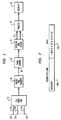
- Figure 1 illustrates in block diagram form a portable patient monitoring system which uses a data compression technique in accordance with the present invention.
- Figure 2 illustrates a packet diagram used by the Figure 1 embodiment for transmitting compressed data in accordance with the present invention.
- Figure 3 illustrates a flow chart useful for understanding a data encoding compression technique operating in accordance with the present invention.
- Figure 4 illustrates a flow chart useful for understanding a data decoding technique operating in accordance with the present invention for recovering data encoded in accordance with the technique shown in Figure 3.
- the data compression approach of the present invention although particularly useful for compressing ECG waveform signals, is also applicable for compressing many other types of signals.
- the invention is described in conjunction with a delta modulation type of data compression, other types of compression techniques could be used which can take advantage of this invention, such as other types of direct data compression (tolerance-comparison and entropy coding), as well as transformation methods or parameter extraction techniques (e.g., Karhunen-Loeve, etc).
- an ECG waveform contains QRS events that are composed of frequency components that are higher than other portions of the waveform. Consequently, the waveform is sampled at a higher rate than most other types of physiological data and, therefore, consumes a large portion of any communication channel or storage medium that is used for transmitting or storing this type of physiological data.
- waveform data makes up most of the information produced by a monitor or transmitter.
- telemetered data and patient monitor data are considered herein, since telemetered data is composed primarily of waveforms and generally does not include derived parameter information, while patient monitors may produce larger numbers of waveforms as well as parameter and alarm data.
- the purpose of compressing the data is to improve communication performance.
- the wireless medium in particular, is limited in bandwidth. Compression cannot, on the other hand, "throw the baby out with the bath water”. The information in the data must be maintained. Because of real-time constraints, a compression process must be relatively fast without making high demands on a processor.
- FIG. 1 illustrates an application of the present invention in the environment of a system for monitoring the physiological condition of a patient.
- ECG electrocardiographic
- FIG. 1 illustrates an application of the present invention in the environment of a system for monitoring the physiological condition of a patient.
- ECG electrocardiographic
- the signals representing these conditions can be combined with the acquired ECG signals in accordance with any one of many well known signal combining techniques, such as time division multiplexing.
- a plurality of electrodes 12a, 12b ... 12n are attached to a patient (not shown) in a manner well known to those of ordinary skill in the art, for acquiring electrocardiographic signals from the patient, which are coupled, via respective signal conductors 14a, 14b, ... 14n to an ECG front end 16.
- an ECG front end combines the acquired ECG signals into conventional ECG lead signals.
- ECG front end 16 includes an analog-to-digital converter for providing at its output digital samples representative of the amplitude value of successive portions of the ECG lead signals (sometimes referred to as ECG waveform samples).
- the ECG waveform In the event that the ECG waveform is to be displayed at a location remote from ECG front end 16, it is necessary to transmit the digitized ECG waveform data to another location.
- a wireless link or RF link is used, which has an appropriate bandwidth for transmitting the digitized ECG waveform data.
- data compression is required and an encode and transmit circuit portion 18 is provided which is responsive to the digitized ECG waveform samples for encoding them so as to reduce their bandwidth using one of several well known data compression techniques, and thereafter providing compressed ECG waveform samples at an output 20. From output 20 the compressed data samples are passed through a transmission channel 22 which may comprise a wireless link, a data storage device (such as magnetic tape) or other data transmission channel.
- a receive and decode circuit portion 24 which recovers the compressed data samples from the transmission channel 22 and decodes the compressed data so as to recover and reproduce the original ECG waveform samples.
- the original samples are then applied to a signal processor 26 which processes the waveform sample in a manner well known to those of ordinary skill in the art for application to a display 28 wherein the waveforms are displayed for use by the user.
- the apparatus of Fig. 1 is constructed and operates in accordance with signal processing techniques well known to those of ordinary skill in the art.
- a new technique for data compression/decompression is employed. This new technique is generally shown in Fig. 2.
- Figure 2 illustrates a transmission packet diagram showing the arrangement of the compressed ECG waveform data as it is transferred from encode and transmit circuit portion 18, through channel 22 to the receive and decode circuit portion 24.
- the stream of compressed digital data is packetized into first and second portions.
- the first portion comprises a bitfield header 200 followed by a datafield 210.
- Datafield 210 includes a sequence of bytes having a value representative of sequential samples of the ECG data.
- the bitfield header (also referred to herein as a "map”) comprises an array of 0's and 1's which indicate which of the data samples in datafield 210 are compressed or uncompressed.
- a 0 in map portion 200 indicates that the corresponding data sample in datafield 210 is compressed data
- a 1 in map portion 200 indicates that the data sample in datafield 210 is uncompressed.
- a 1 in map can be used to indicate the compressed data sample
- a 0 in map indicates an uncompressed data sample.
- the ECG waveform data is initially digitized by ECG front end 16 into 16-bit samples.
- a delta modulation compression technique After a "not compressed" data sample is sent as the initial sample in the first data slot of the data portion of the packet, thereafter only a delta, using less bits, is sent to represent the change in value between successive samples.
- 16-bit data is used for the original samples and an 8-bit delta is used (+/- 128).
- the data packet illustrated in Figure 2 shows the first sample in parenthesis, since, as previously noted its sent not compressed so that it can be used as the starting point for modification by the subsequent delta,. Furthermore, since the first sample is always sent not compressed, it is not necessary to represent it in the map portion.
- the first three "0"s in the map portion 200 of Fig. 2 shows that after the initial not-compressed sample, the first three data samples of data portion 210 are compressed, and therefore represented by an 8-bit delta value, rather than the 16-bit uncompressed initial data sample. Note, that the fourth, sixth, and ninth samples in the data portion 210 are sent uncompressed, i.e. with 16-bits.
- the described modified DPCM scheme with an appropriately selected delta size can achieve a 1.6 - 1.9 compression ratio when applied to ECG data.
- the receive and decode circuit portion 24 uses the information in the map portion 200 in order to identify the compressed data samples in the data portion 210, and thereby speed-up and simplify the de-compression of the transmitted data.
- the information in map portion 200 is used to determine the order or sequence for reconstructing the original data sample stream from the compressed and not-compressed data samples.
- the map object can also be used as a discriminator function for discriminating, for example, ECG QRS complexes.
- each byte in map 200 contains information about eight data samples in data portion 210.
- the consumer of the data can quickly and easily get information about a characteristic of the data that the compressed samples are representative of, such as its amplitude change activity, by referencing a single byte of map 200.
- the present invention is particularly effective with 16-bit ECG data and 8-bit deltas since bit shifting is not required. Because the map and data samples are in separate portions of a memory associated with the processing, the time consuming bit shifting of the data and the setting of flags is not required. Other data sizes may also be used in the general case, but the computation required for compression is more.
- map objects produced from data compression using the technique of Fig. 2 on different pairs of ECG electrodes can be combined to produce a more reliable QRS indicator.
- the map object itself may be compressed, since this array is generally sparse with respect to ECG data.
- This compression may be a simple form of Huffman encoding. If the compression is working, then the map should be made up mostly of NULL bytes. These NULL bytes can be represented by single bits.
- the compression map 200 may be used to indicate activity in the waveform, and in fact may provide a good indication of correlation between or among a plurality of waveforms.
- ⁇ is the sample difference
- ⁇ is the delta threshold.
- a single waveform discriminator can count the number of map bits set (i.e., to a "1") over a certain time window.
- the time window could be forced to be on a byte boundary.
- the count of set bits could be done with a look-up table.
- analysis would simply involve combining the individual discriminator outputs.
- the transmission packets also include a header for "housekeeping information", such as the number of samples contained in the data portion, the size of samples and the delta, and in general other information of this type.
- the transmission packets can have other portions for sending other types of data in addition to sampled waveform data, for example processed data such as blood pressure and other physiological values, as well as status data. This data may also be re-assembled using the compression map.
- Step 302 initializes the system and provides, as previously noted, the first sample from the stream of original samples as the first sample in datafield 210.
- Steps 304 through 310 obtain the next sample from the stream of original samples, and set-up the bit sequence of mapfield 200.
- Steps 312, 314 and 318 develops the sequence of compressed data samples for datafield 210, and steps 312, 316 and 318 develops the sequence of not-compressed data samples for datafield 210.
- Step 402 initializes the system and provides, as previously noted, the first sample from datafield 210 as the first sample in the data stream reconstruction of the original data samples.
- Steps 408 through 412 determine the position of samples in datafield portion 210 that are compressed and are not compressed. If a sample is identified as compressed, its delta value is added to the value of the last sample and it is then stored as the current sample. If a sample is identified as not-compressed, its value is then stored as the current sample.
- Steps 404 and 406 cause the forenoted process to be repeated until the last sample in datafield 210 has been processed.
Landscapes
- Engineering & Computer Science (AREA)
- Theoretical Computer Science (AREA)
- Compression, Expansion, Code Conversion, And Decoders (AREA)
- Measurement And Recording Of Electrical Phenomena And Electrical Characteristics Of The Living Body (AREA)
- Transmission Systems Not Characterized By The Medium Used For Transmission (AREA)
Claims (13)
- Datenkompressionsvorrichtung zum Verarbeiten eines Stromes von Originaldatenstücken zum Erzeugen eines komprimierten Datenstromes, der sowohl komprimierte als auch nicht-komprimierte Datenstücke enthält, mit:einem Datenkomprimierungsmittel zum Anwenden einer Datenkomprimierungstechnik auf die Originaldatenstücke zum Entwickeln einer Folge von komprimierten Originalstücken und nicht-komprimierten Originalstücken und zum Liefern der Folge von Stücken in einem Datenabschnitt eines Übertragungspakets, undeinem Kompressionsanzeigemittel zum Entwickeln einer Folge von Bits, die anzeigen, welches der Stücke in dem Datenabschnitt des Übertragungspaketes repräsentativ für eines der komprimierten Originalstücke und der nicht-komprimierten Originalstücke ist, und zum Liefern der Folge von Bits in einem Abbildungsabschnitt des Übertragungspaketes, der getrennt von dem Datenabschnitt des Übertragungspaketes ist.
- Vorrichtung nach Anspruch 1,bei der der Datenabschnitt des Übertragungspaketes separate Unterabschnitte für die komprimierten Originalstücke bzw. die nicht-komprimierten Originalstücke enthält.
- Vorrichtung nach Anspruch 1,bei der der Datenabschnitt des Übertragungspaketes die komprimierten Originalstücke und die nicht-komprimierten Originalstücke in einer gemischten Reihenfolge enthält, wie sie durch die Folge von Bits in dem Abbildungsabschnitt des Übertragungspaketes angezeigt wird.
- Vorrichtung nach Anspruch 1,bei der das Datenkompressionsmittel eine Deltamodulationsdatenkomprimierungstechnik auf die Originaldatenstücke anwendet.
- Vorrichtung nach Anspruch 1,bei der die Originaldatenstücke aufeinanderfolgende Stücke einer abgetasteten elektrokardiografischen Wellenform enthalten.
- Empfänger zum Empfangen von Übertragungspaketen, wobei jedes Paket einen Datenabschnitt, der eine Folge von sowohl komprimierten als auch nicht-komprimierten Datenstücken, die repräsentativ für eine Folge von Originaldatenstücken sind, enthält, aufweist und einen Abbildungsabschnitt, der getrennt von dem Datenabschnitt ist und eine Folge von Bits, die die Reihenfolge anzeigen, in der die komprimierten Originalstücke in einer Rekonstruktion der Abfolge von Originaldatenstücken zu präsentieren sind, enthält, aufweist, mit:einem Datendekomprimierungsmittel, das auf die komprimierten und nicht-komprimierten Stücke in dem Datenabschnitt der Übertragungspakete reagiert, zum Anwenden einer Datendekomprimierungstechnik auf die komprimierten Originalstücke und zum Entwickeln eines Datenstromes, der repräsentativ für die Originaldatenstücke ist, undeinem Anzeigemittel, das auf die Folge von Bits in dem Abbildungsabschnitt reagiert, zum Erzeugen eines Kompressionsanzeigesignals und zum Liefern des Kompressionsanzeigesignals an das Datendekomprimierungsmittel zum Anzeigen der Reihenfolge, in welcher die komprimierten Originalstücke in dem Datenstrom, der repräsentativ für die Originaldatenstücke ist, anzuzeigen sind.
- Empfänger nach Anspruch 6,der weiter ein Verarbeitungsmittel, das auf die Folge von Bits in dem Abbildungsabschnitt reagiert, zum Erzeugen eines Eigenschaftsanzeigesignals zum Anzeigen einer Eigenschaft der Daten, für welche die Folge von Originaldatenstücken repräsentativ ist, aufweist.
- Empfänger nach Anspruch 7,bei dem das Verarbeitungsmittel einen Aktivitätsdetektor zum Erzeugen, als das Eigenschaftsanzeigesignal, eines Signals, das Abschnitte der Folge von Originaldatenstücken anzeigt, die repräsentativ für Größenänderungen sind, die größer als ein vorbestimmter Schwellwert sind, aufweist.
- Empfänger nach Anspruch 8,bei dem die Originaldatenstücke repräsentativ für eine EKG-Wellenform sind und das Eigenschaftsanzeigesignal einen QRS-Abschnitt der EKG-Wellenform anzeigt.
- Empfänger nach Anspruch 9,bei dem eine Mehrzahl der Übertragungspakete Datenabschnitte und entsprechende Abbildungsabschnitte, die repräsentativ für eine Mehrzahl von EKG-Wellenformen sind, enthalten, und der weiterein Mittel zum Kombinieren der Bits in einer Mehrzahl der Abbildungsabschnitte zum Erzeugen des Anzeigesignals enthält.
- Verfahren zur Datenkompression eines Stromes von Originaldatenstücken zum Erzeugen eines komprimierten Datenstromes, der eine Kombination aus sowohl komprimierten als auch nicht-komprimierten Datenstücken aufweist, mit den folgenden Schritten:Anwenden einer Datenkompressionstechnik auf die Originaldatenstücke zum Entwickeln einer Folge von komprimierten Originalstücken und nicht-komprimierten Originalstücken und zum Liefern der Folge von Stücken in einem Datenabschnitt eines Übertragungspaketes, undEntwickeln einer Folge von Bits, die anzeigen, welche der Stücke in dem Datenabschnitt des Übertragungspaketes repräsentativ für eines aus den komprimierten und den nicht-komprimierten Originalstücken sind, und Liefern der Folge von Bits in einem Abbildungsabschnitt des Übertragungspaketes, der separat von dem Datenabschnitt des Übertragungspaketes ist.
- Verfahren nach Anspuch 11,bei dem der Lieferschritt des Anwendungsschrittes das Liefern von separaten Unterabschnitten für die komprimierten Originalstücke bzw. die nicht-komprimierten Originalstücke in dem Datenabschnitt des Übertragungspaketes aufweist.
- Verfahren nach Anspruch 11,bei dem der Lieferschritt des Anwendungsschrittes das Liefern der komprimierten Originalstücke und der nicht-komprimierten Originalstücke in einer gemischten Reihenfolge, wie sie durch die Folge von Bits in dem Abbildungsabchnitt des Übertragungspaketes angezeigt wird, in dem Datenabschnitt des Übertragungspaketes aufweist.
Applications Claiming Priority (2)
| Application Number | Priority Date | Filing Date | Title |
|---|---|---|---|
| US08/657,855 US5832490A (en) | 1996-05-31 | 1996-05-31 | Lossless data compression technique that also facilitates signal analysis |
| US657855 | 1996-05-31 |
Publications (3)
| Publication Number | Publication Date |
|---|---|
| EP0810532A2 EP0810532A2 (de) | 1997-12-03 |
| EP0810532A3 EP0810532A3 (de) | 1999-02-24 |
| EP0810532B1 true EP0810532B1 (de) | 2002-02-13 |
Family
ID=24638931
Family Applications (1)
| Application Number | Title | Priority Date | Filing Date |
|---|---|---|---|
| EP97108809A Expired - Lifetime EP0810532B1 (de) | 1996-05-31 | 1997-06-02 | Verlustfreies Datenkomprimierungsverfahren und eine Vorrichtung dafür mit zusätzlicher Vereinfachung der Signalanalyse |
Country Status (4)
| Country | Link |
|---|---|
| US (1) | US5832490A (de) |
| EP (1) | EP0810532B1 (de) |
| CA (1) | CA2206417A1 (de) |
| DE (1) | DE69710388T2 (de) |
Families Citing this family (26)
| Publication number | Priority date | Publication date | Assignee | Title |
|---|---|---|---|---|
| SG116400A1 (en) | 1997-10-24 | 2005-11-28 | Matsushita Electric Industrial Co Ltd | A method for computational graceful degradation inan audiovisual compression system. |
| US6337747B1 (en) * | 1998-01-29 | 2002-01-08 | Canon Kabushiki Kaisha | System to adaptively compress raster image data |
| US6073046A (en) * | 1998-04-27 | 2000-06-06 | Patel; Bharat | Heart monitor system |
| AU1263200A (en) * | 1998-11-12 | 2000-06-05 | I-Data International A/S | Apparatus and method for performing and controlling encryption/decryption for data to be transmitted on local area network |
| EP1370114A3 (de) * | 1999-04-07 | 2004-03-17 | Dolby Laboratories Licensing Corporation | Verbesserungen der Matrizierung für die verlustfreie Kodierung und Dekodierung |
| DE19921298A1 (de) | 1999-05-07 | 2000-11-16 | Bosch Gmbh Robert | Verfahren zur Komprimierung und Dekomprimierung von Daten und Vorrichtung |
| DE60139219D1 (de) * | 2000-03-02 | 2009-08-27 | Texas Instruments Inc | Dynamisch konfigurierbare Debug-Schnittstelle mit gleichzeitiger Verwendung von Fehlerbeseitigung von mehreren Prozessorkernen |
| US6754852B2 (en) | 2000-03-02 | 2004-06-22 | Texas Instruments Incorporated | Debug trigger builder |
| JP3775487B2 (ja) * | 2001-08-01 | 2006-05-17 | 日本電気株式会社 | デジタル波形データ記録回路及びデジタル波形データの記録方法 |
| GB2380640A (en) * | 2001-08-21 | 2003-04-09 | Micron Technology Inc | Data compression method |
| US7310648B2 (en) * | 2004-09-15 | 2007-12-18 | Hewlett-Packard Development Company, L.P. | System for compression of physiological signals |
| US8818496B2 (en) | 2005-10-14 | 2014-08-26 | Medicalgorithmics Ltd. | Systems for safe and remote outpatient ECG monitoring |
| US8214007B2 (en) | 2006-11-01 | 2012-07-03 | Welch Allyn, Inc. | Body worn physiological sensor device having a disposable electrode module |
| US7813222B2 (en) * | 2007-02-01 | 2010-10-12 | Ion Geophysical Corporation | Apparatus and method for compressing seismic data |
| US8417942B2 (en) * | 2007-08-31 | 2013-04-09 | Cisco Technology, Inc. | System and method for identifying encrypted conference media traffic |
| US8837598B2 (en) * | 2007-12-28 | 2014-09-16 | Cisco Technology, Inc. | System and method for securely transmitting video over a network |
| US20090169001A1 (en) * | 2007-12-28 | 2009-07-02 | Cisco Technology, Inc. | System and Method for Encryption and Secure Transmission of Compressed Media |
| US9603523B2 (en) | 2008-11-17 | 2017-03-28 | Medicalgorithmics S.A | Outpatient monitoring systems and methods |
| CN101669819B (zh) * | 2009-09-25 | 2011-06-01 | 西安电子科技大学 | 基于pt变换与线性预测结合的心电图信号无损压缩方法 |
| GB2483282B (en) * | 2010-09-03 | 2017-09-13 | Advanced Risc Mach Ltd | Data compression and decompression using relative and absolute delta values |
| US9700222B2 (en) | 2011-12-02 | 2017-07-11 | Lumiradx Uk Ltd | Health-monitor patch |
| US9734304B2 (en) | 2011-12-02 | 2017-08-15 | Lumiradx Uk Ltd | Versatile sensors with data fusion functionality |
| US9301703B2 (en) * | 2012-02-08 | 2016-04-05 | Kyushu Institute Of Technology | Biological information processing device, biological information processing system, biological information compression method, and biological information compression processing program |
| KR102269594B1 (ko) * | 2015-02-09 | 2021-06-28 | 삼성전자 주식회사 | 컨텐츠 전송 네트워크 시스템에서 서버 간의 정보 송수신 방법 및 장치 |
| CN105530013B (zh) * | 2015-12-03 | 2018-08-31 | 四川中光防雷科技股份有限公司 | 一种波形数据压缩方法与系统 |
| EP3963853B1 (de) * | 2019-04-29 | 2023-07-05 | Hitachi Vantara LLC | Optimierung von speicherung und wiederauffindung von komprimierten daten |
Family Cites Families (16)
| Publication number | Priority date | Publication date | Assignee | Title |
|---|---|---|---|---|
| US3703688A (en) * | 1971-04-07 | 1972-11-21 | Bell Telephone Labor Inc | Digital adaptive-to-linear delta modulated signal converter |
| CA1068822A (en) * | 1974-06-24 | 1979-12-25 | Ching-Long Song | Digital to analog converter for a communication system |
| US4201958A (en) * | 1977-12-27 | 1980-05-06 | Bell Telephone Laboratories, Incorporated | Delta modulation which partitions input signal into variable-time segments that are iteratively encoded |
| US4433423A (en) * | 1982-01-29 | 1984-02-21 | Discovision Associates | High quality delta modulator |
| JPH0644712B2 (ja) * | 1984-05-22 | 1994-06-08 | 株式会社アドバンス | 信号処理方式 |
| JPS6113831A (ja) * | 1984-06-29 | 1986-01-22 | Nec Corp | Pcm−adpcmモ−ド選択伝送装置 |
| US4654877A (en) * | 1984-08-28 | 1987-03-31 | Elscint Ltd. | Data compression system |
| US4684923A (en) * | 1984-09-17 | 1987-08-04 | Nec Corporation | Encoder with selective indication of compression encoding and decoder therefor |
| US4870415A (en) * | 1987-10-19 | 1989-09-26 | Hewlett-Packard Company | Data compression system with expansion protection |
| JPH01303873A (ja) * | 1988-05-31 | 1989-12-07 | Canon Inc | 画像伝送方法 |
| JP2624299B2 (ja) * | 1988-06-09 | 1997-06-25 | 株式会社日立製作所 | 加速演算回路 |
| JP2775857B2 (ja) * | 1989-06-20 | 1998-07-16 | ソニー株式会社 | デジタル信号の帯域圧縮回路 |
| US5014284A (en) * | 1989-06-30 | 1991-05-07 | Cardiac Telecom Corporation | Discrete slope delta modulation with recovery means |
| KR930020844A (ko) * | 1992-03-30 | 1993-10-20 | 사토 후미오 | 다채널 디지탈 시그마 델타변조기 |
| JPH05303598A (ja) * | 1992-04-27 | 1993-11-16 | Fuji Tec Kk | 挟帯域の無線伝送装置 |
| JPH07202983A (ja) * | 1993-12-29 | 1995-08-04 | Nec Corp | データ送受信装置 |
-
1996
- 1996-05-31 US US08/657,855 patent/US5832490A/en not_active Expired - Fee Related
-
1997
- 1997-05-29 CA CA002206417A patent/CA2206417A1/en not_active Abandoned
- 1997-06-02 DE DE69710388T patent/DE69710388T2/de not_active Expired - Fee Related
- 1997-06-02 EP EP97108809A patent/EP0810532B1/de not_active Expired - Lifetime
Also Published As
| Publication number | Publication date |
|---|---|
| DE69710388T2 (de) | 2002-08-14 |
| EP0810532A2 (de) | 1997-12-03 |
| DE69710388D1 (de) | 2002-03-21 |
| CA2206417A1 (en) | 1997-11-30 |
| EP0810532A3 (de) | 1999-02-24 |
| US5832490A (en) | 1998-11-03 |
Similar Documents
| Publication | Publication Date | Title |
|---|---|---|
| EP0810532B1 (de) | Verlustfreies Datenkomprimierungsverfahren und eine Vorrichtung dafür mit zusätzlicher Vereinfachung der Signalanalyse | |
| JP3875502B2 (ja) | データ通信方法及びデータ通信装置 | |
| KR100667739B1 (ko) | 무선 데이터 송수신 장치 및 그 방법 | |
| US20020091514A1 (en) | Audio signal processing apparatus | |
| KR950014511B1 (ko) | 가변길이 부호화장치 | |
| EP1222789A1 (de) | Robuste header-komprimierung bei paketbasierter kommunikation | |
| EP0661819B1 (de) | Datenkompression | |
| WO2001035534A3 (en) | Variable length encoding of compressed data | |
| WO2005067153A1 (en) | Rapidly queryable data compression format for xml files | |
| US7342902B2 (en) | Two stage loss-less compressor for a clear channel over a packet network | |
| JP2613339B2 (ja) | 多重チャネルデータ圧縮器 | |
| CN114614829B (zh) | 卫星数据帧的处理方法、装置、电子设备和可读存储介质 | |
| KR100732664B1 (ko) | 텍스트 데이터 압축을 위한 방법 및 장치 | |
| JP2001500350A (ja) | 可変長符号器を使用する伝送システム | |
| CN107846225A (zh) | 实时心电数据无损压缩、解压缩的方法、装置和系统 | |
| US6931371B2 (en) | Digital interface device | |
| US6154155A (en) | General frame-based compression method | |
| JP2000083917A (ja) | 多誘導心電図送信機及びその受信機 | |
| KR930701897A (ko) | 고 양호도의 양립성신호를 이용한 비디오신호 대역폭 축소방법 및 장치 | |
| Rasheed et al. | Compression and Decompression of Biomedical Signals Using Chinese Remainder Theorem | |
| KR101021914B1 (ko) | 플렉스레이 통신 전송/수신 방법 및 장치 | |
| CN119906433A (zh) | 一种适用于海洋监测的水声信号无损压缩方法及装置 | |
| EP1376974A1 (de) | Verfahren und Vorrichtung zur Paketenkopfkomprimierung | |
| JP2884612B2 (ja) | 信号伝送装置 | |
| Henrion et al. | Transmitting critical Biomedical Signals over unreliable connectionless channels with good QoS using advanced signal processing. |
Legal Events
| Date | Code | Title | Description |
|---|---|---|---|
| PUAI | Public reference made under article 153(3) epc to a published international application that has entered the european phase |
Free format text: ORIGINAL CODE: 0009012 |
|
| AK | Designated contracting states |
Kind code of ref document: A2 Designated state(s): DE FR GB SE |
|
| PUAL | Search report despatched |
Free format text: ORIGINAL CODE: 0009013 |
|
| AK | Designated contracting states |
Kind code of ref document: A3 Designated state(s): AT BE CH DE DK ES FI FR GB GR IE IT LI LU MC NL PT SE |
|
| 17P | Request for examination filed |
Effective date: 19990816 |
|
| AKX | Designation fees paid |
Free format text: DE FR GB SE |
|
| GRAG | Despatch of communication of intention to grant |
Free format text: ORIGINAL CODE: EPIDOS AGRA |
|
| GRAG | Despatch of communication of intention to grant |
Free format text: ORIGINAL CODE: EPIDOS AGRA |
|
| GRAH | Despatch of communication of intention to grant a patent |
Free format text: ORIGINAL CODE: EPIDOS IGRA |
|
| RTI1 | Title (correction) |
Free format text: A LOSSLESS DATA COMPRESSION METHOD AND APPARATUS THAT ALSO FACILITATES SIGNAL ANALYSIS |
|
| 17Q | First examination report despatched |
Effective date: 20010711 |
|
| GRAH | Despatch of communication of intention to grant a patent |
Free format text: ORIGINAL CODE: EPIDOS IGRA |
|
| GRAA | (expected) grant |
Free format text: ORIGINAL CODE: 0009210 |
|
| REG | Reference to a national code |
Ref country code: GB Ref legal event code: IF02 |
|
| AK | Designated contracting states |
Kind code of ref document: B1 Designated state(s): DE FR GB SE |
|
| REF | Corresponds to: |
Ref document number: 69710388 Country of ref document: DE Date of ref document: 20020321 |
|
| ET | Fr: translation filed | ||
| PLBE | No opposition filed within time limit |
Free format text: ORIGINAL CODE: 0009261 |
|
| STAA | Information on the status of an ep patent application or granted ep patent |
Free format text: STATUS: NO OPPOSITION FILED WITHIN TIME LIMIT |
|
| 26N | No opposition filed |
Effective date: 20021114 |
|
| REG | Reference to a national code |
Ref country code: GB Ref legal event code: 732E |
|
| REG | Reference to a national code |
Ref country code: FR Ref legal event code: TP Ref country code: FR Ref legal event code: CD |
|
| PGFP | Annual fee paid to national office [announced via postgrant information from national office to epo] |
Ref country code: GB Payment date: 20050525 Year of fee payment: 9 |
|
| PGFP | Annual fee paid to national office [announced via postgrant information from national office to epo] |
Ref country code: FR Payment date: 20050617 Year of fee payment: 9 |
|
| PGFP | Annual fee paid to national office [announced via postgrant information from national office to epo] |
Ref country code: SE Payment date: 20050621 Year of fee payment: 9 |
|
| PG25 | Lapsed in a contracting state [announced via postgrant information from national office to epo] |
Ref country code: GB Free format text: LAPSE BECAUSE OF NON-PAYMENT OF DUE FEES Effective date: 20060602 |
|
| PG25 | Lapsed in a contracting state [announced via postgrant information from national office to epo] |
Ref country code: SE Free format text: LAPSE BECAUSE OF NON-PAYMENT OF DUE FEES Effective date: 20060603 |
|
| EUG | Se: european patent has lapsed | ||
| GBPC | Gb: european patent ceased through non-payment of renewal fee |
Effective date: 20060602 |
|
| REG | Reference to a national code |
Ref country code: FR Ref legal event code: ST Effective date: 20070228 |
|
| PG25 | Lapsed in a contracting state [announced via postgrant information from national office to epo] |
Ref country code: FR Free format text: LAPSE BECAUSE OF NON-PAYMENT OF DUE FEES Effective date: 20060630 |
|
| PGFP | Annual fee paid to national office [announced via postgrant information from national office to epo] |
Ref country code: DE Payment date: 20090629 Year of fee payment: 13 |
|
| PG25 | Lapsed in a contracting state [announced via postgrant information from national office to epo] |
Ref country code: DE Free format text: LAPSE BECAUSE OF NON-PAYMENT OF DUE FEES Effective date: 20110101 |