EP0811090B1 - Regulation de la viscosite de la liqueur noire - Google Patents
Regulation de la viscosite de la liqueur noire Download PDFInfo
- Publication number
- EP0811090B1 EP0811090B1 EP96902831A EP96902831A EP0811090B1 EP 0811090 B1 EP0811090 B1 EP 0811090B1 EP 96902831 A EP96902831 A EP 96902831A EP 96902831 A EP96902831 A EP 96902831A EP 0811090 B1 EP0811090 B1 EP 0811090B1
- Authority
- EP
- European Patent Office
- Prior art keywords
- black liquor
- viscosity
- liquor
- shearing
- rotor
- Prior art date
- Legal status (The legal status is an assumption and is not a legal conclusion. Google has not performed a legal analysis and makes no representation as to the accuracy of the status listed.)
- Expired - Lifetime
Links
- 229920002521 macromolecule Polymers 0.000 claims abstract description 10
- 230000015556 catabolic process Effects 0.000 claims abstract 2
- 238000000034 method Methods 0.000 claims description 53
- 230000008569 process Effects 0.000 claims description 40
- 238000010008 shearing Methods 0.000 claims description 29
- 230000007423 decrease Effects 0.000 claims description 16
- 230000000694 effects Effects 0.000 claims description 13
- 238000004537 pulping Methods 0.000 claims description 11
- 230000002093 peripheral effect Effects 0.000 claims description 7
- 238000012545 processing Methods 0.000 claims description 6
- 239000003054 catalyst Substances 0.000 claims description 5
- 238000006731 degradation reaction Methods 0.000 claims 1
- 230000009467 reduction Effects 0.000 abstract description 43
- 239000007787 solid Substances 0.000 abstract description 31
- 238000010438 heat treatment Methods 0.000 description 12
- 239000011121 hardwood Substances 0.000 description 11
- 239000003513 alkali Substances 0.000 description 10
- 239000011122 softwood Substances 0.000 description 10
- 230000003247 decreasing effect Effects 0.000 description 8
- 239000000523 sample Substances 0.000 description 8
- HEMHJVSKTPXQMS-UHFFFAOYSA-M Sodium hydroxide Chemical compound [OH-].[Na+] HEMHJVSKTPXQMS-UHFFFAOYSA-M 0.000 description 6
- 230000009471 action Effects 0.000 description 6
- 229920005610 lignin Polymers 0.000 description 6
- 238000001704 evaporation Methods 0.000 description 5
- 230000008020 evaporation Effects 0.000 description 5
- 238000011084 recovery Methods 0.000 description 5
- 230000003647 oxidation Effects 0.000 description 4
- 238000007254 oxidation reaction Methods 0.000 description 4
- 239000003265 pulping liquor Substances 0.000 description 4
- 239000000126 substance Substances 0.000 description 4
- 239000012634 fragment Substances 0.000 description 3
- 239000002655 kraft paper Substances 0.000 description 3
- 238000005259 measurement Methods 0.000 description 3
- XLYOFNOQVPJJNP-UHFFFAOYSA-N water Substances O XLYOFNOQVPJJNP-UHFFFAOYSA-N 0.000 description 3
- 229920001131 Pulp (paper) Polymers 0.000 description 2
- PYKYMHQGRFAEBM-UHFFFAOYSA-N anthraquinone Natural products CCC(=O)c1c(O)c2C(=O)C3C(C=CC=C3O)C(=O)c2cc1CC(=O)OC PYKYMHQGRFAEBM-UHFFFAOYSA-N 0.000 description 2
- 150000004056 anthraquinones Chemical class 0.000 description 2
- 230000008859 change Effects 0.000 description 2
- 238000010411 cooking Methods 0.000 description 2
- 238000006073 displacement reaction Methods 0.000 description 2
- 239000000463 material Substances 0.000 description 2
- 238000005215 recombination Methods 0.000 description 2
- 230000006798 recombination Effects 0.000 description 2
- 235000011121 sodium hydroxide Nutrition 0.000 description 2
- 239000002023 wood Substances 0.000 description 2
- MYMOFIZGZYHOMD-UHFFFAOYSA-N Dioxygen Chemical compound O=O MYMOFIZGZYHOMD-UHFFFAOYSA-N 0.000 description 1
- 239000002879 Lewis base Substances 0.000 description 1
- 238000003723 Smelting Methods 0.000 description 1
- 241001062472 Stokellia anisodon Species 0.000 description 1
- 150000001412 amines Chemical class 0.000 description 1
- 238000013459 approach Methods 0.000 description 1
- 238000011021 bench scale process Methods 0.000 description 1
- 230000009286 beneficial effect Effects 0.000 description 1
- 230000008901 benefit Effects 0.000 description 1
- 238000004061 bleaching Methods 0.000 description 1
- 239000011203 carbon fibre reinforced carbon Substances 0.000 description 1
- 238000002485 combustion reaction Methods 0.000 description 1
- 238000000354 decomposition reaction Methods 0.000 description 1
- 230000001419 dependent effect Effects 0.000 description 1
- 229910001882 dioxygen Inorganic materials 0.000 description 1
- 230000002708 enhancing effect Effects 0.000 description 1
- 239000007789 gas Substances 0.000 description 1
- 239000003112 inhibitor Substances 0.000 description 1
- 150000007527 lewis bases Chemical class 0.000 description 1
- 239000007788 liquid Substances 0.000 description 1
- 239000000203 mixture Substances 0.000 description 1
- 239000007800 oxidant agent Substances 0.000 description 1
- 230000001590 oxidative effect Effects 0.000 description 1
- 238000005086 pumping Methods 0.000 description 1
- 238000011946 reduction process Methods 0.000 description 1
- 230000008929 regeneration Effects 0.000 description 1
- 238000011069 regeneration method Methods 0.000 description 1
- 230000000717 retained effect Effects 0.000 description 1
- 230000002441 reversible effect Effects 0.000 description 1
- 238000012552 review Methods 0.000 description 1
- 238000000518 rheometry Methods 0.000 description 1
- 238000000926 separation method Methods 0.000 description 1
- 238000005549 size reduction Methods 0.000 description 1
- 229910052979 sodium sulfide Inorganic materials 0.000 description 1
- GRVFOGOEDUUMBP-UHFFFAOYSA-N sodium sulfide (anhydrous) Chemical compound [Na+].[Na+].[S-2] GRVFOGOEDUUMBP-UHFFFAOYSA-N 0.000 description 1
- 238000003860 storage Methods 0.000 description 1
- 230000001052 transient effect Effects 0.000 description 1
- 239000007966 viscous suspension Substances 0.000 description 1
- 238000005406 washing Methods 0.000 description 1
- 230000003245 working effect Effects 0.000 description 1
Images







Classifications
-
- D—TEXTILES; PAPER
- D21—PAPER-MAKING; PRODUCTION OF CELLULOSE
- D21C—PRODUCTION OF CELLULOSE BY REMOVING NON-CELLULOSE SUBSTANCES FROM CELLULOSE-CONTAINING MATERIALS; REGENERATION OF PULPING LIQUORS; APPARATUS THEREFOR
- D21C11/00—Regeneration of pulp liquors or effluent waste waters
- D21C11/10—Concentrating spent liquor by evaporation
-
- D—TEXTILES; PAPER
- D21—PAPER-MAKING; PRODUCTION OF CELLULOSE
- D21C—PRODUCTION OF CELLULOSE BY REMOVING NON-CELLULOSE SUBSTANCES FROM CELLULOSE-CONTAINING MATERIALS; REGENERATION OF PULPING LIQUORS; APPARATUS THEREFOR
- D21C11/00—Regeneration of pulp liquors or effluent waste waters
- D21C11/12—Combustion of pulp liquors
Definitions
- the present invention relates to a procedure for decreasing the viscosity of black liquor (spent pulping liquor) from a kraft or other pulp mill operation.
- wood or other cellulosic material is pulped in a white liquor comprising sodium sulfide and sodium hydroxide to form wood pulp.
- the wood pulp is separated from the spent pulping liquor and further processed by washing and optionally bleaching.
- the spent pulping liquor or black liquor is subjected to a recovery and regeneration cycle for forming fresh pulping liquor.
- a recovery and regeneration cycle for forming fresh pulping liquor.
- Such procedure generally involves evaporation of the black liquor, smelting the concentrated black liquor, forming green liquor from the smelt by dissolving the solid mass in water and forming white liquor from the green liquor by recausticization.
- US patent No. 5,143,579 describes a process for the treatment of black liquor in which black liquor is forced through vented conduit while subjected to a working action at an elevated temperature to promote the separation of liquid components from the black liquor into the vent.
- the present invention employs an entirely new approach to black liquor viscosity control. It has been appreciated by the inventors that the viscosity of black liquor depends primarily on the proportion of macro-molecular lignin present in the liquor, the molecular weight of such lignin ranging from about 2,500 to as high as about 50,000, depending on the feedstock and the process stage and conditions, including pH. Often, the molecular weight ranges from about 3,000 to about 10,000 and the number of monomeric units from about 12 to about 30 per macro-molecule.
- a process for controlling the viscosity of black liquor from a pulping operation which comprises subjecting the black liquor to physical conditions such as to effect shearing of black liquor macromolecules to decrease their molecular size of the black liquor of at least 5%.
- a process of decreasing the viscosity of black liquor from a pulping operation which comprises providing a concentrated black liquor from the pulping of hardwood or softwood pulps having a solids content of about 40 to about 85 wt%; heating said concentrated black liquor to a temperature of about 75° to about 300°C; passing said concentrated black liquor through a high shear zone wherein macromolecules in said concentrated black liquor are subjected to physical conditions of high shear to effect, in a gap between a rotor and a stator of a high shear mixer operating at a peripheral velocity of rotor of at least about 10 m/s with the gap between rotor and stator of less than about 1 mm, molecular size reduction and achieve a decrease in viscosity of said concentrated black liquor of at least about 5%; and recovering the treated black liquor having decreased viscosity.
- the decreased viscosity provided by the procedures of the present invention enables the processability of the black liquor to be improved and a higher solids content for feed to the recovery boiler.
- black liquor is subjected to a shearing operation to decrease the viscosity of the black liquor.
- This procedure is quite different from known shear thinning of black liquor, which involves only a temporary reduction in viscosity as a result of an alignment of molecules rather than a breaking of molecules.
- the viscosity reduction obtained using the process of the invention is permanent and independent of other factors which may affect black liquor viscosity.
- the black liquor which is processed by the present invention may from the pulping of both hardwood and softwood pulps.
- the process of the invention is preferably effected on black liquor which first has been concentrated in accordance with normal procedures, generally to a solids content of about 40 to about 85 wt%, since the mechanical working of the black liquor is more effective at higher solids contents.
- black liquor having a lower solids concentration, down to about 15 wt% also can be beneficially processed in accordance with the present invention and black liquor concentration up to about 90% may be processed and achieved following the procedures of the present invention.
- the higher the solids content of the black liquor mechanically worked the more effective are the shear forces in breaking down the macromolecules.
- the process also can be operated to provide black liquor with very high solids contents by effecting the process two or more times on the black liquor, with an intermediate concentration step to increase the viscosity and solids content of the processed black liquor. It is believed that the bonds in the macromolecules may be weakened by a temperature increase.
- An elevated temperature generally from about 75° to about 300°C, preferably from about 140° to about 200°C, of operation of the shearing process of the present invention is preferred, since the black liquor is less viscous and can be more readily mechanically worked at the elevated temperatures.
- any degree of permanent reduction of the viscosity of black liquor is beneficial in improving the processability of the black liquor. At least about 5% decrease in viscosity is achieved using the process of the invention and the higher the decrease which is attained the greater benefit can be derived from the process of the invention.
- the inventors have found that each 10% reduction in viscosity corresponds to about 1% reduction in solids content of the black liquor. As may be seen from the detailed Examples below, a 70% reduction in viscosity at 145°C has been achieved.
- the decrease in viscosity which is attained according to the invention is permanent, while the shearing action on the macromolecules may lead to a rise in temperature of the black liquor, resulting in some decrease in viscosity, this result is transient.
- the process of the invention may be effected using any desired device which is able to effect the required macromolecule shearing.
- a variety of commercial high shear equipment is available which is suitable for carrying out the process of the invention, including those available from Greerco, Ross, Silverson and Siefer.
- high shear equipment employs a rotor and a stator with a narrow gap therebetween.
- the peripheral velocity of a rotor generally exceeds about 10 m/s, preferably at least about 15 m/s, and may range up to about 45 m/s or higher.
- the width of the gap between rotor and stator may vary from less than about 0.1 mm to about 3 mm, generally about 0.1 to about 0.6 mm and preferably about 0.2 mm to about 0.4 mm.
- the action of shearing of the black liquor in accordance with the invention may add heat to the black liquor, thereby enhancing the effect of the mechanical working of the black liquor.
- the present invention does not involve a heat or shear thinning effect but rather a permanent reduction in black liquor viscosity.
- the mechanical working of the black liquor effected herein to decrease the viscosity leads to a black liquor having improved evaporability, which increases the combustion value of the black liquor.
- the decreased viscosity improves the processability of the black liquor at the final stage before the recovery boiler.
- the shearing of the black liquor to lower its viscosity enables the black liquor to be concentrated to a higher solids content, which then provides a higher heat value, which may be advantageous in the recovery boiler.
- the shearing of the black liquor effected herein normally is conducted at atmospheric pressure. It is possible, however, to effect the process under a superatmospheric pressure, if desired.
- a free-radical inhibitor such as an oxidizing agent or oxygen gas, may be added to the black liquor to inhibit recombination of degraded components.
- anthraquinone has been used in the cooking process, or in black liquor treatment as provided herein, it may be necessary to adjust the alkalinity of the black liquor by adding white liquor or caustic soda, to inhibit recombination of lignin fragments.
- the procedure of the invention may be effected at one or more locations of processing of the black liquor in the pulp mill, for example, before wash water is added to the black liquor, between stages of evaporation, before final evaporation and after final evaporation.
- a catalyst may be added to the black liquor to enhance the decomposition thereof during the shearing operation.
- Suitable catalysts include Lewis bases, such as an amine, which may assist in the breaking of carbon-carbon bonds and/or carbon-sulphur bonds.
- Other catalysts which may be used include those used to break such and similar bonds in related processes, such as the devulcanization of tyre rubber, for example, as disclosed in published PCT patent application no. WO 94/14896, or those used to increase yield and reduce pulping severity, such as anthraquinone.
- the viscosity of black liquor may be affected by the addition of alkali, oxidation and hot storage.
- addition of alkali to black liquor with lower residual alkali leads to a decrease in viscosity while addition of alkali to black liquor with a higher residual alkali leads to an increase in viscosity.
- the alkalinity of the black liquor should be maintained in the range of about 2.5 to about 4%, since at low alkalinity lignin fragments repolymerize or gel to form very viscous suspensions. Accordingly, the residual alkali content of the black liquor should be carefully managed to ensure a minimum viscosity of the black liquor.
- the alkalinity following shearing generally is controlled to be at least about 2% and preferably greater than about 2.5%.
- the viscosity reduction obtained using the present invention is permanent and this effect is assisted when the alkalinity of the black liquor is sufficiently high to prevent repolymerization or gelling of lignin fragments.
- oxidation changes the viscosity of black liquor since such action reduces the residual alkali concentration at low residual alkali contents, oxidation of the black liquor tends to result in an increased viscosity while oxidation of high residual alkali black liquor results-in a decreased viscosity.
- This viscosity change is reversible, so that adding alkali to oxidized black liquor returns the liquor to the original viscosity.
- the present invention achieves a decrease in viscosity of the black liquor which is independent of these effects.
- the process of decreasing black liquor viscosity effected herein may be combined with a procedure of oxidizing black liquor, also as described in U.S. Patent No. 4,929,307, using any suitable equipment, for example, that described in U.S. Patent No. 5,174,973.
- the rotor and stator of such equipment may be designed in such a manner that, when they are placed near or just below the surface of the black liquor, a vortex may be created and a gas from the head space, such as, air or steam, draws down into and intimately mixed with the black liquor by the action of the rotor.
- This Example illustrates the black liquor viscosity reduction process of the invention.
- a batch operated bench scale pilot plant was constructed comprising a high-shear mixer, positive displacement pump, heat exchanger, reservoir, temperature probes, differential pressure transmitters, viscosity tubes, sample ports, catalyst port, current probe and data acquisition unit, as illustrated in Figure 1.
- the high-shear mixer was manufactured by Greerco Corporation, model Gifford-Wood 2" (50 mm) Horizontal, Tandem-Shear Pipeline mixer operating at approximately 7000 rpm (733 radians/s) with a peripheral speed of 13 m/s and a gap of 0.3 mm.
- a typical run of the pilot plant of Figure 2 consisted of filling the system with approximately 40 U.S. gallons (150 L) of black liquor (BL). BL was then recirculated and heated without shearing until the desired temperature was reached. The BL was then passed through the shear mixer. The positive displacement pump was used to pump the liquor around the circuit. The pumping action of the shear mixer was eliminated by the throttling valve located downstream the mixer.
- BL black liquor
- Liquor temperature and pressure drop in a length of tube from the pump discharge was measured and recorded. The same measurements were made with an identical setup on the discharge side of the high shear mixer. Liquor flow was measured in the return line to the holding tank. Measurements of viscosity reduction were made over a time less than that required to completely recirculate all BL. This simulated an inline process with no recirculation. The calculation of viscosity was based on laminar flow in a circular cross-section tube. The estimated highest Reynolds number was approximately 800 and was based on a tube diameter of 0.0221 m, density of 1,400 kg/m 3 , viscosity of 35 cp (mPa.s) and flow of 5 US gal/min (314 mL/s).
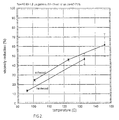
- Figure 2 shows percent viscosity reduction versus temperature for sample hardwood and softwood BLS. The results were obtained at a flow of approximately 1 gal/min and the solids content was approximately 69%. The results indicate that the largest reductions were obtained at the highest temperatures. Softwood liquors undergo a larger viscosity reduction.
- Viscosity reduction measurements are essentially instantaneous, so that the results shown in Figure 2 do not depend in a "heat treatment" effect (holding at an elevated temperature for some time).
- BL was heated to 142°C and held for approximately 2 hours to heat treat it.
- Viscosity measured before heat treat and after heat treat were approximately the same. Note that viscosity reduction brought about by heat treatment depends strongly on the composition of the liquor. Viscosity can increase after heat treatment.
- the black liquor should be less than 1 gal/min (63 mL/s) to achieve large reductions in viscosity.
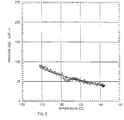
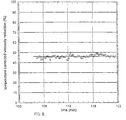
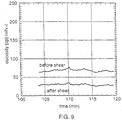
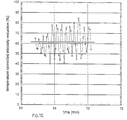
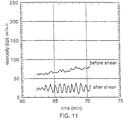
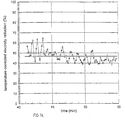
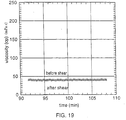
- the rest of the Figures give the data used in Figures 2 and 5.
- the present invention provides a novel procedure for processing spent pulping chemicals from chemical pulping operations by using mechanical action to decrease the viscosity of the spent pulping chemicals which, in turn, may enable the solids content to be increased and/or the processability of black liquor to be improved and/or the efficiency of black liquor evaporators and recovery furnaces to be improved.
Landscapes
- Paper (AREA)
- Seasonings (AREA)
- Alcoholic Beverages (AREA)
- Soy Sauces And Products Related Thereto (AREA)
- Distillation Of Fermentation Liquor, Processing Of Alcohols, Vinegar And Beer (AREA)
- Liquid Developers In Electrophotography (AREA)
- Developing Agents For Electrophotography (AREA)
- Package Frames And Binding Bands (AREA)
- Pens And Brushes (AREA)
Claims (15)
- Procédé de réglage de la viscosité de liqueur noire provenant d'une opération de réduction de pâte, qui comprend l'étape consistant à soumettre la liqueur noire à des conditions physiques pour assurer le cisaillement des macromolécules de liqueur noire afin de réduire leur taille moléculaire et produire une réduction de viscosité de la liqueur noire d'au moins 5%.
- Procédé selon la revendication 1, dans lequel ladite liqueur noire a une concentration de 15% à 90% en poids.
- Procédé selon la revendication 2, dans lequel ladite liqueur noire a une concentration de 40% à 80%.
- Procédé selon l'une quelconque des revendications 1 à 3, dans lequel ladite liqueur noire est soumise auxdites conditions physiques à une température élevée de 75 à 300°C.
- Procédé selon la revendication 4, dans lequel la température élevée est de 140 à 200°C.
- Procédé selon l'une quelconque des revendications 1 à 5, dans lequel le procédé est effectué dans un matériel principalement destiné à cisailler les molécules pendant une durée et à une température suffisantes pour assurer une réduction de la viscosité.
- Procédé selon la revendication 6, dans lequel ledit matériel comprend un mélangeur à haut taux de cisaillement comprenant un rotor et un stator et ledit traitement est effectué en faisant passer la liqueur noire à travers l'intervalle compris entre le rotor et le stator.
- Procédé selon l'une quelconque des revendications 1 à 7, dans lequel ladite liqueur noire est soumise à des conditions physiques en la faisant passer à travers l'intervalle entre le rotor et le stator d'un mélangeur à haut taux de cisaillement opérant à une vitesse périphérique du rotor d'au moins 10 m/s, avec un intervalle entre le rotor et le stator de moins de 1 mm.
- Procédé selon la revendication 8, dans lequel ladite vitesse périphérique est d'au moins 15 m/s et l'intervalle est inférieur à 0,6 mm.
- Procédé selon la revendication 9, dans lequel ledit intervalle est de 0,2 à 0,4 mm.
- Procédé selon l'une quelconque des revendications 1 à 10, dans lequel ladite réduction de viscosité est effectuée par des étapes multiples des étapes de cisaillement.
- Procédé selon la revendication 11, dans lequel la liqueur noire est récupérée et concentrée et le procédé est répété sur la liqueur noire concentrée.
- Procédé selon l'une quelconque des revendications 1 à 12, dans lequel l'alcalinité de la liqueur noire est réglée à une valeur d'au moins 2% après cisaillement de la liqueur noire.
- Procédé selon la revendication 13, dans lequel ladite alcalinité est de 2,5% à 4%.
- Procédé selon l'une quelconque des revendications 1 à 14, dans lequel le procédé est réalisé en présence d'un catalyseur pour la dégradation desdites macromolécules dans des conditions de cisaillement.
Applications Claiming Priority (3)
| Application Number | Priority Date | Filing Date | Title |
|---|---|---|---|
| GB9503562 | 1995-02-23 | ||
| GBGB9503562.2A GB9503562D0 (en) | 1995-02-23 | 1995-02-23 | Black liquor viscosity control |
| PCT/CA1996/000108 WO1996026316A1 (fr) | 1995-02-23 | 1996-02-23 | Regulation de la viscosite de la liqueur noire |
Publications (2)
| Publication Number | Publication Date |
|---|---|
| EP0811090A1 EP0811090A1 (fr) | 1997-12-10 |
| EP0811090B1 true EP0811090B1 (fr) | 2001-01-17 |
Family
ID=10770074
Family Applications (1)
| Application Number | Title | Priority Date | Filing Date |
|---|---|---|---|
| EP96902831A Expired - Lifetime EP0811090B1 (fr) | 1995-02-23 | 1996-02-23 | Regulation de la viscosite de la liqueur noire |
Country Status (13)
| Country | Link |
|---|---|
| US (1) | US5705032A (fr) |
| EP (1) | EP0811090B1 (fr) |
| AT (1) | ATE198776T1 (fr) |
| AU (1) | AU4710196A (fr) |
| BR (1) | BR9607440A (fr) |
| CA (1) | CA2212955C (fr) |
| DE (1) | DE69611601D1 (fr) |
| FI (1) | FI118477B (fr) |
| GB (1) | GB9503562D0 (fr) |
| NO (1) | NO322579B1 (fr) |
| PT (1) | PT811090E (fr) |
| WO (1) | WO1996026316A1 (fr) |
| ZA (1) | ZA961493B (fr) |
Families Citing this family (4)
| Publication number | Priority date | Publication date | Assignee | Title |
|---|---|---|---|---|
| WO2000028135A1 (fr) * | 1998-11-06 | 2000-05-18 | Thor Technology Corporation | Traitement de lessive noire |
| ES2187318B1 (es) * | 2000-04-07 | 2004-06-16 | Universidad De Huelva | Aditivo reductor de la viscosidad de lejias negras de alto contenido en solidos y metodo para la reduccion de la viscosidad de lejias negras de alto contenido en solidos. |
| EP2591166A4 (fr) * | 2010-07-07 | 2014-10-08 | Stora Enso Oyj | Procédé de production de lignine précipitée à partir de liqueur noire et lignine précipitée ainsi produite |
| EP4022125A1 (fr) | 2019-08-30 | 2022-07-06 | Ecolab USA Inc. | Agent de réduction de la viscosité d'une liqueur noire et agent anti-tartre |
Family Cites Families (3)
| Publication number | Priority date | Publication date | Assignee | Title |
|---|---|---|---|---|
| FI75615C (fi) * | 1985-11-29 | 1991-08-26 | Ahlstroem Oy | Foerfarande foer saenkning av svartlutens viskositet. |
| US5143579A (en) * | 1991-07-31 | 1992-09-01 | International Paper Company | Treatment of black liquor with a screw extruder evaporator |
| US5472568A (en) * | 1993-09-07 | 1995-12-05 | Air Products And Chemicals, Inc. | Method for controlling the viscosity of Kraft black liquor |
-
1995
- 1995-02-23 GB GBGB9503562.2A patent/GB9503562D0/en active Pending
-
1996
- 1996-02-23 WO PCT/CA1996/000108 patent/WO1996026316A1/fr not_active Ceased
- 1996-02-23 US US08/605,865 patent/US5705032A/en not_active Expired - Lifetime
- 1996-02-23 PT PT96902831T patent/PT811090E/pt unknown
- 1996-02-23 ZA ZA961493A patent/ZA961493B/xx unknown
- 1996-02-23 CA CA002212955A patent/CA2212955C/fr not_active Expired - Fee Related
- 1996-02-23 DE DE69611601T patent/DE69611601D1/de not_active Expired - Lifetime
- 1996-02-23 BR BR9607440A patent/BR9607440A/pt not_active IP Right Cessation
- 1996-02-23 AT AT96902831T patent/ATE198776T1/de active
- 1996-02-23 EP EP96902831A patent/EP0811090B1/fr not_active Expired - Lifetime
- 1996-02-23 AU AU47101/96A patent/AU4710196A/en not_active Abandoned
-
1997
- 1997-08-20 NO NO19973830A patent/NO322579B1/no not_active IP Right Cessation
- 1997-08-22 FI FI973450A patent/FI118477B/fi not_active IP Right Cessation
Also Published As
| Publication number | Publication date |
|---|---|
| NO322579B1 (no) | 2006-10-30 |
| BR9607440A (pt) | 1998-11-17 |
| CA2212955C (fr) | 2002-04-16 |
| CA2212955A1 (fr) | 1996-08-29 |
| US5705032A (en) | 1998-01-06 |
| NO973830D0 (no) | 1997-08-20 |
| GB9503562D0 (en) | 1995-04-12 |
| FI973450A0 (fi) | 1997-08-22 |
| MX9706367A (es) | 1997-11-29 |
| WO1996026316A1 (fr) | 1996-08-29 |
| NO973830L (no) | 1997-10-22 |
| AU4710196A (en) | 1996-09-11 |
| PT811090E (pt) | 2001-06-29 |
| DE69611601D1 (de) | 2001-02-22 |
| EP0811090A1 (fr) | 1997-12-10 |
| ATE198776T1 (de) | 2001-02-15 |
| FI973450L (fi) | 1997-10-20 |
| ZA961493B (en) | 1996-10-11 |
| FI118477B (fi) | 2007-11-30 |
Similar Documents
| Publication | Publication Date | Title |
|---|---|---|
| CN101484632B (zh) | 制备一种浆的方法 | |
| EP0796367B1 (fr) | Production de pate prehydrolysee | |
| JPH09510268A (ja) | 高温且つ高速の短時間処理式チップ精製方法 | |
| NO147801B (no) | Fremgangsmaate til kontinuerlig blekning og delignifisering av cellulosemasse med oksygen | |
| US6254722B1 (en) | Method for making dissolving pulp from paper products containing hardwood fibers | |
| AU6270596A (en) | Modified organosolv pulping | |
| EP0811090B1 (fr) | Regulation de la viscosite de la liqueur noire | |
| CA2363793A1 (fr) | Methode pour ameliorer le rendement en fibres et la decolorabilite de pates lignocellulosiques | |
| WO1985004409A1 (fr) | Procede de recuperation des hydrates de carbone solubles contenus dans le bois | |
| Al-Dajani et al. | Pre-extraction of hemicelluloses and subsequent ASA and ASAM pulping: Comparison of autohydrolysis and alkaline extraction. | |
| BRPI0608719A2 (pt) | produto e processos a partir de uma biorrefinaria de floresta integrada | |
| US2697703A (en) | Fractionation of lignocellulose materials | |
| Johakimu et al. | Hemicellulose Extraction from South African Eucalyptus grandis using Green Liquor and its Impact on Kraft Pulping Efficiency and Paper Making Properties. | |
| EP3830137B1 (fr) | Pâtes réticulées, produits d'éther de cellulose fabriqués à partir de celles-ci; et procédés associés de fabrication de pâtes et de produits d'éther de cellulose | |
| EP3762535A1 (fr) | Procédé de production de pâte pour dissolution | |
| NZ552795A (en) | Method for decreasing scaling in digester systems | |
| JP2667058B2 (ja) | パルプの製造方法 | |
| CN118147937B (zh) | 一种提高棉秆化机浆滤水性的方法 | |
| CN109098025B (zh) | 一种利用漆酶处理甘蔗渣制备本色机械浆的方法 | |
| Mattsson et al. | The development of a wood-based materials-biorefinery | |
| Fišerová et al. | Kraft pulping combined with green liquor pre-extraction of beech wood | |
| MXPA97006367A (en) | Viscosity control for liquor ne | |
| JPH10251986A (ja) | 漂白パルプの製造方法 | |
| JP4192594B2 (ja) | 高白色度機械パルプの製造方法 | |
| Fišerová et al. | BLEACHED KRAFT PULP FROM PRE-EXTRACTED BEECH WOOD |
Legal Events
| Date | Code | Title | Description |
|---|---|---|---|
| PUAI | Public reference made under article 153(3) epc to a published international application that has entered the european phase |
Free format text: ORIGINAL CODE: 0009012 |
|
| 17P | Request for examination filed |
Effective date: 19970901 |
|
| AK | Designated contracting states |
Kind code of ref document: A1 Designated state(s): AT BE DE DK ES FR GB GR IT NL PT SE |
|
| 17Q | First examination report despatched |
Effective date: 19971125 |
|
| GRAG | Despatch of communication of intention to grant |
Free format text: ORIGINAL CODE: EPIDOS AGRA |
|
| GRAG | Despatch of communication of intention to grant |
Free format text: ORIGINAL CODE: EPIDOS AGRA |
|
| GRAH | Despatch of communication of intention to grant a patent |
Free format text: ORIGINAL CODE: EPIDOS IGRA |
|
| GRAH | Despatch of communication of intention to grant a patent |
Free format text: ORIGINAL CODE: EPIDOS IGRA |
|
| GRAA | (expected) grant |
Free format text: ORIGINAL CODE: 0009210 |
|
| AK | Designated contracting states |
Kind code of ref document: B1 Designated state(s): AT BE DE DK ES FR GB GR IT NL PT SE |
|
| PG25 | Lapsed in a contracting state [announced via postgrant information from national office to epo] |
Ref country code: NL Free format text: LAPSE BECAUSE OF FAILURE TO SUBMIT A TRANSLATION OF THE DESCRIPTION OR TO PAY THE FEE WITHIN THE PRESCRIBED TIME-LIMIT Effective date: 20010117 Ref country code: IT Free format text: LAPSE BECAUSE OF FAILURE TO SUBMIT A TRANSLATION OF THE DESCRIPTION OR TO PAY THE FEE WITHIN THE PRESCRIBED TIME-LIMIT;WARNING: LAPSES OF ITALIAN PATENTS WITH EFFECTIVE DATE BEFORE 2007 MAY HAVE OCCURRED AT ANY TIME BEFORE 2007. THE CORRECT EFFECTIVE DATE MAY BE DIFFERENT FROM THE ONE RECORDED. Effective date: 20010117 Ref country code: FR Free format text: LAPSE BECAUSE OF FAILURE TO SUBMIT A TRANSLATION OF THE DESCRIPTION OR TO PAY THE FEE WITHIN THE PRESCRIBED TIME-LIMIT Effective date: 20010117 Ref country code: ES Free format text: THE PATENT HAS BEEN ANNULLED BY A DECISION OF A NATIONAL AUTHORITY Effective date: 20010117 Ref country code: BE Free format text: LAPSE BECAUSE OF FAILURE TO SUBMIT A TRANSLATION OF THE DESCRIPTION OR TO PAY THE FEE WITHIN THE PRESCRIBED TIME-LIMIT Effective date: 20010117 Ref country code: AT Free format text: LAPSE BECAUSE OF FAILURE TO SUBMIT A TRANSLATION OF THE DESCRIPTION OR TO PAY THE FEE WITHIN THE PRESCRIBED TIME-LIMIT Effective date: 20010117 |
|
| REF | Corresponds to: |
Ref document number: 198776 Country of ref document: AT Date of ref document: 20010215 Kind code of ref document: T |
|
| REF | Corresponds to: |
Ref document number: 69611601 Country of ref document: DE Date of ref document: 20010222 |
|
| PG25 | Lapsed in a contracting state [announced via postgrant information from national office to epo] |
Ref country code: GB Free format text: LAPSE BECAUSE OF NON-PAYMENT OF DUE FEES Effective date: 20010417 Ref country code: DK Free format text: LAPSE BECAUSE OF FAILURE TO SUBMIT A TRANSLATION OF THE DESCRIPTION OR TO PAY THE FEE WITHIN THE PRESCRIBED TIME-LIMIT Effective date: 20010417 |
|
| PG25 | Lapsed in a contracting state [announced via postgrant information from national office to epo] |
Ref country code: DE Free format text: LAPSE BECAUSE OF FAILURE TO SUBMIT A TRANSLATION OF THE DESCRIPTION OR TO PAY THE FEE WITHIN THE PRESCRIBED TIME-LIMIT Effective date: 20010418 |
|
| PG25 | Lapsed in a contracting state [announced via postgrant information from national office to epo] |
Ref country code: GR Free format text: LAPSE BECAUSE OF FAILURE TO SUBMIT A TRANSLATION OF THE DESCRIPTION OR TO PAY THE FEE WITHIN THE PRESCRIBED TIME-LIMIT Effective date: 20010420 |
|
| EN | Fr: translation not filed | ||
| REG | Reference to a national code |
Ref country code: PT Ref legal event code: SC4A Free format text: AVAILABILITY OF NATIONAL TRANSLATION Effective date: 20010405 |
|
| NLV1 | Nl: lapsed or annulled due to failure to fulfill the requirements of art. 29p and 29m of the patents act | ||
| PLBE | No opposition filed within time limit |
Free format text: ORIGINAL CODE: 0009261 |
|
| STAA | Information on the status of an ep patent application or granted ep patent |
Free format text: STATUS: NO OPPOSITION FILED WITHIN TIME LIMIT |
|
| GBPC | Gb: european patent ceased through non-payment of renewal fee |
Effective date: 20010417 |
|
| 26N | No opposition filed | ||
| PGFP | Annual fee paid to national office [announced via postgrant information from national office to epo] |
Ref country code: PT Payment date: 20071221 Year of fee payment: 13 |
|
| REG | Reference to a national code |
Ref country code: PT Ref legal event code: MM4A Free format text: LAPSE DUE TO NON-PAYMENT OF FEES Effective date: 20090824 |
|
| PG25 | Lapsed in a contracting state [announced via postgrant information from national office to epo] |
Ref country code: PT Free format text: LAPSE BECAUSE OF NON-PAYMENT OF DUE FEES Effective date: 20090824 |
|
| PGFP | Annual fee paid to national office [announced via postgrant information from national office to epo] |
Ref country code: SE Payment date: 20120822 Year of fee payment: 17 |
|
| REG | Reference to a national code |
Ref country code: SE Ref legal event code: EUG |
|
| PG25 | Lapsed in a contracting state [announced via postgrant information from national office to epo] |
Ref country code: SE Free format text: LAPSE BECAUSE OF NON-PAYMENT OF DUE FEES Effective date: 20130224 |