EP0811375B1 - Gluteminsäurerezeptor agonisten - Google Patents
Gluteminsäurerezeptor agonisten Download PDFInfo
- Publication number
- EP0811375B1 EP0811375B1 EP96902487A EP96902487A EP0811375B1 EP 0811375 B1 EP0811375 B1 EP 0811375B1 EP 96902487 A EP96902487 A EP 96902487A EP 96902487 A EP96902487 A EP 96902487A EP 0811375 B1 EP0811375 B1 EP 0811375B1
- Authority
- EP
- European Patent Office
- Prior art keywords
- group
- compound
- ethylthio
- carbon atoms
- nmr
- Prior art date
- Legal status (The legal status is an assumption and is not a legal conclusion. Google has not performed a legal analysis and makes no representation as to the accuracy of the status listed.)
- Expired - Lifetime
Links
- 0 CCc1cc(C*)c(B*)c(*)c1 Chemical compound CCc1cc(C*)c(B*)c(*)c1 0.000 description 1
Classifications
-
- C—CHEMISTRY; METALLURGY
- C07—ORGANIC CHEMISTRY
- C07C—ACYCLIC OR CARBOCYCLIC COMPOUNDS
- C07C323/00—Thiols, sulfides, hydropolysulfides or polysulfides substituted by halogen, oxygen or nitrogen atoms, or by sulfur atoms not being part of thio groups
- C07C323/50—Thiols, sulfides, hydropolysulfides or polysulfides substituted by halogen, oxygen or nitrogen atoms, or by sulfur atoms not being part of thio groups containing thio groups and carboxyl groups bound to the same carbon skeleton
- C07C323/62—Thiols, sulfides, hydropolysulfides or polysulfides substituted by halogen, oxygen or nitrogen atoms, or by sulfur atoms not being part of thio groups containing thio groups and carboxyl groups bound to the same carbon skeleton having the sulfur atom of at least one of the thio groups bound to a carbon atom of a six-membered aromatic ring of the carbon skeleton
-
- A—HUMAN NECESSITIES
- A61—MEDICAL OR VETERINARY SCIENCE; HYGIENE
- A61K—PREPARATIONS FOR MEDICAL, DENTAL OR TOILETRY PURPOSES
- A61K31/00—Medicinal preparations containing organic active ingredients
-
- A—HUMAN NECESSITIES
- A61—MEDICAL OR VETERINARY SCIENCE; HYGIENE
- A61K—PREPARATIONS FOR MEDICAL, DENTAL OR TOILETRY PURPOSES
- A61K31/00—Medicinal preparations containing organic active ingredients
- A61K31/16—Amides, e.g. hydroxamic acids
- A61K31/18—Sulfonamides
-
- A—HUMAN NECESSITIES
- A61—MEDICAL OR VETERINARY SCIENCE; HYGIENE
- A61K—PREPARATIONS FOR MEDICAL, DENTAL OR TOILETRY PURPOSES
- A61K31/00—Medicinal preparations containing organic active ingredients
- A61K31/185—Acids; Anhydrides, halides or salts thereof, e.g. sulfur acids, imidic, hydrazonic or hydroximic acids
- A61K31/19—Carboxylic acids, e.g. valproic acid
- A61K31/195—Carboxylic acids, e.g. valproic acid having an amino group
-
- A—HUMAN NECESSITIES
- A61—MEDICAL OR VETERINARY SCIENCE; HYGIENE
- A61K—PREPARATIONS FOR MEDICAL, DENTAL OR TOILETRY PURPOSES
- A61K31/00—Medicinal preparations containing organic active ingredients
- A61K31/21—Esters, e.g. nitroglycerine, selenocyanates
- A61K31/215—Esters, e.g. nitroglycerine, selenocyanates of carboxylic acids
- A61K31/216—Esters, e.g. nitroglycerine, selenocyanates of carboxylic acids of acids having aromatic rings, e.g. benactizyne, clofibrate
-
- A—HUMAN NECESSITIES
- A61—MEDICAL OR VETERINARY SCIENCE; HYGIENE
- A61K—PREPARATIONS FOR MEDICAL, DENTAL OR TOILETRY PURPOSES
- A61K31/00—Medicinal preparations containing organic active ingredients
- A61K31/33—Heterocyclic compounds
- A61K31/395—Heterocyclic compounds having nitrogen as a ring hetero atom, e.g. guanethidine or rifamycins
- A61K31/40—Heterocyclic compounds having nitrogen as a ring hetero atom, e.g. guanethidine or rifamycins having five-membered rings with one nitrogen as the only ring hetero atom, e.g. sulpiride, succinimide, tolmetin, buflomedil
- A61K31/403—Heterocyclic compounds having nitrogen as a ring hetero atom, e.g. guanethidine or rifamycins having five-membered rings with one nitrogen as the only ring hetero atom, e.g. sulpiride, succinimide, tolmetin, buflomedil condensed with carbocyclic rings, e.g. carbazole
- A61K31/4035—Isoindoles, e.g. phthalimide
-
- A—HUMAN NECESSITIES
- A61—MEDICAL OR VETERINARY SCIENCE; HYGIENE
- A61K—PREPARATIONS FOR MEDICAL, DENTAL OR TOILETRY PURPOSES
- A61K31/00—Medicinal preparations containing organic active ingredients
- A61K31/33—Heterocyclic compounds
- A61K31/395—Heterocyclic compounds having nitrogen as a ring hetero atom, e.g. guanethidine or rifamycins
- A61K31/435—Heterocyclic compounds having nitrogen as a ring hetero atom, e.g. guanethidine or rifamycins having six-membered rings with one nitrogen as the only ring hetero atom
- A61K31/44—Non condensed pyridines; Hydrogenated derivatives thereof
- A61K31/4406—Non condensed pyridines; Hydrogenated derivatives thereof only substituted in position 3, e.g. zimeldine
-
- C—CHEMISTRY; METALLURGY
- C07—ORGANIC CHEMISTRY
- C07C—ACYCLIC OR CARBOCYCLIC COMPOUNDS
- C07C317/00—Sulfones; Sulfoxides
- C07C317/26—Sulfones; Sulfoxides having sulfone or sulfoxide groups and nitrogen atoms, not being part of nitro or nitroso groups, bound to the same carbon skeleton
- C07C317/28—Sulfones; Sulfoxides having sulfone or sulfoxide groups and nitrogen atoms, not being part of nitro or nitroso groups, bound to the same carbon skeleton with sulfone or sulfoxide groups bound to acyclic carbon atoms of the carbon skeleton
-
- C—CHEMISTRY; METALLURGY
- C07—ORGANIC CHEMISTRY
- C07C—ACYCLIC OR CARBOCYCLIC COMPOUNDS
- C07C323/00—Thiols, sulfides, hydropolysulfides or polysulfides substituted by halogen, oxygen or nitrogen atoms, or by sulfur atoms not being part of thio groups
- C07C323/23—Thiols, sulfides, hydropolysulfides or polysulfides substituted by halogen, oxygen or nitrogen atoms, or by sulfur atoms not being part of thio groups containing thio groups and nitrogen atoms, not being part of nitro or nitroso groups, bound to the same carbon skeleton
- C07C323/46—Thiols, sulfides, hydropolysulfides or polysulfides substituted by halogen, oxygen or nitrogen atoms, or by sulfur atoms not being part of thio groups containing thio groups and nitrogen atoms, not being part of nitro or nitroso groups, bound to the same carbon skeleton having at least one of the nitrogen atoms, not being part of nitro or nitroso groups, further bound to other hetero atoms
- C07C323/49—Thiols, sulfides, hydropolysulfides or polysulfides substituted by halogen, oxygen or nitrogen atoms, or by sulfur atoms not being part of thio groups containing thio groups and nitrogen atoms, not being part of nitro or nitroso groups, bound to the same carbon skeleton having at least one of the nitrogen atoms, not being part of nitro or nitroso groups, further bound to other hetero atoms to sulfur atoms
-
- C—CHEMISTRY; METALLURGY
- C07—ORGANIC CHEMISTRY
- C07C—ACYCLIC OR CARBOCYCLIC COMPOUNDS
- C07C323/00—Thiols, sulfides, hydropolysulfides or polysulfides substituted by halogen, oxygen or nitrogen atoms, or by sulfur atoms not being part of thio groups
- C07C323/50—Thiols, sulfides, hydropolysulfides or polysulfides substituted by halogen, oxygen or nitrogen atoms, or by sulfur atoms not being part of thio groups containing thio groups and carboxyl groups bound to the same carbon skeleton
- C07C323/51—Thiols, sulfides, hydropolysulfides or polysulfides substituted by halogen, oxygen or nitrogen atoms, or by sulfur atoms not being part of thio groups containing thio groups and carboxyl groups bound to the same carbon skeleton having the sulfur atoms of the thio groups bound to acyclic carbon atoms of the carbon skeleton
- C07C323/56—Thiols, sulfides, hydropolysulfides or polysulfides substituted by halogen, oxygen or nitrogen atoms, or by sulfur atoms not being part of thio groups containing thio groups and carboxyl groups bound to the same carbon skeleton having the sulfur atoms of the thio groups bound to acyclic carbon atoms of the carbon skeleton the carbon skeleton containing six-membered aromatic rings
Definitions
- the present invention relates to the use of an agonist (including a potentiator) for glutamate receptors.
- an agonist for glutamate receptors comprising a sulfonamide derivative or a pharmaceutically acceptable salt thereof as a effective ingredient.
- EAA excitatory amino acids
- the L-glutamate or the L-aspartate which are amino acids, is a neurotransmitter causing the primary excitotoxic action in the central nervous system.
- excitatory amino acid relates to a wide range of neurophysiological functions including synaptic transmission, the regulation and the long-term potentiation of neurotransmitters, learning and memory, the flexibility of synaptic generation, ischemic hypoxic disorders and neuronal death, and the cause of several neurodegenerative disorders.
- Alzheimer's or cerebrovascular dementia distinguishing primarily the deterioration of the brain actions the deterioration of glutamatergic transmission is considered to be the cause, and also, the disorder of the glutamatergic transmission is found in schizophrenia.
- Glutamate receptors which exist locally in synapses have been classified into the followings according to the receptor's affinity with specific ligand and electrophysiological or neurochemistric actions.
- the NMDA(N-methyl-D-aspartate) receptor related to an ion channel characterizing the penetrability of monovalent and divalent cations such as sodium ions and calcium ions and the blockade of magnesium ions.
- the AMPA ⁇ -amino-3-hydroxy-5-methyl-4-isoxazolepropionic acid receptor related to an ion channel characterizing the penetrability of monovalent cations such as sodium.
- the KA(kainate) receptor which is similar to the AMPA receptor in the ion characteristics but different from the AMPA receptor in both the conductance and the level of desensitization.
- the AMPA receptor and the KA receptor are sometime called collectively as the non-NMDA receptor.
- EP-A-0 469 991 discloses sulfonamide derivatives useful as blood platelet aggregation inhibitors according to the formula (I) shown below. Intermediates for the preparation of the above sulfonamide are also disclosed.
- EP-A-0 353 753 discloses phenolic amide compounds having glutamate receptor-inhibiting activity useful in therapy and prevention of sequelae of cerebral apoplexy in warm-blooded animals.
- the object of the present invention is to provide an excellent agonist for glutamate receptors potentiating the actions of glutamate receptors comprising a sulfonamide derivative.
- the inventors have studied with utmost effort to develop medical substances potentiating glutamatergic transmission to be used for the prophylactic and medical treatment of the neurodegenerative disorders in the state of diseases and succeeded in finding the potentiation of the response of glutamate receptors by sulfonamide derivatives.
- the present invention has been accomplished on the basis of these results.
- the desirable mode of the present invention consists in the use of a sulfonamide derivative represented by the following formula I' [wherein X, Y and Z are the same or different, and are each a hydrogen atom or a halogen atom, A is a methylene group or a group of -OCH 2 - and R is a carboxy group or an alkoxycarbonyl group having 2 to 5 carbon atoms or a group of (wherein R 1 is a hydrogen atom or an alkyl group having 1 to 3 carbon atoms, and R 2 is a hydrogen atom, a hydroxyl group, an alkyl group having 1 to 3 carbon atoms, a carboxymethyl group or an alkoxycarbonylmethyl group having 3 to 6 carbon atoms)], or a pharmaceutically acceptable salt thereof as an effective ingredient.
- formula I' wherein X, Y and Z are the same or different, and are each a hydrogen atom or a halogen atom, A is a methylene group or
- the alkyl group refers to a straight or branched chain alkyl group such as, a methyl group, an ethyl group, a propyl group, an isopropyl group, a butyl group, an isobutyl group, a pentyl group, an isopentyl group, a hexyl group, an octyl group, a decyl group, a hexadecyl group and an eicosyl group.
- the alkoxy group refers to a straight or branched chain alkoxy group such as, a methoxy group, an ethoxy group, a propoxy group, an isopropoxy group, a butoxy group and an isobutoxy group.
- the halogen atom refers to a fluorine atom, a chlorine atom, a bromine atom and iodine atom.
- the alkylene group refers to a straight or branched chain alkylene group such as, a methylene group, an ethylene group, a propylene group and a trimethylene group.
- the alkoxycarbonyl group refers to an alkoxycarbonyl group of which alkoxy moiety is straight or branched, for example, a methoxycarbonyl group, an ethoxycarbonyl group, a propoxycarbonyl group, an isopropoxycarbonyl group, a butoxycarbonyl group, an isobutoxycarbonyl group.
- the alkoxycarbonylmethyl group refers to those having a straight or branched chain alkoxy group, for example, a methoxycarbonylmethyl group, an ethoxycarbonylmethyl group, a propoxycarbonylmethyl group and an isopropoxycarbonylmethyl group.
- the salt of the compound used in the present invention refers to a pharmaceutically acceptable salt, for example, sodium salt, potassium salt, calcium salt, ammonium salt and aluminium salt.
- A is a phenyl group substituted by 1 to 5 members selected from the group consisting of a halogen atom, an alkyl group having 1 to 4 carbon atoms, an alkoxy group having 1 to 4 carbon atoms, a nitro group and an acetamido group
- B is an alkylene group having 1 to 3 carbon atoms or a group of -OCH 2 -
- X and Y are the same or different, and are each a hydrogen atom or a fluorine atom
- R is a carboxy group or an alkoxycarbonyl group having 2 to 4 carbon atoms
- m is an integer of 0 to 2 and n is 0.
- the compound of Formula I of the present invention can be prepared according to the following methods.
- a compound of Formula II (known or prepared by a known manner) is reacted with a compound of Formula III in a solvent in the presence of a base to give a compound of Formula IV.
- a base examples include inorganic bases (e.g. potassium carbonate, sodium carbonate, calcium carbonate, sodium hydroxide, potassium hydroxide, calcium hydroxide, sodium hydride and sodium amide), alcoholates (e.g. sodium methylate and potassium t-butoxide), and organic amines (e.g. triethylamine and diisopropylethylamine).
- reaction-inert solvents such as N, N-dimethylformamide, dimethyl sulfoxide, acetone, ethanol, isopropanol, methanol, tetrahydrofuran, acetonitrile and water.
- a compound of Formula IV is reacted with a compound of Formula V in the presence of a base to give a compound of Formula VI.
- a base examples include inorganic bases (e.g. potassium carbonate, sodium carbonate, calcium carbonate, sodium hydroxide, potassium hydroxide, calcium hydroxide, sodium hydride and sodium amide),alcoholates (e.g. sodium methylate and potassium t-butoxide), and organic amines (e.g. triethylamine and diisopropylethylamine).
- a reaction accelerator such as phase-transfer catalysts(e.g.
- reaction-inert solvents such as methylene chloride, chloroform, N,N-dimethylformamide, dimethyl sulfoxide, acetone, ethanol, isopropanol, methanol, tetrahydrofuran, acetonitrile and water.
- the phthalimino group of the compound of Formula VI is eliminated by an ordinary manner, for example, by treating with hydrazine, N-methylhydrazine or N, N-dimethylhydrazine in the absence or presence of a solvent to give a compound of Formula VII.
- a solvent examples include reaction-inert solvents such as methanol, ethanol, dichloromethane, tetrahydrofuran and chloroform.
- the compound of Formula VII can be isolated in the form of a salt, e.g. the hydrochloride, or can be used in the solution for the next reaction without any isolations.
- the compound of Formula VII is reacted with a compound of Formula VIII in the presence of a base to give a compound of Formula IX.
- a base examples include inorganic bases (e.g. potassium carbonate, sodium carbonate, calcium carbonate, sodium hydroxide, potassium hydroxide, calcium hydroxide, sodium hydride and sodium amide), alcoholates (e.g. sodium methylate and potassium t-butoxide), and orgajnic amines (e.g. triethylamine and diisopropylethylamine).
- a solvent for example, reaction-inert solvents such as dichloromethane, chloroform, tetrahydrofuran and acetonitrile.
- a compound of Formula IX can also be converted, by hydrolysis of ester or oxidation of the sulfur atom, into a different compound of the present invention.
- the hydrolysis of ester can be carried out according to an ordinary manner under the alkali condition (e.g. by using sodium hydroxide and potassium hydroxide) and the oxidation of the sulfur atom can be carried out according to an usual manner (e.g. by using hydrogen peroxide or m-chloroperbenzoic acid).
- a known sulfonation method e.g. by using chlorosulfonic acid
- halogenation in order to introduce a halosulfonyl group
- reduction by an ordinary reduction e.g. by using tin or zinc under acidic conditions.
- a compound of Formula X is reacted with a compound of Formula V in the presence of a base to give a compound of Formula XI.
- a base examples include inorganic bases (e.g. potassium carbonate, sodium carbonate, calcium carbonate, sodium hydroxide, potassium hydroxide, calcium hydroxide, sodium hydride and sodium amide), alcoholates (e.g. sodium methylate and potassium t-butoxide), and organic amines (e.g. triethylamine and diisopropylethylamine).
- a reaction accelerator such as phase-transfer catalysts (e.g.
- reaction-inert solvent such as methylene chloride, chloroform, N, N-dimethylformaide, dimethyl sulfoxide, acetone, ethanol, isopropanol, methanol, tetrahydrofuran, acetonitrile and water.
- the compound of Formula XI is subjected to sulfonation (e.g. by an ordinary manner using a sulfonating agent in a solvent) and halogenation to give a compound of Formula XII.
- the sulfonating agent are sulfuric acid, fuming sulfuric acid, sulfuric anhydride and chlorosulfonic acid.
- a halogenating agent e.g. oxalyl chloride, thionyl chloride, phosphorus trichloride, phosphorus pentachloride, phosphoryl chloride and chlorosulfonic acid
- a reaction accelerator e.g. sodium chloride
- the solvent are reaction-inert solvents such as carbon tetrachloride, methylene chloride, chloroform and 1,1,2,2-tetrachloroethane.
- the compound of Formula XII is reduced by an ordinary manner (e.g. using tin, zinc or stannous chloride under acidic conditions) to give a compound of Formula XIII.
- the compound of Formula XIII is reacted with the compound of Formula IV in the presence of a base in a solvent to give a compound of Formula IX.
- a base examples include inorganic bases (e.g. potassium carbonate, sodium carbonate, calcium carbonate, sodium hydroxide, potassium hydroxide, calcium hydroxide, sodium hydride and sodium amide), alcoholates (e.g. sodium methylate and potassium t-butoxide), and organic amines (e.g. triethylamine and diisopropylethylamine).
- reaction-inert solvents such as N,N-dimethylformamide, dimethyl sulfoxide, acetone, ethanol, isopropanol, methanol, tetrahydrofuran, acetonitrile and water.
- Examples of the base used herein are inorganic bases (e.g. potassium carbonate, sodium carbonate, calcium carbonate, sodium hydroxide, potassium hydroxide, calcium hydroxide, sodium hydride and sodium amide), alcoholates (e.g. sodium methylate and potassium t-butoxide), and organic amines (e.g. triethylamine and diisopropylethylamine).
- Examples of the solvent are reaction-inert solvents such as N, N-dimethylformamide, dimethylsulfoxide, acetone, ethanol, isopropanol, methanol, tetrahydorofuran, acetonitrile and water.
- the compound of the invention can be employed as a range of form of the conventional pharmaceutical compositions, namely, powder, granule, tablet, glycocalyx, ampoule, capsule and utilized as doses for oral, hypodermic, intramuscular, intravenous and suppository administrations.
- the unit dosage of the compound of the present invention to the subject in need of treatment many varies depending upon the age, the kind and the state of disease and an amount of 1 to 5000 mg of the compound daily may be divided into 1 to several doses and administrated.
- Example 14 The compound obtained in Example 14 was treated with an aqueous sodium hydroxide solution to give N-(carboxymethyl)-4-[2-(4-chlorophenylsulfonylamino)ethylthiomethyl]-2,6-difluorophenoxyacetamide (Compound No. 131 ). m.p. 140 - 140.5°C.
- hippocampus region was isolated from a rat and homogenized in the presence of guanidine isocyanate and total RNA was extracted from the hippocampus by means of the ultracentrifugating method utilizing cesium chloride. Poly(A) + RNA was refined from the obtained RNA by use of oligo dT cellulose column.
- 50nl of the poly(A) + RNA (1 ⁇ g/ ⁇ l) isolated was injected into an oocyte by a micromanipulator and the oocytes were cultured in a Barth's medium (88mM NaCl, 1mM KCl, 2.4mM NaHCO 3 , 0.3mM Ca(NO 3 ) 2 , 0.41mM CaCl 2 , 0.82mM MgSO 4 , 10 ⁇ g/ml sodium penicillin, 10 ⁇ g/ml streptomycin sulfate, and 15mM HEPES) at 19 °C for three to four days and used for measurement.
- a Barth's medium 88mM NaCl, 1mM KCl, 2.4mM NaHCO 3 , 0.3mM Ca(NO 3 ) 2 , 0.41mM CaCl 2 , 0.82mM MgSO 4 , 10 ⁇ g/ml sodium penicillin, 10 ⁇ g/ml streptomycin sulfate, and
- oocyte was set in a chamber under perfusion of frog Ringer's solution(120mM NaCl, 2mM KCl, 1.8mM CaCl 2 , and 5mM HEPES, pH 7.4) and microelectrodes were inserted into oocytes and the membrane potential was fixed at -70mV.
- frog Ringer's solution in which AMPA(100 ⁇ M) or kainate (KA) (100 ⁇ M) both of which are agonists for non-NMDA receptors was dissolved was substituted for the original Ringer's solution and then an inward membrane current was measured. From the fact this response (inward membrane current) is inhibited by CNQX(1 ⁇ M) which is an antagonist for non-NMDA receptors it is presumed that this response may be caused by non-NMDA receptors.
- the compound of this invention may inhibit or may not affect membrane current elicited under perfusion of frog Ringer's solution in which NMDA being an agonist for NMDA receptors was dissolved until a final concentration of 100 ⁇ M. Accordingly the compound used in the invention has proved to be a potentiator for non-NMDA receptors.
- the compound of the invention is expected to activate, as a potentiator for non-NMDA receptors, glutamate receptors which exist in brains in which deterioration of the activity is reported because of neuronal disorders, and to become an effective agonist for glutamate receptors to make it possible to recover the normal action of the neurotransmission.
- the table 1 shows the rates at which the compounds used in the invention potentiates the membrane current elicited by AMPA or kainic acid.
- poly(A) + RNA isolated from rat hippocampus was injected into a Xenopus oocyte and cultured for three days and then, the expression of glutamate receptors was observed in the oocytes.
- the membrane potential was fixed at -70mV.
- the response was defined as one which was generated on the specimen under perfusion of frog Ringer's solution in which AMPA or kainic acid both of which are agonists for non-NMDA receptors was dissolved until a final concentration of 100pM.
- the responses are shown as relative values which were measured on the oocytes under perfusion of frog Ringer's solution in which the compound of the invention and anilacetum which is a potentiator for non-NMDA receptors were dissolved until a concentration of 50 ⁇ M with AMPA or kainic acid.
- the compound of the present invention can activate the above response by non-NMDA receptors and the compound 139, among the invented compounds, has shown especially strong action.
- the compound used in the invention can be utilized as doses for oral, hypodermic, intramuscular, intravenous and suppository administrations in a wide range of forms of the pharmaceutical composition such as powder, granule, tablet, glycocalyx and capsule which can be produced by the conventional pharmaceutical technology.
- the unit dosage of the compound used in the invention to the subjects in need of treatment may varies depending upon the age, the kind and the state of disease and an amount of 1 to 5000 mg of the compound daily can be divided into 1 to several sub-doses and administrated.
- This invention can provide excellent medical substances capable of potentiating the responses of glutamate receptors comprising a sulfonamide derivative or a pharmaceutically acceptable salt thereof as an effective ingredient.
Landscapes
- Health & Medical Sciences (AREA)
- Chemical & Material Sciences (AREA)
- Organic Chemistry (AREA)
- General Health & Medical Sciences (AREA)
- Pharmacology & Pharmacy (AREA)
- Epidemiology (AREA)
- Life Sciences & Earth Sciences (AREA)
- Animal Behavior & Ethology (AREA)
- Medicinal Chemistry (AREA)
- Public Health (AREA)
- Veterinary Medicine (AREA)
- Emergency Medicine (AREA)
- Pharmaceuticals Containing Other Organic And Inorganic Compounds (AREA)
- Acyclic And Carbocyclic Compounds In Medicinal Compositions (AREA)
- Organic Low-Molecular-Weight Compounds And Preparation Thereof (AREA)
- Pyridine Compounds (AREA)
Claims (3)
- Verwendung eines Sulfonamid-Derivats für die Herstellung einer Zusammensetzung, die als ein Agonist für Glutamatrezeptoren wirksam ist, welche aufweist: eine durch die Formeldargestellte Verbindung, in der
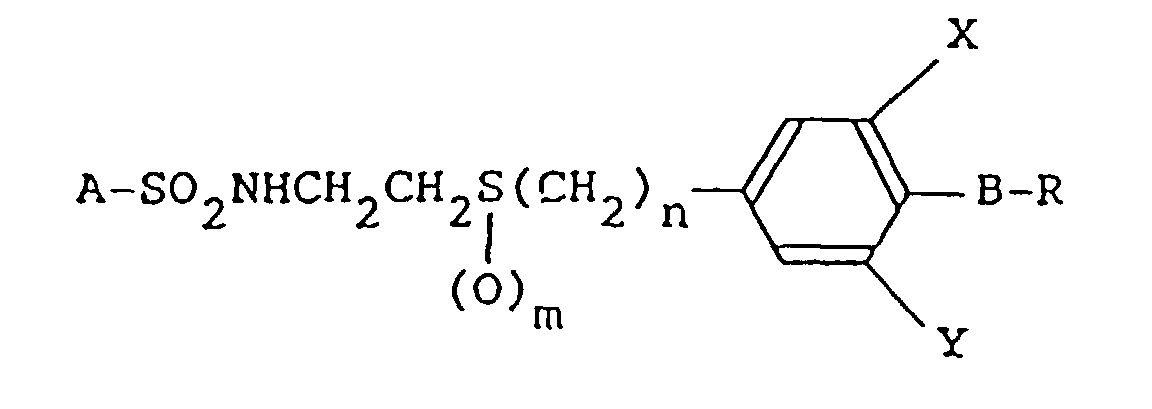 A eine Naphthylgruppe, eine Pyridylgruppe, eine Phenylgruppe, eine Phenylgruppe, die durch 1 bis 5 Elemente, ausgewählt aus der Gruppe bestehend aus einem Halogenatom, einer Alkylgruppe mit 1 bis 4 Kohlenstoffatomen, einer Alkoxygruppe mit 1 bis 4 Kohlenstoffatomen, einer Nitrogruppe und einer Acetamidogruppe substituiert ist oder eine Alkylgruppe mit 1 bis 20 Kohlenstoffatomen ist, B eine Alkylengruppe mit 1 bis 3 Kohlenstoffatomen, eine -OCH2-Gruppe oder eine -CH=CH-Gruppe ist, X und Y gleich oder verschieden sind, und jeweils ein Wasserstoffatom oder ein Fluoratom sind, R eine Carboxygruppe, eine Alkoxycarbonylgruppe mit 2 bis 5 Kohlenstoffatomen, eine Hydroxymethylgruppe oder eineGruppe ist, in der
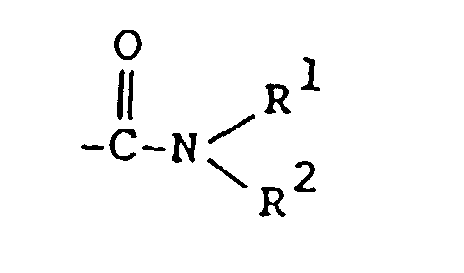 R ein Wasserstoffatom oder eine Alkylgruppe mit 1 bis 3 Kohlenstoffatomen ist, und R2 ein Wasserstoffatom, eine Hydroxylgruppe, eine Alkylgruppe mit 1 bis 3 Kohlenstoffaromen, eine Carboxymethylgruppe oder eine Alkoxycarbonylmethylgruppe mit 3 bis 6 Kohlenstoffatomen ist, m eine ganze Zahl von 0 bis 2 ist, n eine ganze Zahl von 0 bis 3 ist, oder ein pharmazeutisch akzeptables Salz hiervon als ein effektiver Inhaltsstoff.
 - Die Verwendung gemäß Anspruch 1, wobei die Verbindung durch die Formeldargestellt wird.

Wobei X, Y und Z gleich oder verschieden sind und jeweils ein Wasserstoffatom oder ein Halogenatom sind, wobei A eine Methylengruppe oder eine durch die Formel -OCH2 dargestellte Gruppe ist, wobei R eine Carboxygruppe, eine Alkoxycarbonylgruppe mit 2 bis 5 Kohlenstoffatomen, oderwobei R1 ein Wasserstoffatom oder eine Alkylgruppe mit 1 bis 3 Kohlenstoffatomen ist, und R2 ein Wasserstoffatom, eine Hydroxylgruppe, eine Alkylgruppe mit 1 bis 3 Kohlenstoffatomen, eine Carboxymethylgruppe oder eine Alkoxycarbonylmethylgruppe mit 3 bis 6 Kohlenstoffatomen ist, oder ein pharmazeutisch akzeptables Salz hiervon als einen effektiven Inhaltsstoff.
- Verwendung gemäß Anspruch 1, wobei die Verbindung durch die Formeldargestellt wird,

wobei A eine durch 1 bis 5 Elementen, ausgewählt aus der Gruppe bestehend aus einem Halogenatom, einer Alkylgruppe mit 1 bis 4 Kohlenstoffatomen, einer Alkoxygruppe mit 1 bis 4 Kohlenstoffatomen, einer Nitrogruppe und einer Acetamidogruppe substituierte Phenylgruppe ist, B eine Alkylengruppe mit 1 bis 3 Kohlenstoffatomen oder eine-OCH2-Gruppe ist, X und Y gleich oder verschieden sind, und jeweils ein Wasserstoffatom oder ein Fluoratom sind, R eine Carboxygruppe oder eine Alkoxycarbonylgruppe mit 2 bis 4 Kohlenstoffatomen ist, und m eine ganze Zahl von 0 bis 2 ist, oder ein pharmazeutisch akzeptables Salz hiervon als ein effektiver Inhaltsstoff.
Applications Claiming Priority (4)
| Application Number | Priority Date | Filing Date | Title |
|---|---|---|---|
| JP7035795 | 1995-02-21 | ||
| JP7035795 | 1995-02-21 | ||
| JP70357/95 | 1995-02-21 | ||
| PCT/JP1996/000379 WO1996025926A1 (en) | 1995-02-21 | 1996-02-20 | Glutamic acid receptor agonist |
Publications (3)
| Publication Number | Publication Date |
|---|---|
| EP0811375A1 EP0811375A1 (de) | 1997-12-10 |
| EP0811375A4 EP0811375A4 (de) | 1998-04-22 |
| EP0811375B1 true EP0811375B1 (de) | 2001-01-03 |
Family
ID=13429109
Family Applications (1)
| Application Number | Title | Priority Date | Filing Date |
|---|---|---|---|
| EP96902487A Expired - Lifetime EP0811375B1 (de) | 1995-02-21 | 1996-02-20 | Gluteminsäurerezeptor agonisten |
Country Status (7)
| Country | Link |
|---|---|
| US (1) | US5955505A (de) |
| EP (1) | EP0811375B1 (de) |
| KR (1) | KR19980702372A (de) |
| AT (1) | ATE198472T1 (de) |
| CA (1) | CA2212829A1 (de) |
| DE (1) | DE69611437T2 (de) |
| WO (1) | WO1996025926A1 (de) |
Families Citing this family (16)
| Publication number | Priority date | Publication date | Assignee | Title |
|---|---|---|---|---|
| US6653331B2 (en) * | 1996-07-03 | 2003-11-25 | Pharmacia & Upjohn Company | Targeted drug delivery using sulfonamide derivatives |
| GB9702194D0 (en) | 1997-02-04 | 1997-03-26 | Lilly Co Eli | Sulphonide derivatives |
| BR9908199A (pt) * | 1998-02-24 | 2001-04-03 | Lilly Co Eli | Derivados de sulfonamida |
| WO2000006539A1 (en) * | 1998-07-31 | 2000-02-10 | Eli Lilly And Company | Alkenyl sulphonamide derivatives |
| US6693137B1 (en) | 1998-07-31 | 2004-02-17 | Eli Lilly And Company | Sulphonamide derivatives |
| ES2221410T3 (es) * | 1998-07-31 | 2004-12-16 | Eli Lilly And Company | Derivados heterociclil sulfamida. |
| PE20000943A1 (es) * | 1998-07-31 | 2000-09-28 | Lilly Co Eli | Derivados de sulfonamida |
| WO2000006159A1 (en) * | 1998-07-31 | 2000-02-10 | Eli Lilly And Company | Heterocyclic sulphonamide derivatives |
| AR038957A1 (es) | 2001-08-15 | 2005-02-02 | Pharmacia Corp | Terapia de combinacion para el tratamiento del cancer |
| MXPA02010231A (es) | 2001-11-27 | 2004-12-13 | Warner Lambert Co | Inhibidores aminotransferasa dependientes de aminoacidos de cadena ramificada y su uso en el tratamiento de las enfermedades neurodegenerativas. |
| ES2297382T3 (es) * | 2003-02-14 | 2008-05-01 | Eli Lilly And Company | Derivados de sulfonamida como moduladores de ppar. |
| TWI446908B (zh) * | 2005-06-06 | 2014-08-01 | Lilly Co Eli | Ampa受體強化劑 |
| EP2571484A2 (de) | 2010-05-18 | 2013-03-27 | Mahmut Bilgic | Brauseformulierungen |
| US10335503B2 (en) * | 2015-07-06 | 2019-07-02 | Public University Corporation Yokohama City University | Compound that specifically binds to AMPA receptor |
| JP2020045285A (ja) * | 2017-01-11 | 2020-03-26 | 公立大学法人横浜市立大学 | Ampa受容体に関連する疾患の予防及び/又は治療剤 |
| JP6241974B1 (ja) * | 2017-01-11 | 2017-12-06 | 公立大学法人横浜市立大学 | 霊長類生体の脳内ampa受容体のイメージング方法、プログラム、及びスクリーニング方法 |
Family Cites Families (6)
| Publication number | Priority date | Publication date | Assignee | Title |
|---|---|---|---|---|
| CU21107A3 (es) * | 1978-02-10 | 1988-02-01 | Hoffmann La Roche | Pyrrolidines derivatives |
| JPH02196764A (ja) * | 1988-08-03 | 1990-08-03 | Takeda Chem Ind Ltd | アミド化合物,その製造法ならびにグルタミン酸レセプター阻害剤 |
| US4990511A (en) * | 1988-08-03 | 1991-02-05 | Takeda Chemical Industries, Ltd. | Amide compounds, their production and use |
| US5677330A (en) * | 1990-02-12 | 1997-10-14 | The Center For Innovative Technology | Medical uses of allosteric hemoglobin modifier compounds in patient care |
| US5189211A (en) * | 1990-08-01 | 1993-02-23 | Taisho Pharmaceutical Co., Ltd. | Sulfonamide derivatives |
| US5773434A (en) * | 1995-08-30 | 1998-06-30 | Gary A. Rogers | Facilitation of AMPA receptor-mediated synaptic transmission in brain as a treatment for schizophrenia |
-
1996
- 1996-02-20 KR KR1019970705770A patent/KR19980702372A/ko not_active Abandoned
- 1996-02-20 CA CA002212829A patent/CA2212829A1/en not_active Abandoned
- 1996-02-20 AT AT96902487T patent/ATE198472T1/de not_active IP Right Cessation
- 1996-02-20 US US08/894,433 patent/US5955505A/en not_active Expired - Fee Related
- 1996-02-20 WO PCT/JP1996/000379 patent/WO1996025926A1/ja not_active Ceased
- 1996-02-20 EP EP96902487A patent/EP0811375B1/de not_active Expired - Lifetime
- 1996-02-20 DE DE69611437T patent/DE69611437T2/de not_active Expired - Fee Related
Also Published As
| Publication number | Publication date |
|---|---|
| DE69611437T2 (de) | 2001-08-23 |
| DE69611437D1 (de) | 2001-02-08 |
| WO1996025926A1 (en) | 1996-08-29 |
| KR19980702372A (ko) | 1998-07-15 |
| US5955505A (en) | 1999-09-21 |
| EP0811375A1 (de) | 1997-12-10 |
| ATE198472T1 (de) | 2001-01-15 |
| EP0811375A4 (de) | 1998-04-22 |
| CA2212829A1 (en) | 1996-08-29 |
Similar Documents
| Publication | Publication Date | Title |
|---|---|---|
| EP0811375B1 (de) | Gluteminsäurerezeptor agonisten | |
| DE69724777T2 (de) | Pentafluorobenzensulfonamiden und analoge | |
| Galanakis et al. | Synthesis and pharmacological evaluation of amide conjugates of NSAIDs with L-cysteine ethyl ester, combining potent antiinflammatory and antioxidant properties with significantly reduced gastrointestinal toxicity | |
| US10906885B2 (en) | PPAR agonists, compounds, pharmaceutical compositions, and methods of use thereof | |
| HU227280B1 (en) | Nitro compounds and their compositions having anti-inflammatory, analgesic and antithrombotic acitivities | |
| IL305317B2 (en) | Compositions and methods for modulating hair growth | |
| NO319855B1 (no) | Anvendelse av forbindelser for fremstilling av medikament for inhibering av ekspresjon av VCAM-1. | |
| IL284397B2 (en) | Compositions and methods for regulating hair growth | |
| SK18002000A3 (sk) | Použitie zlúčenín na zvýšenie aktivity pyruvát-dehydrogenázy, zlúčeniny, spôsob ich prípravy a farmaceutická kompozícia, ktorá ich obsahuje | |
| EP0469901B1 (de) | Sulfonamidderivate | |
| HUP0202142A2 (en) | Macrophage scavenger receptor antagonists | |
| JP2009511629A (ja) | 中枢神経系疾患の調節に有用な利尿薬様化合物類似体 | |
| US10233201B2 (en) | Class of HDAC inhibitors expands the renal progenitor cells population and improves the rate of recovery from acute kidney injury | |
| JPWO1996025926A1 (ja) | グルタミン酸受容体作用薬 | |
| RU2036909C1 (ru) | Ацилпроизводные гидроксипиримидинов | |
| Sharma et al. | Bis [3-(4′-substituted phenyl) prop-2-ene] disulfides as a new class of antihyperlipidemic compounds | |
| AU2016381152A1 (en) | Indolizine derivatives, composition and methods of use | |
| US6492550B2 (en) | Alpha-substituted thio, -oxo trifluoromethylketones as phospholipase inhibitors | |
| WO2002002119A1 (en) | Fatty acid synthase inhibitors | |
| EP1187608A1 (de) | Indol verbindungen | |
| CA3124820C (en) | Compositions and methods for modulating hair growth | |
| WO2002024197A1 (en) | Fatty acid synthase inhibitors |
Legal Events
| Date | Code | Title | Description |
|---|---|---|---|
| PUAI | Public reference made under article 153(3) epc to a published international application that has entered the european phase |
Free format text: ORIGINAL CODE: 0009012 |
|
| 17P | Request for examination filed |
Effective date: 19970819 |
|
| AK | Designated contracting states |
Kind code of ref document: A1 Designated state(s): AT BE CH DE DK ES FR GB GR IE IT LI LU MC NL PT SE |
|
| RHK1 | Main classification (correction) |
Ipc: C07C323/49 |
|
| A4 | Supplementary search report drawn up and despatched | ||
| AK | Designated contracting states |
Kind code of ref document: A4 Designated state(s): AT BE CH DE DK ES FR GB GR IE IT LI LU MC NL PT SE |
|
| 17Q | First examination report despatched |
Effective date: 19990426 |
|
| GRAG | Despatch of communication of intention to grant |
Free format text: ORIGINAL CODE: EPIDOS AGRA |
|
| GRAG | Despatch of communication of intention to grant |
Free format text: ORIGINAL CODE: EPIDOS AGRA |
|
| GRAH | Despatch of communication of intention to grant a patent |
Free format text: ORIGINAL CODE: EPIDOS IGRA |
|
| GRAH | Despatch of communication of intention to grant a patent |
Free format text: ORIGINAL CODE: EPIDOS IGRA |
|
| GRAA | (expected) grant |
Free format text: ORIGINAL CODE: 0009210 |
|
| AK | Designated contracting states |
Kind code of ref document: B1 Designated state(s): AT BE CH DE DK ES FR GB GR IE IT LI LU MC NL PT SE |
|
| PG25 | Lapsed in a contracting state [announced via postgrant information from national office to epo] |
Ref country code: NL Free format text: LAPSE BECAUSE OF FAILURE TO SUBMIT A TRANSLATION OF THE DESCRIPTION OR TO PAY THE FEE WITHIN THE PRESCRIBED TIME-LIMIT Effective date: 20010103 Ref country code: ES Free format text: THE PATENT HAS BEEN ANNULLED BY A DECISION OF A NATIONAL AUTHORITY Effective date: 20010103 Ref country code: BE Free format text: LAPSE BECAUSE OF FAILURE TO SUBMIT A TRANSLATION OF THE DESCRIPTION OR TO PAY THE FEE WITHIN THE PRESCRIBED TIME-LIMIT Effective date: 20010103 Ref country code: AT Free format text: LAPSE BECAUSE OF FAILURE TO SUBMIT A TRANSLATION OF THE DESCRIPTION OR TO PAY THE FEE WITHIN THE PRESCRIBED TIME-LIMIT Effective date: 20010103 |
|
| REF | Corresponds to: |
Ref document number: 198472 Country of ref document: AT Date of ref document: 20010115 Kind code of ref document: T |
|
| RIN1 | Information on inventor provided before grant (corrected) |
Inventor name: CHIBA, YOSHIYUKI, NIPPON SUISAN KAISHA, LTD. Inventor name: WADA, KEIJI Inventor name: YAMASHITA, SHINYA, NIPPON SUISAN KAISHA, LTD. Inventor name: TAKEO, JIRO, NIPPON SUISAN KAISHA, LTD. |
|
| REG | Reference to a national code |
Ref country code: CH Ref legal event code: EP |
|
| REG | Reference to a national code |
Ref country code: IE Ref legal event code: FG4D |
|
| REF | Corresponds to: |
Ref document number: 69611437 Country of ref document: DE Date of ref document: 20010208 |
|
| PG25 | Lapsed in a contracting state [announced via postgrant information from national office to epo] |
Ref country code: LU Free format text: LAPSE BECAUSE OF NON-PAYMENT OF DUE FEES Effective date: 20010220 Ref country code: IE Free format text: LAPSE BECAUSE OF NON-PAYMENT OF DUE FEES Effective date: 20010220 |
|
| PG25 | Lapsed in a contracting state [announced via postgrant information from national office to epo] |
Ref country code: MC Free format text: LAPSE BECAUSE OF NON-PAYMENT OF DUE FEES Effective date: 20010312 |
|
| ITF | It: translation for a ep patent filed | ||
| PG25 | Lapsed in a contracting state [announced via postgrant information from national office to epo] |
Ref country code: PT Free format text: LAPSE BECAUSE OF FAILURE TO SUBMIT A TRANSLATION OF THE DESCRIPTION OR TO PAY THE FEE WITHIN THE PRESCRIBED TIME-LIMIT Effective date: 20010403 Ref country code: DK Free format text: LAPSE BECAUSE OF FAILURE TO SUBMIT A TRANSLATION OF THE DESCRIPTION OR TO PAY THE FEE WITHIN THE PRESCRIBED TIME-LIMIT Effective date: 20010403 |
|
| PG25 | Lapsed in a contracting state [announced via postgrant information from national office to epo] |
Ref country code: GR Free format text: LAPSE BECAUSE OF FAILURE TO SUBMIT A TRANSLATION OF THE DESCRIPTION OR TO PAY THE FEE WITHIN THE PRESCRIBED TIME-LIMIT Effective date: 20010406 |
|
| REG | Reference to a national code |
Ref country code: CH Ref legal event code: NV Representative=s name: E. BLUM & CO. PATENTANWAELTE |
|
| ET | Fr: translation filed | ||
| NLV1 | Nl: lapsed or annulled due to failure to fulfill the requirements of art. 29p and 29m of the patents act | ||
| PLBE | No opposition filed within time limit |
Free format text: ORIGINAL CODE: 0009261 |
|
| STAA | Information on the status of an ep patent application or granted ep patent |
Free format text: STATUS: NO OPPOSITION FILED WITHIN TIME LIMIT |
|
| REG | Reference to a national code |
Ref country code: IE Ref legal event code: MM4A |
|
| REG | Reference to a national code |
Ref country code: GB Ref legal event code: IF02 |
|
| 26N | No opposition filed | ||
| PGFP | Annual fee paid to national office [announced via postgrant information from national office to epo] |
Ref country code: SE Payment date: 20040204 Year of fee payment: 9 |
|
| PGFP | Annual fee paid to national office [announced via postgrant information from national office to epo] |
Ref country code: FR Payment date: 20040210 Year of fee payment: 9 |
|
| PGFP | Annual fee paid to national office [announced via postgrant information from national office to epo] |
Ref country code: GB Payment date: 20040218 Year of fee payment: 9 |
|
| PGFP | Annual fee paid to national office [announced via postgrant information from national office to epo] |
Ref country code: CH Payment date: 20040227 Year of fee payment: 9 |
|
| PGFP | Annual fee paid to national office [announced via postgrant information from national office to epo] |
Ref country code: DE Payment date: 20040304 Year of fee payment: 9 |
|
| PG25 | Lapsed in a contracting state [announced via postgrant information from national office to epo] |
Ref country code: IT Free format text: LAPSE BECAUSE OF NON-PAYMENT OF DUE FEES;WARNING: LAPSES OF ITALIAN PATENTS WITH EFFECTIVE DATE BEFORE 2007 MAY HAVE OCCURRED AT ANY TIME BEFORE 2007. THE CORRECT EFFECTIVE DATE MAY BE DIFFERENT FROM THE ONE RECORDED. Effective date: 20050220 Ref country code: GB Free format text: LAPSE BECAUSE OF NON-PAYMENT OF DUE FEES Effective date: 20050220 |
|
| PG25 | Lapsed in a contracting state [announced via postgrant information from national office to epo] |
Ref country code: SE Free format text: LAPSE BECAUSE OF NON-PAYMENT OF DUE FEES Effective date: 20050221 |
|
| PG25 | Lapsed in a contracting state [announced via postgrant information from national office to epo] |
Ref country code: LI Free format text: LAPSE BECAUSE OF NON-PAYMENT OF DUE FEES Effective date: 20050228 Ref country code: CH Free format text: LAPSE BECAUSE OF NON-PAYMENT OF DUE FEES Effective date: 20050228 |
|
| PG25 | Lapsed in a contracting state [announced via postgrant information from national office to epo] |
Ref country code: DE Free format text: LAPSE BECAUSE OF NON-PAYMENT OF DUE FEES Effective date: 20050901 |
|
| EUG | Se: european patent has lapsed | ||
| GBPC | Gb: european patent ceased through non-payment of renewal fee |
Effective date: 20050220 |
|
| REG | Reference to a national code |
Ref country code: CH Ref legal event code: PL |
|
| PG25 | Lapsed in a contracting state [announced via postgrant information from national office to epo] |
Ref country code: FR Free format text: LAPSE BECAUSE OF NON-PAYMENT OF DUE FEES Effective date: 20051031 |
|
| REG | Reference to a national code |
Ref country code: FR Ref legal event code: ST Effective date: 20051031 |