EP0813405B1 - Polypodiumextrakt als photoschutzmittel - Google Patents
Polypodiumextrakt als photoschutzmittel Download PDFInfo
- Publication number
- EP0813405B1 EP0813405B1 EP96905445A EP96905445A EP0813405B1 EP 0813405 B1 EP0813405 B1 EP 0813405B1 EP 96905445 A EP96905445 A EP 96905445A EP 96905445 A EP96905445 A EP 96905445A EP 0813405 B1 EP0813405 B1 EP 0813405B1
- Authority
- EP
- European Patent Office
- Prior art keywords
- polypodium
- preparation
- extract
- skin
- exposure
- Prior art date
- Legal status (The legal status is an assumption and is not a legal conclusion. Google has not performed a legal analysis and makes no representation as to the accuracy of the status listed.)
- Expired - Lifetime
Links
Images


Classifications
-
- A—HUMAN NECESSITIES
- A61—MEDICAL OR VETERINARY SCIENCE; HYGIENE
- A61Q—SPECIFIC USE OF COSMETICS OR SIMILAR TOILETRY PREPARATIONS
- A61Q17/00—Barrier preparations; Preparations brought into direct contact with the skin for affording protection against external influences, e.g. sunlight, X-rays or other harmful rays, corrosive materials, bacteria or insect stings
- A61Q17/04—Topical preparations for affording protection against sunlight or other radiation; Topical sun tanning preparations
-
- A—HUMAN NECESSITIES
- A61—MEDICAL OR VETERINARY SCIENCE; HYGIENE
- A61K—PREPARATIONS FOR MEDICAL, DENTAL OR TOILETRY PURPOSES
- A61K36/00—Medicinal preparations of undetermined constitution containing material from algae, lichens, fungi or plants, or derivatives thereof, e.g. traditional herbal medicines
- A61K36/11—Pteridophyta or Filicophyta (ferns)
-
- A—HUMAN NECESSITIES
- A61—MEDICAL OR VETERINARY SCIENCE; HYGIENE
- A61K—PREPARATIONS FOR MEDICAL, DENTAL OR TOILETRY PURPOSES
- A61K36/00—Medicinal preparations of undetermined constitution containing material from algae, lichens, fungi or plants, or derivatives thereof, e.g. traditional herbal medicines
- A61K36/18—Magnoliophyta (angiosperms)
- A61K36/88—Liliopsida (monocotyledons)
- A61K36/899—Poaceae or Gramineae (Grass family), e.g. bamboo, corn or sugar cane
-
- A—HUMAN NECESSITIES
- A61—MEDICAL OR VETERINARY SCIENCE; HYGIENE
- A61K—PREPARATIONS FOR MEDICAL, DENTAL OR TOILETRY PURPOSES
- A61K8/00—Cosmetics or similar toiletry preparations
- A61K8/18—Cosmetics or similar toiletry preparations characterised by the composition
- A61K8/96—Cosmetics or similar toiletry preparations characterised by the composition containing materials, or derivatives thereof of undetermined constitution
- A61K8/97—Cosmetics or similar toiletry preparations characterised by the composition containing materials, or derivatives thereof of undetermined constitution from algae, fungi, lichens or plants; from derivatives thereof
- A61K8/9741—Pteridophyta [ferns]
-
- A—HUMAN NECESSITIES
- A61—MEDICAL OR VETERINARY SCIENCE; HYGIENE
- A61P—SPECIFIC THERAPEUTIC ACTIVITY OF CHEMICAL COMPOUNDS OR MEDICINAL PREPARATIONS
- A61P17/00—Drugs for dermatological disorders
- A61P17/18—Antioxidants, e.g. antiradicals
Definitions
- the present invention relates generally to the field of dermatology and, in particular, to providing photoprotection and antioxidant protection to the skin.
- the invention further particularly relates to providing protection from ultraviolet radiation from the sun or artificial sources.
- Topical photoprotective preparations or "sunscreens” can be categorized as chemical, physical, or mixed.
- Topical chemical sunscreen preparations are usually translucent preparations that contain one or more ultraviolet-absorbing compounds.
- Topical physical sunscreen preparations are usually opaque or semi-opaque preparations that contain compounds that do not necessarily absorb ultraviolet radiation but, rather, reflect or scatter radiation UV because of their opacity and particle size (30-100 nm).
- Topical mixed sunscreen preparations contain a mixture of chemical and physical sunscreen agents.
- Topical sunscreen preparations are generally formulated as solutions (in, e.g.. alcohol; alcohol plus glycerol or propylene glycol), or as lotions, creams and ointments (e.g. oil-in-water or water-in-oil emulsions).
- topical sunscreens preparations may be included in cosmetic preparations along with cosmetic agents such as pigments, perfumes, and the like.
- Polypodium is a genus of plants typical of the fern family, Polypodiaceae .
- Horvath et al. reported that an extract or infusion of one species of fern, Polypodium leucotomos , traditionally used by the natives of northern Honduras as a treatment for malignant tumors, had been shown both in vitro and in vivo to have antitumoral effects (A. Horvath, et al., Nature 214:1256-1258 (1967)). Since then, extracts from a variety of fern plants, some referred to as Polypodium extracts and some referred to as calagualine, have been found to have a number of dermatological, immunomodulatory and behavioral effects.
- Extracts of Polypodium leucotomos have been found effective in the treatment of psoriasis, atopic dermatitis and other skin disorders (see, e.g., H. Corrales Padilla, et al., Int. J. Dermatol. 13(5):276-282 (1974); D. Jimenez, et al., Allergol. et Immunopathol. 15(4):185-189 (1987)).
- the extract was found to cause decreases in hyperkeratosis, parakeratosis, epidermal mitosis, epidermal thickening, epidermal prolongations, and the severity and extent of epidermal lesions.
- Valetas U.S. Patent No. 4,206,222 to Valetas (issued June 3, 1980) also discloses a method of producing extracts from a variety of ferns in the Polypodiaceae family.
- Valetas claims an active agent of a particular chemical structure, a C 8 delta-lactone, isolated from these ferns.
- the active agent is disclosed to be useful in the treatment of collagen diseases (e.g. arthritis).
- Extracts of Polypodium leucotomos also have been found to increase the number of T8 lymphocytes, to decrease the T4/T8 ratio in blood, to prolong the survival of skin allografts in mice, to inhibit the proliferative response of mouse spleen cells, and to inhibit the proliferative response of T lymphocytes to mitogens (see, e.g., J. Vargas, et al., Ann. Immunol. (Inst. Pasteur) 134(C):393-400 (1983); D. Jimenez, et al., Allergol. et Immunopathol. 15(4):185-189 (1987); M. Tuominen, et al., Phytother. Res.
- X.A. Alvarez, et al. tested the effects of a Polypodium extract on the behavior and brain cytokines of rats. Their data indicated that the extract induces hypokinesia at moderate-high doses, with no effect on psychomotor habituation, in an open-field psychomotor activity test; improves learning in a passive avoidance behavior test; decreases levels of the cytokines IL-1 ⁇ and IL-2 in frontoparietal cortices; decreases IL-1 ⁇ in the hippocampus; and increases TNF- ⁇ in the cortex (X.A. Alvarez, et al., Annals of Psychiatry 3:329-341 (1992)).
- compositions based on hydrated lipidic lamellar phases or liposomes containing an ecdysteroid or ecdysteroid derivative, which may be extracted from Polypodium vulgarem are disclosed.
- Polypodium leuctomos extract may be used as an antioxidant agent in the therapy of skin disorders.
- a preparation for topical application comprising an Polypodium extract selected from P. leucotomos, P. percussum or P. triseriale is provided.
- Preparations including extract of ferns of the genus Polypodium are provided.
- the extracts may be from any of the ferns Polypodium aureum , Polypodium crassifolium , Polypodium decumanum , Polypodium lanceolatum , Polypodium leucotomos , Polypodium percussum , Polypodium triseriale , or Polypodium vulgare .
- the preparations may be formulated for topical application or oral administration.
- the preparations include a pharmaceutically acceptable carrier for topical application.
- the topical preparations may include physical sunscreen agents, chemical sunscreen agents and/or cosmetic agents.
- a physical sunscreen agent such as titanium dioxide, silicone-treated titanium dioxide, zinc oxide, ferrous oxide, ferric chloride, talc, chromium oxide, or cobalt oxides may be included.
- a chemical sunscreen agent such as para-amino benzoic acid, esters of para-amino benzoic acid, salicylates, cinnamates, benzophenones, dihydroxyacetone, parsol 1789, or melanin may be included.
- the preparations may contain at least 1%, 10%, 25%, or 50% Polypodium extract by weight.
- the preparations may provide a sun protection factor (SPF) for the minimal erythematic dose (MED) evaluated at 24 hours of at least 2, 5, 10 or 15 when applied at 2 ⁇ l/cm 2 to normal skin of Types I to Type IV.
- SPF sun protection factor
- MED minimal erythematic dose
- the preparations include a pharmaceutically acceptable carrier for oral application.
- a packaged product for oral administration including instructions for use, is also provided.
- methods of providing photoprotection to an individual with normal skin also are provided. These methods include orally administering to an adult a dosage of a Polypodium extract between 720 mg and 1440 mg within a 24 hour period prior to exposure to ultraviolet radiation, and orally administering a dosage of between 360 mg and 720 mg within a 3 hour period prior to exposure.
- the present invention is directed to the use of extracts of fern plants of the genus Polypodium for photoprotection and antioxidant protection.
- the present invention is also directed to photoprotective and antioxidant preparations including such extracts.
- the methods and preparations are directed only to topical use of the extracts, whereas in another set of embodiments, the extracts may be administered systemically.
- the Polypodium extracts of the prior art and the present invention are hydrosoluble or hydrophilic extracts which may be produced by standard alcohol or polar extractions of the dried leaves and/or rhizomes of ferns of the genus Polypodium .
- the polar extraction may be preceded or followed by a non-polar or lipid separation, and then the polar extract may be filtered and concentrated. Additional steps may be added to remove pigments and cations.
- General protocols for producing polar extracts for the Polypodiaceae may be found in GB 2,024,622A and GB 2,075,834A.
- Extracts of one Polypodium species, Polypodium leucotomos are already commercially available in Spain, Portugal. Honduras and the Dominican Republic in the form of capsules for oral administration.
- the preferred commercial preparation for oral administration is from Industrial Farmacéutica Cantabria, S.A.. Madrid, Spain (DIFUR®).
- Polypodium extract and the abbreviation "PE” shall mean a polar (or hydrosoluble or hydrophilic or hydroalcoholic) fraction extracted from the leaves and/or rhizomes of a fern of the genus Polypodium and having photoprotective and antioxidant properties.
- Ferns in this genus include Polypodium leucotomos (also known as Polypodium aureum and Phlebodium aureum ) described in the Index Londinensis , Vol. 5, Oxford, 1921; Polypodium decumanum (also known as Phlebodium multiseriale and Chrysopteris dictyocallis ) described in Ann. Bot. , Vol. 31, 1917; Polypodium crassifolium (also known as Dipteris crassifolia and Polypodium enocarpum ) described in Species Plantarum , Sweden, 1753-63; Polypodium lanceolatum described in the Index Londinensis , Vol.
- the preferred fern for producing the extract of the present invention is Polypodium leucotomos .
- such extracts may be obtained by ethanolic or methanolic extraction of Polypodium leaves and/or rhizomes. In preferred embodiments, only the aerial portions of the plant are used.
- Other hydrophilic solvents may, of course, be used in place of ethanol or methanol (e.g., water, lower alkyl alcohols).
- a hydrophobic extraction or "defatting" step may also be used to remove hydrophobic or lipidic components from the polar extract. As will be understood by one of ordinary skill in the art, such a hydrophobic or lipid extraction may be employed either before or after the polar or hydrophilic extraction. Similarly, multiple extractions may be performed to further refine the polar or hydrophilic fraction.
- extracts After evaporation of volatile solvents, such extracts are typically syrupy in consistency and amber to brown in color (but may be clarified by means of activated charcoal). Both the consistency and color, of course, will vary depending upon the degree to which the extract is diluted with water or other solvents.
- a preparation containing, comprising or including x% PE by weight is defined as a preparation in which the Polypodium extract, if concentrated, would constitute x% by weight.
- a concentrated Polypodium extract shall be defined as one losing no more than 25% of its weight upon drying.
- UVA Ultraviolet radiation
- UVB ultraviolet absorbent
- UVC Ultraviolet radiation
- the UVC region includes wavelengths less than approximately 290 nm but, due to filtering by ozone in the upper atmosphere, is largely absent at the surface of the earth.
- the UVB region extends from approximately 290-320 nm and the UVA region extends from approximately 320-400 nm.
- photoprotection means (1) the inhibition or retardation of erythema or sunburn reaction and tissue damage to skin and/or (2) the inhibition or retardation of the immediate pigment darkening reaction and/or (3) the inhibition or retardation of the delayed tanning or MMD reaction and/or (4) the inhibition or retardation of phototoxic reaction produced by psoralens.
- a compound providing such photoprotection is said to be “photoprotective” and may be referred to as a "photoprotectant.”
- SPF MED mJ / cm 2 of sunscreen protected skin MED mJ / cm 2 of untreated control skin
- SPDF standard protection factor
- the degree of sun protection needed depends, of course, not only on the dosage of radiation but also on the individual's type of skin.
- normal human skin can be classified into sun-reactive Types I-VI (Type I being the lightest and most sensitive and Type VI the darkest and least sensitive) based in large part upon the degree of constitutive melanization and the facultative capacity of the skin to darken or tan in response to ultraviolet radiation.
- Type I-VI being the lightest and most sensitive
- Type VI the darkest and least sensitive
- normal skin means human skin which is not photosensitized and which is free of dermatological conditions such as psoriasis, atopic dermatitis, and vitiligo.
- photosensitized means made more susceptible to photodamage by ingestion or topical application of a compound such as a psoralen.
- PE For topical application of PE, four different formulations were tested. The formulations each consisted of concentrated PE mixed into a lotion as described in Example 8. The different formulations from each other (and from the lotion of Example 8) only in the percentage by weight of PE in the formulation. For each formulation, 200 ⁇ l was applied either once or twice to 100 cm 2 of skin surface as indicated: "10%” : 10% PE applied once "25%” : 25% PE applied once "50% 1x” : 50% PE applied once "50% 2x” : 50% PE applied twice
- dosages of up to 720 mg per day were tested (total dosages ranging from 1440 mg over two days to 3600 mg over 5 days) using commercially available PE capsules (DIFUR®, Industrial Farmacéutica Cantabria, S.A., Madrid, Spain).
- PE not only retards the phototoxic reaction to psoralens and UVA (“PUVA,” see Examples 4 and 5) but also retards the IPD reaction suggests that its mechanism of action may involve the quenching of free radicals and reactive oxygen species. It is known that free radicals and reactive oxygen species play an important role in causing various degrees of cellular damage and in perpetuating inflammatory response (erythema, edema, vesiculation) to psoralens (Carraro and Pathak, J. Invest. Dermatol. 90:267-275, (1988)).
- psoralens interact with the DNA of epidermal cells to produce photoadducts with the pyrimidine bases (including single-stranded and cross-linked photoadducts), and (2) psoralens produce reactive oxygen species, including singlet oxygen, superoxide anion and hydroxyl radical, that contribute to epidermal cell membrane damage, lipid peroxidation and the development of the inflammatory response.
- UVR ultraviolet radiation damage
- a shorter wavelength mechanism involving UVB radiation (290-320 nm) that operates through direct absorption of photons by DNA and results in damage to DNA in the form of DNA base photoproducts (e.g., cyclobutylpyrimidine dimers and 6-4 pyrimidine-pyrimidone photoproducts of cytosine);
- a longer wavelength UV mechanism that operates through non-DNA intermediates such as reactive oxygen species ( 1 O 2 , , and .
- OH etc. that are produced through either endogenous sensitizers (e.g., NADH, NADPH, riboflavin, quinones, etc.) or exogenous sensitizers (e.g., psoralens + UVA).
- endogenous sensitizers e.g., NADH, NADPH, riboflavin, quinones, etc.
- exogenous sensitizers e.g., psoralens + UVA
- the longer wavelengths also contribute to inflammation and other oxidative stress reactions that cause damage to DNA, membrane lipids, and cytoplasmic organelles.
- the most reactive free radical is the hydroxyl radical ( ⁇ OH) resulting from the generation of superoxide anion ( ). Both singlet oxygen ( 1 O 2 ) and can cause membrane lipid peroxidation, DNA damage and cross linking of proteins in the epidermis as well as the dermis.
- PE does not show any characteristic absorption peaks in the UVB or UVA regions, a crude extract exhibited monotonically increasing absorption values in these regions. Thus, PE appears to act in two ways: (a) as a UVB and UVA absorber and (b) as a quencher for reactive oxygen species. If the extract is used in its crude form without dilution, it acts partially as a UV screen. When PE is used in dilute or colorless form, it shows little or no absorption in the UVB and UVA spectrum but still shows significant free radical quenching or scavenging properties against .
- PE acts not only as a photoprotectant but as an antioxidant.
- PE may be used similarly to other known antioxidants (e.g., Vitamin C, Vitamin E, ⁇ -carotene) to protect the skin or other tissues against the oxidative stresses that cause cell membrane damage, DNA damage, inflammatory reactions of skin photosensitization and photoaging.
- antioxidants e.g., Vitamin C, Vitamin E, ⁇ -carotene
- the photoprotective preparations of the present invention include a pharmaceutically acceptable carrier for topical application.
- Such pharmaceutically acceptable carriers are well known in the art and, in essence, may include any currently used and commercially available topical sunscreen or cosmetic preparation, or combinations of currently used and commercially available sunscreen or cosmetic preparations. Thus, one may simply modify an available sunscreen or cosmetic preparation by adding PE and adjusting, as necessary, the ratios of aqueous and non-aqueous components to maintain a consistency suitable for a topical application.
- the term "pharmaceutically acceptable carrier for topical application” means a composition suitable for topical application to human skin by spreading or rubbing, which does not cause irritation to human skin, and which can be mixed with PE to form a solution, emulsion, gel, lotion, ointment, balm, cream, or spreadable solid or paste.
- Such pharmaceutically acceptable carriers may include emollients, surfactants, humectants, lubricants, thickeners, waterproofing agents, bactericidal agents, percutaneous penetrating agents and preservatives.
- various cosmetic agents, such as fragrances and pigments may be included in a pharmaceutically acceptable carrier for topical application.
- the carrier may be slightly acidic or at least non-alkaline even for topical administration.
- the preparation has a pH > 5 but ⁇ 8.
- a pharmaceutically acceptable carrier for topical application may also include photoprotective agents which supplement or complement the photoprotective properties of PE.
- the carrier may include chemical sunscreen agents, physical sunscreen agents and/or cosmetic agents approved for use with humans (by, for example, the U.S. Food and Drug Administration and the Cosmetics, Toiletries and Fragrance Association).
- the term "physical sunscreen agent” means a compound which, when used as a component of a pharmaceutically acceptable carrier for topical application, acts to reflect and/or diffract and/or scatter ultraviolet radiation and which, when applied at a concentration of 2 ⁇ l/cm 2 or 2 mg/cm 2 , provides an SPF of at least 2 when the MED is measured at 24 hrs after exposure with skin Type I to Type IV.
- Typical physical sunscreen agents are titanium dioxide, silicone-treated titanium dioxide, zinc oxide, ferrous oxide, ferric chloride, talc, chromium oxide, cobalt oxides, kaolin, ichthyol, and starch.
- Physical sunscreen agents are generally in the form of particles with diameters of 30-100 nm and preferably 30-50 nm. Many other physical sunscreen agents are known in the art and need not be recited here. As used herein, the term "physical sunscreen agent” specifically does not embrace PE.
- the term "chemical sunscreen agent” means a compound which, when used as a component of a pharmaceutically acceptable carrier for topical application, acts to absorb some radiation in the ultraviolet spectrum and which, when applied at a concentration of 2 ⁇ l/cm 2 or 2 mg/cm 2 , provides an SPF of at least 2 when the MED is measured at 24 hrs after exposure with skin Type I to Type IV.
- Typical chemical sunscreen agents include para-amino benzoic acid (PABA) and its ester derivatives, salicylates, cinnamates, benzophenones, dihydroxyacetone, parsol 1789, melanin and various hydrocarbons. Many other chemical sunscreen agents are known in the art and need not be recited here.
- the term "chemical sunscreen agent” specifically does not embrace PE.
- cosmetic agent means a pigment or fragrance which may be topically applied to human skin for aesthetic effect and which does not cause irritation.
- Cosmetic agents are well known in the art and are included in such products as lipsticks, eye shadows, rouges, foundations and other forms of "make-up.”
- cosmetic agents are limited to those used for imparting color or fragrance to human skin.
- cosmetic agents is not intended to embrace other types of agents such as those used specifically in nail or hair care products.
- cosmetic agents specifically does not embrace PE.
- the photoprotective preparations for topical application of the present invention should include at least about 1% PE by volume although, as will be understood by one of ordinary skill in the art, lesser amounts may be used with lesser advantage. In experiments with hairless mice, for example, photoprotective effects were observed for concentrations of PE as low as 0.5% in DMSO. In preferred embodiments, however, the preparation should comprise at least about 5% or 10% PE by volume. Higher concentrations, including PE at concentrations of 25%, 50% or greater, are also contemplated and intended to fall within the scope and spirit of the appended claims.
- the percentage of PE by volume will be determined in commercial applications by a variety of factors including: the desire to protect against UVA and UVB, the desire to inhibit tanning, the desire to inhibit phototoxic reaction, relative costs of different agents, the desire to include multiple agents with different photoprotective properties (e.g. chemical sunscreen agents and physical sunscreen agents), and the desire to include compounds which produce an aesthetically pleasing product which is easy to use (e.g. cosmetic pigments, emollients, perfumes, aloe, sunless "tanning” agents such as dihydroxy acetone, etc.).
- photoprotective preparations for topical application might include, but are not limited to, those described in Example 8.
- PE may be mixed with any of a variety of pharmaceutically acceptable carriers for oral administration.
- pharmaceutically acceptable carrier for oral administration is meant a composition which is non-toxic, is not irritating to the human gastrointestinal system, and which can be mixed with PE to form a solution, syrup, emulsion, gel, or solid.
- Preparations for intravenous, intramuscular, subcutaneous or, in general, parenteral administration may also be produced by methods known in the art.
- substances which can serve as pharmaceutically acceptable carriers for oral administration are sugars such as lactose, glucose and sucrose; starches such as corn starch and potato starch; cellulose and its derivatives, such as sodium carboxymethylcellulose, ethylcellulose, and cellulose acetate; powdered tragacanth; malt; gelatin; talc; stearic acid; magnesium stearate; calcium sulfate; vegetable oils such as peanut oil, cottonseed oil, sesame oil, olive oil, and corn oil; polyols such as propylene glycol, glycerine, sorbitol, mannitol, and polyethylene glycol; polyvinylpyrrolidone; alginic acid; pyrogen-free water; isotonic saline; phosphate buffer solutions; cocoa butter; emulsifiers; as well as other non-toxic compatible substances used in pharmaceutical formulations.
- sugars such as lactose, glucose and sucrose
- starches such as corn starch
- wetting agents and lubricants such as magnesium stearate, as well as coloring agents, flavoring agents, excipients, tableting agents, stabilizers, antioxidants, and preservatives, can also be present.
- Other compatible pharmaceutical additives and actives may be included in the pharmaceutically acceptable carrier for use in the compositions of the present invention.
- the preparations for oral administration may be in the form of tablets, caplets, soft and hard gelatin capsules, pills, including delayed or prolonged release formulations, dispersible powders or granules, lozenges, sachets, cachets, elixirs, suspensions, emulsions, solutions, syrups, aerosols, (as a solid or in a liquid medium), and the like.
- the PE is formed into a capsule with lactose and magnesium stearate (a lubricant) as a pharmaceutically acceptable carrier for oral administration.
- lactose and magnesium stearate a lubricant
- an alternative carrier such as a starch or vegetable oil, may be preferred.
- photoprotective preparations for oral administration might include, but are not limited to, those described in Example 9.
- a method of providing photoprotection (including protection or prevention ofphotoaging, actinic damage and skin cancers) which employs a preparation of PE for topical application.
- a PE preparation is formulated as a solution, emulsion, gel, ointment, lotion, balm, cream, or spreadable solid or paste which may be applied to the skin of an individual and smeared over the skin to form a thin layer.
- the preparation should be applied before exposure to ultraviolet radiation and should be reapplied after swimming, bathing, or significant perspiration.
- the PE preparation also includes other sunscreen agents (physical or chemical), emollients, surfactants, humectants, lubricants, thickeners, waterproofing agents, and/or preservatives.
- sunscreen agents physical or chemical
- emollients emollients
- surfactants emollients
- humectants emollients
- lubricants e.g., talctants
- thickeners e.g., g., g., g., g., g., g., g., g., g., g., g., peppermint, peppermint, peppermint, peppermint, peppermint, peppermint, peppermint, peppermint, peppermint, peppermint, peppermint, peppermint, peppermint, peppermint, peppermint, peppermint, peppermint, peppermint, pepperminophen, glycerin,
- a method of providing photoprotection (including protection or prevention of photoaging, actinic damage and skin cancers) which employs a preparation of PE for oral administration.
- the PE is formulated as a capsule in which lactose and magnesium stearate serve as the pharmaceutically acceptable carrier.
- lactose and magnesium stearate serve as the pharmaceutically acceptable carrier.
- an alternative carrier such as a starch or vegetable oil, may be preferred.
- the capsules contain, preferably, about 100-150 mg of PE and, most preferably, 120 mg of PE.
- the capsules are preferably not taken with an antacid and, most preferably, are taken at least one half hour before a meal.
- the preparation is preferably not administered with alcoholic beverages.
- PE appears to enhance the effect of the drug digitalis
- individuals taking digitalis should consult a physician before using an orally administered PE preparation and, if appropriate, the dosage of digitalis should be reduced.
- PE is not used by individuals taking digitalis.
- the dosage of PE should be at least 120 mg taken within 3 hrs prior to solar or other ultraviolet radiation exposure. More preferably, the dosage is between 360 and 720 mg taken within 3 hrs before exposure. PE has been shown to be safe at dosages up to 1200 mg/day and, therefore, dosages of up to 1200 mg may be taken in the 24 hrs prior to exposure. Preferably, the dosage of PE should be at least 360 mg taken within 24 hrs prior to exposure. More preferably, the dosage is between 720 and 1440 mg taken within 24 hrs before exposure. In addition, daily dosages of 360-720 mg/day may be taken in the days preceding exposure although the effect appears not to be substantially cumulative after the second day.
- dosages should be limited to 120-240 mg per day.
- Developed Polypodium leucotomos rhizomes may be separated from African Palm trees, with which they grow symbiotically, and transplanted to plantations where soil and weather conditions are favorable (e.g. Yojoa Lake, Honduras).
- the aerial parts of the plant may be harvested and dried for 24 hrs, at temperatures between 60-70°C.
- a batch of 160 kg of the dried leaves may be finely ground and subjected three times to 10 hrs of low reflux extraction in of methanol/water (total volume 1430 liters).
- the resulting dilute extract may then be concentrated using negative pressure evaporation at 25-50°C to remove most of the alcohol and to reduce the volume to approximately 20% of the original.
- lipids may be removed from the concentrated extract with a hydrophobic solvent such as n-hexane and cations may be removed with an ionic interchange resin.
- a hydrophobic solvent such as n-hexane
- tannins, chlorophyll and other pigments may be partially removed using activated charcoal (200-300 g per kg of original dried leaves).
- the extract may be filtered and concentrated under negative pressure to yield approximately 16 kg of concentrated PE.
- the resulting PE should have an amber to brown color and a syrupy consistency.
- the PE used in the experiments described below was derived from Polypodium leucotomos and provided by Industrial Farmacéutica Cantabria, S.A., Madrid, Spain.
- Adhesive templates with multiple exposure windows were affixed to the backs of the subjects. Each window was 2 x 2 cm in size. Templates were affixed on both the left and right sides of the spinal column in the infrascapular region.
- One row of six exposure windows on each subject was used to determine the MED of the subject's untreated (unprotected) skin.
- the windows of this row were exposed to solar radiation for 12.5', 15', 20', 25', 30', and either 35' or 40'.
- Subjects were assembled in a open field. They were asked to lie down in a prone position on air mattresses assigned individually to each subject. Sunlight exposures were given between 11:30 a.m. and 1:30 p.m. The sunlight intensity was measured with a precalibrated radiometer (International Light Co., Newburyport, MA) and averaged 27 w/m 2 . This level of flux, when given to untreated skin for 30 minutes, is equivalent to about 50 mJ/cm 2 of solar radiation, a dose adequate to produce a minimally perceptible sunburn reaction in individuals of skin Type III or IV.
- Sun exposure times were as follows: MED Control 10% PE 25% PE 50% 1x PE 50% 2x PE Row Row Row Row Row Row Row 12.5' 20' 20' 20' 20' 20' 15.0' 40' 40' 40' 40' 40' 20' 60' 60' 60' 60' 60' 25' 80' 80' 80' 80' 80' 30' 100' 100' 100' 100' 100' 35'/40' 100' 100' 100' 100' 100'
- Treatment Minimum Dose for IPD Protection (in min.) (in mJ/cm 2 )* Factor (1) Control 25.9 43.1 -- (2) 10% PE 56.9 94.8 2.16 (3) 25% PE 68.0 113.3 2.63 (4) 50% 1x PE 88.0 147.0 3.40 (5) 50% 2x PE 92.0 153.0 3.55 (6) Std SPF 15 80.0 133.6 3.09 * Flux of UVB component.
- One minute of exposure ⁇ 1.66 mJ/cm 2 .
- the increment in the UV dose required for the immediate pigment darkening (IPD) reaction is clearly related to the concentration of PE applied topically. Topically applied PE protected by retarding or prolonging the photo-oxidation reaction of melanin pigment already present in the skin.
- PE-treated skin sites received a maximum sun exposure of 100 minutes, a dose equivalent to approximately 3 MED. This dose of 3 MED can produce mild to moderate sunburn reaction (pink-red color without painful burn).
- the third criterion to demonstrate the photoprotective effect of topical PE was to determine the minimal melanogenic dose (MMD) of UV radiation required to stimulate delayed pigmentation or neomelanogenesis (tanning reaction) in untreated control skin and the UV dose required to stimulate delayed pigmentation of the PE treated skin.
- MMD minimal melanogenic dose
- the delayed pigmentation response appears to be due to the cumulative effects of longwave ultraviolet radiation (> 320 nm).
- MMD minimal melanogenic dose
- Tanning delayed pigmentation
- each of the PE preparations afforded significant protection and, because the total exposure time was limited to approximately 100' to avoid burning any subjects, the exposure was insufficient to cause neomelanogenesis with the 50% 1x, 50% 2x and Std SPF 15 sunscreens. Thus, the actual MMDs of these applications remain to be established (although they are clearly greater than 167 mJ/cm 2 ).
- the responses to the graded doses of sun exposure ranging from 30 minutes (about 1 MED) to 45, 60, 90, 120, 150, or 180 minutes, were evaluated in terms of: (1) Minimal dose of solar radiation required for immediate pigment darkening (IPD) response measured at the end of the exposure period; (2) Minimal erythematic dose (MED) of solar radiation required for minimal erythema reaction measured 24 hours after the exposure period; and (3) Minimal melanogenic dose required (MMD) for delayed pigment response measured 3 days (72 hrs) after the exposure period.
- IPD immediate pigment darkening
- MED Minimal erythematic dose
- MMD Minimal melanogenic dose required
- IPD immediate pigment darkening
- the minimal erythema dose (MED) for each of the eight test subjects was determined prior to administration of PE to obtain the MED values of sunburn response of untreated control skin. Then, the MEDs of the same eight test volunteers were determined after they had consumed PE orally for two or five days.
- the orally administered PE (3600 mg) given for five consecutive days produced a photoprotection factor of 2.94 whereas the orally administered PE given for 2 days (1440 mg) produced a photoprotection factor of 2.65.
- the data also reveal that there was no significant additional enhancement of photoprotection when the PE dosages were repeated daily for 5 days.
- the data appear to demonstrate a maximum photoprotective effect of PE within 3 to 24 hours after the oral ingestion of the PE and that the photoprotective effect of PE is not cumulative after this period.
- the skin of the PE-treated subjects showed no evidence of sunburn reaction when the subjects were exposed to graded dosages of solar radiation ranging as high as 150 or 180 minutes.
- the response of control skin receiving no oral PE showed evidence of sunburn reaction after exposure to only 30 to 34 minutes of midday solar radiation.
- Sun exposure of unprotected control skin for sixty minutes produced a moderate degree of sunburn reaction with tenderness.
- PE is indeed photoprotective against sunburn reaction and the induction of melanin pigmentation (delayed tanning reaction).
- PE photoprotective property
- topical applications of PE were tested on subjects deliberately made photosensitive by oral administration of psoralens.
- the psoralens 8-methoxypsoralen (8-MOP) and 5-methoxypsoralen (5-MOP) are widely used in the United States and throughout the world in the treatment of psoriasis and vitiligo in conjunction with exposure to UVA radiation (320-400 nm) from artificial light sources or from solar radiation.
- UVA radiation 320-400 nm
- UVA radiation 320-400 nm
- These drugs are known to increase the photosensitivity of the skin by participating in a phototoxic reaction with ultraviolet radiation and, thereby, to induce erythema, edema and tenderness of the skin.
- PUVA psoralen
- UVA ultraviolet A
- MPD minimum phototoxic dose
- the psoralens 8-MOP and 5-MOP photosensitize the skin and cause a measurable degree of phototoxic reaction.
- a much lower (three to five-fold) dose of UVA radiation is necessary to produce redness and phototoxicity.
- PUVA as an assay, one can establish the photoprotective properties of a preparation by measuring its ability to inhibit phototoxicity in 8-MOP or 5-MOP photosensitized skin.
- 8-MOP was administered to two subjects at a dose of 0.45-0.6 mg per kg, about 1.5-2 hrs before exposure to solar UVA radiation.
- 5-MOP a weaker phototoxic drug than 8-MOP, was administered to two different subjects at the higher dose of 1.0-1.2 mg per kg, 1.5-2 hrs before exposure.
- MPD minimum phototoxic dose
- PE minimal phototoxic dose
- One of the templates sites was used for the application of the Std SPF 15 sunscreen to serve as an internal standard.
- One additional template site did not receive any topical application and this site served as a non-treated control site for assessing the MPD value of skin without any photoprotection.
- topically administered PE is photoprotective of skin photosensitized by either 8-MOP or 5-MOP.
- orally administered 5-MOP is less phototoxic than orally administered 8-MOP. This explains the requirement of higher doses for MPD determination with 5-MOP than that required for MPD determination of 8-MOP.
- exposure times were purposely limited. As a result, the actual MPDs and protection factors remain to be established (although PE clearly provided a protection factor of at least 1.5 to at least 4.0).
- Each of these same subjects were then retested on previously unexposed skin with PE as a photoprotectant. They were given oral dosages of 1440 mg PE (720mg PE 18 hours before sun exposure and 720 mg PE three hours before sun exposure). Then, as before, they were given an oral dose of either 8-MOP (0.6 mg/kg) or 5-MOP (1.0-1.2 mg/kg) two hours before sun exposure. The subjects were examined 72 hours after exposure to determine the MPD in the presence of orally administered PE and psoralen.
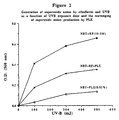
- the generation of was quantitatively estimated as a function of increasing exposure dose of UVA (1-10 J/cm 2 ) and by recording the increase in optical density value at 560 nm for the irradiated solution. Quenching of production was confirmed by using superoxide dismutase (50 units/mL) and an aliquot of a diluted colorless solution of PE (0.01% or less). The scavenging potential of PE was also evaluated by increasing the irradiation dose of UVA (0.5-10 J/cm 2 ) and observing the percentage quenching of the generated by adding an aliquot of PE into the reaction system.
- Fig. 1 and Fig. 2 The results pertaining to this investigation are shown in Fig. 1 and Fig. 2.
- the radiation source used was polychromatic and produced a major fraction of UVB as well as some fraction of UVA radiation.
- the UV radiation produced O 2 and the increase in the generation of O 2 with increased irradiation dose is clear.
- PE alone contributed little to the production of .
- riboflavin In the presence of riboflavin, however, there was significant generation of .
- riboflavin and UVA or riboflavin and UVB systems were used for the generation of , the addition of PE produced 42.2% and 55% reductions in production respectively.
- We could not produce 100% quenching in the production of because of the opacity and turbidity that resulted with higher concentrations of PE interfered with the spectrophotometric determination.
- the 18 kg of lactose may be replaced with 10 kg of microcrystalline cellulose and 8 kg polyvinyl pyrrolidone.
Landscapes
- Health & Medical Sciences (AREA)
- Life Sciences & Earth Sciences (AREA)
- Natural Medicines & Medicinal Plants (AREA)
- Veterinary Medicine (AREA)
- Public Health (AREA)
- General Health & Medical Sciences (AREA)
- Animal Behavior & Ethology (AREA)
- Engineering & Computer Science (AREA)
- Botany (AREA)
- Biotechnology (AREA)
- Microbiology (AREA)
- Mycology (AREA)
- Epidemiology (AREA)
- Chemical & Material Sciences (AREA)
- Medicinal Chemistry (AREA)
- Pharmacology & Pharmacy (AREA)
- Medical Informatics (AREA)
- Alternative & Traditional Medicine (AREA)
- Dermatology (AREA)
- Birds (AREA)
- Bioinformatics & Cheminformatics (AREA)
- Chemical Kinetics & Catalysis (AREA)
- General Chemical & Material Sciences (AREA)
- Organic Chemistry (AREA)
- Biochemistry (AREA)
- Nuclear Medicine, Radiotherapy & Molecular Imaging (AREA)
- Cosmetics (AREA)
- Medicines Containing Plant Substances (AREA)
- Pharmaceuticals Containing Other Organic And Inorganic Compounds (AREA)
- Materials For Medical Uses (AREA)
Claims (22)
- Zubereitung zur topischen Anwendung, welche eine für einen Lichtschutz wirksame Menge eines vor Licht schützenden Polypodium-Extrakts und einen für die topische Anwendung pharmazeutisch zuträglichen Träger umfasst, wobei der Polypodium-Extrakt ausgewählt ist aus der Gruppe bestehend aus Polypodium leucotomos, Polypodium percussum und Polypodium triseriale.
- Zubereitung nach Anspruch 1, wobei die Zubereitung mindestens etwa 1 Gew.-%, bevorzugt mindestens etwa 10 Gew.-%, mehr bevorzugt mindestens etwa 25 Gew.-% und am meisten bevorzugt mindestens etwa 50 Gew.-% Polypodium-Extrakt enthält.
- Zubereitung nach Anspruch 1, wobei die Zubereitung zwischen 1 % und weniger als 3 % Polypodium-Extrakt enthält.
- Zubereitung nach einem der vorhergehenden Ansprüche, wobei die Zubereitung bei Anwendung in einer Konzentration von 2 µl/cm2 auf normale Haut des Typs I bis Typs IV für eine minimale, ein Erythem auslösende Dosis (MED), ausgewertet nach 24 Stunden, einen Sonnenschutzfaktor (SPF) von mindestens 2 ergibt.
- Zubereitung nach Anspruch 4, wobei die Zubereitung einen Sonnenschutzfaktor von mindestens 5 ergibt.
- Zubereitung nach Anspruch 4, wobei die Zubereitung einen Sonnenschutzfaktor von mindestens 10 ergibt.
- Zubereitung nach Anspruch 4, wobei die Zubereitung einen Sonnenschutzfaktor von mindestens 15 ergibt.
- Zubereitung nach einem der vorhergehenden Ansprüche, wobei die Zubereitung durch eine Alkoholextraktion eines Blattes oder eines Rhizoms einer Polypodium-Pflanze hergestellt worden ist.
- Zubereitung nach einem der vorhergehenden Ansprüche, wobei die Zubereitung eine Zusammensetzung enthält, die ausgewählt ist aus der Gruppe bestehend aus physikalischen Sonnenschutzmitteln, chemischen Sonnenschutzmitteln und kosmetischen Mitteln.
- Zubereitung nach Anspruch 9, bei welcher der Träger ein physikalisches Sonnenschutzmittel enthält, das ausgewählt ist aus der Gruppe bestehend aus Titandioxid, mit Silicon behandeltes Titandioxid, Zinkoxid, Eisen(II)-oxid, Eisen(III)-oxid, Talk, Chromoxid und Cobaltoxid.
- Zubereitung nach Anspruch 9, bei welcher das chemische Sonnenschutzmittel ausgewählt ist aus der Gruppe bestehend aus para-Aminobenzoesäure, Estern der para-Aminobenzoesäure, Salicylaten, Cinnamaten, Benzophenonen, Dihydroxyaceton, Parsol 1789 und Melanin.
- Abgepacktes Produkt, umfassend einen Behälter, eine innerhalb des Behälters befindliche Zubereitung nach einem der vorhergehenden Ansprüche und Gebrauchsanweisungen für die topische Verabreichung der Zubereitung zur Erteilung eines Lichtschutzes.
- Verwendung eines lichtschützenden Polypodium-Extraktes bei der Herstellung eines Medikamentes zum topischen Lichtschutz, wobei das Medikament vor einer Bestrahlung mit ultravioletter Strahlung topisch zu verabreichen ist.
- Verwendung der Zubereitung nach einem der Ansprüche 1 bis 11 zur Herstellung eines Medikamentes zum Gebrauch in einem Verfahren zur Erteilung eines Lichtschutzes bei einem Individuum mit normaler Haut, umfassend die topische Verabreichung einer für einen Lichtschutz wirksamen Menge der Zubereitung auf die Haut vor einer Bestrahlung mit ultravioletter Strahlung.
- Verwendung nach Anspruch 13, bei welcher das Medikament eine Menge eines lichtschützenden Polypodium-Extraktes, die bei topischer Verabreichung auf die Haut lichtschützend wirksam ist, und einen pharmazeutisch verträglichen topischen Träger umfasst, wobei das Medikament des weiteren eine Zusammensetzung umfasst, die ausgewählt ist aus der Gruppe bestehend aus physikalischen Sonnenschutzmitteln, chemischen Sonnenschutzmitteln und kosmetischen Mitteln.
- Verwendung nach Anspruch 15, bei welcher der Träger ein physikalisches Sonnenschutzmittel enthält, das ausgewählt ist aus der Gruppe bestehend aus Titandioxid, mit Silicon behandeltes Titandioxid, Zinkoxid, Eisen(II)-oxid, Eisen(III)-oxid, Talk, Chromoxid und Cobaltoxid.
- Verwendung nach Anspruch 15, bei welcher das chemische Sonnenschutzmittel ausgewählt ist aus der Gruppe bestehend aus para-Aminobenzoesäure, Estern der para-Aminobenzoesäure, Salicylaten, Cinnamaten, Benzophenonen, Dihydroxyaceton, Parsol 1789 und Melanin.
- Verwendung nach Anspruch 15, bei welcher der Extrakt ausgewählt ist aus der Gruppe bestehend aus einem Extrakt von Polypodium aureum, einem Extrakt von Polypodium crassifolium, einem Extrakt von Polypodium decumanum, einem Extrakt von Polypodium lanceolatum, einem Extrakt von Polypodium leucotomos, einem Extrakt von Polypodium percussum, einem Extrakt von Polypodium triseriale und einem Extrakt von Polypodium vulgare.
- Verwendung eines lichtschützenden Polypodium-Extrakts zur Herstellung eines Medikaments zum Gebrauch in einem Verfahren zum Schützen gegen eine Sonnenbrand-Reaktion und/oder Schützen gegen eine sofortige Reaktion einer Pigmentdunkelung sowie eine verzögerte Reaktion einer Bräunung bei einem Individuum mit normaler Haut, umfassend eine orale Verabreichung einer für einen Lichtschutz wirksamen Menge vor einer Bestrahlung mit ultravioletter Strahlung.
- Verwendung nach Anspruch 19, bei welcher das Medikament einem Individuum mit normaler Haut in einer zur Erteilung eines Schutzes gegen eine Sonnenbrand-Reaktion und/oder eine Auslösung einer Melaninpigmentierung wirksamen Menge des Polypodium-Extrakts innerhalb von 2 Tagen vor einer Bestrahlung mit ultravioletter Strahlung verabreicht wird.
- Verwendung nach Anspruch 20, bei welcher das Individuum ein Erwachsener ist, und die Dosierung zwischen 720 mg und 1440 mg, eingenommen innerhalb einer 24-Stunden Zeitspanne vor einer Bestrahlung mit ultravioletter Strahlung, liegt.
- Verwendung nach Anspruch 21, bei welcher das Individuum ein Erwachsener ist, und die Dosierung zwischen 360 mg und 720 mg, eingenommen innerhalb einer 3-Stunden Zeitspanne vor einer Bestrahlung mit ultravioletter Strahlung, liegt.
Applications Claiming Priority (3)
| Application Number | Priority Date | Filing Date | Title |
|---|---|---|---|
| US388261 | 1982-06-14 | ||
| US08/388,261 US5614197A (en) | 1995-02-13 | 1995-02-13 | Polypodium extract as photoprotectant |
| PCT/US1996/001808 WO1996025139A1 (en) | 1995-02-13 | 1996-02-09 | Polypodium extract as photoprotectant |
Publications (2)
| Publication Number | Publication Date |
|---|---|
| EP0813405A1 EP0813405A1 (de) | 1997-12-29 |
| EP0813405B1 true EP0813405B1 (de) | 2006-11-02 |
Family
ID=23533370
Family Applications (1)
| Application Number | Title | Priority Date | Filing Date |
|---|---|---|---|
| EP96905445A Expired - Lifetime EP0813405B1 (de) | 1995-02-13 | 1996-02-09 | Polypodiumextrakt als photoschutzmittel |
Country Status (10)
| Country | Link |
|---|---|
| US (1) | US5614197A (de) |
| EP (1) | EP0813405B1 (de) |
| JP (1) | JPH11500126A (de) |
| AT (1) | ATE344017T1 (de) |
| CA (1) | CA2212172C (de) |
| DE (1) | DE69636667T2 (de) |
| ES (1) | ES2276398T3 (de) |
| MX (1) | MX9706149A (de) |
| PT (1) | PT813405E (de) |
| WO (1) | WO1996025139A1 (de) |
Cited By (2)
| Publication number | Priority date | Publication date | Assignee | Title |
|---|---|---|---|---|
| EP1762219B2 (de) † | 2004-04-01 | 2017-01-11 | Industrial Farmaceutica Cantabria, S.A. | Photoprotektive und/oder photoimmunprotektive zusammensetzungen für die haut und ihre anwendungen |
| IT202200016293A1 (it) | 2022-08-01 | 2024-02-01 | Unifarco S P A | Composizione orale o nutraceutica o integratore alimentare per la protezione dai danni indotti dall’esposizione al sole |
Families Citing this family (13)
| Publication number | Priority date | Publication date | Assignee | Title |
|---|---|---|---|---|
| SE9601677D0 (sv) * | 1996-05-02 | 1996-05-02 | Scotia Lipidteknik Ab | New use |
| JP4098850B2 (ja) * | 1997-07-16 | 2008-06-11 | 久光製薬株式会社 | S−(3−ヒドロキシプロピル)−l−システインを含有する経口用製剤 |
| US6228366B1 (en) * | 1998-07-29 | 2001-05-08 | Helsint, S.A.L. | Water-soluble fractions of Phlebodium decumanum and its use as nutritional supplement in AIDS and cancer patients |
| US6238696B1 (en) | 2000-01-07 | 2001-05-29 | Gaia Herbs, Inc. | Process for providing herbal medicants in cellulose derivative capsules |
| FR2876032B1 (fr) * | 2004-10-05 | 2008-10-31 | Greentech Sa Sa | Utilisation d'extraits de fougeres dans des preparations cosmetiques ou dermatologiques |
| US7569210B2 (en) | 2005-09-26 | 2009-08-04 | Jamie Collins Doss | Therapeutic soap product with UV protection |
| US7700079B2 (en) | 2005-09-26 | 2010-04-20 | Jamie Collins Doss | Therapeutic soap product with UV protection |
| FR2893843B1 (fr) * | 2005-11-25 | 2008-04-18 | Am Phyto Conseil Sarl | Utilisation d'une composition contenant un ecdysteroide |
| US20080014156A1 (en) * | 2006-07-12 | 2008-01-17 | Horn Gregory T | Photoprotectant composition for preventing sunburn and sun damage to the skin |
| US8771652B2 (en) * | 2009-09-17 | 2014-07-08 | New York University | Methods of blocking ultraviolet radiation and promoting skin growth using terpenes and terpenoids |
| US10226435B2 (en) | 2011-06-07 | 2019-03-12 | New York University | Compositions and methods for restoring the stratum corneum and treating dermatological diseases |
| EP3065750A4 (de) * | 2013-11-06 | 2017-06-21 | Transdermal Corporation | System zur topischen abgabe und verabreichung für einen stabilisierten schutzwirkstoff, zusammensetzungen daraus und verfahren zur herstellung davon |
| ES2613603B1 (es) * | 2017-03-27 | 2017-11-16 | Ona Investigacion, S.L. | Producto cosmético protector solar |
Family Cites Families (8)
| Publication number | Priority date | Publication date | Assignee | Title |
|---|---|---|---|---|
| US4206222A (en) * | 1977-06-23 | 1980-06-03 | Societe Civile Particuliere De Brevets Suffren | Method for preparing a substance having properties against collagen diseases and products obtained |
| US4201151A (en) * | 1978-04-17 | 1980-05-06 | International Telephone And Telegraph Corporation | Apparatus and methods of coating filaments with polymers |
| ES8104315A1 (es) * | 1980-04-02 | 1981-04-16 | Conrad Ltd | Un procedimiento de obtencion de un extracto de las fraccio-nes polares de los helechos de la familia polypodiaceae. |
| US5145675A (en) * | 1986-03-31 | 1992-09-08 | Advanced Polymer Systems, Inc. | Two step method for preparation of controlled release formulations |
| FR2637182B1 (fr) * | 1988-10-03 | 1992-11-06 | Lvmh Rech | Compositions a base de phases lamellaires lipidiques hydratees ou de liposomes contenant un ecdysteroide, de preference l'ecdysterone, ou l'un de ses derives; et compositions cosmetiques, pharmaceutiques, notamment dermatologiques, de sericulture ou phytosanitaires l'incorporant |
| EP0503208A1 (de) * | 1991-03-08 | 1992-09-16 | Maracuyama International, S.A. | Verfahren zur Gewinnung eines natürlichen, wasserlöslichen Extraktes von Blättern und/oder Rhizomen aus verschiedenen Farnkräutern mit immunologischer Aktivität |
| US5256404A (en) * | 1992-08-14 | 1993-10-26 | National Starch And Chemical Investment Holding Corporation | Granular starch as sunscreen agent in aqueous compositions |
| US5306486A (en) * | 1993-03-01 | 1994-04-26 | Elizabeth Arden Co., Division Of Conopco, Inc. | Cosmetic sunscreen composition containing green tea and a sunscreen |
-
1995
- 1995-02-13 US US08/388,261 patent/US5614197A/en not_active Expired - Lifetime
-
1996
- 1996-02-09 JP JP8525035A patent/JPH11500126A/ja not_active Withdrawn
- 1996-02-09 WO PCT/US1996/001808 patent/WO1996025139A1/en not_active Ceased
- 1996-02-09 EP EP96905445A patent/EP0813405B1/de not_active Expired - Lifetime
- 1996-02-09 DE DE69636667T patent/DE69636667T2/de not_active Expired - Lifetime
- 1996-02-09 CA CA002212172A patent/CA2212172C/en not_active Expired - Lifetime
- 1996-02-09 AT AT96905445T patent/ATE344017T1/de not_active IP Right Cessation
- 1996-02-09 ES ES96905445T patent/ES2276398T3/es not_active Expired - Lifetime
- 1996-02-09 PT PT96905445T patent/PT813405E/pt unknown
-
1997
- 1997-08-12 MX MX9706149A patent/MX9706149A/es unknown
Cited By (2)
| Publication number | Priority date | Publication date | Assignee | Title |
|---|---|---|---|---|
| EP1762219B2 (de) † | 2004-04-01 | 2017-01-11 | Industrial Farmaceutica Cantabria, S.A. | Photoprotektive und/oder photoimmunprotektive zusammensetzungen für die haut und ihre anwendungen |
| IT202200016293A1 (it) | 2022-08-01 | 2024-02-01 | Unifarco S P A | Composizione orale o nutraceutica o integratore alimentare per la protezione dai danni indotti dall’esposizione al sole |
Also Published As
| Publication number | Publication date |
|---|---|
| WO1996025139A1 (en) | 1996-08-22 |
| US5614197A (en) | 1997-03-25 |
| MX9706149A (es) | 1998-07-31 |
| CA2212172C (en) | 2005-04-19 |
| EP0813405A1 (de) | 1997-12-29 |
| ATE344017T1 (de) | 2006-11-15 |
| CA2212172A1 (en) | 1996-08-22 |
| PT813405E (pt) | 2007-01-31 |
| ES2276398T3 (es) | 2007-06-16 |
| DE69636667T2 (de) | 2007-10-04 |
| DE69636667D1 (de) | 2006-12-14 |
| JPH11500126A (ja) | 1999-01-06 |
Similar Documents
| Publication | Publication Date | Title |
|---|---|---|
| Pathak | Sunscreens: topical and systemic approaches for protection of human skin against harmful effects of solar radiation | |
| Gonzalez et al. | Topical or oral administration with an extract of Polypodium leucotomos prevents acute sunburn and psoralen‐induced phototoxic reactions as well as depletion of Langerhans cells in human skin | |
| EP1049451B1 (de) | Verwendung von verbindungen zum schutz der haut gegen uv-induzierter immunsuppression | |
| EP0813405B1 (de) | Polypodiumextrakt als photoschutzmittel | |
| EP0955995B1 (de) | Verwendung von komplexen in die herstellung von präparaten zur behandlung empfindlicher haut, verfahren zur herstellung und hypoallergenische präparate | |
| US20040166184A1 (en) | Withania somnifera composition, method for obtaining same and pharmaceutical, nutritional and personal care formulations thereof | |
| WO1996025139A9 (en) | Polypodium extract as photoprotectant | |
| EP3452176B1 (de) | Saxifraga-extrakte für kosmetische oder therapeutische verwendung auf der haut | |
| US5869031A (en) | Depigmenting dermatological and/or cosmetic composition | |
| KR101078888B1 (ko) | 조직배양한 에키네시아 부정근 추출물을 포함하는 화장료 조성물 및 이의 제조 방법 | |
| WO1991019478A1 (de) | Lichtschutz | |
| Pathak et al. | Topical and systemic approaches to protection of human skin against harmful effects of solar radiation | |
| JP3233813B2 (ja) | チロシナーゼ生合成促進剤及び白髪改善用又は白髪防止用頭髪用化粧料並びに日焼け用化粧料 | |
| JPH09263526A (ja) | イヌカタヒバ有機溶媒抽出物を含有する化粧料組成物および医薬組成物 | |
| KR100428817B1 (ko) | 자외선 차단 및 슬리밍 효과를 가지는 기능성 화장품 조성물 | |
| EP2650004A1 (de) | Herstellung von standardisierten extrakten der als »cuachalalate (amphipterygium adstringens) bekannten pflanze und ihre verwendung für sonnenschutz | |
| AU750031C (en) | Compositions and method for protecting skin from UV induced immunosuppression and skin damage | |
| KR20040067042A (ko) | 생약추출물을 함유하는 항염효과를 갖는 화장료조성물 | |
| JP2001122729A (ja) | 抗炎症作用を有する敏感肌用の化粧料 | |
| KR20090092461A (ko) | 항산화 효과를 가지는 화장료 조성물 | |
| Roman–Italic–Size | First Name NAME (separated by comma Times New Roman–Size 11 1Affiliations of authors Times New Roman–Italic–Size 11 | |
| KR20110028012A (ko) | 옥수수겨 추출물 함유 자외선차단용 화장료 조성물 |
Legal Events
| Date | Code | Title | Description |
|---|---|---|---|
| PUAI | Public reference made under article 153(3) epc to a published international application that has entered the european phase |
Free format text: ORIGINAL CODE: 0009012 |
|
| 17P | Request for examination filed |
Effective date: 19970827 |
|
| AK | Designated contracting states |
Kind code of ref document: A1 Designated state(s): AT BE CH DE DK ES FR GB GR IE IT LI LU MC NL PT SE |
|
| 17Q | First examination report despatched |
Effective date: 20001103 |
|
| GRAP | Despatch of communication of intention to grant a patent |
Free format text: ORIGINAL CODE: EPIDOSNIGR1 |
|
| RIC1 | Information provided on ipc code assigned before grant |
Ipc: A61P 17/18 20060101ALI20060413BHEP Ipc: A61Q 17/04 20060101ALI20060413BHEP Ipc: A61K 36/12 20060101ALI20060413BHEP Ipc: A61K 8/97 20060101AFI20060413BHEP |
|
| GRAS | Grant fee paid |
Free format text: ORIGINAL CODE: EPIDOSNIGR3 |
|
| GRAA | (expected) grant |
Free format text: ORIGINAL CODE: 0009210 |
|
| AK | Designated contracting states |
Kind code of ref document: B1 Designated state(s): AT BE CH DE DK ES FR GB GR IE IT LI LU MC NL PT SE |
|
| PG25 | Lapsed in a contracting state [announced via postgrant information from national office to epo] |
Ref country code: NL Free format text: LAPSE BECAUSE OF FAILURE TO SUBMIT A TRANSLATION OF THE DESCRIPTION OR TO PAY THE FEE WITHIN THE PRESCRIBED TIME-LIMIT Effective date: 20061102 Ref country code: LI Free format text: LAPSE BECAUSE OF FAILURE TO SUBMIT A TRANSLATION OF THE DESCRIPTION OR TO PAY THE FEE WITHIN THE PRESCRIBED TIME-LIMIT Effective date: 20061102 Ref country code: CH Free format text: LAPSE BECAUSE OF FAILURE TO SUBMIT A TRANSLATION OF THE DESCRIPTION OR TO PAY THE FEE WITHIN THE PRESCRIBED TIME-LIMIT Effective date: 20061102 Ref country code: BE Free format text: LAPSE BECAUSE OF FAILURE TO SUBMIT A TRANSLATION OF THE DESCRIPTION OR TO PAY THE FEE WITHIN THE PRESCRIBED TIME-LIMIT Effective date: 20061102 Ref country code: AT Free format text: LAPSE BECAUSE OF FAILURE TO SUBMIT A TRANSLATION OF THE DESCRIPTION OR TO PAY THE FEE WITHIN THE PRESCRIBED TIME-LIMIT Effective date: 20061102 |
|
| REG | Reference to a national code |
Ref country code: GB Ref legal event code: FG4D |
|
| REG | Reference to a national code |
Ref country code: IE Ref legal event code: FG4D |
|
| REG | Reference to a national code |
Ref country code: CH Ref legal event code: EP |
|
| REF | Corresponds to: |
Ref document number: 69636667 Country of ref document: DE Date of ref document: 20061214 Kind code of ref document: P |
|
| REG | Reference to a national code |
Ref country code: PT Ref legal event code: SC4A Free format text: AVAILABILITY OF NATIONAL TRANSLATION Effective date: 20061127 |
|
| PG25 | Lapsed in a contracting state [announced via postgrant information from national office to epo] |
Ref country code: DK Free format text: LAPSE BECAUSE OF FAILURE TO SUBMIT A TRANSLATION OF THE DESCRIPTION OR TO PAY THE FEE WITHIN THE PRESCRIBED TIME-LIMIT Effective date: 20070202 |
|
| REG | Reference to a national code |
Ref country code: SE Ref legal event code: TRGR |
|
| PG25 | Lapsed in a contracting state [announced via postgrant information from national office to epo] |
Ref country code: MC Free format text: LAPSE BECAUSE OF NON-PAYMENT OF DUE FEES Effective date: 20070228 |
|
| NLV1 | Nl: lapsed or annulled due to failure to fulfill the requirements of art. 29p and 29m of the patents act | ||
| REG | Reference to a national code |
Ref country code: CH Ref legal event code: PL |
|
| ET | Fr: translation filed | ||
| REG | Reference to a national code |
Ref country code: ES Ref legal event code: FG2A Ref document number: 2276398 Country of ref document: ES Kind code of ref document: T3 |
|
| PLBE | No opposition filed within time limit |
Free format text: ORIGINAL CODE: 0009261 |
|
| STAA | Information on the status of an ep patent application or granted ep patent |
Free format text: STATUS: NO OPPOSITION FILED WITHIN TIME LIMIT |
|
| 26N | No opposition filed |
Effective date: 20070803 |
|
| PG25 | Lapsed in a contracting state [announced via postgrant information from national office to epo] |
Ref country code: IE Free format text: LAPSE BECAUSE OF NON-PAYMENT OF DUE FEES Effective date: 20070209 |
|
| PG25 | Lapsed in a contracting state [announced via postgrant information from national office to epo] |
Ref country code: GR Free format text: LAPSE BECAUSE OF FAILURE TO SUBMIT A TRANSLATION OF THE DESCRIPTION OR TO PAY THE FEE WITHIN THE PRESCRIBED TIME-LIMIT Effective date: 20070203 |
|
| PG25 | Lapsed in a contracting state [announced via postgrant information from national office to epo] |
Ref country code: LU Free format text: LAPSE BECAUSE OF NON-PAYMENT OF DUE FEES Effective date: 20070209 |
|
| REG | Reference to a national code |
Ref country code: FR Ref legal event code: PLFP Year of fee payment: 20 |
|
| PGFP | Annual fee paid to national office [announced via postgrant information from national office to epo] |
Ref country code: IT Payment date: 20150225 Year of fee payment: 20 Ref country code: DE Payment date: 20150226 Year of fee payment: 20 Ref country code: ES Payment date: 20150226 Year of fee payment: 20 Ref country code: PT Payment date: 20150126 Year of fee payment: 20 |
|
| PGFP | Annual fee paid to national office [announced via postgrant information from national office to epo] |
Ref country code: FR Payment date: 20150217 Year of fee payment: 20 Ref country code: GB Payment date: 20150226 Year of fee payment: 20 Ref country code: SE Payment date: 20150226 Year of fee payment: 20 |
|
| REG | Reference to a national code |
Ref country code: DE Ref legal event code: R071 Ref document number: 69636667 Country of ref document: DE |
|
| REG | Reference to a national code |
Ref country code: PT Ref legal event code: MM4A Free format text: MAXIMUM VALIDITY LIMIT REACHED Effective date: 20160209 |
|
| REG | Reference to a national code |
Ref country code: GB Ref legal event code: PE20 Expiry date: 20160208 |
|
| REG | Reference to a national code |
Ref country code: SE Ref legal event code: EUG |
|
| PG25 | Lapsed in a contracting state [announced via postgrant information from national office to epo] |
Ref country code: GB Free format text: LAPSE BECAUSE OF EXPIRATION OF PROTECTION Effective date: 20160208 |
|
| REG | Reference to a national code |
Ref country code: ES Ref legal event code: FD2A Effective date: 20160526 |
|
| PG25 | Lapsed in a contracting state [announced via postgrant information from national office to epo] |
Ref country code: PT Free format text: LAPSE BECAUSE OF EXPIRATION OF PROTECTION Effective date: 20160217 |
|
| PG25 | Lapsed in a contracting state [announced via postgrant information from national office to epo] |
Ref country code: ES Free format text: LAPSE BECAUSE OF EXPIRATION OF PROTECTION Effective date: 20160210 |