EP0813986A2 - Méthode de commande de distance d'un véhicule - Google Patents
Méthode de commande de distance d'un véhicule Download PDFInfo
- Publication number
- EP0813986A2 EP0813986A2 EP97102859A EP97102859A EP0813986A2 EP 0813986 A2 EP0813986 A2 EP 0813986A2 EP 97102859 A EP97102859 A EP 97102859A EP 97102859 A EP97102859 A EP 97102859A EP 0813986 A2 EP0813986 A2 EP 0813986A2
- Authority
- EP
- European Patent Office
- Prior art keywords
- classes
- distance
- vehicle
- input variables
- value
- Prior art date
- Legal status (The legal status is an assumption and is not a legal conclusion. Google has not performed a legal analysis and makes no representation as to the accuracy of the status listed.)
- Granted
Links
Images

Classifications
-
- B—PERFORMING OPERATIONS; TRANSPORTING
- B60—VEHICLES IN GENERAL
- B60W—CONJOINT CONTROL OF VEHICLE SUB-UNITS OF DIFFERENT TYPE OR DIFFERENT FUNCTION; CONTROL SYSTEMS SPECIALLY ADAPTED FOR HYBRID VEHICLES; ROAD VEHICLE DRIVE CONTROL SYSTEMS FOR PURPOSES NOT RELATED TO THE CONTROL OF A PARTICULAR SUB-UNIT
- B60W30/00—Purposes of road vehicle drive control systems not related to the control of a particular sub-unit, e.g. of systems using conjoint control of vehicle sub-units
- B60W30/14—Adaptive cruise control
- B60W30/16—Control of distance between vehicles, e.g. keeping a distance to preceding vehicle
-
- B—PERFORMING OPERATIONS; TRANSPORTING
- B60—VEHICLES IN GENERAL
- B60K—ARRANGEMENT OR MOUNTING OF PROPULSION UNITS OR OF TRANSMISSIONS IN VEHICLES; ARRANGEMENT OR MOUNTING OF PLURAL DIVERSE PRIME-MOVERS IN VEHICLES; AUXILIARY DRIVES FOR VEHICLES; INSTRUMENTATION OR DASHBOARDS FOR VEHICLES; ARRANGEMENTS IN CONNECTION WITH COOLING, AIR INTAKE, GAS EXHAUST OR FUEL SUPPLY OF PROPULSION UNITS IN VEHICLES
- B60K31/00—Vehicle fittings, acting on a single sub-unit only, for automatically controlling vehicle speed, i.e. preventing speed from exceeding an arbitrarily established velocity or maintaining speed at a particular velocity, as selected by the vehicle operator
- B60K31/0008—Vehicle fittings, acting on a single sub-unit only, for automatically controlling vehicle speed, i.e. preventing speed from exceeding an arbitrarily established velocity or maintaining speed at a particular velocity, as selected by the vehicle operator including means for detecting potential obstacles in vehicle path
-
- B—PERFORMING OPERATIONS; TRANSPORTING
- B60—VEHICLES IN GENERAL
- B60W—CONJOINT CONTROL OF VEHICLE SUB-UNITS OF DIFFERENT TYPE OR DIFFERENT FUNCTION; CONTROL SYSTEMS SPECIALLY ADAPTED FOR HYBRID VEHICLES; ROAD VEHICLE DRIVE CONTROL SYSTEMS FOR PURPOSES NOT RELATED TO THE CONTROL OF A PARTICULAR SUB-UNIT
- B60W50/00—Details of control systems for road vehicle drive control not related to the control of a particular sub-unit, e.g. process diagnostic or vehicle driver interfaces
- B60W2050/0001—Details of the control system
- B60W2050/0043—Signal treatments, identification of variables or parameters, parameter estimation or state estimation
- B60W2050/0057—Frequency analysis, spectral techniques or transforms
-
- B—PERFORMING OPERATIONS; TRANSPORTING
- B60—VEHICLES IN GENERAL
- B60W—CONJOINT CONTROL OF VEHICLE SUB-UNITS OF DIFFERENT TYPE OR DIFFERENT FUNCTION; CONTROL SYSTEMS SPECIALLY ADAPTED FOR HYBRID VEHICLES; ROAD VEHICLE DRIVE CONTROL SYSTEMS FOR PURPOSES NOT RELATED TO THE CONTROL OF A PARTICULAR SUB-UNIT
- B60W2540/00—Input parameters relating to occupants
- B60W2540/30—Driving style
-
- B—PERFORMING OPERATIONS; TRANSPORTING
- B60—VEHICLES IN GENERAL
- B60W—CONJOINT CONTROL OF VEHICLE SUB-UNITS OF DIFFERENT TYPE OR DIFFERENT FUNCTION; CONTROL SYSTEMS SPECIALLY ADAPTED FOR HYBRID VEHICLES; ROAD VEHICLE DRIVE CONTROL SYSTEMS FOR PURPOSES NOT RELATED TO THE CONTROL OF A PARTICULAR SUB-UNIT
- B60W40/00—Estimation or calculation of non-directly measurable driving parameters for road vehicle drive control systems not related to the control of a particular sub unit, e.g. by using mathematical models
- B60W40/08—Estimation or calculation of non-directly measurable driving parameters for road vehicle drive control systems not related to the control of a particular sub unit, e.g. by using mathematical models related to drivers or passengers
- B60W40/09—Driving style or behaviour
Definitions
- the invention relates to a method for controlling the distance for a vehicle, in which a target distance to a vehicle in front is determined at least as a function of the current driving speed of the vehicle by means of a device for calculating the target distance.
- German laid-open specification DE 42 00 694 A1 describes a method for regulating the speed and distance of a vehicle.
- the current distance and the current speed are recorded and the setpoints for the distance to the object in front of the vehicle and the driving speed are determined and set.
- the problem lies in the fact that distance control is designed as driver support systems, the acceptance of which by the vehicle driver depends on how closely the control behavior resembles his own driving behavior, especially when maintaining the distance to the vehicle in front.
- the object of the invention is to provide a method for distance control, the control behavior of which can be matched to the driving behavior of the vehicle driver and whose acceptance by the vehicle driver is thereby increased.
- the object is achieved by a method according to claim 1 and an apparatus according to claim 14.
- the transmission behavior of the device for calculating the target distance is adapted to the individual driving behavior of the respective vehicle driver.
- the adaptation takes place in such a way that the individual follow-up time of the vehicle driver to the vehicle in front is maintained by determining the target distance. This is preferably done during operator operation, that is to say during operation by the vehicle driver, the driving distance determination of which is to be adapted to the driving style.
- the invention takes into account the fact that, depending on the type, each driver keeps a different distance from the vehicle in front, depending on the speed.
- a sporty driver will take full advantage of the limits given to him, i.e. keep the distance to the vehicle in front as small as possible.
- a defensive driver is more likely to choose a larger distance.
- the device for calculating the target distance represents a fuzzy controller with at least two input variables, namely the current driving speed and at least one further input variable, for example the prevailing coefficient of friction or a variable for the current visibility, and the target distance, which Input membership functions with which truth values of linguistic values for the input variables are determined, a set of rules in which truth values for the target distance are determined from the truth values for the input variables, and an output membership function with which the target distance to be regulated is determined from the truth values of the target distance is determined.
- value ranges for the driving speed and the further input variables are defined in a first step, and the value ranges covered by the input membership functions can be used when adapting an existing fuzzy controller.
- a number of classes are defined over the determined value range for the input variables. This determination can be made in terms of the position or number, but it can also be based on the position and / or number of existing input sets.
- combinations of values of the input variables and the observed distance are processed. To shorten the learning phase the value combinations can be preselected so that measurement data that are not relevant for the control are not used for the adaptation.
- the classes defined in the second step are changed, removed and / or new classes are generated in a further step. After the class adaptation has been completed, the adjusted membership functions and the rules of the fuzzy controller are created.
- the input membership functions that are already present, both the driving speed and the other input variables, can be used to determine the classes in the second method step.
- interfaces of a distance to be maintained between the classes in the characteristic diagram are formed at the same time, which form the rules of the fuzzy controller and the sets of the output membership function.
- a value of the distance is fixed for certain areas of the input variables, which value remains constant even when the new membership functions are adapted.
- An embodiment of the invention states that in the range of values of the input variables around the classes, areas in which no new classes are formed, the evaluated value combinations of the input variables and the distance that one of the ranges, but none of the classes, meet the neighboring classes are distributed according to a weighting and the areas surrounding these classes are changed in width in accordance with the hits of value combinations thus generated. This creates free areas in which a new class is formed when a combination of values arrives. After a new class has been created, an existing class is removed in accordance with a preferred embodiment, so that the number of classes remains constant. When deciding which class to remove, a wide variety of factors can play a role, for example the hit rate in a class based on combinations of values that have already been entered.
- the value combinations of the input variables and the distance value (hits) already assigned to it are distributed to the neighboring classes after weighting, preferably in relation to their distance over the value range of the input variables to the class to be removed. If necessary, the neighboring classes are also changed according to the value combinations assigned to them.
- each class preferably forms at least one support point of an input membership function.
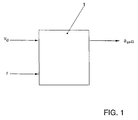
- the inventive method is based on a fuzzy controller 1 ( Figure 1) for compliance with the desired distance A is to be explained to a preceding motor vehicle.
- the natural speed v e and the prevailing coefficient of friction r are intended to represent the input variables of the fuzzy controller and the desired distance a to be maintained is to represent the output variable.
- the target is to distance a depends not only on the physical quantities airspeed v e r and coefficient of friction of the road also strongly influenced by the driving strategy of the respective driver from. It is therefore important for the acceptance of a distance control that the fuzzy controller 1 can be adjusted to the respective driver of the motor vehicle.
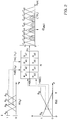
- FIG. 2 shows the structure of such a fuzzy controller 1, which consists of the input membership functions A (v e ) and B (r), the set of rules R and the output membership functions C (a).
- the input membership functions A (v e ) and B (r) the measured input variables, the vehicle speed v e and the coefficient of friction r are fuzzified, ie truth values ⁇ AB (v e ) and ⁇ AC (v e ) as well as ⁇ BA (r) and ⁇ BB (r) formed.
- rule R are the truth values ⁇ AB (v e), ⁇ AC (v e), ⁇ BA (r) and ⁇ BB (r) of the rules R a1 - linked R a8 and so truth values ⁇ c for the nominal distance a should from which values of the output variable a are to be formed by means of the output membership function C (a).
- the output membership function C (a) has a number of fuzzy sets C a1 -C a8 , which can correspond to the number of rules R a1 - R a8 , the width of all Fuzzy sets is constant and their support point (tip) is formed by the spacing of a rule.
- the value of the target distance a target is determined by customary center of gravity.
- Figures 3 to 6 show an example of the design of the fuzzy controller 1 based on the vehicle speed v e and the prevailing coefficient of friction r.
- the input variables v e , r of the fuzzy controller have been determined, their value range w ve , w r is determined.
- the vehicle speed v e it is determined by the possible vehicle speed range of the respective motor vehicle, at the coefficient of friction r it is between 0 and 1.
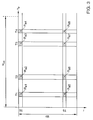
- the classes T5 and T6 are arbitrarily defined via the value range w ve classes T1 to T4 and via the value range w r , the number of which corresponds to the intended number of input membership functions A (v e ), B (r) (FIG. 2).
- value combinations of the driving speed v e , the prevailing coefficient of friction r and the maintained distance value a are recorded in data records and it is determined whether these value combinations belong to classes T1 to T4; Meet T5, T6.
- a selection can be made before using the incoming combination of values v e , r, a so that combinations of values occurring in certain driving situations (e.g. overtaking) are not used for the adaptation.
- the classes are changed, removed and / or new classes created in accordance with the incoming combinations of values.
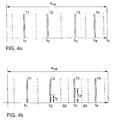
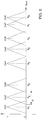
- One way in which classes are formed is shown in FIG. 4 on the basis of the input variable v e .
- classes T1-T4 are arbitrarily defined above the value range w ve of the vehicle speed. Areas b 1 - b 4 are formed around these classes, in which when value combinations v e , r, a arrive in the Learning phase no new classes may be formed. However, the incoming combinations of values are distributed to the neighboring classes (e.g. T2 and T3) according to a weighting. In accordance with the hit rate t 2 , t 3 generated in this way, the areas b 2 , b 3 surrounding the classes T2, T3 are changed, so that free areas B2, B3 arise in which new classes are formed when a combination of values arrives. When a new class is created, an existing class is advantageously removed.
- the number of hits by the value combinations plays a role, for example.
- the information already assigned to it (hit rate) is distributed to the neighboring classes in relation to their distance in the value range w ve , w r from the removed class and the neighboring classes are changed in accordance with the information assigned to them.
- FIG. 5 shows an example of the new classes T7 - T10 formed on the basis of the value combinations v e , r, a recorded during the learning phase over the value range of the driving speed v e and the classes T11, T12 over the value range of the coefficient of friction r. Due to the newly formed classes T7 - T10, the sets A A - A D of the input membership function A (v e ) for the vehicle speed v e and, due to the classes T11, T12, the sets B A , B B of the input membership function B (r) formed for the coefficient of friction r, whereby each class forms at least one support point of a set.
- intersections R a1 - R a8 of a distance value a 1 - a 8 of classes T7 - T10 with classes T11, T12 also result in the support points of sets C a1 - C a8 of the output membership function C (a ) about the values a 1 - a 8 of the distance value a assigned to them, whereby here too the sets basically have the same width b. (Fig. 6)
Landscapes
- Engineering & Computer Science (AREA)
- Transportation (AREA)
- Mechanical Engineering (AREA)
- Automation & Control Theory (AREA)
- Chemical & Material Sciences (AREA)
- Combustion & Propulsion (AREA)
- Feedback Control In General (AREA)
- Control Of Driving Devices And Active Controlling Of Vehicle (AREA)
Applications Claiming Priority (2)
| Application Number | Priority Date | Filing Date | Title |
|---|---|---|---|
| DE19624617 | 1996-06-20 | ||
| DE19624617 | 1996-06-20 |
Publications (3)
| Publication Number | Publication Date |
|---|---|
| EP0813986A2 true EP0813986A2 (fr) | 1997-12-29 |
| EP0813986A3 EP0813986A3 (fr) | 2000-04-26 |
| EP0813986B1 EP0813986B1 (fr) | 2003-11-12 |
Family
ID=7797483
Family Applications (1)
| Application Number | Title | Priority Date | Filing Date |
|---|---|---|---|
| EP97102859A Expired - Lifetime EP0813986B1 (fr) | 1996-06-20 | 1997-02-21 | Méthode de commande de distance d'un véhicule |
Country Status (3)
| Country | Link |
|---|---|
| US (1) | US6765494B1 (fr) |
| EP (1) | EP0813986B1 (fr) |
| DE (1) | DE59710979D1 (fr) |
Cited By (5)
| Publication number | Priority date | Publication date | Assignee | Title |
|---|---|---|---|---|
| EP0901055A1 (fr) * | 1997-08-23 | 1999-03-10 | Volkswagen Aktiengesellschaft | Méthode et apparatus de commande de distance d'un véhicule |
| DE19843395A1 (de) * | 1998-09-22 | 2000-03-23 | Volkswagen Ag | Verfahren zur Geschwindigkeits- und/oder Abstandsregelung bei Kraftfahrzeugen |
| DE19962752A1 (de) * | 1999-12-23 | 2001-06-28 | Volkswagen Ag | Verfahren zur Geschwindigkeits- und Abstandsregelung eines Kraftfahrzeuges |
| US6496108B1 (en) | 1999-03-10 | 2002-12-17 | Volkswagen Ag | Method and device for regulating clearance for a vehicle |
| DE102012024649A1 (de) * | 2012-12-17 | 2014-06-18 | Valeo Schalter Und Sensoren Gmbh | Verfahren zum Bestimmen des Fahrverhaltens eines Fahrers, Fahrerassistenzsystem und Kraftfahrzeug |
Families Citing this family (2)
| Publication number | Priority date | Publication date | Assignee | Title |
|---|---|---|---|---|
| US20120068858A1 (en) * | 2010-09-22 | 2012-03-22 | Edward Fredkin | Traffic negotiation system |
| DE202013008112U1 (de) * | 2013-09-11 | 2014-12-12 | GM Global Technology Operations LLC (n. d. Gesetzen des Staates Delaware) | Fahrerassistenzsystem für ein Kraftfahrzeug |
Family Cites Families (6)
| Publication number | Priority date | Publication date | Assignee | Title |
|---|---|---|---|---|
| US5189619A (en) * | 1989-09-05 | 1993-02-23 | Toyota Jidosha Kabushiki Kaisha | AI-based adaptive vehicle control system |
| DE4200694B4 (de) | 1992-01-14 | 2004-04-29 | Robert Bosch Gmbh | Verfahren zur Geschwindigkeits- und Abstandsregelung eines Fahrzeugs |
| DE4209060C2 (de) | 1992-03-20 | 1994-12-15 | Daimler Benz Ag | Verfahren zur Regelung des Abstandes zwischen fahrenden Kraftfahrzeugen |
| IL102097A (en) * | 1992-06-04 | 1995-05-26 | Davidian Dan | Anti-collision system for vehicles |
| JPH07251651A (ja) | 1994-03-15 | 1995-10-03 | Nissan Motor Co Ltd | 車間距離制御装置 |
| DE4437678B4 (de) | 1994-10-21 | 2007-07-05 | Conti Temic Microelectronic Gmbh | Verfahren zur Abstandsregelung von Kraftfahrzeugen |
-
1997
- 1997-02-21 EP EP97102859A patent/EP0813986B1/fr not_active Expired - Lifetime
- 1997-02-21 DE DE59710979T patent/DE59710979D1/de not_active Expired - Lifetime
- 1997-05-20 US US08/859,635 patent/US6765494B1/en not_active Expired - Fee Related
Cited By (7)
| Publication number | Priority date | Publication date | Assignee | Title |
|---|---|---|---|---|
| EP0901055A1 (fr) * | 1997-08-23 | 1999-03-10 | Volkswagen Aktiengesellschaft | Méthode et apparatus de commande de distance d'un véhicule |
| DE19843395A1 (de) * | 1998-09-22 | 2000-03-23 | Volkswagen Ag | Verfahren zur Geschwindigkeits- und/oder Abstandsregelung bei Kraftfahrzeugen |
| EP0989012A2 (fr) | 1998-09-22 | 2000-03-29 | Volkswagen Aktiengesellschaft | Procédé de régulation de vitesse et/ou régulation de la distance entre deux véhicules |
| US6496108B1 (en) | 1999-03-10 | 2002-12-17 | Volkswagen Ag | Method and device for regulating clearance for a vehicle |
| DE19962752A1 (de) * | 1999-12-23 | 2001-06-28 | Volkswagen Ag | Verfahren zur Geschwindigkeits- und Abstandsregelung eines Kraftfahrzeuges |
| DE19962752B4 (de) * | 1999-12-23 | 2014-03-27 | Volkswagen Ag | Verfahren und Vorrichtung zur Geschwindigkeits- und Abstandsregelung eines Kraftfahrzeuges |
| DE102012024649A1 (de) * | 2012-12-17 | 2014-06-18 | Valeo Schalter Und Sensoren Gmbh | Verfahren zum Bestimmen des Fahrverhaltens eines Fahrers, Fahrerassistenzsystem und Kraftfahrzeug |
Also Published As
| Publication number | Publication date |
|---|---|
| DE59710979D1 (de) | 2003-12-18 |
| EP0813986B1 (fr) | 2003-11-12 |
| US6765494B1 (en) | 2004-07-20 |
| EP0813986A3 (fr) | 2000-04-26 |
Similar Documents
| Publication | Publication Date | Title |
|---|---|---|
| EP0813987B1 (fr) | Procédé de commande de distance entre un véhicule et d'autres objets | |
| DE10354322B4 (de) | Verfahren und System zur Ermittlung der Fahrsituation | |
| DE69802583T2 (de) | Methode und Vorrichtung zur Bestimmung der optimalen Flugbahn eines Flugzeuges | |
| DE102018132520A1 (de) | Verfahren sowie System zum Steuern eines Kraftfahrzeugs | |
| DE102019118366A1 (de) | Verfahren sowie Steuergerät für ein System zum Steuern eines Kraftfahrzeugs | |
| EP1172631B1 (fr) | Méthode pour calculer une route dans un appareil de navigation | |
| DE102019107414A1 (de) | Verfahren sowie Steuergerät für ein System zum Steuern eines Kraftfahrzeugs | |
| DE19816132A1 (de) | Fahrzeugsteuervorrichtung | |
| EP4027245A1 (fr) | Procédé mis en uvre par ordinateur destiné à la détermination des valeurs de similitude des scénarios de circulation | |
| EP2068122A2 (fr) | Procédé et dispositif pour déterminer un itinéraire conseillé à partir d'une multitude d'itinéraires | |
| DE4439225B4 (de) | Defuzzifizierungsverfahren für Fuzzy Logic-Ausgangssignale und Reglervorrichtung hierzu | |
| DE19502954B4 (de) | Verfahren zur Geschwindigkeitsregelung eines Kraftfahrzeuges | |
| DE102020212966A1 (de) | Verfahren, Computerprogramm und Vorrichtung zum Anpassen einer Route | |
| EP0813986B1 (fr) | Méthode de commande de distance d'un véhicule | |
| DE102017124951A1 (de) | Verfahren zum Betrieb eines selbstfahrenden Kraftfahrzeugs und selbstfahrendes Kraftfahrzeug | |
| DE102019213599A1 (de) | Verfahren zum Bestimmen einer klassifizierten Schwarmtrajektorie | |
| EP1013488A1 (fr) | Procédé de réglage d'une installation de chauffage et/ou climatisation | |
| DE19624614C2 (de) | Verfahren zum Entwurf oder zur Adaption eines Fuzzy-Reglers oder eines Systems von verknüpften Fuzzy-Reglern | |
| DE102022207905A1 (de) | Verfahren zum Unterstützen eines Fahrers eines Fahrzeugs mittels mindestens eines Assistenzsystems und Assistenzsystem | |
| DE19601831C5 (de) | Verfahren zur Erkennung von relevanten Objekten | |
| DE102022100664A1 (de) | Verfahren, Steuervorrichtung und Computerprogramm zum Steuern einer Längsführung eines Fahrzeugs | |
| DE102014222626A1 (de) | Verfahren und Vorrichtung zum Betreiben eines Kraftfahrzeugs | |
| WO2018073286A1 (fr) | Procédé de détermination de points de soutien d'un plan d'essai | |
| EP0925484A1 (fr) | Procede et dispositif pour le controle de detecteurs dans un vehicule | |
| DE102021208472B3 (de) | Computerimplementiertes Verfahren zum Trainieren eines Machine-Learning-Modells für ein Fahrzeug oder einen Roboter |
Legal Events
| Date | Code | Title | Description |
|---|---|---|---|
| PUAI | Public reference made under article 153(3) epc to a published international application that has entered the european phase |
Free format text: ORIGINAL CODE: 0009012 |
|
| AK | Designated contracting states |
Kind code of ref document: A2 Designated state(s): DE ES FR GB |
|
| PUAL | Search report despatched |
Free format text: ORIGINAL CODE: 0009013 |
|
| AK | Designated contracting states |
Kind code of ref document: A3 Designated state(s): DE ES FR GB |
|
| 17P | Request for examination filed |
Effective date: 20001026 |
|
| 17Q | First examination report despatched |
Effective date: 20010131 |
|
| GRAH | Despatch of communication of intention to grant a patent |
Free format text: ORIGINAL CODE: EPIDOS IGRA |
|
| GRAS | Grant fee paid |
Free format text: ORIGINAL CODE: EPIDOSNIGR3 |
|
| GRAA | (expected) grant |
Free format text: ORIGINAL CODE: 0009210 |
|
| AK | Designated contracting states |
Kind code of ref document: B1 Designated state(s): DE ES FR GB |
|
| PG25 | Lapsed in a contracting state [announced via postgrant information from national office to epo] |
Ref country code: GB Free format text: LAPSE BECAUSE OF FAILURE TO SUBMIT A TRANSLATION OF THE DESCRIPTION OR TO PAY THE FEE WITHIN THE PRESCRIBED TIME-LIMIT Effective date: 20031112 Ref country code: FR Free format text: LAPSE BECAUSE OF FAILURE TO SUBMIT A TRANSLATION OF THE DESCRIPTION OR TO PAY THE FEE WITHIN THE PRESCRIBED TIME-LIMIT Effective date: 20031112 |
|
| REG | Reference to a national code |
Ref country code: GB Ref legal event code: FG4D Free format text: NOT ENGLISH |
|
| REF | Corresponds to: |
Ref document number: 59710979 Country of ref document: DE Date of ref document: 20031218 Kind code of ref document: P |
|
| PG25 | Lapsed in a contracting state [announced via postgrant information from national office to epo] |
Ref country code: ES Free format text: LAPSE BECAUSE OF FAILURE TO SUBMIT A TRANSLATION OF THE DESCRIPTION OR TO PAY THE FEE WITHIN THE PRESCRIBED TIME-LIMIT Effective date: 20040223 |
|
| GBV | Gb: ep patent (uk) treated as always having been void in accordance with gb section 77(7)/1977 [no translation filed] |
Effective date: 20031112 |
|
| PLBE | No opposition filed within time limit |
Free format text: ORIGINAL CODE: 0009261 |
|
| STAA | Information on the status of an ep patent application or granted ep patent |
Free format text: STATUS: NO OPPOSITION FILED WITHIN TIME LIMIT |
|
| 26N | No opposition filed |
Effective date: 20040813 |
|
| EN | Fr: translation not filed | ||
| PGFP | Annual fee paid to national office [announced via postgrant information from national office to epo] |
Ref country code: DE Payment date: 20130228 Year of fee payment: 17 |
|
| REG | Reference to a national code |
Ref country code: DE Ref legal event code: R119 Ref document number: 59710979 Country of ref document: DE |
|
| REG | Reference to a national code |
Ref country code: DE Ref legal event code: R119 Ref document number: 59710979 Country of ref document: DE Effective date: 20140902 |
|
| PG25 | Lapsed in a contracting state [announced via postgrant information from national office to epo] |
Ref country code: DE Free format text: LAPSE BECAUSE OF NON-PAYMENT OF DUE FEES Effective date: 20140902 |