EP0815838A2 - Äusserliche Hautpflegemittel - Google Patents
Äusserliche Hautpflegemittel Download PDFInfo
- Publication number
- EP0815838A2 EP0815838A2 EP97110565A EP97110565A EP0815838A2 EP 0815838 A2 EP0815838 A2 EP 0815838A2 EP 97110565 A EP97110565 A EP 97110565A EP 97110565 A EP97110565 A EP 97110565A EP 0815838 A2 EP0815838 A2 EP 0815838A2
- Authority
- EP
- European Patent Office
- Prior art keywords
- unicellularized
- treatment composition
- skin treatment
- external skin
- carrot
- Prior art date
- Legal status (The legal status is an assumption and is not a legal conclusion. Google has not performed a legal analysis and makes no representation as to the accuracy of the status listed.)
- Granted
Links
Images



Classifications
-
- A—HUMAN NECESSITIES
- A61—MEDICAL OR VETERINARY SCIENCE; HYGIENE
- A61Q—SPECIFIC USE OF COSMETICS OR SIMILAR TOILETRY PREPARATIONS
- A61Q19/00—Preparations for care of the skin
-
- A—HUMAN NECESSITIES
- A61—MEDICAL OR VETERINARY SCIENCE; HYGIENE
- A61K—PREPARATIONS FOR MEDICAL, DENTAL OR TOILETRY PURPOSES
- A61K8/00—Cosmetics or similar toiletry preparations
- A61K8/18—Cosmetics or similar toiletry preparations characterised by the composition
- A61K8/96—Cosmetics or similar toiletry preparations characterised by the composition containing materials, or derivatives thereof of undetermined constitution
- A61K8/97—Cosmetics or similar toiletry preparations characterised by the composition containing materials, or derivatives thereof of undetermined constitution from algae, fungi, lichens or plants; from derivatives thereof
-
- A—HUMAN NECESSITIES
- A61—MEDICAL OR VETERINARY SCIENCE; HYGIENE
- A61K—PREPARATIONS FOR MEDICAL, DENTAL OR TOILETRY PURPOSES
- A61K8/00—Cosmetics or similar toiletry preparations
- A61K8/02—Cosmetics or similar toiletry preparations characterised by special physical form
- A61K8/0212—Face masks
-
- A—HUMAN NECESSITIES
- A61—MEDICAL OR VETERINARY SCIENCE; HYGIENE
- A61K—PREPARATIONS FOR MEDICAL, DENTAL OR TOILETRY PURPOSES
- A61K8/00—Cosmetics or similar toiletry preparations
- A61K8/02—Cosmetics or similar toiletry preparations characterised by special physical form
- A61K8/04—Dispersions; Emulsions
- A61K8/06—Emulsions
-
- A—HUMAN NECESSITIES
- A61—MEDICAL OR VETERINARY SCIENCE; HYGIENE
- A61K—PREPARATIONS FOR MEDICAL, DENTAL OR TOILETRY PURPOSES
- A61K8/00—Cosmetics or similar toiletry preparations
- A61K8/18—Cosmetics or similar toiletry preparations characterised by the composition
- A61K8/96—Cosmetics or similar toiletry preparations characterised by the composition containing materials, or derivatives thereof of undetermined constitution
- A61K8/97—Cosmetics or similar toiletry preparations characterised by the composition containing materials, or derivatives thereof of undetermined constitution from algae, fungi, lichens or plants; from derivatives thereof
- A61K8/9783—Angiosperms [Magnoliophyta]
- A61K8/9789—Magnoliopsida [dicotyledons]
-
- A—HUMAN NECESSITIES
- A61—MEDICAL OR VETERINARY SCIENCE; HYGIENE
- A61K—PREPARATIONS FOR MEDICAL, DENTAL OR TOILETRY PURPOSES
- A61K8/00—Cosmetics or similar toiletry preparations
- A61K8/18—Cosmetics or similar toiletry preparations characterised by the composition
- A61K8/96—Cosmetics or similar toiletry preparations characterised by the composition containing materials, or derivatives thereof of undetermined constitution
- A61K8/97—Cosmetics or similar toiletry preparations characterised by the composition containing materials, or derivatives thereof of undetermined constitution from algae, fungi, lichens or plants; from derivatives thereof
- A61K8/9783—Angiosperms [Magnoliophyta]
- A61K8/9794—Liliopsida [monocotyledons]
-
- A—HUMAN NECESSITIES
- A61—MEDICAL OR VETERINARY SCIENCE; HYGIENE
- A61P—SPECIFIC THERAPEUTIC ACTIVITY OF CHEMICAL COMPOUNDS OR MEDICINAL PREPARATIONS
- A61P17/00—Drugs for dermatological disorders
-
- A—HUMAN NECESSITIES
- A61—MEDICAL OR VETERINARY SCIENCE; HYGIENE
- A61Q—SPECIFIC USE OF COSMETICS OR SIMILAR TOILETRY PREPARATIONS
- A61Q1/00—Make-up preparations; Body powders; Preparations for removing make-up
-
- A—HUMAN NECESSITIES
- A61—MEDICAL OR VETERINARY SCIENCE; HYGIENE
- A61Q—SPECIFIC USE OF COSMETICS OR SIMILAR TOILETRY PREPARATIONS
- A61Q1/00—Make-up preparations; Body powders; Preparations for removing make-up
- A61Q1/02—Preparations containing skin colorants, e.g. pigments
-
- A—HUMAN NECESSITIES
- A61—MEDICAL OR VETERINARY SCIENCE; HYGIENE
- A61Q—SPECIFIC USE OF COSMETICS OR SIMILAR TOILETRY PREPARATIONS
- A61Q1/00—Make-up preparations; Body powders; Preparations for removing make-up
- A61Q1/02—Preparations containing skin colorants, e.g. pigments
- A61Q1/04—Preparations containing skin colorants, e.g. pigments for lips
- A61Q1/06—Lipsticks
-
- A—HUMAN NECESSITIES
- A61—MEDICAL OR VETERINARY SCIENCE; HYGIENE
- A61Q—SPECIFIC USE OF COSMETICS OR SIMILAR TOILETRY PREPARATIONS
- A61Q1/00—Make-up preparations; Body powders; Preparations for removing make-up
- A61Q1/02—Preparations containing skin colorants, e.g. pigments
- A61Q1/08—Preparations containing skin colorants, e.g. pigments for cheeks, e.g. rouge
-
- A—HUMAN NECESSITIES
- A61—MEDICAL OR VETERINARY SCIENCE; HYGIENE
- A61Q—SPECIFIC USE OF COSMETICS OR SIMILAR TOILETRY PREPARATIONS
- A61Q1/00—Make-up preparations; Body powders; Preparations for removing make-up
- A61Q1/02—Preparations containing skin colorants, e.g. pigments
- A61Q1/10—Preparations containing skin colorants, e.g. pigments for eyes, e.g. eyeliner, mascara
-
- A—HUMAN NECESSITIES
- A61—MEDICAL OR VETERINARY SCIENCE; HYGIENE
- A61Q—SPECIFIC USE OF COSMETICS OR SIMILAR TOILETRY PREPARATIONS
- A61Q1/00—Make-up preparations; Body powders; Preparations for removing make-up
- A61Q1/12—Face or body powders for grooming, adorning or absorbing
-
- A—HUMAN NECESSITIES
- A61—MEDICAL OR VETERINARY SCIENCE; HYGIENE
- A61Q—SPECIFIC USE OF COSMETICS OR SIMILAR TOILETRY PREPARATIONS
- A61Q19/00—Preparations for care of the skin
- A61Q19/002—Aftershave preparations
-
- A—HUMAN NECESSITIES
- A61—MEDICAL OR VETERINARY SCIENCE; HYGIENE
- A61Q—SPECIFIC USE OF COSMETICS OR SIMILAR TOILETRY PREPARATIONS
- A61Q19/00—Preparations for care of the skin
- A61Q19/10—Washing or bathing preparations
-
- A—HUMAN NECESSITIES
- A61—MEDICAL OR VETERINARY SCIENCE; HYGIENE
- A61Q—SPECIFIC USE OF COSMETICS OR SIMILAR TOILETRY PREPARATIONS
- A61Q5/00—Preparations for care of the hair
- A61Q5/02—Preparations for cleaning the hair
-
- A—HUMAN NECESSITIES
- A61—MEDICAL OR VETERINARY SCIENCE; HYGIENE
- A61Q—SPECIFIC USE OF COSMETICS OR SIMILAR TOILETRY PREPARATIONS
- A61Q5/00—Preparations for care of the hair
- A61Q5/06—Preparations for styling the hair, e.g. by temporary shaping or colouring
- A61Q5/065—Preparations for temporary colouring the hair, e.g. direct dyes
-
- C—CHEMISTRY; METALLURGY
- C12—BIOCHEMISTRY; BEER; SPIRITS; WINE; VINEGAR; MICROBIOLOGY; ENZYMOLOGY; MUTATION OR GENETIC ENGINEERING
- C12Y—ENZYMES
- C12Y302/00—Hydrolases acting on glycosyl compounds, i.e. glycosylases (3.2)
- C12Y302/01—Glycosidases, i.e. enzymes hydrolysing O- and S-glycosyl compounds (3.2.1)
- C12Y302/01015—Polygalacturonase (3.2.1.15)
-
- C—CHEMISTRY; METALLURGY
- C12—BIOCHEMISTRY; BEER; SPIRITS; WINE; VINEGAR; MICROBIOLOGY; ENZYMOLOGY; MUTATION OR GENETIC ENGINEERING
- C12Y—ENZYMES
- C12Y402/00—Carbon-oxygen lyases (4.2)
- C12Y402/02—Carbon-oxygen lyases (4.2) acting on polysaccharides (4.2.2)
- C12Y402/0201—Pectin lyase (4.2.2.10)
Definitions
- the present invention relates to an external skin treatment composition containing a unicellularized plant. More specifically, it relates to an external skin treatment composition which enables the features of the plant which is unicellularized, including the features which remain just potential in an extract etc. of the plant, to be manifested to the maximum extent in an external skin treatment composition.
- the original objective of a cosmetic composition may be considered to have been to protect the body from nature.
- the objective has now become to keep the body clean, to use a makeup etc. to enable the human beings to express themselves beautifully and attractively and please themselves - an inborn human desire, and to protect the skin etc. from UV rays, drying, etc. to try to prevent aging, increase the number of years of beauty, and enjoy a pleasant life.
- the object of the present invention is to provide an external skin treatment composition such as a cosmetic composition which can solve the above problems inherent in, for example, contemporary cosmetic compositions to the maximum extent possible.
- an external skin treatment composition comprising a unicellularized plant in a medium.
- the present invention provides an external skin treatment composition which makes use of the superior properties of chemicals of a unicellularized plant.
- the "unicellularized plant” blended in the external skin treatment composition of the present invention means a plant, seaweed, or other natural material having cell walls which is processed by a means such as enzymatic decomposition or mechanical separation so as to selectively separate or destroy the intercellular substances without breaking down the cell walls and thereby break the material down into cellular units (single cells or cell masses) which are then made into a pultaceous state, liquid composition, or freeze-dried product.
- the material of the unicellularized plant is not particularly limited so long as it is a plant having cell walls such as vegetables, fruits, seaweed, and medicinal herbs.
- the specific materials are suitably selected in accordance with the specific objective of the external skin treatment composition in which the unicellularized plant is to be blended.
- the method of selectively breaking down the intercellular substances such as pectin by enzymatic treatment by pectinase etc. may be mentioned.
- the unicellularized plant in the present invention assumes one which has cell walls.
- polygalacturonase and pectinase derived from Aspergillus niger, Rhizopus sp. , etc.; pectin lyase derived from Aspergillus niger, Aspergillus japonicus , and other Aspergillus sp. ; and pectolyase derived from Aspergillus japonicus etc. may be exemplified, but it is not particularly limited so long as it is able to selectively break down the intercellular substances of plants.
- enzymes for unicellularization of plant tissue it is possible to use one isolated by a usual, known method from enzyme material such as the above-mentioned Rhizopus sp. or Aspergillus sp.
- the optimal temperature for the above plant tissue unicellularization enzymes is generally 30 to 40°C and the optimal pH is 4 to 5.
- the pectin etc. constituting the intercellular substances have complicated, diverse structures. Neutral saccharides are included in the side chains and main chains. Further, it is believed there is bonding with hemicellulose. Separation as a unicellularized plant is therefore difficult by mechanical processes alone. However, it is possible to prepare the desired unicellular plant using a mechanical method in the case of leaves etc. of garden zinnia.
- the amount of the unicellularized plant prepared in this way blended into the external skin treatment composition of the present invention is not particularly limited so long as it is determined by the type of the plant which is unicellularized, the effect desired from the formulating of the unicellularized plant, the form of the external skin treatment composition of the present invention, etc. So long as formulating in the state of the preparation is possible, it may be formulated in a range of at least 0.001% by weight and not more than 30% by weight of the external skin treatment composition. Generally, it is preferably formulated in a range of 0.1 to 10% by weight of the external skin treatment composition. More preferably it is formulated in a range of at least 1.0% by weight of the external skin treatment composition and not more than 8.0% by weight.
- the external skin treatment composition of the present invention comprises the unicellularized plant thus prepared formulated into an external skin treatment composition, can express the features of the plant which is unicellularized, including features which remain just potential in an extract of the plant etc., to the maximum extent in the external skin treatment composition.
- unicellularized aloe in an external skin treatment composition, there are a superiority in moisture retention effect, a superiority of stability over time of the aloenin and other effective ingredients in aloe, and promotion of the proliferation of fibroblasts forming the epidermis of the skin. Further, there are various superior effects such as promotion of collagen production.
- the type and form of the unicellularized plant which is formulated is not particularly limited so long as it can be formulated into the external skin treatment composition of the present invention physicochemically and the above effects can be exhibited in the external skin treatment composition of the present invention.
- unicellularized plant derived from a vegetable, fruit, seaweed, medicinal herb, etc. in an external skin treatment composition of the present invention.
- Unicellular plants of any form such as pultaceous unicellular suspensions, unicellular pastes, dried specimens, etc. may be formulated into the external skin treatment composition of the present invention.
- one type of these unicellularized plants may be blended alone into the external skin treatment composition of the present invention or two or more types may be formulated in combination with each other.
- the external skin treatment composition of the present invention can exhibit various superior effects.
- the formulating into the external skin treatment composition of the present invention of other chemical ingredients for the purpose of imparting effects which the external skin treatment composition would generally exhibit by the formulating of other chemical ingredients is possible to an extent where the formulating does not impair the desired effects of the present invention.
- the external skin treatment composition of the present invention when used as a sun care product, it is possible to formulate, in the external skin treatment composition of the present invention, p-aminobenzoic acid and other benzoic acid type UV absorbants, methyl anthranilate and other anthranilic acid type UV absorbants, octyl salicylate, phenyl salicylate, homomethyl salicylate, and other salicylic acid type UV absorbants, isopropyl p-methoxycinnamate, octyl p-methoxycinnamate, 2-ethylhexyl p-methoxycinnamate, glyceryl di-p-methoxycinnamate mono-2-ethylhexanoate, [4-bis(trimethylsiloxy) methylsilyl-3-methylbutyl]-3,4,5-trimethoxycinnamic acid esters and other cinnamic acid type UV absorbants, 2,4-di
- a humectant such as polyethylene glycol, propylene glycol, dipropylene glycol, 1,3-butylene glycol, hexylene glycol, glycerine, diglycerine, xylitol, maltitol, maltose,D-mannitol, gluten, glucose, fructose, lactose, sodium chondroitin sulfate, sodium hyalonate, sodium adenosine phosphate, sodium lactate, gallates, pyrrolidone carbonates, glucosamine, cyclodextrin, etc.
- a humectant such as polyethylene glycol, propylene glycol, dipropylene glycol, 1,3-butylene glycol, hexylene glycol, glycerine, diglycerine, xylitol, maltitol, maltose,D-mannitol, gluten, glucose, fructose, lactose, sodium
- vitamin A oil As the chemical ingredient, it is possible to formulate, into the external skin treatment composition of the present invention, vitamin A oil, retinol, retinol palmitate, inositol, pyridoxine chlorate, benzyl nicotinate, nicotinamide, dl- ⁇ -tocopheryl nicotinate, magnesium ascorbyl phosphate, vitamin D 2 (ergocalciferol), dl- ⁇ -tocopherol, potassium dl- ⁇ -tocopherol-2-L-ascorbic diester, dl- ⁇ -tocopheryl acetate, pantothenic acid, biotin, and other vitamins, estradiol, ethynylestradiol and other hormones, alginin, asparagic acid, cystine, cysteine, methionine, serine, leucine, tryptophan, and other amino acids, allantoin, azulene, glycyrrhetinic
- the medicinal ingredients capable of formulating into the external skin treatment composition of the present invention are not limited by the above-mentioned medicinal ingredients. Further, the above-mentioned medicinal ingredients may be formulated alone into the external skin treatment composition of the present invention or two or more types of the above medicinal ingredients may be combined and formulated suitably depending upon the objective.
- the above medicinal ingredients may not only be used in a free form, but may also be formulated into the external skin treatment composition of the present invention in the form of a salt of an acid or base when capable of forming a salt or in the form of an ester when having a carboxylic acid group.
- the external skin treatment composition of the present invention may be broadly used in the form of a pharmaceutical, a quasi-drug (ointment, dentifrice, etc., and cosmetic (facial cleanser, emulsion, cream, gel, essence (beauty liquid), pack, mask, or other basic cosmetic; foundation, lipstick, or other makeup cosmetic; oral cosmetic, aromatic cosmetic, hair cosmetic, body cosmetic, etc.)
- cosmetic facial cleanser, emulsion, cream, gel, essence (beauty liquid), pack, mask, or other basic cosmetic; foundation, lipstick, or other makeup cosmetic; oral cosmetic, aromatic cosmetic, hair cosmetic, body cosmetic, etc.
- the form capable of being taken by the external skin treatment composition of the present invention is not limited to these forms however.
- aqueous solutions other solutions, emulsions, powders, oils, gels, ointments, aerosols, water-oil systems, water-oil-powder systems, etc.
- linseed oil tsubaki oil, macadamia nut oil, corn oil, mink oil, olive oil, avocado oil, sasanqua oil, castor oil, safflower oil, apricot oil, cinnamon oil, jojoba oil, grape oil, sunflower oil, almond oil, rapeseed oil, sesame oil, wheat germ oil, rice germ oil, rice bran oil, cottonseed oil, soybean oil, peanut oil, teaseed oil, evening primrose oil, eggyoke oil, neetsfoot oil, liver oil, triglycerine, glycerine trioctanate, glycerine triisopalmitate, and other liquid oils and fats; coconut oil, palm oil, palm kernel oil, and other liquid or solid oils and fats; cacao fat, beef tallow, sheep fat, hog fat, horse fat, hydrogenated oil, hydrogenated castor oil, Japanese wax, Shea butter, and other
- cetyl octanate and other octanic acid esters cetyl octanate and other octanic acid esters, glyceryl tri-2-ethylhexanoate, pentaerythritol tetra-2-ethylhexanoate, and other isooctanic acid esters; hexyl laurate and other lauric acid esters, isopropyl myristate, octyldodecyl myristate, and other myristic acid esters, octyl palmitate and other palmitic acid esters, isocetyl stearate and other stearic acid esters, isopropyl isostearate and other isostearic acid esters, octyl isopalmitate and other isopalmitic acid esters, isodecyl oleate and other oleic acid esters, diisopropyl
- dimethyl polysiloxane dimethyl polysiloxane, methylphenyl polysiloxane, methylhydrogen polysiloxane, and other chain like siloxanes, octamethylcyclotetrasiloxane, decamethylcyclo-pentasiloxane, dodecamethylcyclohexasiloxane, and other cyclic siloxanes, silicone resins having a three-dimensional network structures, silicone rubber, etc.
- soap base sodium laurate, sodium palmitate, and other fatty acid soaps
- POE laurosulfate triethanol amine sodium POE laurosulfate, and other alkyl ester sulfate ester salts
- sodium lauroylsarcosine and other N-acylsarcosine acids sodium N-myristyl-N-methyltaurine, sodium N-cocoyl-N-methyl taurate, sodium laurylmethyl taurate, and other higher fatty acid amide sulfonates
- sodium POE oleyl ether phosphate POE stearyl ether phosphate, and other phosphate ester salts
- sodium di-2-ethylhexylsulfosuccinate sodium monolauroylmonoethanol amide polyoxyethylene
- methanol, ethanol, propanol, isopropanol, and other lower alcohols methanol, ethanol, propanol, isopropanol, and other lower alcohols
- cholesterols cytosterols, phytosterols, lanosterols, and other sterols, etc.
- alanine, sodium edetate, sodium polyphosphate, sodium metaphosphate, phosphoric acid, and other metal ion sealants 2-amino-2-methyl-1-propanol, 2-amino-2-methyl-1,3-propanediol, potassium hydroxide, sodium hydroxide, L-alginin, L-lysin, triethanolamine, sodium carbonate, and other neutralizing agents; lactic acid, citric acid, glycolic acid, succinic acid, tartaric acid, dl-malic acid, potassium carbonate, sodium hydrogencarbonate, ammonium hydrogencarbonate, and other pH adjusters; ascorbic acid, ⁇ -tocopherol, dibutylhydroxytoluene, butylhydroxyanisole, and other antioxidants.
- the external skin treatment composition of the present invention benzoic acid, salicylic acid, carbolic acid, sorbic acid, p-oxybenzoic acid esters, p-chlorometacresol, hexachlorophene, benzalkonium chloride, chlorohexidine chloride, trichlorocarbanilide, photosensitive element, phenoxyethanol, and other antibacterials.
- These basic ingredients may be formulated into the external skin treatment composition of the present invention in suitable combination based upon the formulations based on the desired form.
- Hot water was added at a ratio of 3 parts by weight based on 1 part by weight of the malt.
- the extracted filtrate was cooled to 0°C, then acetone similarly cooled to 0°C was added to this.
- the 40 to 60% saturated precipitated fraction was collected by centrifugation, then was dried and used as the plant tissue unicellularizing enzyme.
- the enzyme solution prepared in the above (1) was added in an amount of 0.5% by weight to the carrots, then a mixer was used under a sterilizing process to mix this at a high speed for 1 hour (water temperature of outer jacket 40°C) to macerate it.
- the nondecomposed fibrous matter was removed by a 20 mesh stainless steel sieve to obtain 9.5 kg of a pultaceous unicellularized carrot suspension.
- This pultaceous unicellularized carrot suspension was processed by a freeze-drying machine (made by FTS) to prepare a freeze-dried powder of the pultaceous unicellularized carrot.
- Rhizopus fungi scolecospore has been allowed to be used in food, and therefore, is extremely safe.
- the fact that the enzyme derived from this Rhizopus fungi scolecospore is mixed in the above unicellularized carrot does not pose any problem in respect to safety at all. Further, when the extracellular protein of carrots is an issue, the above unicellularized carrot is centrifuged (about 3000 rpm) and the supernatent obtained is replaced with water so as to remove the extracellular protein from the system.
- reaction product was passed through a 710 ⁇ m mesh sieve, then treated at 85°C for 30 minutes to deactivate the enzyme.
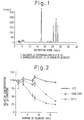
- FIG. 1 A chart of the results of this HPLC analysis is shown in Fig. 1.
- the unicellularized aloe contains the ingredients generally considered the effective ingredients of aloe, that is, aloenin, isobarbaloin, barbaloin, and feruloylaloesin).
- Panax ginseng (Araliaceae) was minced.
- the above Macelotyme (phonetic) R-200 (0.08%; 42.0 mg) was dissolved in a volume of purified water (106 ml) double of that of the plant and added.
- the mixture was stirred at 40°C for 5.5 hours. After the end of the reaction, the mixture was filtered by a 710 ⁇ m mesh sieve and the residue removed to obtain the unicellularized Panax ginseng.
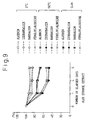
- Figure 4 is a graph of the results of a study over time of the relative concentrations of ⁇ -carotene of the above pultaceous unicellularized carrot at ⁇ : 0°C (dark place), ⁇ : 37°C (dark place), o: 50°C (dark place), ⁇ : sunlight.
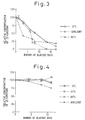
- the unicellularized carrot plant is more resistant to evaporation of moisture than not only water but also glycerin and dipropylene glycol, which are known as humectants, and the moisture retention effect is not observed in methanol extracts of carrot and is an effect based on the presence of the carrot as a unicellularized plant.
- This slow release effect is extremely useful in that it enables a substance which has superior properties such as a strong antioxidation action, but which is unstable outside the cells, such as ⁇ -carotene, to be blended as an ingredient of an external skin treatment composition while maintaining its inherent functions.
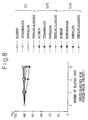
- OH ⁇ was generated by hydrogen peroxide (H 2 O 2 ) and Fe 2+ and the OH ⁇ measured by the ESR spin trapping method.
- OH ⁇ has the strongest reactivity among the active enzyme groups and, for example, causes protein modification or DNA cleavage. Therefore, if it were possible to suppress the generation of OH ⁇ , it would be possible to control the aging of the skin and possible to maintain the skin healthier, but from the above results it is clear that by using a unicellularized plant as the ingredient for elimination of OH ⁇ in the external skin treatment composition, it is possible to impart to the external skin treatment composition a superior effect of control of aging.
- Figure 8 is a graph of the results of a study over time of the relative concentration of the effective ingredients in unicellularized aloe specified by the above HPLC under the conditions shown at the right side of the figure (0°C: 0°C, blocked from light; 50°C: 50°C, blocked from light; SUN: under sunlight).
- Fig. 9 is a graph of the results of a study of the stabilities of the effective ingredients observed in the above unicellularized aloe under the same conditions as with the test on the dried product of the aloe extract (aloe extracted three times by ethanol, then dried under vacuum).
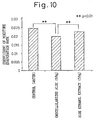
- Figure 10 shows the results of the test.
- DMEM Delvecco Modified Eagle Medium
- FBS fetal bovine serum
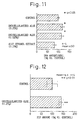
- unicellularized aloe not containing a preservative (2.0 wt% aqueous solution) or an ethanol extract of aloe (2.0 wt% aqueous solution) was added and the mixture was incubated for 48 hours.
- the amount of DNA in a well was measured by the method using "Hoechest 33258", a fluorescent substance which specifically bonds with thymidine (C. Labarca, K. Paigen, Analytical Biochemistry, 102, 344 to 352 (1980)) and the result made an indicator of the cell count.
- Fig. 11 The results of the test are shown in Fig. 11. Note that in Fig. 11, the horizontal axis shows the relative value of the amount of DNA per well with respect to a control.
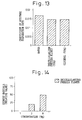
- the procollagen type I carboxy terminal propeptide (PIP) produced by the human skin fibroblasts incubated was measured by the ELISA method.
- Cosmetic water of the formulations including unicellularized iris bulb shown in the following Table 2 were prepared by ordinary methods. First, the waters were subjected to tests of actual use, tests on light stability, and tests on moisture retention (the test methods, test results, etc. will be discussed later). Comp. Ex. Ex.
- suitable amounts of the above skin application agents were applied to the cheeks of the faces of a panel of women comprised of groups of 10 each to test the effect of improvement of the skin in actual use.
- Comparative Example A1 which does not include any methanol extract of carrot or ⁇ -carotene at all, but also the other Comparative Examples, where one of the same is formulated, showed no effect on improvement of the skin at all.
- the skin improvement effect of the above Examples is strongly suggested to be not an effect derived from ⁇ -carotene, but an effect due to the formulating of the unicellularized plant (for example, the possibility that the cell walls of the single cell plants are relevant etc.)
- Example A3 where the unicellularized carrot is formulated has less of a degree of fading of color of the ⁇ -carotene along with time compared with Comparative Example A5 in which ⁇ -carotene is formulated in another form. From this, it is learned that in the external skin treatment composition of the present invention in which the unicellularized plant is formulated, it is possible to suppress spoilage of effective ingredients in the plant along with time.
- Example A3 where the amount of formulating of the unicellularized carrot was the greatest, so it is clear that in Example A1 and Example A2 where the amount of formulating of the unicellularized carrot is smaller and, as a result, the amount of formulating of the ⁇ -carotene unstable against light and heat is smaller, there is a greater effect of preventing of fading due to the unicellularization exhibited than even Example A3.
- Example A1 and Example A2 where the amount of the unicellularized carrot formulated was smaller, due to the same reasons as explained regarding the above test of the light stability, a temperature stability greater than that of Example A3 can be observed.
- the moisture retention of the external skin treatment composition was studied by the same test system as with the moisture retention test of the above unicellularized plants Example A1, Comparative Example A1, Comparative Example A5.
- Example A2 and Example A3 which have greater amounts of the unicellularized carrot formulated than Example A1, it should be clear that a moisture retention effect greater than Example A1 can be observed.
- the translucent toilet water was produced by an ordinary method.
- Ethanol (95%), POE(15 mol)oleyl ester, perfume, and the preservative were mixed and dissolved with each other at room temperature, then added with stirring, in a similarly room temperature mixed and dissolved glycerin, citric acid, sodium citrate, unicellularized carrot (freeze dried product), D-glucosamine hydrochloride, the UV absorbant, color, and purified water to obtain the desired toilet water.
- Glycerol Polyethylene glycol (M.W. 400) 2.0 Glycyrrhetinic acid monoammonium salt 0.1 Unicellularized carrot (freeze-dried product) 0.1 N-acetyl-D-glucosamin 10.0 Cetanol 4.0 Squalane 5.0 Stearic acid 1.0 Beeswax 1.0 Vaseline 1.0 POE(25 mol)cetyl ether 2.0 Glyceryl monostearate 1.5 Preservative 0.1 Perfume 0.15 Purified water Balance
- the N-acetyl-D-glucosamin, cetanol, squalane, stearic acid, beeswax, vaseline, POE(25 mol)cetyl ether, glyceryl monostearate, preservative, and perfume were mixed and dissolved in each other and then were mixed and emulsified, with stirring, in the similarly mixed and dissolved glycerol, polyethylene glycol, glycyrrhetinic acid monoammonium salt, unicellularized carrot, and purified water.
- the emulsified particles were homogenated by a homogenizer and then the mixture was cooled to room temperature by a heat exchanger to obtain the desired W/O type cream.
- the ethanol, unicellularized carrot, preservative, and perfume were mixed and dissolved in each other, then added, with stirring, into polyvinyl alcohol, polyethylene glycol, glycerol, and perfume mixed and dissolved at 80°C. The mixture was allowed to cool to room temperature to obtain the desired pack.
- the above ingredients were mixed and dissolved at 80°C, then allowed to cool to room temperature to obtain the desired hair rinse.
- the ethanol, POE(60 mol)hydrogenated castor oil ether, perfume, unicellularized carrot, and hinoki oil were dissolved, with stirring, at ordinary temperature, then the glycerol and purified water were added to this, with stirring, to obtain the desired hair tonic.
- the powdery foundation was produced by an ordinary method.
- This stick eyeshadow was produced by an ordinary method.
- the cetanol, beeswax, stearic acid, vaseline, squalane, isopropyl myristate, POE(20 mol)sorbitan lauric acid ester, glycerol monostearate, ethylparabenzoate, and perfume and the glycerol, propylene glycol, purified water, potassium hydroxide, and unicellularized carrot were respectively heated to 70°C and melted, then the former oil phase ingredients were added to the latter aqueous phase ingredients and the two were emulsified using an emulsifier, then the result was cooled to 30°C by a heat exchanger. This was filled into a container to obtain the desired cleansing cream.
- the calamine lotion was produced by an ordinary method.
- the solid powder was produced by an ordinary method.
- This rouge was produced by an ordinary method.
- This eyeliner was produced by an ordinary method.
- This after shave lotion was produced by an ordinary method.
- This beauty liquid was produced by an ordinary method.
- the emulsion was prepared by an ordinary method.
- the benzyl alcohol was added to the purified water, then the xanthane gum, citrate acid, trisodium ethylene diamine tetraacetate, and unicellularized carrot were gradually added to prepare a viscous solution. To this viscous solution were added Black No. 401, Violet No. 401, and Yellow No. 4. These were mixed homogeneously with stirring to obtain the desired hair acidic hair dye.
- the unicellularized carrot, lactic acid, perfume, color, and trisodium ethylene diamine tetraacetate were gradually added and mixed with stirring, then the mixture was heated to 70°C and the sodium laurylpolyoxyethylene (3 mol)sulfuric acid ester, sodium lauryl sulfuric acid ester, coconut oil fatty acid diethanol amide, and glycerol were added and mixed with stirring. The mixture was then cooled to 30°C to obtain the desired rinse shampoo.
- the coconut oil, beef tallow, lauric acid, myristic acid, methyl polysiloxane, propylene glycol, 1,3-butylene glycol, and acetic acid-dl- ⁇ -tocopherol were heated to dissolve then added to the potassium hydroxide, then the purified water into which had been dissolved the methyl cellulose, trisodium ethylene diamine tetraacetate, unicellularized carrot, phosphoric acid, and perfume was added to this and the two mixed with stirring to obtain the desired body shampoo.
- Stearic acid 2.0 Stearyl alcohol 7.0 Hydrogenated lanolin 2.0 Squalane 5.0 2-octyldodecyl alcohol 6.0 Polyoxyethylene(25 mol)cetyl alcohol ether 3.0 Glycerol monostearic acid ester 2.0 Propylene glycol 5.0 Unicellularized aloe (freeze-dried product) 1.0 Sodium hydrosulfite 0.03 Ethylparabenzoate 0.3 Perfume q.s. Purified water Balance
- the propylene glycol was added to the purified water, then these were heated and held at 70°C (aqueous phase). Separate from this, the other ingredients were mixed and heated to melt then held at 70°C (oil phase). The oil phase was added to the aqueous phase, preliminary emulsification was performed, then the result was emulsified homogeneously by a homomixer and cooled down to 30°C with vigorous stirring to obtain the desired cream.
- the soap powder and sodium borate were added to the purified water, then the mixture was heated to dissolve them and held at 70°C (aqueous phase). Separately from this, the other ingredients were mixed and heated to melt at 70°C (oil phase). The oil phase was gradually added, with stirring, to the aqueous phase to cause the reaction. After the end of the reaction, a homomixer was used to homogeneously emulsify the mixture which was then cooled with stirring to obtain the desired cream.
- phase A The carboxy vinyl polymer was dissolved in a small amount of purified water (phase A).
- phase A The polyethylene glycol 1500 and triethanol amine were added to the remaining purified water which was then heated to dissolve the same and held at 70°C (aqueous phase).
- the other ingredients were mixed and heated to melt and then held at 70°C (oil phase).
- the oil phase was added to the aqueous phase and preliminary emulsification performed, then the phase A was added and a homomixer was used for homogeneous emulsification. After the emulsification, the mixture was stirred vigorously to obtain the desired emulsion.
- Microcrystalline wax 1.0 Beeswax 2.0 Lanolin 20.0 Liquid paraffin 10.0 Squalane 5.0 Sorbitan sesquioleic acid ester 4.0 Polyoxyethylene(20 mol)sorbitan monooleic acid ester 1.0 Propylene glycol 7.0 Unicellularized aloe (freeze-dried product) 10.0 Sodium hydrosulfite 0.01 Ethylparabenzoate 0.3 Perfume q.s. Purified water Balance
- the polypropylene glycol was added to the purified water which was then heated and held at 70°C (aqueous phase). Separate from this, the other ingredients were mixed and heated to melt and held at 70°C (oil phase). The oil phase was gradually added to the aqueous phase while stirring and a homomixer was used to homogeneously emulsify the two. After the emulsification, the mixture was cooled to 30°C with vigorous stirring to obtain the desired emulsion.
- the Carbopol 940 was homogeneously dissolved in the purified water (aqueous phase).
- the unicellularized aloe, polyoxyethylene(50 mol)oleyl alcohol ether were dissolved in the 95% ethanol and added to the aqueous phase.
- the other ingredients were added to the aqueous phase, then the mixture was neutralized and thickened by the potassium hydroxide and the L-arginine to obtain the desired gel.
- phase A 95% ethyl alcohol 10.0 Polyoxyethylene(20 mol)octyldodecanol 1.0 Pantothenylethyl ether 0.1 Unicellularized aloe (freeze-dried product) 2.0 Methylparabenzoate 0.15
- phase B Potassium hydroxide 0.1
- phase C Glycerol 5.0 Dipropylene glycol 10.0 Sodium hydrosulfite 0.03
- Carboxy vinyl polymer brand name: Carbopol 940, made by B.F. Goodrich
- phase A and the phase C were homogeneously dissolved then the phase A was added to the phase C to solubilize it. Next, the phase B was added, then the mixture was filled in the containers.
- phase A Dipropylene glycol 5.0 Polyoxyethylene(60 mol)hydrogenated castor oil 5.0
- phase B Unicellularized aloe (freeze-dried product) 0.1 Olive oil 5.0
- Tocopheryl acetate 0.2
- Ethylparabenzoate 0.2
- Perfume 0.2
- phase C Sodium hydrogensulfite 0.03
- Polyvinyl alcohol (saponification 90, polymerization degree 2000) 13.0 Ethanol 7.0 Purified water Balance
- phase A, phase B, and phase C were all homogeneously dissolved, then the phase B was added to the phase A to solubilize it. Next, this was added to the phase C, followed by filling to obtain the desired pack.
- the powder components from the talc to the black iron oxide were fully mixed by a blender, then the oily ingredients of the squalane to isocetyl octanate, the unicellularized aloe, the preservative, and the perfume were added and kneaded well. The resultant mixture was filled into molds to obtain the desired solid foundation.
- Titanium dioxide 10.03 Sericite 5.4 Kaolin 3.0 Yellow iron oxide 0.8 Bengara 0.3 Black iron oxide 0.2 (Oil phase) Decamethylcyclopentasiloxane 11.5 Liquid paraffin 4.5 Polyoxyethylene modified dimethyl polysiloxane 4.0 (Aqueous phase) Purified water 50.0 1,3-butylene glycol 4.5 Unicellularized aloe (freeze-dried product) 1.5 Sorbitan sesquioleic acid ester 3.0 Preservative q.s. Perfume q.s.
- the aqueous phase was heated and stirred, then the powder portion, which was fully mixed and pulverized, was added to this and the two processed by a homomixer.
- the heated and mixed oil phase was added to this and the result processed by a homomixer, then the perfume was added while stirring and the mixture cooled to room temperature to obtain the desired cream type solid foundation.
- the propylene glycol, unicellularized iris rhizome, and potassium hydroxide were added to and dissolved in the purified water which was then heated and held at 70°C (aqueous phase). Separate from this, the other ingredients were mixed and heated to melt and were held at 70°C (oil phase). The oil phase was gradually added to the above aqueous phase. After the entire amount had finished being added, the mixture was held for a while at 70°C to cause the reaction. Next, a homomixer was used to homogeneously emulsify the mixture which was then cooled to 30°C while vigorously stirring to obtain the desired cream.
- Stearic acid 2.0 Stearyl alcohol 7.0 Hydrated lanolin 2.0 Squalane 5.0 2-octyldodecyl alcohol 6.0 Polyoxyethylene(25 mol)cetyl alcohol ether 3.0 Glycerol monostearic acid ester 2.0 Propylene glycol 5.0 Unicellularized iris rhizome (freeze-dried product) 2.0 Sodium hydrosulfite 0.03 Ethylparabenzoate 0.3 Perfume q.s. Purified water Balance
- the propylene glycol was added to the purified water which was then heated and held at 70°C (aqueous phase). Separate from this, the other ingredients were mixed and the result heated to melt and held at 70°C (oil phase).
- the oil phase was added to the aqueous phase and preliminary emulsification was performed, then a homomixer was used for homogeneous emulsification. Next, this was cooled to 30°C with vigorous stirring to obtain the desired cream.
- the soap powder and sodiumborate were added to the purified water which was then heated to dissolve them and held at 70°C (aqueous phase). Separately from this, the other ingredients were mixed and heated to melt at 70°C (oil phase). The oil phase was gradually added, with stirring, to the aqueous phase to cause the reaction. After the end of the reaction, a homomixer was used to homogeneously emulsify the mixture which was vigorously stirred to obtain the desired cream.
- the carboxy vinyl polymer was dissolved in a small amount of purified water (A phase).
- the polyethylene glycol 1500 and triethanol amine were added to the remaining purified water which was then heated to dissolve the same and held at 70°C (aqueous phase).
- the other ingredients were mixed and heated to melt them and then held at 70°C (oil phase).
- the oil phase was added to the aqueous phase and preliminary emulsification performed, then the phase A was added and a homomixer was used for homogeneous emulsification. After the emulsification, the mixture was stirred vigorously to obtain the desired emulsion.
- Microcrystalline wax 1.0 Beeswax 2.0 Lanolin 20.0 Liquid paraffin 10.0 Squalane 5.0 Sorbitan sesquioleic acid ester 4.0 Polyoxyethylene(20 mol)sorbitan monooleic acid ester 1.0 Propylene glycol 7.0 Unicellularized iris rhizome (freeze-dried product) 5.0 Sodium hydrosulfite 0.01 Ethylparabenzoate 0.3 Perfume q.s. Purified water Balance
- the polypropylene glycol was added to the purified water which was then heated and held at 70°C (aqueous phase). Separate from this, the other ingredients were mixed and heated to melt and held at 70°C (oil phase). The oil phase was gradually added to the aqueous phase while stirring and a homomixer was used to homogeneously emulsify the two. After the emulsification, the mixture was cooled to 30°C with vigorous stirring to obtain the desired emulsion.
- the Carbopol 940 was homogeneously dissolved in the purified water (aqueous phase).
- the unicellularized aloe, polyoxyethylene(50 mol)oleyl alcohol ether were dissolved in the 95% ethanol and added to the aqueous phase.
- the other ingredients were added to the aqueous phase, then the mixture was neutralized and thickened by the potassium hydroxide and the L-arginine to obtain the desired gel.
- a cosmetic composition in which is formulated a unicellularized plant capable of exhibiting the features of the plant which is unicellularized, including features which remain just potential in extracts etc. of the plant, to the maximum extent in an external skin treatment composition. Further, there is provided an external skin treatment composition other than a cosmetic composition which utilizes the superior characteristics as a medicine of the unicellularized plant.
Landscapes
- Health & Medical Sciences (AREA)
- Life Sciences & Earth Sciences (AREA)
- Veterinary Medicine (AREA)
- Public Health (AREA)
- General Health & Medical Sciences (AREA)
- Animal Behavior & Ethology (AREA)
- Epidemiology (AREA)
- Birds (AREA)
- Engineering & Computer Science (AREA)
- Dermatology (AREA)
- Microbiology (AREA)
- Biotechnology (AREA)
- Mycology (AREA)
- Botany (AREA)
- Chemical & Material Sciences (AREA)
- Dispersion Chemistry (AREA)
- General Chemical & Material Sciences (AREA)
- Medicinal Chemistry (AREA)
- Nuclear Medicine, Radiotherapy & Molecular Imaging (AREA)
- Chemical Kinetics & Catalysis (AREA)
- Organic Chemistry (AREA)
- Pharmacology & Pharmacy (AREA)
- Bioinformatics & Cheminformatics (AREA)
- Cosmetics (AREA)
- Medicines Containing Plant Substances (AREA)
Applications Claiming Priority (6)
| Application Number | Priority Date | Filing Date | Title |
|---|---|---|---|
| JP18857896 | 1996-06-28 | ||
| JP188578/96 | 1996-06-28 | ||
| JP18857896 | 1996-06-28 | ||
| JP09095297A JP3142245B2 (ja) | 1996-06-28 | 1997-03-28 | 皮膚外用剤 |
| JP9529797 | 1997-03-28 | ||
| JP95297/97 | 1997-03-28 |
Publications (3)
| Publication Number | Publication Date |
|---|---|
| EP0815838A2 true EP0815838A2 (de) | 1998-01-07 |
| EP0815838A3 EP0815838A3 (de) | 1999-11-10 |
| EP0815838B1 EP0815838B1 (de) | 2004-04-28 |
Family
ID=26436543
Family Applications (1)
| Application Number | Title | Priority Date | Filing Date |
|---|---|---|---|
| EP97110565A Expired - Lifetime EP0815838B1 (de) | 1996-06-28 | 1997-06-27 | Äusserliche Hautpflegemittel |
Country Status (6)
| Country | Link |
|---|---|
| US (1) | US6419962B1 (de) |
| EP (1) | EP0815838B1 (de) |
| JP (1) | JP3142245B2 (de) |
| KR (1) | KR100504993B1 (de) |
| DE (1) | DE69728818T2 (de) |
| TW (2) | TWI233807B (de) |
Cited By (8)
| Publication number | Priority date | Publication date | Assignee | Title |
|---|---|---|---|---|
| EP0945073A3 (de) * | 1998-03-26 | 2001-01-17 | Shiseido Company Limited | Verfahren zur Herstellung eines natürlichen Aroma- oder Riechstoff |
| US6261566B1 (en) | 1999-10-22 | 2001-07-17 | Unilever Home & Personal Care Usa, Division Of Conopco, Inc. | Cosmetic compositions containing mulberry extract and retinoids |
| WO2002041853A1 (en) * | 2000-11-22 | 2002-05-30 | Otsuka Pharmaceutical Co., Ltd. | O/w emulsion composition and method of preparing the same |
| WO2004108096A1 (ja) * | 2003-06-02 | 2004-12-16 | Eau De Faveur Co., Ltd. | 大豆を単細胞に分離して得られる粉末を含有する化粧料組成物 |
| EP1454620A3 (de) * | 2003-03-06 | 2005-04-13 | Kao Corporation | Mittel gegen Alterung der Haut oder zur Verbesserung des Hautzustandes |
| EP1104670A4 (de) * | 1997-04-25 | 2005-09-14 | Kanebo Cosmetics Inc | Kosmetische packung |
| EP4378449A4 (de) * | 2021-08-27 | 2025-06-25 | PP Produits Prestiges SA | Kosmetische zusammensetzung mit exosomen aus der irisgermanicawurzel als wirkstoff |
| EP4342448A4 (de) * | 2021-08-18 | 2025-06-25 | Exocobio Inc. | Neuartige zusammensetzung mit exosom aus der iris als wirkstoff |
Families Citing this family (32)
| Publication number | Priority date | Publication date | Assignee | Title |
|---|---|---|---|---|
| KR20000028547A (ko) * | 1998-10-24 | 2000-05-25 | 손경식 | 싱글셀-식물로부터 회수한 유용성분이 함유된 화장료 조성물 |
| KR20010064389A (ko) * | 1999-12-29 | 2001-07-09 | 서경배 | 민감성 피부용 화장료 조성물 |
| IT1318447B1 (it) * | 2000-04-04 | 2003-08-25 | Paolo Farina | Formulazioni per la rimozione della placca dentale e del tartaro. |
| JP2002068995A (ja) * | 2000-08-25 | 2002-03-08 | Phoenix Seiyaku Kk | 糖尿病治療剤 |
| US6939537B2 (en) * | 2001-03-12 | 2005-09-06 | San-Ei Kagaku Co., Ltd. | Composition for blending to hair treating agents and a hair treating agent |
| US6835375B2 (en) * | 2001-03-30 | 2004-12-28 | San-Ei Kagaku Co., Ltd. | Composition for blending to hair treating agent and a hair treating agent |
| US6723304B2 (en) | 2001-11-13 | 2004-04-20 | Noville, Inc. | Oral care compositions comprising diglycerol |
| US6770264B2 (en) | 2001-11-13 | 2004-08-03 | Noville, Inc. | Chewing gum compositions comprising diglycerol |
| US20040031500A1 (en) * | 2002-08-09 | 2004-02-19 | Michael Reyzis | Cuticle oil gel composition, delivery system and method of dispensing same |
| ITMI20031313A1 (it) * | 2003-06-27 | 2004-12-28 | Indena Spa | Associazioni di agenti vasoprotettori e formulazioni che li contengono. |
| US20050025737A1 (en) * | 2003-07-30 | 2005-02-03 | Sebagh Jean Louis | Compositions containing melon extracts |
| WO2005018693A1 (ja) * | 2003-08-20 | 2005-03-03 | Menicon Co., Ltd. | コンタクトレンズ用液剤 |
| US20040180026A1 (en) * | 2004-03-10 | 2004-09-16 | Tammy Ha | Topical skin care composition |
| US7887851B2 (en) * | 2004-06-07 | 2011-02-15 | Kao Corporation | Aromatase activator |
| JP4777645B2 (ja) * | 2004-12-24 | 2011-09-21 | 花王株式会社 | コラーゲン合成促進剤及びコラーゲン代謝賦活剤 |
| US20080096783A1 (en) * | 2006-10-20 | 2008-04-24 | All-Wins Biotechnology Co., Ltd. | Bamboo vinegar shampoo for pets and manufacturing process of the same |
| US8623335B2 (en) * | 2007-09-10 | 2014-01-07 | Tauna Ann Waddington | Scar and rosacea and other skin care treatment composition and method |
| US7939479B2 (en) * | 2008-03-12 | 2011-05-10 | Chandler Barry E | Dry hand cleaner comprising corncob particles |
| US8597668B2 (en) * | 2009-02-09 | 2013-12-03 | L'oreal | Clear carrier compositions for lipophilic compounds, and method of treating keratinous substrates using such compositions |
| US20100202995A1 (en) * | 2009-02-09 | 2010-08-12 | L'oreal | Clear carrier compositions for lipophilic compounds, and method of treating keratinous substrates using such compositions |
| US20100202988A1 (en) * | 2009-02-09 | 2010-08-12 | L'oreal | Clear carrier compositions containing an alkoxylated monoacid and an alkyl monoamine and method of treating keratinous substrates using such compositions |
| US8637489B2 (en) * | 2009-02-09 | 2014-01-28 | L'oreal | Clear carrier compositions for lipophilic compounds, and method of treating keratinous substrates using such compositions |
| US9879284B2 (en) * | 2010-10-28 | 2018-01-30 | Alfonso José GONZALEZ MARÍN | Method for obtaining natural extracts, oleoresins, condiments, colorants, flavoring substances and aromas from aromatic plant substances, alfalfa, flowers with pigments, and vegetables |
| KR101855919B1 (ko) * | 2011-06-16 | 2018-05-09 | (주)아모레퍼시픽 | 식물 세포 내에 안정화된 활성 물질 및 그 제조방법 |
| CA2841133A1 (en) * | 2011-08-05 | 2013-02-14 | Stemtech International, Inc. | Skin care compositions containing combinations of natural ingredients |
| KR102024571B1 (ko) | 2012-11-15 | 2019-09-24 | (주)아모레퍼시픽 | 서방성 녹차 세포 전달체 및 이를 함유하는 화장료 조성물 |
| CN108472230B (zh) * | 2016-01-27 | 2021-04-20 | 株式会社资生堂 | α凝胶形成用组合物、以及使用其的皮肤外用组合物和α凝胶组合物 |
| US10898426B2 (en) * | 2016-01-27 | 2021-01-26 | Shiseido Company, Ltd. | Alpha-gel formation composition, external skin care composition using alpha-gel formation composition, and alpha-gel composition using alpha-gel formation composition |
| WO2018081005A1 (en) | 2016-10-25 | 2018-05-03 | Access Business Group International Llc | Compositions of lithospermum erythrorhizon (gromwell root) and methods of making and using the compositions |
| US11241374B2 (en) * | 2018-06-28 | 2022-02-08 | Johnson & Johnson Consumer Inc. | Compositions and methods for treating skin conditions using light and glucosamine hydrochloride |
| CA3256500A1 (en) * | 2022-04-27 | 2023-11-02 | Givaudan Sa | ORGANIC COMPOUNDS |
| CN116968401A (zh) * | 2023-07-26 | 2023-10-31 | 山东海汇环保设备有限公司 | 一种抗氧化型除尘滤料及其制造方法 |
Family Cites Families (11)
| Publication number | Priority date | Publication date | Assignee | Title |
|---|---|---|---|---|
| DE3139093C1 (de) * | 1981-10-01 | 1988-05-05 | Dr. Babor GmbH & Co, 5100 Aachen | Kosmetisches Mittel |
| HU191489B (en) * | 1983-10-12 | 1987-02-27 | Bodnarne Lovasi,Beatrix,Hu | Cosmetic containing living unicellular alga |
| JPS61254510A (ja) * | 1985-05-02 | 1986-11-12 | Shiseido Co Ltd | 皮膚外用剤 |
| US4959214A (en) * | 1985-06-28 | 1990-09-25 | Carrington Laboratories Inc. | Processes for preparation of aloe products products produced thereby and compositions thereof |
| US4885157A (en) * | 1987-02-13 | 1989-12-05 | Fiaschetti Mary G | Dermal cosmetic composition and applications therefor |
| DE4130324A1 (de) * | 1991-09-12 | 1993-03-18 | Gerhard Dr Weissflog | Kosmetisches gesundheitspflegemittel |
| US5356811A (en) | 1992-04-21 | 1994-10-18 | Coats Billy C | Method of processing stabilized aloe vera gel obtained from the whole aloe vera leaf |
| JP2914543B2 (ja) | 1992-08-25 | 1999-07-05 | 宇部興産株式会社 | ダイカストマシンのダイハイト調整方法 |
| EP0688359A1 (de) * | 1993-02-16 | 1995-12-27 | Novo Nordisk A/S | Ein enzym mit pectinlyaseaktivität |
| JPH07274977A (ja) * | 1994-04-14 | 1995-10-24 | Shikoku Sogo Kenkyusho:Kk | 有用植物エキス抽出方法及び該抽出方法により得られた植物エキス並びに該植物エキスを含有有効成分とする皮膚改善用品 |
| JP2709289B2 (ja) | 1995-09-13 | 1998-02-04 | 有限会社▲高▼橋慧食品研究所 | 植物の完全単細胞化方法 |
-
1997
- 1997-03-28 JP JP09095297A patent/JP3142245B2/ja not_active Expired - Lifetime
- 1997-06-23 TW TW092114281A patent/TWI233807B/zh not_active IP Right Cessation
- 1997-06-23 TW TW86108780A patent/TW575431B/zh not_active IP Right Cessation
- 1997-06-26 US US08/883,044 patent/US6419962B1/en not_active Expired - Fee Related
- 1997-06-27 EP EP97110565A patent/EP0815838B1/de not_active Expired - Lifetime
- 1997-06-27 DE DE69728818T patent/DE69728818T2/de not_active Expired - Fee Related
- 1997-06-28 KR KR1019970028541A patent/KR100504993B1/ko not_active Ceased
Cited By (12)
| Publication number | Priority date | Publication date | Assignee | Title |
|---|---|---|---|---|
| EP1104670A4 (de) * | 1997-04-25 | 2005-09-14 | Kanebo Cosmetics Inc | Kosmetische packung |
| EP0945073A3 (de) * | 1998-03-26 | 2001-01-17 | Shiseido Company Limited | Verfahren zur Herstellung eines natürlichen Aroma- oder Riechstoff |
| US6338861B1 (en) | 1998-03-26 | 2002-01-15 | Shiseido Company, Ltd. | Process of production of natural flavor or fragrance |
| US6261566B1 (en) | 1999-10-22 | 2001-07-17 | Unilever Home & Personal Care Usa, Division Of Conopco, Inc. | Cosmetic compositions containing mulberry extract and retinoids |
| WO2002041853A1 (en) * | 2000-11-22 | 2002-05-30 | Otsuka Pharmaceutical Co., Ltd. | O/w emulsion composition and method of preparing the same |
| US6946436B2 (en) | 2000-11-22 | 2005-09-20 | Otsuka Pharmaceutical Co., Ltd. | O/W emulsion composition and method of preparing the same |
| CN100341486C (zh) * | 2000-11-22 | 2007-10-10 | 大塚制药株式会社 | 水包油型乳化组合物及其制备方法 |
| EP1454620A3 (de) * | 2003-03-06 | 2005-04-13 | Kao Corporation | Mittel gegen Alterung der Haut oder zur Verbesserung des Hautzustandes |
| WO2004108096A1 (ja) * | 2003-06-02 | 2004-12-16 | Eau De Faveur Co., Ltd. | 大豆を単細胞に分離して得られる粉末を含有する化粧料組成物 |
| EP4342448A4 (de) * | 2021-08-18 | 2025-06-25 | Exocobio Inc. | Neuartige zusammensetzung mit exosom aus der iris als wirkstoff |
| US12605331B2 (en) | 2021-08-18 | 2026-04-21 | Exocobio Inc. | Composition comprising iris-derived exosome as active ingredient |
| EP4378449A4 (de) * | 2021-08-27 | 2025-06-25 | PP Produits Prestiges SA | Kosmetische zusammensetzung mit exosomen aus der irisgermanicawurzel als wirkstoff |
Also Published As
| Publication number | Publication date |
|---|---|
| US6419962B1 (en) | 2002-07-16 |
| DE69728818T2 (de) | 2005-03-31 |
| EP0815838A3 (de) | 1999-11-10 |
| DE69728818D1 (de) | 2004-06-03 |
| TW575431B (en) | 2004-02-11 |
| EP0815838B1 (de) | 2004-04-28 |
| JP3142245B2 (ja) | 2001-03-07 |
| TWI233807B (en) | 2005-06-11 |
| KR100504993B1 (ko) | 2005-12-09 |
| TW200306211A (en) | 2003-11-16 |
| JPH1072335A (ja) | 1998-03-17 |
| KR19980079285A (ko) | 1998-11-25 |
Similar Documents
| Publication | Publication Date | Title |
|---|---|---|
| US6419962B1 (en) | External skin treatment composition | |
| AU746946B2 (en) | Immunopotentiators | |
| JP4294160B2 (ja) | 化粧品最終処方物におけるナノディスパージョンの使用 | |
| EP1880711B1 (de) | Parakeratose-hemmer, Mittel zur Verkleinerung von Poren und topische Hautzusammensetzung | |
| JP2006028148A (ja) | 外用組成物 | |
| CN101180029B (zh) | 角化不全抑制剂、毛孔收缩剂或皮肤粗糙防止、改善剂和皮肤外用组合物 | |
| WO1998031338A1 (en) | Compositions promoting collagen production | |
| JP2002193734A (ja) | 外用組成物 | |
| JPH11246347A (ja) | 美白用皮膚外用剤 | |
| JPH1072312A (ja) | 皮膚外用剤 | |
| JPH0812561A (ja) | 美白用皮膚外用剤 | |
| JP2001278783A (ja) | コラーゲン産生促進剤 | |
| JPH11106347A (ja) | 免疫賦活剤 | |
| JP3270219B2 (ja) | 皮膚外用剤 | |
| JPH1171295A (ja) | 紫外線皮膚免疫機能低下防止用免疫賦活剤 | |
| KR100660983B1 (ko) | 안정화된 아스코르브산 유도체 | |
| JP2001039816A (ja) | コラーゲン架橋形成阻害剤 | |
| JP2004244319A (ja) | 化粧料及び皮膚外用剤 | |
| JPH11335234A (ja) | ヒアルロン酸合成促進剤および老化防止用皮膚外用剤 | |
| JP2003040758A (ja) | 化粧料 | |
| JP2007031316A (ja) | 抗変異原性を利用した抗紫外線刺激剤 | |
| JPH1072333A (ja) | 皮膚外用剤 | |
| JPH1149696A (ja) | 紫外線皮膚免疫機能低下防止用免疫賦活剤 | |
| JPH0812557A (ja) | 皮膚外用剤 | |
| JPH0812550A (ja) | 皮膚外用剤 |
Legal Events
| Date | Code | Title | Description |
|---|---|---|---|
| PUAI | Public reference made under article 153(3) epc to a published international application that has entered the european phase |
Free format text: ORIGINAL CODE: 0009012 |
|
| AK | Designated contracting states |
Kind code of ref document: A2 Designated state(s): DE FR GB IT |
|
| PUAL | Search report despatched |
Free format text: ORIGINAL CODE: 0009013 |
|
| AK | Designated contracting states |
Kind code of ref document: A3 Designated state(s): DE FR GB IT |
|
| RIC1 | Information provided on ipc code assigned before grant |
Free format text: 6A 61K 7/48 A, 6A 61K 35/78 B |
|
| 17P | Request for examination filed |
Effective date: 19991214 |
|
| AKX | Designation fees paid |
Free format text: DE FR GB IT |
|
| 17Q | First examination report despatched |
Effective date: 20020913 |
|
| GRAP | Despatch of communication of intention to grant a patent |
Free format text: ORIGINAL CODE: EPIDOSNIGR1 |
|
| GRAS | Grant fee paid |
Free format text: ORIGINAL CODE: EPIDOSNIGR3 |
|
| GRAA | (expected) grant |
Free format text: ORIGINAL CODE: 0009210 |
|
| AK | Designated contracting states |
Kind code of ref document: B1 Designated state(s): DE FR GB IT |
|
| REG | Reference to a national code |
Ref country code: GB Ref legal event code: FG4D |
|
| REF | Corresponds to: |
Ref document number: 69728818 Country of ref document: DE Date of ref document: 20040603 Kind code of ref document: P |
|
| ET | Fr: translation filed | ||
| PLBE | No opposition filed within time limit |
Free format text: ORIGINAL CODE: 0009261 |
|
| STAA | Information on the status of an ep patent application or granted ep patent |
Free format text: STATUS: NO OPPOSITION FILED WITHIN TIME LIMIT |
|
| 26N | No opposition filed |
Effective date: 20050131 |
|
| PGFP | Annual fee paid to national office [announced via postgrant information from national office to epo] |
Ref country code: GB Payment date: 20050623 Year of fee payment: 9 |
|
| PG25 | Lapsed in a contracting state [announced via postgrant information from national office to epo] |
Ref country code: GB Free format text: LAPSE BECAUSE OF NON-PAYMENT OF DUE FEES Effective date: 20060627 |
|
| GBPC | Gb: european patent ceased through non-payment of renewal fee |
Effective date: 20060627 |
|
| PGFP | Annual fee paid to national office [announced via postgrant information from national office to epo] |
Ref country code: DE Payment date: 20070830 Year of fee payment: 11 |
|
| PGFP | Annual fee paid to national office [announced via postgrant information from national office to epo] |
Ref country code: IT Payment date: 20070628 Year of fee payment: 11 |
|
| PGFP | Annual fee paid to national office [announced via postgrant information from national office to epo] |
Ref country code: FR Payment date: 20070507 Year of fee payment: 11 |
|
| REG | Reference to a national code |
Ref country code: FR Ref legal event code: ST Effective date: 20090228 |
|
| PG25 | Lapsed in a contracting state [announced via postgrant information from national office to epo] |
Ref country code: DE Free format text: LAPSE BECAUSE OF NON-PAYMENT OF DUE FEES Effective date: 20090101 |
|
| PG25 | Lapsed in a contracting state [announced via postgrant information from national office to epo] |
Ref country code: IT Free format text: LAPSE BECAUSE OF NON-PAYMENT OF DUE FEES Effective date: 20080627 Ref country code: FR Free format text: LAPSE BECAUSE OF NON-PAYMENT OF DUE FEES Effective date: 20080630 |