EP0816980B1 - Défilement commandé par mouvement des yeux - Google Patents
Défilement commandé par mouvement des yeux Download PDFInfo
- Publication number
- EP0816980B1 EP0816980B1 EP97304371A EP97304371A EP0816980B1 EP 0816980 B1 EP0816980 B1 EP 0816980B1 EP 97304371 A EP97304371 A EP 97304371A EP 97304371 A EP97304371 A EP 97304371A EP 0816980 B1 EP0816980 B1 EP 0816980B1
- Authority
- EP
- European Patent Office
- Prior art keywords
- display
- function
- location
- user
- information content
- Prior art date
- Legal status (The legal status is an assumption and is not a legal conclusion. Google has not performed a legal analysis and makes no representation as to the accuracy of the status listed.)
- Expired - Lifetime
Links
Images





Classifications
-
- G—PHYSICS
- G06—COMPUTING OR CALCULATING; COUNTING
- G06F—ELECTRIC DIGITAL DATA PROCESSING
- G06F3/00—Input arrangements for transferring data to be processed into a form capable of being handled by the computer; Output arrangements for transferring data from processing unit to output unit, e.g. interface arrangements
- G06F3/01—Input arrangements or combined input and output arrangements for interaction between user and computer
- G06F3/011—Arrangements for interaction with the human body, e.g. for user immersion in virtual reality
- G06F3/013—Eye tracking input arrangements
Definitions
- the present invention relates to control of information on a computer display and more particularly to computer systems having an eyetracker which is utilised to control scrolling.
- Computer systems are known in the art which utilise a plurality of windows, each window containing text or graphical information. Often, text or graphical information exceeds the size of the window available for viewing it. Under such circumstances, scrolling is required, that is, moving the information with respect to the window so that the desired portion of text or graphical material is visible to the user through the window. Commonly, this is done by manipulating an indicator along a scroll bar in a way which indicates the approximate percentage of displacement in one dimension of the material being viewed. This is typically a complex activity on the part of the user. It requires locating a pointing device or scrolling key, and operating the device or key to move the contents up or down. This activity takes time and causes a certain level of cognitive disengagement. That is, the user's attention must be distracted from the substantive content of the window to undertake the scrolling activity. When the user's attention returns to the content of the window, the user can hopefully recall thought processes in effect at the time that scrolling became necessary.
- Eyetracking devices are known particularly in conjunction with head up displays in certain control applications in aircraft.
- An eyetracker device monitors the eyes of a user and calculates the direction in which the user is looking and, in some applications, the particular point in three dimensional space on which the user's eyes focus.
- One commercial eyetracker is the Dual-Purkinje-Image (DPI) Eyetracker, manufactured by Forward Optical Technologies, Inc. of El Chaon, California. It determines the direction of gaze over a large two dimensional visual field with great accuracy and without any attachments to the eye. It operates with infra-red light which is invisible to the subject and does not interfere with normal vision.
- the eyetracker has a pointing accuracy on the order of one minute of arc and response time on the order of the millisecond.
- US-A-4595990 discloses a system which determines the direction of the user's focus on portions of a viewing screen and uses this information to perform selected actions associated with the portion being focused on.
- JP-A-63121389 discloses a stereoscopic picture display device in which detection of the position of the user's head and eye is used to provide a scrolling function.
- Object oriented programming is a known form of software development that models the real world representation of objects or modules that contain data as well as instructions that work upon that data.
- Objects are the basic building blocks of an object oriented program.
- Objects are software entities. They may model something physical like a person or they may model something virtual like a checking account.
- an object has one or more attributes (fields) that collectively define the state of the object; behaviour defined by a set of methods (procedures) that can modify those attributes; and an identity that distinguishes it from other objects.
- Encapsulation refers to the hiding of most of the details of the object. However, the set of operations associated with the object are explicit and constitute a well defined interface. One object requests another object to perform one or more operations through messaging. An object is sometimes referred to as an instance of an abstract data type or class.
- the programmer may define a class of objects by describing the attributes and procedures common to the class. By defining the class only once, a plurality of instances can be created by associating the class attributes and procedures with each instance and allowing the instances to differ only in their identity or in a particular value associated with the range of values permitted for the class.
- Object oriented programming also permits creation of subclasses in which class attributes and procedures can be inherited from the class by subordinate subclasses and creation of superclasses in which only the common attributes and procedures of a group of instances of various classes are retained as the defining characteristics.
- apparatus for controlling information on a display comprising a computer, a display connected to said computer, an eyetracker connected to said computer for detecting a location on said display at which a user's eyes are looking, and a controller to change the information content on said display as a function of said location, characterised in that the controller is configured to change the information content on said display by scrolling at a rate which is a function of the relationship between said location and a reference position.
- the function can be a linear function, an exponential function and a discontinuous function. If a discontinuous function is used, the transitions between regions of the discontinuous function are smoothed so that changes in rate of scrolling occur without substantial distraction to the user.
- a method of controlling information on a display of a computer having an eyetracker comprising the steps of identifying a location on said display to which a user's eyes are directed, and changing the information content on said display as a function of said location, characterised by changing said information content by scrolling at a rate which is a function of the relationship between said location and a reference position.
- a system for displaying information comprising a network, and a plurality of computers connected to said network, at least one of said computers having an eyetracker and configured for detecting a location on a display at which a user's eyes are looking and for changing the information content on said display as a function of said location, characterised in that said at least one of said computers is configured to change said information content on said display by scrolling at a rate which is a function of the relationship between said location and a reference position.
- a computer program product for controlling information on a display of a computer having an eyetracker, comprising a memory medium, and a computer program stored on said memory medium, said computer program containing instructions for identifying a location on said display to which a user's eyes are directed, and for changing the information content on said display as a function of said location, characterised in that said computer program contains instructions for changing said information content on said display by scrolling at a rate which is a function of the relationship between said location and a reference position.
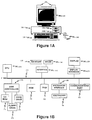
- Figure 1A illustrates a computer, equipped with an eyetracker, of a type suitable for carrying out the invention.
- Figure 1B illustrates a block diagram of the computer of Figure 1A.
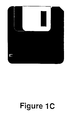
- Figure 1C illustrates an exemplary memory medium containing a program usable with the computer of Figure 1A .
- Figure 2 is a view of an electronic newspaper constructed of various text objects.
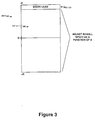
- Figure 3 is a representation of an exemplary text object.
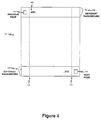
- Figure 4 is a representation of a page layout incorporating page change information with previous page and next page control areas.
- Figure 5 is a representation of a page layout incorporating scroll objects and page change objects.
- Figure 6 is a flow chart of a select object process.
- Figure 7 is a flow chart of a deselect object process.
- Figure 8 is a flow chart of eyetracker control of scrolling of a selected object.
- Figure 9 is a flow chart of eyetracker control of pagination.
- Figure 10 is a flow chart of eyetracker control of scrolling using eye activated scroll objects.
- a procedure is here, and generally, conceived to be a self-consistent sequence of steps leading to a desired result. These steps are those requiring physical manipulations of physical quantities. Usually, though not necessarily, these quantities take the form of electrical or magnetic signals capable of being stored, transferred, combined, compared, and otherwise manipulated. It proves convenient at times, principally for reasons of common usage, to refer to these signals as bits, values, elements, symbols, characters, terms, numbers, or the like. It should be noted, however, that all of these and similar terms are to be associated with the appropriate physical quantities and are merely convenient labels applied to these quantities.
- the manipulations performed are often referred to in terms, such as adding or comparing, which are commonly associated with mental operations performed by a human operator. No such capability of a human operator is necessary, or desirable in most cases, in any of the operations described herein which form part of the present invention; the operations are machine operations.
- Useful machines for performing the operation of the present invention include general purpose digital computers or similar devices.
- the present invention also relates to apparatus for performing these operations.
- This apparatus may be specially constructed for the required purpose or it may comprise a general purpose computer as selectively activated or reconfigured by a computer program stored in the computer.
- the procedures presented herein are not inherently related to a particular computer or other apparatus.
- Various general purpose machines may be used with programs written in accordance with the teachings herein, or it may prove more convenient to construct more specialized apparatus to perform the required method steps. The required structure for a variety of these machines will appear from the description given.
- Figure 1A illustrates a computer of a type suitable for carrying out the invention.
- a computer system has a central processing unit 100 having disk drives 110A and 110B .
- Disk drive indications 110A and 110B are merely symbolic of a number of disk drives which might be accommodated by the computer system. Typically, these would include a floppy disk drive such as 110A , a hard disk drive (not shown externally) and a CD ROM drive indicated by slot 110B .
- the number and type of drives varies, typically, with different computer configurations.
- the computer has the display 120 upon which information is displayed.
- a keyboard 130 and a mouse 140 are typically also available as input devices over interface 145 .
- One or more camera and illumination parts 190 are used to observe the user's eyes and determine the position at which a user's eyes are looking.
- the computer illustrated in Figure 1A is a SPARC workstation from Sun Microsystems, Inc.
- FIG. 1B illustrates a block diagram of the internal hardware of the computer of Figure 1A .
- a bus 150 serves as the main information highway interconnecting the other components of the computer.
- CPU 155 is the central processing unit of the system, performing calculations and logic operations required to execute a program.
- Read only memory ( 160 ) and random access memory ( 165 ) constitute the main memory of the computer.
- Disk controller 170 interfaces one or more disk drives to the system bus 150 . These disk drives may be floppy disk drives, such as 173 , internal or external hard drives, such as 172 , or CD ROM or DVD (Digital Video Disks) drives such as 171 .
- a display interface 175 interfaces a high resolution display 120 and permits information from the bus to be displayed on the display.
- An eyetracker 190 is connected to the bus on eyetracker interface 189 . It locates the position at which a user's eyes are looking. Many of the control functions described herein are activated based upon where a user is looking. Communications with external devices can occur over communications port 185 .
- Figure 1C illustrates an exemplary memory medium which can be used with drives such as 173 in Figure 1B or 110A in Figure 1A .
- memory media such as a floppy disk, a CD ROM, or a Digital Video Disk will contain the program information for controlling the computer to enable the computer to perform its testing and development functions in accordance with the invention.
- Figure 2 shows a newspaper object 200 such as might be found in an electronic newspaper publication.
- a newspaper consists of newspaper logo 210 , headline 220 and headline story 230 .
- a plurality of story text objects 240 are shown, each comprised of a story lead or a headline for that particular story 241 , and the text of the story 242 .
- the newspaper shown is comprised of a plurality of such text objects, optionally organized in pages.
- Figure 3 is a representation of an exemplary text object.
- the story lead object 310 and the text of the story 320 comprise the text object.
- the text object is stored within a window indicated by the outer boundary of the text object shown in Figure 3 .
- a reference position indicated by the horizontal line, originating at the origin of the coordinate system O, extends across the text object. In reality, this reference position would not be visible to the reader of the story, but rather represents an invisible control line.
- the start of the text is positioned immediately under the story lead in the usual fashion. As a user's eyes begin to read the text of the story, the eyes move down toward the reference line O.
- the scroll speed is adjusted as a function of the position X (in the illustration shown X is an indication of the number of lines up or down from the reference line). The scroll speed is adjusted as a function of that position X.
- the scrolling speed is linear. That is the speed at which the text scrolls is a function of how far above the reference line or below the reference line the user's eyes appear to be gazing. If the user's eyes are above the line (reference line), the scrolling speed will slow until the user's eyes reach the reference line. The rate of scrolling will begin to speed up as the user's eyes drop below the reference line so that the user's eyes never reach the bottom of the viewing window.
- Equation (2) shows a non-linear function. With this function, as a user's eyes are displaced from the reference line, the rate of scrolling increases or decreases exponentially.
- Equation (3) reflects the partitioning of the viewing window into regions, with a particular scrolling speed associated with each region.
- a desire not to disrupt a user's reading is also the genesis of the requirement for a high resolution display.
- scrolling would appear to be somewhat jerky compared with the smoothness achievable with a high resolution display. That is, as the image of a line of characters is displaced up in the viewing window, low resolution displays would require a substantial jump between lines of pixels for each movement of the line of characters. A jumpiness up of such a display would be distracting to the reader. However, the jumpiness could be minimized and reduced to the point of insignificance by utilizing a high resolution display.
- Figure 4 is a representation of a page layout incorporating page change information with previous page and next page control areas.
- Figure 4 shows a text page such as used in certain page oriented text editors.
- the page 400 has margin boundaries 410 shown as vertical dashed lines with the start of text centered at 440 and the bottom of the text shown at the bottom page.
- a next page area 420 and a previous page area 430 are explicitly identified and utilized, in conjunction with the eyetracker, to trigger the display of the next page or the previous page of text information.
- the eyetracker As the user's eyes move down the page, the user will approach the bottom of the text.
- a different background color is shown in the region 460 .
- Figure 5 is a representation of a page layout incorporating scroll objects and page change objects. The arrangement shown in Figure 5 is preferably used where the viewing window can only display less than one page of information.
- the text object 500 includes a scroll up area 510 , a scroll down area 515 , a next page area 520 , and a previous page area 530 .
- the scroll areas 510 and 515 are associated with the viewing window and will not normally move.
- the scroll up area 510 is not active when the text display is at the top of the page and the scroll down area 515 is not active when the text displayed is already at the bottom of the page. Changing pages requires looking at page change areas 520 and 530 as discussed above. Scrolling within the page, however, is controlled by the scroll up, scroll down areas 510 and 515 .
- any of the scroll areas described herein may be visible or invisible areas. Visible areas are in some senses preferred because the user may choose to activate the function consciously. However, if they are invisible, the areas are positioned at locations which the user's eyes would normally traverse in the course of reading in order to invoke the function desired.
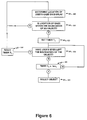
- Figure 6 is a flow chart of a select object process.
- the process illustrated can be used, for example, in selecting a text object from a plurality of objects, such as the text objects shown in Figure 2 as part of an electronic newspaper.
- the eyetracker determines the location of the user's gaze on the display 600 and determines whether or not the location of that gaze is within the boundaries of a text object. If it is within the boundaries of an object, a timer T1 is set ( 620 ) and the position of the user's gaze is checked to see if the user's eyes have left the boundaries of the object ( 630 ). If they have, timer T1 is reset ( 640 ) and the process begins from block 600 once again.
- timer T1 exceeds the value ⁇ 1 . If the timer has not exceeded ⁇ 1 , ( 650-N ) the process will continue to check that the location of the user's eyes remain within the boundaries of the object ( 630 ). Otherwise, once the timer exceeds the value of ⁇ 1 , the object is selected ( 660 ) for viewing.
- Figure 7 is a flow chart of a deselect object process. Once an object has been selected, it becomes necessary to determine whether or not that object remains the focus of the user's attention. The process shown in Figure 7 permits that determination and deselects the object when it is no longer the focus of the user's attention.
- the eyetracker determines the location of the user's gaze on the display ( 700 ) and determines whether the location of the gaze has gone outside the boundaries of a selected object ( 710 ). If it has, timer T2 is set and a check is made to see if the user's eyes have returned to within the boundaries of the object ( 730 ). If they have, the timer T2 is reset and the process begins with block 700 again.
- timer T2 is checked to see if it is greater than ⁇ 2 . If ⁇ 2 has not been exceeded by timer T2, the monitoring of the user's eyes continue to see if they have returned within the boundaries of the object. If the timer T2 exceeds ⁇ 2 ( 750-Y ), the user's attention has left the object and the object is deselected ( 760 ).
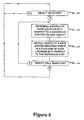
- Figure 8 is a flow chart of eyetracker control of scrolling of a selected object.
- determination is made of the position of the gaze location with respect to a reference position on said object ( 810 ).
- the rate of scrolling of the text object is determined as a function of gaze location with respect to the reference position ( 820 ) as discussed in conjunction with Figure 3. This permits the scrolling of the object to keep unread text within the viewport available to the user at all times.
- a check is made to make sure the object is still selected ( 830 ). If it is, monitoring of the user's eye position and adjustment of the scrolling rate continues on an ongoing basis. If the object has not been selected, the process returns to the beginning. This allows a variable rate scroll to be implemented based on the location of the user's eyes within the viewing window.
- Figure 9 is a flow chart of eyetracker control of pagination. If an object has been selected as the focus of user attention ( 900 ), the position of a user's gaze is determined with respect to the top and bottom of a page ( 910 ). As the user's eyes approach within N lines of the top or bottom of the page, a change in display color will occur to indicate that a page change boundary is being approached and that a page change may be imminent ( 920 ). When a user's gaze location is located on a page down area or button or a page up area or button for a respective duration of time, a new page of text will be displayed. That is, a page up or a page down function will be executed.
- Figure 10 is a flow chart of eyetracker control of scrolling using eye activated scroll objects.
- the position of a user's gaze is determined ( 1010 ).
- gaze location is located on a scroll up area or a scroll down area, for a respective duration of time, the information being displayed is scrolled in the direction indicated by the up or down scroll areas ( 1020 ).
Landscapes
- Engineering & Computer Science (AREA)
- General Engineering & Computer Science (AREA)
- Theoretical Computer Science (AREA)
- Human Computer Interaction (AREA)
- Physics & Mathematics (AREA)
- General Physics & Mathematics (AREA)
- User Interface Of Digital Computer (AREA)
- Digital Computer Display Output (AREA)
- Controls And Circuits For Display Device (AREA)
Claims (18)
- Appareil pour commander des informations sur un dispositif d'affichage, comprenant :un ordinateur ;un dispositif d'affichage (120) connecté audit ordinateur ;un dispositif de suivi de mouvement oculaire (190) connecté audit ordinateur pour détecter un emplacement (510, 515, 520, 530) sur ledit dispositif d'affichage, vers lequel sont tournés les yeux d'un utilisateur ; etun dispositif de commande (155) pour modifier le contenu d'informations sur ledit dispositif d'affichage en fonction dudit emplacement, caractérisé en ce que le dispositif de commande est configuré de façon à modifier le contenu d'informations sur ledit dispositif d'affichage par un défilement à une vitesse qui est fonction de la relation entre ledit emplacement et une position de référence.
- Appareil selon la revendication 1, dans lequel ladite fonction est une fonction linéaire.
- Appareil selon la revendication 1, dans lequel ladite fonction est une fonction exponentielle.
- Appareil selon la revendication 1, dans lequel ladite fonction est une fonction discontinue.
- Appareil selon la revendication 4, dans lequel des transitions entre des régions de ladite fonction discontinue sont lissées de façon qu'il se produise des changements de la vitesse de défilement sans distraire notablement l'utilisateur.
- Appareil selon l'une quelconque des revendications précédentes, dans lequel le dispositif de commande est en outre configuré de façon à modifier le contenu d'informations sur le dispositif d'affichage par saut de page.
- Appareil selon la revendication 6, dans lequel le saut de page est déclenché par le fait qu'un utilisateur regarde une zone particulière de l'écran (420, 430, 520, 530) pendant une durée particulière.
- Appareil selon la revendication 6, dans lequel le défilement à l'intérieur d'une page est effectué par le fait qu'un utilisateur regarde une zone particulière de l'écran (510, 515) pendant une durée particulière.
- Appareil selon la revendication 7 ou 8, dans lequel ladite zone particulière de l'écran comprend une icône.
- Appareil selon l'une quelconque des revendications 6 à 9, dans lequel le dispositif de commande est en outre configuré de façon à modifier la couleur d'affichage lorsque l'oeil de l'utilisateur se rapproche d'une limite de page.
- Appareil selon la revendication 1, dans lequel le dispositif de commande est en outre configuré pour sélectionner un objet (300) sur ledit dispositif d'affichage en fonction d'un emplacement sur ledit dispositif d'affichage vers lequel sont tournés les yeux d'un utilisateur, le contenu d'informations devant être modifié comprenant le contenu d'informations affiché à l'intérieur de l'objet.
- Procédé de commande d'informations sur un dispositif d'affichage (120) d'un ordinateur ayant un dispositif de suivi de mouvement oculaire (190), comprenant les étapes consistant à :identifier un emplacement sur ledit dispositif d'affichage vers lequel sont tournés les yeux d'un utilisateur, etmodifier le contenu d'informations sur ledit ' dispositif d'affichage en fonction dudit emplacement, caractérisé par le fait qu'on modifie ledit contenu d'informations par un défilement à une vitesse qui est fonction de la relation entre ledit emplacement et une position de référence.
- Procédé selon la revendication 12, comprenant la sélection d'un objet de texte sur la base dudit emplacement.
- Procédé selon la revendication 13, comprenant en outre l'étape consistant à :
modifier le contenu d'informations affiché sur ledit objet de texte en fonction dudit emplacement. - Procédé selon la revendication 14, comprenant en outre l'étape consistant à :
désélectionner ledit objet de texte lorsque les yeux de l'utilisateur quittent ledit objet de texte pendant un certain temps. - Système pour afficher des informations, comprenant :un réseau ; etune pluralité d'ordinateurs connectés audit réseau, au moins l'un des ordinateurs ayant un dispositif de suivi de mouvement oculaire (190) et étant configuré pour détecter un emplacement sur un dispositif d'affichage (120), vers lequel sont tournés les yeux d'un utilisateur et pour modifier le contenu d'informations sur ledit dispositif d'affichage en fonction dudit emplacement, caractérisé en ce qu'au moins l'un desdits ordinateurs est configuré pour modifier ledit contenu d'informations sur ledit dispositif d'affichage par un défilement à une vitesse qui est fonction de la relation entre ledit emplacement et une position de référence.
- Produit à base de programme informatique pour commander des informations sur un dispositif d'affichage (120) d'un ordinateur ayant un dispositif de suivi de mouvement oculaire (190), comprenant :un support de mémoire ; etun programme informatique stocké sur ledit support de mémoire, ledit programme informatique contenant des instructions pour identifier un emplacement sur ledit dispositif d'affichage, vers lequel sont tournés les yeux d'un utilisateur, et pour modifier le contenu d'informations sur ledit dispositif d'affichage en fonction dudit emplacement, caractérisé en ce que ledit programme informatique contient des instructions pour modifier ledit contenu d'informations sur ledit dispositif d'affichage par un défilement à une vitesse qui est fonction de la relation entre ledit emplacement et une position de référence.
- Produit à base de programme informatique selon la revendication 17, dans lequel le programme informatique contient des instructions pour sélectionner un objet sur ledit dispositif d'affichage et pour modifier le contenu d'informations affiché dans ledit objet en fonction dudit emplacement.
Applications Claiming Priority (2)
| Application Number | Priority Date | Filing Date | Title |
|---|---|---|---|
| US670907 | 1996-06-26 | ||
| US08/670,907 US5850211A (en) | 1996-06-26 | 1996-06-26 | Eyetrack-driven scrolling |
Publications (3)
| Publication Number | Publication Date |
|---|---|
| EP0816980A2 EP0816980A2 (fr) | 1998-01-07 |
| EP0816980A3 EP0816980A3 (fr) | 1998-11-11 |
| EP0816980B1 true EP0816980B1 (fr) | 2001-01-24 |
Family
ID=24692380
Family Applications (1)
| Application Number | Title | Priority Date | Filing Date |
|---|---|---|---|
| EP97304371A Expired - Lifetime EP0816980B1 (fr) | 1996-06-26 | 1997-06-23 | Défilement commandé par mouvement des yeux |
Country Status (4)
| Country | Link |
|---|---|
| US (1) | US5850211A (fr) |
| EP (1) | EP0816980B1 (fr) |
| JP (1) | JPH10124035A (fr) |
| DE (1) | DE69703955T2 (fr) |
Cited By (3)
| Publication number | Priority date | Publication date | Assignee | Title |
|---|---|---|---|---|
| US10317995B2 (en) | 2013-11-18 | 2019-06-11 | Tobii Ab | Component determination and gaze provoked interaction |
| US10534526B2 (en) | 2013-03-13 | 2020-01-14 | Tobii Ab | Automatic scrolling based on gaze detection |
| US10545574B2 (en) | 2013-03-01 | 2020-01-28 | Tobii Ab | Determining gaze target based on facial features |
Families Citing this family (113)
| Publication number | Priority date | Publication date | Assignee | Title |
|---|---|---|---|---|
| JP3784110B2 (ja) * | 1996-07-30 | 2006-06-07 | 東京エレクトロン株式会社 | 処理装置 |
| US6067069A (en) * | 1997-03-14 | 2000-05-23 | Krause; Philip R. | User interface for dynamic presentation of text with a variable speed based on a cursor location in relation to a neutral, deceleration, and acceleration zone |
| US6098085A (en) * | 1997-03-17 | 2000-08-01 | At&T Corp. | Word-serial reader for network devices having limited display capabilities |
| US6351273B1 (en) | 1997-04-30 | 2002-02-26 | Jerome H. Lemelson | System and methods for controlling automatic scrolling of information on a display or screen |
| US6931587B1 (en) * | 1998-01-29 | 2005-08-16 | Philip R. Krause | Teleprompter device |
| US6326957B1 (en) * | 1999-01-29 | 2001-12-04 | International Business Machines Corporation | System and method for displaying page information in a personal digital notepad |
| DE50000530D1 (de) * | 1999-03-09 | 2002-10-24 | Siemens Ag | Eingabe-/ausgabevorrichtung für ein benutzerendgerät |
| US6462752B1 (en) | 1999-11-16 | 2002-10-08 | International Business Machines Corporation | Automatic scrolling function for editors and browsers |
| US6603491B2 (en) | 2000-05-26 | 2003-08-05 | Jerome H. Lemelson | System and methods for controlling automatic scrolling of information on a display or screen |
| EP1184414A3 (fr) * | 2000-08-30 | 2003-08-06 | JSR Corporation | Composition polymère à base de diène conjugué, procédé de production, caoutchouc synthétique étendu à l'huile et composition à base de caoutchouc |
| US7240284B2 (en) * | 2001-02-15 | 2007-07-03 | Denny Jaeger | Method for formatting text by hand drawn inputs |
| US7013258B1 (en) | 2001-03-07 | 2006-03-14 | Lenovo (Singapore) Pte. Ltd. | System and method for accelerating Chinese text input |
| US6886137B2 (en) * | 2001-05-29 | 2005-04-26 | International Business Machines Corporation | Eye gaze control of dynamic information presentation |
| US6847386B2 (en) * | 2001-06-19 | 2005-01-25 | International Business Machines Corporation | Visual cue for on-screen scrolling |
| US20030038754A1 (en) * | 2001-08-22 | 2003-02-27 | Mikael Goldstein | Method and apparatus for gaze responsive text presentation in RSVP display |
| US7202857B2 (en) * | 2001-08-29 | 2007-04-10 | Microsoft Corporation | Manual controlled scrolling |
| US6690387B2 (en) * | 2001-12-28 | 2004-02-10 | Koninklijke Philips Electronics N.V. | Touch-screen image scrolling system and method |
| US6637883B1 (en) | 2003-01-23 | 2003-10-28 | Vishwas V. Tengshe | Gaze tracking system and method |
| US20040174497A1 (en) * | 2003-03-07 | 2004-09-09 | Manish Sharma | Method and system for controlling the movement of a device |
| US7762665B2 (en) * | 2003-03-21 | 2010-07-27 | Queen's University At Kingston | Method and apparatus for communication between humans and devices |
| AU2004221365B2 (en) * | 2003-03-21 | 2011-02-24 | Queen's University At Kingston | Method and apparatus for communication between humans and devices |
| US8292433B2 (en) | 2003-03-21 | 2012-10-23 | Queen's University At Kingston | Method and apparatus for communication between humans and devices |
| WO2004104986A1 (fr) * | 2003-05-21 | 2004-12-02 | Matsushita Electric Industrial Co., Ltd. | Dispositif de sortie vocale et procede de sortie vocale |
| US9274598B2 (en) | 2003-08-25 | 2016-03-01 | International Business Machines Corporation | System and method for selecting and activating a target object using a combination of eye gaze and key presses |
| US20050047629A1 (en) * | 2003-08-25 | 2005-03-03 | International Business Machines Corporation | System and method for selectively expanding or contracting a portion of a display using eye-gaze tracking |
| DE102004027289B4 (de) * | 2004-06-04 | 2006-08-24 | Siemens Ag | Verfahren und Anordnung zur berührungslosen Navigation in einem Dokument |
| ES2535364T3 (es) | 2004-06-18 | 2015-05-08 | Tobii Ab | Control ocular de aparato informático |
| JP4088282B2 (ja) * | 2004-08-20 | 2008-05-21 | 清実 中村 | コンピュータ入力方法と装置 |
| US20060066567A1 (en) * | 2004-09-29 | 2006-03-30 | Scharenbroch Gregory K | System and method of controlling scrolling text display |
| ITFI20040223A1 (it) * | 2004-10-29 | 2005-01-29 | Sr Labs S R L | Metodo e sistema di visualizzazione,elaborazione ed analisi integrata di immagini mediche |
| US7835498B2 (en) * | 2005-02-18 | 2010-11-16 | Koninklijke Philips Electronics N. V. | Automatic control of a medical device |
| US7697827B2 (en) | 2005-10-17 | 2010-04-13 | Konicek Jeffrey C | User-friendlier interfaces for a camera |
| US8209620B2 (en) * | 2006-01-31 | 2012-06-26 | Accenture Global Services Limited | System for storage and navigation of application states and interactions |
| US7599520B2 (en) * | 2005-11-18 | 2009-10-06 | Accenture Global Services Gmbh | Detection of multiple targets on a plane of interest |
| US20100231504A1 (en) * | 2006-03-23 | 2010-09-16 | Koninklijke Philips Electronics N.V. | Hotspots for eye track control of image manipulation |
| CN101078965B (zh) * | 2006-05-24 | 2010-08-04 | 鸿富锦精密工业(深圳)有限公司 | 非线性页面定位系统及方法 |
| US7649536B1 (en) * | 2006-06-16 | 2010-01-19 | Nvidia Corporation | System, method, and computer program product for utilizing natural motions of a user to display intuitively correlated reactions |
| US7928926B2 (en) * | 2006-06-27 | 2011-04-19 | Panasonic Corporation | Display apparatus and method for hands free operation that selects a function when window is within field of view |
| US20080259551A1 (en) * | 2007-04-20 | 2008-10-23 | Gotive A.S. | Modular computing device |
| US8438496B1 (en) | 2007-05-09 | 2013-05-07 | Adobe Systems Incorporated | Content sensitive automatic scrolling |
| TWI450178B (zh) * | 2008-04-25 | 2014-08-21 | Wistron Corp | 驅動電子裝置顯示頁面捲動之方法與裝置 |
| CN101840265B (zh) * | 2009-03-21 | 2013-11-06 | 深圳富泰宏精密工业有限公司 | 视觉感知装置及其控制方法 |
| CN101943982B (zh) * | 2009-07-10 | 2012-12-12 | 北京大学 | 基于被跟踪的眼睛运动的图像操作 |
| IT1399456B1 (it) * | 2009-09-11 | 2013-04-19 | Sr Labs S R L | Metodo e apparato per l'utilizzo di generiche applicazioni software attraverso controllo oculare e opportune metodologie di interazione. |
| US8878773B1 (en) | 2010-05-24 | 2014-11-04 | Amazon Technologies, Inc. | Determining relative motion as input |
| US8531355B2 (en) * | 2010-07-23 | 2013-09-10 | Gregory A. Maltz | Unitized, vision-controlled, wireless eyeglass transceiver |
| USRE47059E1 (en) * | 2010-07-24 | 2018-09-25 | Joel Nevins | Computer-implemented methods and computer program products for integrating and synchronizing multimedia content, including content displayed via interactive televisions, smartphones, electronic book readers, holographic imagery projectors, and other computerized devices |
| US8739019B1 (en) * | 2011-07-01 | 2014-05-27 | Joel Nevins | Computer-implemented methods and computer program products for integrating and synchronizing multimedia content, including content displayed via interactive televisions, smartphones, electronic book readers, holographic imagery projectors, and other computerized devices |
| JP2014077814A (ja) * | 2011-02-14 | 2014-05-01 | Panasonic Corp | 表示制御装置および表示制御方法 |
| US20120236996A1 (en) | 2011-03-16 | 2012-09-20 | Intellirad Control, Inc. | Radiation control and minimization system and method |
| US8643680B2 (en) * | 2011-04-08 | 2014-02-04 | Amazon Technologies, Inc. | Gaze-based content display |
| KR101773845B1 (ko) * | 2011-05-16 | 2017-09-01 | 삼성전자주식회사 | 휴대용 단말기에서 입력 처리 방법 및 장치 |
| JP5765070B2 (ja) * | 2011-06-13 | 2015-08-19 | ソニー株式会社 | 表示切換装置、表示切換方法、表示切換プログラム |
| US8606595B2 (en) | 2011-06-17 | 2013-12-10 | Sanjay Udani | Methods and systems for assuring compliance |
| US8655796B2 (en) | 2011-06-17 | 2014-02-18 | Sanjay Udani | Methods and systems for recording verifiable documentation |
| US9024843B2 (en) * | 2011-06-30 | 2015-05-05 | Google Inc. | Wearable computer with curved display and navigation tool |
| US9041734B2 (en) | 2011-07-12 | 2015-05-26 | Amazon Technologies, Inc. | Simulating three-dimensional features |
| AU2011204946C1 (en) | 2011-07-22 | 2012-07-26 | Microsoft Technology Licensing, Llc | Automatic text scrolling on a head-mounted display |
| US10088924B1 (en) | 2011-08-04 | 2018-10-02 | Amazon Technologies, Inc. | Overcoming motion effects in gesture recognition |
| US8947351B1 (en) | 2011-09-27 | 2015-02-03 | Amazon Technologies, Inc. | Point of view determinations for finger tracking |
| US9081177B2 (en) | 2011-10-07 | 2015-07-14 | Google Inc. | Wearable computer with nearby object response |
| US9547406B1 (en) | 2011-10-31 | 2017-01-17 | Google Inc. | Velocity-based triggering |
| KR101891786B1 (ko) * | 2011-11-29 | 2018-08-27 | 삼성전자주식회사 | 아이 트래킹 기반의 사용자 기능 운용 방법 및 이를 지원하는 단말기 |
| US8942434B1 (en) | 2011-12-20 | 2015-01-27 | Amazon Technologies, Inc. | Conflict resolution for pupil detection |
| US9223415B1 (en) | 2012-01-17 | 2015-12-29 | Amazon Technologies, Inc. | Managing resource usage for task performance |
| JP5808435B2 (ja) * | 2012-01-23 | 2015-11-10 | 三菱電機株式会社 | 情報表示装置 |
| JP5994328B2 (ja) | 2012-03-29 | 2016-09-21 | ソニー株式会社 | 情報処理装置、情報処理方法及びコンピュータプログラム |
| WO2013168173A1 (fr) * | 2012-05-11 | 2013-11-14 | Umoove Services Ltd. | Défilement automatique fondé sur le regard |
| US9148537B1 (en) * | 2012-05-18 | 2015-09-29 | hopTo Inc. | Facial cues as commands |
| US9395826B1 (en) | 2012-05-25 | 2016-07-19 | hopTo Inc. | System for and method of translating motion-based user input between a client device and an application host computer |
| US9317113B1 (en) | 2012-05-31 | 2016-04-19 | Amazon Technologies, Inc. | Gaze assisted object recognition |
| TWI482610B (zh) * | 2012-06-05 | 2015-05-01 | Utechzone Co Ltd | Two - way communication system |
| KR20130143160A (ko) * | 2012-06-20 | 2013-12-31 | 삼성전자주식회사 | 휴대단말기의 스크롤 제어장치 및 방법 |
| JP5783957B2 (ja) * | 2012-06-22 | 2015-09-24 | 株式会社Nttドコモ | 表示装置、表示方法及びプログラム |
| US20140195918A1 (en) * | 2013-01-07 | 2014-07-10 | Steven Friedlander | Eye tracking user interface |
| JP2014157466A (ja) * | 2013-02-15 | 2014-08-28 | Sony Corp | 情報処理装置及び記憶媒体 |
| KR102081930B1 (ko) * | 2013-03-21 | 2020-02-26 | 엘지전자 주식회사 | 시선 위치를 디텍트하는 디스플레이 디바이스 및 제어 방법 |
| JP6096900B2 (ja) * | 2013-06-17 | 2017-03-15 | 日立マクセル株式会社 | 情報表示端末 |
| US8988344B2 (en) | 2013-06-25 | 2015-03-24 | Microsoft Technology Licensing, Llc | User interface navigation |
| CN105518569A (zh) * | 2013-08-21 | 2016-04-20 | 汤姆逊许可公司 | 具备受观看方向控制的摇摄功能的视频显示器 |
| US9269012B2 (en) | 2013-08-22 | 2016-02-23 | Amazon Technologies, Inc. | Multi-tracker object tracking |
| JP6127839B2 (ja) * | 2013-09-02 | 2017-05-17 | ソニー株式会社 | 情報処理装置、情報処理方法、およびプログラム |
| JP6115418B2 (ja) * | 2013-09-11 | 2017-04-19 | 富士通株式会社 | 情報処理装置、方法及びプログラム |
| US10055013B2 (en) | 2013-09-17 | 2018-08-21 | Amazon Technologies, Inc. | Dynamic object tracking for user interfaces |
| US10558262B2 (en) | 2013-11-18 | 2020-02-11 | Tobii Ab | Component determination and gaze provoked interaction |
| CN103869977B (zh) * | 2014-02-19 | 2016-06-08 | 小米科技有限责任公司 | 图像显示方法、装置和电子设备 |
| WO2015131345A1 (fr) | 2014-03-05 | 2015-09-11 | Empire Technology Development Llc | Generation de donnees semantiques |
| US9325938B2 (en) | 2014-03-13 | 2016-04-26 | Google Inc. | Video chat picture-in-picture |
| CN103914150A (zh) * | 2014-04-08 | 2014-07-09 | 小米科技有限责任公司 | 摄像头控制方法和装置 |
| US9952883B2 (en) | 2014-08-05 | 2018-04-24 | Tobii Ab | Dynamic determination of hardware |
| CN104267812B (zh) * | 2014-09-22 | 2017-08-29 | 联想(北京)有限公司 | 一种信息处理方法及电子设备 |
| US10585485B1 (en) | 2014-11-10 | 2020-03-10 | Amazon Technologies, Inc. | Controlling content zoom level based on user head movement |
| US10222966B2 (en) * | 2015-02-09 | 2019-03-05 | Flipboard, Inc. | Parallax discrete page scrolling |
| US9911037B2 (en) * | 2015-02-23 | 2018-03-06 | Umoove Services Ltd. | System and method of feedback for attention and concentration |
| JP6097377B1 (ja) * | 2015-11-27 | 2017-03-15 | 株式会社コロプラ | 画像表示方法及びプログラム |
| CN109074215A (zh) * | 2016-05-11 | 2018-12-21 | 夏普株式会社 | 信息处理装置、信息处理装置的控制方法及控制程序 |
| JP6233471B2 (ja) * | 2016-08-22 | 2017-11-22 | ソニー株式会社 | 情報処理装置、情報処理方法及びコンピュータプログラム |
| US11507216B2 (en) | 2016-12-23 | 2022-11-22 | Realwear, Inc. | Customizing user interfaces of binary applications |
| US10936872B2 (en) | 2016-12-23 | 2021-03-02 | Realwear, Inc. | Hands-free contextually aware object interaction for wearable display |
| US10393312B2 (en) | 2016-12-23 | 2019-08-27 | Realwear, Inc. | Articulating components for a head-mounted display |
| US11099716B2 (en) | 2016-12-23 | 2021-08-24 | Realwear, Inc. | Context based content navigation for wearable display |
| US10437070B2 (en) | 2016-12-23 | 2019-10-08 | Realwear, Inc. | Interchangeable optics for a head-mounted display |
| US10620910B2 (en) * | 2016-12-23 | 2020-04-14 | Realwear, Inc. | Hands-free navigation of touch-based operating systems |
| JP2019003228A (ja) * | 2017-06-09 | 2019-01-10 | 富士通株式会社 | 機器連携システム、機器連携装置、機器連携方法及び機器連携プログラム |
| JP6643783B2 (ja) * | 2017-07-10 | 2020-02-12 | 株式会社バンダイナムコエンターテインメント | シミュレーション制御装置及びシミュレーション制御プログラム |
| CN108090463B (zh) * | 2017-12-29 | 2021-10-26 | 腾讯科技(深圳)有限公司 | 对象控制方法、装置、存储介质和计算机设备 |
| US10713813B2 (en) | 2018-02-22 | 2020-07-14 | Innodem Neurosciences | Eye tracking method and system |
| CN109491952A (zh) * | 2018-11-27 | 2019-03-19 | 掌阅科技股份有限公司 | 跨页选择文字方法、电子设备及计算机存储介质 |
| US12189845B2 (en) | 2021-02-16 | 2025-01-07 | Athena Accessible Technology, Inc. | Systems and methods for hands-free scrolling based on a detected user reading activity |
| US11775060B2 (en) | 2021-02-16 | 2023-10-03 | Athena Accessible Technology, Inc. | Systems and methods for hands-free scrolling |
| US12386418B2 (en) | 2023-09-08 | 2025-08-12 | Huawei Technologies Co., Ltd. | Gaze assisted input for an electronic device |
| US12321585B2 (en) | 2023-11-06 | 2025-06-03 | Huawei Technologies Co., Ltd. | Methods and devices for interactions using combination gaze and touch inputs |
| CN119718148A (zh) * | 2024-06-20 | 2025-03-28 | 华为技术有限公司 | 一种翻页方法、电子设备以及存储介质 |
Family Cites Families (8)
| Publication number | Priority date | Publication date | Assignee | Title |
|---|---|---|---|---|
| US4595990A (en) * | 1980-12-31 | 1986-06-17 | International Business Machines Corporation | Eye controlled information transfer |
| US4513317A (en) * | 1982-09-28 | 1985-04-23 | The United States Of America As Represented By The Administrator Of The National Aeronautics And Space Administration | Retinally stabilized differential resolution television display |
| JPS63121389A (ja) * | 1986-11-10 | 1988-05-25 | A T R Tsushin Syst Kenkyusho:Kk | 立体画像表示装置 |
| US4950069A (en) * | 1988-11-04 | 1990-08-21 | University Of Virginia | Eye movement detector with improved calibration and speed |
| US5367315A (en) * | 1990-11-15 | 1994-11-22 | Eyetech Corporation | Method and apparatus for controlling cursor movement |
| JPH04205408A (ja) * | 1990-11-30 | 1992-07-27 | Nec Corp | 画面スクロール制御方式 |
| US5864330A (en) * | 1993-06-29 | 1999-01-26 | International Business Machines Corp. | Method and apparatus for providing a two-dimensional position-sensitive scroll icon in a data processing system user interface |
| US5633657A (en) * | 1994-10-11 | 1997-05-27 | Falcon; Fernando D. | Mouse driver arrangement for providing advanced scrolling capabilities to a conventional mouse |
-
1996
- 1996-06-26 US US08/670,907 patent/US5850211A/en not_active Expired - Lifetime
-
1997
- 1997-06-23 DE DE69703955T patent/DE69703955T2/de not_active Expired - Fee Related
- 1997-06-23 EP EP97304371A patent/EP0816980B1/fr not_active Expired - Lifetime
- 1997-06-26 JP JP9170596A patent/JPH10124035A/ja active Pending
Cited By (3)
| Publication number | Priority date | Publication date | Assignee | Title |
|---|---|---|---|---|
| US10545574B2 (en) | 2013-03-01 | 2020-01-28 | Tobii Ab | Determining gaze target based on facial features |
| US10534526B2 (en) | 2013-03-13 | 2020-01-14 | Tobii Ab | Automatic scrolling based on gaze detection |
| US10317995B2 (en) | 2013-11-18 | 2019-06-11 | Tobii Ab | Component determination and gaze provoked interaction |
Also Published As
| Publication number | Publication date |
|---|---|
| EP0816980A3 (fr) | 1998-11-11 |
| JPH10124035A (ja) | 1998-05-15 |
| DE69703955D1 (de) | 2001-03-01 |
| DE69703955T2 (de) | 2001-08-02 |
| EP0816980A2 (fr) | 1998-01-07 |
| US5850211A (en) | 1998-12-15 |
Similar Documents
| Publication | Publication Date | Title |
|---|---|---|
| EP0816980B1 (fr) | Défilement commandé par mouvement des yeux | |
| US6587128B2 (en) | Method for displaying hidden objects by varying the transparency of overlapping objects | |
| US5704050A (en) | Snap control for relocating elements of a graphical user interface | |
| KR101143179B1 (ko) | 다중 모드 윈도 프레젠테이션 시스템 및 프로세스 | |
| US9411487B2 (en) | User interface presentation of information in reconfigured or overlapping containers | |
| US5528260A (en) | Method and apparatus for proportional auto-scrolling | |
| CN100474221C (zh) | 用于查看重叠对象的带有单层模式的计算机接口 | |
| US6816174B2 (en) | Method and apparatus for variable density scroll area | |
| US5754809A (en) | Perspective windowing technique for computer graphical user interface | |
| KR100267489B1 (ko) | 스크롤 바 확장 장치 및 방법 | |
| US8701039B2 (en) | Method and system for discriminating axes of user-selectable elements | |
| US5694151A (en) | Method and apparatus for providing visual feedback during manipulation of text on a computer screen | |
| JP3082167B2 (ja) | コンピュータ・システムの動作方法 | |
| US7274377B2 (en) | Viewport panning feedback system | |
| US6874126B1 (en) | Method and apparatus for controlling content display by the cursor motion | |
| US7043701B2 (en) | Opacity desktop with depth perception | |
| US10409366B2 (en) | Method and apparatus for controlling display of digital content using eye movement | |
| EP0757309A2 (fr) | Indicateurs de liaison transitoire sur cartes d'image | |
| US20020063740A1 (en) | Method to unobscure vision caused by the mouse pointer positioning within a document being displayed by a computer system | |
| US5686937A (en) | User interface system and method for creating and removing a scrolling icon from a display based upon user past and present interaction with the icon | |
| US6317140B1 (en) | Displaying interactive bitmap images within a display space | |
| WO2011143006A1 (fr) | Affichage d'une interface utilisateur dans une zone d'affichage dédiée | |
| RU2580430C2 (ru) | Расширение функциональности просмотра приложения | |
| CN113678095A (zh) | 用于多个同时交互式视图的界面 | |
| US20200341607A1 (en) | Scrolling interface control for computer display |
Legal Events
| Date | Code | Title | Description |
|---|---|---|---|
| PUAI | Public reference made under article 153(3) epc to a published international application that has entered the european phase |
Free format text: ORIGINAL CODE: 0009012 |
|
| AK | Designated contracting states |
Kind code of ref document: A2 Designated state(s): DE FR GB NL SE |
|
| PUAL | Search report despatched |
Free format text: ORIGINAL CODE: 0009013 |
|
| AK | Designated contracting states |
Kind code of ref document: A3 Designated state(s): AT BE CH DE DK ES FI FR GB GR IE IT LU MC NL PT SE |
|
| 17P | Request for examination filed |
Effective date: 19990423 |
|
| AKX | Designation fees paid |
Free format text: DE FR GB NL SE |
|
| 17Q | First examination report despatched |
Effective date: 19990802 |
|
| GRAG | Despatch of communication of intention to grant |
Free format text: ORIGINAL CODE: EPIDOS AGRA |
|
| GRAG | Despatch of communication of intention to grant |
Free format text: ORIGINAL CODE: EPIDOS AGRA |
|
| GRAH | Despatch of communication of intention to grant a patent |
Free format text: ORIGINAL CODE: EPIDOS IGRA |
|
| GRAH | Despatch of communication of intention to grant a patent |
Free format text: ORIGINAL CODE: EPIDOS IGRA |
|
| GRAA | (expected) grant |
Free format text: ORIGINAL CODE: 0009210 |
|
| AK | Designated contracting states |
Kind code of ref document: B1 Designated state(s): DE FR GB NL SE |
|
| PG25 | Lapsed in a contracting state [announced via postgrant information from national office to epo] |
Ref country code: SE Free format text: THE PATENT HAS BEEN ANNULLED BY A DECISION OF A NATIONAL AUTHORITY Effective date: 20010124 Ref country code: NL Free format text: LAPSE BECAUSE OF FAILURE TO SUBMIT A TRANSLATION OF THE DESCRIPTION OR TO PAY THE FEE WITHIN THE PRESCRIBED TIME-LIMIT Effective date: 20010124 |
|
| REF | Corresponds to: |
Ref document number: 69703955 Country of ref document: DE Date of ref document: 20010301 |
|
| ET | Fr: translation filed | ||
| NLV1 | Nl: lapsed or annulled due to failure to fulfill the requirements of art. 29p and 29m of the patents act | ||
| PLBE | No opposition filed within time limit |
Free format text: ORIGINAL CODE: 0009261 |
|
| STAA | Information on the status of an ep patent application or granted ep patent |
Free format text: STATUS: NO OPPOSITION FILED WITHIN TIME LIMIT |
|
| REG | Reference to a national code |
Ref country code: GB Ref legal event code: IF02 |
|
| 26N | No opposition filed | ||
| PGFP | Annual fee paid to national office [announced via postgrant information from national office to epo] |
Ref country code: FR Payment date: 20040608 Year of fee payment: 8 |
|
| PGFP | Annual fee paid to national office [announced via postgrant information from national office to epo] |
Ref country code: DE Payment date: 20050616 Year of fee payment: 9 |
|
| PGFP | Annual fee paid to national office [announced via postgrant information from national office to epo] |
Ref country code: GB Payment date: 20050622 Year of fee payment: 9 |
|
| PG25 | Lapsed in a contracting state [announced via postgrant information from national office to epo] |
Ref country code: FR Free format text: LAPSE BECAUSE OF NON-PAYMENT OF DUE FEES Effective date: 20060228 |
|
| REG | Reference to a national code |
Ref country code: FR Ref legal event code: ST Effective date: 20060228 |
|
| PG25 | Lapsed in a contracting state [announced via postgrant information from national office to epo] |
Ref country code: GB Free format text: LAPSE BECAUSE OF NON-PAYMENT OF DUE FEES Effective date: 20060623 |
|
| PG25 | Lapsed in a contracting state [announced via postgrant information from national office to epo] |
Ref country code: DE Free format text: LAPSE BECAUSE OF NON-PAYMENT OF DUE FEES Effective date: 20070103 |
|
| GBPC | Gb: european patent ceased through non-payment of renewal fee |
Effective date: 20060623 |