EP0817064B1 - Verfahren und Vorrichtung für ein verzeichnisloses Speicherzugriffsprotokoll in einem Rechnersystem mit verteiltem gemeinsamen Speicher - Google Patents
Verfahren und Vorrichtung für ein verzeichnisloses Speicherzugriffsprotokoll in einem Rechnersystem mit verteiltem gemeinsamen Speicher Download PDFInfo
- Publication number
- EP0817064B1 EP0817064B1 EP97304515A EP97304515A EP0817064B1 EP 0817064 B1 EP0817064 B1 EP 0817064B1 EP 97304515 A EP97304515 A EP 97304515A EP 97304515 A EP97304515 A EP 97304515A EP 0817064 B1 EP0817064 B1 EP 0817064B1
- Authority
- EP
- European Patent Office
- Prior art keywords
- node
- memory block
- copy
- memory
- home node
- Prior art date
- Legal status (The legal status is an assumption and is not a legal conclusion. Google has not performed a legal analysis and makes no representation as to the accuracy of the status listed.)
- Expired - Lifetime
Links
Images


Classifications
-
- G—PHYSICS
- G06—COMPUTING OR CALCULATING; COUNTING
- G06F—ELECTRIC DIGITAL DATA PROCESSING
- G06F12/00—Accessing, addressing or allocating within memory systems or architectures
- G06F12/02—Addressing or allocation; Relocation
- G06F12/08—Addressing or allocation; Relocation in hierarchically structured memory systems, e.g. virtual memory systems
- G06F12/0802—Addressing of a memory level in which the access to the desired data or data block requires associative addressing means, e.g. caches
- G06F12/0806—Multiuser, multiprocessor or multiprocessing cache systems
- G06F12/0815—Cache consistency protocols
-
- G—PHYSICS
- G06—COMPUTING OR CALCULATING; COUNTING
- G06F—ELECTRIC DIGITAL DATA PROCESSING
- G06F12/00—Accessing, addressing or allocating within memory systems or architectures
- G06F12/02—Addressing or allocation; Relocation
- G06F12/08—Addressing or allocation; Relocation in hierarchically structured memory systems, e.g. virtual memory systems
- G06F12/0802—Addressing of a memory level in which the access to the desired data or data block requires associative addressing means, e.g. caches
- G06F12/0806—Multiuser, multiprocessor or multiprocessing cache systems
- G06F12/0813—Multiuser, multiprocessor or multiprocessing cache systems with a network or matrix configuration
-
- G—PHYSICS
- G06—COMPUTING OR CALCULATING; COUNTING
- G06F—ELECTRIC DIGITAL DATA PROCESSING
- G06F12/00—Accessing, addressing or allocating within memory systems or architectures
- G06F12/02—Addressing or allocation; Relocation
- G06F12/08—Addressing or allocation; Relocation in hierarchically structured memory systems, e.g. virtual memory systems
- G06F12/0802—Addressing of a memory level in which the access to the desired data or data block requires associative addressing means, e.g. caches
- G06F12/0806—Multiuser, multiprocessor or multiprocessing cache systems
- G06F12/0815—Cache consistency protocols
- G06F12/0817—Cache consistency protocols using directory methods
- G06F12/0826—Limited pointers directories; State-only directories without pointers
Definitions
- the present invention relates to methods and apparatus for facilitating efficient communication in a computer network.
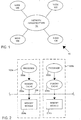
- FIG. 1 illustrates a computer network 10 having a network infrastructure 12 (NI).
- NI network infrastructure
- network nodes 100, 102, 104, and 106 are shown coupled to network infrastructure 12.
- nodes 100-106 may communicate among one another to share programs, data, and the like.
- the number of nodes provided per network 10 may vary depending on needs, and may include any arbitrary number of nodes.
- each network node there exists a memory module whose memory blocks may be accessed by other network nodes.
- each memory block in the network has an unique address that allows it to be uniquely addressed.
- the union of all memory blocks in the nodes of network 10 comprises the distributed shared memory (DSM). It should be noted, however, that although the memory blocks of the DSM may be accessed by any network node, a given memory block is typically associated with some home node in network 10.
- network infrastructure 12 may have any configuration and may be implemented by any protocol. Generally, network infrastructure 12 possesses the ability to correctly deliver a message from one node to another according to the destination address associated with that message.
- One exemplar network infrastructure is Sequent Numa-Q, available from Sequent Computer Systems, Inc. of Beaverton, OR.
- Each of network nodes 100-106 may be as simple as a computer having a single processor that is coupled to its own memory module via a memory cache.
- a network node may also be as complicated as a complete bus-based multi-processor system or even a multi-processor network.
- a node may include multiple processors, each of which is coupled to its own memory module and memory cache, as well as to the memory distributed among other nodes in the network .
- the invention will be described herein with reference to a node having a single processor. It should be apparent to those skilled in the art given this disclosure that the principles and techniques disclosed herein are readily extendible to nodes having multiple processors.
- FIG. 2 is a schematic of a computer network, including exemplar nodes 100a and 100b, for implementing one version of the prior art bus-based protocol.
- processor 200a is coupled to a memory module 204a, e.g., a dynamic random access memory module, via a memory cache 202a, which is typically implemented using some type of fast memory, e.g., static random access memory (SRAM).
- SRAM static random access memory
- Memory module 204a may divided into memory blocks, and memory cache 202a serves to expedite access to the memory blocks of memory module 204a by holding a copy of the requested memory block, either from its own node or another node in the network (such as node 100b), in its fast memory circuits.
- node 100a may communicate with node 100b as well as other nodes in the network via a bus-based network infrastructure, e.g., bus 206, to gain access to the distributed shared memory (DSM), which is distributed in the nodes of the network.
- DSM distributed shared memory
- a memory request by a given node is typically broadcasted on the common bus to other nodes so that the request may be seen by all other nodes in the network.
- processor 200a of Fig. 2 needs to access a memory block residing in another memory module of another network node, it typically broadcasts on the common bus its memory access request. All the nodes on a network would receive the same request, and the node whose memory address ranges match the memory address provided in the memory access request then responds.
- a bus-based approach requires the provision of an arbiter circuit, i.e., the mechanism to enforce a natural ordering of transactions by the various nodes of the computer network.
- the arbiter circuit needs to ensure that memory access requests from various network nodes are properly ordered to avoid race conditions.
- the use of arbiter circuits and an arbitration scheme represents an additional layer of complexity, thereby adding to the expenses in the implementation and maintenance of computer networks.
- the large number of parallel messages that need to be sent in a bus-based system from the requesting node to all the nodes in a network represent an extra burden on the bus's bandwidth. This is because, as mentioned earlier, the requesting node must poll every node in the network and require each node to analyze the request to either ignore the request, or to respond. The extra work required of the other nodes in the network represents extra delay and additional processing that the network nodes must perform.
- Fig. 3A illustrates, for discussion purposes, a computer network node 100 for implementing the directory protocol.
- a directory 210 which may be implemented as a data structure in memory- and contains directory entries, each of which corresponds to a unique memory block of the memory module in node 100.
- directory 210 there is shown in directory 210 a directory entry 212, which corresponds to a memory block 208 in a memory module 204.
- a directory containing directory entries for the memory blocks of its memory module.
- the union of all directory entries in a given node represents the directory for that node.
- a network interface 206 representing the circuit for connecting a node to its outside world, e.g., to the network infrastructure.
- each node in the network e.g., each of nodes 100-106, must know whether it has an exclusive copy of a block of memory (a modifiable or M-copy), a shared, read-only copy (a S-copy), or it does not have a copy of that memory block (an invalid or I-copy).
- M-copy a modifiable or M-copy
- S-copy a shared, read-only copy
- I-copy an invalid or I-copy
- nodes may possess shared copies (S-copies).
- a node having a S-copy essentially has a read-only copy, i.e., it cannot modify the memory block's contents.
- S-copies of a memory block may exist contemporaneous with I-copies of the same memory block in a network. S-copies of a memory block cannot, however, coexist with any M-copy of the same memory block.
- a node is said to have a valid copy of a memory block when it has either a S-copy or an M copy of said memory block.
- a node may request to cache an exclusive copy (M-copy) by issuing an RTO request, where RTO represents "read-to-own.”
- RTO represents "read-to-own.”
- a node may issue an RTS request to request to cache a shared copy of a memory block, where RTS represents "read-to-share.”
- a node may also request to write back the exclusive M-copy of a memory block by issuing a WB request, where WB stands for write-back.
- every node in the computer network knows which kind of copy of memory block 208 it currently possesses.
- this knowledge regarding memory block 208 is distributed among the nodes of the network.
- the same knowledge regarding memory block 208 is also centralized at the home node of memory block 208, i.e., in directory entry 212 of directory 210.
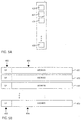
- a directory entry 212 may include, as shown in Fig. 3B, directory states 220-226, representing the copies of memory block 208 that exist in respective nodes 100-106.
- node 100 currently has an exclusive M-copy of memory block 208 (shown by M state 220), and all other nodes 102, 104, and 106 of the computer network have invalid I-copies of memory block 208 (shown by I states 222, 224, and 226).
- node 100 If the current state of memory block 208 is as shown in Fig. 3B, for example, and node 104 subsequently requests an exclusive M-copy of memory block 208, the request will be sent by network infrastructure 12 to network interface 206 of home node 100 (see Fig. 3A).
- node 100 When node 100 receives the RTO request from node 104, it consults its directory 210 and determines from directory entry 212 (whose states are shown in Fig. 3B) that home node 100 currently has the exclusive M-copy of memory block 208. Since home node 100 already has the only valid copy of memory block 208 in the network, home node 100 may immediately send a copy of memory block 208 to requesting node 104 and updates its directory entry 212 to correspond to that shown in Fig.
- home node 100 may update its own directory entry 212 to reflect the new state of memory block 208 at node 104.
- node 102 receives a copy of memory block 208, its state in directory entry 212 is updated from an I-copy to a S-copy (state 242).
- a limited directory scheme has been proposed by Kumar et. al. in the article entitled “Efficient and Scalable Cache Coherence Schemes for shared Memory Hypercube Multiprocessors" of the Proc. of Supercomputing 94, IEEE Comput. Soc. Press., 1994 pages 498-507.
- the scheme is a hybrid between directory-type and buffer-type schemes.
- the directory entry at the home node consists of just the state of a memory block. No pointers or tit vectors are maintained to keep the identity of the nodes with a copy of the blocks.
- the scheme has a reduced memory overhead compared to full directory schemes. However it still requires more memory overhead than a directory-less scheme.
- the ZPRB scheme implements snooping on point-to-point networks. This is done using an embedded ring to send some of the control messages, whereas the data messages still use the shortest path routing.
- the invalidation messages for a shared block are sent over the ring embedded in the network which is snooped by all the nodes on the ring. Dirty blocks are located by sending search messages over the ring.
- the interconnection used is a hypercube network and a ring is embedded in this network using a binary coding scheme called reflected gray code. Therefore, to support snooping on the embedded ring, with each input link, an extra message buffer is included in the communications controller.
- the present directory-less invention does not require the implementation and maintenance of node directories in the network nodes.
- the elimination of a centralized directory at each node advantageously reduces the memory overhead as well as the complexities involved in the directory protocol.
- Network interface 406 represents the circuit that allows node 100 to communicate with the network infrastructure, such as network infrastructure 12 of Fig. 1.
- Memory module 404 typically has an address range that is different from the address ranges associated with other memory modules in the network. The union of all memory modules 404 in a network make up the distributed shared memory (DSM).
- DSM distributed shared memory
- Memory module 404 further contains all the memory blocks of a node. When the network is quiescent, every memory block has a home node.
- node 100 can be as simple as a single processor having a cache or as complicated as a complete bus-based multiprocessor system.
- a pending flag structure 410 is coupled to network interface 406.
- Pending flag structure 410 represents the memory structure for storing the flag that signifies whether a particular memory block, e.g., memory block 408, is currently being accessed by the network node and should not be read or written to by another node.
- the pending flag is set, access to the associated memory block is prohibited to other network nodes.
- the pending flag is reset, the associated memory block is available for servicing the next transaction that requests it.
- each memory block has an associated pending flag in pending flag structure 410.
- each pending structure entry 430 in pending flag structure 410 is implemented by a valid flag field 432 and an address field 434.
- address field 434 of pending structure entry 430 When a memory block is "pending,” its address is entered into address field 434 of pending structure entry 430 and the valid flag in valid flag field 432 is set.
- the number of pending structure entries 430 in pending flag structure 410 may be smaller than the number of memory blocks in memory module 404 to reduce the memory overhead.
- 5B is advantageous for network nodes that have a relatively large memory module 404 since only a small number of memory blocks is typically cached at any given time and the number of pending structure entries 430 may be kept relatively small.
- the number of pending structure entries 430 may vary greatly from system to system, depending on the number of memory blocks expected to be cached at any given point in time (which number may be statistically determined for a particular network).
- Fig. 6 there are shown in rows A-H the states for memory block 408 of node 100 of Fig. 4 in the four nodes of the network. It should be borne in mind that although a single memory block 408 is discussed in detail herein to simplify the illustration, caching is typically performed on a plurality of memory blocks It should also be borne in mind that the number of nodes in a network may be varied according to needs. Further, the matrix of Fig. 6 is shown herein for discussion purposes only. In the directory-less protocol, it is not necessary to create and maintain a centralized matrix in computer memory.
- Transaction #1 (Row A to row B of Fig. 6) :
- node 104 now desires an exclusive M-copy of memory block 408, which, as shown in row A, currently resides at its home node 100.
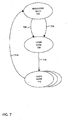
- node 104 represents the requesting node 702
- node 100 represents the home node for memory block 408, which is shown in Fig. 7 as home node 708.
- Slave node 712 represents the node where the copy of memory block 408 currently resides.
- slave node 712 happens to be the same node as the home node, i.e., node 100.
- the RTO request from node 104 (requesting node 702 in this first transaction) is forwarded to home node 100 (node 708) via path 704.
- the forwarding of the RTO transaction from the requesting node to the home node is typically handled by network infrastructure 12 utilizing the address provided with the RTO request.
- the network infrastructure 12 knows where the home node for a particular memory block is by, for example, mapping its address to the address ranges of the various nodes.
- home node 100 receives the RTO message, it sets the pending flag associated with the requested memory block 408. Further, it knows that it has an exclusive M-copy of memory block 408, and can therefore infer that all other nodes must have invalid copies of memory block 408. Since it is also the node at which the copy resides (slave node 712), node 100 may be thought of in Fig. 7 as encompassing both home node 708 and slave node 712.
- Node 100 (home node 708/slave node 712), then sends a copy of requested memory block 408 via path 714 to requesting node 104 (node 702).
- requesting node 104 (node 702) then updates its copy to an exclusive M-copy and sends a confirmation message via path 706 to home node 100 (node 708).
- the receipt of the confirmation message by home node 100 permits the pending flag associated with memory block 408 to be reset, thereby allowing subsequent transactions involving memory block 408 to be serviced.
- the use of the pending flag eliminates the requirement of a natural ordering mechanism, since transactions can be queued by the receiving home node in the order in which they are received and serviced in that order whenever the pending flag becomes reset.
- the number of messages sent in the network is advantageously the same for transaction #1 in the directory-less protocol as in the implementation involving the directory protocol, i.e., there is no performance penalty involved in employing the directory-less protocol for transaction #1.
- the directory as well as its attendant complexities and memory/transaction overhead is not required in the inventive directory-less protocol.
- the requesting node 702 When the requesting node 702 (node 102 in transaction #2) receives a copy of memory block 408, it internally notes that it now has an exclusive M-copy (row D, column 102) and acknowledges via path 706.
- home node 100 When home node 100 (node 708) receives the acknowledgment message from the requesting node via path 706, it updates its copy, if necessary (it turns out to be unnecessary in this case), and resets the pending flag associated with memory block 408 so that other transactions involving memory block 408 may be serviced.
- Transaction #3 (Row D to Row A) : In transaction #3, node 102, which had an exclusive M-copy, requests to write back the content of memory block 408 back to home node 100.
- a node may want to write back a memory block it earlier cached for a variety of reasons, e.g., it wants to cache another memory block and does not have room in its memory cache.
- requesting node 102 node 702
- the network infrastructure then routes this request to the home node of memory block 408, i.e., node 100 via path 704.
- home node 100 (node 708) sets the pending flag associated with memory block 408.
- home node 100 Although home node 100 only has an invalid I-copy of memory block 408 (as shown in row D, column 100 of Fig. 6), it can infer that since node 102 requests a write-back, node 102 must have the exclusive M-copy of memory block 408. Consequently, home node 100 (node 708) sends a message via path 710 to slave node 712 to request it to write back. Slave node 712 represents the node currently having the copy of memory block 408, which happens to be the same node as requesting node 102 in this write back transaction. Consequently, requesting node 702 and slave node 712 may be treated as a single entity in this transaction.
- Node 102 (slave node 712/requesting node 702) then sends a copy of memory block 408 via path 706 to home node 100 (node 708) where the content of memory block 408 is written into home node 100 (node 708). Once the content of memory block 408 is written back, the pending flag associated with memory block 408 may then be reset.
- Node 104 wants a shared, read-only copy of memory block 408 and issues an RTS (read-to-share) request to the network infrastructure to request a read-only copy of memory block 408.
- Network infrastructure 12 forwards the RTS request via path 704 from requesting node 104 (node 702), tohome node 100 ( node 708), which causes the pending flag associated with memory block 408 to be set.
- nodes 100, 102, and 104 have shared, read-only S-copies while node 106 has an invalid I-copy of memory block 408. Subsequently, node 106 (node 702 in Fig. 6) desires an exclusive M-copy and issues an RTO transaction to the network infrastructure 12. Network infrastructure 12 forwards the RTO request to the home node of memory block 408, i.e., node 100, via path 704, which causes the pending flag associated with memory block 408 to be set.
- home node 100 Since home node 100 (node 708) only knows that it has a shared, read-only S-copy (row G, column 100), and there is no centralized directory in the home node in accordance with the directory-less protocol for it to consult, home node 100 (node 708) must send messages to other nodes in the network to request them to downgrade their copies of memory block 408 to invalid I-copies if they previously had shared, read-only S-copies. Again, the number of messages that must be sent via path 710 to other nodes in the network is Total - 2 (since there is no need for home node 100 to send a message to itself or to the requesting node).
- home node 100 (home node 708/slave node 712) also sends to requesting node 106 (node 702) information regarding the number of slave nodes in the network to whom it has sent the request to downgrade. This information is kept by requesting node 106 (node 702).
- each slave node to whom home node 708 sent the message (via path 710) to downgrade itself also reports to requesting node 106 (node 702) via path 714 to acknowledge that it either has downgraded its copy from a shared S-copy to an invalid I-copy, or that it already has an invalid I-copy and does not need to downgrade further.
- Requesting node 106 (node 702) then counts the number of acknowledgments to ensure that all slave nodes in the network have acknowledged.
- the directory-less protocol has an advantage over the bus-based broadcast method since, in the worst case, the number of messages that need to be sent to the slave nodes is two less than the total number of nodes in the network.
- messages in the directory-less protocol when required to be sent from a home node to slave node(s), may be sent one at a time to specific slave nodes. This embodiment is in contrast to prior art snoop-type protocols or bus-based protocols wherein a broadcast from the home node to all other nodes via the common network infrastructure is typically performed.
Landscapes
- Engineering & Computer Science (AREA)
- Theoretical Computer Science (AREA)
- Physics & Mathematics (AREA)
- General Engineering & Computer Science (AREA)
- General Physics & Mathematics (AREA)
- Mathematical Physics (AREA)
- Memory System Of A Hierarchy Structure (AREA)
- Computer And Data Communications (AREA)
- Memory System (AREA)
Claims (15)
- Verfahren, welches in einem Computernetzwerk (10) ausgeführt wird, das eine erste Mehrzahl von Knoten hat, die mit einer gemeinsamen Netzwerk-Infrastruktur (12) verbunden sind, sowie einen verteilten, gemeinsam verwendeten Speicher hat, der über die erste Vielzahl von Knoten (100-106; 702, 708, 712) hinweg verteilt ist, um eine erste Speicherzugriffsanforderung durch einen ersten Knoten (702) des Computernetzwerks zu bearbeiten, wobei das Computernetzwerk keinen natürlichen Ordnungsmechanismus und keine natürliche, allgemeine Aussendung hat, die sich auf einen Speicherblock (408) bezieht, der einen Heimatknoten (708) hat, welcher sich von dem ersten Knoten in dem Computernetzwerk unterscheidet, wobei der Heimatknoten ein Protokoll ohne Verzeichnis unterstützt, und zwar durch Nachführen nur des Zustandes des Speicherblockes an dem Heimatknoten, und kein zentrales Verzeichnis für das Nachführen von Zuständen des Speicherblokkes in Knoten der Mehrzahl von Knoten, außer dem Heimatknoten, hat, wobei das Verfahren aufweist:Empfangen (704) der ersten Speicherzugriffsanforderung für den Speicherblock an dem Heimatknoten von dem ersten Knoten über die gemeinsame Netzwerk-Infrastruktur (12),Markieren eines Zustandes des Speicherblockes als anhängig, um zu kennzeichnen, daß ein Zugriff auf den Speicherblock in Bearbeitung ist, wobei dieser Zustand, während er anhängig ist, den Heimatknoten unfähig macht, eine andere Speicherzugriffsanforderung zu bearbeiten, die sich auf diesen Speicherblock bezieht,Senden (710), wenn der Heimatknoten keine erste gültige Kopie des Speicherblockes hat, einer Anforderung von dem Heimatknoten an eine zweite Mehrzahl von Knoten in dem Computernetzwerk, um anzufordern, daß ein zweiter Knoten in dem Computernetzwerk eine erste gültige Kopie des Speicherblockes an den ersten Knoten sendet, wobei die zweite Mehrzahl von Knoten die erste Mehrzahl von Knoten mit Ausnahme des ersten Knotens und des Heimatknotens repräsentiert, wobei die erste gültige Kopie des Speicherblockes eine gültige Kopie repräsentiert, die in der Lage ist, die erste Speicherzugriffsanforderung zu bedienen bzw. zu bearbeiten,nach Empfang einer Bestätigung von dem ersten Knoten, wodurch bestätigt wird, daß die erste Speicherzugriffsanforderung erfüllt worden ist, Markieren des Zustandes des Speicherblockes als nicht anhängig, um zu kennzeichnen, daß keine Zugriffsanforderung, die sich auf den Speicherblock bezieht, in Bearbeitung ist, um dadurch zu ermöglichen, daß andere Speicherzugriffsanforderungen, die sich auf den Speicherblock beziehen, bearbeitet werden.
- Verfahren nach Anspruch 1, welches den Schritt aufweist, daß, nachdem der zweite Knoten die erste gültige Kopie des Speicherblockes an den ersten Knoten gesendet hat, die erste gültige Kopie des Speicherblockes auf dem zweiten Knoten von einer Kopie eines ersten Typs zu einer Kopie eines zweiten Typs herabgestuft wird, welcher sich von dem ersten Typ unterscheidet.
- Verfahren nach Anspruch 2, wobei die erste Speicherzugriffsanforderung eine Anforderung nach einer exklusiven M-Kopie des Speicherblockes ist, wobei die Kopie des ersten Typs eine exklusive M-Kopie repräsentiert und die Kopie des zweiten Typs eine ungültige I-Kopie repräsentiert.
- Verfahren nach Anspruch 1, welches weiterhin den Schritt aufweist, daß die erste gültige Kopie des Speicherblockes von dem Heimatknoten an den ersten Knoten gesendet wird, wenn der Heimatknoten die erste gültige Kopie des Speicherblockes besitzt.
- Verfahren nach Anspruch 4, wobei die erste Speicherzugriffsanforderung eine Anforderung nach einer geteilten bzw. gemeinsam verwendeten S-Kopie des Speicherblockes repräsentiert und die erste gültige Kopie des Speicherblockes eine geteilte S-Kopie des Speicherblockes repräsentiert.
- Verfahren nach Anspruch 4, wobei die erste Speicherzugriffsanforderung eine Anforderung nach einer exklusiven M-Kopie des Speicherblockes repräsentiert und die erste gültige Kopie des Speicherblockes eine M-Kopie des Speicherblockes repräsentiert, wobei das Verfahren weiterhin den Schritt aufweist, daß, nachdem der Heimatknoten die erste gültige Kopie des Speicherblockes von dem Heimatknoten an den ersten Knoten gesendet hat, die erste gültige Kopie des Speicherblockes an dem Heimatknoten von einer M-Kopie des Speicherblockes zu einer ungültigen I-Kopie des Speicherblockes herabgestuft wird.
- Vorrichtung, um einem ersten Knoten (100) eines Computernetzwerkes (10) einen Zugriff auf eine Kopie eines Speicherblockes (408) eines verteilten, gemeinsam verwendeten Speichers des Computernetzwerkes zu gewähren, welches eine erste Mehrzahl von Knoten (100-106; 702, 708, 712) hat, wobei der Speicherblock einen Heimatknoten (708) hat, der sich von dem ersten Knoten (702) in dem Computernetzwerk unterscheidet, wobei das Computernetzwerk keinen natürlichen Ordnungsmechanismus und keine natürliche, allgemeine Aussendung hat, wobei der Heimatknoten ein verzeichnisfreies Protokoll unterstützt, indem er so betreibbar ist, daß er den Zustand des Speicherblockes an dem Heimatknoten verfolgt, jedoch kein zentrales Verzeichnis für das Verfolgen von Zuständen des Speicherblockes in Knoten der ersten Mehrzahl von Knoten mit Ausnahme des Heimatknotens hat, wobei die Vorrichtung aufweist:eine Einrichtung (704), um über eine gemeinsame Netzwerk-Infrastruktur (12) des Computemetzwerkes an dem Heimatknoten von dem ersten Knoten eine erste Speicherzugriffsanforderung nach dem Speicherblock zu erhalten, undEinrichtungen, um einen Zustand des Speicherblockes als anhängig herzustellen, um anzuzeigen, daß ein Zugriff auf diesen Speicherblock in Bearbeitung ist, wobei der Zustand während des Anhängigseins den Heimatknoten unfähig macht, andere Speicherzugriffsanforderungen zu bearbeiten, die sich auf den Speicherblock beziehen, undEinrichtungen, um eine Anforderung von dem Heimatknoten an eine zweite Mehrzahl von Knoten in dem Computernetzwerk zu senden (710), wenn der Heimatknoten keine erste gültige Kopie des Speicherblockes hat, um anzufordern, daß ein zweiter Knoten in dem Computernetzwerk die erste gültige Kopie des Speicherblockes an den ersten Knoten sendet, wobei die zweite Mehrzahl von Knoten die erste Mehrzahl von Knoten repräsentiert mit Ausnahme des ersten Knotens und des Heimatknotens, wobei die erste gültige Kopie des Speicherblockes eine zweite gültige Kopie anfordert, die in der Lage ist, die erste Speicherzugriffsanforderung zu bearbeiten, undEinrichtungen, um nach dem Empfang einer Bestätigung von dem ersten Knoten, welche bestätigt, daß die erste Speicherzugriffsanforderung erfüllt worden ist, den Status des Speicherblokkes als nicht mehr anhängig zu markieren, um anzuzeigen, daß keine Zugriffsanforderung, die sich auf den Speicherblock bezieht, in Bearbeitung ist, um dadurch zu erlauben, daß die anderen Speicherzugriffsanforderungen, welche sich auf den Speicherblock beziehen, bearbeitet werden.
- Vorrichtung nach Anspruch 7, welche weiterhin eine Struktur einer Anhängigkeitsanzeige (Flagge) aufweist, welche Struktureinträge für die Anhängigkeit hat, um den Zustand zu bewahren, wobei die Struktur für die Anhängigkeitsanzeige in einem Computerspeicher implementiert ist, der zu dem Heimatknoten gehört.
- Vorrichtung nach Anspruch 8, wobei die Anzahl der Einträge der Anhängigkeitsstruktur in der Struktur der Anhängigkeitsanzeige gleich der Anzahl von Speicherblöcken in einem Speichermodul an dem Heimatknoten ist, wobei jeder der Einträge der Anhängigkeitsstruktur ein einzelnes Bit aufweist.
- Vorrichtung nach Anspruch 8, wobei die Anzahl der Einträge der Anhängigkeitsstruktur in der Struktur der Anhängigkeitsanzeige geringer ist als die Anzahl von Speicherblöcken in einem Speichermodul an dem Heimatknoten, wobei jeder der Einträge der Anhängigkeitsstruktur ein Adreßfeld und ein Feld einer Gültigkeitsanzeige aufweist.
- Vorrichtung nach Anspruch 8, wobei die zweite gültige Kopie des Speicherblockes in dem zweiten Knoten, nachdem der zweite Knoten die zweite gültige Kopie des Speicherblockes von einem Speichercache des zweiten Knotens an den ersten Knoten gesendet hat, von einer Kopie eines ersten Typs zu einer Kopie eines zweiten Typs herabgestuft wird, der sich von dem ersten Typ unterscheidet.
- Vorrichtung nach Anspruch 11, wobei die erste Speicherzugriffsanforderung eine Anforderung nach einer exklusiven M-Kopie des Speicherblockes ist, wobei die Kopie des ersten Typs eine exklusive M-Kopie repräsentiert, und die Kopie des zweiten Typs eine ungültige I-Kopie repräsentiert.
- Vorrichtung nach Anspruch 8, welcher weiterhin eine Einrichtung aufweist, um die erste gültige Kopie des Speicherblockes von dem Heimatknoten an den ersten Knoten zu senden, wenn der Heimatknoten die erste gültige Kopie des Speicherblockes besitzt.
- Vorrichtung nach Anspruch 13, wobei die Speicherzugriffsanforderung eine Anforderung nach einer geteilten bzw. gemeinsam verwendeten S-Kopie des Speicherblockes repräsentiert und die erste gültige Kopie des Speicherblockes eine geteilte bzw. gemeinsam verwendete S-Kopie des Speicherblockes repräsentiert.
- Vorrichtung nach Anspruch 14, wobei die Speicherzugriffsanforderung eine Anforderung nach einer exklusiven M-Kopie des Speicherblockes repräsentiert und die erste gültige Kopie des Speicherblockes eine M-Kopie des Speicherblockes repräsentiert, wobei das Verfahren weiterhin den Schritt aufweist, daß, nachdem der Heimatknoten die erste gültige Kopie des Speicherblockes von dem Heimatknoten an den ersten Knoten gesendet hat, die erste gültige Kopie des Speicherblockes an dem Heimatknoten von einer M-Kopie des Speicherblockes zu einer ungültigen I-Kopie des Speicherblockes herabgestuft wird.
Applications Claiming Priority (2)
| Application Number | Priority Date | Filing Date | Title |
|---|---|---|---|
| US08/671,303 US5873117A (en) | 1996-07-01 | 1996-07-01 | Method and apparatus for a directory-less memory access protocol in a distributed shared memory computer system |
| US671303 | 1996-07-01 |
Publications (3)
| Publication Number | Publication Date |
|---|---|
| EP0817064A2 EP0817064A2 (de) | 1998-01-07 |
| EP0817064A3 EP0817064A3 (de) | 1998-02-04 |
| EP0817064B1 true EP0817064B1 (de) | 2003-05-07 |
Family
ID=24693946
Family Applications (1)
| Application Number | Title | Priority Date | Filing Date |
|---|---|---|---|
| EP97304515A Expired - Lifetime EP0817064B1 (de) | 1996-07-01 | 1997-06-25 | Verfahren und Vorrichtung für ein verzeichnisloses Speicherzugriffsprotokoll in einem Rechnersystem mit verteiltem gemeinsamen Speicher |
Country Status (4)
| Country | Link |
|---|---|
| US (3) | US5873117A (de) |
| EP (1) | EP0817064B1 (de) |
| JP (1) | JPH10134009A (de) |
| DE (1) | DE69721641T2 (de) |
Families Citing this family (17)
| Publication number | Priority date | Publication date | Assignee | Title |
|---|---|---|---|---|
| US5873117A (en) * | 1996-07-01 | 1999-02-16 | Sun Microsystems, Inc. | Method and apparatus for a directory-less memory access protocol in a distributed shared memory computer system |
| US6526481B1 (en) | 1998-12-17 | 2003-02-25 | Massachusetts Institute Of Technology | Adaptive cache coherence protocols |
| US6636950B1 (en) * | 1998-12-17 | 2003-10-21 | Massachusetts Institute Of Technology | Computer architecture for shared memory access |
| US6823377B1 (en) * | 2000-01-28 | 2004-11-23 | International Business Machines Corporation | Arrangements and methods for latency-sensitive hashing for collaborative web caching |
| US20020188697A1 (en) * | 2001-06-08 | 2002-12-12 | O'connor Michael A. | A method of allocating storage in a storage area network |
| US6973543B1 (en) | 2001-07-12 | 2005-12-06 | Advanced Micro Devices, Inc. | Partial directory cache for reducing probe traffic in multiprocessor systems |
| US20030055862A1 (en) * | 2001-09-18 | 2003-03-20 | Sun Microsystems, Inc. | Methods, systems, and articles of manufacture for managing systems using operation objects |
| US20040019640A1 (en) * | 2002-07-25 | 2004-01-29 | Bartram Linda Ruth | System and method for distributing shared storage for collaboration across multiple devices |
| US7096323B1 (en) | 2002-09-27 | 2006-08-22 | Advanced Micro Devices, Inc. | Computer system with processor cache that stores remote cache presence information |
| US6868485B1 (en) | 2002-09-27 | 2005-03-15 | Advanced Micro Devices, Inc. | Computer system with integrated directory and processor cache |
| US8185602B2 (en) | 2002-11-05 | 2012-05-22 | Newisys, Inc. | Transaction processing using multiple protocol engines in systems having multiple multi-processor clusters |
| US20050273571A1 (en) * | 2004-06-02 | 2005-12-08 | Lyon Thomas L | Distributed virtual multiprocessor |
| USD525626S1 (en) * | 2004-09-30 | 2006-07-25 | Brother Industries, Ltd. | Facsimile machine |
| US7865570B2 (en) * | 2005-08-30 | 2011-01-04 | Illinois Institute Of Technology | Memory server |
| US9195408B2 (en) * | 2009-10-30 | 2015-11-24 | Cleversafe, Inc. | Highly autonomous dispersed storage system retrieval method |
| US8464133B2 (en) * | 2009-10-30 | 2013-06-11 | Cleversafe, Inc. | Media content distribution in a social network utilizing dispersed storage |
| US11163688B2 (en) | 2019-09-24 | 2021-11-02 | Advanced Micro Devices, Inc. | System probe aware last level cache insertion bypassing |
Family Cites Families (14)
| Publication number | Priority date | Publication date | Assignee | Title |
|---|---|---|---|---|
| US5072369A (en) * | 1989-04-07 | 1991-12-10 | Tektronix, Inc. | Interface between buses attached with cached modules providing address space mapped cache coherent memory access with SNOOP hit memory updates |
| JPH05210640A (ja) * | 1992-01-31 | 1993-08-20 | Hitachi Ltd | マルチプロセッサシステム |
| US5394555A (en) * | 1992-12-23 | 1995-02-28 | Bull Hn Information Systems Inc. | Multi-node cluster computer system incorporating an external coherency unit at each node to insure integrity of information stored in a shared, distributed memory |
| JP2809961B2 (ja) * | 1993-03-02 | 1998-10-15 | 株式会社東芝 | マルチプロセッサ |
| US5535116A (en) * | 1993-05-18 | 1996-07-09 | Stanford University | Flat cache-only multi-processor architectures |
| CA2097540C (en) * | 1993-06-01 | 1998-05-12 | William G. O'farrell | Accessing remote data objects in a distributed memory environment |
| FR2707776B1 (fr) * | 1993-07-15 | 1995-08-18 | Bull Sa | Procédé de gestion de mémoires d'un système informatique, système informatique mémoire et support d'enregistrement mettant en Óoeuvre le procédé. |
| US6049889A (en) * | 1995-06-07 | 2000-04-11 | Digital Equipment Corporation | High performance recoverable communication method and apparatus for write-only networks |
| US5893144A (en) * | 1995-12-22 | 1999-04-06 | Sun Microsystems, Inc. | Hybrid NUMA COMA caching system and methods for selecting between the caching modes |
| US5822763A (en) * | 1996-04-19 | 1998-10-13 | Ibm Corporation | Cache coherence protocol for reducing the effects of false sharing in non-bus-based shared-memory multiprocessors |
| US5983326A (en) * | 1996-07-01 | 1999-11-09 | Sun Microsystems, Inc. | Multiprocessing system including an enhanced blocking mechanism for read-to-share-transactions in a NUMA mode |
| US5873117A (en) * | 1996-07-01 | 1999-02-16 | Sun Microsystems, Inc. | Method and apparatus for a directory-less memory access protocol in a distributed shared memory computer system |
| JPH10154100A (ja) * | 1996-11-25 | 1998-06-09 | Canon Inc | 情報処理システム及び装置及びその制御方法 |
| US6073216A (en) * | 1997-11-25 | 2000-06-06 | Intel Corporation | System and method for reliable system shutdown after coherency corruption |
-
1996
- 1996-07-01 US US08/671,303 patent/US5873117A/en not_active Expired - Lifetime
-
1997
- 1997-06-25 DE DE69721641T patent/DE69721641T2/de not_active Expired - Fee Related
- 1997-06-25 EP EP97304515A patent/EP0817064B1/de not_active Expired - Lifetime
- 1997-07-01 JP JP9188917A patent/JPH10134009A/ja active Pending
-
1999
- 1999-01-25 US US09/236,679 patent/US6377980B1/en not_active Expired - Lifetime
-
2000
- 2000-03-20 US US09/531,038 patent/US6574659B1/en not_active Expired - Lifetime
Also Published As
| Publication number | Publication date |
|---|---|
| DE69721641D1 (de) | 2003-06-12 |
| US6574659B1 (en) | 2003-06-03 |
| US6377980B1 (en) | 2002-04-23 |
| EP0817064A2 (de) | 1998-01-07 |
| JPH10134009A (ja) | 1998-05-22 |
| EP0817064A3 (de) | 1998-02-04 |
| US5873117A (en) | 1999-02-16 |
| DE69721641T2 (de) | 2004-02-19 |
Similar Documents
| Publication | Publication Date | Title |
|---|---|---|
| EP0818732B1 (de) | Hybrides Speicherzugangsprotokoll in einem Datenverarbeitungssystem mit verteiltem, gemeinsamem Speicher | |
| EP0817064B1 (de) | Verfahren und Vorrichtung für ein verzeichnisloses Speicherzugriffsprotokoll in einem Rechnersystem mit verteiltem gemeinsamen Speicher | |
| US6615319B2 (en) | Distributed mechanism for resolving cache coherence conflicts in a multi-node computer architecture | |
| JP3644587B2 (ja) | 共用介入サポートを有する不均等メモリ・アクセス(numa)・データ処理システム | |
| US7032078B2 (en) | Shared memory multiprocessing system employing mixed broadcast snooping and directory based coherency protocols | |
| US6631448B2 (en) | Cache coherence unit for interconnecting multiprocessor nodes having pipelined snoopy protocol | |
| JP3661761B2 (ja) | 共用介入サポートを有する不均等メモリ・アクセス(numa)データ処理システム | |
| US5680576A (en) | Directory-based coherence protocol allowing efficient dropping of clean-exclusive data | |
| JPH11134312A (ja) | 分散共有メモリ多重プロセッサシステム | |
| US5829034A (en) | Method and apparatus for a coherence transformer with limited memory for connecting computer system coherence domains | |
| US7222220B2 (en) | Multiprocessing system employing address switches to control mixed broadcast snooping and directory based coherency protocols transparent to active devices | |
| JP2000227909A (ja) | 混成不均等メモリ・ア―キテクチャ/単純キャッシュ専用メモリ・ア―キテクチャ・システム及び方法 | |
| JPH10260898A (ja) | キャッシュ整合メモリ・システムの整合サイクルの回数を低減する方法 | |
| US5860109A (en) | Methods and apparatus for a coherence transformer for connecting computer system coherence domains | |
| US20060248287A1 (en) | Methods and arrangements for reducing latency and snooping cost in non-uniform cache memory architectures | |
| US7386680B2 (en) | Apparatus and method of controlling data sharing on a shared memory computer system | |
| US20080162661A1 (en) | System and method for a 3-hop cache coherency protocol | |
| US6651157B1 (en) | Multi-processor system and method of accessing data therein | |
| EP0489583A2 (de) | Mehrprozessor-Cachespeichersteuerungsanordnung | |
| US7506108B2 (en) | Requester-generated forward for late conflicts in a cache coherency protocol | |
| JP7277075B2 (ja) | スヌープリクエストに対する応答の転送 | |
| JP7328742B2 (ja) | スヌープ要求への対応 | |
| US6636948B2 (en) | Method and system for a processor to gain assured ownership of an up-to-date copy of data | |
| KR19990019226A (ko) | 분산 공유 메모리 구조의 디렉토리 베이스 캐시 동일성 유지방법 |
Legal Events
| Date | Code | Title | Description |
|---|---|---|---|
| PUAI | Public reference made under article 153(3) epc to a published international application that has entered the european phase |
Free format text: ORIGINAL CODE: 0009012 |
|
| PUAL | Search report despatched |
Free format text: ORIGINAL CODE: 0009013 |
|
| AK | Designated contracting states |
Kind code of ref document: A2 Designated state(s): DE FR GB IT NL SE |
|
| AK | Designated contracting states |
Kind code of ref document: A3 Designated state(s): AT BE CH DE DK ES FI FR GB GR IE IT LI LU MC NL PT SE |
|
| 17P | Request for examination filed |
Effective date: 19980619 |
|
| AKX | Designation fees paid |
Free format text: DE FR GB IT NL SE |
|
| RBV | Designated contracting states (corrected) |
Designated state(s): DE FR GB IT NL SE |
|
| 17Q | First examination report despatched |
Effective date: 20000802 |
|
| GRAH | Despatch of communication of intention to grant a patent |
Free format text: ORIGINAL CODE: EPIDOS IGRA |
|
| GRAH | Despatch of communication of intention to grant a patent |
Free format text: ORIGINAL CODE: EPIDOS IGRA |
|
| GRAA | (expected) grant |
Free format text: ORIGINAL CODE: 0009210 |
|
| RAP1 | Party data changed (applicant data changed or rights of an application transferred) |
Owner name: SUN MICROSYSTEMS, INC. |
|
| AK | Designated contracting states |
Designated state(s): DE FR GB IT NL SE |
|
| PG25 | Lapsed in a contracting state [announced via postgrant information from national office to epo] |
Ref country code: NL Free format text: LAPSE BECAUSE OF FAILURE TO SUBMIT A TRANSLATION OF THE DESCRIPTION OR TO PAY THE FEE WITHIN THE PRESCRIBED TIME-LIMIT Effective date: 20030507 Ref country code: IT Free format text: LAPSE BECAUSE OF FAILURE TO SUBMIT A TRANSLATION OF THE DESCRIPTION OR TO PAY THE FEE WITHIN THE PRESCRIBED TIME-LIMIT;WARNING: LAPSES OF ITALIAN PATENTS WITH EFFECTIVE DATE BEFORE 2007 MAY HAVE OCCURRED AT ANY TIME BEFORE 2007. THE CORRECT EFFECTIVE DATE MAY BE DIFFERENT FROM THE ONE RECORDED. Effective date: 20030507 |
|
| REG | Reference to a national code |
Ref country code: GB Ref legal event code: FG4D |
|
| REF | Corresponds to: |
Ref document number: 69721641 Country of ref document: DE Date of ref document: 20030612 Kind code of ref document: P |
|
| PGFP | Annual fee paid to national office [announced via postgrant information from national office to epo] |
Ref country code: FR Payment date: 20030626 Year of fee payment: 7 |
|
| PG25 | Lapsed in a contracting state [announced via postgrant information from national office to epo] |
Ref country code: SE Free format text: LAPSE BECAUSE OF FAILURE TO SUBMIT A TRANSLATION OF THE DESCRIPTION OR TO PAY THE FEE WITHIN THE PRESCRIBED TIME-LIMIT Effective date: 20030807 |
|
| PGFP | Annual fee paid to national office [announced via postgrant information from national office to epo] |
Ref country code: DE Payment date: 20030822 Year of fee payment: 7 |
|
| NLV1 | Nl: lapsed or annulled due to failure to fulfill the requirements of art. 29p and 29m of the patents act | ||
| ET | Fr: translation filed | ||
| PLBE | No opposition filed within time limit |
Free format text: ORIGINAL CODE: 0009261 |
|
| STAA | Information on the status of an ep patent application or granted ep patent |
Free format text: STATUS: NO OPPOSITION FILED WITHIN TIME LIMIT |
|
| 26N | No opposition filed |
Effective date: 20040210 |
|
| PG25 | Lapsed in a contracting state [announced via postgrant information from national office to epo] |
Ref country code: DE Free format text: LAPSE BECAUSE OF NON-PAYMENT OF DUE FEES Effective date: 20050101 |
|
| PG25 | Lapsed in a contracting state [announced via postgrant information from national office to epo] |
Ref country code: FR Free format text: LAPSE BECAUSE OF NON-PAYMENT OF DUE FEES Effective date: 20050228 |
|
| REG | Reference to a national code |
Ref country code: FR Ref legal event code: ST |
|
| PGFP | Annual fee paid to national office [announced via postgrant information from national office to epo] |
Ref country code: GB Payment date: 20060621 Year of fee payment: 10 |
|
| GBPC | Gb: european patent ceased through non-payment of renewal fee |
Effective date: 20070625 |
|
| PG25 | Lapsed in a contracting state [announced via postgrant information from national office to epo] |
Ref country code: GB Free format text: LAPSE BECAUSE OF NON-PAYMENT OF DUE FEES Effective date: 20070625 |