EP0820519B1 - Synthese enzymatique de liaisons glycosidiques - Google Patents
Synthese enzymatique de liaisons glycosidiques Download PDFInfo
- Publication number
- EP0820519B1 EP0820519B1 EP96910772A EP96910772A EP0820519B1 EP 0820519 B1 EP0820519 B1 EP 0820519B1 EP 96910772 A EP96910772 A EP 96910772A EP 96910772 A EP96910772 A EP 96910772A EP 0820519 B1 EP0820519 B1 EP 0820519B1
- Authority
- EP
- European Patent Office
- Prior art keywords
- accordance
- udp
- sialic acid
- phosphate
- cmp
- Prior art date
- Legal status (The legal status is an assumption and is not a legal conclusion. Google has not performed a legal analysis and makes no representation as to the accuracy of the status listed.)
- Expired - Lifetime
Links
- 230000015572 biosynthetic process Effects 0.000 title claims description 21
- 238000003786 synthesis reaction Methods 0.000 title claims description 17
- 230000002255 enzymatic effect Effects 0.000 title description 11
- 238000000034 method Methods 0.000 claims description 93
- -1 ca++ Chemical compound 0.000 claims description 62
- 102000004190 Enzymes Human genes 0.000 claims description 61
- 108090000790 Enzymes Proteins 0.000 claims description 61
- WAEMQWOKJMHJLA-UHFFFAOYSA-N Manganese(2+) Chemical compound [Mn+2] WAEMQWOKJMHJLA-UHFFFAOYSA-N 0.000 claims description 49
- 150000001768 cations Chemical class 0.000 claims description 49
- 229910019142 PO4 Inorganic materials 0.000 claims description 47
- 239000010452 phosphate Substances 0.000 claims description 47
- 108060003306 Galactosyltransferase Proteins 0.000 claims description 46
- 102000030902 Galactosyltransferase Human genes 0.000 claims description 46
- 229910052751 metal Inorganic materials 0.000 claims description 46
- 239000002184 metal Substances 0.000 claims description 46
- 102000003838 Sialyltransferases Human genes 0.000 claims description 45
- 108090000141 Sialyltransferases Proteins 0.000 claims description 45
- SQVRNKJHWKZAKO-UHFFFAOYSA-N beta-N-Acetyl-D-neuraminic acid Natural products CC(=O)NC1C(O)CC(O)(C(O)=O)OC1C(O)C(O)CO SQVRNKJHWKZAKO-UHFFFAOYSA-N 0.000 claims description 43
- NBIIXXVUZAFLBC-UHFFFAOYSA-K phosphate Chemical compound [O-]P([O-])([O-])=O NBIIXXVUZAFLBC-UHFFFAOYSA-K 0.000 claims description 42
- 239000000758 substrate Substances 0.000 claims description 35
- 150000001875 compounds Chemical class 0.000 claims description 34
- 239000002777 nucleoside Substances 0.000 claims description 33
- SQVRNKJHWKZAKO-OQPLDHBCSA-N sialic acid Chemical compound CC(=O)N[C@@H]1[C@@H](O)C[C@@](O)(C(O)=O)OC1[C@H](O)[C@H](O)CO SQVRNKJHWKZAKO-OQPLDHBCSA-N 0.000 claims description 33
- 150000001720 carbohydrates Chemical class 0.000 claims description 32
- 108700023372 Glycosyltransferases Proteins 0.000 claims description 29
- WQZGKKKJIJFFOK-FPRJBGLDSA-N beta-D-galactose Chemical compound OC[C@H]1O[C@@H](O)[C@H](O)[C@@H](O)[C@H]1O WQZGKKKJIJFFOK-FPRJBGLDSA-N 0.000 claims description 29
- 239000012429 reaction media Substances 0.000 claims description 28
- 235000000346 sugar Nutrition 0.000 claims description 28
- 229940060155 neuac Drugs 0.000 claims description 26
- 229920001542 oligosaccharide Polymers 0.000 claims description 26
- 102000051366 Glycosyltransferases Human genes 0.000 claims description 24
- 150000002482 oligosaccharides Chemical class 0.000 claims description 24
- MSWZFWKMSRAUBD-UHFFFAOYSA-N beta-D-galactosamine Natural products NC1C(O)OC(CO)C(O)C1O MSWZFWKMSRAUBD-UHFFFAOYSA-N 0.000 claims description 23
- 235000011180 diphosphates Nutrition 0.000 claims description 23
- 108091000080 Phosphotransferase Proteins 0.000 claims description 22
- 230000003197 catalytic effect Effects 0.000 claims description 22
- 102000020233 phosphotransferase Human genes 0.000 claims description 22
- 108010019236 Fucosyltransferases Proteins 0.000 claims description 20
- 102000006471 Fucosyltransferases Human genes 0.000 claims description 20
- 102000013009 Pyruvate Kinase Human genes 0.000 claims description 20
- 108020005115 Pyruvate Kinase Proteins 0.000 claims description 20
- MSWZFWKMSRAUBD-IVMDWMLBSA-N 2-amino-2-deoxy-D-glucopyranose Chemical compound N[C@H]1C(O)O[C@H](CO)[C@@H](O)[C@@H]1O MSWZFWKMSRAUBD-IVMDWMLBSA-N 0.000 claims description 19
- FZHXIRIBWMQPQF-UHFFFAOYSA-N Glc-NH2 Natural products O=CC(N)C(O)C(O)C(O)CO FZHXIRIBWMQPQF-UHFFFAOYSA-N 0.000 claims description 19
- IERHLVCPSMICTF-XVFCMESISA-N cytidine 5'-monophosphate Chemical compound O=C1N=C(N)C=CN1[C@H]1[C@H](O)[C@H](O)[C@@H](COP(O)(O)=O)O1 IERHLVCPSMICTF-XVFCMESISA-N 0.000 claims description 19
- 125000001495 ethyl group Chemical group [H]C([H])([H])C([H])([H])* 0.000 claims description 19
- 238000002360 preparation method Methods 0.000 claims description 19
- IERHLVCPSMICTF-UHFFFAOYSA-N cytidine monophosphate Natural products O=C1N=C(N)C=CN1C1C(O)C(O)C(COP(O)(O)=O)O1 IERHLVCPSMICTF-UHFFFAOYSA-N 0.000 claims description 18
- OVRNDRQMDRJTHS-UHFFFAOYSA-N N-acelyl-D-glucosamine Natural products CC(=O)NC1C(O)OC(CO)C(O)C1O OVRNDRQMDRJTHS-UHFFFAOYSA-N 0.000 claims description 17
- MBLBDJOUHNCFQT-LXGUWJNJSA-N N-acetylglucosamine Natural products CC(=O)N[C@@H](C=O)[C@@H](O)[C@H](O)[C@H](O)CO MBLBDJOUHNCFQT-LXGUWJNJSA-N 0.000 claims description 17
- XCCTYIAWTASOJW-UHFFFAOYSA-N UDP-Glc Natural products OC1C(O)C(COP(O)(=O)OP(O)(O)=O)OC1N1C(=O)NC(=O)C=C1 XCCTYIAWTASOJW-UHFFFAOYSA-N 0.000 claims description 17
- TXCIAUNLDRJGJZ-UHFFFAOYSA-N CMP-N-acetyl neuraminic acid Natural products O1C(C(O)C(O)CO)C(NC(=O)C)C(O)CC1(C(O)=O)OP(O)(=O)OCC1C(O)C(O)C(N2C(N=C(N)C=C2)=O)O1 TXCIAUNLDRJGJZ-UHFFFAOYSA-N 0.000 claims description 15
- TXCIAUNLDRJGJZ-BILDWYJOSA-N CMP-N-acetyl-beta-neuraminic acid Chemical compound O1[C@@H]([C@H](O)[C@H](O)CO)[C@H](NC(=O)C)[C@@H](O)C[C@]1(C(O)=O)OP(O)(=O)OC[C@@H]1[C@@H](O)[C@@H](O)[C@H](N2C(N=C(N)C=C2)=O)O1 TXCIAUNLDRJGJZ-BILDWYJOSA-N 0.000 claims description 15
- 239000012528 membrane Substances 0.000 claims description 14
- 238000012546 transfer Methods 0.000 claims description 14
- 239000001226 triphosphate Substances 0.000 claims description 14
- 235000011178 triphosphate Nutrition 0.000 claims description 14
- 238000004064 recycling Methods 0.000 claims description 13
- OVRNDRQMDRJTHS-RTRLPJTCSA-N N-acetyl-D-glucosamine Chemical compound CC(=O)N[C@H]1C(O)O[C@H](CO)[C@@H](O)[C@@H]1O OVRNDRQMDRJTHS-RTRLPJTCSA-N 0.000 claims description 12
- HSCJRCZFDFQWRP-UHFFFAOYSA-N Uridindiphosphoglukose Natural products OC1C(O)C(O)C(CO)OC1OP(O)(=O)OP(O)(=O)OCC1C(O)C(O)C(N2C(NC(=O)C=C2)=O)O1 HSCJRCZFDFQWRP-UHFFFAOYSA-N 0.000 claims description 11
- 239000002609 medium Substances 0.000 claims description 11
- 230000001502 supplementing effect Effects 0.000 claims description 11
- 101710167959 Putative UTP-glucose-1-phosphate uridylyltransferase Proteins 0.000 claims description 10
- 102000048175 UTP-glucose-1-phosphate uridylyltransferases Human genes 0.000 claims description 10
- HXXFSFRBOHSIMQ-VFUOTHLCSA-N alpha-D-glucose 1-phosphate Chemical compound OC[C@H]1O[C@H](OP(O)(O)=O)[C@H](O)[C@@H](O)[C@@H]1O HXXFSFRBOHSIMQ-VFUOTHLCSA-N 0.000 claims description 10
- 229950010772 glucose-1-phosphate Drugs 0.000 claims description 10
- OVRNDRQMDRJTHS-FMDGEEDCSA-N N-acetyl-beta-D-glucosamine Chemical group CC(=O)N[C@H]1[C@H](O)O[C@H](CO)[C@@H](O)[C@@H]1O OVRNDRQMDRJTHS-FMDGEEDCSA-N 0.000 claims description 9
- SQVRNKJHWKZAKO-PFQGKNLYSA-N N-acetyl-beta-neuraminic acid Chemical compound CC(=O)N[C@@H]1[C@@H](O)C[C@@](O)(C(O)=O)O[C@H]1[C@H](O)[C@H](O)CO SQVRNKJHWKZAKO-PFQGKNLYSA-N 0.000 claims description 9
- 108010081778 N-acylneuraminate cytidylyltransferase Proteins 0.000 claims description 9
- 102000003960 Ligases Human genes 0.000 claims description 8
- 108090000364 Ligases Proteins 0.000 claims description 8
- 102000004357 Transferases Human genes 0.000 claims description 8
- 108090000992 Transferases Proteins 0.000 claims description 8
- 102000004160 Phosphoric Monoester Hydrolases Human genes 0.000 claims description 7
- 108090000608 Phosphoric Monoester Hydrolases Proteins 0.000 claims description 7
- 239000001177 diphosphate Substances 0.000 claims description 7
- 229910052739 hydrogen Inorganic materials 0.000 claims description 7
- 239000001257 hydrogen Substances 0.000 claims description 7
- 125000002467 phosphate group Chemical group [H]OP(=O)(O[H])O[*] 0.000 claims description 7
- JLVVSXFLKOJNIY-UHFFFAOYSA-N Magnesium ion Chemical compound [Mg+2] JLVVSXFLKOJNIY-UHFFFAOYSA-N 0.000 claims description 6
- 230000033581 fucosylation Effects 0.000 claims description 6
- 102100021436 UDP-glucose 4-epimerase Human genes 0.000 claims description 5
- 108010075202 UDP-glucose 4-epimerase Proteins 0.000 claims description 5
- 229910052799 carbon Inorganic materials 0.000 claims description 5
- 125000002519 galactosyl group Chemical group C1([C@H](O)[C@@H](O)[C@@H](O)[C@H](O1)CO)* 0.000 claims description 5
- GUBGYTABKSRVRQ-QKKXKWKRSA-N lactose group Chemical group OC1[C@H](O)[C@@H](O)[C@H](O[C@H]2[C@H](O)[C@@H](O)[C@@H](O)[C@H](O2)CO)[C@H](O1)CO GUBGYTABKSRVRQ-QKKXKWKRSA-N 0.000 claims description 5
- 238000005374 membrane filtration Methods 0.000 claims description 5
- 150000002772 monosaccharides Chemical class 0.000 claims description 5
- 229950006780 n-acetylglucosamine Drugs 0.000 claims description 5
- 230000009450 sialylation Effects 0.000 claims description 5
- DKVBOUDTNWVDEP-NJCHZNEYSA-N teicoplanin aglycone Chemical group N([C@H](C(N[C@@H](C1=CC(O)=CC(O)=C1C=1C(O)=CC=C2C=1)C(O)=O)=O)[C@H](O)C1=CC=C(C(=C1)Cl)OC=1C=C3C=C(C=1O)OC1=CC=C(C=C1Cl)C[C@H](C(=O)N1)NC([C@H](N)C=4C=C(O5)C(O)=CC=4)=O)C(=O)[C@@H]2NC(=O)[C@@H]3NC(=O)[C@@H]1C1=CC5=CC(O)=C1 DKVBOUDTNWVDEP-NJCHZNEYSA-N 0.000 claims description 5
- LQEBEXMHBLQMDB-UHFFFAOYSA-N GDP-L-fucose Natural products OC1C(O)C(O)C(C)OC1OP(O)(=O)OP(O)(=O)OCC1C(O)C(O)C(N2C3=C(C(N=C(N)N3)=O)N=C2)O1 LQEBEXMHBLQMDB-UHFFFAOYSA-N 0.000 claims description 4
- LQEBEXMHBLQMDB-JGQUBWHWSA-N GDP-beta-L-fucose Chemical compound O[C@H]1[C@H](O)[C@H](O)[C@H](C)O[C@@H]1OP(O)(=O)OP(O)(=O)OC[C@@H]1[C@@H](O)[C@@H](O)[C@H](N2C3=C(C(NC(N)=N3)=O)N=C2)O1 LQEBEXMHBLQMDB-JGQUBWHWSA-N 0.000 claims description 4
- HSCJRCZFDFQWRP-JZMIEXBBSA-N UDP-alpha-D-glucose Chemical compound O[C@@H]1[C@@H](O)[C@H](O)[C@@H](CO)O[C@@H]1OP(O)(=O)OP(O)(=O)OC[C@@H]1[C@@H](O)[C@@H](O)[C@H](N2C(NC(=O)C=C2)=O)O1 HSCJRCZFDFQWRP-JZMIEXBBSA-N 0.000 claims description 4
- 125000004432 carbon atom Chemical group C* 0.000 claims description 4
- 239000008101 lactose Substances 0.000 claims description 4
- LFTYTUAZOPRMMI-CFRASDGPSA-N UDP-N-acetyl-alpha-D-glucosamine Chemical group O1[C@H](CO)[C@@H](O)[C@H](O)[C@@H](NC(=O)C)[C@H]1OP(O)(=O)OP(O)(=O)OC[C@@H]1[C@@H](O)[C@@H](O)[C@H](N2C(NC(=O)C=C2)=O)O1 LFTYTUAZOPRMMI-CFRASDGPSA-N 0.000 claims description 3
- LFTYTUAZOPRMMI-UHFFFAOYSA-N UNPD164450 Natural products O1C(CO)C(O)C(O)C(NC(=O)C)C1OP(O)(=O)OP(O)(=O)OCC1C(O)C(O)C(N2C(NC(=O)C=C2)=O)O1 LFTYTUAZOPRMMI-UHFFFAOYSA-N 0.000 claims description 3
- PTFCDOFLOPIGGS-UHFFFAOYSA-N Zinc dication Chemical compound [Zn+2] PTFCDOFLOPIGGS-UHFFFAOYSA-N 0.000 claims description 3
- XLJKHNWPARRRJB-UHFFFAOYSA-N cobalt(2+) Chemical compound [Co+2] XLJKHNWPARRRJB-UHFFFAOYSA-N 0.000 claims description 3
- 102100023315 N-acetyllactosaminide beta-1,6-N-acetylglucosaminyl-transferase Human genes 0.000 claims description 2
- 108010056664 N-acetyllactosaminide beta-1,6-N-acetylglucosaminyltransferase Proteins 0.000 claims description 2
- 102000048245 N-acetylneuraminate lyases Human genes 0.000 claims description 2
- 108700023220 N-acetylneuraminate lyases Proteins 0.000 claims description 2
- HSCJRCZFDFQWRP-ABVWGUQPSA-N UDP-alpha-D-galactose Chemical group O[C@@H]1[C@@H](O)[C@@H](O)[C@@H](CO)O[C@@H]1OP(O)(=O)OP(O)(=O)OC[C@@H]1[C@@H](O)[C@@H](O)[C@H](N2C(NC(=O)C=C2)=O)O1 HSCJRCZFDFQWRP-ABVWGUQPSA-N 0.000 claims 4
- 101150016042 udp gene Proteins 0.000 claims 4
- 238000011065 in-situ storage Methods 0.000 claims 3
- LCTONWCANYUPML-UHFFFAOYSA-N Pyruvic acid Chemical compound CC(=O)C(O)=O LCTONWCANYUPML-UHFFFAOYSA-N 0.000 claims 2
- 125000004435 hydrogen atom Chemical group [H]* 0.000 claims 2
- 125000000218 acetic acid group Chemical group C(C)(=O)* 0.000 claims 1
- 239000012736 aqueous medium Substances 0.000 claims 1
- 239000002243 precursor Substances 0.000 claims 1
- 229940107700 pyruvic acid Drugs 0.000 claims 1
- 238000006243 chemical reaction Methods 0.000 description 91
- YMWUJEATGCHHMB-UHFFFAOYSA-N Dichloromethane Chemical compound ClCCl YMWUJEATGCHHMB-UHFFFAOYSA-N 0.000 description 75
- OKKJLVBELUTLKV-UHFFFAOYSA-N Methanol Chemical compound OC OKKJLVBELUTLKV-UHFFFAOYSA-N 0.000 description 51
- XEKOWRVHYACXOJ-UHFFFAOYSA-N Ethyl acetate Chemical compound CCOC(C)=O XEKOWRVHYACXOJ-UHFFFAOYSA-N 0.000 description 48
- 239000000203 mixture Substances 0.000 description 46
- 239000000243 solution Substances 0.000 description 40
- VLKZOEOYAKHREP-UHFFFAOYSA-N n-Hexane Chemical compound CCCCCC VLKZOEOYAKHREP-UHFFFAOYSA-N 0.000 description 39
- 229910021645 metal ion Inorganic materials 0.000 description 36
- 239000011541 reaction mixture Substances 0.000 description 33
- LFQSCWFLJHTTHZ-UHFFFAOYSA-N Ethanol Chemical compound CCO LFQSCWFLJHTTHZ-UHFFFAOYSA-N 0.000 description 32
- 239000000370 acceptor Substances 0.000 description 30
- 238000007792 addition Methods 0.000 description 30
- 239000000047 product Substances 0.000 description 28
- HEMHJVSKTPXQMS-UHFFFAOYSA-M Sodium hydroxide Chemical group [OH-].[Na+] HEMHJVSKTPXQMS-UHFFFAOYSA-M 0.000 description 27
- CSCPPACGZOOCGX-UHFFFAOYSA-N Acetone Chemical compound CC(C)=O CSCPPACGZOOCGX-UHFFFAOYSA-N 0.000 description 24
- 229910021380 Manganese Chloride Inorganic materials 0.000 description 24
- GLFNIEUTAYBVOC-UHFFFAOYSA-L Manganese chloride Chemical compound Cl[Mn]Cl GLFNIEUTAYBVOC-UHFFFAOYSA-L 0.000 description 24
- 239000011565 manganese chloride Substances 0.000 description 24
- XLYOFNOQVPJJNP-UHFFFAOYSA-N water Substances O XLYOFNOQVPJJNP-UHFFFAOYSA-N 0.000 description 24
- 238000004809 thin layer chromatography Methods 0.000 description 23
- 229910001868 water Inorganic materials 0.000 description 22
- VYPSYNLAJGMNEJ-UHFFFAOYSA-N Silicium dioxide Chemical compound O=[Si]=O VYPSYNLAJGMNEJ-UHFFFAOYSA-N 0.000 description 20
- 229910001437 manganese ion Inorganic materials 0.000 description 20
- 239000007787 solid Substances 0.000 description 20
- QTBSBXVTEAMEQO-UHFFFAOYSA-N Acetic acid Chemical compound CC(O)=O QTBSBXVTEAMEQO-UHFFFAOYSA-N 0.000 description 18
- 239000000706 filtrate Substances 0.000 description 17
- XPPKVPWEQAFLFU-UHFFFAOYSA-N diphosphoric acid Chemical compound OP(O)(=O)OP(O)(O)=O XPPKVPWEQAFLFU-UHFFFAOYSA-N 0.000 description 16
- WFDIJRYMOXRFFG-UHFFFAOYSA-N Acetic anhydride Chemical compound CC(=O)OC(C)=O WFDIJRYMOXRFFG-UHFFFAOYSA-N 0.000 description 15
- 230000008569 process Effects 0.000 description 15
- TWRXJAOTZQYOKJ-UHFFFAOYSA-L Magnesium chloride Chemical compound [Mg+2].[Cl-].[Cl-] TWRXJAOTZQYOKJ-UHFFFAOYSA-L 0.000 description 14
- HEDRZPFGACZZDS-MICDWDOJSA-N Trichloro(2H)methane Chemical compound [2H]C(Cl)(Cl)Cl HEDRZPFGACZZDS-MICDWDOJSA-N 0.000 description 14
- 235000014633 carbohydrates Nutrition 0.000 description 14
- 238000005160 1H NMR spectroscopy Methods 0.000 description 13
- XCCTYIAWTASOJW-XVFCMESISA-N Uridine-5'-Diphosphate Chemical compound O[C@@H]1[C@H](O)[C@@H](COP(O)(=O)OP(O)(O)=O)O[C@H]1N1C(=O)NC(=O)C=C1 XCCTYIAWTASOJW-XVFCMESISA-N 0.000 description 13
- 230000036961 partial effect Effects 0.000 description 13
- 239000000741 silica gel Substances 0.000 description 13
- 229910002027 silica gel Inorganic materials 0.000 description 13
- IJGRMHOSHXDMSA-UHFFFAOYSA-N Atomic nitrogen Chemical compound N#N IJGRMHOSHXDMSA-UHFFFAOYSA-N 0.000 description 12
- RTZKZFJDLAIYFH-UHFFFAOYSA-N Diethyl ether Chemical compound CCOCC RTZKZFJDLAIYFH-UHFFFAOYSA-N 0.000 description 12
- PXIPVTKHYLBLMZ-UHFFFAOYSA-N Sodium azide Chemical compound [Na+].[N-]=[N+]=[N-] PXIPVTKHYLBLMZ-UHFFFAOYSA-N 0.000 description 12
- CERZMXAJYMMUDR-UHFFFAOYSA-N neuraminic acid Natural products NC1C(O)CC(O)(C(O)=O)OC1C(O)C(O)CO CERZMXAJYMMUDR-UHFFFAOYSA-N 0.000 description 12
- DTBNBXWJWCWCIK-UHFFFAOYSA-K phosphonatoenolpyruvate Chemical compound [O-]C(=O)C(=C)OP([O-])([O-])=O DTBNBXWJWCWCIK-UHFFFAOYSA-K 0.000 description 12
- 108010005774 beta-Galactosidase Proteins 0.000 description 11
- UIIMBOGNXHQVGW-UHFFFAOYSA-M Sodium bicarbonate Chemical class [Na+].OC([O-])=O UIIMBOGNXHQVGW-UHFFFAOYSA-M 0.000 description 10
- 230000002401 inhibitory effect Effects 0.000 description 10
- 238000004519 manufacturing process Methods 0.000 description 10
- 229930029653 phosphoenolpyruvate Natural products 0.000 description 10
- PCDQPRRSZKQHHS-CCXZUQQUSA-N Cytarabine Triphosphate Chemical compound O=C1N=C(N)C=CN1[C@H]1[C@@H](O)[C@H](O)[C@@H](COP(O)(=O)OP(O)(=O)OP(O)(O)=O)O1 PCDQPRRSZKQHHS-CCXZUQQUSA-N 0.000 description 9
- SQVRNKJHWKZAKO-LUWBGTNYSA-N N-acetylneuraminic acid Chemical compound CC(=O)N[C@@H]1[C@@H](O)CC(O)(C(O)=O)O[C@H]1[C@H](O)[C@H](O)CO SQVRNKJHWKZAKO-LUWBGTNYSA-N 0.000 description 9
- 239000002502 liposome Substances 0.000 description 9
- 230000009469 supplementation Effects 0.000 description 9
- ZKHQWZAMYRWXGA-KQYNXXCUSA-J ATP(4-) Chemical compound C1=NC=2C(N)=NC=NC=2N1[C@@H]1O[C@H](COP([O-])(=O)OP([O-])(=O)OP([O-])([O-])=O)[C@@H](O)[C@H]1O ZKHQWZAMYRWXGA-KQYNXXCUSA-J 0.000 description 8
- ZKHQWZAMYRWXGA-UHFFFAOYSA-N Adenosine triphosphate Natural products C1=NC=2C(N)=NC=NC=2N1C1OC(COP(O)(=O)OP(O)(=O)OP(O)(O)=O)C(O)C1O ZKHQWZAMYRWXGA-UHFFFAOYSA-N 0.000 description 8
- 239000003795 chemical substances by application Substances 0.000 description 8
- 239000002244 precipitate Substances 0.000 description 8
- 230000001172 regenerating effect Effects 0.000 description 8
- 239000007858 starting material Substances 0.000 description 8
- 238000003756 stirring Methods 0.000 description 8
- JKMHFZQWWAIEOD-UHFFFAOYSA-N 2-[4-(2-hydroxyethyl)piperazin-1-yl]ethanesulfonic acid Chemical compound OCC[NH+]1CCN(CCS([O-])(=O)=O)CC1 JKMHFZQWWAIEOD-UHFFFAOYSA-N 0.000 description 7
- SHZGCJCMOBCMKK-UHFFFAOYSA-N D-mannomethylose Natural products CC1OC(O)C(O)C(O)C1O SHZGCJCMOBCMKK-UHFFFAOYSA-N 0.000 description 7
- 239000007995 HEPES buffer Substances 0.000 description 7
- VEXZGXHMUGYJMC-UHFFFAOYSA-N Hydrochloric acid Chemical compound Cl VEXZGXHMUGYJMC-UHFFFAOYSA-N 0.000 description 7
- SHZGCJCMOBCMKK-DHVFOXMCSA-N L-fucopyranose Chemical compound C[C@@H]1OC(O)[C@@H](O)[C@H](O)[C@@H]1O SHZGCJCMOBCMKK-DHVFOXMCSA-N 0.000 description 7
- 238000001802 infusion Methods 0.000 description 7
- 229910001629 magnesium chloride Inorganic materials 0.000 description 7
- 239000006188 syrup Substances 0.000 description 7
- 235000020357 syrup Nutrition 0.000 description 7
- 230000008685 targeting Effects 0.000 description 7
- 102000002281 Adenylate kinase Human genes 0.000 description 6
- 108020000543 Adenylate kinase Proteins 0.000 description 6
- KCXVZYZYPLLWCC-UHFFFAOYSA-N EDTA Chemical compound OC(=O)CN(CC(O)=O)CCN(CC(O)=O)CC(O)=O KCXVZYZYPLLWCC-UHFFFAOYSA-N 0.000 description 6
- KFZMGEQAYNKOFK-UHFFFAOYSA-N Isopropanol Chemical compound CC(C)O KFZMGEQAYNKOFK-UHFFFAOYSA-N 0.000 description 6
- JUJWROOIHBZHMG-UHFFFAOYSA-N Pyridine Chemical compound C1=CC=NC=C1 JUJWROOIHBZHMG-UHFFFAOYSA-N 0.000 description 6
- 108010090473 UDP-N-acetylglucosamine-peptide beta-N-acetylglucosaminyltransferase Proteins 0.000 description 6
- 238000001816 cooling Methods 0.000 description 6
- 238000001914 filtration Methods 0.000 description 6
- 239000000463 material Substances 0.000 description 6
- 229910052757 nitrogen Inorganic materials 0.000 description 6
- 239000002773 nucleotide Substances 0.000 description 6
- 239000012044 organic layer Substances 0.000 description 6
- 239000008194 pharmaceutical composition Substances 0.000 description 6
- 238000001556 precipitation Methods 0.000 description 6
- 108090000623 proteins and genes Proteins 0.000 description 6
- 239000000376 reactant Substances 0.000 description 6
- 150000003839 salts Chemical class 0.000 description 6
- 239000000126 substance Substances 0.000 description 6
- UWCTXXNFSDZRJM-JDBBLOKJSA-N (4ar,6r,7r,8r,8ar)-6-ethoxy-2-phenyl-4,4a,6,7,8,8a-hexahydropyrano[3,2-d][1,3]dioxine-7,8-diol Chemical compound C([C@H]1O[C@H]([C@@H]([C@@H](O)[C@H]1O1)O)OCC)OC1C1=CC=CC=C1 UWCTXXNFSDZRJM-JDBBLOKJSA-N 0.000 description 5
- ZWIADYZPOWUWEW-XVFCMESISA-N CDP Chemical compound O=C1N=C(N)C=CN1[C@H]1[C@H](O)[C@H](O)[C@@H](COP(O)(=O)OP(O)(O)=O)O1 ZWIADYZPOWUWEW-XVFCMESISA-N 0.000 description 5
- 108010009595 Inorganic Pyrophosphatase Proteins 0.000 description 5
- 102100027050 Inorganic pyrophosphatase Human genes 0.000 description 5
- PNNNRSAQSRJVSB-UHFFFAOYSA-N L-rhamnose Natural products CC(O)C(O)C(O)C(O)C=O PNNNRSAQSRJVSB-UHFFFAOYSA-N 0.000 description 5
- OVRNDRQMDRJTHS-ZTVVOAFPSA-N N-acetyl-D-mannosamine Chemical compound CC(=O)N[C@@H]1C(O)O[C@H](CO)[C@@H](O)[C@@H]1O OVRNDRQMDRJTHS-ZTVVOAFPSA-N 0.000 description 5
- 125000000217 alkyl group Chemical group 0.000 description 5
- 239000003153 chemical reaction reagent Substances 0.000 description 5
- 230000001627 detrimental effect Effects 0.000 description 5
- 150000002016 disaccharides Chemical class 0.000 description 5
- 230000013595 glycosylation Effects 0.000 description 5
- 238000006206 glycosylation reaction Methods 0.000 description 5
- 102000045442 glycosyltransferase activity proteins Human genes 0.000 description 5
- 108700014210 glycosyltransferase activity proteins Proteins 0.000 description 5
- 125000002887 hydroxy group Chemical group [H]O* 0.000 description 5
- 238000004255 ion exchange chromatography Methods 0.000 description 5
- 239000010410 layer Substances 0.000 description 5
- 150000002632 lipids Chemical class 0.000 description 5
- 125000002496 methyl group Chemical group [H]C([H])([H])* 0.000 description 5
- 125000003729 nucleotide group Chemical group 0.000 description 5
- 241000894007 species Species 0.000 description 5
- 230000001225 therapeutic effect Effects 0.000 description 5
- CPELXLSAUQHCOX-UHFFFAOYSA-M Bromide Chemical compound [Br-] CPELXLSAUQHCOX-UHFFFAOYSA-M 0.000 description 4
- 108010087568 Mannosyltransferases Proteins 0.000 description 4
- 102000006722 Mannosyltransferases Human genes 0.000 description 4
- PMZURENOXWZQFD-UHFFFAOYSA-L Sodium Sulfate Chemical compound [Na+].[Na+].[O-]S([O-])(=O)=O PMZURENOXWZQFD-UHFFFAOYSA-L 0.000 description 4
- WQDUMFSSJAZKTM-UHFFFAOYSA-N Sodium methoxide Chemical compound [Na+].[O-]C WQDUMFSSJAZKTM-UHFFFAOYSA-N 0.000 description 4
- 125000003118 aryl group Chemical group 0.000 description 4
- 239000006227 byproduct Substances 0.000 description 4
- 201000010099 disease Diseases 0.000 description 4
- 208000037265 diseases, disorders, signs and symptoms Diseases 0.000 description 4
- 230000000694 effects Effects 0.000 description 4
- 239000007789 gas Substances 0.000 description 4
- 229930182470 glycoside Natural products 0.000 description 4
- 230000002829 reductive effect Effects 0.000 description 4
- 238000010992 reflux Methods 0.000 description 4
- 230000002441 reversible effect Effects 0.000 description 4
- 125000005630 sialyl group Chemical group 0.000 description 4
- 235000017557 sodium bicarbonate Nutrition 0.000 description 4
- 229910000030 sodium bicarbonate Inorganic materials 0.000 description 4
- 150000004044 tetrasaccharides Chemical class 0.000 description 4
- 238000011282 treatment Methods 0.000 description 4
- PGAVKCOVUIYSFO-UHFFFAOYSA-N uridine-triphosphate Natural products OC1C(O)C(COP(O)(=O)OP(O)(=O)OP(O)(O)=O)OC1N1C(=O)NC(=O)C=C1 PGAVKCOVUIYSFO-UHFFFAOYSA-N 0.000 description 4
- WYUFTYLVLQZQNH-DWOUCZDBSA-N (2r,3r,4s,5r,6r)-2-ethoxy-6-(hydroxymethyl)oxane-3,4,5-triol Chemical compound CCO[C@@H]1O[C@H](CO)[C@H](O)[C@H](O)[C@H]1O WYUFTYLVLQZQNH-DWOUCZDBSA-N 0.000 description 3
- FZLJPEPAYPUMMR-RTRLPJTCSA-N 2-acetamido-2-deoxy-D-glucopyranose 1-phosphate Chemical compound CC(=O)N[C@@H]1[C@@H](O)[C@H](O)[C@@H](CO)OC1OP(O)(O)=O FZLJPEPAYPUMMR-RTRLPJTCSA-N 0.000 description 3
- WEVYAHXRMPXWCK-UHFFFAOYSA-N Acetonitrile Chemical compound CC#N WEVYAHXRMPXWCK-UHFFFAOYSA-N 0.000 description 3
- 102000002260 Alkaline Phosphatase Human genes 0.000 description 3
- 108020004774 Alkaline Phosphatase Proteins 0.000 description 3
- UHOVQNZJYSORNB-UHFFFAOYSA-N Benzene Chemical compound C1=CC=CC=C1 UHOVQNZJYSORNB-UHFFFAOYSA-N 0.000 description 3
- OKTJSMMVPCPJKN-UHFFFAOYSA-N Carbon Chemical group [C] OKTJSMMVPCPJKN-UHFFFAOYSA-N 0.000 description 3
- 102000001390 Fructose-Bisphosphate Aldolase Human genes 0.000 description 3
- 108010068561 Fructose-Bisphosphate Aldolase Proteins 0.000 description 3
- UFHFLCQGNIYNRP-UHFFFAOYSA-N Hydrogen Chemical compound [H][H] UFHFLCQGNIYNRP-UHFFFAOYSA-N 0.000 description 3
- DGAQECJNVWCQMB-PUAWFVPOSA-M Ilexoside XXIX Chemical compound C[C@@H]1CC[C@@]2(CC[C@@]3(C(=CC[C@H]4[C@]3(CC[C@@H]5[C@@]4(CC[C@@H](C5(C)C)OS(=O)(=O)[O-])C)C)[C@@H]2[C@]1(C)O)C)C(=O)O[C@H]6[C@@H]([C@H]([C@@H]([C@H](O6)CO)O)O)O.[Na+] DGAQECJNVWCQMB-PUAWFVPOSA-M 0.000 description 3
- PWHULOQIROXLJO-UHFFFAOYSA-N Manganese Chemical compound [Mn] PWHULOQIROXLJO-UHFFFAOYSA-N 0.000 description 3
- ZMXDDKWLCZADIW-UHFFFAOYSA-N N,N-Dimethylformamide Chemical compound CN(C)C=O ZMXDDKWLCZADIW-UHFFFAOYSA-N 0.000 description 3
- 108010046220 N-Acetylgalactosaminyltransferases Proteins 0.000 description 3
- 102000007524 N-Acetylgalactosaminyltransferases Human genes 0.000 description 3
- 238000005481 NMR spectroscopy Methods 0.000 description 3
- LCTONWCANYUPML-UHFFFAOYSA-M Pyruvate Chemical compound CC(=O)C([O-])=O LCTONWCANYUPML-UHFFFAOYSA-M 0.000 description 3
- ZMANZCXQSJIPKH-UHFFFAOYSA-N Triethylamine Chemical compound CCN(CC)CC ZMANZCXQSJIPKH-UHFFFAOYSA-N 0.000 description 3
- 108010061048 UDPacetylglucosamine pyrophosphorylase Proteins 0.000 description 3
- PGAVKCOVUIYSFO-XVFCMESISA-N UTP Chemical compound O[C@@H]1[C@H](O)[C@@H](COP(O)(=O)OP(O)(=O)OP(O)(O)=O)O[C@H]1N1C(=O)NC(=O)C=C1 PGAVKCOVUIYSFO-XVFCMESISA-N 0.000 description 3
- USAZACJQJDHAJH-KDEXOMDGSA-N [[(2r,3s,4r,5s)-5-(2,4-dioxo-1h-pyrimidin-6-yl)-3,4-dihydroxyoxolan-2-yl]methoxy-hydroxyphosphoryl] [(2r,3r,4s,5r,6r)-3,4,5-trihydroxy-6-(hydroxymethyl)oxan-2-yl] hydrogen phosphate Chemical compound O[C@@H]1[C@@H](O)[C@@H](O)[C@@H](CO)O[C@@H]1OP(O)(=O)OP(O)(=O)OC[C@@H]1[C@@H](O)[C@@H](O)[C@H](C=2NC(=O)NC(=O)C=2)O1 USAZACJQJDHAJH-KDEXOMDGSA-N 0.000 description 3
- LIPOUNRJVLNBCD-UHFFFAOYSA-N acetyl dihydrogen phosphate Chemical compound CC(=O)OP(O)(O)=O LIPOUNRJVLNBCD-UHFFFAOYSA-N 0.000 description 3
- 125000002777 acetyl group Chemical group [H]C([H])([H])C(*)=O 0.000 description 3
- 230000003213 activating effect Effects 0.000 description 3
- 125000002252 acyl group Chemical group 0.000 description 3
- 125000003545 alkoxy group Chemical group 0.000 description 3
- 239000007864 aqueous solution Substances 0.000 description 3
- 150000001721 carbon Chemical group 0.000 description 3
- 125000004122 cyclic group Chemical group 0.000 description 3
- 238000001035 drying Methods 0.000 description 3
- 239000011521 glass Substances 0.000 description 3
- 150000002500 ions Chemical group 0.000 description 3
- 229960004592 isopropanol Drugs 0.000 description 3
- 239000011572 manganese Substances 0.000 description 3
- 239000002808 molecular sieve Substances 0.000 description 3
- 230000000069 prophylactic effect Effects 0.000 description 3
- 102000004169 proteins and genes Human genes 0.000 description 3
- UMJSCPRVCHMLSP-UHFFFAOYSA-N pyridine Natural products COC1=CC=CN=C1 UMJSCPRVCHMLSP-UHFFFAOYSA-N 0.000 description 3
- 238000001223 reverse osmosis Methods 0.000 description 3
- 239000011734 sodium Substances 0.000 description 3
- 229910052708 sodium Inorganic materials 0.000 description 3
- URGAHOPLAPQHLN-UHFFFAOYSA-N sodium aluminosilicate Chemical compound [Na+].[Al+3].[O-][Si]([O-])=O.[O-][Si]([O-])=O URGAHOPLAPQHLN-UHFFFAOYSA-N 0.000 description 3
- 239000002904 solvent Substances 0.000 description 3
- 238000001228 spectrum Methods 0.000 description 3
- 229950010342 uridine triphosphate Drugs 0.000 description 3
- NWUYHJFMYQTDRP-UHFFFAOYSA-N 1,2-bis(ethenyl)benzene;1-ethenyl-2-ethylbenzene;styrene Chemical compound C=CC1=CC=CC=C1.CCC1=CC=CC=C1C=C.C=CC1=CC=CC=C1C=C NWUYHJFMYQTDRP-UHFFFAOYSA-N 0.000 description 2
- 108091003079 Bovine Serum Albumin Proteins 0.000 description 2
- BHPQYMZQTOCNFJ-UHFFFAOYSA-N Calcium cation Chemical compound [Ca+2] BHPQYMZQTOCNFJ-UHFFFAOYSA-N 0.000 description 2
- OKKJLVBELUTLKV-MZCSYVLQSA-N Deuterated methanol Chemical compound [2H]OC([2H])([2H])[2H] OKKJLVBELUTLKV-MZCSYVLQSA-N 0.000 description 2
- 108010024212 E-Selectin Proteins 0.000 description 2
- 102100023471 E-selectin Human genes 0.000 description 2
- PNNNRSAQSRJVSB-SLPGGIOYSA-N Fucose Natural products C[C@H](O)[C@@H](O)[C@H](O)[C@H](O)C=O PNNNRSAQSRJVSB-SLPGGIOYSA-N 0.000 description 2
- 108010055629 Glucosyltransferases Proteins 0.000 description 2
- 102000000340 Glucosyltransferases Human genes 0.000 description 2
- XKMLYUALXHKNFT-UUOKFMHZSA-N Guanosine-5'-triphosphate Chemical compound C1=2NC(N)=NC(=O)C=2N=CN1[C@@H]1O[C@H](COP(O)(=O)OP(O)(=O)OP(O)(O)=O)[C@@H](O)[C@H]1O XKMLYUALXHKNFT-UUOKFMHZSA-N 0.000 description 2
- HAEJPQIATWHALX-KQYNXXCUSA-N ITP Chemical compound O[C@@H]1[C@H](O)[C@@H](COP(O)(=O)OP(O)(=O)OP(O)(O)=O)O[C@H]1N1C(N=CNC2=O)=C2N=C1 HAEJPQIATWHALX-KQYNXXCUSA-N 0.000 description 2
- 206010061218 Inflammation Diseases 0.000 description 2
- SHZGCJCMOBCMKK-PQMKYFCFSA-N L-Fucose Natural products C[C@H]1O[C@H](O)[C@@H](O)[C@@H](O)[C@@H]1O SHZGCJCMOBCMKK-PQMKYFCFSA-N 0.000 description 2
- CSNNHWWHGAXBCP-UHFFFAOYSA-L Magnesium sulfate Chemical compound [Mg+2].[O-][S+2]([O-])([O-])[O-] CSNNHWWHGAXBCP-UHFFFAOYSA-L 0.000 description 2
- 241001465754 Metazoa Species 0.000 description 2
- JGFZNNIVVJXRND-UHFFFAOYSA-N N,N-Diisopropylethylamine (DIPEA) Chemical compound CCN(C(C)C)C(C)C JGFZNNIVVJXRND-UHFFFAOYSA-N 0.000 description 2
- 108010093077 N-Acetylglucosaminyltransferases Proteins 0.000 description 2
- 102000002493 N-Acetylglucosaminyltransferases Human genes 0.000 description 2
- NQRYJNQNLNOLGT-UHFFFAOYSA-N Piperidine Chemical compound C1CCNCC1 NQRYJNQNLNOLGT-UHFFFAOYSA-N 0.000 description 2
- 239000004743 Polypropylene Substances 0.000 description 2
- WCUXLLCKKVVCTQ-UHFFFAOYSA-M Potassium chloride Chemical compound [Cl-].[K+] WCUXLLCKKVVCTQ-UHFFFAOYSA-M 0.000 description 2
- NINIDFKCEFEMDL-UHFFFAOYSA-N Sulfur Chemical group [S] NINIDFKCEFEMDL-UHFFFAOYSA-N 0.000 description 2
- RZCIEJXAILMSQK-JXOAFFINSA-N TTP Chemical compound O=C1NC(=O)C(C)=CN1[C@H]1[C@H](O)[C@H](O)[C@@H](COP(O)(=O)OP(O)(=O)OP(O)(O)=O)O1 RZCIEJXAILMSQK-JXOAFFINSA-N 0.000 description 2
- WYURNTSHIVDZCO-UHFFFAOYSA-N Tetrahydrofuran Chemical compound C1CCOC1 WYURNTSHIVDZCO-UHFFFAOYSA-N 0.000 description 2
- XSTXAVWGXDQKEL-UHFFFAOYSA-N Trichloroethylene Chemical compound ClC=C(Cl)Cl XSTXAVWGXDQKEL-UHFFFAOYSA-N 0.000 description 2
- DRTQHJPVMGBUCF-XVFCMESISA-N Uridine Chemical compound O[C@@H]1[C@H](O)[C@@H](CO)O[C@H]1N1C(=O)NC(=O)C=C1 DRTQHJPVMGBUCF-XVFCMESISA-N 0.000 description 2
- 230000021736 acetylation Effects 0.000 description 2
- 238000006640 acetylation reaction Methods 0.000 description 2
- 238000013019 agitation Methods 0.000 description 2
- 239000008365 aqueous carrier Substances 0.000 description 2
- 150000004945 aromatic hydrocarbons Chemical class 0.000 description 2
- 230000008901 benefit Effects 0.000 description 2
- 229940098773 bovine serum albumin Drugs 0.000 description 2
- 239000000872 buffer Substances 0.000 description 2
- 239000003054 catalyst Substances 0.000 description 2
- 210000004027 cell Anatomy 0.000 description 2
- 230000008859 change Effects 0.000 description 2
- 229920001429 chelating resin Polymers 0.000 description 2
- 238000004587 chromatography analysis Methods 0.000 description 2
- 239000008367 deionised water Substances 0.000 description 2
- 229910021641 deionized water Inorganic materials 0.000 description 2
- 230000002939 deleterious effect Effects 0.000 description 2
- 239000003599 detergent Substances 0.000 description 2
- 238000012377 drug delivery Methods 0.000 description 2
- 238000001704 evaporation Methods 0.000 description 2
- 230000008020 evaporation Effects 0.000 description 2
- RWSXRVCMGQZWBV-WDSKDSINSA-N glutathione Chemical group OC(=O)[C@@H](N)CCC(=O)N[C@@H](CS)C(=O)NCC(O)=O RWSXRVCMGQZWBV-WDSKDSINSA-N 0.000 description 2
- 150000002338 glycosides Chemical class 0.000 description 2
- 150000002431 hydrogen Chemical group 0.000 description 2
- 230000007062 hydrolysis Effects 0.000 description 2
- 238000006460 hydrolysis reaction Methods 0.000 description 2
- 239000005457 ice water Substances 0.000 description 2
- 230000004054 inflammatory process Effects 0.000 description 2
- 229910052816 inorganic phosphate Inorganic materials 0.000 description 2
- 239000003456 ion exchange resin Substances 0.000 description 2
- 229920003303 ion-exchange polymer Polymers 0.000 description 2
- IEQCXFNWPAHHQR-UHFFFAOYSA-N lacto-N-neotetraose Natural products OCC1OC(OC2C(C(OC3C(OC(O)C(O)C3O)CO)OC(CO)C2O)O)C(NC(=O)C)C(O)C1OC1OC(CO)C(O)C(O)C1O IEQCXFNWPAHHQR-UHFFFAOYSA-N 0.000 description 2
- 229940062780 lacto-n-neotetraose Drugs 0.000 description 2
- 210000000265 leukocyte Anatomy 0.000 description 2
- 239000003446 ligand Substances 0.000 description 2
- 229910052748 manganese Inorganic materials 0.000 description 2
- 125000000956 methoxy group Chemical group [H]C([H])([H])O* 0.000 description 2
- 238000002156 mixing Methods 0.000 description 2
- 239000012452 mother liquor Substances 0.000 description 2
- RBMYDHMFFAVMMM-PLQWBNBWSA-N neolactotetraose Chemical compound O([C@H]1[C@H](O)[C@H]([C@@H](O[C@@H]1CO)O[C@@H]1[C@H]([C@H](O[C@H]([C@H](O)CO)[C@H](O)[C@@H](O)C=O)O[C@H](CO)[C@@H]1O)O)NC(=O)C)[C@@H]1O[C@H](CO)[C@H](O)[C@H](O)[C@H]1O RBMYDHMFFAVMMM-PLQWBNBWSA-N 0.000 description 2
- OIPPWFOQEKKFEE-UHFFFAOYSA-N orcinol Chemical compound CC1=CC(O)=CC(O)=C1 OIPPWFOQEKKFEE-UHFFFAOYSA-N 0.000 description 2
- KDLHZDBZIXYQEI-UHFFFAOYSA-N palladium Substances [Pd] KDLHZDBZIXYQEI-UHFFFAOYSA-N 0.000 description 2
- 230000000737 periodic effect Effects 0.000 description 2
- 125000001997 phenyl group Chemical group [H]C1=C([H])C([H])=C(*)C([H])=C1[H] 0.000 description 2
- 230000026731 phosphorylation Effects 0.000 description 2
- 238000006366 phosphorylation reaction Methods 0.000 description 2
- 229920001155 polypropylene Polymers 0.000 description 2
- SOSDSEAIODNVPX-UHFFFAOYSA-M potassium;1-carboxyethenyl hydrogen phosphate Chemical compound [K+].OC(=O)C(=C)OP(O)([O-])=O SOSDSEAIODNVPX-UHFFFAOYSA-M 0.000 description 2
- 239000000843 powder Substances 0.000 description 2
- 238000000425 proton nuclear magnetic resonance spectrum Methods 0.000 description 2
- 238000000746 purification Methods 0.000 description 2
- 238000011084 recovery Methods 0.000 description 2
- 229920005989 resin Polymers 0.000 description 2
- 239000011347 resin Substances 0.000 description 2
- 239000012465 retentate Substances 0.000 description 2
- 238000000926 separation method Methods 0.000 description 2
- 125000005629 sialic acid group Chemical class 0.000 description 2
- IHQKEDIOMGYHEB-UHFFFAOYSA-M sodium dimethylarsinate Chemical compound [Na+].C[As](C)([O-])=O IHQKEDIOMGYHEB-UHFFFAOYSA-M 0.000 description 2
- 150000008163 sugars Chemical class 0.000 description 2
- 229910052717 sulfur Inorganic materials 0.000 description 2
- 239000011593 sulfur Chemical group 0.000 description 2
- DLYUQMMRRRQYAE-UHFFFAOYSA-N tetraphosphorus decaoxide Chemical compound O1P(O2)(=O)OP3(=O)OP1(=O)OP2(=O)O3 DLYUQMMRRRQYAE-UHFFFAOYSA-N 0.000 description 2
- 238000005820 transferase reaction Methods 0.000 description 2
- 238000005406 washing Methods 0.000 description 2
- WQZGKKKJIJFFOK-SVZMEOIVSA-N (+)-Galactose Chemical compound OC[C@H]1OC(O)[C@H](O)[C@@H](O)[C@H]1O WQZGKKKJIJFFOK-SVZMEOIVSA-N 0.000 description 1
- WFQCUSNECGRTRN-KDCFQKHQSA-N (2r,3s,4r,5r,6s)-5-amino-6-[(2r,3r,4s,5s,6r)-2-ethoxy-3,5-dihydroxy-6-(hydroxymethyl)oxan-4-yl]oxy-2-(hydroxymethyl)oxane-3,4-diol Chemical compound O[C@H]1[C@H](OCC)O[C@H](CO)[C@H](O)[C@@H]1O[C@H]1[C@H](N)[C@@H](O)[C@H](O)[C@@H](CO)O1 WFQCUSNECGRTRN-KDCFQKHQSA-N 0.000 description 1
- NWZSZGALRFJKBT-KNIFDHDWSA-N (2s)-2,6-diaminohexanoic acid;(2s)-2-hydroxybutanedioic acid Chemical compound OC(=O)[C@@H](O)CC(O)=O.NCCCC[C@H](N)C(O)=O NWZSZGALRFJKBT-KNIFDHDWSA-N 0.000 description 1
- LAQPKDLYOBZWBT-NYLDSJSYSA-N (2s,4s,5r,6r)-5-acetamido-2-{[(2s,3r,4s,5s,6r)-2-{[(2r,3r,4r,5r)-5-acetamido-1,2-dihydroxy-6-oxo-4-{[(2s,3s,4r,5s,6s)-3,4,5-trihydroxy-6-methyloxan-2-yl]oxy}hexan-3-yl]oxy}-3,5-dihydroxy-6-(hydroxymethyl)oxan-4-yl]oxy}-4-hydroxy-6-[(1r,2r)-1,2,3-trihydrox Chemical compound O[C@H]1[C@H](O)[C@H](O)[C@H](C)O[C@H]1O[C@H]([C@@H](NC(C)=O)C=O)[C@@H]([C@H](O)CO)O[C@H]1[C@H](O)[C@@H](O[C@]2(O[C@H]([C@H](NC(C)=O)[C@@H](O)C2)[C@H](O)[C@H](O)CO)C(O)=O)[C@@H](O)[C@@H](CO)O1 LAQPKDLYOBZWBT-NYLDSJSYSA-N 0.000 description 1
- HEVMDQBCAHEHDY-UHFFFAOYSA-N (Dimethoxymethyl)benzene Chemical compound COC(OC)C1=CC=CC=C1 HEVMDQBCAHEHDY-UHFFFAOYSA-N 0.000 description 1
- KFEUJDWYNGMDBV-UHFFFAOYSA-N (N-Acetyl)-glucosamin-4-beta-galaktosid Natural products OC1C(NC(=O)C)C(O)OC(CO)C1OC1C(O)C(O)C(O)C(CO)O1 KFEUJDWYNGMDBV-UHFFFAOYSA-N 0.000 description 1
- ZXSQEZNORDWBGZ-UHFFFAOYSA-N 1,3-dihydropyrrolo[2,3-b]pyridin-2-one Chemical compound C1=CN=C2NC(=O)CC2=C1 ZXSQEZNORDWBGZ-UHFFFAOYSA-N 0.000 description 1
- GRNOZCCBOFGDCL-UHFFFAOYSA-N 2,2,2-trichloroacetyl isocyanate Chemical compound ClC(Cl)(Cl)C(=O)N=C=O GRNOZCCBOFGDCL-UHFFFAOYSA-N 0.000 description 1
- LBLYYCQCTBFVLH-UHFFFAOYSA-N 2-Methylbenzenesulfonic acid Chemical compound CC1=CC=CC=C1S(O)(=O)=O LBLYYCQCTBFVLH-UHFFFAOYSA-N 0.000 description 1
- OIZGSVFYNBZVIK-FHHHURIISA-N 3'-sialyllactose Chemical compound O1[C@@H]([C@H](O)[C@H](O)CO)[C@H](NC(=O)C)[C@@H](O)C[C@@]1(C(O)=O)O[C@@H]1[C@@H](O)[C@H](O[C@H]([C@H](O)CO)[C@H](O)[C@@H](O)C=O)O[C@H](CO)[C@@H]1O OIZGSVFYNBZVIK-FHHHURIISA-N 0.000 description 1
- 102100035274 4-galactosyl-N-acetylglucosaminide 3-alpha-L-fucosyltransferase FUT5 Human genes 0.000 description 1
- 108010092060 Acetate kinase Proteins 0.000 description 1
- 101710098620 Alpha-1,2-fucosyltransferase Proteins 0.000 description 1
- 102100022622 Alpha-1,3-mannosyl-glycoprotein 2-beta-N-acetylglucosaminyltransferase Human genes 0.000 description 1
- USFZMSVCRYTOJT-UHFFFAOYSA-N Ammonium acetate Chemical compound N.CC(O)=O USFZMSVCRYTOJT-UHFFFAOYSA-N 0.000 description 1
- 241000283690 Bos taurus Species 0.000 description 1
- 102100029962 CMP-N-acetylneuraminate-beta-1,4-galactoside alpha-2,3-sialyltransferase Human genes 0.000 description 1
- 102100031973 CMP-N-acetylneuraminate-beta-galactosamide-alpha-2,3-sialyltransferase 2 Human genes 0.000 description 1
- 101100408676 Caenorhabditis elegans pmt-1 gene Proteins 0.000 description 1
- 239000004215 Carbon black (E152) Substances 0.000 description 1
- 108010001857 Cell Surface Receptors Proteins 0.000 description 1
- VGCXGMAHQTYDJK-UHFFFAOYSA-N Chloroacetyl chloride Chemical compound ClCC(Cl)=O VGCXGMAHQTYDJK-UHFFFAOYSA-N 0.000 description 1
- 241000283073 Equus caballus Species 0.000 description 1
- 108010024636 Glutathione Proteins 0.000 description 1
- 108010070675 Glutathione transferase Proteins 0.000 description 1
- JZNWSCPGTDBMEW-UHFFFAOYSA-N Glycerophosphorylethanolamin Natural products NCCOP(O)(=O)OCC(O)CO JZNWSCPGTDBMEW-UHFFFAOYSA-N 0.000 description 1
- 229930186217 Glycolipid Natural products 0.000 description 1
- 102000003886 Glycoproteins Human genes 0.000 description 1
- 108090000288 Glycoproteins Proteins 0.000 description 1
- 102100029100 Hematopoietic prostaglandin D synthase Human genes 0.000 description 1
- 101000972916 Homo sapiens Alpha-1,3-mannosyl-glycoprotein 2-beta-N-acetylglucosaminyltransferase Proteins 0.000 description 1
- 102000003918 Hyaluronan Synthases Human genes 0.000 description 1
- 108090000320 Hyaluronan Synthases Proteins 0.000 description 1
- 108060003951 Immunoglobulin Proteins 0.000 description 1
- 150000008481 L-fucoses Chemical class 0.000 description 1
- 102100030928 Lactosylceramide alpha-2,3-sialyltransferase Human genes 0.000 description 1
- 241000283953 Lagomorpha Species 0.000 description 1
- 206010027476 Metastases Diseases 0.000 description 1
- 241001529936 Murinae Species 0.000 description 1
- 235000009421 Myristica fragrans Nutrition 0.000 description 1
- 125000003047 N-acetyl group Chemical group 0.000 description 1
- OVRNDRQMDRJTHS-KEWYIRBNSA-N N-acetyl-D-galactosamine Chemical compound CC(=O)N[C@H]1C(O)O[C@H](CO)[C@H](O)[C@@H]1O OVRNDRQMDRJTHS-KEWYIRBNSA-N 0.000 description 1
- MBLBDJOUHNCFQT-UHFFFAOYSA-N N-acetyl-D-galactosamine Natural products CC(=O)NC(C=O)C(O)C(O)C(O)CO MBLBDJOUHNCFQT-UHFFFAOYSA-N 0.000 description 1
- OVRNDRQMDRJTHS-OZRXBMAMSA-N N-acetyl-beta-D-mannosamine Chemical compound CC(=O)N[C@@H]1[C@H](O)O[C@H](CO)[C@@H](O)[C@@H]1O OVRNDRQMDRJTHS-OZRXBMAMSA-N 0.000 description 1
- KFEUJDWYNGMDBV-LODBTCKLSA-N N-acetyllactosamine Chemical compound O[C@@H]1[C@@H](NC(=O)C)[C@H](O)O[C@H](CO)[C@H]1O[C@H]1[C@H](O)[C@@H](O)[C@@H](O)[C@@H](CO)O1 KFEUJDWYNGMDBV-LODBTCKLSA-N 0.000 description 1
- HESSGHHCXGBPAJ-UHFFFAOYSA-N N-acetyllactosamine Natural products CC(=O)NC(C=O)C(O)C(C(O)CO)OC1OC(CO)C(O)C(O)C1O HESSGHHCXGBPAJ-UHFFFAOYSA-N 0.000 description 1
- 108010015197 N-acetyllactosaminide alpha-2,3-sialyltransferase Proteins 0.000 description 1
- SUHQNCLNRUAGOO-UHFFFAOYSA-N N-glycoloyl-neuraminic acid Natural products OCC(O)C(O)C(O)C(NC(=O)CO)C(O)CC(=O)C(O)=O SUHQNCLNRUAGOO-UHFFFAOYSA-N 0.000 description 1
- FDJKUWYYUZCUJX-UHFFFAOYSA-N N-glycolyl-beta-neuraminic acid Natural products OCC(O)C(O)C1OC(O)(C(O)=O)CC(O)C1NC(=O)CO FDJKUWYYUZCUJX-UHFFFAOYSA-N 0.000 description 1
- FDJKUWYYUZCUJX-KVNVFURPSA-N N-glycolylneuraminic acid Chemical compound OC[C@H](O)[C@H](O)[C@@H]1O[C@](O)(C(O)=O)C[C@H](O)[C@H]1NC(=O)CO FDJKUWYYUZCUJX-KVNVFURPSA-N 0.000 description 1
- 229910017974 NH40H Inorganic materials 0.000 description 1
- KBUCREWGAFLDNF-GFNDSHAOSA-N N[C@]1(O)[C@@H](O)CC(O)(C(O)=O)O[C@H]1[C@H](O)[C@H](O)CO Chemical compound N[C@]1(O)[C@@H](O)CC(O)(C(O)=O)O[C@H]1[C@H](O)[C@H](O)CO KBUCREWGAFLDNF-GFNDSHAOSA-N 0.000 description 1
- 206010028980 Neoplasm Diseases 0.000 description 1
- 101100108611 Neurospora crassa (strain ATCC 24698 / 74-OR23-1A / CBS 708.71 / DSM 1257 / FGSC 987) alg-8 gene Proteins 0.000 description 1
- 108010044790 Nucleoside-Phosphate Kinase Proteins 0.000 description 1
- 102000005811 Nucleoside-phosphate kinase Human genes 0.000 description 1
- 239000004677 Nylon Substances 0.000 description 1
- 102000008212 P-Selectin Human genes 0.000 description 1
- 108010035766 P-Selectin Proteins 0.000 description 1
- 108010066816 Polypeptide N-acetylgalactosaminyltransferase Proteins 0.000 description 1
- MUPFEKGTMRGPLJ-RMMQSMQOSA-N Raffinose Natural products O(C[C@H]1[C@@H](O)[C@H](O)[C@@H](O)[C@@H](O[C@@]2(CO)[C@H](O)[C@@H](O)[C@@H](CO)O2)O1)[C@@H]1[C@H](O)[C@@H](O)[C@@H](O)[C@@H](CO)O1 MUPFEKGTMRGPLJ-RMMQSMQOSA-N 0.000 description 1
- 229920002684 Sepharose Polymers 0.000 description 1
- FAPWRFPIFSIZLT-UHFFFAOYSA-M Sodium chloride Chemical compound [Na+].[Cl-] FAPWRFPIFSIZLT-UHFFFAOYSA-M 0.000 description 1
- UQZIYBXSHAGNOE-USOSMYMVSA-N Stachyose Natural products O(C[C@H]1[C@@H](O)[C@H](O)[C@H](O)[C@@H](O[C@@]2(CO)[C@H](O)[C@@H](O)[C@@H](CO)O2)O1)[C@@H]1[C@H](O)[C@@H](O)[C@@H](O)[C@H](CO[C@@H]2[C@@H](O)[C@@H](O)[C@@H](O)[C@H](CO)O2)O1 UQZIYBXSHAGNOE-USOSMYMVSA-N 0.000 description 1
- YZCKVEUIGOORGS-NJFSPNSNSA-N Tritium Chemical compound [3H] YZCKVEUIGOORGS-NJFSPNSNSA-N 0.000 description 1
- 102100038413 UDP-N-acetylglucosamine-dolichyl-phosphate N-acetylglucosaminephosphotransferase Human genes 0.000 description 1
- 108010024501 UDPacetylglucosamine-dolichyl-phosphate acetylglucosamine-1-phosphate transferase Proteins 0.000 description 1
- MUPFEKGTMRGPLJ-UHFFFAOYSA-N UNPD196149 Natural products OC1C(O)C(CO)OC1(CO)OC1C(O)C(O)C(O)C(COC2C(C(O)C(O)C(CO)O2)O)O1 MUPFEKGTMRGPLJ-UHFFFAOYSA-N 0.000 description 1
- AXQLFFDZXPOFPO-UHFFFAOYSA-N UNPD216 Natural products O1C(CO)C(O)C(OC2C(C(O)C(O)C(CO)O2)O)C(NC(=O)C)C1OC(C1O)C(O)C(CO)OC1OC1C(O)C(O)C(O)OC1CO AXQLFFDZXPOFPO-UHFFFAOYSA-N 0.000 description 1
- MHIOYQPIHXWPGV-BODBPOCXSA-N [(2r,3r,4s,5s,6r)-4-[(2s,3r,4r,5s,6r)-4,5-diacetyloxy-6-(acetyloxymethyl)-3-(1,3-dioxoisoindol-2-yl)oxan-2-yl]oxy-2-ethoxy-5-hydroxy-6-(hydroxymethyl)oxan-3-yl] benzoate Chemical compound O([C@@H]1[C@@H](O[C@H]2[C@@H]([C@@H](OC(C)=O)[C@H](OC(C)=O)[C@@H](COC(C)=O)O2)N2C(C3=CC=CC=C3C2=O)=O)[C@@H](O)[C@@H](CO)O[C@H]1OCC)C(=O)C1=CC=CC=C1 MHIOYQPIHXWPGV-BODBPOCXSA-N 0.000 description 1
- GRDUQQNEXMJRRS-DUQPFJRNSA-N [(2r,3s,4r,5r,6s)-3,4-diacetyloxy-6-bromo-5-(1,3-dioxoisoindol-2-yl)oxan-2-yl]methyl acetate Chemical compound CC(=O)O[C@H]1[C@H](OC(C)=O)[C@@H](COC(=O)C)O[C@@H](Br)[C@@H]1N1C(=O)C2=CC=CC=C2C1=O GRDUQQNEXMJRRS-DUQPFJRNSA-N 0.000 description 1
- CYAYKKUWALRRPA-RRYROLNDSA-N [(2r,3s,4s,5r)-3,4,5-triacetyloxy-6-bromooxan-2-yl]methyl acetate Chemical compound CC(=O)OC[C@H]1OC(Br)[C@H](OC(C)=O)[C@@H](OC(C)=O)[C@H]1OC(C)=O CYAYKKUWALRRPA-RRYROLNDSA-N 0.000 description 1
- UBYFFBZTJYKVKP-UHFFFAOYSA-J [Mn+4].[O-]P([O-])(=O)OP([O-])([O-])=O Chemical compound [Mn+4].[O-]P([O-])(=O)OP([O-])([O-])=O UBYFFBZTJYKVKP-UHFFFAOYSA-J 0.000 description 1
- DHKHKXVYLBGOIT-UHFFFAOYSA-N acetaldehyde Diethyl Acetal Natural products CCOC(C)OCC DHKHKXVYLBGOIT-UHFFFAOYSA-N 0.000 description 1
- 150000001241 acetals Chemical class 0.000 description 1
- 239000002253 acid Substances 0.000 description 1
- 230000002378 acidificating effect Effects 0.000 description 1
- 230000009471 action Effects 0.000 description 1
- 150000001263 acyl chlorides Chemical class 0.000 description 1
- 230000010933 acylation Effects 0.000 description 1
- 238000005917 acylation reaction Methods 0.000 description 1
- 238000005377 adsorption chromatography Methods 0.000 description 1
- 239000000443 aerosol Substances 0.000 description 1
- 150000001350 alkyl halides Chemical class 0.000 description 1
- 125000004414 alkyl thio group Chemical group 0.000 description 1
- 230000029936 alkylation Effects 0.000 description 1
- 238000005804 alkylation reaction Methods 0.000 description 1
- 125000002947 alkylene group Chemical group 0.000 description 1
- 238000004458 analytical method Methods 0.000 description 1
- HOPRXXXSABQWAV-UHFFFAOYSA-N anhydrous collidine Natural products CC1=CC=NC(C)=C1C HOPRXXXSABQWAV-UHFFFAOYSA-N 0.000 description 1
- 210000000628 antibody-producing cell Anatomy 0.000 description 1
- 239000000427 antigen Substances 0.000 description 1
- 102000036639 antigens Human genes 0.000 description 1
- 108091007433 antigens Proteins 0.000 description 1
- 239000012431 aqueous reaction media Substances 0.000 description 1
- 239000003125 aqueous solvent Substances 0.000 description 1
- 125000000089 arabinosyl group Chemical group C1([C@@H](O)[C@H](O)[C@H](O)CO1)* 0.000 description 1
- 125000003710 aryl alkyl group Chemical group 0.000 description 1
- 239000012298 atmosphere Substances 0.000 description 1
- 125000004429 atom Chemical group 0.000 description 1
- QVGXLLKOCUKJST-UHFFFAOYSA-N atomic oxygen Chemical compound [O] QVGXLLKOCUKJST-UHFFFAOYSA-N 0.000 description 1
- 230000001580 bacterial effect Effects 0.000 description 1
- 239000011324 bead Substances 0.000 description 1
- 230000009286 beneficial effect Effects 0.000 description 1
- 125000000043 benzamido group Chemical group [H]N([*])C(=O)C1=C([H])C([H])=C([H])C([H])=C1[H] 0.000 description 1
- WPYMKLBDIGXBTP-UHFFFAOYSA-N benzoic acid Chemical compound OC(=O)C1=CC=CC=C1 WPYMKLBDIGXBTP-UHFFFAOYSA-N 0.000 description 1
- PASDCCFISLVPSO-UHFFFAOYSA-N benzoyl chloride Chemical compound ClC(=O)C1=CC=CC=C1 PASDCCFISLVPSO-UHFFFAOYSA-N 0.000 description 1
- AXQLFFDZXPOFPO-UNTPKZLMSA-N beta-D-Galp-(1->3)-beta-D-GlcpNAc-(1->3)-beta-D-Galp-(1->4)-beta-D-Glcp Chemical compound O([C@@H]1O[C@H](CO)[C@H](O)[C@@H]([C@H]1O)O[C@H]1[C@@H]([C@H]([C@H](O)[C@@H](CO)O1)O[C@H]1[C@@H]([C@@H](O)[C@@H](O)[C@@H](CO)O1)O)NC(=O)C)[C@H]1[C@H](O)[C@@H](O)[C@H](O)O[C@@H]1CO AXQLFFDZXPOFPO-UNTPKZLMSA-N 0.000 description 1
- KFEUJDWYNGMDBV-RPHKZZMBSA-N beta-D-Galp-(1->4)-D-GlcpNAc Chemical compound O[C@@H]1[C@@H](NC(=O)C)C(O)O[C@H](CO)[C@H]1O[C@H]1[C@H](O)[C@@H](O)[C@@H](O)[C@@H](CO)O1 KFEUJDWYNGMDBV-RPHKZZMBSA-N 0.000 description 1
- DRTQHJPVMGBUCF-PSQAKQOGSA-N beta-L-uridine Natural products O[C@H]1[C@@H](O)[C@H](CO)O[C@@H]1N1C(=O)NC(=O)C=C1 DRTQHJPVMGBUCF-PSQAKQOGSA-N 0.000 description 1
- 108010057005 beta-galactoside alpha-2,3-sialyltransferase Proteins 0.000 description 1
- DLRVVLDZNNYCBX-ZZFZYMBESA-N beta-melibiose Chemical compound O[C@@H]1[C@@H](O)[C@@H](O)[C@@H](CO)O[C@@H]1OC[C@@H]1[C@@H](O)[C@H](O)[C@@H](O)[C@H](O)O1 DLRVVLDZNNYCBX-ZZFZYMBESA-N 0.000 description 1
- 230000037396 body weight Effects 0.000 description 1
- 238000009835 boiling Methods 0.000 description 1
- 239000006172 buffering agent Substances 0.000 description 1
- 125000000484 butyl group Chemical group [H]C([*])([H])C([H])([H])C([H])([H])C([H])([H])[H] 0.000 description 1
- 125000003178 carboxy group Chemical group [H]OC(*)=O 0.000 description 1
- 230000001925 catabolic effect Effects 0.000 description 1
- 239000002738 chelating agent Substances 0.000 description 1
- 239000007795 chemical reaction product Substances 0.000 description 1
- CZKMPDNXOGQMFW-UHFFFAOYSA-N chloro(triethyl)germane Chemical compound CC[Ge](Cl)(CC)CC CZKMPDNXOGQMFW-UHFFFAOYSA-N 0.000 description 1
- UTBIMNXEDGNJFE-UHFFFAOYSA-N collidine Natural products CC1=CC=C(C)C(C)=N1 UTBIMNXEDGNJFE-UHFFFAOYSA-N 0.000 description 1
- 235000008504 concentrate Nutrition 0.000 description 1
- 239000012141 concentrate Substances 0.000 description 1
- 238000007796 conventional method Methods 0.000 description 1
- 230000008878 coupling Effects 0.000 description 1
- 238000010168 coupling process Methods 0.000 description 1
- 238000005859 coupling reaction Methods 0.000 description 1
- 239000013058 crude material Substances 0.000 description 1
- 125000000753 cycloalkyl group Chemical group 0.000 description 1
- 125000004981 cycloalkylmethyl group Chemical group 0.000 description 1
- 238000000354 decomposition reaction Methods 0.000 description 1
- 230000001419 dependent effect Effects 0.000 description 1
- 238000011161 development Methods 0.000 description 1
- 230000018109 developmental process Effects 0.000 description 1
- 235000014113 dietary fatty acids Nutrition 0.000 description 1
- 150000002009 diols Chemical class 0.000 description 1
- 108010088016 dolichyl-phosphate beta-D-mannosyltransferase Proteins 0.000 description 1
- 239000003814 drug Substances 0.000 description 1
- 230000009977 dual effect Effects 0.000 description 1
- 238000010828 elution Methods 0.000 description 1
- 230000007515 enzymatic degradation Effects 0.000 description 1
- MHYCRLGKOZWVEF-UHFFFAOYSA-N ethyl acetate;hydrate Chemical compound O.CCOC(C)=O MHYCRLGKOZWVEF-UHFFFAOYSA-N 0.000 description 1
- 238000002474 experimental method Methods 0.000 description 1
- 229930195729 fatty acid Natural products 0.000 description 1
- 239000000194 fatty acid Substances 0.000 description 1
- 150000004665 fatty acids Chemical class 0.000 description 1
- 238000009472 formulation Methods 0.000 description 1
- 238000004108 freeze drying Methods 0.000 description 1
- 238000007710 freezing Methods 0.000 description 1
- 230000008014 freezing Effects 0.000 description 1
- 125000002446 fucosyl group Chemical group C1([C@@H](O)[C@H](O)[C@H](O)[C@@H](O1)C)* 0.000 description 1
- 108010090818 fucosyltransferase V Proteins 0.000 description 1
- 108020001507 fusion proteins Proteins 0.000 description 1
- 102000037865 fusion proteins Human genes 0.000 description 1
- 229930182830 galactose Natural products 0.000 description 1
- 150000002270 gangliosides Chemical class 0.000 description 1
- 238000005227 gel permeation chromatography Methods 0.000 description 1
- 125000002791 glucosyl group Chemical group C1([C@H](O)[C@@H](O)[C@H](O)[C@H](O1)CO)* 0.000 description 1
- 229960003180 glutathione Drugs 0.000 description 1
- 125000003147 glycosyl group Chemical group 0.000 description 1
- 238000010493 gram-scale synthesis Methods 0.000 description 1
- 108010076477 haematoside synthetase Proteins 0.000 description 1
- 229910052736 halogen Inorganic materials 0.000 description 1
- 150000002367 halogens Chemical group 0.000 description 1
- 230000036541 health Effects 0.000 description 1
- 238000010438 heat treatment Methods 0.000 description 1
- 238000004128 high performance liquid chromatography Methods 0.000 description 1
- 239000012456 homogeneous solution Substances 0.000 description 1
- 239000013029 homogenous suspension Substances 0.000 description 1
- 235000020256 human milk Nutrition 0.000 description 1
- 210000004251 human milk Anatomy 0.000 description 1
- IKDUDTNKRLTJSI-UHFFFAOYSA-N hydrazine monohydrate Substances O.NN IKDUDTNKRLTJSI-UHFFFAOYSA-N 0.000 description 1
- BHEPBYXIRTUNPN-UHFFFAOYSA-N hydridophosphorus(.) (triplet) Chemical compound [PH] BHEPBYXIRTUNPN-UHFFFAOYSA-N 0.000 description 1
- 229930195733 hydrocarbon Natural products 0.000 description 1
- OUUQCZGPVNCOIJ-UHFFFAOYSA-N hydroperoxyl Chemical group O[O] OUUQCZGPVNCOIJ-UHFFFAOYSA-N 0.000 description 1
- 150000002440 hydroxy compounds Chemical class 0.000 description 1
- 230000003053 immunization Effects 0.000 description 1
- 230000002163 immunogen Effects 0.000 description 1
- 102000018358 immunoglobulin Human genes 0.000 description 1
- 230000016784 immunoglobulin production Effects 0.000 description 1
- 230000000415 inactivating effect Effects 0.000 description 1
- 238000010348 incorporation Methods 0.000 description 1
- 239000004615 ingredient Substances 0.000 description 1
- 230000005764 inhibitory process Effects 0.000 description 1
- 230000003993 interaction Effects 0.000 description 1
- 239000013067 intermediate product Substances 0.000 description 1
- 210000000936 intestine Anatomy 0.000 description 1
- 238000011835 investigation Methods 0.000 description 1
- 238000002955 isolation Methods 0.000 description 1
- 238000006317 isomerization reaction Methods 0.000 description 1
- BQINXKOTJQCISL-GRCPKETISA-N keto-neuraminic acid Chemical compound OC(=O)C(=O)C[C@H](O)[C@@H](N)[C@@H](O)[C@H](O)[C@H](O)CO BQINXKOTJQCISL-GRCPKETISA-N 0.000 description 1
- USIPEGYTBGEPJN-UHFFFAOYSA-N lacto-N-tetraose Natural products O1C(CO)C(O)C(OC2C(C(O)C(O)C(CO)O2)O)C(NC(=O)C)C1OC1C(O)C(CO)OC(OC(C(O)CO)C(O)C(O)C=O)C1O USIPEGYTBGEPJN-UHFFFAOYSA-N 0.000 description 1
- 150000002596 lactones Chemical class 0.000 description 1
- 150000002634 lipophilic molecules Chemical class 0.000 description 1
- 239000001115 mace Substances 0.000 description 1
- 229910001425 magnesium ion Inorganic materials 0.000 description 1
- 229910052943 magnesium sulfate Inorganic materials 0.000 description 1
- 235000019341 magnesium sulphate Nutrition 0.000 description 1
- 238000012423 maintenance Methods 0.000 description 1
- 125000000311 mannosyl group Chemical group C1([C@@H](O)[C@@H](O)[C@H](O)[C@H](O1)CO)* 0.000 description 1
- 230000007246 mechanism Effects 0.000 description 1
- 102000006240 membrane receptors Human genes 0.000 description 1
- 150000002739 metals Chemical class 0.000 description 1
- 230000009401 metastasis Effects 0.000 description 1
- 150000004702 methyl esters Chemical class 0.000 description 1
- 238000012544 monitoring process Methods 0.000 description 1
- 125000001419 myristoyl group Chemical group O=C([*])C([H])([H])C([H])([H])C([H])([H])C([H])([H])C([H])([H])C([H])([H])C([H])([H])C([H])([H])C([H])([H])C([H])([H])C([H])([H])C([H])([H])C([H])([H])[H] 0.000 description 1
- PSHKMPUSSFXUIA-UHFFFAOYSA-N n,n-dimethylpyridin-2-amine Chemical compound CN(C)C1=CC=CC=N1 PSHKMPUSSFXUIA-UHFFFAOYSA-N 0.000 description 1
- IBONACLSSOLHFU-KEWYIRBNSA-N n-[(3r,4s,5s,6r)-3,4,5-trihydroxy-6-(hydroxymethyl)oxan-2-yl]acetamide Chemical compound CC(=O)NC1O[C@H](CO)[C@@H](O)[C@H](O)[C@H]1O IBONACLSSOLHFU-KEWYIRBNSA-N 0.000 description 1
- 125000001280 n-hexyl group Chemical group C(CCCCC)* 0.000 description 1
- 125000003506 n-propoxy group Chemical group [H]C([H])([H])C([H])([H])C([H])([H])O* 0.000 description 1
- 125000004123 n-propyl group Chemical group [H]C([H])([H])C([H])([H])C([H])([H])* 0.000 description 1
- 238000001728 nano-filtration Methods 0.000 description 1
- 125000001624 naphthyl group Chemical group 0.000 description 1
- 150000003833 nucleoside derivatives Chemical class 0.000 description 1
- 229920001778 nylon Polymers 0.000 description 1
- 125000002811 oleoyl group Chemical group O=C([*])C([H])([H])C([H])([H])C([H])([H])C([H])([H])C([H])([H])C([H])([H])C([H])([H])/C([H])=C([H])\C([H])([H])C([H])([H])C([H])([H])C([H])([H])C([H])([H])C([H])([H])C([H])([H])C([H])([H])[H] 0.000 description 1
- 238000005580 one pot reaction Methods 0.000 description 1
- 150000007524 organic acids Chemical class 0.000 description 1
- 239000003960 organic solvent Substances 0.000 description 1
- 230000003204 osmotic effect Effects 0.000 description 1
- 230000002018 overexpression Effects 0.000 description 1
- 229910052760 oxygen Inorganic materials 0.000 description 1
- 239000001301 oxygen Substances 0.000 description 1
- 239000003002 pH adjusting agent Substances 0.000 description 1
- 229910052763 palladium Inorganic materials 0.000 description 1
- NXJCBFBQEVOTOW-UHFFFAOYSA-L palladium(2+);dihydroxide Chemical compound O[Pd]O NXJCBFBQEVOTOW-UHFFFAOYSA-L 0.000 description 1
- 238000007911 parenteral administration Methods 0.000 description 1
- 239000008188 pellet Substances 0.000 description 1
- 238000005191 phase separation Methods 0.000 description 1
- 239000002953 phosphate buffered saline Substances 0.000 description 1
- 150000008104 phosphatidylethanolamines Chemical class 0.000 description 1
- 150000003904 phospholipids Chemical class 0.000 description 1
- 230000004962 physiological condition Effects 0.000 description 1
- 229920000642 polymer Polymers 0.000 description 1
- 229920001843 polymethylhydrosiloxane Polymers 0.000 description 1
- 229920001282 polysaccharide Polymers 0.000 description 1
- 239000001103 potassium chloride Substances 0.000 description 1
- 235000011164 potassium chloride Nutrition 0.000 description 1
- 238000012545 processing Methods 0.000 description 1
- CAEWJEXPFKNBQL-UHFFFAOYSA-N prop-2-enyl carbonochloridate Chemical compound ClC(=O)OCC=C CAEWJEXPFKNBQL-UHFFFAOYSA-N 0.000 description 1
- 125000001501 propionyl group Chemical group O=C([*])C([H])([H])C([H])([H])[H] 0.000 description 1
- 238000000190 proton-induced X-ray emission spectroscopy Methods 0.000 description 1
- 238000010926 purge Methods 0.000 description 1
- 239000002516 radical scavenger Substances 0.000 description 1
- MUPFEKGTMRGPLJ-ZQSKZDJDSA-N raffinose Chemical compound O[C@H]1[C@H](O)[C@@H](CO)O[C@@]1(CO)O[C@@H]1[C@H](O)[C@@H](O)[C@H](O)[C@@H](CO[C@@H]2[C@@H]([C@@H](O)[C@@H](O)[C@@H](CO)O2)O)O1 MUPFEKGTMRGPLJ-ZQSKZDJDSA-N 0.000 description 1
- 239000002994 raw material Substances 0.000 description 1
- 102000005962 receptors Human genes 0.000 description 1
- 108020003175 receptors Proteins 0.000 description 1
- 230000009467 reduction Effects 0.000 description 1
- 230000008929 regeneration Effects 0.000 description 1
- 238000011069 regeneration method Methods 0.000 description 1
- 239000013557 residual solvent Substances 0.000 description 1
- 230000000717 retained effect Effects 0.000 description 1
- 238000004366 reverse phase liquid chromatography Methods 0.000 description 1
- 238000012552 review Methods 0.000 description 1
- 229920006395 saturated elastomer Polymers 0.000 description 1
- 230000002000 scavenging effect Effects 0.000 description 1
- 238000007789 sealing Methods 0.000 description 1
- 210000002966 serum Anatomy 0.000 description 1
- 239000000377 silicon dioxide Substances 0.000 description 1
- 229910001958 silver carbonate Inorganic materials 0.000 description 1
- LKZMBDSASOBTPN-UHFFFAOYSA-L silver carbonate Substances [Ag].[O-]C([O-])=O LKZMBDSASOBTPN-UHFFFAOYSA-L 0.000 description 1
- 239000011780 sodium chloride Substances 0.000 description 1
- AKHNMLFCWUSKQB-UHFFFAOYSA-L sodium thiosulfate Chemical compound [Na+].[Na+].[O-]S([O-])(=O)=S AKHNMLFCWUSKQB-UHFFFAOYSA-L 0.000 description 1
- 235000019345 sodium thiosulphate Nutrition 0.000 description 1
- 230000003381 solubilizing effect Effects 0.000 description 1
- 150000003408 sphingolipids Chemical class 0.000 description 1
- UQZIYBXSHAGNOE-XNSRJBNMSA-N stachyose Chemical compound O[C@H]1[C@H](O)[C@@H](CO)O[C@@]1(CO)O[C@@H]1[C@H](O)[C@@H](O)[C@H](O)[C@@H](CO[C@@H]2[C@@H]([C@@H](O)[C@@H](O)[C@@H](CO[C@@H]3[C@@H]([C@@H](O)[C@@H](O)[C@@H](CO)O3)O)O2)O)O1 UQZIYBXSHAGNOE-XNSRJBNMSA-N 0.000 description 1
- 238000010561 standard procedure Methods 0.000 description 1
- 230000001954 sterilising effect Effects 0.000 description 1
- 238000004659 sterilization and disinfection Methods 0.000 description 1
- 239000012258 stirred mixture Substances 0.000 description 1
- 239000013589 supplement Substances 0.000 description 1
- 239000000725 suspension Substances 0.000 description 1
- GFYHSKONPJXCDE-UHFFFAOYSA-N sym-collidine Natural products CC1=CN=C(C)C(C)=C1 GFYHSKONPJXCDE-UHFFFAOYSA-N 0.000 description 1
- 208000024891 symptom Diseases 0.000 description 1
- 238000010189 synthetic method Methods 0.000 description 1
- 238000012360 testing method Methods 0.000 description 1
- HWCKGOZZJDHMNC-UHFFFAOYSA-M tetraethylammonium bromide Chemical compound [Br-].CC[N+](CC)(CC)CC HWCKGOZZJDHMNC-UHFFFAOYSA-M 0.000 description 1
- YLQBMQCUIZJEEH-UHFFFAOYSA-N tetrahydrofuran Natural products C=1C=COC=1 YLQBMQCUIZJEEH-UHFFFAOYSA-N 0.000 description 1
- 150000003573 thiols Chemical group 0.000 description 1
- 230000000699 topical effect Effects 0.000 description 1
- 230000001052 transient effect Effects 0.000 description 1
- 150000004043 trisaccharides Chemical class 0.000 description 1
- 229910052722 tritium Inorganic materials 0.000 description 1
- GPRLSGONYQIRFK-MNYXATJNSA-N triton Chemical compound [3H+] GPRLSGONYQIRFK-MNYXATJNSA-N 0.000 description 1
- 230000007306 turnover Effects 0.000 description 1
- DRTQHJPVMGBUCF-UHFFFAOYSA-N uracil arabinoside Natural products OC1C(O)C(CO)OC1N1C(=O)NC(=O)C=C1 DRTQHJPVMGBUCF-UHFFFAOYSA-N 0.000 description 1
- 229940045145 uridine Drugs 0.000 description 1
- 239000000080 wetting agent Substances 0.000 description 1
Images



Classifications
-
- C—CHEMISTRY; METALLURGY
- C12—BIOCHEMISTRY; BEER; SPIRITS; WINE; VINEGAR; MICROBIOLOGY; ENZYMOLOGY; MUTATION OR GENETIC ENGINEERING
- C12P—FERMENTATION OR ENZYME-USING PROCESSES TO SYNTHESISE A DESIRED CHEMICAL COMPOUND OR COMPOSITION OR TO SEPARATE OPTICAL ISOMERS FROM A RACEMIC MIXTURE
- C12P19/00—Preparation of compounds containing saccharide radicals
- C12P19/26—Preparation of nitrogen-containing carbohydrates
-
- C—CHEMISTRY; METALLURGY
- C12—BIOCHEMISTRY; BEER; SPIRITS; WINE; VINEGAR; MICROBIOLOGY; ENZYMOLOGY; MUTATION OR GENETIC ENGINEERING
- C12P—FERMENTATION OR ENZYME-USING PROCESSES TO SYNTHESISE A DESIRED CHEMICAL COMPOUND OR COMPOSITION OR TO SEPARATE OPTICAL ISOMERS FROM A RACEMIC MIXTURE
- C12P19/00—Preparation of compounds containing saccharide radicals
- C12P19/18—Preparation of compounds containing saccharide radicals produced by the action of a glycosyl transferase, e.g. alpha-, beta- or gamma-cyclodextrins
-
- Y—GENERAL TAGGING OF NEW TECHNOLOGICAL DEVELOPMENTS; GENERAL TAGGING OF CROSS-SECTIONAL TECHNOLOGIES SPANNING OVER SEVERAL SECTIONS OF THE IPC; TECHNICAL SUBJECTS COVERED BY FORMER USPC CROSS-REFERENCE ART COLLECTIONS [XRACs] AND DIGESTS
- Y02—TECHNOLOGIES OR APPLICATIONS FOR MITIGATION OR ADAPTATION AGAINST CLIMATE CHANGE
- Y02P—CLIMATE CHANGE MITIGATION TECHNOLOGIES IN THE PRODUCTION OR PROCESSING OF GOODS
- Y02P20/00—Technologies relating to chemical industry
- Y02P20/50—Improvements relating to the production of bulk chemicals
- Y02P20/582—Recycling of unreacted starting or intermediate materials
Definitions
- the present invention relates to the synthesis of oligosaccharides.
- it relates to improved enzymatic syntheses of such compounds in a single vessel using readily available starting materials.
- glycosyltransferases Because of interest in making desired carbohydrate structures, glycosyltransferases and their role in enzyme-catalyzed synthesis of carbohydrates are presently being extensively studied. These enzymes exhibit high specificity and are useful in forming carbohydrate structures of defined sequence. Consequently, glycosyltransferases are increasingly used as enzymatic catalysts in synthesis of a number of carbohydrates used for therapeutic and other purposes.
- glycosyltransferases for enzymatic synthesis of carbohydrate offers advantages over chemical methods due to the virtually complete stereoselectivity and linkage specificity offered by the enzymes (Ito et al., Pure Appl. Chem., 65 :753 (1993) U.S. Patents 5,352,670, and 5,374,541).
- the present invention provides improved methods for the transfer of a monosaccharide from a donor substrate to an acceptor sugar.
- the methods comprise
- the divalent metal cation used in the methods can be Mn ++ , Mg ++ , Ca ++ , Co ++ , Cu ++ , Zn ++ or combinations thereof. Typically the cation is Mn ++ .
- the glycosyltransferase can be a sialyltransferase, a galactosyltransferase, a fucosyltransferase, a glucosyltransferase, or an N-acetylglucosaminyltransferase.
- the invention also provides methods of preparing carbohydrate compounds capable of inhibiting binding of ELAM-1 to its ligand. These compounds are particularly useful in various therapeutic and diagnostic applications.
- Figure 1 provides a schematic illustration of the preparation of a compound of formula: NeuAc ⁇ (2 ⁇ 3)Gal ⁇ (1 ⁇ 4)(Fuc ⁇ 1 ⁇ 3)GlcNAc ⁇ (1 ⁇ 3)Gal ⁇ -OR.
- Figure 2 illustrates a galactosyl transferase cycle of the invention.
- Figure 3 illustrates a fucosyl transferase cycle
- Figure 4 illustrates a N-acetyl-glucosamine transferase cycle.
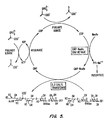
- Figure 5 illustrates a sialyl transferase cycle of the invention.
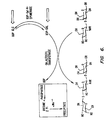
- Figure 7 illustrates an N-acetyl-glucosamine transferase partial cycle.
- Figure 8 illustrates a sialyl transferase partial cycle.
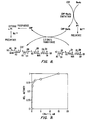
- Figure 9 illustrates the reaction rate versus metal ion concentration for a galactosyl transferase cycle.
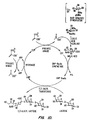
- Figure 10 illustrates a sialyl transferase cycle in which the sialic acid is generated from GlcNAc.
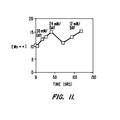
- Figure 11 illustrates the levels of metal ion which are achieved during the processing of a galactosyl transferase cycle with continuous infusion of MnCl 2 .
- the present invention provides methods for the transfer of a monosaccharide from a donor substrate to an acceptor sugar.
- This transfer takes place in a reaction medium comprising at least one glycosyl transferase, a donor substrate, an acceptor sugar and a soluble divalent metal cation.
- the methods rely on the use of a glycosyl transferase to catalyze the addition of a saccharide to a substrate saccharide.
- the addition takes place at the non-reducing end of an oligosaccharide or carbohydrate moiety on a biomolecule.
- Biomolecules as defined here include but are not limited to biologically significant molecules such as proteins (e.g., glycoproteins), and lipids (e.g., glycolipids, phospholipids, sphingolipids and gangliosides).
- proteins e.g., glycoproteins
- lipids e.g., glycolipids, phospholipids, sphingolipids and gangliosides.
- the divalent metal ion concentration is supplemented during the formation of the glycosidic linkage to replenish the concentration of the soluble divalent metal cation in the reaction medium between 1 mM and 75 mM.
- Oligosaccharides are considered to have a reducing end and a non-reducing end, whether or not the saccharide at the reducing end is in fact a reducing sugar. In accordance with accepted nomenclature, oligosaccharides are depicted herein with the non-reducing end on the left and the reducing end on the right.
- oligosaccharides described herein are described with the name or abbreviation for the non-reducing saccharide (e.g. , Gal), followed by the configuration of the glycosidic bond ( ⁇ or ⁇ ), the ring bond, the ring position of the reducing saccharide involved in the bond, and then the name or abbreviation of the reducing saccharide (e.g., GlcNAc).
- the linkage between two sugars may be expressed, for example, as 2,3, 2 ⁇ 3, or (2,3).
- glycosyl transferase cycles for example, the galactosyltransferase cycle depicted in Figure 2, the fucosyltransferase cycle depicted in Figure 3, the N-acetylglucosamine transferase cycle depicted in Figure 4, and the sialyltransferase cycle depicted in Figure 5 are useful for the preparation of oligosaccharides. See, U.S. Patent No. 5,374,541 and WO 9425615 A. These enzyme cycles produce one or more moles of inorganic pyrophosphate for each mole of product formed and are typically carried out in the presence of a divalent metal ion.
- the metal ion is a cofactor for at least one of the enzymes in each of the cycles.
- the divalent metal cations plays a dual role in the glycosyl transferase cycles.
- the divalent metal ion forms a complex of very low solubility with inorganic phosphate or pyrophosphate produced by various processes in the glycosyl transferase cycles.
- the metal ion can remove the Pi or PPi from the reaction by precipitation. This, in turn, results in reduced amounts of metal ions present in solution and a corresponding decrease in the overall turnover rates for those enzymes which require the metal ion cofactors.
- the present invention provides an alternative solution to the problem of metal ion depletion in these cycles, which is to supplement the metal ion concentrations either continuously or discontinuously throughout the cyclic process.
- the present invention will find application in the cyclic glycosyl transferase processes described herein, and any other process for the formation of glycosidic linkages in which the nucleoside portion of a donor substrate or donor sugar is either recycled or can be represented as part of a recycling process similar to those shown in Figures 2-8.
- the cycle can proceed with maximal efficiency.
- too high a concentration of Mn ++ has proven to be detrimental, in part due to the known effect of high Mn ++ concentration in catalyzing the hydrolysis of nucleotide sugars.
- a complex of low solubility is formed, leading to the depletion of the required metal cofactor. This depletion does not occur in reactions in which phosphate or pyrophosphate are not generated.
- a solution to the problem of incomplete reaction due to inhibition by UDP is to add a phosphatase (e.g., alkaline phosphatase) which converts the inhibitory UDP to UMP + Pi, and then to uridine + 2Pi.
- a phosphatase e.g., alkaline phosphatase
- the manganese ion concentration no longer remains constant during the course of the reaction due to its depletion by the phosphate generated.
- supplementation of the metal ion can be used to drive the reaction to completion.
- a partial cycle or stoichiometric reaction comprising a sialyltransferase, CMP-NeuAc synthetase, a suitable acceptor, sialic acid, CTP and a suitable divalent metal cation can be carried out (see Figure 8).
- the concentration of divalent metal ion in such a reaction does not remain constant due to the inorganic pyrophosphate generated by the CMP-NeuAc synthetase reaction.
- the reaction proceeds until either the divalent metal cation is depleted, or inhibitory CMP builds up to a sufficient level.
- the inhibitory nucleotide can be removed by treatment with a suitable phosphatase which generates Pi. This serves to further deplete the divalent metal cation.
- GlcNAc transferase an enzyme with an absolute requirement for divalent metal cations is GlcNAc transferase.
- Another enzyme in the GlcNAc transferase cycle with an absolute requirement for divalent metals is pyruvate kinase.
- the metal ion concentration does not change appreciably over time because no species is generated which reduces its solubility.
- the inhibitory nucleotide can be removed by treatment with a suitable phosphatase e.g., alkaline phosphatase) which generates Pi. This serves to deplete the divalent metal cation.
- the present invention provides in one aspect a method for the transfer of a monosaccharide from a donor substrate to an acceptor sugar.
- a medium typically an aqueous solution
- the concentration of the divalent metal cation in the reaction medium is supplemented to ideally maintain a concentration of between about 1 mM and about 75 mM, preferably between about 5 mM and about 50 mM and more preferably between about 5 and about 30mM, for a period of time sufficient to substantially complete the glycosyl transfer.
- substantially complete when applied to a synthesis process of the present invention, refers to a process which is at least about 90% complete, more preferably about 95%, and still more preferably about 98% complete by tlc or proton NMR.
- the glycosyltransferase is a sialyltransferase.
- the reaction medium will preferably contain, in addition to the sialyltransferase, donor substrate, acceptor sugar and divalent metal cation, (i) a catalytic amount of a CMP-sialic acid synthetase, (ii) a sialic acid, and (iii) a CMP-sialic acid recycling system comprising at least 2 moles of phosphate donor per each mole of sialic acid, and catalytic amounts of a nucleoside triphosphate, a kinase capable of transferring phosphate from the phosphate donor to nucleoside diphosphates, and a nucleoside monophosphate kinase capable of transferring the terminal phosphate from a nucleoside triphosphate to CMP.
- sialyltransferase An ⁇ (2,3)sialyltransferase, often referred to as the sialyltransferase, is the principal enzyme utilized herein in the production of NeuAc ⁇ (2,3)Gal ⁇ (1,4)GlcNAc ⁇ (1,3)Gal ⁇ OR, in which R is as defined below.
- This enzyme transfers sialic acid to a Gal with the formation of an ⁇ -linkage between the two saccharides. Bonding (linkage) between the saccharides is between the 2-position of NeuAc and the 3-position of Gal.
- Another exemplary ⁇ (2,3)sialyltransferase (EC 2.4.99.4) transfers sialic acid to the non-reducing terminal Gal of the disaccharide or glycoside. See, Rearick et al., J. Biol. Chem., 254 :4444 (1979) and Gillespie et al., J. Biol. Chem., 267 :21004 (1992).
- CMP-sialic acid synthetase A second principle enzyme used in the present methods is CMP-sialic acid synthetase. This enzyme is utilized in the CMP-sialic acid regenerating system, discussed in detail hereinafter.
- CMP-sialic acid synthetase can be isolated and purified from cells and tissues containing the synthetase enzyme by procedures well known in the art. See, for example, Gross et al., Eur. J. Biochem., 168: 595 (1987), Vijay et al., J. Biol. Chem., 250 (1):164 (1975), Zapata et al., J. Biol. Chem., 264(25) :14769 (1989) and Higa et al., J. Biol.
- sialic acids include N-glycolyl neuraminic acid, 5-hydroxyneuraminic acid, 5-CbzNH, 5-CH 3 OC(O)NH neuraminic acid (Shames et al. Glycobiol. 1 :187 (1991)), and 5-N-acyl neuraminic acid.
- the reaction mixture will also contain an acceptor for the sialyltransferase.
- Suitable acceptors include, for example, galactosyl acceptors such as, Gal ⁇ 1 ⁇ 3GalNAc, lacto-N-tetraose, Gal ⁇ 1 ⁇ 3GlcNAc, Gal ⁇ 1 ⁇ 3Ara, Gal ⁇ 1 ⁇ 6GlcNAc, Gal ⁇ 1 ⁇ 4Glc (lactose), Gal ⁇ 1 ⁇ 4Glc ⁇ 1-OCH 2 CH 3 , Gal ⁇ 1 ⁇ 4Glc ⁇ 1-OCH 2 CH 2 CH 3 , Gal ⁇ 1 ⁇ 4Glc ⁇ 1-OCH 2 C 6 H 5 , Gal ⁇ 1 ⁇ 4GlcNH-acyl, Gal ⁇ 1 ⁇ 4GlcNAlloc, Gal ⁇ 1-OCH 3 , melibiose, raffinose, stachyose and lacto-N-neotetraose.
- galactosyl acceptors such as, Gal
- Suitable sialyl acceptors include sialyl ⁇ 2-OR or sialyl ⁇ 2 ⁇ 8sialyl-OR, wherein R is a hydrogen, a saccharide, an oligosaccharide or an aglycon group having at least one carbon atom, as described below.
- the CMP-sialic acid recycling system utilizes CMP-sialic acid synthetase as noted previously.
- CMP-sialic acid shown in Figure 5 as CMP-NeuAc
- CMP-NeuAc reacts with a sialyltransferase acceptor in the presence of a ⁇ (2,3)sialyltransferase to form the NeuAc ⁇ (2,3)Gal ⁇ (1,4)GlcNAc ⁇ (1,3)Gal ⁇ OR, in which R is as defined below.
- the CMP-sialic acid regenerating system used in the present invention comprises cytidine monophosphate (CMP), a nucleoside triphosphate (for example adenosine triphosphate (ATP), a phosphate donor (for example, phosphoenolpyruvate or acetyl phosphate), a kinase (for example, pyruvate kinase or acetyl kinase) capable of transferring phosphate from the phosphate donor to nucleoside diphosphates and a nucleoside monophosphate kinase (for example, myokinase) capable of transferring the terminal phosphate from a nucleoside triphosphate to CMP.
- CMP cytidine monophosphate
- a nucleoside triphosphate for example adenosine triphosphate (ATP)
- a phosphate donor for example, phosphoenolpyruvate or acetyl phosphate
- Nucleoside triphosphates suitable for use in accordance with the CMP-sialic acid regenerating system are adenosine triphosphate (ATP), cytidine triphosphate (CTP), uridine triphosphate (UTP), guanosine triphosphate (GTP), inosine triphosphate (ITP) and thymidine triphosphate (TTP).
- ATP adenosine triphosphate
- CTP cytidine triphosphate
- UTP uridine triphosphate
- GTP guanosine triphosphate
- ITP inosine triphosphate
- TTP thymidine triphosphate
- a preferred nucleoside triphosphate is ATP.
- Nucleoside monophosphate kinases are enzymes that catalyze the phosphorylation of nucleoside monophosphates.
- Nucleoside monophosphate kinase (NMK) or myokinase (MK; EC 2.7.4.3) used in accordance with the CMP-sialic acid regenerating system of the present invention are used to catalyze the phosphorylation of CMP.
- NMK's are commercially available (Sigma Chem. Co., St. Louis, MO; Boehringer Mannheim, Indianapolis, IN).
- a phosphate donor and a catalytic amount of a kinase that catalyzes the transfer of phosphate from the phosphate donor to an activating nucleotide are also part of the CMP-sialic acid regenerating system.
- the phosphate donor of the regenerating system is a phosphorylated compound, the phosphate group of which can be used to phosphorylate the nucleoside phosphate.
- the only limitation on the selection of a phosphate donor is that neither the phosphorylated nor the dephosphorylated forms of the phosphate donor can substantially interfere with any of the reactions involved in the formation of the sialylated acceptor saccharide.
- Preferred phosphate donors are phosphoenolpyruvate (PEP) and acetyl phosphate.
- a particularly preferred phosphate donor is PEP.
- kinase for use in accordance with the present invention depends upon the phosphate donor employed.
- the kinase is acetate kinase.
- PEP pyruvate kinase
- Other kinases can be employed with these and other phosphate donors as is well known to those of skill in the art. Kinases are commercially available (Sigma Chem. Co., St. Louis, MO; Boehringer Mannheim, Indianapolis, IN).
- CMP is converted to CDP, whose conversion is catalyzed by nucleoside monophosphate kinase or myokinase in the presence of added ATP.
- ATP is catalytically regenerated from its byproduct, ADP, by pyruvate kinase (PK) in the presence of added phosphoenolpyruvate (PEP).
- CDP is further converted to CTP, which conversion is catalyzed by PK in the presence of PEP.
- CTP reacts with sialic acid to form inorganic pyrophosphate (PPi) and CMP-sialic acid, the latter reaction being catalyzed by CMP-sialic acid synthetase.
- the released CMP re-enters the regenerating system to reform CDP, CTP and CMP-sialic acid.
- the formed PPi or Pi can be removed from solution via precipitation.
- the metal ion cofactor-dependent enzymes can operate at peak efficiency by maintaining the appropriate levels of divalent metal cations.
- Pyruvate is also a byproduct and can be made use of in another reaction in which N-acetylmannosamine (ManNAc) and pyruvate are reacted in the presence of NeuAc aldolase (EC 4.1.3.3) to form sialic acid.
- ManNAc N-acetylmannosamine
- NeuAc aldolase EC 4.1.3.3
- advantage can be taken of the isomerization of GlcNAc to ManNAc, and the less expensive GlcNAc can be used as the starting material for sialic acid generation.
- the sialic acid can be replaced by ManNAc (or GlcNAc) and a catalytic amount of NeuAc aldolase (see Figure 10).
- NeuAc aldolase also catalyzes the reverse reaction (NeuAc to ManNAc and pyruvate)
- the produced NeuAc is irreversibly incorporated into the reaction cycle via CMP-NeuAc catalyzed by CMP-sialic acid synthetase.
- the starting material, ManNAc can also be made by the chemical conversion of GlcNAc using methods known in the art (see, e.g., Simon et al., J. Am. Chem. Soc. 110 :7159 (1988).
- inorganic pyrophosphate is a byproduct of the preparation of CMP-NeuAc. Produced PPi can feed back to inhibit other enzymes such that glycosylation is reduced.
- PPi can be complexed by divalent metal cations (e.g. , Mn ++ or Mg ++ ) or degraded enzymatically.
- PPi can be removed by hydrolysis using inorganic pyrophosphatase (PPase; EC 3.6.1.1), a commercially available PPi catabolic enzyme (Sigma Chem. Co., St. Louis, MO; Boehringer Mannheim, Indianapolis, IN).
- pyrophosphate scavenger refers to substances that serve to remove inorganic pyrophosphate from a reaction mixture of the present invention.
- the preferred method of removing PPi or Pi from the reaction mixture is to maintain divalent metal cation concentration in the medium.
- the cations and the inorganic phosphate produced form a complex of very low solubility.
- the rate of reaction can be maintained and the reactions can be taken to completion ( i.e., 100% conversion).
- Supplementing can be carried out continuously ( e.g. , by automation) or discontinuously.
- the term "to achieve a soluble divalent metal cation concentration" and other related terms are meant to refer to methods in which the divalent cation concentration generally stays within the optimal range such that the reaction cycle is not substantially inhibited.
- the terms specifically include methods in which the divalent cation concentration falls outside the optimal range for periods of time. As shown below, when cation concentration is maintained in this way, the transferase reaction cycle can be driven to completion.
- the glycosyltransferase is a galactosyltransferase.
- the reaction medium will preferably contain, in addition to the galactosyltransferase, donor substrate, acceptor sugar and divalent metal cation, a donor substrate recycling system comprising at least 1 mole of glucose-1-phosphate per each mole of acceptor sugar, a phosphate donor, a kinase capable of transferring phosphate from the phosphate donor to nucleoside diphosphates, and a pyrophosphorylase capable of forming UDP-glucose from UTP and glucose-1-phosphate and catalytic amounts of UDP and a UDP-galactose-4-epimerase.
- Exemplary galactosyltransferases include ⁇ (1,3) galactosyltransferase (E.C. No. 2.4.1.151, see, e.g., Dabkowski et al ., Transplant Proc. 25 :2921 (1993) and Yamamoto et al. Nature 345:229-233 (1990)), a ⁇ (1,4) galactosyltransferase (E.C. No. 2.4.1.90), and a bacterial ⁇ (1,4)galactosyltransferase (see Gotschlich, et al., J. Exp. Med. 180: 2181 (1994)).
- ⁇ (1,3) galactosyltransferase E.C. No. 2.4.1.151, see, e.g., Dabkowski et al ., Transplant Proc. 25 :2921 (1993) and Yamamoto et al. Nature 345:229-233 (1990)
- the glycosyltransferase is a combination of sialyltransferase and galactosyltransferases.
- the enzymes and substrates can be combined in an initial reaction mixture, or preferably the enzymes and reagents for a second glycosyltransferase cycle can be added to the reaction medium once the first glycosyltransferase cycle has neared completion.
- the glycosyltransferase is fucosyltransferase.
- fucosyltransferases include any of those enzymes which transfer L-fucose from GDP-fucose to a hydroxy position of an acceptor sugar.
- the acceptor sugar is a GlcNAc in a ⁇ Gal(1 ⁇ 4) ⁇ GlcNAc group in an oligosaccharide glycoside.
- Suitable fucosyltransferases then include the known ⁇ Gal(1 ⁇ 3,4) ⁇ GlcNAc ⁇ (1 ⁇ 3,4)fucosyltransferase (FTIII E.C. No.
- a recombinant form of ⁇ Gal(1 ⁇ 3,4) ⁇ GlcNAc ⁇ (1 ⁇ 3,4)fucosyltransferase is also available (see, Dumas, et al., Bioorg. Med. Letters 1 :425-428 (1991) and Kukowska-Latallo, et al., Genes and Development 4 :1288-1303 (1990)).
- Other exemplary fucosyltransferases include ⁇ 1,2 fucosyltransferase (E.C. No. 2.4.1.69). Enzymatic fucosylation may be carried out by the methods described in Mollicone, et al., Eur. J. Biochem. 191 :169-176 (1990) or U.S. Patent No. 5,374,655.
- glycosyltransferases can be substituted into similar transferase cycles as have been described in detail for the sialyltransferase.
- the glycosyltransferase can also be, for instance, glucosyltransferases, e.g., Alg8 (Stagljov et al. , Proc. Natl. Acad. Sci. USA 91 :5977 (1994)) or AIg5 (Heesen et al. Eur. J. Biochem. 224 :71 (1994)).
- Suitable N-acetylgalactosaminyltransferases include ⁇ (1,3) N-acetylgalactosaminyltransferase, ⁇ (1,4) N-acetylgalactosaminyltransferases (Nagata et al. J. Biol. Chem. 267 :12082-12089 (1992) and Smith et al. J. Biol Chem. 269 :15162 (1994)) and polypeptide N-acetylgalactosaminyltransferase (Homa et al. J. Biol Chem. 268 :12609 (1993)).
- Suitable N-acetylglucosaminyltransferases include GnTI (2.4.1.101, Hull et al., BBRC 176 :608 (1991)), GnTII, and GnTIII (Ihara et al. J. Biochem. 113 :692 (1993)), GnTV (Shoreiban et al. J. Biol. Chem. 268 : 15381 (1993)), O-linked and other N-acetylglucosaminyltransferases (Bierhuizen et al. Proc. Natl. Acad. Sci. USA 89 :9326 (1992) and Gotschlich, et al., J. Exp. Med.
- Suitable mannosyltransferases include ⁇ (1,2) mannosyltransferase, ⁇ (1,3) mannosyltransferase, ⁇ (1,4) mannosyltransferase, Dol-P-Man synthase, OCh1, and Pmt1.
- the concentrations or amounts of the various reactants used in the processes depend upon numerous factors including reaction conditions such as temperature and pH value, and the choice and amount of acceptor saccharides to be glycosylated. Because the glycosylation process permits regeneration of activating nucleotides, activated donor sugars and scavenging of produced PPi in the presence of catalytic amounts of the enzymes, the process is limited by the concentrations or amounts of the stoichiometric substrates discussed before. The upper limit for the concentrations of reactants that can be used in accordance with the method of the present invention is determined by the solubility of such reactants.
- the concentrations of activating nucleotides, phosphate donor, the donor sugar and enzymes are selected such that glycosylation proceeds until the acceptor is consumed.
- concentrations of activating nucleotides, phosphate donor, the donor sugar and enzymes are selected such that glycosylation proceeds until the acceptor is consumed.
- Each of the enzymes is present in a catalytic amount.
- the catalytic amount of a particular enzyme varies according to the concentration of that enzyme's substrate as well as to reaction conditions such as temperature, time and pH value. Means for determining the catalytic amount for a given enzyme under preselected substrate concentrations and reaction conditions are well known to those of skill in the art.
- Enzyme amounts or concentrations are expressed in activity Units.
- One activity Unit catalyzes the formation of 1 ⁇ mol of product at a given temperature (typically 37°C) and pH value (typically 7.5) per minute.
- 10 Units of an enzyme is a catalytic amount of that enzyme where 10 ⁇ mols of substrate are converted to 10 ⁇ mol of product in one minute at a temperature of 37°C and a pH value of 7.5.
- a reagent which is recycled throughout the process is CMP/CDP/CTP.
- CMP is the less expensive and most readily available of that group
- CMP is typically used to start the reaction, with the amounts discussed before being those for the total amount of the species or combination used.
- aqueous reaction medium that medium has a pH value of 6 to 8.5.
- the medium is devoid of chelators that bind enzyme cofactors such as Mg +2 or Mn +2 .
- the selection of a medium is based on the ability of the medium to maintain pH value at the desired level.
- the medium is buffered to a pH value of about 7.5, preferably with HEPES. If a buffer is not used, the pH of the medium should be maintained at about 6 to 8.5, preferably about 7.2 to 7.8, by the addition of base.
- a suitable base is NaOH, preferably 6 M NaOH.
- the reaction medium may also comprise solubilizing detergents (e.g., Triton or SDS) and organic solvents such as methanol or ethanol, if necessary.
- solubilizing detergents e.g., Triton or SDS
- organic solvents such as methanol or ethanol
- the enzymes are preferably utilized free in solution but can be bound to a support such as a polymer.
- the reaction mixture is thus substantially homogeneous at the beginning, although some precipitate can form during the reaction.
- the temperature at which an above process is carried out can range from just above freezing to the temperature at which the most sensitive enzyme denatures. That temperature range is preferably about zero degrees C to about 45°C, and more preferably at about 20°C to about 30°C.
- the reaction mixture so formed is maintained for a period of time sufficient for the acceptor to be sialylated to form a desired sialyl ⁇ 2 ⁇ 3 ⁇ galactoside (sialoside) product. Some of that product can often be detected after a few hours, with recoverable amounts usually being obtained within 24 hours. It is preferred to optimize the yield of the process, and the maintenance time is usually about 36 to about 240 hours.
- the products produced by the above processes can be used without purification. However, it is usually preferred to recover the product.
- Standard, well known techniques for recovery of glycosylated saccharides such as thin or thick layer chromatography, ion exchange chromatography, or membrane filtration can be used. It is preferred to use membrane filtration, more preferably utilizing a reverse osmotic membrane, or one or more column chromatographic techniques for the recovery as is discussed hereinafter and in the literature cited herein. For instance, membrane filtration wherein the membranes have molecular weight cutoff of about 3000 to about 10,000 can be used to remove proteins. Nanofiltration or reverse osmosis can then be used to remove salts.
- Nanofilter membranes are a class of reverse osmosis membranes which pass monovalent salts but retain polyvalent salts and uncharged solutes larger than about 100 to about 700 Daltons, depending upon the membrane used.
- saccharides prepared by the methods of the present invention will be retained in the membrane and contaminating salts will pass through.
- the saccharides e.g. , sialyl lactose
- the saccharides can be produced at essentially 100% purity, as determined by proton NMR and TLC.
- the present invention provides methods for the preparation of compounds having the formula: NeuAc ⁇ (2 ⁇ 3)Gal ⁇ (1 ⁇ 4)(Fuc ⁇ 1 ⁇ 3)GlcN(R') ⁇ (1 ⁇ 3)Gal ⁇ -OR
- R is a hydrogen, a saccharide, an oligosaccharide or an aglycon group having at least one carbon atom.
- R' can be alkyl or acyl from 1-18 carbons (e.g., acetyl, or allyloxycarbonyl (Alloc)), 5,6,7,8-tetrahydro-2-naphthamido, benzamido, 2-naphthamido, 4-aminobenzamido, or 4-nitrobenzamido.
- A represents an alkylene group of from 1 to 18 carbon atoms optionally substituted with halogen, thiol, hydroxy, oxygen, sulfur, amino, imino, or alkoxy
- Z is hydrogen, ⁇ OH, ⁇ SH, ⁇ NH 2 , ⁇ NHR 1 , ⁇ N(R 1 ) 2 , ⁇ CO 2 H, ⁇ CO 2 R 1 , ⁇ CONH 2 , ⁇ CONHR 1 , ⁇ CON(R 1 ) 2 , ⁇ CONHNH 2 , or ⁇ OR 1 wherein each R 1 is independently alkyl of from 1 to 5 carbon atoms.
- R is 3-(3,4,5-trimethoxyphenyl)propyl.
- the steps for these methods include:
- the galactosylating and sialylating steps are carried out enzymatically, preferably under the general conditions described above for the methods of forming glycosidic linkages. Accordingly, the galactosylating step is preferably carried out as part of a galactosyltransferase cycle (see Figure 2) and the sialylating step is preferably carried out as part of a sialyltransferase cycle (see Figure 5). Preferred conditions and descriptions of other species and enzymes in each of these cycles has been described. In a preferred embodiment, the galactosylating and sialylating steps are carried out in a single vessel.
- the fucosylating step can be carried out either chemically or enzymatically.
- Enzymatic fucosylation can be carried out by contacting the appropriate oligosaccharide with an ⁇ (1 ⁇ 3)fucosyltransferase and a compatible GDP-derivative of L-fucose under conditions wherein the fucose is transferred onto the oligosaccharide.
- ⁇ (1 ⁇ 3)fucosyltransferase refers to any fucosyltransferase which transfers L-fucose from GDP-fucose to a hydroxy position of a GlcNAc in a ⁇ Gal(1 ⁇ 4) ⁇ GlcNAc group in an oligosaccharide glycoside.
- Suitable fucosyltransferases have been described above and include the known ⁇ Gal(1 ⁇ 3,4) ⁇ GlcNAc ⁇ (1 ⁇ 3,4)fucosyltransferase and the ⁇ Gal(1 ⁇ 4) ⁇ GlcNAc ⁇ (1 ⁇ 3)fucosyltransferase.
- Suitable conditions include the addition of the ⁇ (1 ⁇ 3)fucosyltransferase to an appropriate mixture of the oligosaccharide and GDP-fucose in an appropriate buffer such as 0.1 M sodium cacodylate in appropriate conditions of pH and temperature such as at a pH of 6.5 to 7.5 and a temperature of from 0°C to 50°C, preferably between 25°C and 45°C, more preferably between 35°C and 40°C, for 12 hours to 4 days.
- the resulting fucosylated product can be isolated and purified using conventional techniques including membrane filtration, HPLC and gel-, reverse phase-, ion exchange-, or adsorption chromatography.
- R is ethyl
- the fucosylation step is carried out chemically
- the galactosylation and sialylation steps are carried out in a single vessel.
- the galactosylating, sialylating and fucosylating steps are all carried out enzymatically, using the transferase cycles depicted in Figures 2, 3 and 5 with divalent metal ion supplementation. More preferably, all of the enzyme cycles are run in a single reaction vessel. Still more preferably, four enzyme cycles are used in a single reaction vessel to prepare a pentasaccharide having the formula: NeuAc ⁇ (2 ⁇ 3)Gal ⁇ (1 ⁇ 4)(Fuc ⁇ 1 ⁇ 3)GlcN(R') ⁇ (1 ⁇ 3)Gal ⁇ -OR in which R and R' are as described above.
- the present invention provides methods for the preparation of compounds as described in WO 94/26760.
- these compounds have the formula: NeuAc ⁇ (2 ⁇ 3)Gal ⁇ (1 ⁇ 4)(Fuc ⁇ 1 ⁇ 3)GlcN(R") ⁇ -OR 2
- R" is alkyl or acyl from 1-18 carbons, 5,6,7,8 - tetrahydro-2-naphthamido; benzamido; 2-naphthamido; 4-amino benzamido; or 4-nitrobenzamido.
- R 2 may be the same as R as described above or may be Gal ⁇ -OR (R is as described above).
- alkyl as used herein means a branched or unbranched, saturated or unsaturated, monovalent or divalent, hydrocarbon radical having from 1 to 20 carbons, including lower alkyls of 1-8 carbons such as methyl, ethyl, n-propyl, butyl, n-hexyl, and the like, cycloalkyls (3-7 carbons), cycloalkylmethyls (4-8 carbons), and arylalkyls.
- aryl refers to a radical derived from an aromatic hydrocarbon by the removal of one atom, e.g., phenyl from benzene.
- the aromatic hydrocarbon may have more than one unsaturated carbon ring, e.g. , naphthyl.
- alkoxy refers to alkyl radicals attached to the remainder of the molecule by an oxygen, e.g. , ethoxy, methoxy, or n-propoxy.
- alkylthio refers to alkyl radicals attached to the remainder of the molecule by a sulfur.
- acyl refers to a radical derived from an organic acid by the removal of the hydroxyl group. Examples include acetyl, propionyl, oleoyl, myristoyl.
- the compounds described above can then be used in a variety of applications, e.g., as antigens, diagnostic reagents, or as therapeutics.
- the present invention also provides pharmaceutical compositions which can be used in treating a variety of conditions.
- the pharmaceutical compositions are comprised of oligosaccharides made according to the methods described above.
- compositions of the invention are suitable for use in a variety of drug delivery systems. Suitable formulations for use in the present invention are found in Remington's Pharmaceutical Sciences, Mace Publishing Company, Philadelphia, PA, 17th ed. (1985). For a brief review of methods for drug delivery, see, Langer, Science 249:1527-1533 (1990).
- compositions are intended for parenteral, intranasal, topical, oral or local administration, such as by aerosol or transdermally, for prophylactic and/or therapeutic treatment.
- the pharmaceutical compositions are administered parenterally, e.g., intravenously.
- the invention provides compositions for parenteral administration which comprise the compound dissolved or suspended in an acceptable carrier, preferably an aqueous carrier, e.g., water, buffered water, saline, PBS and the like.
- an acceptable carrier preferably an aqueous carrier, e.g., water, buffered water, saline, PBS and the like.
- the compositions may contain pharmaceutically acceptable auxiliary substances as required to approximate physiological conditions, such as pH adjusting and buffering agents, tonicity adjusting agents, wetting agents, detergents and the like.
- compositions may be sterilized by conventional sterilization techniques, or may be sterile filtered.
- the resulting aqueous solutions may be packaged for use as is, or lyophilized, the lyophilized preparation being combined with a sterile aqueous carrier prior to administration.
- the pH of the preparations typically will be between 3 and 11, more preferably from 5 to 9 and most preferably from 7 and 8.
- the oligosaccharides of the invention can be incorporated into liposomes formed from standard vesicle-forming lipids.
- a variety of methods are available for preparing liposomes, as described in, e.g., Szoka et al., Ann. Rev. Biophys. Bioeng. 9:467 (1980), U.S. Pat. Nos. 4,235,871, 4,501,728 and 4,837,028.
- the targeting of liposomes using a variety of targeting agents e.g. , the sialyl galactosides of the invention
- U.S. Patent Nos. 4,957,773 and 4,603,044 see, e.g., U.S. Patent Nos. 4,957,773 and 4,603,044.
- Standard methods for coupling targeting agents to liposomes can be used. These methods generally involve incorporation into liposomes of lipid components, such as phosphatidylethanolamine, which can be activated for attachment of targeting agents, or derivatized lipophilic compounds, such as lipid derivatized oligosaccharides of the invention.
- lipid components such as phosphatidylethanolamine, which can be activated for attachment of targeting agents, or derivatized lipophilic compounds, such as lipid derivatized oligosaccharides of the invention.
- Targeting mechanisms generally require that the targeting agents be positioned on the surface of the liposome in such a manner that the target moieties are available for interaction with the target, for example, a cell surface receptor.
- the carbohydrates of the invention may be attached to a lipid molecule before the liposome is formed using methods known to those of skill in the art (e.g., alkylation or acylation of a hydroxyl group present on the carbohydrate with a long chain alkyl halide or with a fatty acid, respectively).
- the liposome may be fashioned in such a way that a connector portion is first incorporated into the membrane at the time of forming the membrane. The connector portion must have a lipophilic portion which is firmly embedded and anchored in the membrane.
- the reactive portion is selected so that it will be chemically suitable to form a stable chemical bond with the targeting agent or carbohydrate which is added later.
- compositions containing the oligosaccharides can be administered for prophylactic and/or therapeutic treatments.
- compositions are administered to a patient already suffering from a disease, as described above, in an amount sufficient to cure or at least partially arrest the symptoms of the disease and its complications.
- An amount adequate to accomplish this is defined as "therapeutically effective dose.” Amounts effective for this use will depend on the severity of the disease and the weight and general state of the patient, but generally range from about 0.5 mg to about 2,000 mg of oligosaccharide per day for a 70 kg patient, with dosages of from about 5 mg to about 200 mg of the compounds per day being more commonly used.
- compositions containing the oligosaccharides of the invention are administered to a patient susceptible to or otherwise at risk of a particular disease.
- a patient susceptible to or otherwise at risk of a particular disease is defined to be a "prophylactically effective dose.”
- prophylactically effective dose the precise amounts again depend on the patient's state of health and weight, but generally range from about 0.5 mg to about 1,000 mg per 70 kilogram patient, more commonly from about 5 mg to about 200 mg per 70 kg of body weight.
- compositions can be carried out with dose levels and pattern being selected by the treating physician.
- pharmaceutical formulations should provide a quantity of the oligosaccharides of this invention sufficient to effectively treat the patient.
- the oligosaccharides may also find use as diagnostic reagents.
- labeled compounds can be used to locate areas of inflammation or tumor metastasis in a patient suspected of having an inflammation.
- the compounds can be labeled with appropriate radioisotopes, for example, 125 I, 14 C, or tritium.
- the oligosaccharide of the invention can be used as an immunogen for the production of monoclonal or polyclonal antibodies specifically reactive with the compounds of the invention.
- the multitude of techniques available to those skilled in the art for production and manipulation of various immunoglobulin molecules can be used in the present invention.
- Antibodies may be produced by a variety of means well known to those of skill in the art.
- non-human monoclonal antibodies e.g., murine, lagomorpha, equine, etc.
- production of non-human monoclonal antibodies is well known and may be accomplished by, for example, immunizing the animal with a preparation containing the oligosaccharide of the invention.
- Antibody-producing cells obtained from the immunized animals are immortalized and screened, or screened first for the production of the desired antibody and then immortalized.
- monoclonal antibody production see Harlow and Lane, Antibodies, A Laboratory Manual Cold Spring Harbor Publications, N.Y. (1988).
- An additional example is the production of ⁇ GlcNAc(1,3) ⁇ Gal(1,4)Glc from ⁇ Gal(1,4)Glc (lactose) using the GlcNAc transferase cycle.
- This trisaccharide can then be further converted to ⁇ Gal(1,4) ⁇ GlcNAc(1,3) ⁇ Gal(1,4)Glc (lacto-N-neo-tetraose) via the galactosyltransferase cycle.
- the numbering of the compounds corresponds to the numbering provided in the synthetic scheme of Figure 1.
- This example illustrates the synthesis of a disaccharide, GlcN(Alloc)(1 ⁇ 3) ⁇ GalOEt, used as a substrate in the galactosyl transferase cycle of Example 3.
- the numbering of the compounds prepared in this example is provided in Figure 1 which is a schematic for the production of a preferred pentasaccharide.
- Ethyl ⁇ -D-galactopyranoside (I) (0.851 kg, 4.09 mol) was charged into a 20 L rotovap flask with toluene sulfonic acid (1.5 g, 7.9 mmol).
- the evaporator flask was fixed to the evaporator, benzaldehyde dimethyl acetal (1.23 L, 8.18 mol) was added by aspiration and the mixture was tumbled for 4 hours. Between thirty and forty minutes after addition of the acetal, near complete solution was obtained followed rapidly by the appearance of a heavy precipitate. Rotation was continued for 4 hours at which time triethylamine (1.5 mL) was added to neutralize the reaction mixture.
- Ethyl 4,6-O-benzylidene- ⁇ -D-galactopyranoside (II) (0.924 kg, 3.12 mol) was put into a 20 liter reactor equipped with an air drive, a pressure equalizing addition funnel with gas inlet, cooling bath, and a gas outlet. Before sealing the flask, dichloromethane (9.3 L) and pyridine (2 L) were added which gave a homogeneous solution. The addition funnel was charged with chloroacetyl chloride (0.388 kg, 3,43 mol, 273 mL) as a 60% solution in dichloromethane. The flask was sealed and a low flow of dry nitrogen was begun.
- the bath was cooled to -65° ⁇ 5°C and the reaction mixture was stirred for 30 minutes. At that time dropwise addition of the acyl chloride solution was begun at a rate of 3-4 mL per minute. After complete addition of this solution the reaction mixture was maintained at -65° ⁇ 5°C for an additional 1 hour. At that time benzoyl chloride (0.614 kg, 4.37 mol, 0.507 L) was added to the reaction mixture at a rate of 8-12 mL per minute. The reaction mixture was allowed to warm to room temperature and left for 17 hours. The reaction mixture was filtered to remove precipitated salts and the filtrate was concentrated in vacuo to remove most of the dichloromethane. A small sample was set aside for NMR.
- Ethyl 2-O-benzoyl-4,6-O-benzylidene- ⁇ -D-galactopyranoside (III) (1.001 kg, 2.5 mol) was placed in a 20 L reactor that was equipped with a cooling bath, pressure equalizing addition funnel with gas inlet, agitator, and gas outlet.
- 4A Molecular sieves (1.03 kg), dichloromethane (6.6 L), collidine (0.367 L, 2.77 mol), and, after 15 min stirring, finally silver trifluoromethanesulfonate (0.689 kg, 2.641 mol) were added to the flask under a nitrogen flow.
- the addition funnel was charged with a solution of 3,4,6-tri-O-acetyl-2-deoxy-2-phthalimido- ⁇ -D-glucopyranosyl bromide (1.310 kg, 2.641 mol) dissolved in dichloromethane (2.40 L).
- the system was sealed and a low purge of nitrogen was maintained and agitation begun, first at room temperature for 1 hr, then cooling (-25°C) of the reaction vessel was begun and the mixture was stirred at low temperature for another hour.
- the bromide solution was then added over 1-2 hours.
- Deionized water (9.0 L) was added to the resulting solution to precipitate the product.
- the product was filtered and washed with water:acetone 9:1 (6 L) and air dried for 16 hours then dried under vacuum over sodium hydroxide pellets.
- a second crop was isolated by adding deionized water (4.5 L) to the mother liquor. This material was dried as described above. The yield of the diol was 0.707 kg (81%).
- the reaction mixture was cooled to ambient temperature, then acetone (5 L) was added, with stirring. Continued stirring gave a homogenous suspension which was filtered to give crude ethyl 3-O-(2-amino-2-deoxy- ⁇ -D-glucopyranosyl)- ⁇ -D-galactopyranoside, as a white, amorphous powder (0.4 kg) after drying under high vacuum in the presence of phosphorous pentoxide.
- This crude material was added to a mixture of methanol (5.5 L) and water (0.3 L). Sodium hydrogen carbonate (0.90 kg, 10.7 mol) was added, and the mixture was stirred for 30 min.
- This example provides comparisons for glycosyl transferase reactions with and without manganese ion control. Additionally, comparisons of metal ion supplementation which is either continuous or discontinuous is provided.
- samples A and B were compared by thin layer chromatography on silica gel using 65% acetonitrile, 10% acetic acid and 25% water as eluant (visualized with orcinol).
- the unsupplemented reaction (A) was estimated to be 30-40% complete by thin layer chromatography while the manganese-supplemented reaction (B) was estimated to be 100% complete.
- a galactosyltransferase cycle reaction mixture was prepared containing 80 mM acceptor, 80 mM GlcN(Alloc)(1-3) ⁇ GalOEt, 55 mM phosphoenolpyruvate, 90 mM glucose-1-phosphate, 1 mM UDP, 0.1% BSA, 0.05% NaN 3 , 10 mM MgCl 2 , 0.1M HEPES, pH 7.5, 5000 Units/liter pyruvate kinase, 200 Units/liter UDP-glucose pyrophosphorylase, 800 Units/liter UDP-gal-4-epimerase, and 1050 Units/liter galactosyltransferase.
- a galactosyltransferase cycle reaction mixture was set up containing the following: 40 mM GlcN(Alloc)(1-3) ⁇ GalOEt, 55 mM phosphoenolpyruvate, 45 mM glucose-1-phosphate, 1 mM UDP, 0.1% BSA, 0.05% NaN 3 , 10 mM MgCl 2 , 0.1M HEPES, pH 7.5, 2500 Units/liter pyruvate kinase, 100 Units/liter UDP-glucose pyrophosphorylase, 400 Units/liter UDP-gal-4-epimerase, and 525 Units/liter galactosyltransferase.
- the manganese ion supplementation can be carried out by any of several modes.
- This example illustrates the enzymatic synthesis of ⁇ Gal(1 ⁇ 4)GlcN(Alloc)(1 ⁇ 3) ⁇ GalOEt using the galactosyltransferase cycle with control of manganese ion concentration.
- HEPES 695.3 g, 2.92 mol
- 24 L H 2 O 24 L H 2 O
- pH was adjusted to 7.5 with 6 M NaOH.
- Phosphoenolpyruvate monopotassium salt 245.5 g, 1.46 mol
- glucose-1-phosphate 470.3 g, 1.31 mol
- bovine serum albumin 29.2 g
- the manganese ion concentration was measured and supplemented as shown in the table below.
- Day [Mn ++ ] (measured, mM) Loss of Mn ++ (from previous day) Amount Supplemented (grams, added conc, final concentration) 1 8.7 11.3 65, 11.3 mM, 20 mM 2 3.3 16.7 115.6, 20 mM, 23.3 mM 3 9.8 13.5 58.4, 10.2 mM, 20 mM 4 10.9 9.1 23.7, 4.1 mM, 15 mM 5 7.6 7.4 42.8, 7.4 mM, 15 mM 6 11.3 3.7 none 7 8.4 2.9 none 8 6.2 2.2 28.9, 5.0 mM, 11.2 mM
- Manganese ion is a required cofactor for at least one enzyme in the galactosyltransferase cycle.
- the manganese ion and the inorganic pyrophosphate produced form a complex of very low solubility.
- the precipitate from a similar galactosyltransferase cycle has been analyzed by Proton Induced X-ray Emission (PIXE) as 31.5 concentration mass percent manganese and 18.7 concentration mass percent phosphorous, confirming that the precipitated materials is primarily manganese pyrophosphate. Because of this limited solubility, the transferase cycle can continue to proceed, but at reduced reaction rates. By supplementing the manganese ions which are lost by precipitation with pyrophosphate, the rate of reaction can be maintained. Thus, when manganese ion concentration is maintained in an optimal range, the galactosyltransferase reaction cycle can be driven to completion.
- PIXE Proton Induced X-ray Emission
- This example illustrates the detrimental effect of high concentrations of manganese ion on a galactosyltransferase cycle.
- a further investigation of the deleterious effect of high Mn ++ concentrations on the enzyme cycles was carried out as follows: A reaction was set up containing 40 mM GlcN(Alloc)(1-3) ⁇ GalOEt, 55 mM phosphoenolpyruvate, 45 mM glucose-1-phosphate, 1 mM UDP, 0.1% BSA, 0.05% NaN 3 , 10 mM MgCl 2 , 0.1M HEPES, pH 7.5, 2500 Units/liter pyruvate kinase, 100 Units/liter UDP-glucose pyrophosphorylase, 400 Units/liter UDP-gal-4-epimerase, and 525 Units/liter galactosyltransferase.
- 1 M MnCl 2 was added to achieve a concentration of 70 mM. After two days, the concentration of Mn ++ had dropped to 42 mM, and further reaction progress had slowed dramatically. Addition of EDTA to 20 mM, or adding an additional portion of all of the cycle enzymes, or 1 mM UDP, or 1 mM UDP + 20 mM EDTA did not result in the reaction proceeding to completion. However, adding 20 mM EDTA in combination with an additional portion of all of the cycle enzymes did result in the cycle proceeding to completion.
- This example illustrates the 'one pot' synthesis of ⁇ NANA(2 ⁇ 3) ⁇ Gal(1 ⁇ 4)GlcN(Alloc)(1 ⁇ 3) ⁇ GalOEt from the product of the galactosyl transferase cycle using the sialyl transferase cycle with manganese ion control.
- MnCl 2 •4H 2 O (402.1 g, 2.03 mol) was added as an approximately 1 M solution to the product solution from Example 3, followed by the addition of the above mix of sialyl transferase cycle components and an additional 20.4 L of water.
- the resulting reaction mixture was maintained at room temperature and monitored daily using thin layer chromatography (tlc) and ion chromatography. Quantitation of manganese ions was determined by comparison of ion chromatogram from the reaction mixture with chromatograms from standards containing 30 mM MnCl 2 .
- the manganese ion concentration was measured and supplemented as shown in the table below.
- Day [Mn ++ ] (measured, mM) Loss of Mn ++ (from previous day) Amount Supplemented (grams, added conc, final concentration) 1 23.8 10.9 none 2 16.5 7.3 none 3 12.7 3.8 201, 15.0 mM, 27.7 mM 4 18.2 9.5 none 5 15.0 3.2 none
- This example illustrates the enzymatic fucosylation of an oligosaccharide to produce Ethyl (Ammonium 5-acetamido-3,5-dideoxy- ⁇ -D-glycero-D-galacto-2-nonulopyranosylonate)-(2,3)-O-( ⁇ -D-galactopyranosyl)-(1,4)-O-( ⁇ -L fucopyranosyl-(1,3)-O-(2-acetamido-2-deoxy- ⁇ -D-glucopyranosyl)-(1,3)-O- ⁇ -D-galactopyranoside.
- Ethyl (ammonium 5-acetamido-3,5-dideoxy- ⁇ -D-glycero-galacto-2-nonulopyranosylonate)-(2,3)-O-( ⁇ -D-galactopyranosyl)-(1,4)-O-(2-acetamido-2-deoxy- ⁇ -D-glucopyranosyl)-(1,3)-O- ⁇ -D-galactopyranoside (125 mg, 0.141 mmol) was dissolved into a solution of water (6.2 mL), sodium cacodylate (I M, pH 6.5, 0.72 mL), MnCl 2 (1M,0.2 mL) and GDP- ⁇ -fucose disodium salt (Sigma, 130 mg, 0.212 mmol).
- the alkaline phosphatase (bovine intestine, 32 ⁇ L) and fucosyl transferase V (beads, 100 mU) was added and the reaction mixture tipped for 3 days.
- the filtrate was run through a membrane with a 3000 or 10,000 molecular weight cut off to remove protein from the desired product.
- the eluate was concentrated and desalted by running it against a reverse osmosis membrane in a suitable apparatus.
- the retentate, containing the product was evaporated to a thick syrup in a 50 L rotavapor.
- the retentate can be treated with a chelating resin to remove divalent cations.
- the filtrate contained the desired product substantially free of salts and in a high state of purity.
- the syrup was coevaporated twice with pyridine (2 x 2 L), then kept under vacuum for 20 hours.
- the evaporation flask was charged with a solution of N,N-dimethylaminopyridine (20 g) in pyridine (12 L).
- the rotavapor bath was charged with ice-water mixture, and rotation was continued while acetic anhydride (6 L) was added during a period of 1 hour. Two hours after complete addition more acetic anhydride (2 L) was added and the resulting mixture was left for 20 hours rotating slowly at room temperature. To ensure complete acetylation, more acetic anhydride (1 L) was added and the mixture was rotated for an additional 24 hours.
- the reaction was checked by TLC (ethyl acetate:hexane:ethanol, 10:10:3). Upon complete reaction vacuum was applied and 14 L of distillate collected.
- reaction mixture was then stirred under nitrogen at room temperature for 36 hours until TLC (10:10:3, ethyl acetate:hexane:ethanol) showed completion of the reaction.
- the reaction mixture was treated with a mixture of methanol (30 mL) and diisopropylethylamine (30 mL) and was stirred at room temperature for 30 minutes.
- the mixture was diluted with 1 L of dichloromethane and filtered through a bed of celite. The filtrate was washed with aqueous saturated sodium bicarbonate (1.5 L) and water (2 L), and the organic layer dried over magnesium sulfate, filtered, and concentrated to a syrup.
- the ion-exchange resin was removed by filtration and filtrate was concentrated to dryness to provide a white glass.
- the material was dissolved in methanol (300 mL) and filtered through a 0.22 ⁇ nylon membrane. The filtrate was diluted with ethyl ether (300 mL) to give the free pentasaccharide (48 g, 84%) as a white solid.
- the pentasaccharide can be made enzymatically starting from compound V of EXAMPLE 1, except that N-allyloxycarbonyl is replaced with N-acetyl.
- the starting material is enzymatically galactosylated, sialylated and fucosylated using the methods described above.
Landscapes
- Chemical & Material Sciences (AREA)
- Organic Chemistry (AREA)
- Life Sciences & Earth Sciences (AREA)
- Zoology (AREA)
- Engineering & Computer Science (AREA)
- Wood Science & Technology (AREA)
- Health & Medical Sciences (AREA)
- Microbiology (AREA)
- General Chemical & Material Sciences (AREA)
- Chemical Kinetics & Catalysis (AREA)
- Biotechnology (AREA)
- Biochemistry (AREA)
- Bioinformatics & Cheminformatics (AREA)
- General Engineering & Computer Science (AREA)
- General Health & Medical Sciences (AREA)
- Genetics & Genomics (AREA)
- Molecular Biology (AREA)
- Preparation Of Compounds By Using Micro-Organisms (AREA)
- Saccharide Compounds (AREA)
Claims (35)
- Méthode pour le transfert d'un monosaccharide d'un substrat donneur à un substrat accepteur consistant à :(a) prévoir un milieu réactionnel comprenant au moins une glycosyl transférase, un substrat donneur, un substrat accepteur et un cation d'un métal divalent soluble ; et(b) compléter la concentration dudit cation d'un métal divalent soluble pour obtenir une concentration dans ledit milieu réactionnel entre 1 mM et 75 mM pendant une période de temps suffisante pour terminer sensiblement ladite synthèse.
- Méthode selon la revendication 1 où ledit milieu réactionnel comprend de plus de la phosphatase.
- Méthode selon la revendication 1, où ledit cation d'un métal divalent soluble est un membre sélectionné dans le groupe consistant en Mn++, Mg++, Ca++, Co++, Zn++, Cu++ et leurs combinaisons.
- Méthode selon la revendication 1, où ladite complémentation est discontinue.
- Méthode selon la revendication 1, où ladite complémentation est continue.
- Méthode selon la revendication 1, où ladite enzyme est la galactosyl transférase.
- Méthode selon la revendication 1, où ladite enzyme est la galacotosyl transférase et ledit milieu réactionnel comprend de plus de la sialyl transférase.
- Méthode selon la revendication 1, où ladite enzyme est la fucosyl transférase.
- Méthode selon la revendication 1, où ladite enzyme est la N-acétyl glycosaminyl transférase.
- Méthode selon la revendication 1, où ledit substrat donneur est du CMP-NeuAC et est généré in situ, ledit cation d'un métal divalent est Mn++, ledit substrat accepteur est le lactose, ladite enzyme est la sialyl transférase et ledit milieu réactionnel contient de plus de la CMP-NeuAC synthétase de l'acide sialique et du CTP.
- Méthode selon la revendication 1, où ledit substrat donneur est de l'UDP-Gal et est généré in situ, ledit cation d'un métal divalent est Mn++, ledit substrat accepteur est GlcNAcGalGlc, ladite enzyme est la galactosyl transférase et ledit milieu réactionnel comprend de plus de l'UDP-Gal-4-épimérase, de l'UDP-Glc, et de la phosphatase.
- Méthode selon la revendication 1, où ledit substrat donneur est l'UDP-GlcNAc, ledit cation d'un métal divalent est Mn++, ledit substrat accepteur est GalGlc, ladite enzyme est la N-acétyl glucosamine transférase et ledit milieu réactionnel comprend de plus de la phosphatase.
- Méthode selon la revendication 1, où ledit substrat donneur est un sucre donneur et ledit milieu réactionnel comprend de plus :(i) une quantité catalytique d'une synthétase d'un sucre donneur ;(ii) un précurseur de sucre donneur ; et(iii) un système de recyclage du sucre donneur.
- Méthode selon la revendication 13, où ladite glycosyl transférase est la sialyl transférase et ledit milieu réactionnel comprend :(i) une quantité catalytique de CMP-acide sialique synthétase ;(ii) un acide sialique ;(iii) un système de recyclage CMP-acide sialique comprenant au moins 2 moles d'un donneur de phosphate par mode d'acide sialique, et des quantités catalytiques d'un nucléoside triphosphate, de cytidine monophosphate, d'une kinase capable de transférer le phosphate dudit donneur de phosphate à un nucléoside triphosphate et d'une nucléoside monophosphate kinase capable de transférer le phosphate terminal d'un nucléoside de triphosphate à de la CMP ; et ledit sucre accepteur est un accepteur de ladite sialyl transférase ayant une unité galactosyl.
- Méthode selon la revendication 14, où ladite sialyl transférase est l'α(2,3)sialyl transférase.
- Méthode selon la revendication 14, où ladite sialyl transférase est l'α(2,3)sialyl transférase et ledit cation d'un métal divalent soluble est Mn++.
- Méthode selon la revendication 14, où ledit acide sialique est l'acide 5-N-acétylneuraminique.
- Méthode selon la revendication 14, où ledit sucre accepteur est un membre sélectionné dans le groupe consistant en Galβ(1→4)GlcNAc-OR et Galβ(1→4)GlcN(Alloc)-OR, où R est sélectionné dans le groupe consistant en l'hydrogène, un saccharide, un oligosaccharide et un groupe aglycone ayant au moins un atome de carbone.
- Méthode selon la revendication 18, où ledit acide sialique est l'acide 5-N-acétylneuraminique.
- Méthode selon la revendication 14, où ledit milieu réactionnel est un milieu aqueux tamponné ayant une valeur de pH de 6 à 8.
- Méthode selon la revendication 6, où ledit substrat donneur contient une unité β-galactosyl, ladite galactosyl transférase est présente en une quantité catalytique et ledit milieu réactionnel comprend de plus un système de recyclage du substrat donneur comprenant au moins 1 mole de glucose-1-phosphate par mole du sucre accepteur ; des quantités catalytiques d'UDP, de pyruvate kinase, d'UDP-glucose-pyrophosphorylase et d'UDP-galactose-4-épimérase.
- Méthode selon la revendication 21, où ledit sucre accepteur est sélectionné dans le groupe consistant en GlcN(Alloc) (1→3)βGaloEt et GlcNAc(1→3)βGalOet.
- Méthode selon la revendication 7, où ledit milieu réactionnel comprend de plus :(i) un système de recyclage de substrat donneur comprenant au moins 1 mole de glucose-1-phosphate par mole de substrat accepteur ; des quantités catalytiques d'UDP, de la pyruvate kinase, de l'UDP-glucose-pyrophosphorylase et de l'UDP-galactose-4-épimérase ;(ii) une quantité catalytique de CMP-acide sialique synthétase ;(iii) un acide sialique ;(iv) un système de recyclage de CMP-acide sialique comprenant au moins 2 moles d'un donneur de phosphate par mole d'acide sialique, et des quantités catalytiques d'un nucléoside triphosphate, de cytidine monophosphate, d'une kinase capable de transférer le phosphate dudit donneur de phosphate à un nucléoside diphosphate, et une nucléoside monophosphate kinase capable de transférer le phosphate terminal d'un nucléoside triphosphate à la CMP.
- Méthode selon la revendication 8, où ladite fucosyltransférase est l'α(1→3)fucosyltransférase et ledit substrat donneur est du GDP-fucose.
- Méthode pour la préparation de NeuAcα(2→3)Galβ(1→4) (Fucα1→3)GlcN (R')β(1→3)Galβ-OR ; oùladite méthode comprenant :R est sélectionné dans le groupe consistant en l'hydrogène, un saccharide, un oligosaccharide et un groupe aglycone ayant au moins un atome de carbone ; etR' est sélectionné dans le groupe consistant en acétyle et allyloxycarbonyle ;où lesdites étapes de galactosylation et de sialylation sont entreprises dans un milieu réactionnel comprenant un cation d'un métal divalent soluble et ledit milieu est complété dudit cation d'un métal divalent soluble pour maintenir la concentration dudit cation d'un métal divalent entre 1 mM et 75 mM.(a) la galactosylation d'un composé de la formule GlcN(R')β(1→3)Galβ-OR avec une galactosyltransférase en présence d'UDP-galactose dans des conditions suffisantes pour former le composé : Galβ(1→4)GlcN(R')β(1→3)Galβ-OR ;(b) la sialylation dudit composé formé en (a) avec une sialyl transférase en présence d'un dérivé de CMP d'un acide sialique en utilisant une α(2,3)sialyl transférase dans des conditions où l'acide sialique est transféré au sucre non réducteur pour former le composé : NeuAcα(2→3)Galβ(1→4)GlcN (R')β(1→3)Galβ-OR ; et(c) la fucosylation dudit composé formé en (b) pour produire ledit NeuAcα(2→3)Galβ(1→4)(Fucα1→3)GlcN (R')-β(1→3)Galβ-OR ;
- Méthode selon la revendication 25, où R' est allyloxycarbonyl et ladite étape de fucosylation est effectuée chimiquement.
- Méthode selon la revendication 25, où ladite étape de fucosylation est effectuée enzymatiquement.
- Méthode selon la revendication 25, où ladite galactosylation et ladite sialylation sont effectuées dans un seul récipient.
- Méthode selon la revendication 25, où avant l'étape (c) le produit de l'étape (b) est purifié en utilisant une filtration sur membrane avec une membrane ayant une coupure de poids moléculaire de 100 à 10 000.
- Méthode selon la revendication 29, où ladite coupure de poids moléculaire est de 200 à 1000.
- Méthode selon la revendication 25, où ladite étape de galactosylation comprend l'utilisation d'un système de recyclage d'UDP-galactose comprenant au moins 1 mole de glucose-1-phosphate par mole de GlcN(R')β(1→3)Galβ-OR et des quantités catalytiques d'UDP, de pyruvate kinase, d'UDP-glucose pyrophosphorylase et UDP-galactose-4-épimérase.
- Méthode selon la revendication 25, où ladite étape de sialylation comprend l'utilisation d'un système de recyclage de CMP-acide sialique comprenant au moins 2 moles d'un donneur de phosphate par mole d'acide sialique et des quantités catalytiques d'un nucléoside triphosphate, de cytidine monophosphate, d'une kinase capable de transférer le phosphate dudit donneur de phosphate à un nucléoside diphosphate, et une nucléoside monophosphate kinase capable de transférer le phosphate terminal d'un nucléoside triphosphate à de la CMP.
- Méthode selon la revendication 25, où R est éthyle ; ladite étape de galactosylation comprend l'utilisation d'un système de recyclage d'UDP-galactose comprenant au moins 1 mole de glucose-1-phosphate par mole de GlcN(R')β(1→3)Galβ-OR et des quantités catalytiques d'UDP, de pyruvate kinase, d'UDP-glucose pyrophosphorylase et d'UDP-galactose-4-épimérase ; ladite étape sialylation comprend l'utilisation d'un système de recyclage de CMP-acide sialique comprenant au moins 2 moles d'un donneur de phosphate par mole d'acide sialique et des quantités catalytiques d'un nucléoside triphosphate, de cytidine monophosphate, d'une kinase capable de transférer le phosphate dudit donneur de phosphate à un nucléoside diphosphate, et une nucléoside monophosphate kinase capable de transférer le phosphate terminal d'un nucléoside triphosphate à la CMP ; ladite étape de fucosylation est effectuée chimiquement ; et les étapes (a) et (b) sont effectuées dans un seul récipient.
- Méthode pour la synthèse de CMP-NeuAc, consistant à :(a) prévoir un milieu réactionnel comprenant la CMP-NeuAc synthétase, de l'acide sialique, de la CTP et un cation d'un métal divalent soluble ; et(b) compléter la concentration dudit cation d'un métal divalent soluble pour obtenir une concentration dans ledit milieu réactionnel entre 1 mM et 75 mM pendant une période de temps suffisante pour terminer ladite synthèse.
- Méthode selon la revendication 34, où ledit acide sialique est généré in situ, et ledit milieu réactionnel comprend de plus GlcNAc, de l'acide pyruvique et de l'acide sialique aldolase.
Applications Claiming Priority (3)
| Application Number | Priority Date | Filing Date | Title |
|---|---|---|---|
| US08/419,669 US5728554A (en) | 1995-04-11 | 1995-04-11 | Enzymatic synthesis of glycosidic linkages |
| US419669 | 1995-04-11 | ||
| PCT/US1996/004824 WO1996032491A1 (fr) | 1995-04-11 | 1996-04-10 | Synthese enzymatique de liaisons glycosidiques |
Publications (2)
| Publication Number | Publication Date |
|---|---|
| EP0820519A1 EP0820519A1 (fr) | 1998-01-28 |
| EP0820519B1 true EP0820519B1 (fr) | 2001-01-03 |
Family
ID=23663242
Family Applications (1)
| Application Number | Title | Priority Date | Filing Date |
|---|---|---|---|
| EP96910772A Expired - Lifetime EP0820519B1 (fr) | 1995-04-11 | 1996-04-10 | Synthese enzymatique de liaisons glycosidiques |
Country Status (7)
| Country | Link |
|---|---|
| US (1) | US5728554A (fr) |
| EP (1) | EP0820519B1 (fr) |
| JP (1) | JPH11503329A (fr) |
| AU (1) | AU5387396A (fr) |
| CA (1) | CA2218246C (fr) |
| DE (1) | DE69611442T2 (fr) |
| WO (1) | WO1996032491A1 (fr) |
Families Citing this family (99)
| Publication number | Priority date | Publication date | Assignee | Title |
|---|---|---|---|---|
| US5545553A (en) * | 1994-09-26 | 1996-08-13 | The Rockefeller University | Glycosyltransferases for biosynthesis of oligosaccharides, and genes encoding them |
| US6030815A (en) * | 1995-04-11 | 2000-02-29 | Neose Technologies, Inc. | Enzymatic synthesis of oligosaccharides |
| US5922577A (en) * | 1995-04-11 | 1999-07-13 | Cytel Corporation | Enzymatic synthesis of glycosidic linkages |
| AUPN658795A0 (en) * | 1995-11-15 | 1995-12-07 | Commonwealth Scientific And Industrial Research Organisation | Method of producing alpha 2, 3 sialyltransferase |
| US6033663A (en) * | 1996-04-10 | 2000-03-07 | Neose Technologies, Inc. | Nucleic acids encoding GDP-Fucose pyrophosphorylase |
| CA2237849C (fr) * | 1996-09-17 | 2009-06-16 | Kyowa Hakko Kogyo Co., Ltd. | Procedes de production de nucleotides de sucre et de glucides complexes |
| HUP0001634A2 (hu) * | 1996-10-10 | 2000-09-28 | Cytel Corporation | Szénhidrátok tisztítása ultraszűréssel, fordított ozmózissal és nanoszűréssel |
| US5945314A (en) * | 1997-03-31 | 1999-08-31 | Abbott Laboratories | Process for synthesizing oligosaccharides |
| US5952203A (en) | 1997-04-11 | 1999-09-14 | The University Of British Columbia | Oligosaccharide synthesis using activated glycoside derivative, glycosyl transferase and catalytic amount of nucleotide phosphate |
| US20040191256A1 (en) * | 1997-06-24 | 2004-09-30 | Genentech, Inc. | Methods and compositions for galactosylated glycoproteins |
| ATE296315T1 (de) | 1997-06-24 | 2005-06-15 | Genentech Inc | Galactosylierte glykoproteine enthaltende zusammensetzungen und verfahren zur deren herstellung |
| US6323008B1 (en) | 1997-08-14 | 2001-11-27 | Neose Technologies, Inc. | Methods for producing sialyloligosaccharides in a dairy source |
| US20040136986A1 (en) * | 1997-10-31 | 2004-07-15 | Genentech, Inc. | Methods and compositions comprising glycoprotein glycoforms |
| EP1903114A3 (fr) | 1997-12-01 | 2008-07-23 | Neose Technologies, Inc. | Synthèse enzymatique de gangliosides |
| US7244601B2 (en) | 1997-12-15 | 2007-07-17 | National Research Council Of Canada | Fusion proteins for use in enzymatic synthesis of oligosaccharides |
| US6689604B1 (en) | 1998-03-20 | 2004-02-10 | National Research Council Of Canada | Lipopolysaccharide α-2,3 sialyltransferase of Campylobacter jejuni and its uses |
| US6194178B1 (en) * | 1998-09-03 | 2001-02-27 | Synsorb Biotech Inc. | Method for the production of sialylated oligosaccharides |
| JP2002526549A (ja) | 1998-10-06 | 2002-08-20 | マサチューセッツ インスティテュート オブ テクノロジー | オリゴ糖の合成、それに関する試薬及び合成法 |
| US6503744B1 (en) | 1999-02-01 | 2003-01-07 | National Research Council Of Canada | Campylobacter glycosyltransferases for biosynthesis of gangliosides and ganglioside mimics |
| US6699705B2 (en) | 1999-02-01 | 2004-03-02 | National Research Council Of Canada | Campylobacter glycosyltransferases for biosynthesis of gangliosides and ganglioside mimics |
| JP2003507071A (ja) * | 1999-08-20 | 2003-02-25 | ロシュ ダイアグノスティックス ゲーエムベーハー | デオキシリボヌクレオシドの酵素的合成 |
| US8227449B2 (en) | 2000-03-30 | 2012-07-24 | Glycores 2000 S.R.L. | Glycosaminoglycans derived from K5 polysaccharide having high anticoagulant and antithrombotic activities and process for their preparation |
| IT1318432B1 (it) * | 2000-03-30 | 2003-08-25 | Inalco Spa | Glicosaminoglicani derivati dal polisaccaride k5 aventi elevataattivita' anticoagulante ed antitrombotica e processo per la loro |
| JP2002335988A (ja) * | 2001-05-22 | 2002-11-26 | Yamasa Shoyu Co Ltd | オリゴ糖の製造法 |
| CA2456725A1 (fr) * | 2001-08-17 | 2003-02-27 | Neose Technologies, Inc. | Synthese chimio-enzymatique d'oligosaccharides sialyles |
| US7157277B2 (en) * | 2001-11-28 | 2007-01-02 | Neose Technologies, Inc. | Factor VIII remodeling and glycoconjugation of Factor VIII |
| US8008252B2 (en) * | 2001-10-10 | 2011-08-30 | Novo Nordisk A/S | Factor VII: remodeling and glycoconjugation of Factor VII |
| US7226903B2 (en) * | 2001-10-10 | 2007-06-05 | Neose Technologies, Inc. | Interferon beta: remodeling and glycoconjugation of interferon beta |
| US7179617B2 (en) | 2001-10-10 | 2007-02-20 | Neose Technologies, Inc. | Factor IX: remolding and glycoconjugation of Factor IX |
| US7173003B2 (en) | 2001-10-10 | 2007-02-06 | Neose Technologies, Inc. | Granulocyte colony stimulating factor: remodeling and glycoconjugation of G-CSF |
| US7265084B2 (en) * | 2001-10-10 | 2007-09-04 | Neose Technologies, Inc. | Glycopegylation methods and proteins/peptides produced by the methods |
| US7297511B2 (en) * | 2001-10-10 | 2007-11-20 | Neose Technologies, Inc. | Interferon alpha: remodeling and glycoconjugation of interferon alpha |
| US7439043B2 (en) * | 2001-10-10 | 2008-10-21 | Neose Technologies, Inc. | Galactosyl nucleotide sugars |
| US7214660B2 (en) * | 2001-10-10 | 2007-05-08 | Neose Technologies, Inc. | Erythropoietin: remodeling and glycoconjugation of erythropoietin |
| US7265085B2 (en) * | 2001-10-10 | 2007-09-04 | Neose Technologies, Inc. | Glycoconjugation methods and proteins/peptides produced by the methods |
| US7399613B2 (en) * | 2001-10-10 | 2008-07-15 | Neose Technologies, Inc. | Sialic acid nucleotide sugars |
| US7795210B2 (en) * | 2001-10-10 | 2010-09-14 | Novo Nordisk A/S | Protein remodeling methods and proteins/peptides produced by the methods |
| US7696163B2 (en) | 2001-10-10 | 2010-04-13 | Novo Nordisk A/S | Erythropoietin: remodeling and glycoconjugation of erythropoietin |
| EP2042196B1 (fr) | 2001-10-10 | 2016-07-13 | ratiopharm GmbH | Remodelage et glycoconjugation de facteur stimulant les colonies de granulocytes (G-CSF) |
| US7125843B2 (en) * | 2001-10-19 | 2006-10-24 | Neose Technologies, Inc. | Glycoconjugates including more than one peptide |
| US7473680B2 (en) * | 2001-11-28 | 2009-01-06 | Neose Technologies, Inc. | Remodeling and glycoconjugation of peptides |
| JP2005535280A (ja) | 2001-11-28 | 2005-11-24 | ネオーズ テクノロジーズ, インコーポレイテッド | エンドグリカナーゼを用いる糖タンパク質のリモデリング |
| MXPA04012496A (es) * | 2002-06-21 | 2005-09-12 | Novo Nordisk Healthcare Ag | Glicoformos del factor vii pegilados. |
| WO2004080960A2 (fr) | 2003-03-06 | 2004-09-23 | Neose Technologies Inc. | Procedes et compositions pour la synthese enzymatique de gangliosides |
| KR20060003862A (ko) * | 2003-03-14 | 2006-01-11 | 네오스 테크놀로지스, 인크. | 수용성분기폴리머 및 그 접합체 |
| EP2055189A1 (fr) | 2003-04-09 | 2009-05-06 | Neose Technologies, Inc. | Méthode de glycopegylation et proteines/peptides produits au moyen de ces méthodes |
| WO2004091499A2 (fr) * | 2003-04-09 | 2004-10-28 | Neose Technologies, Inc. | Formation intracellulaire de conjugues de peptides |
| US8791070B2 (en) | 2003-04-09 | 2014-07-29 | Novo Nordisk A/S | Glycopegylated factor IX |
| AU2004240553A1 (en) | 2003-05-09 | 2004-12-02 | Neose Technologies, Inc. | Compositions and methods for the preparation of human growth hormone glycosylation mutants |
| WO2005012484A2 (fr) | 2003-07-25 | 2005-02-10 | Neose Technologies, Inc. | Conjugues anticorps-toxines |
| US20080305992A1 (en) * | 2003-11-24 | 2008-12-11 | Neose Technologies, Inc. | Glycopegylated erythropoietin |
| ES2445948T3 (es) * | 2003-11-24 | 2014-03-06 | Ratiopharm Gmbh | Eritropoyetina glicopegilada |
| US8633157B2 (en) * | 2003-11-24 | 2014-01-21 | Novo Nordisk A/S | Glycopegylated erythropoietin |
| US7956032B2 (en) * | 2003-12-03 | 2011-06-07 | Novo Nordisk A/S | Glycopegylated granulocyte colony stimulating factor |
| US20080318850A1 (en) * | 2003-12-03 | 2008-12-25 | Neose Technologies, Inc. | Glycopegylated Factor Ix |
| US20060040856A1 (en) * | 2003-12-03 | 2006-02-23 | Neose Technologies, Inc. | Glycopegylated factor IX |
| KR101237884B1 (ko) * | 2003-12-03 | 2013-02-27 | 바이오제너릭스 에이지 | 글리코 peg화 과립구 콜로니 자극인자 |
| US7338933B2 (en) * | 2004-01-08 | 2008-03-04 | Neose Technologies, Inc. | O-linked glycosylation of peptides |
| WO2005089102A2 (fr) | 2004-02-04 | 2005-09-29 | Neose Technologies, Inc. | Procedes de repliement de glycosyltransferases mammaliennes |
| ES2339953T5 (es) * | 2004-05-04 | 2020-05-06 | Novo Nordisk Healthcare Ag | Glicoformas de factor VII ligadas a O y método de fabricación |
| WO2006010143A2 (fr) | 2004-07-13 | 2006-01-26 | Neose Technologies, Inc. | Remodelage de peg ramifie et glycosylation de peptide-1 semblable a glucagon [glp-1] |
| WO2006031811A2 (fr) * | 2004-09-10 | 2006-03-23 | Neose Technologies, Inc. | Interferon alpha glycopegyle |
| US20080108557A1 (en) * | 2004-09-29 | 2008-05-08 | Novo Nordisk Healthcare A/G | Modified Proteins |
| US20080176790A1 (en) | 2004-10-29 | 2008-07-24 | Defrees Shawn | Remodeling and Glycopegylation of Fibroblast Growth Factor (Fgf) |
| JP2008526864A (ja) * | 2005-01-06 | 2008-07-24 | ネオス テクノロジーズ インコーポレイテッド | 糖断片を用いる糖結合 |
| US9029331B2 (en) * | 2005-01-10 | 2015-05-12 | Novo Nordisk A/S | Glycopegylated granulocyte colony stimulating factor |
| JP2006271372A (ja) * | 2005-03-01 | 2006-10-12 | Yamasa Shoyu Co Ltd | 糖鎖の製造法 |
| EP1866427A4 (fr) * | 2005-03-30 | 2010-09-01 | Novo Nordisk As | Procede de fabrication pour la production de peptides cultives dans des lignees cellulaires d'insectes |
| US20070154992A1 (en) * | 2005-04-08 | 2007-07-05 | Neose Technologies, Inc. | Compositions and methods for the preparation of protease resistant human growth hormone glycosylation mutants |
| EP1891231A4 (fr) * | 2005-05-25 | 2011-06-22 | Novo Nordisk As | Facteur ix glycopegyle |
| EP1888098A2 (fr) * | 2005-05-25 | 2008-02-20 | Neose Technologies, Inc. | Formulations d'erythropoietine glycopegylees |
| FI20055398A0 (fi) | 2005-07-08 | 2005-07-08 | Suomen Punainen Risti Veripalv | Menetelmä solupopulaatioiden evaluoimiseksi |
| US20070105755A1 (en) | 2005-10-26 | 2007-05-10 | Neose Technologies, Inc. | One pot desialylation and glycopegylation of therapeutic peptides |
| EP1937719A4 (fr) * | 2005-08-19 | 2010-11-24 | Novo Nordisk As | Facteur vii et facteur viia glycopégylé |
| WO2007056191A2 (fr) | 2005-11-03 | 2007-05-18 | Neose Technologies, Inc. | Purification de sucre de nucleotide en utilisant des membranes |
| ES2516694T3 (es) * | 2006-07-21 | 2014-10-31 | Ratiopharm Gmbh | Glicosilación de péptidos a través de secuencias de glicosilación con unión en O |
| US8969532B2 (en) * | 2006-10-03 | 2015-03-03 | Novo Nordisk A/S | Methods for the purification of polypeptide conjugates comprising polyalkylene oxide using hydrophobic interaction chromatography |
| US20100041872A1 (en) | 2006-10-04 | 2010-02-18 | Defrees Shawn | Glycerol linked pegylated sugars and glycopeptides |
| WO2008073620A2 (fr) * | 2006-11-02 | 2008-06-19 | Neose Technologies, Inc. | Procédé de fabrication pour la production de polypeptides exprimés dans des lignées cellulaires d'insectes |
| KR20100016160A (ko) * | 2007-04-03 | 2010-02-12 | 바이오제너릭스 에이지 | 글리코페길화 g―csf를 이용하는 치료 방법 |
| US20090053167A1 (en) * | 2007-05-14 | 2009-02-26 | Neose Technologies, Inc. | C-, S- and N-glycosylation of peptides |
| EP2162535A4 (fr) * | 2007-06-04 | 2011-02-23 | Novo Nordisk As | Glycosylation à liaisons o utilisant des n-acétylglucosaminyl transférases |
| WO2008154639A2 (fr) * | 2007-06-12 | 2008-12-18 | Neose Technologies, Inc. | Procédé amélioré pour la production de sucres de nucléotide |
| US8207112B2 (en) * | 2007-08-29 | 2012-06-26 | Biogenerix Ag | Liquid formulation of G-CSF conjugate |
| CA2711503A1 (fr) * | 2008-01-08 | 2009-07-16 | Biogenerix Ag | Glycoconjugaison de polypeptides employant des oligosaccharyltransferases |
| KR101582841B1 (ko) | 2008-02-27 | 2016-01-11 | 노보 노르디스크 에이/에스 | 콘쥬게이트된 인자 viii 분자 |
| EP2166085A1 (fr) | 2008-07-16 | 2010-03-24 | Suomen Punainen Risti Veripalvelu | Cellules modifiées bivalentes |
| US20100240871A1 (en) | 2008-10-29 | 2010-09-23 | Raju T Shantha | Galactose Alpha(1-3) Galactose Compositions |
| UA110323C2 (en) | 2009-06-04 | 2015-12-25 | Promedior Inc | Derivative of serum amyloid p and their receipt and application |
| DK2439264T3 (en) | 2010-10-11 | 2015-08-03 | Jennewein Biotechnologie Gmbh | Novel fucosyltransferases and their use |
| AU2013222414B2 (en) | 2012-02-21 | 2018-02-15 | Cytonics Corporation | Systems, compositions, and methods for transplantation |
| US20140115728A1 (en) | 2012-10-24 | 2014-04-24 | A. Joseph Tector | Double knockout (gt/cmah-ko) pigs, organs and tissues |
| CA2922806A1 (fr) | 2013-08-28 | 2015-03-05 | Cytonics Corporation | Systemes, compositions et methodes de transplantation et traitement d'etats au moyen d'une composition renfermant un type sauvage ou un variant du polypeptide a2m ou une portion de celui-ci |
| KR20160134657A (ko) * | 2014-03-18 | 2016-11-23 | 로께뜨프레르 | 미세조류 바이오매스의 열 투과화를 위한 방법 |
| US10889631B2 (en) | 2014-11-20 | 2021-01-12 | Cytonics Corporation | Therapeutic variant alpha-2-macroglobulin compositions |
| CN108137529A (zh) | 2015-09-03 | 2018-06-08 | 阿格里麦蒂斯有限责任公司 | 作为杀虫剂的多杀菌素衍生物 |
| EP3568399B1 (fr) | 2017-01-13 | 2026-04-22 | Agrimetis, LLC | Dérivés d'aziridine spinosyne et leurs procédés de fabrication |
| JP6852939B2 (ja) | 2017-09-04 | 2021-03-31 | 89バイオ リミテッド89Bio Ltd. | 変異体fgf−21ペプチドコンジュゲート及びその使用 |
| WO2025032496A1 (fr) * | 2023-08-07 | 2025-02-13 | Carbocode S.A | Sialylation de glycosphingolipides |
Family Cites Families (10)
| Publication number | Priority date | Publication date | Assignee | Title |
|---|---|---|---|---|
| WO1989001044A1 (fr) * | 1987-08-03 | 1989-02-09 | Genetics Institute, Inc. | Procede de preparation de cyclodextrines |
| WO1991016449A1 (fr) * | 1990-04-16 | 1991-10-31 | The Trustees Of The University Of Pennsylvania | Compositions saccharides et procedes et appareil servant a les synthetiser |
| US5164374A (en) * | 1990-12-17 | 1992-11-17 | Monsanto Company | Use of oligosaccharides for treatment of arthritis |
| ATE193551T1 (de) * | 1991-03-18 | 2000-06-15 | Scripps Research Inst | Oligosaccharide als enzymsubstrate und - inhibitoren: verfahren und zusammensetzungen |
| US5278299A (en) * | 1991-03-18 | 1994-01-11 | Scripps Clinic And Research Foundation | Method and composition for synthesizing sialylated glycosyl compounds |
| US5374655A (en) * | 1991-06-10 | 1994-12-20 | Alberta Research Council | Methods for the synthesis of monofucosylated oligosaccharides terminating in di-N-acetyllactosaminyl structures |
| US5352670A (en) * | 1991-06-10 | 1994-10-04 | Alberta Research Council | Methods for the enzymatic synthesis of alpha-sialylated oligosaccharide glycosides |
| US5409817A (en) * | 1993-05-04 | 1995-04-25 | Cytel, Inc. | Use of trans-sialidase and sialyltransferase for synthesis of sialylα2→3βgalactosides |
| US5374541A (en) * | 1993-05-04 | 1994-12-20 | The Scripps Research Institute | Combined use of β-galactosidase and sialyltransferase coupled with in situ regeneration of CMP-sialic acid for one pot synthesis of oligosaccharides |
| RO117533B1 (ro) * | 1993-05-14 | 2002-04-30 | Cytel Corp San Diego | DERIVATI DE ANALOGI SIALIL LeX INHIBITORI AI ADEZIUNII CELULARE SI COMPOZITIE FARMACEUTICA CU ACESTIA |
-
1995
- 1995-04-11 US US08/419,669 patent/US5728554A/en not_active Expired - Fee Related
-
1996
- 1996-04-10 DE DE69611442T patent/DE69611442T2/de not_active Expired - Fee Related
- 1996-04-10 AU AU53873/96A patent/AU5387396A/en not_active Abandoned
- 1996-04-10 CA CA002218246A patent/CA2218246C/fr not_active Expired - Fee Related
- 1996-04-10 WO PCT/US1996/004824 patent/WO1996032491A1/fr not_active Ceased
- 1996-04-10 JP JP8531092A patent/JPH11503329A/ja active Pending
- 1996-04-10 EP EP96910772A patent/EP0820519B1/fr not_active Expired - Lifetime
Also Published As
| Publication number | Publication date |
|---|---|
| JPH11503329A (ja) | 1999-03-26 |
| CA2218246A1 (fr) | 1996-10-17 |
| US5728554A (en) | 1998-03-17 |
| EP0820519A1 (fr) | 1998-01-28 |
| DE69611442D1 (de) | 2001-02-08 |
| AU5387396A (en) | 1996-10-30 |
| WO1996032491A1 (fr) | 1996-10-17 |
| DE69611442T2 (de) | 2001-06-07 |
| CA2218246C (fr) | 2007-11-27 |
Similar Documents
| Publication | Publication Date | Title |
|---|---|---|
| EP0820519B1 (fr) | Synthese enzymatique de liaisons glycosidiques | |
| US5922577A (en) | Enzymatic synthesis of glycosidic linkages | |
| US6030815A (en) | Enzymatic synthesis of oligosaccharides | |
| EP0820520B1 (fr) | Synthese enzymatique amelioree d'oligosaccharides | |
| US5876980A (en) | Enzymatic synthesis of oligosaccharides | |
| JP3759603B2 (ja) | 多酵素及びcmp−シアル酸再生系を使用するオリゴ糖のワンポット合成 | |
| US5409817A (en) | Use of trans-sialidase and sialyltransferase for synthesis of sialylα2→3βgalactosides | |
| US5374655A (en) | Methods for the synthesis of monofucosylated oligosaccharides terminating in di-N-acetyllactosaminyl structures | |
| AU744303B2 (en) | Enzymatic synthesis of gangliosides | |
| US6319695B1 (en) | Production of fucosylated carbohydrates by enzymatic fucosylation synthesis of sugar nucleotides; and in situ regeneration of GDP-fucose | |
| Palcic et al. | Flexibility in the donor substrate specificity of β 1, 4-galactosyltransferase: application in the synthesis of complex carbohydrates | |
| EP0576592B1 (fr) | Oligosaccharides servant de substrats et d'inhibiteurs d'enzymes: procedes et compositions | |
| US7335500B2 (en) | Production of fucosylated carbohydrates by enzymatic fucosylation synthesis of sugar nucleotides; and in situ regeneration of GDP-fucose | |
| US5952203A (en) | Oligosaccharide synthesis using activated glycoside derivative, glycosyl transferase and catalytic amount of nucleotide phosphate | |
| JP3545785B2 (ja) | N−アセチルガラクトサミニル又はn−アセチルグルコサミニルの転移法 | |
| WO1998048817A1 (fr) | Utilisation de sialylgalactosides et de composes apparentes comme agents anti-angiogenes | |
| CA2218120C (fr) | Synthese enzymatique amelioree d'oligosaccharides | |
| Kurt | Enzymatic Synthesis of Complex Carbohydrates and Their Glycosides | |
| EP1034294B1 (fr) | Synthese enzymatique de gangliosides | |
| EP1903114A2 (fr) | Synthèse enzymatique de gangliosides |
Legal Events
| Date | Code | Title | Description |
|---|---|---|---|
| PUAI | Public reference made under article 153(3) epc to a published international application that has entered the european phase |
Free format text: ORIGINAL CODE: 0009012 |
|
| 17P | Request for examination filed |
Effective date: 19971105 |
|
| AK | Designated contracting states |
Kind code of ref document: A1 Designated state(s): DE FR GB |
|
| 17Q | First examination report despatched |
Effective date: 19981113 |
|
| GRAG | Despatch of communication of intention to grant |
Free format text: ORIGINAL CODE: EPIDOS AGRA |
|
| GRAG | Despatch of communication of intention to grant |
Free format text: ORIGINAL CODE: EPIDOS AGRA |
|
| RAP1 | Party data changed (applicant data changed or rights of an application transferred) |
Owner name: NEOSE TECHNOLOGIES, INC. |
|
| GRAG | Despatch of communication of intention to grant |
Free format text: ORIGINAL CODE: EPIDOS AGRA |
|
| GRAH | Despatch of communication of intention to grant a patent |
Free format text: ORIGINAL CODE: EPIDOS IGRA |
|
| GRAH | Despatch of communication of intention to grant a patent |
Free format text: ORIGINAL CODE: EPIDOS IGRA |
|
| GRAA | (expected) grant |
Free format text: ORIGINAL CODE: 0009210 |
|
| RBV | Designated contracting states (corrected) |
Designated state(s): DE FR GB |
|
| AK | Designated contracting states |
Kind code of ref document: B1 Designated state(s): DE FR GB |
|
| REF | Corresponds to: |
Ref document number: 69611442 Country of ref document: DE Date of ref document: 20010208 |
|
| ET | Fr: translation filed | ||
| PLBE | No opposition filed within time limit |
Free format text: ORIGINAL CODE: 0009261 |
|
| STAA | Information on the status of an ep patent application or granted ep patent |
Free format text: STATUS: NO OPPOSITION FILED WITHIN TIME LIMIT |
|
| REG | Reference to a national code |
Ref country code: GB Ref legal event code: IF02 |
|
| 26N | No opposition filed | ||
| PGFP | Annual fee paid to national office [announced via postgrant information from national office to epo] |
Ref country code: DE Payment date: 20080602 Year of fee payment: 13 |
|
| PGFP | Annual fee paid to national office [announced via postgrant information from national office to epo] |
Ref country code: FR Payment date: 20080417 Year of fee payment: 13 |
|
| PGFP | Annual fee paid to national office [announced via postgrant information from national office to epo] |
Ref country code: GB Payment date: 20080429 Year of fee payment: 13 |
|
| GBPC | Gb: european patent ceased through non-payment of renewal fee |
Effective date: 20090410 |
|
| REG | Reference to a national code |
Ref country code: FR Ref legal event code: ST Effective date: 20091231 |
|
| PG25 | Lapsed in a contracting state [announced via postgrant information from national office to epo] |
Ref country code: DE Free format text: LAPSE BECAUSE OF NON-PAYMENT OF DUE FEES Effective date: 20091103 |
|
| PG25 | Lapsed in a contracting state [announced via postgrant information from national office to epo] |
Ref country code: GB Free format text: LAPSE BECAUSE OF NON-PAYMENT OF DUE FEES Effective date: 20090410 Ref country code: FR Free format text: LAPSE BECAUSE OF NON-PAYMENT OF DUE FEES Effective date: 20091222 |