EP0820980A1 - Fluorierte polyfunktionelle (meth)acrylester, fluormonomer-zusammensetzung, material mit niedrigem brechungsindex und niedrig-reflektierender film - Google Patents
Fluorierte polyfunktionelle (meth)acrylester, fluormonomer-zusammensetzung, material mit niedrigem brechungsindex und niedrig-reflektierender film Download PDFInfo
- Publication number
- EP0820980A1 EP0820980A1 EP97902653A EP97902653A EP0820980A1 EP 0820980 A1 EP0820980 A1 EP 0820980A1 EP 97902653 A EP97902653 A EP 97902653A EP 97902653 A EP97902653 A EP 97902653A EP 0820980 A1 EP0820980 A1 EP 0820980A1
- Authority
- EP
- European Patent Office
- Prior art keywords
- meth
- acrylate
- fluorine
- stands
- group
- Prior art date
- Legal status (The legal status is an assumption and is not a legal conclusion. Google has not performed a legal analysis and makes no representation as to the accuracy of the status listed.)
- Granted
Links
- 239000000203 mixture Substances 0.000 title claims abstract description 97
- 239000000463 material Substances 0.000 title claims abstract description 88
- NIXOWILDQLNWCW-UHFFFAOYSA-N acrylic acid group Chemical group C(C=C)(=O)O NIXOWILDQLNWCW-UHFFFAOYSA-N 0.000 title abstract description 5
- 239000000178 monomer Substances 0.000 claims abstract description 57
- -1 methacryloyl Chemical group 0.000 claims abstract description 36
- 125000003647 acryloyl group Chemical group O=C([*])C([H])=C([H])[H] 0.000 claims abstract description 22
- 125000004435 hydrogen atom Chemical class [H]* 0.000 claims abstract description 12
- 125000001153 fluoro group Chemical group F* 0.000 claims abstract description 6
- NIXOWILDQLNWCW-UHFFFAOYSA-M Acrylate Chemical compound [O-]C(=O)C=C NIXOWILDQLNWCW-UHFFFAOYSA-M 0.000 claims description 104
- 238000000576 coating method Methods 0.000 claims description 71
- 239000011248 coating agent Substances 0.000 claims description 64
- 229910052731 fluorine Inorganic materials 0.000 claims description 52
- YCKRFDGAMUMZLT-UHFFFAOYSA-N Fluorine atom Chemical compound [F] YCKRFDGAMUMZLT-UHFFFAOYSA-N 0.000 claims description 51
- 239000011737 fluorine Substances 0.000 claims description 51
- 230000001603 reducing effect Effects 0.000 claims description 45
- 239000000758 substrate Substances 0.000 claims description 21
- 238000006116 polymerization reaction Methods 0.000 claims description 18
- 238000005299 abrasion Methods 0.000 claims description 16
- 230000001588 bifunctional effect Effects 0.000 claims description 8
- 238000000034 method Methods 0.000 claims description 8
- 239000000843 powder Substances 0.000 claims description 6
- 125000004432 carbon atom Chemical group C* 0.000 claims description 4
- 229920001187 thermosetting polymer Polymers 0.000 claims description 3
- 229910052739 hydrogen Inorganic materials 0.000 abstract 1
- 239000001257 hydrogen Substances 0.000 abstract 1
- YXFVVABEGXRONW-UHFFFAOYSA-N Toluene Chemical compound CC1=CC=CC=C1 YXFVVABEGXRONW-UHFFFAOYSA-N 0.000 description 54
- 239000007788 liquid Substances 0.000 description 50
- 239000000047 product Substances 0.000 description 50
- HEDRZPFGACZZDS-MICDWDOJSA-N Trichloro(2H)methane Chemical compound [2H]C(Cl)(Cl)Cl HEDRZPFGACZZDS-MICDWDOJSA-N 0.000 description 42
- 238000005259 measurement Methods 0.000 description 40
- 230000003595 spectral effect Effects 0.000 description 40
- HEDRZPFGACZZDS-UHFFFAOYSA-N Chloroform Chemical compound ClC(Cl)Cl HEDRZPFGACZZDS-UHFFFAOYSA-N 0.000 description 28
- 238000005160 1H NMR spectroscopy Methods 0.000 description 24
- 150000005690 diesters Chemical class 0.000 description 21
- 239000002904 solvent Substances 0.000 description 21
- 238000002360 preparation method Methods 0.000 description 19
- 238000004293 19F NMR spectroscopy Methods 0.000 description 18
- 238000006243 chemical reaction Methods 0.000 description 18
- 150000001875 compounds Chemical class 0.000 description 17
- 238000011156 evaluation Methods 0.000 description 17
- 238000002156 mixing Methods 0.000 description 17
- 229920002284 Cellulose triacetate Polymers 0.000 description 13
- NNLVGZFZQQXQNW-ADJNRHBOSA-N [(2r,3r,4s,5r,6s)-4,5-diacetyloxy-3-[(2s,3r,4s,5r,6r)-3,4,5-triacetyloxy-6-(acetyloxymethyl)oxan-2-yl]oxy-6-[(2r,3r,4s,5r,6s)-4,5,6-triacetyloxy-2-(acetyloxymethyl)oxan-3-yl]oxyoxan-2-yl]methyl acetate Chemical compound O([C@@H]1O[C@@H]([C@H]([C@H](OC(C)=O)[C@H]1OC(C)=O)O[C@H]1[C@@H]([C@@H](OC(C)=O)[C@H](OC(C)=O)[C@@H](COC(C)=O)O1)OC(C)=O)COC(=O)C)[C@@H]1[C@@H](COC(C)=O)O[C@@H](OC(C)=O)[C@H](OC(C)=O)[C@H]1OC(C)=O NNLVGZFZQQXQNW-ADJNRHBOSA-N 0.000 description 13
- 238000003618 dip coating Methods 0.000 description 13
- 150000005691 triesters Chemical class 0.000 description 13
- ZMANZCXQSJIPKH-UHFFFAOYSA-N Triethylamine Chemical compound CCN(CC)CC ZMANZCXQSJIPKH-UHFFFAOYSA-N 0.000 description 12
- 230000000052 comparative effect Effects 0.000 description 12
- 238000010894 electron beam technology Methods 0.000 description 12
- 229920002799 BoPET Polymers 0.000 description 10
- 239000007983 Tris buffer Substances 0.000 description 10
- 239000000243 solution Substances 0.000 description 10
- HMUNWXXNJPVALC-UHFFFAOYSA-N 1-[4-[2-(2,3-dihydro-1H-inden-2-ylamino)pyrimidin-5-yl]piperazin-1-yl]-2-(2,4,6,7-tetrahydrotriazolo[4,5-c]pyridin-5-yl)ethanone Chemical compound C1C(CC2=CC=CC=C12)NC1=NC=C(C=N1)N1CCN(CC1)C(CN1CC2=C(CC1)NN=N2)=O HMUNWXXNJPVALC-UHFFFAOYSA-N 0.000 description 9
- XEKOWRVHYACXOJ-UHFFFAOYSA-N Ethyl acetate Chemical compound CCOC(C)=O XEKOWRVHYACXOJ-UHFFFAOYSA-N 0.000 description 9
- KFZMGEQAYNKOFK-UHFFFAOYSA-N Isopropanol Chemical compound CC(C)O KFZMGEQAYNKOFK-UHFFFAOYSA-N 0.000 description 9
- OKKJLVBELUTLKV-UHFFFAOYSA-N Methanol Chemical compound OC OKKJLVBELUTLKV-UHFFFAOYSA-N 0.000 description 9
- 239000012295 chemical reaction liquid Substances 0.000 description 9
- 238000001816 cooling Methods 0.000 description 9
- CYRMSUTZVYGINF-UHFFFAOYSA-N trichlorofluoromethane Chemical compound FC(Cl)(Cl)Cl CYRMSUTZVYGINF-UHFFFAOYSA-N 0.000 description 9
- KVSHGEMJMXSNTB-UHFFFAOYSA-N 2-[2,2,3,3,4,4,5,5-octafluoro-6-(oxiran-2-yl)hexyl]oxirane Chemical compound C1OC1CC(F)(F)C(F)(F)C(F)(F)C(F)(F)CC1CO1 KVSHGEMJMXSNTB-UHFFFAOYSA-N 0.000 description 8
- LRHPLDYGYMQRHN-UHFFFAOYSA-N N-Butanol Chemical compound CCCCO LRHPLDYGYMQRHN-UHFFFAOYSA-N 0.000 description 8
- HFBMWMNUJJDEQZ-UHFFFAOYSA-N acryloyl chloride Chemical compound ClC(=O)C=C HFBMWMNUJJDEQZ-UHFFFAOYSA-N 0.000 description 8
- 239000003999 initiator Substances 0.000 description 8
- 229920000139 polyethylene terephthalate Polymers 0.000 description 8
- 239000005020 polyethylene terephthalate Substances 0.000 description 8
- CDBYLPFSWZWCQE-UHFFFAOYSA-L sodium carbonate Substances [Na+].[Na+].[O-]C([O-])=O CDBYLPFSWZWCQE-UHFFFAOYSA-L 0.000 description 8
- VYPSYNLAJGMNEJ-UHFFFAOYSA-N Silicium dioxide Chemical compound O=[Si]=O VYPSYNLAJGMNEJ-UHFFFAOYSA-N 0.000 description 7
- 229920000642 polymer Polymers 0.000 description 7
- JIGUICYYOYEXFS-UHFFFAOYSA-N 3-tert-butylbenzene-1,2-diol Chemical compound CC(C)(C)C1=CC=CC(O)=C1O JIGUICYYOYEXFS-UHFFFAOYSA-N 0.000 description 6
- YMWUJEATGCHHMB-UHFFFAOYSA-N Dichloromethane Chemical compound ClCCl YMWUJEATGCHHMB-UHFFFAOYSA-N 0.000 description 6
- QIGBRXMKCJKVMJ-UHFFFAOYSA-N Hydroquinone Chemical compound OC1=CC=C(O)C=C1 QIGBRXMKCJKVMJ-UHFFFAOYSA-N 0.000 description 6
- 239000013078 crystal Substances 0.000 description 6
- VLKZOEOYAKHREP-UHFFFAOYSA-N n-Hexane Chemical compound CCCCCC VLKZOEOYAKHREP-UHFFFAOYSA-N 0.000 description 6
- 229920005989 resin Polymers 0.000 description 6
- 239000011347 resin Substances 0.000 description 6
- 238000011282 treatment Methods 0.000 description 6
- VZSRBBMJRBPUNF-UHFFFAOYSA-N 2-(2,3-dihydro-1H-inden-2-ylamino)-N-[3-oxo-3-(2,4,6,7-tetrahydrotriazolo[4,5-c]pyridin-5-yl)propyl]pyrimidine-5-carboxamide Chemical compound C1C(CC2=CC=CC=C12)NC1=NC=C(C=N1)C(=O)NCCC(N1CC2=C(CC1)NN=N2)=O VZSRBBMJRBPUNF-UHFFFAOYSA-N 0.000 description 5
- CERQOIWHTDAKMF-UHFFFAOYSA-N Methacrylic acid Chemical compound CC(=C)C(O)=O CERQOIWHTDAKMF-UHFFFAOYSA-N 0.000 description 5
- 231100000987 absorbed dose Toxicity 0.000 description 5
- 239000007864 aqueous solution Substances 0.000 description 5
- 239000003054 catalyst Substances 0.000 description 5
- 239000008119 colloidal silica Substances 0.000 description 5
- 239000007789 gas Substances 0.000 description 5
- 125000002887 hydroxy group Chemical group [H]O* 0.000 description 5
- 239000003112 inhibitor Substances 0.000 description 5
- 230000001678 irradiating effect Effects 0.000 description 5
- SYSQUGFVNFXIIT-UHFFFAOYSA-N n-[4-(1,3-benzoxazol-2-yl)phenyl]-4-nitrobenzenesulfonamide Chemical class C1=CC([N+](=O)[O-])=CC=C1S(=O)(=O)NC1=CC=C(C=2OC3=CC=CC=C3N=2)C=C1 SYSQUGFVNFXIIT-UHFFFAOYSA-N 0.000 description 5
- OZAIFHULBGXAKX-UHFFFAOYSA-N 2-(2-cyanopropan-2-yldiazenyl)-2-methylpropanenitrile Chemical compound N#CC(C)(C)N=NC(C)(C)C#N OZAIFHULBGXAKX-UHFFFAOYSA-N 0.000 description 4
- LYCAIKOWRPUZTN-UHFFFAOYSA-N Ethylene glycol Chemical compound OCCO LYCAIKOWRPUZTN-UHFFFAOYSA-N 0.000 description 4
- CTQNGGLPUBDAKN-UHFFFAOYSA-N O-Xylene Chemical compound CC1=CC=CC=C1C CTQNGGLPUBDAKN-UHFFFAOYSA-N 0.000 description 4
- 238000004440 column chromatography Methods 0.000 description 4
- 229920001577 copolymer Polymers 0.000 description 4
- WMIYKQLTONQJES-UHFFFAOYSA-N hexafluoroethane Chemical compound FC(F)(F)C(F)(F)F WMIYKQLTONQJES-UHFFFAOYSA-N 0.000 description 4
- 230000002401 inhibitory effect Effects 0.000 description 4
- 239000013307 optical fiber Substances 0.000 description 4
- 229960004624 perflexane Drugs 0.000 description 4
- ZJIJAJXFLBMLCK-UHFFFAOYSA-N perfluorohexane Chemical compound FC(F)(F)C(F)(F)C(F)(F)C(F)(F)C(F)(F)C(F)(F)F ZJIJAJXFLBMLCK-UHFFFAOYSA-N 0.000 description 4
- 238000000746 purification Methods 0.000 description 4
- 239000011541 reaction mixture Substances 0.000 description 4
- 229910000029 sodium carbonate Inorganic materials 0.000 description 4
- 239000000126 substance Substances 0.000 description 4
- HWCKGOZZJDHMNC-UHFFFAOYSA-M tetraethylammonium bromide Chemical compound [Br-].CC[N+](CC)(CC)CC HWCKGOZZJDHMNC-UHFFFAOYSA-M 0.000 description 4
- 238000005292 vacuum distillation Methods 0.000 description 4
- 239000008096 xylene Substances 0.000 description 4
- SMZOUWXMTYCWNB-UHFFFAOYSA-N 2-(2-methoxy-5-methylphenyl)ethanamine Chemical compound COC1=CC=C(C)C=C1CCN SMZOUWXMTYCWNB-UHFFFAOYSA-N 0.000 description 3
- WMYINDVYGQKYMI-UHFFFAOYSA-N 2-[2,2-bis(hydroxymethyl)butoxymethyl]-2-ethylpropane-1,3-diol Chemical compound CCC(CO)(CO)COCC(CC)(CO)CO WMYINDVYGQKYMI-UHFFFAOYSA-N 0.000 description 3
- TXBCBTDQIULDIA-UHFFFAOYSA-N 2-[[3-hydroxy-2,2-bis(hydroxymethyl)propoxy]methyl]-2-(hydroxymethyl)propane-1,3-diol Chemical compound OCC(CO)(CO)COCC(CO)(CO)CO TXBCBTDQIULDIA-UHFFFAOYSA-N 0.000 description 3
- LKVFCSWBKOVHAH-UHFFFAOYSA-N 4-Ethoxyphenol Chemical compound CCOC1=CC=C(O)C=C1 LKVFCSWBKOVHAH-UHFFFAOYSA-N 0.000 description 3
- KWOLFJPFCHCOCG-UHFFFAOYSA-N Acetophenone Chemical compound CC(=O)C1=CC=CC=C1 KWOLFJPFCHCOCG-UHFFFAOYSA-N 0.000 description 3
- VEXZGXHMUGYJMC-UHFFFAOYSA-N Hydrochloric acid Chemical compound Cl VEXZGXHMUGYJMC-UHFFFAOYSA-N 0.000 description 3
- HEMHJVSKTPXQMS-UHFFFAOYSA-M Sodium hydroxide Chemical compound [OH-].[Na+] HEMHJVSKTPXQMS-UHFFFAOYSA-M 0.000 description 3
- DAKWPKUUDNSNPN-UHFFFAOYSA-N Trimethylolpropane triacrylate Chemical compound C=CC(=O)OCC(CC)(COC(=O)C=C)COC(=O)C=C DAKWPKUUDNSNPN-UHFFFAOYSA-N 0.000 description 3
- ISAOCJYIOMOJEB-UHFFFAOYSA-N benzoin Chemical class C=1C=CC=CC=1C(O)C(=O)C1=CC=CC=C1 ISAOCJYIOMOJEB-UHFFFAOYSA-N 0.000 description 3
- 229920006037 cross link polymer Polymers 0.000 description 3
- 238000004132 cross linking Methods 0.000 description 3
- 238000001035 drying Methods 0.000 description 3
- 150000002148 esters Chemical class 0.000 description 3
- 239000011521 glass Substances 0.000 description 3
- 238000007756 gravure coating Methods 0.000 description 3
- 229960004592 isopropanol Drugs 0.000 description 3
- 239000012046 mixed solvent Substances 0.000 description 3
- 229940059574 pentaerithrityl Drugs 0.000 description 3
- WXZMFSXDPGVJKK-UHFFFAOYSA-N pentaerythritol Chemical compound OCC(CO)(CO)CO WXZMFSXDPGVJKK-UHFFFAOYSA-N 0.000 description 3
- 239000003505 polymerization initiator Substances 0.000 description 3
- HPALAKNZSZLMCH-UHFFFAOYSA-M sodium;chloride;hydrate Chemical class O.[Na+].[Cl-] HPALAKNZSZLMCH-UHFFFAOYSA-M 0.000 description 3
- 238000004528 spin coating Methods 0.000 description 3
- 239000007858 starting material Substances 0.000 description 3
- GETTZEONDQJALK-UHFFFAOYSA-N (trifluoromethyl)benzene Chemical compound FC(F)(F)C1=CC=CC=C1 GETTZEONDQJALK-UHFFFAOYSA-N 0.000 description 2
- BQCIDUSAKPWEOX-UHFFFAOYSA-N 1,1-Difluoroethene Chemical compound FC(F)=C BQCIDUSAKPWEOX-UHFFFAOYSA-N 0.000 description 2
- GZBSIABKXVPBFY-UHFFFAOYSA-N 2,2-bis(hydroxymethyl)propane-1,3-diol;prop-2-enoic acid Chemical compound OC(=O)C=C.OC(=O)C=C.OC(=O)C=C.OC(=O)C=C.OCC(CO)(CO)CO GZBSIABKXVPBFY-UHFFFAOYSA-N 0.000 description 2
- LDXJRKWFNNFDSA-UHFFFAOYSA-N 2-(2,4,6,7-tetrahydrotriazolo[4,5-c]pyridin-5-yl)-1-[4-[2-[[3-(trifluoromethoxy)phenyl]methylamino]pyrimidin-5-yl]piperazin-1-yl]ethanone Chemical compound C1CN(CC2=NNN=C21)CC(=O)N3CCN(CC3)C4=CN=C(N=C4)NCC5=CC(=CC=C5)OC(F)(F)F LDXJRKWFNNFDSA-UHFFFAOYSA-N 0.000 description 2
- YLZOPXRUQYQQID-UHFFFAOYSA-N 3-(2,4,6,7-tetrahydrotriazolo[4,5-c]pyridin-5-yl)-1-[4-[2-[[3-(trifluoromethoxy)phenyl]methylamino]pyrimidin-5-yl]piperazin-1-yl]propan-1-one Chemical compound N1N=NC=2CN(CCC=21)CCC(=O)N1CCN(CC1)C=1C=NC(=NC=1)NCC1=CC(=CC=C1)OC(F)(F)F YLZOPXRUQYQQID-UHFFFAOYSA-N 0.000 description 2
- VVBLNCFGVYUYGU-UHFFFAOYSA-N 4,4'-Bis(dimethylamino)benzophenone Chemical compound C1=CC(N(C)C)=CC=C1C(=O)C1=CC=C(N(C)C)C=C1 VVBLNCFGVYUYGU-UHFFFAOYSA-N 0.000 description 2
- LFQSCWFLJHTTHZ-UHFFFAOYSA-N Ethanol Chemical compound CCO LFQSCWFLJHTTHZ-UHFFFAOYSA-N 0.000 description 2
- AFCARXCZXQIEQB-UHFFFAOYSA-N N-[3-oxo-3-(2,4,6,7-tetrahydrotriazolo[4,5-c]pyridin-5-yl)propyl]-2-[[3-(trifluoromethoxy)phenyl]methylamino]pyrimidine-5-carboxamide Chemical compound O=C(CCNC(=O)C=1C=NC(=NC=1)NCC1=CC(=CC=C1)OC(F)(F)F)N1CC2=C(CC1)NN=N2 AFCARXCZXQIEQB-UHFFFAOYSA-N 0.000 description 2
- 239000002202 Polyethylene glycol Substances 0.000 description 2
- JUJWROOIHBZHMG-UHFFFAOYSA-N Pyridine Chemical compound C1=CC=NC=C1 JUJWROOIHBZHMG-UHFFFAOYSA-N 0.000 description 2
- ZJCCRDAZUWHFQH-UHFFFAOYSA-N Trimethylolpropane Chemical compound CCC(CO)(CO)CO ZJCCRDAZUWHFQH-UHFFFAOYSA-N 0.000 description 2
- XLOMVQKBTHCTTD-UHFFFAOYSA-N Zinc monoxide Chemical compound [Zn]=O XLOMVQKBTHCTTD-UHFFFAOYSA-N 0.000 description 2
- WERYXYBDKMZEQL-UHFFFAOYSA-N butane-1,4-diol Chemical compound OCCCCO WERYXYBDKMZEQL-UHFFFAOYSA-N 0.000 description 2
- XXBDWLFCJWSEKW-UHFFFAOYSA-N dimethylbenzylamine Chemical compound CN(C)CC1=CC=CC=C1 XXBDWLFCJWSEKW-UHFFFAOYSA-N 0.000 description 2
- 230000000694 effects Effects 0.000 description 2
- 238000010438 heat treatment Methods 0.000 description 2
- WGCNASOHLSPBMP-UHFFFAOYSA-N hydroxyacetaldehyde Natural products OCC=O WGCNASOHLSPBMP-UHFFFAOYSA-N 0.000 description 2
- ORUIBWPALBXDOA-UHFFFAOYSA-L magnesium fluoride Chemical compound [F-].[F-].[Mg+2] ORUIBWPALBXDOA-UHFFFAOYSA-L 0.000 description 2
- 229910001635 magnesium fluoride Inorganic materials 0.000 description 2
- VNWKTOKETHGBQD-UHFFFAOYSA-N methane Chemical compound C VNWKTOKETHGBQD-UHFFFAOYSA-N 0.000 description 2
- 239000002245 particle Substances 0.000 description 2
- KAVGMUDTWQVPDF-UHFFFAOYSA-N perflubutane Chemical group FC(F)(F)C(F)(F)C(F)(F)C(F)(F)F KAVGMUDTWQVPDF-UHFFFAOYSA-N 0.000 description 2
- 229950003332 perflubutane Drugs 0.000 description 2
- 229920000058 polyacrylate Polymers 0.000 description 2
- 229920001223 polyethylene glycol Polymers 0.000 description 2
- 239000007870 radical polymerization initiator Substances 0.000 description 2
- 230000002285 radioactive effect Effects 0.000 description 2
- 238000007142 ring opening reaction Methods 0.000 description 2
- 238000000926 separation method Methods 0.000 description 2
- 239000000741 silica gel Substances 0.000 description 2
- 229910002027 silica gel Inorganic materials 0.000 description 2
- RMAQACBXLXPBSY-UHFFFAOYSA-N silicic acid Chemical compound O[Si](O)(O)O RMAQACBXLXPBSY-UHFFFAOYSA-N 0.000 description 2
- 238000003756 stirring Methods 0.000 description 2
- 150000003512 tertiary amines Chemical class 0.000 description 2
- CIHOLLKRGTVIJN-UHFFFAOYSA-N tert‐butyl hydroperoxide Chemical compound CC(C)(C)OO CIHOLLKRGTVIJN-UHFFFAOYSA-N 0.000 description 2
- BFKJFAAPBSQJPD-UHFFFAOYSA-N tetrafluoroethene Chemical group FC(F)=C(F)F BFKJFAAPBSQJPD-UHFFFAOYSA-N 0.000 description 2
- 238000005406 washing Methods 0.000 description 2
- DTGKSKDOIYIVQL-WEDXCCLWSA-N (+)-borneol Chemical group C1C[C@@]2(C)[C@@H](O)C[C@@H]1C2(C)C DTGKSKDOIYIVQL-WEDXCCLWSA-N 0.000 description 1
- QNODIIQQMGDSEF-UHFFFAOYSA-N (1-hydroxycyclohexyl)-phenylmethanone Chemical compound C=1C=CC=CC=1C(=O)C1(O)CCCCC1 QNODIIQQMGDSEF-UHFFFAOYSA-N 0.000 description 1
- NAWXUBYGYWOOIX-SFHVURJKSA-N (2s)-2-[[4-[2-(2,4-diaminoquinazolin-6-yl)ethyl]benzoyl]amino]-4-methylidenepentanedioic acid Chemical compound C1=CC2=NC(N)=NC(N)=C2C=C1CCC1=CC=C(C(=O)N[C@@H](CC(=C)C(O)=O)C(O)=O)C=C1 NAWXUBYGYWOOIX-SFHVURJKSA-N 0.000 description 1
- OVQQQQUJAGEBHH-UHFFFAOYSA-N 1,1,2,2,3,3,4,4,5,5,6,6,7,7,10,10,10-heptadecafluorodecyl prop-2-enoate Chemical compound FC(F)(F)CCC(F)(F)C(F)(F)C(F)(F)C(F)(F)C(F)(F)C(F)(F)C(F)(F)OC(=O)C=C OVQQQQUJAGEBHH-UHFFFAOYSA-N 0.000 description 1
- MSAHTMIQULFMRG-UHFFFAOYSA-N 1,2-diphenyl-2-propan-2-yloxyethanone Chemical compound C=1C=CC=CC=1C(OC(C)C)C(=O)C1=CC=CC=C1 MSAHTMIQULFMRG-UHFFFAOYSA-N 0.000 description 1
- BPXVHIRIPLPOPT-UHFFFAOYSA-N 1,3,5-tris(2-hydroxyethyl)-1,3,5-triazinane-2,4,6-trione Chemical compound OCCN1C(=O)N(CCO)C(=O)N(CCO)C1=O BPXVHIRIPLPOPT-UHFFFAOYSA-N 0.000 description 1
- OHVLMTFVQDZYHP-UHFFFAOYSA-N 1-(2,4,6,7-tetrahydrotriazolo[4,5-c]pyridin-5-yl)-2-[4-[2-[[3-(trifluoromethoxy)phenyl]methylamino]pyrimidin-5-yl]piperazin-1-yl]ethanone Chemical compound N1N=NC=2CN(CCC=21)C(CN1CCN(CC1)C=1C=NC(=NC=1)NCC1=CC(=CC=C1)OC(F)(F)F)=O OHVLMTFVQDZYHP-UHFFFAOYSA-N 0.000 description 1
- KZEVSDGEBAJOTK-UHFFFAOYSA-N 1-(2,4,6,7-tetrahydrotriazolo[4,5-c]pyridin-5-yl)-2-[5-[2-[[3-(trifluoromethoxy)phenyl]methylamino]pyrimidin-5-yl]-1,3,4-oxadiazol-2-yl]ethanone Chemical compound N1N=NC=2CN(CCC=21)C(CC=1OC(=NN=1)C=1C=NC(=NC=1)NCC1=CC(=CC=C1)OC(F)(F)F)=O KZEVSDGEBAJOTK-UHFFFAOYSA-N 0.000 description 1
- ZNEMGFATAVGQSF-UHFFFAOYSA-N 1-(2-amino-6,7-dihydro-4H-[1,3]thiazolo[4,5-c]pyridin-5-yl)-2-[5-[2-(2,3-dihydro-1H-inden-2-ylamino)pyrimidin-5-yl]-1,3,4-oxadiazol-2-yl]ethanone Chemical compound NC=1SC2=C(CN(CC2)C(CC=2OC(=NN=2)C=2C=NC(=NC=2)NC2CC3=CC=CC=C3C2)=O)N=1 ZNEMGFATAVGQSF-UHFFFAOYSA-N 0.000 description 1
- 125000004206 2,2,2-trifluoroethyl group Chemical group [H]C([H])(*)C(F)(F)F 0.000 description 1
- MIICGRKWDVZQPI-UHFFFAOYSA-N 2,2,3,3,4,4,5,5,6,6,7,7,8,8,9,9,10,10,11,11-icosafluorododecane-1,1-diol Chemical compound CC(F)(F)C(F)(F)C(F)(F)C(F)(F)C(F)(F)C(F)(F)C(F)(F)C(F)(F)C(F)(F)C(F)(F)C(O)O MIICGRKWDVZQPI-UHFFFAOYSA-N 0.000 description 1
- FZXPTIMAAKXQSQ-UHFFFAOYSA-N 2,2,3,3,4,4,5,5,6,6,7,7,8,8,9,9,10,10-octadecafluoroundecane-1,1-diol Chemical compound CC(F)(F)C(F)(F)C(F)(F)C(F)(F)C(F)(F)C(F)(F)C(F)(F)C(F)(F)C(F)(F)C(O)O FZXPTIMAAKXQSQ-UHFFFAOYSA-N 0.000 description 1
- CHVGCPZGPXRPLC-UHFFFAOYSA-N 2,2,3,3,4,4,5,5,6,6,7,7,8,8,9,9-hexadecafluorodecane-1,1-diol Chemical compound CC(F)(F)C(F)(F)C(F)(F)C(F)(F)C(F)(F)C(F)(F)C(F)(F)C(F)(F)C(O)O CHVGCPZGPXRPLC-UHFFFAOYSA-N 0.000 description 1
- OLKTUDNIKNCPDJ-UHFFFAOYSA-N 2,2,3,3,4,4,5,5,6,6,7,7,8,8-tetradecafluorononane-1,1-diol Chemical compound CC(F)(F)C(F)(F)C(F)(F)C(F)(F)C(F)(F)C(F)(F)C(F)(F)C(O)O OLKTUDNIKNCPDJ-UHFFFAOYSA-N 0.000 description 1
- YQLILPNIFPEGAR-UHFFFAOYSA-N 2,2,3,3,4,4,5,5,6,6,7,7-dodecafluorooctane-1,1-diol Chemical compound CC(F)(F)C(F)(F)C(F)(F)C(F)(F)C(F)(F)C(F)(F)C(O)O YQLILPNIFPEGAR-UHFFFAOYSA-N 0.000 description 1
- WEQGUMXZSOCYLL-UHFFFAOYSA-N 2,2,3,3,4,4,5,5,6,6-decafluoroheptane-1,1-diol Chemical compound CC(F)(F)C(F)(F)C(F)(F)C(F)(F)C(F)(F)C(O)O WEQGUMXZSOCYLL-UHFFFAOYSA-N 0.000 description 1
- VUFBDCFLOZSHMD-UHFFFAOYSA-N 2,2,3,3,4,4,5,5-octafluorohexane-1,1-diol Chemical compound CC(F)(F)C(F)(F)C(F)(F)C(F)(F)C(O)O VUFBDCFLOZSHMD-UHFFFAOYSA-N 0.000 description 1
- CGXJWIVBHGKZKQ-UHFFFAOYSA-N 2,2,3,3-tetrafluorobutane-1,1-diol Chemical compound CC(F)(F)C(F)(F)C(O)O CGXJWIVBHGKZKQ-UHFFFAOYSA-N 0.000 description 1
- XMNIXWIUMCBBBL-UHFFFAOYSA-N 2-(2-phenylpropan-2-ylperoxy)propan-2-ylbenzene Chemical compound C=1C=CC=CC=1C(C)(C)OOC(C)(C)C1=CC=CC=C1 XMNIXWIUMCBBBL-UHFFFAOYSA-N 0.000 description 1
- IIEJGTQVBJHMDL-UHFFFAOYSA-N 2-[2-(2,3-dihydro-1H-inden-2-ylamino)pyrimidin-5-yl]-5-[2-oxo-2-[3-(sulfamoylamino)pyrrolidin-1-yl]ethyl]-1,3,4-oxadiazole Chemical compound C1CN(CC1NS(=O)(=O)N)C(=O)CC2=NN=C(O2)C3=CN=C(N=C3)NC4CC5=CC=CC=C5C4 IIEJGTQVBJHMDL-UHFFFAOYSA-N 0.000 description 1
- FHOQUPVFZJMPMR-UHFFFAOYSA-N 2-[2-[1,1-bis[2-(2-prop-2-enoyloxyethoxy)ethoxy]propoxy]ethoxy]ethyl prop-2-enoate Chemical compound C=CC(=O)OCCOCCOC(CC)(OCCOCCOC(=O)C=C)OCCOCCOC(=O)C=C FHOQUPVFZJMPMR-UHFFFAOYSA-N 0.000 description 1
- WNWJVNYWZGOXFG-UHFFFAOYSA-N 2-[2-[4-[2-[4-[2-(2-prop-2-enoyloxyethoxy)ethoxy]cyclohexyl]propan-2-yl]cyclohexyl]oxyethoxy]ethyl prop-2-enoate Chemical compound C1CC(OCCOCCOC(=O)C=C)CCC1C(C)(C)C1CCC(OCCOCCOC(=O)C=C)CC1 WNWJVNYWZGOXFG-UHFFFAOYSA-N 0.000 description 1
- DTCQGQSGPULSES-UHFFFAOYSA-N 2-[2-[4-[2-[4-[2-(2-prop-2-enoyloxyethoxy)ethoxy]phenyl]propan-2-yl]phenoxy]ethoxy]ethyl prop-2-enoate Chemical compound C=1C=C(OCCOCCOC(=O)C=C)C=CC=1C(C)(C)C1=CC=C(OCCOCCOC(=O)C=C)C=C1 DTCQGQSGPULSES-UHFFFAOYSA-N 0.000 description 1
- WZFUQSJFWNHZHM-UHFFFAOYSA-N 2-[4-[2-(2,3-dihydro-1H-inden-2-ylamino)pyrimidin-5-yl]piperazin-1-yl]-1-(2,4,6,7-tetrahydrotriazolo[4,5-c]pyridin-5-yl)ethanone Chemical compound C1C(CC2=CC=CC=C12)NC1=NC=C(C=N1)N1CCN(CC1)CC(=O)N1CC2=C(CC1)NN=N2 WZFUQSJFWNHZHM-UHFFFAOYSA-N 0.000 description 1
- JQMFQLVAJGZSQS-UHFFFAOYSA-N 2-[4-[2-(2,3-dihydro-1H-inden-2-ylamino)pyrimidin-5-yl]piperazin-1-yl]-N-(2-oxo-3H-1,3-benzoxazol-6-yl)acetamide Chemical compound C1C(CC2=CC=CC=C12)NC1=NC=C(C=N1)N1CCN(CC1)CC(=O)NC1=CC2=C(NC(O2)=O)C=C1 JQMFQLVAJGZSQS-UHFFFAOYSA-N 0.000 description 1
- IHCCLXNEEPMSIO-UHFFFAOYSA-N 2-[4-[2-(2,3-dihydro-1H-inden-2-ylamino)pyrimidin-5-yl]piperidin-1-yl]-1-(2,4,6,7-tetrahydrotriazolo[4,5-c]pyridin-5-yl)ethanone Chemical compound C1C(CC2=CC=CC=C12)NC1=NC=C(C=N1)C1CCN(CC1)CC(=O)N1CC2=C(CC1)NN=N2 IHCCLXNEEPMSIO-UHFFFAOYSA-N 0.000 description 1
- DHKVCYCWBUNNQH-UHFFFAOYSA-N 2-[5-[2-(2,3-dihydro-1H-inden-2-ylamino)pyrimidin-5-yl]-1,3,4-oxadiazol-2-yl]-1-(1,4,5,7-tetrahydropyrazolo[3,4-c]pyridin-6-yl)ethanone Chemical compound C1C(CC2=CC=CC=C12)NC1=NC=C(C=N1)C1=NN=C(O1)CC(=O)N1CC2=C(CC1)C=NN2 DHKVCYCWBUNNQH-UHFFFAOYSA-N 0.000 description 1
- AWFYPPSBLUWMFQ-UHFFFAOYSA-N 2-[5-[2-(2,3-dihydro-1H-inden-2-ylamino)pyrimidin-5-yl]-1,3,4-oxadiazol-2-yl]-1-(1,4,6,7-tetrahydropyrazolo[4,3-c]pyridin-5-yl)ethanone Chemical compound C1C(CC2=CC=CC=C12)NC1=NC=C(C=N1)C1=NN=C(O1)CC(=O)N1CC2=C(CC1)NN=C2 AWFYPPSBLUWMFQ-UHFFFAOYSA-N 0.000 description 1
- YJLUBHOZZTYQIP-UHFFFAOYSA-N 2-[5-[2-(2,3-dihydro-1H-inden-2-ylamino)pyrimidin-5-yl]-1,3,4-oxadiazol-2-yl]-1-(2,4,6,7-tetrahydrotriazolo[4,5-c]pyridin-5-yl)ethanone Chemical compound C1C(CC2=CC=CC=C12)NC1=NC=C(C=N1)C1=NN=C(O1)CC(=O)N1CC2=C(CC1)NN=N2 YJLUBHOZZTYQIP-UHFFFAOYSA-N 0.000 description 1
- APLNAFMUEHKRLM-UHFFFAOYSA-N 2-[5-[2-(2,3-dihydro-1H-inden-2-ylamino)pyrimidin-5-yl]-1,3,4-oxadiazol-2-yl]-1-(3,4,6,7-tetrahydroimidazo[4,5-c]pyridin-5-yl)ethanone Chemical compound C1C(CC2=CC=CC=C12)NC1=NC=C(C=N1)C1=NN=C(O1)CC(=O)N1CC2=C(CC1)N=CN2 APLNAFMUEHKRLM-UHFFFAOYSA-N 0.000 description 1
- KMNCBSZOIQAUFX-UHFFFAOYSA-N 2-ethoxy-1,2-diphenylethanone Chemical compound C=1C=CC=CC=1C(OCC)C(=O)C1=CC=CC=C1 KMNCBSZOIQAUFX-UHFFFAOYSA-N 0.000 description 1
- QPXVRLXJHPTCPW-UHFFFAOYSA-N 2-hydroxy-2-methyl-1-(4-propan-2-ylphenyl)propan-1-one Chemical compound CC(C)C1=CC=C(C(=O)C(C)(C)O)C=C1 QPXVRLXJHPTCPW-UHFFFAOYSA-N 0.000 description 1
- BQZJOQXSCSZQPS-UHFFFAOYSA-N 2-methoxy-1,2-diphenylethanone Chemical compound C=1C=CC=CC=1C(OC)C(=O)C1=CC=CC=C1 BQZJOQXSCSZQPS-UHFFFAOYSA-N 0.000 description 1
- PUJVEZNNSKLBOA-UHFFFAOYSA-N 4,4,4-trifluorobutane-1,2-diol Chemical compound OCC(O)CC(F)(F)F PUJVEZNNSKLBOA-UHFFFAOYSA-N 0.000 description 1
- AULVSTWYFNZHNM-UHFFFAOYSA-N 4,4,5,5,5-pentafluoropentane-1,2-diol Chemical compound OCC(O)CC(F)(F)C(F)(F)F AULVSTWYFNZHNM-UHFFFAOYSA-N 0.000 description 1
- GGHXTGYWFGCELG-UHFFFAOYSA-N 4,4,5,5,6,6,6-heptafluorohexane-1,2-diol Chemical compound OCC(O)CC(F)(F)C(F)(F)C(F)(F)F GGHXTGYWFGCELG-UHFFFAOYSA-N 0.000 description 1
- FAQXMAJQQVDRQM-UHFFFAOYSA-N 4,4,5,5,6,6,7,7,7-nonafluoroheptane-1,2-diol Chemical compound OCC(O)CC(F)(F)C(F)(F)C(F)(F)C(F)(F)F FAQXMAJQQVDRQM-UHFFFAOYSA-N 0.000 description 1
- ZKDOJSWLQKLFCX-UHFFFAOYSA-N 4,4,5,5,6,6,7,7,8,8,8-undecafluorooctane-1,2-diol Chemical compound OCC(O)CC(F)(F)C(F)(F)C(F)(F)C(F)(F)C(F)(F)F ZKDOJSWLQKLFCX-UHFFFAOYSA-N 0.000 description 1
- ZSBRYBMDOMXMMT-UHFFFAOYSA-N 4,4,5,5,6,6,7,7,8,8,9,9,10,10,11,11,12,12,12-nonadecafluorododecane-1,2-diol Chemical compound OCC(O)CC(F)(F)C(F)(F)C(F)(F)C(F)(F)C(F)(F)C(F)(F)C(F)(F)C(F)(F)C(F)(F)F ZSBRYBMDOMXMMT-UHFFFAOYSA-N 0.000 description 1
- DAHZCNRVTNHGGR-UHFFFAOYSA-N 4,4,5,5,6,6,7,7,8,8,9,9,9-tridecafluorononane-1,2-diol Chemical compound OCC(O)CC(F)(F)C(F)(F)C(F)(F)C(F)(F)C(F)(F)C(F)(F)F DAHZCNRVTNHGGR-UHFFFAOYSA-N 0.000 description 1
- XEHYSPWASFVMFM-UHFFFAOYSA-N 4,4,5,5,6,6,7,7,8,8,9,9-dodecafluorododecane-1,2,11,12-tetrol Chemical compound OCC(O)CC(F)(F)C(F)(F)C(F)(F)C(F)(F)C(F)(F)C(F)(F)CC(O)CO XEHYSPWASFVMFM-UHFFFAOYSA-N 0.000 description 1
- JZDVWRQTZUAEAV-UHFFFAOYSA-N 4,4,5,5,6,6,7,7,8,8-decafluoroundecane-1,2,10,11-tetrol Chemical compound OCC(O)CC(F)(F)C(F)(F)C(F)(F)C(F)(F)C(F)(F)CC(O)CO JZDVWRQTZUAEAV-UHFFFAOYSA-N 0.000 description 1
- ODHQNGOOJPJTGS-UHFFFAOYSA-N 4,4,5,5,6,6,7,7-octafluorodecane-1,2,9,10-tetrol Chemical compound OCC(O)CC(F)(F)C(F)(F)C(F)(F)C(F)(F)CC(O)CO ODHQNGOOJPJTGS-UHFFFAOYSA-N 0.000 description 1
- SZIYOINOWHKAOK-UHFFFAOYSA-N 4,4,5,5,6,6-hexafluorononane-1,2,8,9-tetrol Chemical compound OCC(O)CC(F)(F)C(F)(F)C(F)(F)CC(O)CO SZIYOINOWHKAOK-UHFFFAOYSA-N 0.000 description 1
- MPIJRLLUHONFJH-UHFFFAOYSA-N 4,4,5,5-tetrafluorooctane-1,2,7,8-tetrol Chemical compound OCC(O)CC(F)(F)C(F)(F)CC(O)CO MPIJRLLUHONFJH-UHFFFAOYSA-N 0.000 description 1
- QNRSQFWYPSFVPW-UHFFFAOYSA-N 5-(4-cyanobutyldiazenyl)pentanenitrile Chemical compound N#CCCCCN=NCCCCC#N QNRSQFWYPSFVPW-UHFFFAOYSA-N 0.000 description 1
- IZSHZLKNFQAAKX-UHFFFAOYSA-N 5-cyclopenta-2,4-dien-1-ylcyclopenta-1,3-diene Chemical group C1=CC=CC1C1C=CC=C1 IZSHZLKNFQAAKX-UHFFFAOYSA-N 0.000 description 1
- CONKBQPVFMXDOV-QHCPKHFHSA-N 6-[(5S)-5-[[4-[2-(2,3-dihydro-1H-inden-2-ylamino)pyrimidin-5-yl]piperazin-1-yl]methyl]-2-oxo-1,3-oxazolidin-3-yl]-3H-1,3-benzoxazol-2-one Chemical compound C1C(CC2=CC=CC=C12)NC1=NC=C(C=N1)N1CCN(CC1)C[C@H]1CN(C(O1)=O)C1=CC2=C(NC(O2)=O)C=C1 CONKBQPVFMXDOV-QHCPKHFHSA-N 0.000 description 1
- WTFUTSCZYYCBAY-SXBRIOAWSA-N 6-[(E)-C-[[4-[2-(2,3-dihydro-1H-inden-2-ylamino)pyrimidin-5-yl]piperazin-1-yl]methyl]-N-hydroxycarbonimidoyl]-3H-1,3-benzoxazol-2-one Chemical compound C1C(CC2=CC=CC=C12)NC1=NC=C(C=N1)N1CCN(CC1)C/C(=N/O)/C1=CC2=C(NC(O2)=O)C=C1 WTFUTSCZYYCBAY-SXBRIOAWSA-N 0.000 description 1
- DFGKGUXTPFWHIX-UHFFFAOYSA-N 6-[2-[4-[2-(2,3-dihydro-1H-inden-2-ylamino)pyrimidin-5-yl]piperazin-1-yl]acetyl]-3H-1,3-benzoxazol-2-one Chemical compound C1C(CC2=CC=CC=C12)NC1=NC=C(C=N1)N1CCN(CC1)CC(=O)C1=CC2=C(NC(O2)=O)C=C1 DFGKGUXTPFWHIX-UHFFFAOYSA-N 0.000 description 1
- LLQHSBBZNDXTIV-UHFFFAOYSA-N 6-[5-[[4-[2-(2,3-dihydro-1H-inden-2-ylamino)pyrimidin-5-yl]piperazin-1-yl]methyl]-4,5-dihydro-1,2-oxazol-3-yl]-3H-1,3-benzoxazol-2-one Chemical compound C1C(CC2=CC=CC=C12)NC1=NC=C(C=N1)N1CCN(CC1)CC1CC(=NO1)C1=CC2=C(NC(O2)=O)C=C1 LLQHSBBZNDXTIV-UHFFFAOYSA-N 0.000 description 1
- 239000004342 Benzoyl peroxide Substances 0.000 description 1
- OMPJBNCRMGITSC-UHFFFAOYSA-N Benzoylperoxide Chemical compound C=1C=CC=CC=1C(=O)OOC(=O)C1=CC=CC=C1 OMPJBNCRMGITSC-UHFFFAOYSA-N 0.000 description 1
- PJHCHCCRCRNRRF-UHFFFAOYSA-N C(C=C)(=O)OC(COC(C=C)=O)CC(C(C(C(C(C(C(C(F)(F)F)(F)F)(F)F)(F)F)(F)F)(F)F)(F)F)(F)F Chemical compound C(C=C)(=O)OC(COC(C=C)=O)CC(C(C(C(C(C(C(C(F)(F)F)(F)F)(F)F)(F)F)(F)F)(F)F)(F)F)(F)F PJHCHCCRCRNRRF-UHFFFAOYSA-N 0.000 description 1
- VEXZGXHMUGYJMC-UHFFFAOYSA-M Chloride anion Chemical compound [Cl-] VEXZGXHMUGYJMC-UHFFFAOYSA-M 0.000 description 1
- OWYWGLHRNBIFJP-UHFFFAOYSA-N Ipazine Chemical compound CCN(CC)C1=NC(Cl)=NC(NC(C)C)=N1 OWYWGLHRNBIFJP-UHFFFAOYSA-N 0.000 description 1
- NEAPKZHDYMQZCB-UHFFFAOYSA-N N-[2-[4-[2-(2,3-dihydro-1H-inden-2-ylamino)pyrimidin-5-yl]piperazin-1-yl]ethyl]-2-oxo-3H-1,3-benzoxazole-6-carboxamide Chemical compound C1CN(CCN1CCNC(=O)C2=CC3=C(C=C2)NC(=O)O3)C4=CN=C(N=C4)NC5CC6=CC=CC=C6C5 NEAPKZHDYMQZCB-UHFFFAOYSA-N 0.000 description 1
- NIPNSKYNPDTRPC-UHFFFAOYSA-N N-[2-oxo-2-(2,4,6,7-tetrahydrotriazolo[4,5-c]pyridin-5-yl)ethyl]-2-[[3-(trifluoromethoxy)phenyl]methylamino]pyrimidine-5-carboxamide Chemical compound O=C(CNC(=O)C=1C=NC(=NC=1)NCC1=CC(=CC=C1)OC(F)(F)F)N1CC2=C(CC1)NN=N2 NIPNSKYNPDTRPC-UHFFFAOYSA-N 0.000 description 1
- 229910000831 Steel Inorganic materials 0.000 description 1
- 244000028419 Styrax benzoin Species 0.000 description 1
- 235000000126 Styrax benzoin Nutrition 0.000 description 1
- 235000008411 Sumatra benzointree Nutrition 0.000 description 1
- MPIAGWXWVAHQBB-UHFFFAOYSA-N [3-prop-2-enoyloxy-2-[[3-prop-2-enoyloxy-2,2-bis(prop-2-enoyloxymethyl)propoxy]methyl]-2-(prop-2-enoyloxymethyl)propyl] prop-2-enoate Chemical compound C=CC(=O)OCC(COC(=O)C=C)(COC(=O)C=C)COCC(COC(=O)C=C)(COC(=O)C=C)COC(=O)C=C MPIAGWXWVAHQBB-UHFFFAOYSA-N 0.000 description 1
- WXOITVGXPISTBB-UHFFFAOYSA-N [4,4,5,5,6,6,7,7,8,8,9,9-dodecafluoro-2,11,12-tri(prop-2-enoyloxy)dodecyl] prop-2-enoate Chemical compound C=CC(=O)OCC(OC(=O)C=C)CC(F)(F)C(F)(F)C(F)(F)C(F)(F)C(F)(F)C(F)(F)CC(COC(=O)C=C)OC(=O)C=C WXOITVGXPISTBB-UHFFFAOYSA-N 0.000 description 1
- BPPAPUIGSMQXBT-UHFFFAOYSA-N [4,4,5,5,6,6,7,7-octafluoro-2,9,10-tri(prop-2-enoyloxy)decyl] prop-2-enoate Chemical compound C=CC(=O)OCC(OC(=O)C=C)CC(F)(F)C(F)(F)C(F)(F)C(F)(F)CC(COC(=O)C=C)OC(=O)C=C BPPAPUIGSMQXBT-UHFFFAOYSA-N 0.000 description 1
- XPVIUTPFOFTSHM-UHFFFAOYSA-N [4,4,5,5-tetrafluoro-2,7,8-tri(prop-2-enoyloxy)octyl] prop-2-enoate Chemical compound C=CC(=O)OCC(OC(=O)C=C)CC(F)(F)C(F)(F)CC(COC(=O)C=C)OC(=O)C=C XPVIUTPFOFTSHM-UHFFFAOYSA-N 0.000 description 1
- KYIKRXIYLAGAKQ-UHFFFAOYSA-N abcn Chemical compound C1CCCCC1(C#N)N=NC1(C#N)CCCCC1 KYIKRXIYLAGAKQ-UHFFFAOYSA-N 0.000 description 1
- 239000002253 acid Substances 0.000 description 1
- 150000001252 acrylic acid derivatives Chemical class 0.000 description 1
- 150000001298 alcohols Chemical class 0.000 description 1
- 150000003973 alkyl amines Chemical group 0.000 description 1
- 125000000751 azo group Chemical group [*]N=N[*] 0.000 description 1
- 229960002130 benzoin Drugs 0.000 description 1
- RWCCWEUUXYIKHB-UHFFFAOYSA-N benzophenone Chemical compound C=1C=CC=CC=1C(=O)C1=CC=CC=C1 RWCCWEUUXYIKHB-UHFFFAOYSA-N 0.000 description 1
- 239000012965 benzophenone Substances 0.000 description 1
- 235000019400 benzoyl peroxide Nutrition 0.000 description 1
- 125000001797 benzyl group Chemical group [H]C1=C([H])C([H])=C(C([H])=C1[H])C([H])([H])* 0.000 description 1
- 239000006227 byproduct Substances 0.000 description 1
- 150000001728 carbonyl compounds Chemical class 0.000 description 1
- 239000003795 chemical substances by application Substances 0.000 description 1
- 125000004386 diacrylate group Chemical group 0.000 description 1
- 239000012933 diacyl peroxide Substances 0.000 description 1
- 239000006185 dispersion Substances 0.000 description 1
- 238000004821 distillation Methods 0.000 description 1
- 150000002222 fluorine compounds Chemical class 0.000 description 1
- 125000003709 fluoroalkyl group Chemical group 0.000 description 1
- 235000019382 gum benzoic Nutrition 0.000 description 1
- HCDGVLDPFQMKDK-UHFFFAOYSA-N hexafluoropropylene Chemical group FC(F)=C(F)C(F)(F)F HCDGVLDPFQMKDK-UHFFFAOYSA-N 0.000 description 1
- XXMIOPMDWAUFGU-UHFFFAOYSA-N hexane-1,6-diol Chemical compound OCCCCCCO XXMIOPMDWAUFGU-UHFFFAOYSA-N 0.000 description 1
- 238000004519 manufacturing process Methods 0.000 description 1
- SLCVBVWXLSEKPL-UHFFFAOYSA-N neopentyl glycol Chemical compound OCC(C)(C)CO SLCVBVWXLSEKPL-UHFFFAOYSA-N 0.000 description 1
- QYSGYZVSCZSLHT-UHFFFAOYSA-N octafluoropropane Chemical compound FC(F)(F)C(F)(F)C(F)(F)F QYSGYZVSCZSLHT-UHFFFAOYSA-N 0.000 description 1
- 150000001451 organic peroxides Chemical class 0.000 description 1
- 229960004692 perflenapent Drugs 0.000 description 1
- NJCBUSHGCBERSK-UHFFFAOYSA-N perfluoropentane Chemical compound FC(F)(F)C(F)(F)C(F)(F)C(F)(F)C(F)(F)F NJCBUSHGCBERSK-UHFFFAOYSA-N 0.000 description 1
- 229960004065 perflutren Drugs 0.000 description 1
- 229920001515 polyalkylene glycol Polymers 0.000 description 1
- 229920006289 polycarbonate film Polymers 0.000 description 1
- 230000000379 polymerizing effect Effects 0.000 description 1
- 229920001451 polypropylene glycol Polymers 0.000 description 1
- UMJSCPRVCHMLSP-UHFFFAOYSA-N pyridine Natural products COC1=CC=CN=C1 UMJSCPRVCHMLSP-UHFFFAOYSA-N 0.000 description 1
- 150000003242 quaternary ammonium salts Chemical class 0.000 description 1
- 230000005855 radiation Effects 0.000 description 1
- 238000002310 reflectometry Methods 0.000 description 1
- 239000010959 steel Substances 0.000 description 1
- DDFYFBUWEBINLX-UHFFFAOYSA-M tetramethylammonium bromide Chemical compound [Br-].C[N+](C)(C)C DDFYFBUWEBINLX-UHFFFAOYSA-M 0.000 description 1
- 238000002834 transmittance Methods 0.000 description 1
- 238000007039 two-step reaction Methods 0.000 description 1
- 238000007740 vapor deposition Methods 0.000 description 1
- XLYOFNOQVPJJNP-UHFFFAOYSA-N water Substances O XLYOFNOQVPJJNP-UHFFFAOYSA-N 0.000 description 1
- 210000002268 wool Anatomy 0.000 description 1
- 239000011787 zinc oxide Substances 0.000 description 1
Images





Classifications
-
- C—CHEMISTRY; METALLURGY
- C09—DYES; PAINTS; POLISHES; NATURAL RESINS; ADHESIVES; COMPOSITIONS NOT OTHERWISE PROVIDED FOR; APPLICATIONS OF MATERIALS NOT OTHERWISE PROVIDED FOR
- C09K—MATERIALS FOR MISCELLANEOUS APPLICATIONS, NOT PROVIDED FOR ELSEWHERE
- C09K9/00—Tenebrescent materials, i.e. materials for which the range of wavelengths for energy absorption is changed as a result of excitation by some form of energy
-
- C—CHEMISTRY; METALLURGY
- C07—ORGANIC CHEMISTRY
- C07C—ACYCLIC OR CARBOCYCLIC COMPOUNDS
- C07C69/00—Esters of carboxylic acids; Esters of carbonic or haloformic acids
- C07C69/62—Halogen-containing esters
- C07C69/65—Halogen-containing esters of unsaturated acids
- C07C69/653—Acrylic acid esters; Methacrylic acid esters; Haloacrylic acid esters; Halomethacrylic acid esters
-
- C—CHEMISTRY; METALLURGY
- C08—ORGANIC MACROMOLECULAR COMPOUNDS; THEIR PREPARATION OR CHEMICAL WORKING-UP; COMPOSITIONS BASED THEREON
- C08F—MACROMOLECULAR COMPOUNDS OBTAINED BY REACTIONS ONLY INVOLVING CARBON-TO-CARBON UNSATURATED BONDS
- C08F20/00—Homopolymers and copolymers of compounds having one or more unsaturated aliphatic radicals, each having only one carbon-to-carbon double bond, and only one being terminated by only one carboxyl radical or a salt, anhydride, ester, amide, imide or nitrile thereof
- C08F20/02—Monocarboxylic acids having less than ten carbon atoms, Derivatives thereof
- C08F20/10—Esters
- C08F20/26—Esters containing oxygen in addition to the carboxy oxygen
- C08F20/28—Esters containing oxygen in addition to the carboxy oxygen containing no aromatic rings in the alcohol moiety
-
- C—CHEMISTRY; METALLURGY
- C08—ORGANIC MACROMOLECULAR COMPOUNDS; THEIR PREPARATION OR CHEMICAL WORKING-UP; COMPOSITIONS BASED THEREON
- C08F—MACROMOLECULAR COMPOUNDS OBTAINED BY REACTIONS ONLY INVOLVING CARBON-TO-CARBON UNSATURATED BONDS
- C08F22/00—Homopolymers and copolymers of compounds having one or more unsaturated aliphatic radicals each having only one carbon-to-carbon double bond, and at least one being terminated by a carboxyl radical and containing at least one other carboxyl radical in the molecule; Salts, anhydrides, esters, amides, imides or nitriles thereof
- C08F22/10—Esters
- C08F22/1006—Esters of polyhydric alcohols or polyhydric phenols, e.g. ethylene glycol dimethacrylate
-
- C—CHEMISTRY; METALLURGY
- C08—ORGANIC MACROMOLECULAR COMPOUNDS; THEIR PREPARATION OR CHEMICAL WORKING-UP; COMPOSITIONS BASED THEREON
- C08F—MACROMOLECULAR COMPOUNDS OBTAINED BY REACTIONS ONLY INVOLVING CARBON-TO-CARBON UNSATURATED BONDS
- C08F222/00—Copolymers of compounds having one or more unsaturated aliphatic radicals, each having only one carbon-to-carbon double bond, and at least one being terminated by a carboxyl radical and containing at least one other carboxyl radical in the molecule; Salts, anhydrides, esters, amides, imides, or nitriles thereof
- C08F222/10—Esters
- C08F222/1006—Esters of polyhydric alcohols or polyhydric phenols
- C08F222/103—Esters of polyhydric alcohols or polyhydric phenols of trialcohols, e.g. trimethylolpropane tri(meth)acrylate
-
- Y—GENERAL TAGGING OF NEW TECHNOLOGICAL DEVELOPMENTS; GENERAL TAGGING OF CROSS-SECTIONAL TECHNOLOGIES SPANNING OVER SEVERAL SECTIONS OF THE IPC; TECHNICAL SUBJECTS COVERED BY FORMER USPC CROSS-REFERENCE ART COLLECTIONS [XRACs] AND DIGESTS
- Y10—TECHNICAL SUBJECTS COVERED BY FORMER USPC
- Y10T—TECHNICAL SUBJECTS COVERED BY FORMER US CLASSIFICATION
- Y10T428/00—Stock material or miscellaneous articles
- Y10T428/24—Structurally defined web or sheet [e.g., overall dimension, etc.]
- Y10T428/24942—Structurally defined web or sheet [e.g., overall dimension, etc.] including components having same physical characteristic in differing degree
-
- Y—GENERAL TAGGING OF NEW TECHNOLOGICAL DEVELOPMENTS; GENERAL TAGGING OF CROSS-SECTIONAL TECHNOLOGIES SPANNING OVER SEVERAL SECTIONS OF THE IPC; TECHNICAL SUBJECTS COVERED BY FORMER USPC CROSS-REFERENCE ART COLLECTIONS [XRACs] AND DIGESTS
- Y10—TECHNICAL SUBJECTS COVERED BY FORMER USPC
- Y10T—TECHNICAL SUBJECTS COVERED BY FORMER US CLASSIFICATION
- Y10T428/00—Stock material or miscellaneous articles
- Y10T428/31504—Composite [nonstructural laminate]
- Y10T428/3154—Of fluorinated addition polymer from unsaturated monomers
Definitions
- the present invention relates to novel fluorine-containing polyfunctional (meth)acrylate; monomer compositions which can be used as a starting material for preparing a low refractivity material which has both high surface hardness and low refractive index and which can be applied to the surface of various kinds of substrates; a low refractivity material prepared by curing the monomer composition by polymerization; and a reflection reducing film provided with the low refractivity material.
- Compounds having a fluorine atom have low refractive index, and can be used for antireflection films or a clad material for optical fibers. In either applications, the lower the refractive index of the compound, the better the property of the products.
- fluorine-containing (meth)acrylate polymers copolymers of fluorine-containing (meth)acrylate with other monomers, tetrafluoroethylene polymers, copolymers of vinylidene fluoride and tetrafluoroethylene, or copolymers of vinylidene fluoride and hexafluoropropylene to optical fibers (Japanese Laid-open Patent Application Nos. 59-84203, 59-84204, 59-98116, 59-147011, and 59-204002).
- solvent-soluble fluorine-containing polymers having low refractive index such as fluoroalkyl acrylate polymers, fluoroalkyl methacrylate polymers, or amorphous perfluoro resins such as CYTOP (trade name) manufactured by ASAHI GLASS COMPANY, or TEFRON AF (trade name) manufactured by E.I. du Pont de Nemours and Co. to reflection reducing films (Japanese Laid-open Patent Application Nos. 64-16873, 1-149808, and 6-115023).
- fluorine-containing resins are non-cross-linked resins, and thus have low surface hardness after curing, inferior abrasion resistance, and insufficient adhesion.
- cross-linked polymers prepared from a suitable mixture of fluorine-containing monofunctional (meth)acrylate or fluorine-containing bifunctional (meth)acrylate and polyfunctional (meth)acrylate not containing fluorine (Japanese Laid-open Patent Application Nos. 58-105943, 62-199643, and 62-250047).
- the refractive index and the surface hardness of these cross-linked polymers may be adjusted to some extent by suitably selecting the content of fluorine in the fluorine-containing (meth)acrylate, or the mixing ratio of the fluorine-containing (meth) acrylate to the polyfunctional (meth) acrylate not containing fluorine.
- the fluorine-containing monofunctional (meth)acrylate and the polyfunctional (meth)acrylate are not compatible, and do not dissolve mutually at an arbitrary ratio. Therefore, sufficiently low refractive index cannot be achieved.
- the fluorine-containing bifunctional (meth) acrylate and the polyfunctional (meth)acrylate mutually dissolve at an arbitrary ratio.
- the content of fluorine atoms in the cross-linked polymer is increased for reducing the refractive index, the cross-linking density is lowered. Accordingly, it is impossible to suffice both the low refractive index and the high surface hardness, and it is difficult to give sufficient surface hardness to the optical fibers and the reflection reducing film. Further, sufficient adhesion cannot be achieved.
- fluorine-containing polyfunctional (meth)acrylate represented by the formula (1): wherein R 1 , R 2 , R 3 , and R 4 are the same or different groups and each stands for a hydrogen atom, an acryloyl group, or a methacryloyl group, at least one of R 1 and R 2 and at least one of R 3 and R 4 stand for an acryloyl group or a methacryloyl group, R stands for a fluoroalkylene group having 2 to 12 carbon atoms and two or more fluorine atoms.
- a fluorine-containing monomer composition comprising 5 to 100 % by weight of said fluorine-containing polyfunctional (meth)acrylate represented by the formula (1) above.
- a low refractivity material having refractive index of 1.49 or lower prepared by a method comprising the step of curing the monomer composition by polymerization.
- a reflection reducing film comprising a transparent substrate, a layer of the low refractivity material above, and optionally at least one material layer between the transparent substrate and the layer of the low refractivity material.
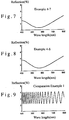
- Fig. 1 is a graph showing the results of the measurements of the spectral reflectance in Example 4-1.
- Fig. 2 is a graph showing the results of the measurements of the spectral reflectance in Example 4-2.
- Fig. 3 is a graph showing the results of the measurements of the spectral reflectance in Example 4-3.
- Fig. 4 is a graph showing the results of the measurements of the spectral reflectance in Example 4-4.
- Fig. 5 is a graph showing the results of the measurements of the spectral reflectance in Example 4-5.
- Fig. 6 is a graph showing the results of the measurements of the spectral reflectance in Example 4-6.
- Fig. 7 is a graph showing the results of the measurements of the spectral reflectance in Example 4-7.
- Fig. 8 is a graph showing the results of the measurements of the spectral reflectance in Example 4-8.
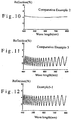
- Fig. 10 is a graph showing the results of the measurements of the spectral reflectance in Comparative Example 2.
- Fig. 11 is a graph showing the results of the measurements of the spectral reflectance in Comparative Example 3.
- Fig. 12 is a graph showing the results of the measurements of the spectral reflectance in Example 5-1.
- Fig. 13 is a graph showing the results of the measurements of the spectral reflectance in Example 5-2.
- Fig. 14 is a graph showing the results of the measurements of the spectral reflectance in Example 5-3.
- Fig. 15 is a graph showing the results of the measurements of the spectral reflectance in Example 5-4.
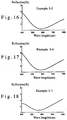
- Fig. 16 is a graph showing the results of the measurements of the spectral reflectance in Example 5-5.
- Fig. 17 is a graph showing the results of the measurements of the spectral reflectance in Example 5-6.
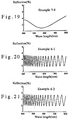
- Fig. 19 is a graph showing the results of the measurements of the spectral reflectance in Example 5-8.
- Fig. 20 is a graph showing the results of the measurements of the spectral reflectance in Example 6-1.
- Fig. 21 is a graph showing the results of the measurements of the spectral reflectance in Example 6-2.
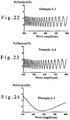
- Fig. 22 is a graph showing the results of the measurements of the spectral reflectance in Example 6-3.
- Fig. 23 is a graph showing the results of the measurements of the spectral reflectance in Example 6-4.
- Fig. 24 is a graph showing the results of the measurements of the spectral reflectance in Example 6-5.
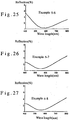
- Fig. 25 is a graph showing the results of the measurements of the spectral reflectance in Example 6-6.
- Fig. 26 is a graph showing the results of the measurements of the spectral reflectance in Example 6-7.
- Fig. 27 is a graph showing the results of the measurements of the spectral reflectance in Example 6-8.
- Fig. 28 is a graph showing the results of the measurements of the spectral reflectance in Example 6-9.
- Fig. 29 is a graph showing the results of the measurements of the spectral reflectance in Example 6-10.
- Fig. 30 is a graph showing the results of the measurements of the spectral reflectance in Example 6-11.
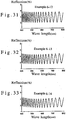
- Fig. 31 is a graph showing the results of the measurements of the spectral reflectance in Example 6-12.
- Fig. 32 is a graph showing the results of the measurements of the spectral reflectance in Example 6-13.
- Fig. 33 is a graph showing the results of the measurements of the spectral reflectance in Example 6-14.
- Fig. 34 is a graph showing the results of the measurements of the spectral reflectance in Comparative Example 5.
- Fig. 35 is a graph showing the results of the measurements of the spectral reflectance in Comparative Examples 6 and 7.
- the fluorine-containing polyfunctional (meth)acrylate of the present invention is represented by the formula (1) above.
- the present fluorine-containing polyfunctional (meth)acrylate may be fluorine-containing bifunctional (meth)acrylate having a (meth)acryloyl group and a hydroxyl group wherein one of R 1 and R 2 stands for an acryloyl group or a methacryloyl group, the other of R 1 and R 2 stands for a hydrogen atom, one of R 3 and R 4 stands for an acryloyl group or a methacryloyl group, and the other of R 3 and R 4 stands for a hydrogen atom (referred to as diester A hereinbelow); fluorine-containing trifunctional (meth)acrylate having a (meth)acryloyl group and a hydroxyl group wherein one of R 1 , R 2 , R 3 , and R 4 stands for a hydrogen atom and each of the remaining three of R 1 , R 2 , R 3 ,
- diester A may include 1,8-bis((meth)acryloyloxy)-2,7-dihydroxy-4,4,5,5-tetrafluorooctane, 1,7-bis((meth)acryloyloxy)-2,8-dihydroxy-4,4,5,5-tetrafluorooctane, 2,7-bis((meth)acryloyloxy)-1,8-dihydroxy-4,4,5,5-tetrafluorooctane, 1,9-bis((meth)acryloyloxy)-2,8-dihydroxy-4,4,5,5,6,6-hexafluorononane, 1,8-bis((meth)acryloyloxy)-2,9-dihydroxy-4,4,5,5,6,6-hexafluorononane, 2,8-bis((meth)acryloyloxy)-1,9-dihydroxy-4,4,5,5,6,6,-hexafluorononane, 1,10-bis(((meth
- Preferred examples of triester A may include 1,2,8-tris((meth)acryloyloxy)-7-hydroxy-4,4,5,5-tetrafluorooctane, 1,2,7-tris((meth)acryloyloxy)-8-hydroxy-4,4,5,5-tetraflouorooctane, 1,2,9-tris((meth)acryloyloxy)-8-hydroxy-4,4,5,5,6,6-hexafluorononane, 1,2,8-tris((meth)acryloyloxy)-9-hydroxy-4,4,5,5,6,6-hexafluorononane, 1, 2, 10-tris((meth)acryloyloxy)-9-hydroxy-4,4,5,5,6,6,7,7-octafluorodecane, 1,2,9-tris((meth)acryloyloxy)-10-hydroxy-4,4,5,5,6,6,7,7-octafluorodecane, 1, 2, 11-tris((
- tetraester A may include 4,4,5,5-tetrafluorooctane-1,2,7,8-tetraol tetra(meth)acrylate, 4,4,5,5,6,6-hexafluorononane-1,2,8,9-tetraol tetra(meth)acrylate, 4,4,5,5,6,6,7,7-octafluorodecane-1,2,9,10-tetraol tetra(meth)acrylate, 4,4,5,5,6,6,7,7,8,8-decafluoroundecane-1,2,10,11-tetraol tetra(meth)acrylate, or 4,4,5,5,6,6,7,7,8,8,9,9-dodecafluorododecane-1,2,11,12-tetraol tetra(meth)acrylate.
- diester A, triester A, and tetraester A may be used alone or as
- Diester A may be prepared by reacting diepoxide containing fluorine represented by the formula (2) (referred to as diepoxide B hereinbelow) and 0.8 to 5 equivalent of (meth)acrylic acid by ordinary ring opening reaction in the presence of a catalyst: wherein R stands for a fluoroalkylene group having 2 to 12 carbon atoms and 2 or more fluorine atoms.
- Triester A or tetraester A may be prepared, for example, by a two-step reaction including (a) reacting diepoxide B and 2 equivalent of (meth)acrylic acid by an ordinary ring-opening reaction in the presence of a catalyst to produce diester A, and (b) esterifying diester A with (meth)acryloylchloride.
- Preferred examples of diepoxide B above may include 1,2-bis(2',3'-epoxypropyl)perfluoroethane, 1,3-bis(2',3'-epoxypropyl)perfluoropropane, 1,4-bis(2',3'-epoxypropyl)perfluorobutane, 1,5-bis(2',3'-epoxypropyl)perfluoropentane, or 1,6-bis(2'3'-epoxypropyl)perfluorohexane.
- reaction (a) For reacting diepoxide B and (meth)acrylic acid in reaction (a), it is preferred to charge 1.6 to 10 mol, more preferably 2.0 to 3.6 mol of (meth) acrylic acid per 1 mol of diepoxide B.
- the temperature for the reaction is preferably 40 to 200 °C, more preferably 80 to 120 °C.
- the duration of the reaction is preferably 1 to 48 hours, more preferably 2 to 12 hours.
- Examples of the catalyst used in reaction (a) may include tertiary amines such as triethylamine or benzyldimethylamine; or quaternary ammonium salts such as tetraethylammonium bromide or tetramethylammonium bromide.
- the amount of the catalyst is preferably 0.001 to 5.0 % by weight, more preferably 0.01 to 2.5 % by weight of the total weight of the reaction mixture.
- reaction (a) it is preferred to add a polymerization inhibitor for inhibiting polymerization during the reaction, such as hydroquinone, hydroquinone monoethyl ether or tert-butylcatechol.
- a polymerization inhibitor for inhibiting polymerization during the reaction such as hydroquinone, hydroquinone monoethyl ether or tert-butylcatechol.
- the amount of the polymerization initiator is preferably 0.001 to 2.0 % by weight, more preferably 0.005 to 0.2 % by weight of the total weight of the reaction mixture.
- the resulting mixture containing diester A may be subjected to a variety of treatments depending on the need to obtain diester A of high quality, or the resulting mixture containing diester A may also be subjected to a variety of treatments depending on the need before it is subjected to step (b) for preparing triester A or tetraester A.
- treatments may include dissolving the reaction mixture in chloroform, methylene chloride, or trifluoromethylbenzene followed by washing with an alkaline aqueous solution such as sodium hydroxide or sodium carbonate for removing excess (meth) acrylic acid, excess polymerization inhibitor, or the catalyst.
- the treatment may optionally be followed by purification, for example by vacuum distillation.
- a polymerization initiator such as hydroquinone, hydroquinone monoethyl ether, or tert-butylcatechol to the distillation system for inhibiting polymerization.
- the amount of the polymerization initiator is preferably 0.001 to 2.0 % by weight, more preferably 0.005 to 0.2 % by weight of the total weight of the reaction mixture.
- Diester A obtained through reaction (a) is a mixture of three kinds of isomers represented by the formulae (3) to (5) below, wherein R 5 stands for a (meth)acryloyl group and R is the same as R in diepoxide B.
- the isomers in the mixture may be used as a mixture or used after separation.
- the mixing ratio of diester A and (meth) acryloylchloride in reaction (b) is preferably 0.8 to 3 mol, more preferably 1.0 to 2.0 mol of (meth)acryloylchloride per 1 mol of diester A for preparing triester A, and preferably 1.6 to 10 mol, more preferably 2.0 to 4.0 mol of (meth)acryloylchloride per 1 mol of diester A for preparing tetraester A.
- base such as tertiary alkylamine, for example, triethylamine or benzyldimethylamine or pyridine may be added for capturing hydrochloric acid generated during the reaction.
- the amount of the base is preferably 0.8 to 3.0 mol per 1 mol of diester A for preparing triester A, and preferably 1.6 to 10.0 mol, more preferably 2.0 to 4.5 mol per 1 mol of diester A for preparing tetraester A.
- reaction (b) it is preferred to proceed with reaction (b) in a suitable solvent.
- a suitable solvent may include chloroform, methylene chloride, or trifluoromethylbenzene.
- the amount of the solvent is preferably 20 to 2000 parts by weight, more preferably 100 to 500 parts by weight based on 100 parts by weight of the mixture of diester A, (meth)acryloylchloride, and the base optionally added.
- the temperature for reaction (b) is preferably -20 to 20 °C, more preferably -10 to 10 °C, and the duration of reaction (b) is preferably 0.1 to 12 hours, more preferably 0.5 to 2 hours.
- the resulting mixture of triester A or tetraester A, unreacted components, byproducts, chloride of the capturing agent, and the solvent may be subjected to a variety of treatments depending on the need to obtain the desired triester A or tetraester A.
- treatments may include adding a small amount of alcohols such as methanol or ethanol or water to the mixture for decomposing the excess (meth)acryloylchloride in the reaction system, washing the mixture with an acid aqueous solution such as diluted hydrochloric acid, or purifying the mixture by vacuum distillation or column chromatography.
- a polymerization inhibitor such as hydroquinone, hydroquinone monoethyl ether, or tert-butylcatechol to the mixture for inhibiting polymerization.
- the amount of the polymerization inhibitor is preferably 0.001 to 2.0 % by weight, more preferably 0.005 to 0.2 % by weight of the total weight of the mixture resulting from the reaction and the polymerization inhibitor.
- Triester A obtained through the reaction (b) is a mixture of two kinds of isomers represented by the formulae (6) and (7) below, wherein R 5 is the same as R 5 mentioned above.
- the isomers in the mixture may be used as the mixture or after separation for various usage.
- the fluorine-containing polyfunctional (meth)acrylate of the present invention may be cured by cross-linking to produce a cured film having excellent abrasion resistance and adhesion, and may be used alone or as a mixture. Specifically, diester A, triester A, tetraester A, or the mixtures thereof may be used.
- the monomer composition of the present invention contains the fluorine-containing polyfunctional (meth)acrylate selected from the group consisting of diester A, triester A, tetraester A, each represented by the formula (1), or the mixtures thereof (sometimes collectively referred to as polyfunctional ester A hereinbelow).
- the content of polyfunctional ester A is 5 to 100 % by weight, preferably 10 to 100 % by weight of the total weight of the composition.
- Preferred examples of polyfunctional ester A may include the examples of diester A, triester A, tetraester A mentioned above, or the mixtures thereof.
- the monomer composition of the present invention may optionally contain preferably less than 95 % by weight, more preferably less than 90 % by weight other curing materials such as ordinary thermosetting monomers or energy-beam curable monomers.
- Preferred examples of the thermosetting monomers and energy-beam curable monomers may include polyfunctional monomers having two or more polymerizable unsaturated groups, for example, polyalkylene glycol di(meth)acrylate such as dipentaerythritol hexa(meth)acrylate, dipentaerythritol penta(meth)acrylate, dipentaerythritol tetra(meth)acrylate, pentaerythritol tetra(meth)acrylate, pentaerythritol tri(meth)acrylate, pentaerythritol di(meth)acrylate, ditrimethylolpropane tetra(meth)acrylate, ditrimethylolpropane tri(meth
- the monomer composition of the present invention may optionally contain monofunctional (meth)acrylate as long as the desired effect of the present invention is not deteriorated.
- monofunctional (meth)acrylate may preferably be fluorine-containing monofunctional (meth)acrylate in view of the purpose of lowering the refractive index of the monomer composition, such as 2,2,2-trifluoroethyl (meth)acrylate, 2,2,3,3,3-pentafluoropropyl (meth)acrylate, 2,2,3,3,4,4,4-heptafluorobutyl (meth)acrylate, 2,2,3,3,4,4,5,5,5-nonafluoropentyl (meth)acrylate, 2,2,3,3,4,4,5,5,6,6,6-undecafluorohexyl (meth)acrylate, 2,2,3,3,4,4,5,5,6,6,7,7,7-tridecafluoroheptyl (meth)acrylate, 2,2,3,3,4,4,5,5,6,6,7,7,8,8,8
- the monomer composition of the present invention may also contain, if necessary, fluorine-containing bifunctional (meth)acrylate other than diester A as a curing material as long as the desired effect of the present invention is not deteriorated.
- fluorine-containing bifunctional (meth)acrylate other than diester A may include 2,2,2-trifluoroethylethylene glycol di(meth)acrylate, 2,2,3,3,3-pentafluoropropylethylene glycol di(meth)acrylate, 2,2,3,3,4,4,4-heptafluorobutylethylene glycol di(meth)acrylate, 2,2,3,3,4,4,5,5,5-nonafluoropentylethylene glycol di(meth)acrylate, 2,2,3,3,4,4,5,5,6,6,6-undecafluorohexylethylene glycol di(meth)acrylate, 2,2,3,3,4,4,5,5,6,6,7,7,7-tridecafluoroheptylethylene glycol di(meth)acrylate
- the monomer composition of the present invention may optionally contain less than 95 % by weight, preferably less than 90 % by weight inorganic powders.
- inorganic powders having the refractive index of 1.5 or lower such as magnesium fluoride or colloidal silica are particularly preferred in order not to increase the refractive index of the overall composition.
- the particle size of the powders is preferably sufficiently smaller than the wave length of the visible radiation for the purpose of ensuring the transparency of the low refractivity material. Specifically, the particle size is preferably not larger than 100 nm, more preferably not larger than 50 nm.
- the monomer composition of the present invention may optionally be mixed with a polymer for improving the film forming property.
- the polymer to be added is not particularly limited, but preferably a polymer of fluorine-containing (meth)acrylate, or a copolymer of fluorine-containing (meth)acrylate with other monomers.
- the mixing ratio of the polymer is preferably 25 parts by weight or less, more preferably 10 parts by weight or less based on 100 parts by weight of the curing materials in the monomer composition.
- the low refractivity material of the present invention is prepared by curing the monomer composition by polymerization, and has the refractive index of 1.49 or lower, more preferably 1.35 to 1.49.
- the curing by polymerization may be carried out by optionally admixing a curing initiator and/or a solvent such as isopropylalcohol or toluene to the monomer composition; applying the resulting mixture to a substrate such as a transparent substrate by an ordinary coating method such as roll coating method, gravure coating method, dip coating method, or spin coating method; drying; and curing by heating or irradiating active energy beam such as ultraviolet ray, electron beam, or radio active ray.
- the conditions for curing by polymerization may suitably be selected depending on the curing materials in the composition. When the low refractivity material is formed into a film, the film thickness may suitably be selected depending on the purpose.
- the curing initiator may include azo radical polymerization initiators such as azobisisobutyronitrile, azobiscyclohexanecarbonitrile, or azobisvaleronitrile; radical polymerization initiators of organic peroxide type such as benzoyl peroxide, tert-butylhydroperoxide, cumene peroxide, or diacylperoxide; photopolymerization initiators such as benzoin compounds including benzoin, benzoin methyl ether, benzoin ethyl ether, or benzoin isopropyl ether, carbonyl compounds including benzyl, benzophenone, acetophenone, or Michler's ketone, azo compounds including azobisisobutyronitrile or azodibenzoyl, or a mixture of ⁇ -diketone and a tertiary amine.
- the amount of the curing initiator may be 0.01 to 10 % by weight of the total weight of the curing
- the reflection reducing film of the present invention has a transparent substrate and a layer of the low refractivity material.
- the layer of the low refractivity material preferably has a suitable thickness.
- the suitable thickness is preferably selected so that the wave length which indicated the minimum reflectance of the reflection reducing film is usually 420 to 720 nm, more preferably 520 to 620 nm.
- the kind of the transparent substrate is not particularly limited as long as the substrate is transparent.
- a PET (polyethylene terephthalate) film, a TAC (triacetyl cellulose) film, an acryl film, or a polycarbonate film may be used.
- the reflection reducing film of the present invention may be composed of the transparent substrate and the layer of the low refractivity material, or of the transparent substrate, the layer of the low refractivity material, and at least one material layer therebetween.
- the material layer may be a layer of a high refractivity material for improving the reflection reducing effect.
- the layer of the high refractivity material preferably has the refractive index of 1.55 or higher, and the thickness of the layer may preferably be selected so that the wave length which indicated the maximum reflectance of the film provided with the layer of the high refractivity material is usually 400 to 900 nm.
- the transparent substrate may be provided with one layer of the low refractivity material and one layer of the high refractivity material, or it may be provided with two or more layers of each material.
- the layers of the low refractivity material and the high refractivity material may be laminated alternately, with the outermost layer being of the low refractivity material.
- each layer of the low refractivity material or the high refractivity material may be made of the same or different materials.
- the layer of the low refractivity material may be formed by optionally admixing a curing initiator and/or a solvent such as isopropylalcohol or toluene to the fluorine-containing monomer composition; applying the resulting mixture to a substrate such as a transparent substrate by an ordinary coating method such as roll coating method, gravure coating method, dip coating method, or spin coating method; drying; and curing by heating or irradiating active energy beam such as ultraviolet ray, electron beam, or radio active ray.
- the conditions for curing by polymerization may suitably be selected depending on the curing materials in the composition.
- the layer of the high refractivity material may be formed in the same way.
- the reflection reducing film of the present invention may be provided with a hard coating for further improving the abrasion resistance of the reflection reducing film.
- the hard coating may be provided between the laminated layers of the low refractivity material and the high refractivity material and the transparent substrate.
- the kind of the hard coating is not particularly limited, and may be made of an ordinary resin for hard coating prepared from the polyfunctional monomer having two or more polymerizable unsaturated groups. However, if the difference in the refractive index of the transparent substrate and the hard coating is too large, reflection will occur at the interface therebetween. Thus, the difference in the refractive index of the transparent substrate and the hard coating is preferably kept as small as possible.
- the thickness of the hard coating is preferably 1 to 10 ⁇ m, more preferably 3 to 5 ⁇ m.
- the method of forming the hard coating is not particularly limited, and may include applying the hard coating material to a substrate such as a transparent substrate by an ordinary coating method such as roll coating method, gravure coating method, dip coating method, or spin coating method; drying; and curing by an ordinary method using energy beam or heat.
- an ordinary coating method such as roll coating method, gravure coating method, dip coating method, or spin coating method
- drying and curing by an ordinary method using energy beam or heat.
- the fluorine-containing polyfunctional (meth)acrylate of the preset invention has a plurality of (meth)acryloyl groups, it is cured by cross-linking polymerization to acquire three-dimensional net work structure, and gives a cured film having high surface hardness and excellent abrasion resistance, wear resistance, heat resistance, and weatherability. Further, diester A and triester A having a hydroxyl group can improve the adhesion of the cured coating film.
- the obtained cured product has superior light transmittance and low refractive index as well as excellent adhesion, so that it is useful as a resin with low refractive index for antireflection coatings or clad materials for optical fibers which requires superior abrasion resistance and adhesion.
- the cured product prepared by polymerizing the monomer composition has the properties of both the low refractive index and the hardness of (meth)acrylate, and the monomer composition can be formed into a film by applying on a substrate and cured by polymerization, thereby preparing the low refractivity material of the present invention.
- the low refractivity material of the present invention has the properties of both the low refractive index and the hardness of (meth) acrylate, and has low refractive index and high surface hardness. Further, since it is prepared from diester A or triester A having a hydroxyl group, its adhesion to other materials is further improved.
- the reflection reducing film of the present invention is provided with a layer of the low refractivity material, it has low refractive index, high surface hardness, and high adhesion, and may be applied to a variety of usage. Accordingly, by using the monomer composition of the present invention, reflection reducing films having a large area of a layer of the low refractivity material may be produced continuously and effectively at a low cost, compared to the conventional vapor deposition of magnesium fluoride.
- the resulting reaction liquid was dissolved in 500 ml of chloroform, and the solution thus obtained was washed three times with a 10 % aqueous solution of sodium carbonate, and three times with saturated brine. Chloroform was removed from the washed solution under reduced pressure to obtain yellow crystals. The yellow crystals were subjected to purification by column chromatography using a mixed solvent of ethyl acetate/n-hexane (volume ratio 1:2) as a developing solvent, thereby obtaining 417.1 g (0.91 mol) of product A.
- Product A was a compound having the structure represented by the formula (8): XCH 2 (CF 2 ) 4 CH 2 X wherein two X's are the same or different groups, and are group X 1 represented by the formula (9) or group X 2 represented by the formula (10).
- Product A was a mixture of three kinds of isomers, namely the isomer having two X 1 's, the isomer having two X 2 's, and the isomer having one X 1 and one X 2 .
- 312.2 g (0.87 mol) of product B having the structure represented by the formula (11) was prepared in the same way as in Example 1-1 except that 314.2 g (1 mol) of 1,4-bis(2'3'-epoxypropyl)perfluorobutane was replaced by 214.2 g (1 mol) of 1,2-bis(2',3'-epoxypropyl)perfluoroethane.
- Product B was a mixture of three kinds of isomers, namely the isomer having two X 1 's, the isomer having two X 2 's, and the isomer having one X 1 and one X 2 .
- the resulting reaction liquid was dissolved in 500 ml of chloroform, and the solution thus obtained was washed three times with a 10 % aqueous solution of sodium carbonate, and three times with saturated brine. It is believed that the chloroform solution thus obtained contains the compounds represented by the formulae (13), (14), and (15).
- the resulting reaction liquid was dissolved in 500 ml of chloroform, and the solution thus obtained was washed three times with a 10 % aqueous solution of sodium carbonate, and three times with saturated brine. It is believed that the chloroform solution thus obtained contains the compounds represented by the formulae (13), (14), and (15) above.
- the film was cured by irradiating the film with ultraviolet ray by an ultraviolet irradiator manufactured by IWASAKI ELECTRIC CO., LTD. at 800 mJ/cm 2 to form a hard coating, thereby preparing a PET film with hard coating (abbreviated as HC-PET hereinbelow).
- a hard coating was formed on a TAC film in the same way as in Preparation Example 1 to prepare a TAC film with hard coating (abbreviated as HC-TAC hereinbelow).
- HC-TAC hard coating
- 240 parts by weight of toluene dispersion containing 30 % zinc oxide powders (trade name "ZN-300", manufactured by SUMITOMO OSAKA CEMENT CO. LTD.), 28 parts by weight of trimethylolpropane triacrylate (abbreviated as TMPTA hereinbelow), 1 part by weight of "DAROCUR1116" (trade name, manufactured by E.
- acetophenone compound (abbreviated as "DAROCUR1116” hereinbelow) as a curing initiator, and 1900 parts by weight of toluene as a solvent were mixed together to prepare a coating liquid.
- the coating liquid was applied to the HC-TAC by dip coating method (at pull-up rate of 100 mm/min.).
- the applied coating liquid was cured by irradiating with ultraviolet ray by an ultraviolet irradiator at 1000 mJ/cm 2 to form a layer of a high refractivity material, thereby preparing a TAC film with a layer of the high refractivity material (abbreviated as HR-TAC-A hereinbelow).
- a TAC film with a layer of the high refractivity material (abbreviated as HR-TAC-B hereinbelow) was prepared in the same way as in Preparation Example 2 except that the dip coating method was carried out at the pull-out rate of 130 mm/min.
- the applied coating liquids were irradiated with electron beam of the absorbed dose of 15 Mrad by an electron beam irradiator (manufactured by IWASAKI ELECTRIC CO., LTD.) at the accelerating voltage of 125 kV and the beam current of 35 mA to cure the applied monomer compositions, thereby preparing reflection reducing PET films with a layer of the low refractivity material.
- the films thus obtained were subjected to the measurements of (a) spectral reflectance, (b) abrasion resistance, and (c) adhesion, and the' coating liquids thus obtained were subjected to the measurement of (e) refractive index of the low refractivity material, each specified below.
- the spectral reflectance of the film was measured by an UV Spectrophotometer equipped with 5 degree specular reflectivity measuring attachment (manufactured by JAPAN SPECTROSCOPIC CO., LTD., trade name "U-best 35"). The measurement was effected on the coated surface, and the opposite surface of the film was roughened with a sandpaper for inhibiting reflection on the opposite surface. The results are shown in Figs. 1 and 2. The minimum reflectance of each film is shown in Table 1.
- the coating liquid was applied on a glass plate so that the dry thickness of the resulting coating film was 500 ⁇ m, and cured by irradiating with electron beam of the absorbed dose of 5 Mrad by an electron beam irradiator at the accelerating voltage of 175 kV and the beam current of 5 mA.
- the film thus obtained was peeled off of the glass plate, and the refractive index of the film was measured using Abbe's refractometer (manufactured by ATAGO CO., LTD.). The results are shown in Table 1.
- Example 1-2 2,2,3,3,4,4,5,5,6,6,7,7,8,8,9,9,9-heptadecafluorononylethylene glycol diacrylate (abbreviated as F 17 EDA hereinbelow), and TMMTA were mixed together at the mixing ratio set forth in Table 1 to prepare monomer compositions.
- Each of the monomer compositions was mixed with 1900 parts by weight of toluene as a solvent to prepare two kinds of coating liquids. Then, each of the coating liquids was applied to HC-PET prepared in Preparation Example 1 by a dip coating method (at pull-up rate of 90 mm/min.).
- the applied coating liquids were irradiated with electron beam of the absorbed dose of 15 Mrad by an electron beam irradiator (manufactured by IWASAKI ELECTRIC CO,. LTD.) at the accelerating voltage of 125 kV and the beam current of 35 mA to cure the applied monomer compositions, thereby preparing reflection reducing PET films with a layer of the low refractivity material.
- the coating liquids and the reflection reducing films thus obtained were subjected to the same evaluation tests as in Examples 4-1 and 4-2. The results are shown in Figs. 3 and 4 and Table 1.
- Example 1-1 Product A synthesized in Example 1-1, product G synthesized in Example 3-1, "XBA-ST SILICA GEL” (trade name, manufactured by NISSAN CHEMICAL INDUSTRIES CO., LTD., colloidal silica 30 % : xylene 45 % : n-butanol 25%), and DAROCUR1116 were mixed together at the mixing ratio set forth in Table 1 to prepare monomer compositions.
- Each of the monomer compositions was mixed with 1900 parts by weight of toluene to prepare two kinds of coating liquids. Then, each of the coating liquids was applied to HR-TAC-A prepared in Preparation Example 2 by a dip coating method (at pull-up rate of 90 mm/min.).
- the applied coating liquids were irradiated three times with ultraviolet ray by an ultraviolet irradiator at 1000 mJ/cm 2 to cure the applied monomer compositions, thereby preparing reflection reducing TAC films with laminated layers of the low refractivity material and the high refractivity material.
- the coating liquids and the reflection reducing films thus obtained were subjected to the same evaluation tests as in Examples 4-1 and 4-2. The results are shown in Figs. 5 and 6 and Table 1.
- Reflection reducing TAC films with laminated layers of the low refractivity material and the high refractivity material were prepared in the same way as in Examples 4-5 and 4-6 except that HR-TAC-A prepared in Preparation Example 2 was replaced by HR-TAC-B prepared in Preparation Example 3.
- the dip coating method was performed at the pull-up rate of 70 mm/min.
- the coating liquids and the reflection reducing films thus obtained were subjected to the same evaluation tests as in Examples 4-1 and 4-2. The results are shown in Figs. 7 and 8 and Table 1.
- F 17 EDA and TMMTA were mixed at the mixing ratio set forth in Table 1, and further mixed with 1900 parts by weight of toluene as a solvent to prepare a coating liquid. Then the coating liquid thus obtained was applied to HC-PET prepared in Preparation Example 1 by dip coating method (at the pull-up rate of 90 mm/min.). The applied coating liquid was irradiated with electron beam of the absorbed dose of 15 Mrad by an electron beam irradiator (manufactured by IWASAKI ELECTRIC CO., LTD.) at the accelerating voltage of 125 kV and the beam current of 35 mA to cure the applied coating liquid, thereby preparing a reflection reducing PET film with a layer of the low refractivity material. The coating liquid and the reflection reducing film thus obtained were subjected to the same evaluation tests as in Examples 4-1 and 4-2. The results are shown in Fig. 11 and Table 1.
- Heptadecafluorodecyl acrylate (abbreviated as F 17 A hereinbelow) and TMMTA were mixed at the mixing ratio of 70 : 30, 50 : 50, and 30 : 70, but were not mutually dissolved and exhibited turbid appearance.
- XBA-ST denotes "XBA-ST SILICA SOL” (trade name) manufactured by NISSAN CHEMICAL INDUSTRIES CO., LTD. consisting of colloidal silica 30%: xylene 45%: n-butanol 25%
- D.1116 denotes "DAROCUR1116” (trade name) manufactured by E. MELCK CORPORATION, 1-(4-isopropylphenyl)-2-hydroxy-2-methylpropane-1-one.
- Example 2-1 and TMMTA were mixed at the mixing ratio set forth in Table 2 to prepare monomer compositions.
- Each of the monomer compositions was mixed with 1900 parts by weight of toluene to prepare two kinds of coating liquids.
- reflection reducing PET films with a layer of the low refractivity material were prepared, and subjected to evaluation tests in the same way as in Examples 4-1 and 4-2.
- the results are shown in Figs. 12 and 13 and Table 2.
- Reflection reducing TAC films with laminated layers of the low refractivity material and the high refractivity material were prepared in the same way as in Examples 5-5 and 5-6 except that HR-TAC-A prepared in Preparation Example 2 was replaced by HR-TAC-B prepared in Preparation Example 3.
- the coating liquids and the reflection reducing films thus obtained were subjected to the evaluation tests. The results are shown in Figs. 18 and 19 and Table 2.
- Example 3-1 and TMMTA were mixed together at the mixing ratio set forth in Table 3 to prepare monomer compositions.
- Each of the monomer compositions was mixed with 1900 parts by weight of toluene to prepare two kinds of coating liquids.
- reflection reducing films with a layer of the low refractivity material were prepared in the same way as in Examples 4-1 and 4-2, and subjected to measurements of (a) the spectral reflection and (b) the abrasion resistance discussed above.
- the coating liquids were subjected to the measurement of (d) the refractive index discussed above. The results are shown in Figs. 20 and 21 and Table 3.
- Example 3-1 and F 17 A were mixed together at the mixing ratio set forth in Table 3 to prepare monomer compositions.
- Each of the compositions was mixed with 1900 parts by weight of toluene to prepare two kinds of coating liquids.
- reflection reducing PET films with a layer of the low refractivity material were prepared in the same way as in Examples 4-3 and 4-4, and subjected to the evaluation tests in the same way as in Examples 6-1 and 6-2.
- the results are shown in Figs. 22 and 23 and Table 3.
- reflection reducing TAC films with laminated layers of the low refractivity material and the high refractivity material were prepared except that the HR-TAC-A prepared in Preparation Example 2 was replaced by HR-TAC-B prepared in Preparation Example 3.
- the coating liquids and the reflection reducing films thus obtained were subjected to the same evaluation tests as in Examples 6-1 and 6-2. The results are shown in Figs. 26 and 27 and Table 3.
- Example 3-1 TMPTA, "XBA-ST SILICA SOL” (trade name, manufactured by NISSAN CHEMICAL INDUSTRIES CO., LTD., colloidal silica 30 %: xylene 45 %: n-butanol 25 %), and DAROCURE1116 were mixed together at the mixing ratio set forth in Table 3 to prepare monomer compositions.
- Each of the compositions was mixed with 1900 parts by weight of toluene as a solvent to prepare two kinds of coating liquids. Then, each coating liquid was applied to HR-TAC-A prepared in Preparation Example 2 by dip coating method (at the pull-up rate of 90 mm/min.).
- the applied coating liquids were irradiated three times with ultraviolet ray by an ultraviolet irradiator at 1000 mJ/cm 2 to cure the coating liquid, thereby preparing reflection reducing TAC films with laminated layers of the low refractivity material and the high refractivity material.
- the coating liquids and the reflection reducing films thus obtained were subjected to the evaluation tests as in Examples 6-1 and 6-2. The results are shown in Figs. 28 and 29 and Table 3.
- Example 3-2 Product H synthesized in Example 3-2, and F 17 A, TMMTA or F 17 EDA were mixed together at the mixing ratio set forth in Table 3 to prepare monomer compositions.
- Each of the compositions was mixed with 1900 parts by weight of toluene as a solvent to prepare four kinds of coating liquids.
- each coating liquid was applied to HC-PET prepared in Preparation Example 1 by dip coating method (at the pull-up rate of 90 mm/min.).
- the applied coating liquids were irradiated with electron beam of the absorbed dose of 15 Mrad by an electron beam irradiator at the accelerating voltage of 125 kV and beam current of 35 mA to cure the coating liquids, thereby preparing reflection reducing PET films with a layer of the low refractivity material.
- the coating liquids and the reflection reducing films thus obtained were subjected to the evaluation tests as in Examples 6-1 and 6-2. The results are shown in Figs. 30 to 33 and Table 3.
Landscapes
- Chemical & Material Sciences (AREA)
- Organic Chemistry (AREA)
- Health & Medical Sciences (AREA)
- Chemical Kinetics & Catalysis (AREA)
- Medicinal Chemistry (AREA)
- Polymers & Plastics (AREA)
- Engineering & Computer Science (AREA)
- Materials Engineering (AREA)
- Addition Polymer Or Copolymer, Post-Treatments, Or Chemical Modifications (AREA)
- Organic Low-Molecular-Weight Compounds And Preparation Thereof (AREA)
Applications Claiming Priority (16)
| Application Number | Priority Date | Filing Date | Title |
|---|---|---|---|
| JP2647396 | 1996-02-14 | ||
| JP2647396 | 1996-02-14 | ||
| JP26473/96 | 1996-02-14 | ||
| JP3380896 | 1996-02-21 | ||
| JP33808/96 | 1996-02-21 | ||
| JP3380896 | 1996-02-21 | ||
| JP57264/96 | 1996-03-14 | ||
| JP5726496 | 1996-03-14 | ||
| JP5726496 | 1996-03-14 | ||
| JP21744996 | 1996-08-19 | ||
| JP21744996 | 1996-08-19 | ||
| JP217449/96 | 1996-08-19 | ||
| JP29650696 | 1996-11-08 | ||
| JP296506/96 | 1996-11-08 | ||
| JP29650696 | 1996-11-08 | ||
| PCT/JP1997/000356 WO1997030021A1 (fr) | 1996-02-14 | 1997-02-12 | Esters (meth)acryliques polyfonctionnels fluores, composition de fluoromonomeres, materiau possedant un faible indice de refraction et film faiblement reflechissant |
Publications (3)
| Publication Number | Publication Date |
|---|---|
| EP0820980A1 true EP0820980A1 (de) | 1998-01-28 |
| EP0820980A4 EP0820980A4 (de) | 1999-05-19 |
| EP0820980B1 EP0820980B1 (de) | 2001-07-11 |
Family
ID=27520840
Family Applications (1)
| Application Number | Title | Priority Date | Filing Date |
|---|---|---|---|
| EP19970902653 Expired - Lifetime EP0820980B1 (de) | 1996-02-14 | 1997-02-12 | Fluorierte polyfunktionelle (meth)acrylester, fluormonomer-zusammensetzung, material mit niedrigem brechungsindex und niedrig-reflektierender film |
Country Status (6)
| Country | Link |
|---|---|
| US (1) | US6254973B1 (de) |
| EP (1) | EP0820980B1 (de) |
| KR (1) | KR100239329B1 (de) |
| CN (2) | CN1117726C (de) |
| DE (1) | DE69705590T2 (de) |
| WO (1) | WO1997030021A1 (de) |
Cited By (4)
| Publication number | Priority date | Publication date | Assignee | Title |
|---|---|---|---|---|
| WO1998046556A1 (en) * | 1997-04-17 | 1998-10-22 | Alliedsignal Inc. | Photocurable halofluorinated acrylates |
| US6306563B1 (en) | 1999-06-21 | 2001-10-23 | Corning Inc. | Optical devices made from radiation curable fluorinated compositions |
| US6555288B1 (en) | 1999-06-21 | 2003-04-29 | Corning Incorporated | Optical devices made from radiation curable fluorinated compositions |
| US7670640B2 (en) | 2000-08-29 | 2010-03-02 | Daikin Industries, Ltd. | Curable fluorine-containing polymer, curable resin composition prepared from same and antireflection film |
Families Citing this family (11)
| Publication number | Priority date | Publication date | Assignee | Title |
|---|---|---|---|---|
| JP2001281403A (ja) * | 2000-03-29 | 2001-10-10 | Fuji Photo Film Co Ltd | 防眩性フイルム、防眩性反射防止フィルム、偏光板および画像表示装置 |
| US7351471B2 (en) * | 2000-12-06 | 2008-04-01 | 3M Innovative Properties Company | Fluoropolymer coating compositions with multifunctional fluoroalkyl crosslinkers for anti-reflective polymer films |
| ATE474239T1 (de) * | 2002-08-15 | 2010-07-15 | Fujifilm Corp | Antireflexfilm, polarisationsplatte und bildanzeigeeinrichtung |
| US20050233069A1 (en) * | 2003-11-25 | 2005-10-20 | Dai Nippon Printing Co., Ltd. | Antiglare film |
| US20060147177A1 (en) * | 2004-12-30 | 2006-07-06 | Naiyong Jing | Fluoropolymer coating compositions with olefinic silanes for anti-reflective polymer films |
| US20060148996A1 (en) * | 2004-12-30 | 2006-07-06 | Coggio William D | Low refractive index fluoropolymer compositions having improved coating and durability properties |
| US7323514B2 (en) * | 2004-12-30 | 2008-01-29 | 3M Innovative Properties Company | Low refractive index fluoropolymer coating compositions for use in antireflective polymer films |
| US8530054B2 (en) * | 2006-09-27 | 2013-09-10 | 3M Innovative Properties Company | Solar control multilayer film |
| KR101212668B1 (ko) * | 2009-11-20 | 2012-12-14 | 제일모직주식회사 | 고분자, 보호막 조성물 및 이를 이용한 패턴 형성 방법 |
| US8835664B2 (en) | 2010-02-04 | 2014-09-16 | Lg Chem, Ltd. | Fluorinated compound, a composition comprising the same, and a production method for a film using the same |
| CN104884537A (zh) * | 2012-12-28 | 2015-09-02 | 富士胶片株式会社 | 硬化性树脂组合物、红外线截止滤波器及使用其的固体摄影元件 |
Family Cites Families (7)
| Publication number | Priority date | Publication date | Assignee | Title |
|---|---|---|---|---|
| JPS57145148A (en) * | 1981-03-05 | 1982-09-08 | Mitsubishi Gas Chem Co Inc | Curable resin composition |
| DE3151350A1 (de) * | 1981-12-24 | 1983-07-07 | Bayer Ag, 5090 Leverkusen | Mit einem 3-schichtueberzug ausgeruestete kunststofformkoerper und ein verfahren zur herstellung der ausruestung |
| DE3525494A1 (de) | 1985-07-17 | 1987-01-29 | Hoechst Ag | Verfahren zur herstellung von fluorhaltigen diolen und tetrolen |
| JPH0811777B2 (ja) | 1986-02-27 | 1996-02-07 | 大日本インキ化学工業株式会社 | 低屈折率樹脂組成物 |
| JP2801719B2 (ja) | 1990-01-19 | 1998-09-21 | 日本化薬株式会社 | (メタ)アクリル酸エステル、これを用いた樹脂組成物、耐熱性光ファイバ用コーティング剤とそれらの硬化物 |
| JPH03261600A (ja) * | 1990-03-12 | 1991-11-21 | Matsushita Electric Ind Co Ltd | 表面に凹凸を有する構造体 |
| JPH04356443A (ja) | 1991-04-11 | 1992-12-10 | Nippon Kayaku Co Ltd | フッ素含有(メタ)アクリル酸エステル、その製造方法およびその硬化物 |
-
1997
- 1997-02-12 CN CN97190350A patent/CN1117726C/zh not_active Expired - Lifetime
- 1997-02-12 DE DE69705590T patent/DE69705590T2/de not_active Expired - Lifetime
- 1997-02-12 WO PCT/JP1997/000356 patent/WO1997030021A1/ja not_active Ceased
- 1997-02-12 US US08/945,228 patent/US6254973B1/en not_active Expired - Lifetime
- 1997-02-12 EP EP19970902653 patent/EP0820980B1/de not_active Expired - Lifetime
- 1997-02-12 KR KR1019970707240A patent/KR100239329B1/ko not_active Expired - Fee Related
- 1997-02-12 CN CNB011358092A patent/CN1279108C/zh not_active Expired - Lifetime
Non-Patent Citations (2)
| Title |
|---|
| No further relevant documents disclosed * |
| See also references of WO9730021A1 * |
Cited By (6)
| Publication number | Priority date | Publication date | Assignee | Title |
|---|---|---|---|---|
| WO1998046556A1 (en) * | 1997-04-17 | 1998-10-22 | Alliedsignal Inc. | Photocurable halofluorinated acrylates |
| US6323361B1 (en) | 1997-04-17 | 2001-11-27 | Corning Inc. | Photocurable halofluorinated acrylates |
| US6534671B2 (en) | 1997-04-17 | 2003-03-18 | Corning Incorporated | Photocurable halofluorinated acrylates |
| US6306563B1 (en) | 1999-06-21 | 2001-10-23 | Corning Inc. | Optical devices made from radiation curable fluorinated compositions |
| US6555288B1 (en) | 1999-06-21 | 2003-04-29 | Corning Incorporated | Optical devices made from radiation curable fluorinated compositions |
| US7670640B2 (en) | 2000-08-29 | 2010-03-02 | Daikin Industries, Ltd. | Curable fluorine-containing polymer, curable resin composition prepared from same and antireflection film |
Also Published As
| Publication number | Publication date |
|---|---|
| DE69705590T2 (de) | 2001-11-29 |
| CN1189149A (zh) | 1998-07-29 |
| WO1997030021A1 (fr) | 1997-08-21 |
| EP0820980B1 (de) | 2001-07-11 |
| CN1410484A (zh) | 2003-04-16 |
| US6254973B1 (en) | 2001-07-03 |
| CN1117726C (zh) | 2003-08-13 |
| DE69705590D1 (de) | 2001-08-16 |
| KR100239329B1 (ko) | 2000-02-01 |
| EP0820980A4 (de) | 1999-05-19 |
| KR19980703840A (ko) | 1998-12-05 |
| CN1279108C (zh) | 2006-10-11 |
Similar Documents
| Publication | Publication Date | Title |
|---|---|---|
| EP0820980B1 (de) | Fluorierte polyfunktionelle (meth)acrylester, fluormonomer-zusammensetzung, material mit niedrigem brechungsindex und niedrig-reflektierender film | |
| EP0863128B1 (de) | Fluorierte polyfunktionelle (meth)acrylester,zusammensetzungen,materialien mit niedriger brechung und antireflektionsfilmen | |
| AU727717B2 (en) | Chemical composition and polymers and polymeric materials derived therefrom | |
| JP2001524152A (ja) | 高屈折率臭素化モノマーから作製された光学製品 | |
| JP2003040840A (ja) | 含フッ素重合性単量体およびそれを用いた高分子化合物 | |
| US6087010A (en) | Fluorine-containing polyfunctional (meth) acrylate composition low refractivity material and reflection reducing film | |
| JP4530565B2 (ja) | モノアクリレートフルオレン化合物、該化合物を含有する組成物、及びその硬化物 | |
| JP3991730B2 (ja) | 重合性化合物およびその重合体 | |
| JPH07126552A (ja) | 含フッ素硬化性塗液及び含フッ素硬化被膜 | |
| JP3724144B2 (ja) | 含フッ素単量体組成物及び減反射フィルム | |
| JP3724132B2 (ja) | 無機化合物微粒子含有含フッ素単量体組成物及び減反射フィルム | |
| JP3940086B2 (ja) | フッ素置換脂環基含有(メタ)アクリル酸エステルおよびその硬化物 | |
| JP3724097B2 (ja) | 含フッ素単量体組成物及び減反射フィルム | |
| JP2003313242A (ja) | パーフルオロ基含有(メタ)アクリル酸エステル | |
| JP2001264507A (ja) | 減反射材、製造方法および用途 | |
| JP6586363B2 (ja) | 膜形成用組成物、ハードコートフィルム、偏光板、及び親水化ハードコートフィルムの製造方法 | |
| JP2001318206A (ja) | 減反射材およびその用途 | |
| JP3374495B2 (ja) | 反射防止用含フッ素硬化被膜及び反射防止被膜用含フッ素硬化性組成物 | |
| JP3953780B2 (ja) | 含フッ素高分子化合物の製造方法 | |
| JP4406966B2 (ja) | 含フッ素多官能(メタ)アクリル酸エステルおよび低屈折材料 | |
| JP3543359B2 (ja) | チオアセタール化合物、単量体組成物及び光学用材料 | |
| JP3963028B2 (ja) | 含フッ素多官能(メタ)アクリル酸エステル | |
| JP3374494B2 (ja) | ジ−(α−フルオロアクリル酸)フルオロアルキルエステル | |
| JP2001040249A (ja) | 含フッ素硬化性塗液、用途及び製造方法 | |
| JPH11274792A (ja) | 電磁波シールド性減反射材およびその製造方法 |
Legal Events
| Date | Code | Title | Description |
|---|---|---|---|
| PUAI | Public reference made under article 153(3) epc to a published international application that has entered the european phase |
Free format text: ORIGINAL CODE: 0009012 |
|
| 17P | Request for examination filed |
Effective date: 19971023 |
|
| AK | Designated contracting states |
Kind code of ref document: A1 Designated state(s): DE FR GB NL |
|
| A4 | Supplementary search report drawn up and despatched |
Effective date: 19990401 |
|
| AK | Designated contracting states |
Kind code of ref document: A4 Designated state(s): DE FR GB NL |
|
| GRAG | Despatch of communication of intention to grant |
Free format text: ORIGINAL CODE: EPIDOS AGRA |
|
| 17Q | First examination report despatched |
Effective date: 20000201 |
|
| GRAG | Despatch of communication of intention to grant |
Free format text: ORIGINAL CODE: EPIDOS AGRA |
|
| GRAG | Despatch of communication of intention to grant |
Free format text: ORIGINAL CODE: EPIDOS AGRA |
|
| GRAH | Despatch of communication of intention to grant a patent |
Free format text: ORIGINAL CODE: EPIDOS IGRA |
|
| GRAH | Despatch of communication of intention to grant a patent |
Free format text: ORIGINAL CODE: EPIDOS IGRA |
|
| GRAA | (expected) grant |
Free format text: ORIGINAL CODE: 0009210 |
|
| AK | Designated contracting states |
Kind code of ref document: B1 Designated state(s): DE FR GB NL |
|
| REF | Corresponds to: |
Ref document number: 69705590 Country of ref document: DE Date of ref document: 20010816 |
|
| ET | Fr: translation filed | ||
| REG | Reference to a national code |
Ref country code: GB Ref legal event code: IF02 |
|
| PLBE | No opposition filed within time limit |
Free format text: ORIGINAL CODE: 0009261 |
|
| STAA | Information on the status of an ep patent application or granted ep patent |
Free format text: STATUS: NO OPPOSITION FILED WITHIN TIME LIMIT |
|
| 26N | No opposition filed | ||
| REG | Reference to a national code |
Ref country code: FR Ref legal event code: PLFP Year of fee payment: 19 |
|
| PGFP | Annual fee paid to national office [announced via postgrant information from national office to epo] |
Ref country code: NL Payment date: 20150218 Year of fee payment: 19 |
|
| PGFP | Annual fee paid to national office [announced via postgrant information from national office to epo] |
Ref country code: DE Payment date: 20150219 Year of fee payment: 19 |
|
| PGFP | Annual fee paid to national office [announced via postgrant information from national office to epo] |
Ref country code: GB Payment date: 20150218 Year of fee payment: 19 Ref country code: FR Payment date: 20150219 Year of fee payment: 19 |
|
| REG | Reference to a national code |
Ref country code: DE Ref legal event code: R119 Ref document number: 69705590 Country of ref document: DE |
|
| GBPC | Gb: european patent ceased through non-payment of renewal fee |
Effective date: 20160212 |
|
| REG | Reference to a national code |
Ref country code: NL Ref legal event code: MM Effective date: 20160301 |
|
| REG | Reference to a national code |
Ref country code: FR Ref legal event code: ST Effective date: 20161028 |
|
| PG25 | Lapsed in a contracting state [announced via postgrant information from national office to epo] |
Ref country code: GB Free format text: LAPSE BECAUSE OF NON-PAYMENT OF DUE FEES Effective date: 20160212 Ref country code: FR Free format text: LAPSE BECAUSE OF NON-PAYMENT OF DUE FEES Effective date: 20160229 Ref country code: DE Free format text: LAPSE BECAUSE OF NON-PAYMENT OF DUE FEES Effective date: 20160901 Ref country code: NL Free format text: LAPSE BECAUSE OF NON-PAYMENT OF DUE FEES Effective date: 20160301 |