EP0822494A2 - Méthode et appareil pour équilibrage de travail - Google Patents
Méthode et appareil pour équilibrage de travail Download PDFInfo
- Publication number
- EP0822494A2 EP0822494A2 EP97305742A EP97305742A EP0822494A2 EP 0822494 A2 EP0822494 A2 EP 0822494A2 EP 97305742 A EP97305742 A EP 97305742A EP 97305742 A EP97305742 A EP 97305742A EP 0822494 A2 EP0822494 A2 EP 0822494A2
- Authority
- EP
- European Patent Office
- Prior art keywords
- task
- threshold value
- value
- load
- threshold
- Prior art date
- Legal status (The legal status is an assumption and is not a legal conclusion. Google has not performed a legal analysis and makes no representation as to the accuracy of the status listed.)
- Granted
Links
Images











Classifications
-
- G—PHYSICS
- G06—COMPUTING OR CALCULATING; COUNTING
- G06F—ELECTRIC DIGITAL DATA PROCESSING
- G06F9/00—Arrangements for program control, e.g. control units
- G06F9/06—Arrangements for program control, e.g. control units using stored programs, i.e. using an internal store of processing equipment to receive or retain programs
- G06F9/46—Multiprogramming arrangements
- G06F9/50—Allocation of resources, e.g. of the central processing unit [CPU]
- G06F9/5083—Techniques for rebalancing the load in a distributed system
Definitions
- the present invention relates to load balancing methods and apparatus used for a computer system in which plural nodes (computers, in practice) are connected with each other via a network and each node processes an input task (message).
- plural nodes computers, in practice
- each node processes an input task (message).
- nodes The computer systems in which plural computers (called “nodes”, hereinafter) are connected to each other via a network are classified into two types according to the manner in which each task is accepted: one is a centralized arrival system in which all tasks are accepted by a single node (called a "task acceptance node") and the accepted tasks are distributed from the task acceptance node to other nodes; the other type is a distributed arrival system in which a task arrives at any node and the node accepts the task.
- a centralized arrival system in which all tasks are accepted by a single node
- the accepted tasks are distributed from the task acceptance node to other nodes
- the other type is a distributed arrival system in which a task arrives at any node and the node accepts the task.
- load balancing methods There are also two types of load balancing methods: one is a centralized control method in which one node in the system has load balancing processing equipment and only the node (having the load balancing processing equipment) performs load balancing processes; the other type is a distributed control method in which each node in the system has load balancing processing equipment and each node performs load balancing processes.
- Japanese Patent Application, First Publication, No. Hei 7-152700 discloses a (performance-function uniform) system in which all nodes in the system are uniform in performance and functions, that is, possible functions to be processed are the same.
- the system load can be balanced just by equalizing the number of tasks in each node.
- processing times are different according to performance of each node; thus, the system load cannot be balanced just by equalizing the number of tasks of each node. If a load balancing method used for the performance-function uniform system is applied to such a "performance non-uniform" system, the following problems may occur.
- sender initiated As a conventional transfer algorithm, "sender initiated” and “receiver initiated” algorithms are known.
- the sender initiated algorithm is effective when the load of the entire system is low. However, if the load of the entire system becomes high, the mean response time increases and the system becomes unstable.
- the receiver initiated algorithm is effective when the load of the entire system is high. However, when the load of the entire system is low, the mean response time is larger than that of the sender initiated algorithm.
- information relating to loads of other nodes is not managed, and after the necessity of task transfer occurs, selection of a source or destination node is started. Therefore, it takes a lot of time before actual task transfer is started, that is, before the load is balanced.
- Another object of the present invention is to provide load balancing methods and apparatus which can effectively be applied to a performance non-uniform system consisting of nodes which are non-uniform in performance so as to balance the mean response times of the nodes and to realize minimization of the mean response time of the entire system.
- a further object of the present invention is to provide load balancing methods and apparatus which can effectively be applied to a function non-uniform system in which nodes are uniform in performance but non-uniform in executable functions so as to realize minimization of the mean response time of the entire system and minimization of the mean response time relating to each function.
- the present invention provides a load balancing method used for a computer system in which plural processing nodes are connected to a logical ring network and when each node processes a task input from a terminal by using a task processing unit and returns a result to the terminal, the logical ring network logically transmits tasks in turn and in one direction, said load balancing method for equally distributing loads of the entire system into the nodes in the system, comprising the steps of:
- the threshold value may be changed in accordance with a change of the number of tasks passing through the logical ring network during a fixed period, or when a round trip task is detected.
- the present invention also provides a load balancing apparatus provided for a computer system similar to the above, said load balancing apparatus, provided between the task processing unit in each node and the logical ring network, for equally distributing loads of the entire system into the nodes in the system, the apparatus comprising:
- the above apparatus may further comprise threshold value setting means for setting the threshold value stored in the threshold value storage means.
- threshold value setting means for setting the threshold value stored in the threshold value storage means.
- the present invention also provides a storage medium storing a computer program for making a computer execute the above method.
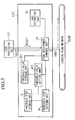
- Fig. 1 is a diagram showing the configuration of a load balancing apparatus provided for a computer system, as an embodiment of the present invention.
- Fig. 2 is a diagram showing the configuration of a load balancing apparatus provided for a computer system, as another embodiment of the present invention.
- Fig. 3 is a block diagram showing the configuration of a load balancing apparatus provided for a computer system, as yet another embodiment of the present invention.
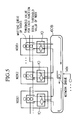
- Fig. 4 is a diagram showing an example of the arrangement with respect to the apparatuses of Figs. 1-3.
- Fig. 5 is also a diagram showing an example of the arrangement with respect to the apparatuses as shown in Figs. 1-3.
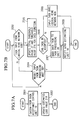
- Figs. 6A and 6B are flowcharts of general operations of the load balancing apparatus as shown in Fig. 1.
- Figs. 7A and 7B are flowcharts of general operations of the load balancing apparatus as shown in Fig. 2.
- Figs. 8A and 8B are flowcharts of general operations of the load balancing apparatus as shown in Fig. 3.
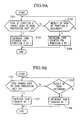
- Figs. 9A and 9B are flowcharts of the operational example 1 of the load estimating unit.
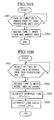
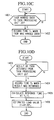
- Figs. 10A-10D are flowcharts of the operational example 2 of the load estimating unit.
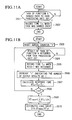
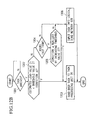
- Figs. 11A-11D are flowcharts of the operational example 3 of the load estimating unit.
- Figs. 12A and 12B are flowcharts of the operational example 1 of the task acceptance control unit.
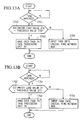
- Figs. 13A and 13B are flowcharts of the operational example 2 of the task acceptance control unit.
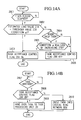
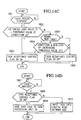
- Figs. 14A-14D are flowcharts of the operational example 3 of the task acceptance control unit.
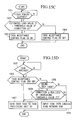
- Figs. 15A-15D are flowcharts of the operational example 4 of the task acceptance control unit.
- Figs. 16A and 16B are flowcharts of the operational example 1 of the threshold value setting unit.
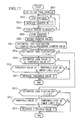
- Fig 17 is a flowchart of the operational example 2 of the threshold value setting unit.
- Figs. 18A and 18B are flowcharts of the operational example 3 of the threshold value setting unit.
- Fig. 19 is a list showing examples for setting the threshold value based on combinations of the load fluctuation of the entire system and the detection situation of the round trip task.
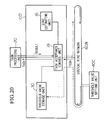
- Fig. 20 is a block diagram showing an example of the centralized management system.
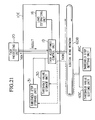
- Fig. 21 is a block diagram showing another example of the centralized management system.
- Figs. 1-3 are diagrams showing structures of three examples of the load balancing apparatus 10 (i.e., 10A-10C) according to the present invention
- Figs. 4 and 5 are diagrams showing examples of the arrangement with respect to these apparatuses. That is, the load balancing apparatus 10 is arranged between logical ring network 60B and each node (in the case shown in Fig. 4), or is arranged in each node (in the case shown in Fig. 5).
- Load balancing apparatus 10A consists of load estimating unit 16 for estimating the load of the present node, threshold value storage unit 30, and task acceptance control unit 19.
- threshold value setting unit 40 is provided in addition to the above elements in apparatus 10A
- threshold step storage unit 31 for storing a threshold step (value) which is a unit for changing the threshold value and threshold step setting unit 41 are provided in addition to the above elements in apparatus 10B.
- a threshold step storage unit may separately be provided outside the threshold value setting unit 40.
- the system arrangements as shown in Figs. 1-3 are examples belonging to the centralized arrival system, wherein after a task arrives at an entrance node, the task is input into logical ring network 60B by the entrance node and circulates around the logical ring network 60B.
- a task which has not yet made a round of logical ring network 60B after the task is input into the network is called a "normal task (message)"
- a task which has made one or more rounds of the logical ring network 60B before being processed by any node is called a “round trip task (message)”.
- the entrance nodes marks it and input the task into logical ring network 60B again so that each node can distinguish between a normal task and a round trip task.
- a distributed arrival system can easily be realized by modifying the centralized arrival system in a manner such that each node performs the task acceptance, the input of tasks into the logical ring network, and the marking of round trip tasks, which are performed by an entrance node in the centralized arrival system.
- Figs. 6A and 6B are flowcharts of general operations of load balancing apparatus 10A as shown in Fig. 1.
- Load estimating unit 16 (for estimating the load of the present node) is activated when the estimating unit is informed by task acceptance control unit 19 that the control unit handed over a task of a self-executable function X (which means a function which the present node can execute) to task processing unit 20 or that the control unit received a result of the self-executable function X from task processing unit 20 (see step 3001).
- the activated load estimating unit 16 updates (or changes) an estimated load value (indicated by reference numeral "21X", hereinafter) of self-executable function X (see step 3002).
- task acceptance control unit 19 judges whether or not a task belonging to the self-executable function X has been input from logical ring network 60B to task acceptance control unit 19 (see step 3003). If no task has been input, the task acceptance control unit 19 further judges whether or not a result has been input from task processing unit 20 (see step 3004). If judged "yes”, the task acceptance control unit 19 notifies load estimating unit 16 of the judgment (see step 3008). On the other hand, if a result has also not been input, the processing returns to step 3003.
- task acceptance control unit 19 reads out a (predetermined) threshold value relating to the self-executable function X (indicated by reference numeral "27X", hereinafter) from threshold value storage unit 30 (see step 3005), then compares the above estimated load value 21X with the threshold value 27X and judges whether the task can be accepted or not in accordance with the size comparison of both values (see step 3006). According to a result of the comparison, task acceptance control unit 19 hands over the task to task processing unit 20 (see step 3007), or inputs the task into logical ring network 60B without handing it over to task processing unit 20 (see step 3009).
- a threshold value relating to the self-executable function X indicated by reference numeral "27X", hereinafter
- each node may have a single estimated load value and a single threshold value (that is, not for each self-executable function) for observing and controlling all tasks, or both methods may be used together in a system.
- Figs. 7A and 7B are flowcharts of general operations of load balancing apparatus 10B as shown in Fig. 2.
- Load estimating unit 16 (for estimating the load of the present node) is activated when the estimating unit is informed by task acceptance control unit 19 that the control unit handed over a task of self-executable function X to task processing unit 20 or the control unit received a result of the self-executable function X from task processing unit 20 (see step 2001).
- the activated load estimating unit 16 updates an estimated load value 21X of self-executable function X (see step 2002).
- task acceptance control unit 19 judges whether or not a task belonging to the self-executable function X has been input from logical ring network 60B to task acceptance control unit 19 (see step 2003). If no task has been input, the task acceptance control unit 19 further judges whether or not a result has been input from task processing unit 20 (see step 2004). If judged "yes”, the task acceptance control unit 19 notifies load estimating unit 16 of the judgment (see step 2008). On the other hand, if a result has also not been input, the processing returns to step 2003.
- task acceptance control unit 19 notifies threshold value setting unit 40 of the judgment.
- the threshold value setting unit 40 estimates a load fluctuation of the entire system by monitoring tasks passing through the logical ring network 60B according to the notification from task acceptance control unit 19, and updates total threshold value 27 of the present node according to the estimated load fluctuation.
- the task acceptance control unit 19 also estimates a load fluctuation with respect to self-executable functions, and updates threshold value 27X for each self-executable function according to the estimated load fluctuation (see step 2005).
- the task acceptance control unit 19 compares the above estimated load value 21X with the threshold value 27X, and judges whether the task can be accepted or not in accordance with the size comparison of both values (see step 2006). According to a result of the comparison, task acceptance control unit 19 hands over the task to task processing unit 20 (see step 2007), or inputs the task into logical ring network 60B without handing it over to task processing unit 20 (see step 2009). When task acceptance control unit 19 hands over a task to task processing unit 20 or receives a result from task processing unit 20, the control unit 9 notifies load estimating unit 16 of the event (see step 2008). An alternating long and short dash line in Fig. 2 shows the result from task acceptance control unit 19 and a task which has not been handed over to task processing unit 20.
- the logical ring network is used as a common buffer for each node; the load relating to the self-executable function X of each node is estimated by the load estimating unit of the node; the threshold value of the entire system and the threshold value of self-executable function X are updated by the threshold value setting unit according to load fluctuation of the entire system and load fluctuation of the self-executable function; the estimated load value of self-executable function X and the threshold value of self-executable function X are compared by the task acceptance control unit; and task acceptance control is performed in accordance with the size comparison of both values. Therefore:
- Figs. 8A and 8B are flowcharts of general operations of load balancing apparatus 10C as shown in Fig. 3.
- Load estimating unit 16 (for estimating the load of the present node) is activated when the estimating unit is informed by task acceptance control unit 19 that the control unit handed over a task to task processing unit 20 or the control unit received a result of processing of the task from task processing unit 20 (see step 1011).
- the activated load estimating unit 16 updates an estimated load value (indicated by reference numeral "21", hereinafter) of the node (see step 1012).
- task acceptance control unit 19 judges whether or not a task has been input from logical ring network 60B to task acceptance control unit 19 (see step 1013). If no task has been input, the task acceptance control unit 19 further judges whether or not a result has been input from task processing unit 20 (see step 1014). If judged "yes”, the task acceptance control unit 19 notifies load estimating unit 16 of the judgment (see step 1018). On the other hand, if a result has also not been input, the processing returns to step 1013.
- task acceptance control unit 19 notifies threshold value setting unit 40 of the judgment.
- the threshold value setting unit 40 estimates a load fluctuation of the entire system by monitoring tasks passing through the logical ring network 60B according to the notification from task acceptance control unit 19, and updates threshold value 27 of the present node.
- Threshold step setting unit 41 updates a threshold step (indicated by reference numeral "28", hereinafter) as a unit for changing the threshold value, by estimating performance of the entire system and performance of the present node at each time (see step 1015), or by receiving information relating to the performance of the entire system and the performance of the present node from an external unit.
- the task acceptance control unit 19 compares the above estimated load value 21 with the threshold value 27, and judges whether the task can be accepted or not in accordance with the size comparison of both values (see step 1016). According to a result of the comparison, task acceptance control unit 19 hands over the task to task processing unit 20 (see step 1017), or inputs the task into logical ring network 60B without handing it over to task processing unit 20 (see step 1019). When task acceptance control unit 19 hands over a task to task processing unit 20 or receives a result from task processing unit 20, the control unit 9 notifies load estimating unit 16 of the event (see step 1018). An alternating long and short dash line in Fig. 3 shows the result from task acceptance control unit 19 and a task which has not been handed over to task processing unit 20.
- the logical ring network is used as a common buffer for each node; the load of each node is estimated by the load estimating unit of the node; the threshold value of the present node is updated by the threshold value setting unit according to load fluctuation of the entire system; the threshold step is set according to the performance of the entire system and the performance of the present node by the threshold step setting unit, and when the performance of the entire system is changed, the threshold value is updated according to the change; the estimated load value and the threshold value of the node are compared by the task acceptance control unit; and task acceptance control is performed in accordance with the size comparison of both values. Therefore:
- the control (not for each function) using a single estimated load value and a single threshold value of the present node is performed.
- the task input control, the updating of the estimated load value, and the comparison of the estimated load value and the threshold value may be performed for each self-executable function X, or both methods may be used together in a system.
- load estimating unit 16 will be explained. The following examples may be applied to any of the load balancing apparatuses 10A-10C.
- Fig. 9A is a flowchart of the operational example 1 which uses a task counter.
- load estimating unit 16 When a task relating to function X is handed over from task acceptance control unit 19 to task processing unit 20, load estimating unit 16 (for the present node) increases a task counter for function X by "1" (see steps 2101 and 2102), while when a result of the task for function X is informed from task processing unit 20 to task acceptance control unit 19, load estimating unit 16 decreases the task counter by "1" (see steps 2103 and 2104).
- the load estimating unit 16 sets estimated load value 21X of self-executable function X to be the counter value as a result of the increasing or decreasing operation, and informs task acceptance control unit 19 of the set value.
- Figs. 10A and 10B are flowcharts of the operational example 2 which uses a response time.
- load estimating unit 16 (for the present node) records the (present) time T r (see steps 2401 and 2402), while when a relevant result of the task for function X is informed from task processing unit 20 to task acceptance control unit 19, load estimating unit 16 records the (present) time T s (see steps 2403 and 2404).
- the fractions of the quotient are then rounded up so as to make an integer, and estimated load value 21X of self-executable function X is set to be this integer (see step 2406).
- Figs. 11A and 11B are flowcharts of the operational example 3 which uses an average of the response time.
- n tasks (n being a fixed number) of self-executable function X
- load estimating unit 16 records the (present) time T si .
- This mean response time RT xmean is divided by response time RT x0 used for such a case in that a task of self-executable function X is exclusively processed.
- the fractions of the quotient is then rounded up so as to make an integer, and estimated load value 21X of self-executable function X is set to be this integer (see step 2510).
- mean response time RT xmean may be calculated by measuring an entire response time RT xi ; with respect to tasks processed in a fixed time.
- Fig. 12A is a flowchart of the operational example 1, which is an example using a result of comparison between estimated load value 21X and threshold value 27X of self-executable function X.
- Task acceptance control unit 19 compares estimated load value 21X of self-executable function X with threshold value 27X of the function X for each arrival of a task relating to function X (see steps 2301 and 2302). If estimated load value 21X of self-executable function X is smaller than threshold value 27X of the function X, the task acceptance control unit 19 hands over the task to task processing unit 20 regardless of the kind of task (that is, in either the case of a round trip task or a normal task) (see step 2303).
- the task acceptance control unit 19 hands over the task if the task is a round trip task and the condition "threshold value 27X > estimated load value 21X" would be realized by increasing the threshold value 27X (see steps 2304, 2305, and 2303). If the task is not a round trip task in step 2304, the task is input into logical ring network 60B (see step 2306).
- Fig. 13A is a flowchart of the operational example 2, which is another example using a result of comparison between estimated load value 21X and threshold value 27X of self-executable function X. Judgment performed in this example is simpler.
- Task acceptance control unit 19 compares estimated load value 21X of self-executable function X with threshold value 27X of the function X for each arrival of a task relating to function X (see steps 2701 and 2702). If estimated load value 21X of self-executable function X is smaller than threshold value 27X of the function X, the task acceptance control unit 19 hands over the task to task processing unit 20 (see step 2703), while if estimated load value 21X of self-executable function X is equal to or greater than threshold value 27X of the function X, the task acceptance control unit 19 inputs the task into logical ring network 60B (see step 2704).
- Figs. 14A and 14B are flowcharts of the operational example 3, which is an example using a task acceptance control flag in addition to a result of comparison between estimated load value 21X and threshold value 27X of self-executable function X.
- Task acceptance control unit 19 periodically compares estimated load value 21X of self-executable function X with threshold value 27X of the function X for each fixed period (see steps 2801 and 2802). If estimated load value 21X of self-executable function X is smaller than threshold value 27X of the function X, the task acceptance control unit 19 sets task acceptance control flag 29X to be in an "on" state (see step 2803).
- the task acceptance control unit 19 sets the task acceptance control flag 29X to be in an "on" state if the task is a round trip task and the condition "threshold value 27X > estimated load value 21X" would be realized by increasing the threshold value 27X (see steps 2804, 2805, and 2803). If the task is not a round trip task in step 2804, the task acceptance control flag 29X is set to be in an "off' state (see steps 2804 and 2806).
- the task acceptance control unit 19 examines the state of task acceptance control flag 29X (see steps 2807 and 2808), and if the flag is "on", the task is handed over to task processing unit 20 (see step 2809), while if the flag is "off', the task is input into logical ring network 60B (see step 2810).
- comparison in step 2802 may be performed with a change of threshold value 27X of self-executable function X for the present node or a change of estimated load value 21X (of self-executable function X) as a trigger.
- Figs. 15A and 15B are flowcharts of the operational example 4, which is the second example using a task acceptance control flag.
- Task acceptance control unit 19 periodically compares estimated load value 21X of self-executable function X with threshold value 27X of the function X for each fixed period (see steps 2901 and 2902). If estimated load value 21X is smaller than threshold value 27X of the function X, the task acceptance control unit 19 sets task acceptance control flag 29X to be in an "on" state (see step 2903). If estimated load value 21X is equal to or greater than threshold value 27X, the task acceptance control unit 19 sets the task acceptance control flag 29X to be in an "off' state (see step 2904).
- the task acceptance control unit 19 examines the state of task acceptance control flag 29X (see steps 2905 and 2906), and if the flag is "on", the task is handed over to task processing unit 20 (see steps 2906 and 2907). If the flag is "off', the task is a round trip task, and the condition "threshold value 27X > estimated load value 21X” would be realized by increasing the threshold value 27X, then the task is also handed over to task processing unit 20 (see steps 2908, 2909 and 2907). On the other hand, if task acceptance control flag 29X is "off” and the task is not a round trip task, the task is input into logical ring network 60B (see step 2910).
- comparison in step 2902 may be performed with a change of threshold value 27X of self-executable function X for the present node or a change of estimated load value 21X (of self-executable function X) as a trigger.
- threshold value setting unit 40 will be explained. The following examples may be applied to either of the load balancing apparatuses 10B and 10C.
- Fig. 16A is a flowchart of the operational example 1 of threshold value setting unit 40.
- the threshold value is updated when a round trip task is detected.
- Threshold value setting unit 40 monitors, via task acceptance control unit 19, all tasks passing through logical ring network 60B.
- the threshold value setting unit 40 detects a round trip task relating to a self-executable function X, the unit records the time of the detection (see steps 2201 and 2202).
- Fig. 17 is a flowchart of the operational example 2 of threshold value setting unit 40.
- an estimated value for load fluctuation i.e., estimated load fluctuation
- Threshold value setting unit 40 counts, via task acceptance control unit 19, the number of all tasks which have passed through logical ring network 60B during a fixed measurement period (see steps 2601-2606) and calculates a ratio of the counted value to the preceding counted value (measured similarly) of all tasks which passed through the network during the preceding measurement period. An estimated value of load fluctuation of the entire system is determined as the ratio (see step 2607).
- the threshold value setting unit 40 continues to monitor all tasks passing through logical ring network 60B and to calculate the estimated value of load fluctuation.
- the threshold value 27 is increased by a predetermined amount unless the threshold value 27 exceeds a predetermined upper limit 27 L1 for the threshold value (see steps 2608-2611).
- the threshold value 27 is decreased by a predetermined amount unless the threshold value 27 falls below a predetermined lower limit 27 L2 for the threshold value (see steps 2612-2614).
- symbols ⁇ and ⁇ indicate any reasonable values greater than 0 and smaller than 1.
- the update of the threshold value is performed when the estimated value of load fluctuation is greater than a predetermined level.
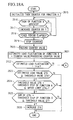
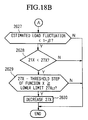
- Figs. 18A and 18B are flowcharts of the operational example 3 of threshold value setting unit 40.
- an estimated value for load fluctuation with respect to self-executable function X is calculated.
- Threshold value setting unit 40 counts, via task acceptance control unit 19, the number of all tasks relating to function X, which have passed through logical ring network 60B during a fixed measurement period (see steps 2615-2620) and calculates a ratio of the counted value to the preceding counted value of passed tasks of function X during the preceding measurement period. An estimated value of load fluctuation of the function X is determined as the ratio (see step 2621).
- the threshold value setting unit 40 continues to monitor all tasks relating to function X passing through logical ring network 60B and to calculate the estimated value of load fluctuation for each function.
- the update of the threshold value is performed when the estimated value of load fluctuation is greater than a predetermined level.
- threshold step can be updated (or changed).
- the threshold step setting unit 41 holds a value with respect to performance of the entire system (that is, the total performance of all nodes in the system) and a value with respect to performance of the present node, as known information, and sets an initial value of threshold step 28 to be a value obtained by dividing the value of the performance of the present node by the value of the performance of the entire system (normally, the initial value is provided from an external unit before the system operation is started).
- the threshold step setting unit 41 updates the threshold step 28 based on a value with respect to performance of the node which has been deleted or added.
- the initial value of threshold step is set to be in an suitable value such as 0.1, 0.5, or 1.
- the threshold step setting unit 41 presumes that a node is deleted from the system or that a node is newly added to the system, based on a fluctuation manner of the flow rate of tasks passing through logical ring network 60B and a detection situation of round trip tasks, and updates threshold step 28 when deletion or addition of a node is presumed. Examples based on combinations of the fluctuation manner of the flow rate of tasks passing through logical ring network 60B (called "load fluctuation of the entire system") and the detection situation of the round trip task is shown in the list in Fig. 19.
- threshold value setting unit 40 and threshold step setting unit 41 are provided for each node, that is, the units corresponding to the number of the nodes in the system are provided.
- threshold value setting unit 40C and threshold step setting unit 41C which perform centralized controls of updating the threshold value and the threshold step of each node may be provided. Exemplary arrangements of such a control are shown in Figs. 20 and 21.
- Fig. 20 shows an arrangement of a combination of load balancing apparatus 10D, which is an example of a centralized management system relating to load balancing apparatus 10B as shown in Fig. 2, and threshold value setting unit 40C.
- threshold value setting unit 40C is provided in a node in the system or are independently provided, and performs threshold value setting processes of each node via logical ring network 60B and task acceptance control unit 19 of each node. The operations of the processes are similar to each relevant above-mentioned operation examples.
- Fig. 21 shows an arrangement of a combination of load balancing apparatus 10E, which is an example of a centralized management system relating to load balancing apparatus 10C as shown in Fig. 3; and threshold value setting unit 40C; and threshold step setting unit 41C.
- threshold value setting unit 40C and threshold step setting unit 41C are provided in a node in the system or are independently provided, and performs threshold value and threshold step setting processes of each node via logical ring network 60B and task acceptance control unit 19 of each node. The operations of the processes are similar to each relevant above-mentioned operation examples.
- tasks are processed in turn from one which is earlier handed over to task processing unit 20, and results of processing are output in the same order of processing of the tasks, where one result for each task is returned.
- results are output in another order different from the order of inputting tasks, the system can easily be operated by establishing correspondence between tasks and their results using identifiers and the like.
- the system can easily be operated by identifying the last result.
- load balancing processing can be performed without imposing an extra burden on (computer) processing in each node; thus, the mean response time can much further be shortened, even at high load levels, in comparison with conventional systems.
- load balancing apparatus for making the apparatus independently operate, greater high-speed processing and contraction of the mean response time are realized.
Landscapes
- Engineering & Computer Science (AREA)
- Software Systems (AREA)
- Theoretical Computer Science (AREA)
- Physics & Mathematics (AREA)
- General Engineering & Computer Science (AREA)
- General Physics & Mathematics (AREA)
- Multi Processors (AREA)
- Data Exchanges In Wide-Area Networks (AREA)
Applications Claiming Priority (3)
| Application Number | Priority Date | Filing Date | Title |
|---|---|---|---|
| JP20045196 | 1996-07-30 | ||
| JP200451/96 | 1996-07-30 | ||
| JP20045196 | 1996-07-30 |
Publications (3)
| Publication Number | Publication Date |
|---|---|
| EP0822494A2 true EP0822494A2 (fr) | 1998-02-04 |
| EP0822494A3 EP0822494A3 (fr) | 2000-05-10 |
| EP0822494B1 EP0822494B1 (fr) | 2003-10-29 |
Family
ID=16424528
Family Applications (1)
| Application Number | Title | Priority Date | Filing Date |
|---|---|---|---|
| EP97305742A Expired - Lifetime EP0822494B1 (fr) | 1996-07-30 | 1997-07-30 | Méthode et appareil pour équilibrage de travail |
Country Status (4)
| Country | Link |
|---|---|
| US (1) | US6026425A (fr) |
| EP (1) | EP0822494B1 (fr) |
| CA (1) | CA2211774C (fr) |
| DE (1) | DE69725791T2 (fr) |
Cited By (6)
| Publication number | Priority date | Publication date | Assignee | Title |
|---|---|---|---|---|
| WO2000031624A1 (fr) * | 1998-11-26 | 2000-06-02 | Telefonaktiebolaget Lm Ericsson | Procede de regulation de charge |
| EP1099961A2 (fr) | 1999-11-09 | 2001-05-16 | Marconi Medical Systems, Inc. | Procédé de traitement d'image pour l'imagerie médicale |
| FR2857472A1 (fr) * | 2003-07-10 | 2005-01-14 | Univ Reims Champagne Ardenne | Systeme de gestion distribuee des ressources informatiques et des calculs |
| EP1211600A3 (fr) * | 2000-12-04 | 2006-10-11 | International Business Machines Corporation | Gestion de politique pour calcul distribué et procédé pour le vieillissement des statistiques |
| WO2012036959A1 (fr) * | 2010-09-17 | 2012-03-22 | Oracle International Corporation | Équilibrage dynamique de ressources d'entrée/sortie sur des plates-formes d'accès mémoire non uniforme (numa) |
| EP2958019A1 (fr) * | 2014-05-27 | 2015-12-23 | Samsung Electronics Co., Ltd | Procédé de migration de groupes de tâches et dispositif électronique supportant celui-ci |
Families Citing this family (67)
| Publication number | Priority date | Publication date | Assignee | Title |
|---|---|---|---|---|
| US6108704A (en) | 1995-09-25 | 2000-08-22 | Netspeak Corporation | Point-to-point internet protocol |
| US6728784B1 (en) * | 1996-08-21 | 2004-04-27 | Netspeak Corporation | Collaborative multimedia architecture for packet-switched data networks |
| US6654933B1 (en) | 1999-09-21 | 2003-11-25 | Kasenna, Inc. | System and method for media stream indexing |
| JPH1153326A (ja) * | 1997-07-30 | 1999-02-26 | Internatl Business Mach Corp <Ibm> | 分散処理システム、クライアントノード、サーバノードおよび分散処理方法 |
| US6202080B1 (en) * | 1997-12-11 | 2001-03-13 | Nortel Networks Limited | Apparatus and method for computer job workload distribution |
| JP3558887B2 (ja) * | 1998-08-28 | 2004-08-25 | 株式会社東芝 | 分散システム、その制御方法、および記憶媒体 |
| US7216348B1 (en) * | 1999-01-05 | 2007-05-08 | Net2Phone, Inc. | Method and apparatus for dynamically balancing call flow workloads in a telecommunications system |
| JP3751466B2 (ja) * | 1999-03-26 | 2006-03-01 | 沖電気工業株式会社 | プログラム応答時間予測装置 |
| US6614805B1 (en) * | 1999-05-27 | 2003-09-02 | Nortel Networks Limited | Method and apparatus for media access control for packet transmission over a buffer insertion ring |
| US6446218B1 (en) | 1999-06-30 | 2002-09-03 | B-Hub, Inc. | Techniques for maintaining fault tolerance for software programs in a clustered computer system |
| US6560717B1 (en) * | 1999-12-10 | 2003-05-06 | Art Technology Group, Inc. | Method and system for load balancing and management |
| US6658449B1 (en) * | 2000-02-17 | 2003-12-02 | International Business Machines Corporation | Apparatus and method for periodic load balancing in a multiple run queue system |
| US6748593B1 (en) | 2000-02-17 | 2004-06-08 | International Business Machines Corporation | Apparatus and method for starvation load balancing using a global run queue in a multiple run queue system |
| US6928482B1 (en) | 2000-06-29 | 2005-08-09 | Cisco Technology, Inc. | Method and apparatus for scalable process flow load balancing of a multiplicity of parallel packet processors in a digital communication network |
| US7310678B2 (en) * | 2000-07-28 | 2007-12-18 | Kasenna, Inc. | System, server, and method for variable bit rate multimedia streaming |
| US7277956B2 (en) * | 2000-07-28 | 2007-10-02 | Kasenna, Inc. | System and method for improved utilization of bandwidth in a computer system serving multiple users |
| US7231445B1 (en) * | 2000-11-16 | 2007-06-12 | Nortel Networks Limited | Technique for adaptively distributing web server requests |
| US6922832B2 (en) * | 2000-12-12 | 2005-07-26 | Lockheed Martin Corporation | Execution of dynamic services in a flexible architecture for e-commerce |
| US7398216B2 (en) * | 2000-12-12 | 2008-07-08 | Lockheed Martin Corporation | Network dynamic service availability |
| US7502857B2 (en) * | 2000-12-15 | 2009-03-10 | International Business Machines Corporation | Method and system for optimally allocating a network service |
| WO2002071191A2 (fr) * | 2001-03-02 | 2002-09-12 | Kasenna, Inc. | Modele a double effet active par des metadonnees une distribution efficace de contenu video a faible latence sur un reseau |
| US20030018978A1 (en) * | 2001-03-02 | 2003-01-23 | Singal Sanjay S. | Transfer file format and system and method for distributing media content |
| GB0119145D0 (en) * | 2001-08-06 | 2001-09-26 | Nokia Corp | Controlling processing networks |
| IL145104A (en) * | 2001-08-23 | 2007-02-11 | Gregory Bondar | A method and system for balancing the load on a computer resource between computers |
| GB2366891B (en) * | 2001-12-06 | 2002-11-20 | Appsense Ltd | Improvements in and relating to computer apparatus terminal server apparatus & performance management methods therefor |
| US7339889B2 (en) * | 2002-06-20 | 2008-03-04 | Nortel Networks Limited | Control plane architecture for automatically switched optical network |
| US20040006622A1 (en) * | 2002-07-03 | 2004-01-08 | Burkes Don L. | Optimized process for balancing load for data mirroring |
| US7403993B2 (en) * | 2002-07-24 | 2008-07-22 | Kasenna, Inc. | System and method for highly-scalable real-time and time-based data delivery using server clusters |
| US7287254B2 (en) * | 2002-07-30 | 2007-10-23 | Unisys Corporation | Affinitizing threads in a multiprocessor system |
| US20040199650A1 (en) * | 2002-11-14 | 2004-10-07 | Howe John E. | System and methods for accelerating data delivery |
| US6993400B2 (en) * | 2003-03-07 | 2006-01-31 | Xerox Corporation | System and method for real-time assignment of jobs to production cells |
| US7310667B2 (en) * | 2003-03-13 | 2007-12-18 | International Business Machines Corporation | Method and apparatus for server load sharing based on foreign port distribution |
| US7475108B2 (en) * | 2003-06-26 | 2009-01-06 | International Business Machines Corporation | Slow-dynamic load balancing method |
| WO2005006158A1 (fr) * | 2003-07-10 | 2005-01-20 | Koninklijke Philips Electronics N.V. | Procede et systeme de distribution d'un element de contenu |
| JP2005038071A (ja) * | 2003-07-17 | 2005-02-10 | Hitachi Ltd | ストレージの容量を最適化する管理方法 |
| US20050155032A1 (en) * | 2004-01-12 | 2005-07-14 | Schantz John L. | Dynamic load balancing |
| US20050262245A1 (en) * | 2004-04-19 | 2005-11-24 | Satish Menon | Scalable cluster-based architecture for streaming media |
| US20060123285A1 (en) * | 2004-11-16 | 2006-06-08 | De Araujo Daniel F | Dynamic threshold scaling in a communication system |
| JP4058038B2 (ja) * | 2004-12-22 | 2008-03-05 | 株式会社日立製作所 | 負荷監視装置および負荷監視方法 |
| US8082545B2 (en) * | 2005-09-09 | 2011-12-20 | Oracle America, Inc. | Task dispatch monitoring for dynamic adaptation to system conditions |
| US7793329B2 (en) * | 2006-02-06 | 2010-09-07 | Kasenna, Inc. | Method and system for reducing switching delays between digital video feeds using multicast slotted transmission technique |
| US7716381B2 (en) * | 2006-02-22 | 2010-05-11 | Emulex Design & Manufacturing Corporation | Method for tracking and storing time to complete and average completion time for storage area network I/O commands |
| US8635376B2 (en) * | 2006-02-22 | 2014-01-21 | Emulex Design & Manufacturing Corporation | Computer system input/output management |
| US7941805B2 (en) * | 2006-08-15 | 2011-05-10 | International Business Machines Corporation | Affinity dispatching load balancer with precise CPU consumption data |
| US8799918B2 (en) * | 2006-09-11 | 2014-08-05 | Microsoft Corporation | Dynamic network load balancing using roundtrip heuristic |
| US20080109557A1 (en) * | 2006-11-02 | 2008-05-08 | Vinay Joshi | Method and system for reducing switching delays between digital video feeds using personalized unicast transmission techniques |
| JP4933284B2 (ja) * | 2007-01-25 | 2012-05-16 | 株式会社日立製作所 | ストレージ装置及び負荷分散方法 |
| WO2008142705A2 (fr) * | 2007-05-17 | 2008-11-27 | Pes Institute Of Technology | Procédé et système pour un équilibrage de charge dans un système informatique distribué |
| US8312465B2 (en) * | 2008-01-11 | 2012-11-13 | International Business Machines Corporation | Real-time CPU dispatcher affinity re-balancing |
| JP4547440B2 (ja) * | 2008-03-31 | 2010-09-22 | 富士通株式会社 | 仮想テープシステム |
| JP5419493B2 (ja) * | 2009-03-03 | 2014-02-19 | キヤノン株式会社 | データ処理装置、データ処理装置の制御方法、およびプログラム |
| US8527988B1 (en) | 2009-07-31 | 2013-09-03 | Hewlett-Packard Development Company, L.P. | Proximity mapping of virtual-machine threads to processors |
| US9594599B1 (en) * | 2009-10-14 | 2017-03-14 | Nvidia Corporation | Method and system for distributing work batches to processing units based on a number of enabled streaming multiprocessors |
| CN101777009B (zh) * | 2009-11-30 | 2012-12-19 | 英业达股份有限公司 | 应用程序的负载控管方法 |
| US8732133B2 (en) * | 2010-03-16 | 2014-05-20 | Commvault Systems, Inc. | Extensible data deduplication system and method |
| US9678804B1 (en) | 2010-09-30 | 2017-06-13 | EMC IP Holding Company LLC | Dynamic load balancing of backup server interfaces based on timeout response, job counter, and speed of a plurality of interfaces |
| US8725848B1 (en) | 2010-09-30 | 2014-05-13 | Emc Corporation | Multipath distribution |
| US9047128B1 (en) * | 2010-09-30 | 2015-06-02 | Emc Corporation | Backup server interface load management based on available network interfaces |
| US9280386B1 (en) * | 2011-07-14 | 2016-03-08 | Google Inc. | Identifying task instance outliers based on metric data in a large scale parallel processing system |
| CN103150213B (zh) * | 2011-12-06 | 2016-06-22 | 北大方正集团有限公司 | 负载平衡方法和装置 |
| JP5803655B2 (ja) * | 2011-12-21 | 2015-11-04 | 富士通株式会社 | データ転送のためのプログラム、情報処理方法及び転送装置、転送処理の割り当てを管理するためのプログラム、情報処理方法及び管理装置、並びに情報処理システム |
| JP7013934B2 (ja) * | 2018-02-26 | 2022-02-01 | オムロン株式会社 | コントローラ |
| US10901806B2 (en) * | 2018-05-01 | 2021-01-26 | International Business Machines Corporation | Internet of things resource optimization |
| DE102019206923B3 (de) * | 2019-05-13 | 2020-08-13 | Volkswagen Aktiengesellschaft | Verfahren zum Ausführen einer Anwendung auf einer verteilten Systemarchitektur |
| CN112685170B (zh) * | 2019-10-18 | 2023-12-08 | 伊姆西Ip控股有限责任公司 | 备份策略的动态优化 |
| CN114079656A (zh) * | 2022-01-19 | 2022-02-22 | 之江实验室 | 基于概率的负载平衡方法及装置、电子设备、存储介质 |
| CN118250962B (zh) * | 2024-03-05 | 2024-12-06 | 广东志享信息科技有限公司 | 机房空调联动管理系统 |
Family Cites Families (15)
| Publication number | Priority date | Publication date | Assignee | Title |
|---|---|---|---|---|
| US4811337A (en) * | 1988-01-15 | 1989-03-07 | Vitalink Communications Corporation | Distributed load sharing |
| CA1318409C (fr) * | 1988-10-27 | 1993-05-25 | Dennis L. Debruler | Dispositif de partage de charge pour multiprocesseur |
| US5155858A (en) * | 1988-10-27 | 1992-10-13 | At&T Bell Laboratories | Twin-threshold load-sharing system with each processor in a multiprocessor ring adjusting its own assigned task list based on workload threshold |
| US5031089A (en) * | 1988-12-30 | 1991-07-09 | United States Of America As Represented By The Administrator, National Aeronautics And Space Administration | Dynamic resource allocation scheme for distributed heterogeneous computer systems |
| US5557798A (en) * | 1989-07-27 | 1996-09-17 | Tibco, Inc. | Apparatus and method for providing decoupling of data exchange details for providing high performance communication between software processes |
| US5283897A (en) * | 1990-04-30 | 1994-02-01 | International Business Machines Corporation | Semi-dynamic load balancer for periodically reassigning new transactions of a transaction type from an overload processor to an under-utilized processor based on the predicted load thereof |
| US5164983A (en) * | 1991-01-28 | 1992-11-17 | American Telephone & Telegraph Company | Telemarketing complex performance management system |
| JPH05143559A (ja) * | 1991-04-17 | 1993-06-11 | Toshiba Corp | 分散処理システムにおける負荷分散方法 |
| JPH05216842A (ja) * | 1992-02-05 | 1993-08-27 | Mitsubishi Electric Corp | 資源管理装置 |
| US5839120A (en) * | 1993-11-30 | 1998-11-17 | Thearling; Kurt | Genetic algorithm control arrangement for massively parallel computer |
| JP2774238B2 (ja) * | 1993-11-30 | 1998-07-09 | 日本電信電話株式会社 | コンピュータシステムの負荷均衡化方式 |
| US5561759A (en) * | 1993-12-27 | 1996-10-01 | Sybase, Inc. | Fault tolerant computer parallel data processing ring architecture and work rebalancing method under node failure conditions |
| JPH07225746A (ja) * | 1994-02-09 | 1995-08-22 | Mitsubishi Electric Corp | 動的負荷分散方法 |
| US5774668A (en) * | 1995-06-07 | 1998-06-30 | Microsoft Corporation | System for on-line service in which gateway computer uses service map which includes loading condition of servers broadcasted by application servers for load balancing |
| US5657142A (en) * | 1995-07-25 | 1997-08-12 | Mci Communications Corporation | Optimal allocation of multiplexing equipment and distribution of load in a fiber optic network |
-
1997
- 1997-07-28 US US08/901,536 patent/US6026425A/en not_active Expired - Fee Related
- 1997-07-29 CA CA002211774A patent/CA2211774C/fr not_active Expired - Fee Related
- 1997-07-30 DE DE69725791T patent/DE69725791T2/de not_active Expired - Fee Related
- 1997-07-30 EP EP97305742A patent/EP0822494B1/fr not_active Expired - Lifetime
Cited By (14)
| Publication number | Priority date | Publication date | Assignee | Title |
|---|---|---|---|---|
| WO2000031624A1 (fr) * | 1998-11-26 | 2000-06-02 | Telefonaktiebolaget Lm Ericsson | Procede de regulation de charge |
| US6466936B1 (en) | 1998-11-26 | 2002-10-15 | Telefonaktiebolaget L M Ericsson (Publ) | Method for load regulation |
| EP1099961A2 (fr) | 1999-11-09 | 2001-05-16 | Marconi Medical Systems, Inc. | Procédé de traitement d'image pour l'imagerie médicale |
| EP1099961A3 (fr) * | 1999-11-09 | 2003-12-17 | Koninklijke Philips Electronics N.V. | Procédé de traitement d'image pour l'imagerie médicale |
| EP1211600A3 (fr) * | 2000-12-04 | 2006-10-11 | International Business Machines Corporation | Gestion de politique pour calcul distribué et procédé pour le vieillissement des statistiques |
| WO2005008492A3 (fr) * | 2003-07-10 | 2005-03-17 | Univ Reims Champagne Ardenne | Systeme de gestion distribuee des ressources informatiques et des calculs |
| FR2857472A1 (fr) * | 2003-07-10 | 2005-01-14 | Univ Reims Champagne Ardenne | Systeme de gestion distribuee des ressources informatiques et des calculs |
| WO2012036959A1 (fr) * | 2010-09-17 | 2012-03-22 | Oracle International Corporation | Équilibrage dynamique de ressources d'entrée/sortie sur des plates-formes d'accès mémoire non uniforme (numa) |
| WO2012036961A1 (fr) * | 2010-09-17 | 2012-03-22 | Oracle International Corporation | Utilisation de localisation de processus pour lier des ressources d'entrée/sortie sur des architectures d'accès mémoire non uniforme (numa) |
| US8725912B2 (en) | 2010-09-17 | 2014-05-13 | Oracle International Corporation | Dynamic balancing of IO resources on NUMA platforms |
| US8725913B2 (en) | 2010-09-17 | 2014-05-13 | Oracle International Corporation | Numa I/O framework |
| US8782657B2 (en) | 2010-09-17 | 2014-07-15 | Oracle International Corporation | Dynamic creation and destruction of IO resources based on actual load and resource availability |
| US8996756B2 (en) | 2010-09-17 | 2015-03-31 | Oracle International Corporation | Using process location to bind IO resources on NUMA architectures |
| EP2958019A1 (fr) * | 2014-05-27 | 2015-12-23 | Samsung Electronics Co., Ltd | Procédé de migration de groupes de tâches et dispositif électronique supportant celui-ci |
Also Published As
| Publication number | Publication date |
|---|---|
| CA2211774C (fr) | 2001-03-27 |
| EP0822494B1 (fr) | 2003-10-29 |
| EP0822494A3 (fr) | 2000-05-10 |
| US6026425A (en) | 2000-02-15 |
| DE69725791D1 (de) | 2003-12-04 |
| CA2211774A1 (fr) | 1998-01-30 |
| DE69725791T2 (de) | 2004-11-04 |
Similar Documents
| Publication | Publication Date | Title |
|---|---|---|
| US6026425A (en) | Non-uniform system load balance method and apparatus for updating threshold of tasks according to estimated load fluctuation | |
| US6542467B2 (en) | Bandwidth allocation system of virtual path in communication network of asynchronous transfer mode | |
| CN1106771C (zh) | 在通信网络中动态通信管理的方法 | |
| US6556578B1 (en) | Early fair drop buffer management method | |
| US5511169A (en) | Data transmission apparatus and a communication path management method therefor | |
| KR100334871B1 (ko) | 분산된실시간시스템에서과부하에응답하는방법 | |
| JP2001109638A (ja) | 推定伸長率に基づくトランザクション負荷分散方法及び方式並びにコンピュータ可読記録媒体 | |
| EP3163446A1 (fr) | Procédé de mémorisation de données et serveur de gestion de la mémorisation de données | |
| GB2305072A (en) | Congestion control in a signalling network of a common channel signalling system | |
| CN120238539B (zh) | 基于动态节点协作的分发代理自组网方法及系统 | |
| US7519710B2 (en) | Client server networks | |
| JP3662750B2 (ja) | 分散型実時間制御システムのモジュールにおける過負荷応答方法 | |
| US7139830B2 (en) | Communication apparatus and congestion regulation control method | |
| CN117952582B (zh) | 一种基于递归区块链的人力资源数据处理方法和系统 | |
| US8275889B2 (en) | Clone-managed session affinity | |
| JPH10105523A (ja) | オーバロード制御とメッセージ分配を統合するシステムおよび方法 | |
| Ethilu et al. | An efficient switch migration scheme for load balancing in software defined networking | |
| EP0904647B1 (fr) | Gestion de reseau en mode de transfert asynchrone | |
| JPH11514177A (ja) | ネットワーク・サーバの過負荷を防止するための装置および方法 | |
| US7068604B2 (en) | Managing memory resident queues to control resources of the systems using the queues | |
| JP2002157233A (ja) | マルチセンサ処理装置 | |
| JP3779039B2 (ja) | コンピュータシステムの負荷均衡化方法及び装置 | |
| JPH0855091A (ja) | 分散処理システムおよび分散処理システムにおける負荷分散方法 | |
| WO1999053697A1 (fr) | Modification dynamique de la taille de fichiers memoire | |
| Lu et al. | An adaptive algorithm for resolving processor thrashing in load distribution |
Legal Events
| Date | Code | Title | Description |
|---|---|---|---|
| PUAI | Public reference made under article 153(3) epc to a published international application that has entered the european phase |
Free format text: ORIGINAL CODE: 0009012 |
|
| AK | Designated contracting states |
Kind code of ref document: A2 Designated state(s): DE GB |
|
| PUAL | Search report despatched |
Free format text: ORIGINAL CODE: 0009013 |
|
| AK | Designated contracting states |
Kind code of ref document: A3 Designated state(s): AT BE CH DE DK ES FI FR GB GR IE IT LI LU MC NL PT SE |
|
| 17P | Request for examination filed |
Effective date: 20000818 |
|
| AKX | Designation fees paid |
Free format text: DE GB |
|
| 17Q | First examination report despatched |
Effective date: 20011217 |
|
| GRAH | Despatch of communication of intention to grant a patent |
Free format text: ORIGINAL CODE: EPIDOS IGRA |
|
| GRAS | Grant fee paid |
Free format text: ORIGINAL CODE: EPIDOSNIGR3 |
|
| GRAA | (expected) grant |
Free format text: ORIGINAL CODE: 0009210 |
|
| AK | Designated contracting states |
Kind code of ref document: B1 Designated state(s): DE GB |
|
| REG | Reference to a national code |
Ref country code: GB Ref legal event code: FG4D |
|
| REF | Corresponds to: |
Ref document number: 69725791 Country of ref document: DE Date of ref document: 20031204 Kind code of ref document: P |
|
| PLBE | No opposition filed within time limit |
Free format text: ORIGINAL CODE: 0009261 |
|
| STAA | Information on the status of an ep patent application or granted ep patent |
Free format text: STATUS: NO OPPOSITION FILED WITHIN TIME LIMIT |
|
| 26N | No opposition filed |
Effective date: 20040730 |
|
| PGFP | Annual fee paid to national office [announced via postgrant information from national office to epo] |
Ref country code: DE Payment date: 20070726 Year of fee payment: 11 |
|
| PGFP | Annual fee paid to national office [announced via postgrant information from national office to epo] |
Ref country code: GB Payment date: 20070725 Year of fee payment: 11 |
|
| GBPC | Gb: european patent ceased through non-payment of renewal fee |
Effective date: 20080730 |
|
| PG25 | Lapsed in a contracting state [announced via postgrant information from national office to epo] |
Ref country code: DE Free format text: LAPSE BECAUSE OF NON-PAYMENT OF DUE FEES Effective date: 20090203 |
|
| PG25 | Lapsed in a contracting state [announced via postgrant information from national office to epo] |
Ref country code: GB Free format text: LAPSE BECAUSE OF NON-PAYMENT OF DUE FEES Effective date: 20080730 |