EP0829530A1 - Verbesserung von Reinigern für harte Oberflächen - Google Patents
Verbesserung von Reinigern für harte Oberflächen Download PDFInfo
- Publication number
- EP0829530A1 EP0829530A1 EP97116919A EP97116919A EP0829530A1 EP 0829530 A1 EP0829530 A1 EP 0829530A1 EP 97116919 A EP97116919 A EP 97116919A EP 97116919 A EP97116919 A EP 97116919A EP 0829530 A1 EP0829530 A1 EP 0829530A1
- Authority
- EP
- European Patent Office
- Prior art keywords
- electrolyte
- surfactant
- composition according
- product
- phase
- Prior art date
- Legal status (The legal status is an assumption and is not a legal conclusion. Google has not performed a legal analysis and makes no representation as to the accuracy of the status listed.)
- Granted
Links
- 239000000203 mixture Substances 0.000 claims abstract description 134
- 239000004094 surface-active agent Substances 0.000 claims abstract description 80
- 239000003792 electrolyte Substances 0.000 claims abstract description 68
- 239000012071 phase Substances 0.000 claims abstract description 45
- -1 primary alcohol sulphate Chemical class 0.000 claims abstract description 37
- 239000002736 nonionic surfactant Substances 0.000 claims abstract description 29
- 150000001450 anions Chemical class 0.000 claims abstract description 26
- 229910021653 sulphate ion Inorganic materials 0.000 claims abstract description 26
- 239000002245 particle Substances 0.000 claims abstract description 24
- 239000008346 aqueous phase Substances 0.000 claims abstract description 14
- 239000007788 liquid Substances 0.000 claims abstract description 12
- 238000007046 ethoxylation reaction Methods 0.000 claims abstract description 9
- 229920000642 polymer Polymers 0.000 claims description 46
- 229910021532 Calcite Inorganic materials 0.000 claims description 23
- 238000009472 formulation Methods 0.000 claims description 21
- 238000003860 storage Methods 0.000 claims description 19
- 150000001298 alcohols Chemical class 0.000 claims description 17
- 125000000217 alkyl group Chemical group 0.000 claims description 15
- 239000000463 material Substances 0.000 claims description 12
- 150000004649 carbonic acid derivatives Chemical class 0.000 claims description 10
- 150000001768 cations Chemical class 0.000 claims description 10
- 229920001983 poloxamer Polymers 0.000 claims description 9
- IAYPIBMASNFSPL-UHFFFAOYSA-N Ethylene oxide Chemical group C1CO1 IAYPIBMASNFSPL-UHFFFAOYSA-N 0.000 claims description 8
- BVKZGUZCCUSVTD-UHFFFAOYSA-L Carbonate Chemical compound [O-]C([O-])=O BVKZGUZCCUSVTD-UHFFFAOYSA-L 0.000 claims description 7
- BVKZGUZCCUSVTD-UHFFFAOYSA-M Bicarbonate Chemical compound OC([O-])=O BVKZGUZCCUSVTD-UHFFFAOYSA-M 0.000 claims description 6
- 238000013019 agitation Methods 0.000 claims description 6
- 150000003467 sulfuric acid derivatives Chemical class 0.000 claims description 6
- DGAQECJNVWCQMB-PUAWFVPOSA-M Ilexoside XXIX Chemical compound C[C@@H]1CC[C@@]2(CC[C@@]3(C(=CC[C@H]4[C@]3(CC[C@@H]5[C@@]4(CC[C@@H](C5(C)C)OS(=O)(=O)[O-])C)C)[C@@H]2[C@]1(C)O)C)C(=O)O[C@H]6[C@@H]([C@H]([C@@H]([C@H](O6)CO)O)O)O.[Na+] DGAQECJNVWCQMB-PUAWFVPOSA-M 0.000 claims description 5
- 150000001860 citric acid derivatives Chemical class 0.000 claims description 5
- 229910052708 sodium Inorganic materials 0.000 claims description 5
- QGZKDVFQNNGYKY-UHFFFAOYSA-O Ammonium Chemical compound [NH4+] QGZKDVFQNNGYKY-UHFFFAOYSA-O 0.000 claims description 4
- 239000011734 sodium Substances 0.000 claims description 4
- KRKNYBCHXYNGOX-UHFFFAOYSA-K Citrate Chemical compound [O-]C(=O)CC(O)(CC([O-])=O)C([O-])=O KRKNYBCHXYNGOX-UHFFFAOYSA-K 0.000 claims description 3
- FYYHWMGAXLPEAU-UHFFFAOYSA-N Magnesium Chemical compound [Mg] FYYHWMGAXLPEAU-UHFFFAOYSA-N 0.000 claims description 3
- ZLMJMSJWJFRBEC-UHFFFAOYSA-N Potassium Chemical compound [K] ZLMJMSJWJFRBEC-UHFFFAOYSA-N 0.000 claims description 3
- 239000011777 magnesium Substances 0.000 claims description 3
- 229910052749 magnesium Inorganic materials 0.000 claims description 3
- 229910052700 potassium Inorganic materials 0.000 claims description 3
- 239000011591 potassium Substances 0.000 claims description 3
- 150000003839 salts Chemical class 0.000 claims description 3
- 239000010457 zeolite Substances 0.000 claims description 3
- QTBSBXVTEAMEQO-UHFFFAOYSA-M Acetate Chemical compound CC([O-])=O QTBSBXVTEAMEQO-UHFFFAOYSA-M 0.000 claims description 2
- QAOWNCQODCNURD-UHFFFAOYSA-L Sulfate Chemical compound [O-]S([O-])(=O)=O QAOWNCQODCNURD-UHFFFAOYSA-L 0.000 claims description 2
- 150000001642 boronic acid derivatives Chemical class 0.000 claims description 2
- 150000004820 halides Chemical class 0.000 claims description 2
- 229920000058 polyacrylate Polymers 0.000 claims description 2
- 229920000193 polymethacrylate Polymers 0.000 claims description 2
- 150000004760 silicates Chemical class 0.000 claims description 2
- 239000000126 substance Substances 0.000 claims description 2
- VEXZGXHMUGYJMC-UHFFFAOYSA-M Chloride anion Chemical compound [Cl-] VEXZGXHMUGYJMC-UHFFFAOYSA-M 0.000 claims 3
- 125000000129 anionic group Chemical group 0.000 claims 2
- CPELXLSAUQHCOX-UHFFFAOYSA-M Bromide Chemical compound [Br-] CPELXLSAUQHCOX-UHFFFAOYSA-M 0.000 claims 1
- 230000001419 dependent effect Effects 0.000 claims 1
- XMBWDFGMSWQBCA-UHFFFAOYSA-N hydrogen iodide Chemical compound I XMBWDFGMSWQBCA-UHFFFAOYSA-N 0.000 claims 1
- UIIMBOGNXHQVGW-UHFFFAOYSA-M Sodium bicarbonate Chemical compound [Na+].OC([O-])=O UIIMBOGNXHQVGW-UHFFFAOYSA-M 0.000 abstract description 10
- 238000004140 cleaning Methods 0.000 abstract description 7
- VTYYLEPIZMXCLO-UHFFFAOYSA-L Calcium carbonate Chemical compound [Ca+2].[O-]C([O-])=O VTYYLEPIZMXCLO-UHFFFAOYSA-L 0.000 abstract description 5
- 229910000030 sodium bicarbonate Inorganic materials 0.000 abstract description 5
- VYPSYNLAJGMNEJ-UHFFFAOYSA-N Silicium dioxide Chemical compound O=[Si]=O VYPSYNLAJGMNEJ-UHFFFAOYSA-N 0.000 abstract description 4
- PNEYBMLMFCGWSK-UHFFFAOYSA-N aluminium oxide Inorganic materials [O-2].[O-2].[O-2].[Al+3].[Al+3] PNEYBMLMFCGWSK-UHFFFAOYSA-N 0.000 abstract description 4
- 239000010459 dolomite Substances 0.000 abstract description 4
- 229910000514 dolomite Inorganic materials 0.000 abstract description 4
- 229910000019 calcium carbonate Inorganic materials 0.000 abstract description 2
- 239000010433 feldspar Substances 0.000 abstract description 2
- OTYBMLCTZGSZBG-UHFFFAOYSA-L potassium sulfate Chemical compound [K+].[K+].[O-]S([O-])(=O)=O OTYBMLCTZGSZBG-UHFFFAOYSA-L 0.000 abstract description 2
- 229910052939 potassium sulfate Inorganic materials 0.000 abstract description 2
- 239000001120 potassium sulphate Substances 0.000 abstract description 2
- 235000011151 potassium sulphates Nutrition 0.000 abstract description 2
- 239000000377 silicon dioxide Substances 0.000 abstract description 2
- 235000017557 sodium bicarbonate Nutrition 0.000 abstract description 2
- 239000000454 talc Substances 0.000 abstract description 2
- 229910052623 talc Inorganic materials 0.000 abstract description 2
- XLYOFNOQVPJJNP-UHFFFAOYSA-N water Substances O XLYOFNOQVPJJNP-UHFFFAOYSA-N 0.000 description 22
- LFQSCWFLJHTTHZ-UHFFFAOYSA-N Ethanol Chemical compound CCO LFQSCWFLJHTTHZ-UHFFFAOYSA-N 0.000 description 16
- 239000003795 chemical substances by application Substances 0.000 description 16
- 235000014113 dietary fatty acids Nutrition 0.000 description 16
- 239000000194 fatty acid Substances 0.000 description 16
- 229930195729 fatty acid Natural products 0.000 description 16
- 150000004665 fatty acids Chemical class 0.000 description 15
- 238000000034 method Methods 0.000 description 15
- 230000008569 process Effects 0.000 description 15
- FAPWRFPIFSIZLT-UHFFFAOYSA-M Sodium chloride Chemical compound [Na+].[Cl-] FAPWRFPIFSIZLT-UHFFFAOYSA-M 0.000 description 12
- 239000000344 soap Substances 0.000 description 12
- 238000003756 stirring Methods 0.000 description 12
- CDBYLPFSWZWCQE-UHFFFAOYSA-L Sodium Carbonate Chemical compound [Na+].[Na+].[O-]C([O-])=O CDBYLPFSWZWCQE-UHFFFAOYSA-L 0.000 description 11
- 229920001577 copolymer Polymers 0.000 description 8
- 235000002639 sodium chloride Nutrition 0.000 description 8
- 239000003082 abrasive agent Substances 0.000 description 7
- 150000004996 alkyl benzenes Chemical class 0.000 description 7
- 239000002304 perfume Substances 0.000 description 7
- KFZMGEQAYNKOFK-UHFFFAOYSA-N Isopropanol Chemical compound CC(C)O KFZMGEQAYNKOFK-UHFFFAOYSA-N 0.000 description 6
- DBMJMQXJHONAFJ-UHFFFAOYSA-M Sodium laurylsulphate Chemical compound [Na+].CCCCCCCCCCCCOS([O-])(=O)=O DBMJMQXJHONAFJ-UHFFFAOYSA-M 0.000 description 6
- 230000003993 interaction Effects 0.000 description 6
- 239000003755 preservative agent Substances 0.000 description 6
- 229910000029 sodium carbonate Inorganic materials 0.000 description 6
- 239000011780 sodium chloride Substances 0.000 description 6
- 229920002125 Sokalan® Polymers 0.000 description 5
- 239000007864 aqueous solution Substances 0.000 description 5
- 239000003599 detergent Substances 0.000 description 5
- 230000002335 preservative effect Effects 0.000 description 5
- 238000004062 sedimentation Methods 0.000 description 5
- 239000002904 solvent Substances 0.000 description 5
- 239000000725 suspension Substances 0.000 description 5
- 229920002472 Starch Polymers 0.000 description 4
- DMSMPAJRVJJAGA-UHFFFAOYSA-N benzo[d]isothiazol-3-one Chemical compound C1=CC=C2C(=O)NSC2=C1 DMSMPAJRVJJAGA-UHFFFAOYSA-N 0.000 description 4
- 230000015572 biosynthetic process Effects 0.000 description 4
- 230000000052 comparative effect Effects 0.000 description 4
- 230000000694 effects Effects 0.000 description 4
- 239000008151 electrolyte solution Substances 0.000 description 4
- 239000007970 homogeneous dispersion Substances 0.000 description 4
- 239000008107 starch Substances 0.000 description 4
- 235000019698 starch Nutrition 0.000 description 4
- XEKOWRVHYACXOJ-UHFFFAOYSA-N Ethyl acetate Chemical compound CCOC(C)=O XEKOWRVHYACXOJ-UHFFFAOYSA-N 0.000 description 3
- OKKJLVBELUTLKV-UHFFFAOYSA-N Methanol Chemical compound OC OKKJLVBELUTLKV-UHFFFAOYSA-N 0.000 description 3
- 239000002253 acid Substances 0.000 description 3
- 150000008064 anhydrides Chemical class 0.000 description 3
- 125000004432 carbon atom Chemical group C* 0.000 description 3
- 230000007613 environmental effect Effects 0.000 description 3
- 125000001301 ethoxy group Chemical group [H]C([H])([H])C([H])([H])O* 0.000 description 3
- 239000000499 gel Substances 0.000 description 3
- 150000004676 glycans Chemical class 0.000 description 3
- 239000004615 ingredient Substances 0.000 description 3
- 239000005017 polysaccharide Substances 0.000 description 3
- 239000000243 solution Substances 0.000 description 3
- 239000000375 suspending agent Substances 0.000 description 3
- 229920001285 xanthan gum Polymers 0.000 description 3
- WMDZKDKPYCNCDZ-UHFFFAOYSA-N 2-(2-butoxypropoxy)propan-1-ol Chemical compound CCCCOC(C)COC(C)CO WMDZKDKPYCNCDZ-UHFFFAOYSA-N 0.000 description 2
- NIXOWILDQLNWCW-UHFFFAOYSA-N 2-Propenoic acid Natural products OC(=O)C=C NIXOWILDQLNWCW-UHFFFAOYSA-N 0.000 description 2
- NTKBNCABAMQDIG-UHFFFAOYSA-N 3-butoxypropan-1-ol Chemical compound CCCCOCCCO NTKBNCABAMQDIG-UHFFFAOYSA-N 0.000 description 2
- OYPRJOBELJOOCE-UHFFFAOYSA-N Calcium Chemical compound [Ca] OYPRJOBELJOOCE-UHFFFAOYSA-N 0.000 description 2
- VZCYOOQTPOCHFL-OWOJBTEDSA-N Fumaric acid Chemical compound OC(=O)\C=C\C(O)=O VZCYOOQTPOCHFL-OWOJBTEDSA-N 0.000 description 2
- PPBRXRYQALVLMV-UHFFFAOYSA-N Styrene Chemical compound C=CC1=CC=CC=C1 PPBRXRYQALVLMV-UHFFFAOYSA-N 0.000 description 2
- GWEVSGVZZGPLCZ-UHFFFAOYSA-N Titan oxide Chemical compound O=[Ti]=O GWEVSGVZZGPLCZ-UHFFFAOYSA-N 0.000 description 2
- XEFQLINVKFYRCS-UHFFFAOYSA-N Triclosan Chemical compound OC1=CC(Cl)=CC=C1OC1=CC=C(Cl)C=C1Cl XEFQLINVKFYRCS-UHFFFAOYSA-N 0.000 description 2
- 150000001242 acetic acid derivatives Chemical class 0.000 description 2
- 150000001252 acrylic acid derivatives Chemical class 0.000 description 2
- 150000001412 amines Chemical class 0.000 description 2
- 239000007844 bleaching agent Substances 0.000 description 2
- 229910052791 calcium Inorganic materials 0.000 description 2
- 235000010216 calcium carbonate Nutrition 0.000 description 2
- 150000007942 carboxylates Chemical class 0.000 description 2
- 150000003841 chloride salts Chemical class 0.000 description 2
- 230000008021 deposition Effects 0.000 description 2
- 150000001991 dicarboxylic acids Chemical class 0.000 description 2
- 229940028356 diethylene glycol monobutyl ether Drugs 0.000 description 2
- JHUXOSATQXGREM-UHFFFAOYSA-N dodecanediperoxoic acid Chemical compound OOC(=O)CCCCCCCCCCC(=O)OO JHUXOSATQXGREM-UHFFFAOYSA-N 0.000 description 2
- 239000003205 fragrance Substances 0.000 description 2
- 229920006158 high molecular weight polymer Polymers 0.000 description 2
- 238000002156 mixing Methods 0.000 description 2
- 230000004048 modification Effects 0.000 description 2
- 238000012986 modification Methods 0.000 description 2
- JCGNDDUYTRNOFT-UHFFFAOYSA-N oxolane-2,4-dione Chemical compound O=C1COC(=O)C1 JCGNDDUYTRNOFT-UHFFFAOYSA-N 0.000 description 2
- 229940070721 polyacrylate Drugs 0.000 description 2
- 229920001282 polysaccharide Polymers 0.000 description 2
- 238000000518 rheometry Methods 0.000 description 2
- 159000000000 sodium salts Chemical class 0.000 description 2
- 239000007787 solid Substances 0.000 description 2
- VZCYOOQTPOCHFL-UHFFFAOYSA-N trans-butenedioic acid Natural products OC(=O)C=CC(O)=O VZCYOOQTPOCHFL-UHFFFAOYSA-N 0.000 description 2
- 239000000230 xanthan gum Substances 0.000 description 2
- 229940082509 xanthan gum Drugs 0.000 description 2
- 235000010493 xanthan gum Nutrition 0.000 description 2
- GQCZPFJGIXHZMB-UHFFFAOYSA-N 1-tert-Butoxy-2-propanol Chemical compound CC(O)COC(C)(C)C GQCZPFJGIXHZMB-UHFFFAOYSA-N 0.000 description 1
- GZMAAYIALGURDQ-UHFFFAOYSA-N 2-(2-hexoxyethoxy)ethanol Chemical compound CCCCCCOCCOCCO GZMAAYIALGURDQ-UHFFFAOYSA-N 0.000 description 1
- SMZOUWXMTYCWNB-UHFFFAOYSA-N 2-(2-methoxy-5-methylphenyl)ethanamine Chemical compound COC1=CC=C(C)C=C1CCN SMZOUWXMTYCWNB-UHFFFAOYSA-N 0.000 description 1
- JAHNSTQSQJOJLO-UHFFFAOYSA-N 2-(3-fluorophenyl)-1h-imidazole Chemical compound FC1=CC=CC(C=2NC=CN=2)=C1 JAHNSTQSQJOJLO-UHFFFAOYSA-N 0.000 description 1
- GYIXQTJAIAZSHP-UHFFFAOYSA-N 2-[2-[(2-methylpropan-2-yl)oxy]propoxy]propan-1-ol Chemical compound OCC(C)OCC(C)OC(C)(C)C GYIXQTJAIAZSHP-UHFFFAOYSA-N 0.000 description 1
- POAOYUHQDCAZBD-UHFFFAOYSA-N 2-butoxyethanol Chemical compound CCCCOCCO POAOYUHQDCAZBD-UHFFFAOYSA-N 0.000 description 1
- GJCOSYZMQJWQCA-UHFFFAOYSA-N 9H-xanthene Chemical compound C1=CC=C2CC3=CC=CC=C3OC2=C1 GJCOSYZMQJWQCA-UHFFFAOYSA-N 0.000 description 1
- RSWGJHLUYNHPMX-UHFFFAOYSA-N Abietic-Saeure Natural products C12CCC(C(C)C)=CC2=CCC2C1(C)CCCC2(C)C(O)=O RSWGJHLUYNHPMX-UHFFFAOYSA-N 0.000 description 1
- FVVDKUPCWXUVNP-UHFFFAOYSA-M Aminosalicylate sodium anhydrous Chemical compound [Na+].NC1=CC=C(C([O-])=O)C(O)=C1 FVVDKUPCWXUVNP-UHFFFAOYSA-M 0.000 description 1
- VHUUQVKOLVNVRT-UHFFFAOYSA-N Ammonium hydroxide Chemical compound [NH4+].[OH-] VHUUQVKOLVNVRT-UHFFFAOYSA-N 0.000 description 1
- 241000207199 Citrus Species 0.000 description 1
- 244000007835 Cyamopsis tetragonoloba Species 0.000 description 1
- VGGSQFUCUMXWEO-UHFFFAOYSA-N Ethene Chemical compound C=C VGGSQFUCUMXWEO-UHFFFAOYSA-N 0.000 description 1
- 239000005977 Ethylene Substances 0.000 description 1
- 244000027321 Lychnis chalcedonica Species 0.000 description 1
- 241000551546 Minerva Species 0.000 description 1
- SECXISVLQFMRJM-UHFFFAOYSA-N N-Methylpyrrolidone Chemical compound CN1CCCC1=O SECXISVLQFMRJM-UHFFFAOYSA-N 0.000 description 1
- AFCARXCZXQIEQB-UHFFFAOYSA-N N-[3-oxo-3-(2,4,6,7-tetrahydrotriazolo[4,5-c]pyridin-5-yl)propyl]-2-[[3-(trifluoromethoxy)phenyl]methylamino]pyrimidine-5-carboxamide Chemical compound O=C(CCNC(=O)C=1C=NC(=NC=1)NCC1=CC(=CC=C1)OC(F)(F)F)N1CC2=C(CC1)NN=N2 AFCARXCZXQIEQB-UHFFFAOYSA-N 0.000 description 1
- 229910019142 PO4 Inorganic materials 0.000 description 1
- 239000004698 Polyethylene Substances 0.000 description 1
- OFOBLEOULBTSOW-UHFFFAOYSA-N Propanedioic acid Natural products OC(=O)CC(O)=O OFOBLEOULBTSOW-UHFFFAOYSA-N 0.000 description 1
- KHPCPRHQVVSZAH-HUOMCSJISA-N Rosin Natural products O(C/C=C/c1ccccc1)[C@H]1[C@H](O)[C@@H](O)[C@@H](O)[C@@H](CO)O1 KHPCPRHQVVSZAH-HUOMCSJISA-N 0.000 description 1
- VMHLLURERBWHNL-UHFFFAOYSA-M Sodium acetate Chemical compound [Na+].CC([O-])=O VMHLLURERBWHNL-UHFFFAOYSA-M 0.000 description 1
- NINIDFKCEFEMDL-UHFFFAOYSA-N Sulfur Chemical compound [S] NINIDFKCEFEMDL-UHFFFAOYSA-N 0.000 description 1
- 239000005864 Sulphur Substances 0.000 description 1
- 229910021536 Zeolite Inorganic materials 0.000 description 1
- DPXJVFZANSGRMM-UHFFFAOYSA-N acetic acid;2,3,4,5,6-pentahydroxyhexanal;sodium Chemical compound [Na].CC(O)=O.OCC(O)C(O)C(O)C(O)C=O DPXJVFZANSGRMM-UHFFFAOYSA-N 0.000 description 1
- 125000001931 aliphatic group Chemical group 0.000 description 1
- 229910052783 alkali metal Inorganic materials 0.000 description 1
- 229910000288 alkali metal carbonate Inorganic materials 0.000 description 1
- 150000008041 alkali metal carbonates Chemical class 0.000 description 1
- 150000001340 alkali metals Chemical class 0.000 description 1
- 150000001408 amides Chemical class 0.000 description 1
- 239000000908 ammonium hydroxide Substances 0.000 description 1
- 150000003863 ammonium salts Chemical class 0.000 description 1
- 125000003118 aryl group Chemical group 0.000 description 1
- 239000002585 base Substances 0.000 description 1
- FFBHFFJDDLITSX-UHFFFAOYSA-N benzyl N-[2-hydroxy-4-(3-oxomorpholin-4-yl)phenyl]carbamate Chemical compound OC1=C(NC(=O)OCC2=CC=CC=C2)C=CC(=C1)N1CCOCC1=O FFBHFFJDDLITSX-UHFFFAOYSA-N 0.000 description 1
- 238000006065 biodegradation reaction Methods 0.000 description 1
- 230000005540 biological transmission Effects 0.000 description 1
- 229920001222 biopolymer Polymers 0.000 description 1
- 150000003842 bromide salts Chemical class 0.000 description 1
- 239000011575 calcium Substances 0.000 description 1
- 125000003178 carboxy group Chemical group [H]OC(*)=O 0.000 description 1
- 239000001768 carboxy methyl cellulose Substances 0.000 description 1
- 239000001913 cellulose Substances 0.000 description 1
- 229920002678 cellulose Polymers 0.000 description 1
- 229920003086 cellulose ether Polymers 0.000 description 1
- HNEGQIOMVPPMNR-IHWYPQMZSA-N citraconic acid Chemical compound OC(=O)C(/C)=C\C(O)=O HNEGQIOMVPPMNR-IHWYPQMZSA-N 0.000 description 1
- 229940018557 citraconic acid Drugs 0.000 description 1
- 235000020971 citrus fruits Nutrition 0.000 description 1
- 239000004927 clay Substances 0.000 description 1
- 235000019864 coconut oil Nutrition 0.000 description 1
- 239000003240 coconut oil Substances 0.000 description 1
- 239000003086 colorant Substances 0.000 description 1
- 239000006071 cream Substances 0.000 description 1
- 229920006037 cross link polymer Polymers 0.000 description 1
- HNPSIPDUKPIQMN-UHFFFAOYSA-N dioxosilane;oxo(oxoalumanyloxy)alumane Chemical compound O=[Si]=O.O=[Al]O[Al]=O HNPSIPDUKPIQMN-UHFFFAOYSA-N 0.000 description 1
- 238000004851 dishwashing Methods 0.000 description 1
- 239000006185 dispersion Substances 0.000 description 1
- 238000009826 distribution Methods 0.000 description 1
- 239000000975 dye Substances 0.000 description 1
- LYCAIKOWRPUZTN-UHFFFAOYSA-N ethylene glycol Natural products OCCO LYCAIKOWRPUZTN-UHFFFAOYSA-N 0.000 description 1
- 230000007717 exclusion Effects 0.000 description 1
- 238000002474 experimental method Methods 0.000 description 1
- 230000003311 flocculating effect Effects 0.000 description 1
- 239000006260 foam Substances 0.000 description 1
- 239000001530 fumaric acid Substances 0.000 description 1
- 239000011521 glass Substances 0.000 description 1
- 125000002887 hydroxy group Chemical group [H]O* 0.000 description 1
- WGCNASOHLSPBMP-UHFFFAOYSA-N hydroxyacetaldehyde Natural products OCC=O WGCNASOHLSPBMP-UHFFFAOYSA-N 0.000 description 1
- 150000004694 iodide salts Chemical class 0.000 description 1
- ZLNQQNXFFQJAID-UHFFFAOYSA-L magnesium carbonate Chemical class [Mg+2].[O-]C([O-])=O ZLNQQNXFFQJAID-UHFFFAOYSA-L 0.000 description 1
- 239000001095 magnesium carbonate Substances 0.000 description 1
- 235000011160 magnesium carbonates Nutrition 0.000 description 1
- VZCYOOQTPOCHFL-UPHRSURJSA-N maleic acid Chemical compound OC(=O)\C=C/C(O)=O VZCYOOQTPOCHFL-UPHRSURJSA-N 0.000 description 1
- 239000011976 maleic acid Substances 0.000 description 1
- 238000004519 manufacturing process Methods 0.000 description 1
- XJRBAMWJDBPFIM-UHFFFAOYSA-N methyl vinyl ether Chemical compound COC=C XJRBAMWJDBPFIM-UHFFFAOYSA-N 0.000 description 1
- LVHBHZANLOWSRM-UHFFFAOYSA-N methylenebutanedioic acid Natural products OC(=O)CC(=C)C(O)=O LVHBHZANLOWSRM-UHFFFAOYSA-N 0.000 description 1
- 238000000386 microscopy Methods 0.000 description 1
- 239000000178 monomer Substances 0.000 description 1
- 230000007935 neutral effect Effects 0.000 description 1
- 150000004967 organic peroxy acids Chemical class 0.000 description 1
- MPQXHAGKBWFSNV-UHFFFAOYSA-N oxidophosphanium Chemical class [PH3]=O MPQXHAGKBWFSNV-UHFFFAOYSA-N 0.000 description 1
- 238000010587 phase diagram Methods 0.000 description 1
- 238000005191 phase separation Methods 0.000 description 1
- 235000021317 phosphate Nutrition 0.000 description 1
- 150000003013 phosphoric acid derivatives Chemical class 0.000 description 1
- 230000000704 physical effect Effects 0.000 description 1
- 229920000573 polyethylene Polymers 0.000 description 1
- 229920000223 polyglycerol Polymers 0.000 description 1
- 229920005862 polyol Polymers 0.000 description 1
- 150000003077 polyols Chemical class 0.000 description 1
- 150000004804 polysaccharides Polymers 0.000 description 1
- 239000000843 powder Substances 0.000 description 1
- 238000002360 preparation method Methods 0.000 description 1
- 125000002572 propoxy group Chemical group [*]OC([H])([H])C(C([H])([H])[H])([H])[H] 0.000 description 1
- 230000009467 reduction Effects 0.000 description 1
- 229920005989 resin Polymers 0.000 description 1
- 239000011347 resin Substances 0.000 description 1
- 239000012266 salt solution Substances 0.000 description 1
- 229920006395 saturated elastomer Polymers 0.000 description 1
- 150000004671 saturated fatty acids Chemical class 0.000 description 1
- 235000003441 saturated fatty acids Nutrition 0.000 description 1
- 239000001632 sodium acetate Substances 0.000 description 1
- 235000017281 sodium acetate Nutrition 0.000 description 1
- 235000019812 sodium carboxymethyl cellulose Nutrition 0.000 description 1
- 229920001027 sodium carboxymethylcellulose Polymers 0.000 description 1
- HEMHJVSKTPXQMS-UHFFFAOYSA-M sodium hydroxide Substances [OH-].[Na+] HEMHJVSKTPXQMS-UHFFFAOYSA-M 0.000 description 1
- 241000894007 species Species 0.000 description 1
- 150000003440 styrenes Chemical class 0.000 description 1
- 239000000758 substrate Substances 0.000 description 1
- 229920001897 terpolymer Polymers 0.000 description 1
- 230000008719 thickening Effects 0.000 description 1
- 239000004408 titanium dioxide Substances 0.000 description 1
- KHPCPRHQVVSZAH-UHFFFAOYSA-N trans-cinnamyl beta-D-glucopyranoside Natural products OC1C(O)C(O)C(CO)OC1OCC=CC1=CC=CC=C1 KHPCPRHQVVSZAH-UHFFFAOYSA-N 0.000 description 1
- 229960003500 triclosan Drugs 0.000 description 1
- 150000004670 unsaturated fatty acids Chemical class 0.000 description 1
- 235000021122 unsaturated fatty acids Nutrition 0.000 description 1
Images


Classifications
-
- C—CHEMISTRY; METALLURGY
- C11—ANIMAL OR VEGETABLE OILS, FATS, FATTY SUBSTANCES OR WAXES; FATTY ACIDS THEREFROM; DETERGENTS; CANDLES
- C11D—DETERGENT COMPOSITIONS; USE OF SINGLE SUBSTANCES AS DETERGENTS; SOAP OR SOAP-MAKING; RESIN SOAPS; RECOVERY OF GLYCEROL
- C11D3/00—Other compounding ingredients of detergent compositions covered in group C11D1/00
- C11D3/02—Inorganic compounds ; Elemental compounds
- C11D3/04—Water-soluble compounds
- C11D3/046—Salts
-
- C—CHEMISTRY; METALLURGY
- C11—ANIMAL OR VEGETABLE OILS, FATS, FATTY SUBSTANCES OR WAXES; FATTY ACIDS THEREFROM; DETERGENTS; CANDLES
- C11D—DETERGENT COMPOSITIONS; USE OF SINGLE SUBSTANCES AS DETERGENTS; SOAP OR SOAP-MAKING; RESIN SOAPS; RECOVERY OF GLYCEROL
- C11D1/00—Detergent compositions based essentially on surface-active compounds; Use of these compounds as a detergent
- C11D1/66—Non-ionic compounds
- C11D1/83—Mixtures of non-ionic with anionic compounds
-
- C—CHEMISTRY; METALLURGY
- C11—ANIMAL OR VEGETABLE OILS, FATS, FATTY SUBSTANCES OR WAXES; FATTY ACIDS THEREFROM; DETERGENTS; CANDLES
- C11D—DETERGENT COMPOSITIONS; USE OF SINGLE SUBSTANCES AS DETERGENTS; SOAP OR SOAP-MAKING; RESIN SOAPS; RECOVERY OF GLYCEROL
- C11D17/00—Detergent materials or soaps characterised by their shape or physical properties
- C11D17/0008—Detergent materials or soaps characterised by their shape or physical properties aqueous liquid non soap compositions
- C11D17/0013—Liquid compositions with insoluble particles in suspension
-
- C—CHEMISTRY; METALLURGY
- C11—ANIMAL OR VEGETABLE OILS, FATS, FATTY SUBSTANCES OR WAXES; FATTY ACIDS THEREFROM; DETERGENTS; CANDLES
- C11D—DETERGENT COMPOSITIONS; USE OF SINGLE SUBSTANCES AS DETERGENTS; SOAP OR SOAP-MAKING; RESIN SOAPS; RECOVERY OF GLYCEROL
- C11D17/00—Detergent materials or soaps characterised by their shape or physical properties
- C11D17/0008—Detergent materials or soaps characterised by their shape or physical properties aqueous liquid non soap compositions
- C11D17/0026—Structured liquid compositions, e.g. liquid crystalline phases or network containing non-Newtonian phase
-
- C—CHEMISTRY; METALLURGY
- C11—ANIMAL OR VEGETABLE OILS, FATS, FATTY SUBSTANCES OR WAXES; FATTY ACIDS THEREFROM; DETERGENTS; CANDLES
- C11D—DETERGENT COMPOSITIONS; USE OF SINGLE SUBSTANCES AS DETERGENTS; SOAP OR SOAP-MAKING; RESIN SOAPS; RECOVERY OF GLYCEROL
- C11D3/00—Other compounding ingredients of detergent compositions covered in group C11D1/00
- C11D3/02—Inorganic compounds ; Elemental compounds
- C11D3/04—Water-soluble compounds
- C11D3/10—Carbonates ; Bicarbonates
-
- C—CHEMISTRY; METALLURGY
- C11—ANIMAL OR VEGETABLE OILS, FATS, FATTY SUBSTANCES OR WAXES; FATTY ACIDS THEREFROM; DETERGENTS; CANDLES
- C11D—DETERGENT COMPOSITIONS; USE OF SINGLE SUBSTANCES AS DETERGENTS; SOAP OR SOAP-MAKING; RESIN SOAPS; RECOVERY OF GLYCEROL
- C11D3/00—Other compounding ingredients of detergent compositions covered in group C11D1/00
- C11D3/02—Inorganic compounds ; Elemental compounds
- C11D3/12—Water-insoluble compounds
- C11D3/14—Fillers; Abrasives ; Abrasive compositions; Suspending or absorbing agents not provided for in one single group of C11D3/12; Specific features concerning abrasives, e.g. granulometry or mixtures
-
- C—CHEMISTRY; METALLURGY
- C11—ANIMAL OR VEGETABLE OILS, FATS, FATTY SUBSTANCES OR WAXES; FATTY ACIDS THEREFROM; DETERGENTS; CANDLES
- C11D—DETERGENT COMPOSITIONS; USE OF SINGLE SUBSTANCES AS DETERGENTS; SOAP OR SOAP-MAKING; RESIN SOAPS; RECOVERY OF GLYCEROL
- C11D1/00—Detergent compositions based essentially on surface-active compounds; Use of these compounds as a detergent
- C11D1/02—Anionic compounds
- C11D1/12—Sulfonic acids or sulfuric acid esters; Salts thereof
- C11D1/14—Sulfonic acids or sulfuric acid esters; Salts thereof derived from aliphatic hydrocarbons or mono-alcohols
- C11D1/146—Sulfuric acid esters
-
- C—CHEMISTRY; METALLURGY
- C11—ANIMAL OR VEGETABLE OILS, FATS, FATTY SUBSTANCES OR WAXES; FATTY ACIDS THEREFROM; DETERGENTS; CANDLES
- C11D—DETERGENT COMPOSITIONS; USE OF SINGLE SUBSTANCES AS DETERGENTS; SOAP OR SOAP-MAKING; RESIN SOAPS; RECOVERY OF GLYCEROL
- C11D1/00—Detergent compositions based essentially on surface-active compounds; Use of these compounds as a detergent
- C11D1/66—Non-ionic compounds
- C11D1/72—Ethers of polyoxyalkylene glycols
Definitions
- the present invention relates to improvements to hard surface cleaners, and in particular to hard surface cleaners containing suspended particles.
- Hard surface cleaners containing abrasive particles are well known.
- Typical compositions comprise one or more surfactants in solution and a plurality of abrasive particles dispersed therein.
- surfactants in solution
- a plurality of abrasive particles dispersed therein.
- one or more surfactant components act as a suspending agent, usually in combination with a dissolved electrolyte.
- the presence of the electrolyte causes the surfactant component(s) to thicken by the establishment of a lamellar phase.
- an additional non-surfactant suspending agent such as a clay or polymer is present.
- compositions which comprise non-abrasive particles such as hygiene agents, i.e. water-insoluble or sparingly soluble bleaching agents and the present invention includes such compositions within its scope.
- the viscosity of the product generally varies with the shear applied. This property is usually referred to as 'shear thinning'.
- the viscosity achieved under various rates of shear is important in determining the product properties.
- Surfactants employed as suspending agents in liquid abrasive cleaners have included, alkyl benzene sulphonates, alcohol ethoxylates, alkyl amido ethoxylates, fatty acid soaps and secondary alkyl sulphonates. Combinations of these surfactants, together with electrolytes are used to form the suspending systems in a number of commercial products.
- suspending surfactant system must be both pourable and have a high yield stress, i.e. it must be dosable and must be capable of suspending macroscopic particles.
- the fine structure of such systems generally consists of generally spherical structures ranging from about 0.05 to about 10 microns in diameter. These structures are believed to comprise alternating bilayers of surfactant molecules spaced apart by thin layers of aqueous electrolyte solution, i.e. lamellar phase.
- the suspending system is not the only structure which surfactants can form in the presence of water.
- the above-mentioned surfactants can also form structured aqueous liquids which are viscous but are not capable of suspending particles.
- compositions of surfactant and water may separate into two or more mixed phases with different physical properties.
- suspending system is stable over the range of temperatures encountered in use and sufficiently suspending to maintain the abrasive particles in suspension for the shelf life of the product. It is also desirable that the interactions of other components in the composition with the suspending surfactants, do not modify the rheology of the overall composition to an extent that the desired shear-thinning property is lost.
- Some surfactant combinations form suspending systems more readily than others.
- Mixtures of alkyl benzene sulphonates with alcohol ethoxylates and, optionally, small amounts of fatty soaps comprise the suspending surfactant system used in a number of successful commercial products.
- a variety of electrolytes can be used with such systems, including alkali metal carbonates, citrates, halides (particularly chlorides) phosphates, sulphates, ammonium salts and acetates.
- the multivalent anions are preferred for reasons of cost and due to the additional benefits which these components bring: such as alkalinity from carbonate and builder activity from citrate.
- Surfactant/electrolyte suspending systems can have a relatively narrow formulation window within which consumer-preferred viscosities must be achieved, depending on the type of surfactant present.
- a problem with surfactant-containing suspending systems is that some of the surfactants which most readily form suspending systems, and are therefore commonly in use, are not as desirable for environmental reasons as other surfactant systems.
- PAS primary alcohol sulphate
- PAS primary alcohol sulphate
- Non-suspending systems comprising 1-1.2% PAS, 0.1-1.5% of a mixed non-ionic system and low molecular weight non-thickening polymer are disclosed in GB 2160887 (Bristol-Myers: 1984).
- Non-suspending surfactant systems comprising relatively high levels of PAS in combination with ether-sulphates and semi-polar non-ionic detergents (such as amine oxides, phosphine oxides and sulphoxides) are disclosed in GB 1524441 (P&G: 1976).
- EP 0107946 (P&G, 1983, see Example II) discloses an unstructured dishwashing composition in which PAS is the most predominant single surfactant species present but never exceeds 50% of the total surfactant system.
- EP 0125711 (Unilever, 1983) discloses almost electrolyte-free, structured liquid compositions comprising polymer, ethoxylated alcohol surfactants and PAS in a ratio such that the PAS is never in excess of one third of the total surfactant present.
- the other product is believed to have comprised 50% of a calcite abrasive in a PAS/nonionic/sodium acetate surfactant system.
- a calcite abrasive in a PAS/nonionic/sodium acetate surfactant system.
- the high level of abrasive led to difficulties in rinsing.
- lower levels of abrasive are desirable in that compositions with low levels of abrasive are more easily rinsed.
- polymers as a part of the suspending system.
- Known polymers include polysaccharides, e.g. sodium carboxymethyl cellulose and other chemically modified cellulose materials, xanthan gum and other non-flocculating structuring agents such as Biopolymer PS87 referred to in US Patent No. 4 329 448.
- Polymers of acrylic acid cross-linked with a poly-functional agent for example members of the CARBOPOL (RTM: Goodrich) family, are also be used as structuring agents in suspending systems.
- the amount of such structuring agents can be as little as 0.001% but is more typically at least 0.01% by weight of the composition.
- Commercial products typically contain around 0.1-0.4%wt of the cross-linked acrylic acid polymer.
- At least partially esterified resins such as an at least partially esterified adduct of rosin and an unsaturated dicarboxylic acid or anhydride, or an at least partially esterified derivatives of co-polymerisation products of mono-unsaturated aliphatic, cycloaliphatic or aromatic monomers having no carboxy groups and unsaturated dicarboxylic acids or anhydrides thereof as deposition agents.
- Suitable copolymers of the latter type are copolymers of ethylene, styrene and vinylmethylether with maleic acid, fumaric acid, itaconic acid, citraconic acid and the like and the anhydrides thereof including the styrene/maleic anhydride copolymers.
- polymers are of use where the surfactant system structures poorly at low shear, i.e. where storage stability is poor.
- polymers have the disadvantage of also increasing the viscosity at high shear and therefore increasing the effort required in cleaning operations using the product.
- products should derive their structural and rheological properties both from a polymeric structuring agent and from surfactant-electrolyte interactions.
- Known products have therefore comprised a surfactant such as alkyl benzene sulphonate, a co-surfactant such as an alcohol ethoxylate, an electrolyte and a polymer.
- formulations described herein provide products which are stable under the range of commonly encountered storage temperatures, exhibit acceptable cleaning properties and rheology and comprise relatively higher proportions of the more preferable surfactants having regard to biodegradation properties than previously known compositions.
- a stable, structured, liquid composition comprising a continuous aqueous phase, a dispersed lamellar phase and 1-80%wt on product of a dispersed, suspended, particulate phase, said product comprising 2-25%wt on product of surfactant, said surfactant comprising primary alcohol sulphate (i) and alkoxylated nonionic surfactant (ii) wherein the ratio (i)/(ii) falls in the range 20 to 0.40 said composition further comprising 1-20% dissolved electrolyte on product.
- High molecular weight hydrophillic polymer is an optional ingredient of compositions according to the present invention.
- compositions will comprise 0.01-2% of a hydrophillic polymer having a average molecular weight in excess of 500,000 Dalton.
- the polymer is of sufficiently high molecular weight to remain in the continuous phase when hydrated and that the affinity of the polymer for water, causes a partial repartitioning of water from the lamellar phase of the product into the continuous phase of the product, increasing the effective concentration of surfactant and electrolyte in the lamellar phase and improving the structuring properties of that phase.
- Preferred types of polymer include poly-carboxylates, polysaccharides and mixtures thereof, including co-polymers within or between these classes or co-polymers with styrenes and so forth.
- poly-carboxylates Preferred amongst the poly-carboxylates are the crosslinked poly-acrylates, crosslinked poly-methacrylates, and mixtures thereof.
- Crosslinked, poly-acrylates are the most preferred polymers. These materials are available from a variety of commercial sources as illustrated hereafter by way of example.
- poly-saccharides are xanthan and guar gums, cellulose ethers, and mixtures thereof.
- Preferred levels of polymer are 0.05-1% on product, more preferably 0.1-0.5wt% with levels of around 0.1-0.3 being particularly preferred for the cross-linked poly-acrylate, so as to achieve the desired viscosity.
- the levels of polymer present should be such that the viscosity, as measured at 25 Celsius, at a shear rate of 21 sec -1 falls in the range 300-2500 mPas. It is particularly preferred that the viscosity at this shear rate should fall into the range 600-1800 mPas. Such viscosities facilitate easy dosing.
- the viscosity at lower rates of shear, i.e below 10 -3 sec -1 should be sufficiently high to provide for storage stability of the product in that significant particle sedimentation should be avoided.
- the viscosity at higher rates of shear, i.e above 100 sec -1 should be sufficiently low provide for ergonomic use of the product and avoid excessive effort being required in use.
- compositions according to the present invention in which the particles are chemically reactive, suspended, hygiene agents rather than chemically inert abrasives, polymer is not an essential component but where present a polymer should be selected which is chemically stable in the presence of the hygiene agent.
- Primary alcohol sulphates and alkoxylated nonionic surfactants are essential ingredients of the compositions according to the present invention.
- the ratio of primary alcohol sulphate (i) to the one or more nonionic surfactants (ii), expressed as (i)/(ii) in weight% falls in the range 5-0.45. More preferably the ratio falls into the range 2-0.6. Even more preferably the ratio falls is 1.5-0.75 and is most preferably around 1.
- PAS primary alcohol sulphate
- the preferred primary alcohol sulphate comprises a mixture of materials of the general formulation: ROSO 3 X wherein R is a C 8 to C 18 (mean chain length) primary alkyl group and X is a solubilising cation.
- Suitable cations include sodium, magnesium, potassium, ammonium and mixtures thereof.
- C8-18 (mean chain length) PAS is preferred due to its detergent and structuring properties. Above mean alkyl chain lengths of C18, the material tends to become too insoluble for use, whereas below mean chain lengths of C8 the material tends to become too soluble for use. C10-C16 (mean chain length) PAS is particularly preferred as materials with this chain length average have optimal detergent properties and are readily available.
- the preferred alkoxylated non-ionic surfactants are selected from the group comprising alkoxylated: alkyl polyglucosides, alcohols, alkyl sulphoxides, alkyl polyglycerols, fatty acid esters, amides and amines and mixtures thereof.
- the most preferred nonionic surfactant is selected from the group comprising ethoxylated alcohols of the general formula: R 1 -(OCH 2 CH 2 ) m -A-OH wherein R 1 is the residue of a branched, or unbranched, C 8 to C 18 preferably primary, alcohol, A is preferably absent or is the residue of a polyol of at least two carbons and two hydroxyl groups, and the average degree of ethoxylation (i.e. the ethylene oxide chain length) m is 1-14.
- R1 can be a 2-hydroxy alkyl residue of the same chain length.
- A can be the residue of an alkylene glycol or a sugar. Generally, A will be absent. It should be noted that propoxy residues can replace the ethoxy residues in whole or in part.
- the alcohol ethoxylates are excellent detergents, available at low cost in commercial quantities and exhibit concentration-sensitive interactions with electrolyte and PAS enabling the formation of a suspending system.
- Optimum detergent properties are obtained where m is (mean for the surfactant) in the range 1-14.
- ethoxylated alcohols are those which have m less than or equal to 10. These shorter chain ethoxylated alcohols have better biodegradability than the longer chain ethoxylated alcohols, and it becomes progressively more difficult to form a suspending system with the longer ethoxylate chain ethoxylated alcohols.
- the overall surfactant system consists of: 2-10% primary alcohol sulphate (i) and 2-10% ethoxylated alcohol (ii) in a weight ratio of (i)/(ii) which falls in the range 2.0-0.6 , and, 0.1-2% of a fatty acid soap having a mean of C10-C18 carbon atoms.
- Electrolyte is an essential component of compositions according to the present invention.
- monovalent anion electrolyte needs to be present in weight excess over the total surfactant present in the composition: whereas either monovalent or divalent anions can be used as the electrolyte with the shorter chain ethoxylates (i.e where m is less than or equal to 5).
- preferred embodiments of the present invention comprise:
- the monovalent anions are selected from the group comprising chlorides, bromides, iodides, acetates, bicarbonates, and mixtures thereof having regard to the chemical nature of the particulate phase such that where the particulate phase is chemically reactive, the electrolyte is selected to be inert towards the particulate phase.
- the preferred ratio's of the surfactants are as described above.
- preferred embodiments of the present invention comprise:
- said electrolyte comprises 25-100mole% multivalent anions on total anions.
- the multivalent anions are selected from the group comprising, carbonates, citrates, sulphates and mixtures thereof. Carbonates alone, or mixtures comprising carbonates are particularly preferred.
- Preferred levels of electrolyte fall in the range 1-10%, more preferably 2-8%. It is particularly preferred that the anions of the electrolyte comprise at least 50mole% carbonate.
- a dispersed, suspended particulate phase is an essential ingredient of compositions according to the present invention.
- the dispersed suspended particulate phase comprises a particulate abrasive which is either insoluble in the aqueous phase or present in such excess that the solubility of the abrasive in the aqueous phase is exceeded and consequently solid abrasive exists in the composition.
- Preferred abrasives for use in general purpose compositions have a Moh hardness below 6 although higher hardness abrasives can be employed for specialist applications.
- Suitable abrasives can be selected from, particulate zeolites, calcites, silicas, silicates, carbonates, aluminas, bicarbonates, borates, sulphates, and, polymeric materials such as polyethylene.
- Preferred average (weight average) particle sizes for the abrasive fall in the range 0.5-200 microns, with values of around 10-100 microns being preferred. In this range an acceptable compromise between good cleaning behaviour and low substrate damage is achieved.
- Preferred levels of abrasive range from 5-70wt% on product, preferably in the range 20-40wt%, most preferably around 35wt%. Such levels of abrasive give effective cleaning and good rinsing.
- the most preferred abrasives are calcium carbonate (as calcite), mixtures of calcium and magnesium carbonates (as dolomite), sodium hydrogen carbonate, potassium sulphate, zeolite, alumina, hydrated alumina, feldspar, talc and silica. Calcite and dolomite are particularly preferred due to their low cost, hardness and colour.
- the electrolyte is other than acetate.
- the particles used in embodiments of the present invention preferably have a density lower than 2.7 gm/cm 3 : this excludes unmodified calcite.
- calcite it should be used at levels below 50% on product in order to improve rinsing performance.
- the suspending systems of the present invention are capable of suspending calcite at relatively low levels, i.e. 20-40%wt, at which levels particle-particle interactions are reduced as compared with higher levels of calcite.
- the particulate phase can comprise a hygiene agent, preferably a solid organic peracid.
- hygiene agents include diperoxy-dodecanedioic acid (DPDA) and e-N-N-phthaloyl-amino-peroxy-caproic acid (PAP).
- insoluble hygiene agents include triclosan (2,4,4'-trichloro-2'-hydroxy diphenyl ether) and insoluble derivatives thereof. These may be present in combination with or to the exclusion of the abrasive particles.
- compositions according to the present invention can comprise a solvent.
- Solvents are an optional component and are not essential to the practice of the present invention.
- Preferred solvents are selected from: propylene glycol mono n-butyl ether, dipropylene glycol mono n-butyl ether, propylene glycol mono t-butyl ether, dipropylene glycol mono t-butyl ether, diethylene glycol hexyl ether, ethyl acetate, methanol, ethanol, isopropyl alcohol, ethylene glycol monobutyl ether, diethylene glycol monobutyl ether, n-methyl pyrollidone and mixtures thereof.
- the preferred solvents are propylene glycol mono n-butyl ether, dipropylene glycol mono n-butyl ether, ethanol, isopropyl alcohol, diethylene glycol monobutyl ether and mixtures thereof.
- compositions of the invention can further comprise other non-essential components selected from the group comprising: perfumes, colours, whitening agents (such as titanium dioxide) and dyes, hygiene agents, foam-control agents, preservatives and mixtures of one or more thereof.
- non-essential components selected from the group comprising: perfumes, colours, whitening agents (such as titanium dioxide) and dyes, hygiene agents, foam-control agents, preservatives and mixtures of one or more thereof.
- the foam control agents comprise calcium sensitive soaps.
- Particularly preferred soaps are the C10-C18 saturated or unsaturated fatty acids and salts thereof.
- Preferred levels of soap range from 0.1-2% of a fatty acid soap having C10-C18 carbon atoms. It is particularly preferred that the ratio of soap to total active should fall into the range: 1:5-1:20.
- a stable, liquid composition comprising a continuous aqueous phase and a dispersed, suspended particulate phase, wherein the particles comprise calcite, dolomite, bicarbonate and mixtures thereof, and the aqueous phase comprises:
- PAS Primary alcohol sulphate
- LAS linear alkyl benzene sulphonate
- PAS forms a gel phase at concentrations above 30%wt in aqueous solution, depending on the chain lengths of the PAS and degree of branching and remains in this phase until higher concentrations, of around 70% are reached, where a pumpable phase is again formed.
- Compositions which comprise both polymers and PAS are difficult to prepare as the production process must not at any stage form a composition in which the PAS or the polymer form a significant quantity of gel. Gels can be formed, when PAS and polymer are mixed, due to the reduction of the water activity in the PAS caused by the presence of the polymer and subsequent competition for the available water.
- hydrophillic, high molecular weight polymers such as the crosslinked polyacylates should not be exposed to other than mildly alkaline conditions as such conditions will cause gelling of the polymer.
- these polymers cannot be dissolved at high concentrations in neutral aqueous solution.
- initial suspension of abrasives in the absence of a suspending system requires high shear which can incorporate air into any viscous mixture which is formed during mixture of components. This air is difficult to remove.
- a further aspect of the present invention provides a process for the preparation of a cleaning composition which comprises the steps of:
- One particularly preferred process route comprises:
- An alternative preferred process route comprises:
- Viscosity was measured at 21 sec -1 , at 25 Celsius using a Haake RV2 as supplied, with the MV cup provided with the MV2 bob. Results are given in mPas.
- Comparative examples 4 and 6 showed unstable, many-phase behaviour and consequently the viscosity of these products was not measured.
- Example 2 illustrates that while a stable product can be made without polymer the viscosity of the product under the shear conditions specified is undesirably low.
- Examples 1,3, 5, and 7 are embodiments of the invention.
- the products of examples 1-3, 5 and 7 were all stable under storage conditions 1 and 3-5 as described above.
- TABLE 2 provides examples showing that other polymers can be employed at various levels.
- EXAMPLE 8 9 10 11 12 13 14 15 PolyGel DB 0.12 - - - - - - N-467-45 - 0.30 0.20 - - - - N-467-100 - - - 0.30 - - - - Alcogum - - - - 0.20 0.10 - - Kelzan-T - - - - - - 0.10 0.30 Lial-123S 3.25 3.25 3.25 3.22 3.22 3.25 3.25 Synperonic A3 3.25 3.25 3.25 3.25 3.22 3.22 3.25 3.25 Prifac 7901 0.65 - - - - - 0.65 0.65 ratio PAS/NI 1.00 1.00 1.00 1.00 1.00 1.00 1.00 1.00 Na 2 CO 3 2.60 3.25 3.25 3.25 3.25 3.25 3.25 3.25 NaHCO 3 0.65 - - - -
- Viscosity was measured at 21 sec -1 , at 25 Celsius using a Haake RV2 as supplied, with the MV cup provided with the MV2 bob. Results are given in mPas.
- Examples 8-15 illustrate that stable compositions according to the present invention can be prepared with acceptable viscosity using alternative polymers.
- Table 3 shows the effect of modification of the surfactant system.
- EXAMPLE 16 17 18 PolyGel DB 0.12 0.12 0.12 Lial-123S 3.25 3.25 3.25 Dobanol-6.5 3.25 - - Dobanol91-2.5 - 3.25 - Synperonic A7 - - 3.25 Prifac 7901 0.65 0.65 0.65 ratio PAS/NI 1.00 1.00 Na 2 CO 3 2.60 2.60 NaHCO 3 0.65 0.65 0.65 Calcite 35.0 35.0 35.0 35.0 Lindalia 0.21 0.21 0.21 Proxel 0.03 0.03 0.03 Water ----to 100%----- Process: 1 1 1 Viscosity: Unst 1400 Unst
- Viscosity was measured at 21 sec -1 , at 25 Celsius using a Haake RV2 as supplied, with the MV cup provided with the MV2 bob. Results are given in mPas.
- Comparative Examples 16 and 18 illustrate that in the presence of electrolyte based on divalent anions (carbonate), compositions wherein the ethoxylate has a ethoxy chain length of greater than 5 are unstable.
- Example 17 illustrates that an embodiment of the present invention formulated with a non-ionic having a shorter ethoxy chain is stable in comparison with the Examples 16 and 18. This sample was stable when stored as described above.
- Examples 19-23 illustrate the results of a plurality of experiments relating to lamellar phase of a range of compositions based on PAS, nonionics and electrolytes, in the absence of minors.
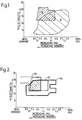
- the results of examples 19-21 are shown in the accompanying figures 1-5.
- the process routes used to obtain the compositions of examples 19-23 were selected from processes 1-4 as mentioned above or were minor modifications thereupon.
- liquid samples of the compositions were examined after at least three days storage at the specified temperatures. A small sample was placed between glass slides and examined using polarised light, transmission microscopy. The presence of a lamellar phase was indicated by a characteristic 'Maltese cross' pattern generally believed to be caused by the presence of a lamellar phase dispersion.
- Figure 1 shows the stable lamellar regions for formulations containing either PAS (Empicol LX) or alkyl benzene sulphonate together with a 6.5 EO nonionic surfactant (Dobanol 23 6.5 EO) at a constant total surfactant level of 10%wt and at varying electrolyte levels.
- PAS Epicol LX
- Dobanol 23 6.5 EO 6.5 EO nonionic surfactant
- the electrolyte was sodium chloride and stability was assessed at 25 Celsius. From figure 1, it can be seen that, the existence of a lamellar phase depends on both the selection of the correct electrolyte level and the correct ratio of surfactants.
- the alkyl benzene sulphonate/non-ionic surfactant systems of the prior art (Region A)
- lamellar-phase formulations can be made over a relatively wide formulation range.
- the primary alkyl sulphate/non-ionic surfactant system employed in the compositions of the present invention the range of electrolyte levels and surfactant ratios which enable the formation of a lamellar phase (Region B) is markedly smaller.
- the electrolyte was changed from NaCl to sodium carbonate, supplying a divalent cation (Example 19b), no lamellar phase region could be found (see also examples 16 and 18).
- FIG. 2 shows the stable lamellar regions for formulations containing both sodium PAS (Empicol LX) and a 6.5 EO nonionic surfactant (Dobanol 23 6.5 EO) at varying ratios to a constant total surfactant level of 10%, at varying levels of electrolyte (sodium chloride) and under varying environmental conditions.
- These conditions are 1,2 and 4 as discussed above and the limits of the boxes marked 1, 2 and 4 indicate the limits of stability under the specified conditions. It can be seen that for general stability under a practical range of storage conditions over a temperature range of 4-37 Celsius, the preferred range of electrolyte levels and surfactant ratios is particularly narrow (Region C). Outside of this region not all of the formulations produce the lamellar phase and the formulations would consequently not be capable of suspending particles under certain conditions of storage.
- FIG. 3 shows the stable lamellar regions at 25 Celsius for formulations containing PAS (Empicol LX) with a 3.0 EO nonionic surfactant (Synperonic A3) at a total surfactant level of 10% and at varying electrolyte (NaCl) levels. It can be seen that for these short-chain ethoxylates in combination with PAS the ranges over which a lamellar phase (Region D) can be formed in the presence of a monovalent cation electrolyte (sodium chloride) are much larger than with the corresponding higher EO compositions.
- PAS Empicol LX
- Synperonic A3 3.0 EO nonionic surfactant
- NaCl electrolyte
- Figure 4 shows the stable lamellar regions at 25 Celsius for formulations containing PAS (Empicol LX) with a 3.0 EO nonionic surfactant (Synperonic A3) at a constant surfactant level of 10%wt on product and at varying divalent cation electrolyte (sodium carbonate) levels.
- PAS Empicol LX
- Synperonic A3 3.0 EO nonionic surfactant
- the region over which a lamellar phase can be formed (Region E) is indicated.
- FIG. 5 shows the stable lamellar regions at 25 Celsius for formulations containing various ratios of PAS (Empicol LX) with a 6.5 EO nonionic surfactant (Dobanol 23-6.5) at a total surfactant level of 10% and at varying mono-valent cation electrolyte levels.
- PAS Empicol LX
- Dobanol 23-6.5 6.5 EO nonionic surfactant
- the cation is ammonium as opposed to sodium.
- relatively high levels of electrolyte are required to form a lamellar phase. High levels of electrolyte are discouraged for reasons of residue deposition and corrosiveness.
- compositions were prepared by mixing the components as listed, under shear, at room temperature.
- examples whose number is not suffixed by a letter i.e. examples 24, 25 and 26
- the formulations were stable in all four of the storage regimes described above.
- examples whose number is suffixed by letter the compositions were unstable under one or more of the storage conditions. Ratios of PAS to nonionic for the formulations are given in the table. None of the compositions were stable if electrolyte was omitted.
Landscapes
- Chemical & Material Sciences (AREA)
- Wood Science & Technology (AREA)
- Life Sciences & Earth Sciences (AREA)
- Engineering & Computer Science (AREA)
- Chemical Kinetics & Catalysis (AREA)
- Oil, Petroleum & Natural Gas (AREA)
- Organic Chemistry (AREA)
- Inorganic Chemistry (AREA)
- Crystallography & Structural Chemistry (AREA)
- Detergent Compositions (AREA)
- Polishing Bodies And Polishing Tools (AREA)
- Colloid Chemistry (AREA)
- Cleaning Implements For Floors, Carpets, Furniture, Walls, And The Like (AREA)
Applications Claiming Priority (5)
| Application Number | Priority Date | Filing Date | Title |
|---|---|---|---|
| GB929219042A GB9219042D0 (en) | 1992-09-09 | 1992-09-09 | Improvements to hard surface cleaners |
| GB9219042 | 1992-09-09 | ||
| GB9302991 | 1993-02-15 | ||
| GB939302991A GB9302991D0 (en) | 1993-02-15 | 1993-02-15 | Improvements to hard surface cleaners |
| EP94908829A EP0659205B1 (de) | 1992-09-09 | 1993-09-07 | Verbesserung von reinigern für harte oberflächen |
Related Parent Applications (2)
| Application Number | Title | Priority Date | Filing Date |
|---|---|---|---|
| EP94908829A Division EP0659205B1 (de) | 1992-09-09 | 1993-09-07 | Verbesserung von reinigern für harte oberflächen |
| EP94908829.8 Division | 1994-03-17 |
Publications (2)
| Publication Number | Publication Date |
|---|---|
| EP0829530A1 true EP0829530A1 (de) | 1998-03-18 |
| EP0829530B1 EP0829530B1 (de) | 2000-12-20 |
Family
ID=26301578
Family Applications (2)
| Application Number | Title | Priority Date | Filing Date |
|---|---|---|---|
| EP94908829A Expired - Lifetime EP0659205B1 (de) | 1992-09-09 | 1993-09-07 | Verbesserung von reinigern für harte oberflächen |
| EP97116919A Expired - Lifetime EP0829530B1 (de) | 1992-09-09 | 1993-09-07 | Verbesserung von Reinigern für harte Oberflächen |
Family Applications Before (1)
| Application Number | Title | Priority Date | Filing Date |
|---|---|---|---|
| EP94908829A Expired - Lifetime EP0659205B1 (de) | 1992-09-09 | 1993-09-07 | Verbesserung von reinigern für harte oberflächen |
Country Status (8)
| Country | Link |
|---|---|
| EP (2) | EP0659205B1 (de) |
| JP (1) | JP3516449B2 (de) |
| AU (1) | AU679454B2 (de) |
| BR (1) | BR9307025A (de) |
| CA (1) | CA2144065C (de) |
| DE (2) | DE69329782T2 (de) |
| ES (2) | ES2122243T3 (de) |
| WO (1) | WO1994005757A1 (de) |
Cited By (8)
| Publication number | Priority date | Publication date | Assignee | Title |
|---|---|---|---|---|
| WO1999064553A1 (en) * | 1998-06-09 | 1999-12-16 | Unilever N.V. | Hard surface cleaners |
| WO2000018868A1 (en) * | 1998-09-25 | 2000-04-06 | Unilever N.V. | Detergent composition |
| WO2005049776A1 (en) * | 2003-11-14 | 2005-06-02 | The Procter & Gamble Company | Liquid detergent composition comprising a solubilizing anionic surfactant |
| WO2017079958A1 (en) * | 2015-11-13 | 2017-05-18 | The Procter & Gamble Company | Cleaning compositions containing a branched alkyl sulfate surfactant and a short-chain nonionic surfactant |
| WO2018223368A1 (en) * | 2017-06-08 | 2018-12-13 | The Procter & Gamble Company | Non-homogeneous compositions |
| US10266791B2 (en) | 2015-11-13 | 2019-04-23 | The Procter & Gamble Company | Detergent compositions |
| US10647944B2 (en) | 2015-11-13 | 2020-05-12 | The Procter & Gamble Company | Cleaning compositions containing branched alkyl sulfate surfactant with little or no alkoxylated alkyl sulfate |
| US11975348B2 (en) | 2019-12-16 | 2024-05-07 | The Procter & Gamble Company | Liquid dispensing system comprising an unitary dispensing nozzle |
Families Citing this family (21)
| Publication number | Priority date | Publication date | Assignee | Title |
|---|---|---|---|---|
| US5741770A (en) * | 1989-09-22 | 1998-04-21 | Colgate-Palmolive Co. | Liquid crystal composition |
| US5723431A (en) * | 1989-09-22 | 1998-03-03 | Colgate-Palmolive Co. | Liquid crystal compositions |
| EP0732394A3 (de) * | 1995-03-13 | 1999-02-03 | Unilever N.V. | Waschmittelzusammensetzungen |
| CO4770890A1 (es) * | 1996-03-06 | 1999-04-30 | Colgate Palmolive Co | Composiciones cristalinas liquidas que contienen particulas de madera o abrasivo |
| PT885290E (pt) * | 1996-03-06 | 2002-07-31 | Colgate Palmolive Co | Composicoes detergentes sob a forma de cristal liquido |
| EP0798372A3 (de) * | 1996-03-29 | 1999-12-08 | Unilever N.V. | Waschmittelzusammensetzung |
| EP0906411B1 (de) * | 1996-06-14 | 2001-11-21 | Colgate-Palmolive Company | Flüssigkristallzusammensetzungen |
| US6194364B1 (en) | 1996-09-23 | 2001-02-27 | The Procter & Gamble Company | Liquid personal cleansing compositions which contain soluble oils and soluble synthetic surfactants |
| GB9708500D0 (en) * | 1997-04-25 | 1997-06-18 | Unilever Plc | Abrasive cleaning composition |
| PL357997A1 (en) * | 2000-04-05 | 2004-08-09 | Unilever N.V. | Solid dispersible abrasive compositions |
| EP1321514A1 (de) * | 2001-12-21 | 2003-06-25 | Maclean S.A. | Flüssiges Reinigungsmittel mit Polyethylen-Abrasiv-Teilchen |
| MXPA04006002A (es) | 2001-12-21 | 2004-09-27 | Rhodia | Composiciones tensioactivas estables para suspender componentes. |
| GB2392166A (en) | 2002-08-22 | 2004-02-25 | Reckitt Benckiser Inc | Composition separable into two phases |
| WO2006012465A1 (en) | 2004-07-21 | 2006-02-02 | Colgate-Palmolive Company | Structured body wash |
| PT1874914E (pt) | 2005-04-21 | 2013-01-14 | Colgate Palmolive Co | Composição de detergente líquido |
| GB2434586A (en) * | 2006-01-24 | 2007-08-01 | Henkel Uk | Structured liquid abrasive composition |
| US7749949B2 (en) | 2006-12-15 | 2010-07-06 | Colgate-Palmolive Company | Liquid detergent composition comprising an acrylic polymer/ propylene glycol ether of methyl glucose mixture |
| CA2681998A1 (en) | 2007-03-23 | 2008-10-02 | Rhodia Inc. | Structured surfactant compositions |
| AR072859A1 (es) * | 2008-05-23 | 2010-09-29 | Colgate Palmolive Co | Metodos y composiciones liquidas de limpieza |
| GB201108912D0 (en) * | 2011-05-27 | 2011-07-13 | Reckitt Benckiser Nv | Composition |
| DE102024131100A1 (de) * | 2024-10-24 | 2026-04-30 | Fritsch Gmbh | Reinigungsmittel für Kugelmühlen und Verfahren zur Reinigung von Kugelmühlen |
Citations (4)
| Publication number | Priority date | Publication date | Assignee | Title |
|---|---|---|---|---|
| GB2108996A (en) * | 1981-11-13 | 1983-05-25 | Unilever Plc | Liquid abrasive cleaning compositions |
| GB2160887A (en) * | 1984-06-21 | 1986-01-02 | Bristol Myers Co | Hard surface cleaning composition |
| EP0362916A2 (de) * | 1988-10-07 | 1990-04-11 | Unilever N.V. | Flüssige Waschmittelzusammensetzungen |
| EP0544492A1 (de) * | 1991-11-26 | 1993-06-02 | Unilever Plc | Teilchenförmige Waschmittelzusammensetzungen |
Family Cites Families (3)
| Publication number | Priority date | Publication date | Assignee | Title |
|---|---|---|---|---|
| US4329448A (en) * | 1979-07-10 | 1982-05-11 | Lever Brothers Company | Microbial heteropolysaccharide |
| IS1740B (is) * | 1982-02-05 | 1999-12-31 | Albright & Wilson Uk Limited | Samsetning á hreinsivökva |
| GB8310529D0 (en) * | 1983-04-19 | 1983-05-25 | Unilever Plc | General-purpose cleaning composition |
-
1993
- 1993-09-07 JP JP50701694A patent/JP3516449B2/ja not_active Expired - Fee Related
- 1993-09-07 WO PCT/GB1993/001892 patent/WO1994005757A1/en not_active Ceased
- 1993-09-07 ES ES94908829T patent/ES2122243T3/es not_active Expired - Lifetime
- 1993-09-07 BR BR9307025A patent/BR9307025A/pt not_active IP Right Cessation
- 1993-09-07 DE DE1993629782 patent/DE69329782T2/de not_active Expired - Fee Related
- 1993-09-07 AU AU49761/93A patent/AU679454B2/en not_active Ceased
- 1993-09-07 ES ES97116919T patent/ES2154867T3/es not_active Expired - Lifetime
- 1993-09-07 EP EP94908829A patent/EP0659205B1/de not_active Expired - Lifetime
- 1993-09-07 CA CA002144065A patent/CA2144065C/en not_active Expired - Fee Related
- 1993-09-07 DE DE69320355T patent/DE69320355T2/de not_active Expired - Fee Related
- 1993-09-07 EP EP97116919A patent/EP0829530B1/de not_active Expired - Lifetime
Patent Citations (4)
| Publication number | Priority date | Publication date | Assignee | Title |
|---|---|---|---|---|
| GB2108996A (en) * | 1981-11-13 | 1983-05-25 | Unilever Plc | Liquid abrasive cleaning compositions |
| GB2160887A (en) * | 1984-06-21 | 1986-01-02 | Bristol Myers Co | Hard surface cleaning composition |
| EP0362916A2 (de) * | 1988-10-07 | 1990-04-11 | Unilever N.V. | Flüssige Waschmittelzusammensetzungen |
| EP0544492A1 (de) * | 1991-11-26 | 1993-06-02 | Unilever Plc | Teilchenförmige Waschmittelzusammensetzungen |
Cited By (10)
| Publication number | Priority date | Publication date | Assignee | Title |
|---|---|---|---|---|
| WO1999064553A1 (en) * | 1998-06-09 | 1999-12-16 | Unilever N.V. | Hard surface cleaners |
| US6511953B1 (en) | 1998-06-09 | 2003-01-28 | Unilever Home & Personal Care Usa, A Division Of Conopco, Inc. | Hard surface cleaners |
| WO2000018868A1 (en) * | 1998-09-25 | 2000-04-06 | Unilever N.V. | Detergent composition |
| WO2005049776A1 (en) * | 2003-11-14 | 2005-06-02 | The Procter & Gamble Company | Liquid detergent composition comprising a solubilizing anionic surfactant |
| WO2017079958A1 (en) * | 2015-11-13 | 2017-05-18 | The Procter & Gamble Company | Cleaning compositions containing a branched alkyl sulfate surfactant and a short-chain nonionic surfactant |
| US10266791B2 (en) | 2015-11-13 | 2019-04-23 | The Procter & Gamble Company | Detergent compositions |
| US10647944B2 (en) | 2015-11-13 | 2020-05-12 | The Procter & Gamble Company | Cleaning compositions containing branched alkyl sulfate surfactant with little or no alkoxylated alkyl sulfate |
| US10876072B2 (en) | 2015-11-13 | 2020-12-29 | The Procter & Gamble Company | Cleaning compositions containing a branched alkyl sulfate surfactant and a short-chain nonionic surfactant |
| WO2018223368A1 (en) * | 2017-06-08 | 2018-12-13 | The Procter & Gamble Company | Non-homogeneous compositions |
| US11975348B2 (en) | 2019-12-16 | 2024-05-07 | The Procter & Gamble Company | Liquid dispensing system comprising an unitary dispensing nozzle |
Also Published As
| Publication number | Publication date |
|---|---|
| DE69329782T2 (de) | 2001-05-03 |
| DE69320355T2 (de) | 1999-02-11 |
| EP0659205A1 (de) | 1995-06-28 |
| EP0829530B1 (de) | 2000-12-20 |
| ES2122243T3 (es) | 1998-12-16 |
| BR9307025A (pt) | 1999-06-29 |
| WO1994005757A1 (en) | 1994-03-17 |
| AU4976193A (en) | 1994-03-29 |
| DE69329782D1 (de) | 2001-01-25 |
| JP3516449B2 (ja) | 2004-04-05 |
| AU679454B2 (en) | 1997-07-03 |
| CA2144065C (en) | 2003-11-11 |
| CA2144065A1 (en) | 1994-03-17 |
| JPH08501120A (ja) | 1996-02-06 |
| ES2154867T3 (es) | 2001-04-16 |
| DE69320355D1 (de) | 1998-09-17 |
| EP0659205B1 (de) | 1998-08-12 |
Similar Documents
| Publication | Publication Date | Title |
|---|---|---|
| EP0659205B1 (de) | Verbesserung von reinigern für harte oberflächen | |
| EP1337616B1 (de) | Zusammensetzung zum reinigen von harten oberflächen | |
| JP2001518969A (ja) | 水洗トイレ用ゲル状洗浄剤 | |
| EP0193375B1 (de) | Flüssiges Reinigungsmittel | |
| JPH0684519B2 (ja) | 液体洗剤組成物 | |
| US4544494A (en) | Homogeneous laundry detergent slurries containing amphoteric surface-active agents | |
| CA1239562A (en) | Homogeneous laundry detergent slurries containing polymeric acrylic stabilizers | |
| EP0502030B1 (de) | Reinigungszusammensetzung | |
| AU686995B2 (en) | Detergent composition | |
| WO1999031209A1 (en) | Transparent liquid detergent containing alkylbenzenesulfonate anionic surfactant and sodium silicate | |
| JP2521147B2 (ja) | 液体洗剤組成物 | |
| US5529724A (en) | Structured liquid compositions comprising selected secondary alcohol sulfates and a deflocculating polymer | |
| US5424010A (en) | Light duty liquid detergent composition containing 3-methyl-3-methoxy-butanol | |
| JP4365024B2 (ja) | 特殊な粘度挙動を示す食器洗浄用洗剤 | |
| US4537708A (en) | Homogeneous laundry detergent slurries containing nonionic surface-active agents | |
| AU719047B2 (en) | Improvements in or relating to organic compositions | |
| GB2213494A (en) | A cleaning paste with soluble abrasive | |
| JPH0860187A (ja) | 高密度粒状洗浄剤組成物 | |
| GB2221694A (en) | Detergent composition | |
| HK1005250A (en) | Thickened liquid hydrogen peroxide composition |
Legal Events
| Date | Code | Title | Description |
|---|---|---|---|
| PUAI | Public reference made under article 153(3) epc to a published international application that has entered the european phase |
Free format text: ORIGINAL CODE: 0009012 |
|
| 17P | Request for examination filed |
Effective date: 19971127 |
|
| AC | Divisional application: reference to earlier application |
Ref document number: 659205 Country of ref document: EP |
|
| AK | Designated contracting states |
Kind code of ref document: A1 Designated state(s): DE ES FR GB IT |
|
| 17Q | First examination report despatched |
Effective date: 19981123 |
|
| GRAG | Despatch of communication of intention to grant |
Free format text: ORIGINAL CODE: EPIDOS AGRA |
|
| GRAG | Despatch of communication of intention to grant |
Free format text: ORIGINAL CODE: EPIDOS AGRA |
|
| GRAH | Despatch of communication of intention to grant a patent |
Free format text: ORIGINAL CODE: EPIDOS IGRA |
|
| GRAH | Despatch of communication of intention to grant a patent |
Free format text: ORIGINAL CODE: EPIDOS IGRA |
|
| GRAH | Despatch of communication of intention to grant a patent |
Free format text: ORIGINAL CODE: EPIDOS IGRA |
|
| GRAA | (expected) grant |
Free format text: ORIGINAL CODE: 0009210 |
|
| AC | Divisional application: reference to earlier application |
Ref document number: 659205 Country of ref document: EP |
|
| AK | Designated contracting states |
Kind code of ref document: B1 Designated state(s): DE ES FR GB IT |
|
| REF | Corresponds to: |
Ref document number: 69329782 Country of ref document: DE Date of ref document: 20010125 |
|
| ET | Fr: translation filed | ||
| ITF | It: translation for a ep patent filed | ||
| REG | Reference to a national code |
Ref country code: ES Ref legal event code: FG2A Ref document number: 2154867 Country of ref document: ES Kind code of ref document: T3 |
|
| PLBE | No opposition filed within time limit |
Free format text: ORIGINAL CODE: 0009261 |
|
| STAA | Information on the status of an ep patent application or granted ep patent |
Free format text: STATUS: NO OPPOSITION FILED WITHIN TIME LIMIT |
|
| 26N | No opposition filed | ||
| REG | Reference to a national code |
Ref country code: GB Ref legal event code: IF02 |
|
| PGFP | Annual fee paid to national office [announced via postgrant information from national office to epo] |
Ref country code: GB Payment date: 20050831 Year of fee payment: 13 |
|
| PGFP | Annual fee paid to national office [announced via postgrant information from national office to epo] |
Ref country code: FR Payment date: 20050919 Year of fee payment: 13 |
|
| PGFP | Annual fee paid to national office [announced via postgrant information from national office to epo] |
Ref country code: ES Payment date: 20050927 Year of fee payment: 13 |
|
| PGFP | Annual fee paid to national office [announced via postgrant information from national office to epo] |
Ref country code: DE Payment date: 20051031 Year of fee payment: 13 |
|
| PGFP | Annual fee paid to national office [announced via postgrant information from national office to epo] |
Ref country code: IT Payment date: 20060930 Year of fee payment: 14 |
|
| PG25 | Lapsed in a contracting state [announced via postgrant information from national office to epo] |
Ref country code: DE Free format text: LAPSE BECAUSE OF NON-PAYMENT OF DUE FEES Effective date: 20070403 |
|
| GBPC | Gb: european patent ceased through non-payment of renewal fee |
Effective date: 20060907 |
|
| REG | Reference to a national code |
Ref country code: FR Ref legal event code: ST Effective date: 20070531 |
|
| PG25 | Lapsed in a contracting state [announced via postgrant information from national office to epo] |
Ref country code: GB Free format text: LAPSE BECAUSE OF NON-PAYMENT OF DUE FEES Effective date: 20060907 |
|
| REG | Reference to a national code |
Ref country code: ES Ref legal event code: FD2A Effective date: 20060908 |
|
| PG25 | Lapsed in a contracting state [announced via postgrant information from national office to epo] |
Ref country code: ES Free format text: LAPSE BECAUSE OF NON-PAYMENT OF DUE FEES Effective date: 20060908 |
|
| PG25 | Lapsed in a contracting state [announced via postgrant information from national office to epo] |
Ref country code: FR Free format text: LAPSE BECAUSE OF NON-PAYMENT OF DUE FEES Effective date: 20061002 |
|
| PG25 | Lapsed in a contracting state [announced via postgrant information from national office to epo] |
Ref country code: IT Free format text: LAPSE BECAUSE OF NON-PAYMENT OF DUE FEES Effective date: 20070907 |